
Transforming overlooked corners into urban retreats
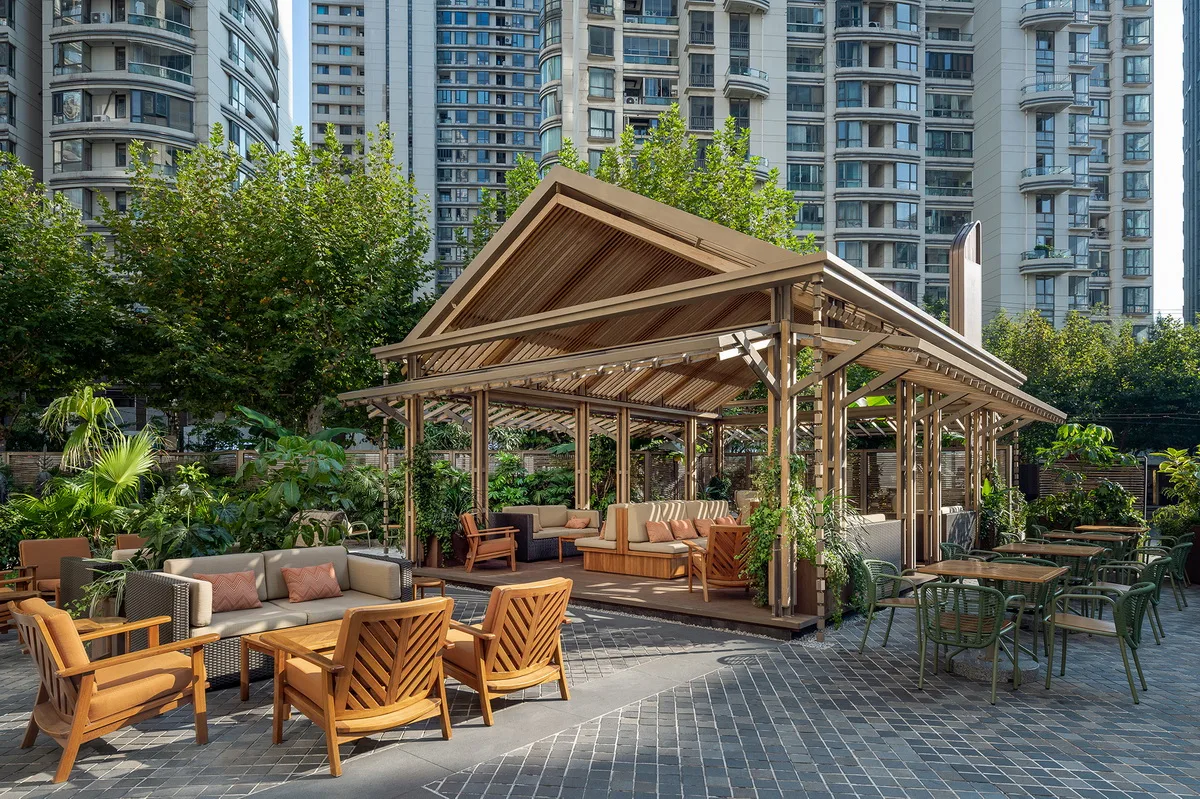
A serene oasis amidst the city hustle
The Sukhotai Hotel takes its name from Thailand’s first independent dynasty, Sukhotai, meaning “the dawn of happiness.” In 2017, the brand launched its first location in central Shanghai under the theme “urban oasis,” aiming to bring the warmth of Southeast Asian hospitality to city dwellers through contemporary design. To enhance the natural ambiance for guests, the owner commissioned Zhizuo Studio in 2020 to renovate select outdoor areas of the hotel.
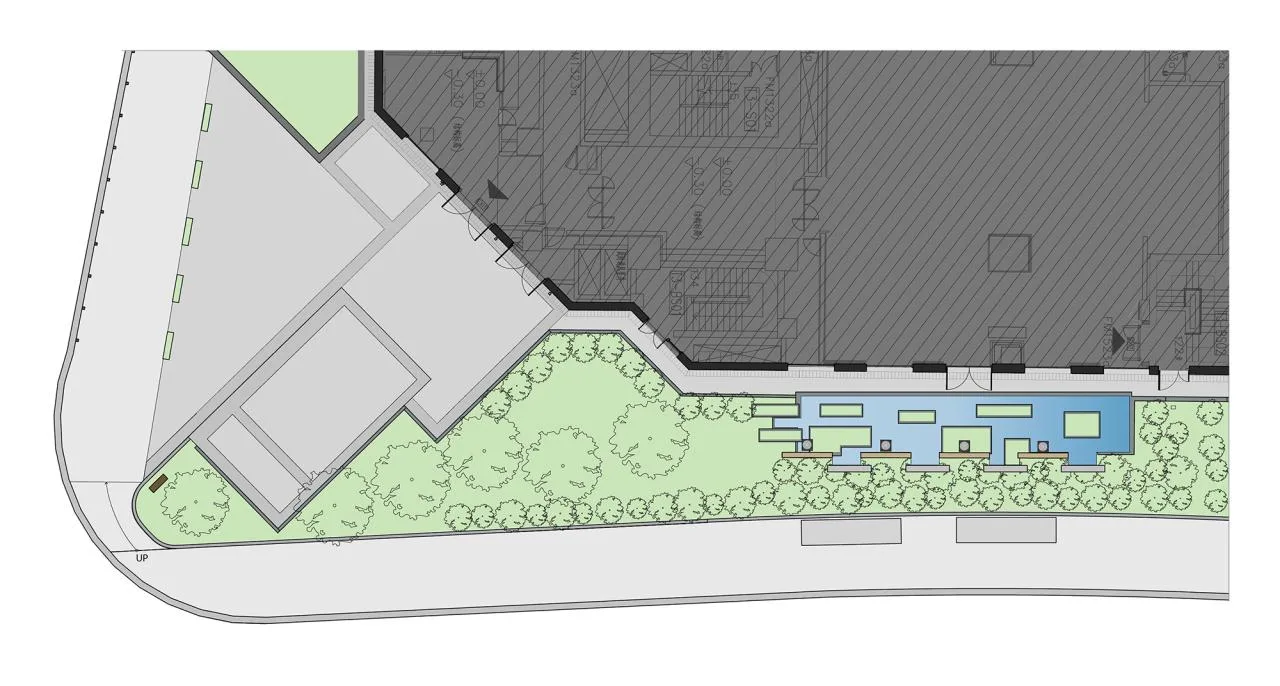
△ Original site plan
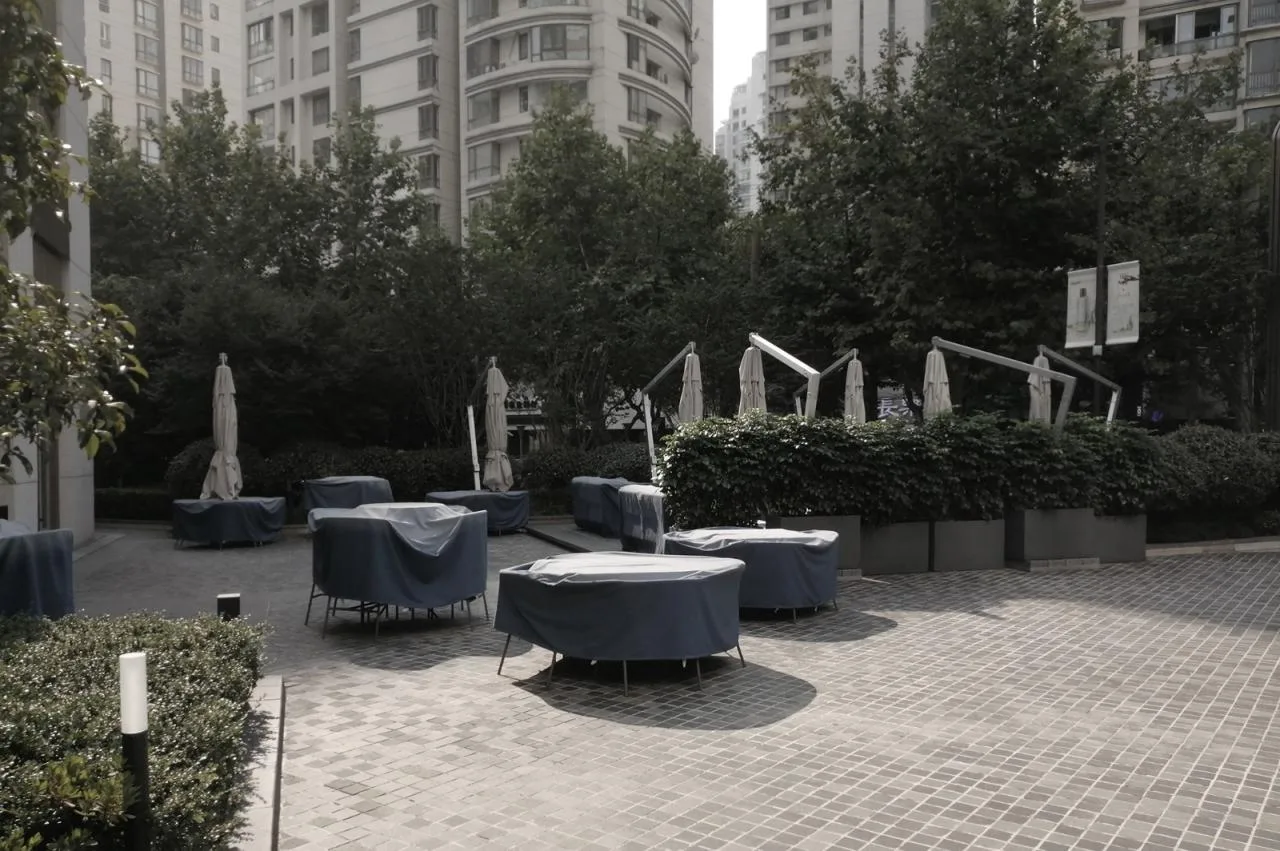
△ Original outdoor bar display area (closed)
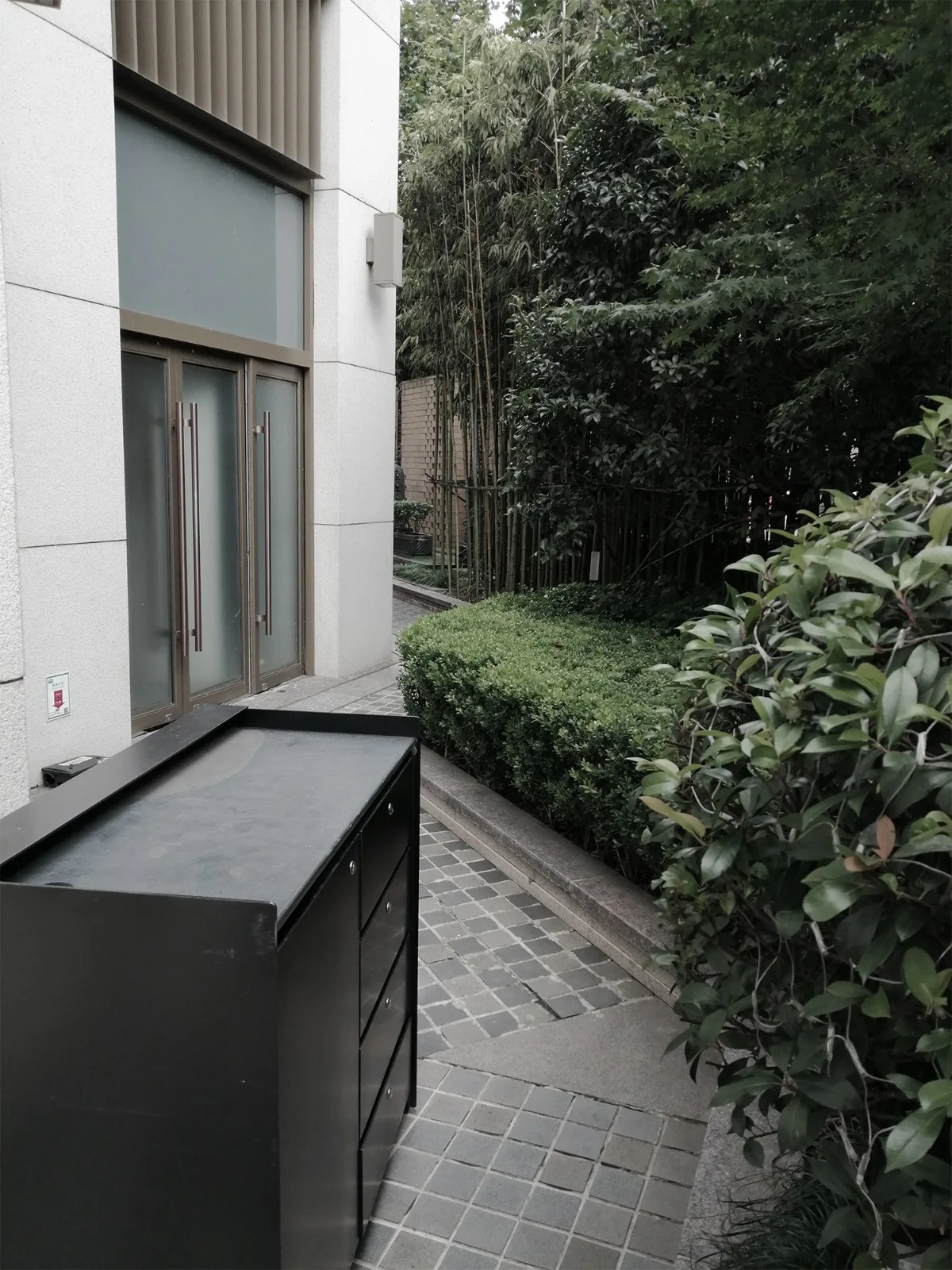
△ Original site access and greenery
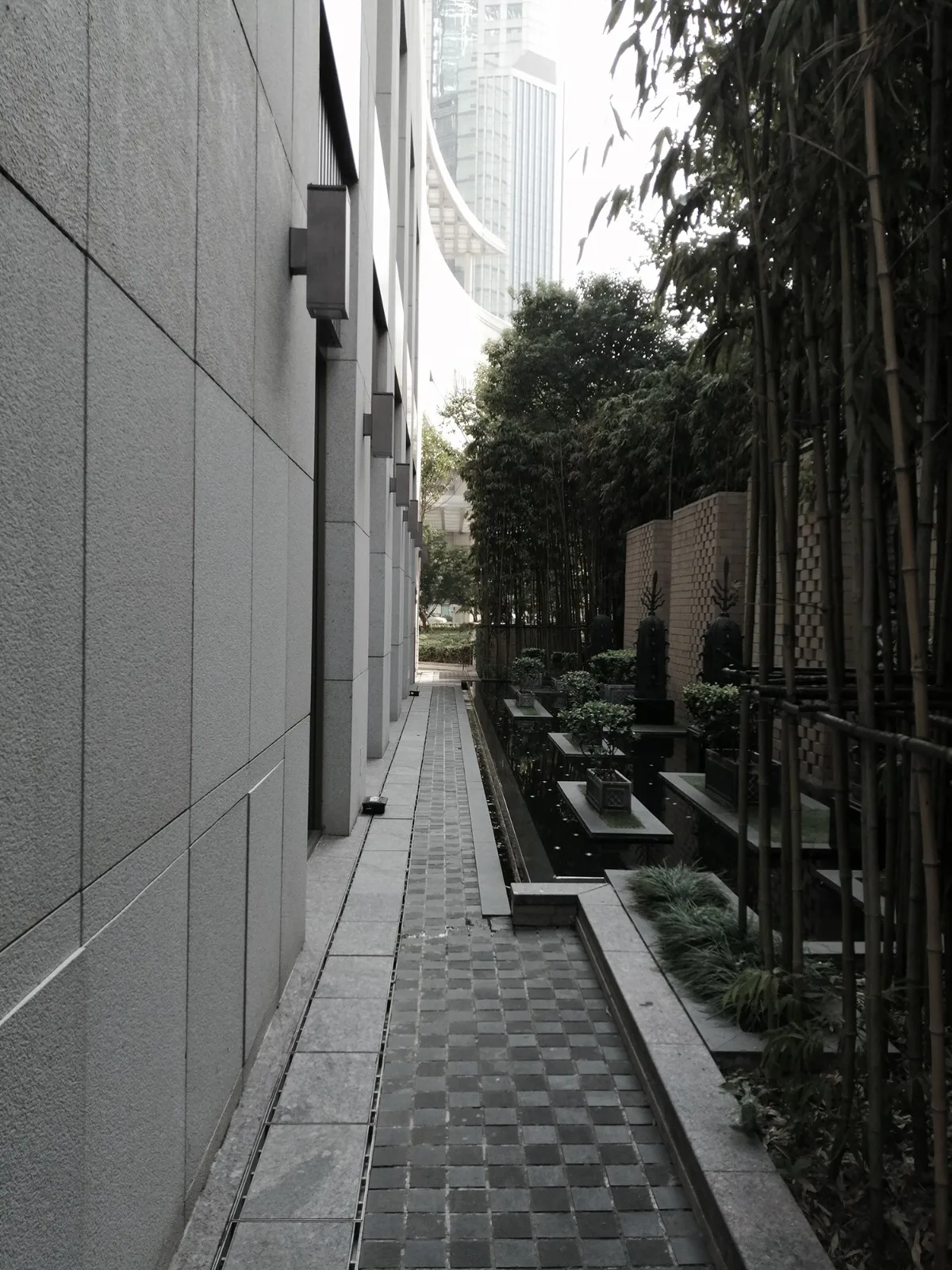
△ Original outdoor restaurant landscape
The site is located in the hotel’s southwest corner on the first floor, encompassing an outdoor bar display area and a restaurant landscape zone. The entrance faces the Xingye Taikoo Hui complex, with Weihai Road bordering the perimeter. The outdoor display area is compact with a flat spatial feel, furnished only with a few movable seating sets. Behind the trees lies a pool adorned with four Thai bronze tower sculptures, serving as a subtle outdoor feature for the all-day dining restaurant.
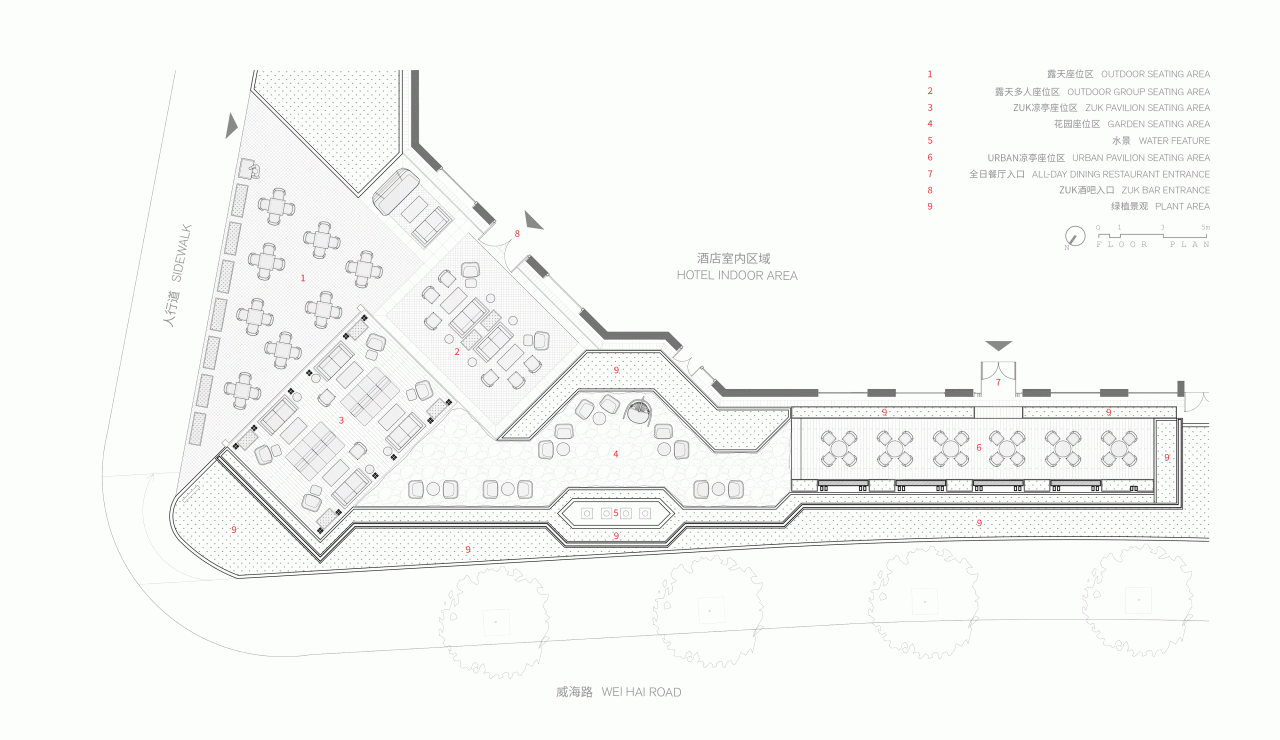
△ Renovation plan layout
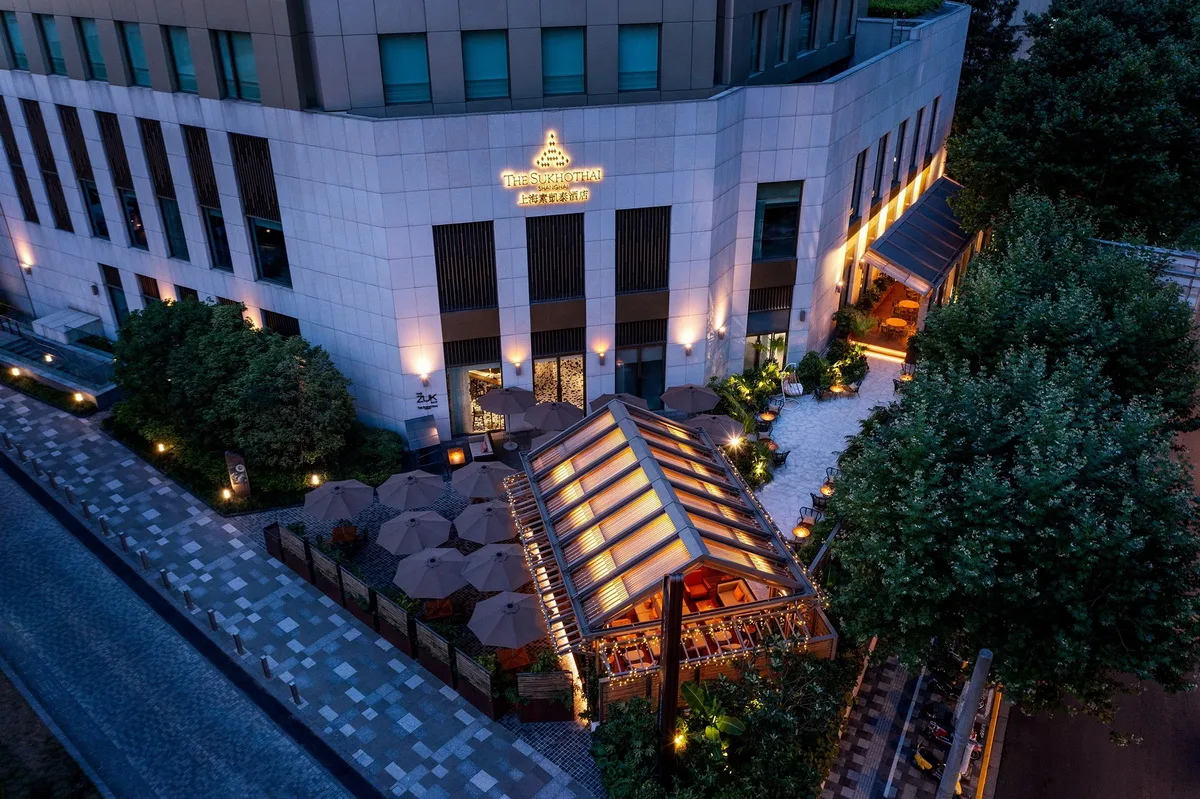
△ Panoramic garden view © The Sukhothai Shanghai
The renovation centers on the theme of “gardening.” The design team introduced two pavilions at key points to enhance the atmosphere, connecting the trees into a cohesive garden with a dual pavilion layout. Plantings were replanned and added, creating a triple-layered barrier using soundproof glass and bamboo curtains to block external noise and views, crafting a secluded and tranquil space.
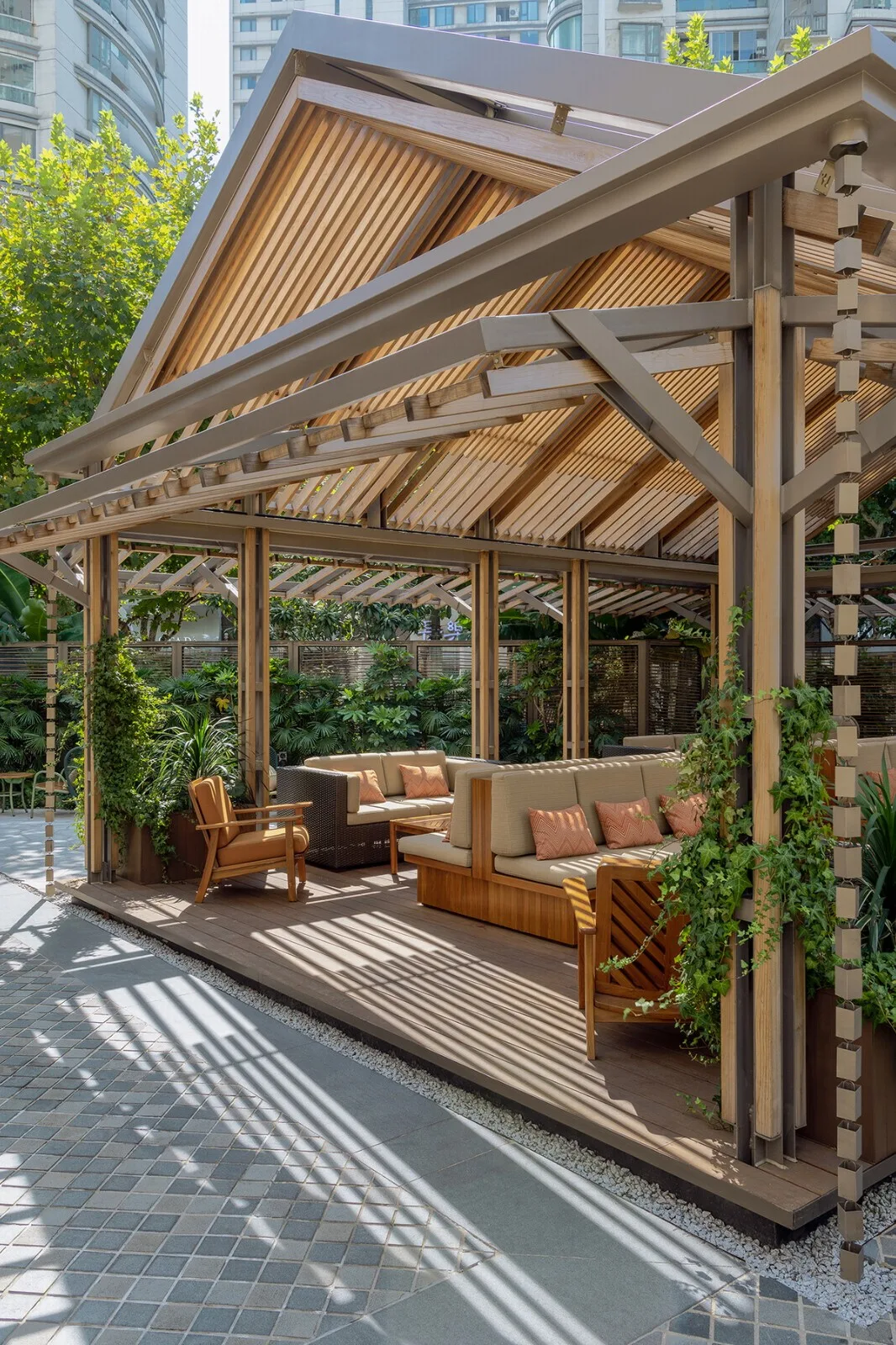
△ Architectural inspiration drawn from the traditional Thai Sala pavilion
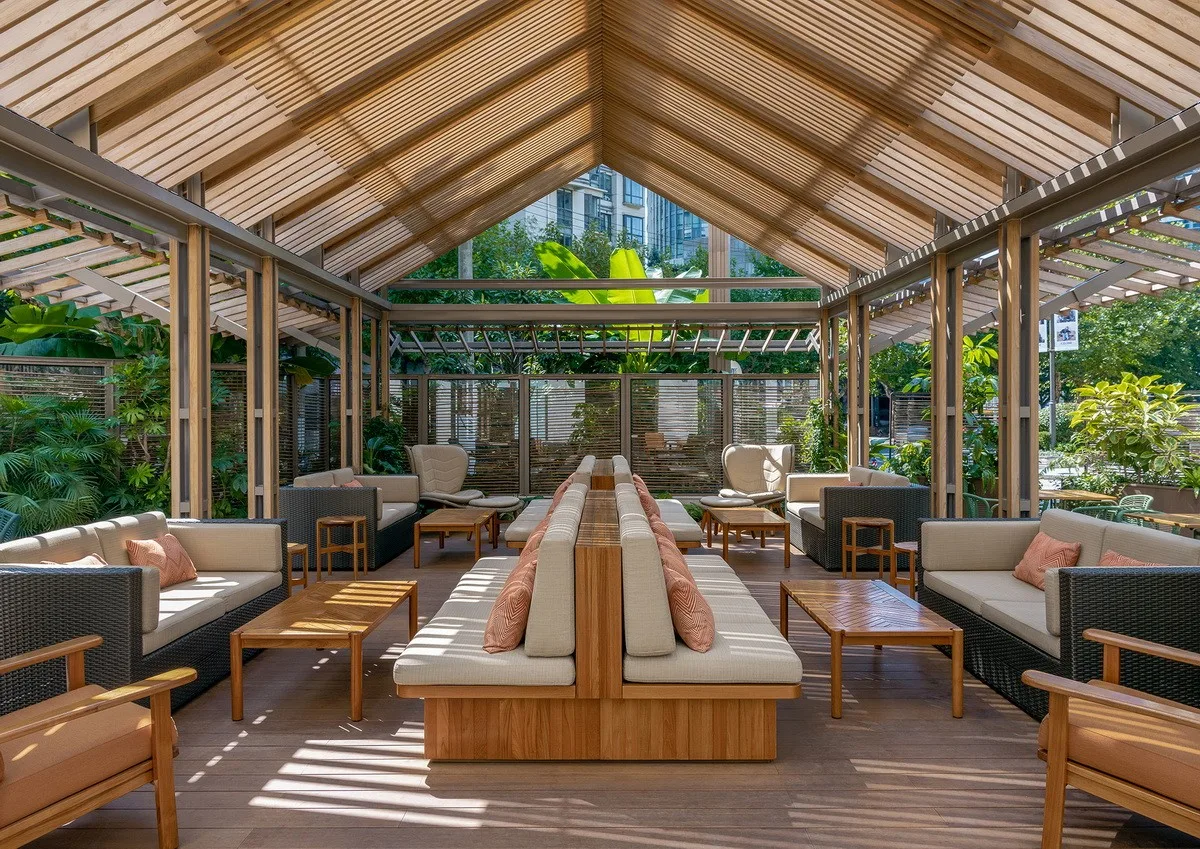
Wooden pavilions and teak furniture infuse rich Southeast Asian character
The pavilion outside the entrance bar draws inspiration from Thailand’s traditional Sala pavilion. The double-pitched roof with layered eaves provides prominent shading, infusing a tropical vibe into this new social space.
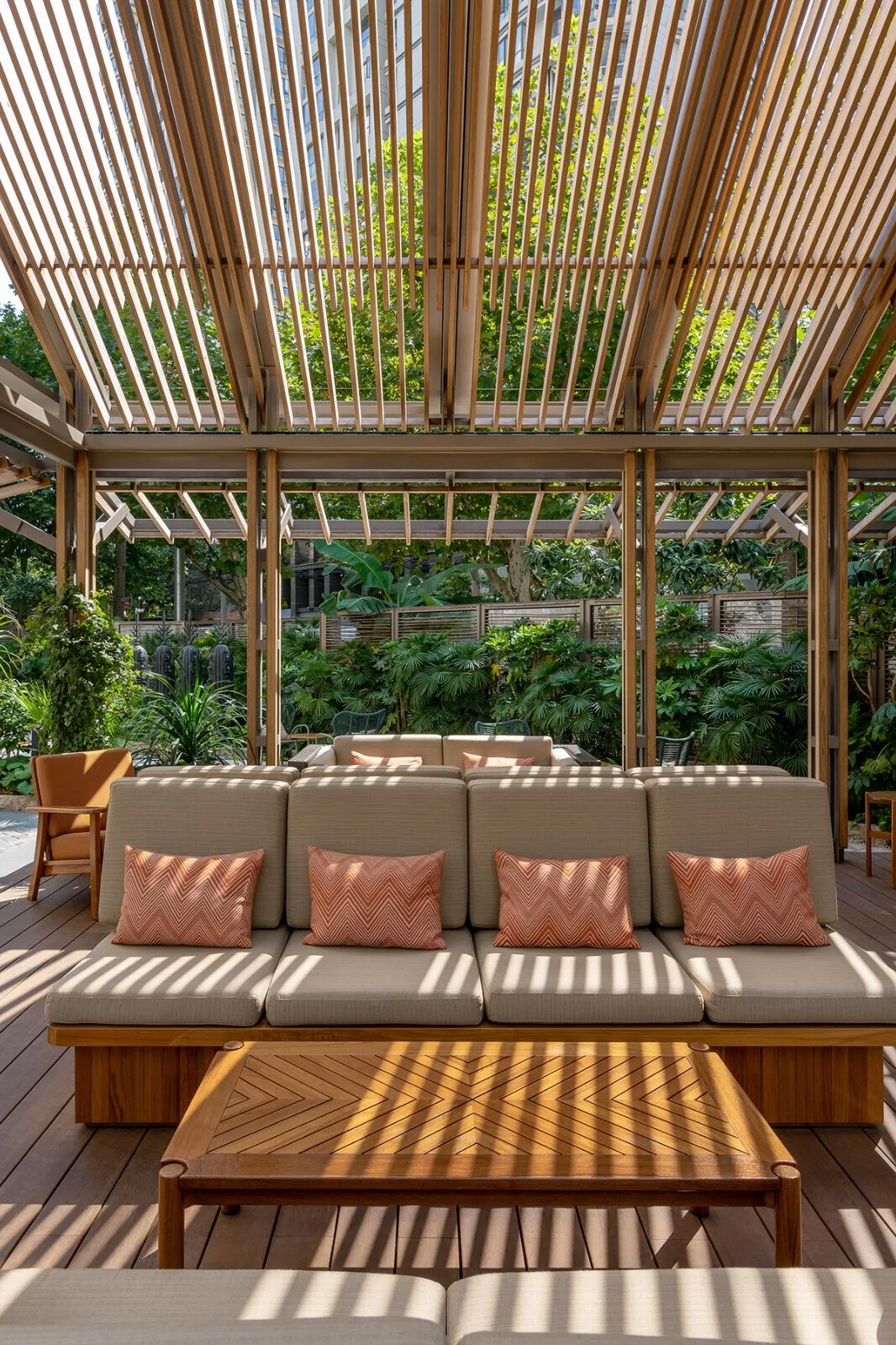
Natural scenery beneath the wooden lattice
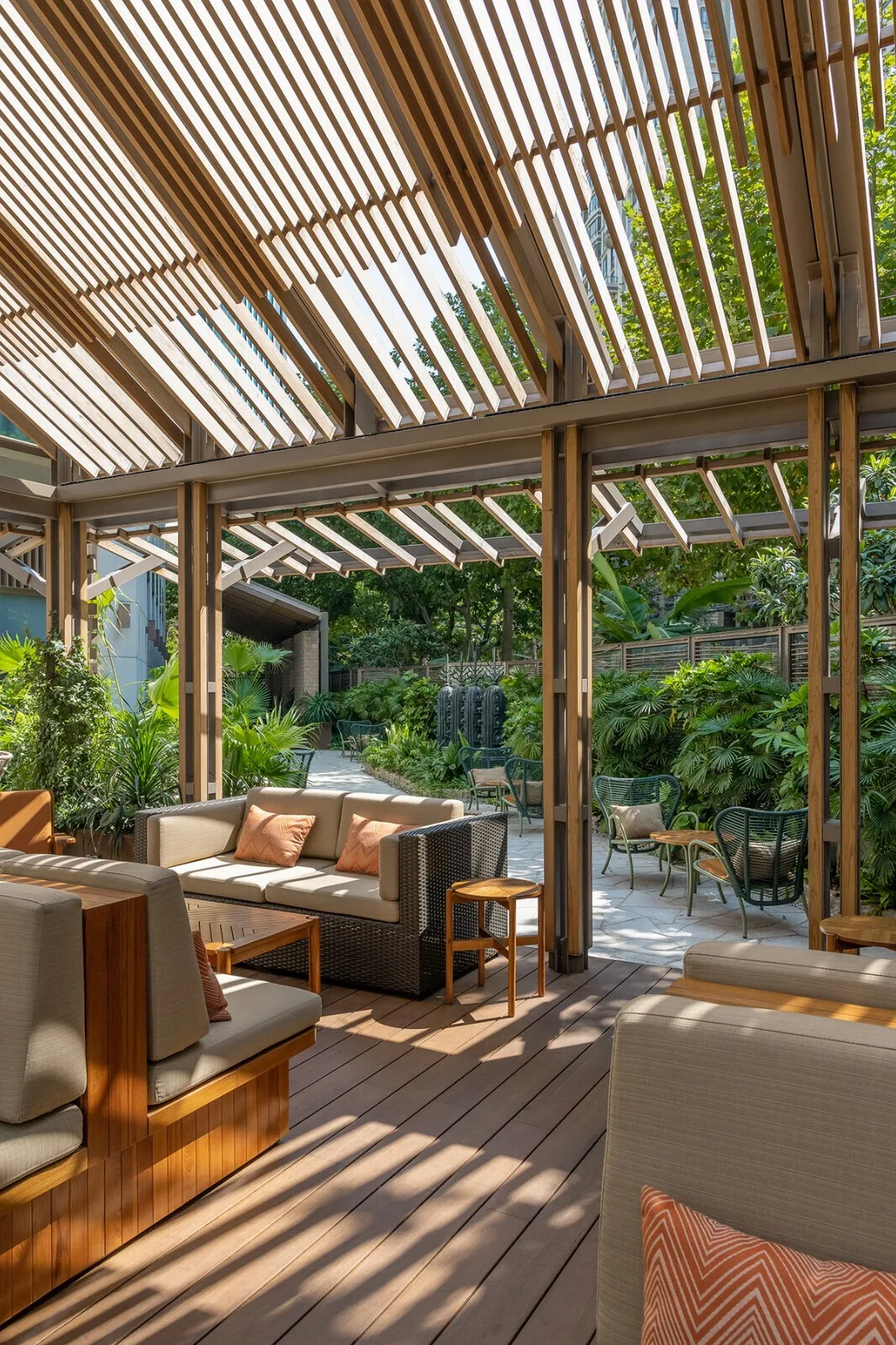
Two pavilions connected by a courtyard
The pavilion’s main structure consists of steel beams and columns, overlaid with staggered teak wood slats arranged in a traditional mortise-and-tenon pattern. This creates a visually pleasing scale and texture. The ceiling slats gradually transition from dense to sparse, allowing more natural light and greenery to filter through.
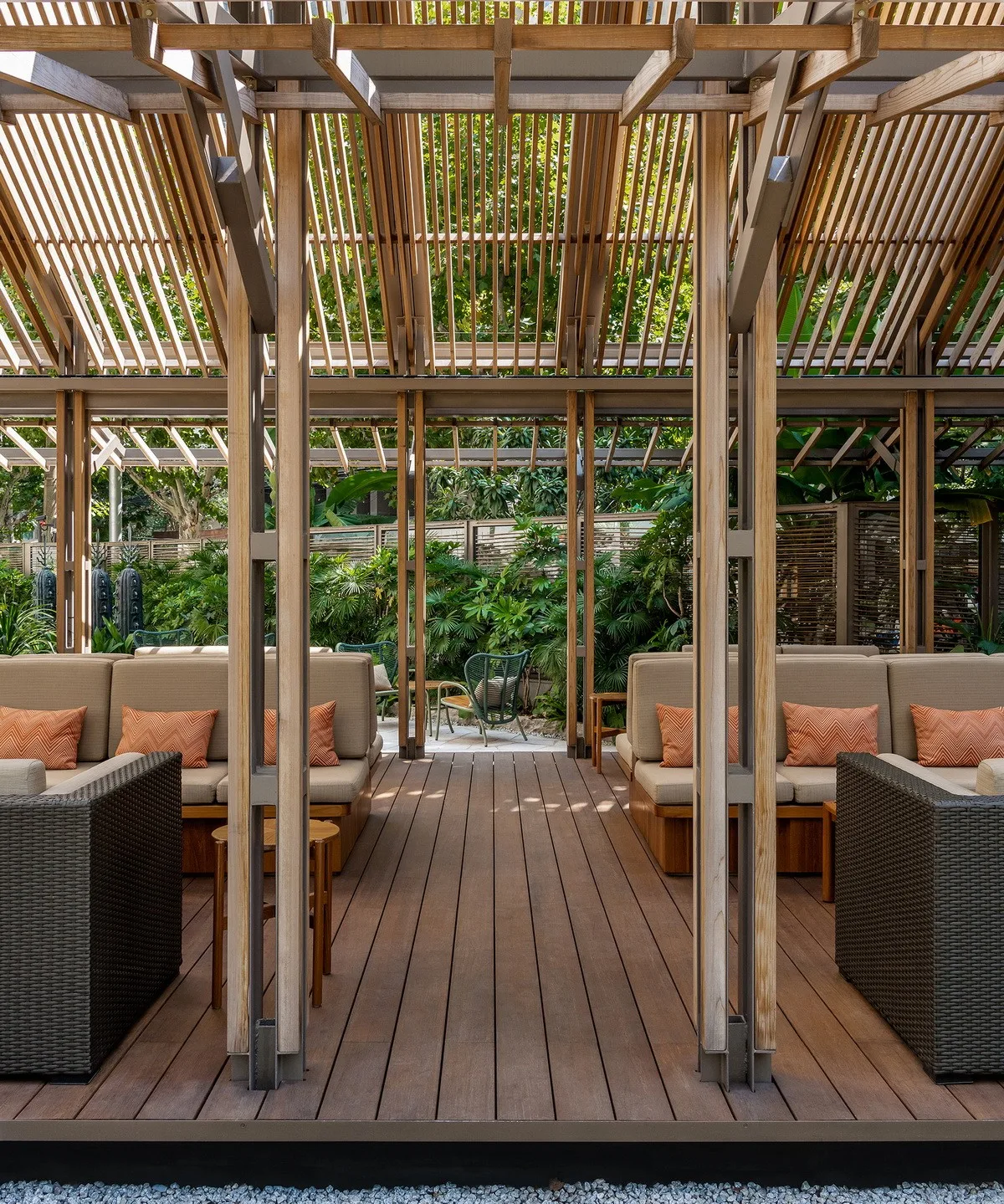
△ Cross-shaped hollow steel columns create a lightweight appearance
To give the pavilion a lighter feel, Zhizuo Studio designed the pillars as transparent crosses, welding four angle steels together. Wooden strips are embedded in the hollow sections, maintaining the pavilion’s warm wooden aesthetic.
A movable canopy sits above the lattice, adjustable to weather conditions. The roof edges feature drainage channels and rain chains that gently guide water into ground drains, preventing splashes on guests below.
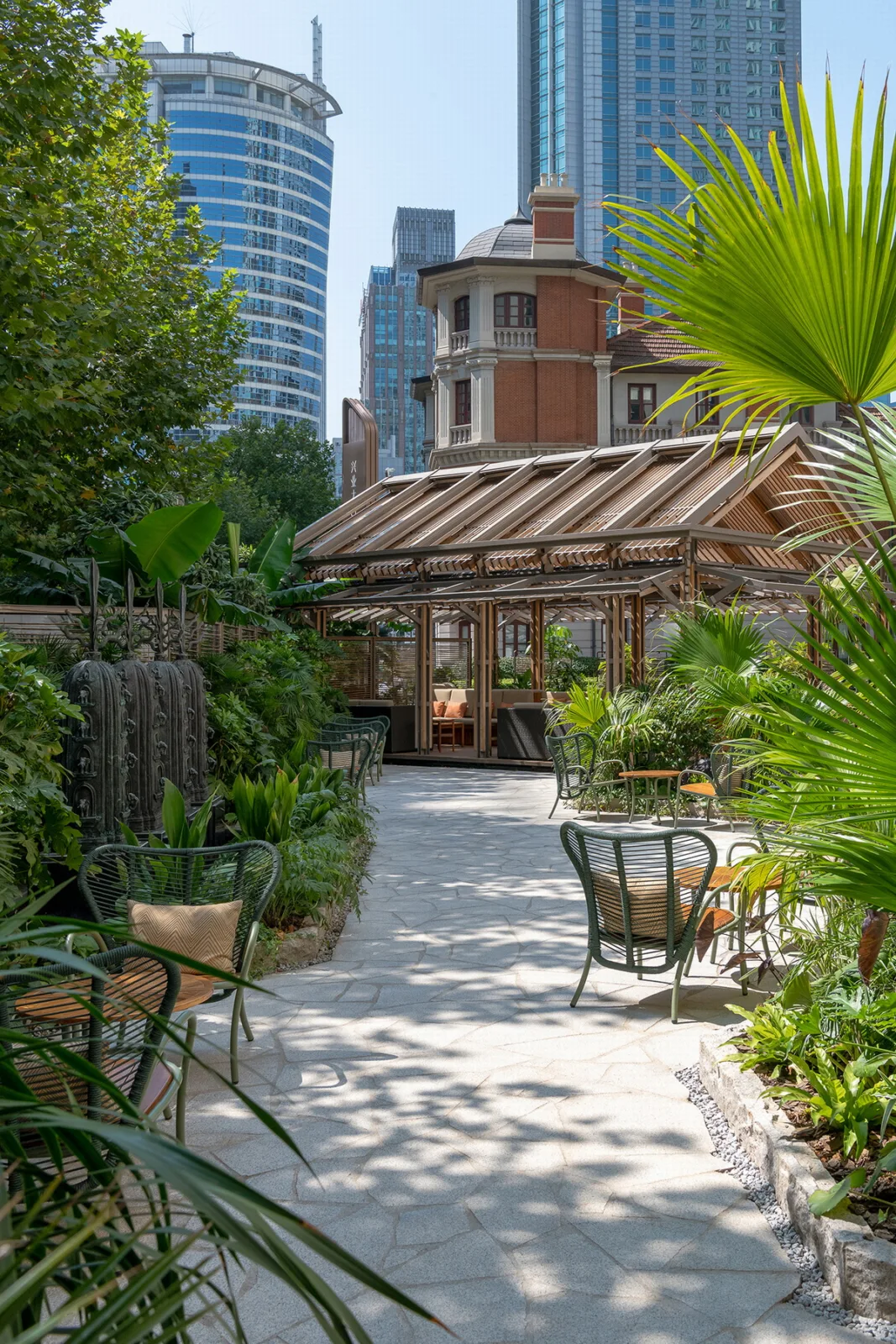
△ Seating scattered along the peaceful garden path
Between the two pergolas lies a newly opened garden featuring organic materials, lush greenery, and the soothing sound of flowing water. The original orderly tiles were replaced with irregularly shaped stone slabs forming natural ice-crack patterns. The four bronze pagodas were relocated from a hidden corner to a central water feature, now the garden’s focal point, where spring water gently cascades. The previous barrier vegetation was replaced with tropical large-leaf plants well-suited to the local climate, creating a multilayered, vibrant natural environment that delights the senses.
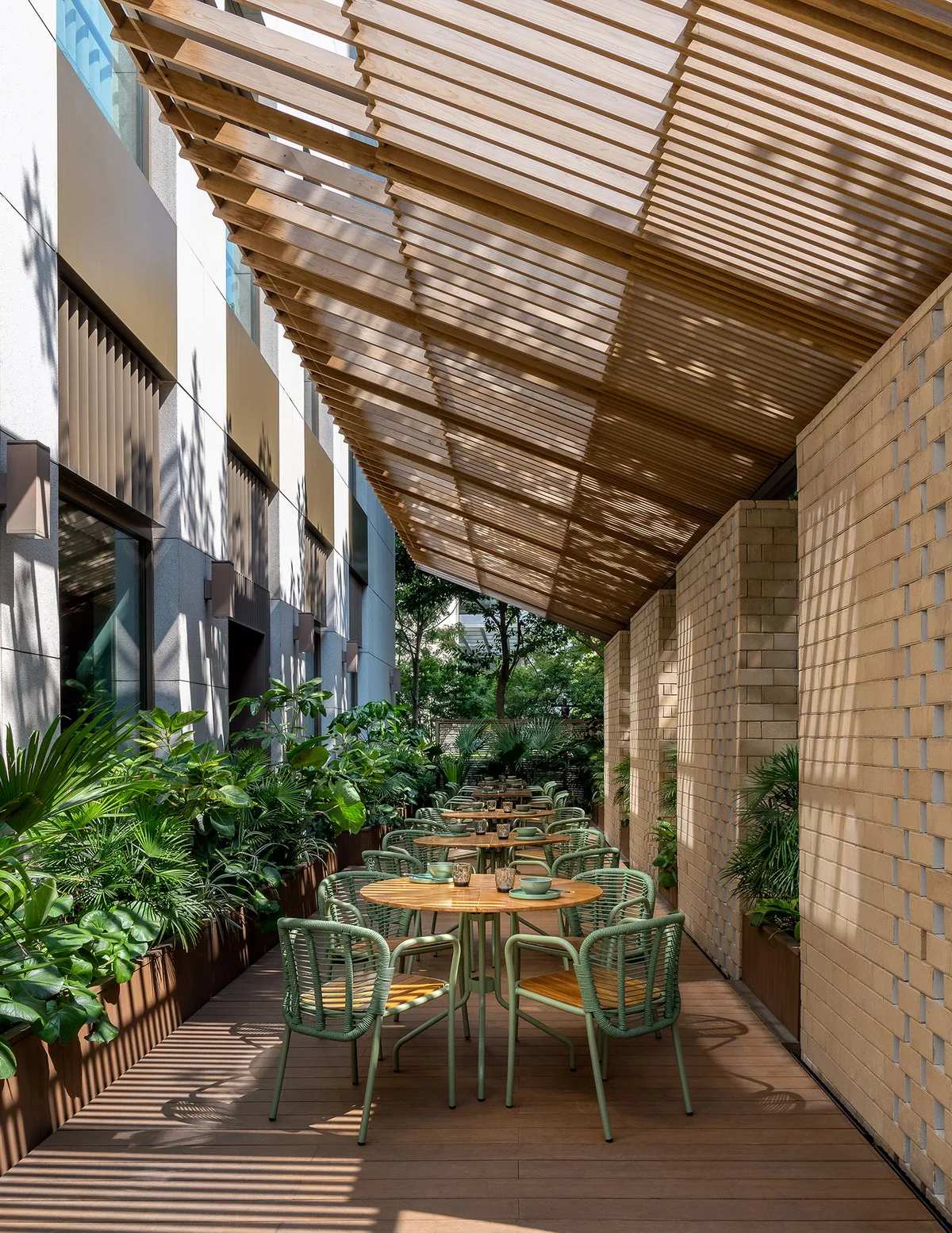
Dining beneath the suspended wooden lattice
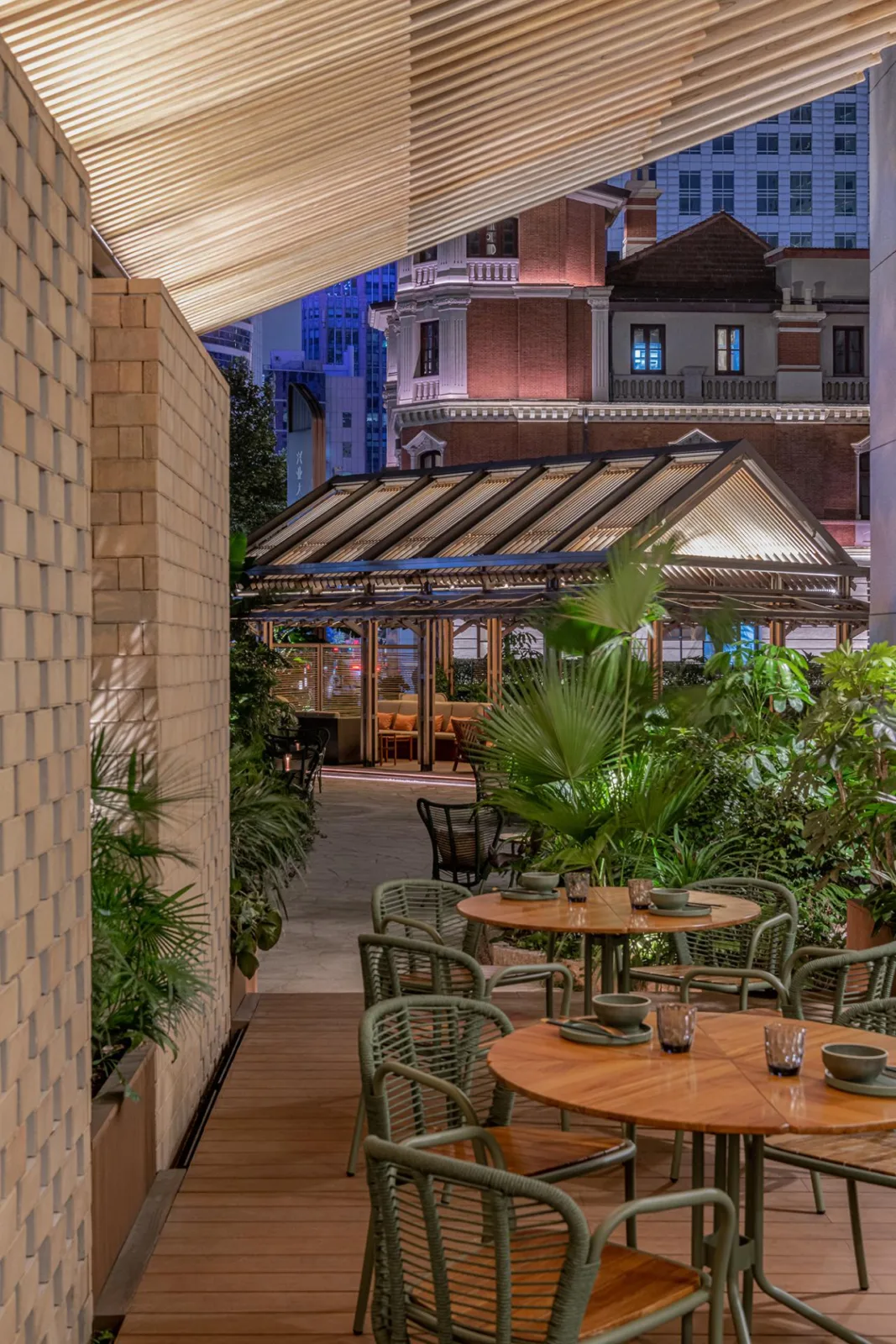
△ Reflected light from the wooden lattice creates a welcoming atmosphere
At the garden’s far end, the restaurant terrace features bamboo and wooden flooring to elevate the space. A cantilevered single-slope canopy complements the existing brick walls, creating a semi-private pavilion. The wooden lattice ceiling contrasts with the bar pavilion’s design, transitioning from sparse at the top to denser below. This allows ample daylight during the day and enhances light reflection in the evening.
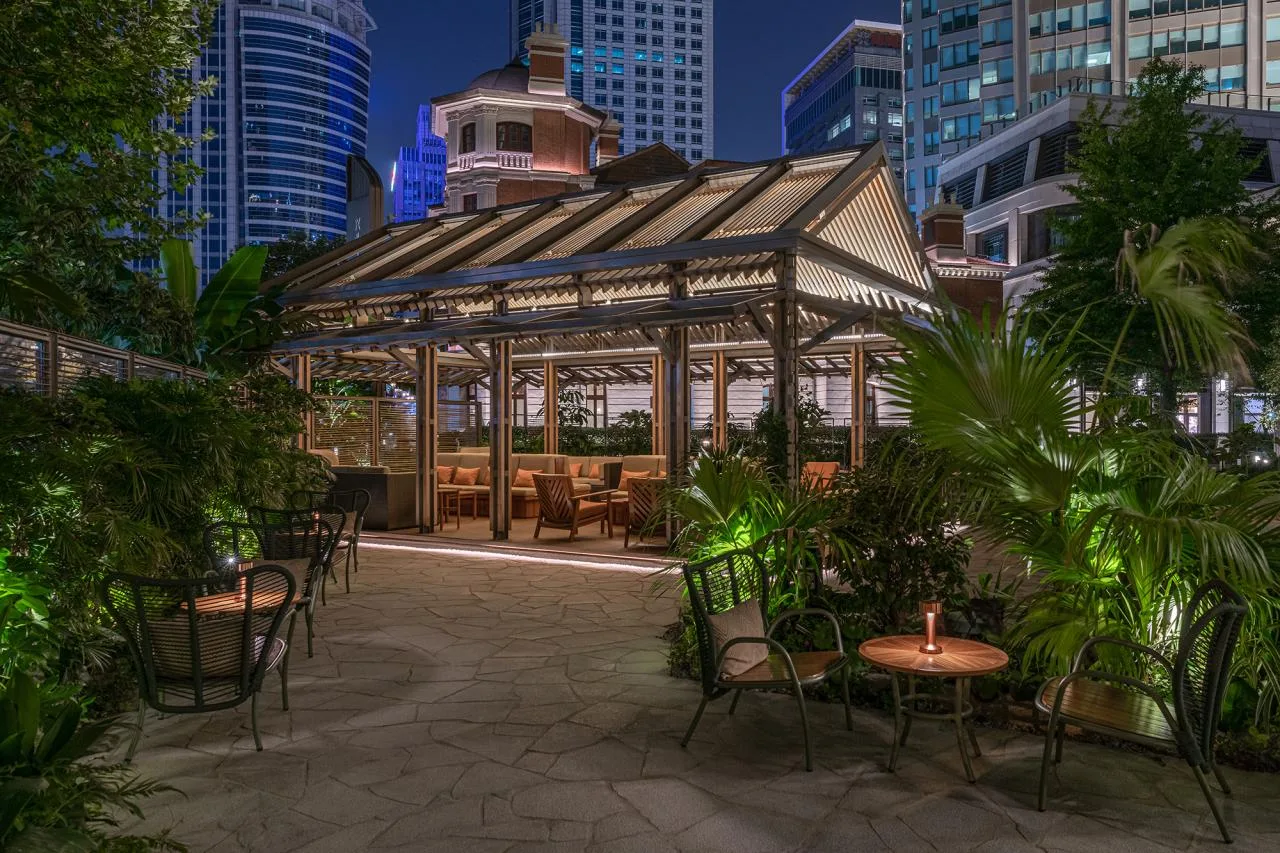
△ Pavilion illuminated at night
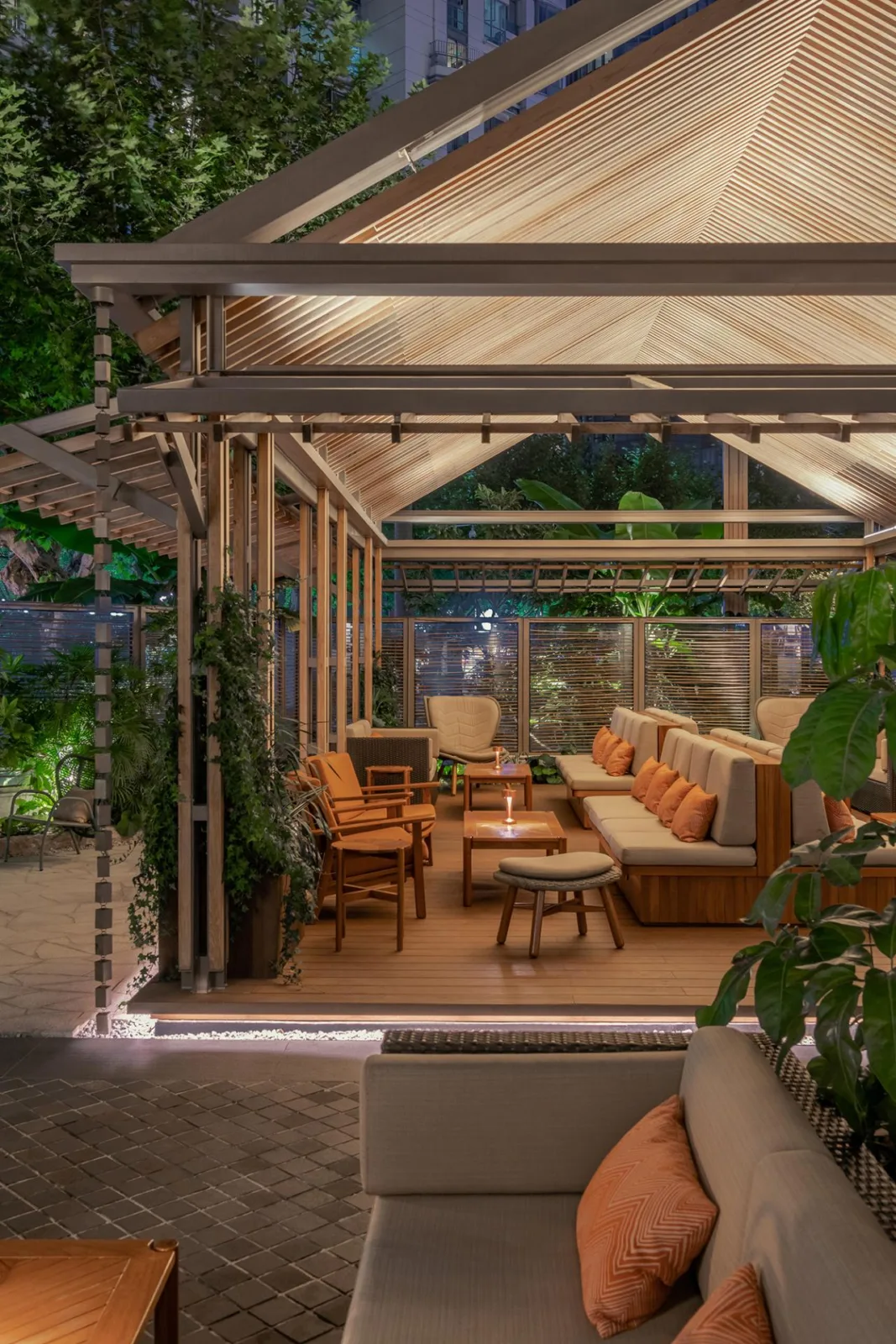
A casual, cozy social space
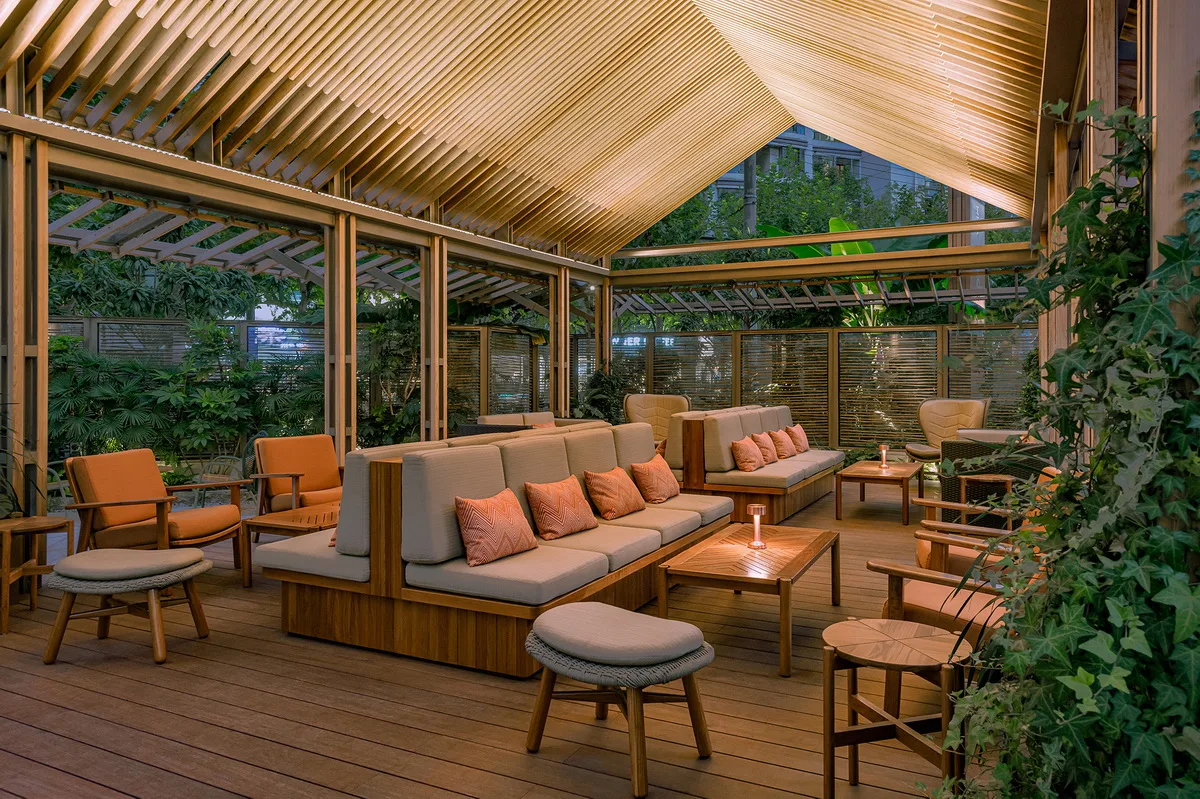
△ Wooden lattice provides soft, diffused light
As the sun sets, the contrasting lighting design offers guests varied moods. Each teak canopy glows warmly, inviting social interaction, while scattered garden tables provide intimate settings for quiet conversations under dim lighting.
Vein series
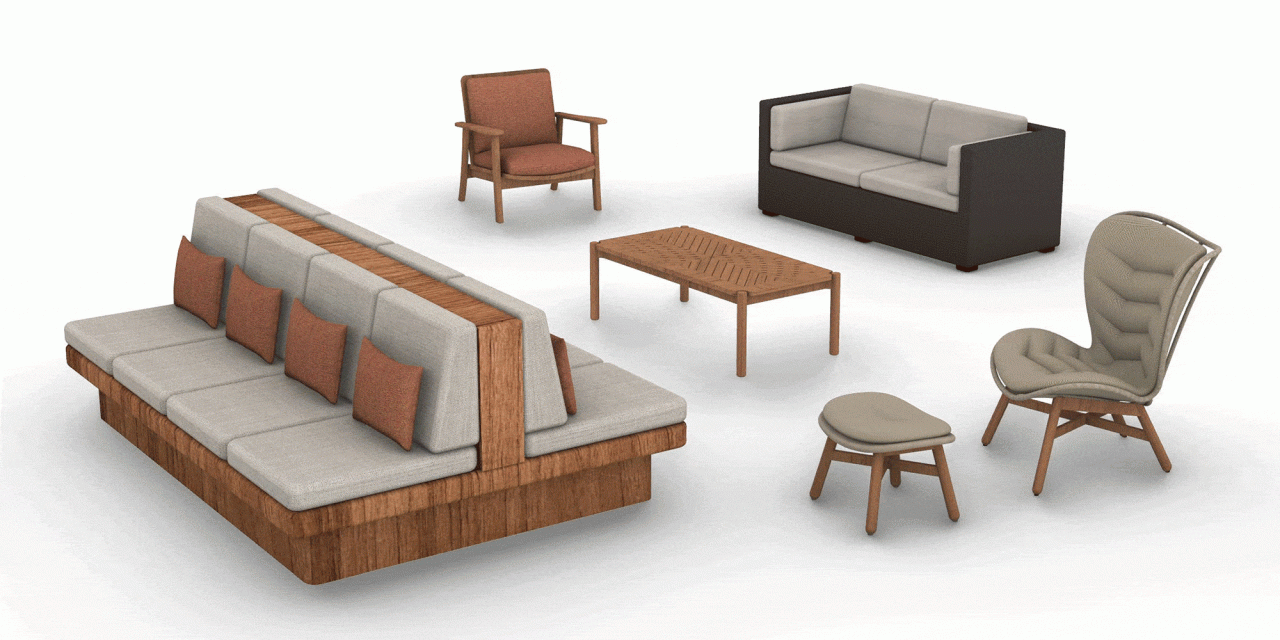
Outdoor furniture design inspired by leaf shapes and textures
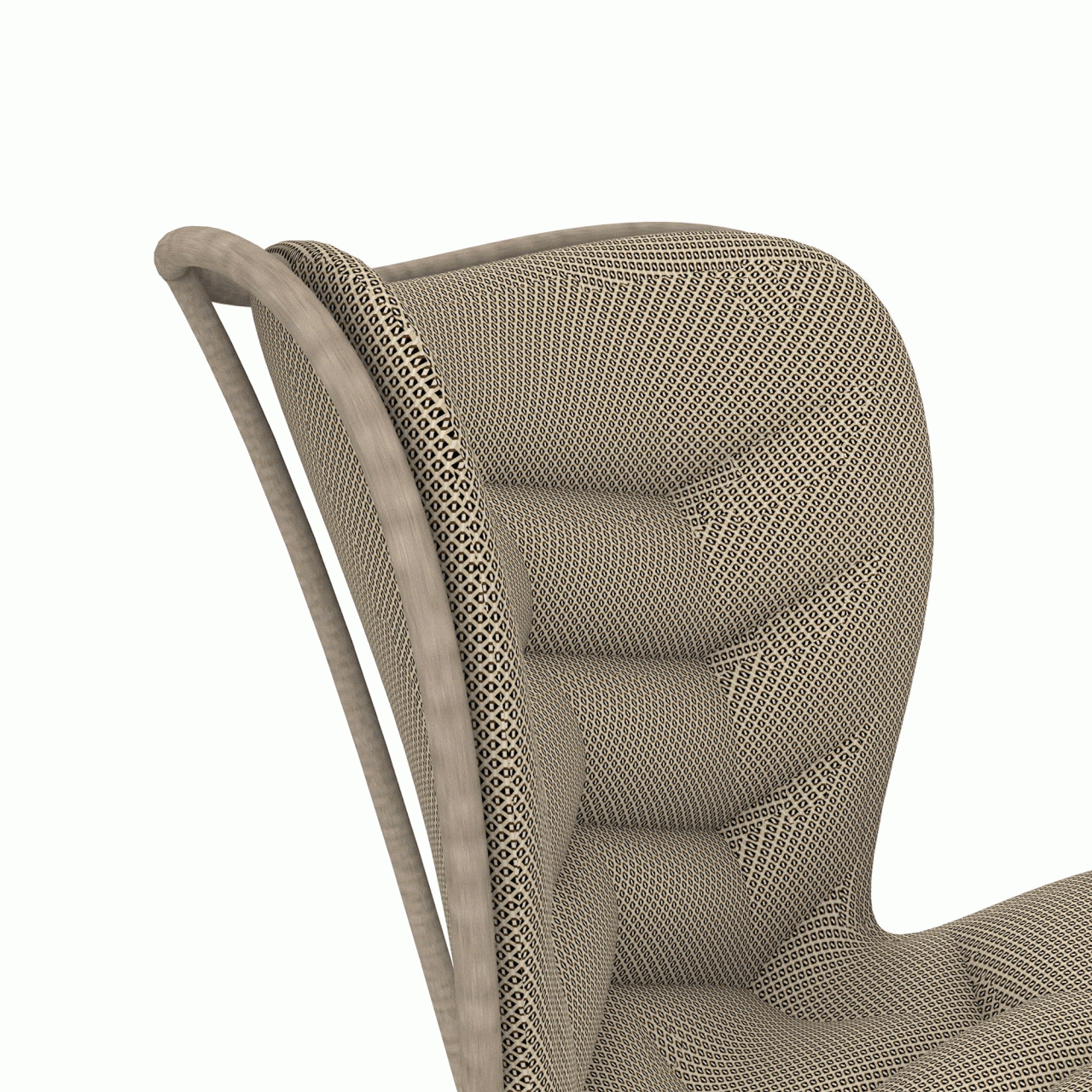
△ Detailed refinement through scale models
To create a unique design experience, Zhizuo Studio crafted two sets of minimalist outdoor furniture combining modern Southeast Asian design language with the vein pattern concept from plants.
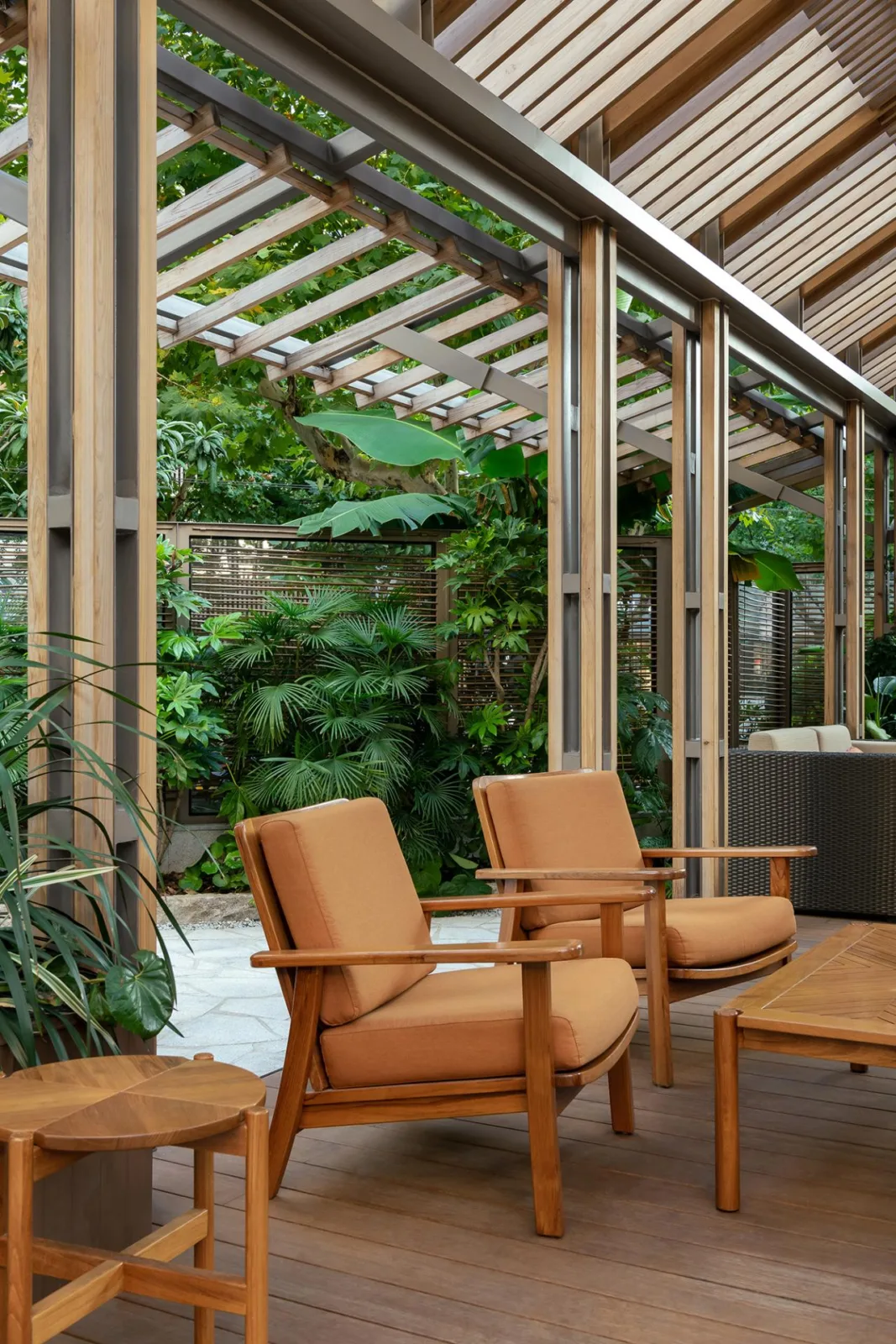
△ Clean and concise design with locally inspired curved lines
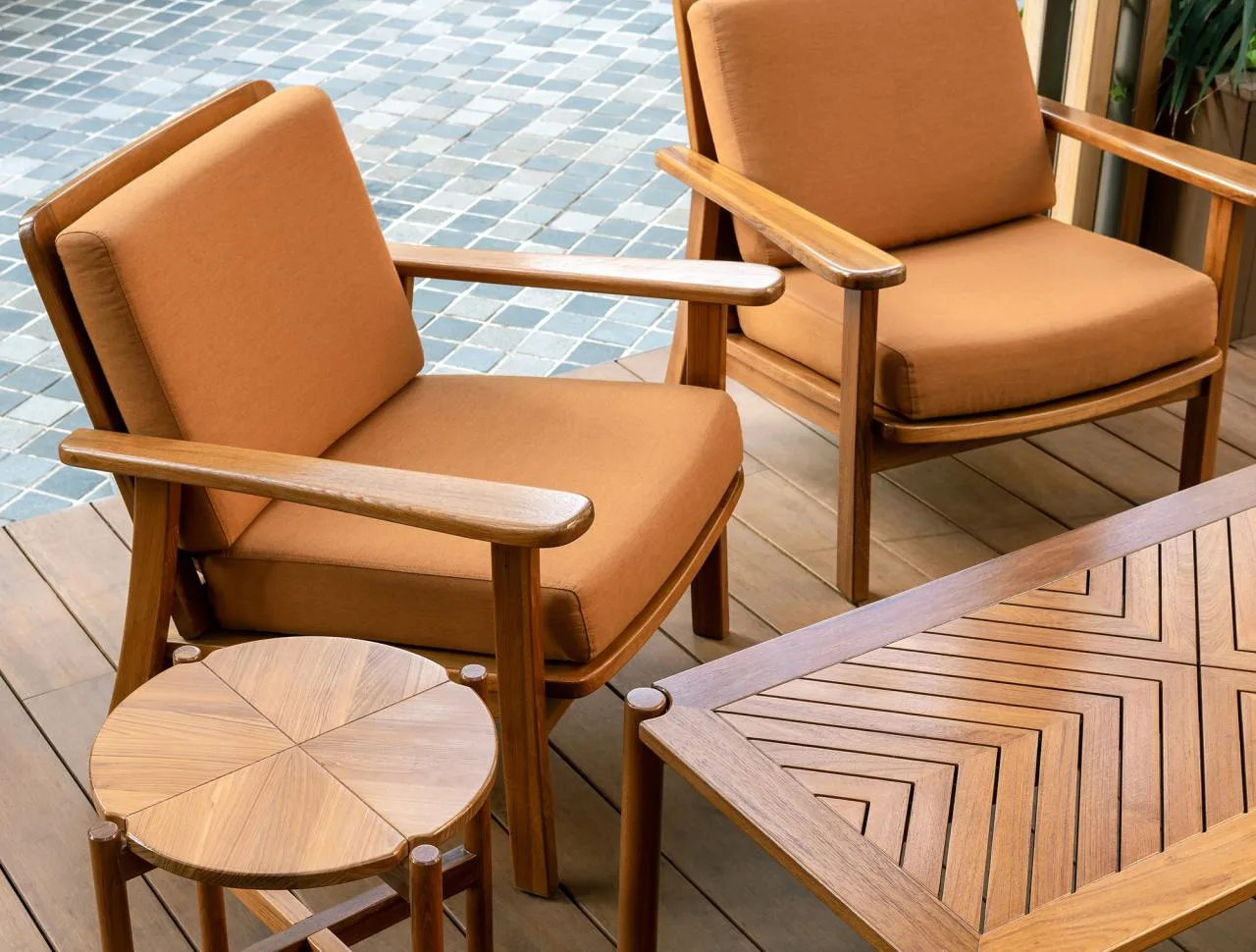
Abstract four-leaf clover-shaped tea table with vein-textured surface
The first set features sturdy teak furniture, prized in Southeast Asia for its stability outdoors. Tabletops and chair backs are crafted from diagonally arranged wooden boards mimicking leaf veins, adding natural patterns and visual interest. The gaps between the “veins” allow rainwater drainage, extending furniture longevity.
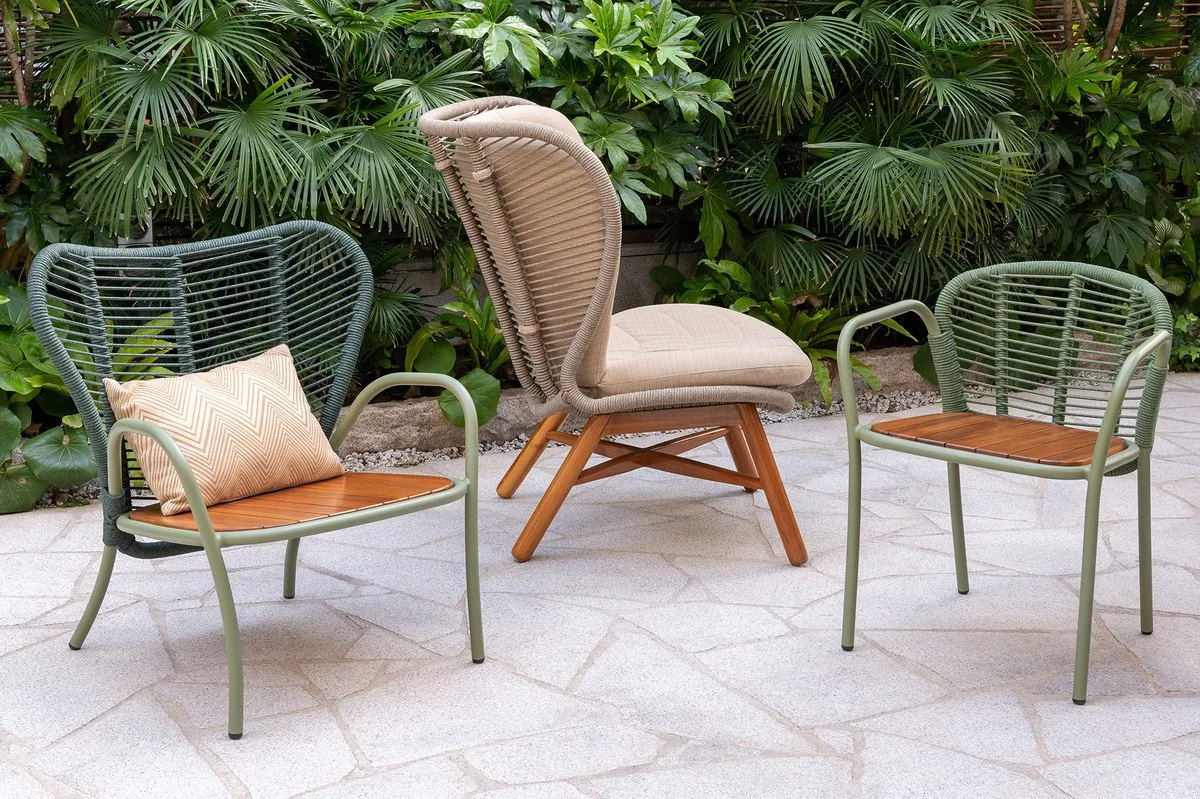
△ Lightweight dining and lounge chairs
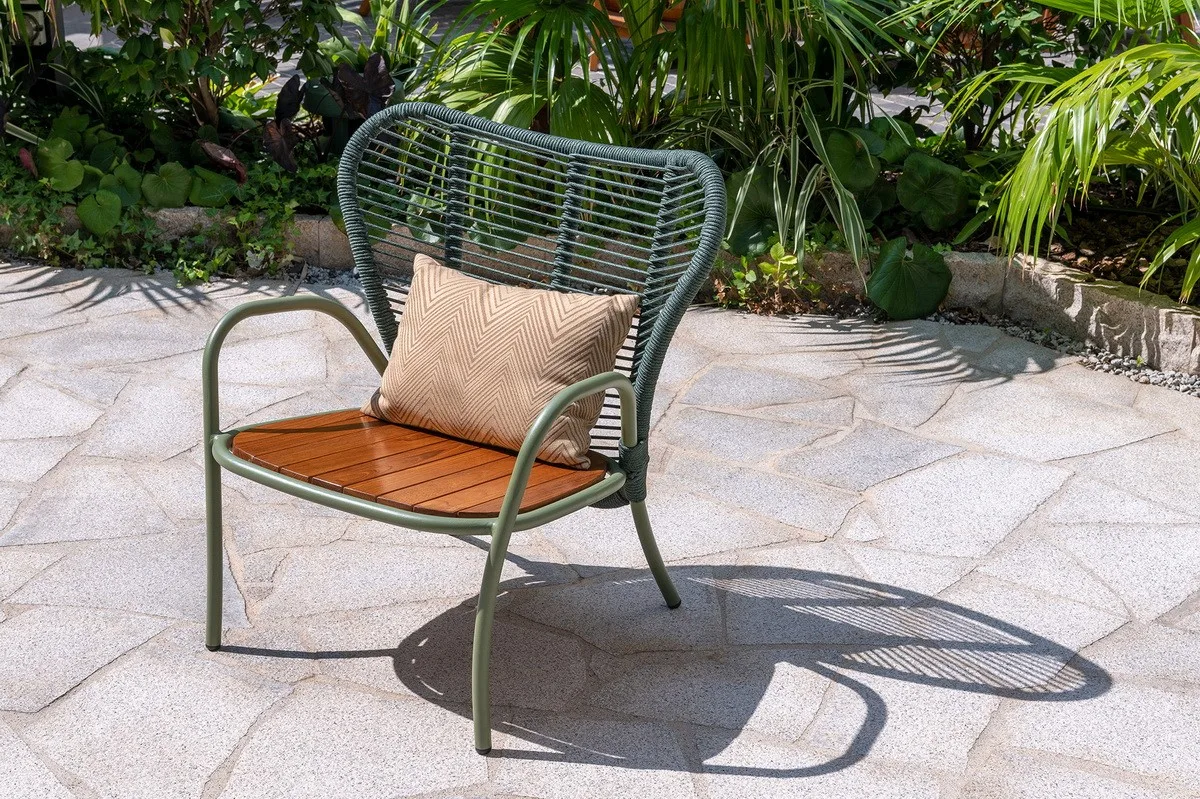
Organic shapes blend harmoniously with the natural surroundings
The second set consists of lightweight dining and lounge chairs with aluminum tube frames and nylon braided ropes. Their curved forms echo the shapes of branches and leaves, offering both aesthetic appeal and comfortable support.
This renovation project reflects Zhizuo Studio’s response to Sukhotai’s brand philosophy and traditional Southeast Asian style. Drawing inspiration from nature and employing thoughtful landscaping, the design unlocks the potential of an underused site. Within the tranquil atmosphere of Shuangting Garden, guests can dine, relax, and momentarily escape the urban steel jungle to experience a sense of calm and ease.
Project Information
Owner: Shanghai Sukhotai Hotel
Location: 380 Weihai Road, Jing’an District, Shanghai
Area: 530 square meters
Architecture & Furniture Design: LUKSTUDIO Studio (www.lukstudio design.com)
Design Director: Lu Yingzhi
Design Team: Zhang Yicheng, Dai Min, Wang Haixin, Du Xue, You Xing, Deng Haiqi
Scope: Architecture, Landscape, Furniture, and Lighting Design
Design Period: September 2020 – March 2021
Construction Period: July 2021 – December 2021
Structural Consultant: Shanghai Sanyao Construction Engineering Design Co., Ltd
Landscape Consultant: Yu Chuanwen Landscape Design Studio
Main Materials: Carbonized wood (Yuexiu wood), Carbonized bamboo flooring (Jinzhu), Carbonized bamboo curtains, Teak wood, Outdoor fabric, Steel, Stainless steel, Aluminum tubes, Granite, Sunshade system (Guthrie Douglas)
Construction: Shanghai Zhuzong Group Construction and Development Co., Ltd
Lighting Supplier: Krislite
Photography: Dirk Weiblen















Must log in before commenting!
Sign Up