
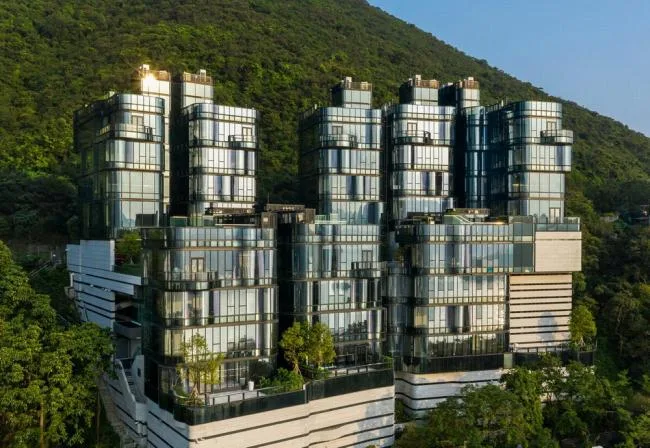
PULSA Appearance Vision
Repulse Bay is Hong Kong’s most prestigious residential area, offering stunning sea views and lush mountainous backdrops. This crescent-shaped bay is renowned for its tropical scenery, complemented by verdant hills that reflect the traditional Chinese mountain landscape. Commissioned by the owner, Aedas designed eight luxury single-family homes nestled on the scenic slopes of Repulse Bay, allowing residents to fully embrace the breathtaking surroundings.
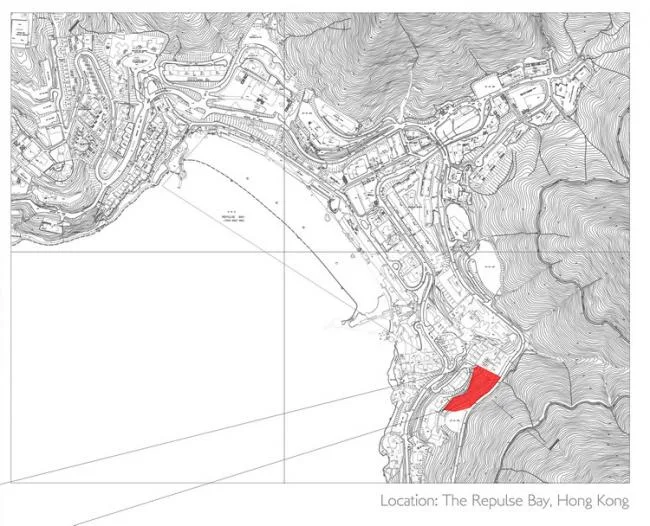
Project Site Location and Terrain
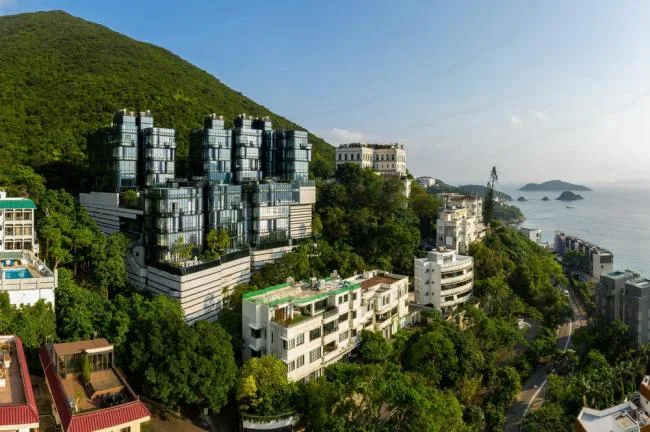
PULSA Appearance Vision
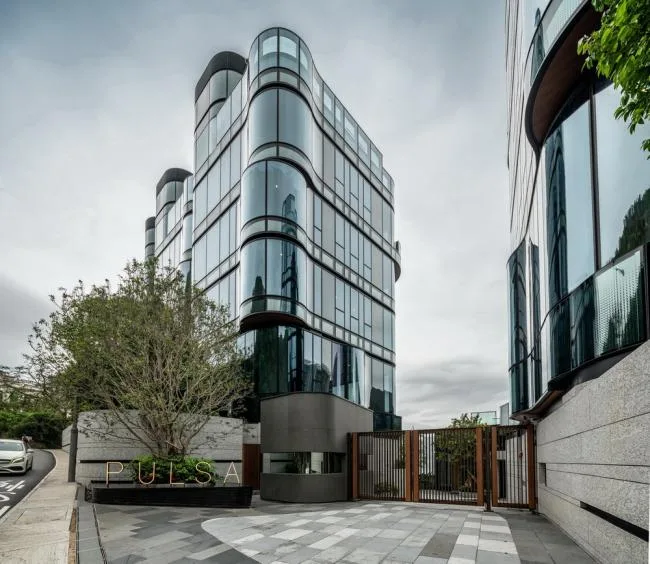
PULSA Main Entrance
Constructing luxury homes here is straightforward, but the true challenge lies in allowing residents and passersby to fully appreciate the natural beauty without causing harm. Project designer Cary Lau’s solution was clear: integrate with nature, become one with it, and truly enjoy it.
When architecture blends seamlessly into its natural surroundings, destruction becomes impossible. Designer Liu Jingkang carefully considered both the building’s appearance and layout to harmonize PULSA with the environment.
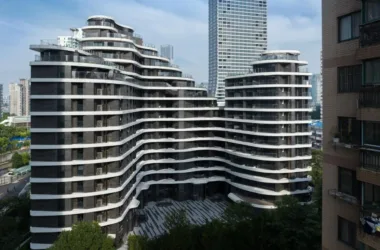
The site is surrounded by lush, verdant trees, creating a strong sense of nature. Instead of opting for rigid, cold geometric shapes, the design follows the natural contours of the site, inspired by the rhythmic waves of Repulse Bay. These dynamic, flowing lines shape the building’s outline, giving it a lively and organic feel (BIM design). Each building and floor features unique curves that both distinguish and connect the structures. From different viewpoints, the buildings reveal varied shapes, reminiscent of the ever-changing sea.
For the exterior facade, carefully selected glass curtain walls are used. As sunlight refracts on the undulating curved glass, the surrounding scenery reflects off the surface, shifting with the viewer’s perspective. This creates a facade that is constantly alive with natural imagery.
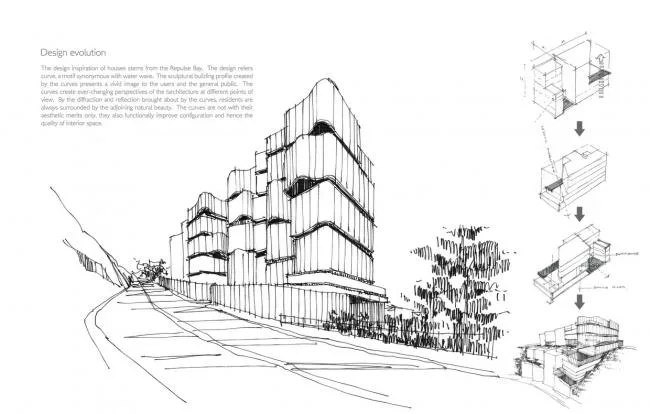
Designer’s Hand-Drawn Artwork
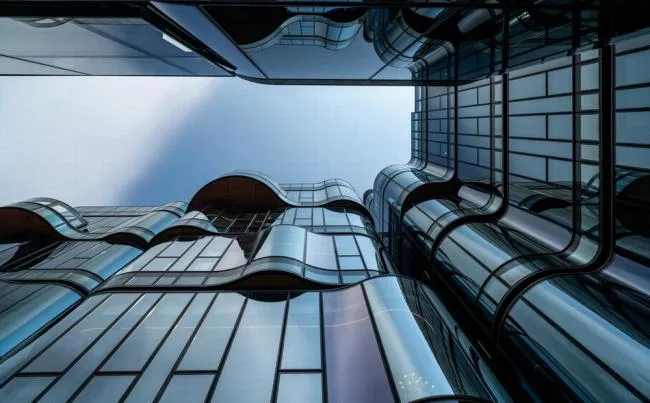
PULSA’s form mimics the curved outer contour of waves.
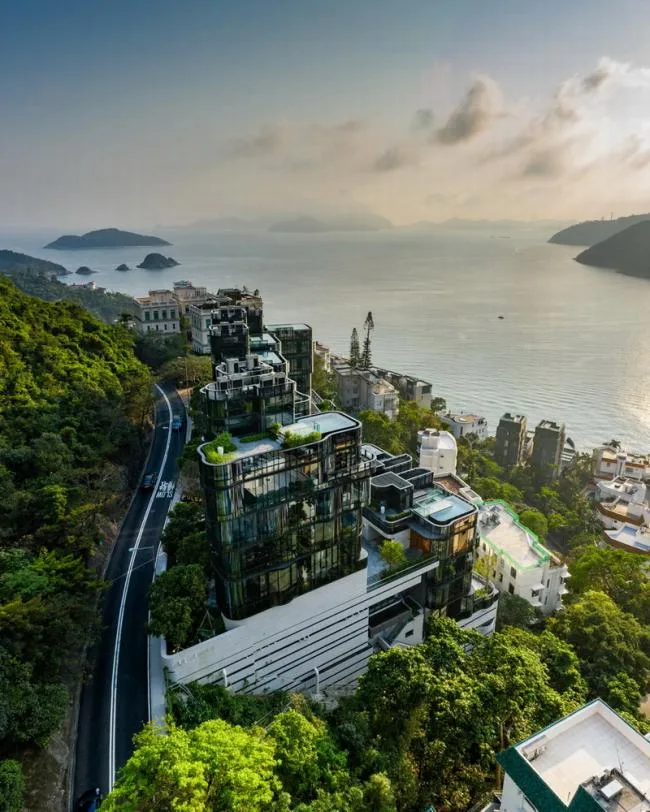
The lush mountain landscape reflects beautifully on the glass curtain wall, seamlessly merging the architecture with nature.
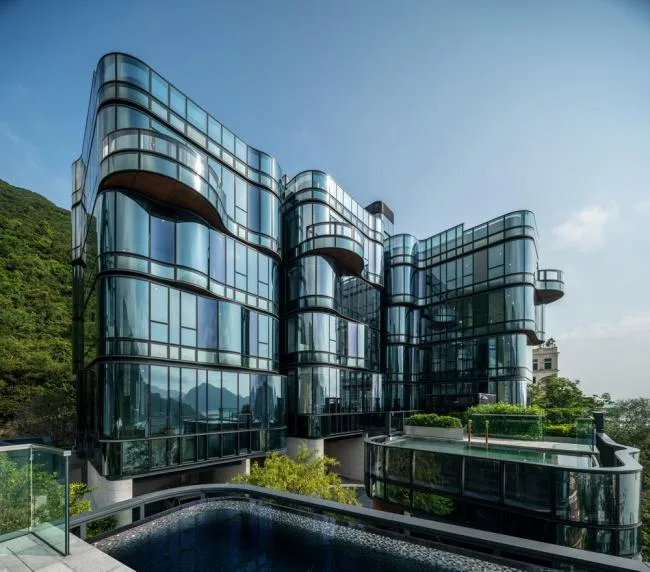
Enjoy the unified natural scenery of sea and sky, along with the rolling mountains reflected on the glass facade.
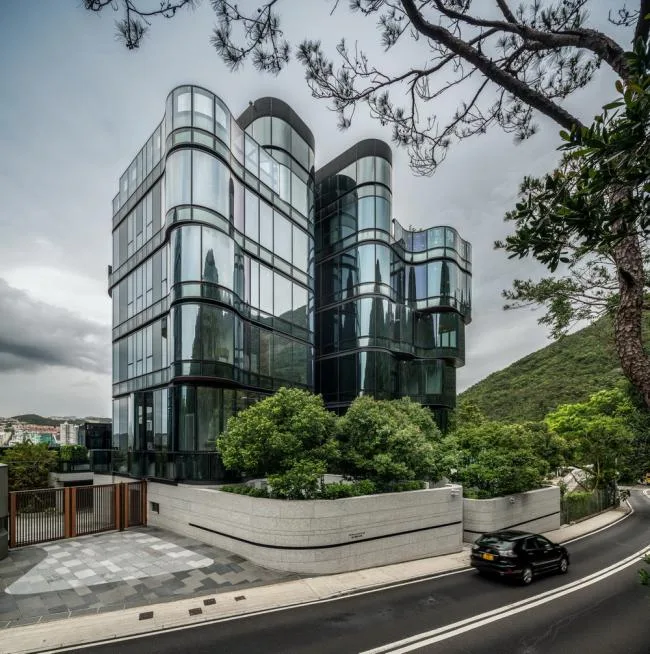
Mountain scenery reflected on the glass curtain wall.
The site is irregularly shaped and subject to regulations requiring non-development buffer zones on both sides, which significantly limits usable space. The eight residential buildings had to be arranged in two rows. The terrain is narrow and complex, curving at the lower section and not fully facing the shallow water bay. Situated on a 40° slope with an elevation difference of approximately 22 meters, visual obstruction is inevitable. These constraints demanded careful planning of building height and orientation to preserve and maximize sea views.
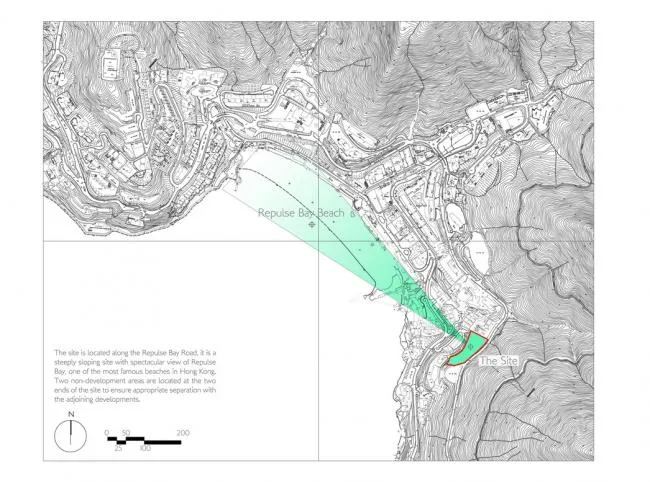
Schematic Diagram of Site Views
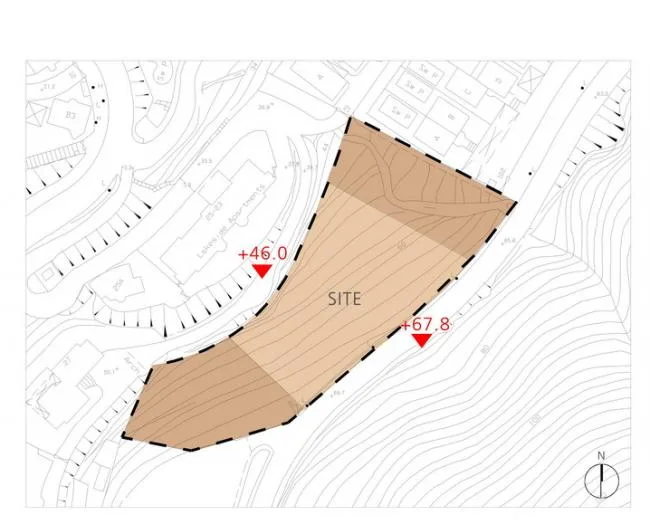
Schematic Diagram of Terrain and Usable Areas
After evaluating multiple options, designer Liu Jingkang chose to follow the natural mountain terrain and capitalize on the site’s high visibility. The residential buildings are arranged in a staggered manner with five-story and three-story structures, and the upper foundation is elevated by two meters. This approach avoids view obstruction, maximizes the upper-level sea views, and maintains residential comfort.
Simultaneously, it allows the lower-level homes to enjoy improved sightlines toward the shallow water bay, ensuring all buildings benefit from optimal sea views. The slope’s challenges are transformed into spatial advantages by utilizing the angles between the residences and the mountain to conceal functional spaces like garages and mechanical rooms. This strategy not only minimizes the impact on the mountain terrain (BIM tutorial) but also reduces the visual footprint of support spaces on the residences’ appearance.
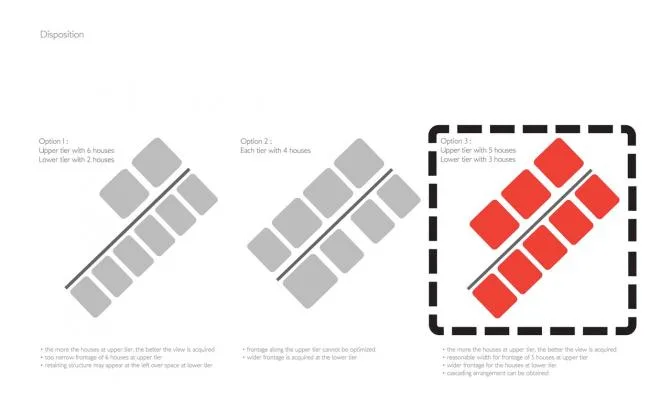
Horizontal Comparison of Three Layout Schemes
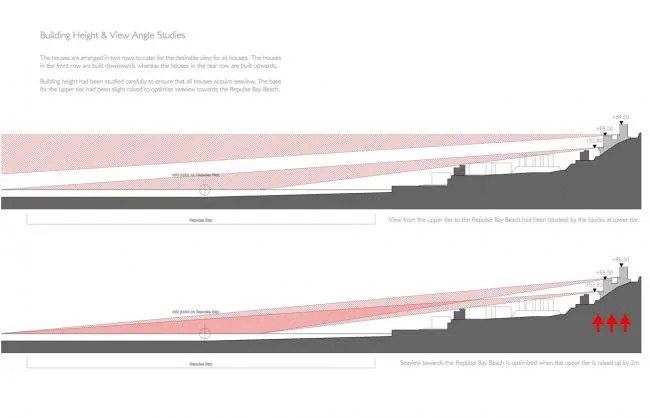
Comparison Between Original Terrain and Elevated Views
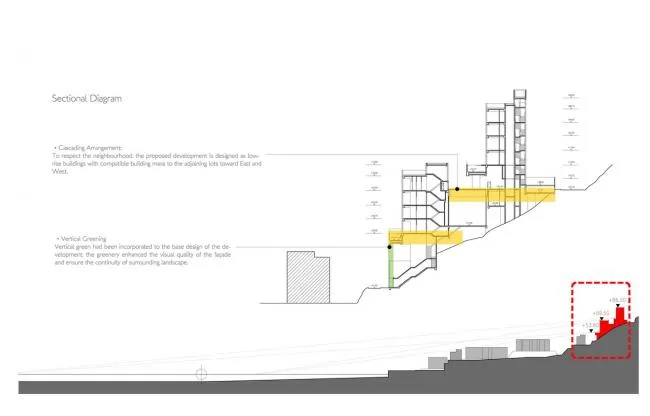
The buildings conform to the mountain terrain, reducing environmental impact while maximizing slope utilization.
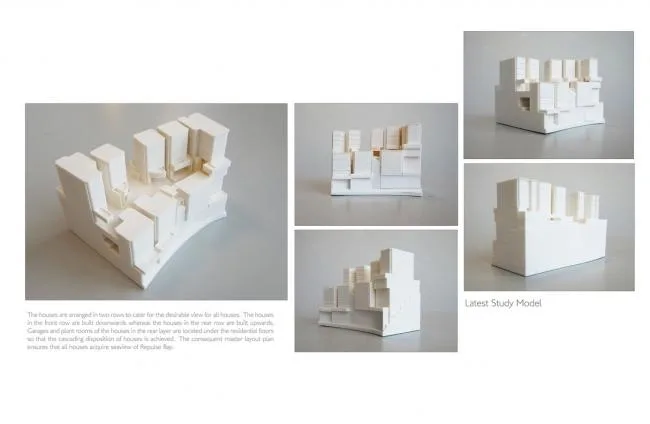
PULSA Building Model
Integration with nature is just the beginning; considering the impact over time is equally important. Designer Liu Jingkang incorporated extensive green and energy-saving features throughout the project. Multiple green spaces are planned within the street walls and between buildings, with green landscaped platforms installed on each rooftop.
The exterior facade uses hollow LOW-E coated glass and convection windows to improve insulation. Rooftop swimming pools and elevated platforms provide comprehensive shading and thermal protection to boost energy efficiency. This sustainable approach earned the residential development a Gold level rating in the BEAM Green Building Environmental Assessment.
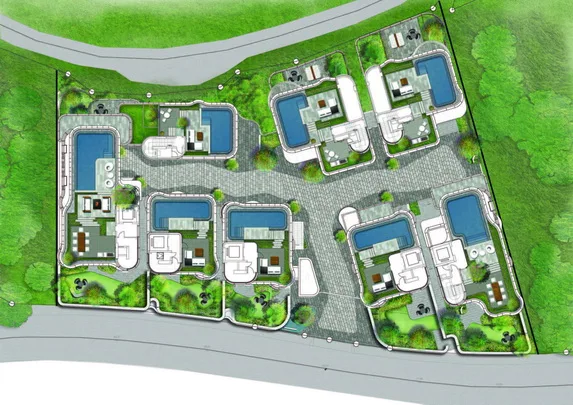
PULSA Green Overhead View
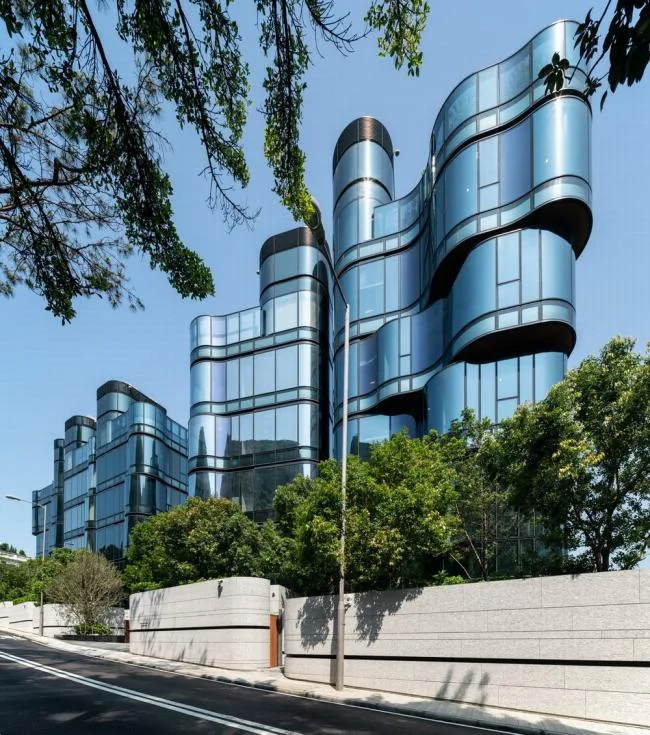
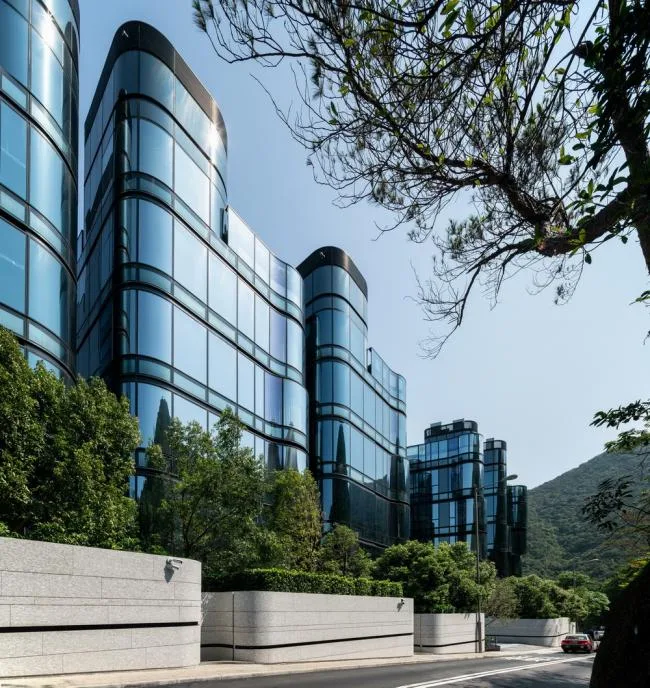
PULSA Street Wall Greening Landscape
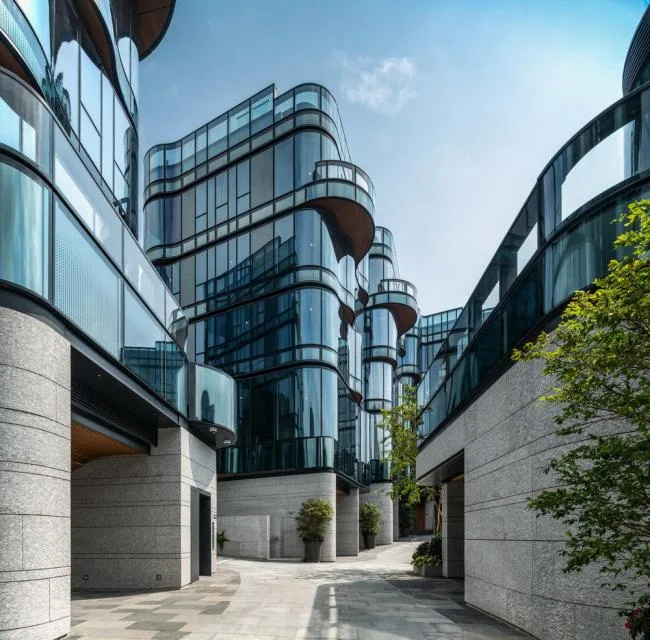
PULSA Interior Block
Designer Liu Jingkang reflected, “At the start of the design process, my team and I focused on minimizing disruption and abruptness. Our goal was for the project to belong both to nature and to itself.”
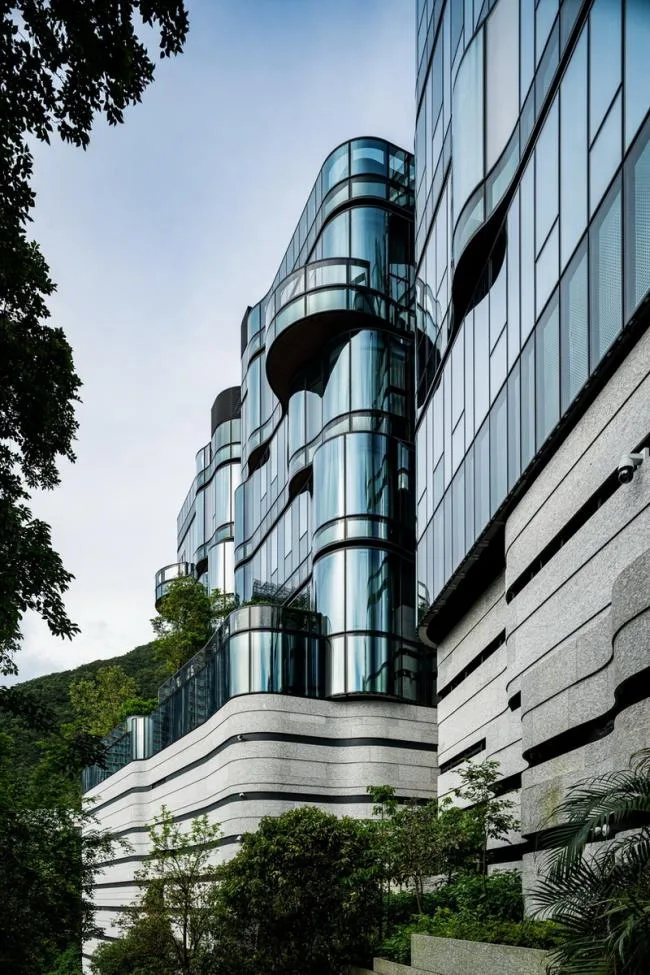
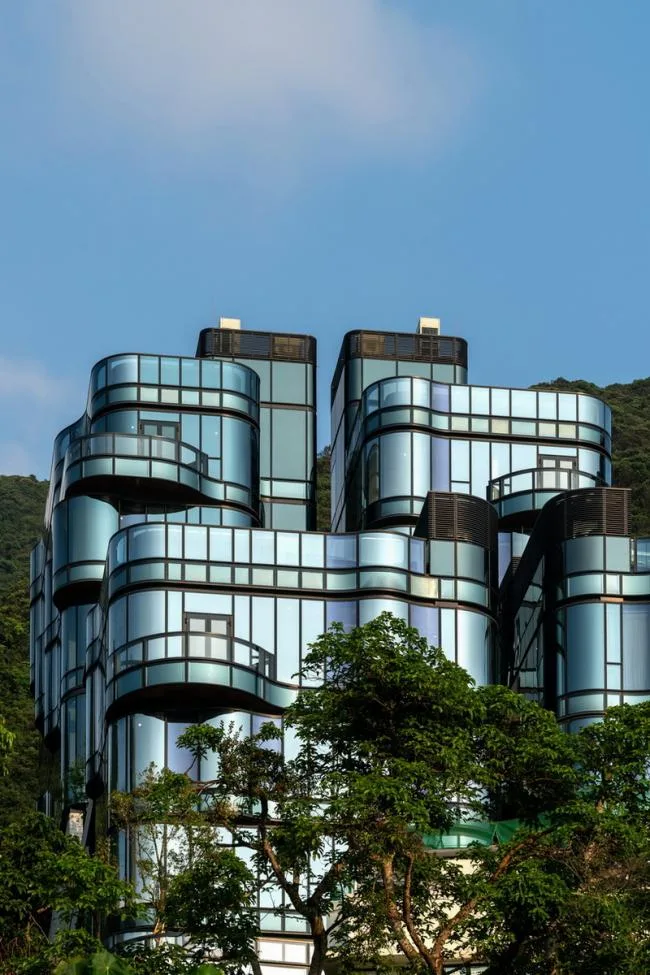
PULSA Close-Up Facade
Project Information
Project: Shallow Water Bay PULSA
Location: Hong Kong, China
Architectural Design: Aedas
Owner: Winfield Investments Limited
Building Area: 3,906 square meters
Completion Year: 2018
Director: Cary Lau (Liu Jingkang)












Must log in before commenting!
Sign Up