
Summary
The Shenyao Art Center, once an old factory area, has been transformed into a vibrant creative art park focused primarily on ceramic art. The main building on the south side of Phase II is renovated using the existing dormitory structure, while a new building is added within the original footprint on the north side. The interior space introduces new functional areas by flexibly rearranging and reintegrating the original layout, creating an engaging spatial experience that balances form and function.
The architectural design embraces curved spaces that dissolve the structure into a subtle, almost imperceptible order, enhancing its aesthetic appeal.
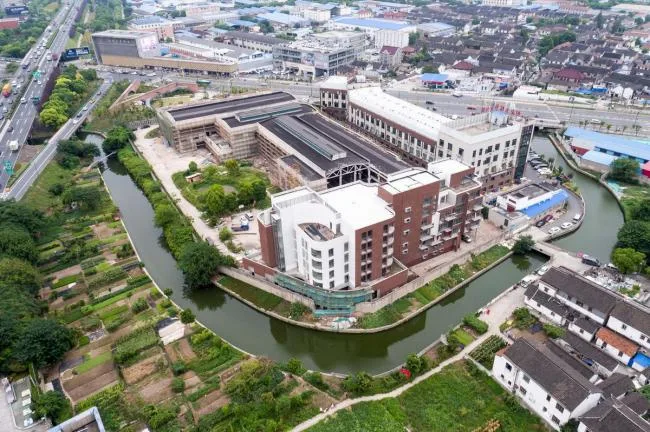
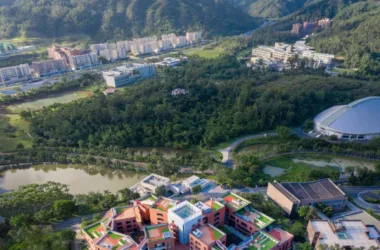
▲ Aerial view of Shenyao Art Center
The facade features a combination of red clay bricks and white walls, evoking the appearance of a ceramic inner pot. This design choice reflects a refined narrative, tracing the transformation from raw clay to finished ceramic artwork. The interplay of expanding and contracting spaces, organized by curved walls and varied building elevations, enriches the urban environment around the center.
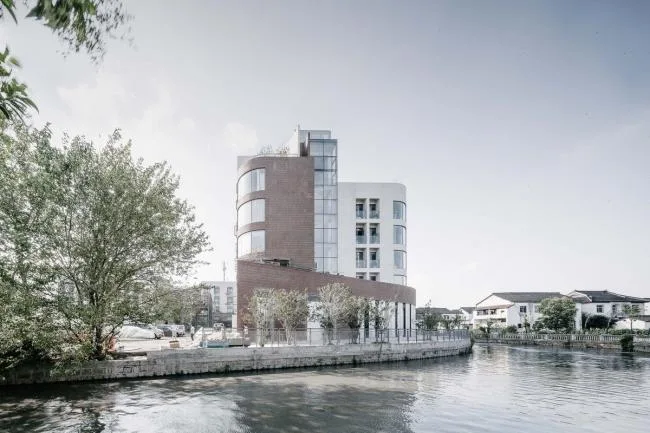
▲ North facade
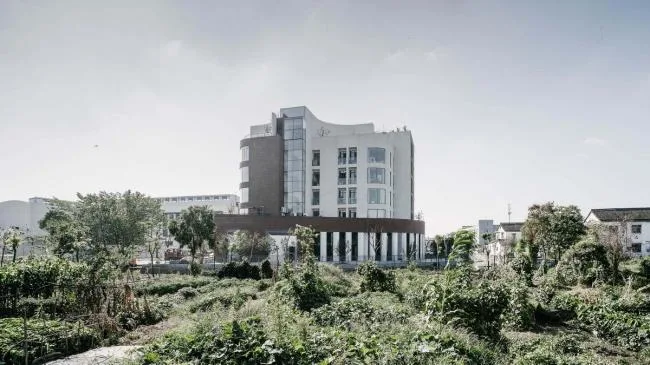
▲ North facade
Current Situation
The Phase II main building originally served as a multi-story factory and later as a dormitory for employees of the Phase I factory complex. The existing structural framework was preserved, with the design intent to honor the industrial order of the original architecture while introducing new functions. The former dormitory has thus been transformed into a versatile office space within the creative art park.
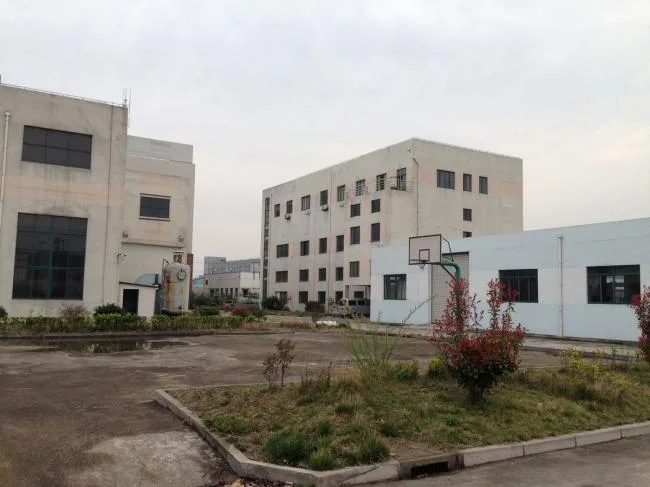
▲ Original appearance of Phase II
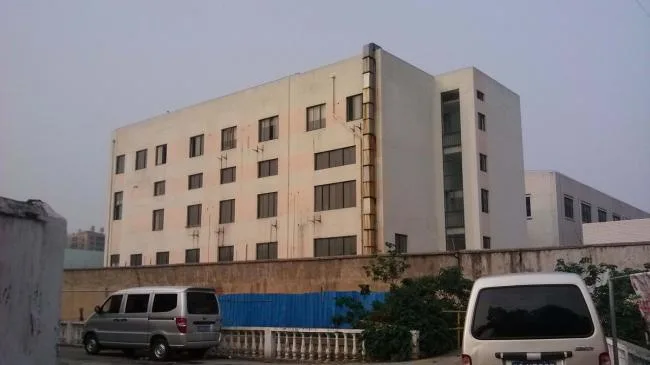
▲ Southwest corner of Phase II – original appearance
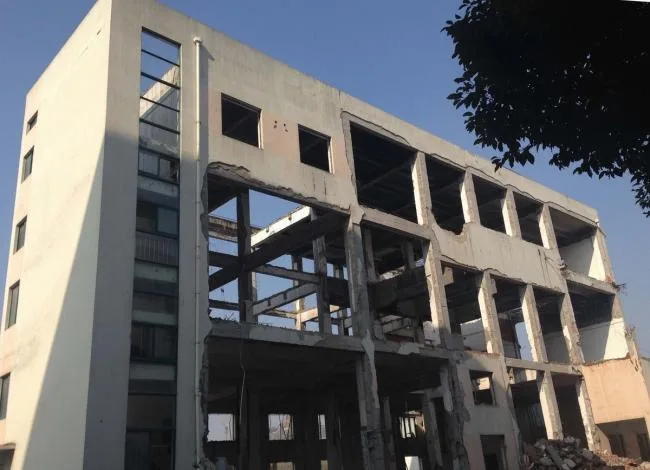
▲ Facade demolition
Design Strategy
The overall architectural strategy for Phase II builds upon the “plain porcelain tiles” concept introduced in Phase I. The facade vocabulary evolves from an initial expression to a spatial narrative reflecting transformation and progression. The design moves from a rough volumetric approach to a refined presentation, embracing fragmentation and reorganization through a progressive spatial design.
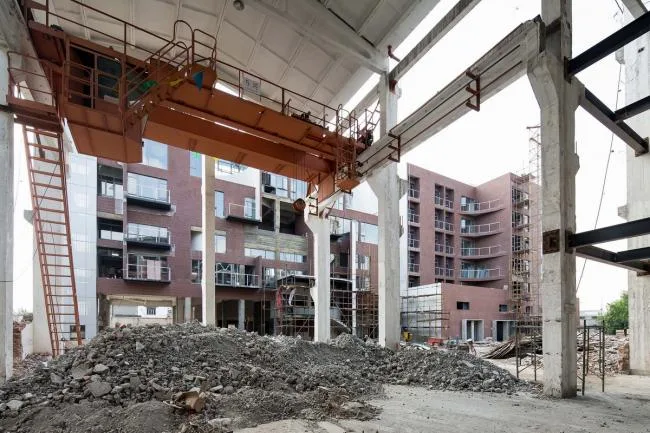
▲ Under renovation
Facade Renovation and Interior Spaces
The facade design is primarily driven by the internal functional layout. To create an internal corridor-style atrium, parts of the first floor are elevated, serving as the main building entrance. The outdoor evacuation staircase on the atrium’s left remains in its original position.
The exterior facade is clad with metal perforated panels, offering a modern, clean aesthetic that contrasts with the fragmented form of the main building. These panels also allow natural light to filter into the evacuation staircase, enhancing illumination.
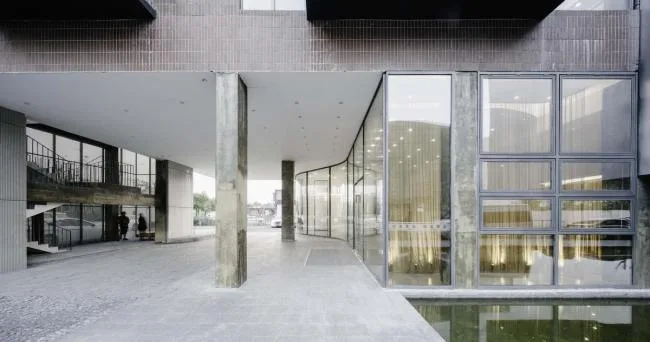
▲ Ground-level atrium
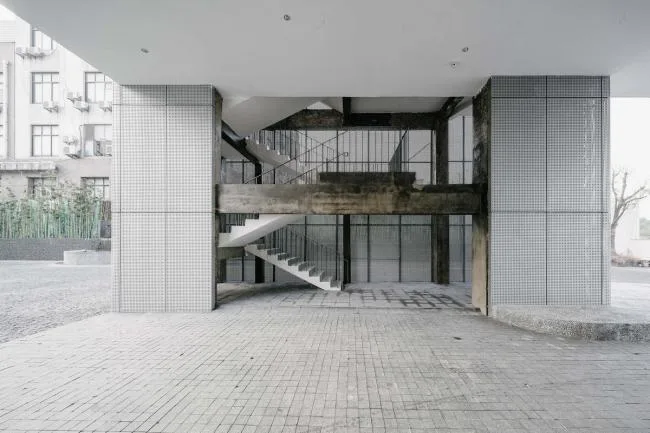
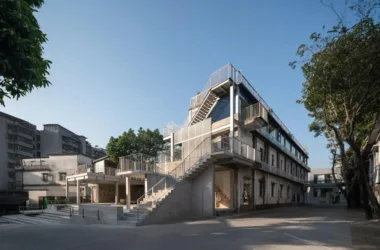
▲ Outdoor evacuation stairs
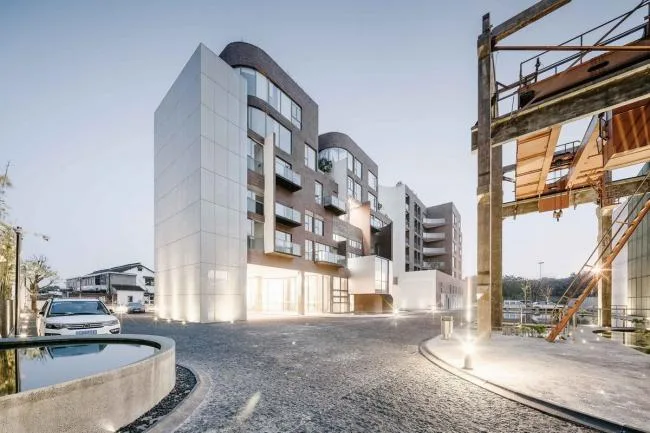
▲ Southeast corner entrance
To alleviate the feeling of confinement caused by the original structure’s low ceiling height, the middle floors were reconfigured. By removing the existing middle floor slab and installing a new slab at a staggered height, the beams are exposed on the facade, allowing the building’s structural framework to be seen and appreciated from outside.
The facade reflects the large interior spaces divided by modular rooms on each floor, shaping the building’s form through internal spatial relationships.
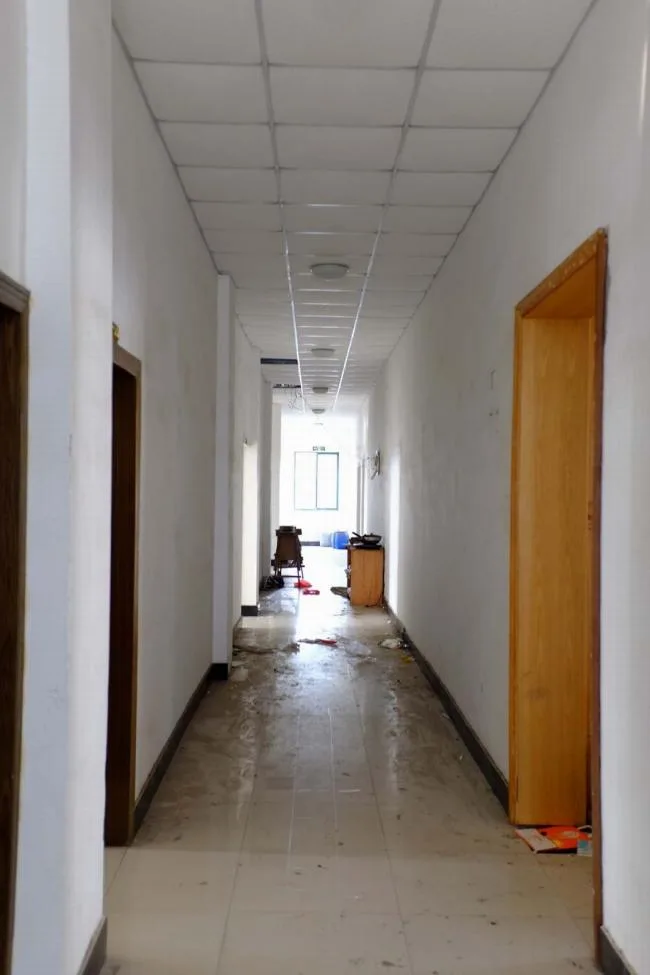
▲ Interior space before renovation
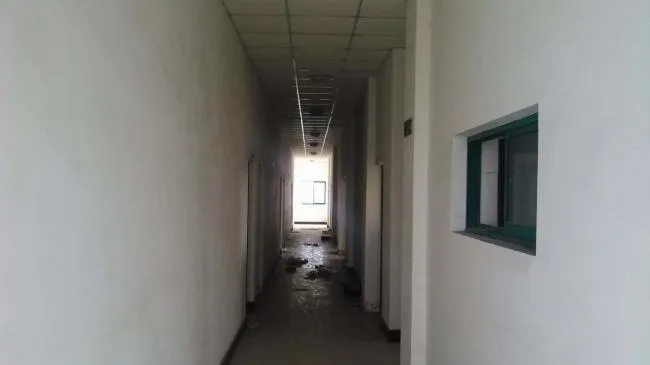
▲ Interior space before renovation
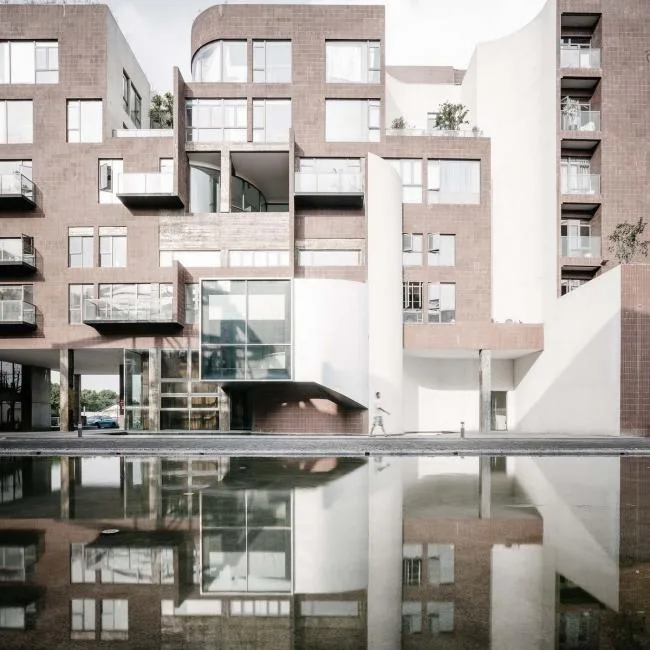
▲ East facade
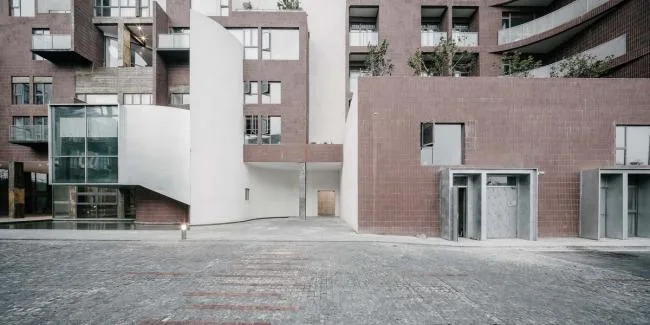
▲ East facade
A prominent set of window openings protrudes from the stairwell leading to the second floor, creating a spacious extension as visitors ascend. The internal staircase spirals upward, and the large window floods the space with natural light. This design elegantly continues the curve of the building’s exterior wall into the interior, visually connecting the stairwell and window into a unified composition. This curved articulation is a key feature of the building’s external volume.
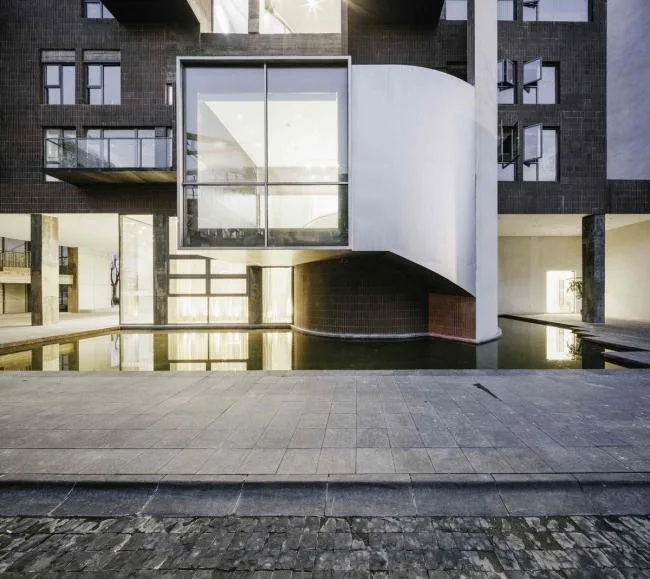
▲ Main vertical door opening
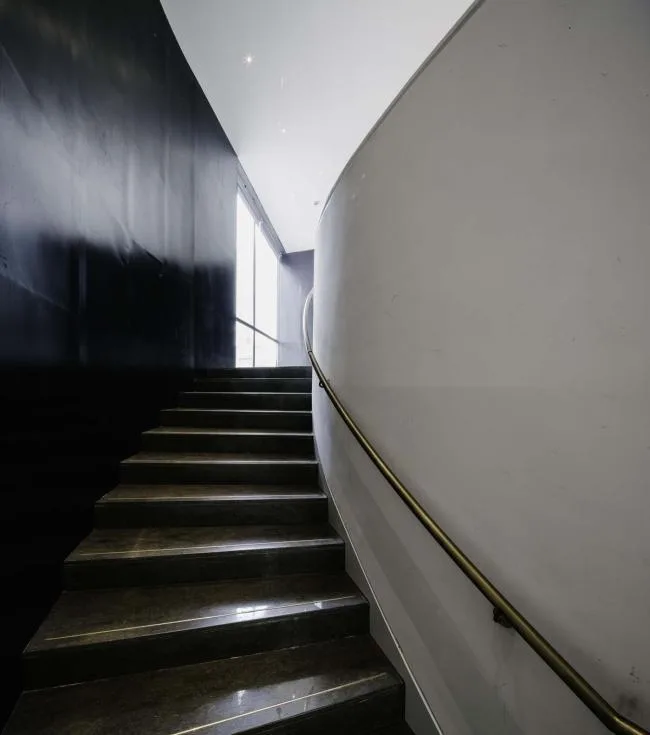
▲ Indoor public staircase
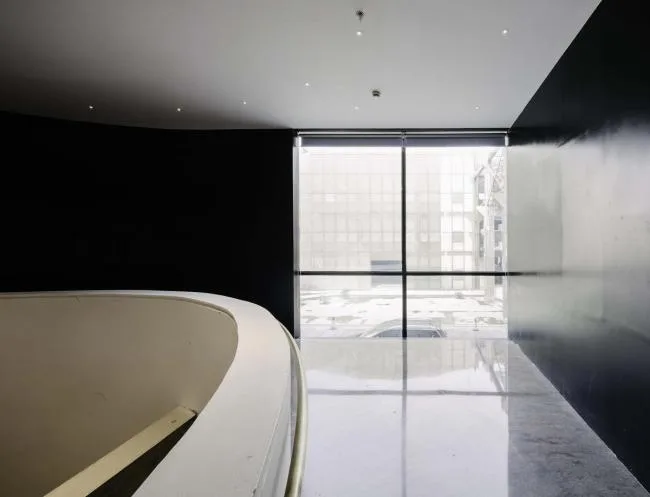
▲ Indoor second-floor platform
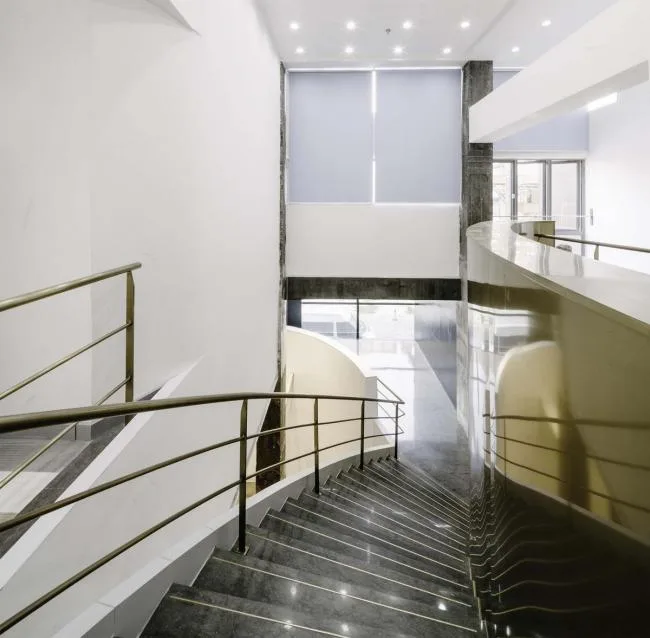
▲ Curved staircase
The rear facade is organized by the zoning of rooms, defining the relationship between facade and balconies. The segmented facades between the large volume and small balconies form curved units, visually presenting a sculptural concept reminiscent of fragmented ceramic pieces.
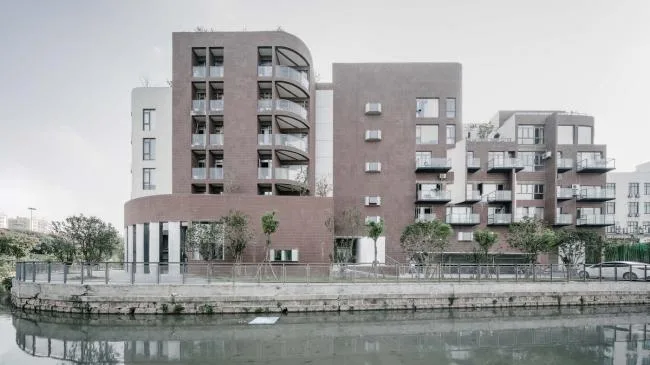
▲ West facade
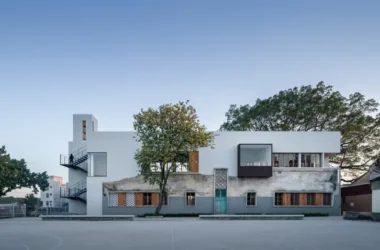
On the building’s right side is the original first-floor cafeteria, which retains its form and dining function, while new floor space has been added above. The new section is divided into modular rooms that extend vertically, creating a cohesive volume. This update contrasts with the original building, enriching the facade with varied forms. The new structure integrates seamlessly with the old, establishing a unique visual dialogue between past and present.
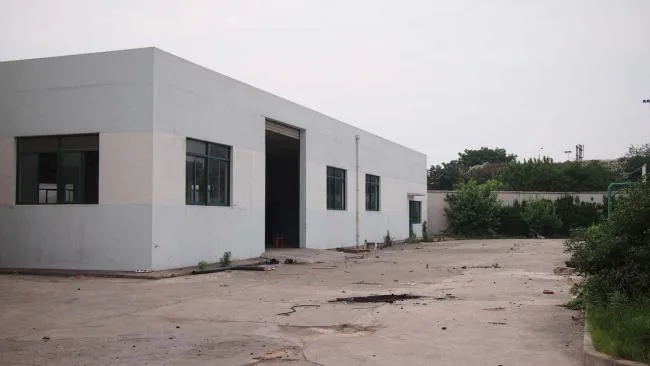
▲ Original appearance of the north cafeteria
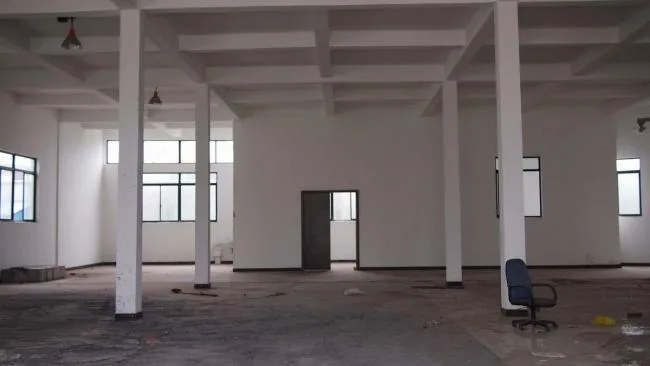
▲ Interior before cafeteria renovation
Sketch Design
The lobby entrance is semi-enclosed by a curved metal mesh, naturally carving out a deep, transparent space reminiscent of a rolling shutter. A ground spotlight enhances the lobby’s atmosphere. Two pine wood pieces retained by the owner are repurposed into curved benches, continuing the spatial module and reinforcing the relationship between furniture and the lobby’s dynamic space.
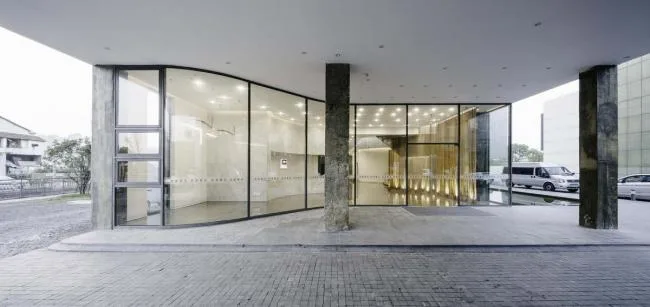
▲ Lobby entrance
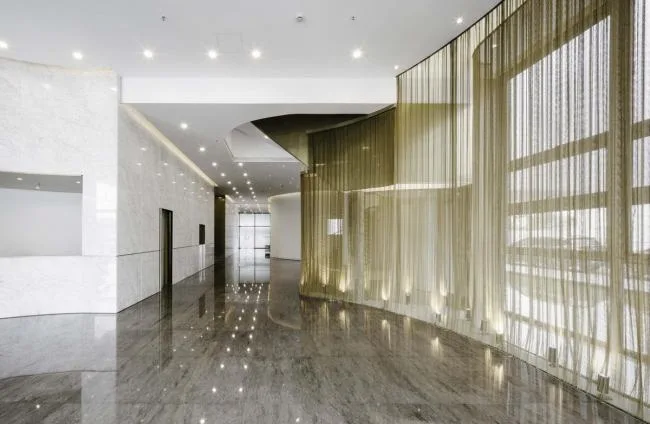
▲ First floor lobby
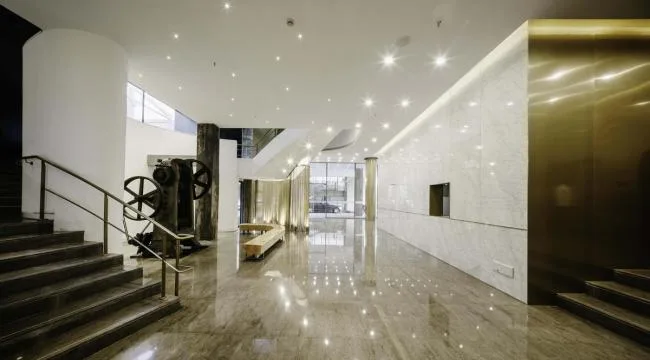
▲ First floor lobby
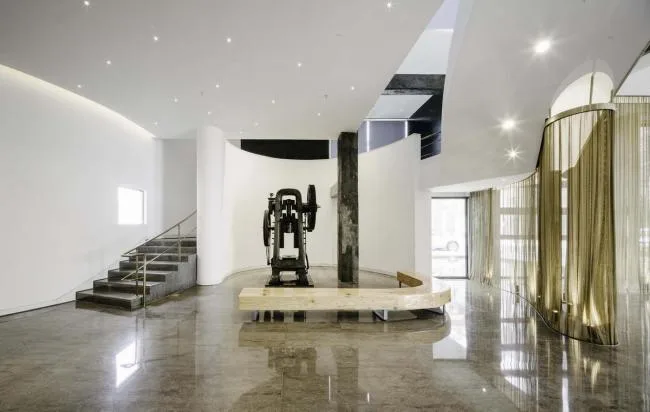
▲ Lobby sketch design
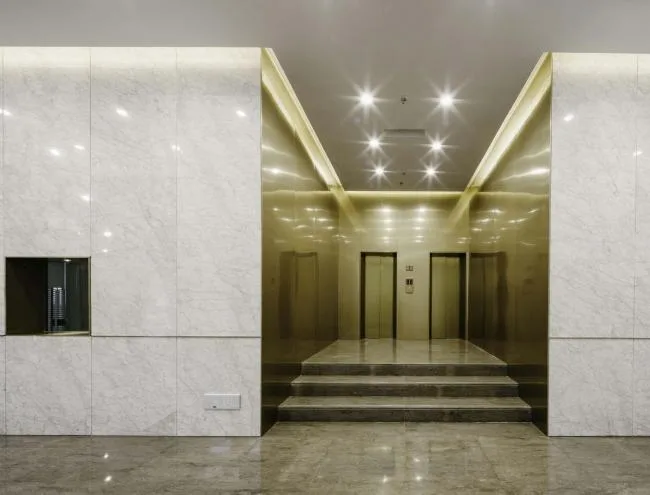
▲ Lobby elevator room
Lighting fixtures have been carefully designed to echo the building’s curved exterior profile. These fixtures are modular adaptations of the original curved volumes, adjusted for proportion and used as decorative indoor lighting to complement the overall atmosphere.
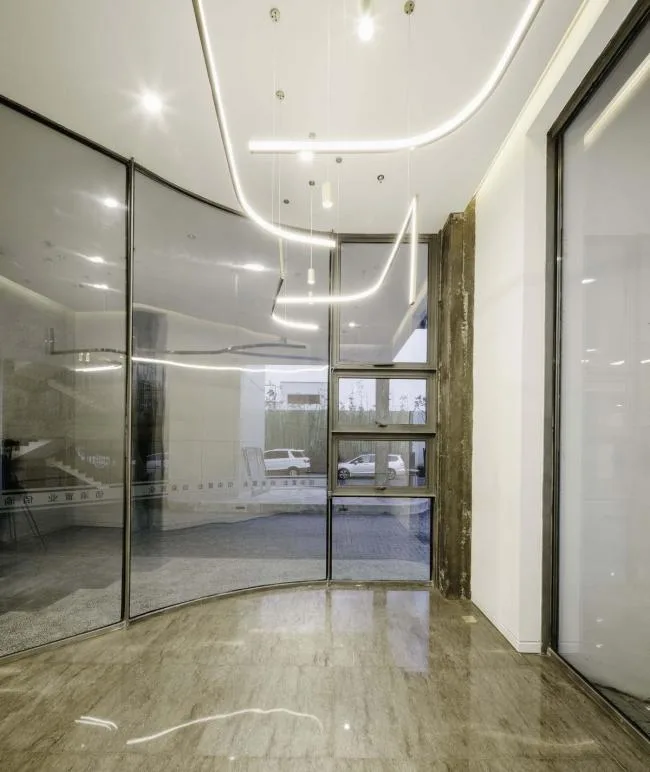
▲ Lobby lighting
Landscape Design
Externally, water features were integrated into the landscape following the owner’s vision. Pools were placed within the gray spaces adjacent to the main entrance road, and additional water elements were arranged beneath the preserved Phase I infrastructure, creating a visual dialogue between the two phases. These water features offer mirror-like reflections of the building from pedestrian viewpoints, enhancing spatial depth and hierarchy.
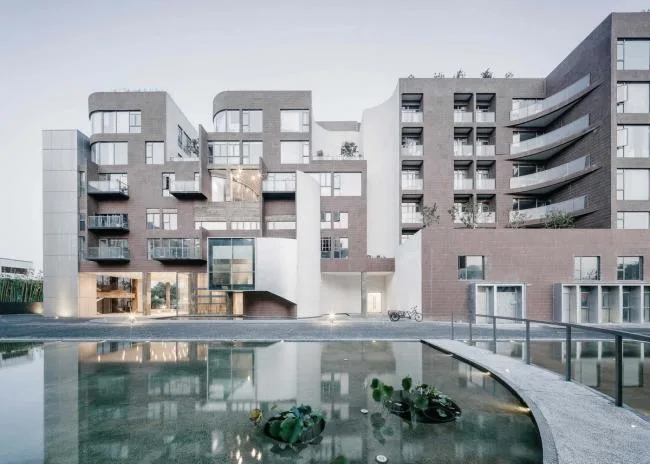
▲ East facade
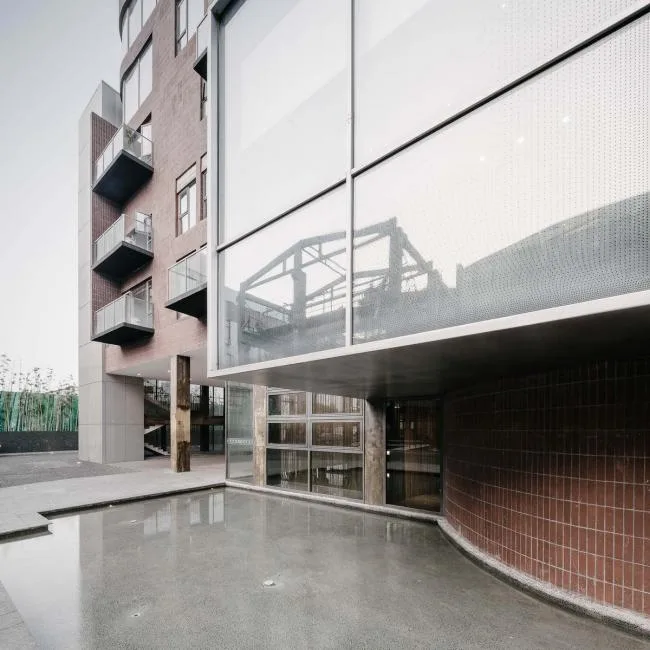
▲ Close-up of water pool
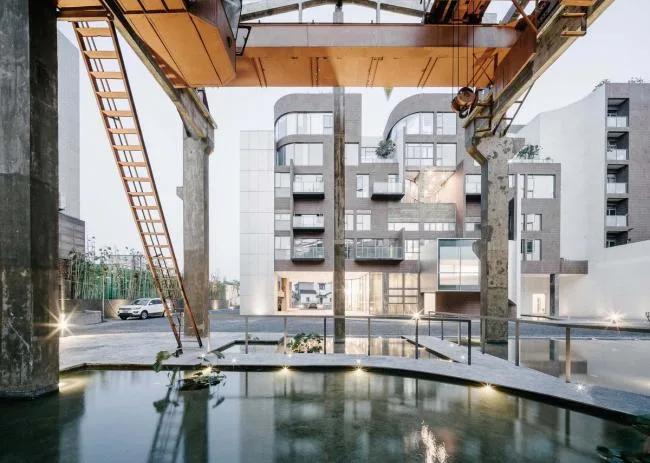
▲ East facade
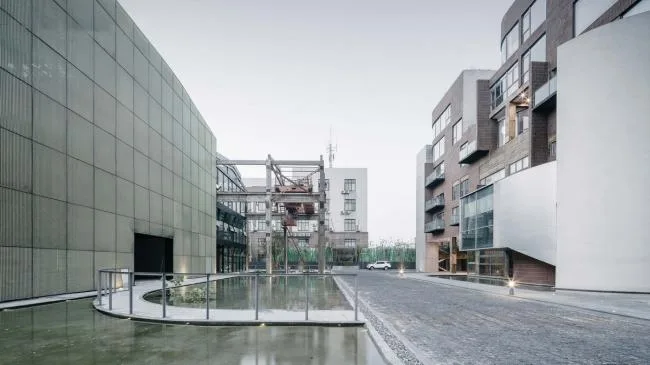
▲ Courtyards between Phase I and Phase II
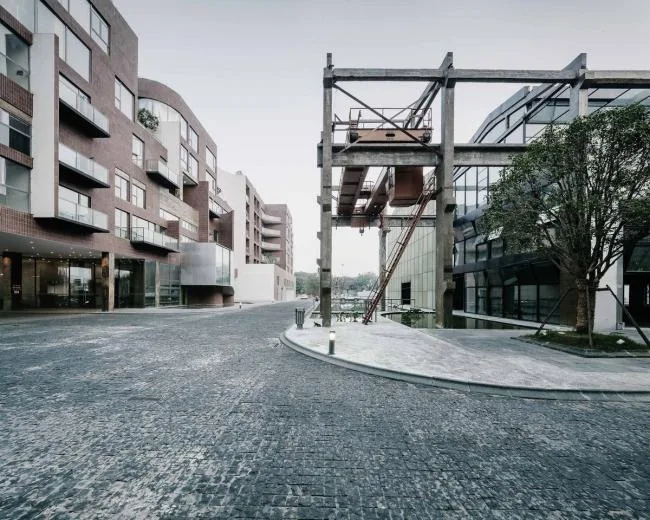
▲ Courtyards between Phase I and Phase II
The building’s left side wall was originally separated by a hollow metal mesh, shielding a warehouse area behind it. The design introduces bamboo plantings to visually separate the environment while preserving clean sightlines. A secondary entrance at the rear serves as a loading zone, visually screened by trees. Along the riverbank, lightweight transparent metal mesh fences add a subtle, ambiguous boundary between the building and waterfront.
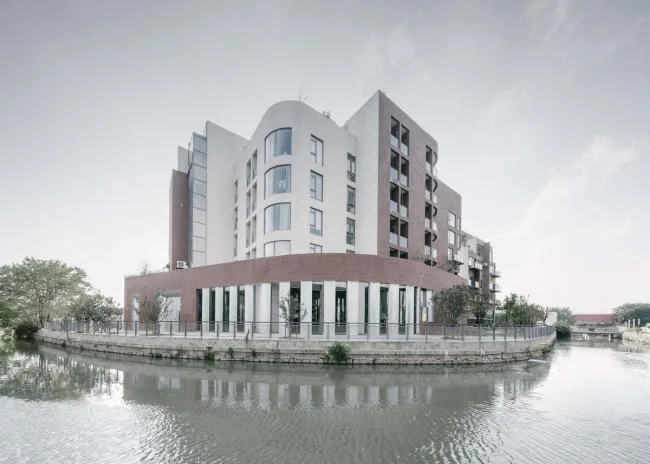
▲ Northwest corner riverbank
Future Prospects
Phase II of the Shenyao Art Center, located nearest to the Beijing-Shanghai Expressway, creates a sculptural space inspired by kiln themes, responding to the park’s artistic atmosphere. The surrounding area is set to develop into the North Hongqiao commercial district. To align with future needs, the owner has decided to repurpose the originally planned hotel space into office use.
Design Drawings
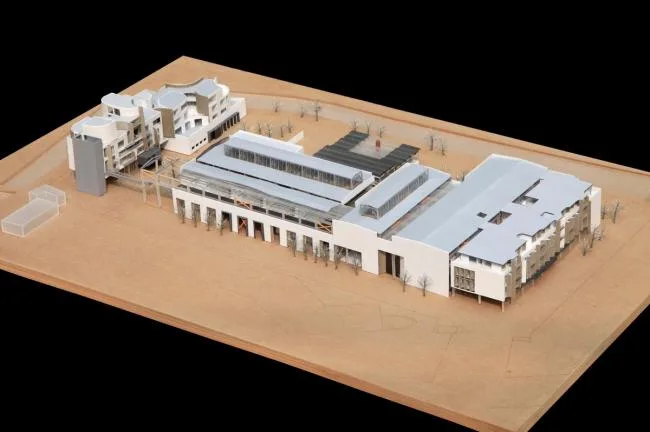
▲ Model of Shenyao Art Center Park
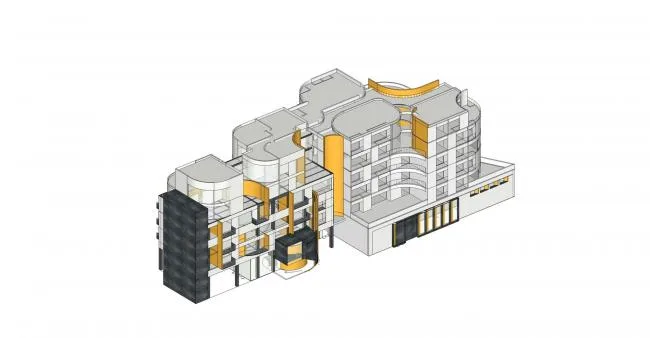
▲ Hotel axis test 1
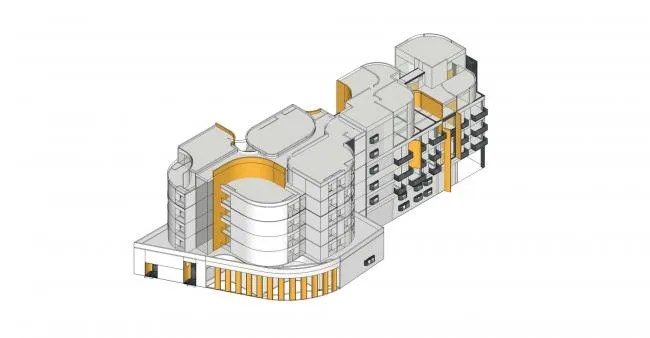
▲ Hotel axis measurement 2
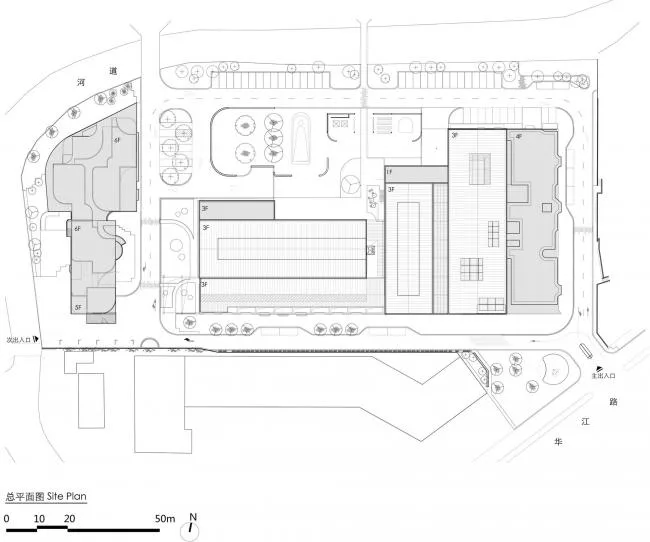
▲ General plan of Shenyao Industrial Park
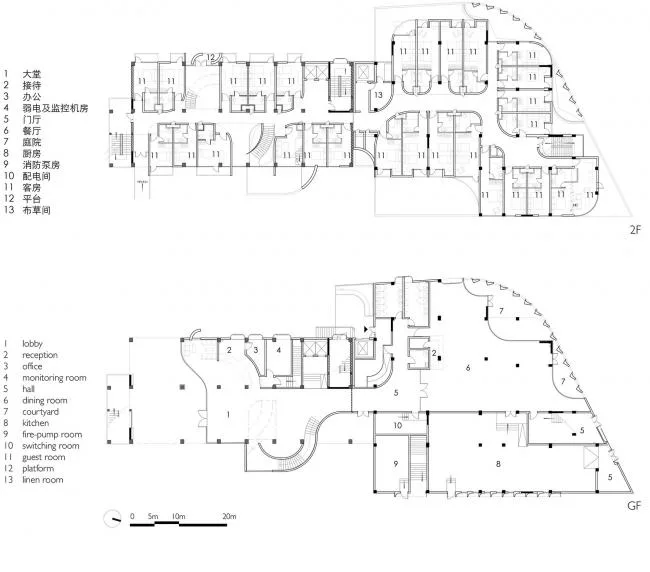
▲ Plan view
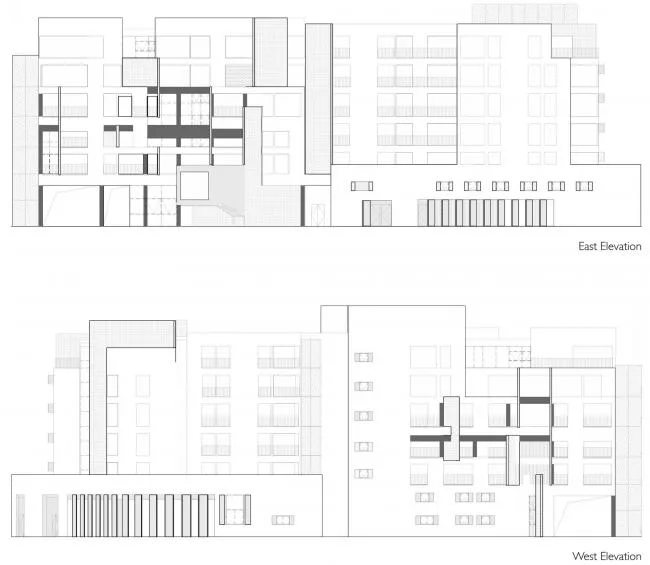
▲ Facade
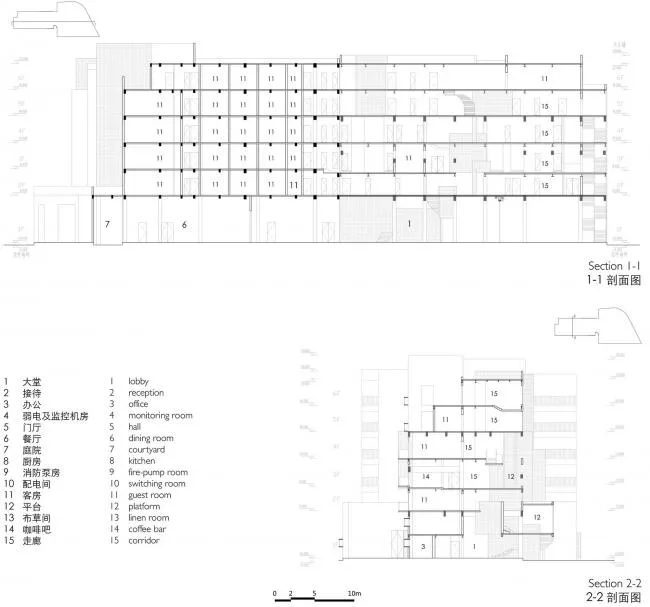
▲ Section
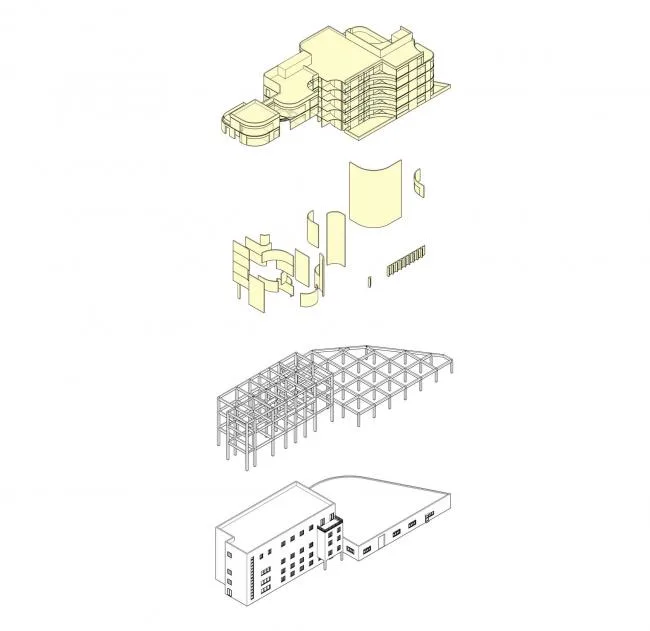
▲ Structural analysis
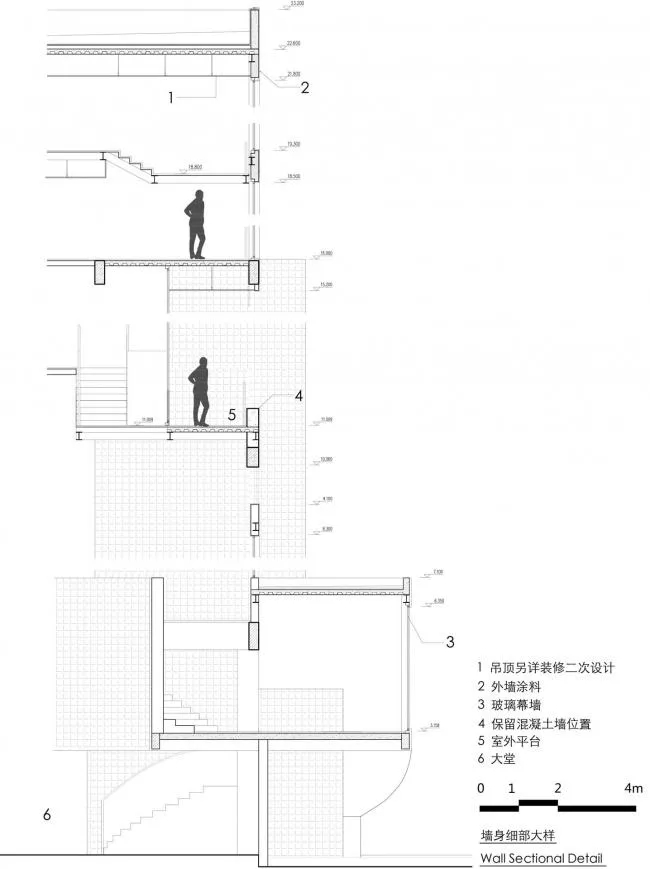
▲ Detailed wall section sample
Project Information
Architectural Firm: Liu Yuyang Architectural Firm
Location: Jiading District, Shanghai, China
Category: Cultural Center
Lead Architect: Liu Yuyang
Project Manager: Wu Congbao
Design Team: Wang Jue, Chen Zhuoran, Xuan Jiali, Yang Yimeng, Zhou Zhe, Lin Can, He Yuqing, Wang Hongyu, Lei Shiyu
Building Area: 6,936 m²
Project Year: 2018
Photographer: Zhu Siyu
Resident Architect: Lin Yihong
Structural Consultant: Zhang Zhun
Mechanical and Electrical Consultants: Gao Xintai, Yu Lihua, Gou Shaobo
Construction Contractor: Shanghai Yeming Industrial Co., Ltd












Must log in before commenting!
Sign Up