
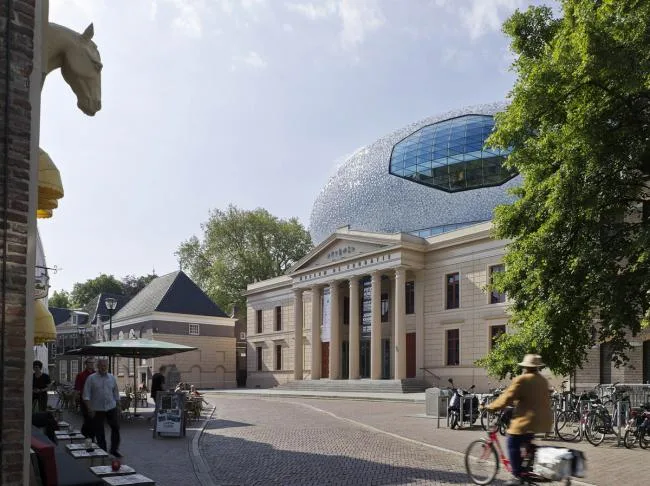
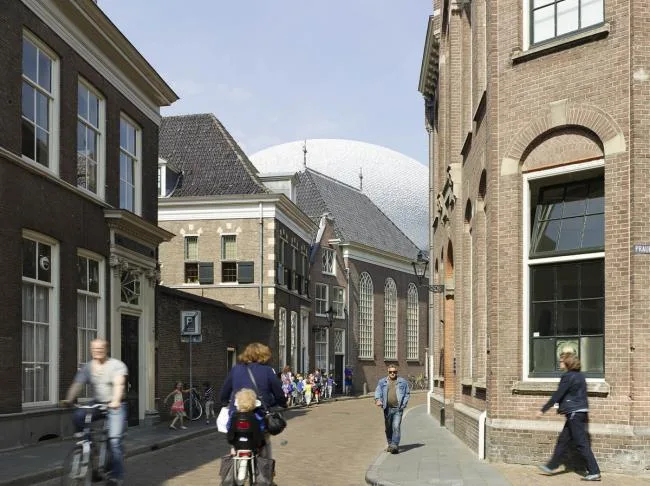
The Fundatie Museum in Zwolle is uniquely situated at the edge of the medieval city center, adjacent to the open green spaces of the 19th century, complete with a canal. Its recent expansion features a striking new volume atop the former Palace of Justice building.
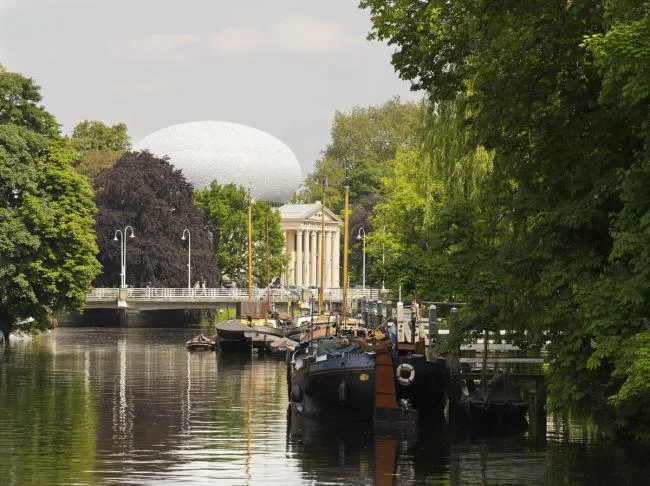
The Blijmarkt Court, designed in 1938 by architect Eduard Louis de Coninck, exemplifies neoclassical style. De Coninck intended this architectural approach to symbolize the unity of laws in the New Kingdom. The building features a symmetrical double-layered structure with a grand entrance and a central hall that extends across two floors.
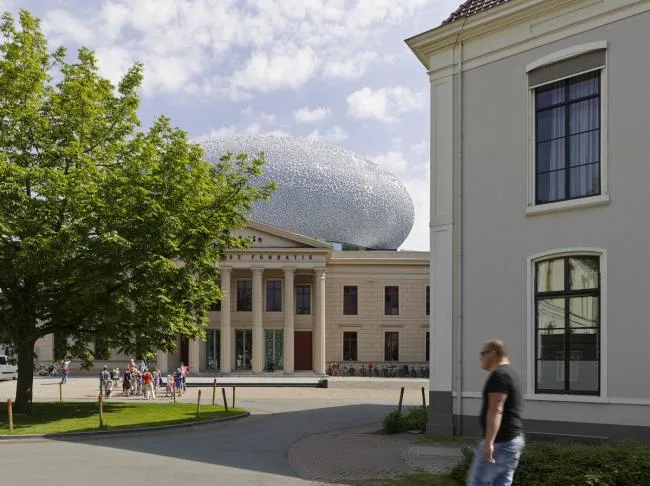
Located on one side of the city, this standalone building is slightly recessed compared to the continuous medieval facade of Blijmarkt. Its classical Corinthian-columned drum room adds a distinctive character. The adjacent green space of Potgietersingel, bordering the canal, is also a standalone feature. In the latter half of the 19th century, after the city walls were dismantled, the canal and surrounding park were designed in the English landscape style.
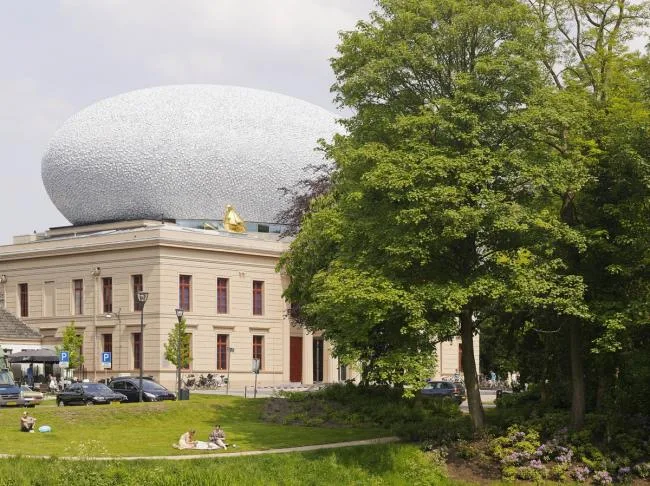
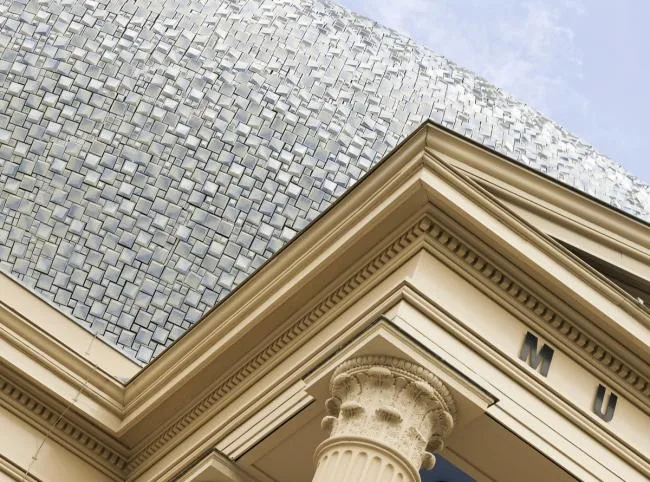
Geographically, the building bridges two contrasting worlds: the inward-looking, compact medieval city with its static character and the outward-facing, dynamic 19th-century parkland.
In 1977, the structure was repurposed from the Palace of Justice into offices for the government’s planning department, with mezzanines added in two high courts. Later, in 2005, architect Gunnar Daan renovated the interior to transform the building into the Fundatie Museum.
The museum boasts an impressive collection featuring masterpieces by Rembrandt, Sutton, Turner, Monet, Rodin, Van Gogh, Mondrian, and Van der Lek. It also hosts smaller, thought-provoking temporary exhibitions. Under the direction of Ralph Keuning, these exhibitions gained such popularity that expansion became essential. Despite challenges associated with extending buildings in a historic city center, the museum chose to embrace its architectural heritage rather than abandon it.
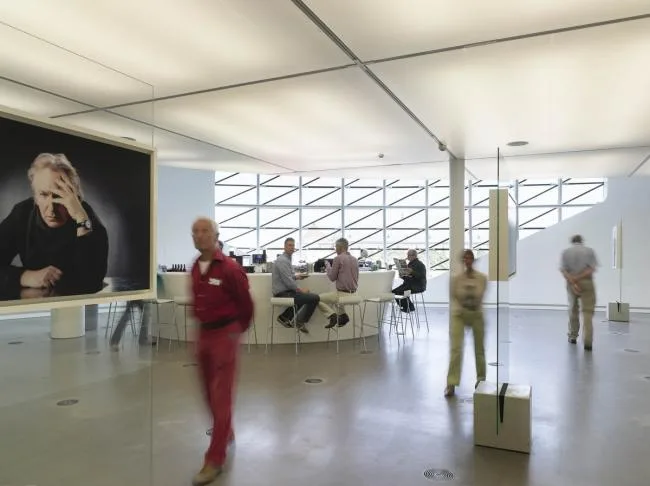
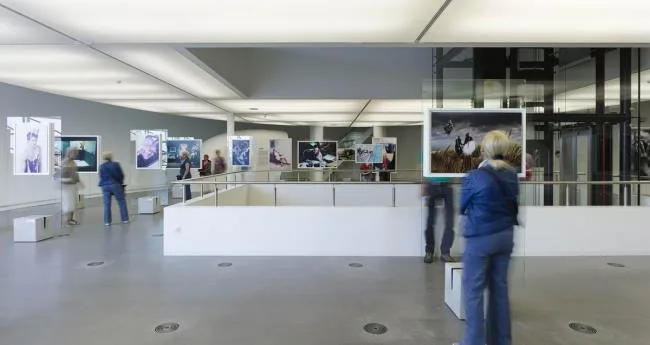
In 2010, Bierman Henket Architects designed the museum’s expansion. Architect Hubert Jan Henket persuaded the client to avoid adding an extension beside the existing building, which would have compromised its independence and symmetry. An underground expansion was also deemed too complex. Instead, Henket proposed an autonomous volume placed atop the building.
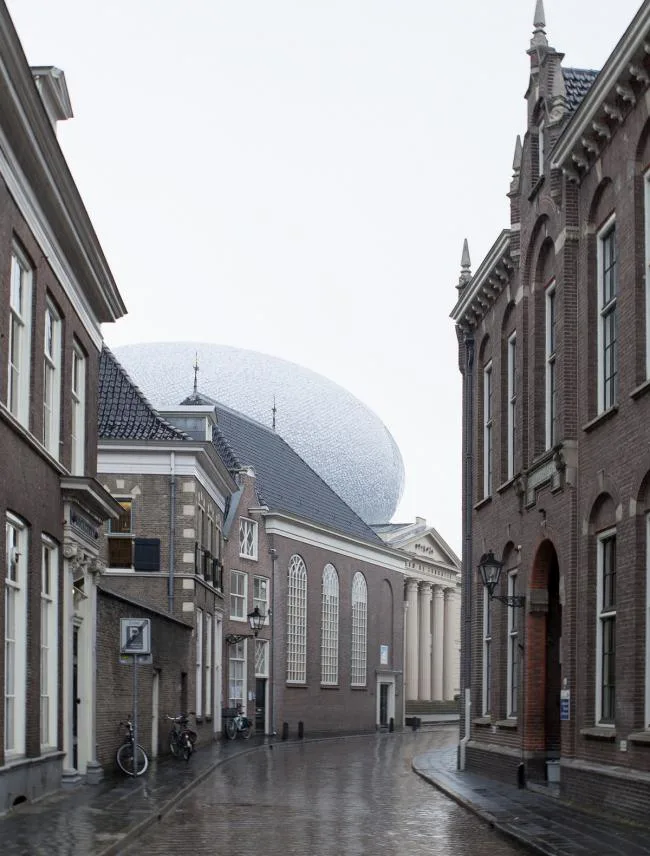
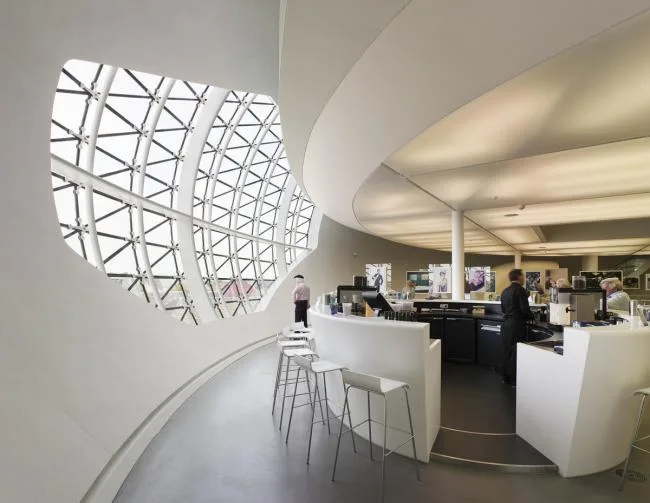
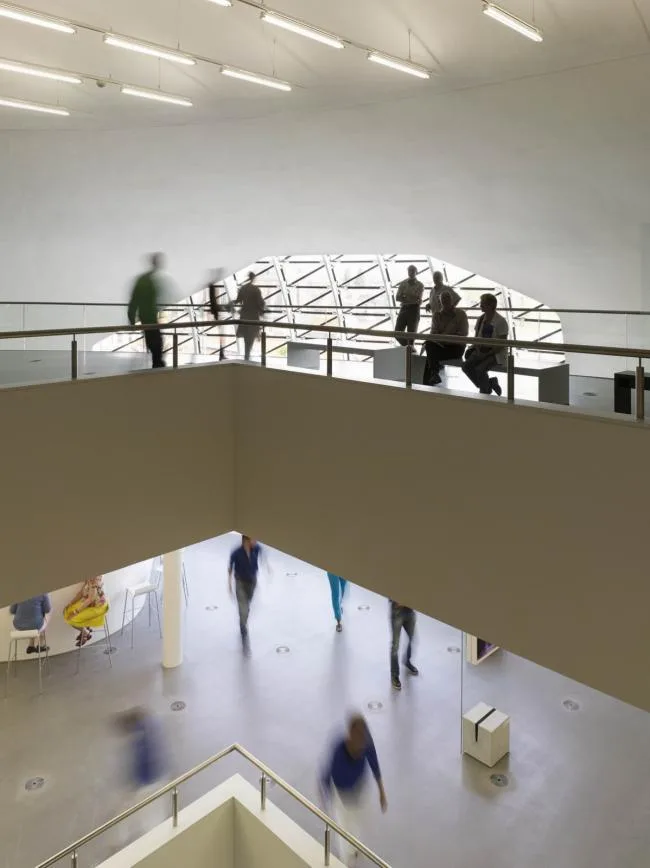
Henket’s design merges the classical static architecture with a dynamic modern expansion vertically, mirroring how the Palace of Justice connects two worlds horizontally. Like the original building below, the new upper volume is symmetrical along two axes but shaped like a rugby ball. These two contrasting volumes come together to form a new urban entity. Inside, this contrast continues with traditional rectangular museum halls below and a flowing, open elliptical space above.
From the outset, the Dutch Ministry of Cultural Heritage and local conservation groups, responsible for protecting historic sites and buildings, welcomed this bold expansion concept. Embracing the motto “protection through development,” the usual lengthy debates and public consultations were significantly shortened, allowing planning permission to be granted swiftly.
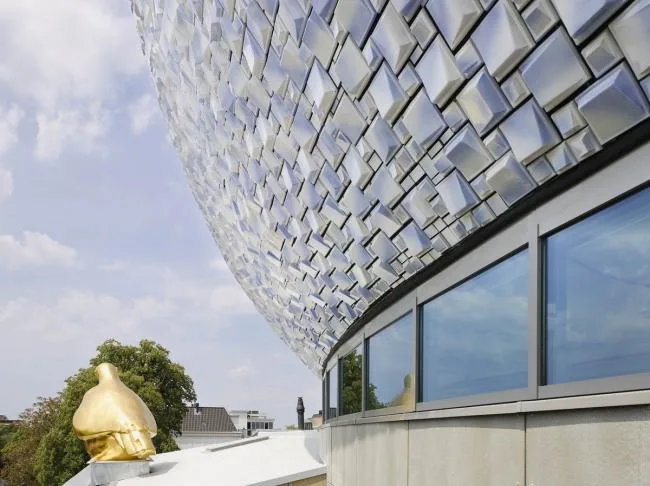
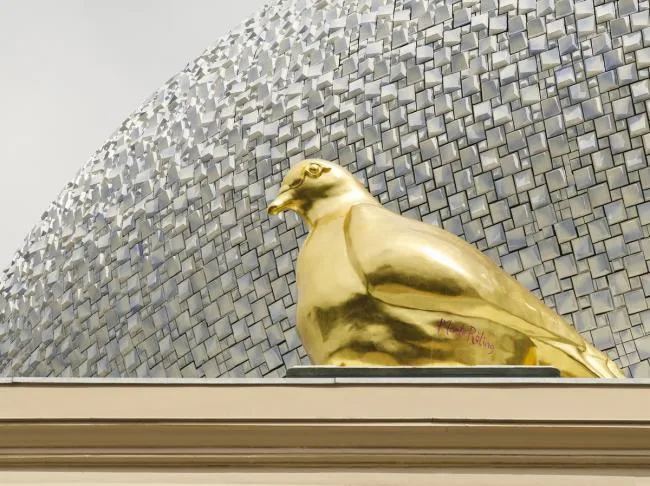
Eight steel columns pierce through the existing building, each resting on independent foundations. These columns support a new 1,000-square-meter expansion featuring two exhibition floors. Structurally and architecturally, the new extension stands independently from the old building. Known as the “Art Cloud,” the expansion’s exterior is clad with 55,000 three-dimensional ceramic tiles produced by Koninklijke Tichelaar of Makkum. The blue and white tiles, measuring 20×20 cm and 10×10 cm, create a subtle surface that reflects the sky’s changing moods. On the north side, large glass windows within the tiled structure allow natural light to flood the exhibition spaces. Inside, visitors enjoy panoramic views of the city.
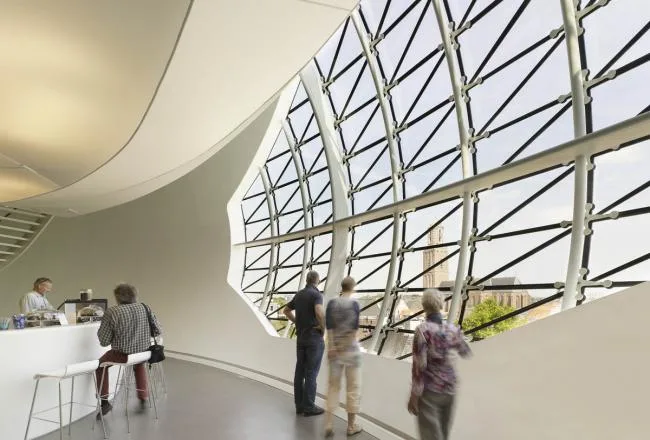
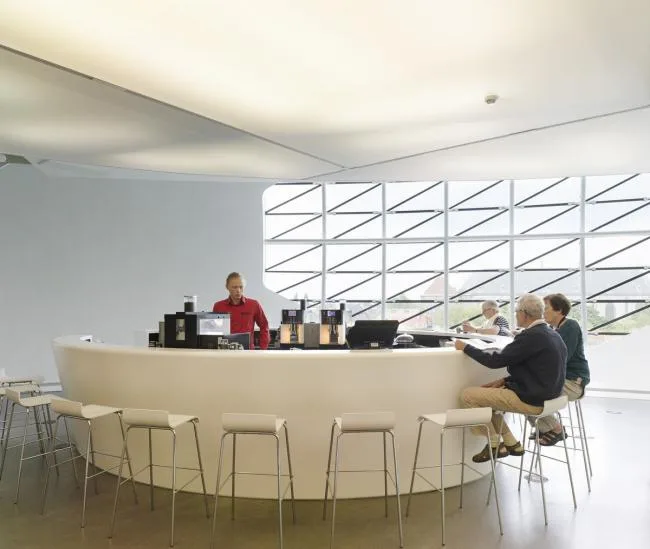
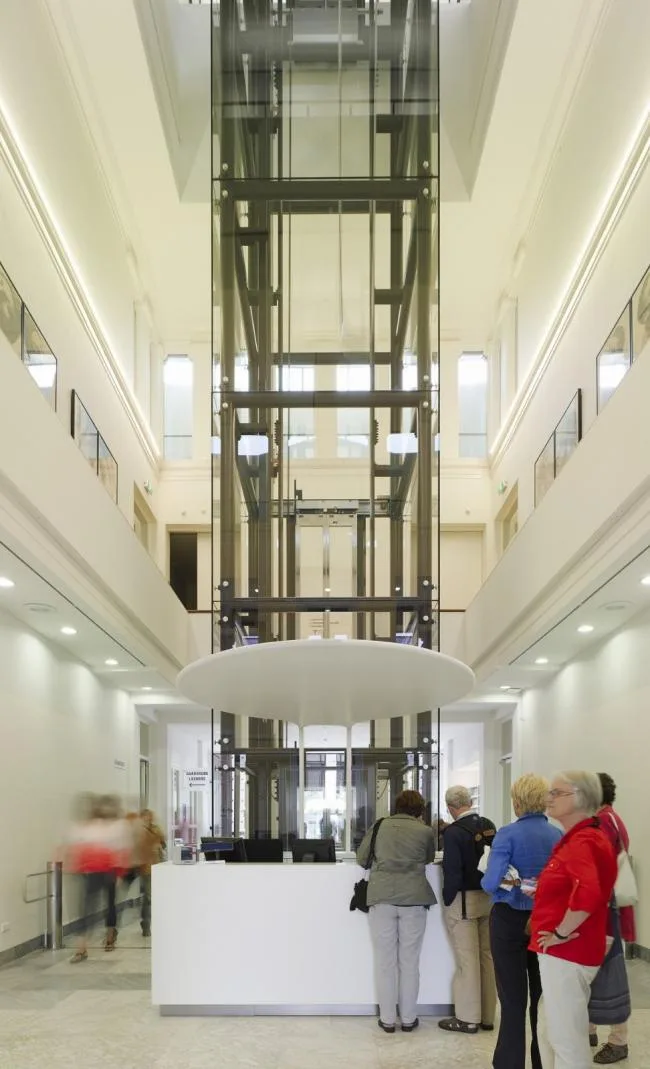
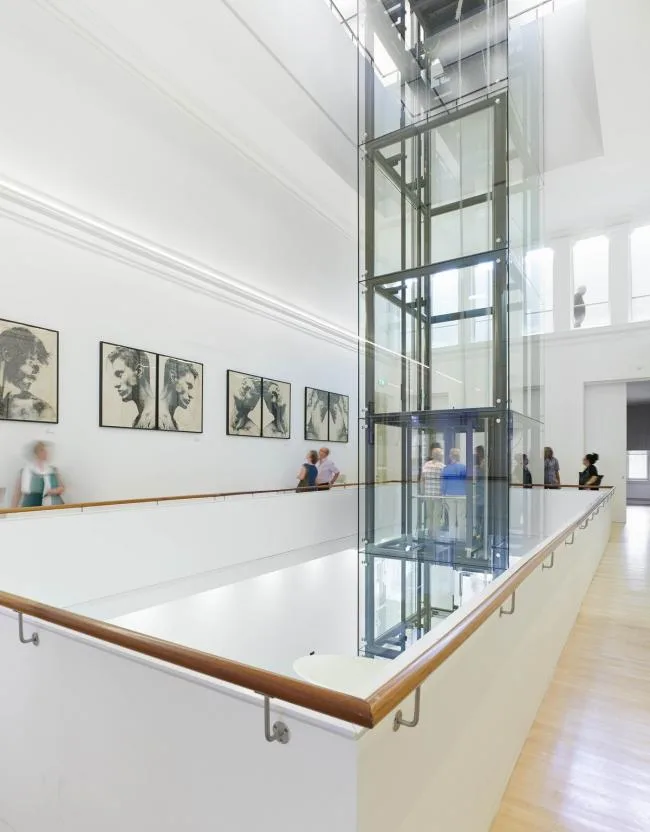
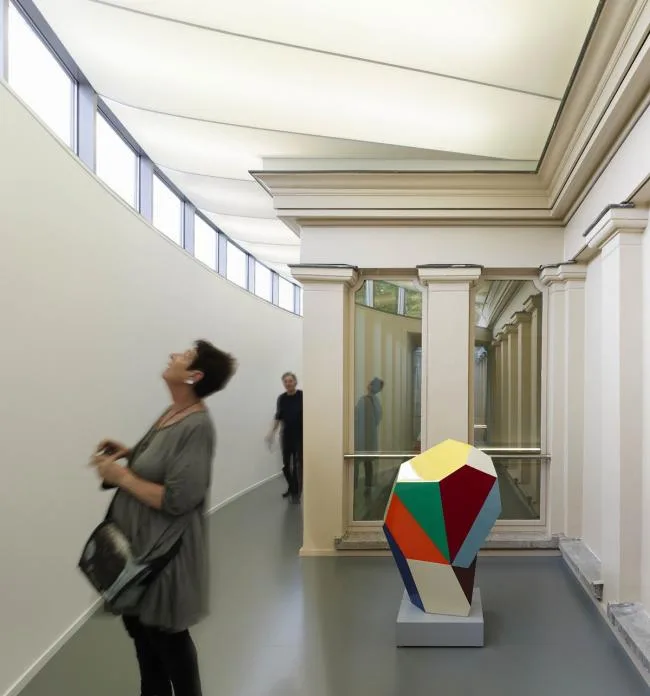
The expansion transformed the original central entrance hall into a bright atrium where the traditional and modern museum spaces converge. A glass elevator in the atrium transports visitors between floors. The staircases, previously straight and static in the old building, are now flowing and curved in the new extension. A glass corridor connects the old and new parts, offering views of the courtyard on one side and the city along with the underside of the tiled expansion on the other. This integration creates a unique environment for showcasing both contemporary and classical art within a single building.
Design Drawings:
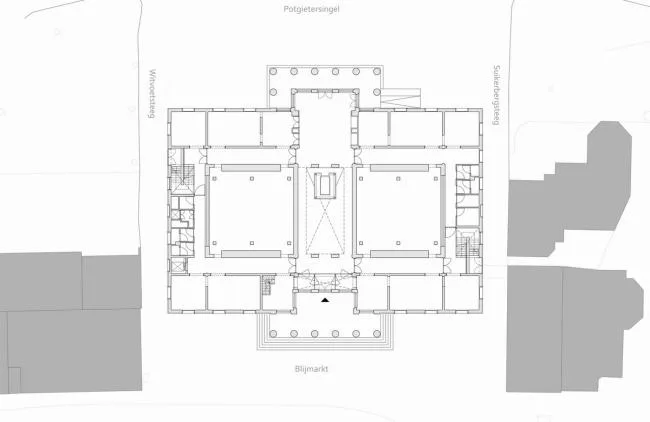
▲ First Floor Plan
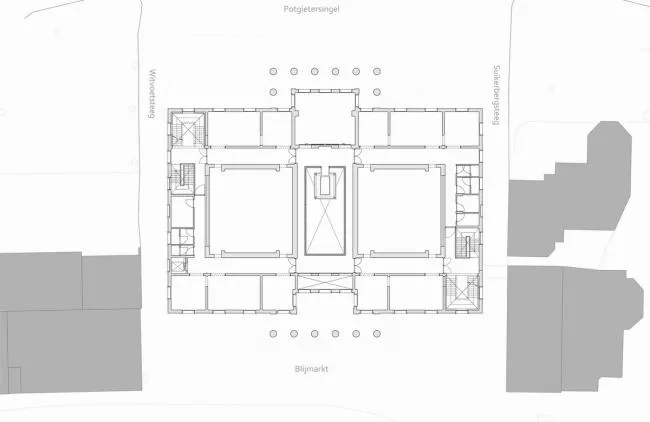
▲ Second Floor Plan
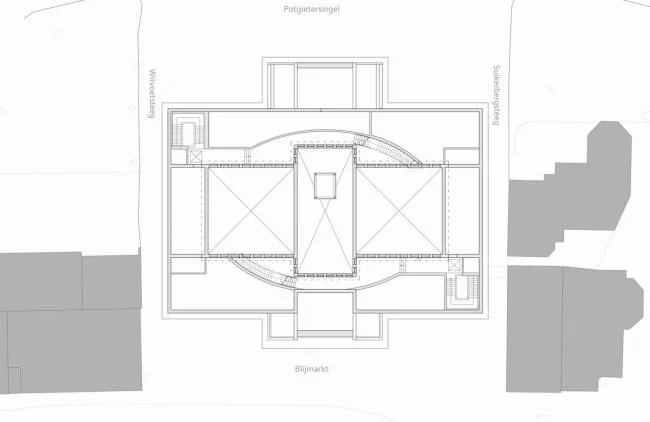
▲ Third Floor Plan
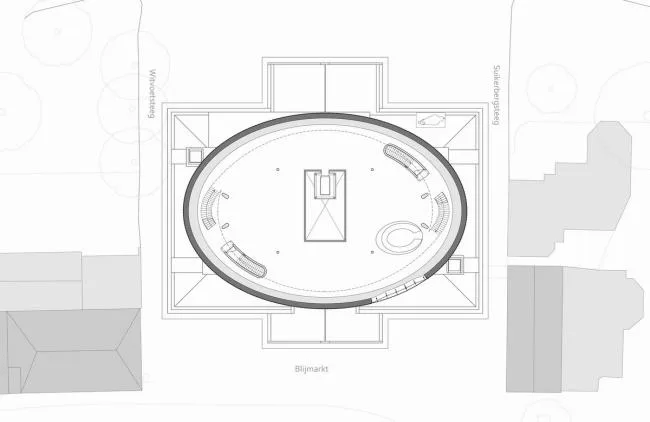
▲ Fourth Floor Plan
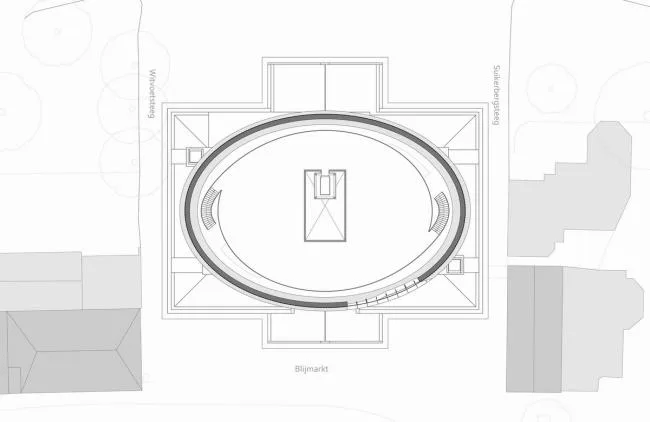
▲ Fifth Floor Plan
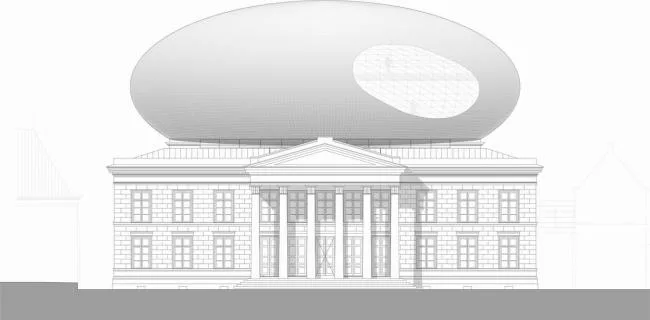
▲ Elevation View
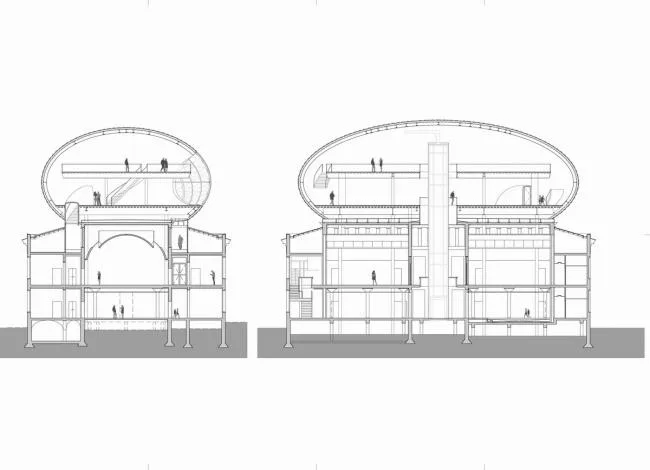
▲ Sectional View
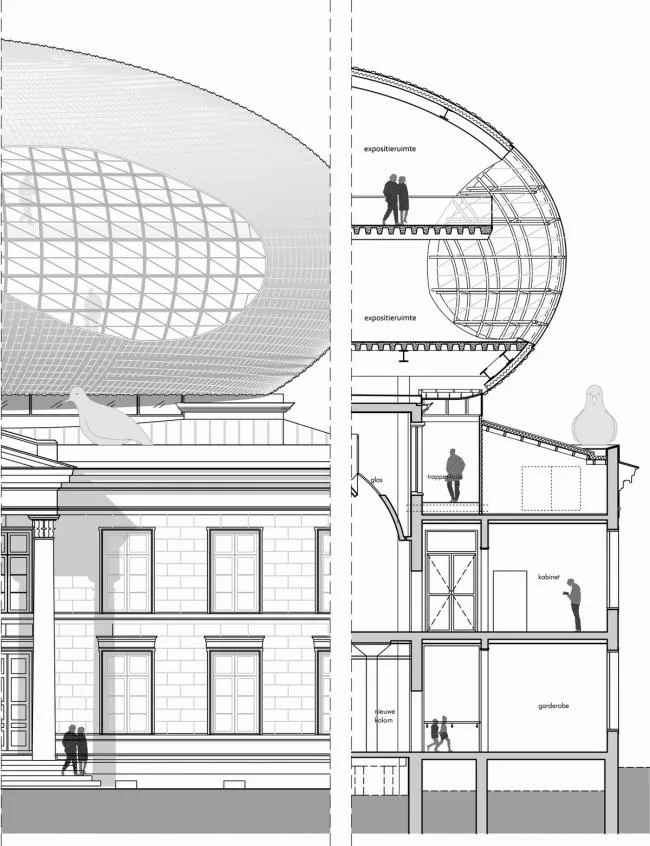
▲ Sectional & Elevation Drawing
Project Information:
Architectural Firm: Bierman Henket Architects
Address: Blijmarkt 20, 8011 NE Zwolle, Netherlands (BIM Engineer)
Category: Museum
Lead Architect: Bierman Henket Architects
Project Year: 2013
Photographer: Joep Jacobs
Manufacturer: Koninklijke Tichelaar
Structural Engineer: ABT Adviesbureau voor Bouwtechniek BV
Service Engineer: Huisman & van Muijen
Architectural Physics: Climatic Design Consult
Budget Consultant: Bremen Bouwadviseurs
Construction Contractor: BAM Oost
Manufacturer: Tichelaar Makkum












Must log in before commenting!
Sign Up