
Project Background
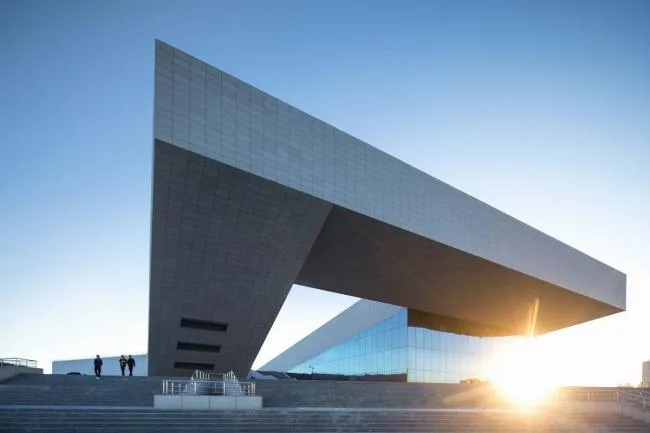
The China Petroleum Xinjiang Regional Digital Network Control Center is a multifunctional production command and information operation building developed by Xinjiang Oilfield Company. It is designed to support production decision-making, command functions, and the advancement of oilfield informatization. This facility integrates production command and scheduling, data center rooms, and information monitoring centers. Huadu Design (HDD) was selected through a competitive bidding process and fully undertook the project’s design work.
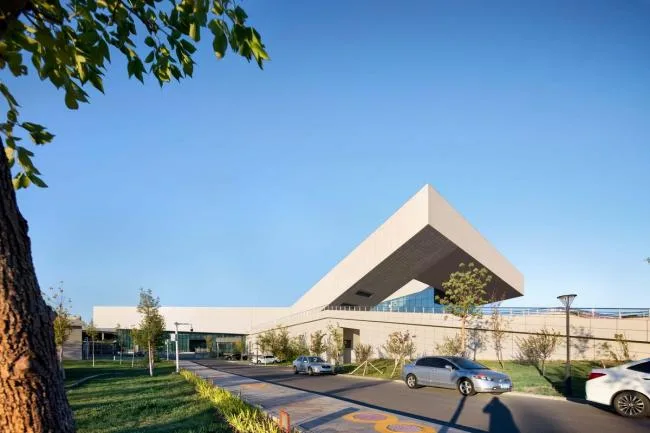
The project covers a planned area of 65,521 square meters with a building footprint of 48,961 square meters. Upon completion, it will consolidate regional data centers, digital city data centers, China Petroleum data centers, and cloud computing centers into a unified platform for managing extensive information resources efficiently. This initiative supports Xinjiang’s efforts to promote urban informatization comprehensively by integrating multimedia information networks, geographic information systems, and other infrastructure platforms.
The center aims to establish e-government, e-commerce, science and education information systems, labor and social security information systems, online education, and remote medical systems. These developments will progressively advance Guoming’s economic and social informatization, building an information-rich community. Ultimately, it will enable the city to develop a comprehensive, functional, and well-organized digital information system.
Design Concept
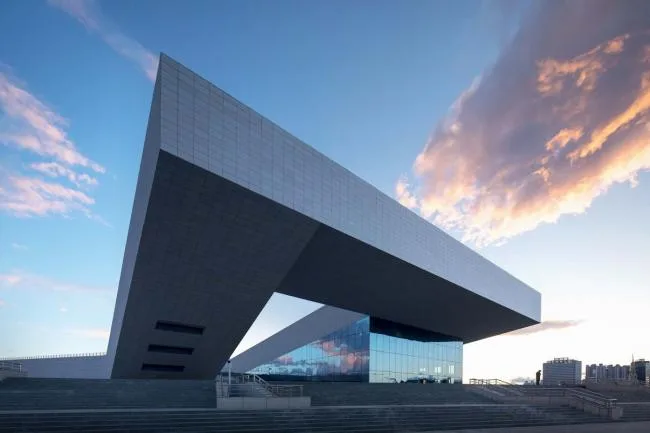
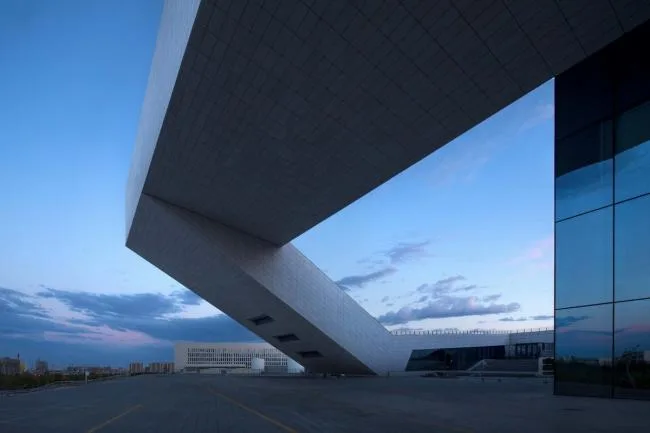
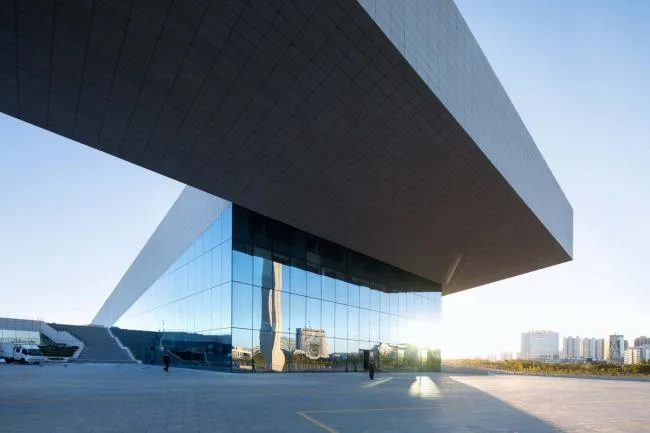
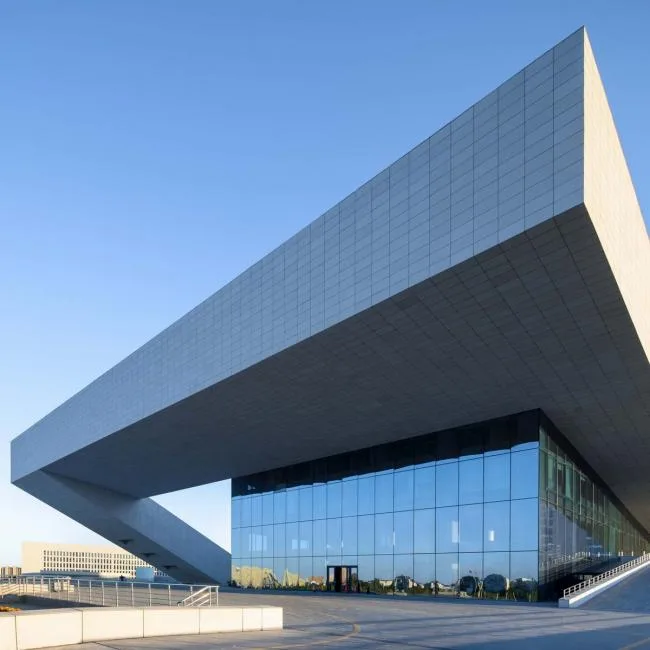
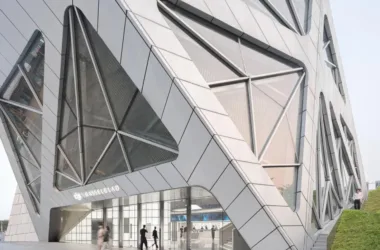
The main building, serving as the CNC center, is designed to resemble a “Gobi Ark” (BIM tutorial). Its form mimics the bow of a ship rising upward, symbolizing sailing and dynamic movement through geometric shapes. The architectural style is modern and commanding. A steel structure overhang and grand steps exceeding 30 meters at the main entrance create a striking visual impact, redefining the skyline of the Karamay Oilfield office area.
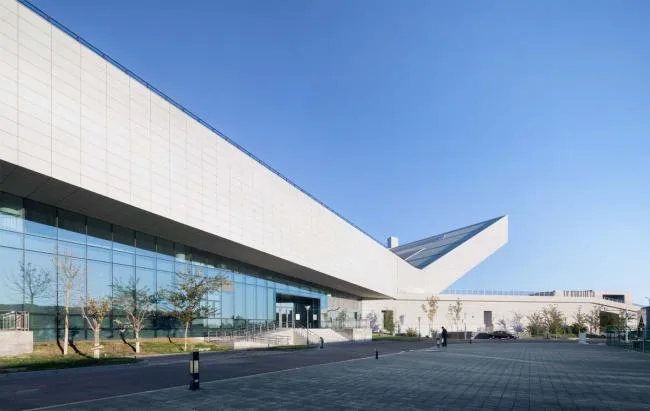
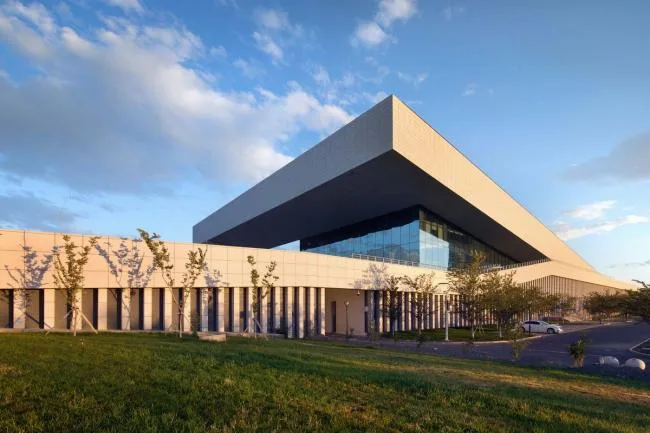
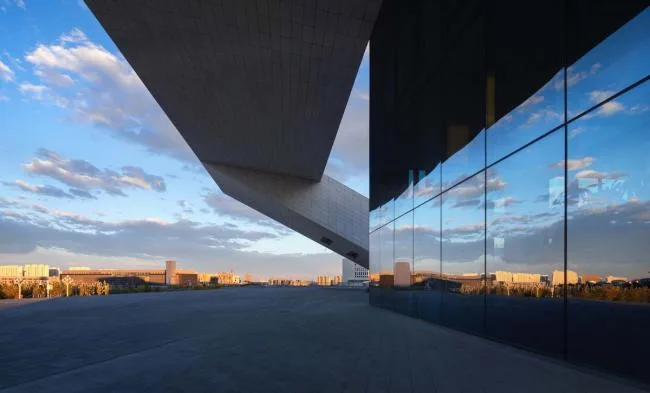
The building’s main facade features warm gray stone aluminum honeycomb panels, providing a solid, volumetric presence that contrasts sharply with the large glass curtain wall at the entrance hall. The base and grand steps are clad in stable, dark stone, balancing the elegant and prominent upper structure to create a harmonious and stable overall appearance. Viewed from a distance, the building exudes a majestic aura, as if soaring through wind and waves.
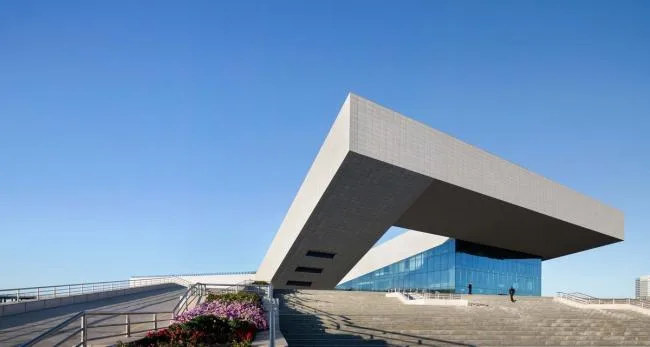
To achieve the architectural vision of the ark floating on its base and meet the client’s high functional standards, the CNC center features multiple staggered floors. The main roof height was increased from 31.17 meters to 11.20 meters. The plan shape, high walls, and floor continuity are deliberately irregular, classifying it as a national over-limit building project.
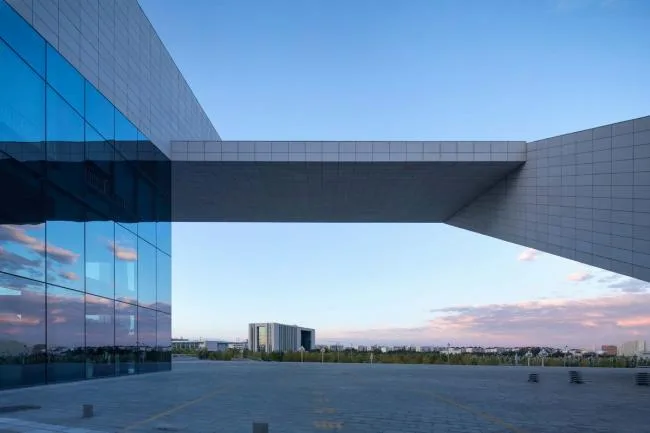
Due to extensive overhangs in the level structure and viewing corridor, with a support span of 27.4 meters at the end (BIM training), the aerial viewing corridor became a critical focus for structural safety. The design team conducted rigorous seismic performance simulations and engaged multiple experts in over-limit building evaluation. Their review of the seismic design led to unanimous approval by national authorities, achieved through technological innovation and data-backed evidence.
T4 Standard Data Center
The CNC center building’s primary functions are divided into two zones. The first is the computer room area, housing various computer rooms and auxiliary function rooms, located in the basement and first floor. The second is the external exhibition area, which includes reception, rest, display, and office functions. The second floor serves as the command center and audio-visual room, while the third and fourth floors accommodate office spaces.
These functional spaces are vertically organized, with the computer room zone forming the building’s base, designed as a large pedestal integrated with the square. The exhibition area floats above like an ark on the pedestal.
The computer room area’s high-security standards highlight the project’s critical importance. Huadu Design collaborated with IBM to incorporate UptimeTIER certification from Uptime Institute, the industry’s most respected data center standards organization and third-party certifier. Adhering to the Uptime Institute’s Tier IV “Data Center Site Infrastructure Tier Standard”—a benchmark met by only a few data centers worldwide—Huadu Design ensures exceptional infrastructure availability, reliability, and operational management capabilities. This commitment guarantees world-class data center facilities, cloud computing, and comprehensive data services for Xinjiang Oilfield Company.
Traffic Flow Design
The traffic flow design carefully considers safety requirements across different zones, managing personnel and logistics within the data center by segregating areas to prevent cross-contamination. The vertical separation of functional spaces also helps avoid conflicts between visitor and auxiliary traffic.
Visitors and office staff access the building via the main front steps leading to the second-floor platform, which features separate entrance halls for dignitaries and groups, separated by an inner courtyard to prevent interaction between different visitor streams. Computer room staff and equipment enter through auxiliary entrances on either side of the building.
The internal circulation uses advanced isolation technology to facilitate visitation functions. The control center’s main hall features a mezzanine structure with a viewing corridor and an emergency handling center separated by glass partitions. Electric curtains installed on the glass partitions offer acoustic control and can be adjusted to support command or visitation activities, allowing flexible functional operations for different personnel pathways.
The external tour follows a circular route, emphasizing a continuous landscape experience throughout the visitor space. Guests move through a flowing sequence circling the atrium before ascending to the rooftop for panoramic views, ensuring a smooth and engaging spatial journey.
Landscape design integrates architectural greenery, water features, and flower beds on the grand entrance steps to create a seamless landscape interface. Multiple concentrated green spaces around the building’s perimeter complement each other, producing a rich, layered effect. Inside, several courtyards provide excellent indoor environments, promoting a harmonious and pleasant architectural atmosphere.
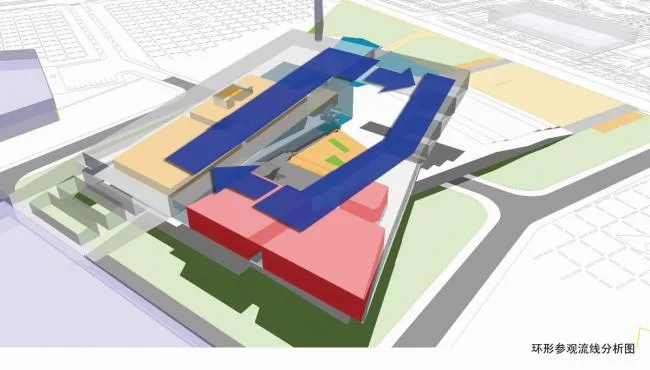
▲ Circular Tour Route
Design Drawings:
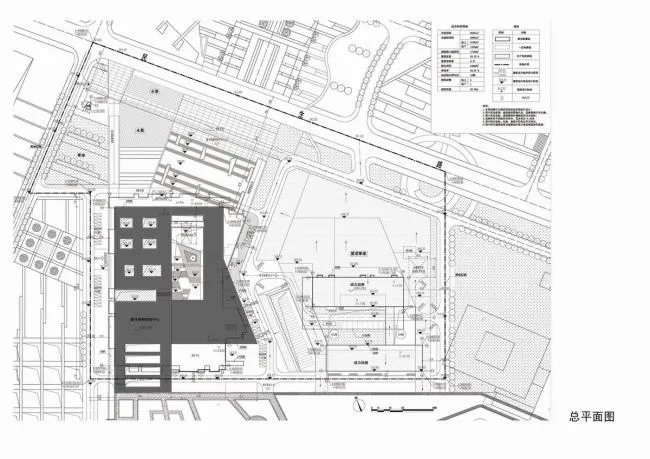
▲ General Layout Plan
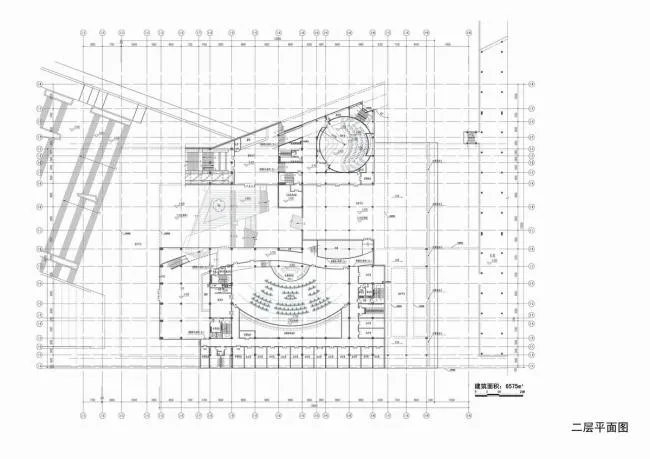
▲ Second Floor Plan
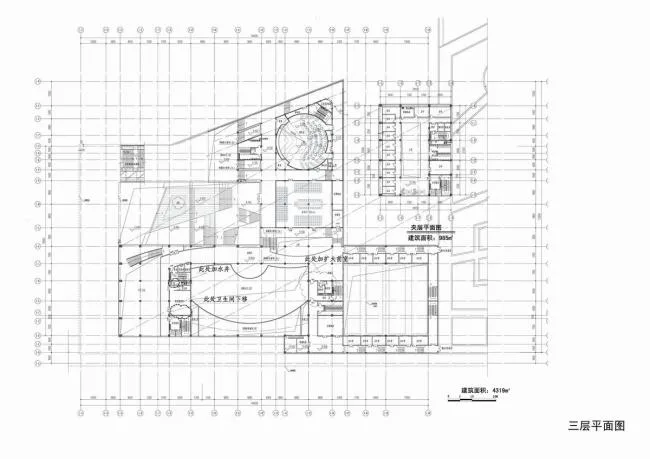
▲ Third Floor Plan
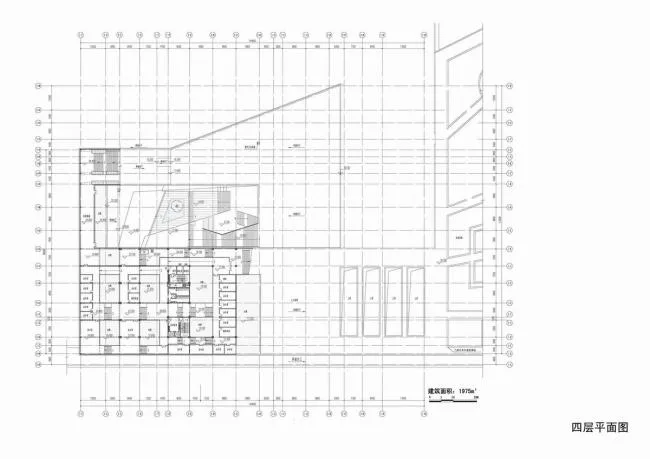
▲ Fourth Floor Plan
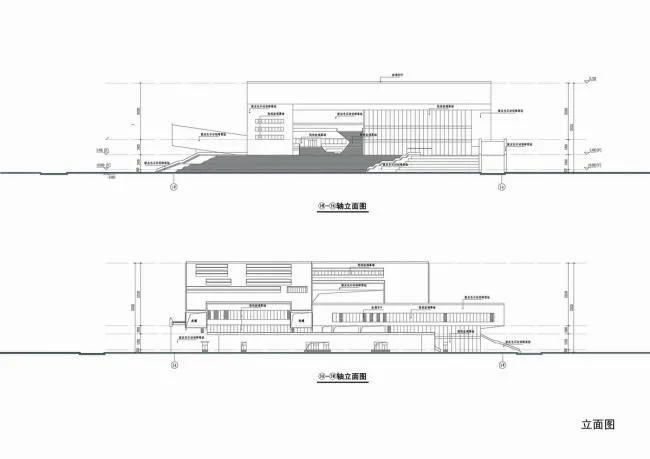
▲ Elevation View
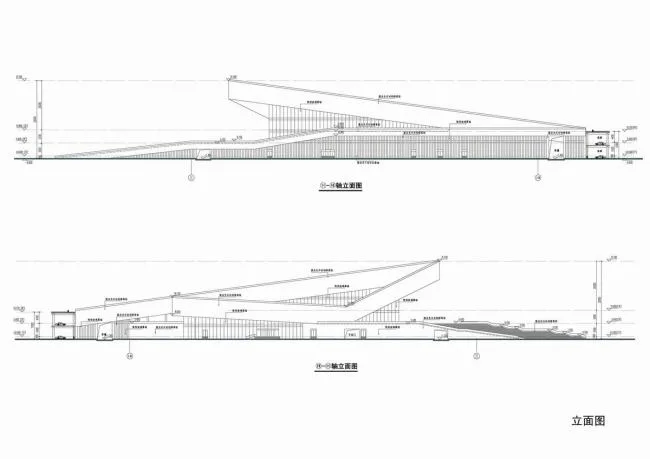
▲ Elevation View
Project Information:
Architectural Firm: Shanghai Huadu Architectural Planning and Design
Location: Xinjiang, China
Category: Public Institutional Facilities
Principal Architect: Dong Weiwei
Architectural Design Team: Shen Yi, Dong Weiwei, Zheng Xiaoming, Tan Chunyong, Qiu Rong, He Yuwei, Jiang Airong, Zhang Xin
Building Area: 48,961 m²
Project Year: 2018
Photographer: Existence of Architecture
Structural Design Team: Zhou Zhen, Yuan Zhili, Wang Guoxun, Zhang Yongqiang, Qi Xiaozhe, Li Meiqi
Electrical Design Team: Ren Fusheng, Zhang Xiaoqing, Zhang Yi, Wu Lihua, Cao Yuhao, Chen Yu
Water Supply and Drainage Design Team: Jiang Yi, Chen Luhua, Song Limin, Zhang Wei, Gao Li
HVAC Design Team: Chai Yunliang, Cheng Lingsong, Qu Dongyang, Luo Tao












Must log in before commenting!
Sign Up