
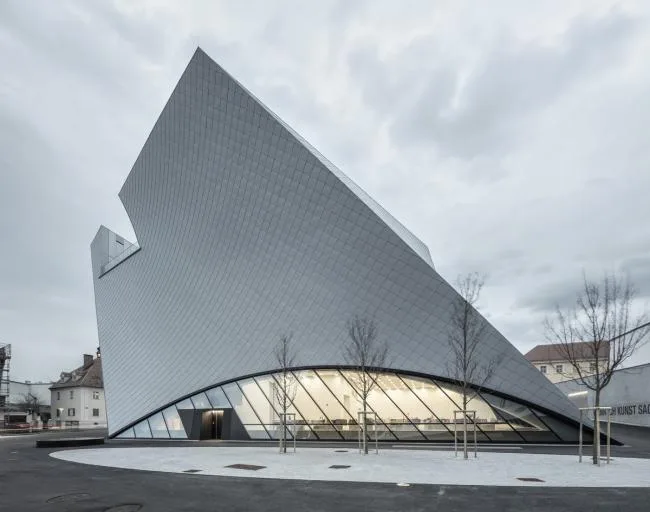
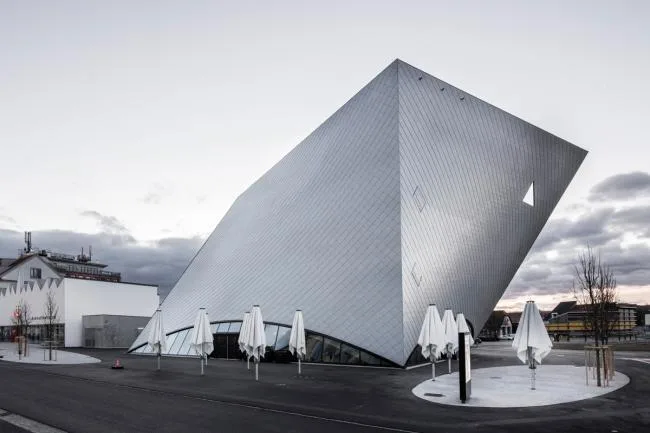
The construction cost for this building was exceptionally high. The Lower Austrian State Art Museum, located in Krems Stein along the Danube River, was realized through the architect’s bold vision, strong political determination, and close collaboration with museum experts, skilled craftsmen, and corporate teams — all despite facing some opposition.
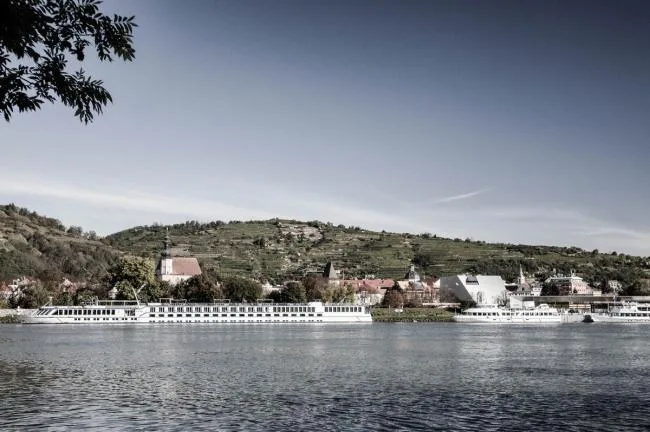
Krems is a historic city nestled on the banks of the Danube River, surrounded by ancient vineyards, winding alleys, and charming squares. It’s known for landmarks such as the Franciscan Church and the Art Mile Museum. The city buzzes with the sounds of traditional Glatt&Verkehrt folk music, tourists, the avant-garde Danube Festival, and the scents of local beverages like Federspiel white wine and apricot juice.
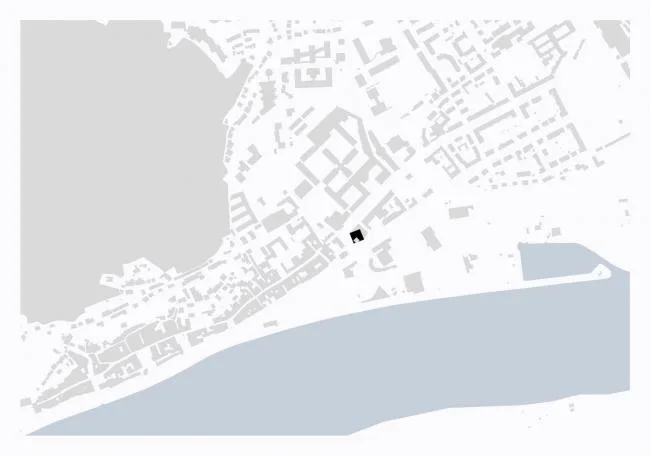
▲ Location Map
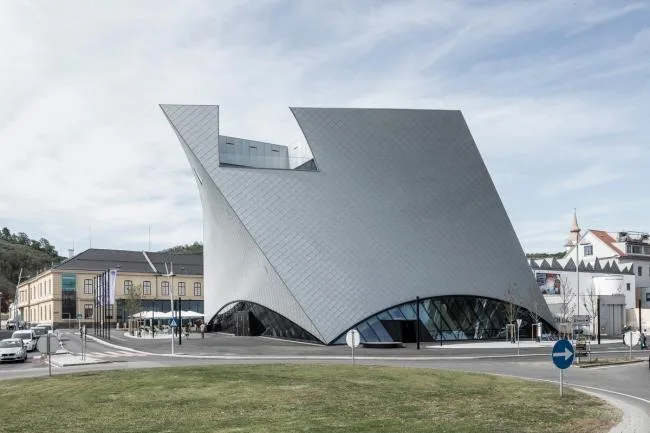
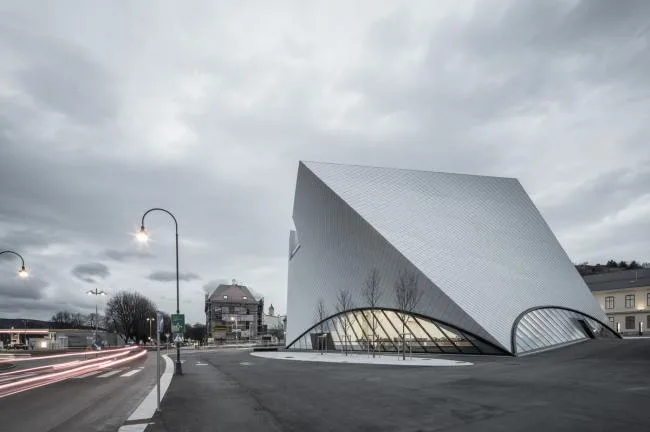
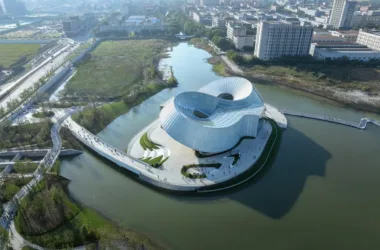
In contrast to the simple art gallery housed in Adolf Krischanitz’s former tobacco factory and the striking jagged roof of the nearby comic museum designed by Gustav Peichl, this independent state art museum boldly expresses its artistic identity and harmonizes with its surroundings in a distinctive manner. The building itself resembles a sculpture more than a conventional structure, constantly shifting in form and expression to better engage visitors.
The design does not follow traditional scale but focuses on specific expressions of the interaction of forces. Twisting around the building’s northwest axis, the structure generates numerous hyperplanes, creating dynamic surfaces and volumes.
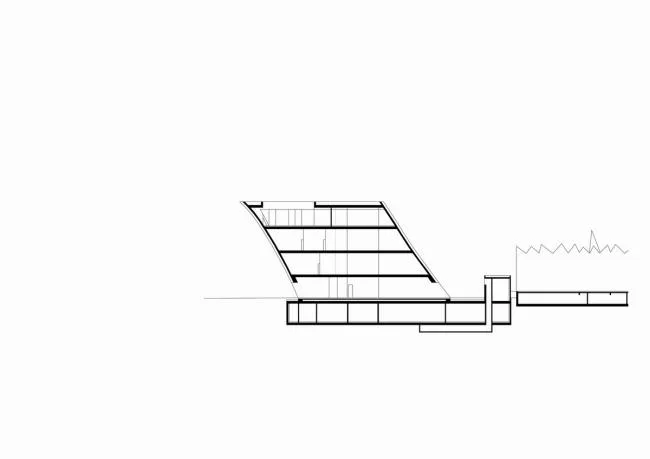
▲ Sectional View
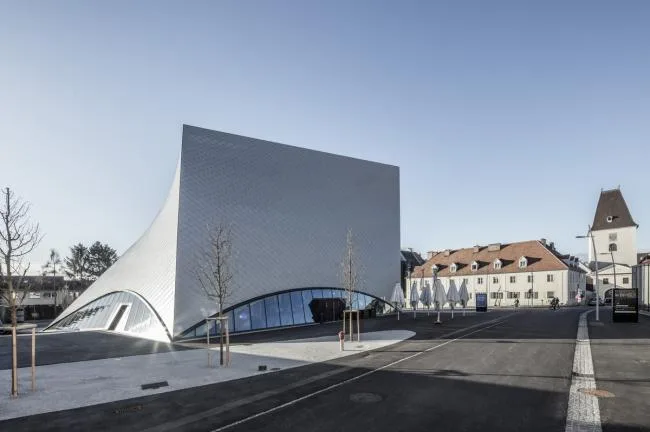
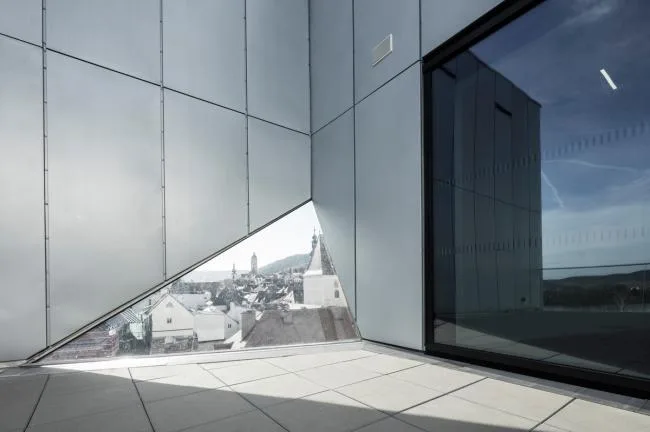
The asymmetrical connections between the ground and roof surfaces create a stunning twisted form that’s challenging to perceive at first glance. This sculptural shape tapers towards the top around a vertical axis, allowing views through the roof opening to the Gothic Benedictine monastery nearby.
Alongside four glass arches on the ground floor, this design successfully links the building’s interior with the local context. This connection highlights the building’s role as a prominent landmark within the Wachau region.
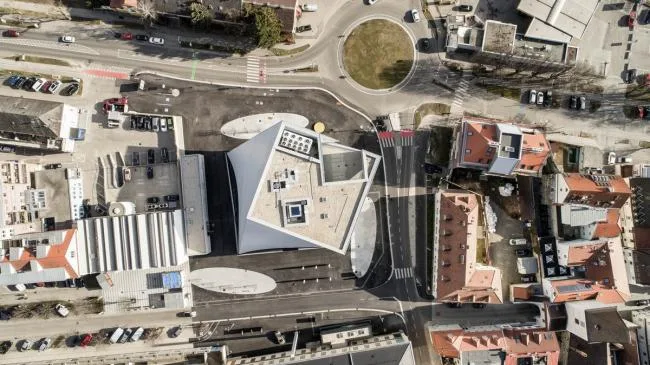
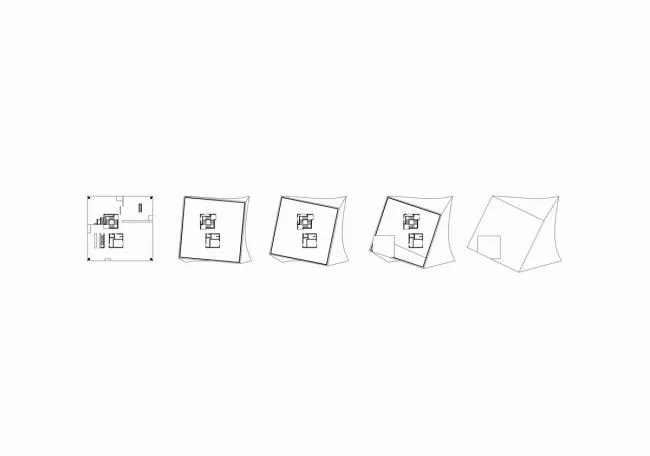
▲ Floor Plan
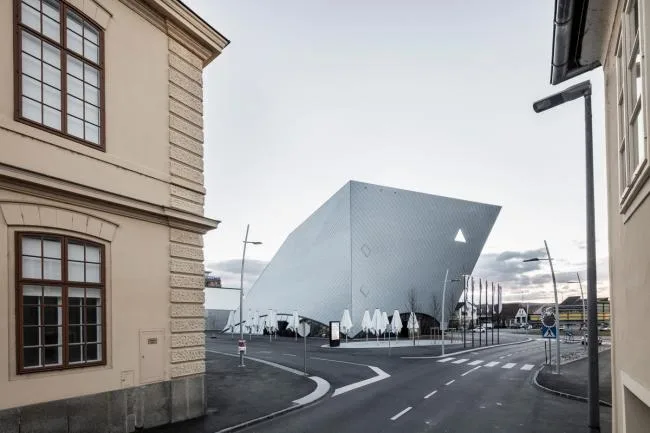
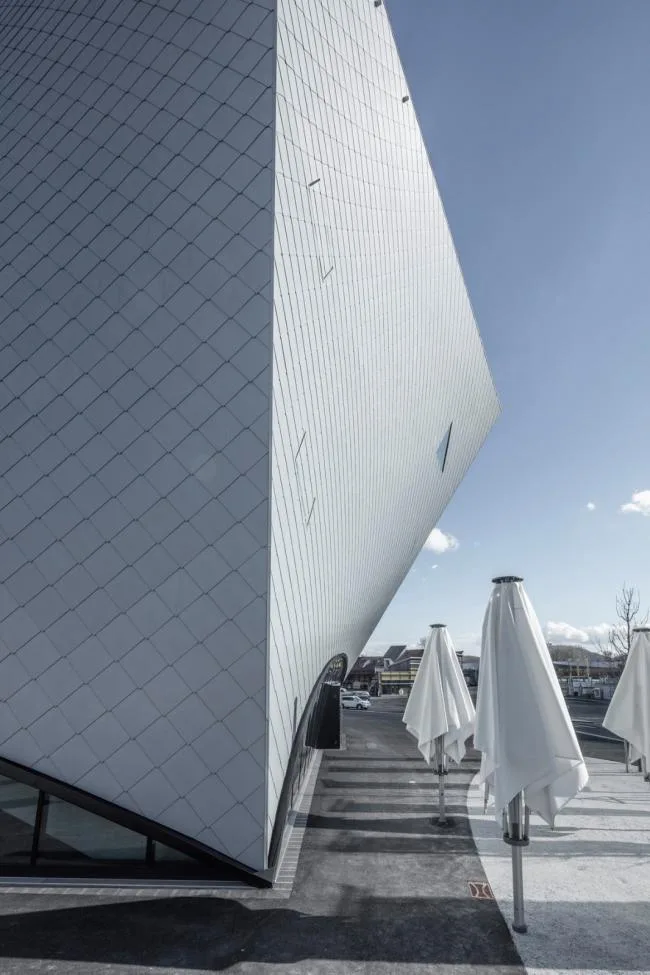
From different perspectives, the building’s sculptural form appears as a closed entity. Its exterior is clad in diamond-shaped matte zinc plates, transforming the “four-legged” concrete mass into an armadillo-like structure armored in knight’s plating.
Inside, two concrete towers serve as vertical anchors, guiding visitors through the space and housing an Escher-inspired staircase. Two fire staircases spiral like a DNA helix, both directing and disorienting visitors. Due to the pronounced twisting of the exterior walls, each floor plan is uniquely arranged.
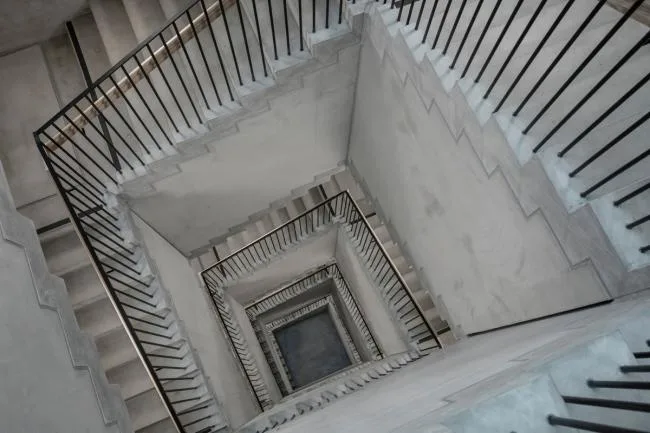
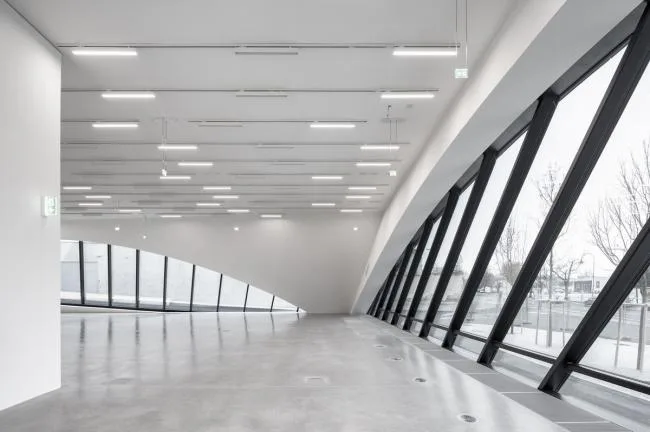
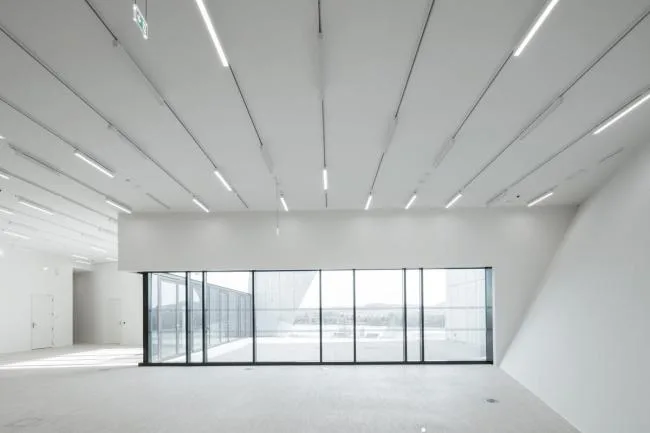
The design team collaborated closely with an experienced museum staff and well-known museum planners to develop an innovative wall system optimized for displaying artworks. The interior spaces feel vast and unconfined, almost like walking inside the belly of a giant creature.
This state art museum resembles a geometric entity wrapped in a twisted, holographic outer shell. One side is aligned, while the other cantilevers outward. Depending on the viewing angle, the surface appears distorted—still images seem to move, and motion reactivates these dynamic visuals, blending reality with possibility.
Project Information:
Architect: Marte. Marte Architects
Location: Steiner Rural Road, 3500 Krems on the Danube River, Austria
Category: Art Museum
Building Area: 6,850 square meters
Year of Completion: 2018
Photographers: Roland Horn, Faruk Pinjo Photography
Client: Federal State Niederösterreich
Engineering & Construction: M+G Engineers












Must log in before commenting!
Sign Up