
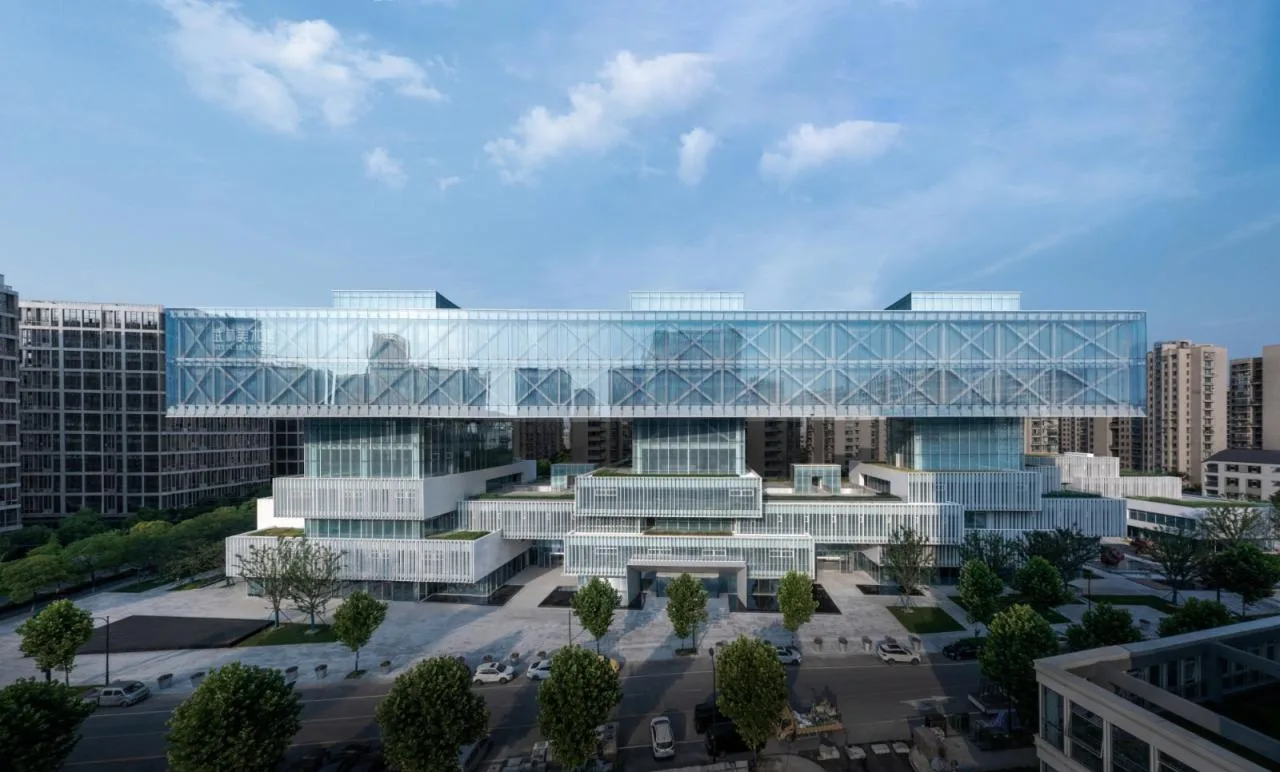
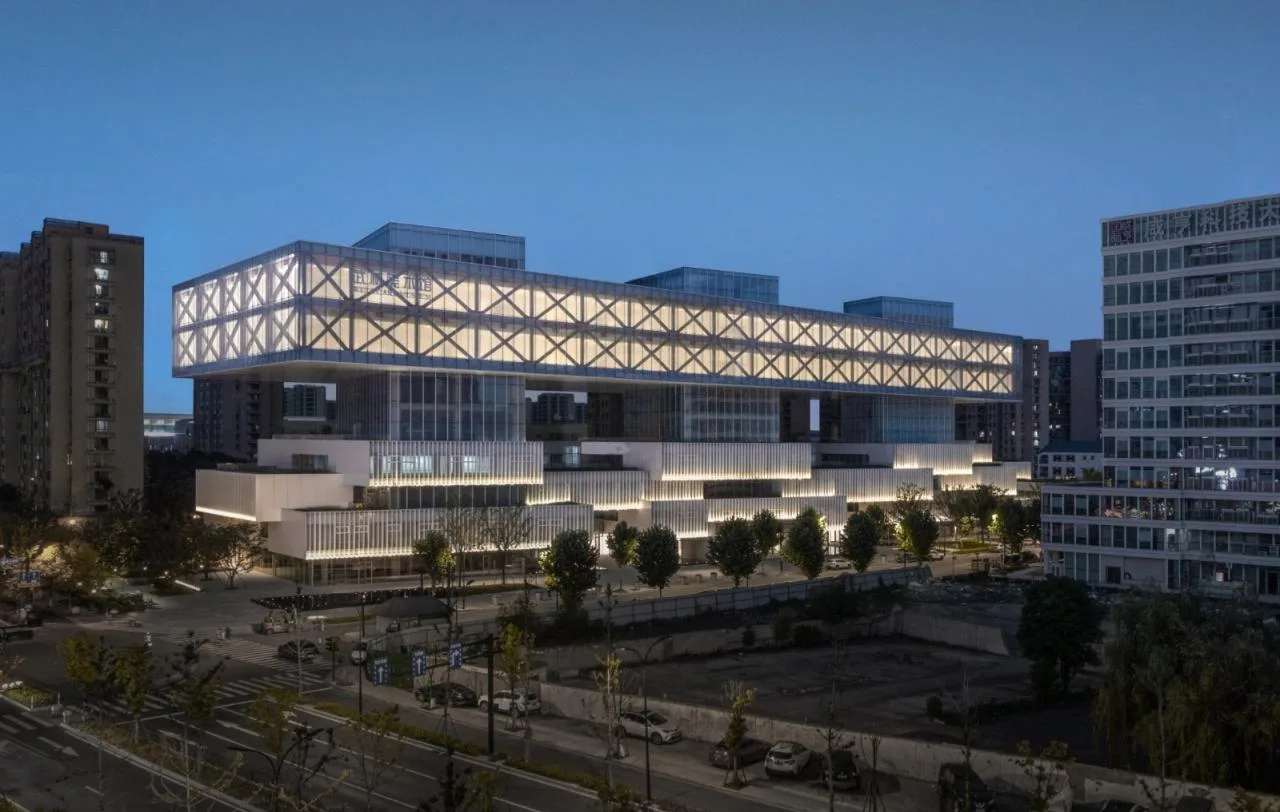
This cultural complex combines art exhibitions with cultural industries and is located just south of the Xintiandi Complex in Hangzhou’s Gongshu District. The site is surrounded by dense high-rise office, commercial, and residential buildings, reflecting a variety of urban functions. The design aims to establish a harmonious dialogue between the new building and its urban context, creating a vibrant art museum that resonates with the city’s dynamic life.
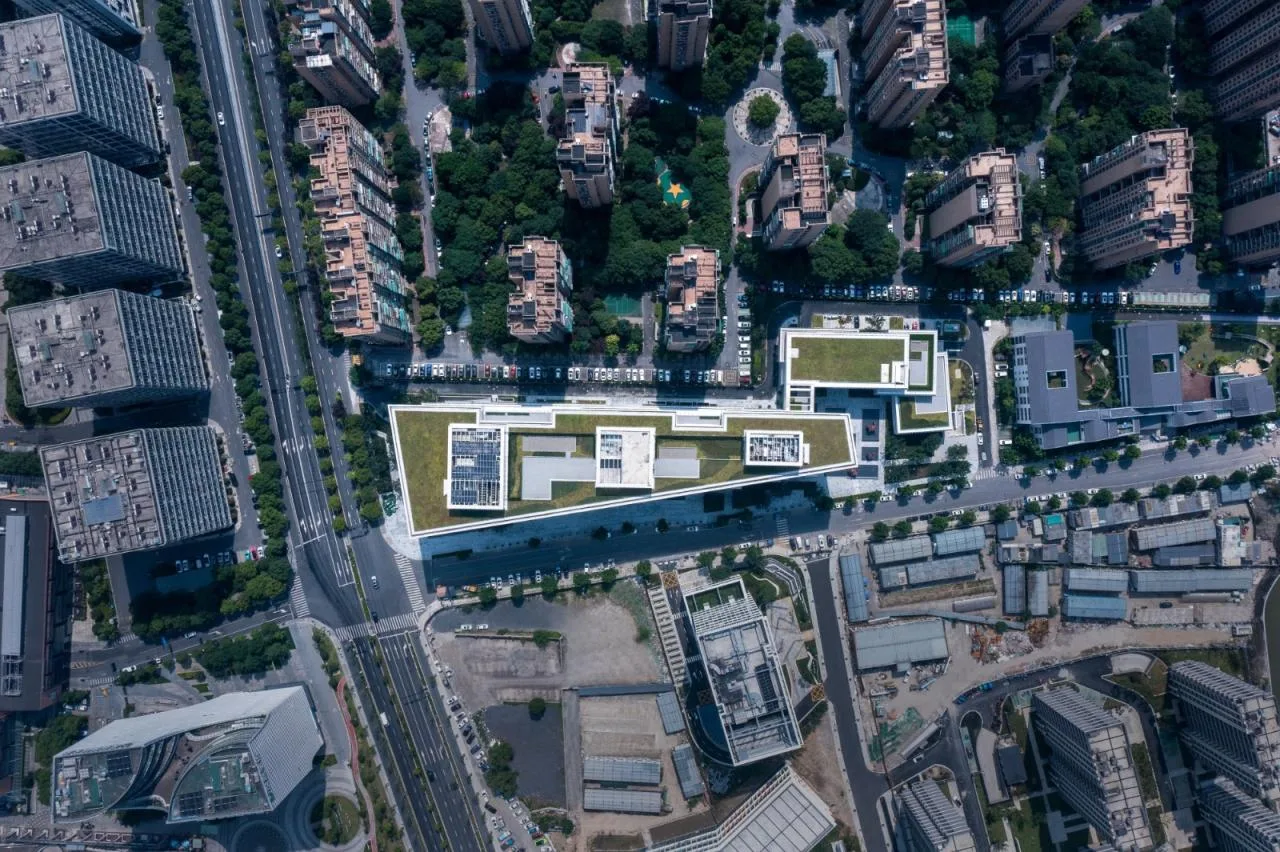
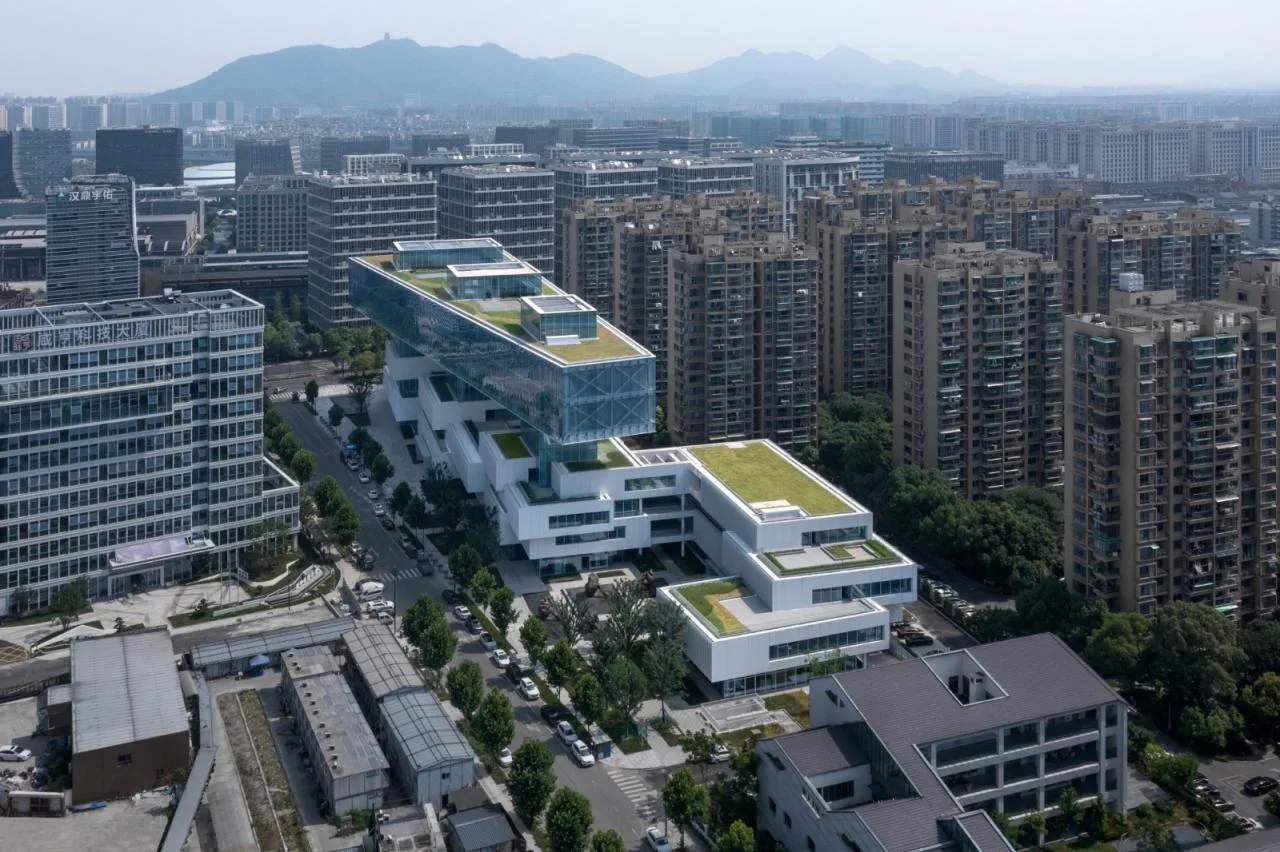
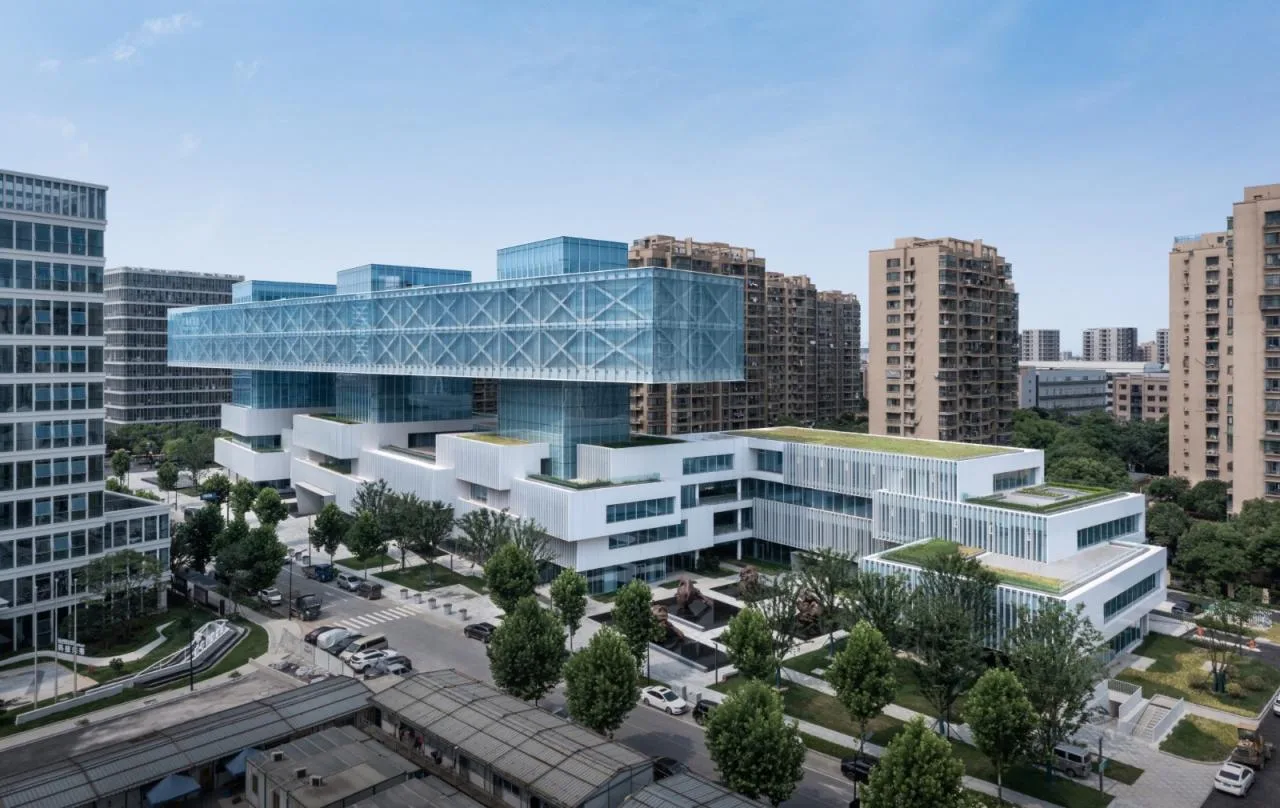
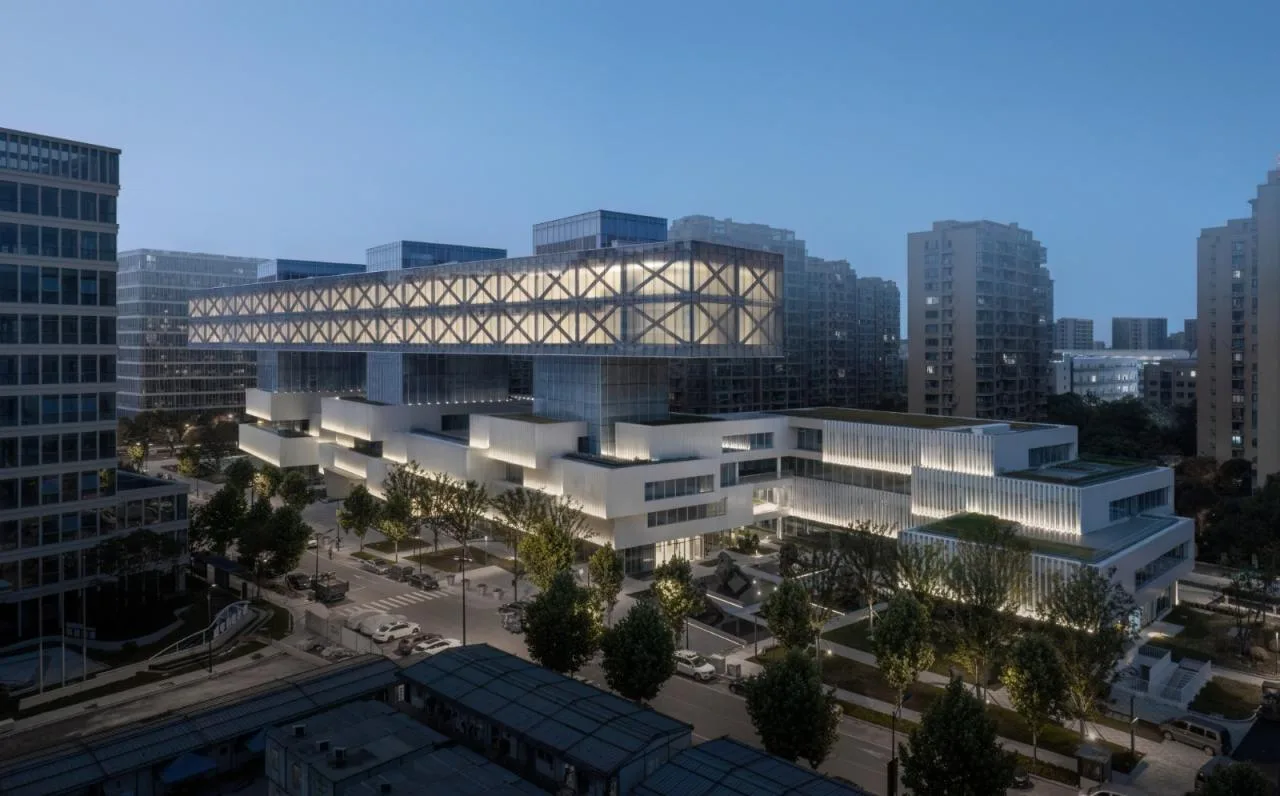
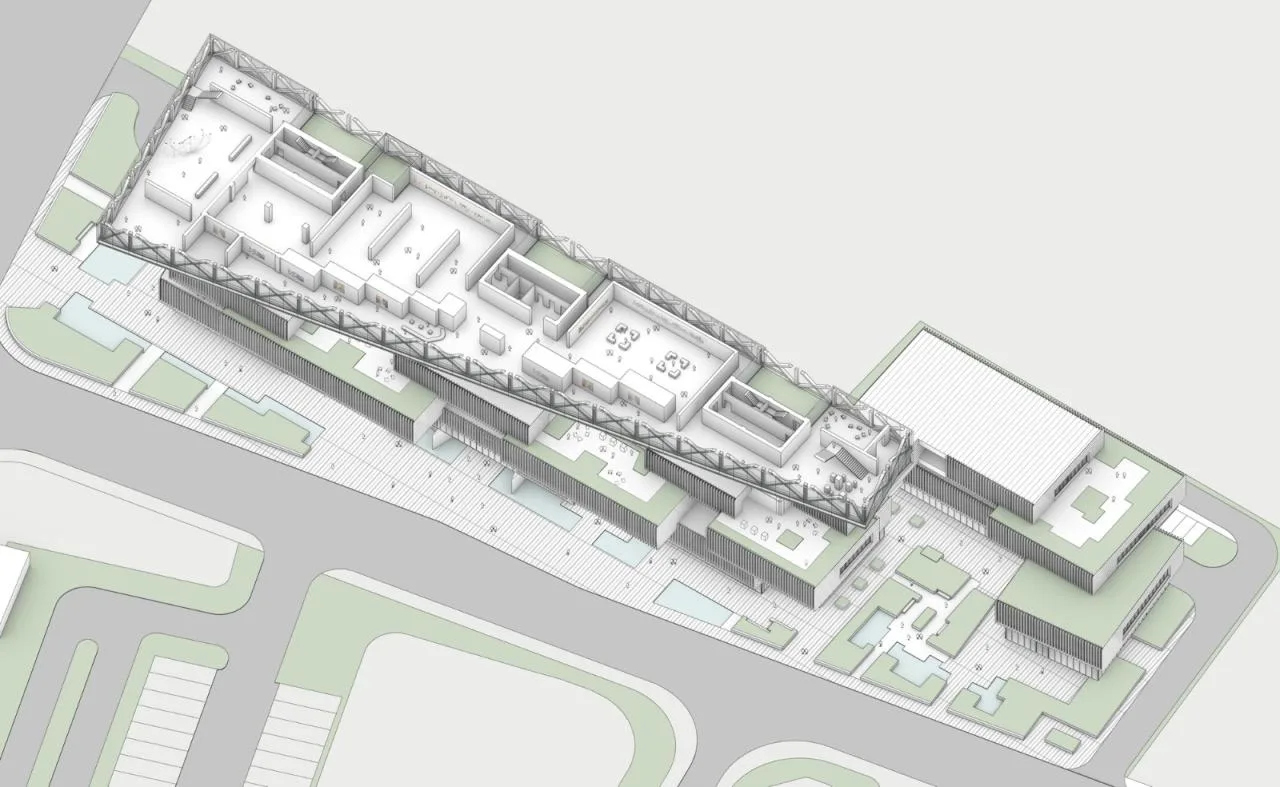
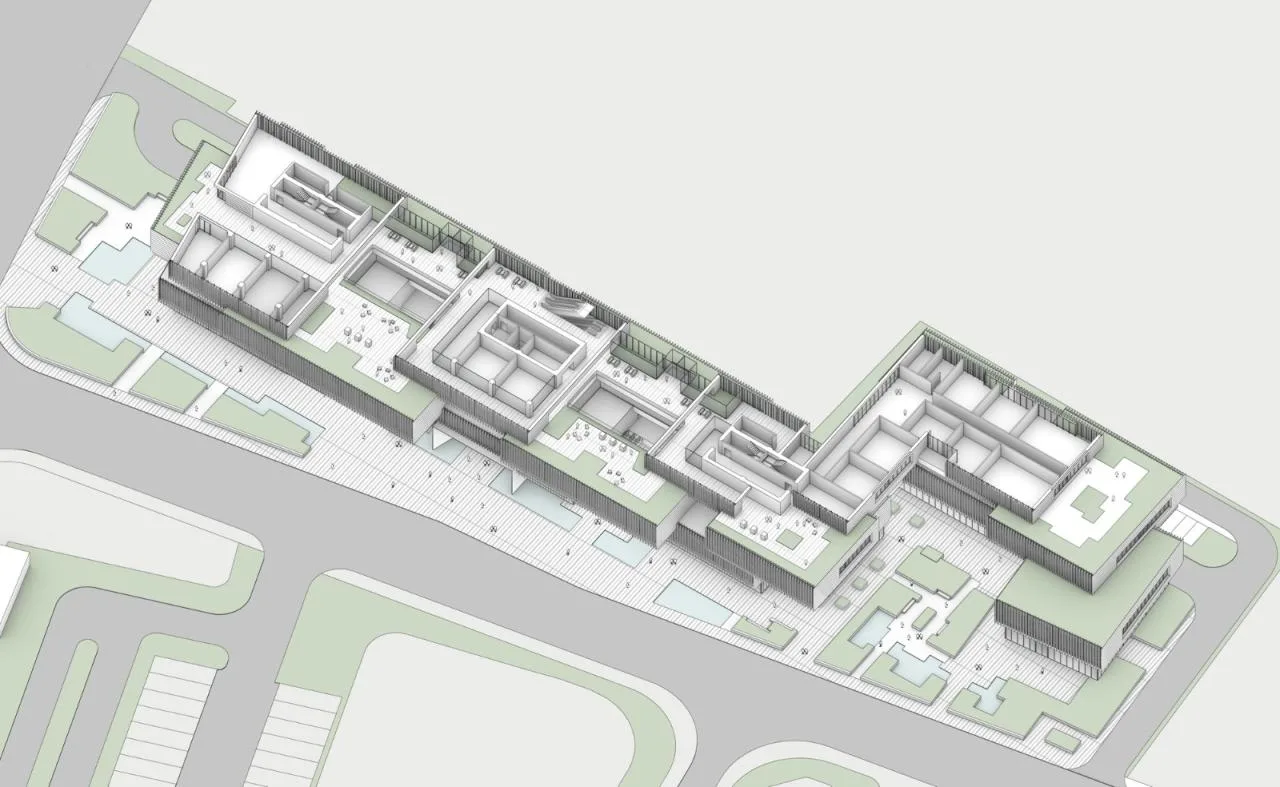
The site itself is irregular, narrow, and elongated, measuring about 60 meters wide east to west, and roughly 240 meters long north to south. High-rise office buildings flank both sides, with a kindergarten positioned at the southern end and a planned urban park at the southwest corner. The design places the bulk of the building on the northern side to correspond spatially with the surrounding skyscrapers. Meanwhile, the southern portion is kept lower in height and volume, featuring an open street courtyard and a community service center. This creates a comfortable, human-scale space that engages well with the adjacent kindergarten and the nearby urban park.
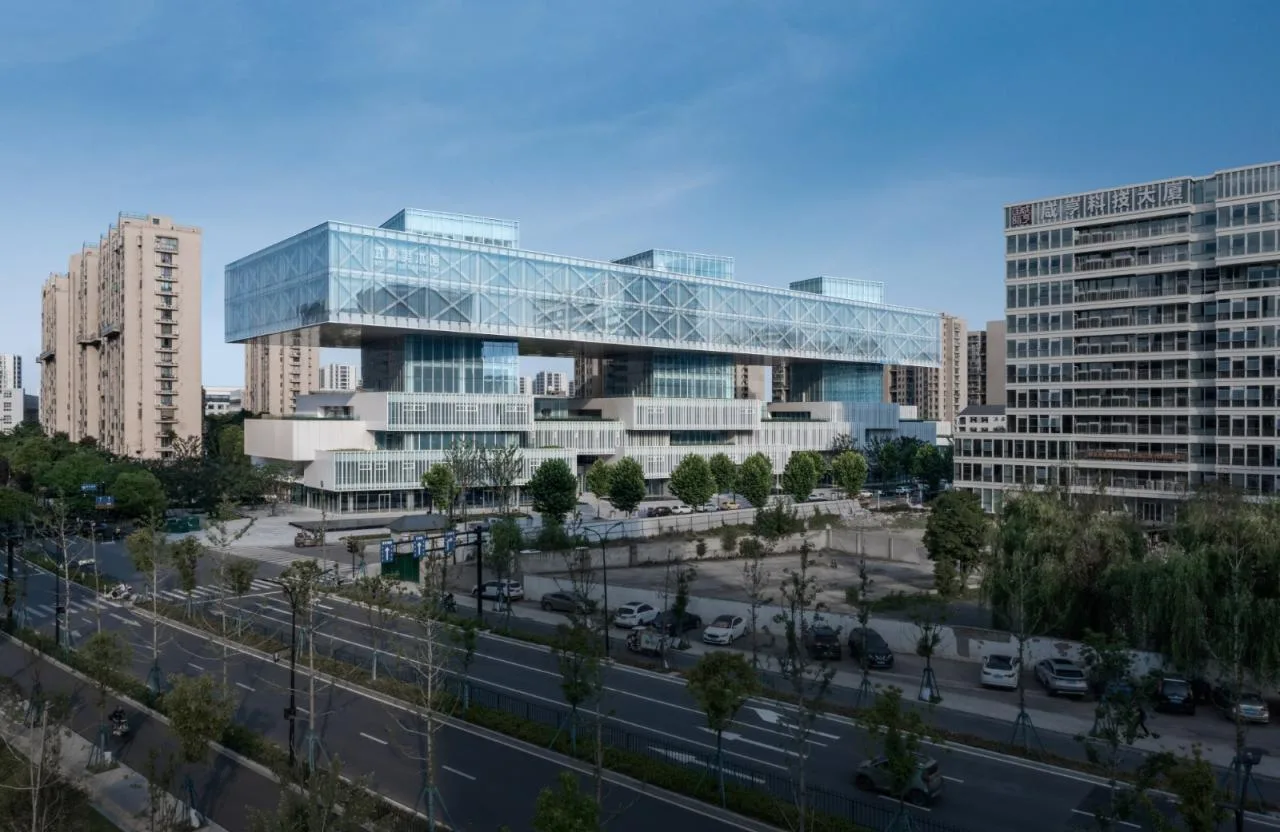
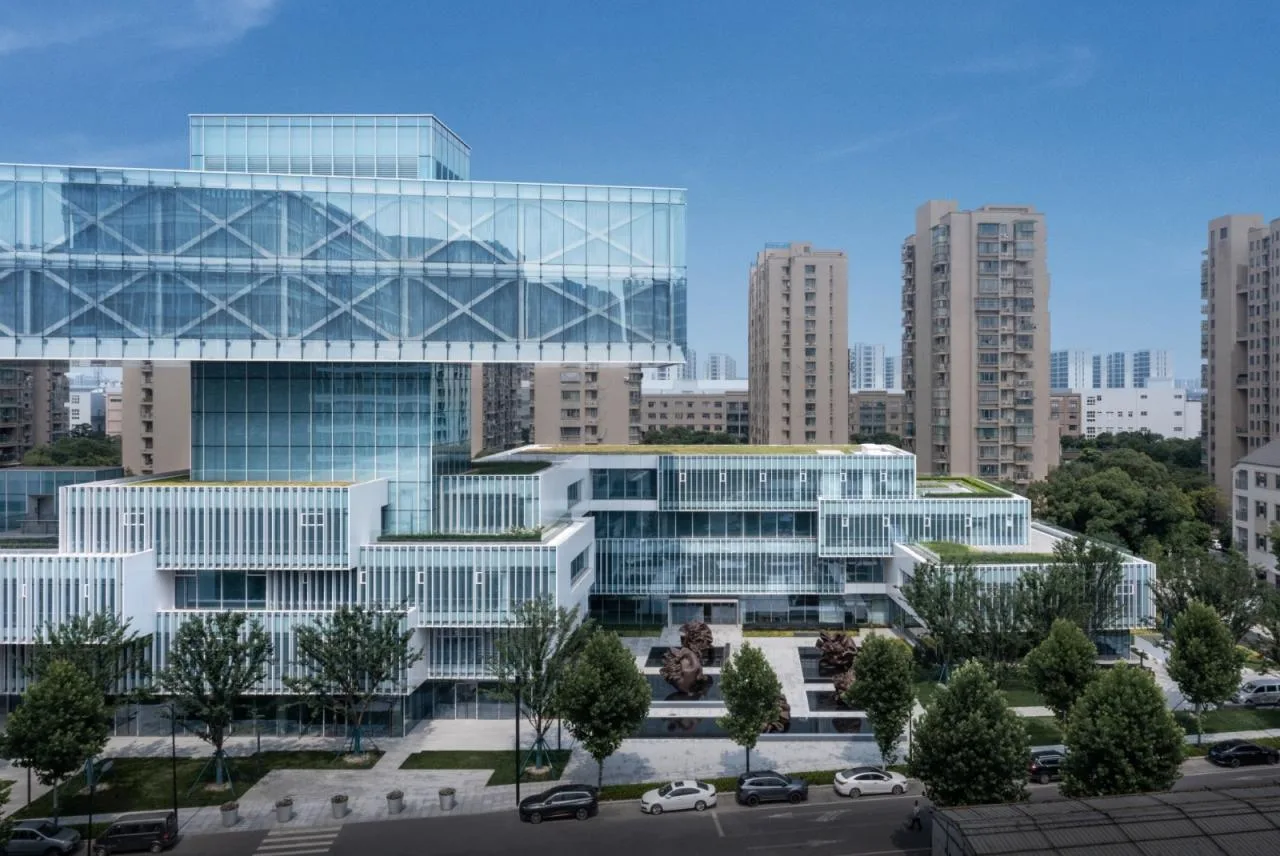
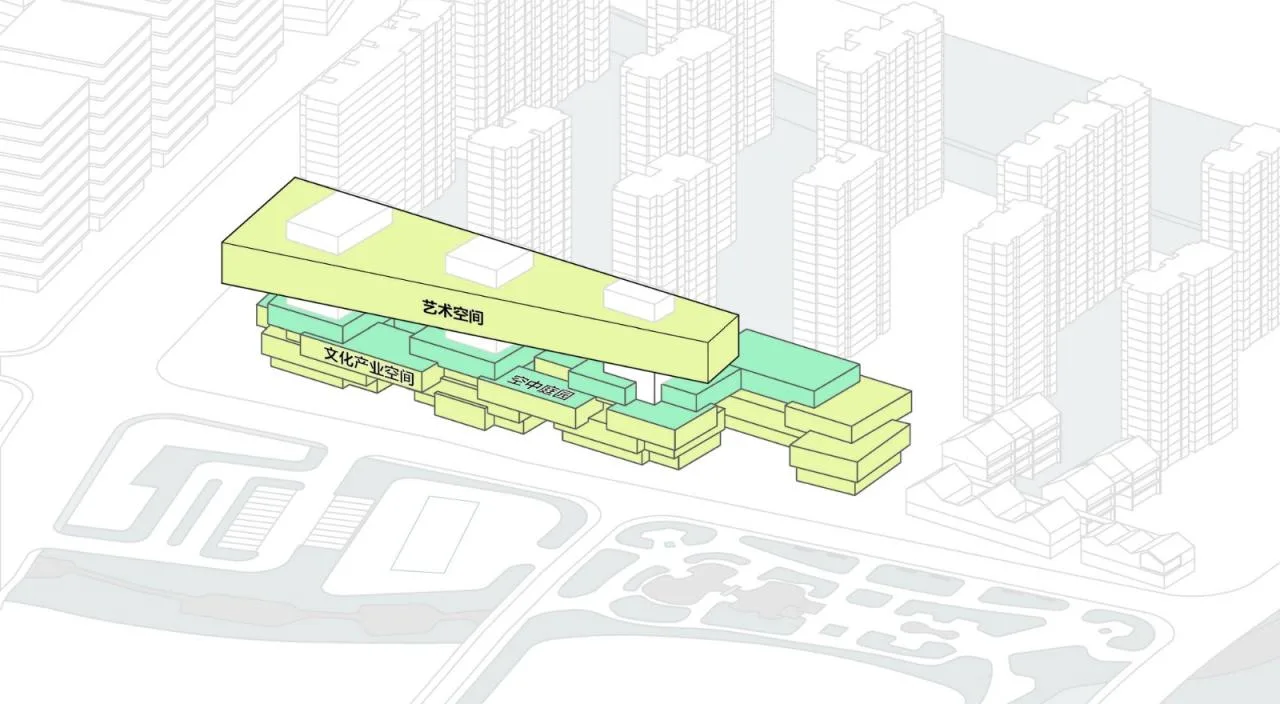
The art museum’s public exhibition space occupies one-third of the building’s area and serves as the most significant and captivating part. However, due to factors like exhibition schedules, opening hours, and layout, the art spaces experience relatively low usage and limited interaction with daily urban life. In contrast, the cultural industry and community service areas, which cover two-thirds of the above-ground space, are closely integrated with daily commuting, services, and social interaction, resulting in higher activity and stronger connections to the city.
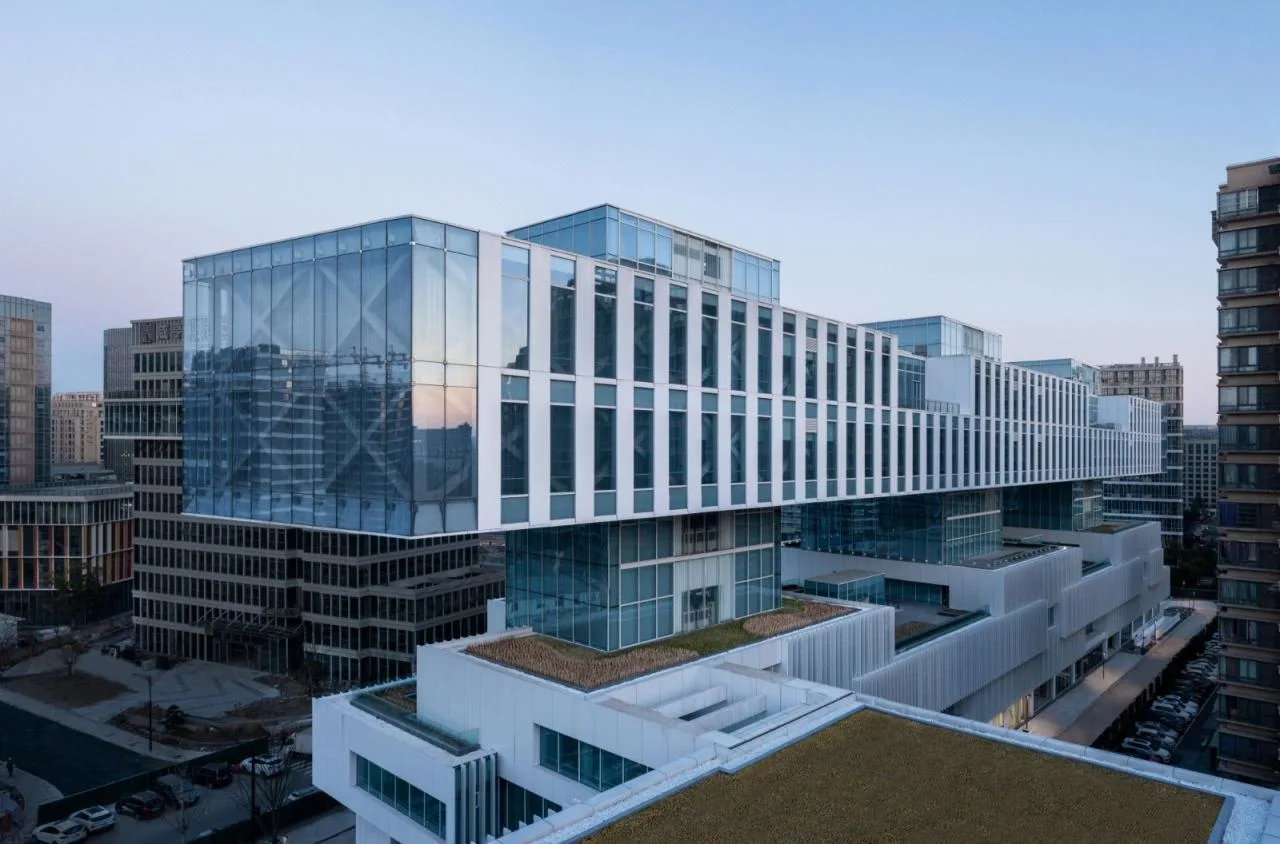
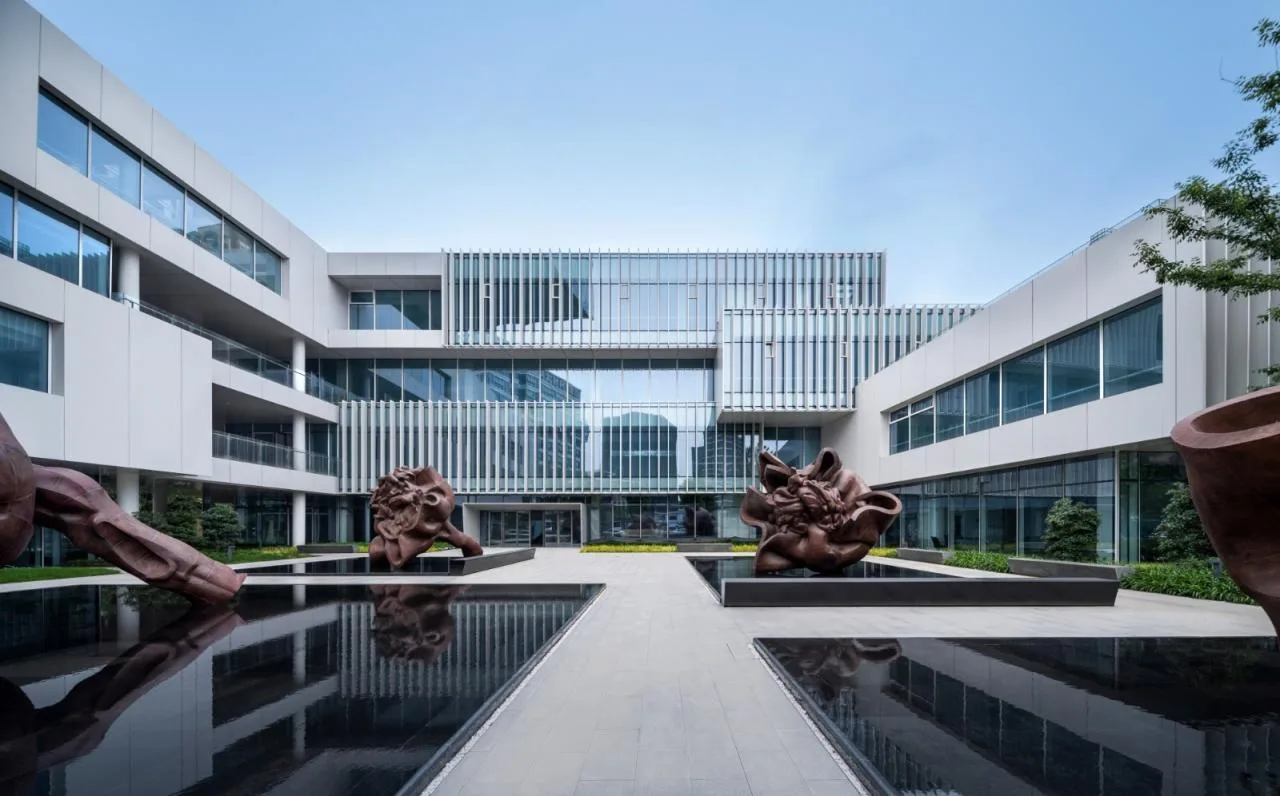
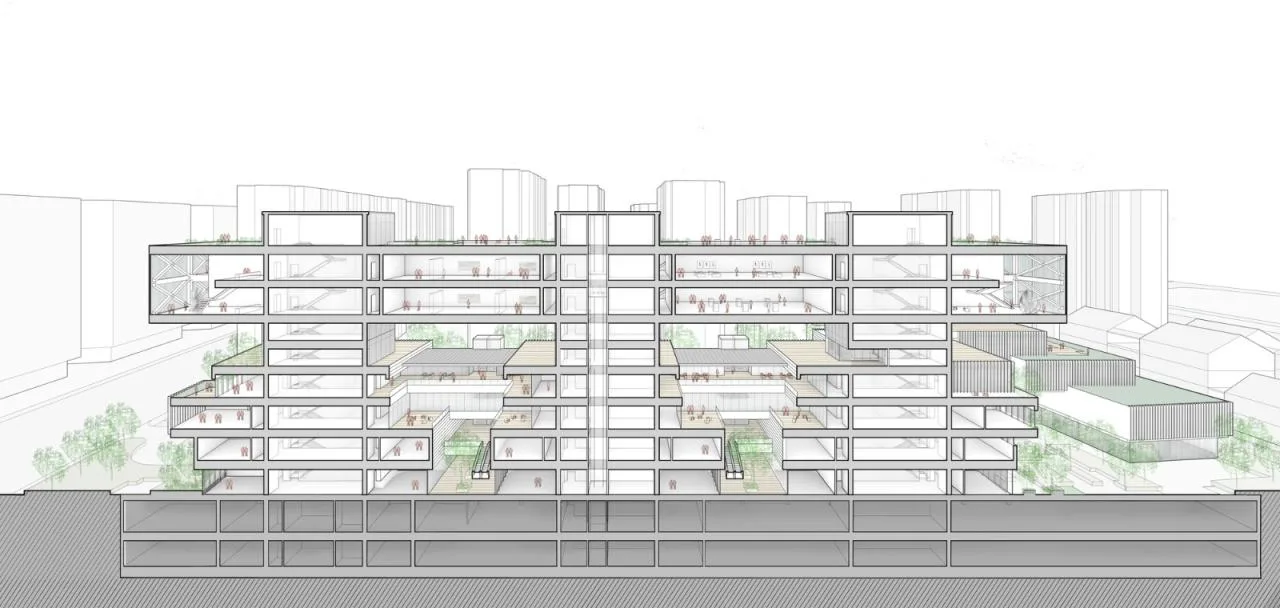
Accordingly, the art exhibition spaces are located in the upper part of the building, elevated above the city and relatively independent. Visitors enter through the ground floor lobby and access these spaces via vertical elevators, catering to the purposeful flow of art patrons and emphasizing the museum’s cultural presence. The cultural industries and community services occupy the lower, street-facing zones, integrating with commercial areas on the ground floor. These spaces are designed flexibly to accommodate future changes and foster daily urban interactions.
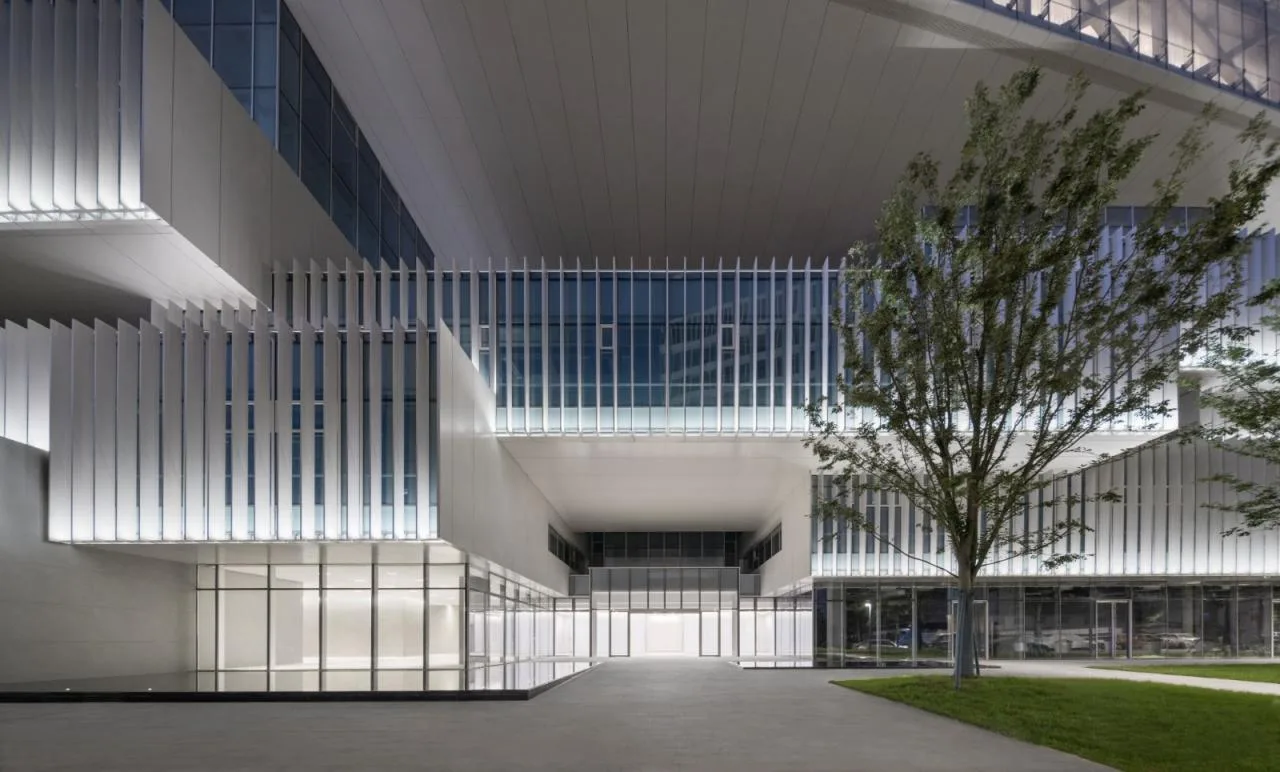
Between the high and low zones lies an aerial garden, featuring cultural and creative facilities, restaurants, and supporting amenities that encourage user interaction. This open, accessible area can be reached directly through an independent elevator hall at the southern end, enhancing the museum’s urban vitality and public engagement.
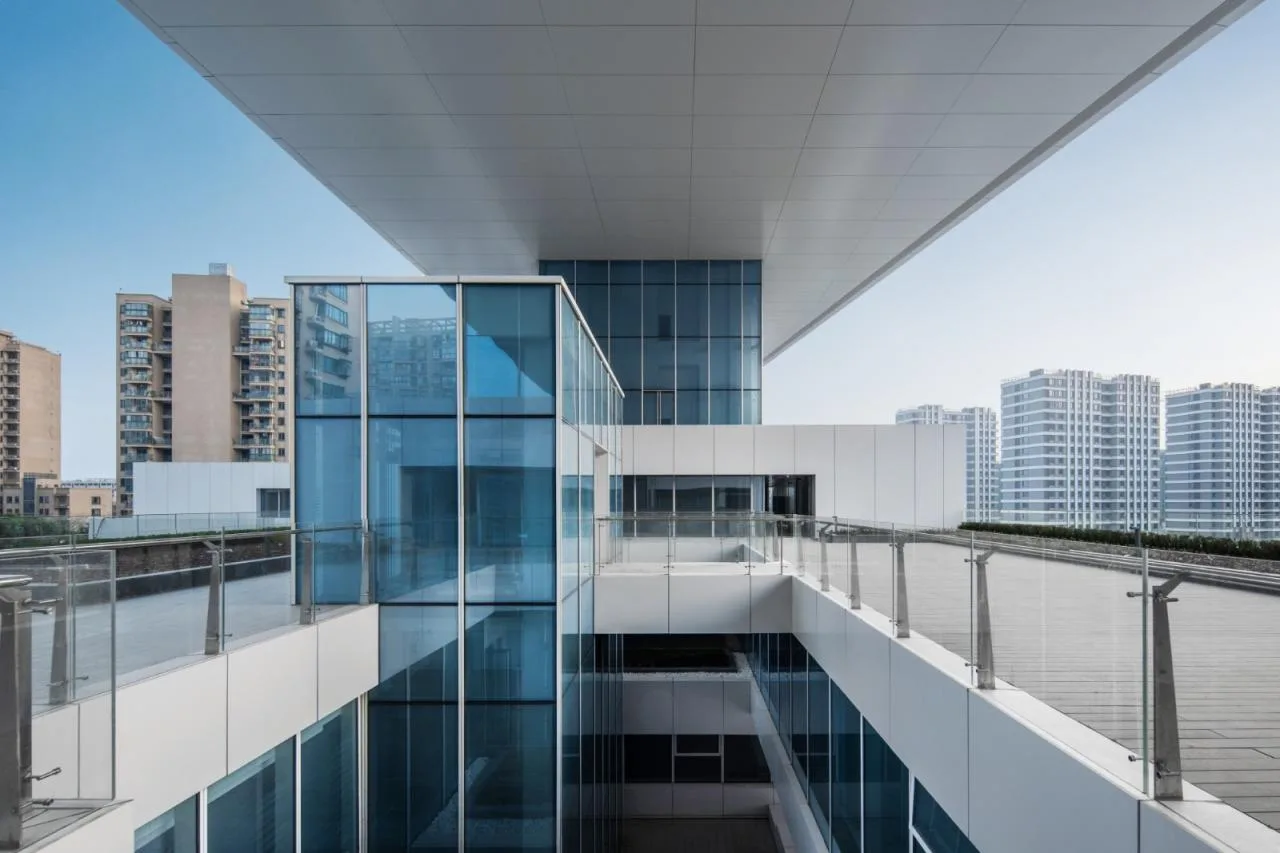
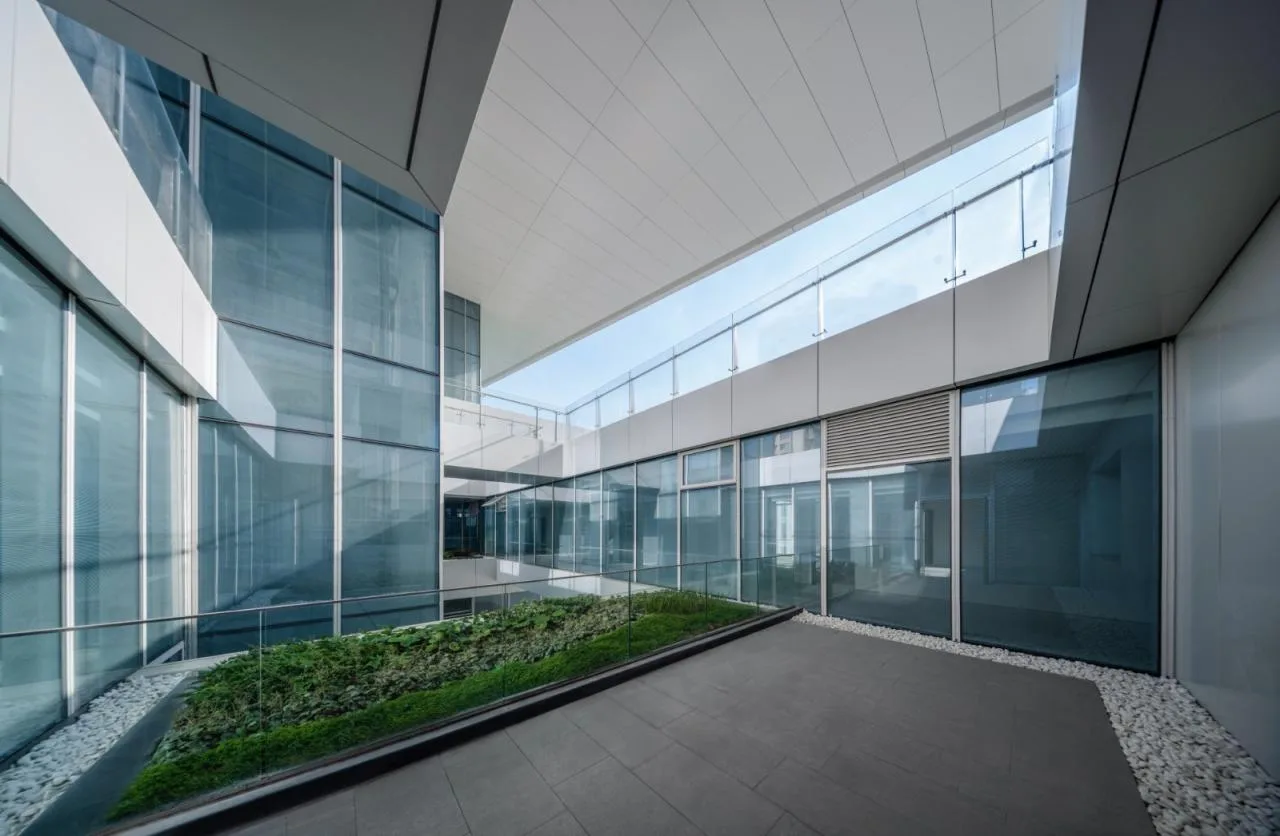
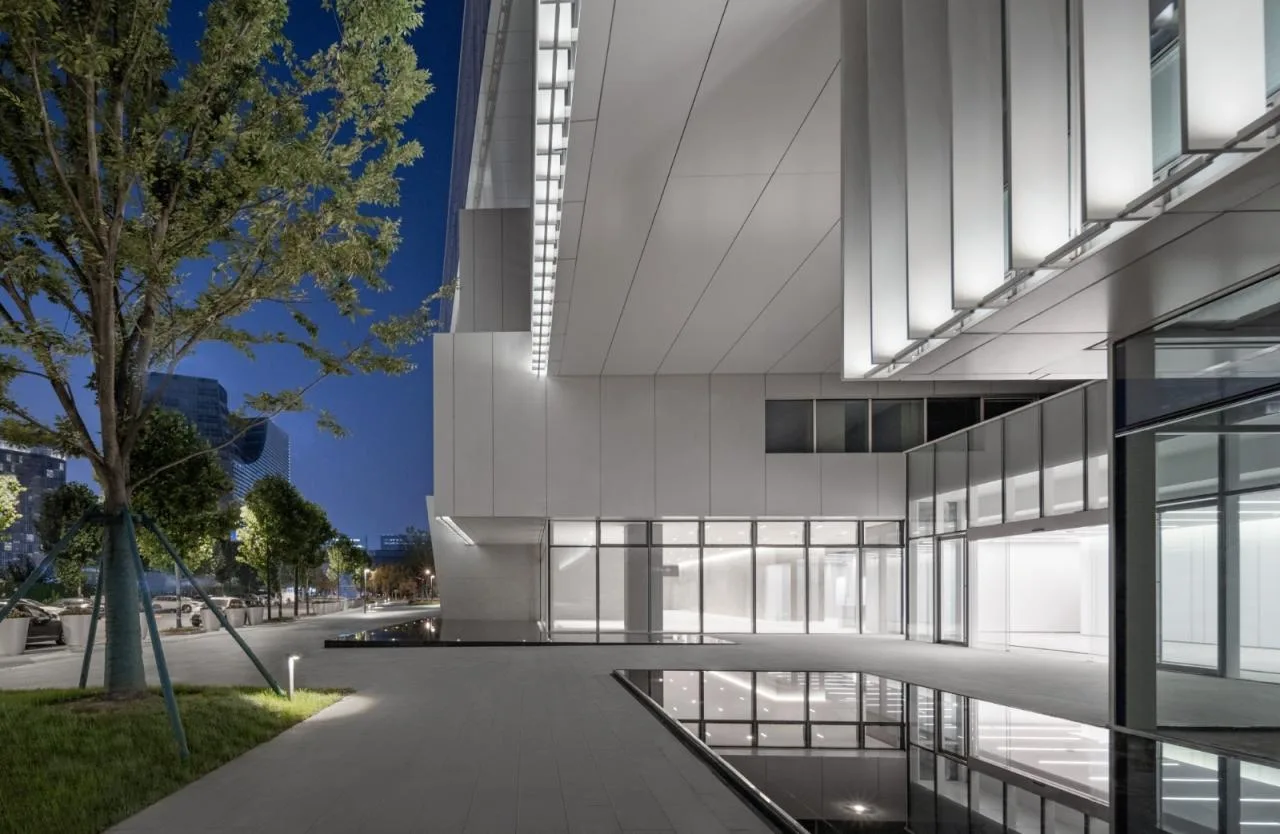
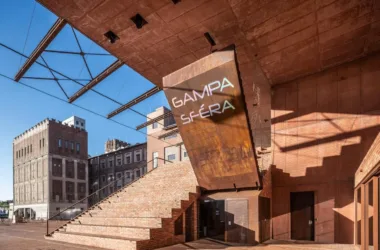
Creating an environmentally friendly and welcoming atmosphere for both city streets and residential areas is a key design focus. The building’s street-facing facade aligns with the urban scale, offering a well-organized interface. A pleasant pedestrian walkway runs along the west side, with small pocket parks at each end to accommodate community activities, street corner interactions, and kindergarten pick-up zones—spaces designed for lingering and socializing.
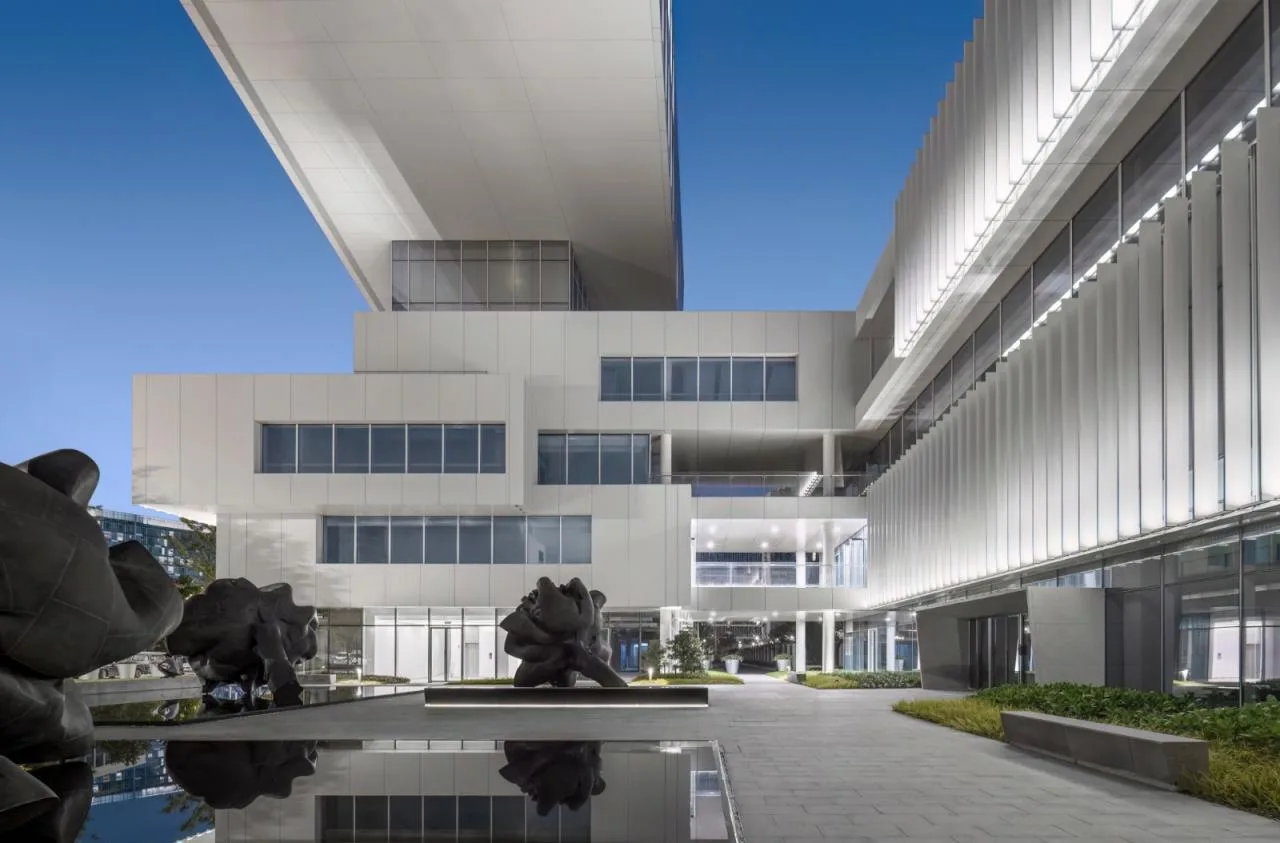
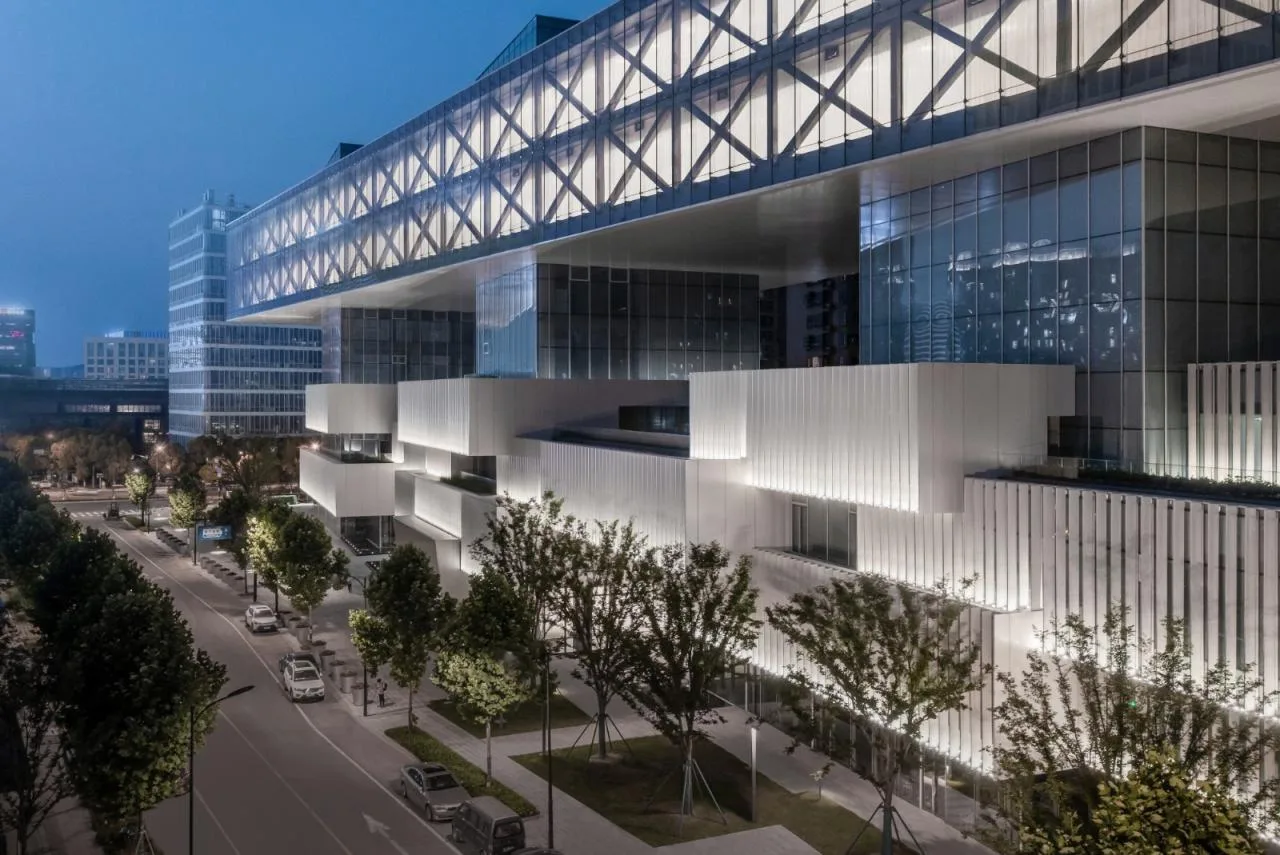
The building mass is broken down into smaller blocks with alternating solid and void elements, and a transparent sky garden near the street and residential areas enhances openness. This garden not only serves as a social space but also reduces the visual bulk of the museum’s main residential side to the east, bringing fresh air, greenery, and a sense of clarity to neighboring streets and homes.
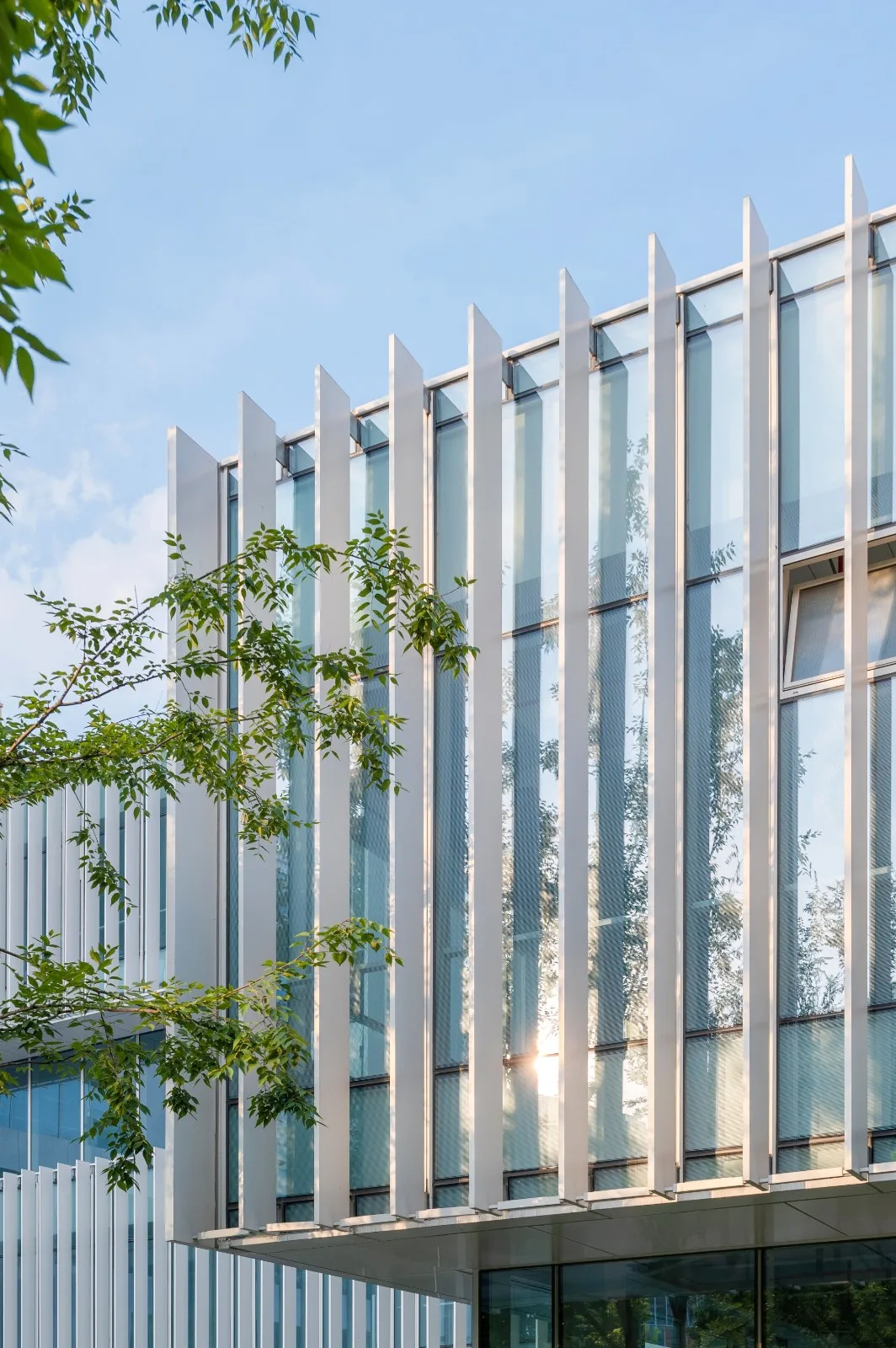
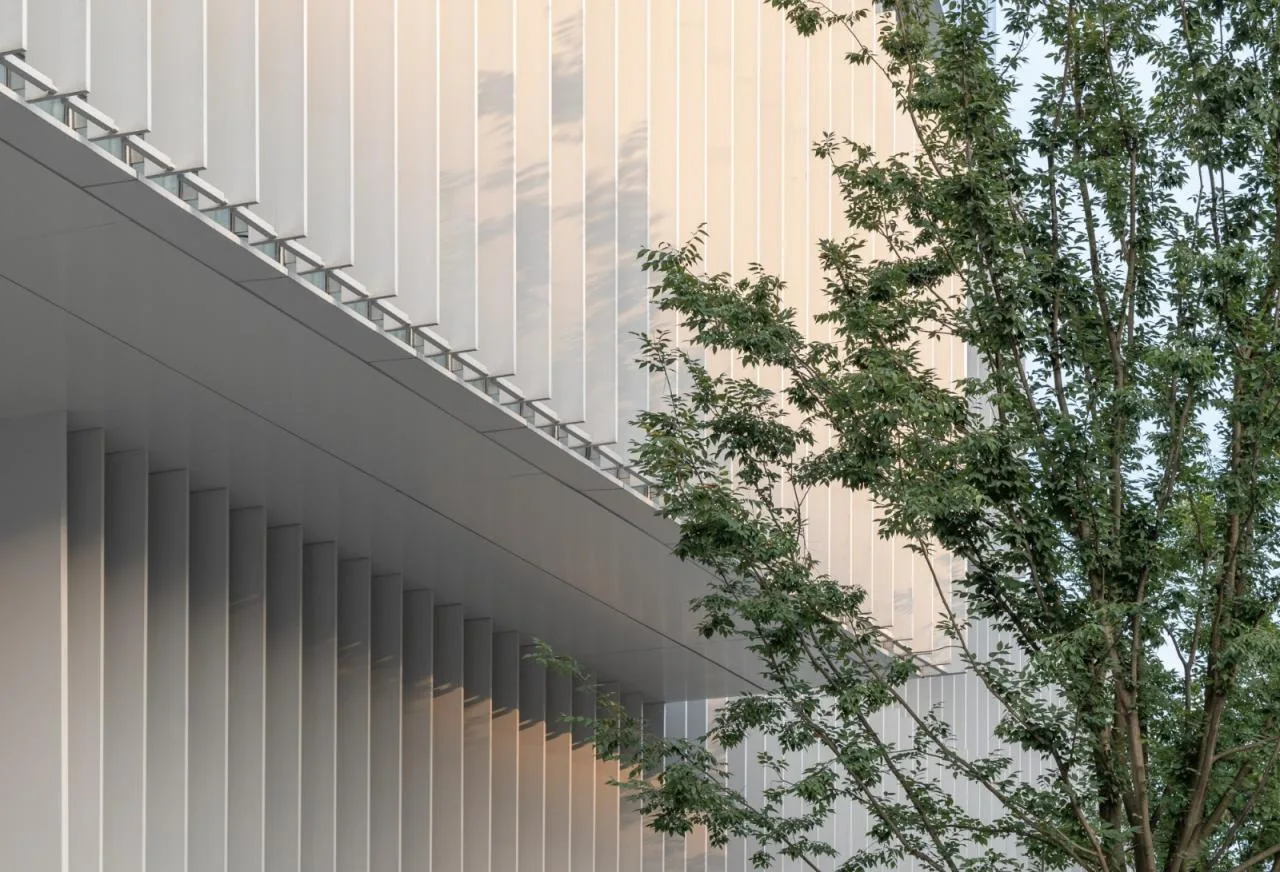
Given the site’s east-west orientation and urban constraints, the building incorporates energy-efficient strategies while ensuring ample natural light indoors. The design features vertically zoned architecture with staggered, small-scale blocks in the lower zone that provide effective shading through overhangs. These areas are clad with vertical louvers and colored low-e glass to minimize direct sunlight penetration.
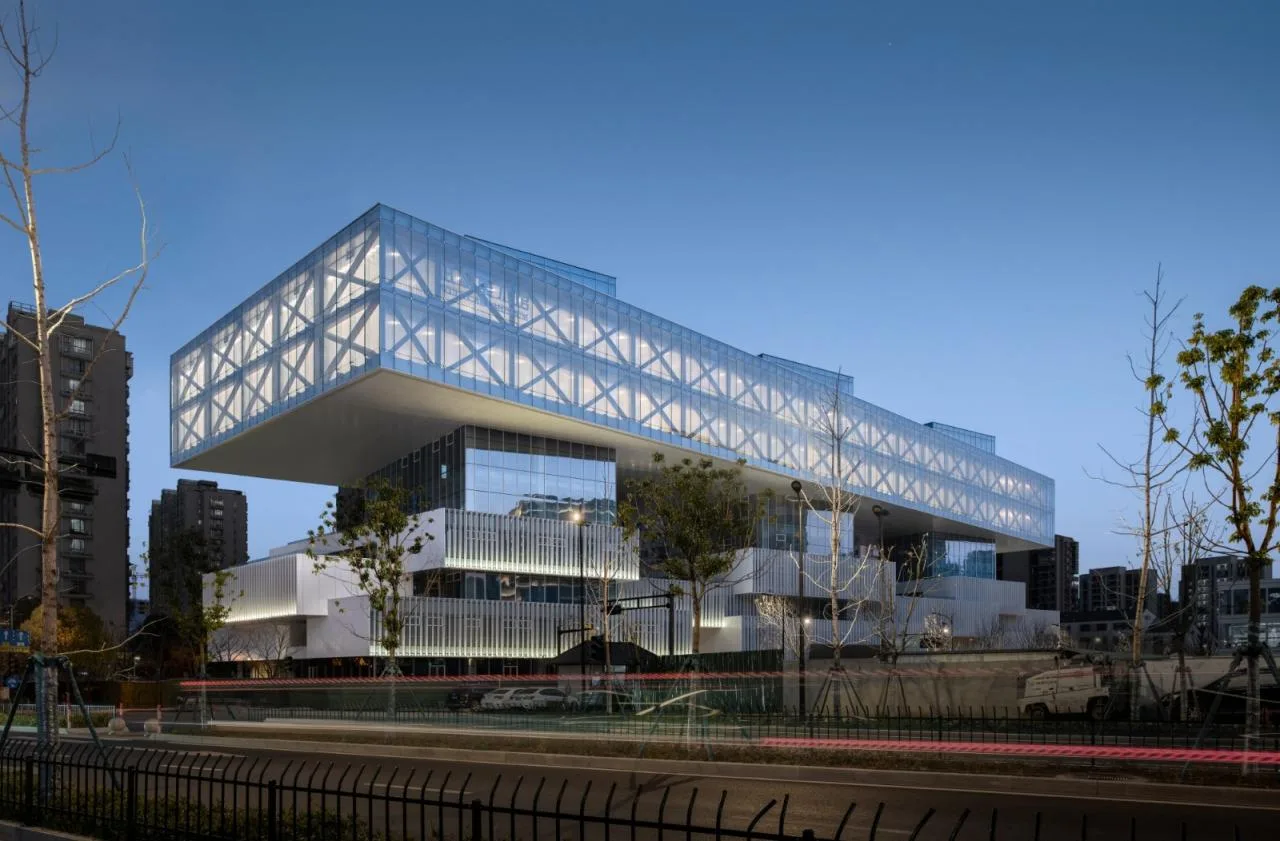
The upper exhibition spaces utilize a double-layer breathable curtain wall system: an outer layer of colored low-e glazed glass and an inner layer of U-shaped glass separated by a 1200mm ventilation cavity. Hot air in this cavity escapes through a top vent, significantly reducing heat gain and lowering indoor temperatures, which eases the air conditioning load in hot summers. Additionally, tiered green roofs contribute to energy efficiency and support urban sponge city initiatives.
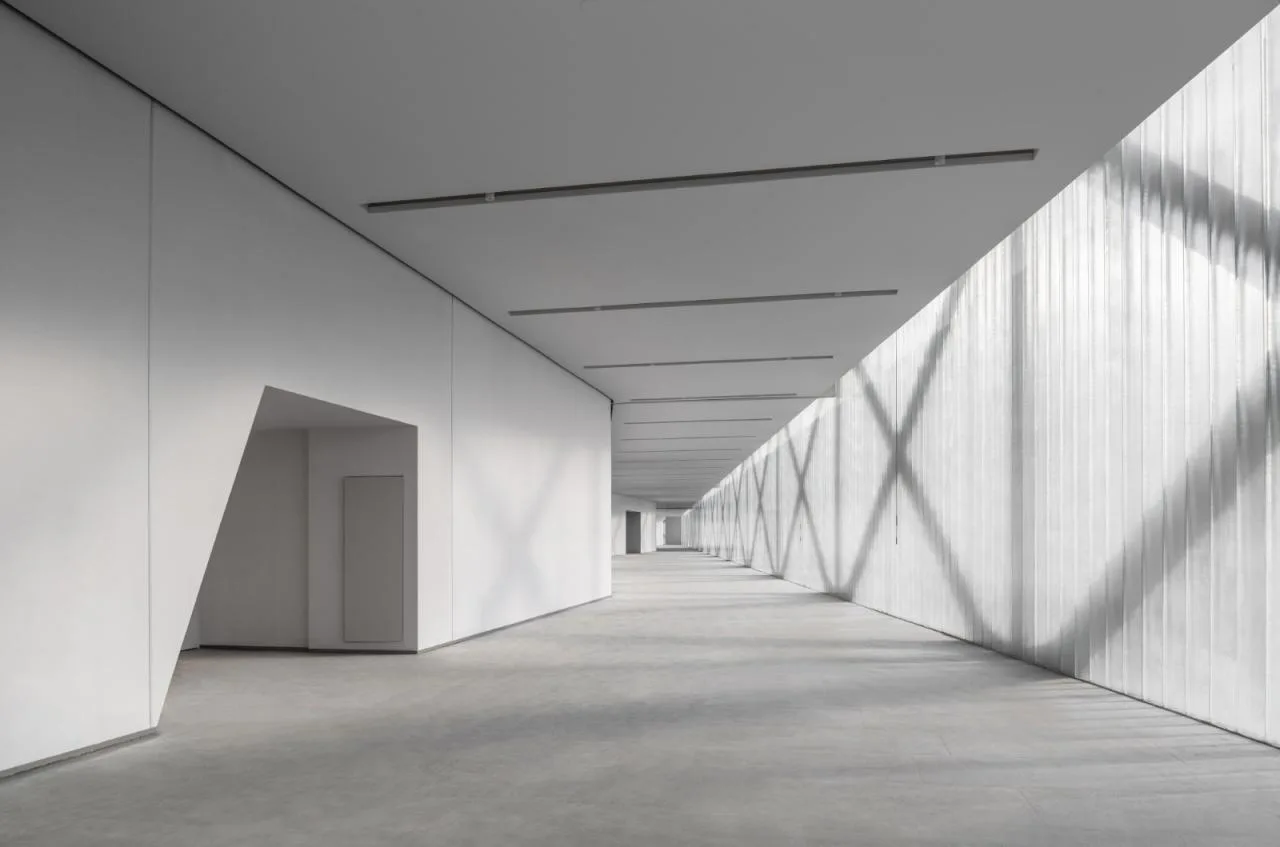
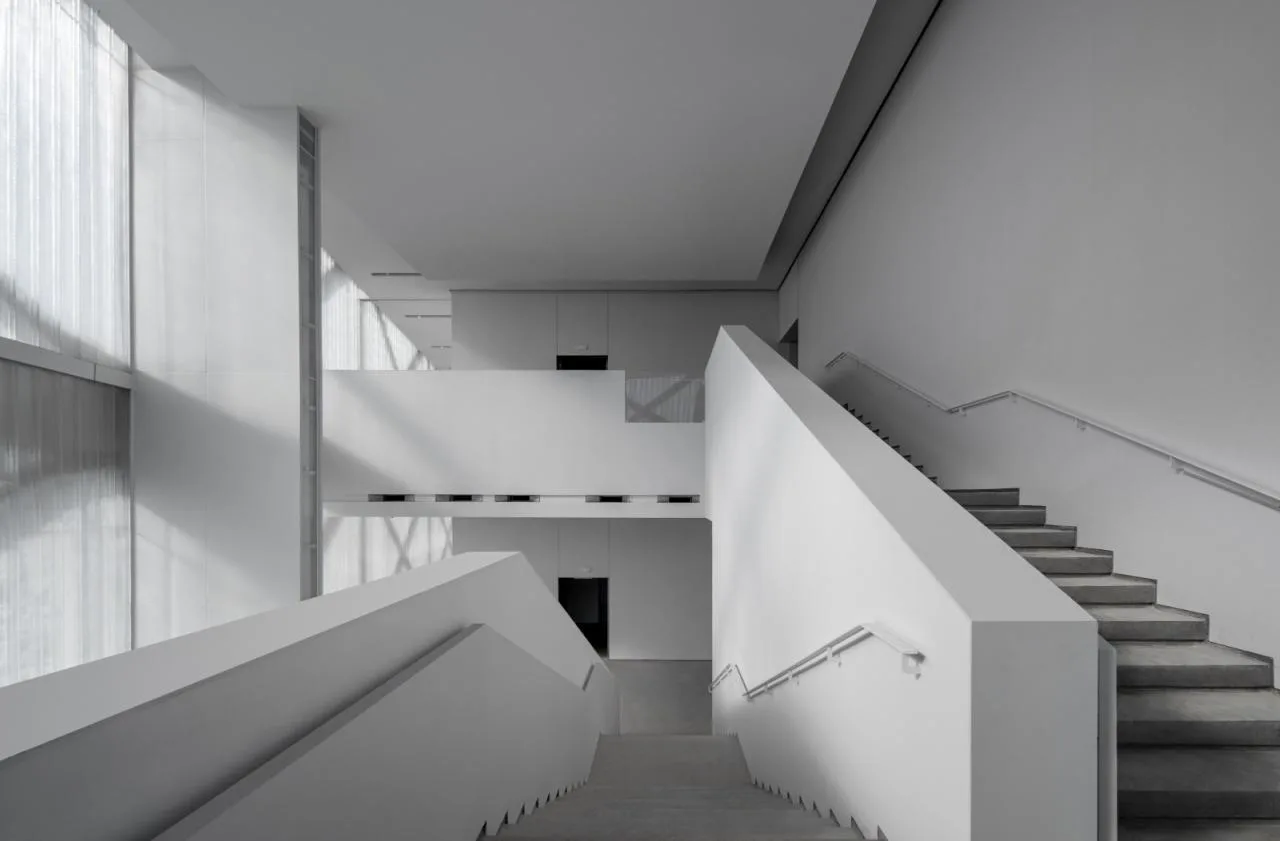
The design showcases the unique spatial qualities of the Landscape Art Museum, clearly expressing the relationship between its functional zones and the city. The building presents a simple and serene upper section, a vibrant and active lower section, and a transparent, welcoming middle area. These interconnected spaces engage a diverse range of people and activities, enriching the cultural fabric of everyday urban life.
Project Drawings
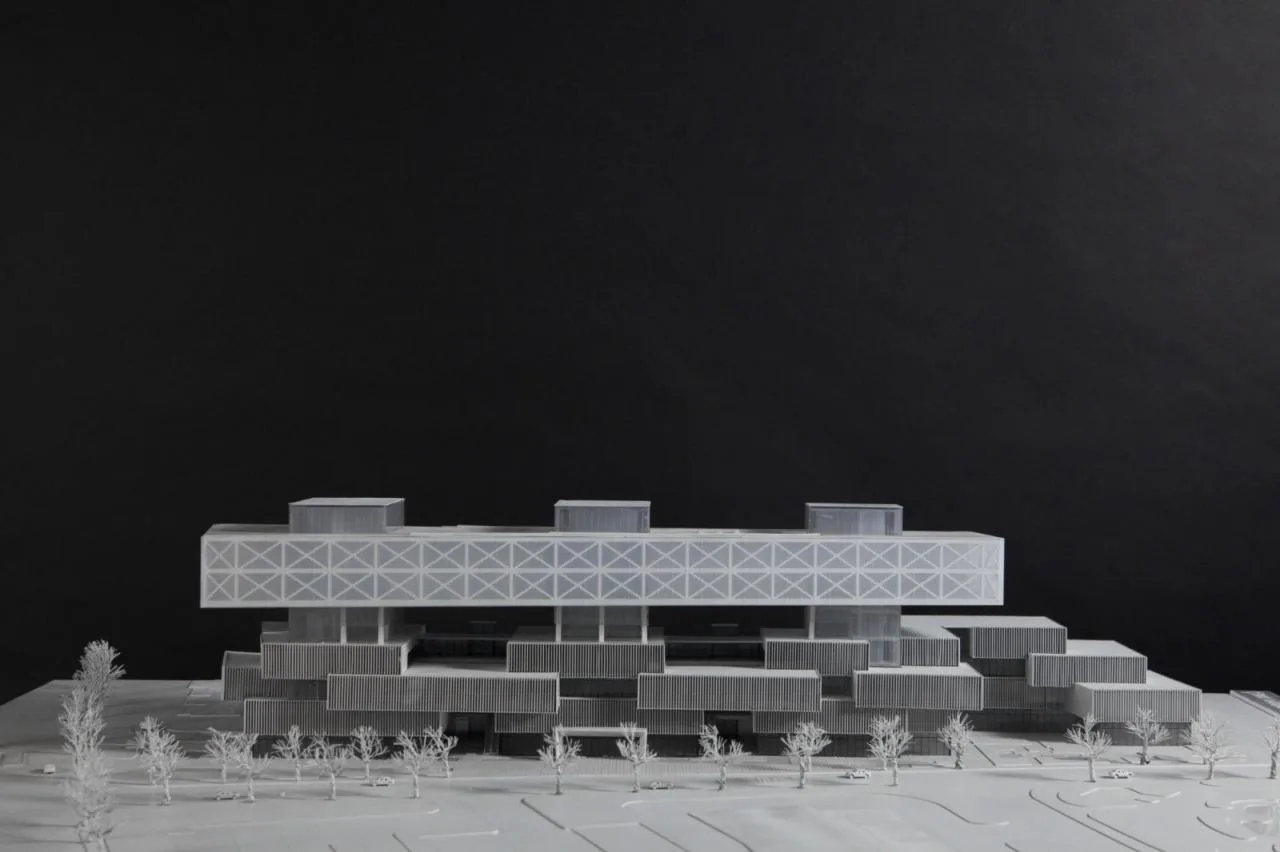
△ Model Diagram
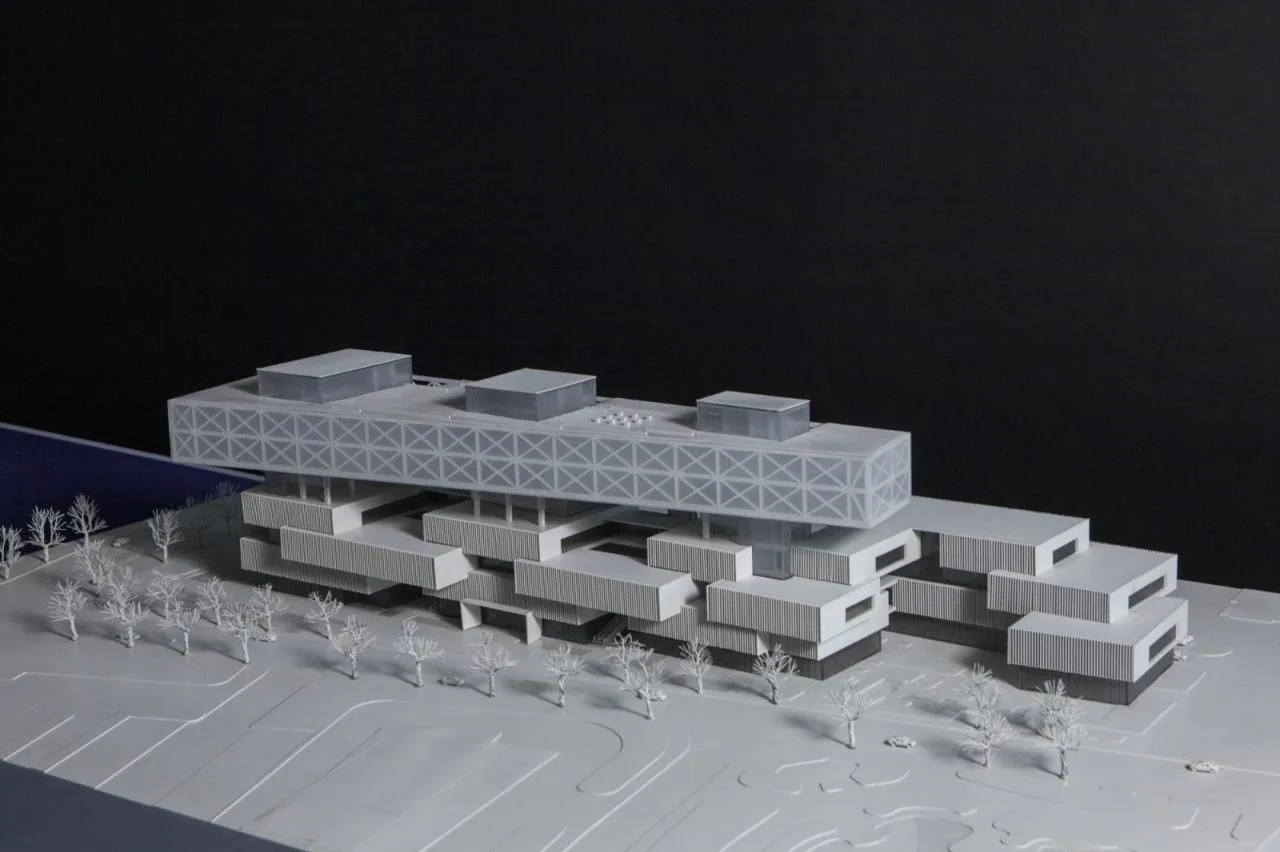
△ Model Diagram
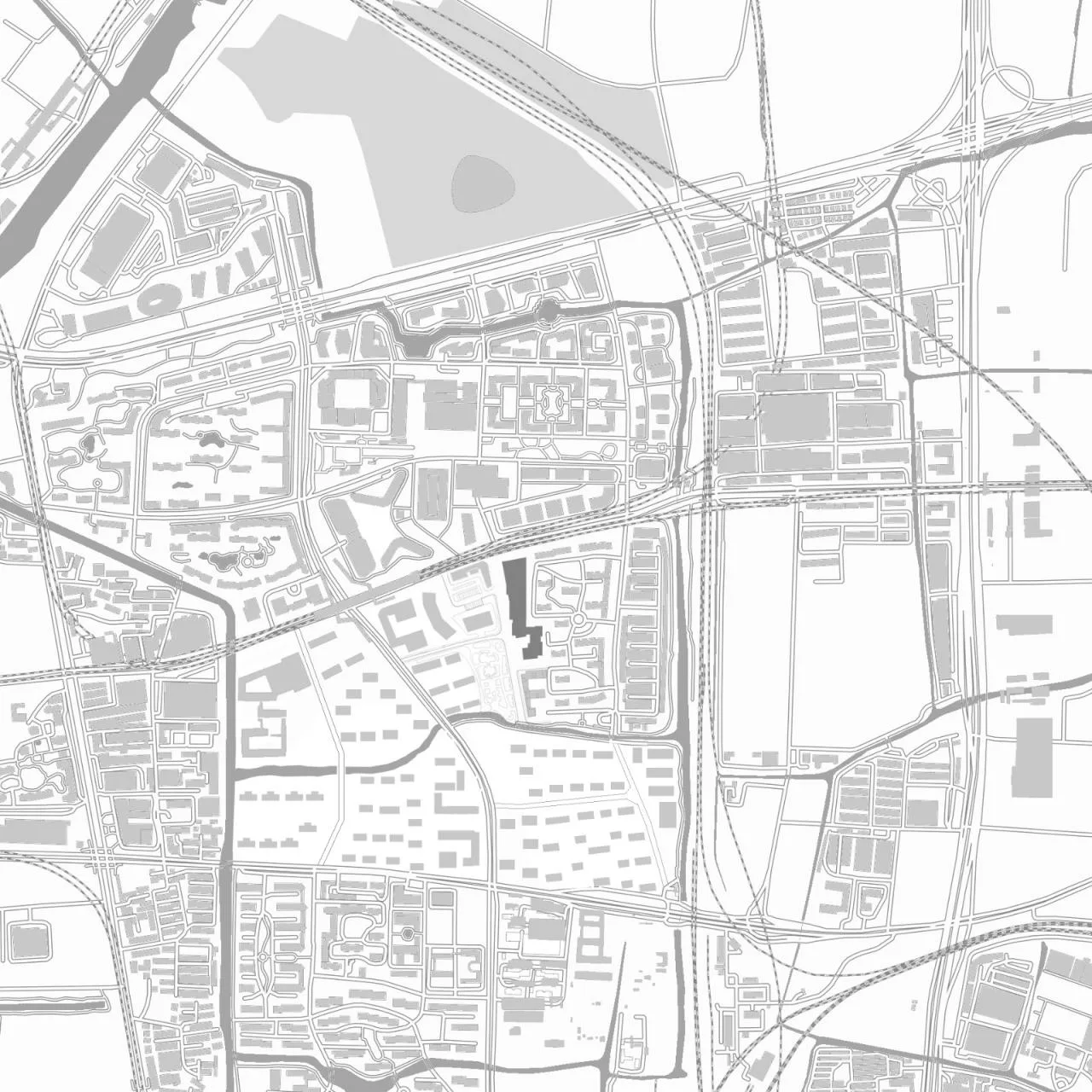
△ Base Schematic Diagram
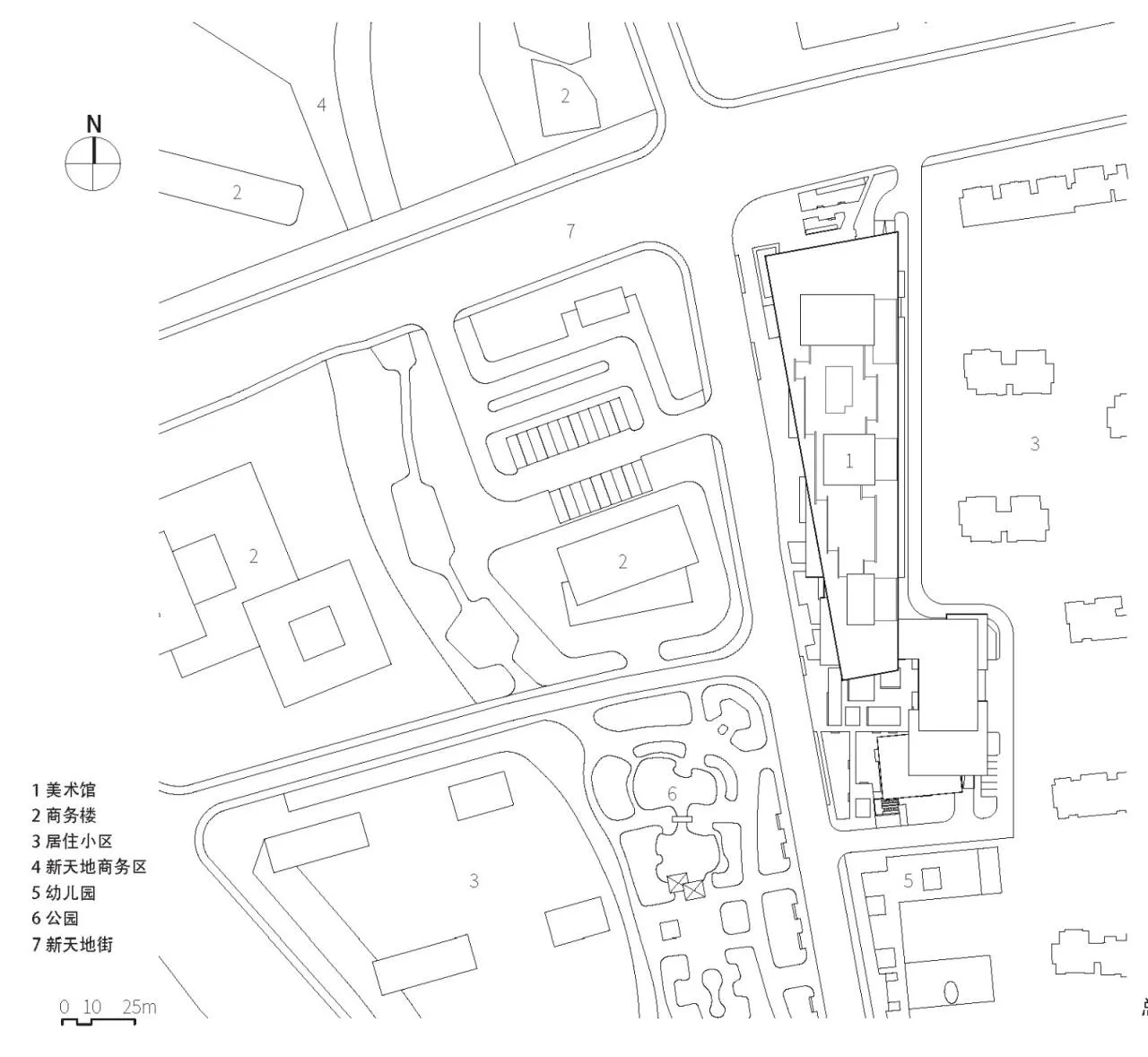
△ General Layout Plan
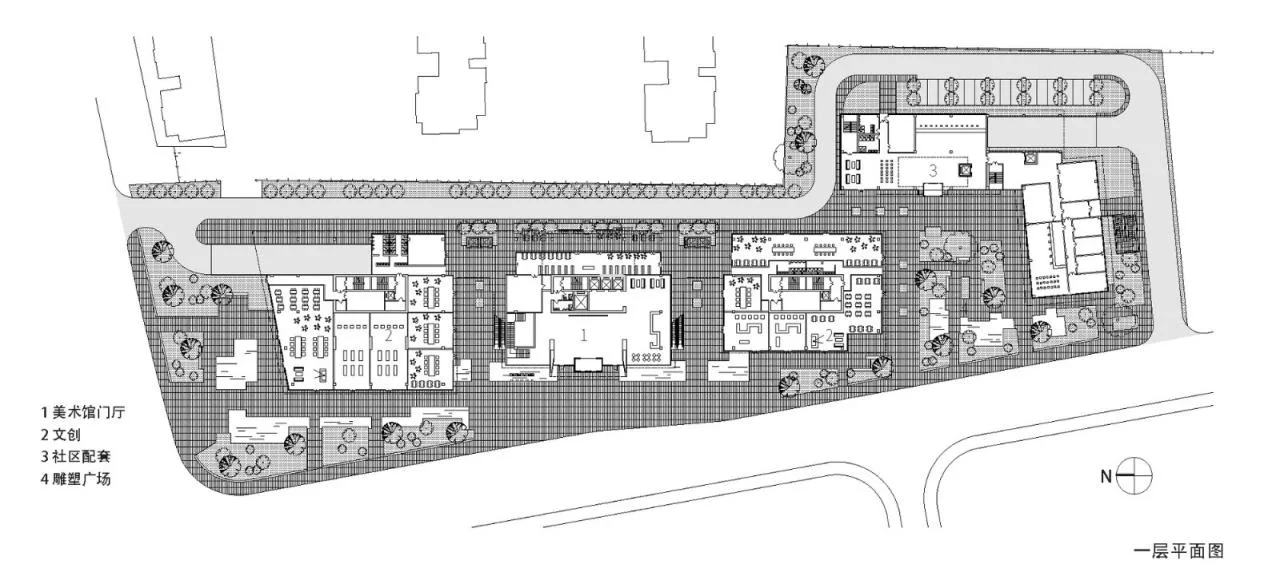
△ First Floor Plan
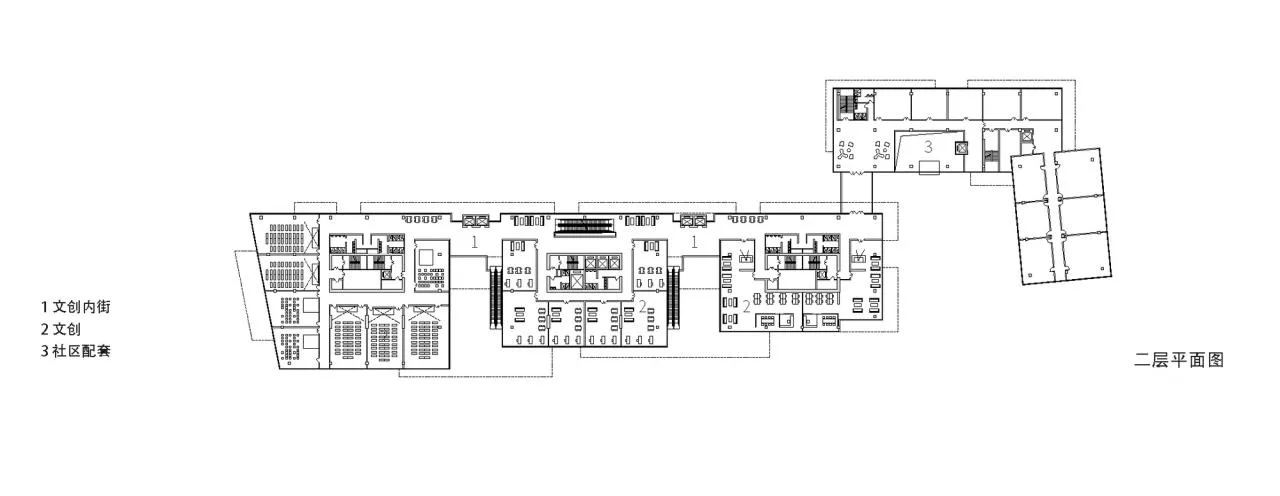
△ Second Floor Plan
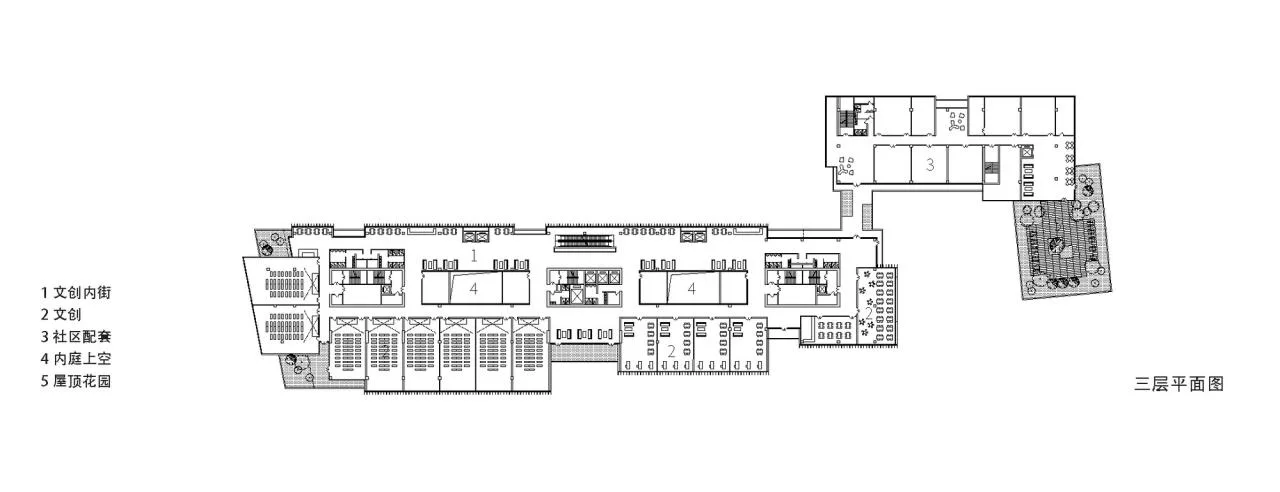
△ Third Floor Plan
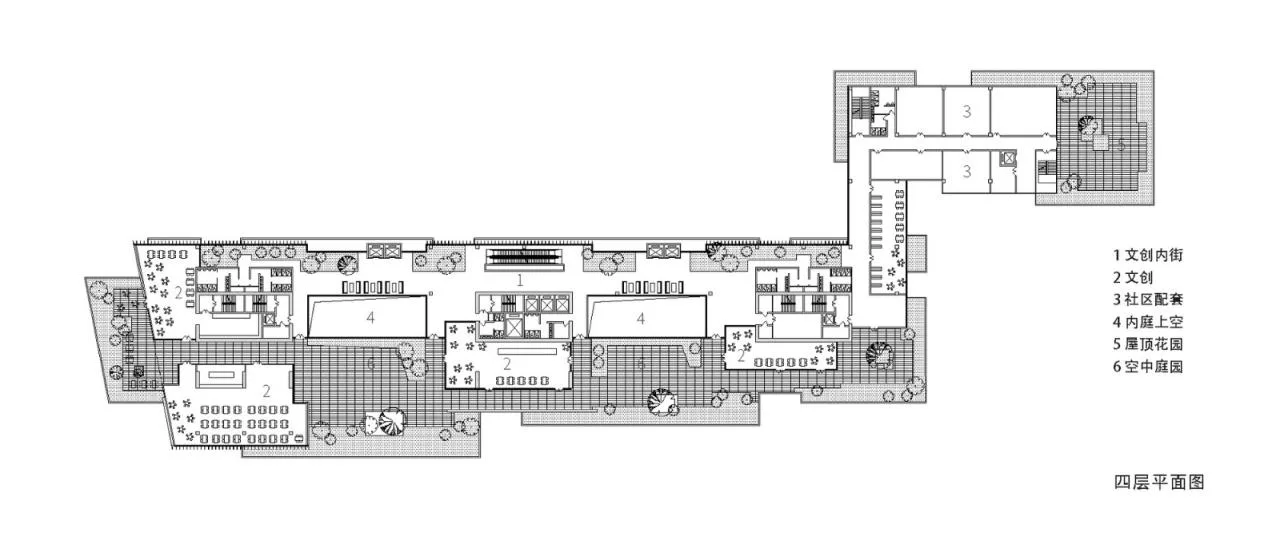
△ Fourth Floor Plan
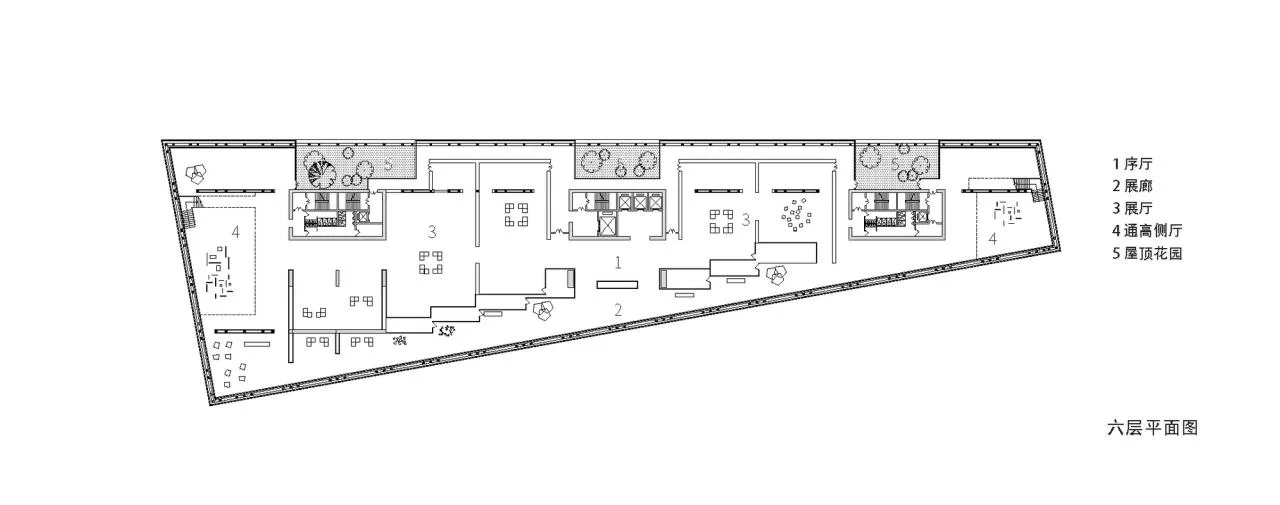
△ Sixth Floor Plan
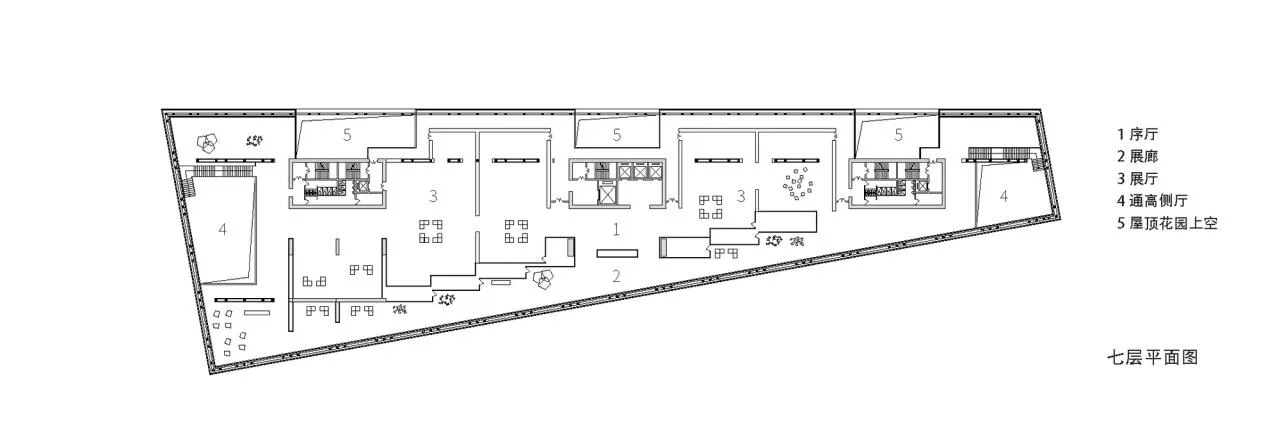
△ Seventh Floor Plan
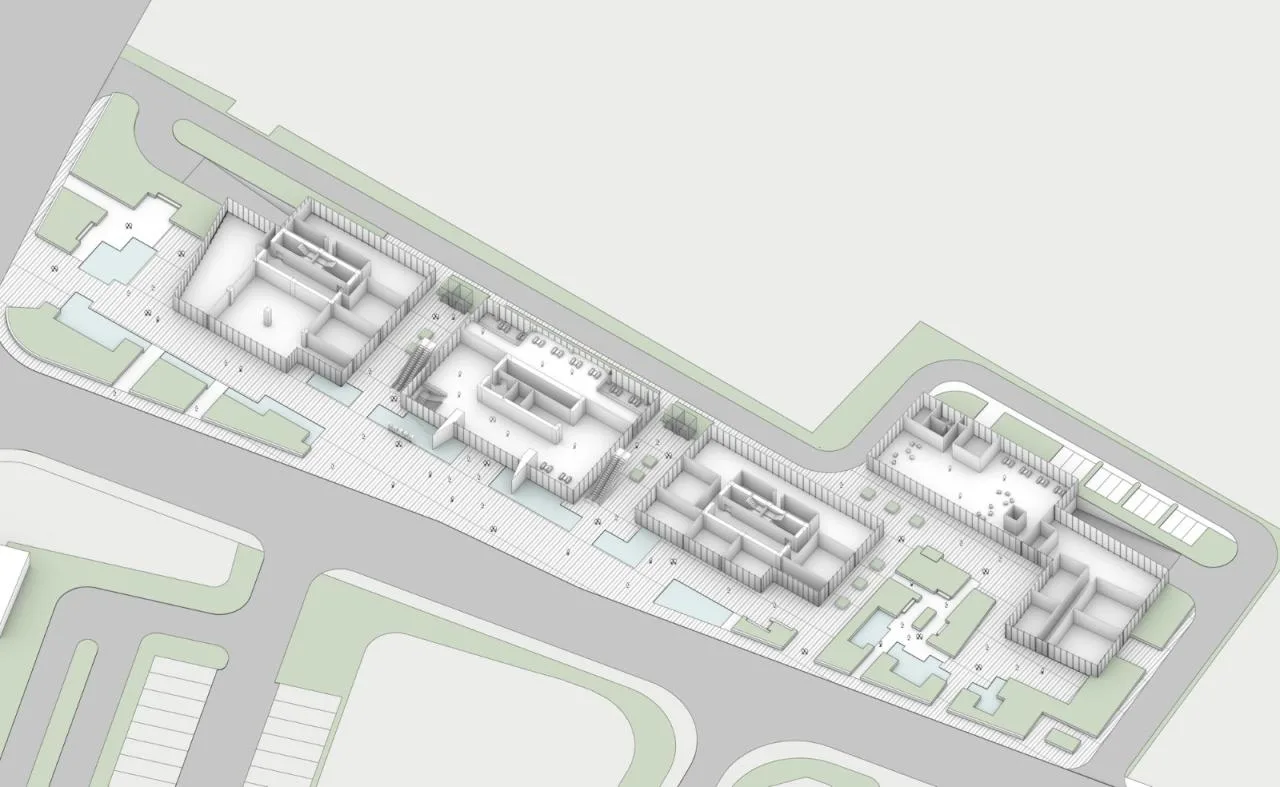
△ Axis Side Sectional Perspective
△ Axis Side Sectional Perspective
△ Axis Side Sectional Perspective
△ Sectional Perspective
△ Functional Zoning Diagram
Project Information
Architect: Architectural Landscape Design
Area: 489,054 m²
Project Year: 2023
Photographer: Wen Pei
Manufacturer: Xiang Jie, Builder, Changqing Aideli
Principal Architect: Wang Youfen
Architectural Design Team: Wang Youfen, Zhu Difeng, Sun Ming, Hu Bo, Chen Liguo, Li Jiarong, Luo Xiaoyi, Ji Shenglin, Jiang Lihua, Song Ziyu, Yue Kai, Wang Jingman
HVAC Design: He Peifeng, Pan Jun, Wang Ruibing
Electrical Design: Li Pengzhan, Wang Xiao, Yang Hua
Water Supply and Drainage Design: Shen Danqun, Yang Yingchun, Ji Diange, Lu Dan
Structural Design: Yang Xuchen, Zhu Wei, Zhang Xinying, Ding Hanjie, Lv Yan, Zhao Youqing
Curtain Wall Design: Hanjia Curtain Wall
Landscape Design: TOPOS Top Cypress Landscape
Interior Design: Hangzhou Dianshang Architectural Decoration Design Co., Ltd.
Lighting Design: Shanghai Maisuo Lighting Design Consulting Co., Ltd.
Logo Design: Beijing Feirui
Owners: Hangzhou Gongshu District Urban Construction Group Co., Ltd., Zhejiang Cross Trade Town Construction Investment Development Co., Ltd.
Location: Hangzhou















Must log in before commenting!
Sign Up