
The “Peace Pavilion” is located in Séjou, southern Senegal. It was the winning entry in the KAIRA LOORO International Architecture Competition, organized by the Baroo Salo Association. The association’s team of architects and engineers will collaborate with Senegalese authorities and institutions to evaluate the construction of this award-winning proposal, as well as to study its financial and technical feasibility.
The project is situated in a sensitive urban environment, on flat, sticky land along the Casamance River. Designed as a multifunctional venue, the pavilion hosts both permanent and temporary art exhibitions, embodying the values of peace and remembrance.
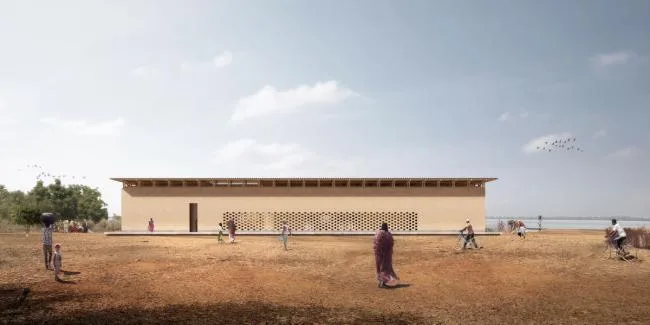
From the perspective of the urban roads, the building integrates seamlessly into its surroundings.
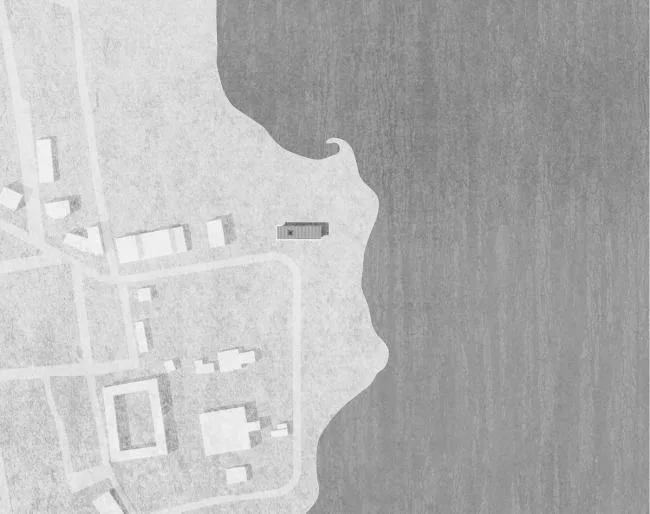
▲ General layout plan
The Peace Pavilion is harmoniously immersed in the surrounding landscape, bordered by the river on one side and the city on the other. Its simple structure allows it to blend into the terrain, becoming part of the natural scenery. Stepping gently onto the raised platform and entering through a tall, narrow doorway, visitors find themselves in a courtyard enclosed by a wooden colonnade. Sunlight pours into the courtyard from above, illuminating a wooden box at its center.
Here, people can walk, converse, or sit quietly, experiencing the sense of stability and tranquility that peace brings. The courtyard serves both as a space for interaction and as a feature that improves the building’s microclimate and ventilation.
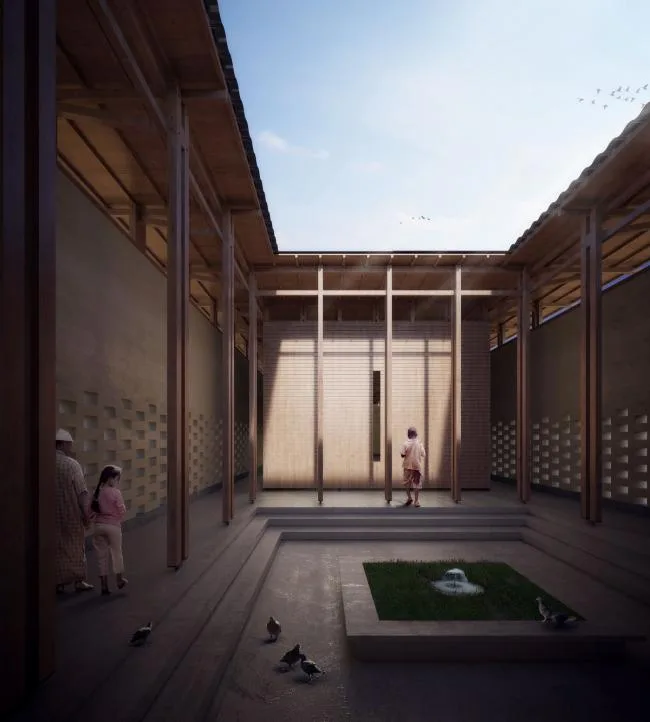
▲ Courtyard
Moving from the courtyard, the elongated corridor captures the rhythm of footsteps and the gentle sounds of conversation. Light filters through the openings in the rammed earth walls, guiding visitors toward the area designated for prayer and contemplation. Climbing the steps, one arrives at the contemplative space, where the atmosphere encourages quiet reflection and peace of mind.
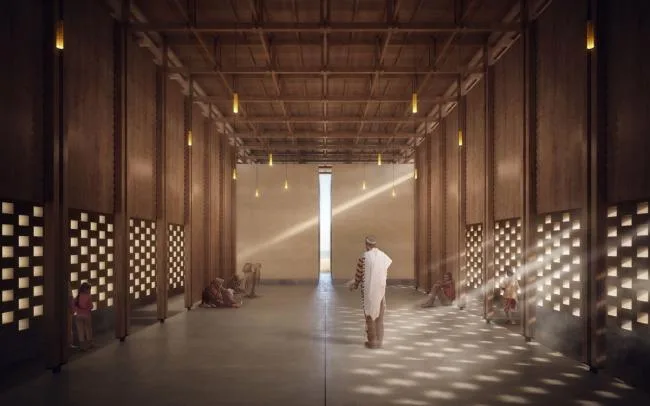
▲ Contemplation area facing the river
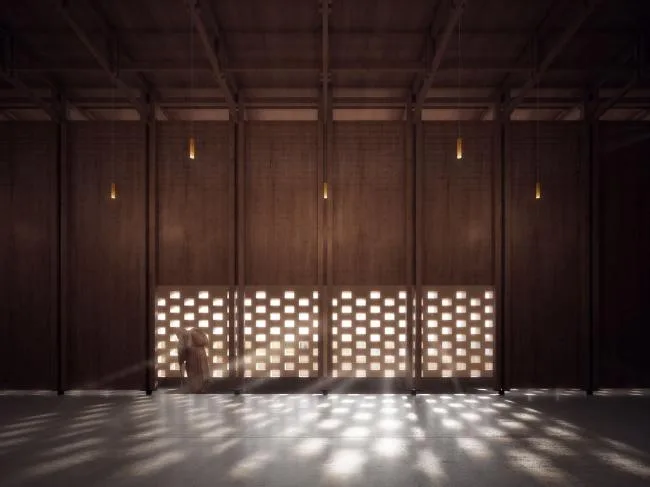
▲ Contemplation area facing the aisle
The vertical wooden columns lining both sides of the corridor lead the eye forward. The narrow gap between the two exhibition halls offers a glimpse of the outside world. As visitors move through the corridor, the exterior scenery gradually dims and fades, depending on their angle of view. Light streams in through the space between the eaves and the rammed earth walls, casting tranquil shadows and reinforcing the peaceful atmosphere. In this area, the architectural space itself embodies the meaning of peace.
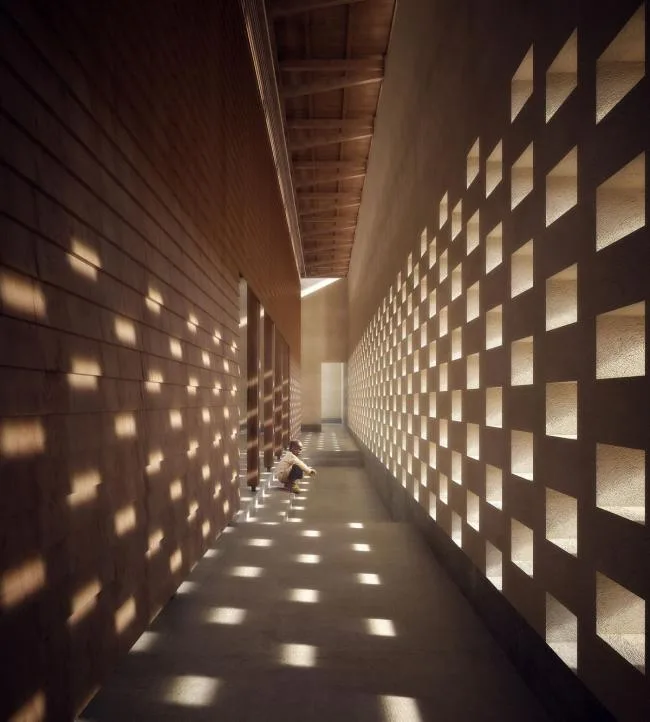
▲ Corridor
Drawing from traditional Séjou craftsmanship and an understanding of the Peace Pavilion’s spatial qualities, the design employs a combination of rammed earth walls and wooden frames. Local wood and rammed earth techniques are considered to create a space that is both simple and thematically appropriate. The contrasting textures of the wooden interior and the rammed earth exterior offer distinct sensory experiences, while the interplay of light merges both materials harmoniously.
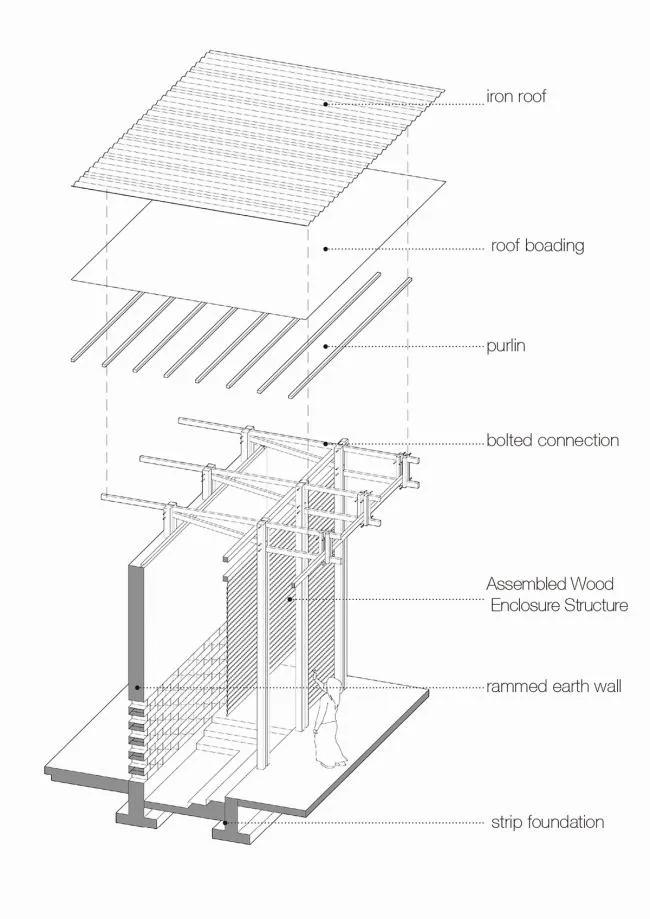
▲ Structural diagram
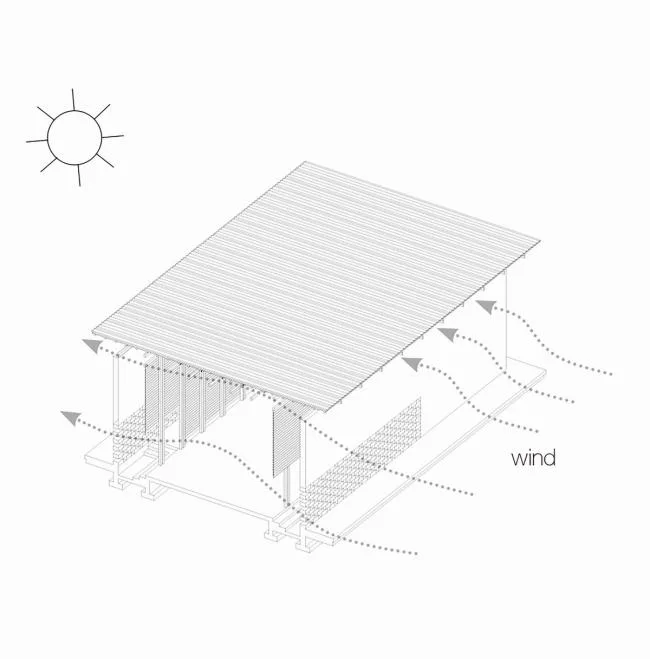
▲ Ventilation diagram
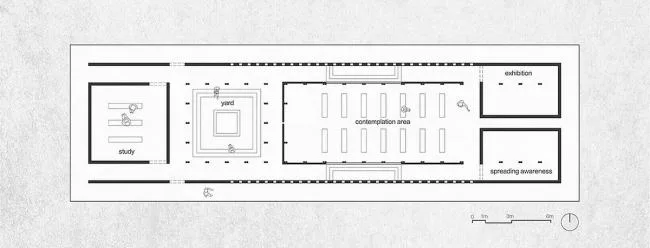
▲ First floor plan
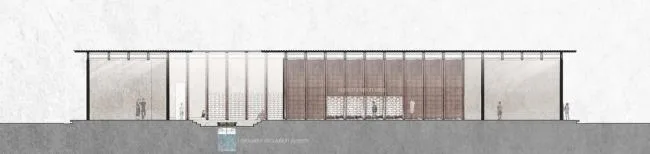
▲ Sectional view
Project Information:
Project Name: Peace Museum
Location: Senegal, Africa
Building Area: 300 square meters
Design: Cai Changze
Contact email: __AI_S_SC0__
Employer: South China University of Technology Architectural Design and Research Institute Co., Ltd.












Must log in before commenting!
Sign Up