
Mingting: A Local Natural School
In the spring of 2016, my friends Xia Lili and Wang Jianting took me to a secluded site in Mingyue Village for a survey. They planned to build a local natural school here, called “Mingting.” The name “Mingting” refers to the “Mingyue Village Courtyard.” They explained that “Mingting” should serve a public purpose: through local activities and research rooted in Mingyue Village, it would foster community building and create a place where local residents feel a strong sense of belonging.
Wherever she goes, Xia Lili names any book corner or public library prepared for children as “Xia Ji Shu Yuan,” which means “quiet and easy to read in summer.” This name evokes a leisurely atmosphere, with “Shuyuan” carrying a classical Chinese significance that brings a cultural depth to the space.
Additionally, the couple hopes to raise their own child, Wang Lemao, and extend this nurturing environment to other children—offering them a close connection to nature. They named this concept “Lemao Family.” Their original intention was to support the lives of family members and accompany the children of Mingyue Village as they grow slowly within nature and human relationships.
Thus, the three names—”Mingting,” “Xiaji Shuyuan,” and “Lemao Family”—define this space from different angles: it is a public space that reflects local social networks and strengthens emotional bonds; an educational space enriched with classical Chinese meaning; and a space infused with local character and child-friendly warmth.
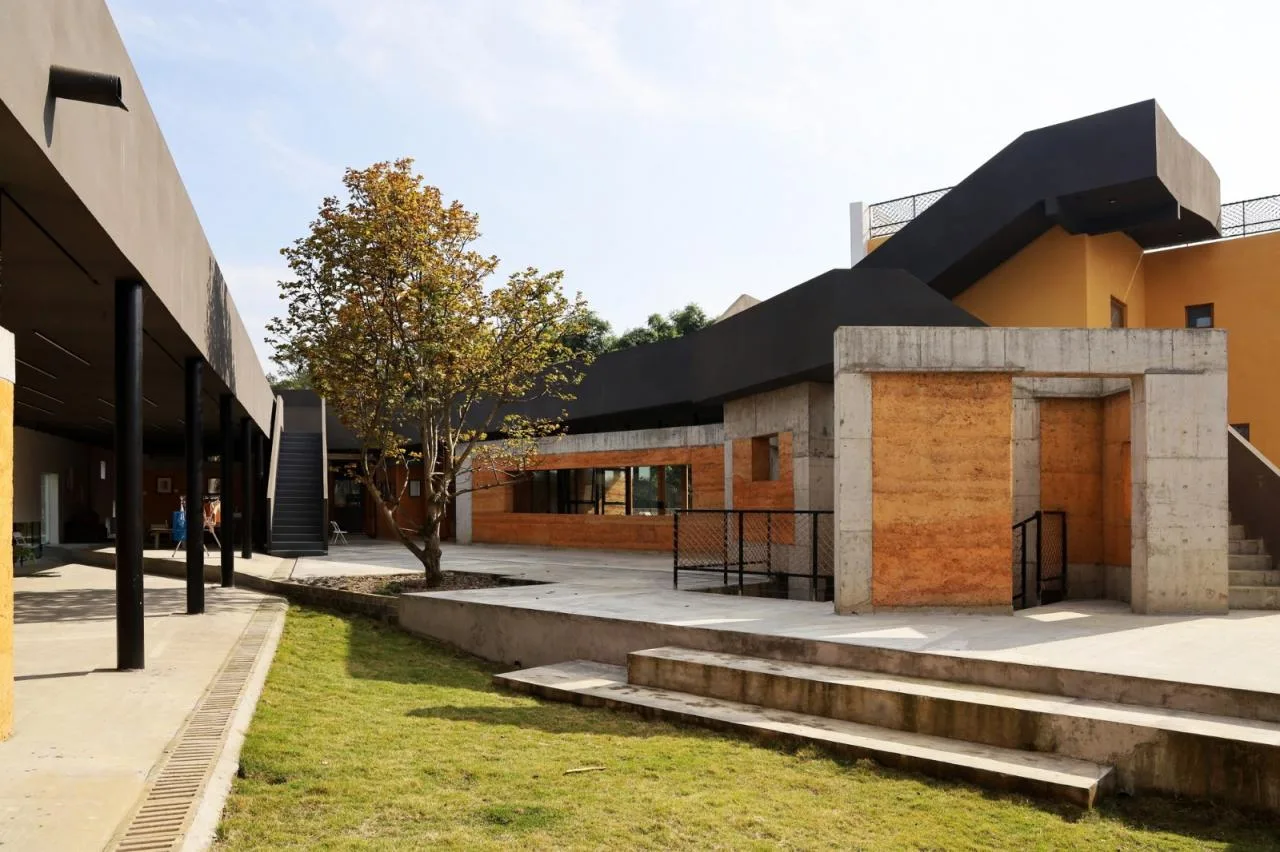
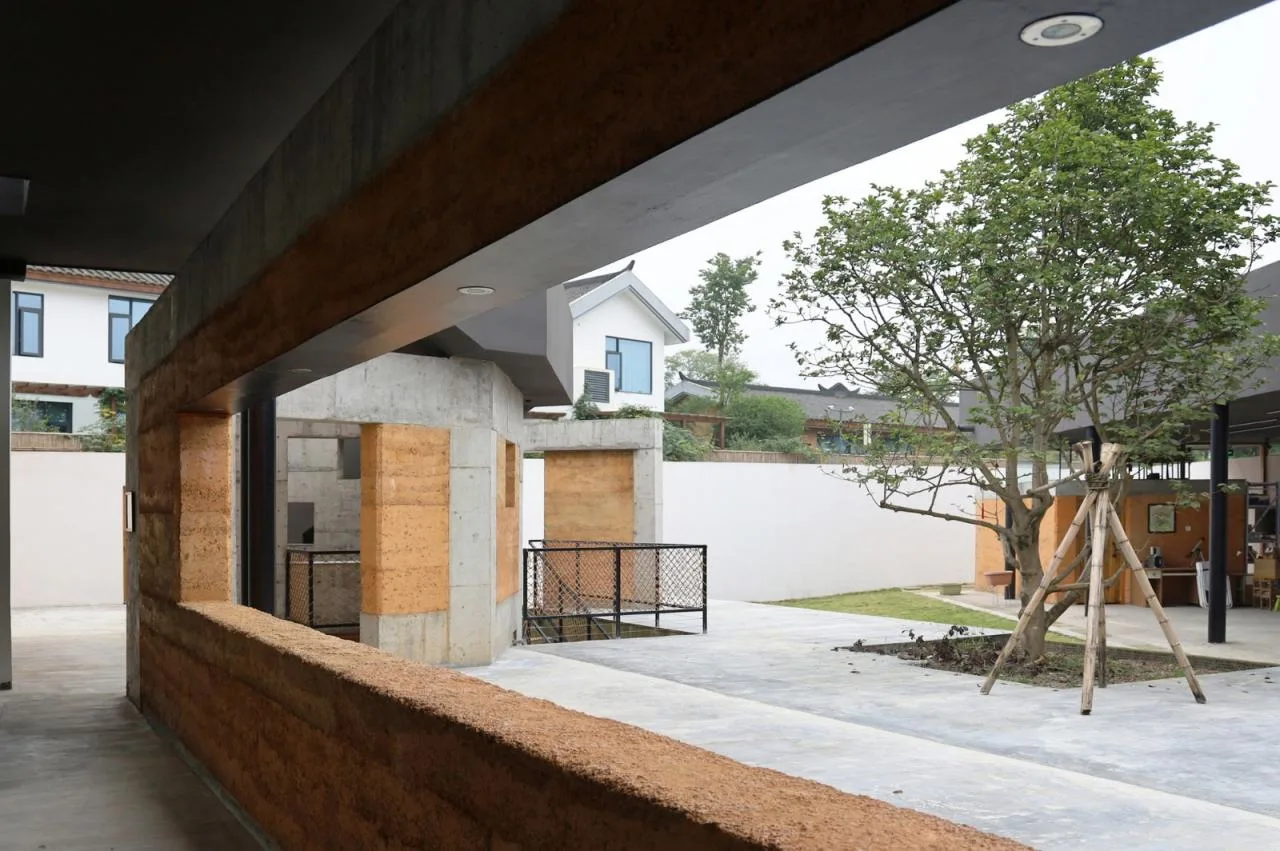
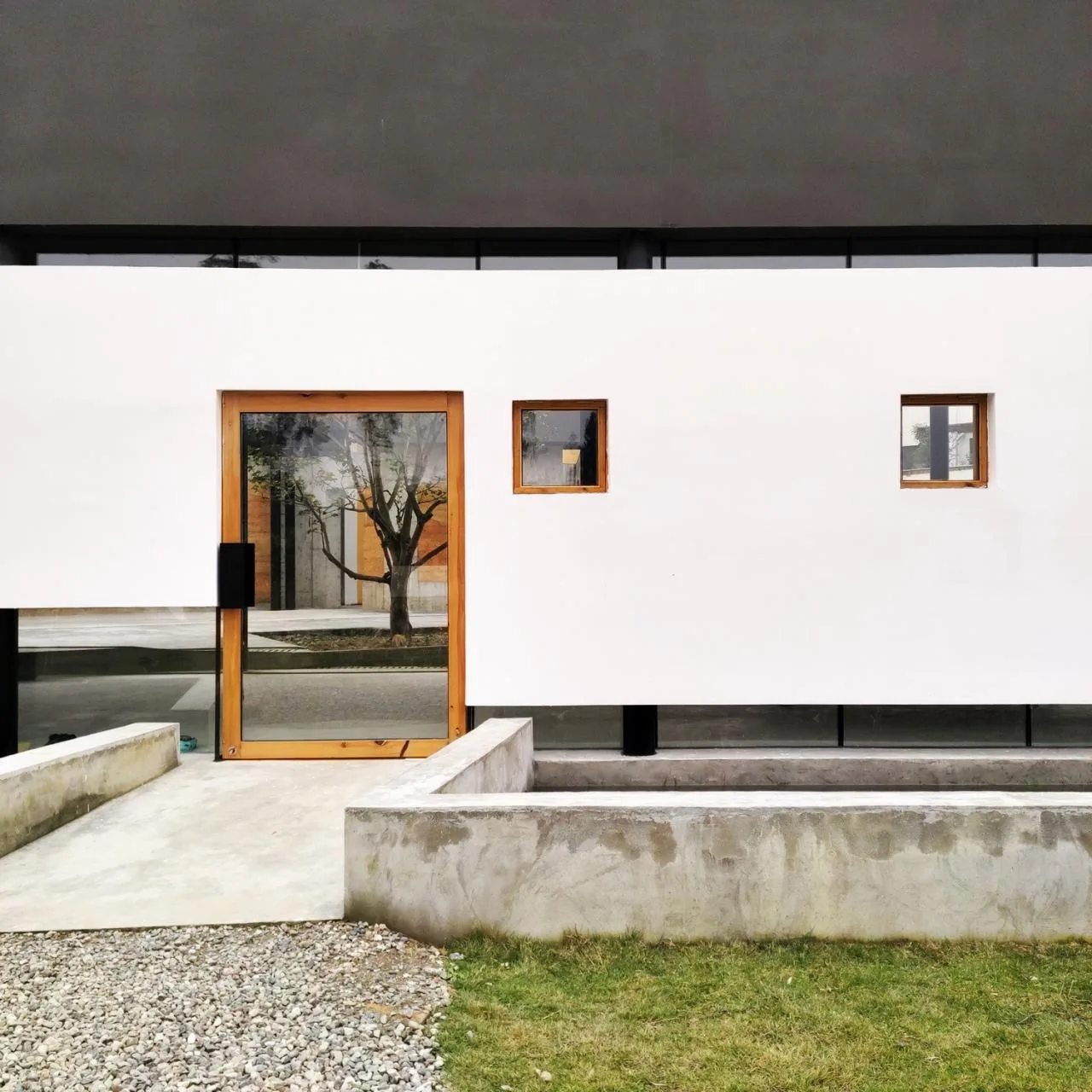
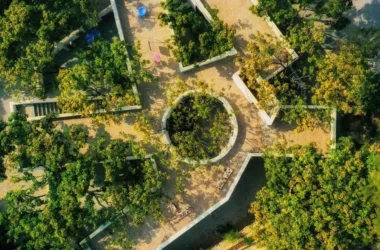
The courtyard’s focal point is a magnolia tree transplanted from the village, the only landscape tree in the courtyard. Magnolia was chosen because it blooms abundantly in spring, filling the air with a refreshing fragrance—an ideal sensory anchor for the space. Its symmetrical shape and fresh temperament create a rich, elegant feel that contrasts with the simple surroundings of pine trees, bamboo forests, and tea fields. Magnolia stands as the central visual focus in the courtyard.
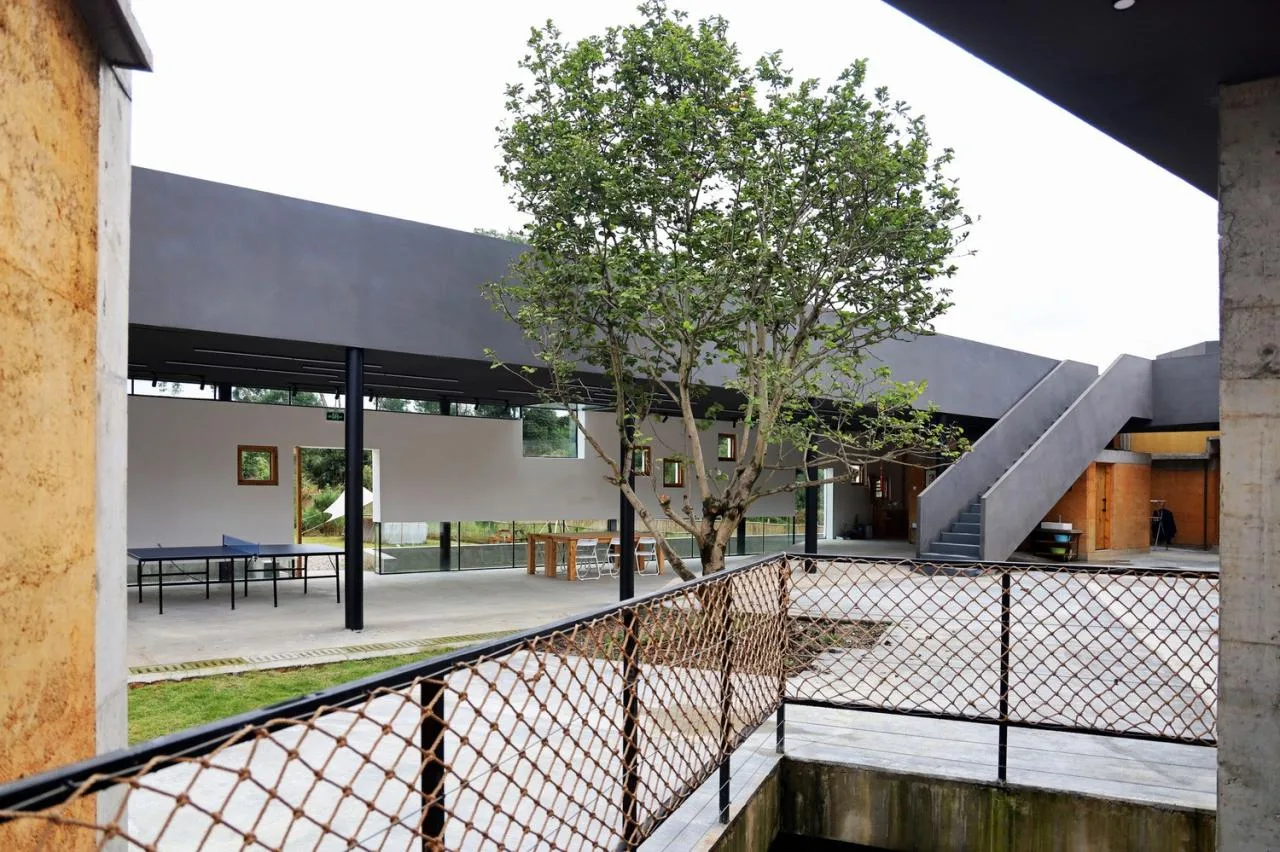
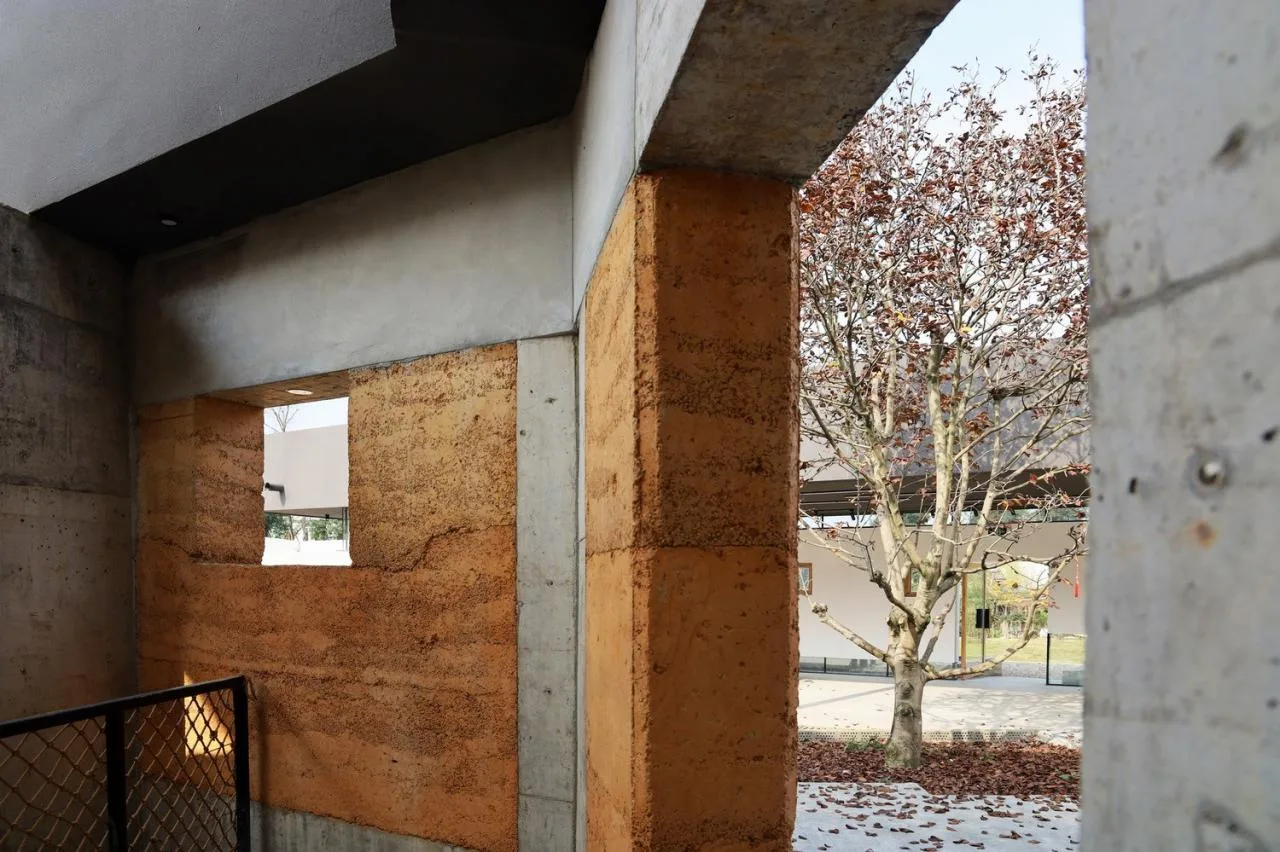
Finding a mature magnolia tree locally in Mingyue Village was key. In spring 2021, this magnolia was transplanted to the newly built Mingting and soon blossomed with delicate pink and white flowers. By August, the tree was lush and green, and after construction completed in October, it was draped in golden autumn hues. By early December, Jianting shared that visitors could now enjoy the “falling leaves and rain” of magnolia in the courtyard.
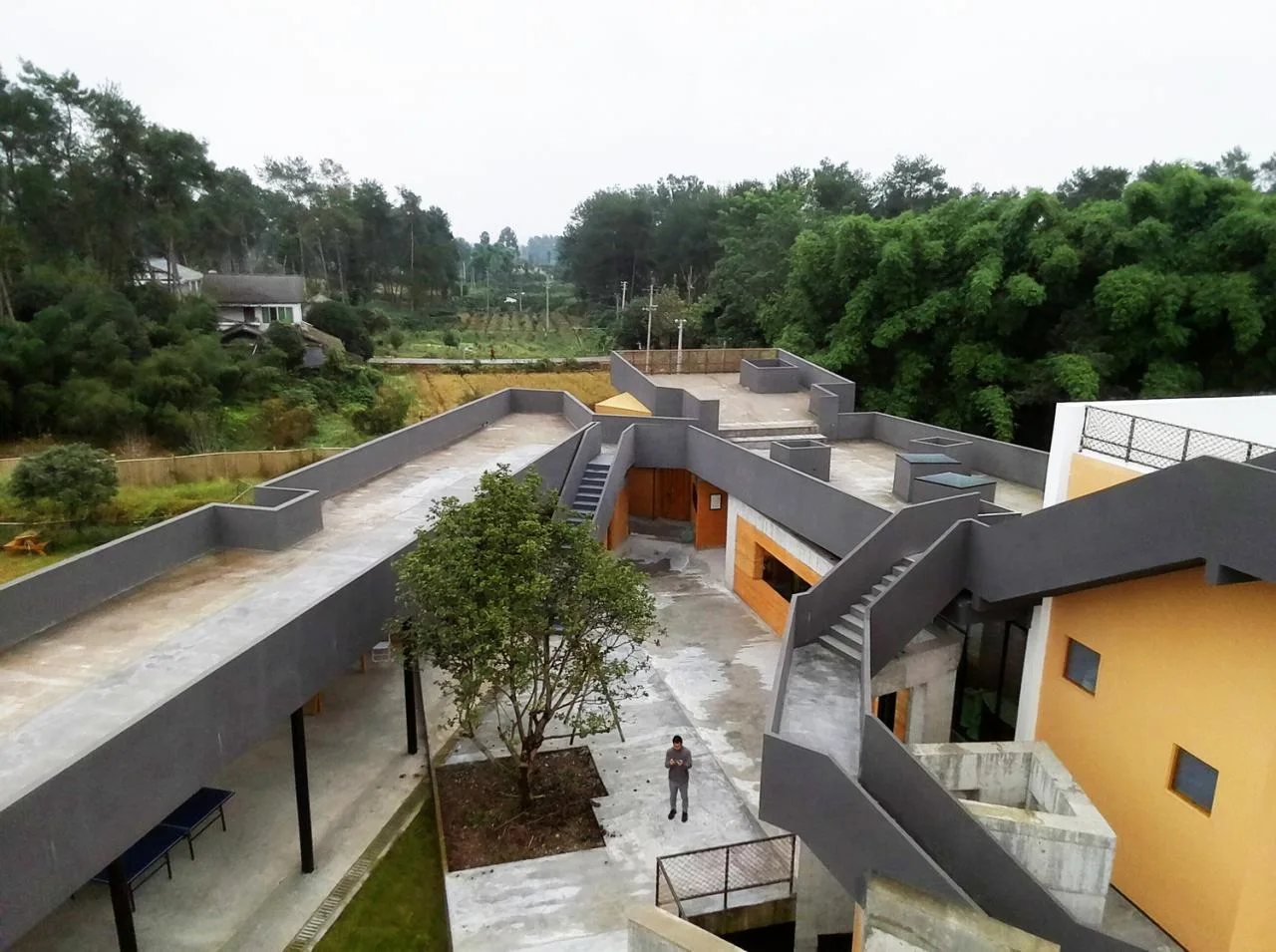
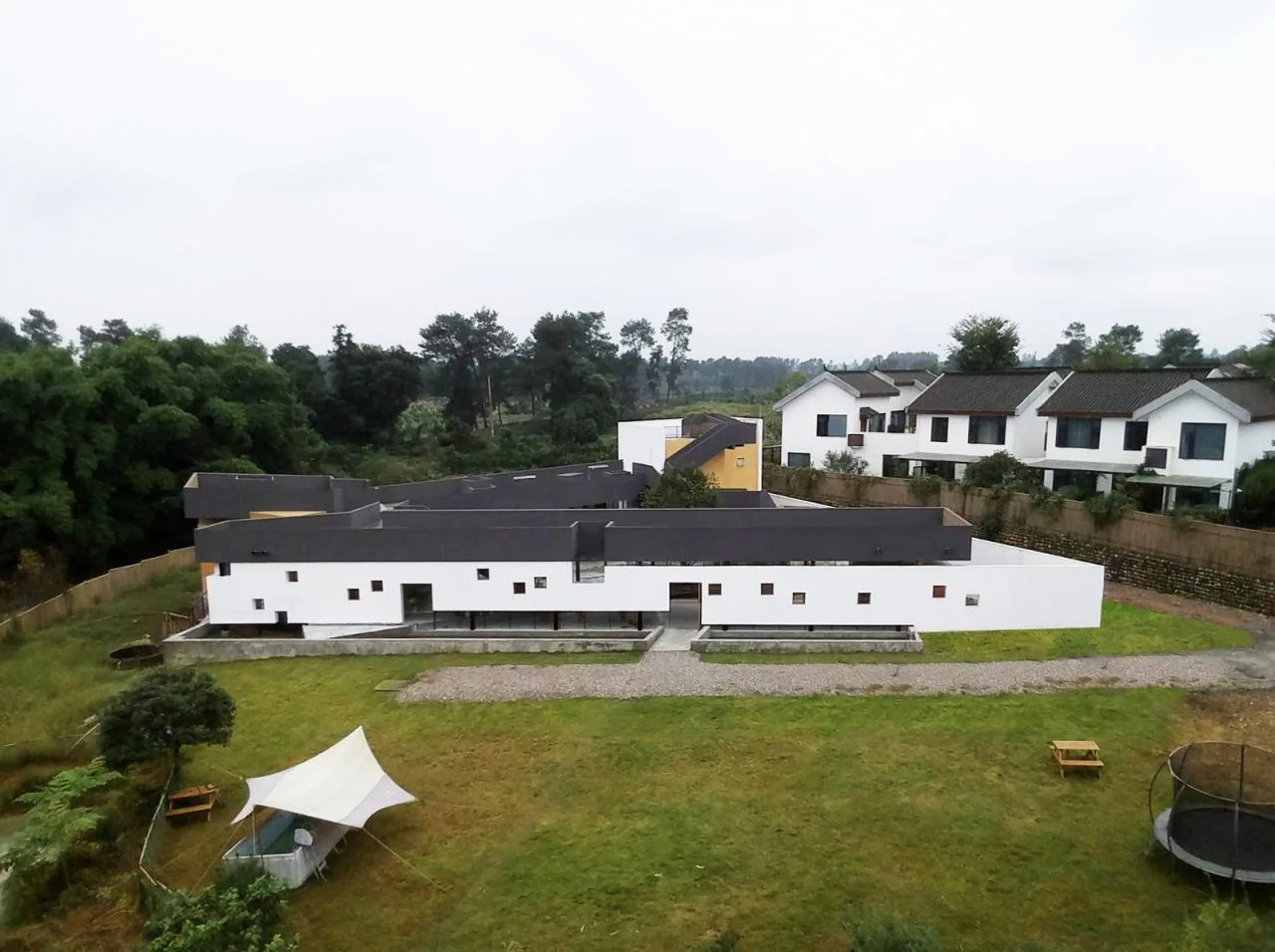
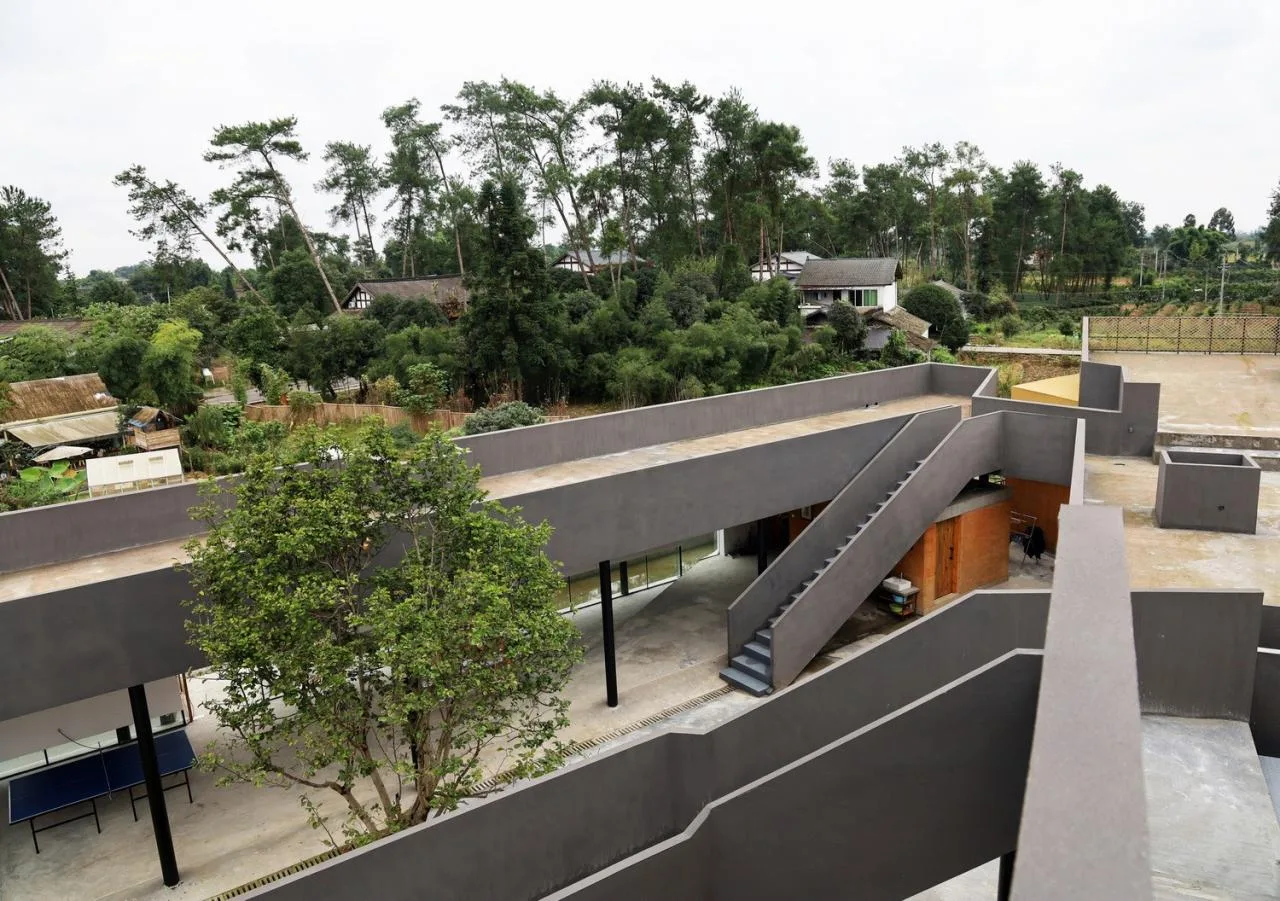
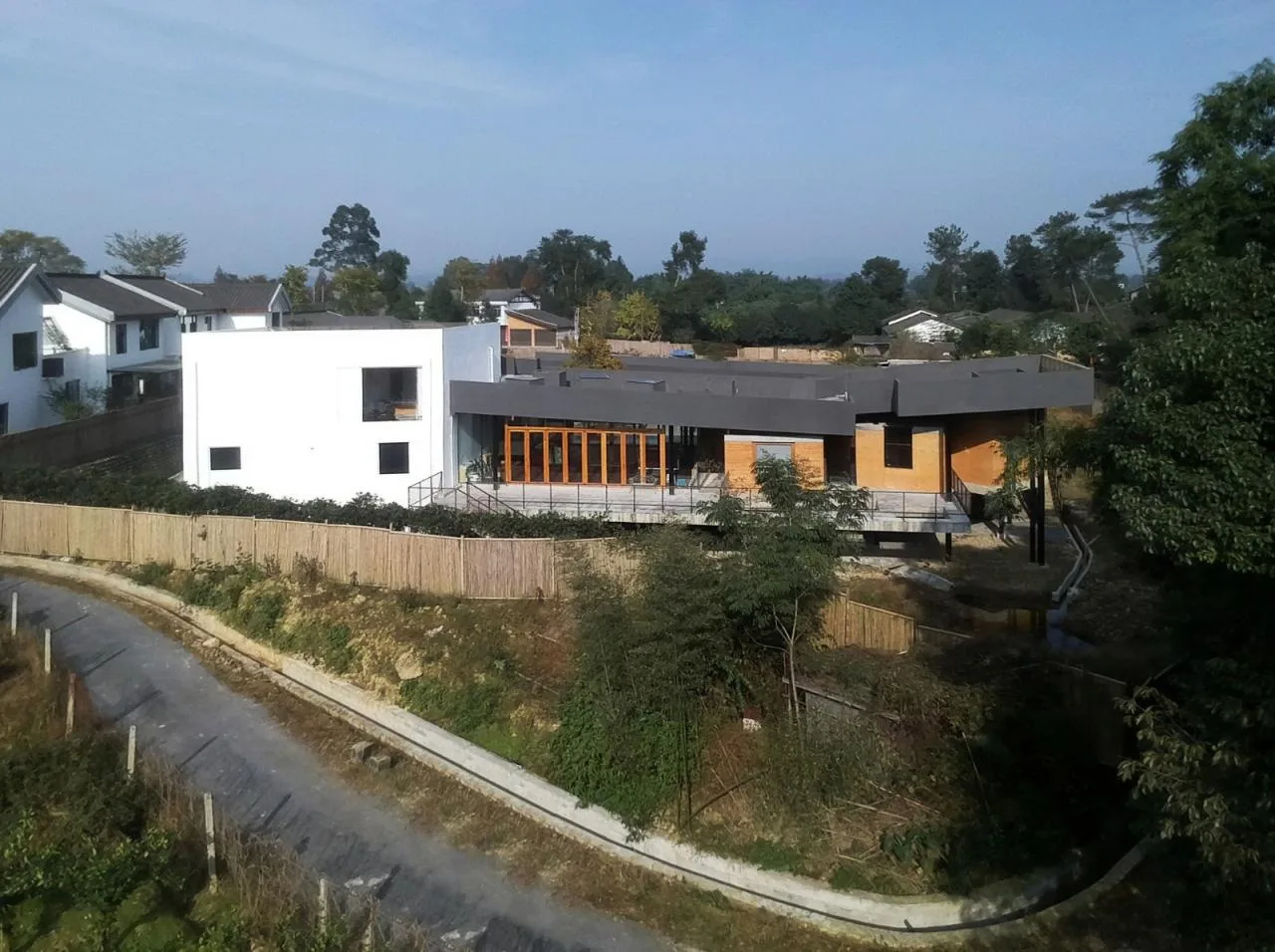
The construction of Mingting is a poetic interplay of walls, slabs, columns, and openings, all arranged around the magnolia tree in the Mingyue Village environment. Towering pine trees and dense bamboo forests lend an air of natural delicacy, while the rolling tea fields stretch gracefully across the landscape—creating a balance of elegance and simplicity.
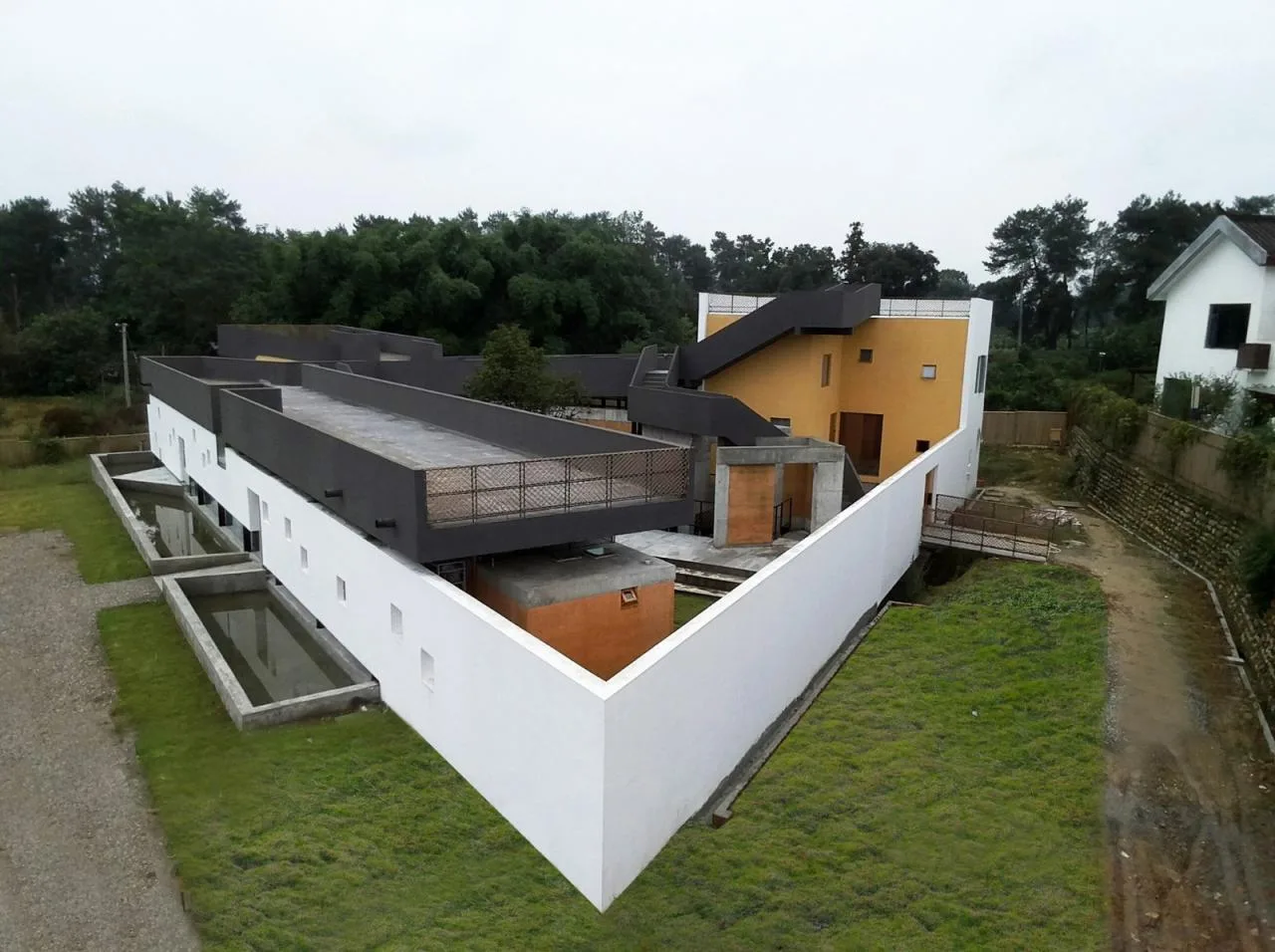
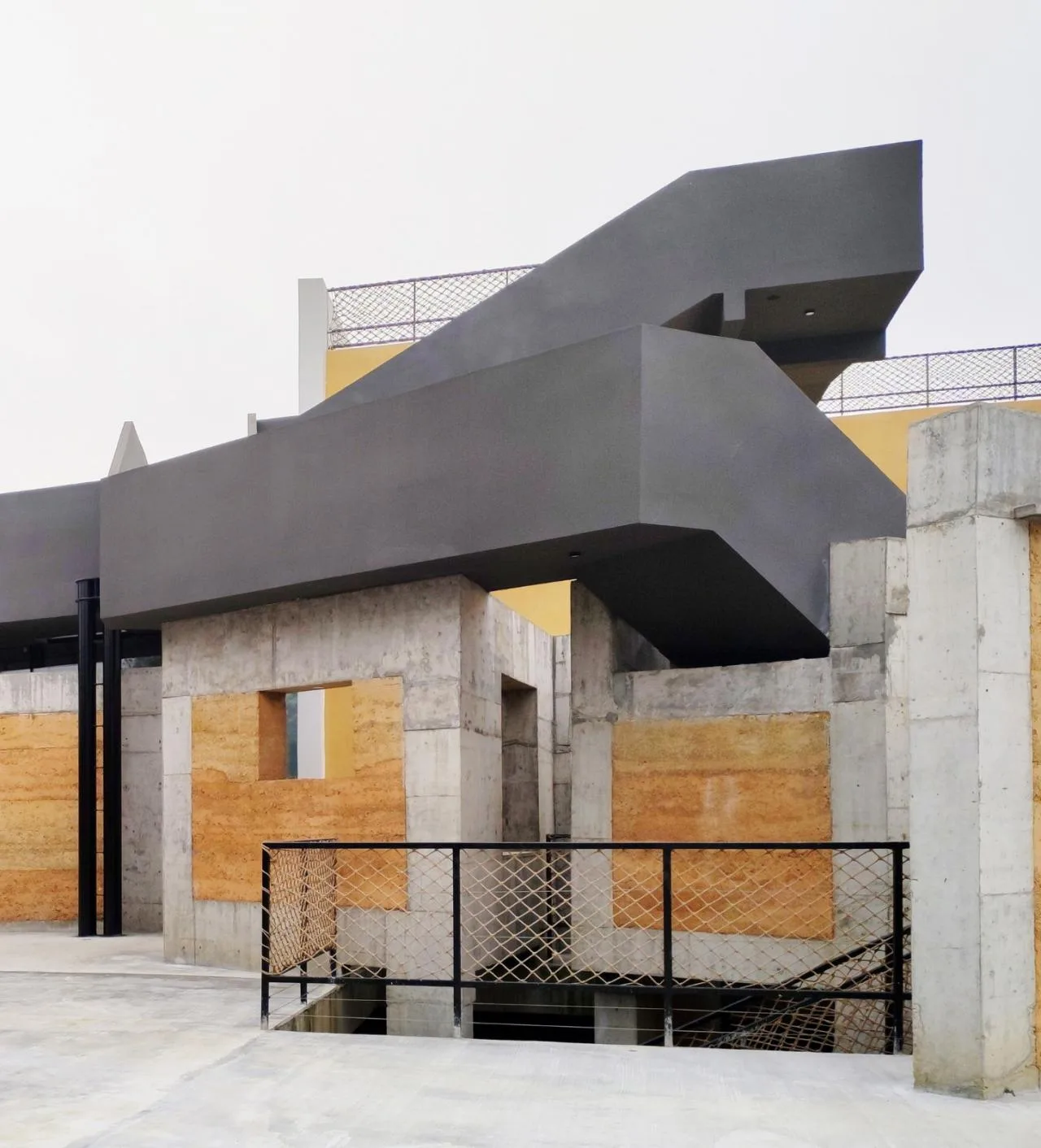
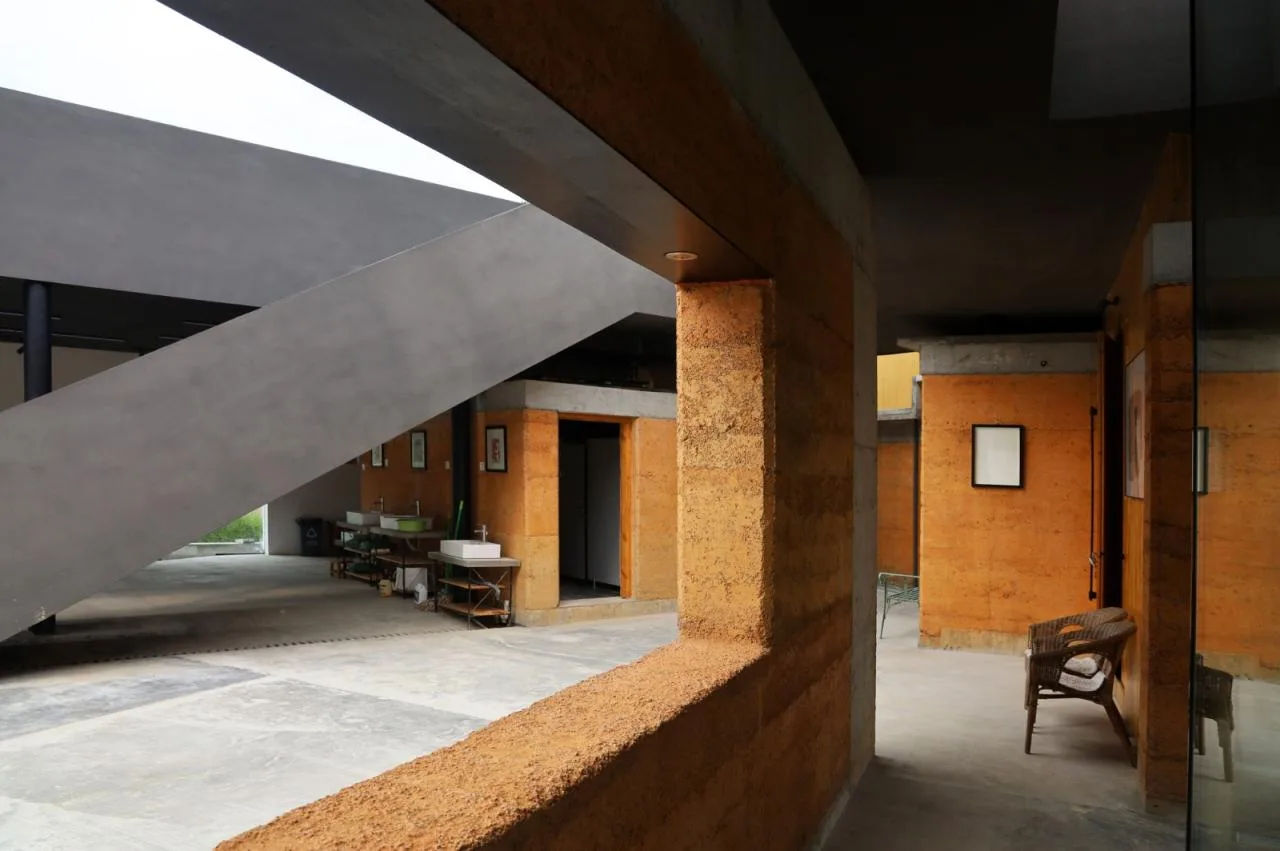
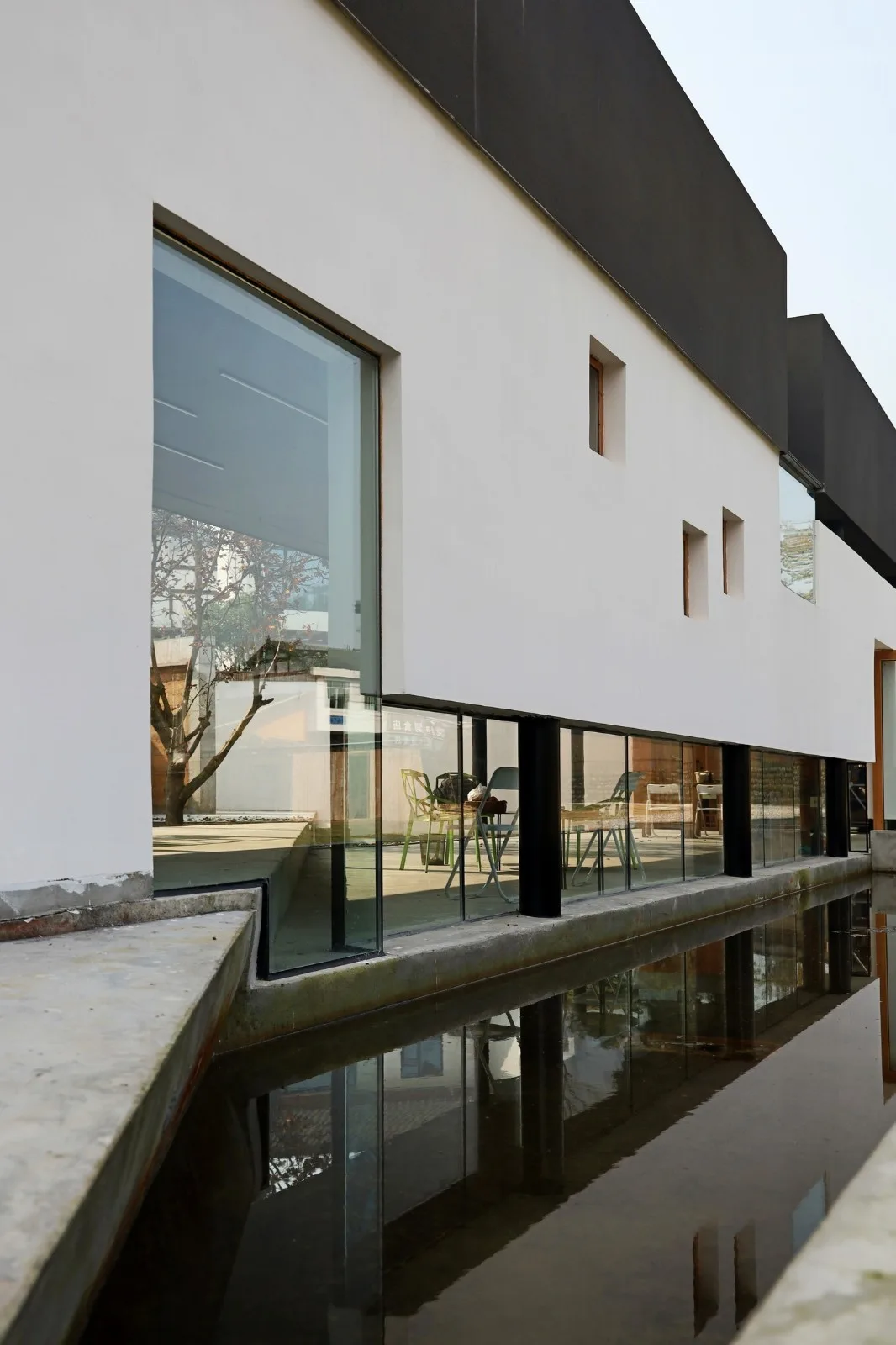
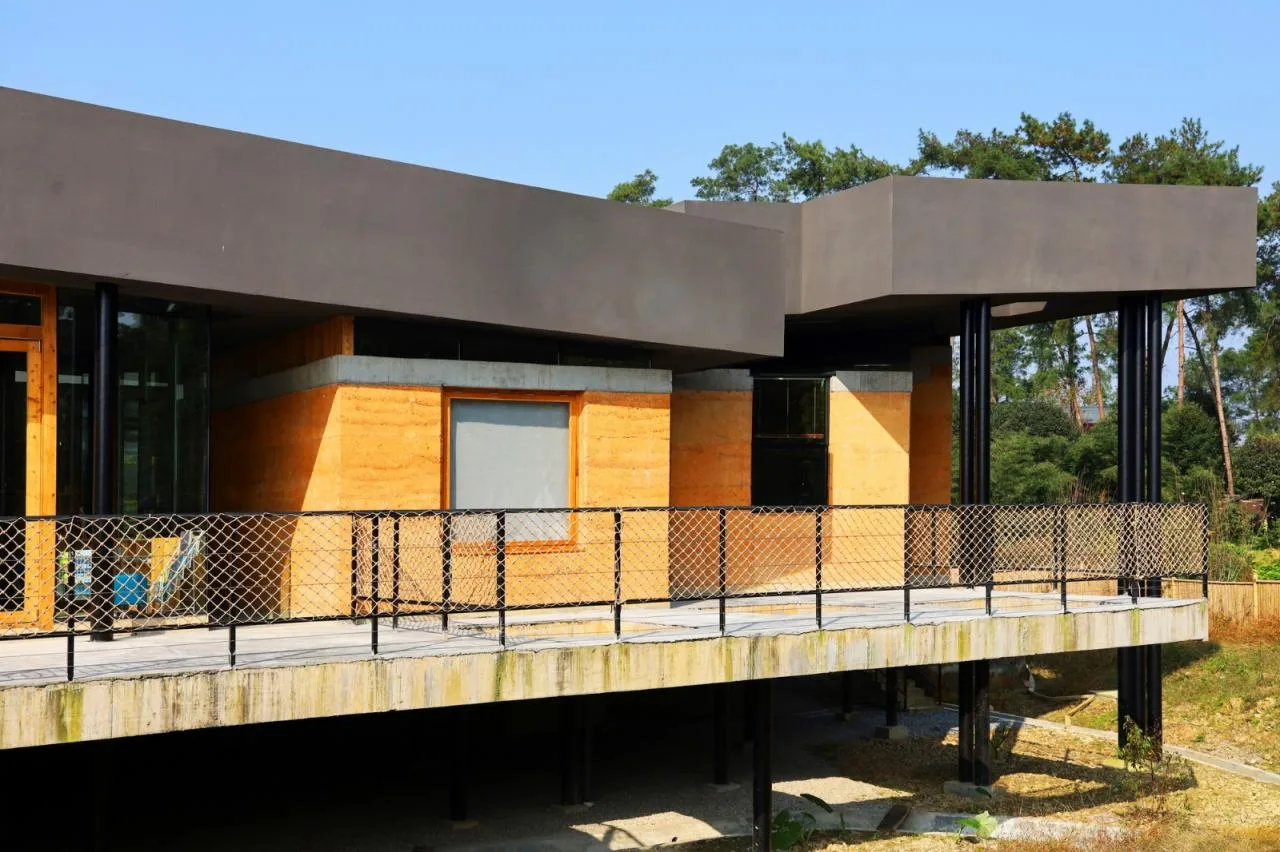
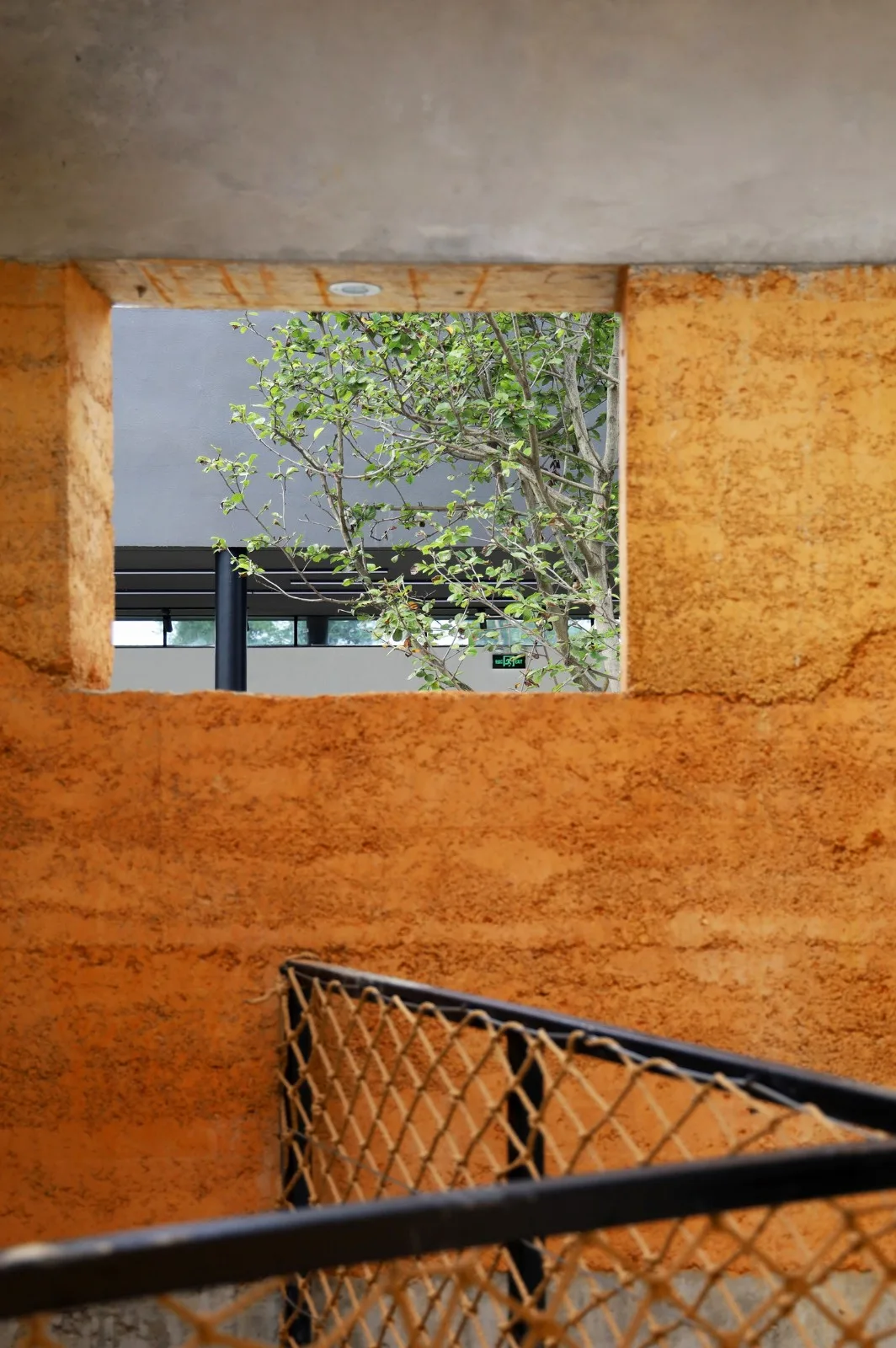
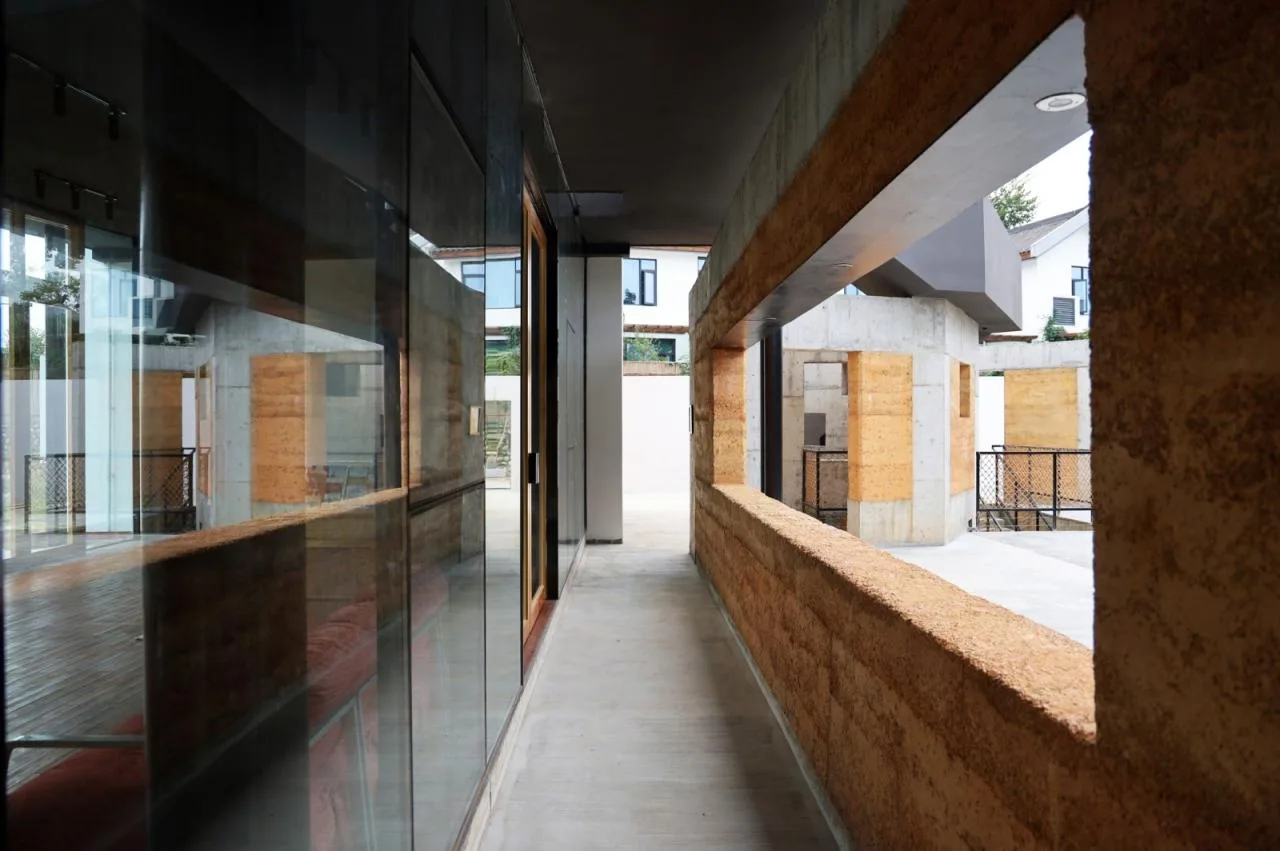
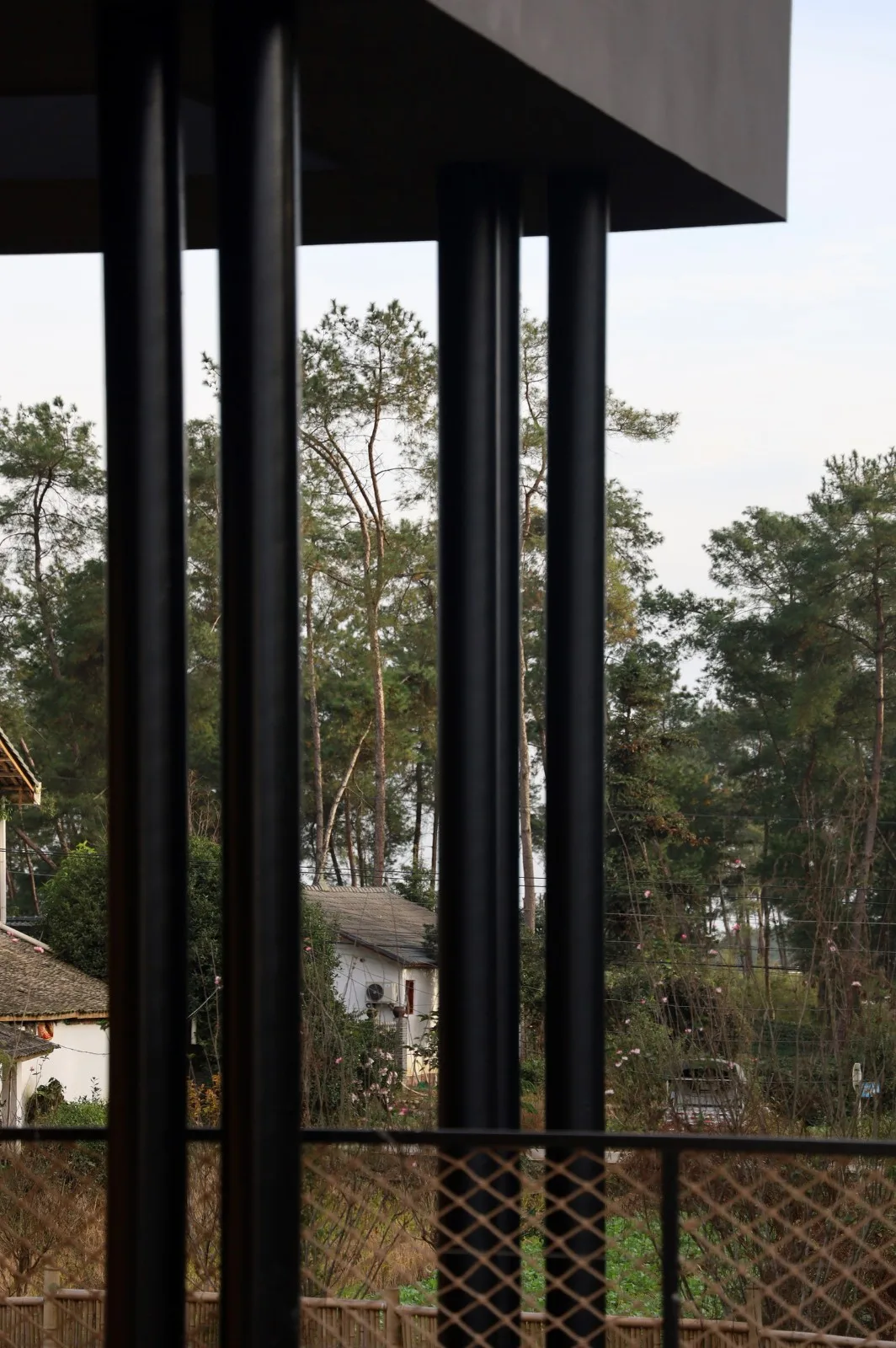
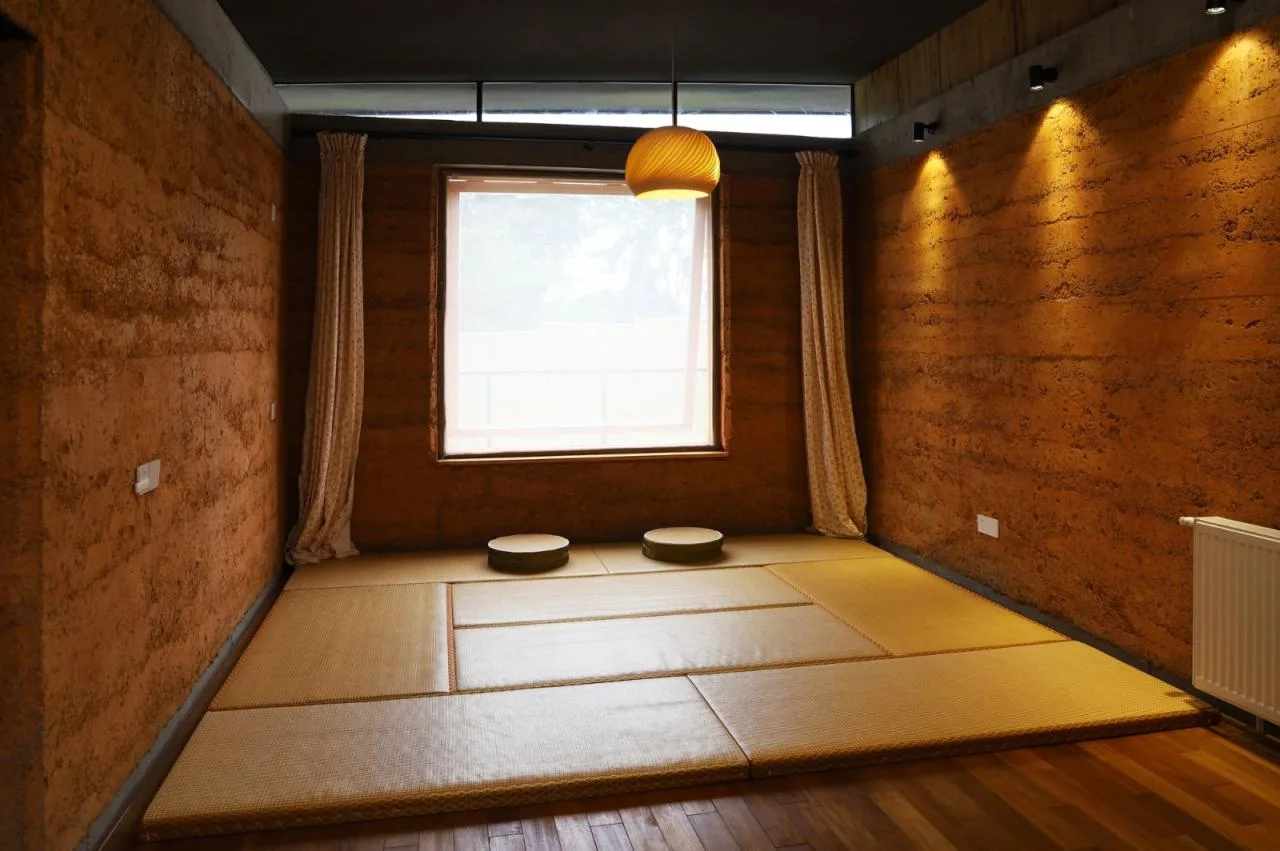
White walls, rammed earth walls, dark gray roofs, concrete platforms, black circular steel columns, and variously sized doors and windows converge harmoniously, dancing gracefully around the central magnolia. Together, they form a courtyard space imbued with a warm, earthy charm.
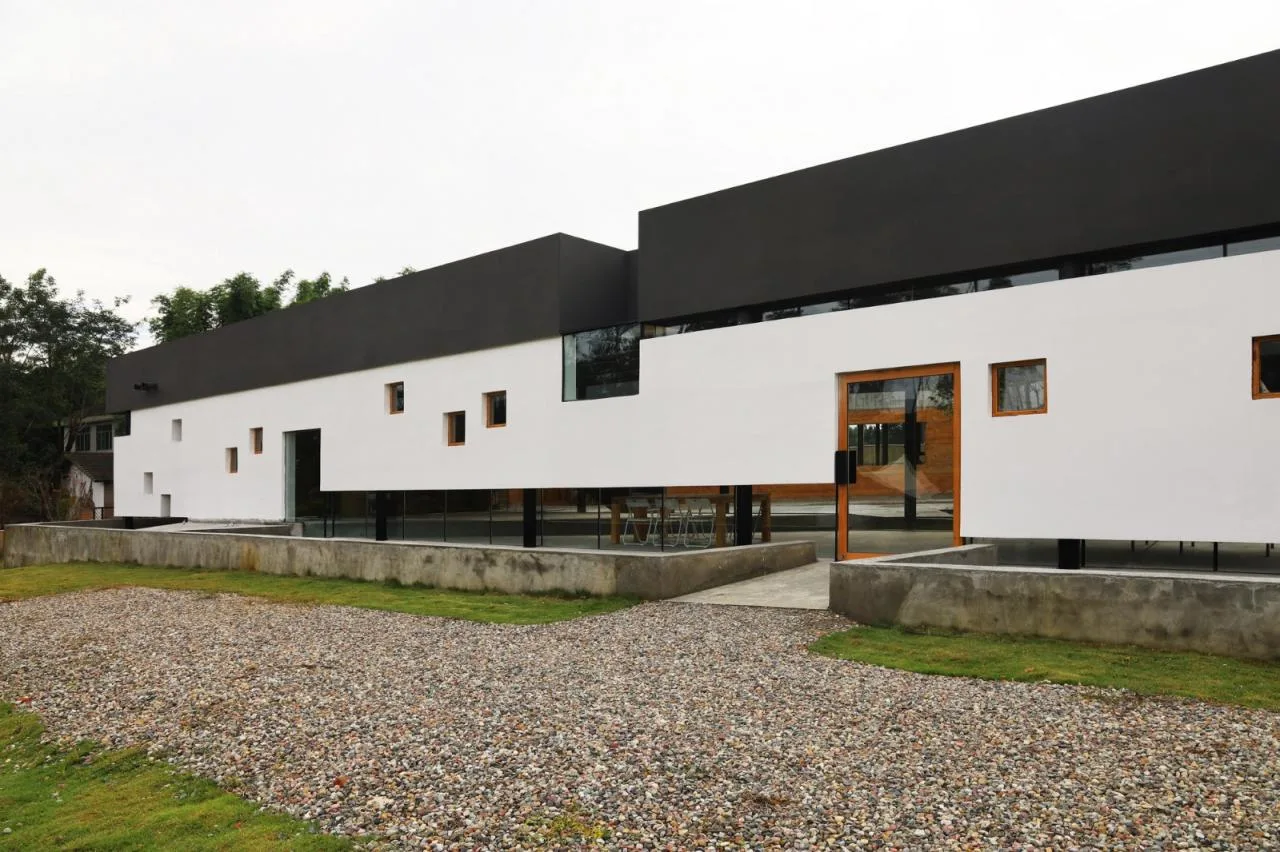
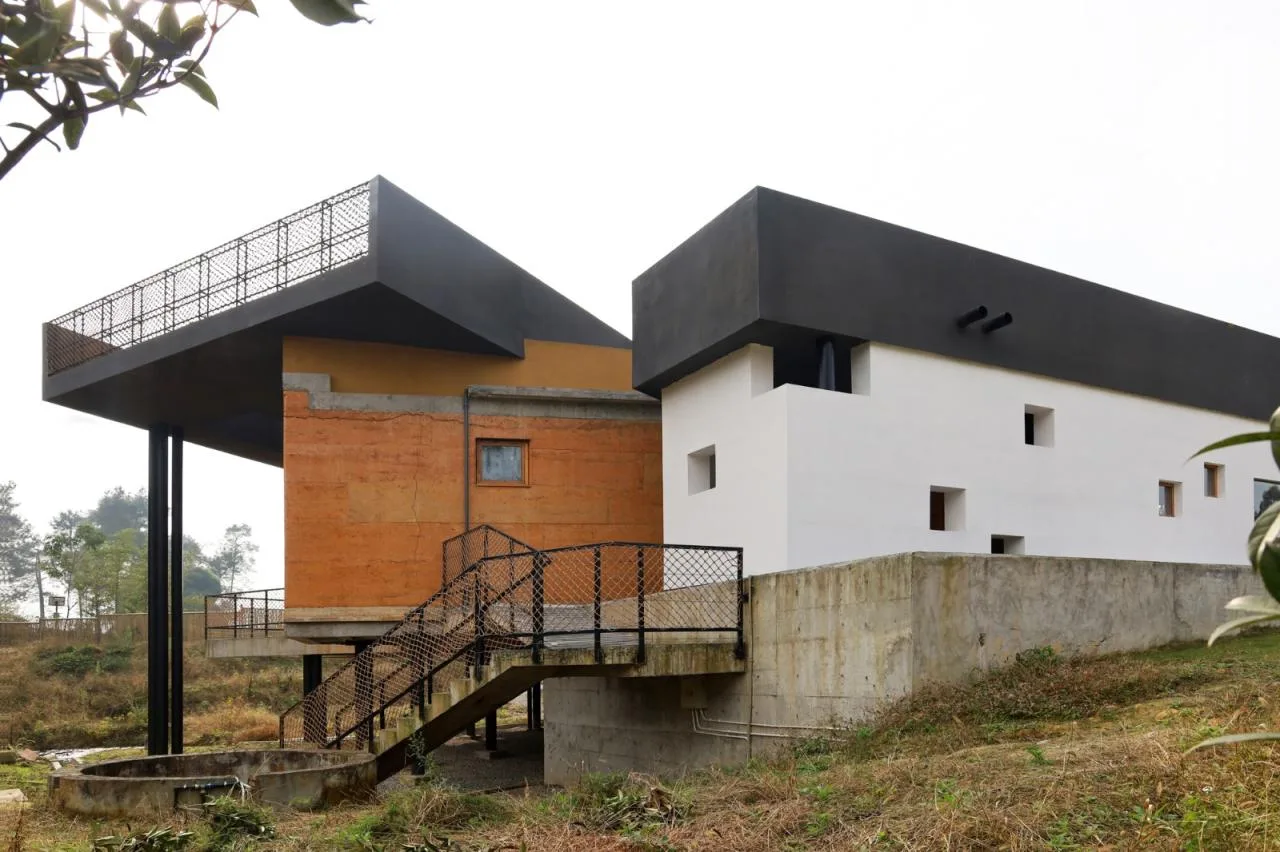
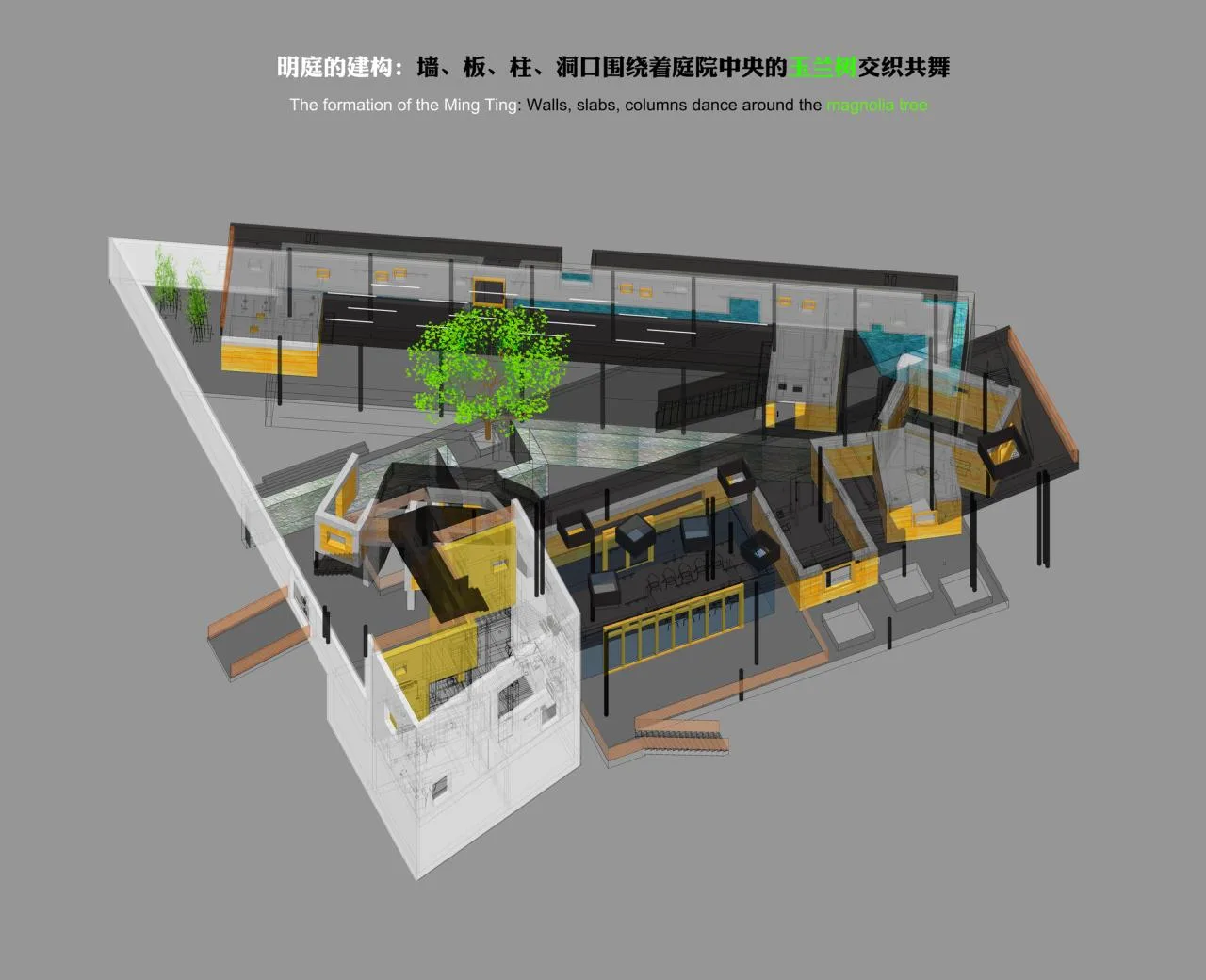
Through this interweaving and dynamic composition, flexible columns, flowing walls, and lightweight roofs create a poetic rhythm and melody. The delicate balance of heaviness, warmth, and finesse blends the building seamlessly with nature, expressing a detached Chinese poetic sensibility that resonates with the surrounding landscape.
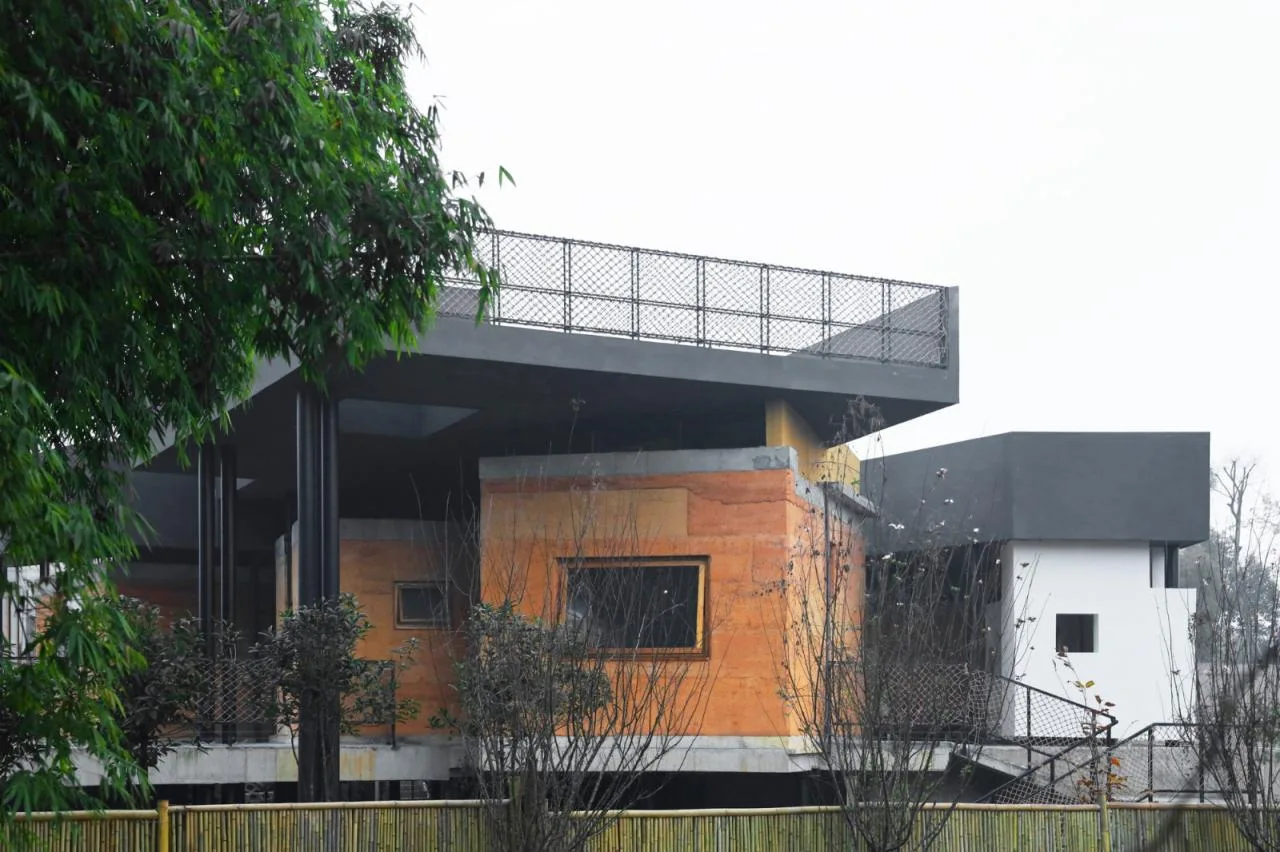
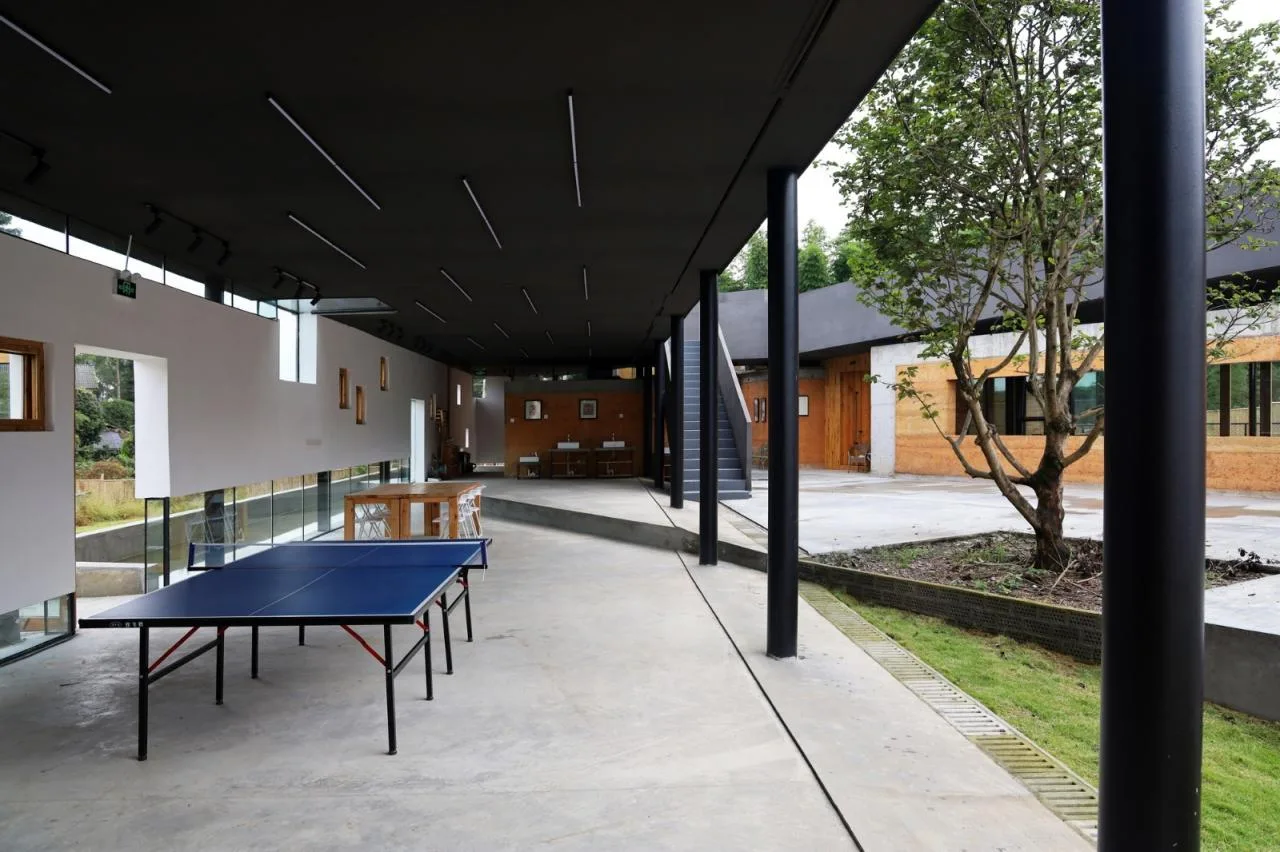
From an experiential perspective, the house is divided into three levels: an elevated level, a courtyard level, and a rooftop level.
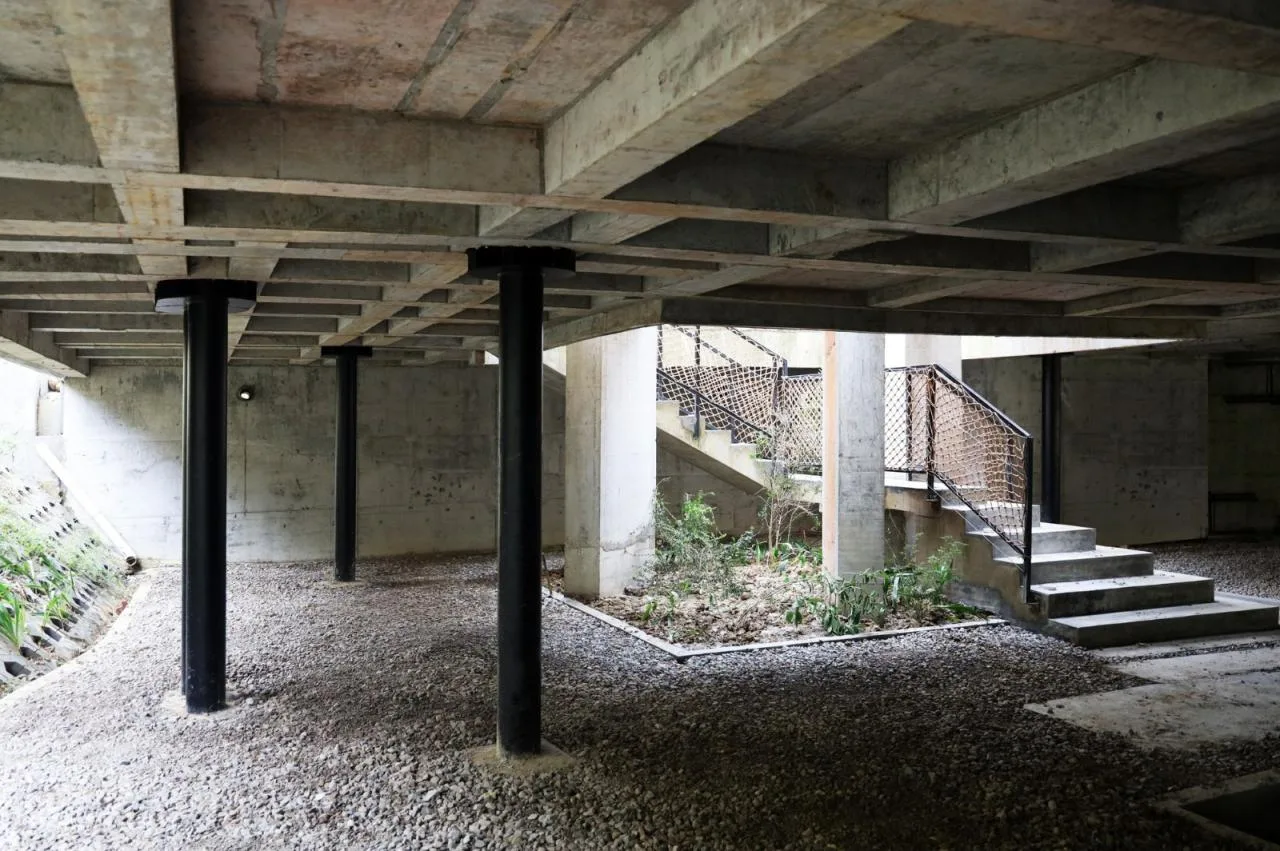
The elevated level is an open, free-flowing plane supported by irregularly arranged steel columns, with a small canal winding through it to divert rainwater. Gravel on the ground emphasizes the connection to the earth. Against a gray concrete retaining wall, the surrounding plants appear more vibrant, while the courtyard—enclosed by rammed earth walls—and a concrete-block slope protector on the west side bring in light and rain from above, inviting greenery to flourish over time.
In this setting, framed by darkness yet illuminated by bright pockets, plants appear more vivid, the atmosphere is quieter, and the connection with the land feels complete.
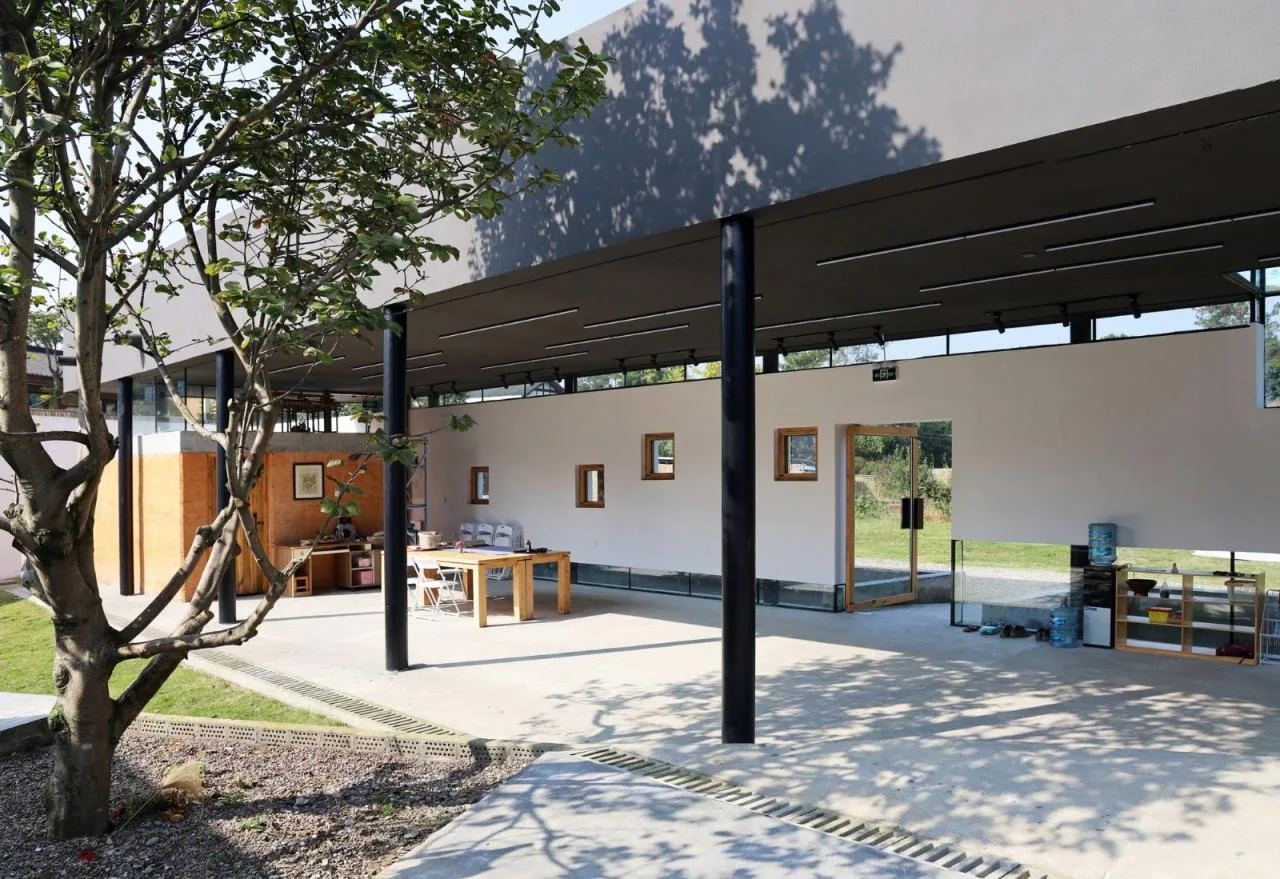
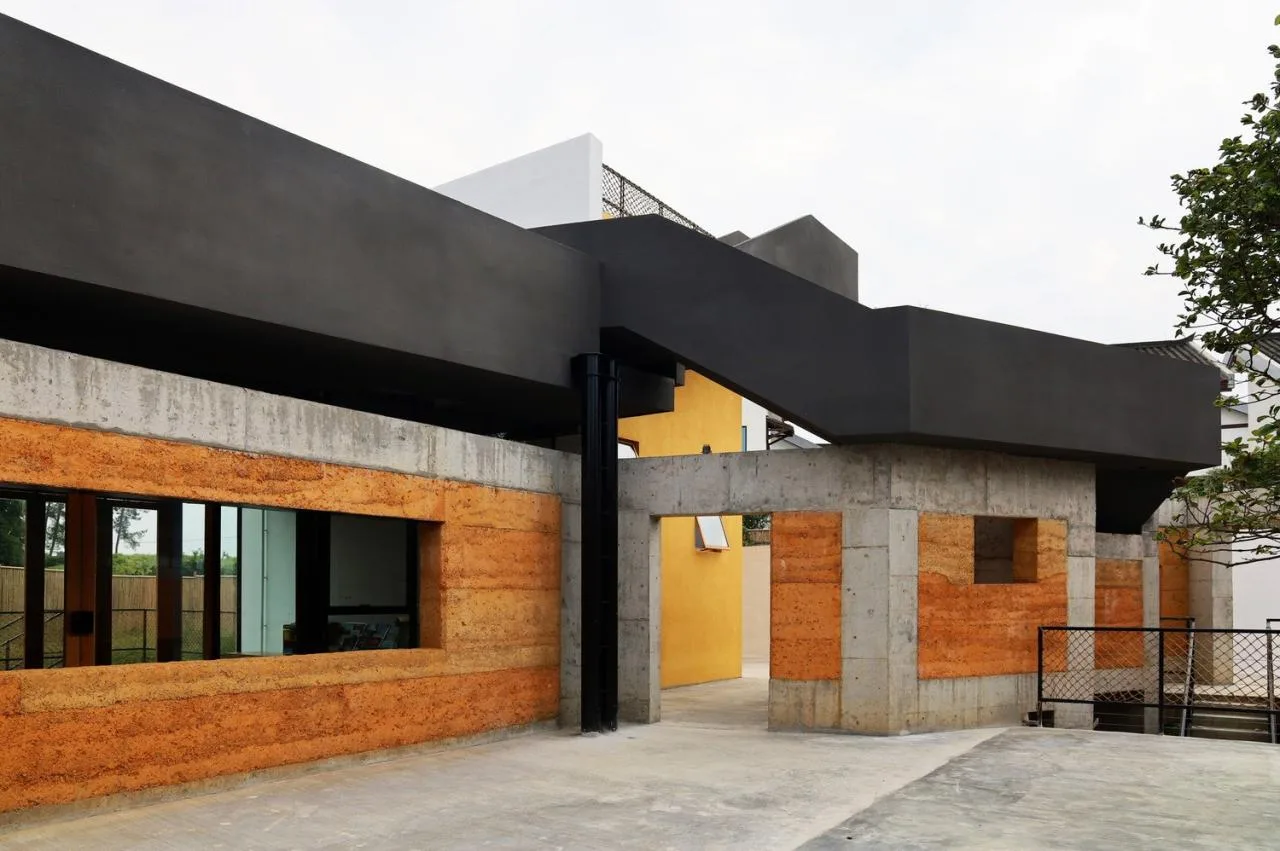
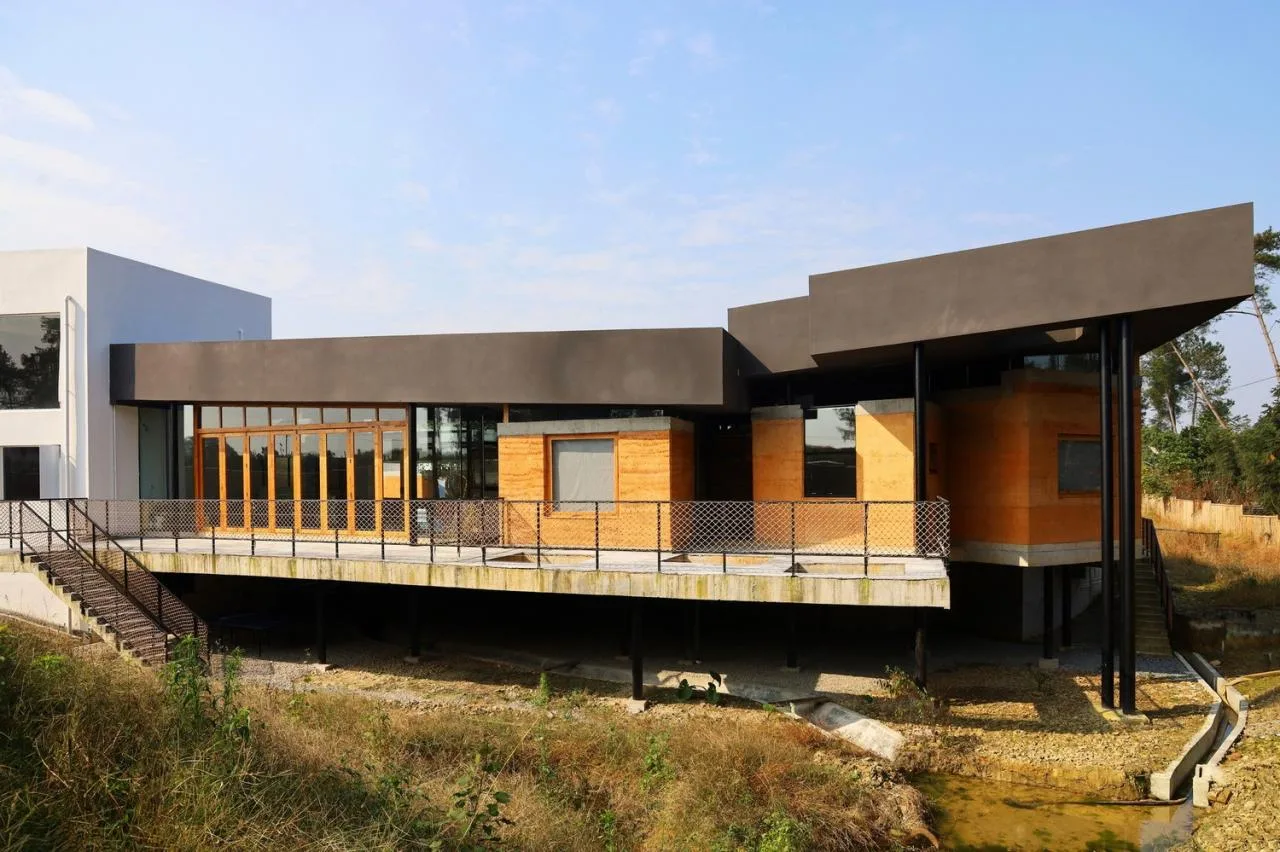
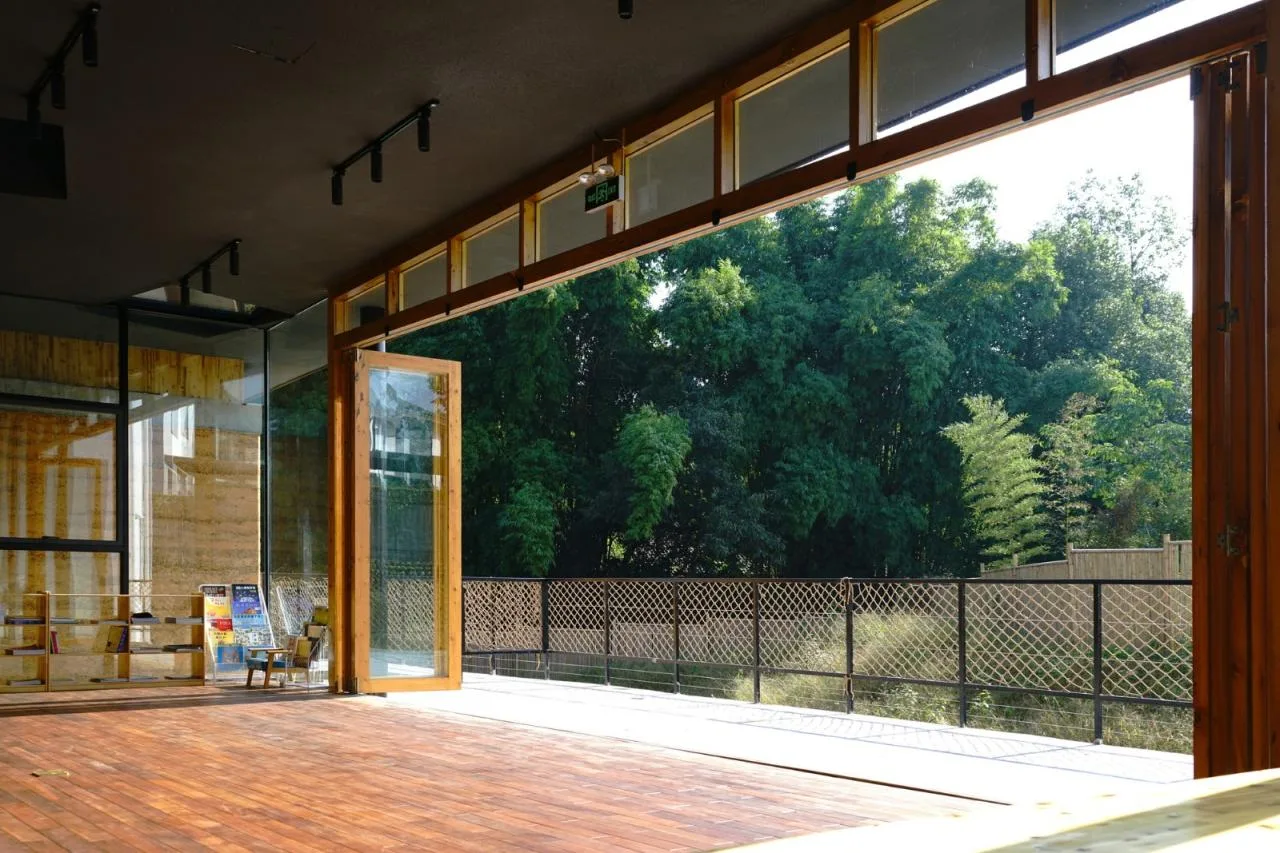
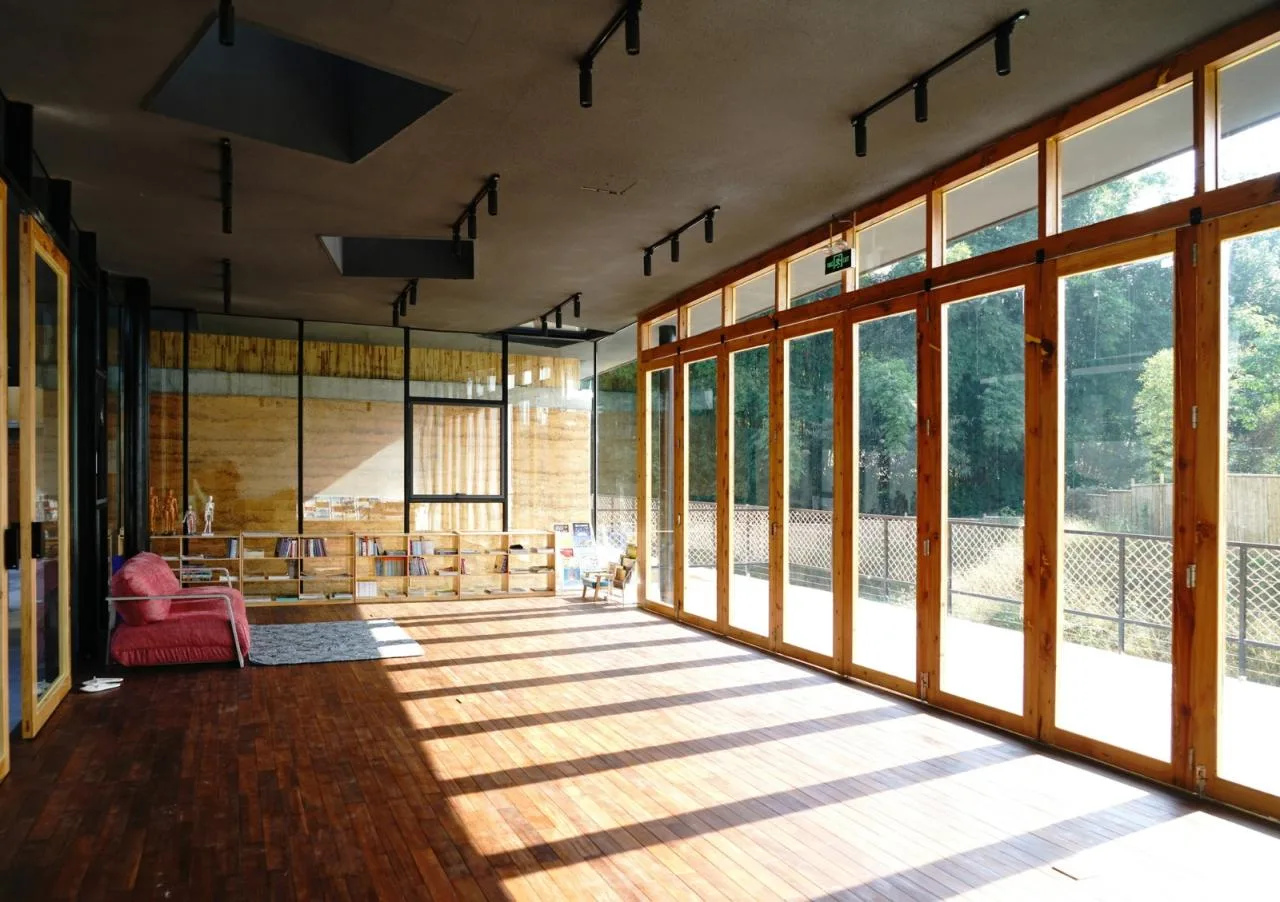
The courtyard level offers a bright environment rich with texture, contrasting with the elevated level. The walls and roofs with defined boundaries feature various horizontal doors, windows, and skylight openings, framing the surrounding countryside and sky as living landscape paintings.
These views vary from close-ups to partial perspectives and distant scenes, carefully curated to allow the courtyard to extend naturally into the wider environment.
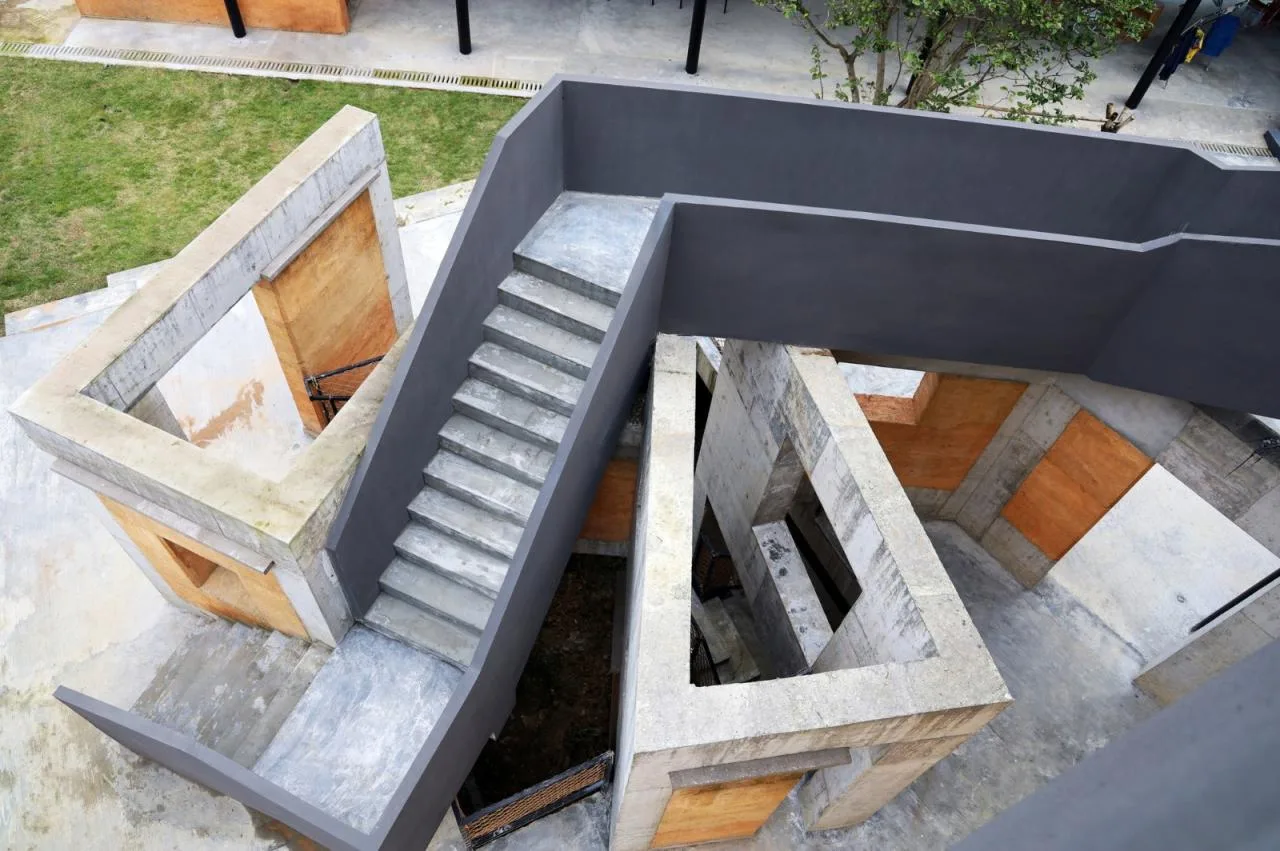
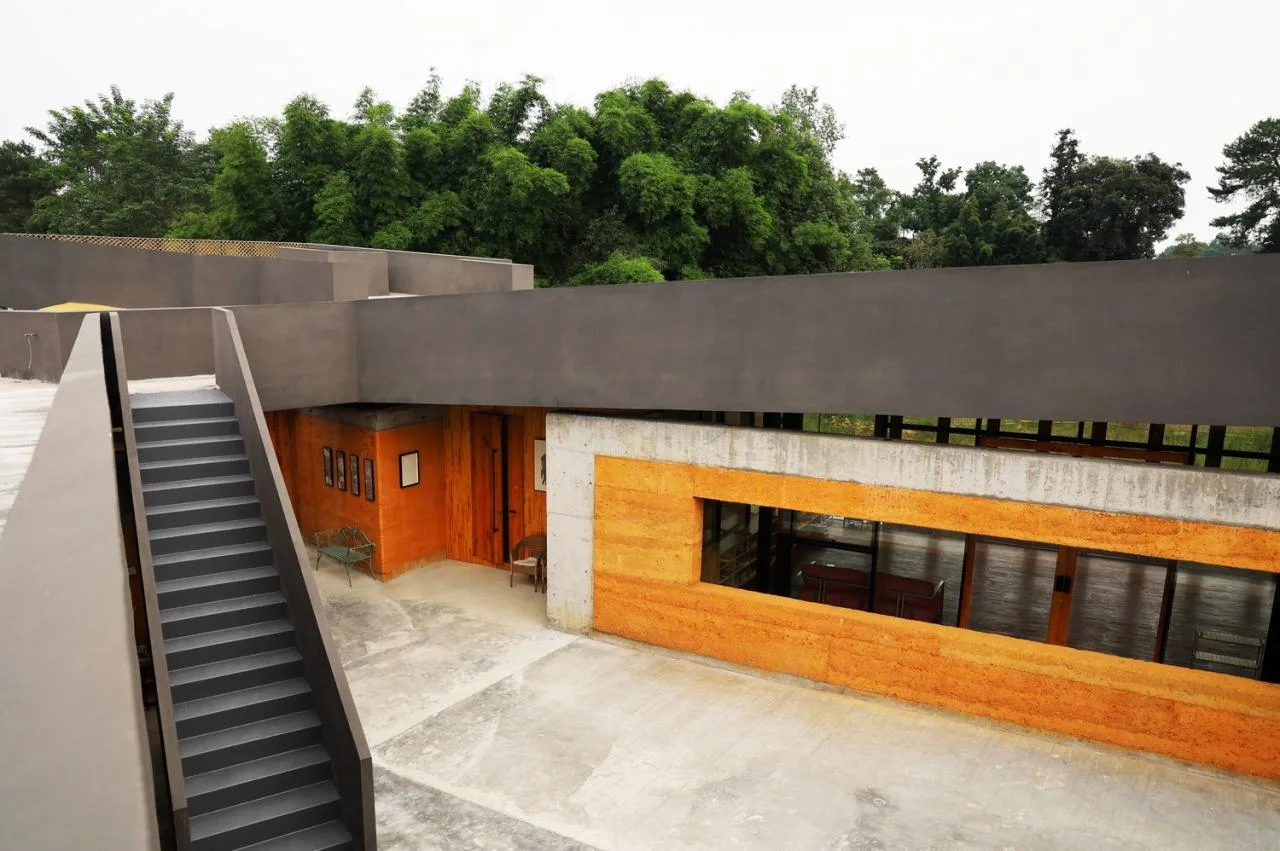
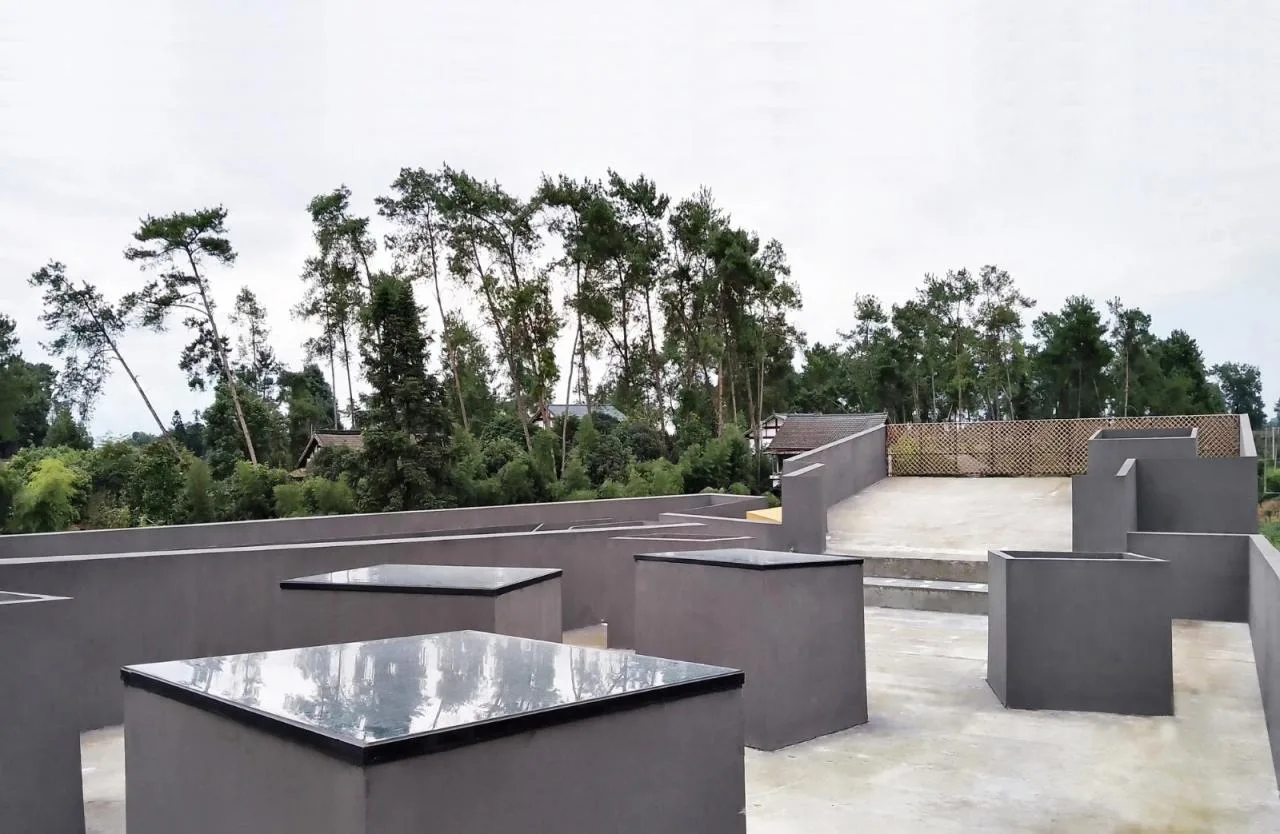
Ascending the dark gray staircase to the rooftop reveals expansive views of the sky and surrounding nature. From this vantage point, the nearby bamboo forest, mid-range pine groves, distant Xiling Snow Mountain, and the wide-open sky come into full view.
At times, the sloping roof seems to lead directly into the bamboo forest, and pine trees appear planted atop glass skylights. Through the sturdy railing, one can reach out and touch the distant Xiling Snow Mountain.
This rooftop offers a place to contemplate the harmonious relationship between humanity and nature, inviting visitors to “contemplate the leisurely nature of heaven and earth.”
Project Drawings
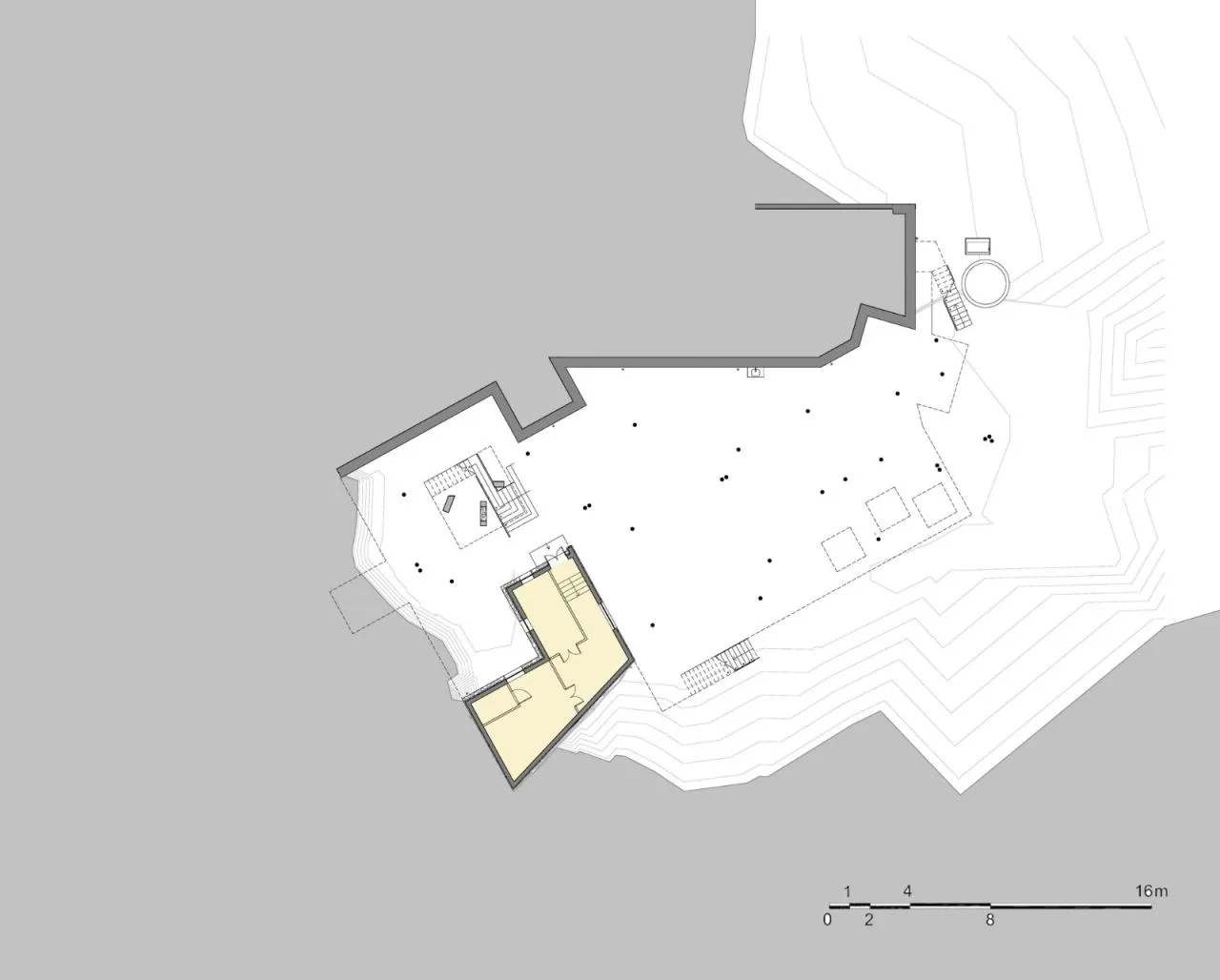
△ General layout plan
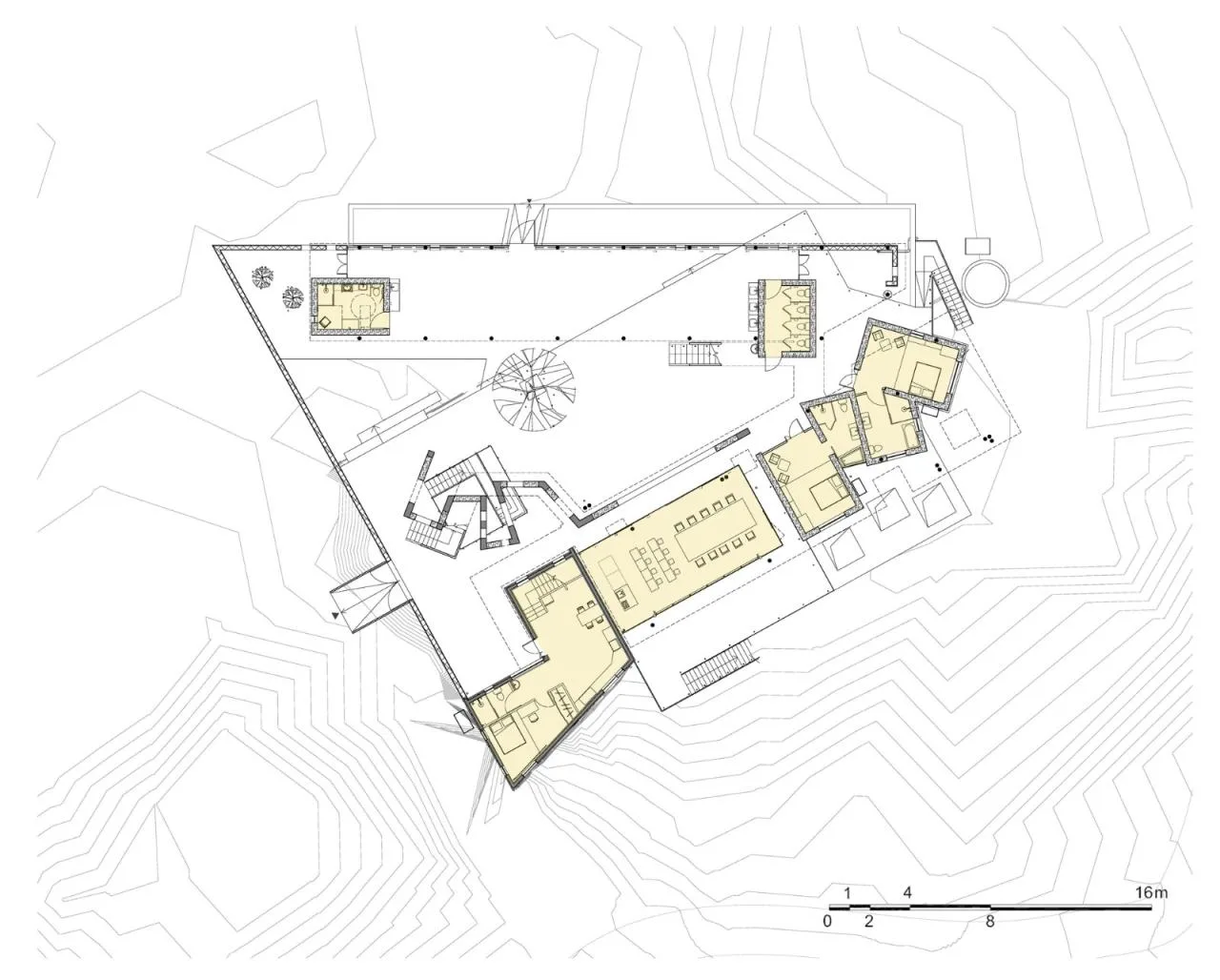
△ First floor plan
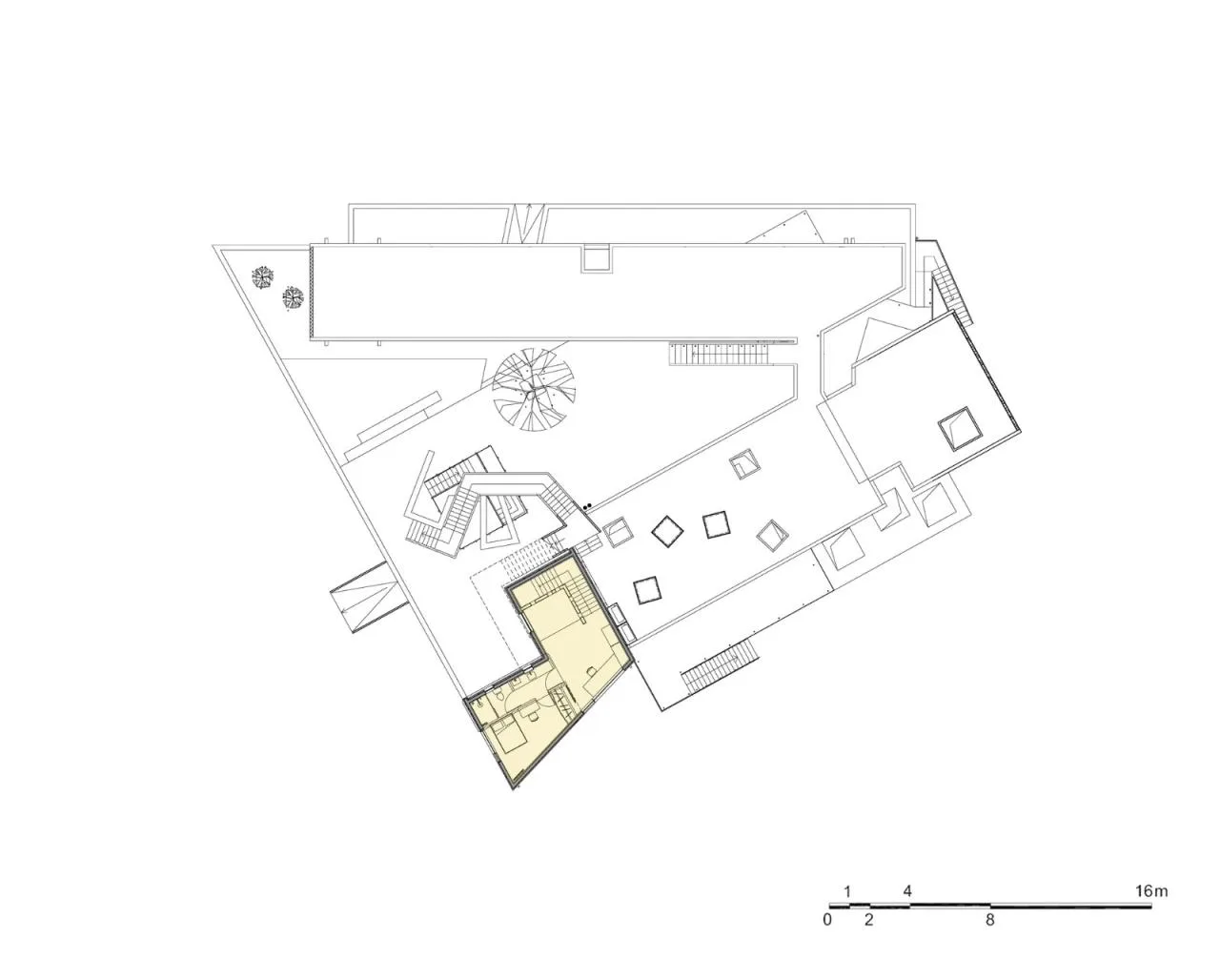
△ Second floor plan
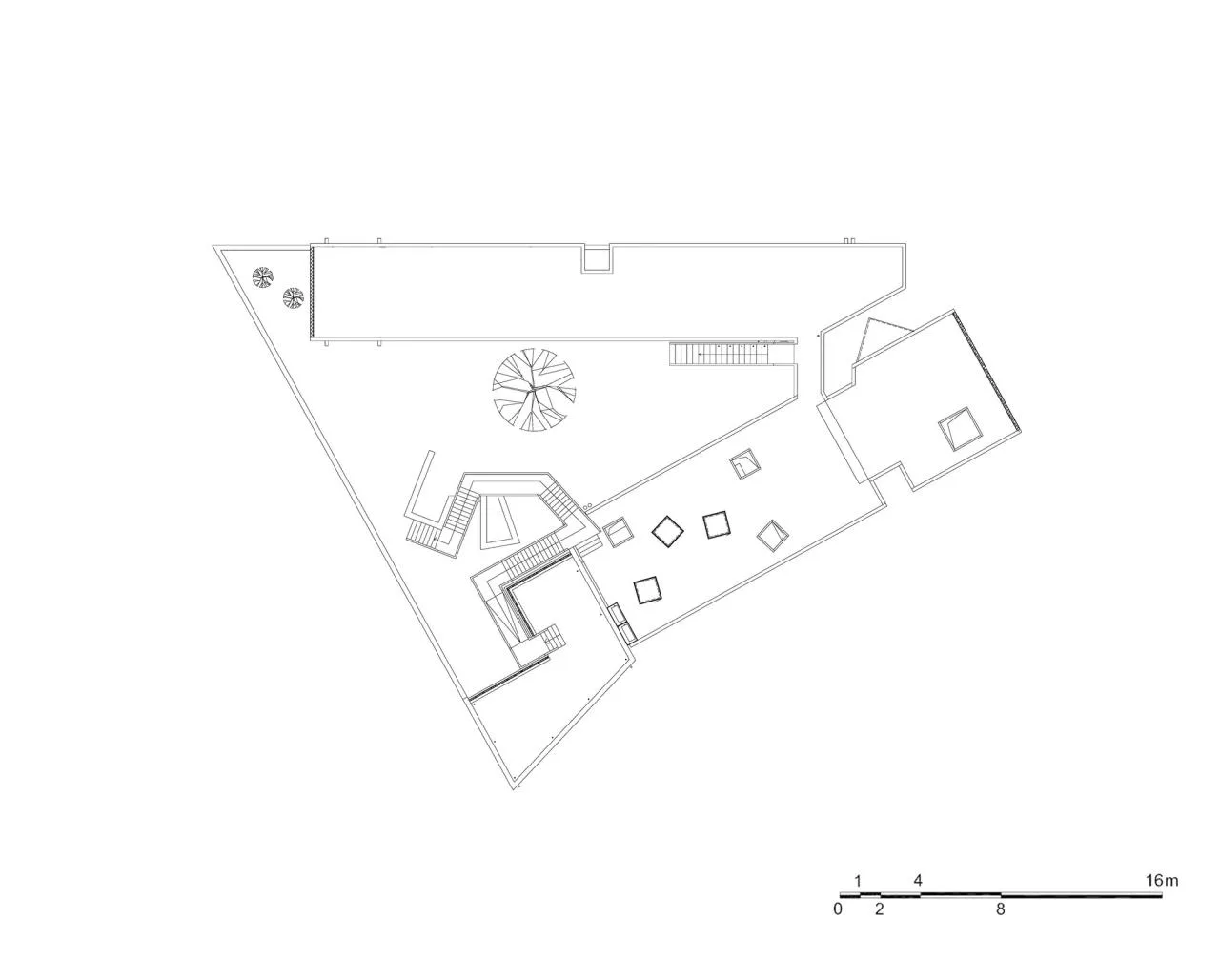
△ Roof Plan
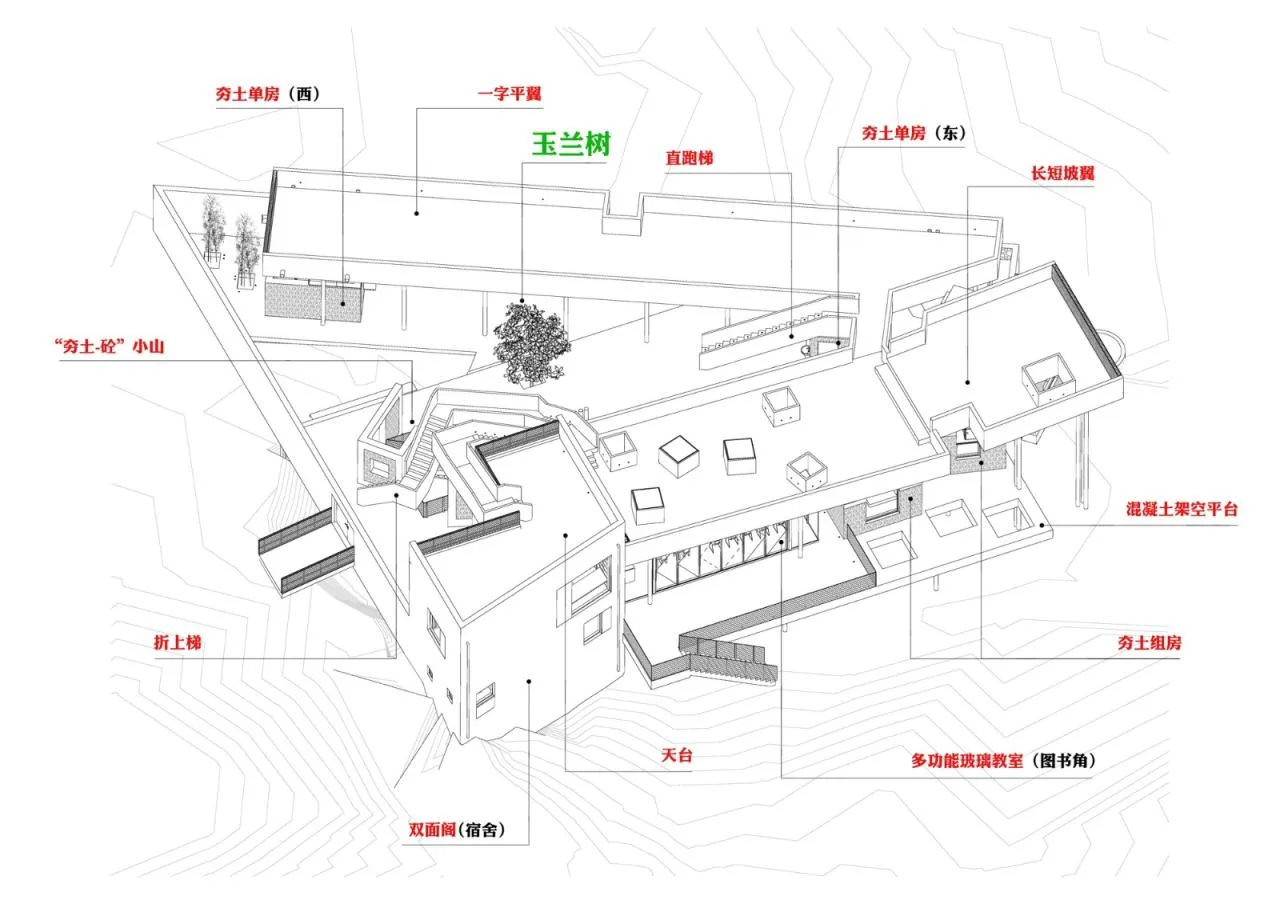
△ Analysis chart
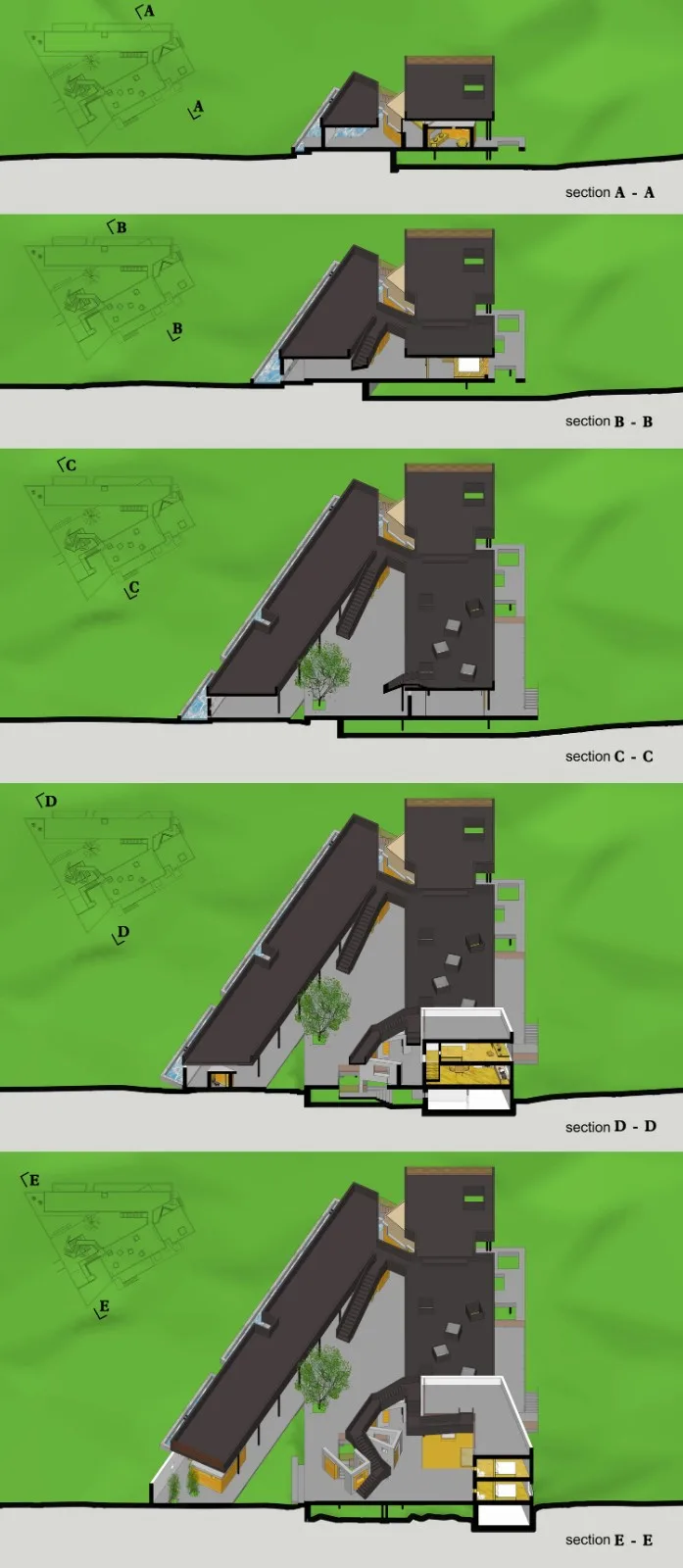
△ Section diagram
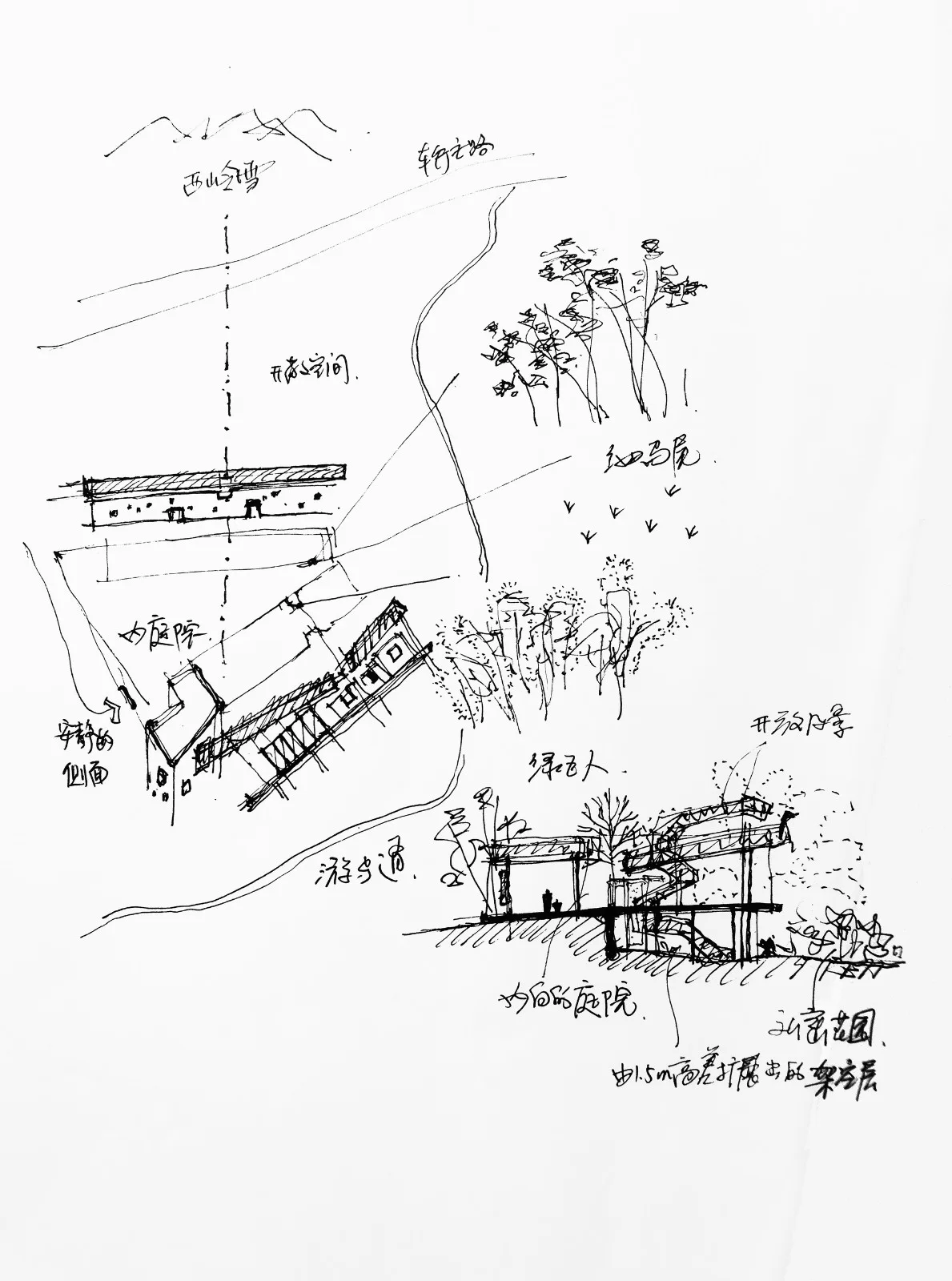
△ Hand drawn drawing
Project Information
Architectural Design: Livil Architects
Area: 1079 m²
Project Year: 2021
Photographer: Baoshan Wang
Suppliers: Carpoly, Holcim, Lafarge, Shengfang, Yijia
Design Team: Liu Chongxiao, Han Li, Pan Yue
Structural Design: Liu Shengpeng, Ma Wencong
Engineering Management: Wang Jianting
Construction Manager: Xu Gang
Client: Chengdu Mingting Cultural and Creative Co., Ltd
Construction Drawing: Sichuan Huarui Engineering Design Co., Ltd
Location: Chengdu, China














Must log in before commenting!
Sign Up