
Project Overview
Environment
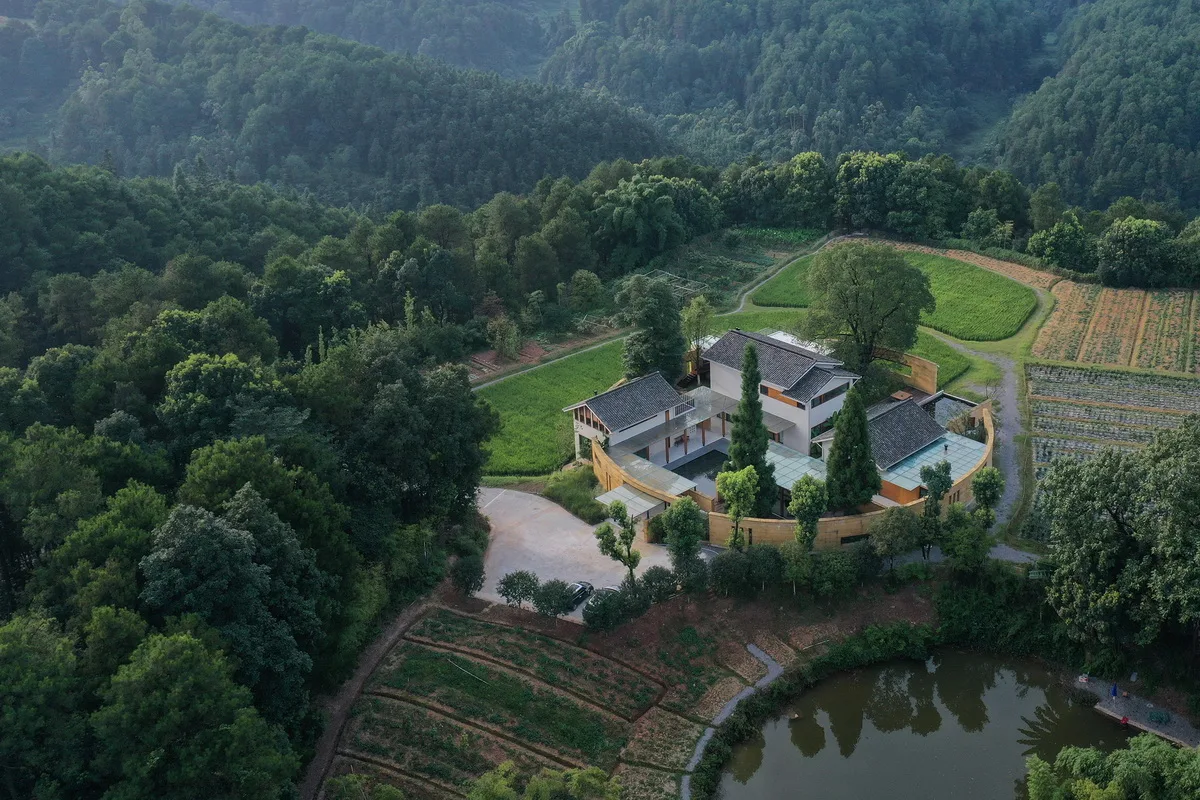
This project is situated in a rural area near Chongqing, atop a flat, horseshoe-shaped cliff surrounded by lush forests and expansive views. It exemplifies the pastoral scenery typical of southwestern mountainous regions. Around the site, various residential buildings—constructed from stone, brick, or rammed earth—are scattered either in clusters or individually. These structures preserve the construction styles from different rural development periods, reflecting the transition from old to new.
Each household enjoys its own front yard, backyard, or rooftop terrace, spaces dedicated to living, working, and drying crops. The owners cherish the rural lifestyle where neighbors raise chickens and grow millet, inviting others to join them in the fields. They envision building a suburban village here, complete with rice paddies, fish ponds, orchards, and chili fields cultivated around their homes. This farmhouse truly grows from the land itself. The designer began to consider how architecture might harmoniously engage with such a textured landscape and rural order.
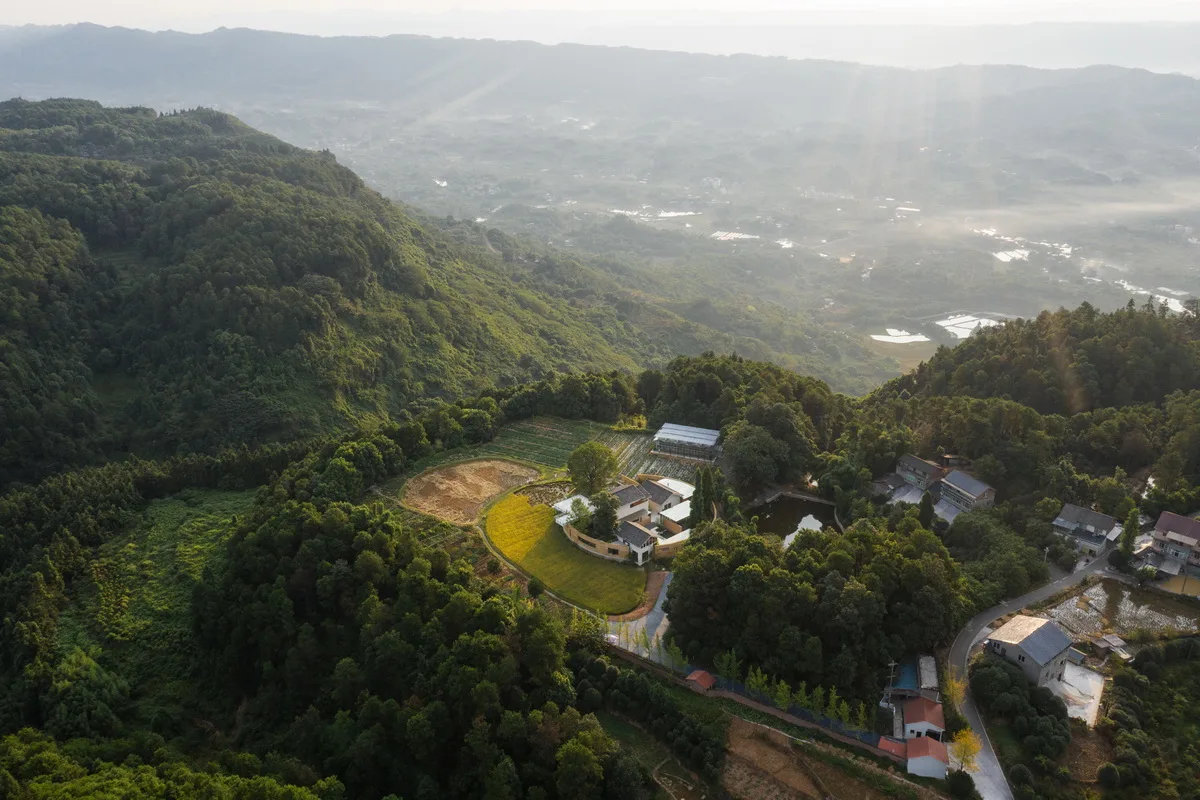
Jiaoyuan is perched on the flat top of a horseshoe-shaped cliff, surrounded by flourishing forests and vast views.
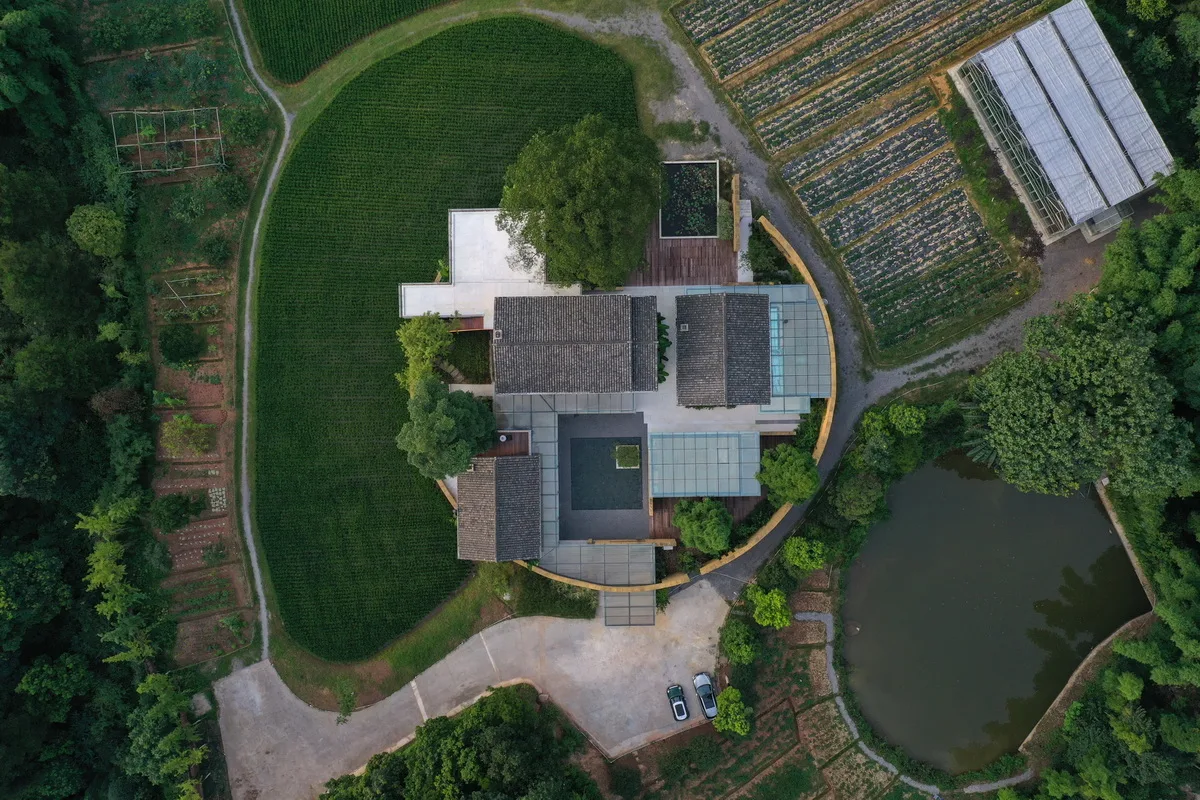
△ Building Overview
Concept
Martin Heidegger, in “Architecture, Residence, and Thought,” described construction itself as a form of dwelling—a way for humans to exist on the land. He emphasized the interdependent relationship among humans, land, and architecture through the idea of “poetic dwelling.” Here, in the vast and open fields, wind, trees, light, water, and shadows converge and interact with the landscape.
Although land use is largely unrestricted, designers feel constrained by the mountainous terrain, ancient trees, rice fields, and pastoral style. The goal is for the architecture to “take root” in the environment—not as an intrusion but as a participant—anchoring itself in a form that harmonizes with the wild landscape.
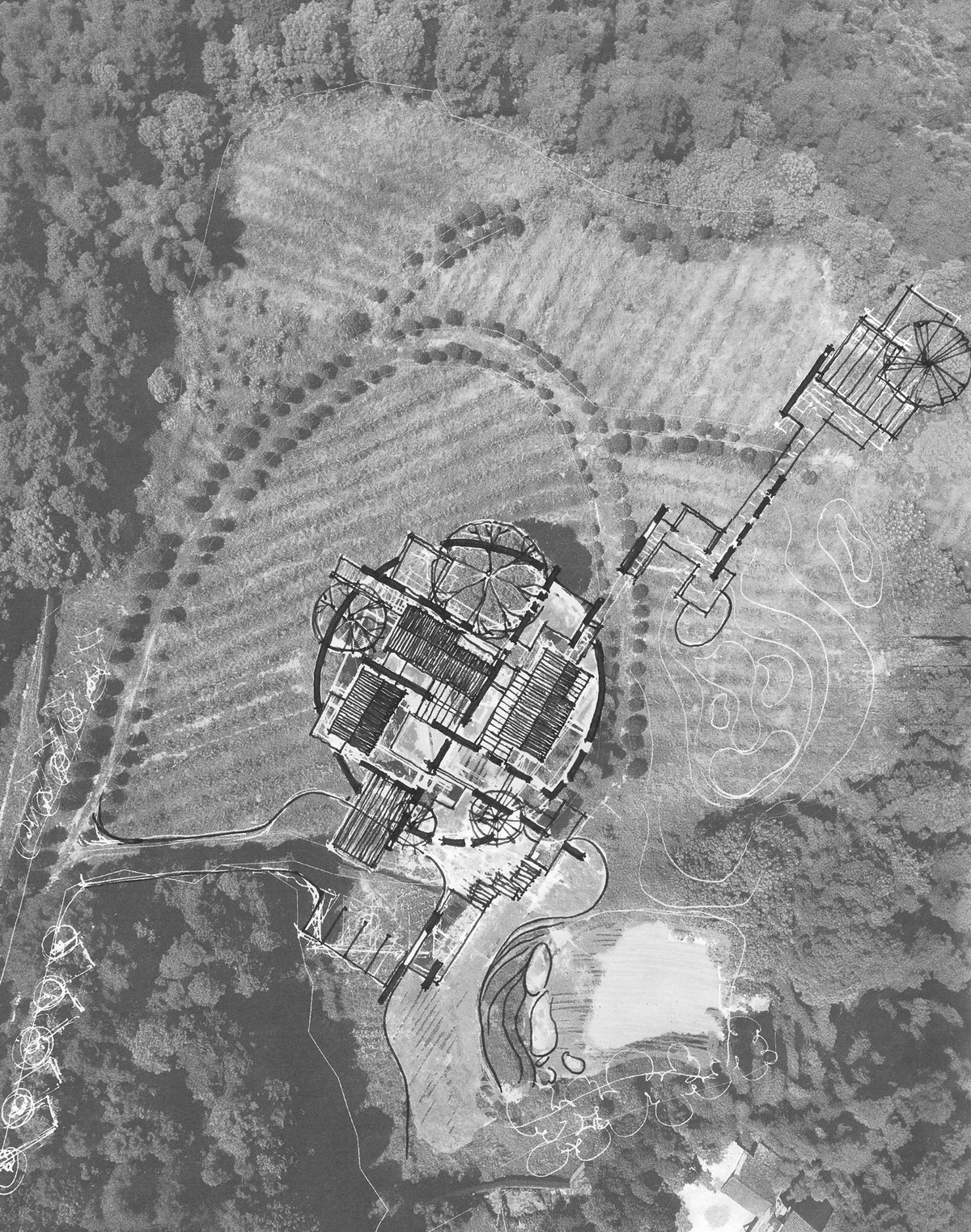
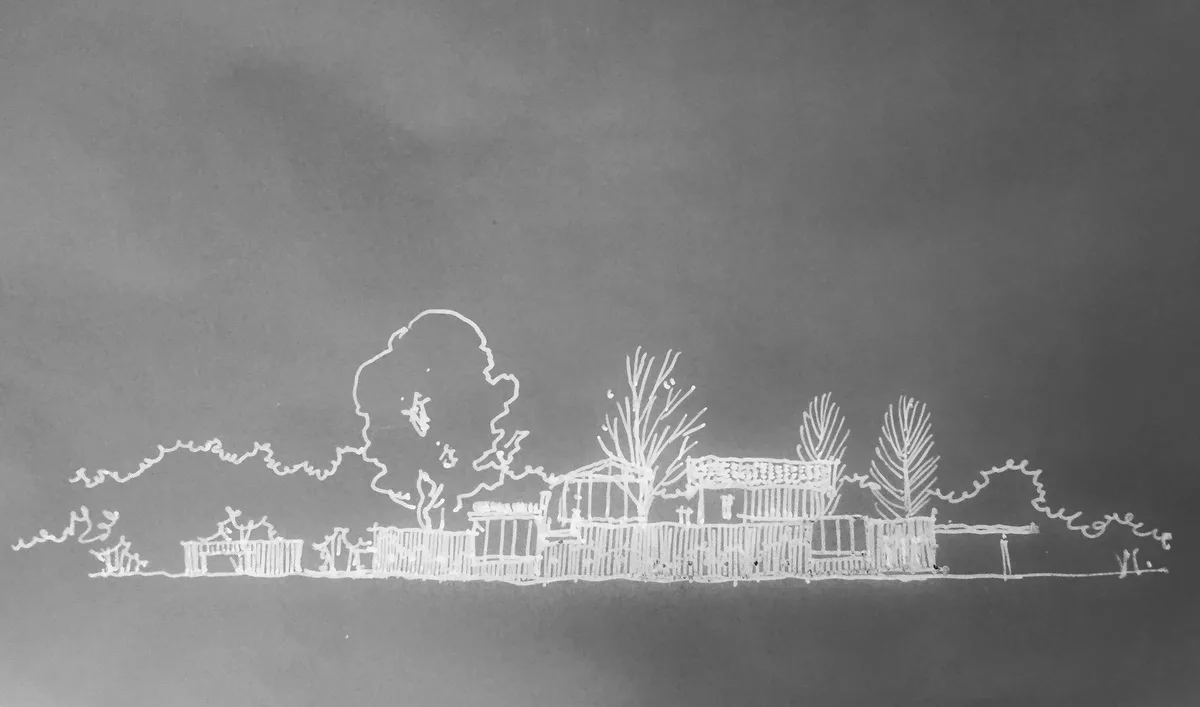
△ Design sketch © Yueji Architecture
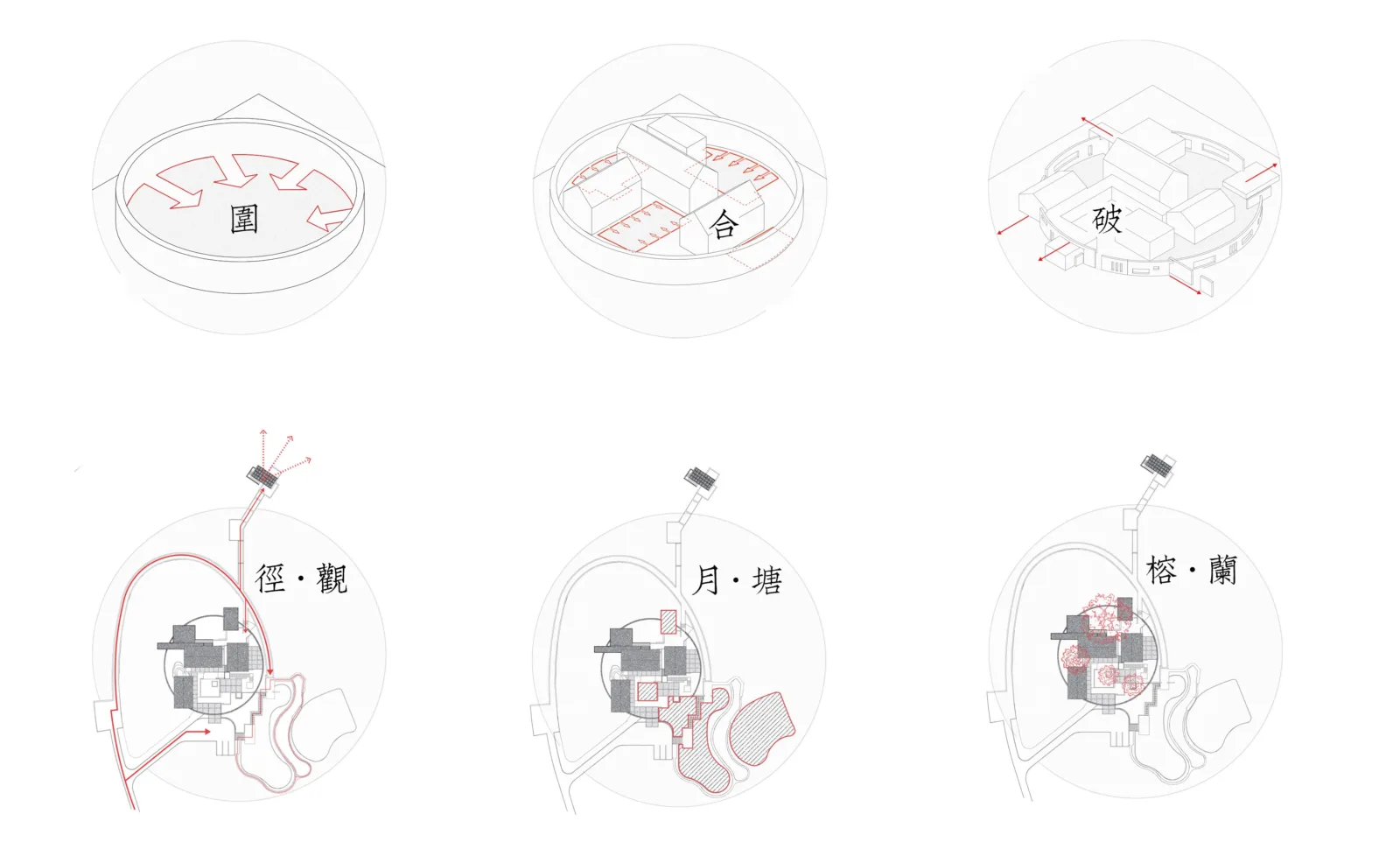
△ Design Logic © Yueji Architecture
The circle appears naturally connected to the site, embracing the land with a broad, flowing form instead of rigid cuts or occupation. The green waves of fields and spring waters fill the foreground pond, nourished by drifting clouds. The dialogue between building and site is established through a circular rammed earth wall, a natural choice. Various openings of different sizes punctuate the curved wall, making the earthen structure feel light and transparent through subtraction. These openings allow inside and outside to communicate, creating a dynamic sensory experience.
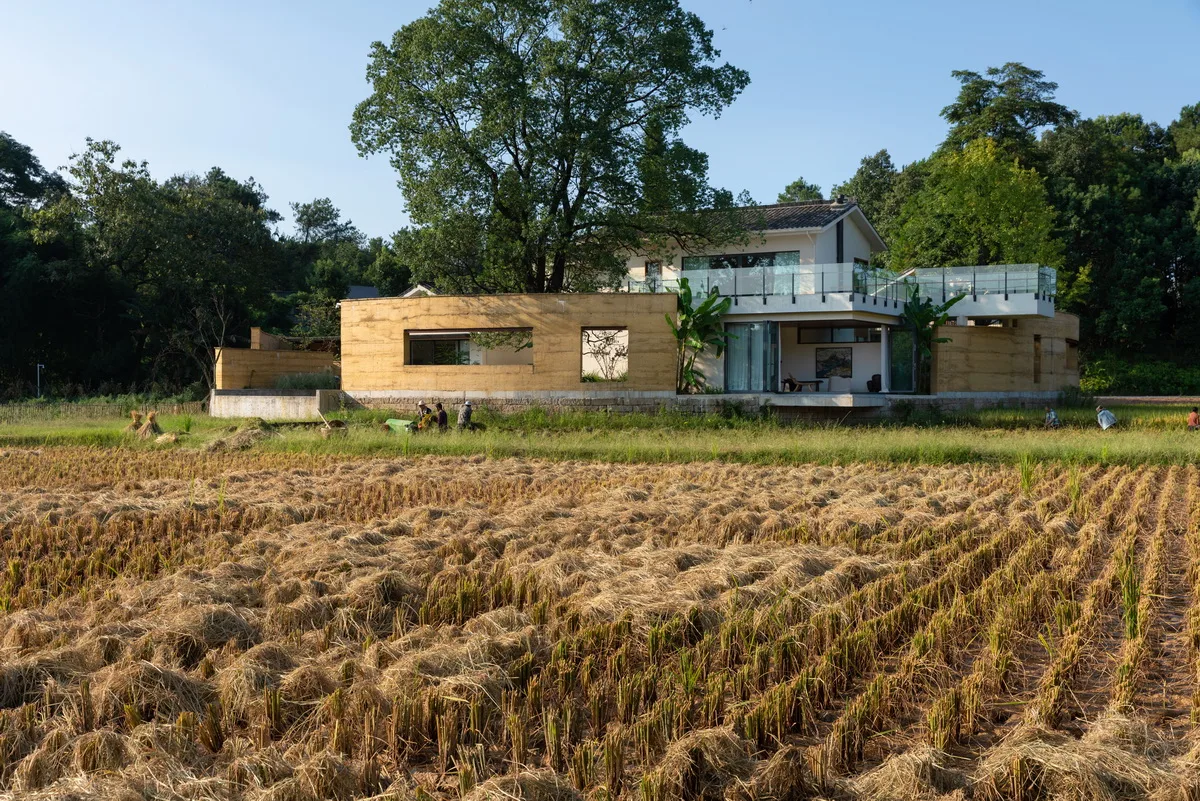
The wall’s openings facilitate mutual visibility and communication between building sections, creating a vibrant atmosphere.
Five square box-shaped buildings with distinct functions are intricately placed among the circular walls. Some break through the continuous earthen surface to allow the walls to “breathe” and “grow,” much like rice paddies need air. Others avoid and preserve four ancient camphor and nanmu trees on-site, turning them into living scenery integral to the architecture. Additionally, these structures form a series of relatively private courtyard spaces that complement the circular outer wall, where every pause and turn reveals new views.
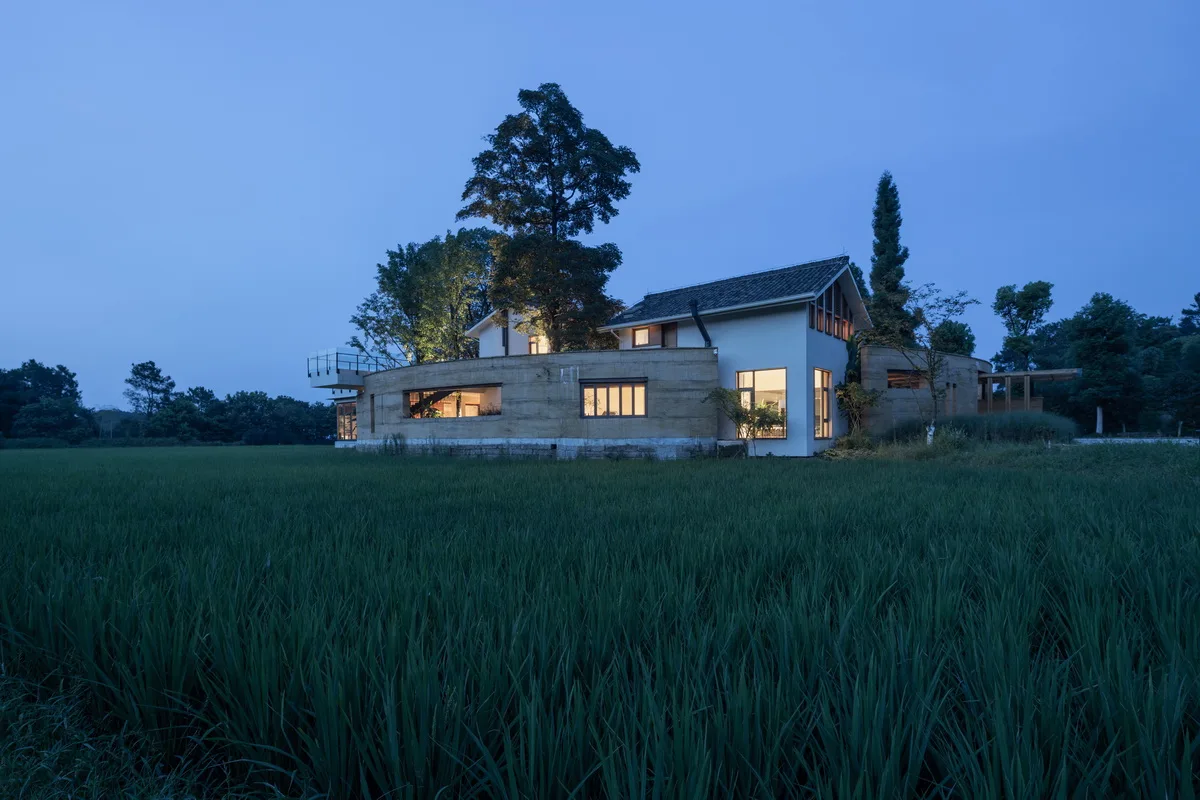
Breaking the continuous enclosure allows the earthen walls to “breathe.”
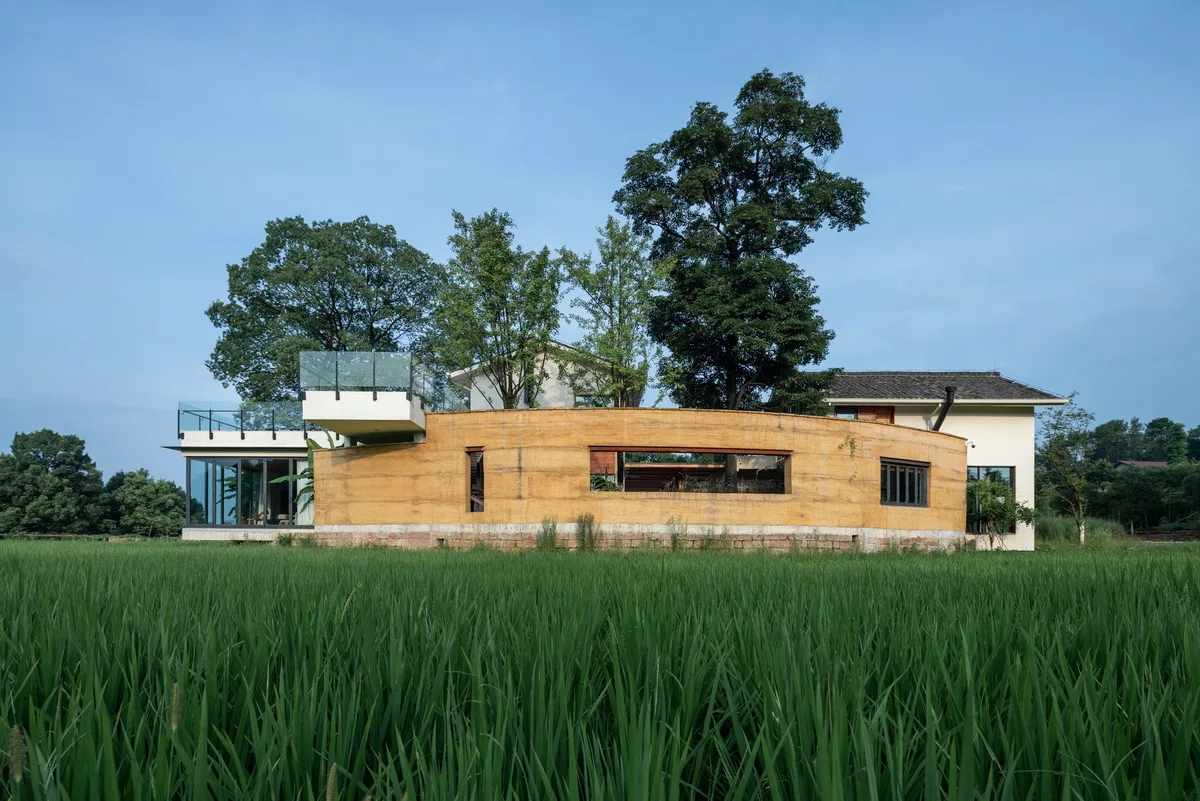
△ Preserved ancient trees on site
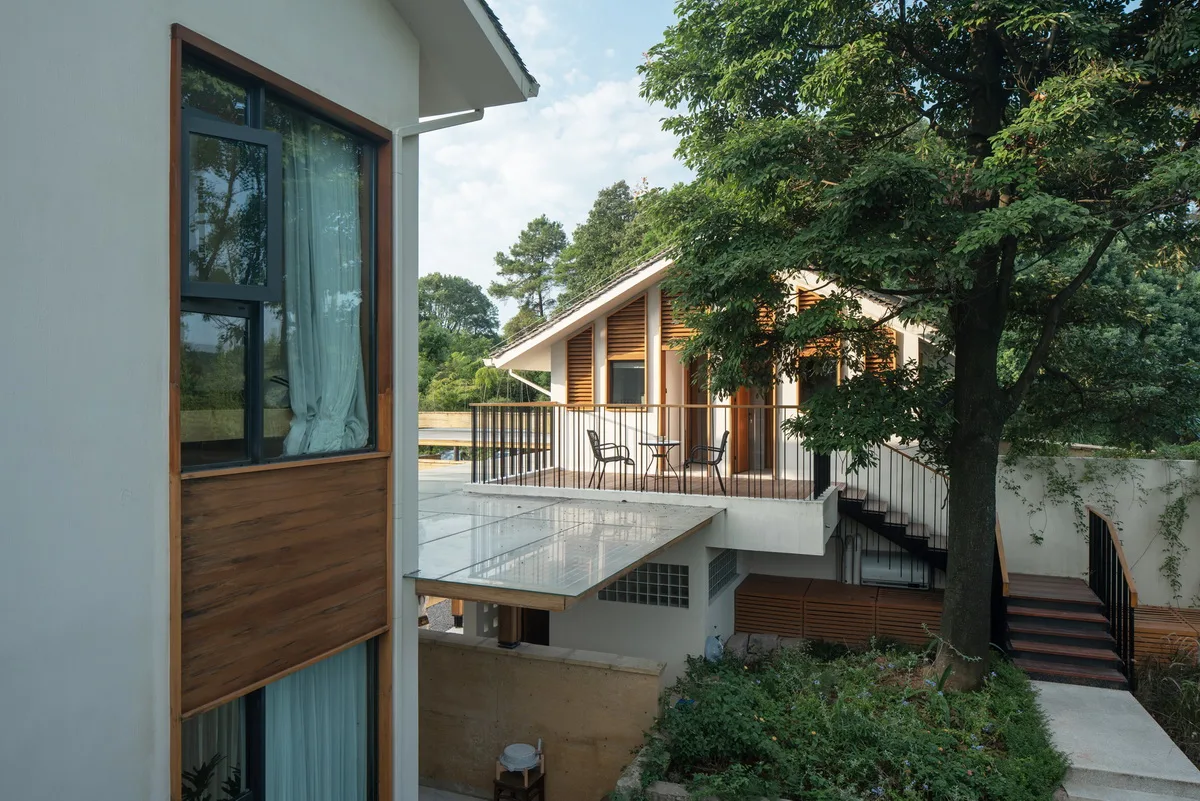
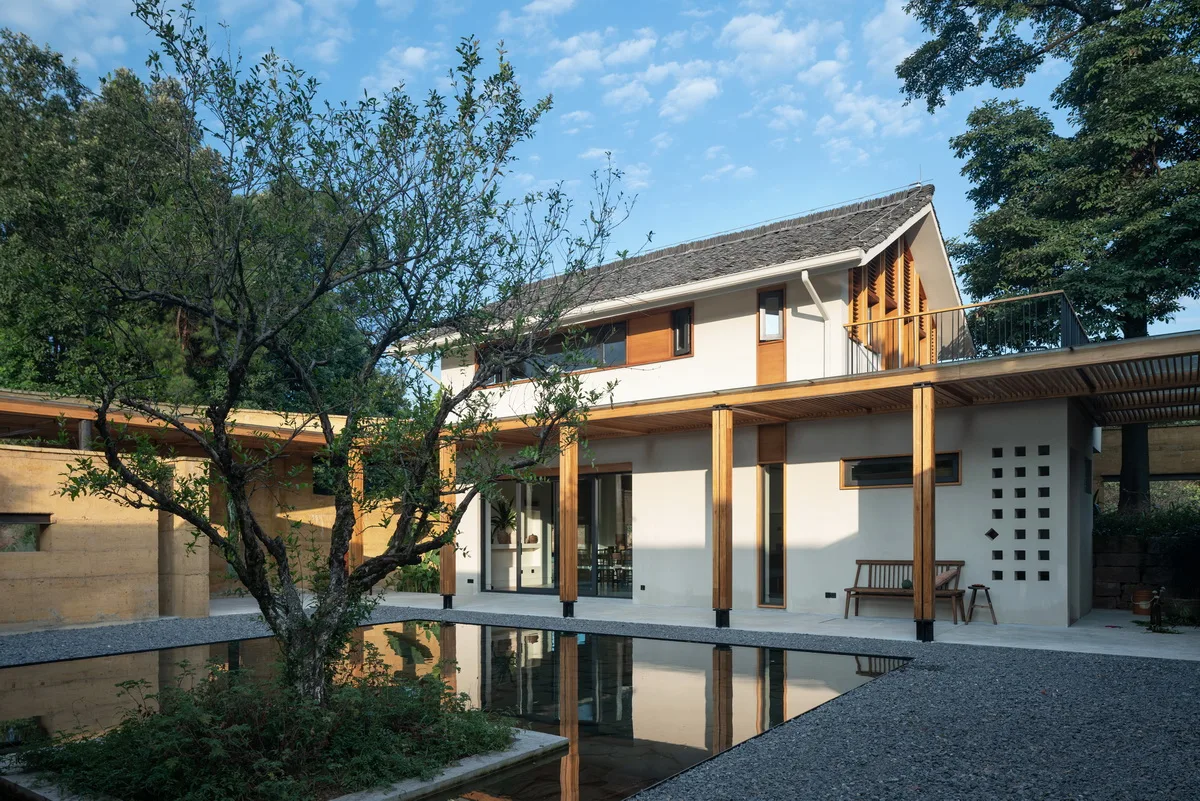
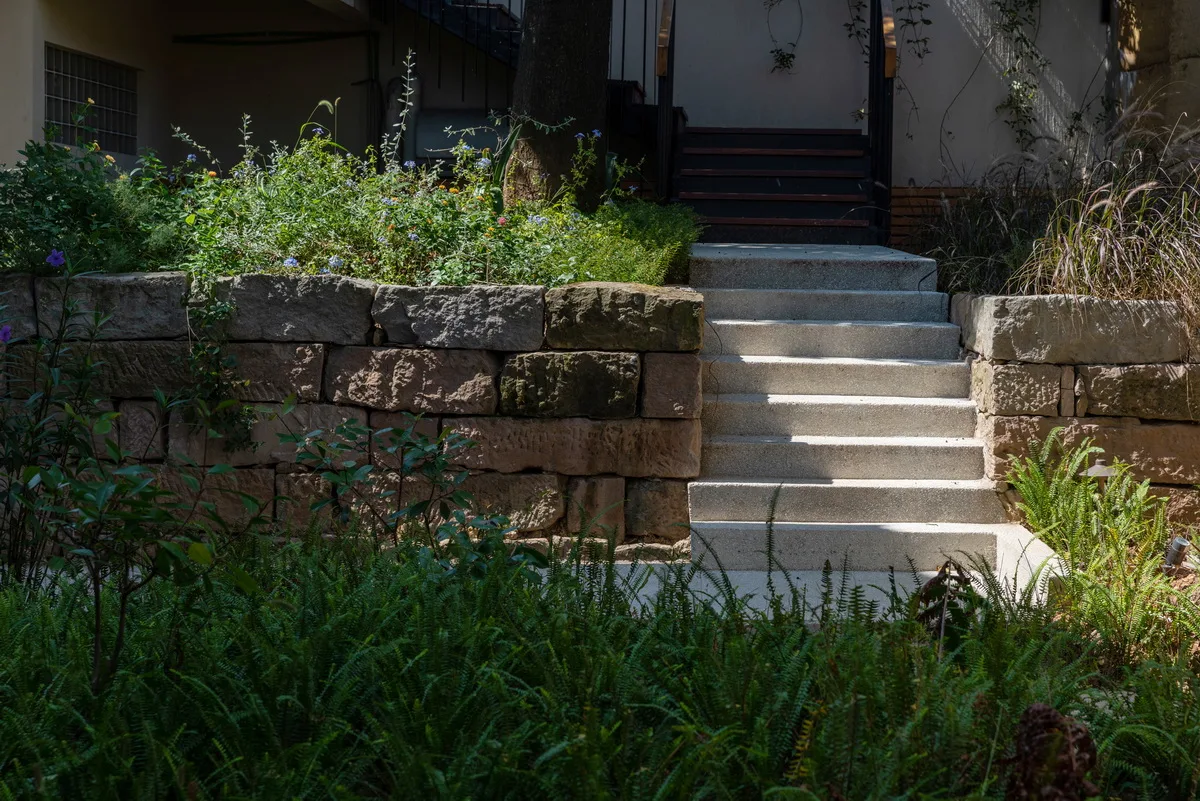
△ Inner courtyard spaces, where every pause and turn reveals a new view
The use of circles and squares is not a rigid formula but a response to the site’s context. The buildings are designed with a loose and light scale, leaving ample room for the surrounding environment and nature. Without forced construction, the boundaries between buildings and earthen walls naturally enclose six courtyards of varying sizes. These courtyards interconnect and interact with the surrounding fields, immersing occupants in a true countryside experience.
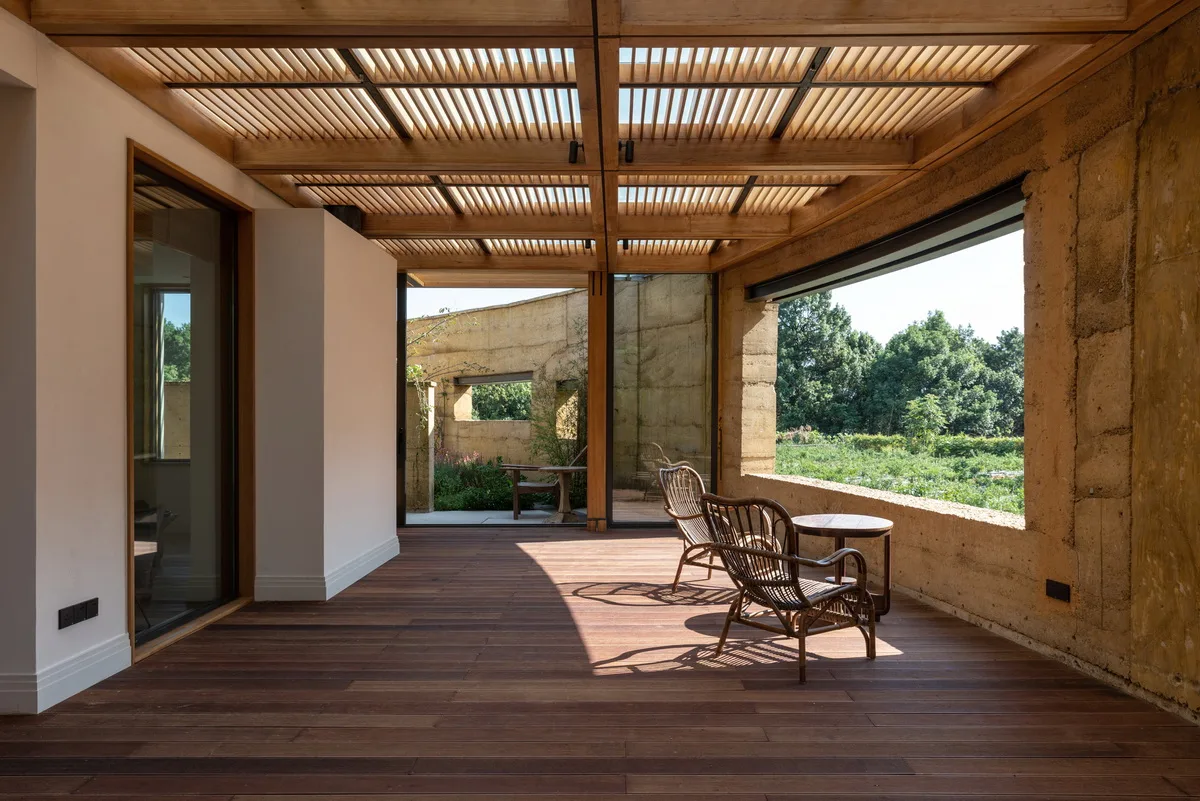
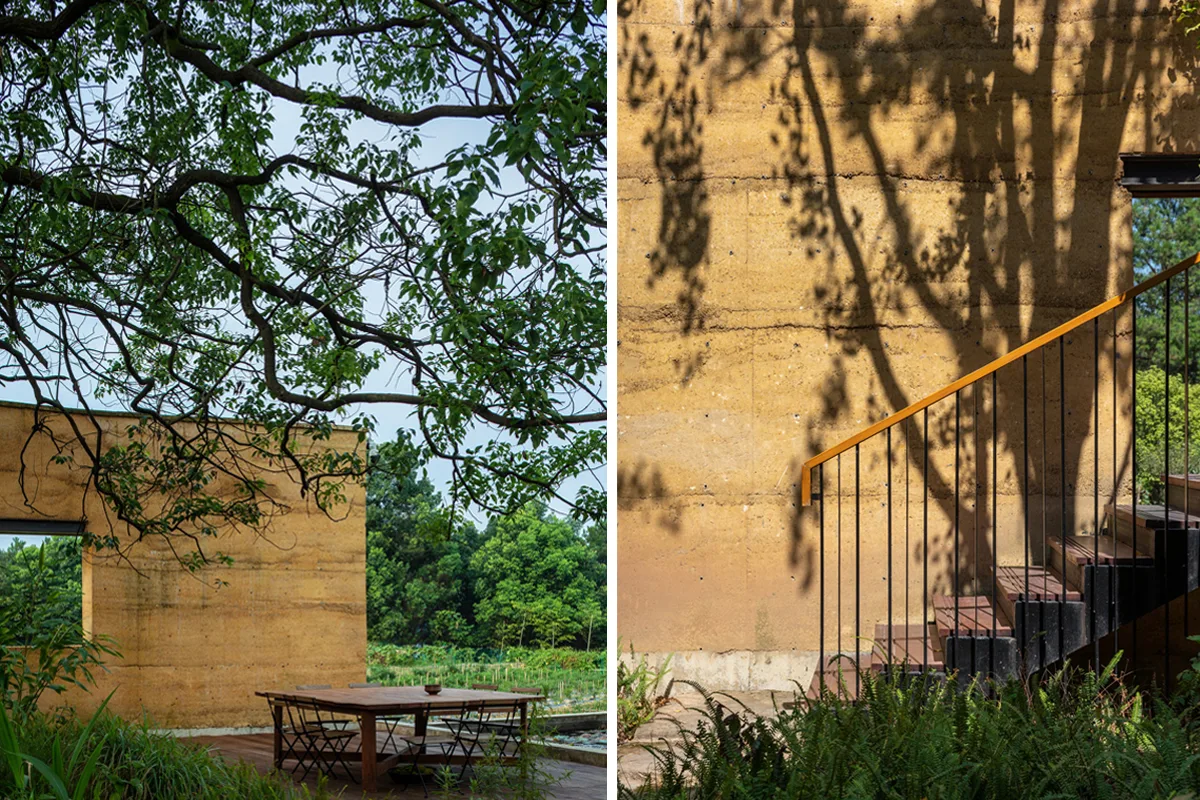
Partial courtyards interweave and connect with one another.
Space
Upon entering the garden, a long groove on the rammed earth shadow wall faces you, continuously dividing the line of sight. The courtyard and tree shadows come alive in this space.
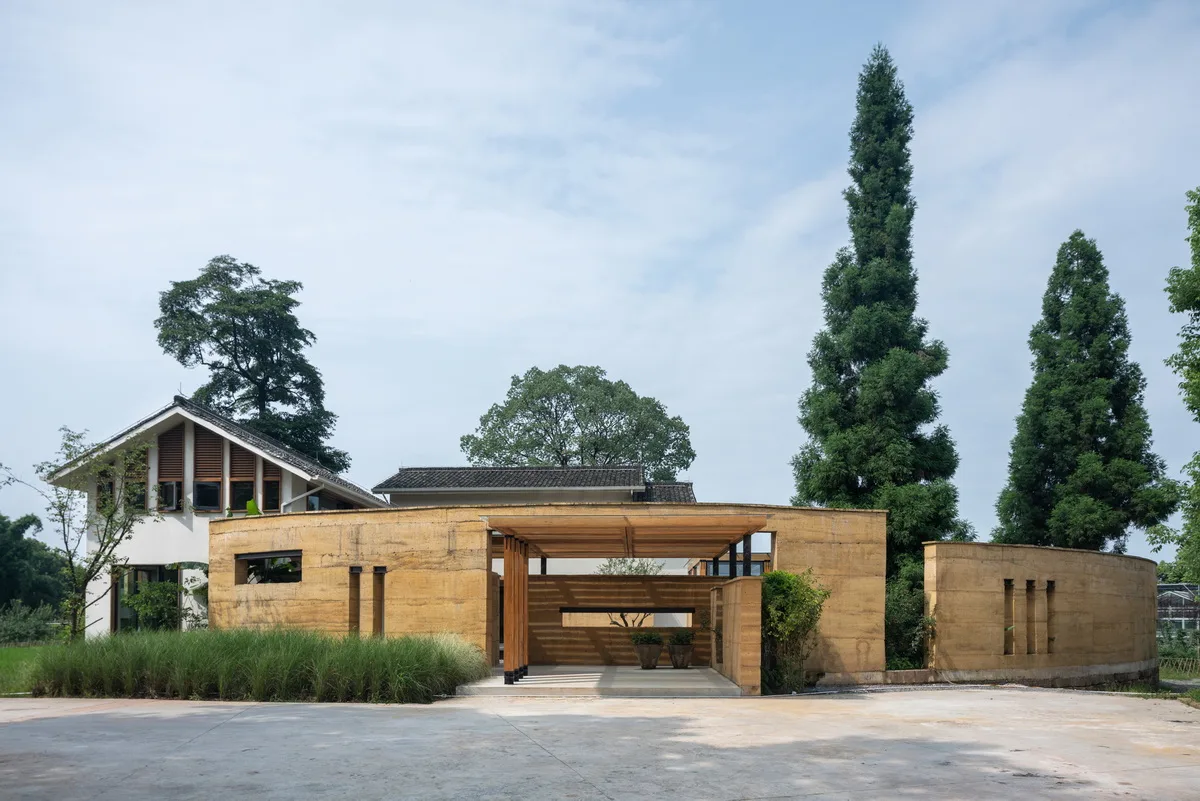
The building entrance is framed by a continuous line of sight.
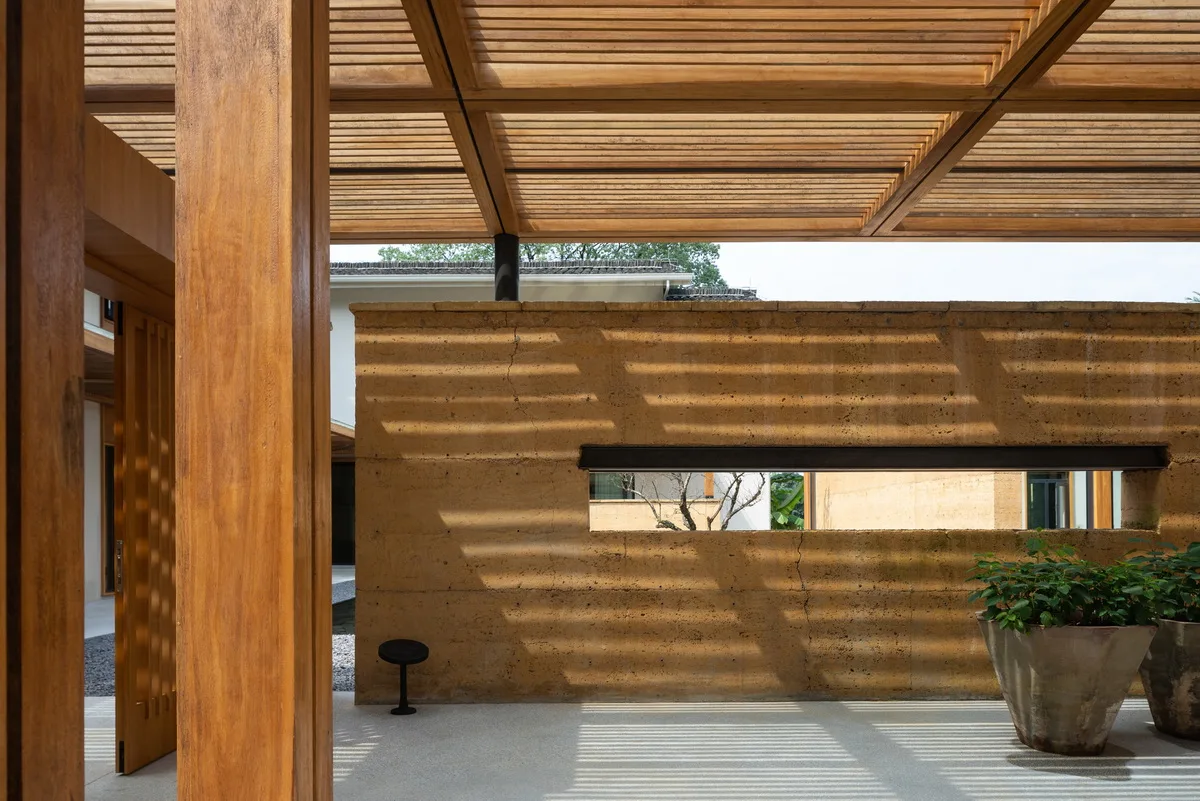
△ Entrance shadow wall with courtyard and tree shadows visible
Turning left and pushing open the door, the view gradually unfolds. At the center of the courtyard lies a water feature where trees grow naturally amidst gravel and still water, creating a tension between alienation and vitality. A semi-transparent wooden corridor serves as an ambiguous space, maintaining the boundary between building and courtyard while blurring the line between inside and outside. Light, wind, and views flow unobstructed through wooden columns and grilles.
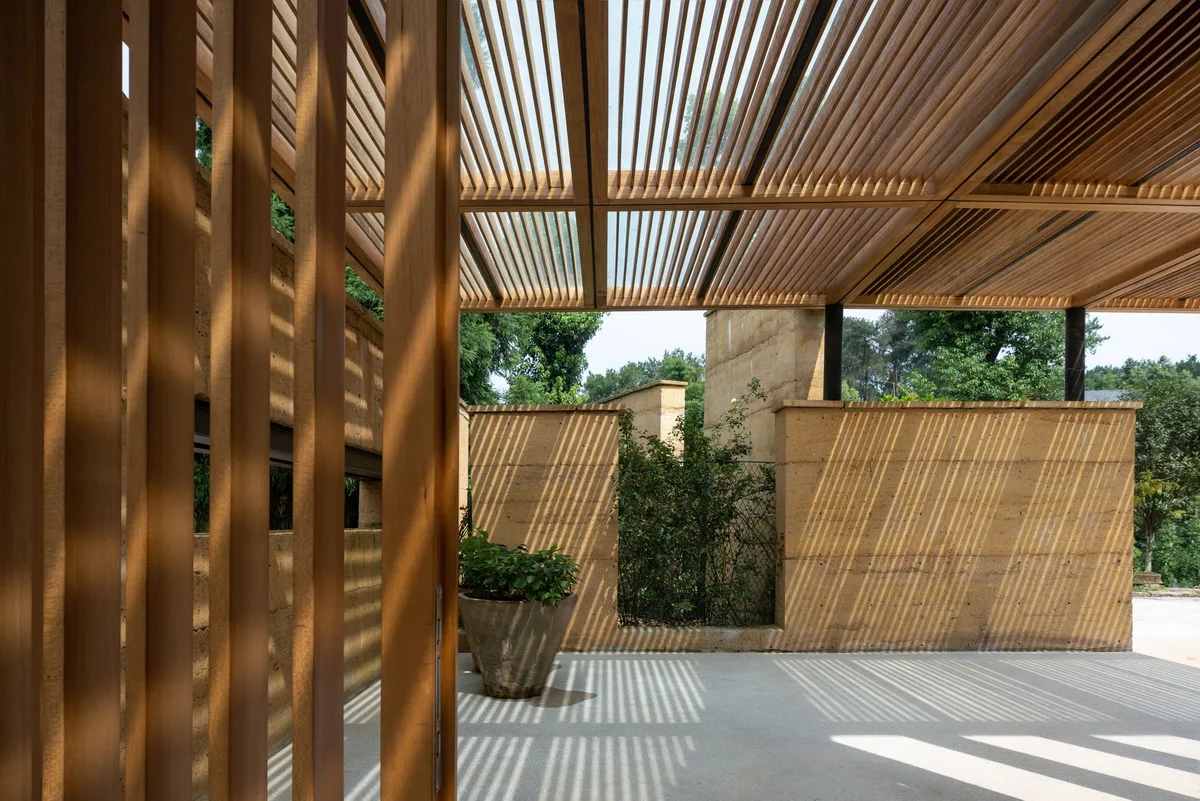
△ Door foyer space
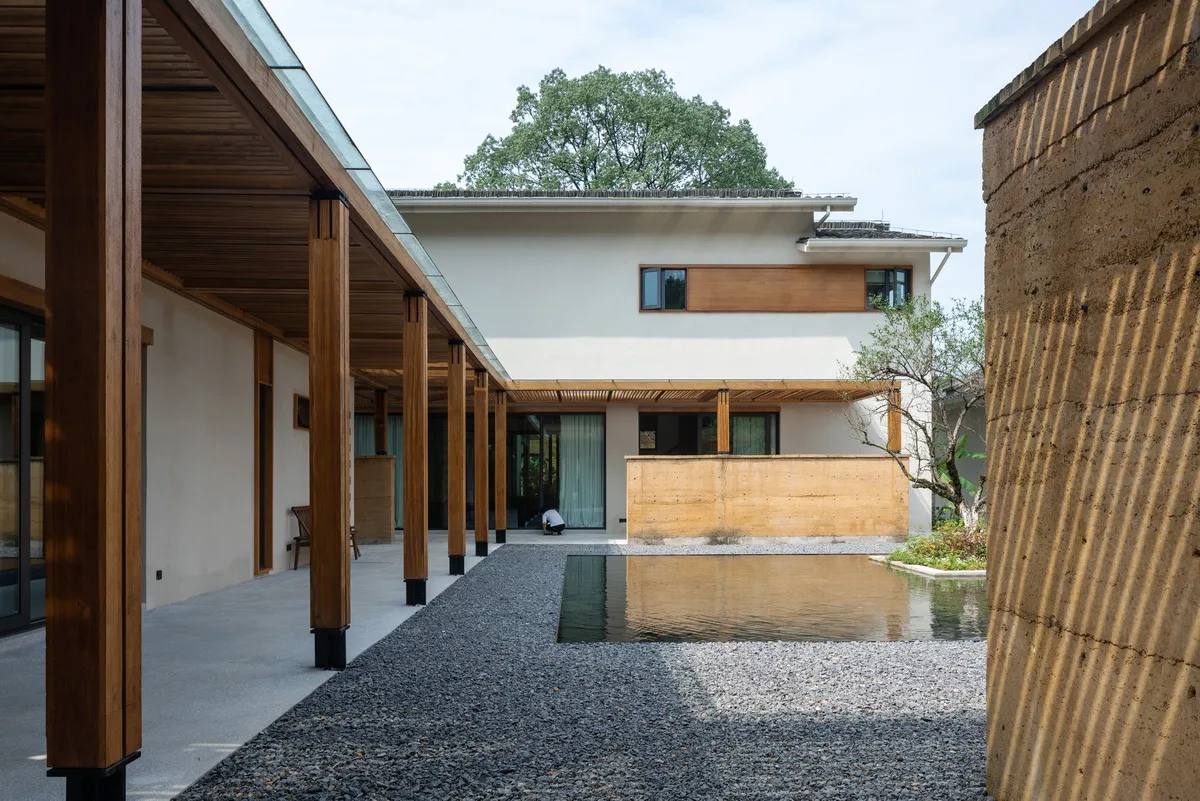
The corridor and courtyard open the view outward.
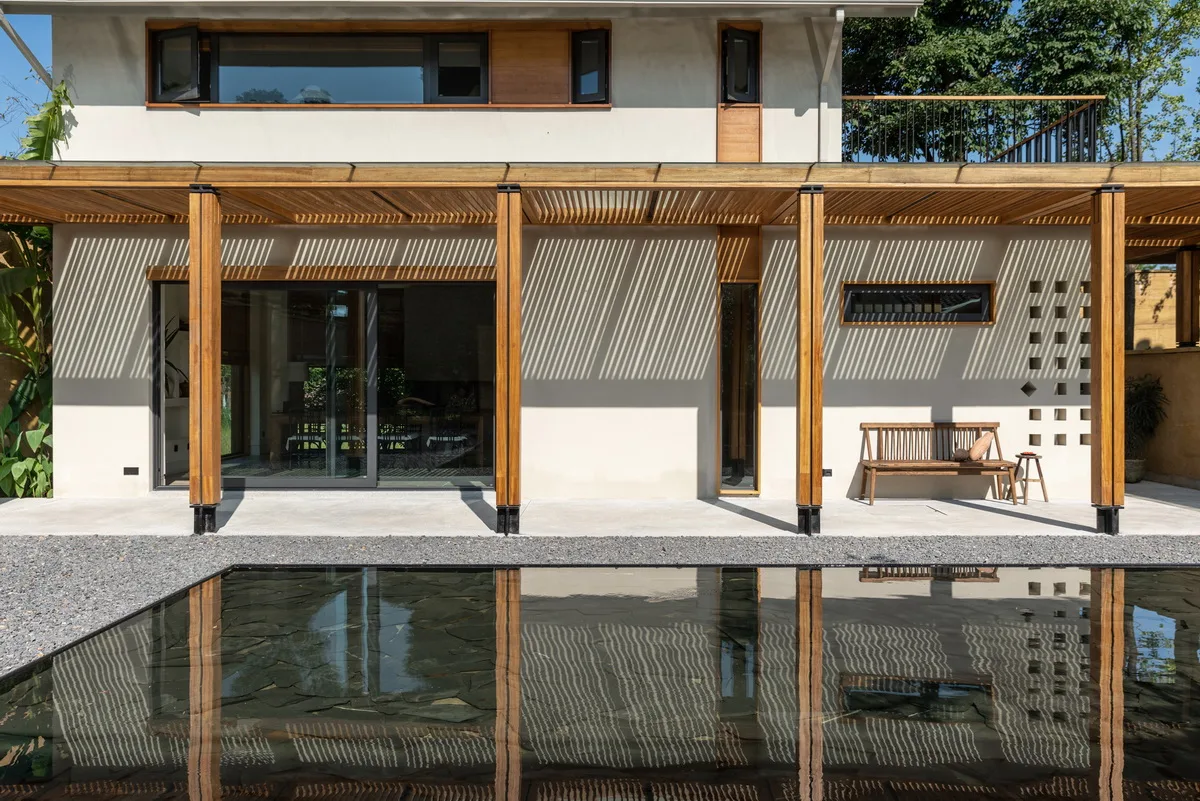
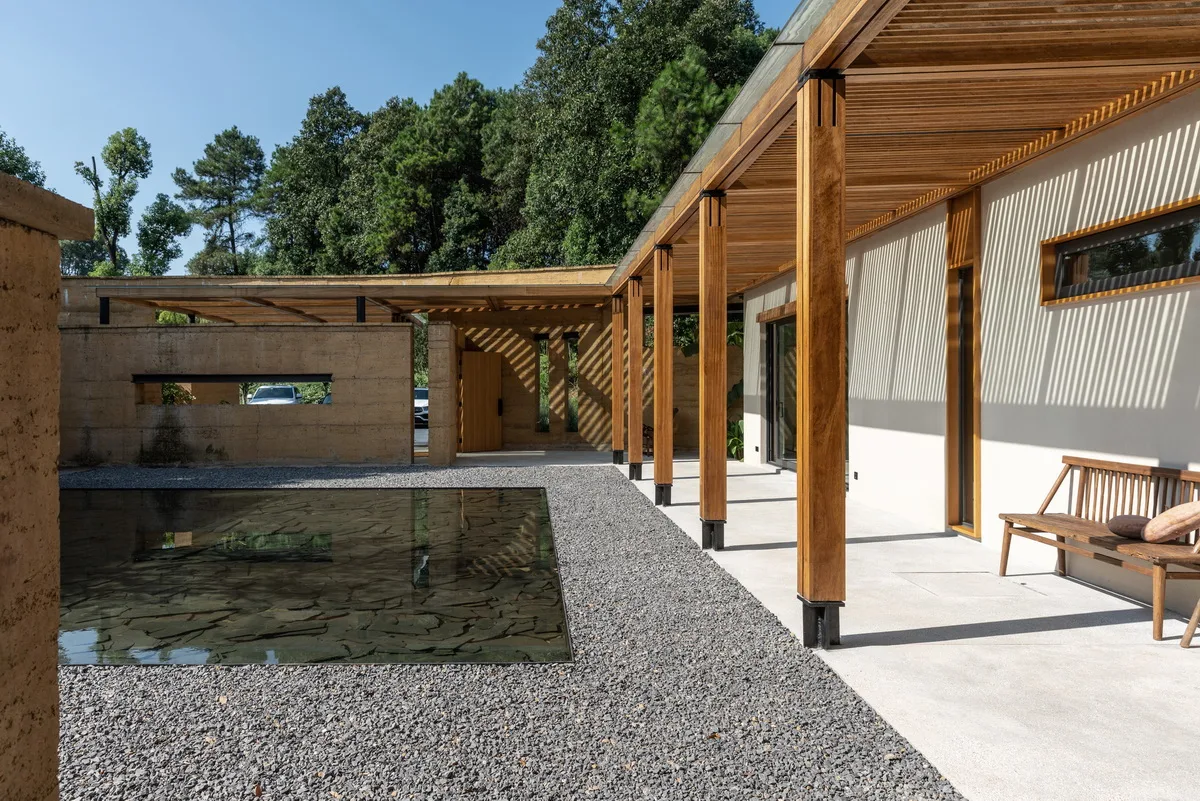
△ Wooden corridor with light and shadow filtering through the grille
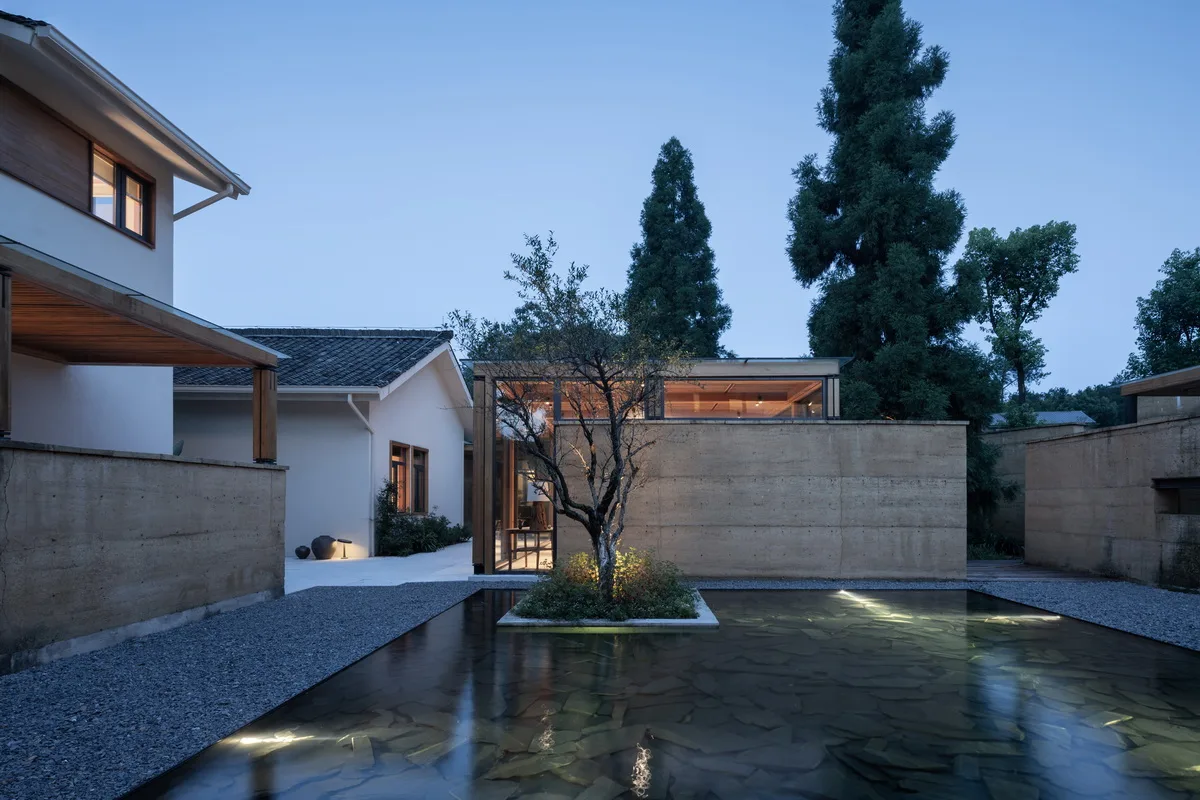
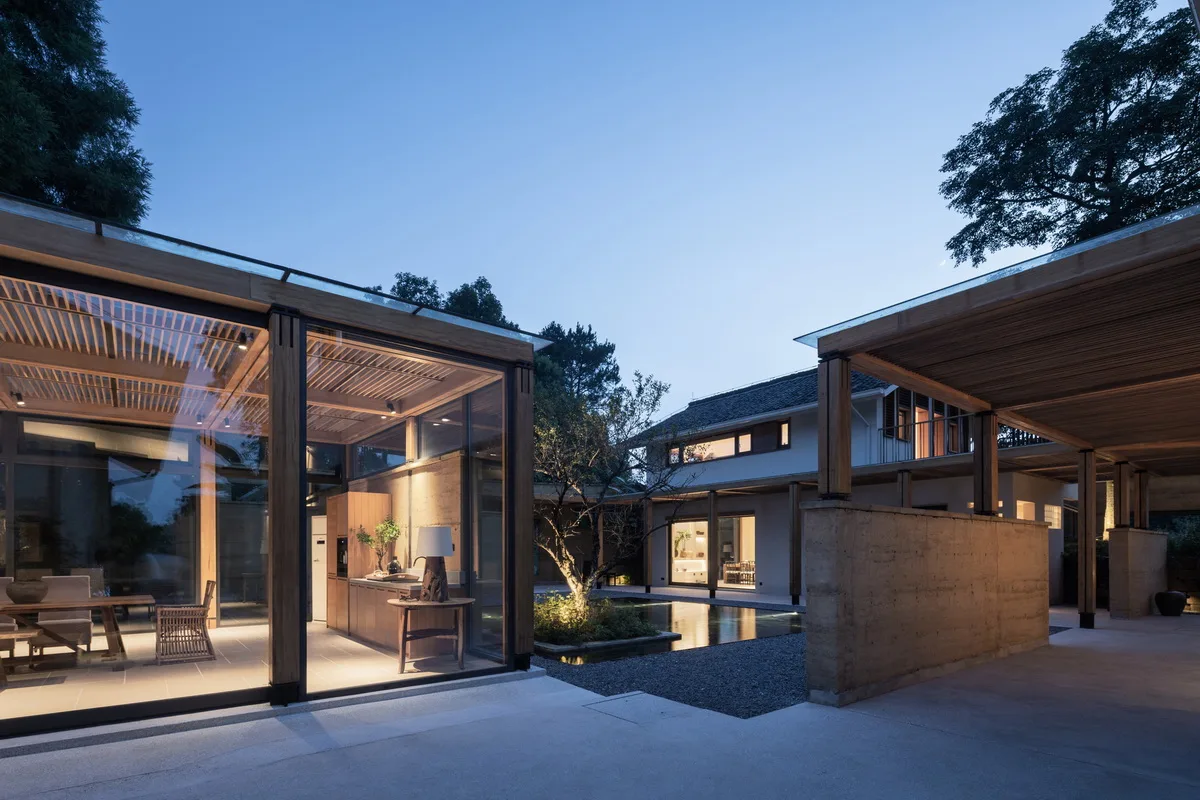
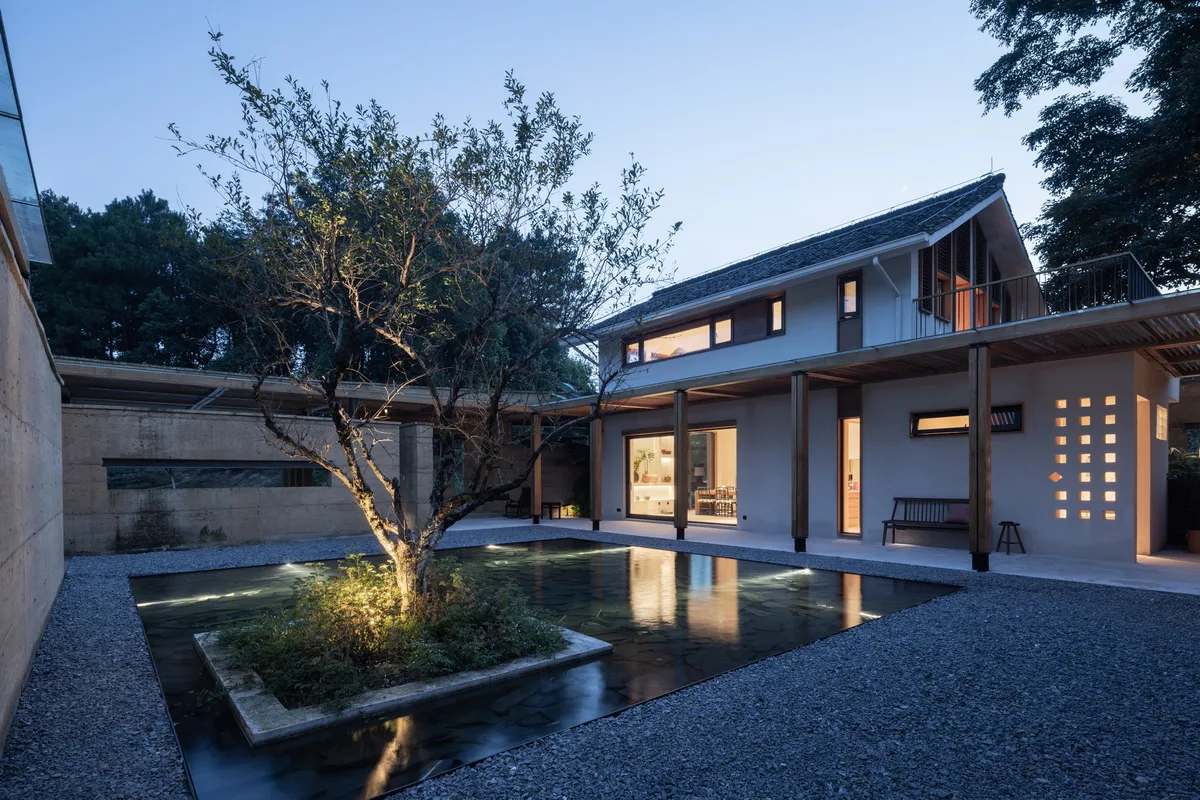
△ Water landscape courtyard with trees growing freely in the pool
At the end of the corridor, turning past the living area, a four-sided glass activity room sits to the right, while two buildings flank a stone-paved path leading to the second courtyard on the left. Banana trees planted along one side create a green environment that narrows the scale of the residential road, enhancing the experience of walking through it and strengthening the spatial transition from reception to release.
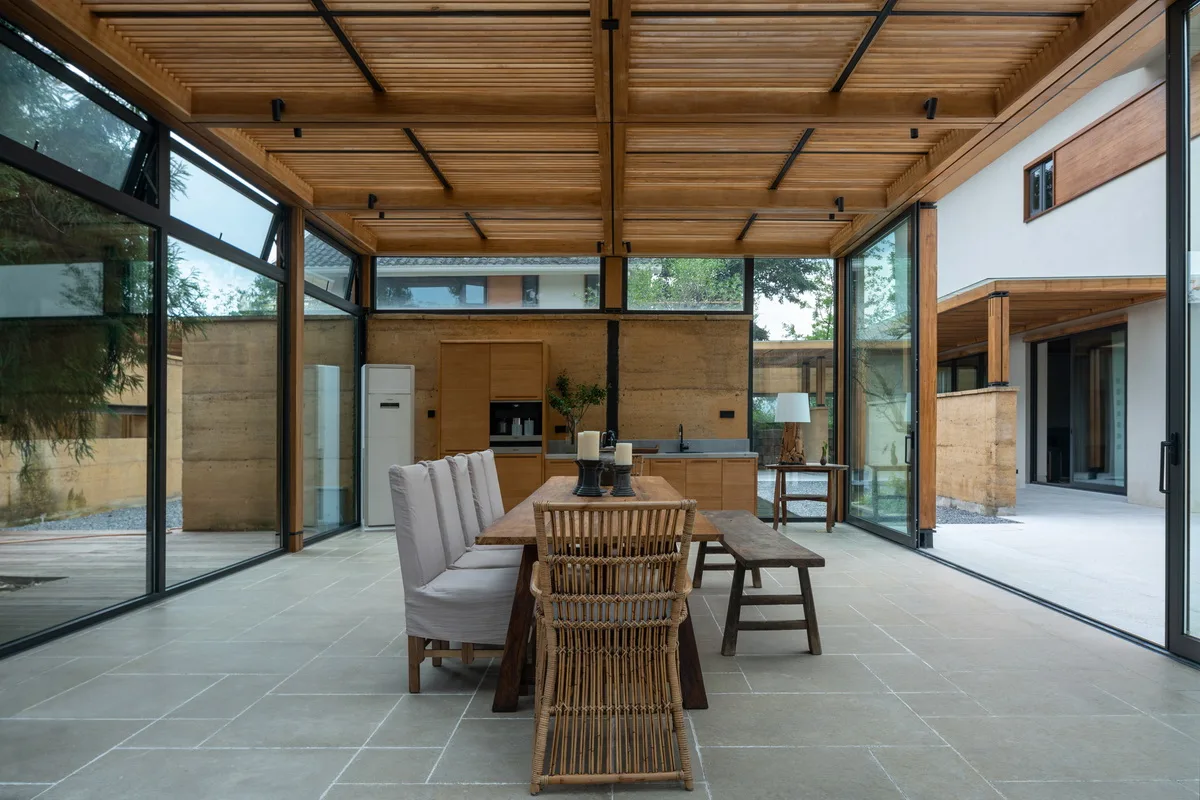
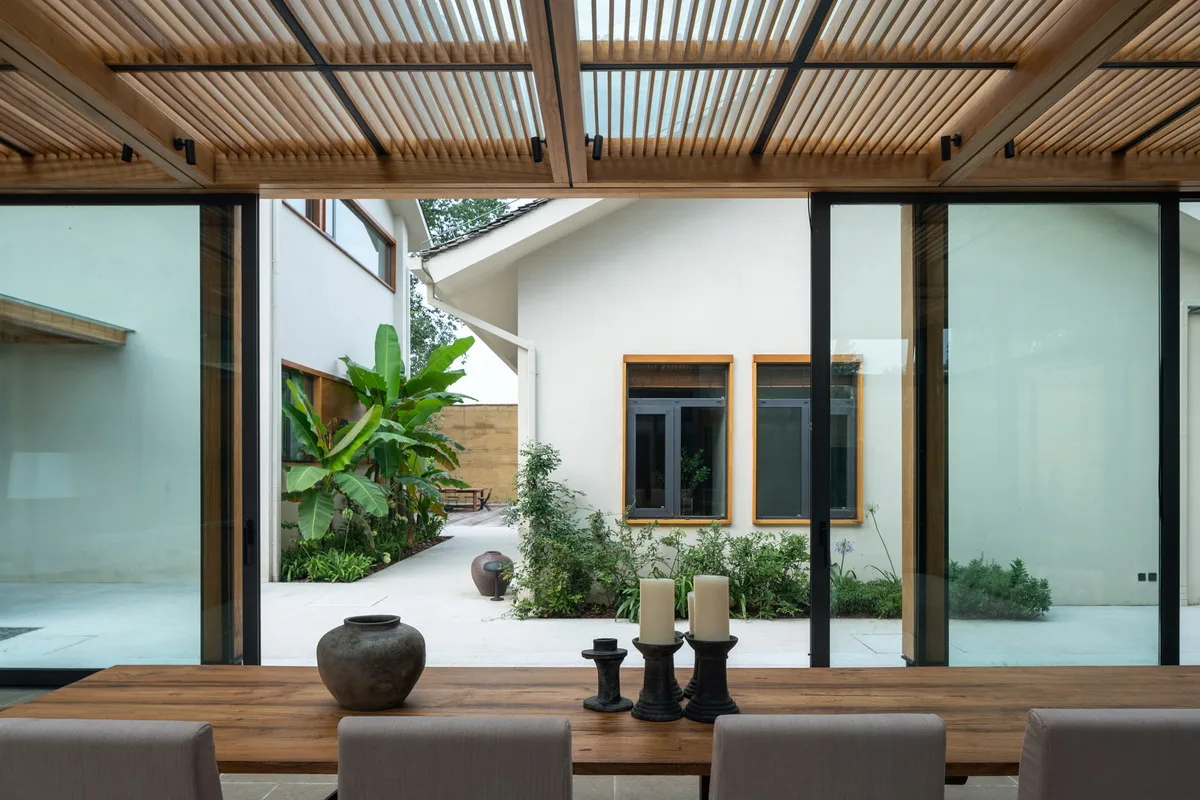
△ Glass-enclosed four-sided activity room
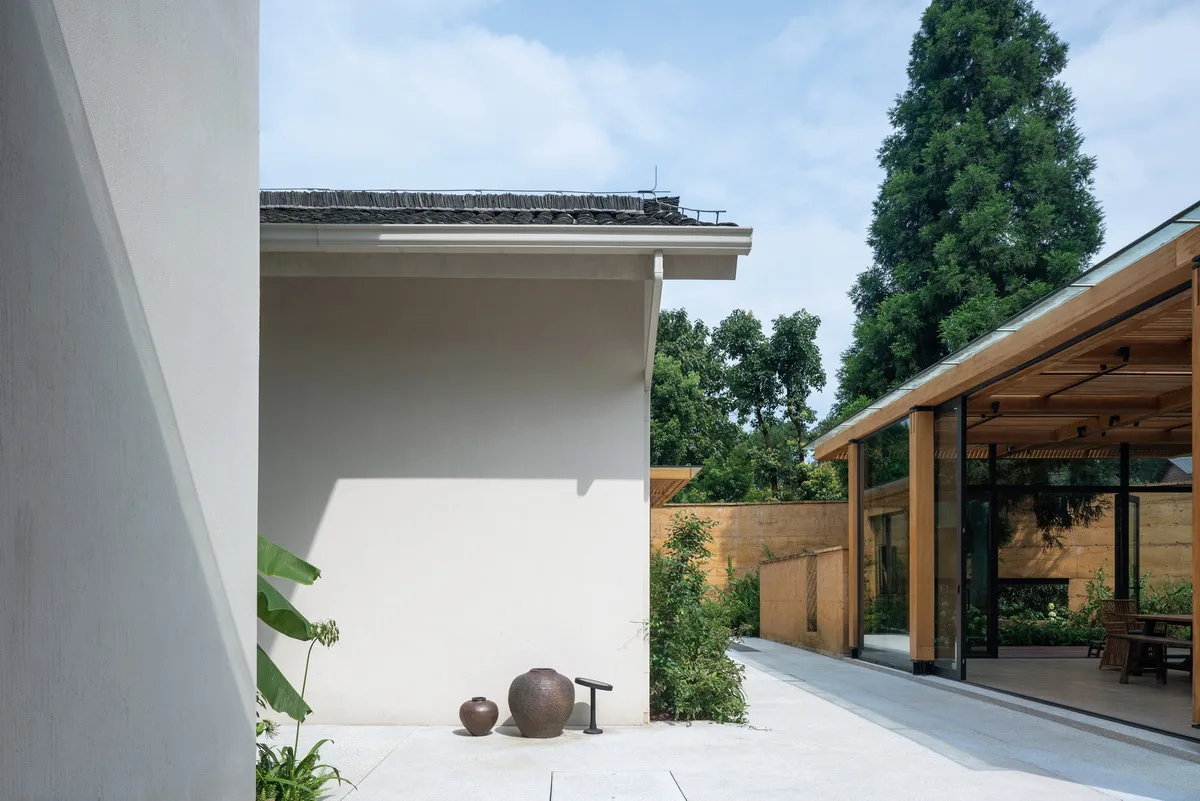
△ Corridor end
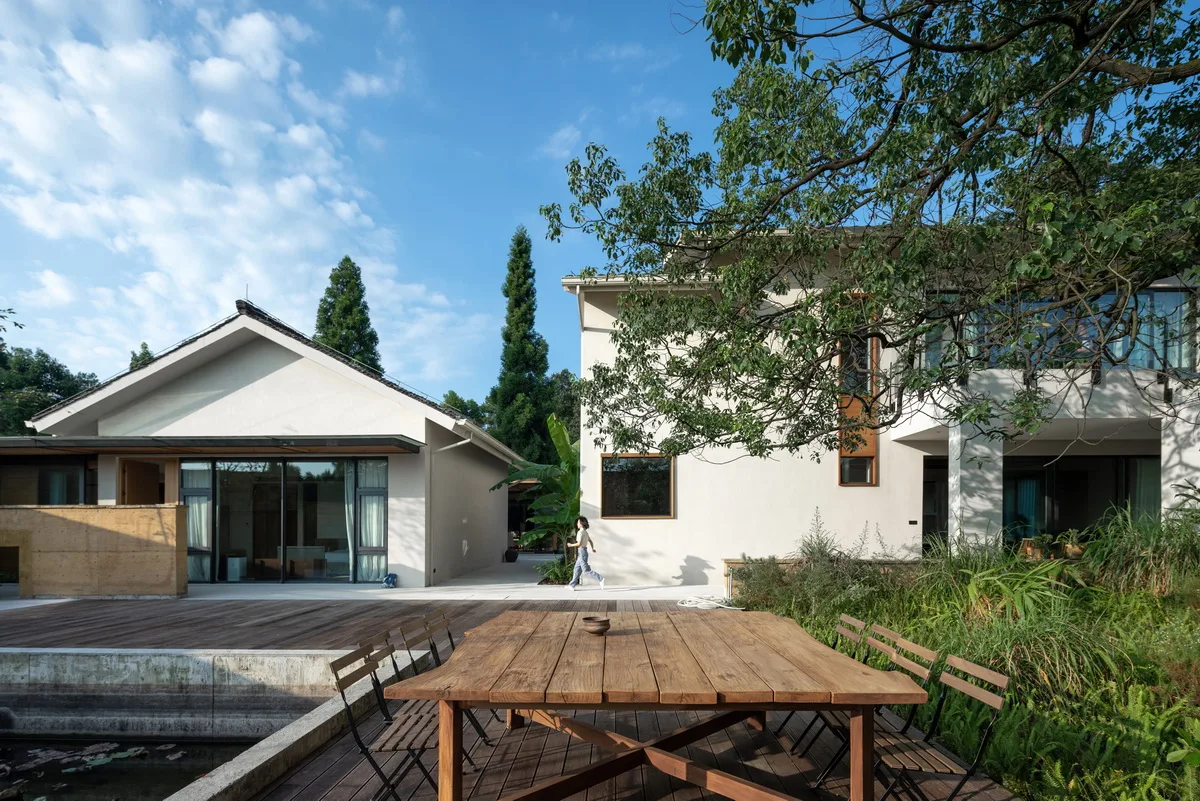
△ Residential path leading to the backyard
The century-old camphor tree in the backyard serves as the heart of the entire space’s narrative. Its expansive shade shelters gatherings of friends, accompanied by the sounds of frogs and insects. Adjacent to the tree, a pond breaks through the wall and extends outward, with water lilies poised to connect with the distant sea of green fields.
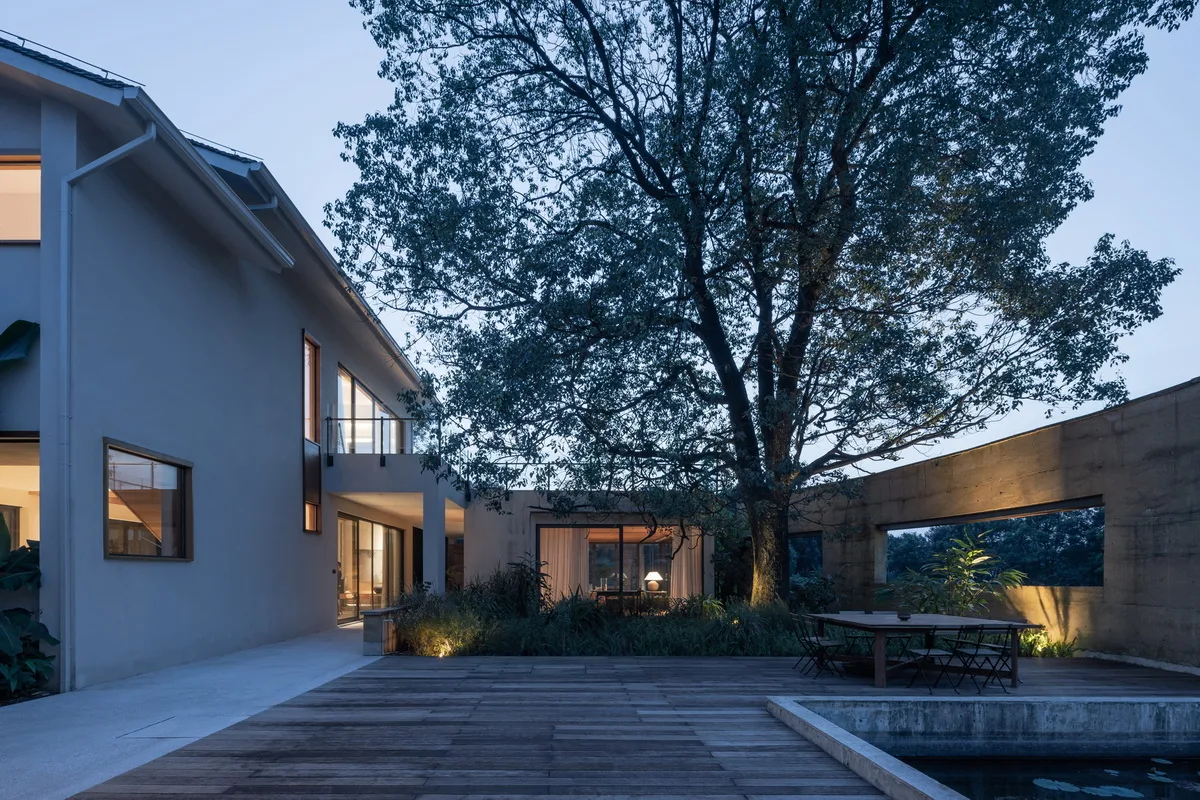
The backyard and century-old camphor tree offer a shaded gathering spot for tea breaks.
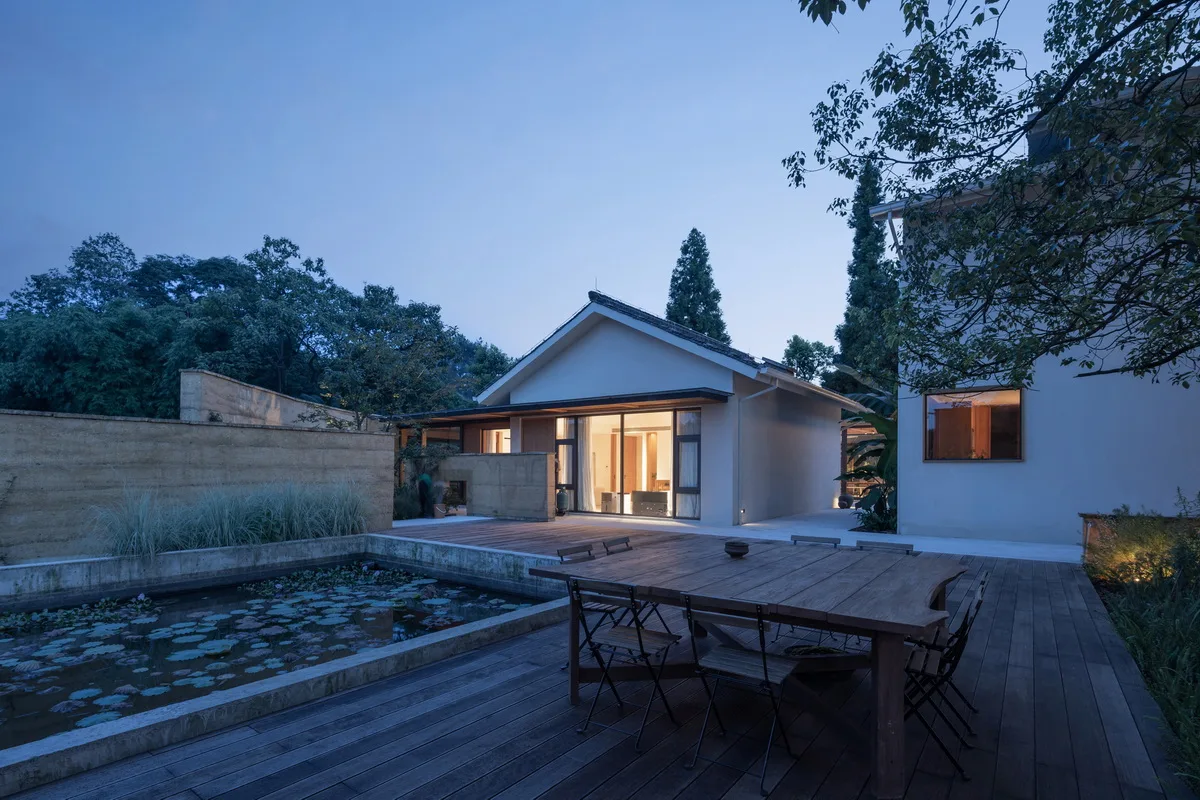
△ Architectural night view
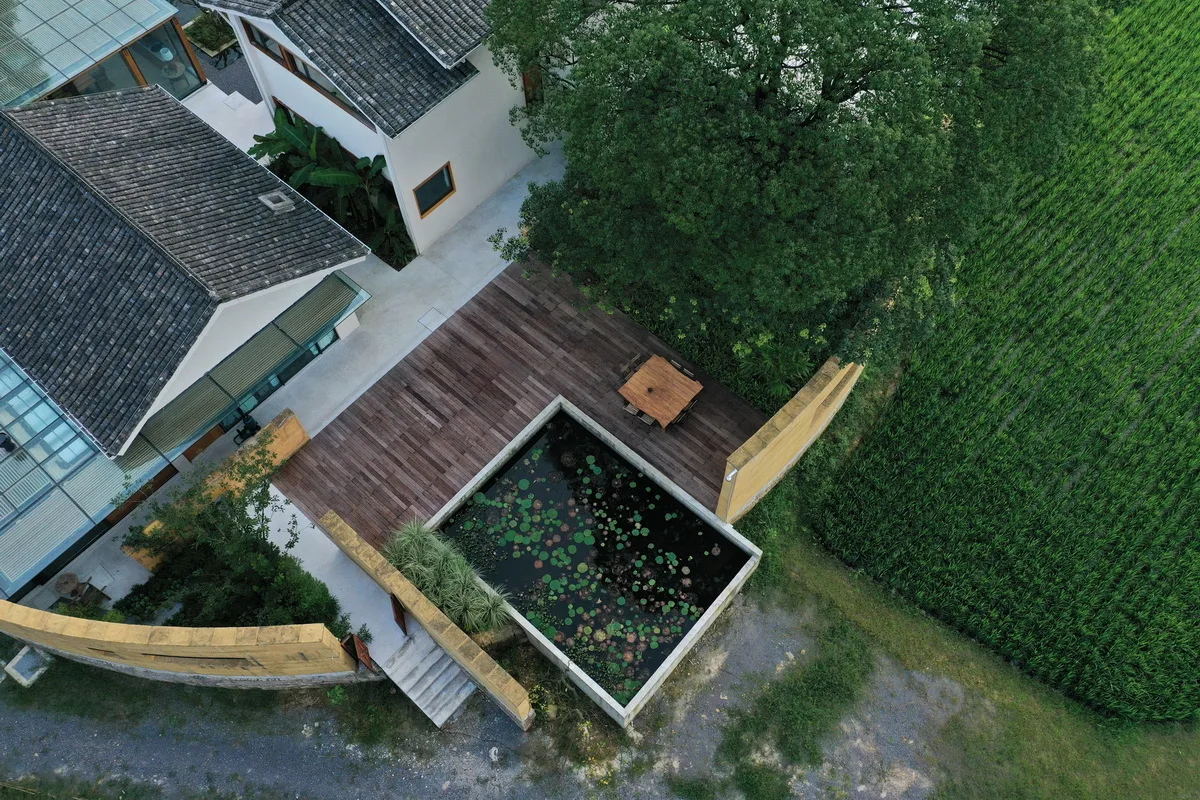
The pond extends beyond the wall, reaching outward into the landscape.
A corner of the study breaks through the earthen wall, extending over the rice fields and hanging above the lush green grass. This design embraces the concept of “emptiness,” with no shelter or frame. Structural columns are concealed on the sides, and when the French window is closed, only the upper and lower edges frame the view, creating a pastoral mountain painting: “Water fills the fields, rice leaves are even, sunlight filters through trees, and smoke lingers low.”
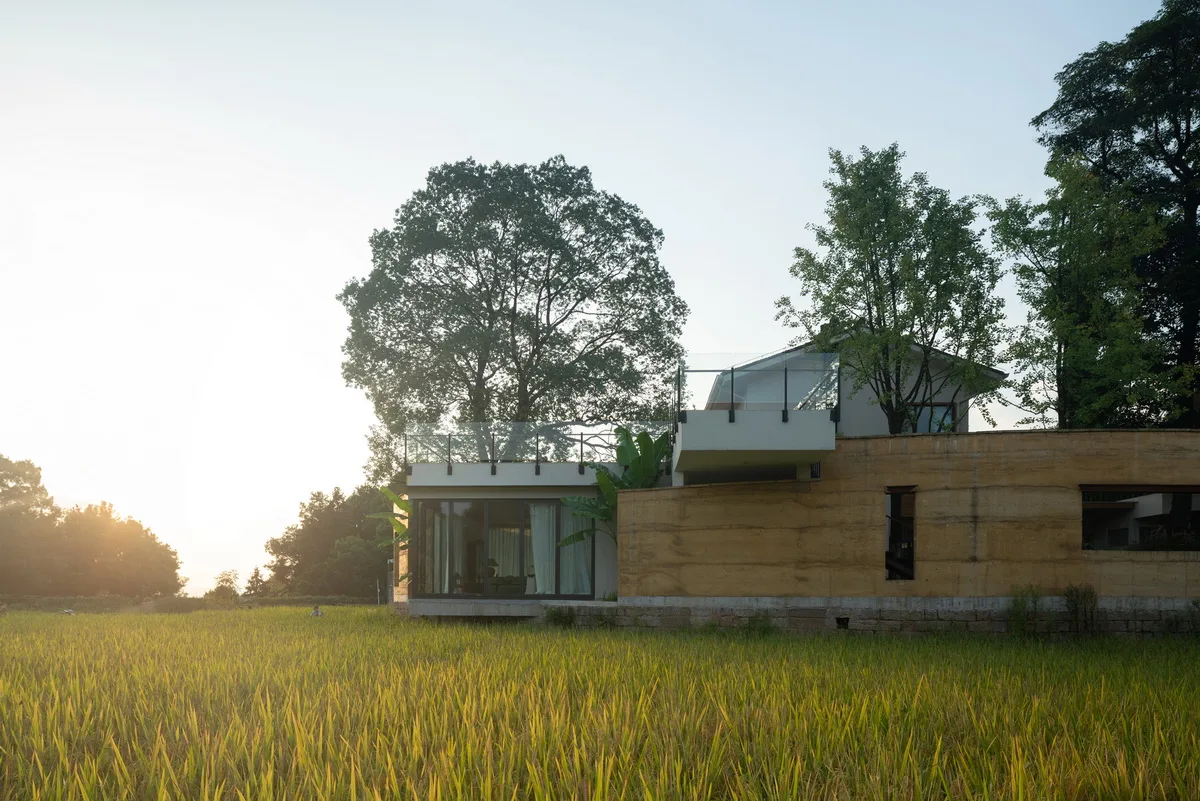
The study corner extends into the rice field, suspended above the vibrant greenery.
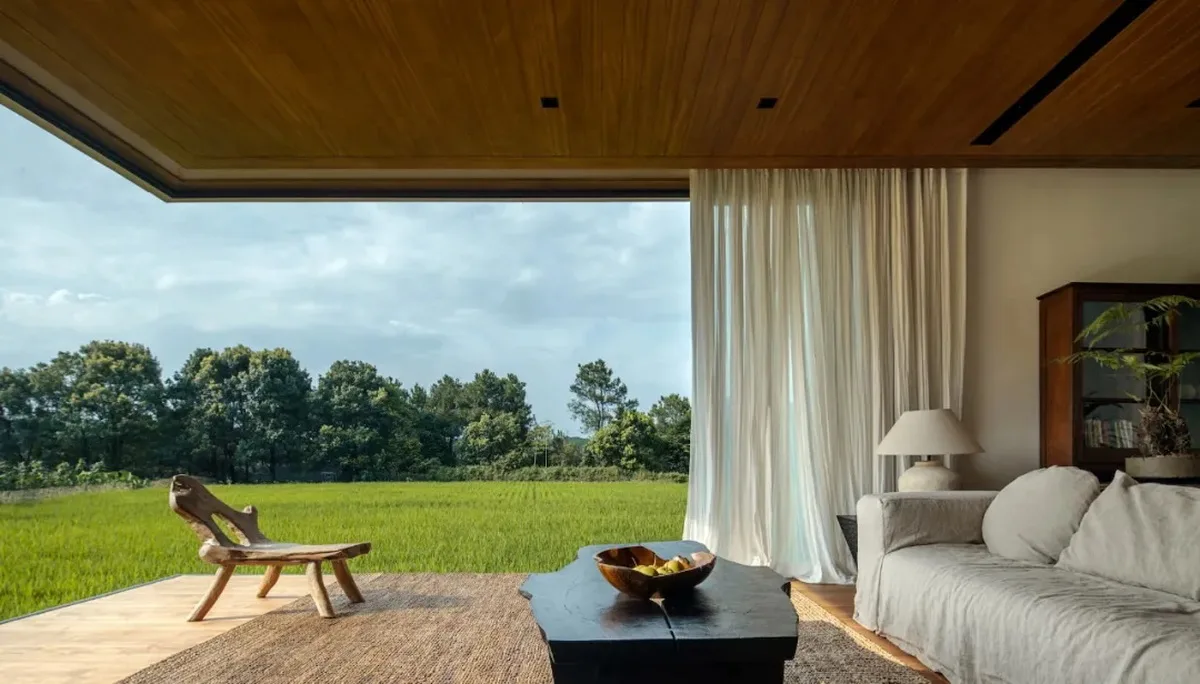
The unobstructed corner frames a serene pastoral mountain scene © Folk photography.
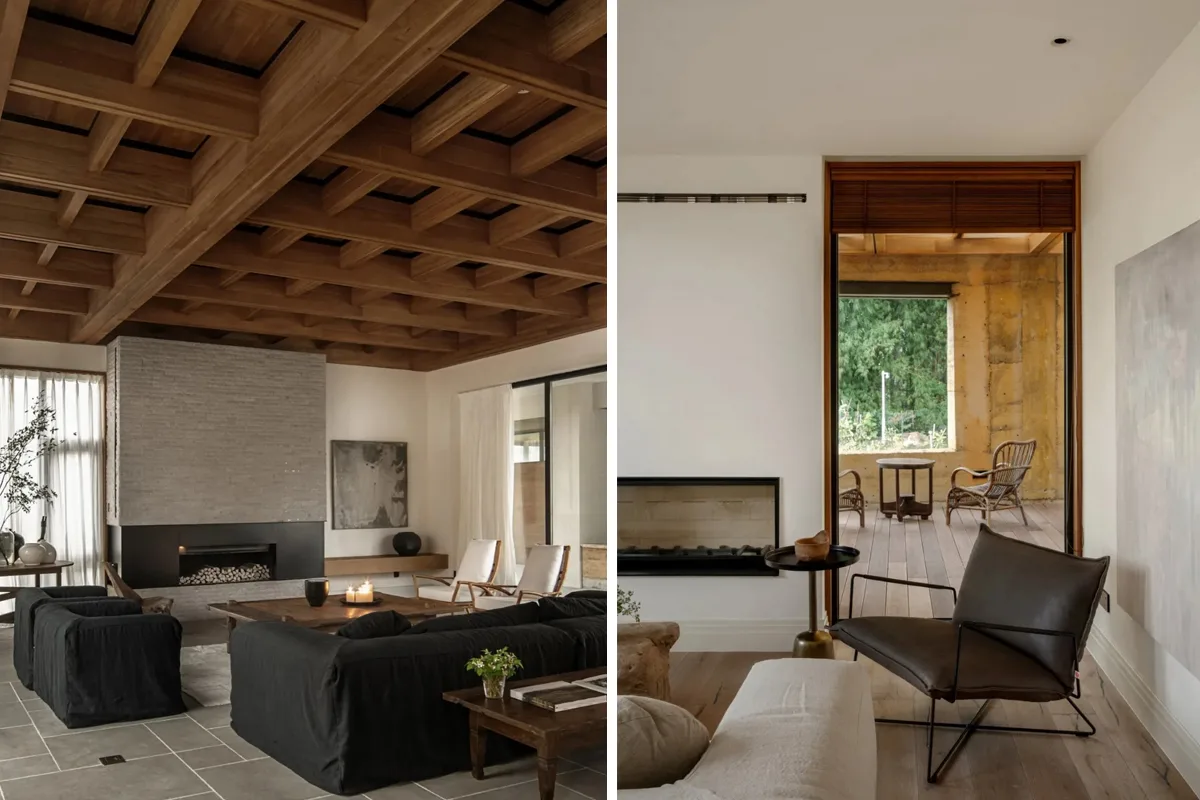
△ Partial interior design of buildings © Folk photography
The rooftop terrace extends outward as a space for human activity, offering an unobstructed connection with nature. Accessible from the side courtyard and connected to the second-floor bedroom, it provides an excellent spot for rest and viewing, surrounded by two large trees. The cool breeze brushes the face, and greenery stretches in every direction.
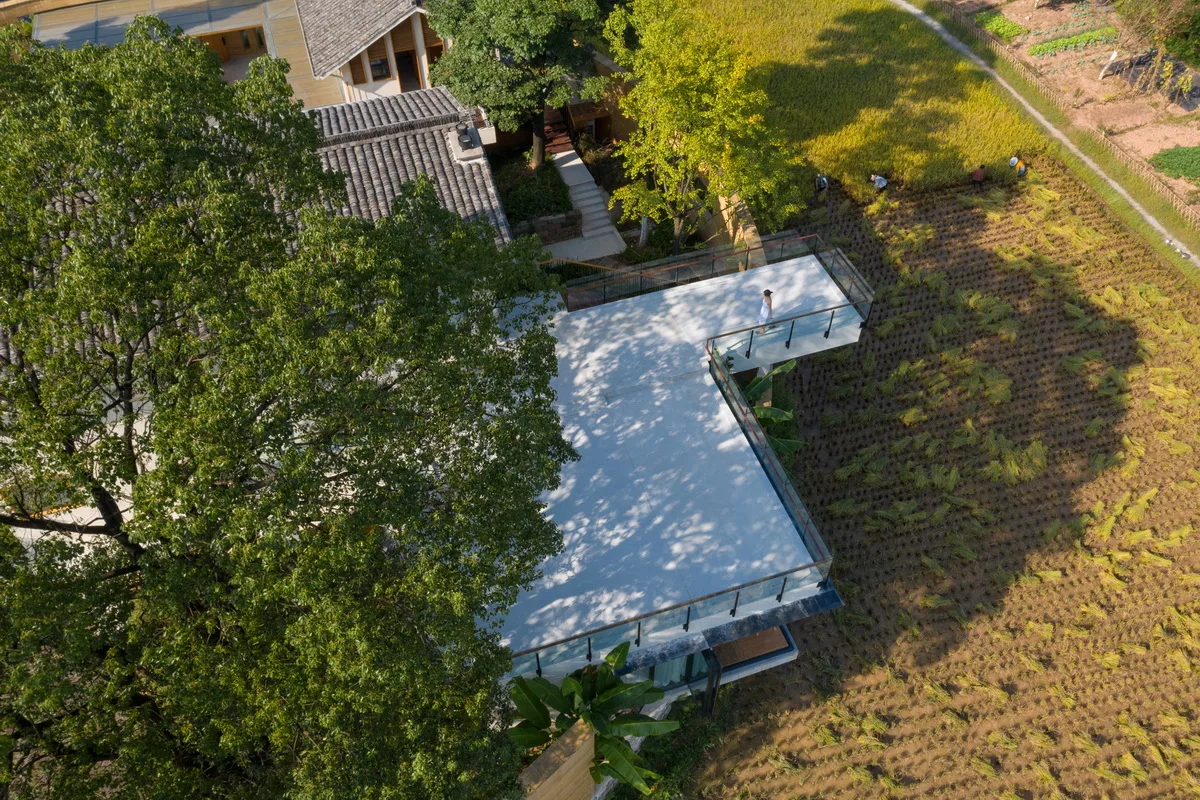
△ Roof terrace
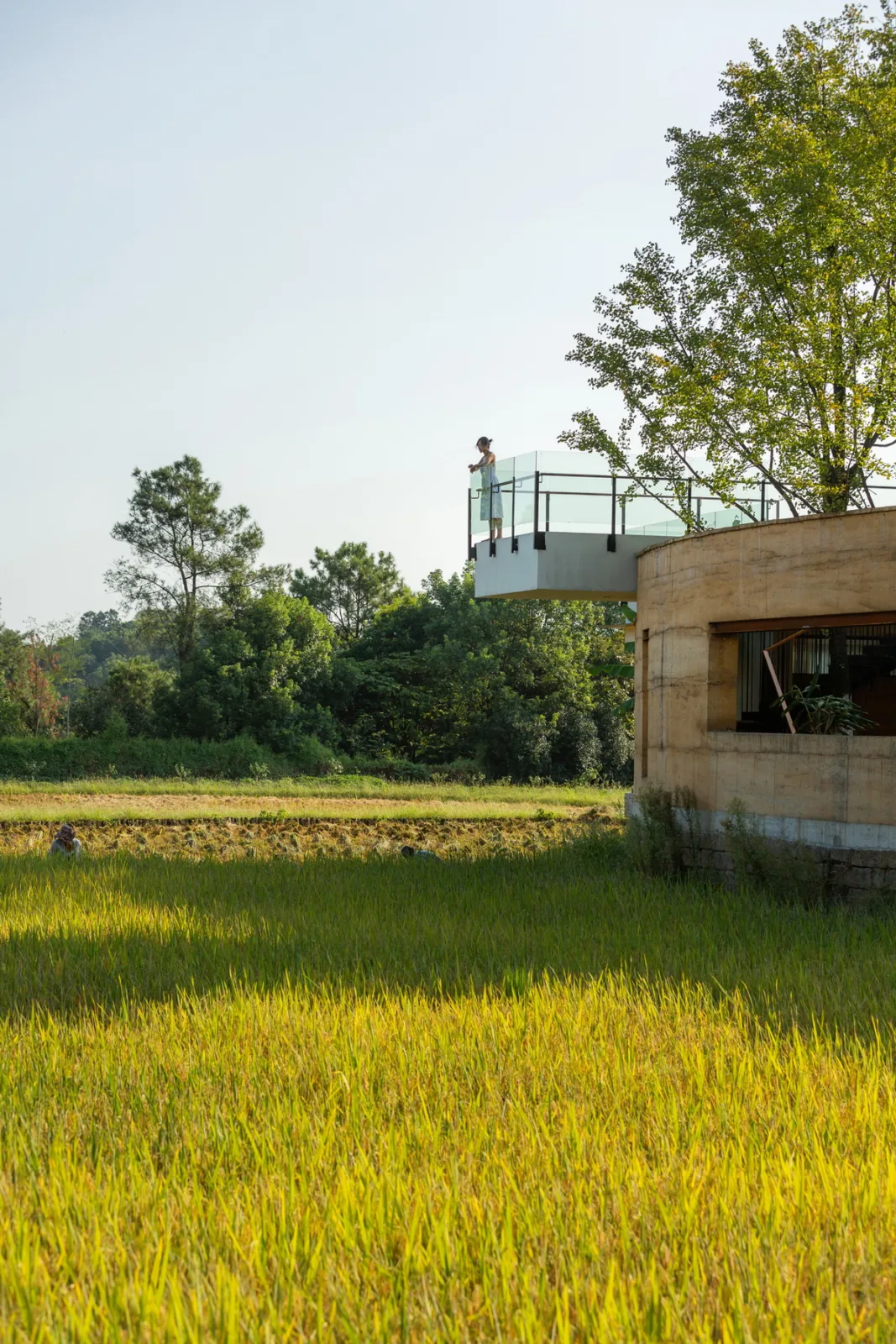
△ The terrace offers a superb vantage point
Construction
Rammed earth walls are a traditional building method common in southwestern residential architecture, known for their simple appearance and strong adaptability to the climate. However, traditional craftsmanship often results in poor structural strength and inadequate resistance to rain and moisture. This project employs modern rammed earth technology to achieve the clean, simple form of the surrounding earth walls.
During construction, material ratios were repeatedly tested and adjusted to reach the desired color and texture. Creating large openings in rammed earth walls posed challenges, but innovative construction techniques ensured consistent, high-quality results.
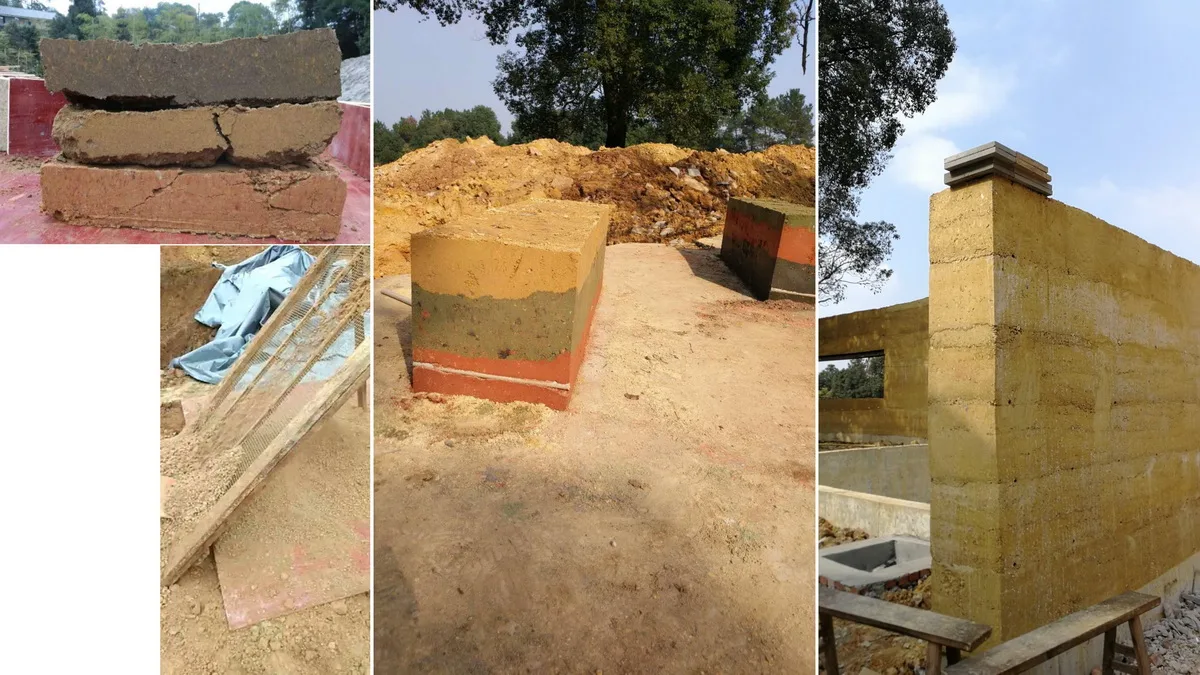
Rammed earth material comparison tests © Yueji Architecture
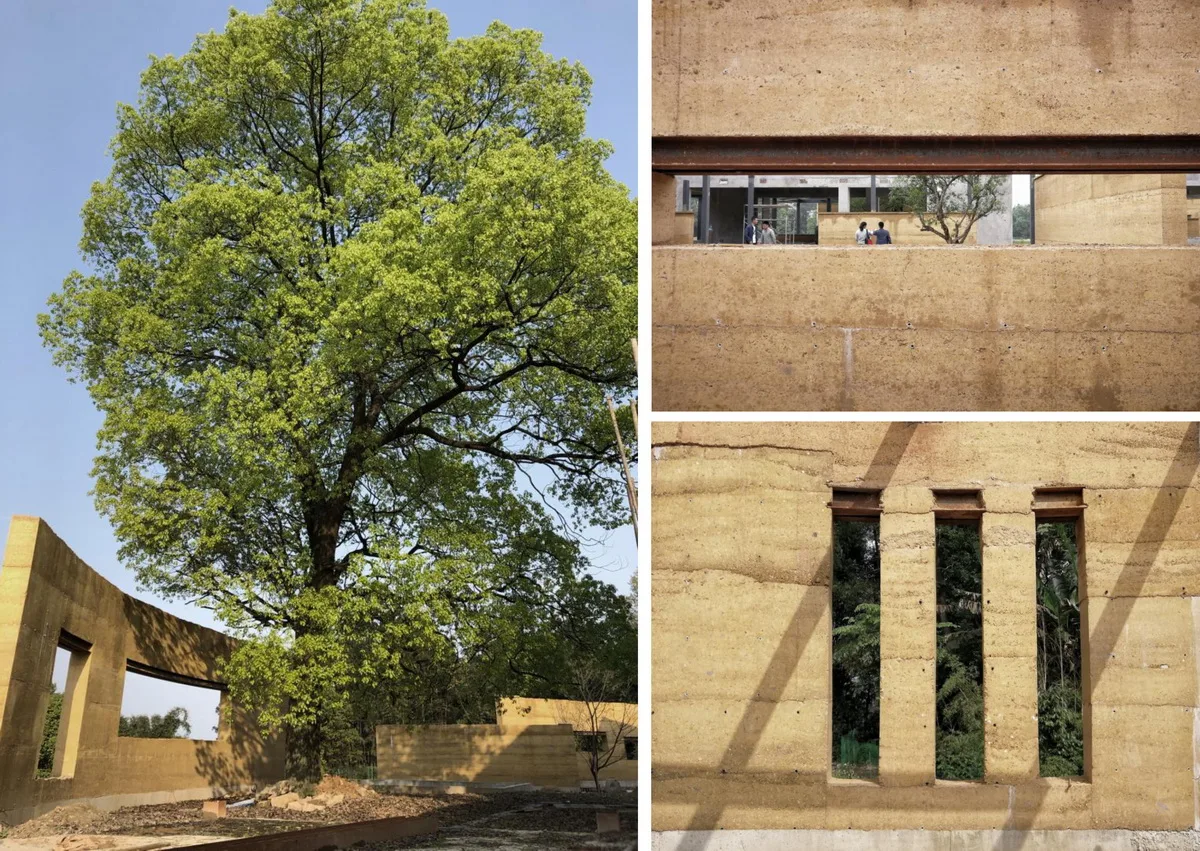
Construction techniques for rammed earth wall openings © Yueji Architecture
Exploration
The restrained bird longs for the ancient forest, while the pond fish remembers the old depths. Clearing the southern wilderness, guarding humility, and returning to the garden, this project reflects a desire to escape the city’s high-rises and noise. It evokes a moment when one can pause and reconnect with the dream of a secluded countryside life.
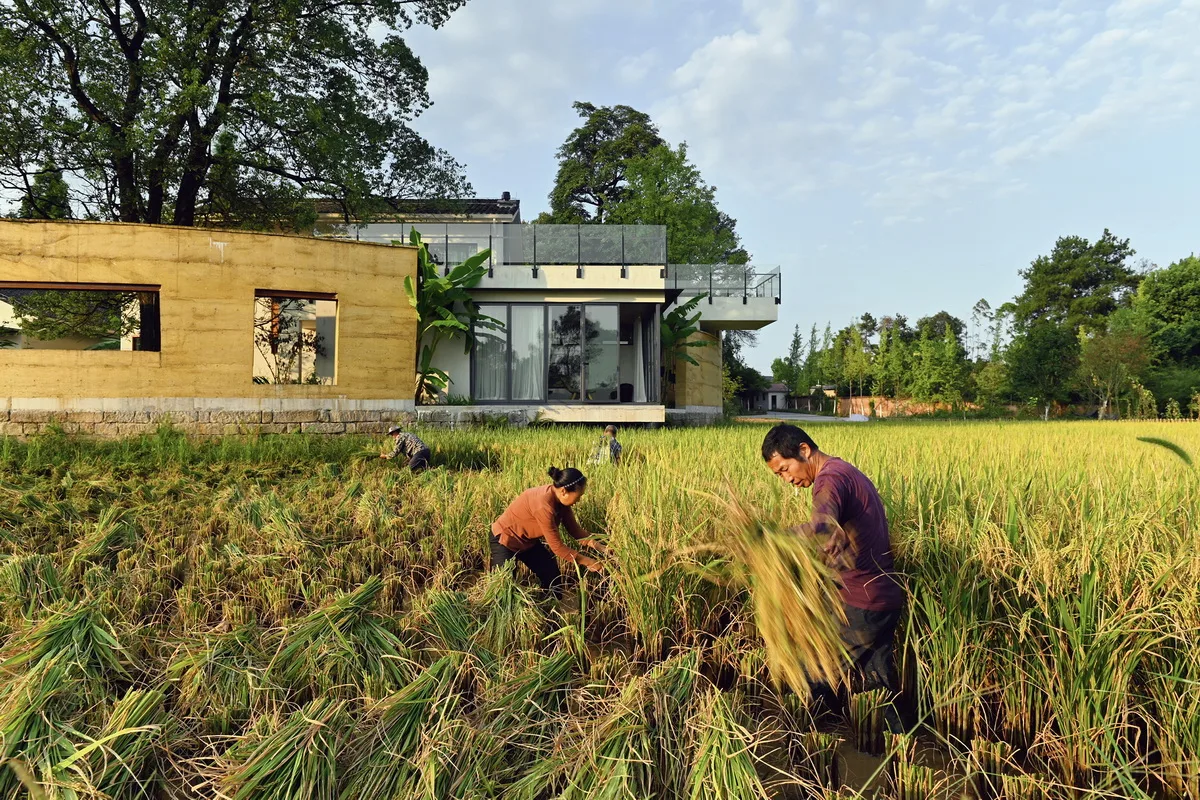
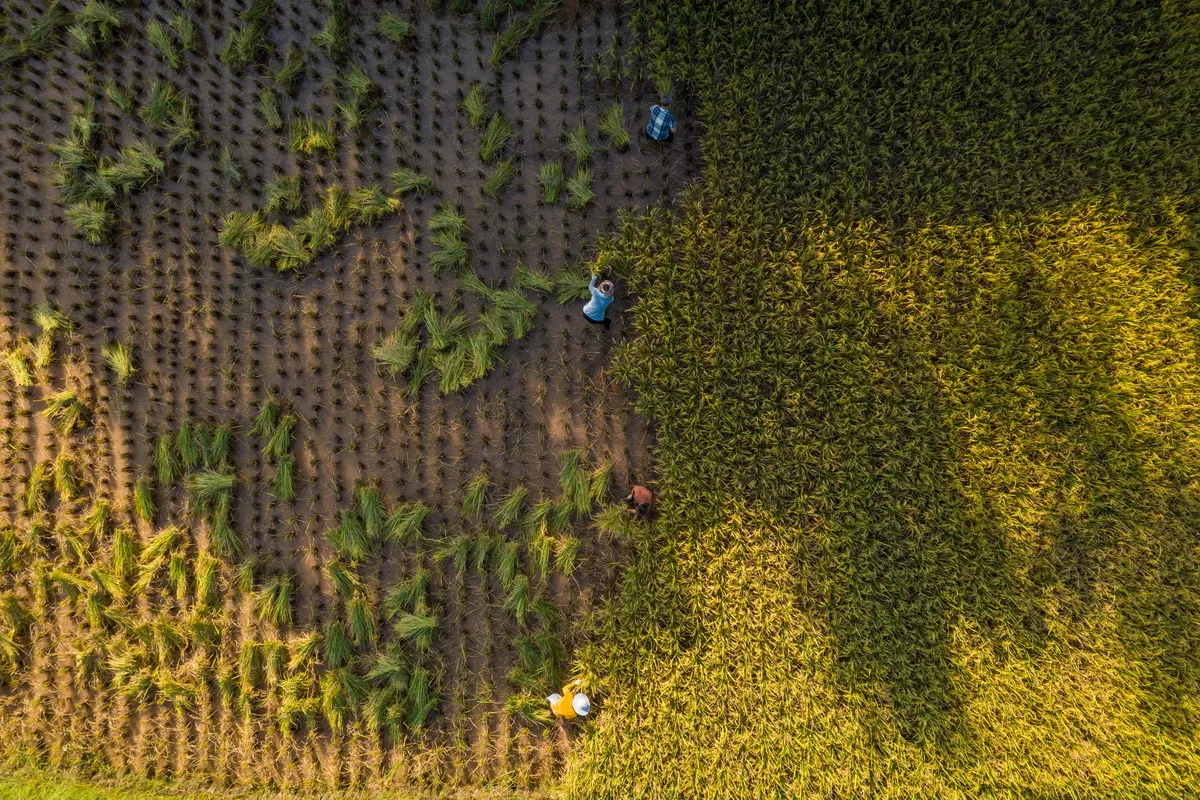
Outside the courtyard walls, the autumn harvest ripens in the rice fields © Tian Qi
The Chongqing Jiaoyuan project explores rural architecture that embraces a return to the countryside. It respects the randomness of the mountainous rural terrain and original landform vegetation, shaping forms that humbly integrate into the site and nature with an outer circle and inner square arrangement. The architecture and circular earth walls intertwine to create rich courtyard spaces. Rammed earth, white walls, and blue tiles compose the main palette, allowing the buildings to blend quietly into the wild.
Beyond the courtyard walls, silver cedar, rice, fruits, vegetables, and Sichuan peppercorns thrive, hoping the pepper garden becomes a spiritual home filled with warmth and the scent of earth.
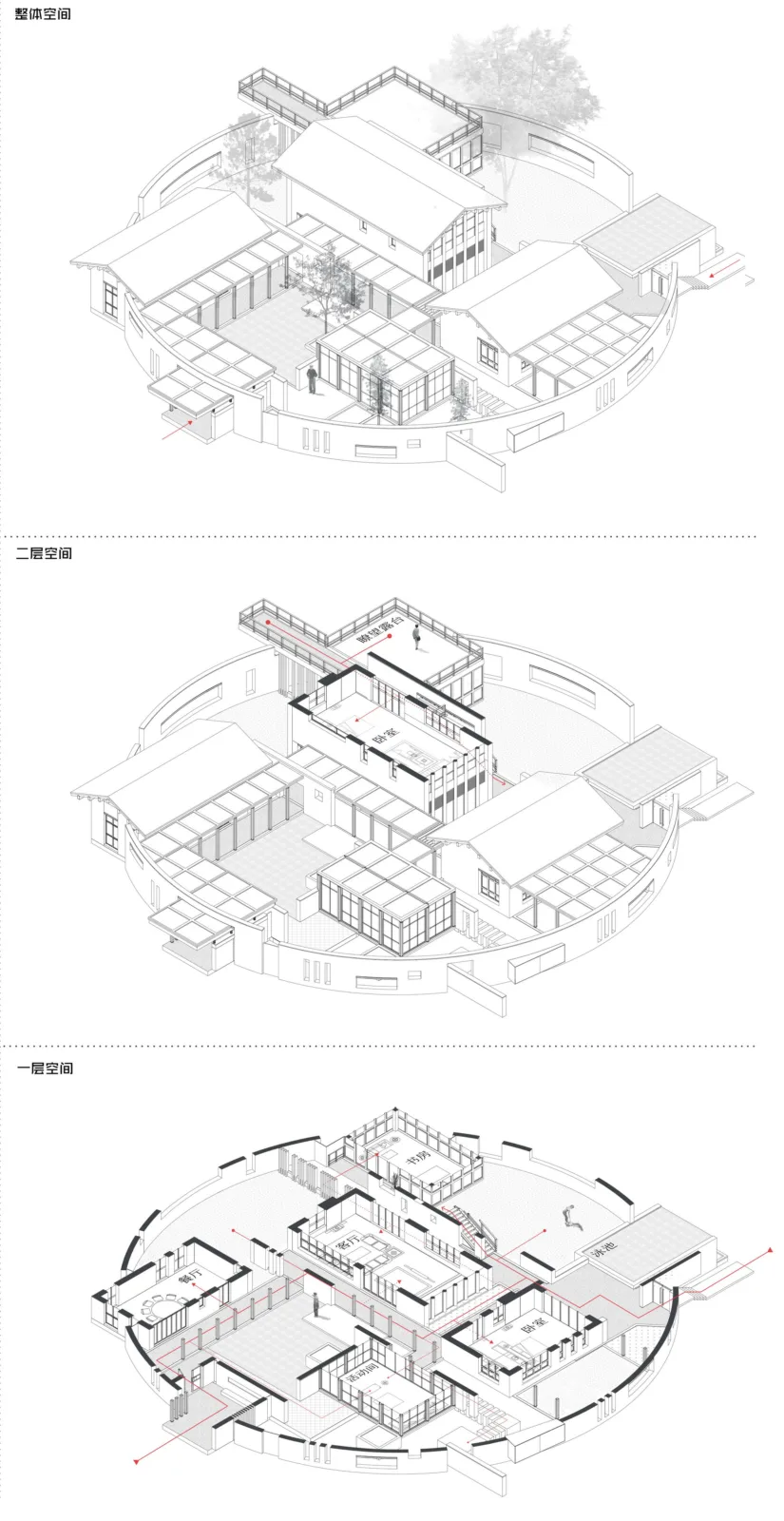
△ Architectural spatial axonometric drawing © Yueji Architecture
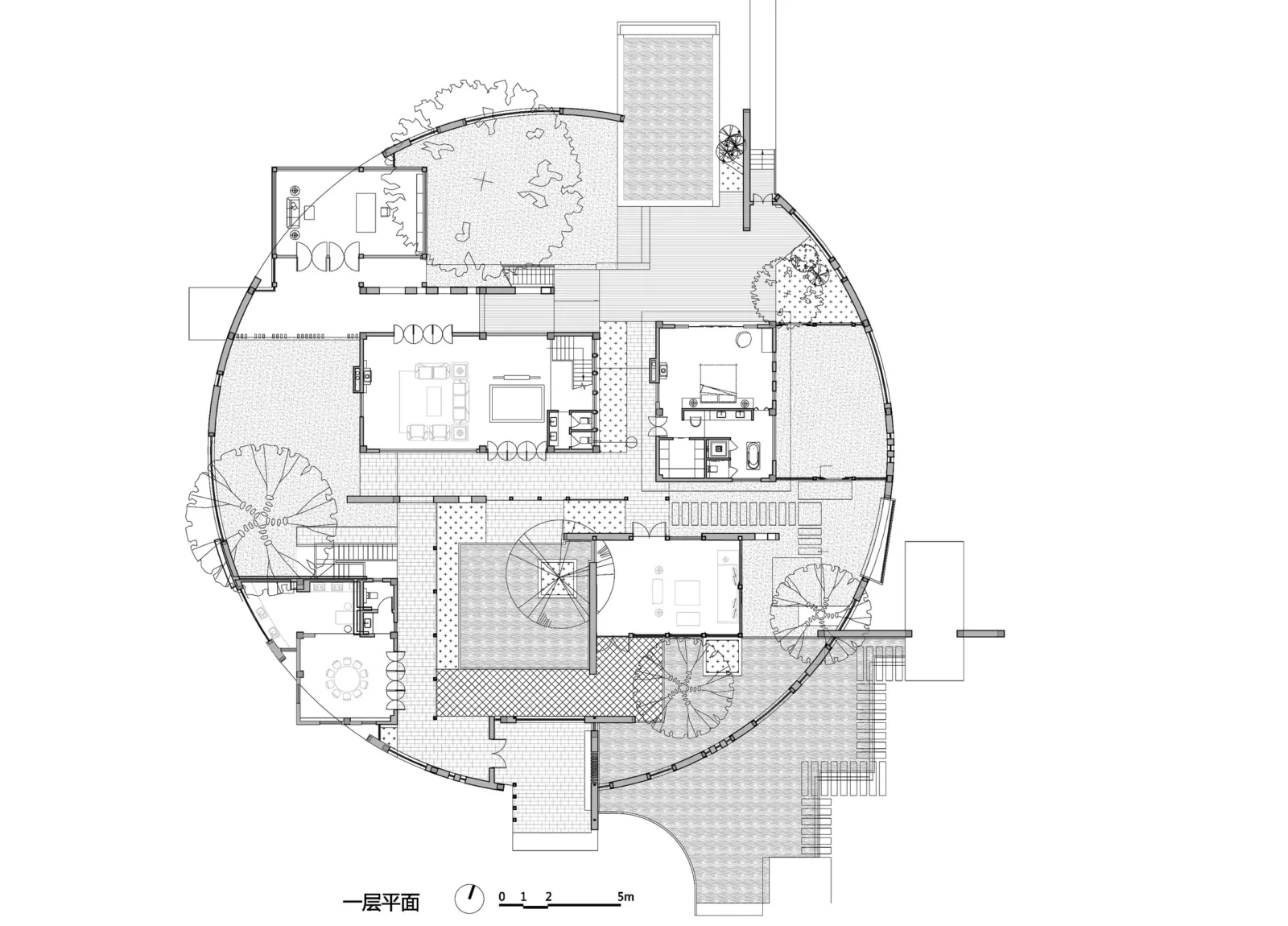
△ First floor plan © Yueji Architecture
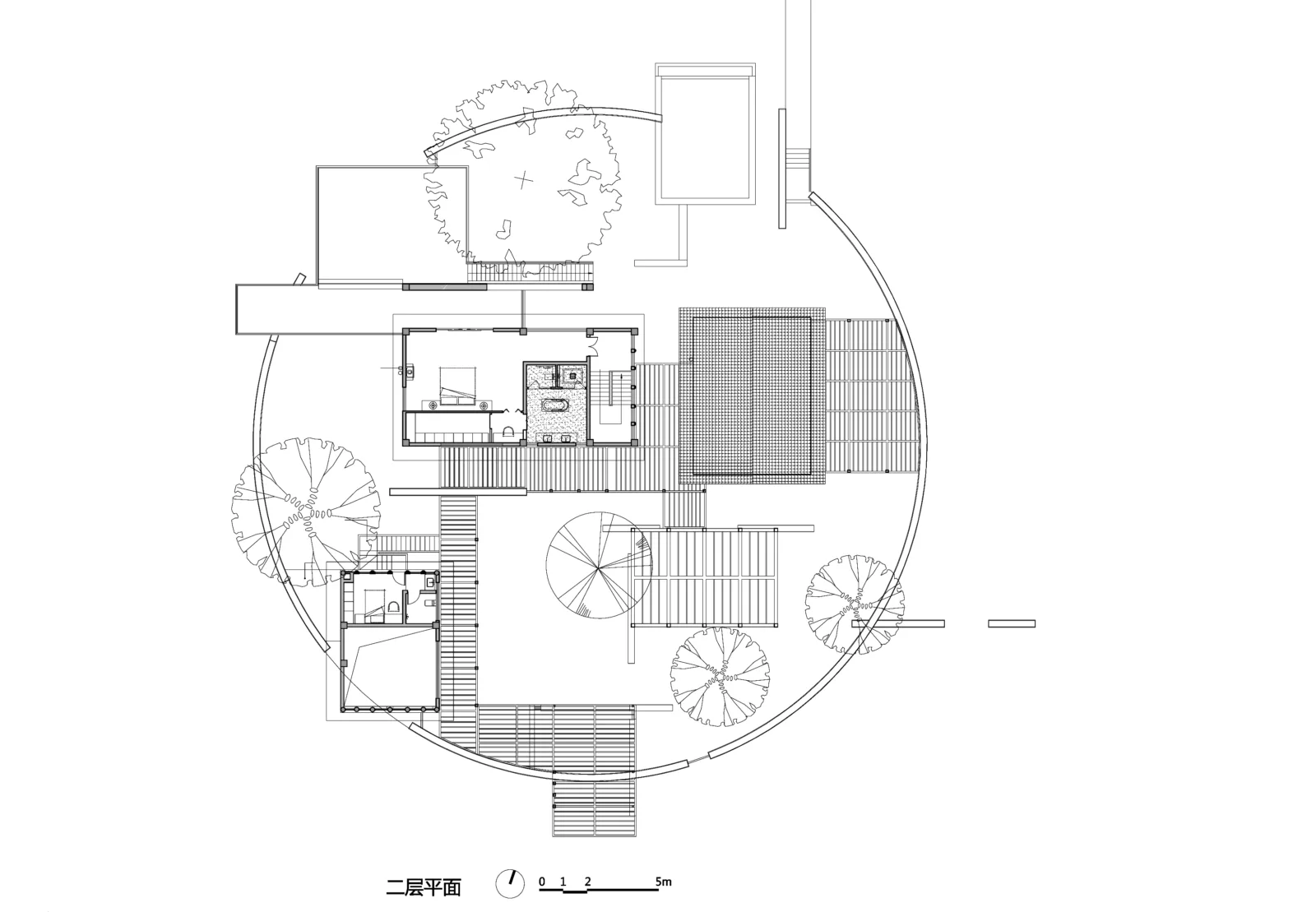
△ Second floor plan © Yueji Architecture
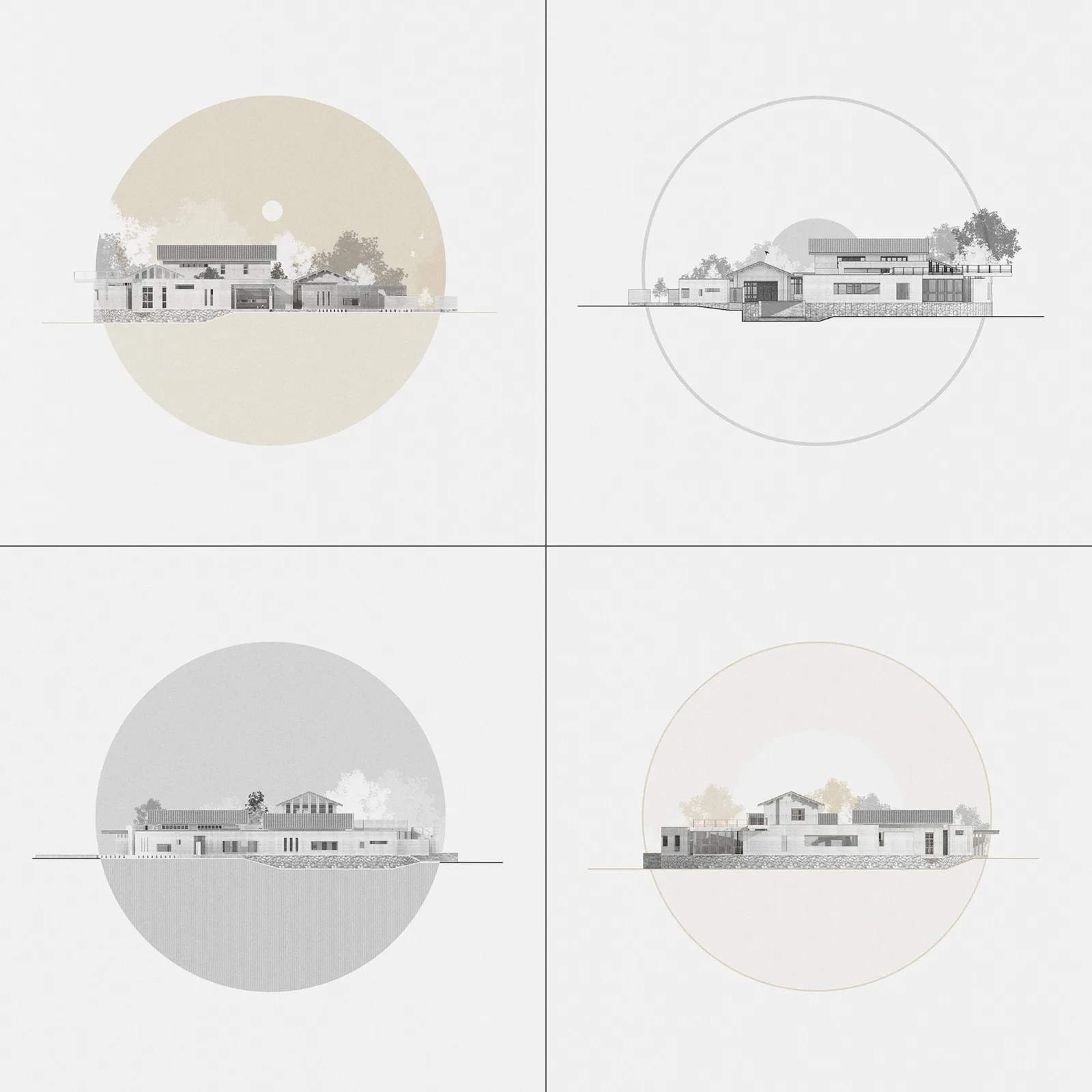
△ Elevation drawing © Yueji Architecture
Project Information
Project Name: Chongqing Jiaoyuan
Architectural Design: Chongqing Yueji Architectural Design Firm
Contact email: __AI_S_SC0__
Main Creative Designers: Li Jun, He Biao, Tian Qi
Building Area: 750 square meters
Interior Design: Chongqing Shangyiyang Decoration Design Co., Ltd
Project Duration: August 2017 to April 2020
Project Location: Banan, Chongqing
Photography: Prism Architecture Space Photography












Must log in before commenting!
Sign Up