
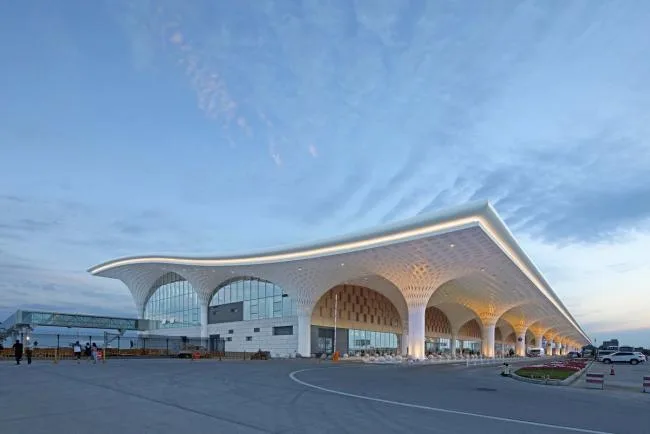
Northwest corner night scene photo by Zhang Guangyuan
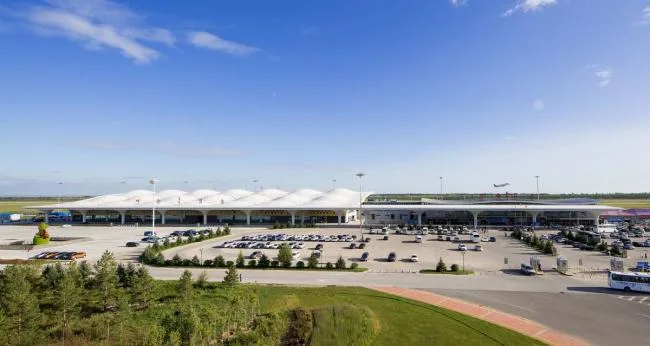
▲ Aerial view of the landside by Feng Liang
Hulunbuir Hailar Airport, located in Hailar District, Hulunbuir City, Inner Mongolia, is nationally recognized as the gateway to the world’s most beautiful grasslands and one of China’s top ten ice and snow cities. The original Terminal 1 covers 7,600 square meters. Due to the growing popularity of grassland tourism and the rising passenger traffic, an expansion of the existing terminal became necessary.
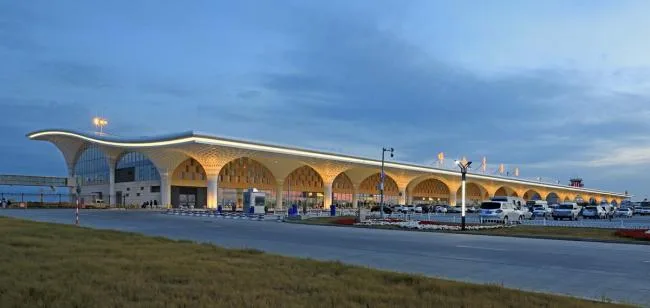
▲ Landside night scene photo by Zhang Guangyuan
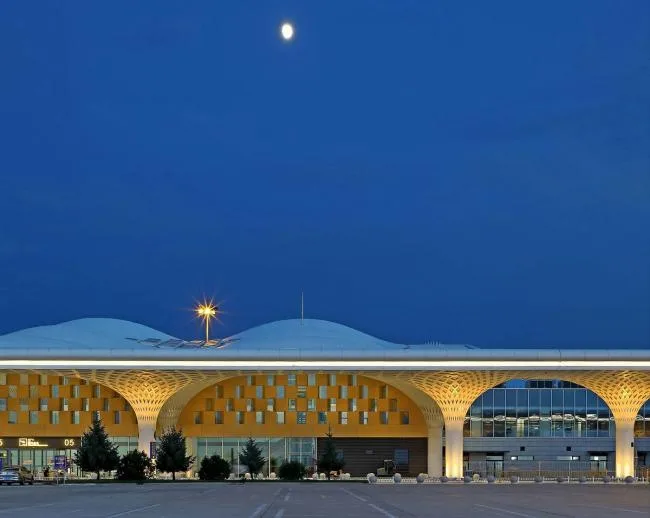
▲ Northward view of the landside at night by Zhang Guangyuan
At the start of the design process, the building’s exterior outline and circulation flow were established through careful evaluation. The main challenge was to create a gateway terminal that is both modern and expressive of strong local identity, within the constraints of the site and program.
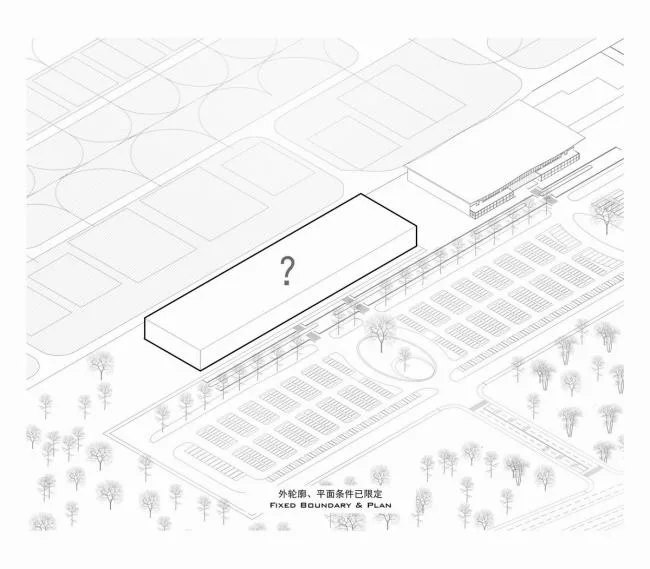
▲ Concept development sketches
Concept Development
The design features a distinctive structural form, with double V-shaped inclined frame columns on the second floor supporting the roof. This organic integration of columns, ceiling, and roof blurs the vertical and horizontal boundaries, creating a continuous spatial experience reminiscent of a traditional Mongolian yurt. The primary colors—gold and white—evoke the feeling of being immersed in a sunlit birch forest.
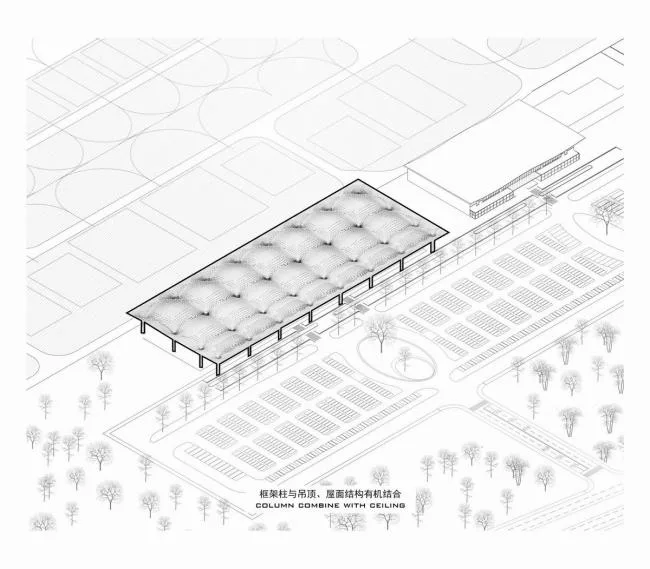
▲ Concept development sketches
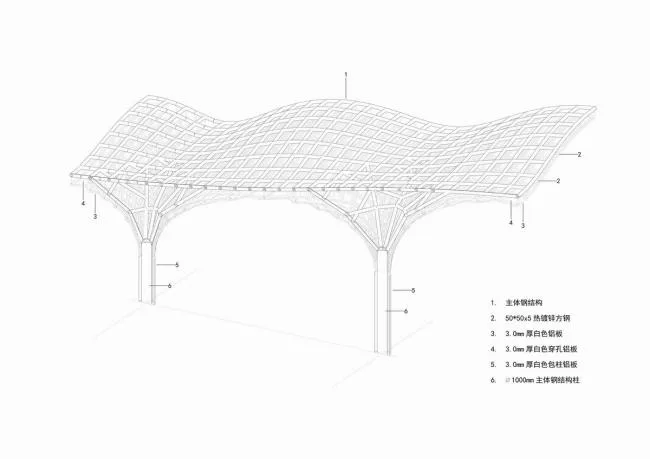
▲ Aluminum panel ceiling system
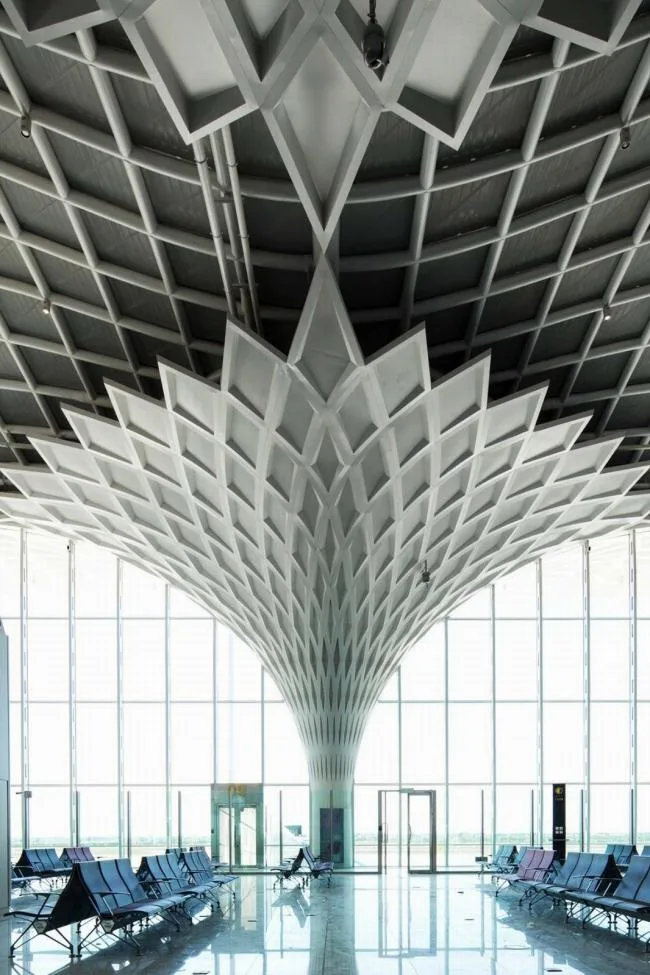
▲ Photo of the column, ceiling, and roof integration by Liu Ke
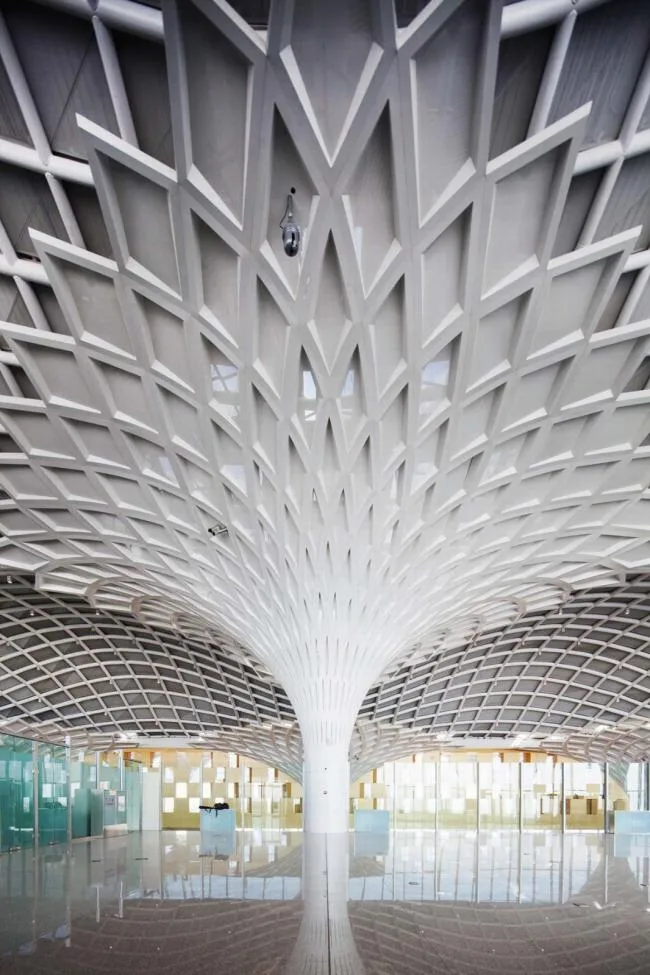
▲ Photo of the column, ceiling, and roof integration by Liu Ke
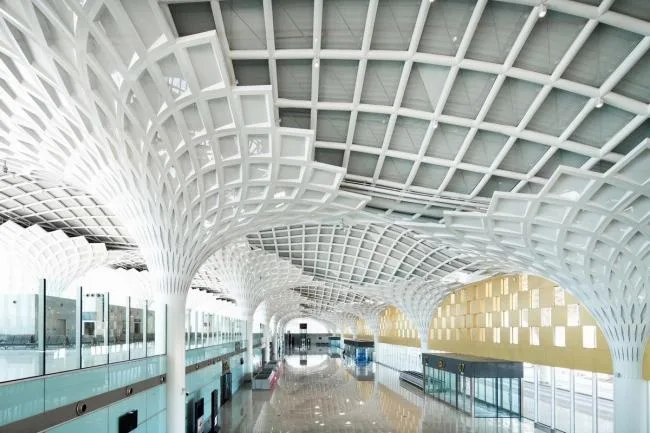
▲ Interior integrated design effect photo by Liu Ke
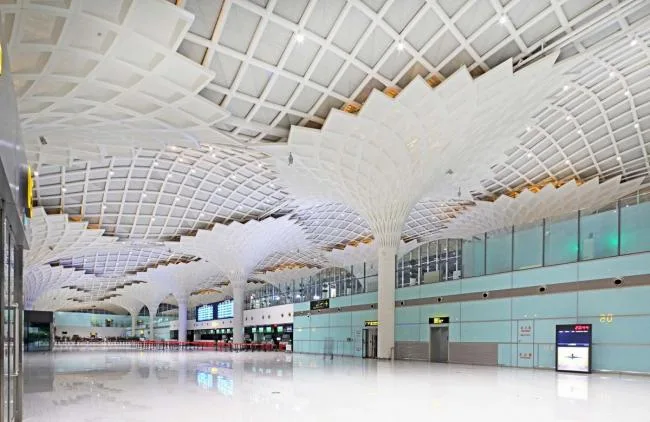
▲ Comprehensive reception hall on the first floor, photo by Zhang Guangyuan
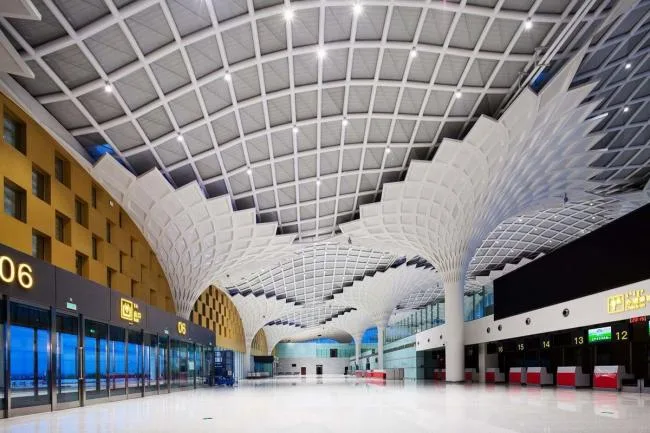
▲ Reception hall at night, photo by Yu Haiwei
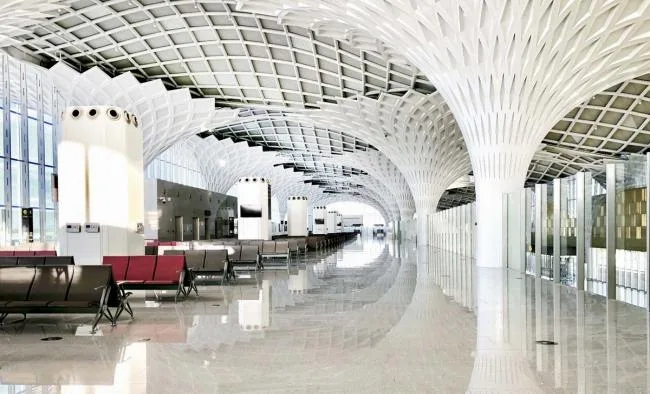
▲ Second floor waiting lounge, photo by Yu Haiwei
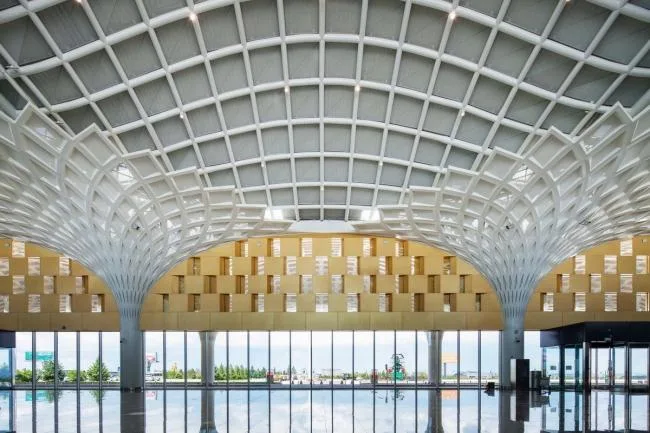
▲ Landside curtain wall photo by Liu Ke
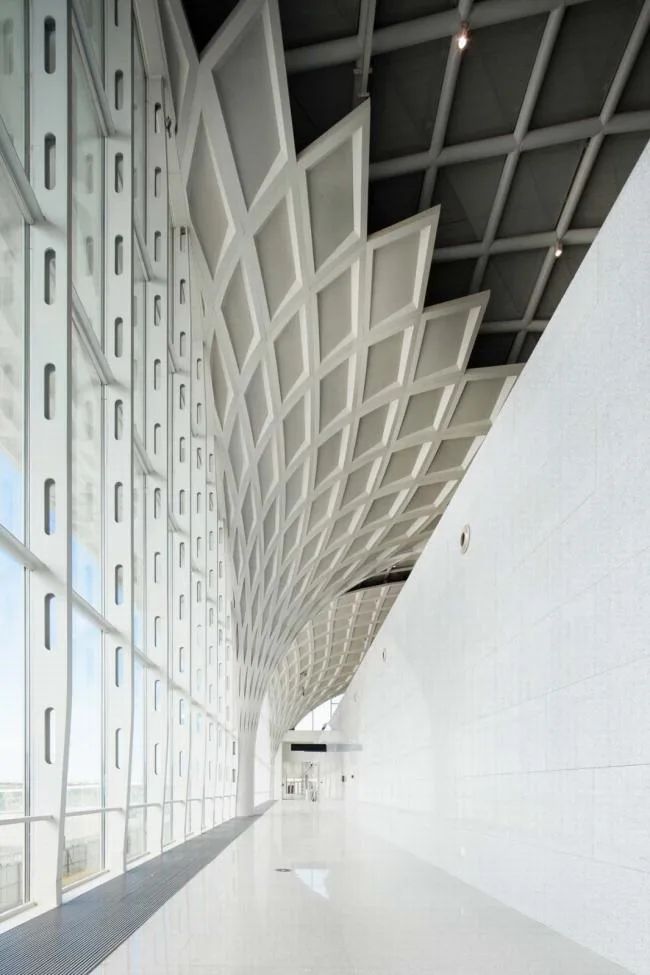
▲ Boarding corridor photo by Liu Ke
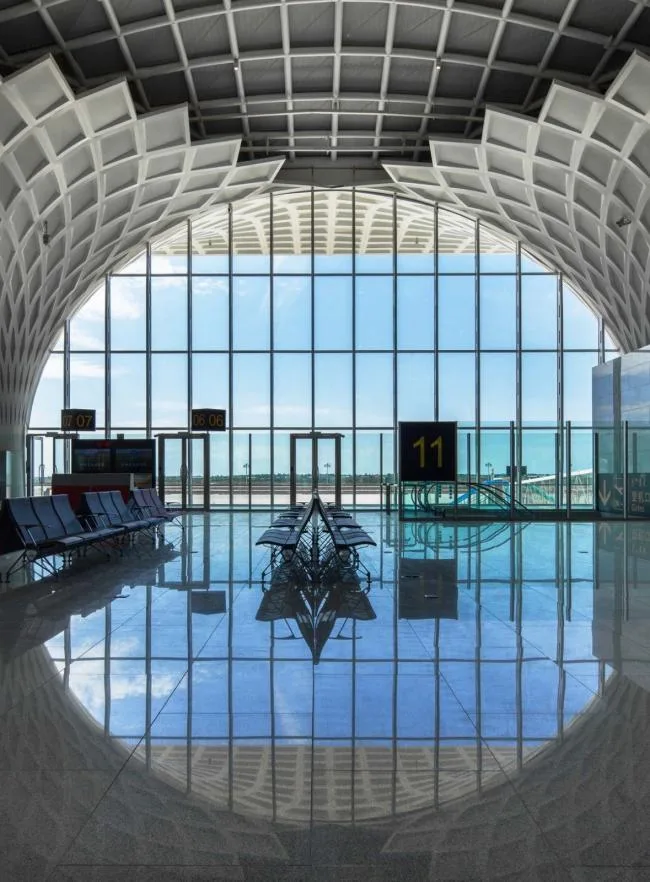
▲ South-facing airside waiting hall photo by Liu Ke
The building’s form features a higher elevation on the south side and lower on the north, creating a spacious eaves area landside. The curved, double-wave, single-layer grid shell roof reflects the grassland culture’s iconic imagery—white clouds and roaming sheep. This design allows passengers approaching the terminal to sense the rhythmic, undulating layers of the T2 terminal from above or along the road.
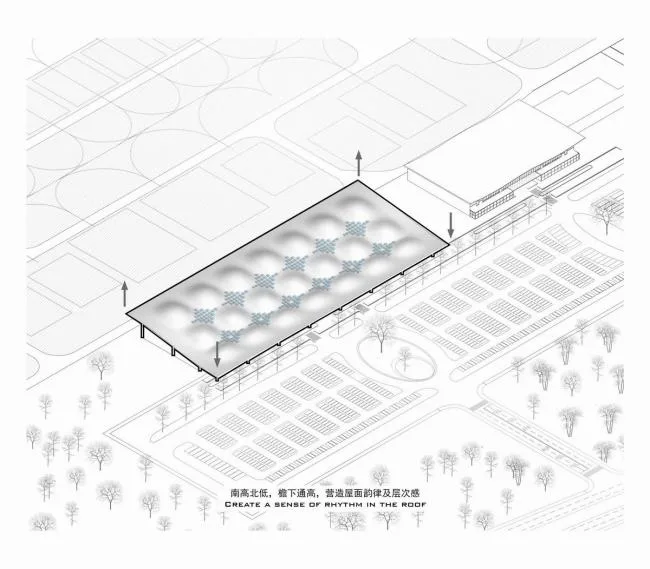
▲ Concept development sketches
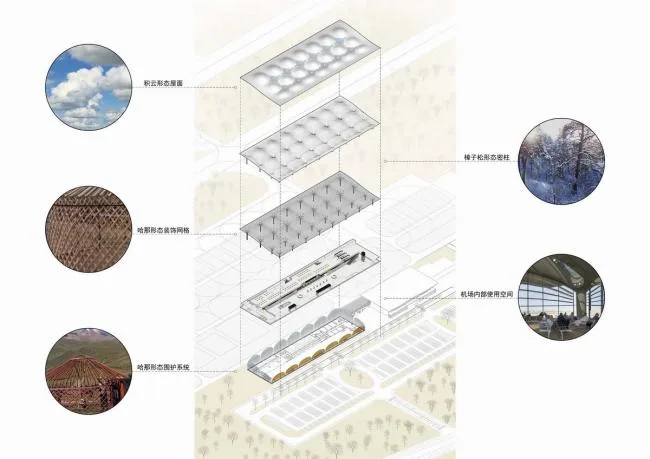
▲ Conceptual decomposition diagram
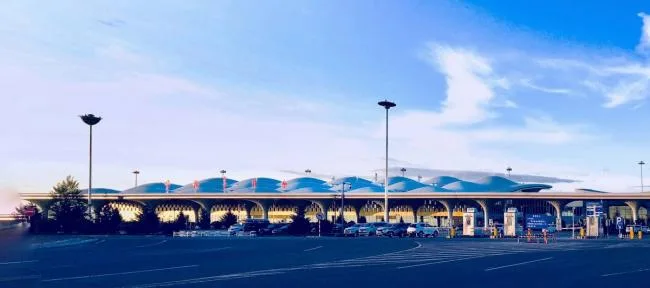
▲ Photography highlighting the rhythmic and layered form by Yu Haiwei
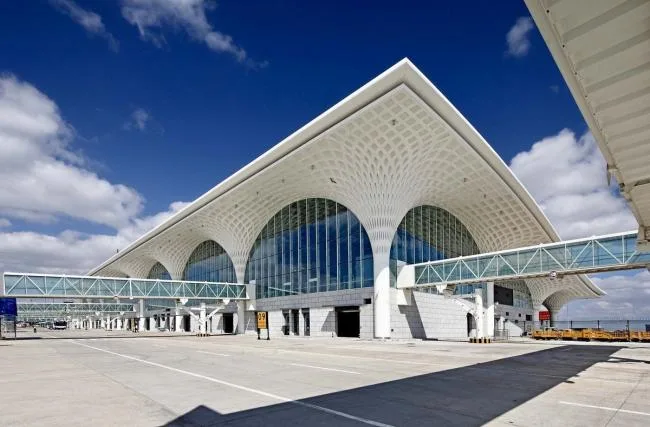
▲ Photo by Yu Haiwei
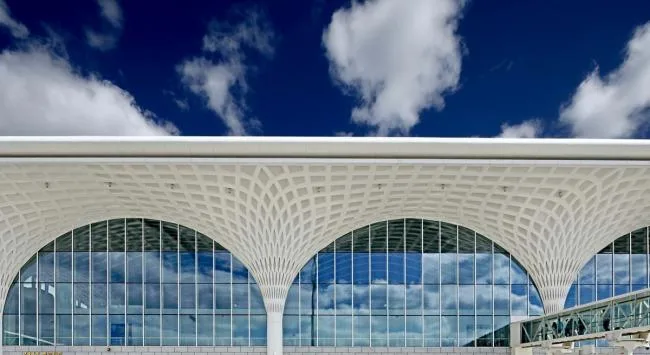
▲ Photo by Yu Haiwei
The continuous rain shelter connects the old and new terminals, serving as a unifying architectural element. It enhances the flow between the front lanes and waiting areas of both terminals, creating an inviting outdoor transitional space.

▲ Rain shelter as a unifying design element
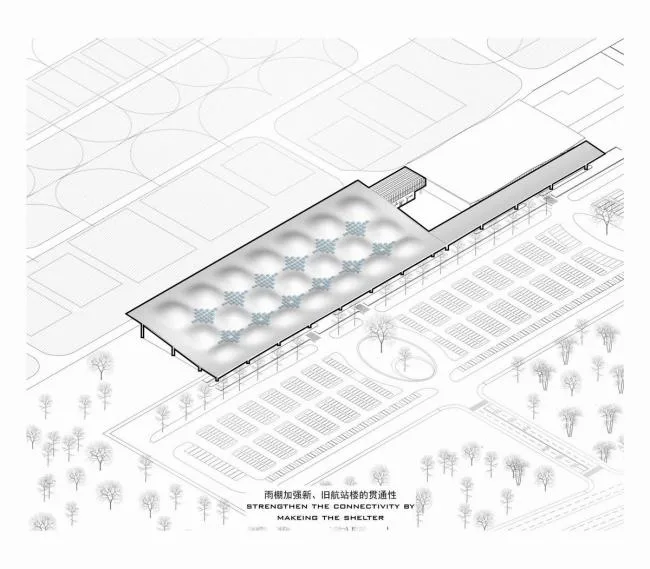
▲ Concept sketches of the rain shelter
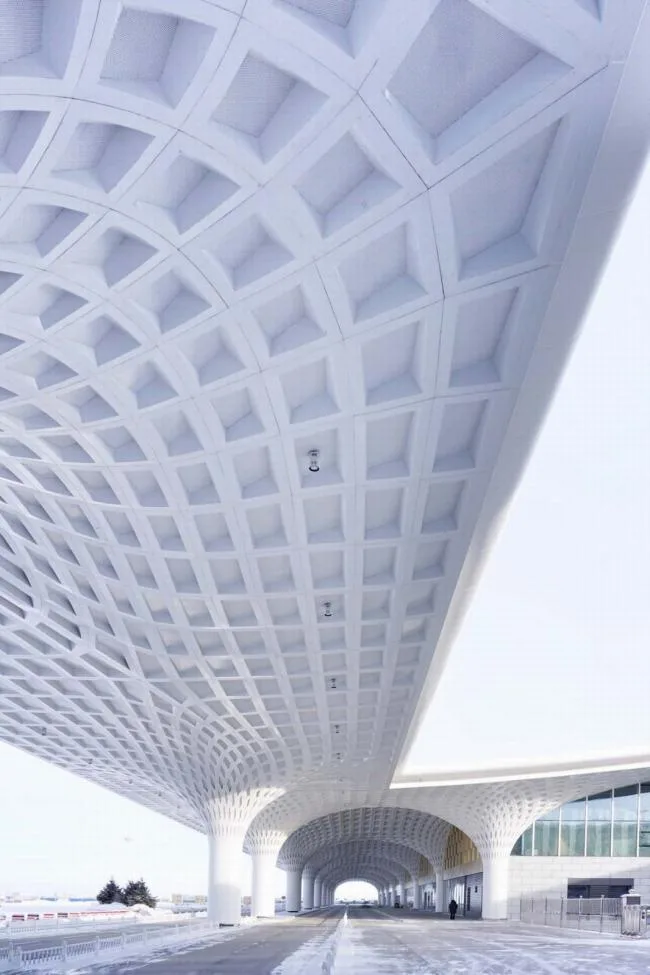
▲ Rain shelter connecting old and new terminals, photo by Liu Ke
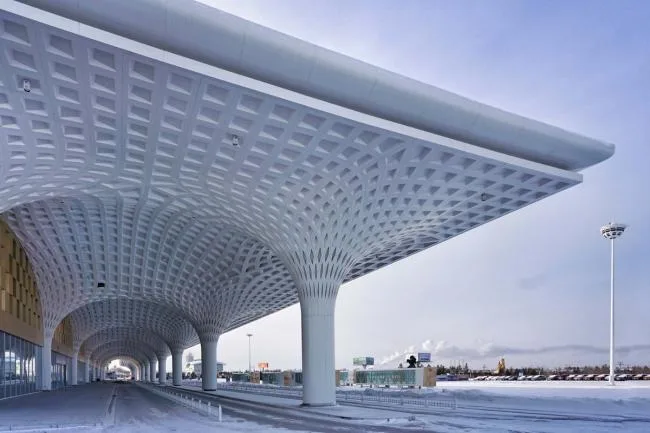
▲ Landside space under the eaves, photo by Liu Ke
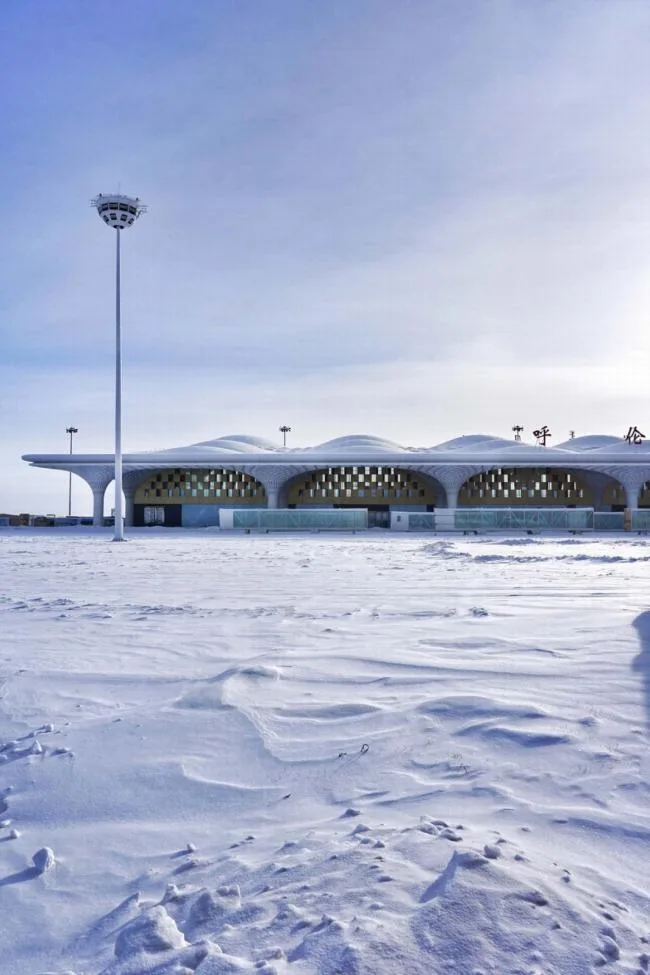
▲ Snow scene effect photo by Liu Ke
Unit Design
To simplify construction, the terminal’s main structure, roof, and interior are organized in two-span modular units within the seven-span terminal building. The roof truss dimensions serve as the base module. Aluminum panel curvatures are analyzed and categorized: panels with minimal curvature are made flat, those with moderate curvature are single-curved, and only a few with the largest curvature are hyperbolic. This approach minimizes fabrication complexity and costs.
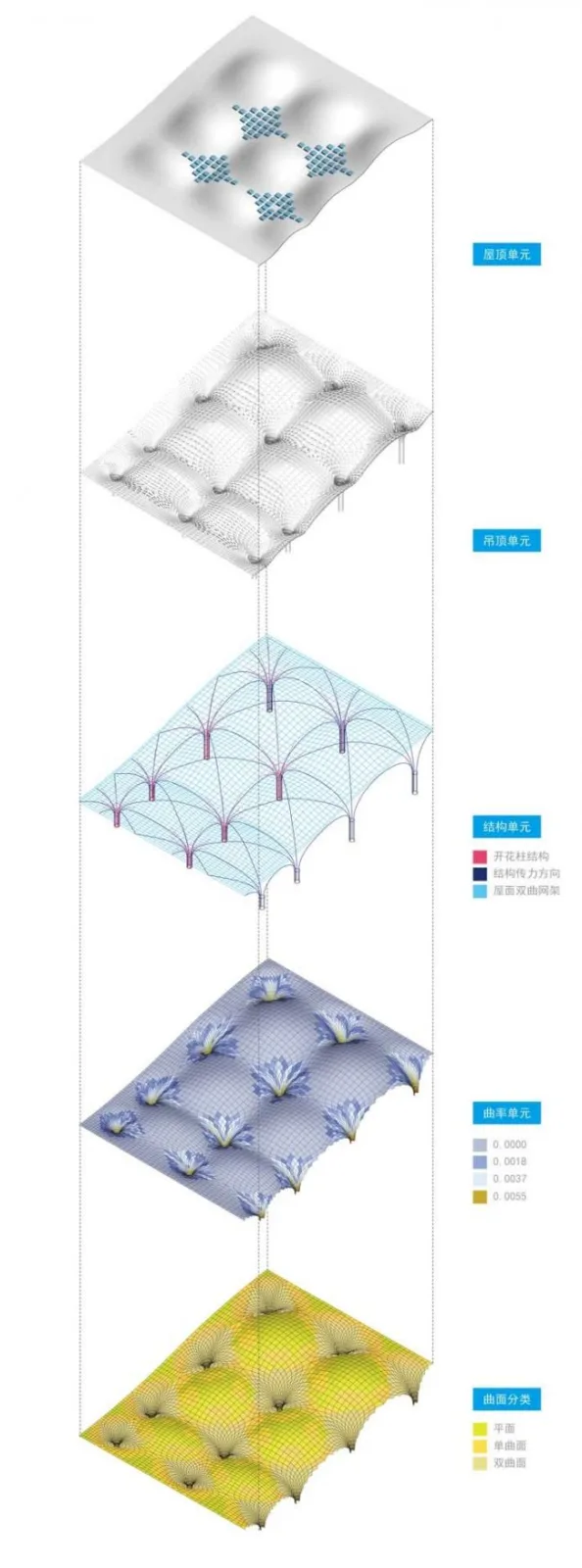
▲ Unit control diagram
Construction Control
During detailed design and construction, innovative refinement was applied to irregular keel curtain walls, TPO roofing, and hyperbolic aluminum flower column nodes. Full-scale 1:1 mock-ups were set up at multiple locations to verify and ensure construction precision and quality.
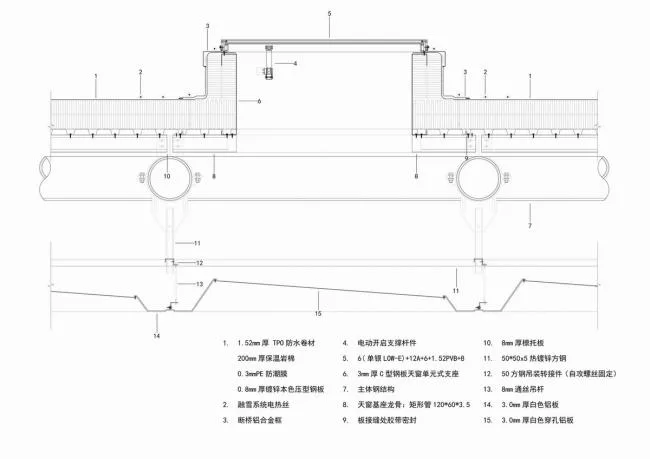
▲ TPO roof and skylight node detail (BIM tutorial)
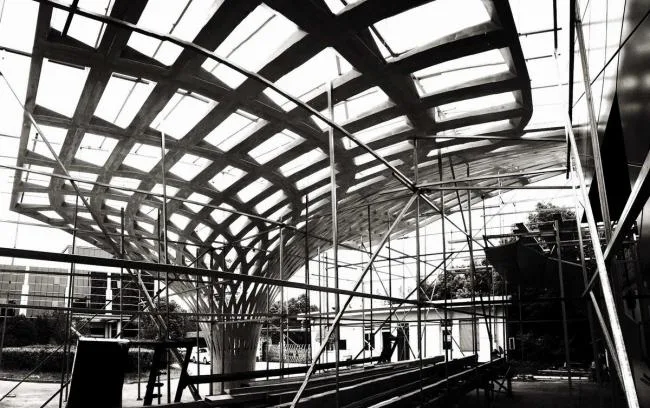
▲ Remote layout and production of aluminum panels, photo by Yu Haiwei
As Hulunbuir’s gateway to the world, the airport aims to imbue the T2 terminal with advanced international airport design features while embracing deep local cultural elements. It is envisioned as the flagship project and city landmark that will drive grassland tourism development—a bright, pure, and shining pearl of the grasslands.
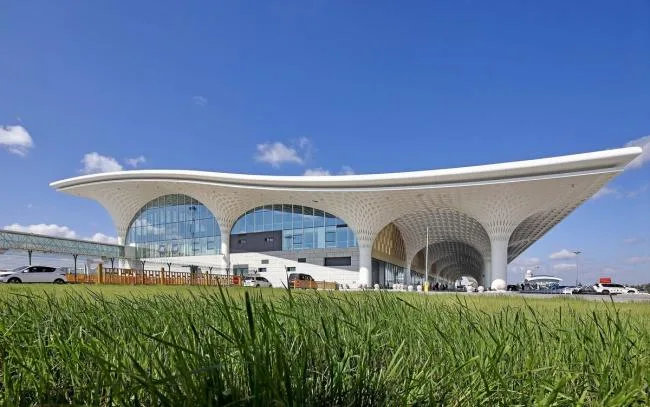
▲ Photo by Yu Haiwei
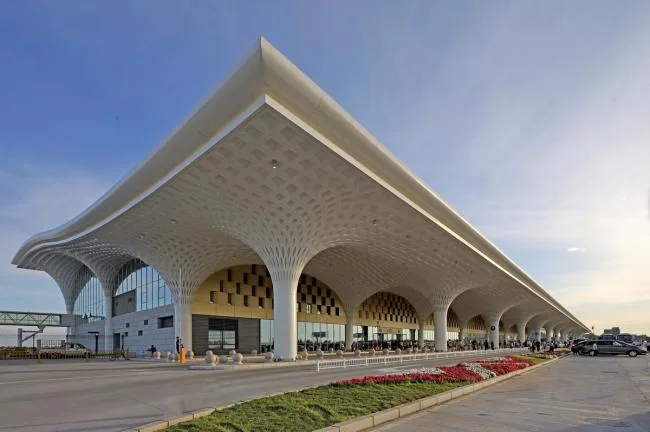
▲ Photo by Yu Haiwei
Design Drawings:
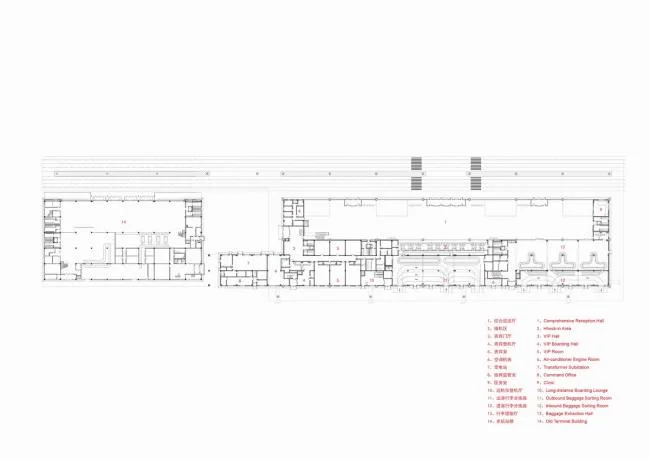
▲ First floor plan
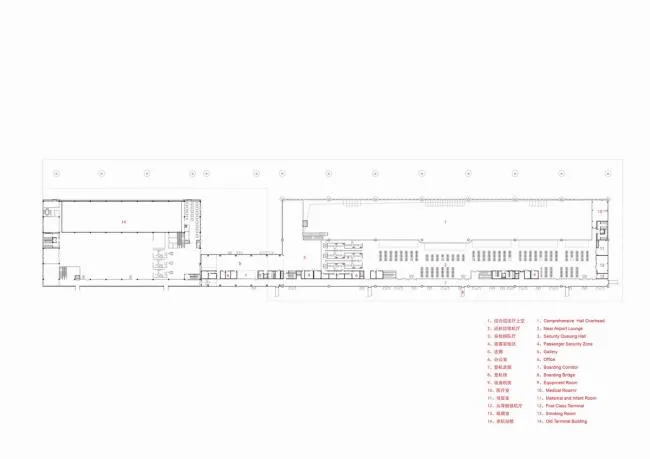
▲ Second floor plan
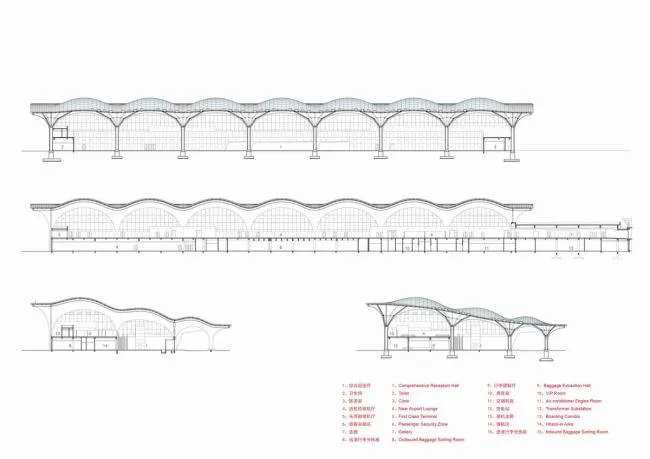
▲ Sectional view
Project Information:
Designer: China Architecture Design Institute Integrated Architectural Design and Research Center U10
Location: Hailar, Hulunbuir, Inner Mongolia, China
Project Type: Airport
Lead Architects: Yu Haiwei, Liu Yanyan
Design Team: Jin Zhefu, Lv Yan, Gao Chao, He Fan, Zhu Qipeng, Kuang Yuefan
Building Area: 17,000 square meters
Project Year: 2018
Photographer: Zhang Guangyuan
Manufacturer: Firestone B (BIM Work) Building Products
Structural Engineering: China Architecture Design and Research Institute – Shi Hong, Wang Chao
Construction Drawing Partner: North China Airport Planning and Design Institute, China Civil Aviation Airport Construction Group Corporation
Interior Design Partner: Beijing Xindisen Architectural Decoration Engineering Design Co., Ltd. – Liu Ke, Liu Chunlu
Lighting Design Collaboration: Zhang Xin Studio, School of Architecture, Tsinghua University – Zhang Xin, Han Xiaowei, Zhou Xuanyu
Owner: Hulunbuir Investment Co., Ltd.













Must log in before commenting!
Sign Up