
Duck Architecture: A Meaningful Form
About a year ago, while discussing fortunate and thriving buildings, we not only critiqued poor aesthetics from a professional standpoint but also sought to understand their origins and public reception. This brings us to the concept of duck architecture.
In the 1930s, an American duck farmer built a duck-shaped building to sell ducks and duck eggs, which significantly boosted his business. This structure, known as the Big Duck, later earned a place on the National Register of Historic Places.
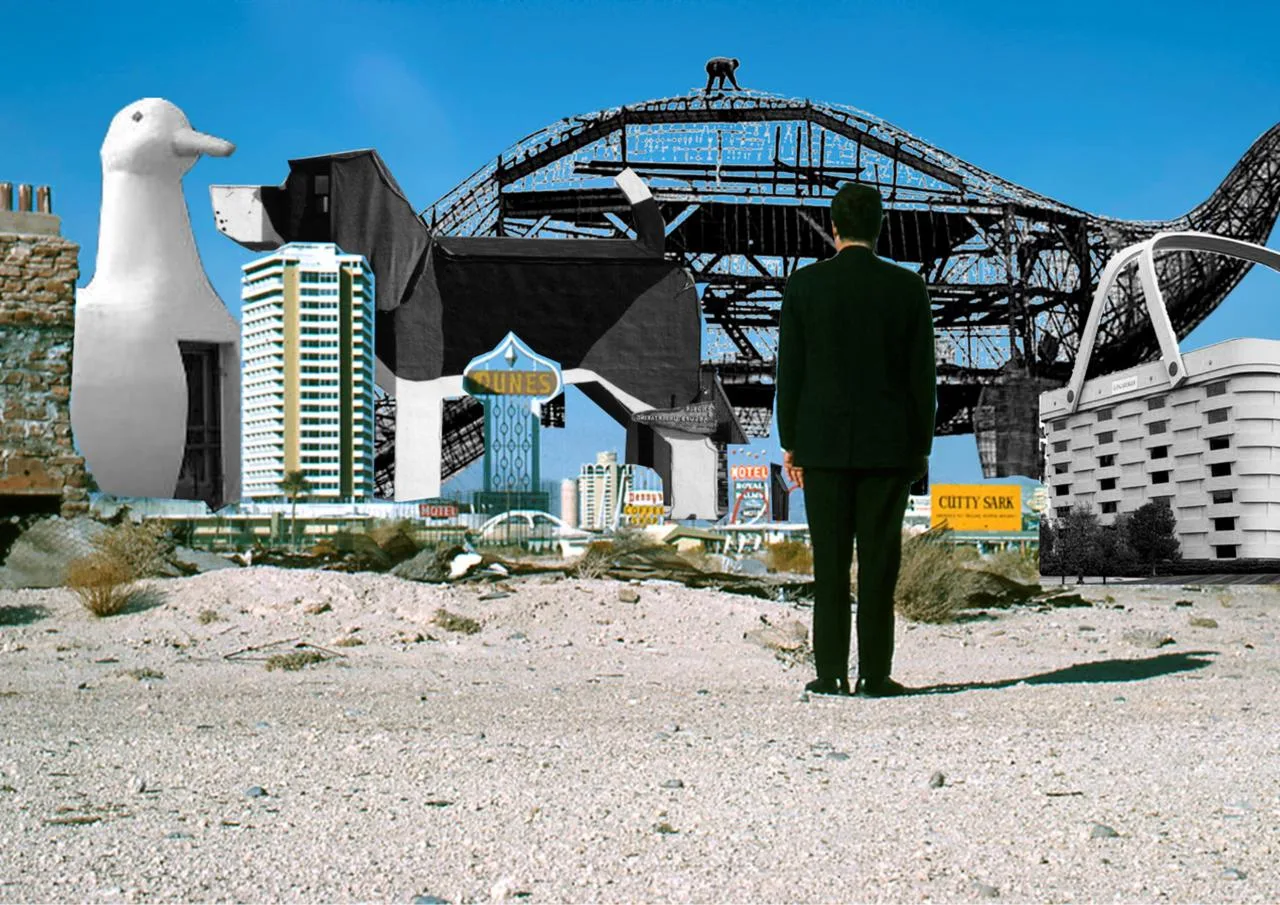
Duck architecture © Network diagram
I have a genuine appreciation for duck architecture because its design is straightforward and easy to interpret. In today’s highly competitive design environment, there is no need for excessive embellishments to convey a clear message. Once completed, the design speaks for itself without requiring further literary interpretation to mask mediocrity as thoughtful deliberation.
Ultimately, this perspective was widely accepted.
Shortly after, Ado Town in Rongchuang Qingdao approached us to design a parent-child center, marking the beginning of our exploration. Our submitted document—a concise 21-page presentation—was intentionally sparse in words.
Our approach was simple: no explanations or metaphorical meanings. What you see is what you get, preserving the public’s ability to understand intuitively. We later referred to this style as “mass architecture.”
This approach proved remarkably effective. Recent years have shown that in our era of information overload, simplifying content and removing redundancy is the right path—even for professionals.
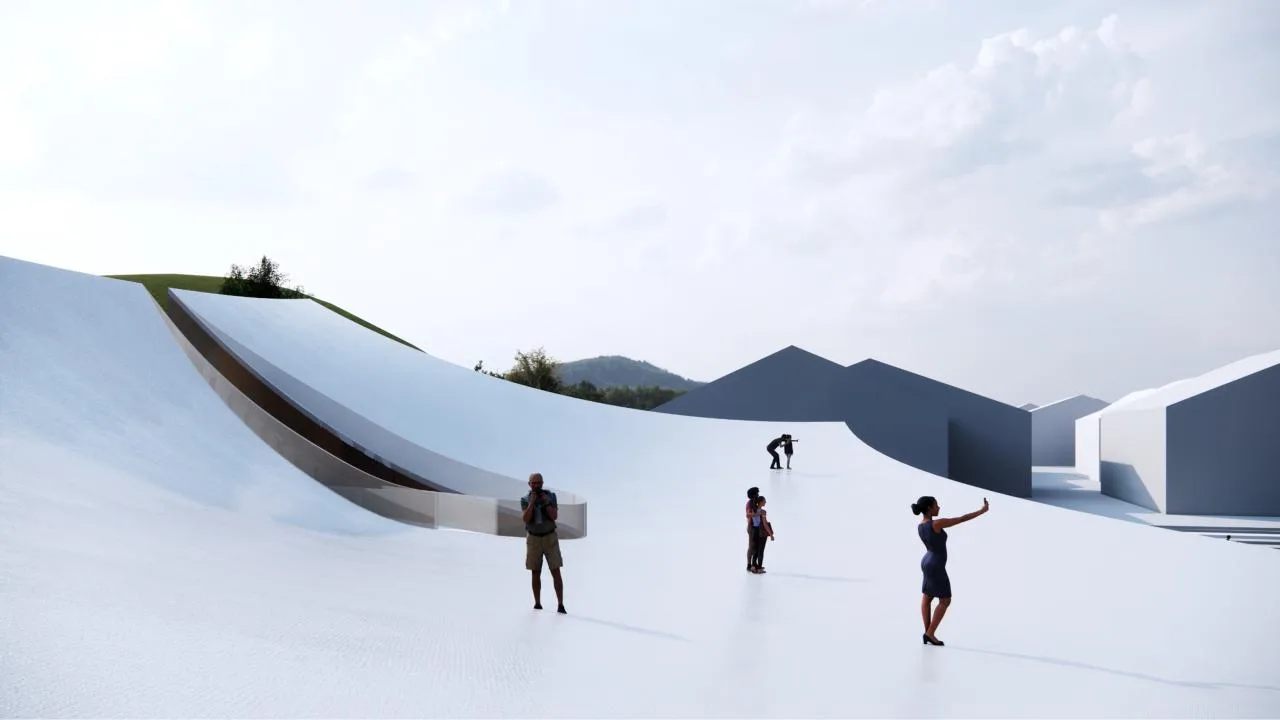
△ Concept rendering ©
The Rolled-Up Roof and Bird’s-Eye Perspective
More children are growing up in cities, and the mountain environment offers them a novel world and sparks their imagination of distant places.
While the Hidden Horse Mountain Forest is already a wonderful gift, I wanted to create a unique, large-scale play object that would inspire children to express awe when standing before it.
As a child, I spent summers in the countryside. Every evening at sunset, before the sky turned dark, I would lie on a bamboo couch watching birds glide through the air. My young mind was filled with myths, and one enduring thought was imagining how birds saw the earth below and me lying there from the sky. This memory remains a vivid part of my childhood.
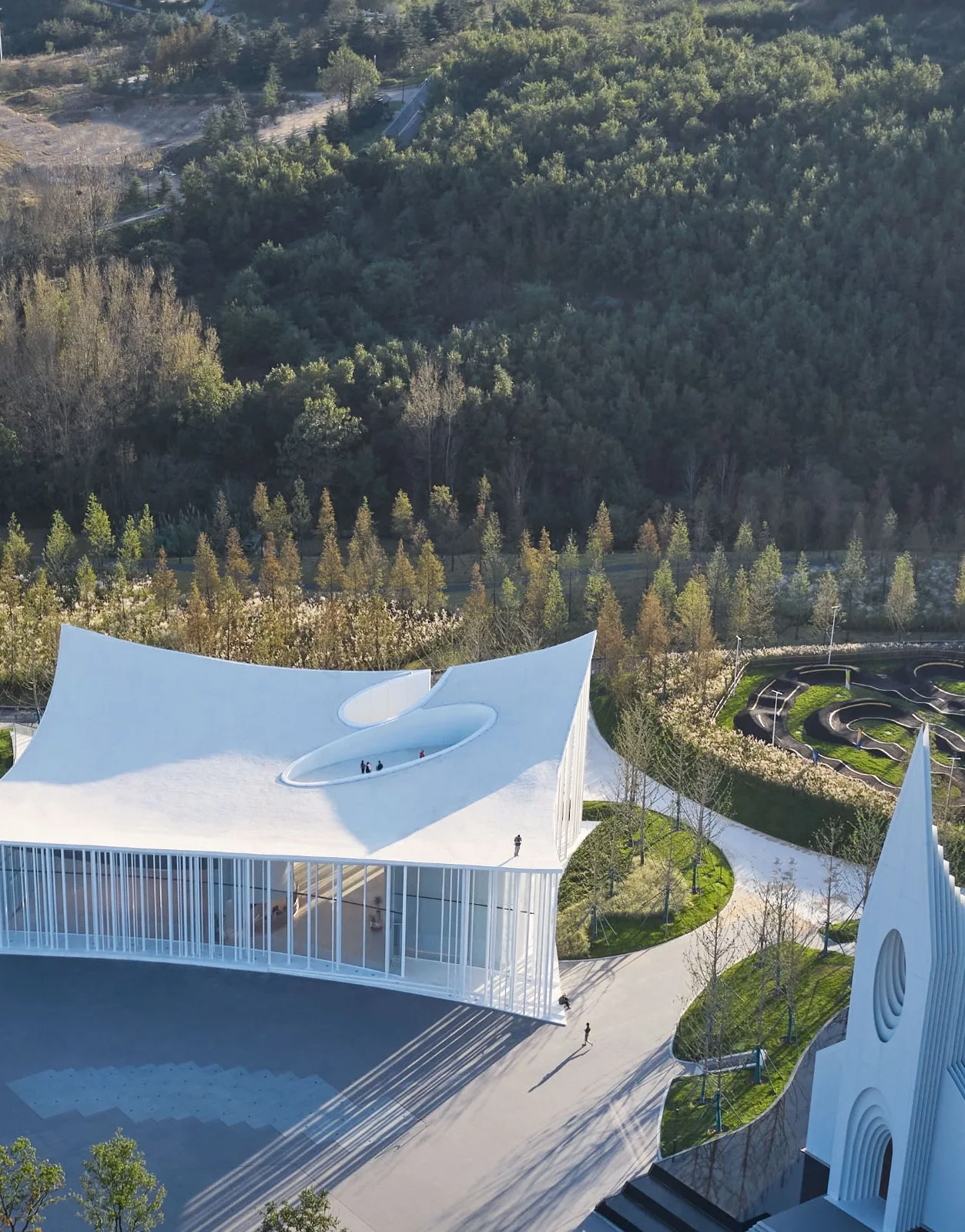
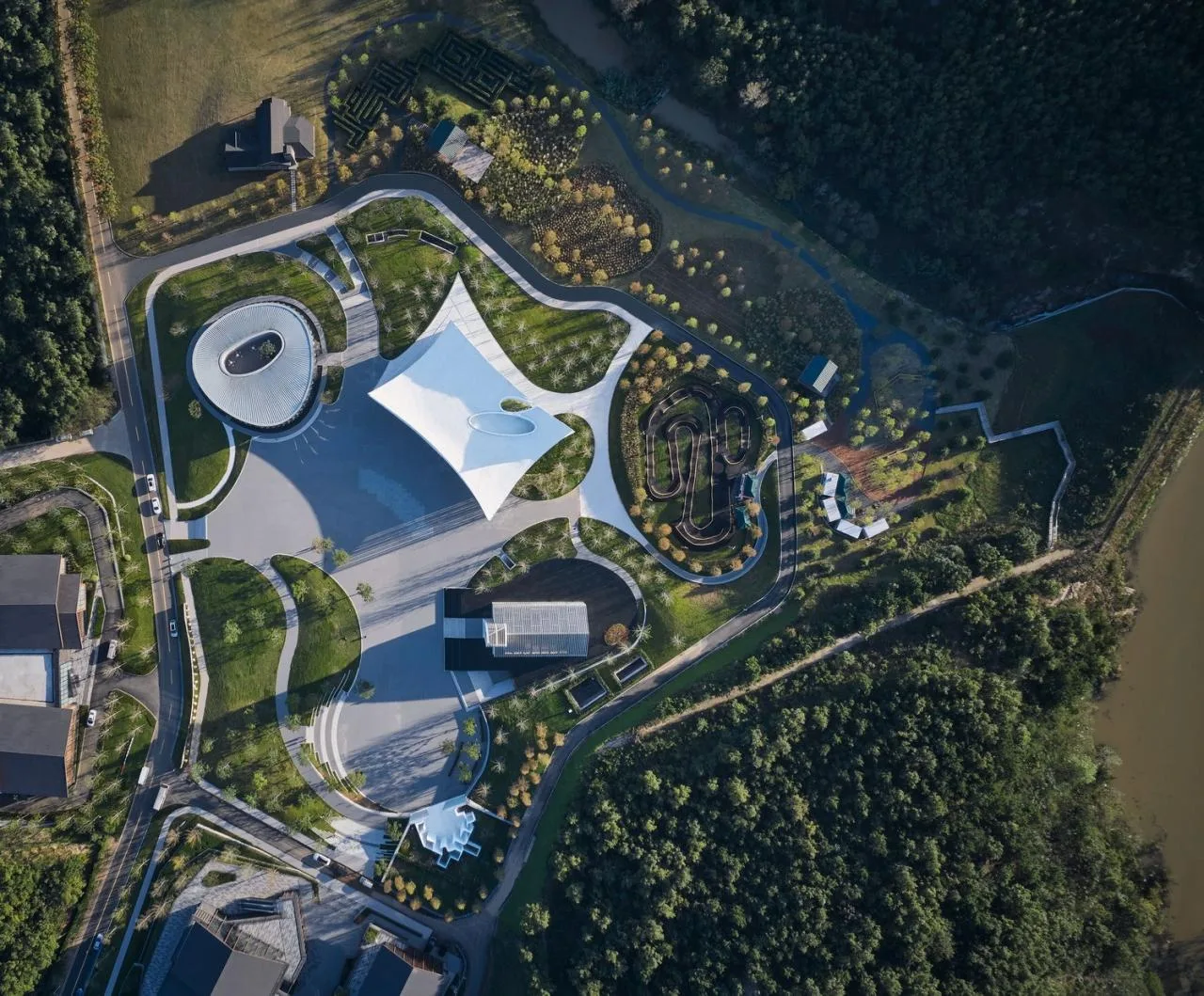
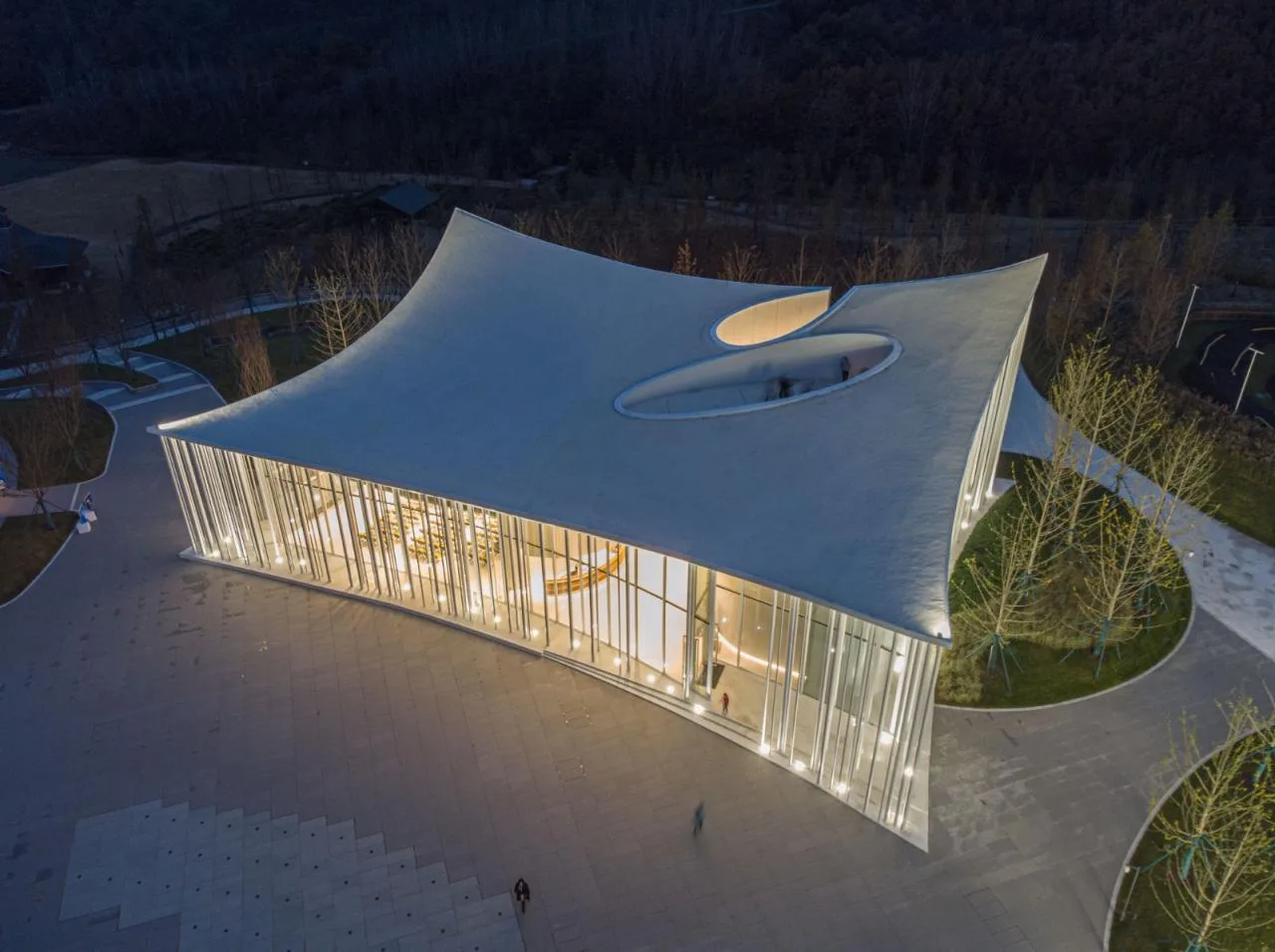
The woods of Zangma Mountain, rolled-up roofs © Photography by Zhang Yong
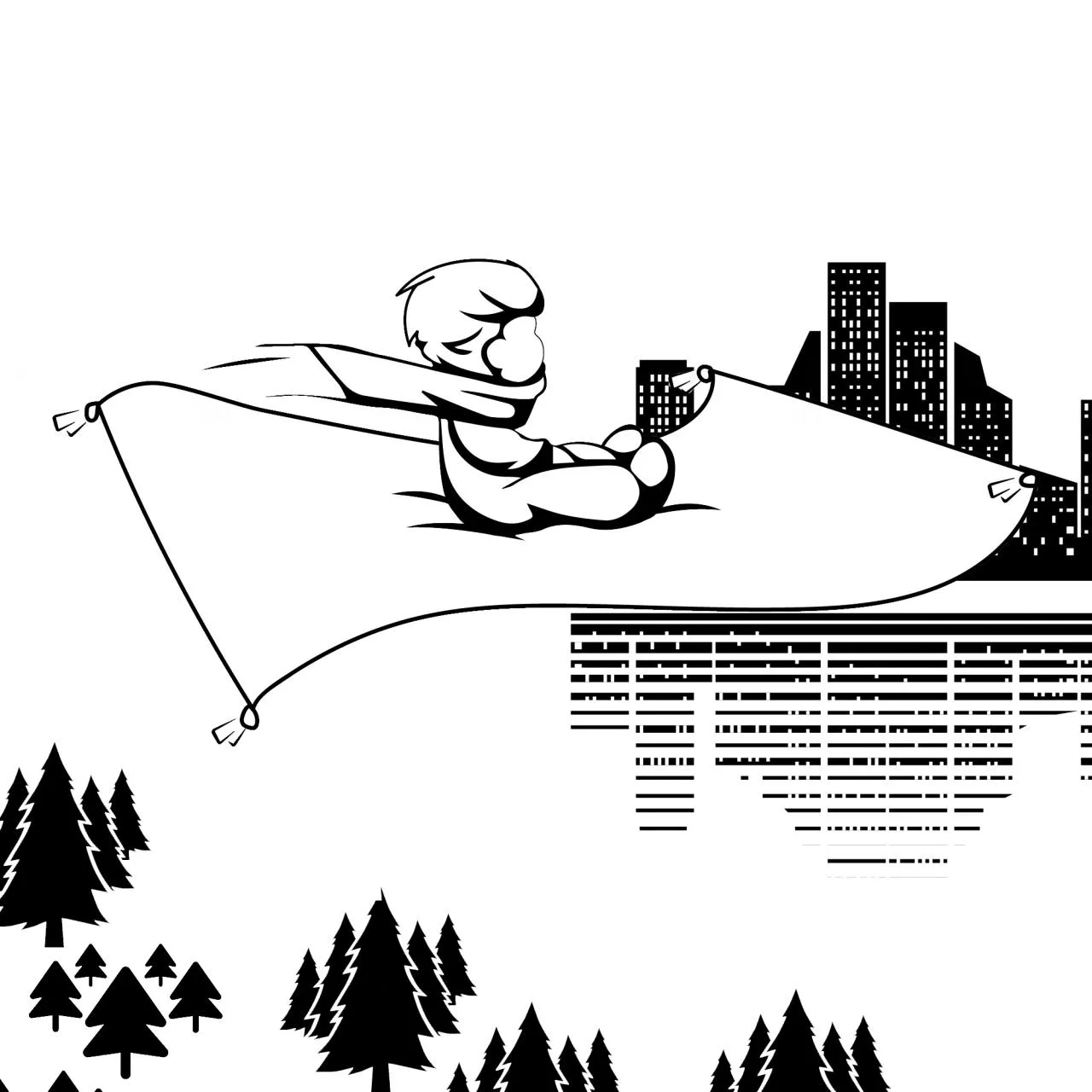
We translated this scene into the design of the parent-child center by creating a rolled-up ground surface that resembles a magic carpet taking flight.
This section then lifts and folds upward to form a roof, framing distant mountains, forests, sky, and white earth as if viewed from a bird’s perspective.
A series of adhesive lines connect the roof and ground, resembling torn cheese. These “adhesive lines” integrate into the white jungle facade, becoming an essential part of the design.
This concept was a crucial starting point.
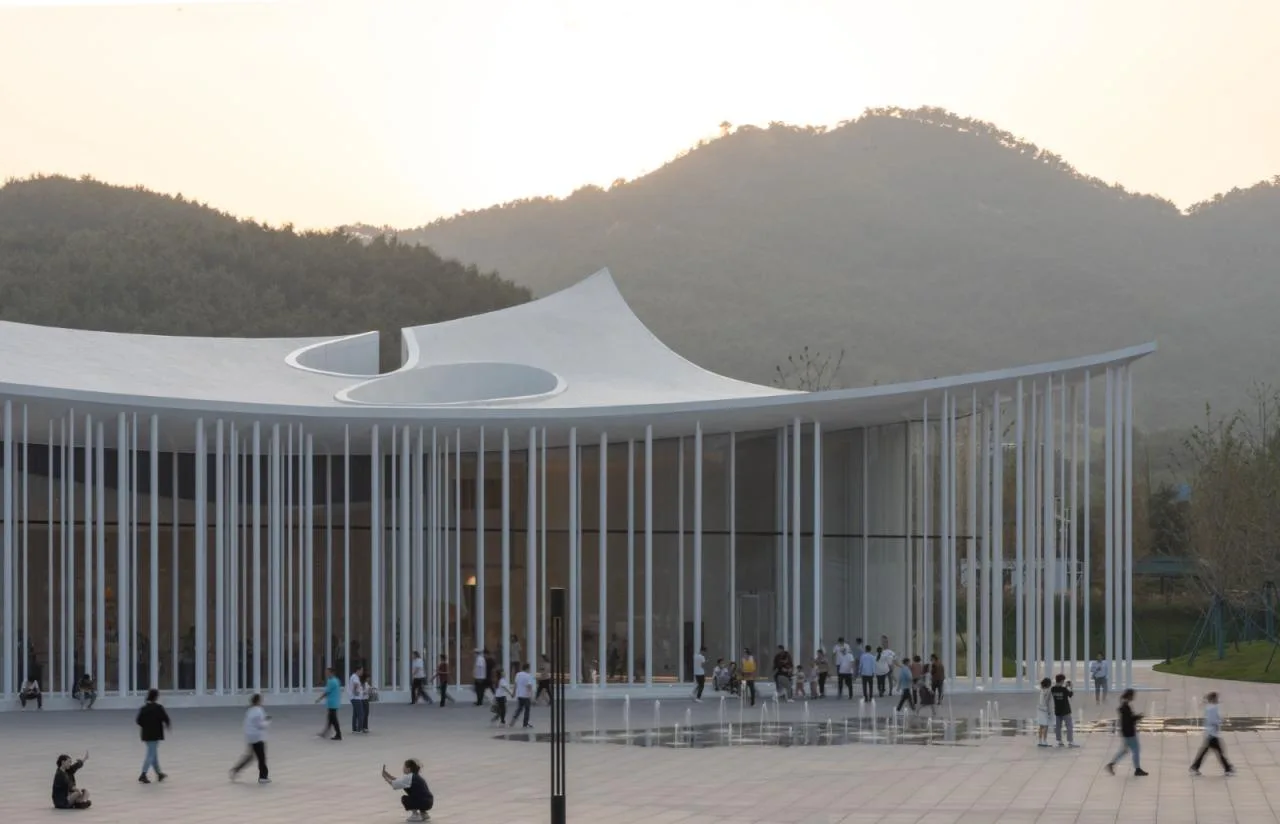
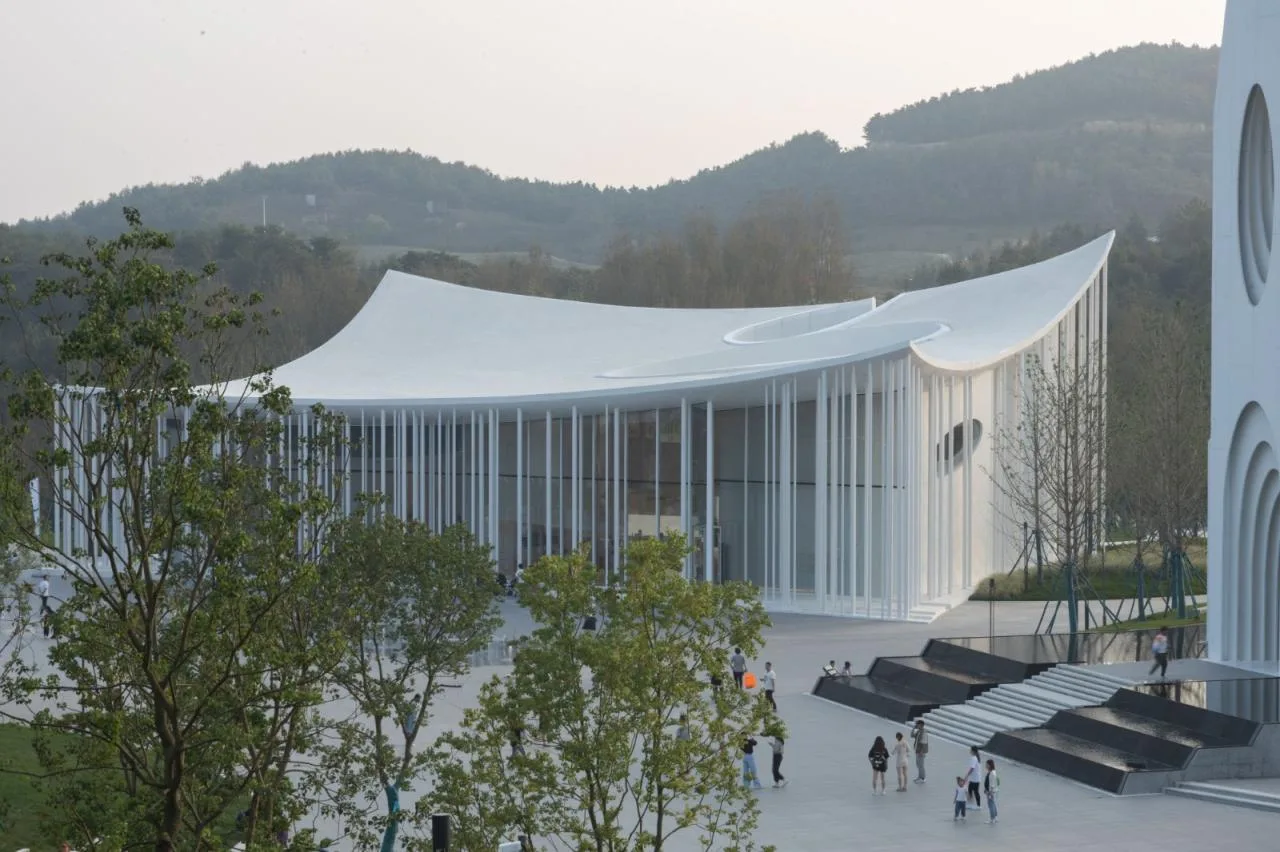
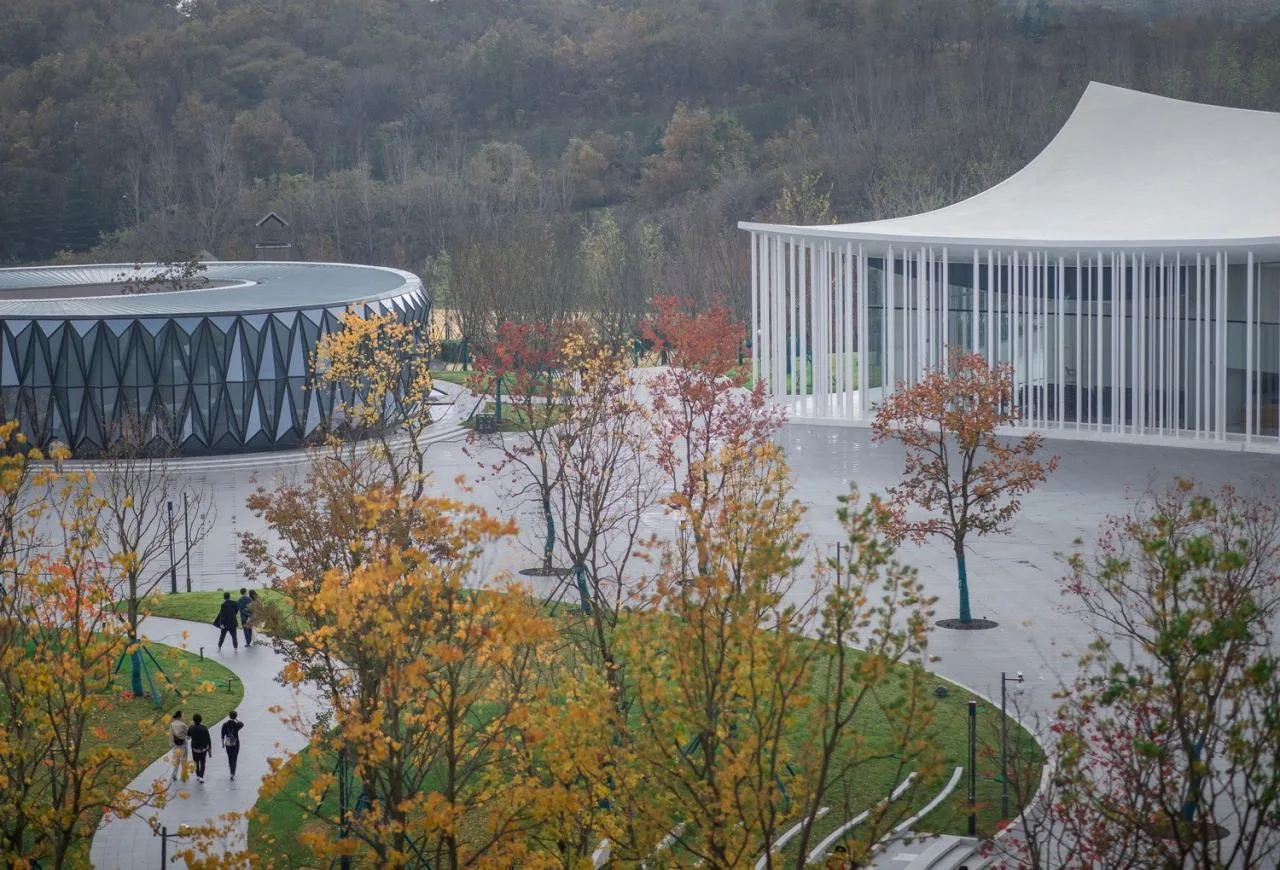
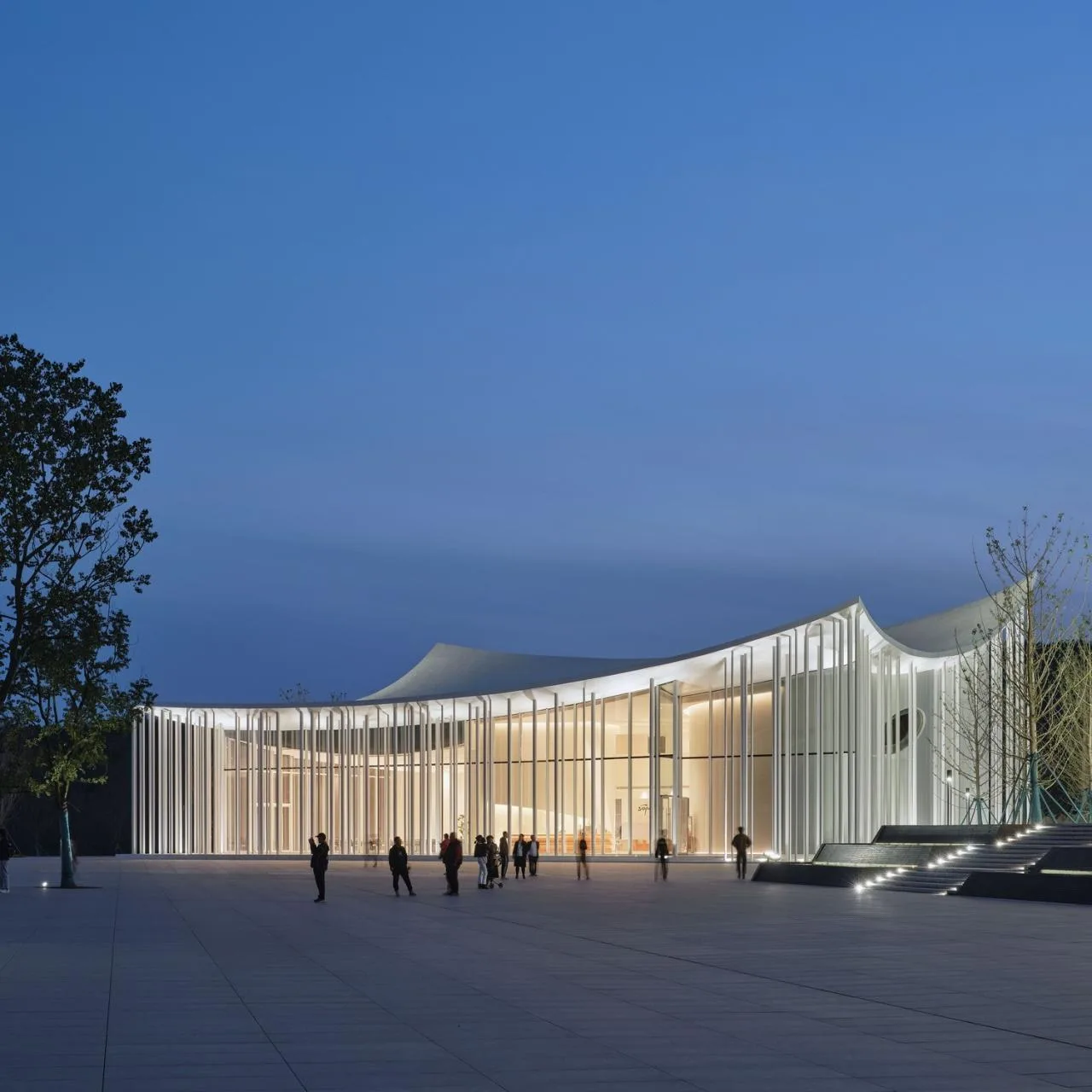
The building acts as a transparent backdrop for the square, providing walking and activity spaces beneath the eaves © Photography by Liang Wenjun
The Flying Carpet at the Foot of Zangma Mountain
From the outset, the term “flying carpet” became synonymous among our design team and clients when referring to this parent-child center in Zangma Mountain. Both in form and function, the flying carpet concept highlights the design’s focal point—the white, curved roof of Shangren.
This flying surface motif also appears repeatedly indoors. In projects where interaction and communication are key, this “persona” is particularly effective.
Initially, we envisioned the roof as a seamless white blanket without boundaries. However, due to safety concerns, access was restricted, which limited its use. While this is regrettable—we continue to discuss ways to improve it—the overall feel of the roof remains positive.
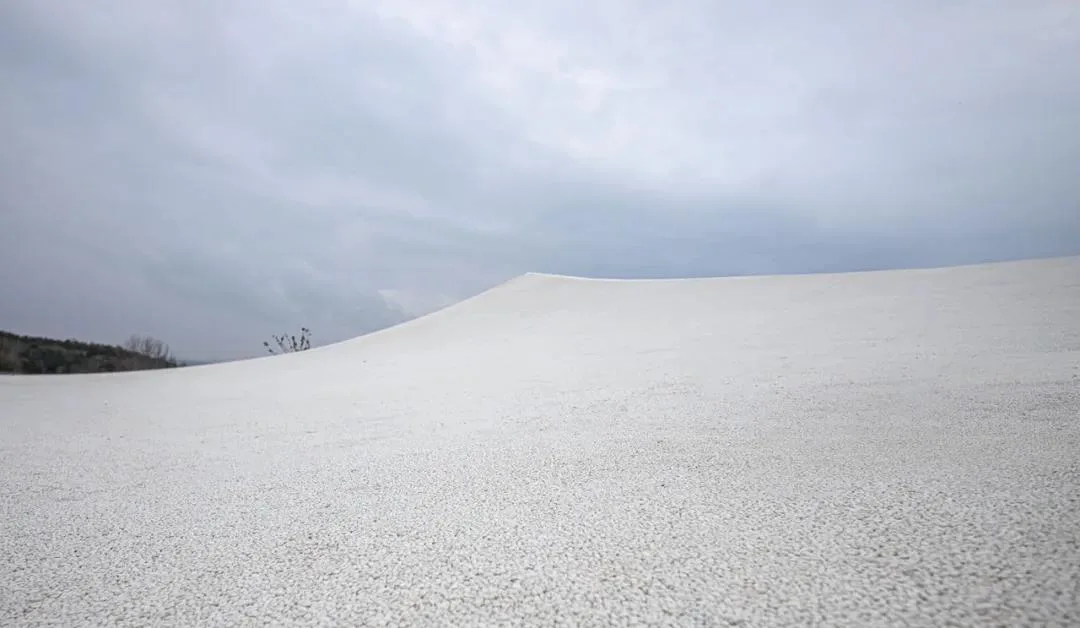
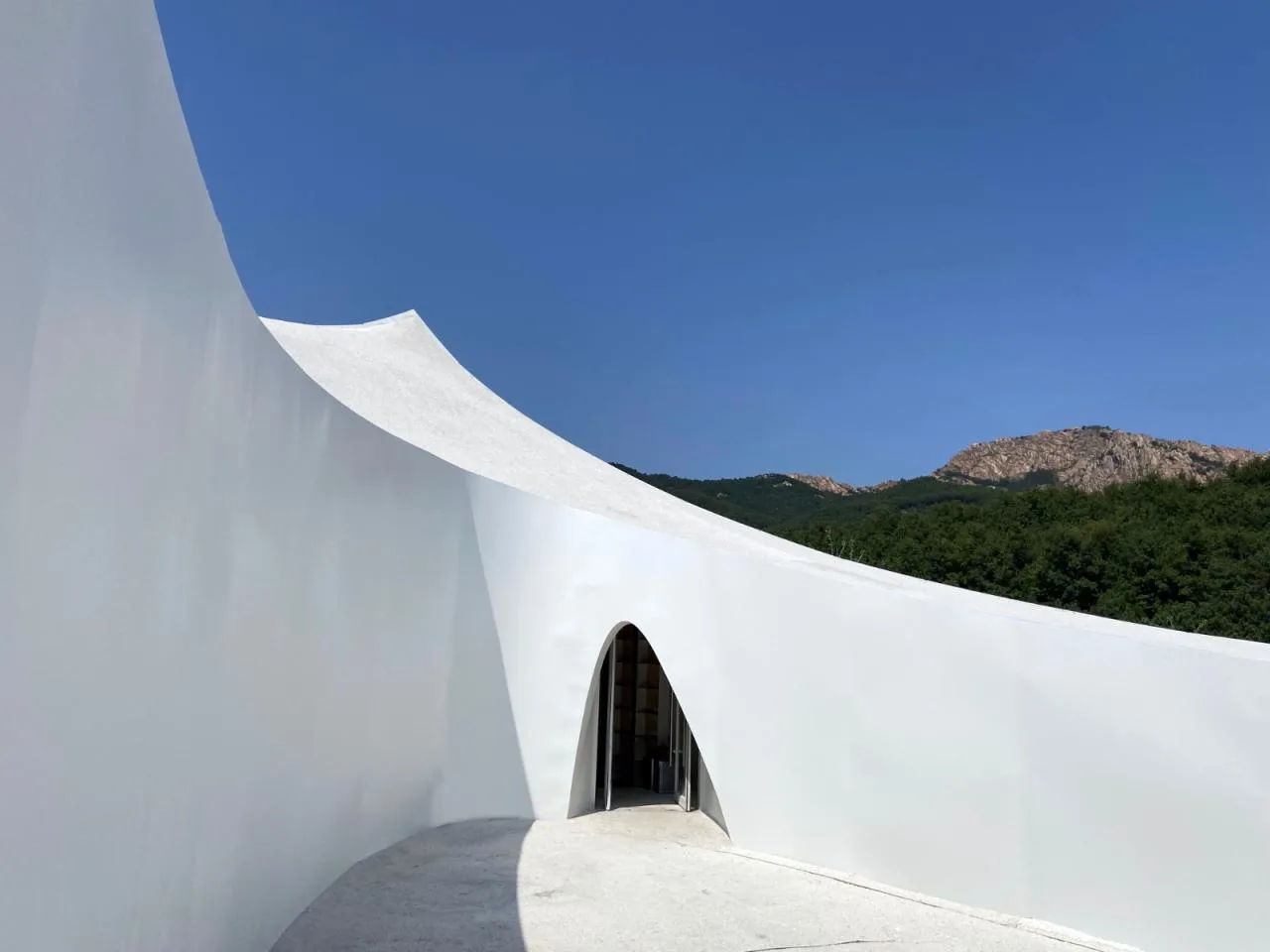
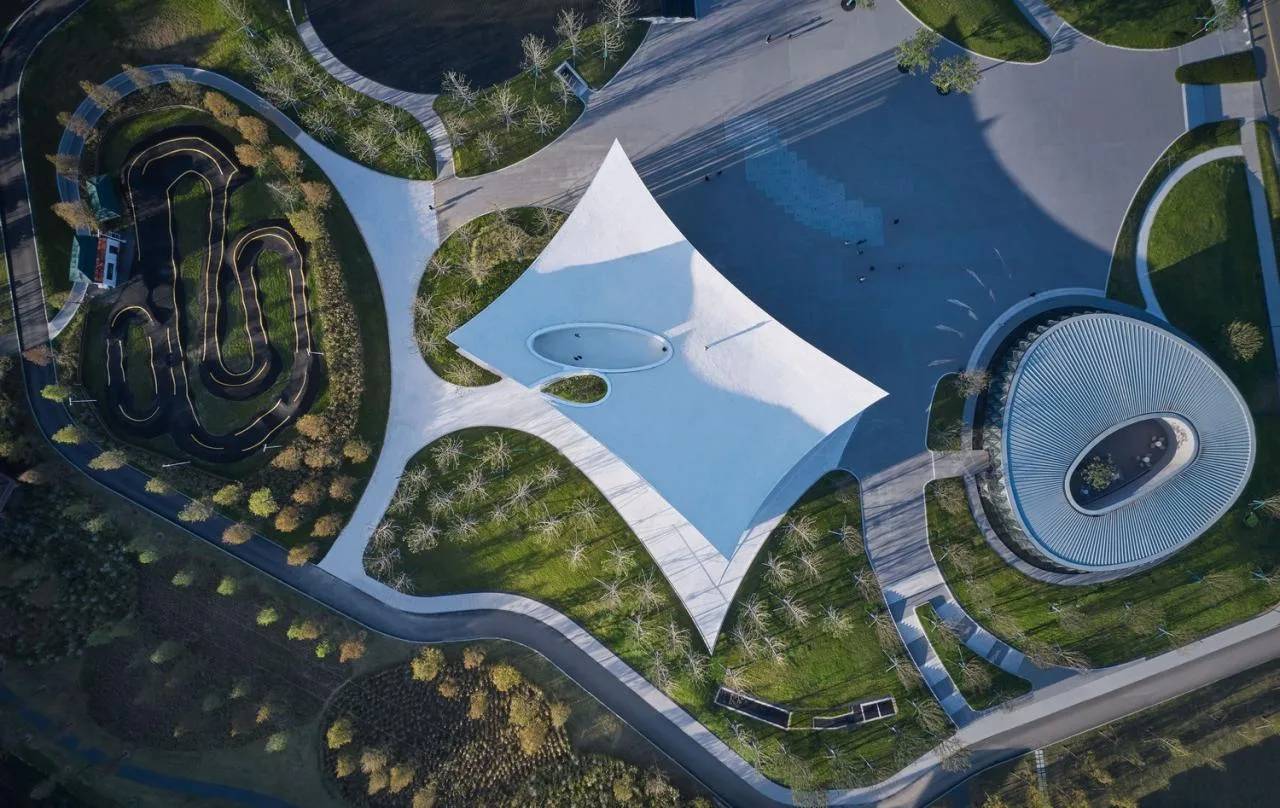
Adhesive stone roof and integrated water droplet atrium © Photography by Liang Wenjun
The roof covers over 1,000 square meters. Our initial plan was to use water-brushed stone with a natural stone texture to create the effect of a rolled-up floor. However, difficulties arose during the construction of the complex hyperbolic roof.
Later, we discovered adhesive stone in the landscape materials room—commonly used for paving roads in sponge cities—that suited integral roofing perfectly. This turned out to be a valuable and innovative solution, one we are confident will be used again in future projects.
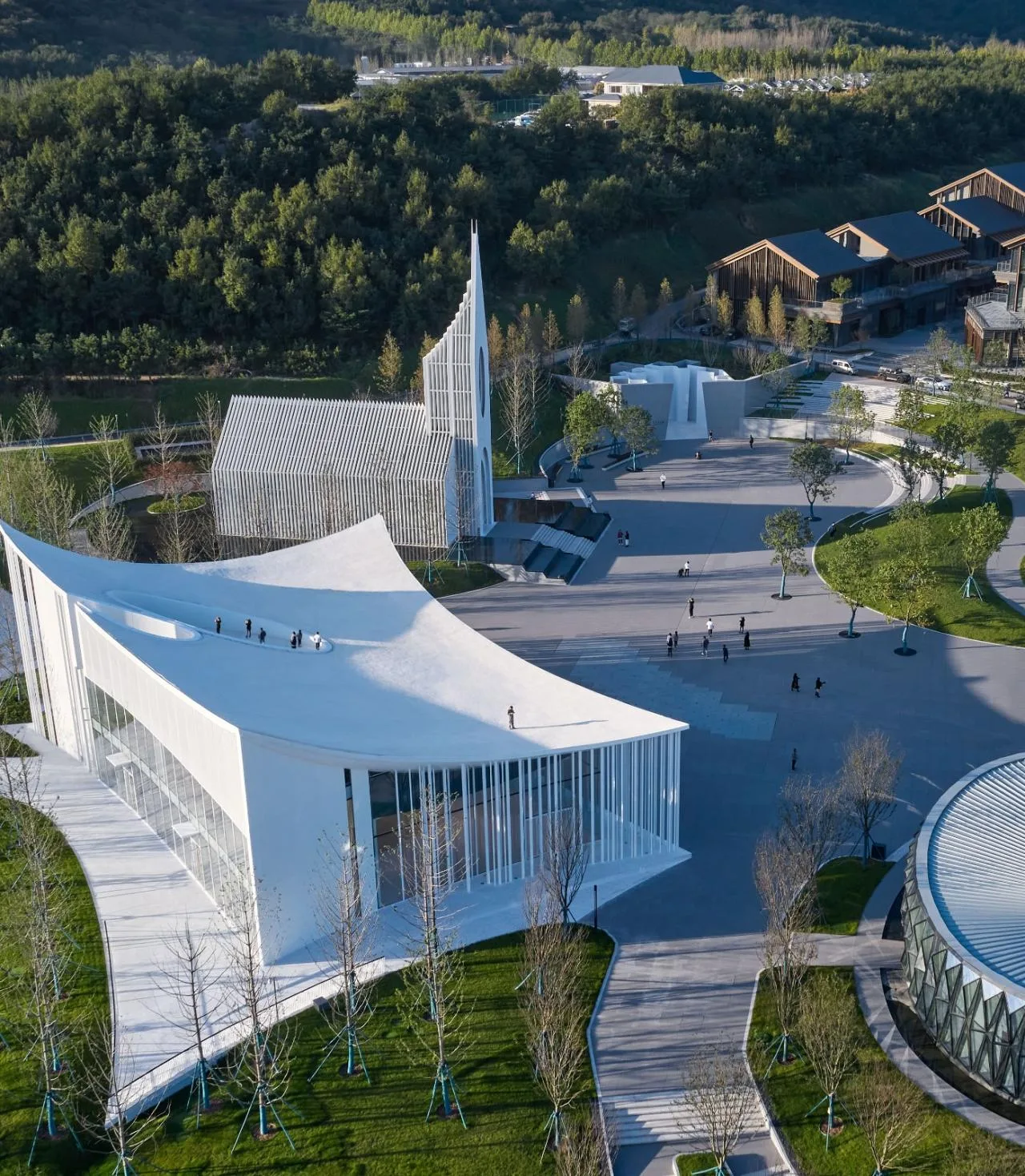
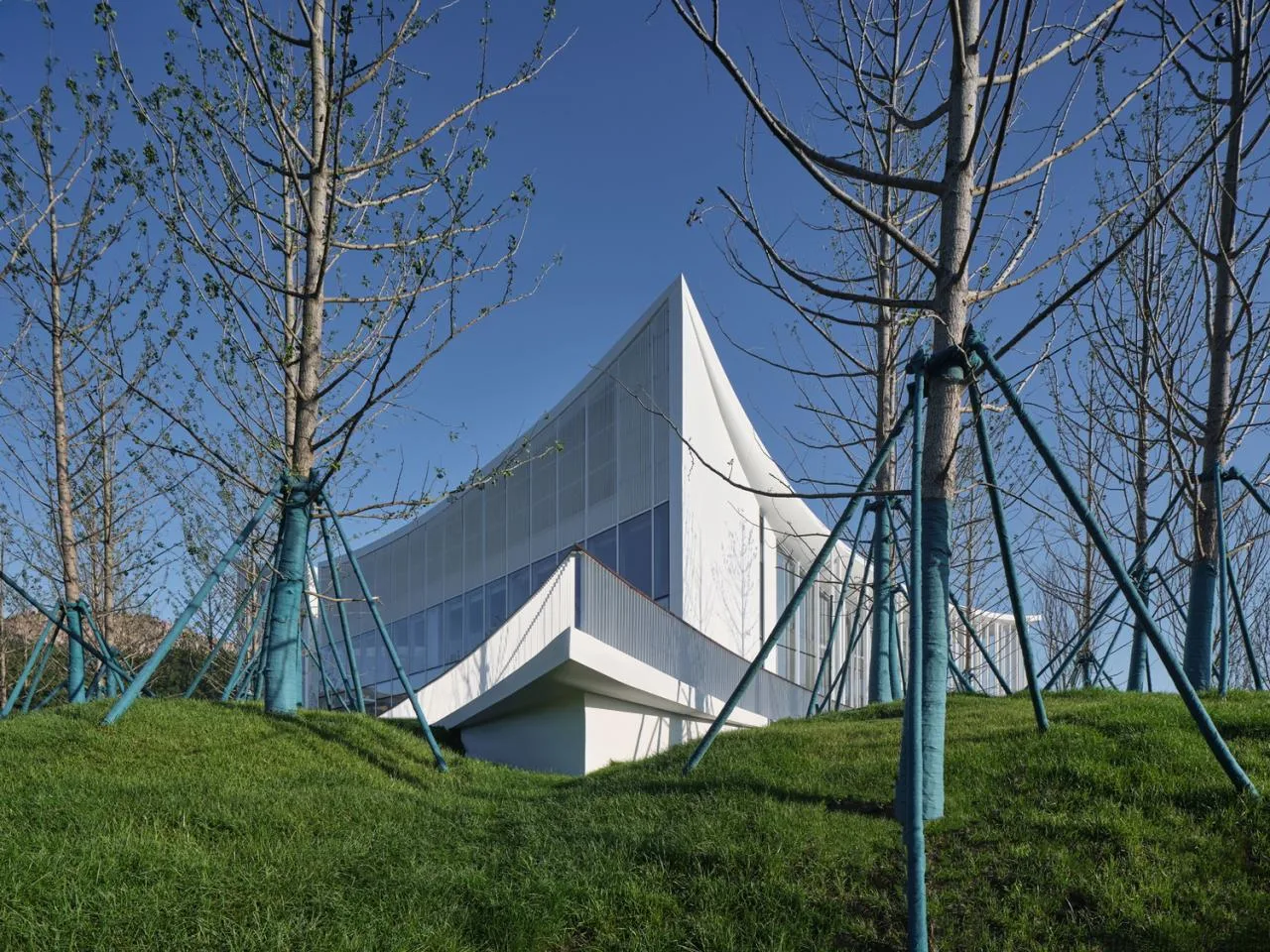
© Photography by Zhang Yong
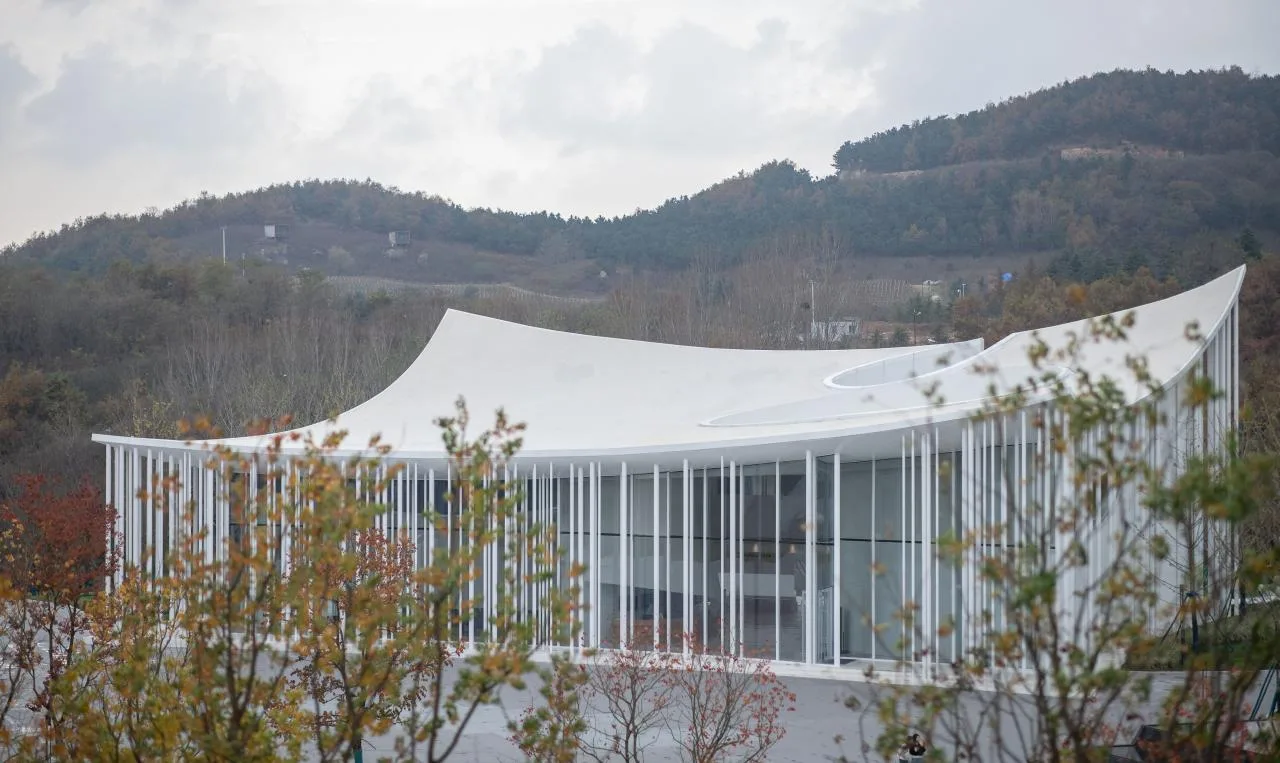
© Photography by Liang Wenjun
The roof drainage system uses a 1.5cm linear drainage channel following the hyperbolic roof’s contour, equipped with a siphon at the lowest point. The covers for both the drainage channel and siphon are stainless steel plates embedded with adhesive stone, rendering them nearly invisible.
The lightweight roof structure consists of a hyperbolic surface combined with a double-curved ceiling, supported by variable cross-section curved beams and horizontal braces in the middle. Mechanical equipment and piping are concealed within the spaces between beams.
Once completed, the building naturally invites various uses and moments of beauty. Despite limited rooftop access, I believe it will become the most stunning terrace in Qingdao.
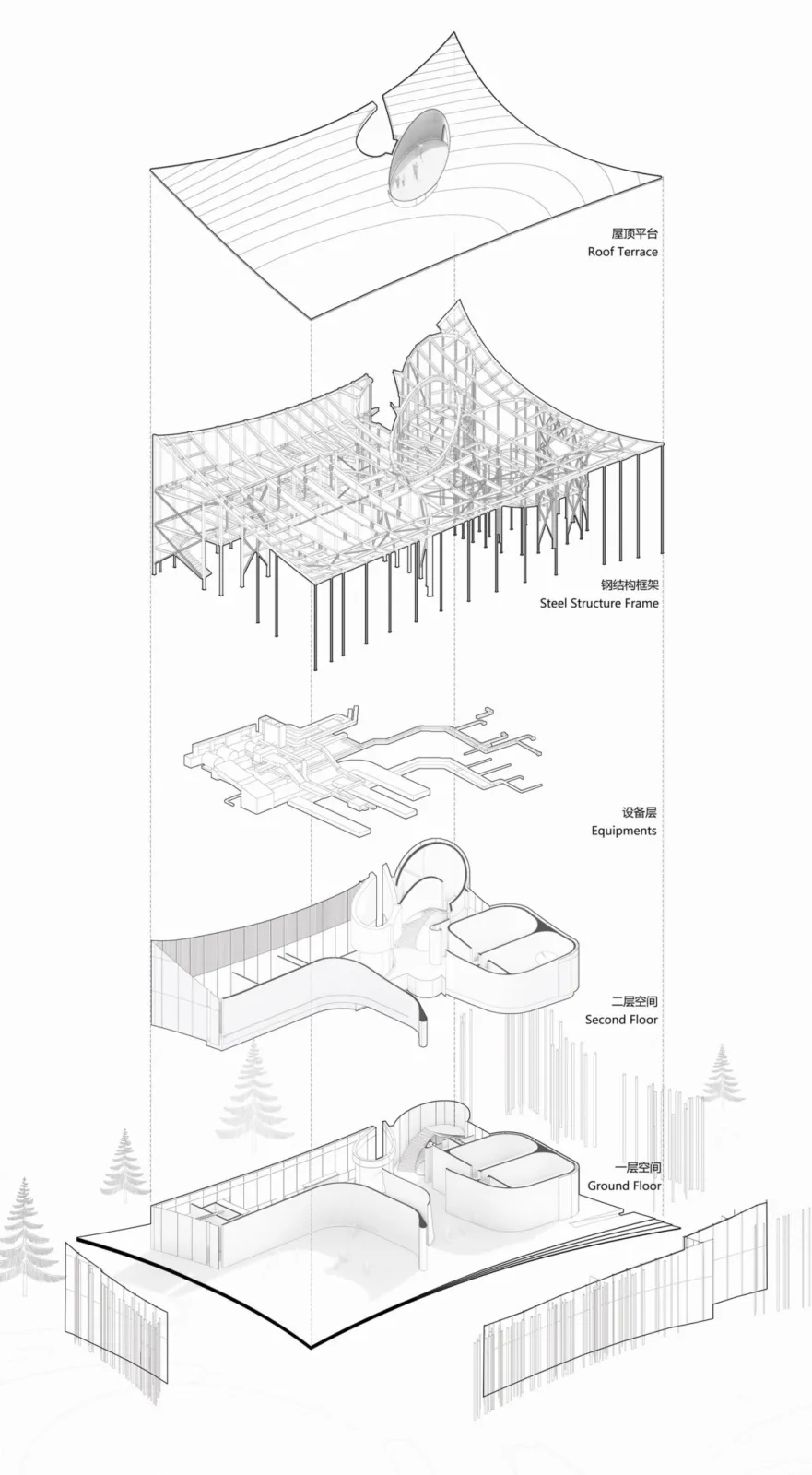
Sunlight floods the interior spaces
The first-floor plan reveals four distinct functional units: a multipurpose hall, a cinema, a staircase, and the 1918 coffee shop tucked beneath the grand roof. The spaces between these units form the main hall and corridors.
In this design, we aimed to use architecture itself as a curatorial framework, where every functional space, wall, and roof becomes a part of the exhibition.
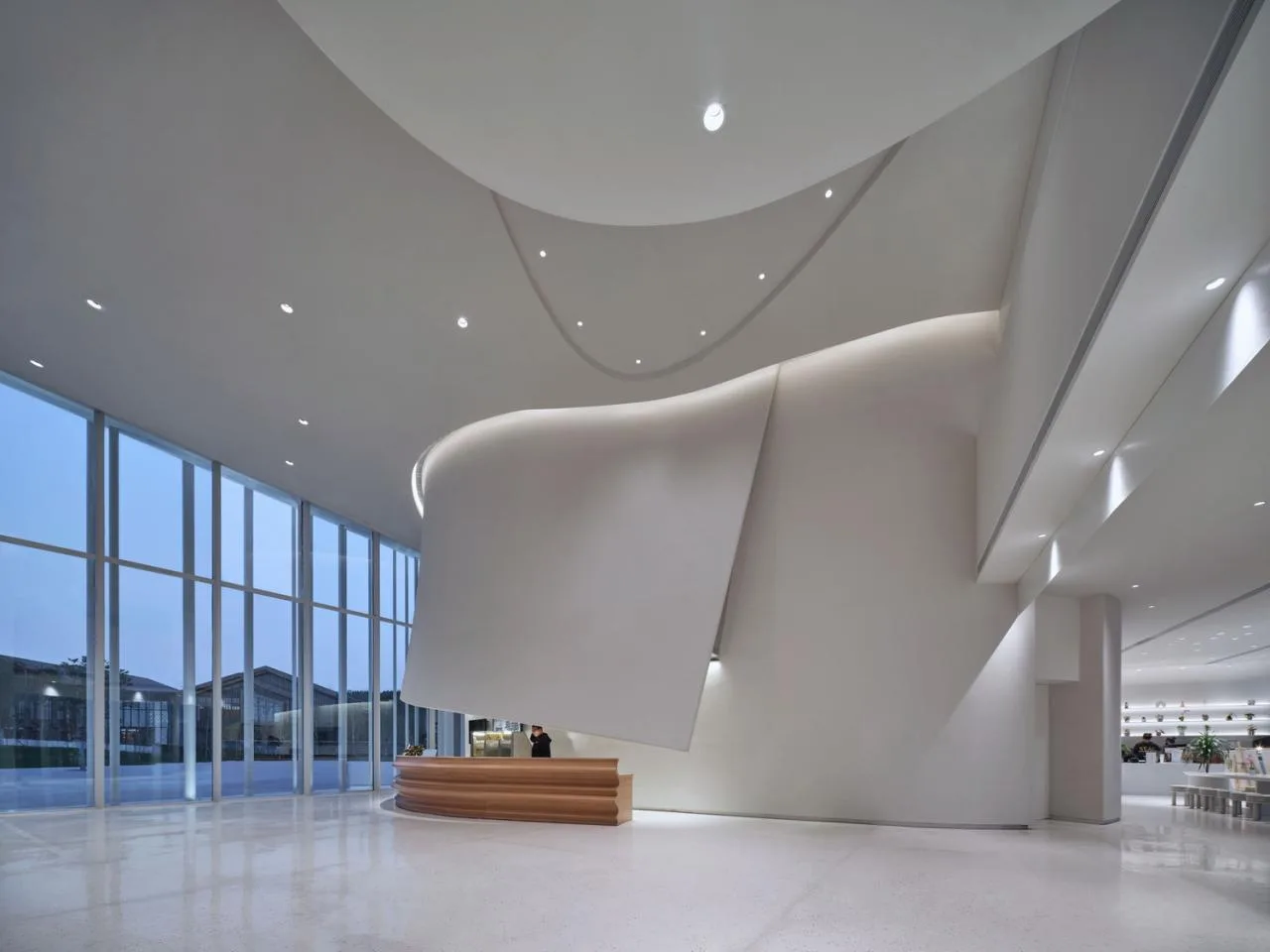
The interior functions as an art museum, with walls and ceilings serving as key exhibition elements © Photography by Zhang Yong
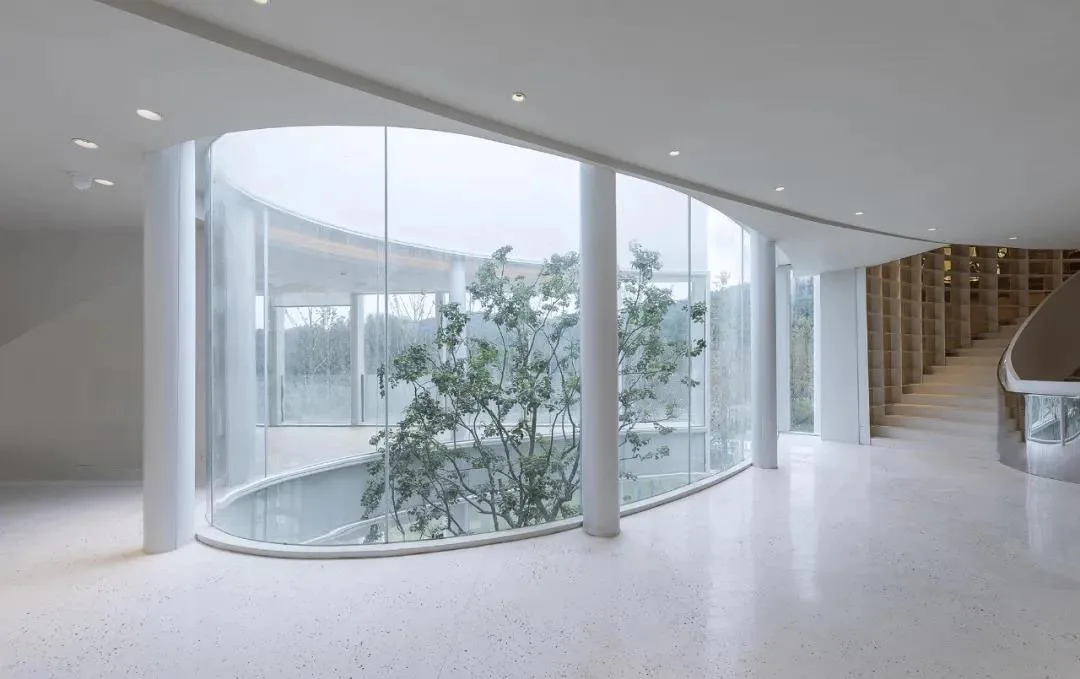
△ Waterdrop Courtyard © Sunac
The building’s glass walls on three sides optimize natural light entry. Inside, a water droplet-shaped glass courtyard allows sunlight to scatter over the curved walls, brightening the interior.
During the day, the interior resembles a white art museum composed of light and curved surfaces; at night, these surfaces transform into the building’s illuminated facades.
We furnished the interior with a few custom-designed metal and transparent pieces, avoiding excessive colors or childish motifs to preserve children’s appreciation of beauty.
No structural columns are visible inside. We concealed them using three strategies: embedding large columns within variable cross-section interior walls; designing special cross-sections for curtain wall columns; and hiding others within decorative column clusters under the eaves. The result is a clean, unobstructed interior.
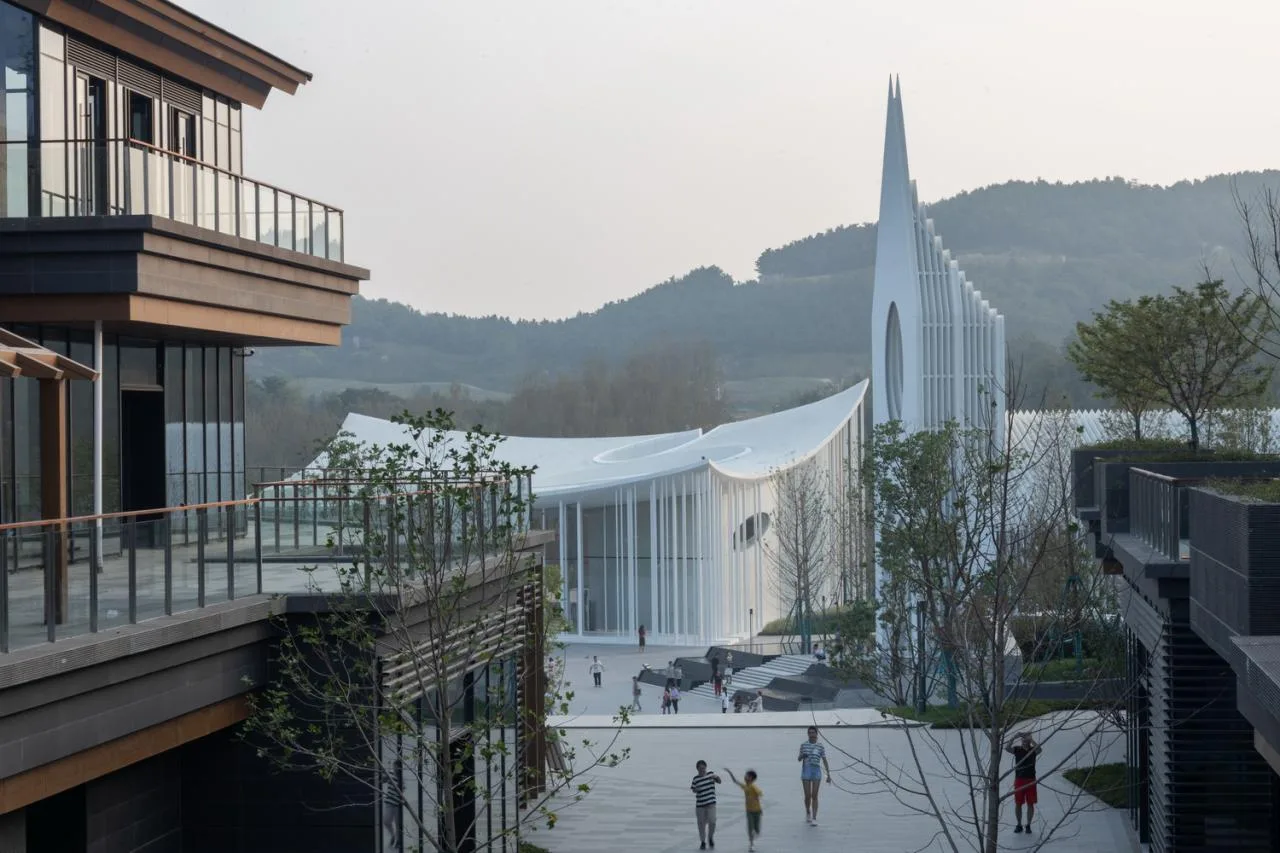
△ Viewed from the street © Photography by Liang Wenjun
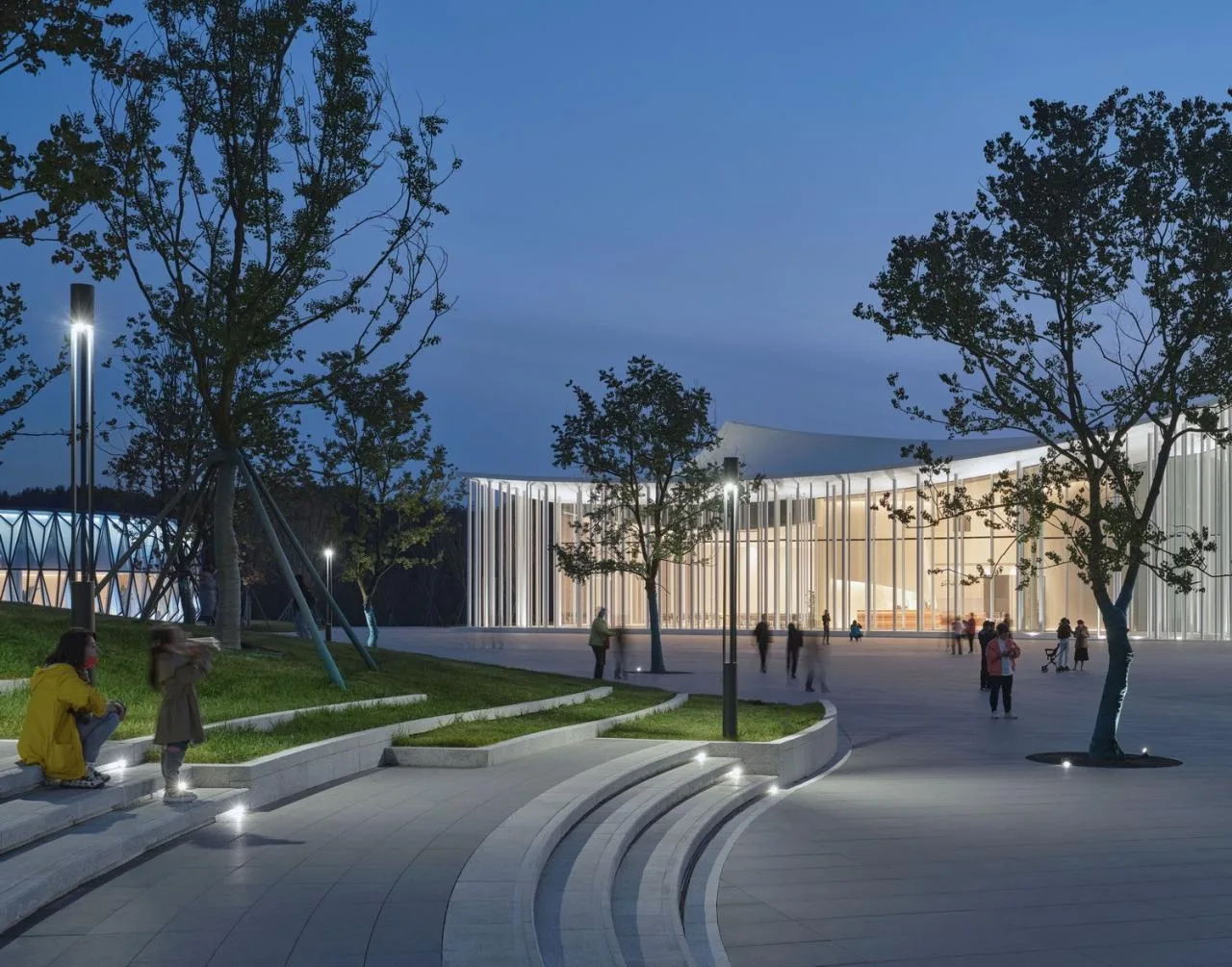
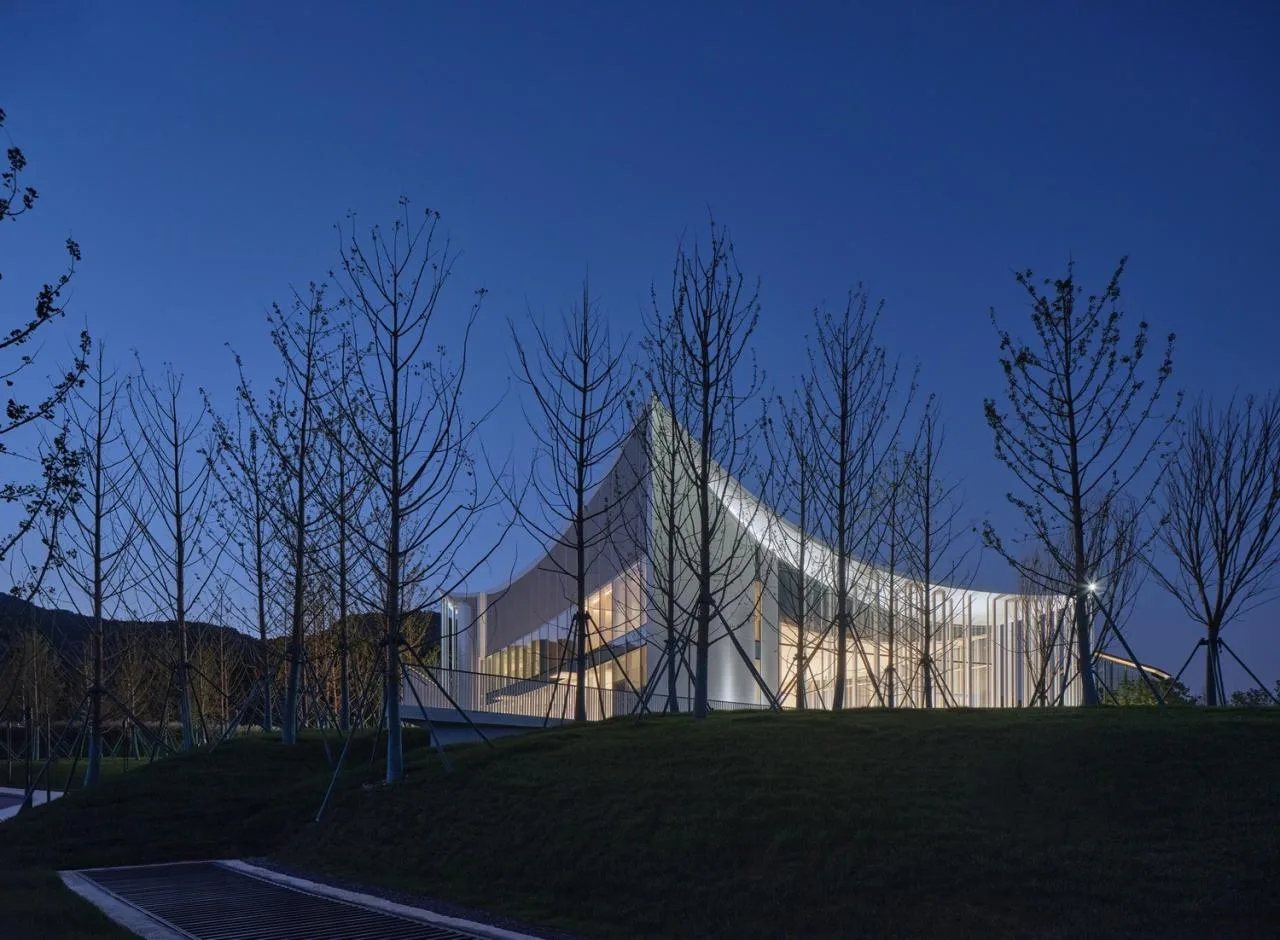
At night, the interior walls and ceilings become the building’s glowing facade © Photography by Zhang Yong
Following the opening on September 30th, the National Day holiday saw 150,000 visitors to Ado Town, home to the flying carpet.
On site, children wandered and played in the “white jungle,” the multifunctional hall hosted Marvel exhibitions, the Ado Wanda cinema screened movies on the first floor, families relaxed in the 1918 café, and the second floor housed exclusive dance and painting studios for children. The Ado Nature Study Camp, combined with outdoor venues, has also opened. Over 1,000 small buildings create a rich and diverse ecological complex.
Project Drawings
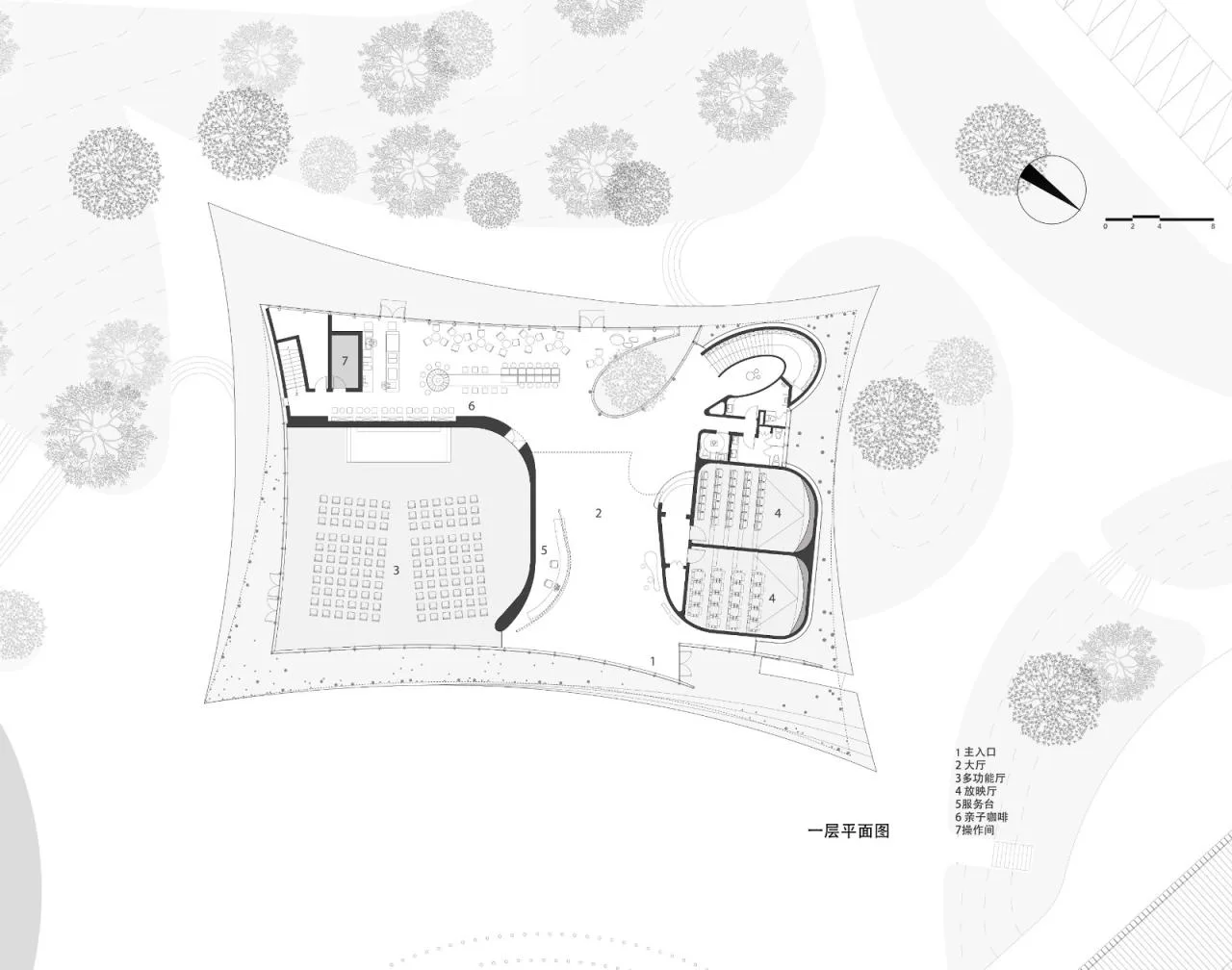
△ First Floor Plan
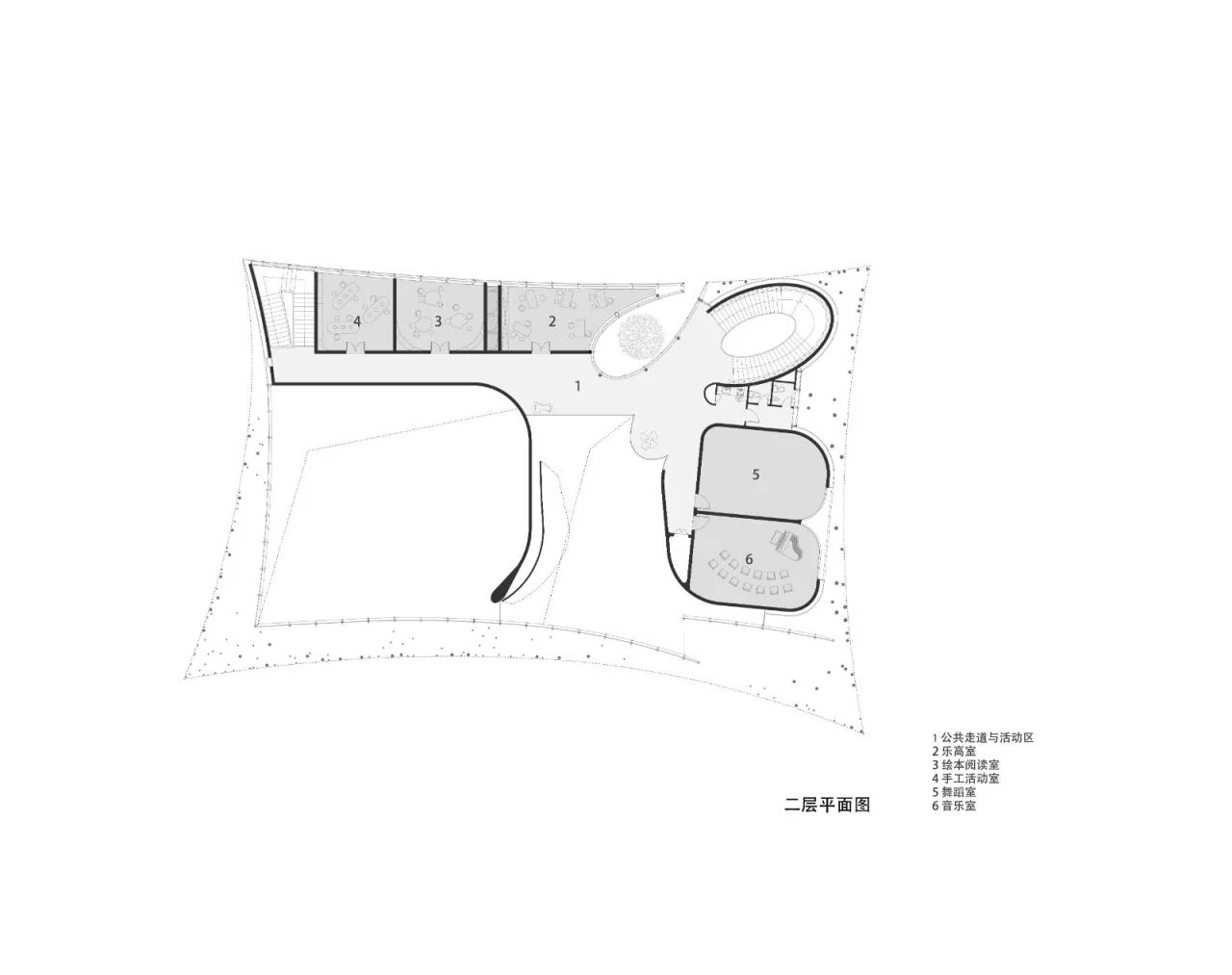
△ Second Floor Plan
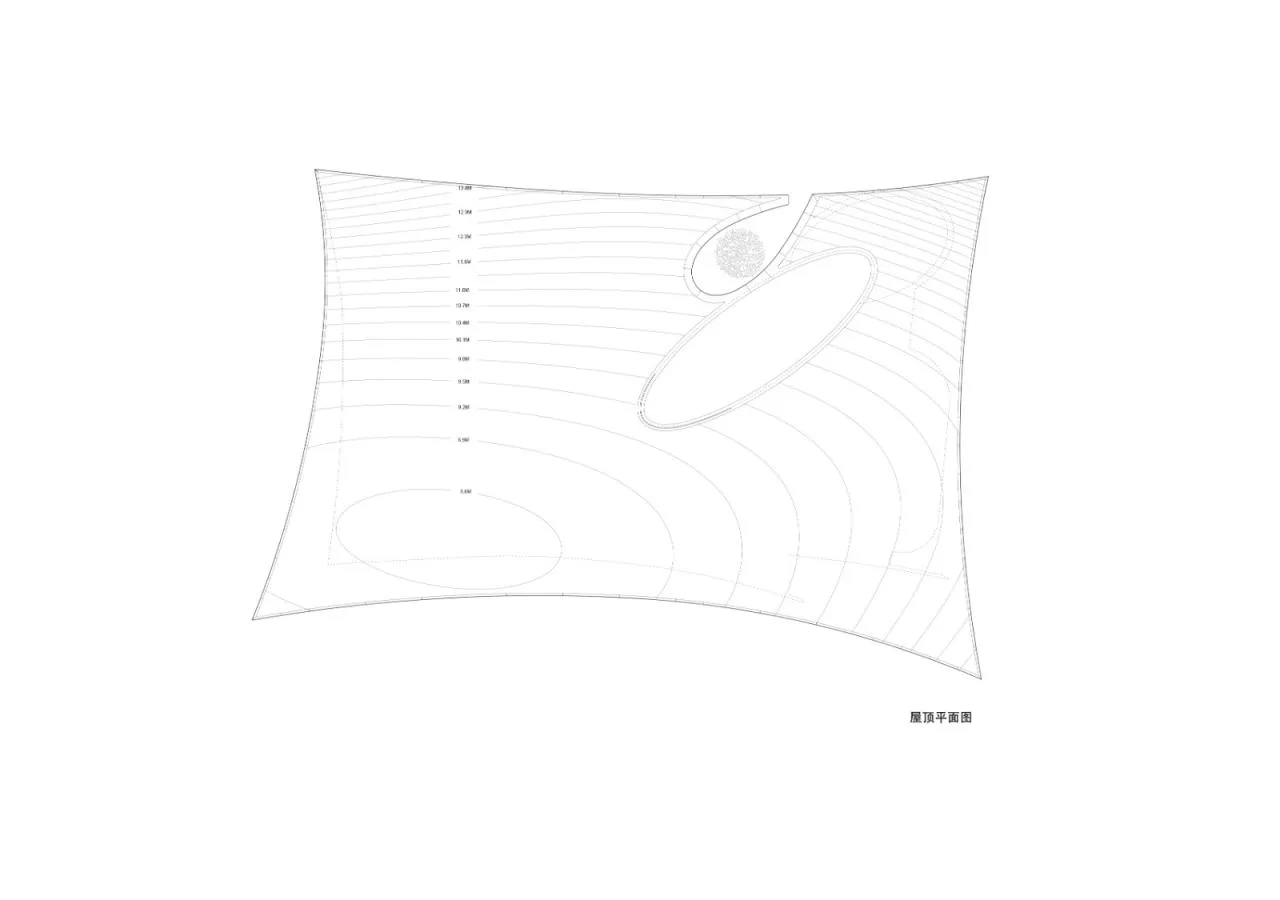
△ Roof Plan
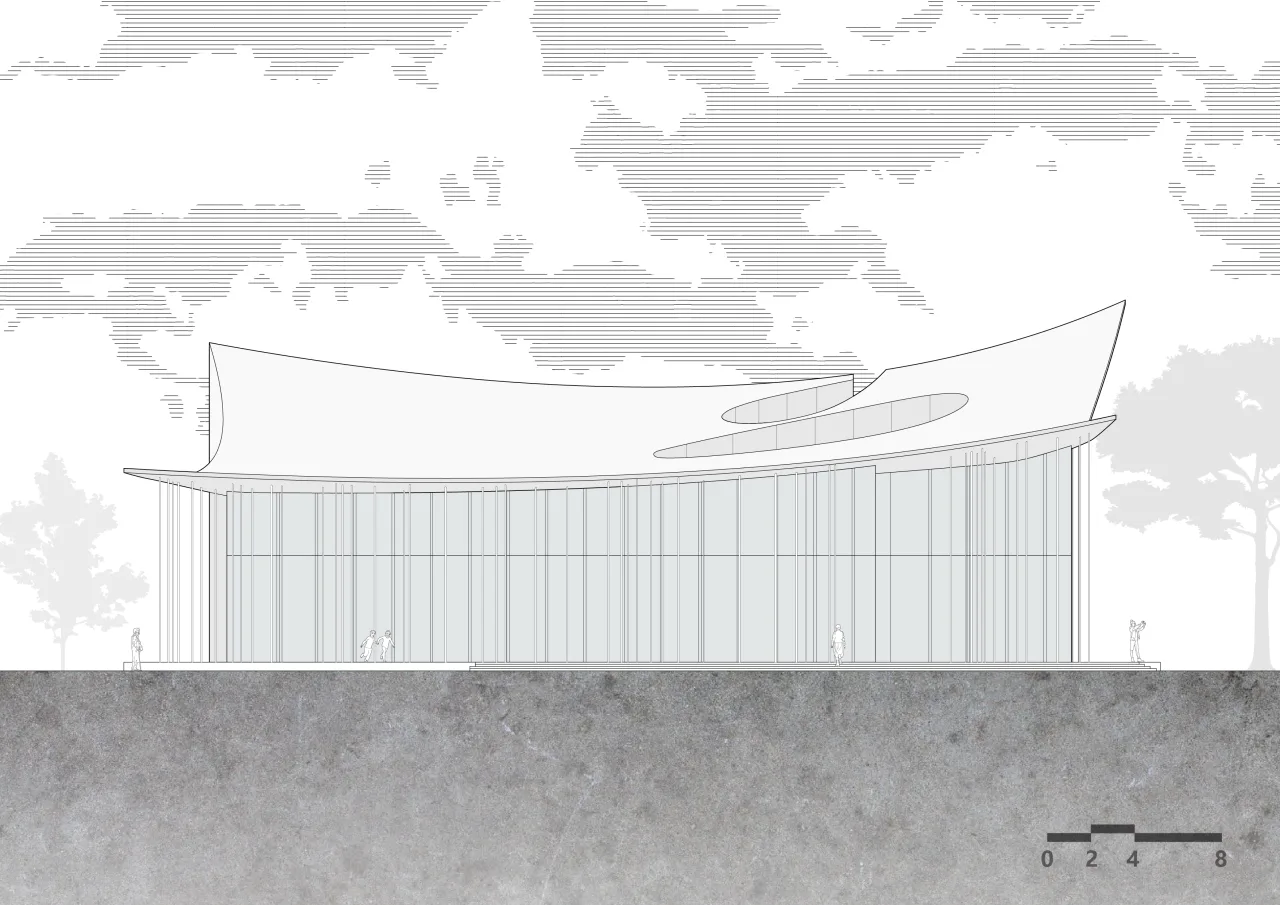
△ Elevation Drawing
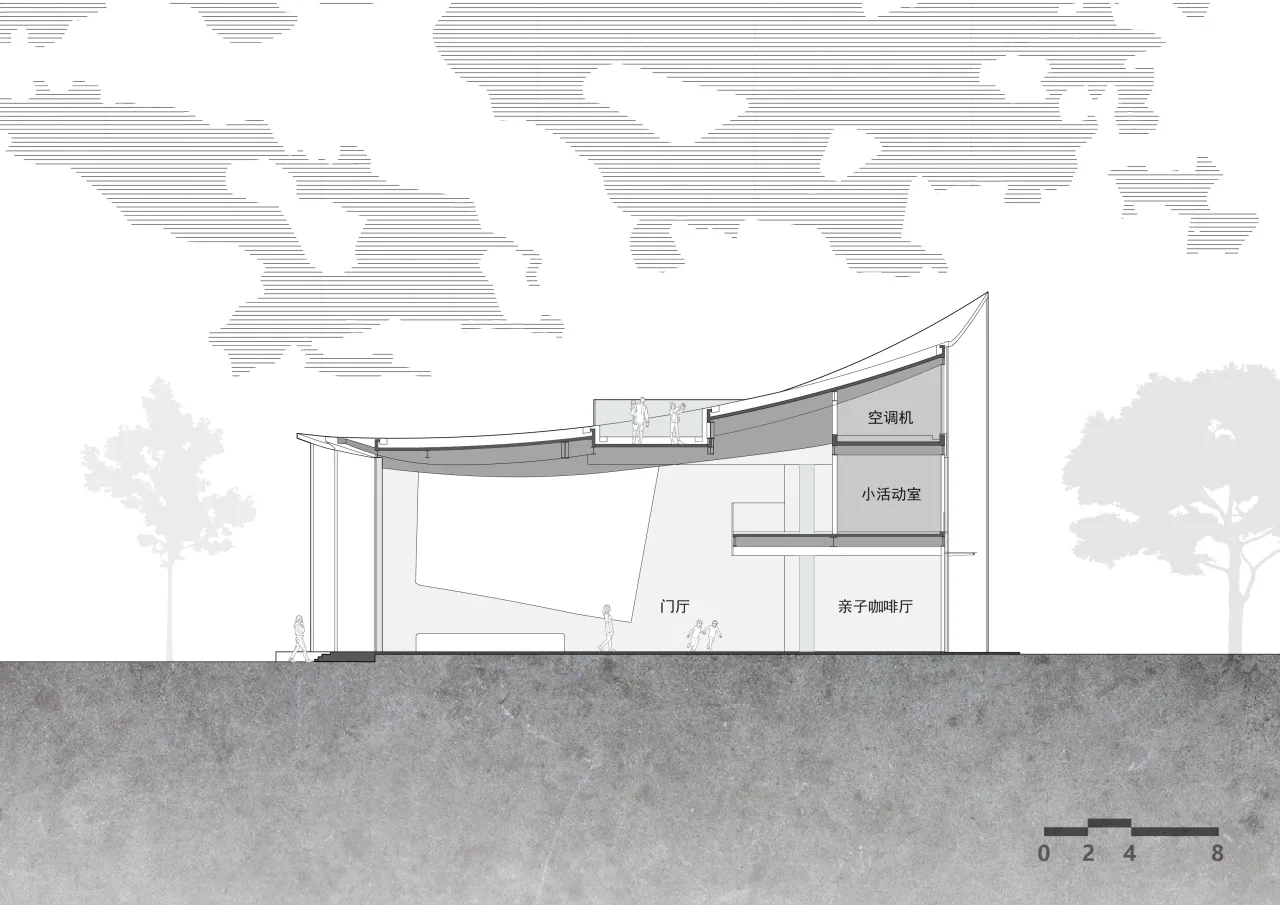
△ Section Diagram
Project Information
Project Name: Ado Town Parent Child Activity Center
Project Type: Architectural Design (Main), Interior Design
Location: Zangma Mountain, Qingdao, China
Architectural Design: Qicheng Design
Interior Design: Qicheng Design
Landscape Design: Aopai Landscape Design
Lighting Consultant: Beijing Guanghu Pru Lighting
Office Website: gn-int.com
Lead Architects: Shen Lijiang, Cui Hengxuan
Principal Designers: Shen Lijiang, Cui Hengxuan
Project Leader: Cong Yanfei
Structural Design: Xu Zheng
Curtain Wall Design: Lu Qiyue
Mechanical and Electrical Design: Fan Zhigang, Deng Tengteng, Zhou Chuan
Interior Design Team: Fan Taoxiang, Chen Xuebo, Wang Yuqi, Wei Ming, Huang Weijing, Qiu Jiajia
Owner: Rongchuang Beijing Group
Status: Built
Design Period: August 2020 (start)
Construction Period: September 2021 (completed)
Building Area: 1,455 square meters
Photographers: Zhang Yong, Liang Wenjun















Must log in before commenting!
Sign Up