
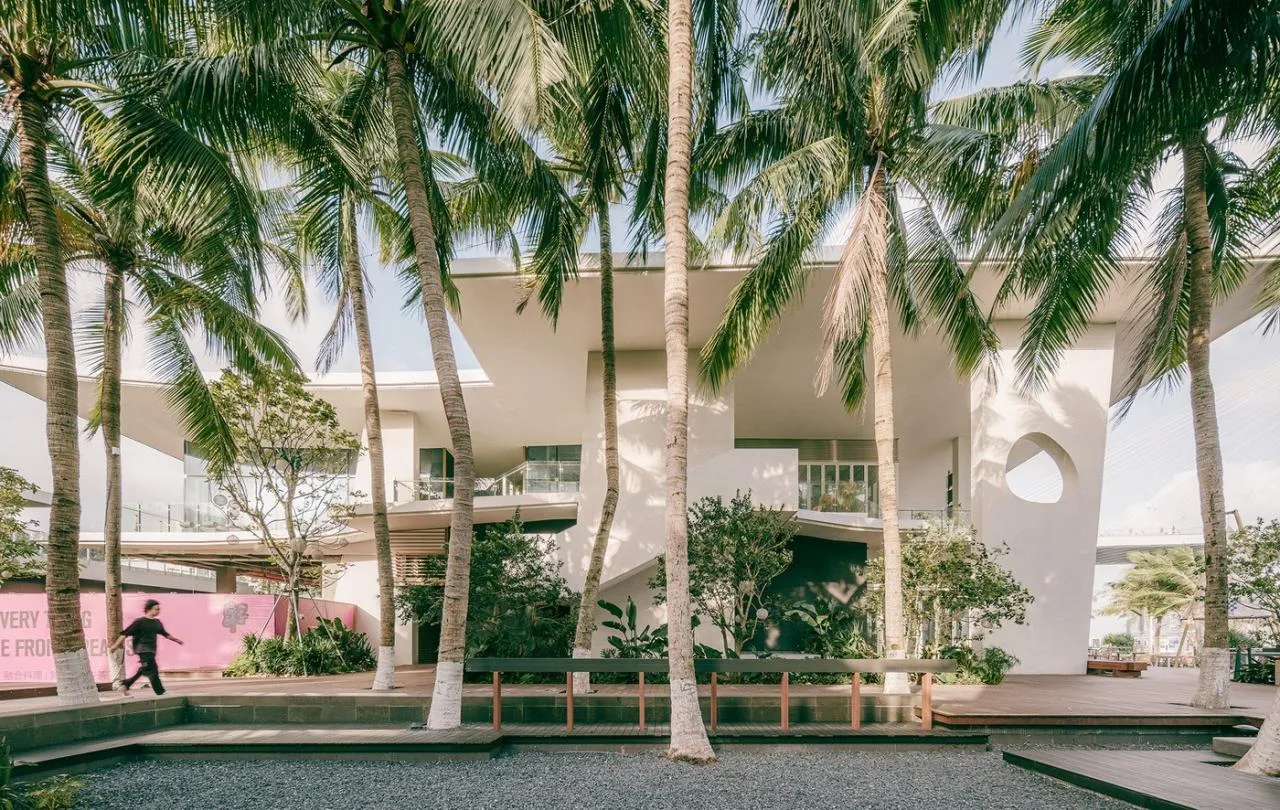
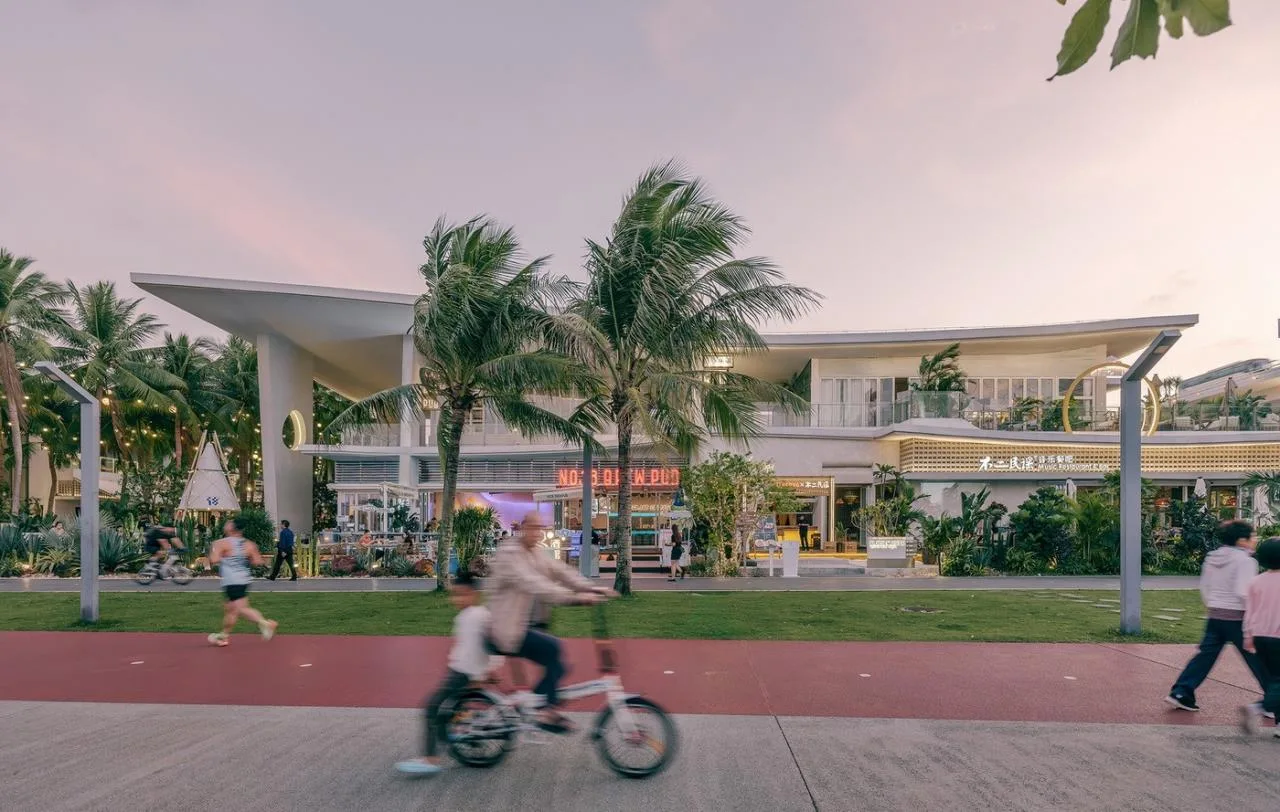
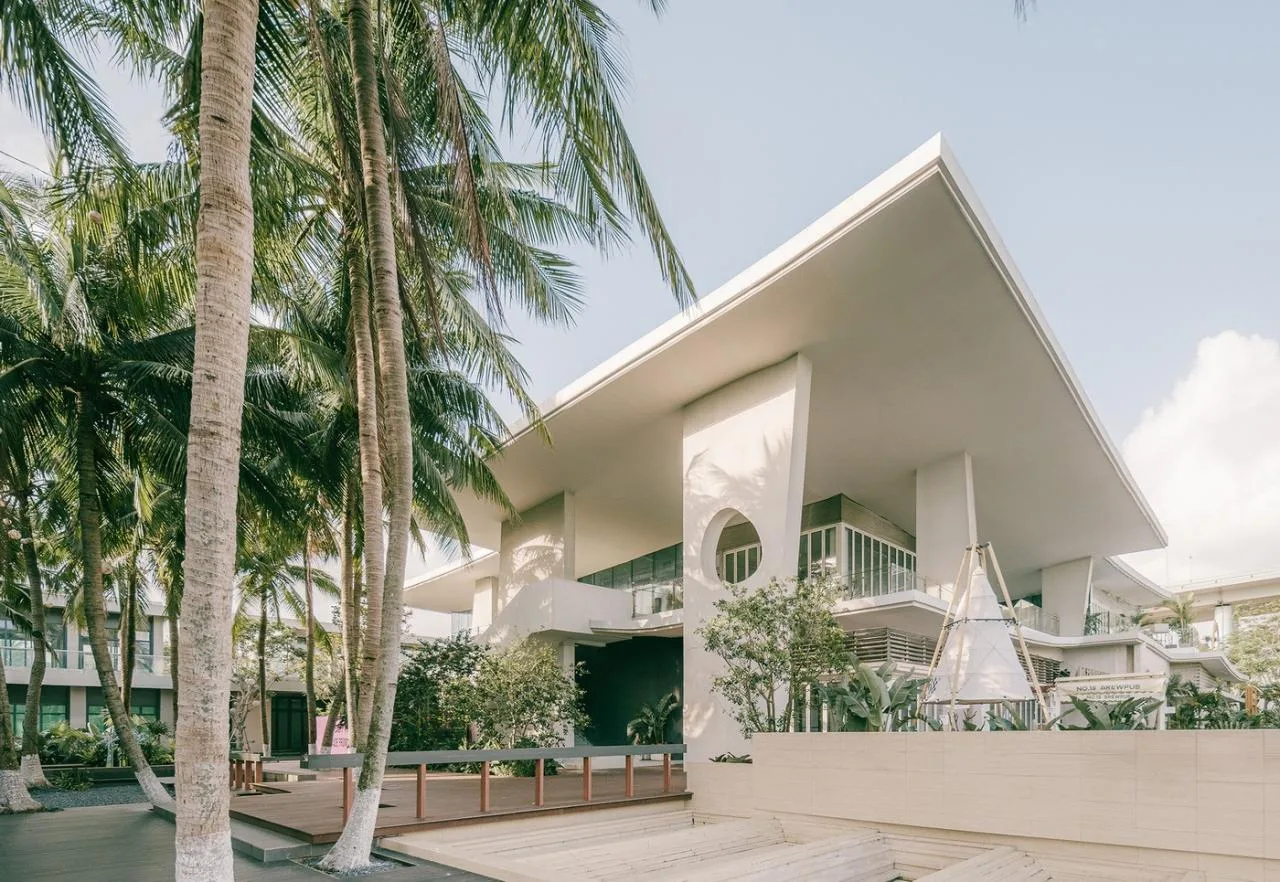
Creating a vibrant living scene through architecture can be even more captivating than simply constructing a building. On a tropical island, where feather-shaped broad leaves cast dancing shadows under endless blue skies, the structure takes shape like a thin cloud floating by the water’s edge, with freely extending roofs. Visitors often pause beneath these cloud-like canopies to eat, chat, or simply sit cross-legged in relaxation.
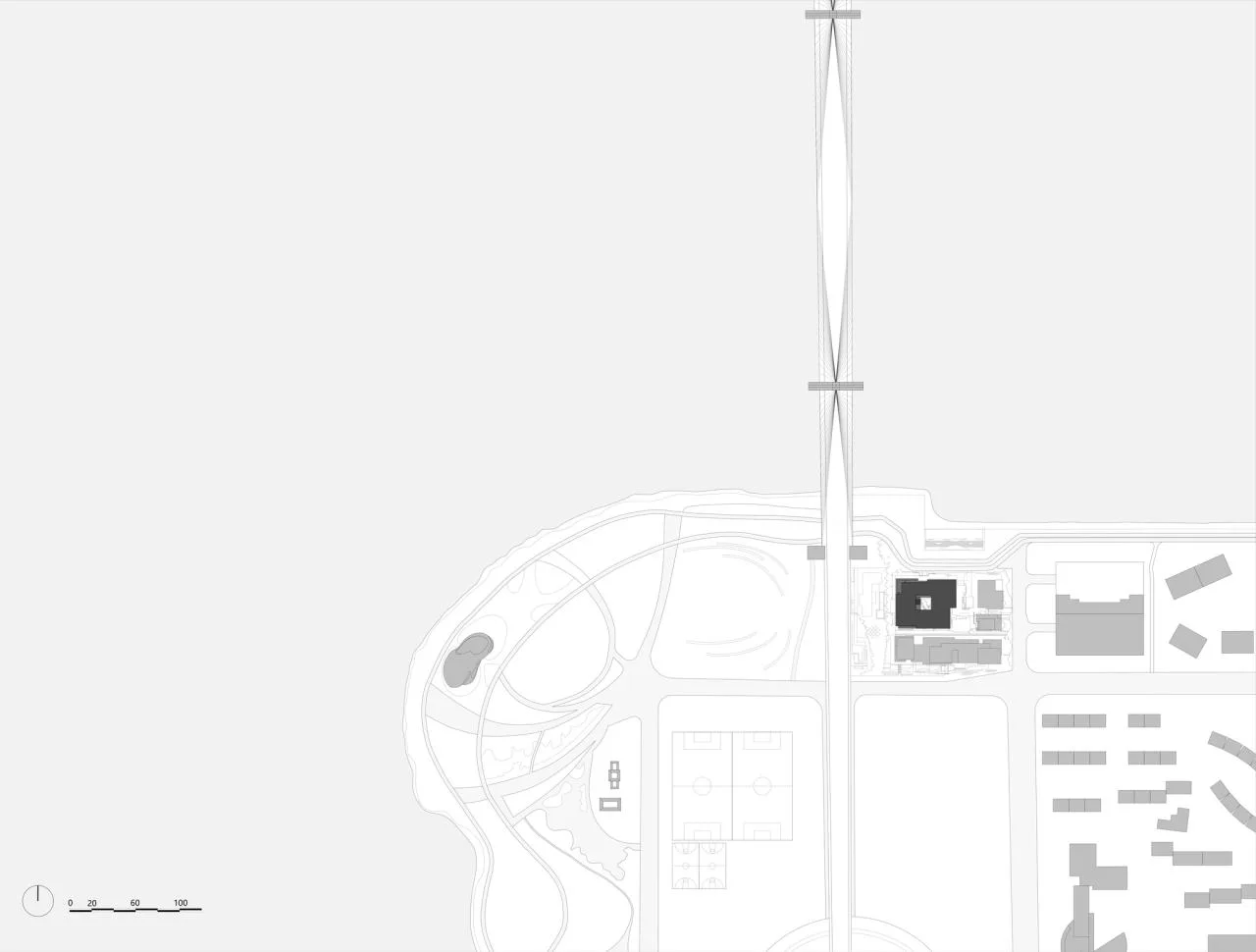
The Century Cape project is situated in the northeast corner of Century Park in Haikou City, Hainan Province. Across the park’s northwest corner stands Haikou’s new landmark, the “Yundong Library,” a round white cloud of a building. Inspired by this, we initially envisioned a thin, dark cloud of roofs to complement it. However, the client preferred a lighter palette—white, which also works beautifully.
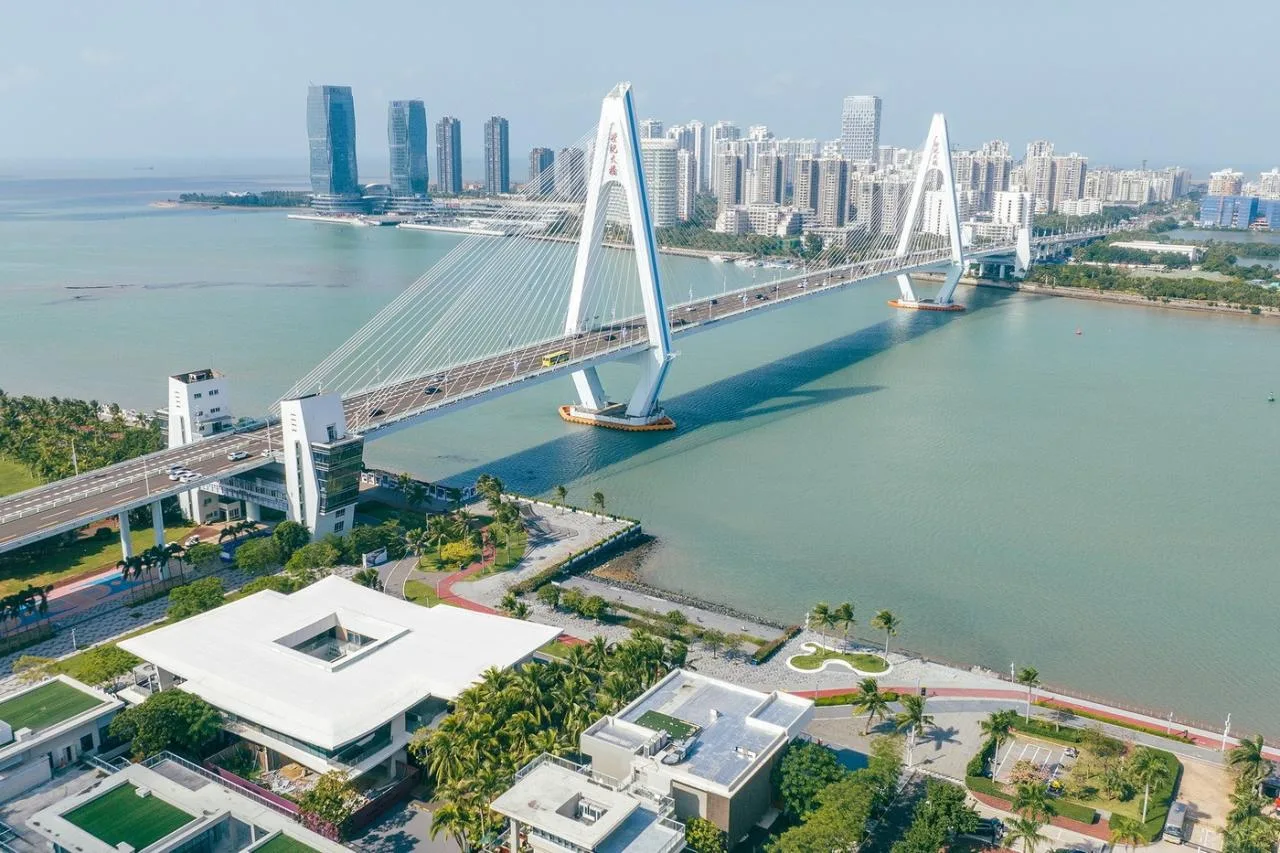
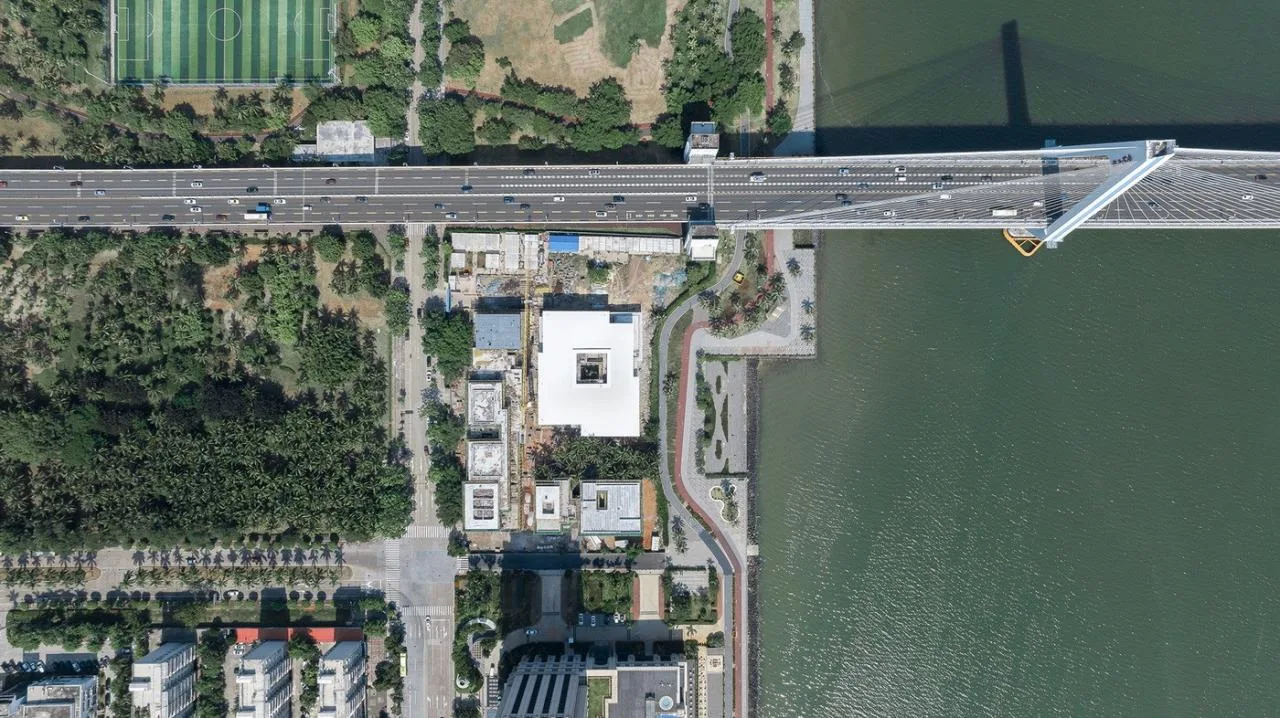
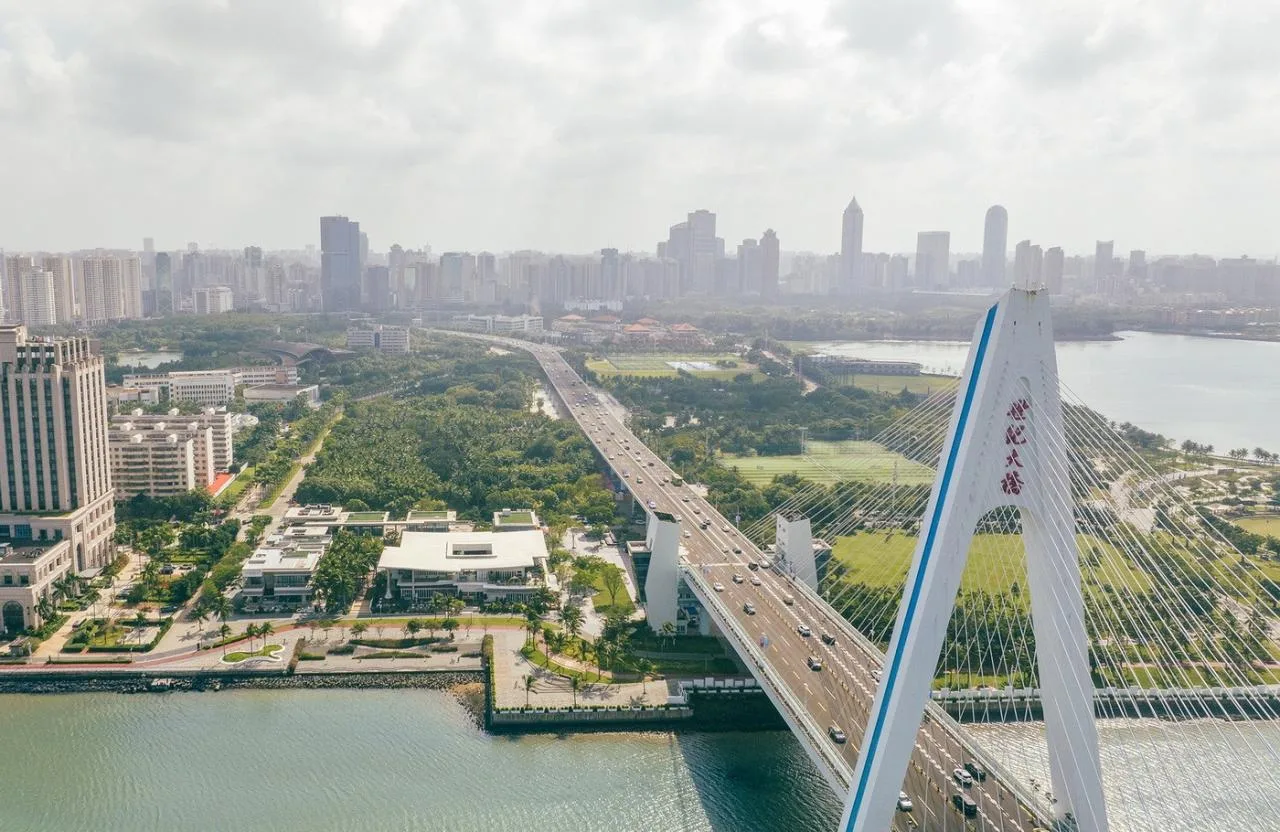
The site is a regular rectangle facing the mouth of the Haidian River, with Century Bridge to the west separating it from Century Park. Currently undeveloped, the south side hosts a bus parking lot, while the east side borders a hotel and residential area frequented by tourists and locals alike. Given this context, the site’s function as a dining and leisure destination feels natural.
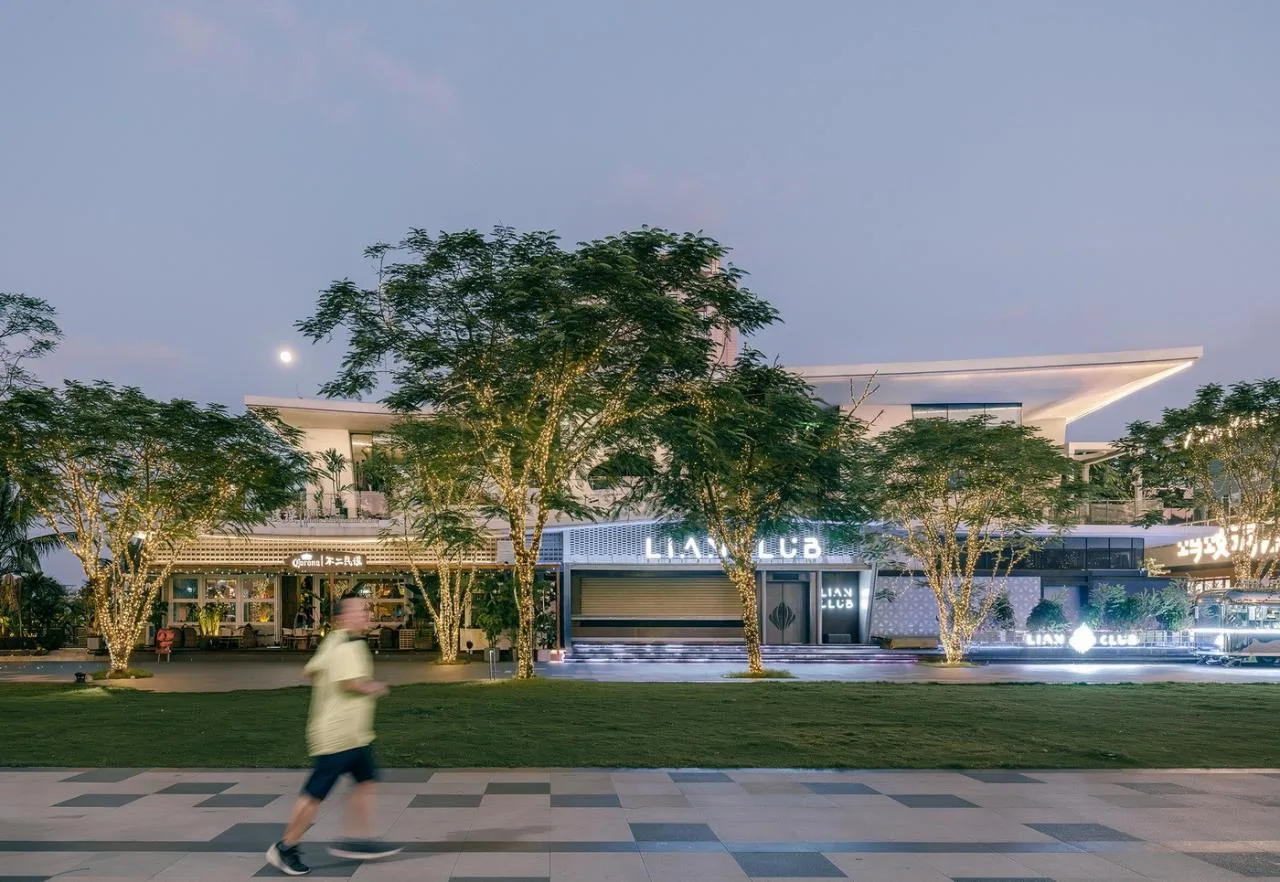
Residents taking evening strolls, tourists wandering in the park, and friends meeting up all gather here, enjoying the sounds and the sea breeze throughout both long days and short nights.
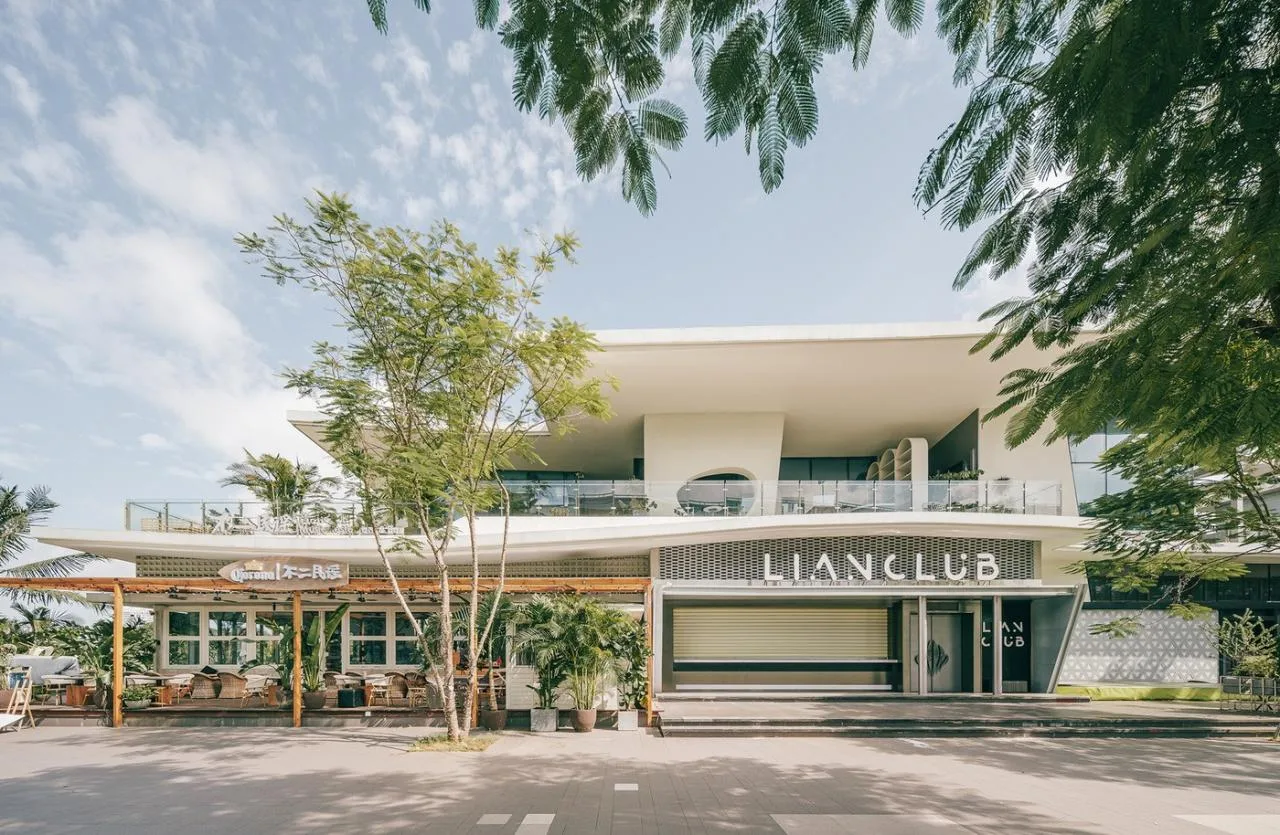
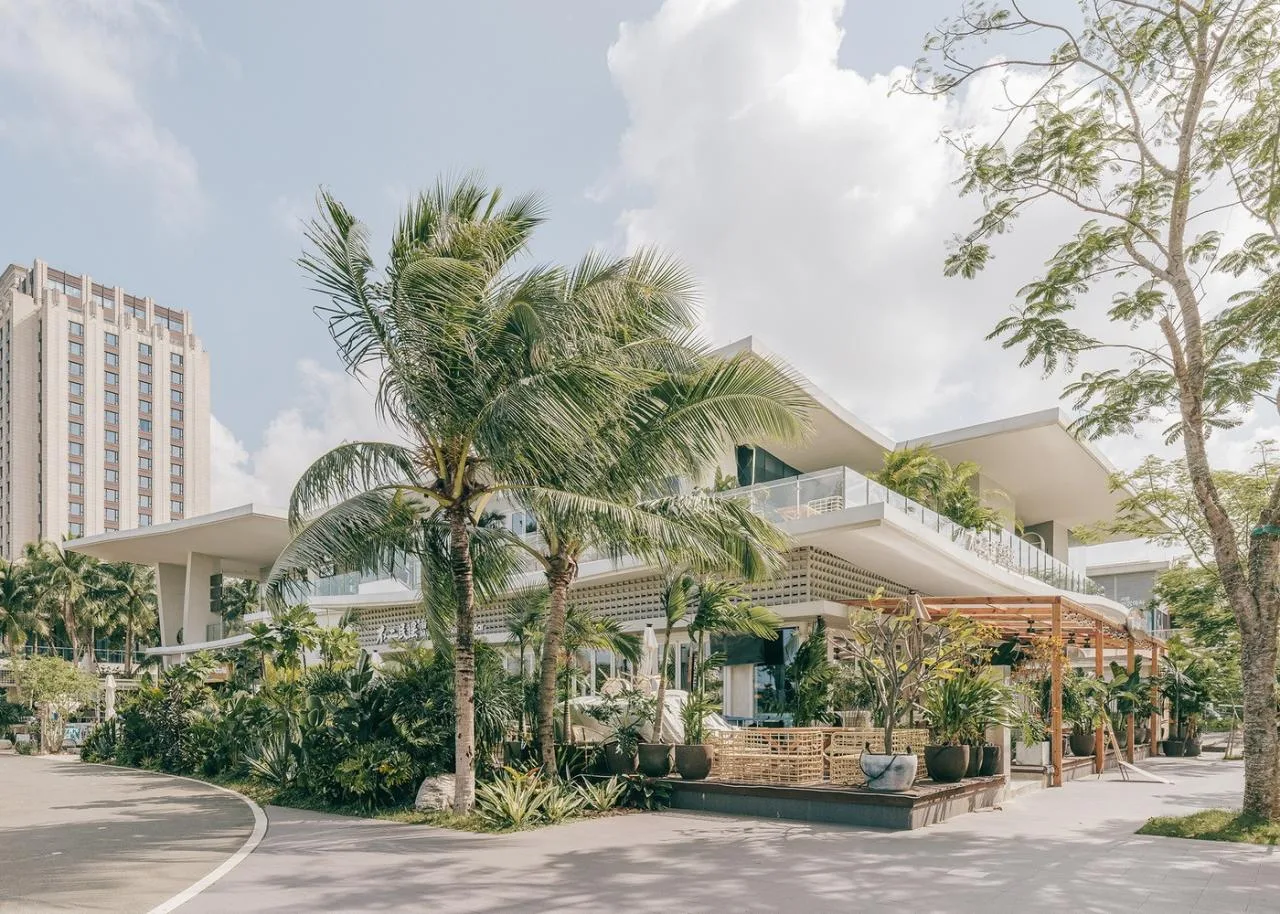
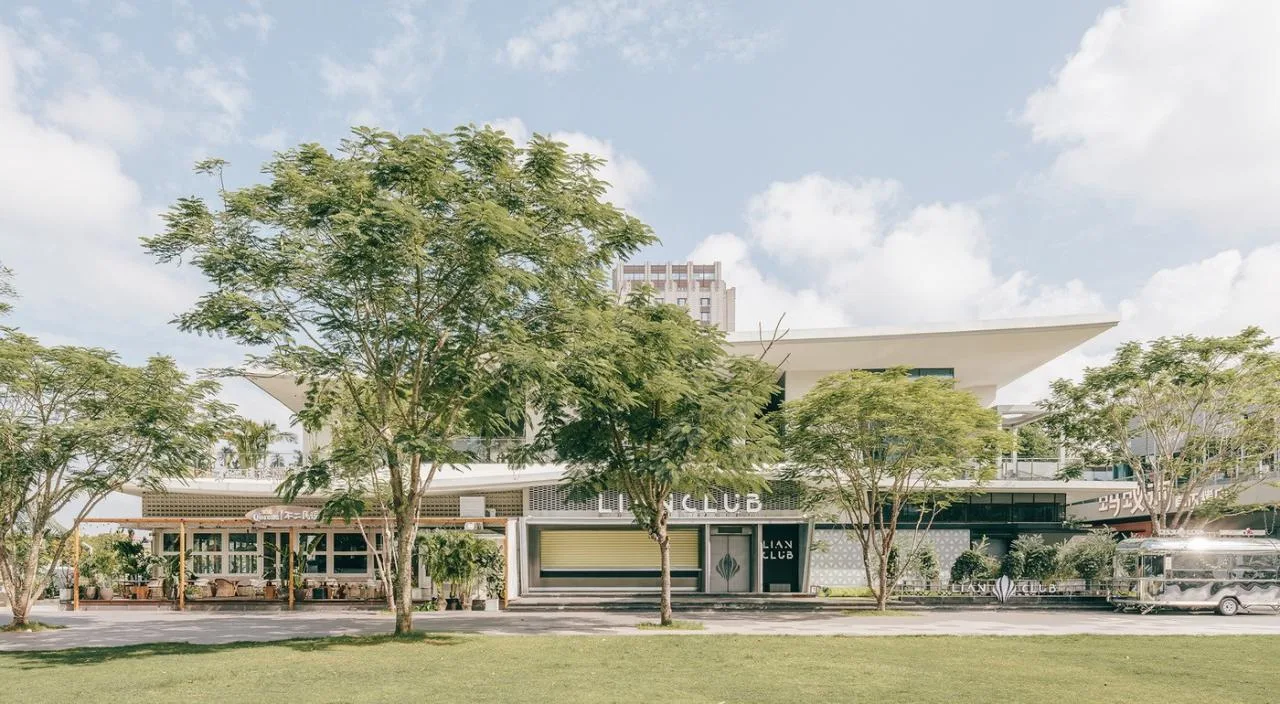
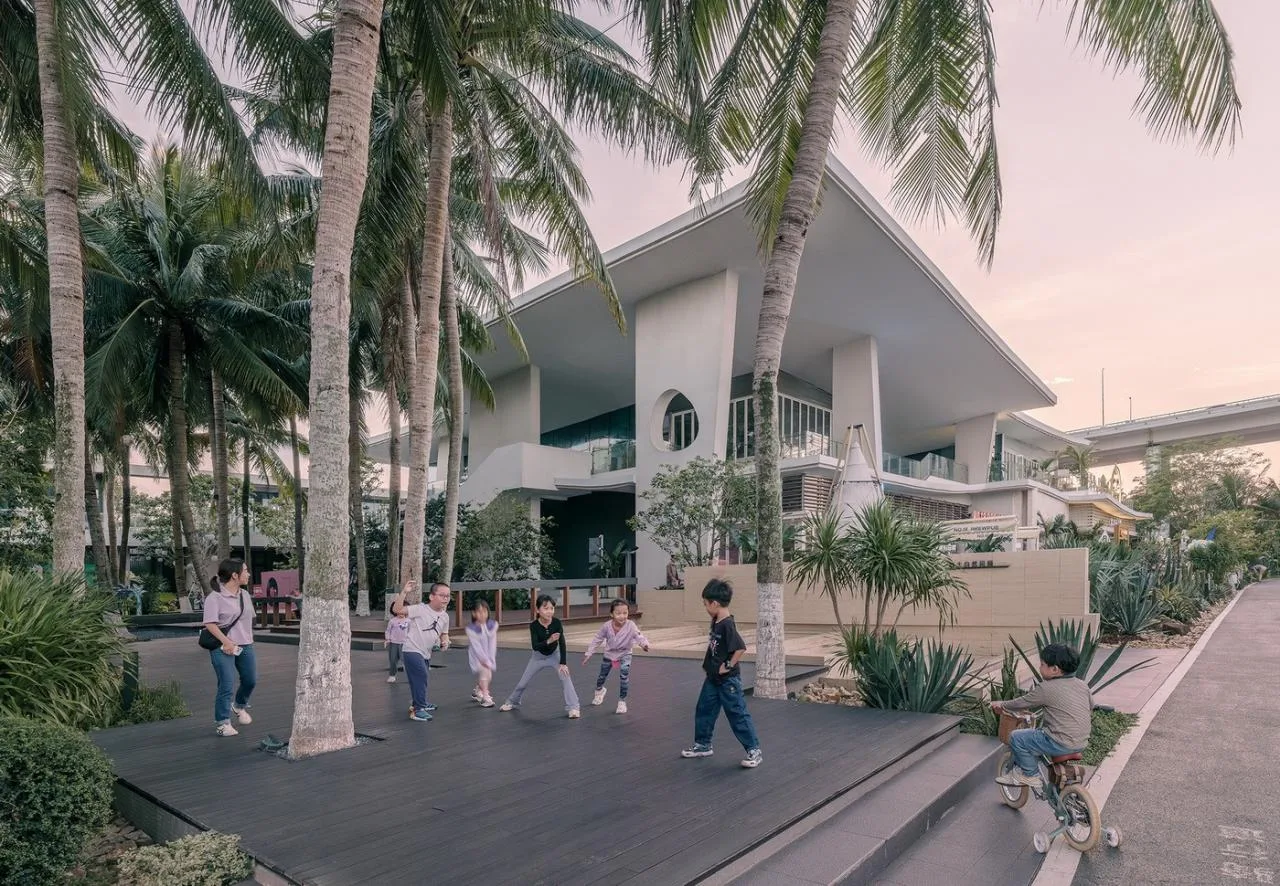
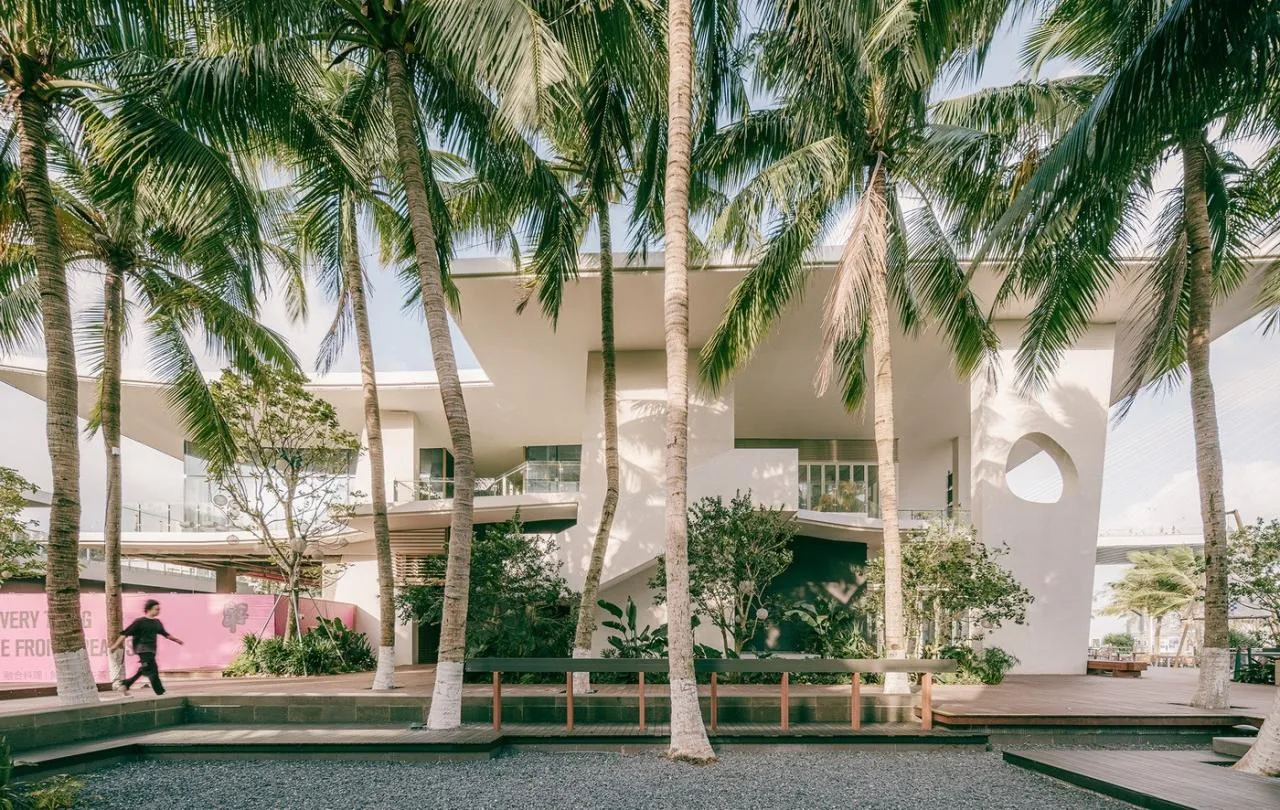
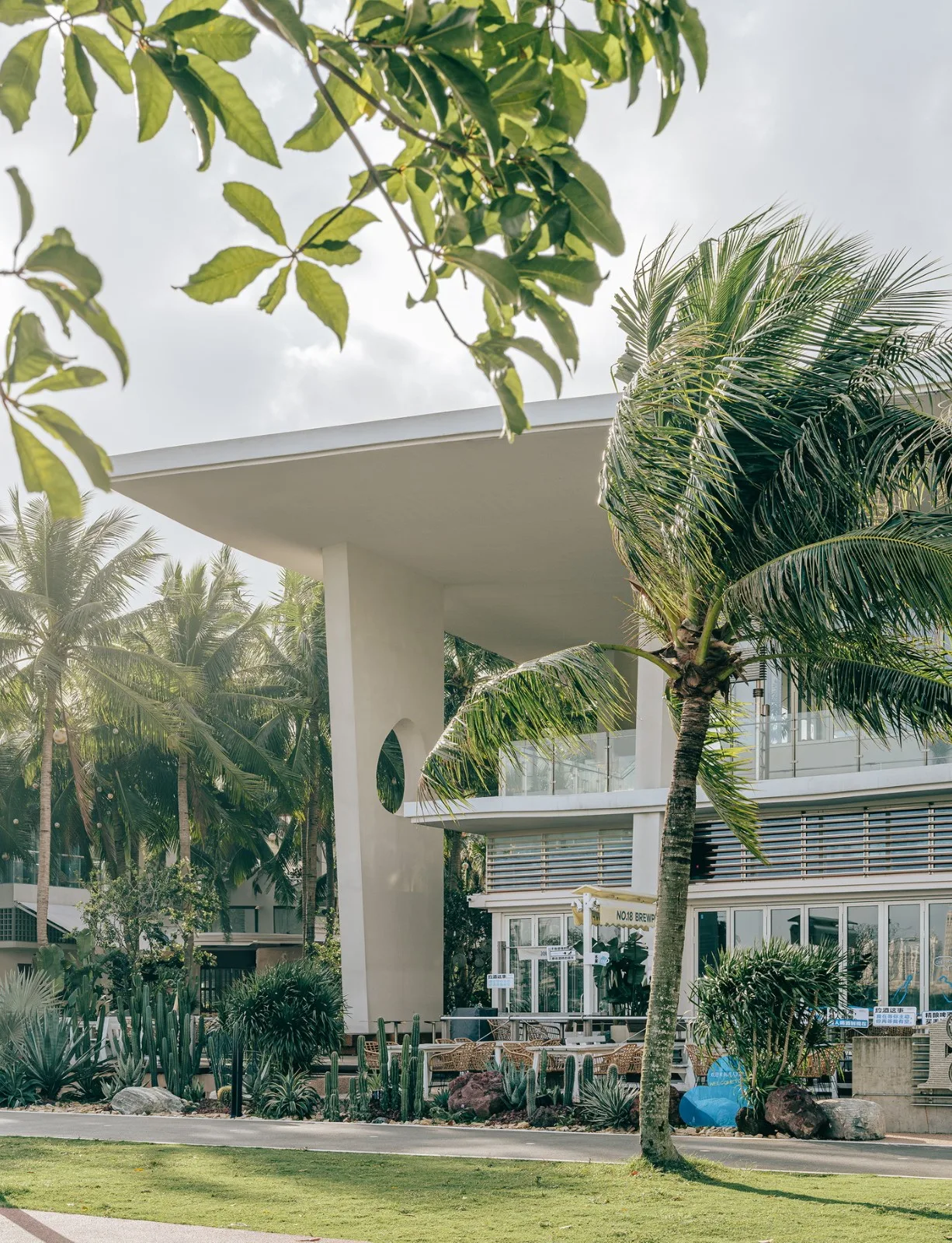
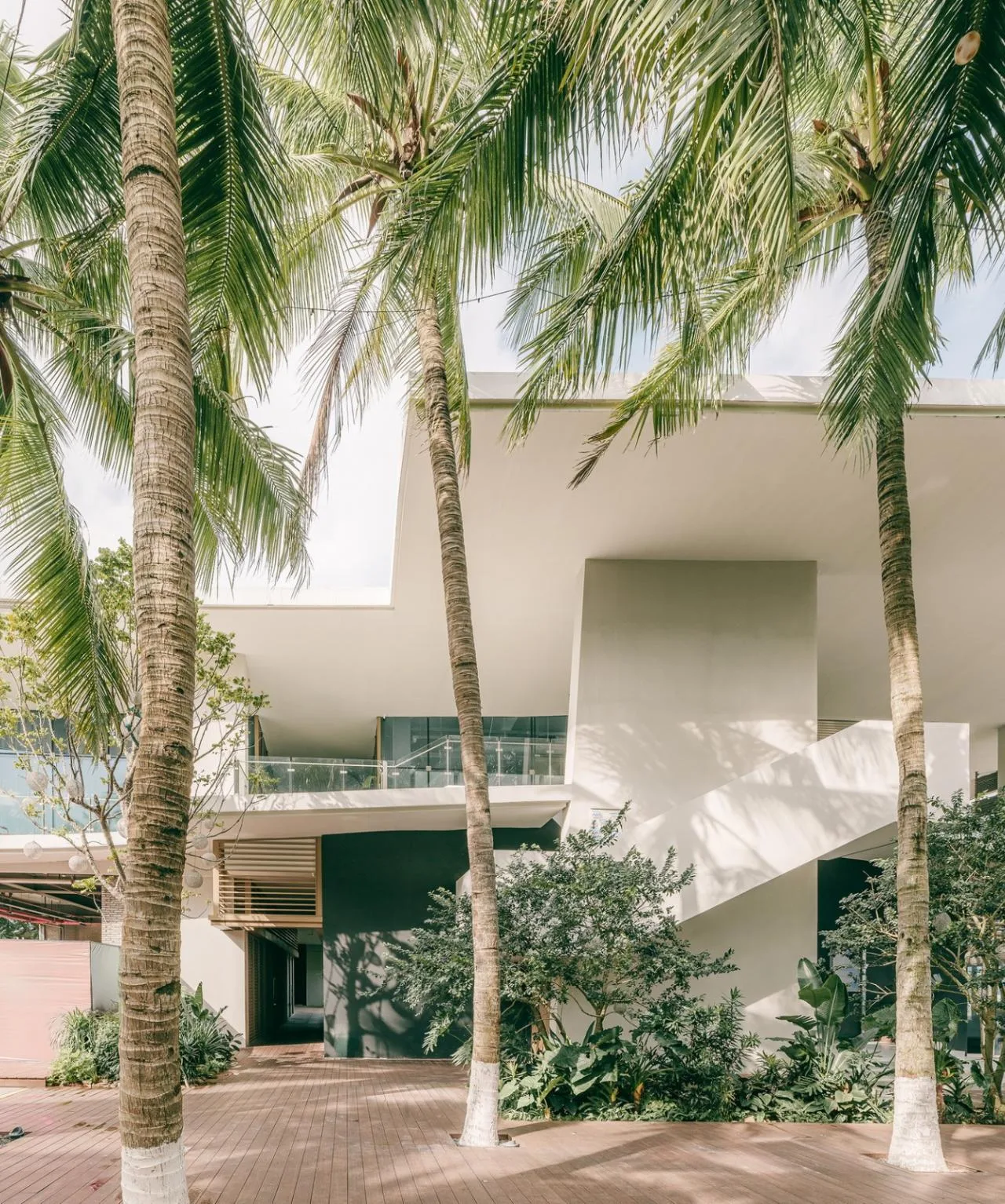
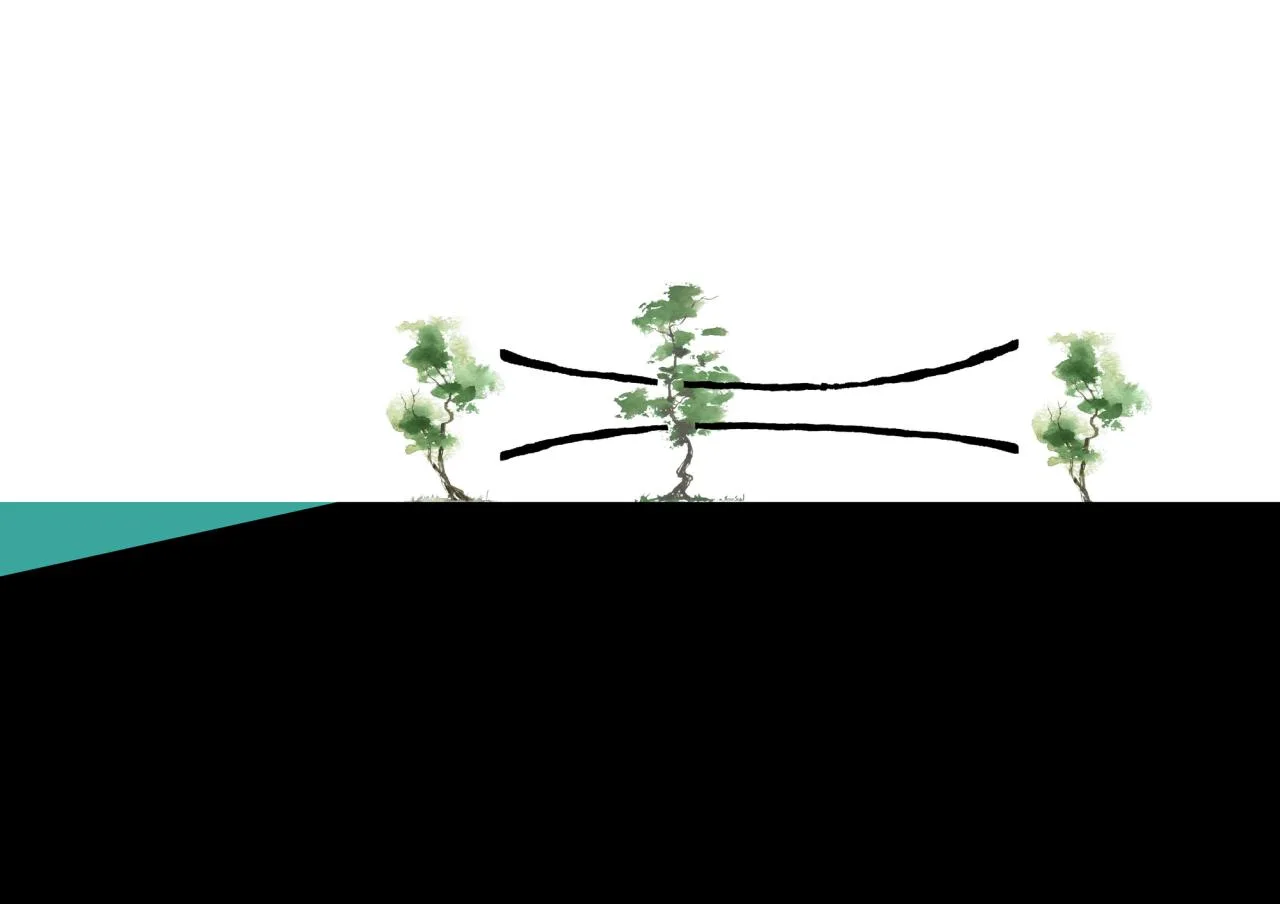
At the heart of the site once thrived a coconut grove alongside several large banyan trees. Our design aimed to preserve these natural elements, allowing the building to emerge organically from the leaf canopy. Wide eaves and foliage blend together to provide ample shade.
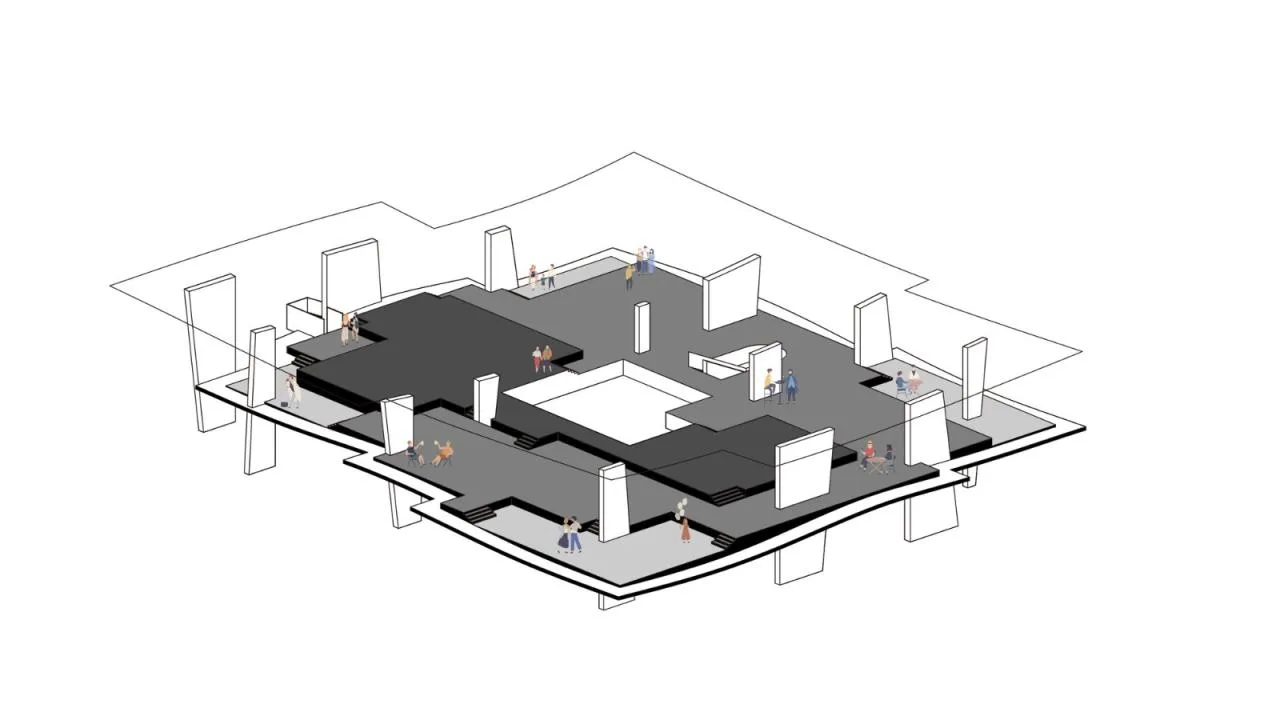
The building’s outline spreads and settles around the square-shaped coconut grove, granting the structure a natural boundary that feels free and close to nature. This design creates inviting outdoor spaces beneath large eaves and tree shadows, where visitors can relax. Inside, the building accommodates the growth of the trees, forming a shaded courtyard.
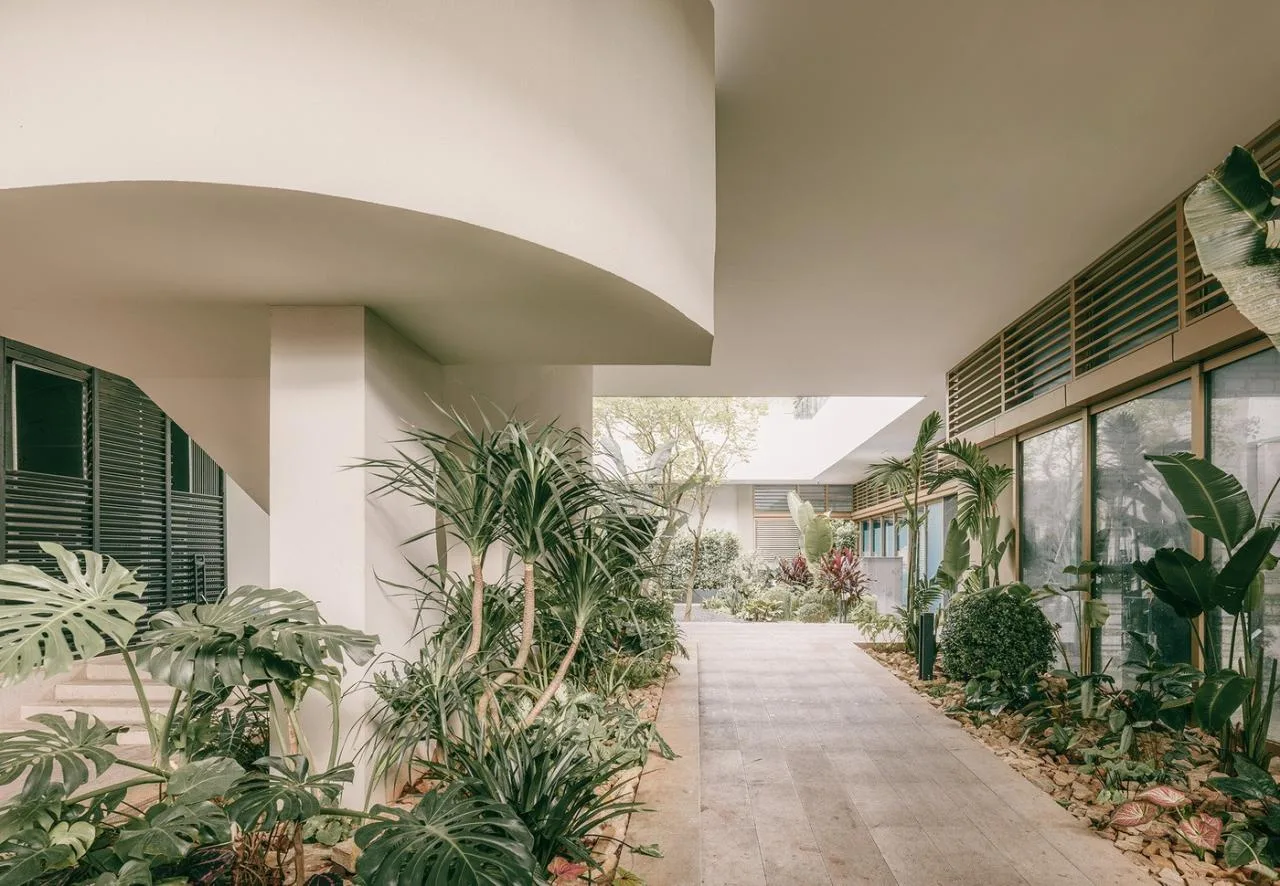
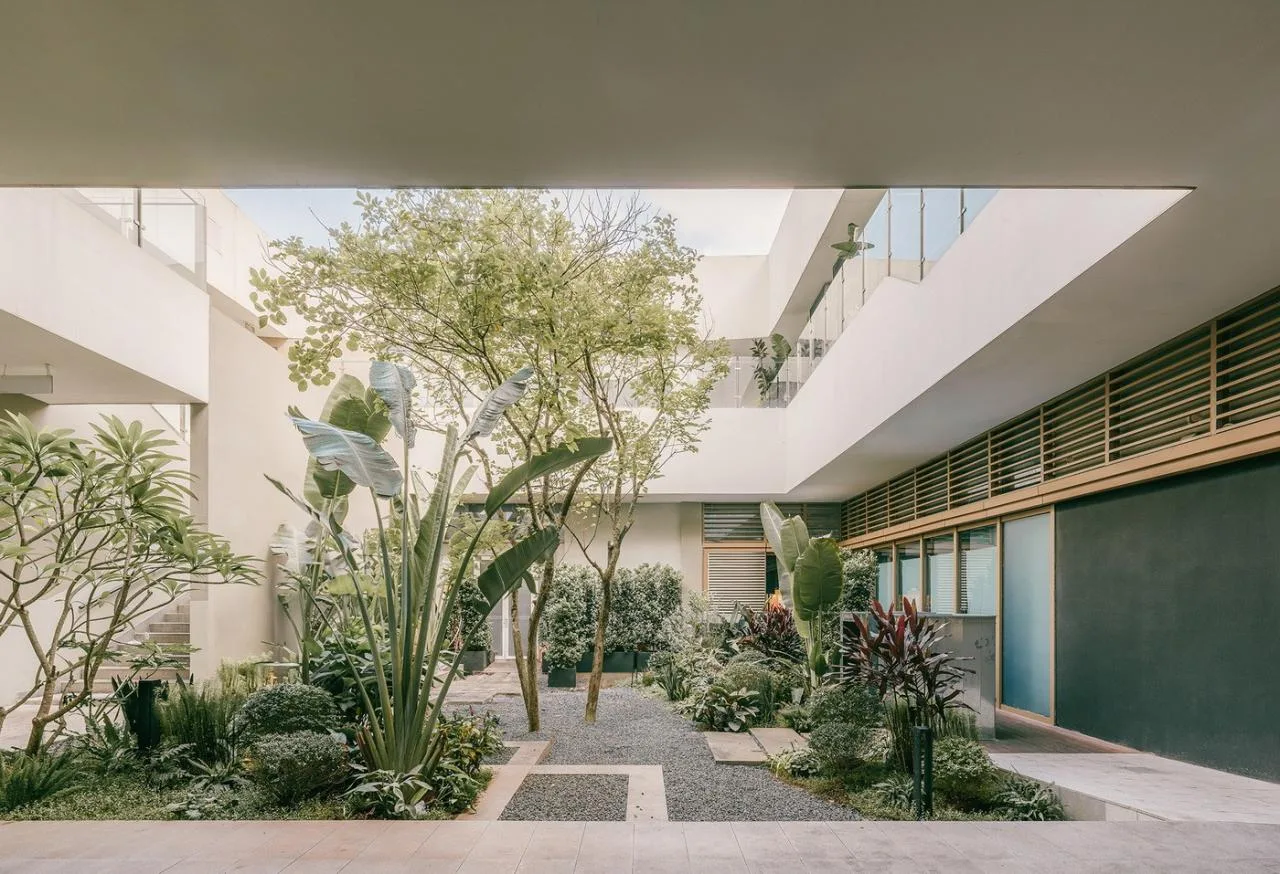
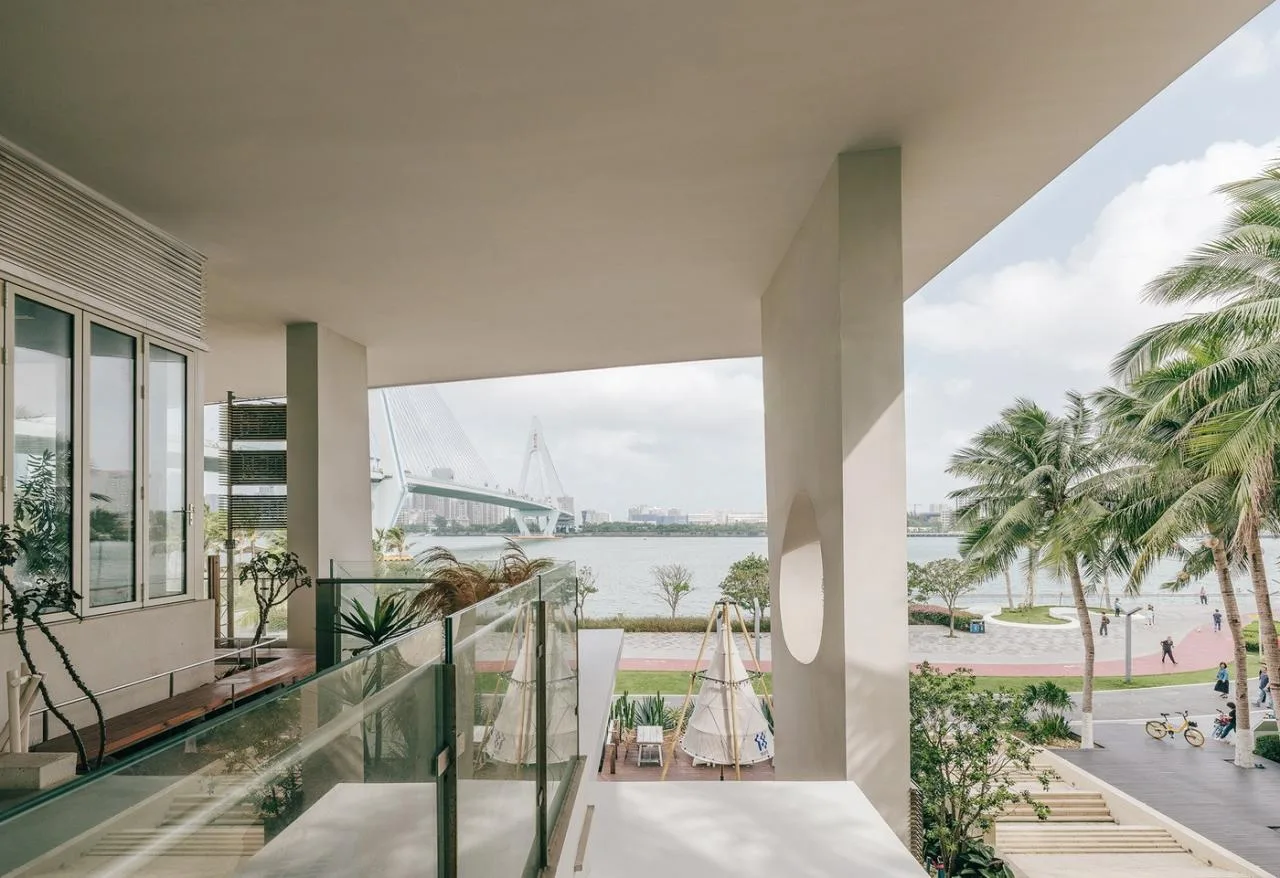
Encircling the courtyard are five L-shaped “boxes” designed to house individual stores. Each box comprises two levels with four exterior spaces on each floor, dedicated to a single business. These five shops, arranged in a centripetal layout, connect through the courtyard and face various directions—some by the water, others nestled beneath the coconut groves.
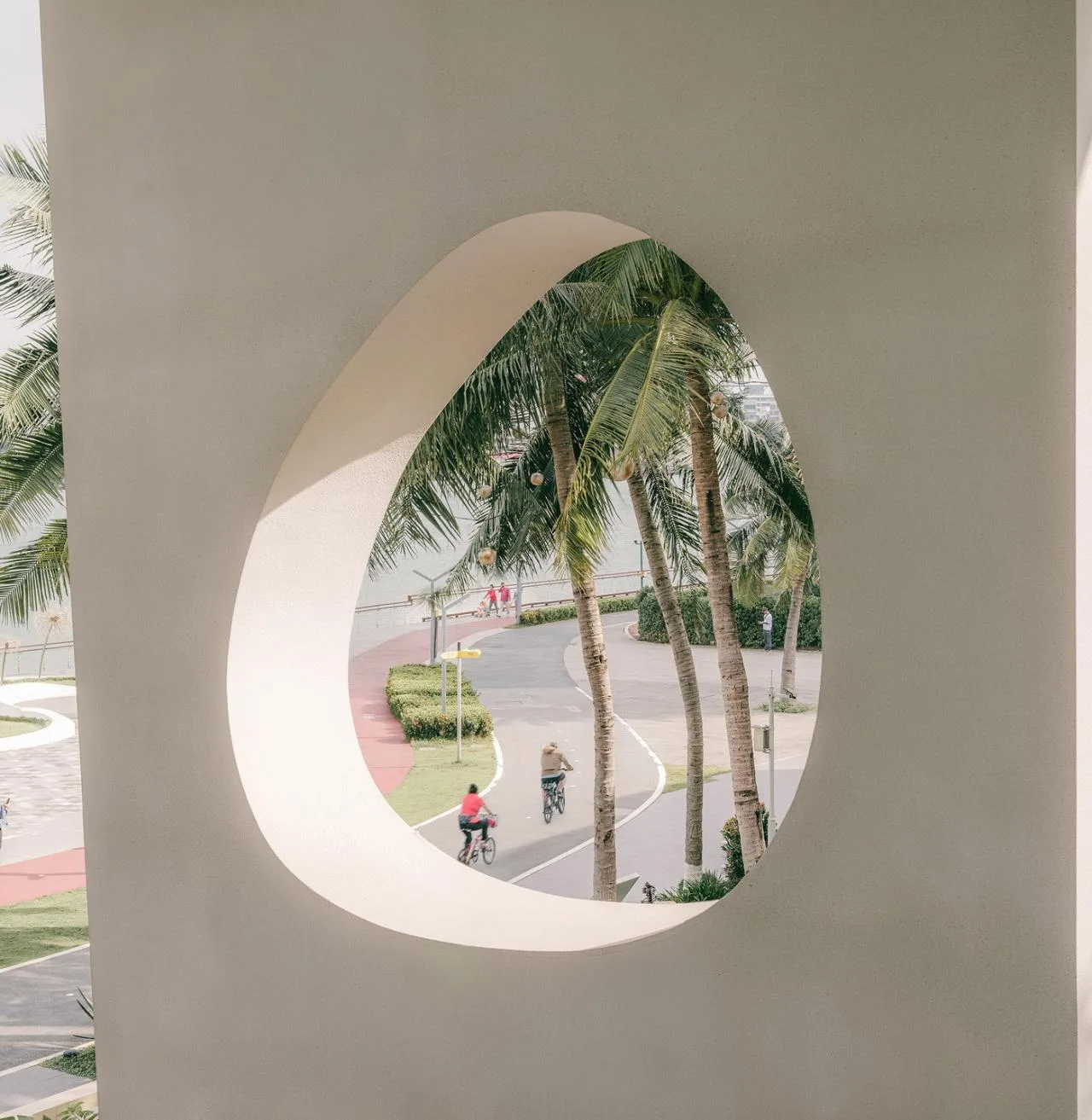
Whether seated indoors or outdoors, patrons enjoy unique views that are like small stories framed by nature. Behind the scenes, all logistics—including staff pathways, food and beverage deliveries, waste disposal, smoke exhaust, and ventilation—are contained within the central courtyard, concealed beneath the trees’ shadows. This separation ensures that operational flows do not interfere with the guest experience.
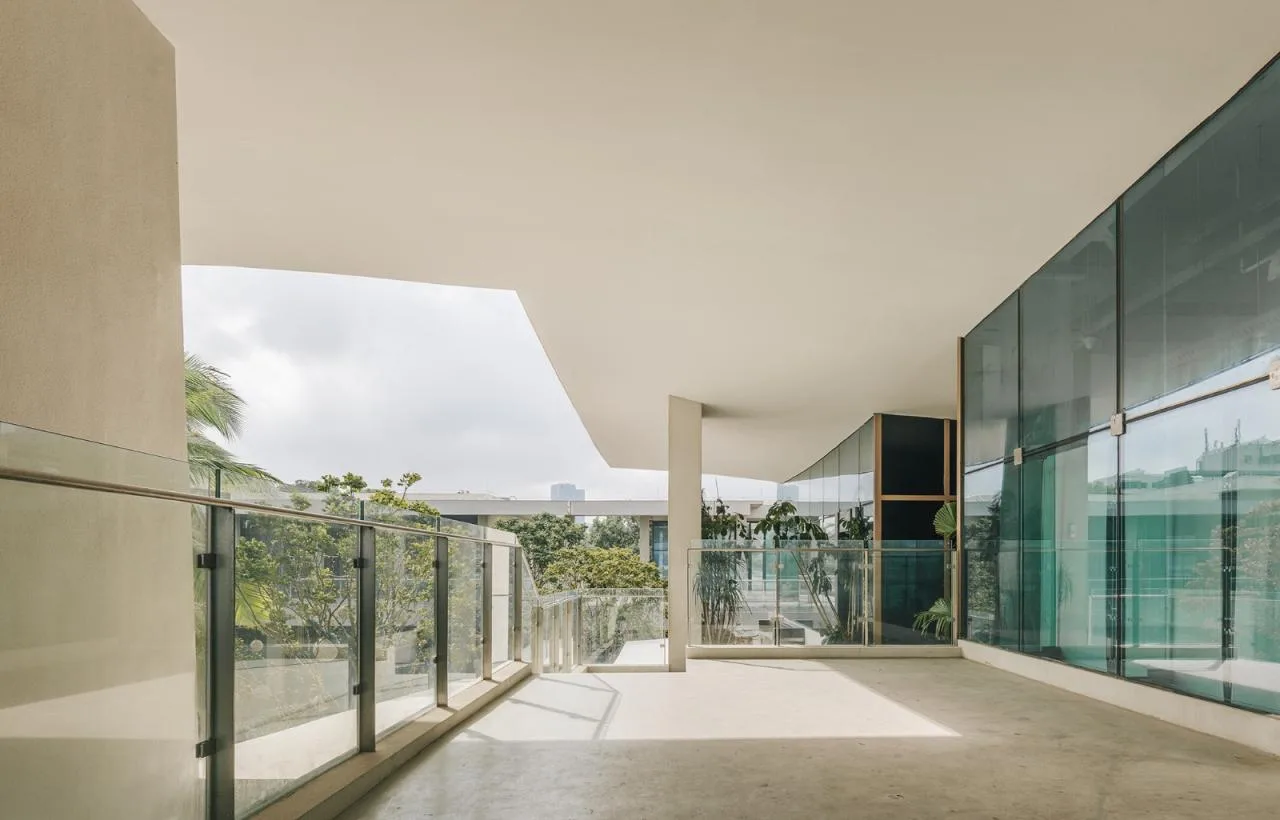
Unlike the first floor’s independent spaces, the second floor offers a more transparent, open environment with interconnected areas blending indoor and outdoor elements. Sitting on the tiered platform rising inward on the second floor, visitors enjoy wide eaves lifted skyward, offering unobstructed views of the sea, sky, and trees that create a deep emotional connection between people and nature within this artificial space.
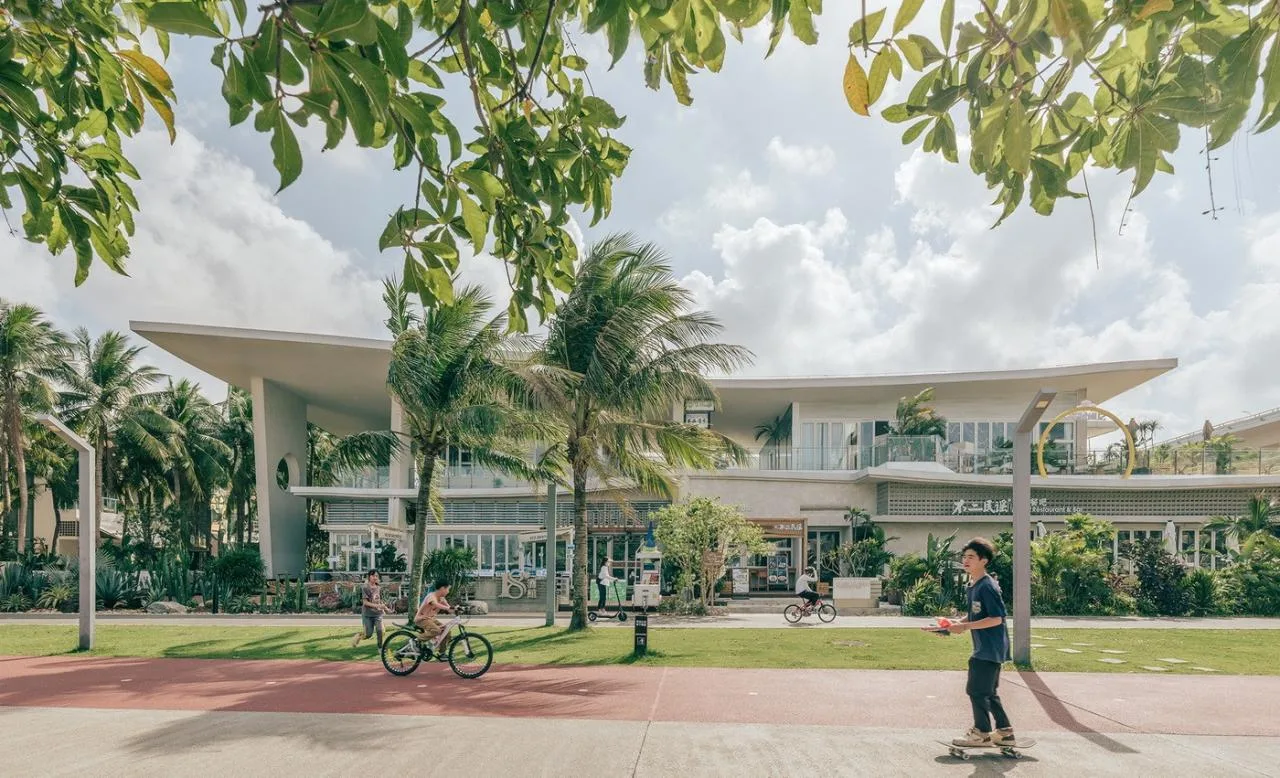
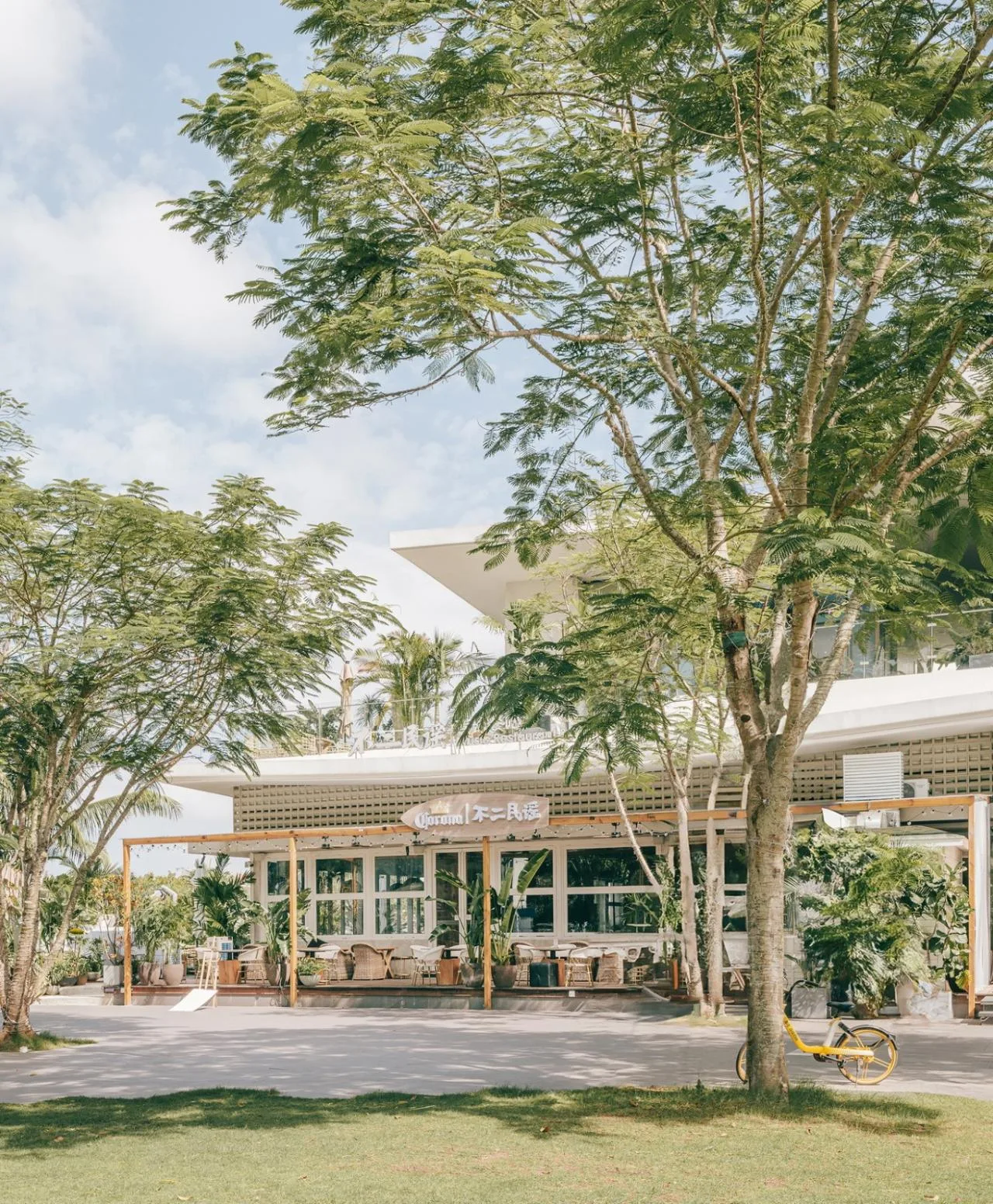
Buildings with strong commercial appeal often host multiple independent businesses, which can lead to complex and chaotic facades. Balancing each store’s unique brand identity while maintaining architectural harmony is a challenge.
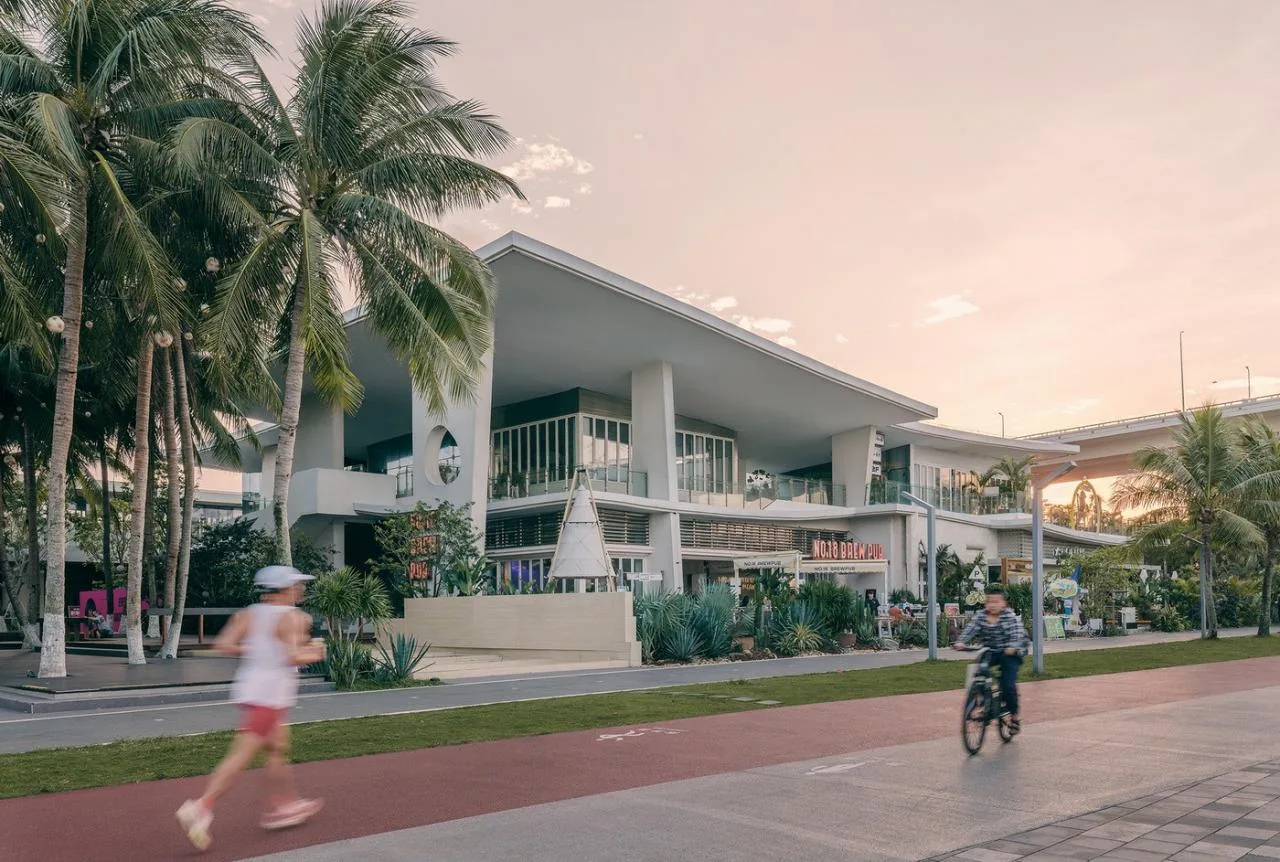
To address this, we divided the facade into two parts at a height of three meters (waistline). Below this line, each store has the freedom to design independently. Above, five distinct grille styles are applied from three meters up to the roofline. These grilles not only enhance ventilation—essential in tropical climates—but also add visual diversity and rhythm to the facade.
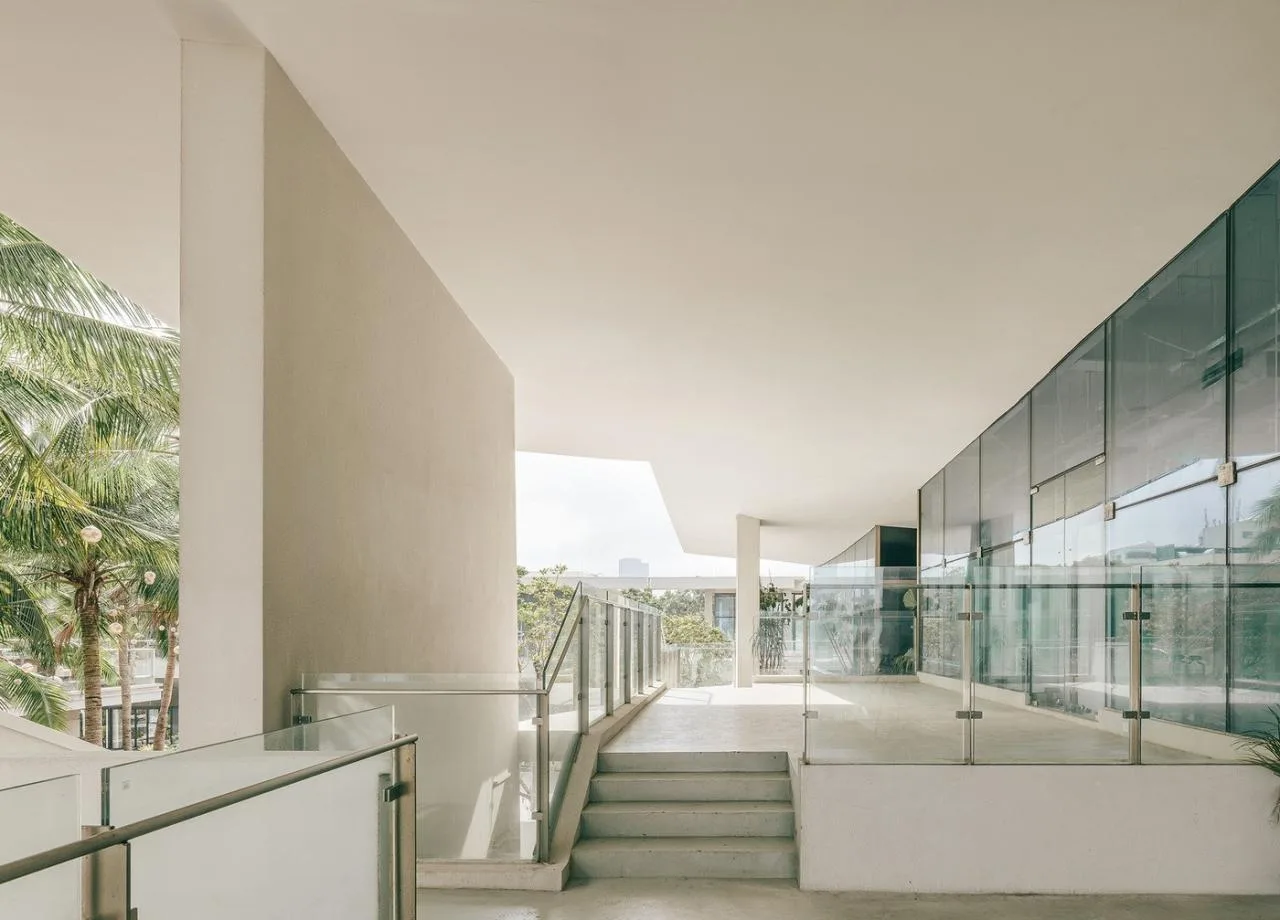
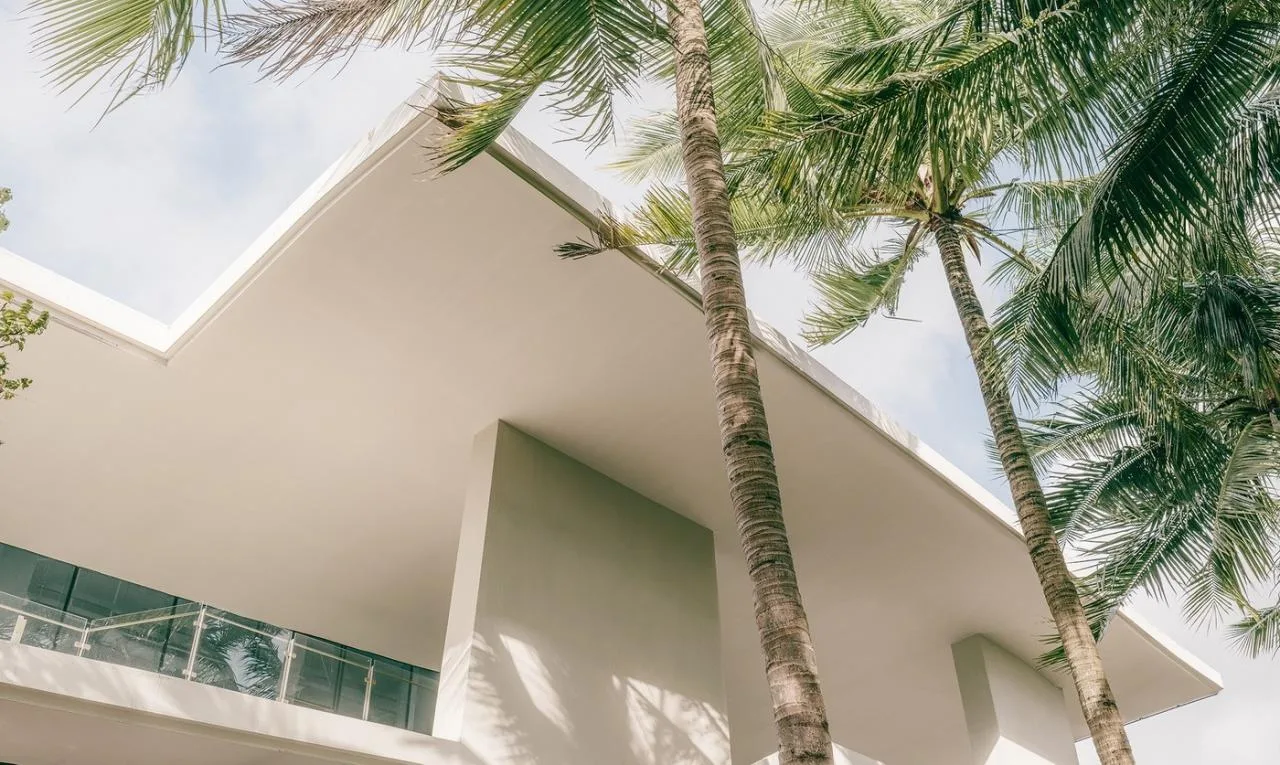
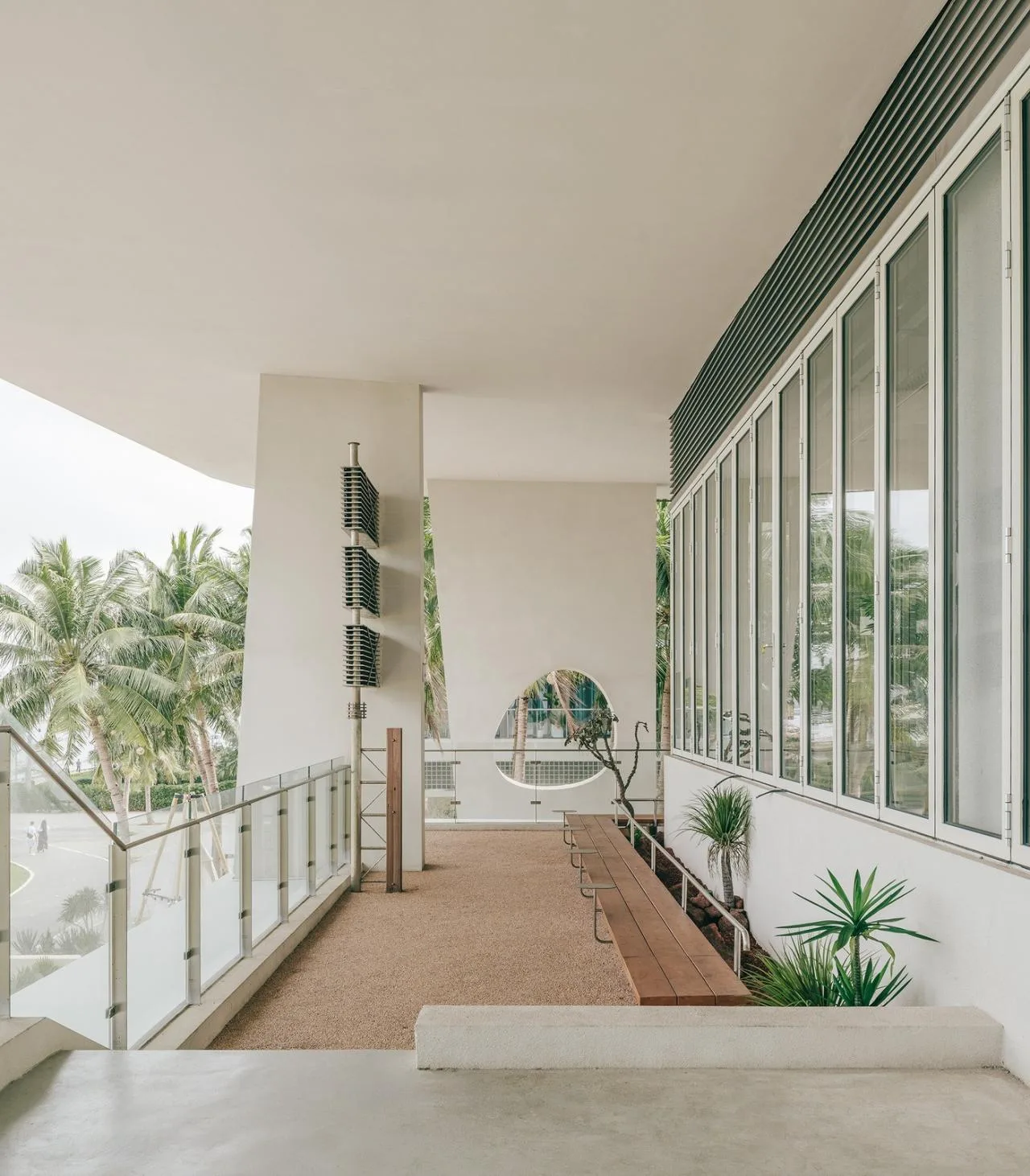
Underneath the sweeping curved roof that floats above, five distinct spaces nestle comfortably. This architectural order allows each store to preserve its individuality, while the dynamic facades and shifting landscape views add variety and freedom.
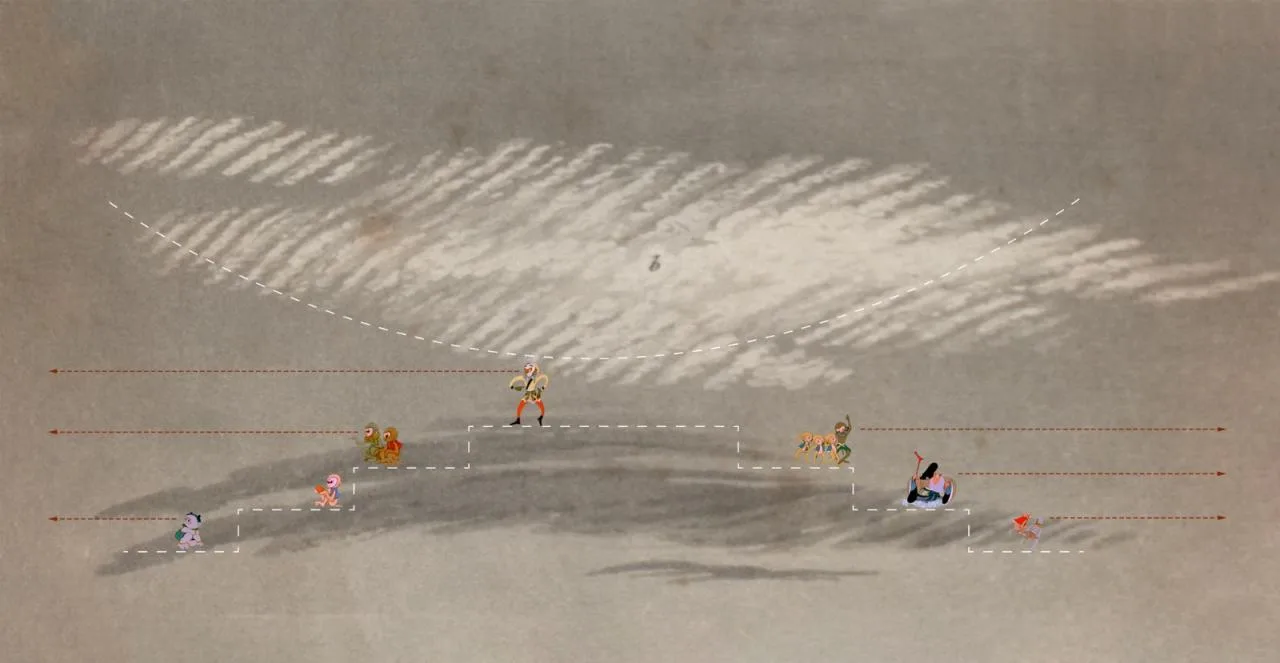
From the ground, looking up reveals two large horizontally extending roofs that move lightly and freely, overlapping like clouds next to the Century Bridge. This space becomes a stage for human activity—people gather, disperse, meet, reunite, part ways, and reminisce.
The tastes of the food and drinks enjoyed here linger like wisps of steam, collecting in the air and condensing into the white eaves that shelter visitors from sun and rain. This is the city’s scenery and everyone’s shared story. These clouds gather and scatter repeatedly, reflecting the ebb and flow of life.
Project Drawings
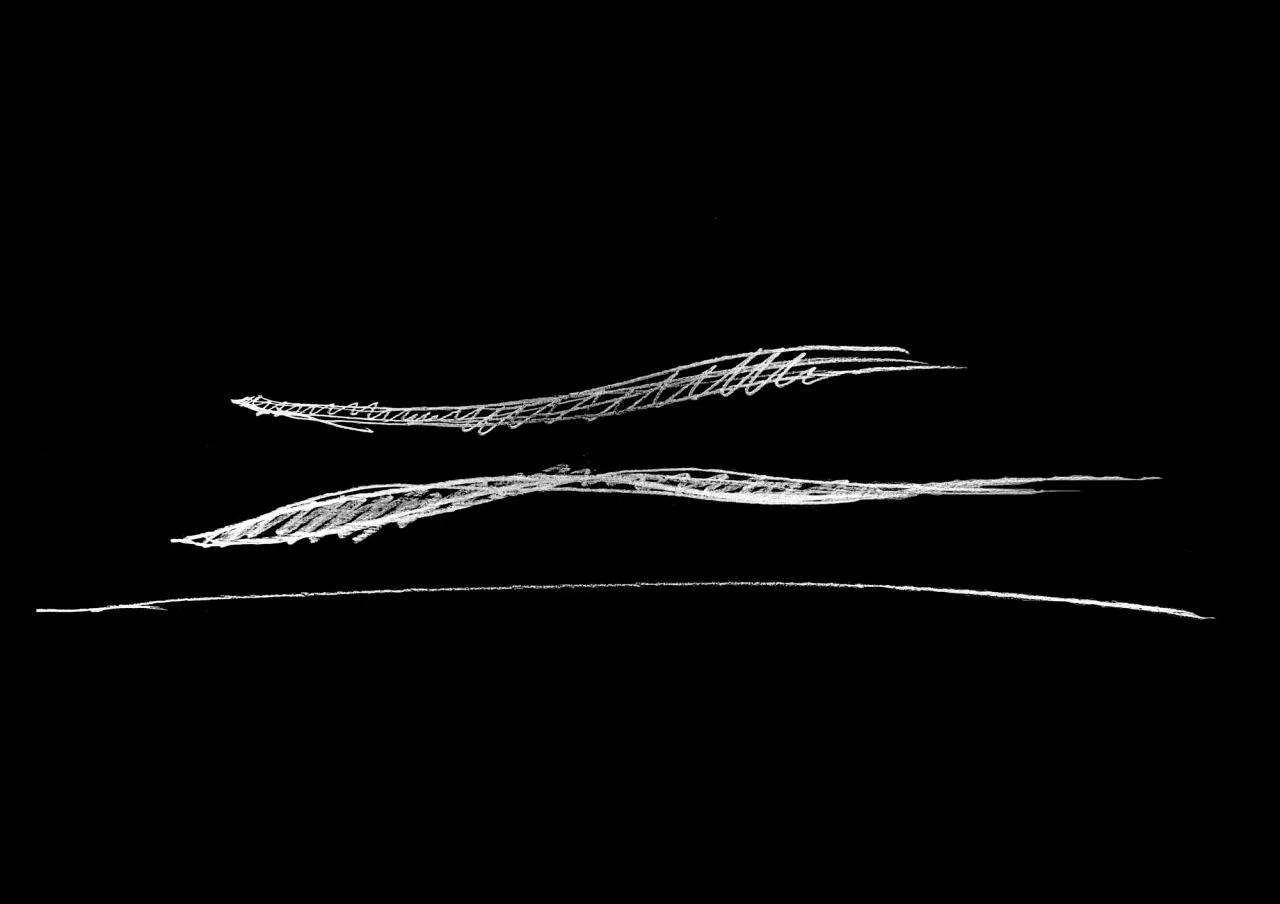
△ Hand-drawn Sketch
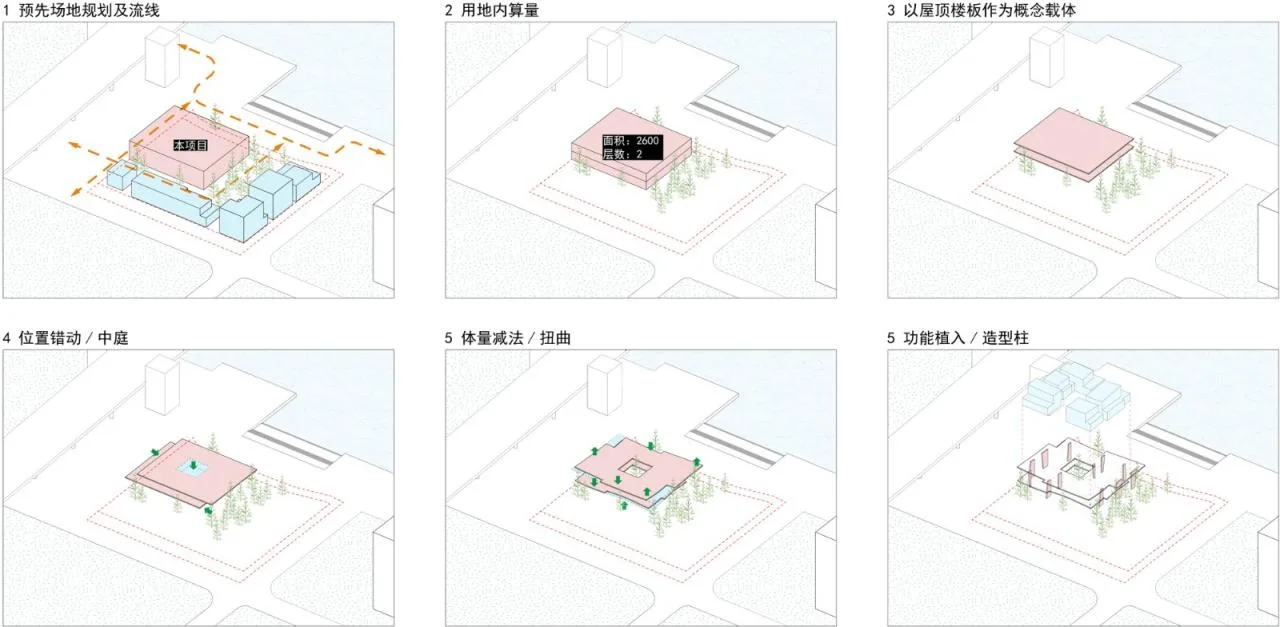
△ Concept Generation Diagram
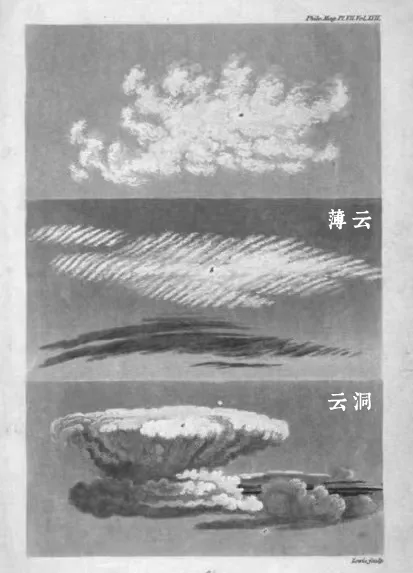
△ Concept Diagram
△ Concept Diagram
△ Concept Diagram
△ Analysis Chart
△ Base Schematic Diagram
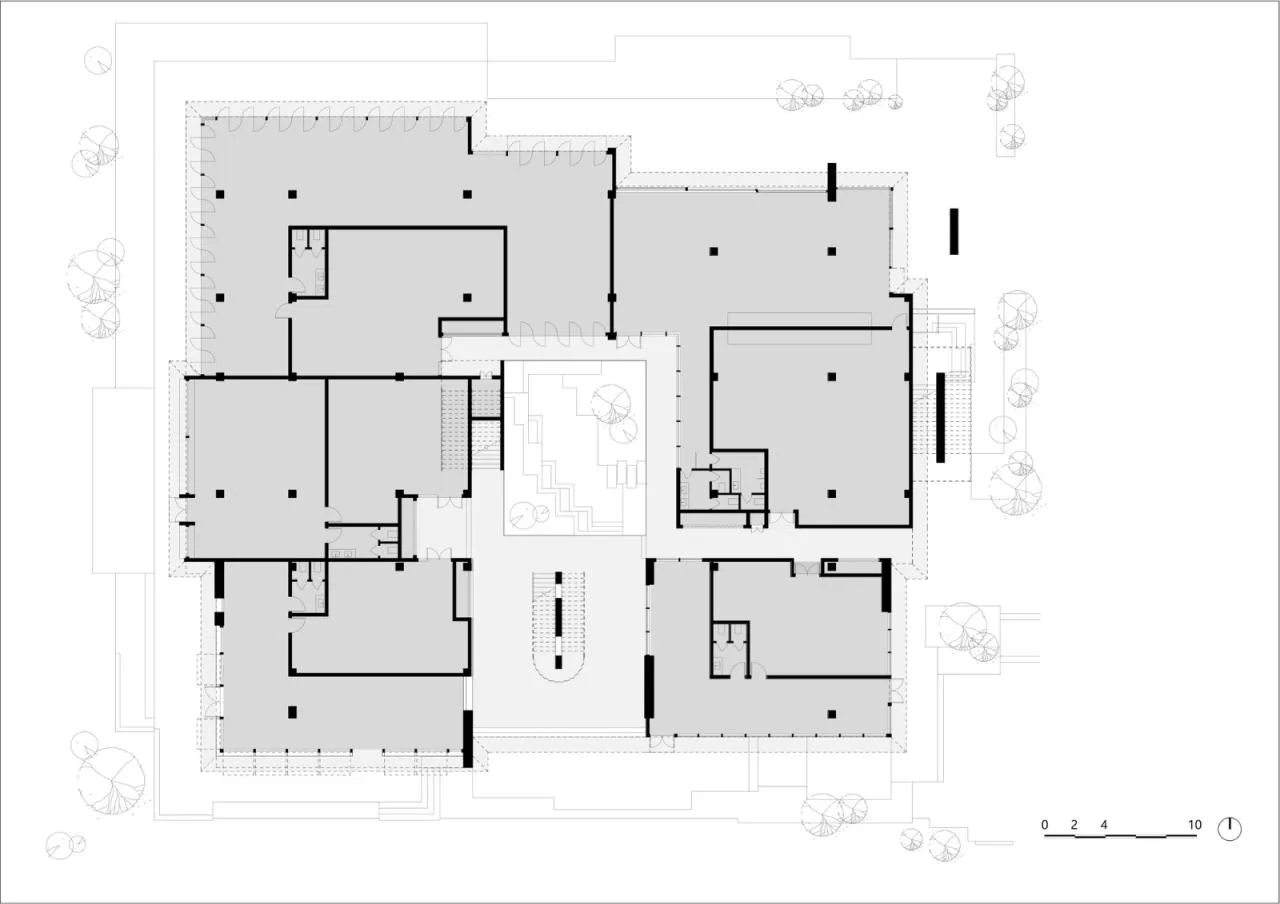
△ First Floor Plan
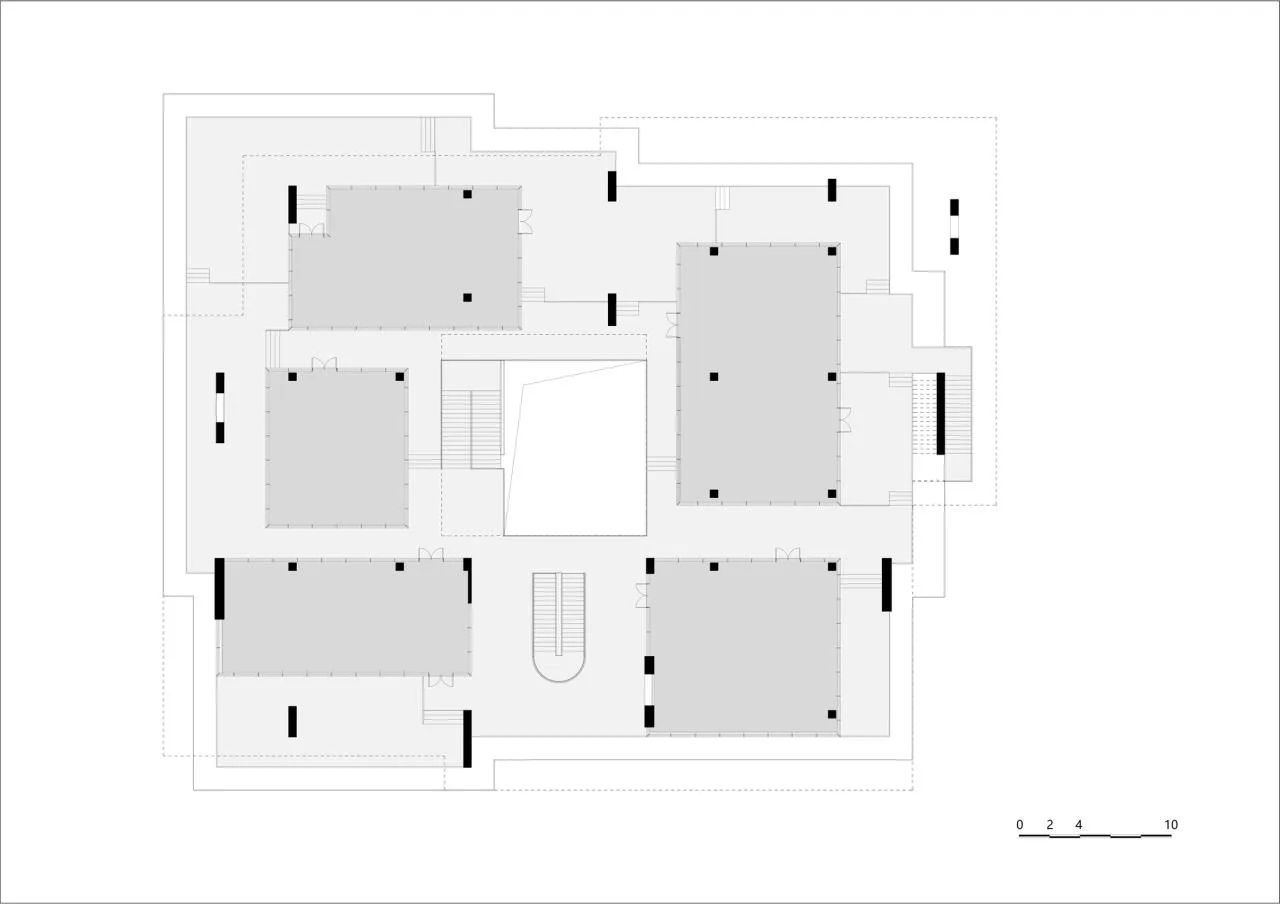
△ Second Floor Plan
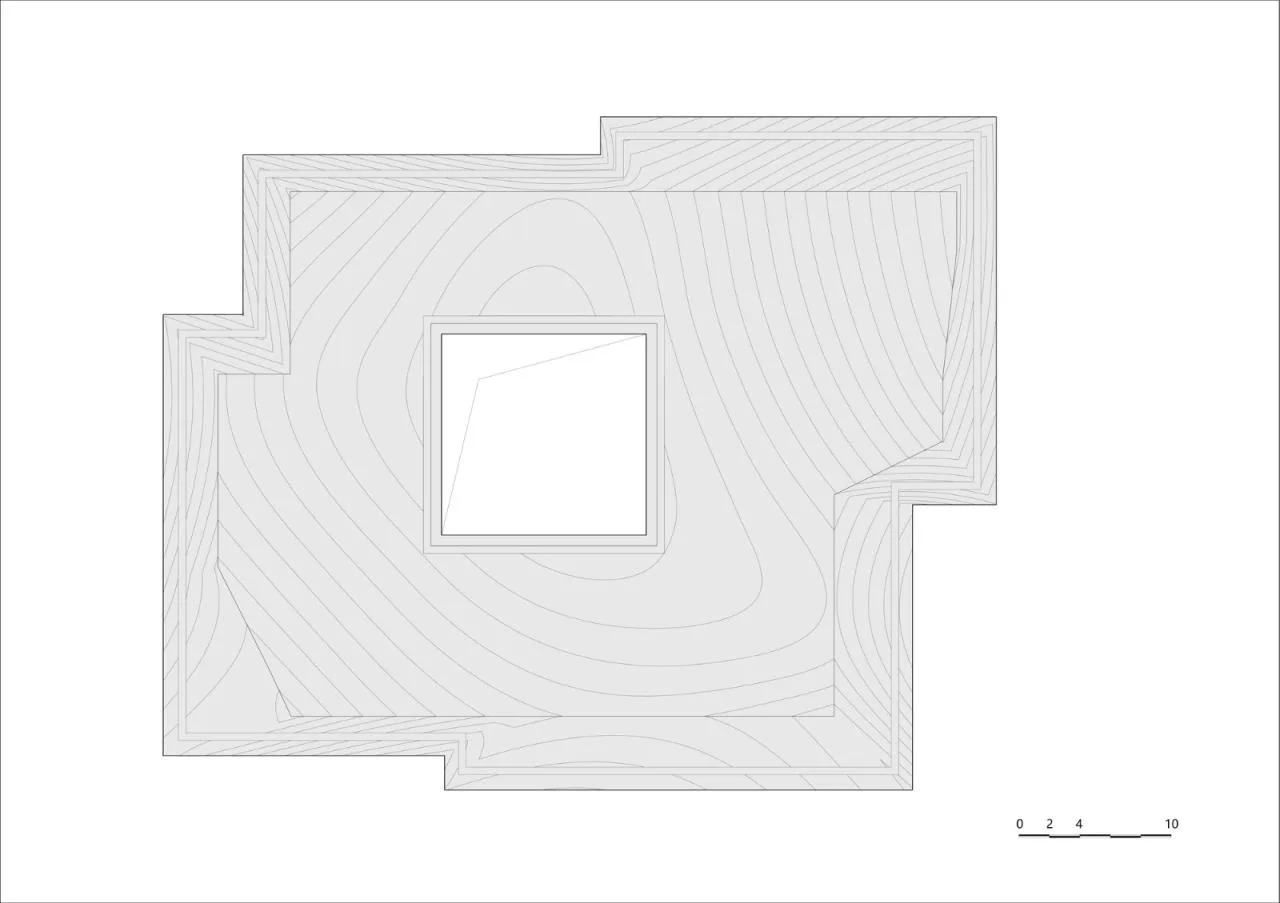
△ Roof Plan
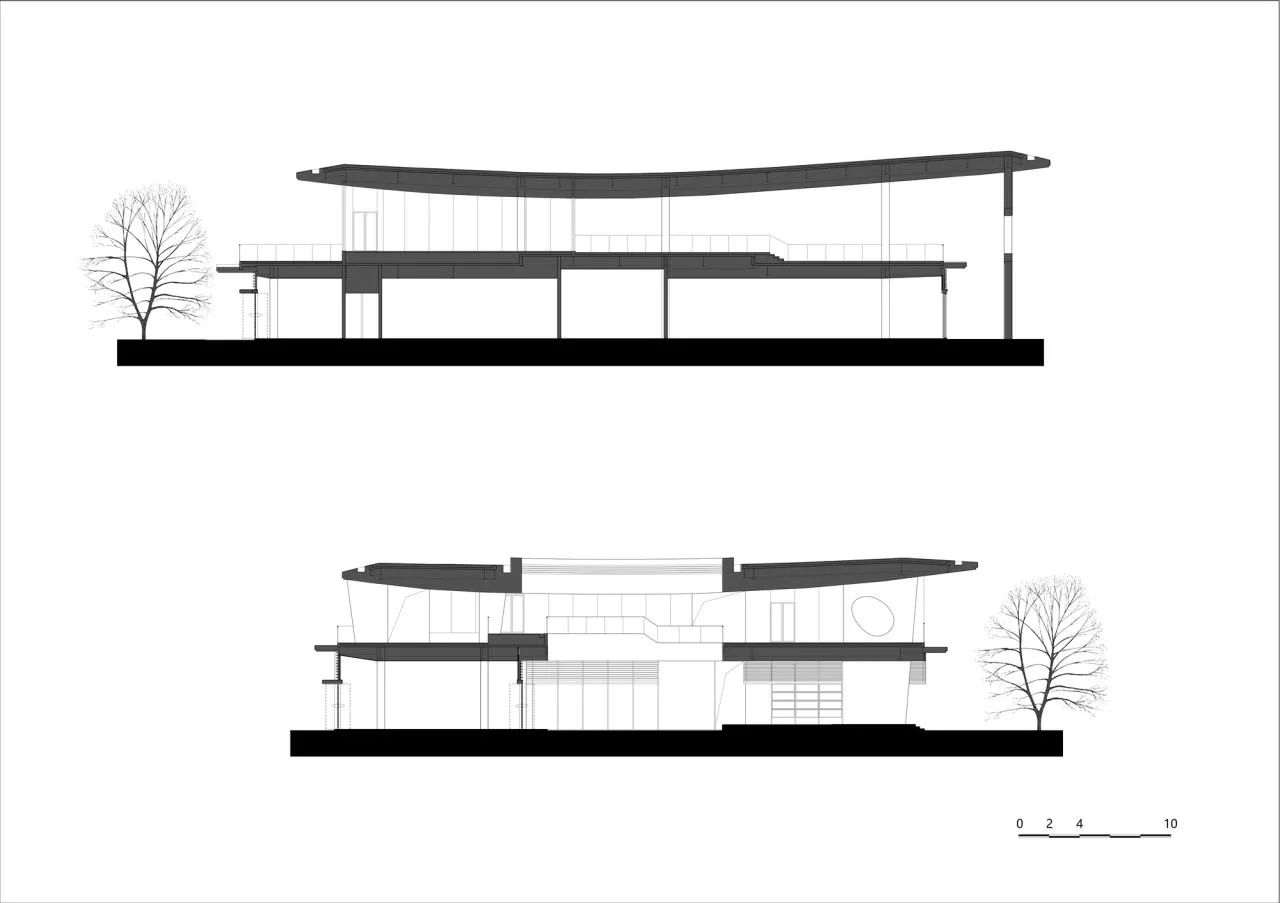
△ Section Diagram
Project Information
Architect: Large Scale Building
Area: 4000 m²
Project Year: 2023
Photographer: Zhu Yumeng
Lead Architect: Liu Yang
Design Team: Cai Zhuoqun, Shi Weiwei, Sun Xinye, Ding Yuewen, Meng Zihan
Construction: China Construction Fourth Engineering Bureau Co., Ltd.
Landscape Design: Changsha Moby Landscape Planning and Design Co., Ltd.
Consultants (Water Supply, Drainage, HVAC, Electrical, Structural): Sichuan Provincial Architectural Design and Research Institute Co., Ltd.
Planning and Design: Surrounding Buildings
Construction Drawing Unit: Sichuan Provincial Architectural Design and Research Institute Co., Ltd.
Owner: Haikou Longhua District Urban Investment Holding Co., Ltd.
Location: Haikou, China














Must log in before commenting!
Sign Up