
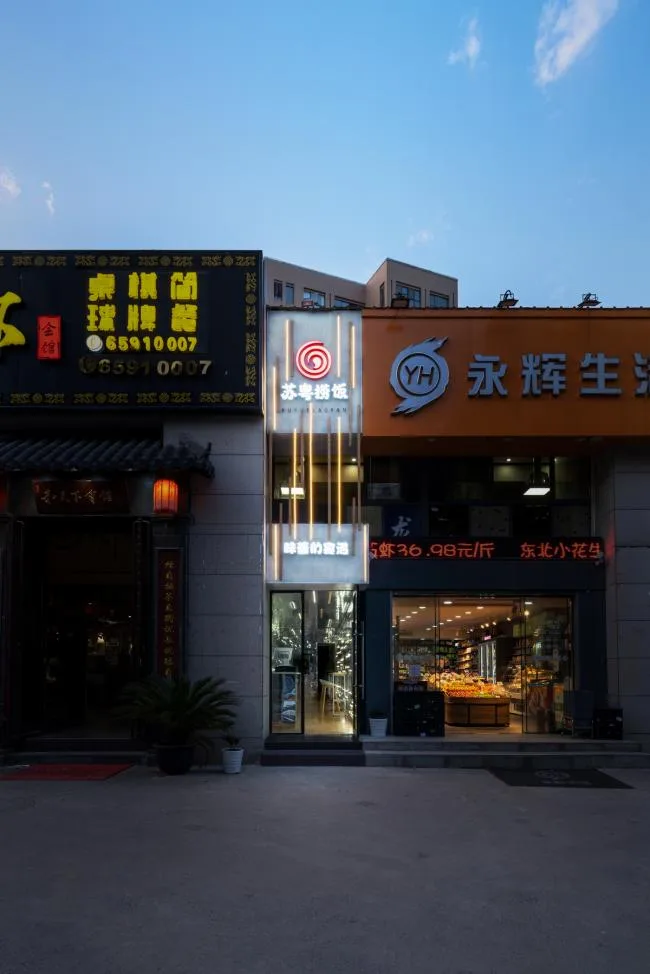
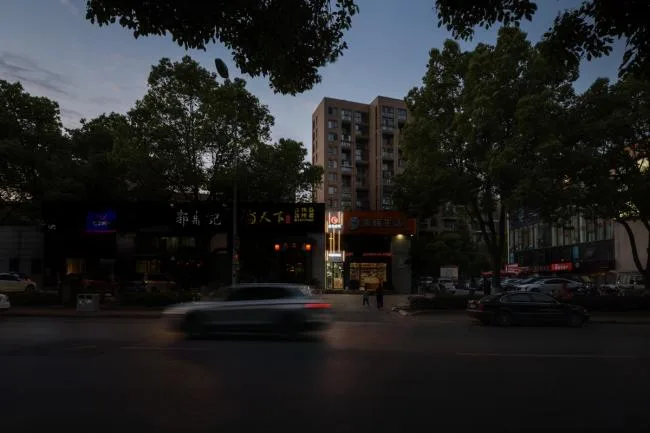
▲ Night Scene Rendering of Exterior Facade
Photographer: Yao Jieqi
This project is located on Jiuhua Road in Suzhou Industrial Park, Jiangsu Province, surrounded by several residential neighborhoods. The original shop was a small three-cup chicken rice and Northeast barbecue restaurant situated on a narrow street, featuring a long, narrow interior space approximately 13 meters in length, 2.3 meters wide, and around 30 square meters in total area.
The storefront facade is very narrow, and the interior resembles a tight corridor. The new establishment, a Bao Zhi Lao restaurant, aims to create a distinct spatial experience through a renovation of both indoor and outdoor areas. The goal is to attract local foot traffic from the neighborhood and delivery customers, turning the restaurant into a trendy fast-food destination that people want to visit and share, thereby boosting the food delivery business.
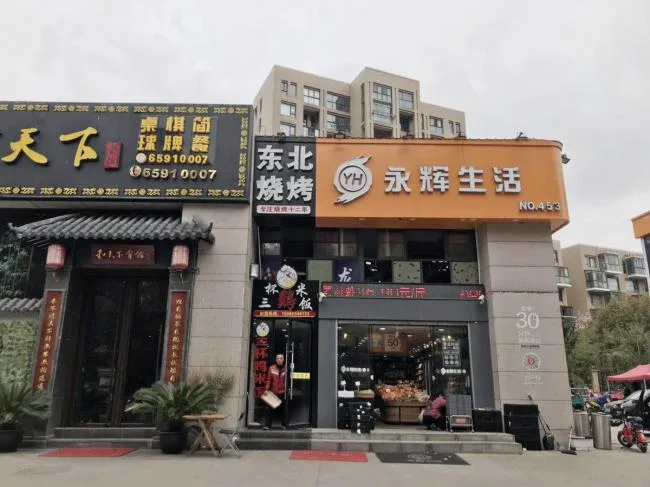
▲ Original Site Elevation
Photographer: Yao Jieqi
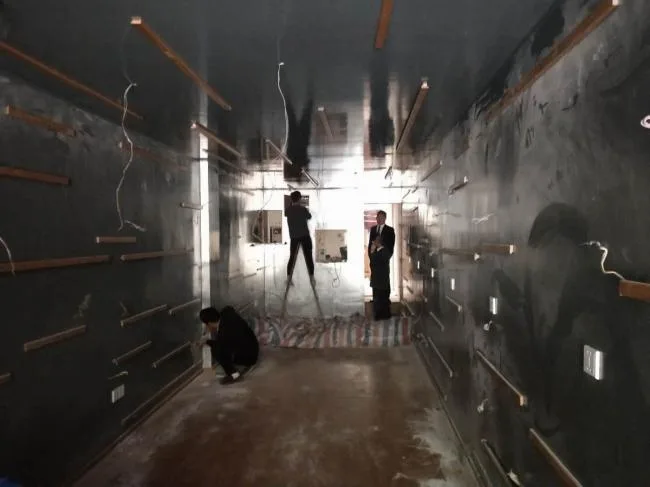
▲ Construction Site Photography
Hengtai Architecture
The main design challenge was how to transform this narrow aisle-style space into a striking dining environment, especially under a very tight budget. Based on the existing conditions, three key design objectives were identified:
- Utilize the narrow, elongated shape effectively by arranging tables and chairs sequentially to emphasize the spatial layout.
- Use materials like veneers to create a sense of openness and avoid a cramped feeling.
- Design the exterior facade to deliver a strong visual impact that draws pedestrians inside.
Controlling foot traffic in the confined space was also crucial. Therefore, the design sought to foster a “fast” psychological flow through the space.
The designer developed the concept of a “taste time tunnel” after sampling dishes and discussing with the chef. Horizontal lines were installed along the enclosed walls and ceiling to add variety and a fleeting dynamic to the environment. This involved combining wood strips with LED light strips, emphasizing speed and encouraging a continuous flow of diners. This design also highlights the tunnel-like extension and depth of the space, with light bringing vitality and movement.
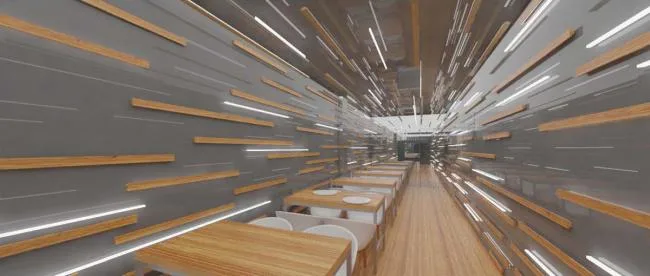
▲ Concept Presentation Diagram
Pingjie Design
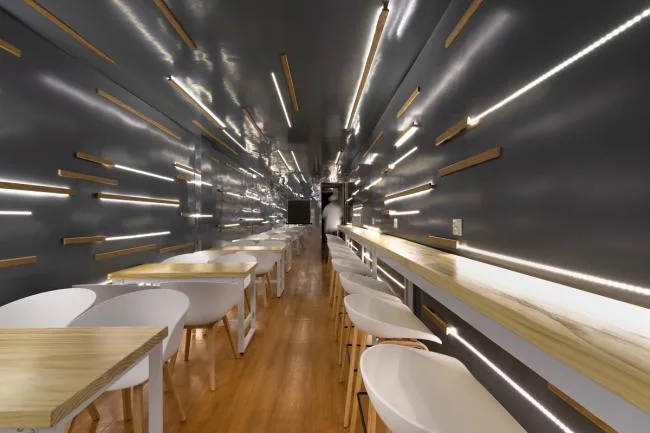
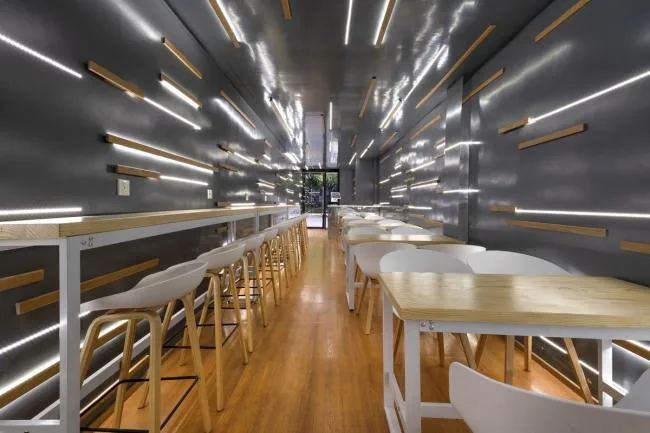
▲ Architectural Rendering
Photographer: Yao Jieqi
To improve the dining experience and increase the perceived width without making the space feel too deep or oppressive, the designer chose to forgo mirrors due to budget constraints. Instead, low-cost epoxy resin paint was applied to the walls, creating a reflective, luminous surface with a soft, frosted texture that avoids harsh glare.
Mirror acrylic panels were used strategically on non-wall surfaces, such as the divider between the counter, kitchen, and dining areas. This created a cohesive mirrored effect that enhances spatial depth. The blurred boundaries between these areas effectively increase the openness and flow within the space.
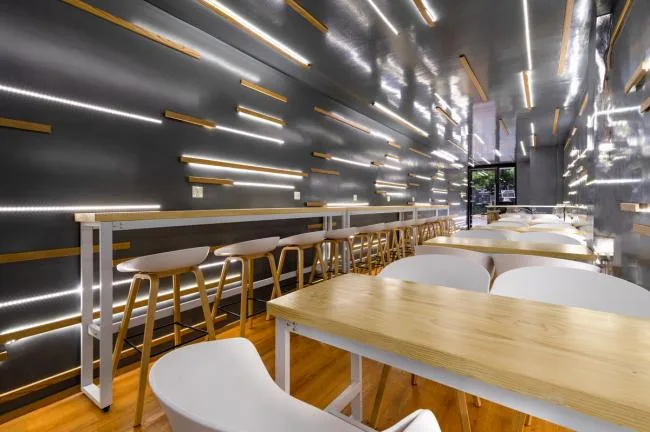
▲ Spatial Interface with Reflection and Luminescence Created by Epoxy Resin Paint
Photographer: Yao Jieqi
Mirror Acrylic at the Counter
Photographer: Yao Jieqi
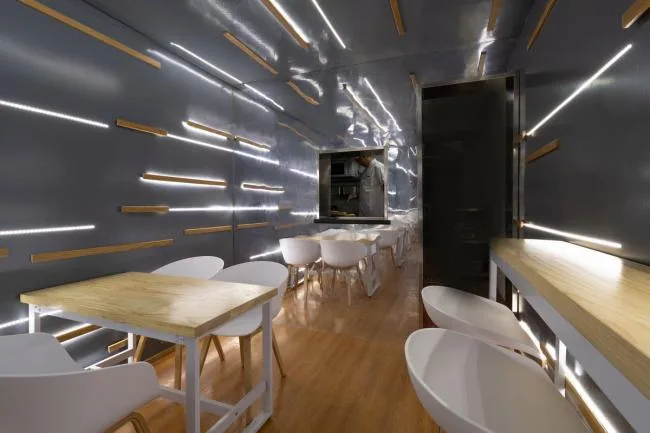
▲ Mirror Acrylic Separator Between Kitchen and Dining Space
Photographer: Yao Jieqi
This design creates a continuous diffuse reflection corridor. The space is divided into two main areas: the entrance counter and the dining area.
The counter area features a simple setup with a single ordering machine serving as the interface between staff and customers. Below it lies a hidden workspace for employees, forming a layered counter design inspired by BIM architecture. The counter appears to “float” due to the reflection of wooden strips and LED light strips on the mirrored acrylic.
The counter is also designed to be movable, allowing staff easy access and accommodating a waiting area for delivery drivers beside it.
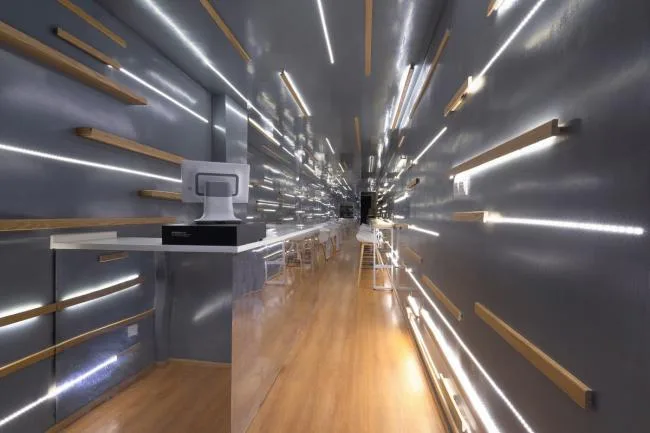
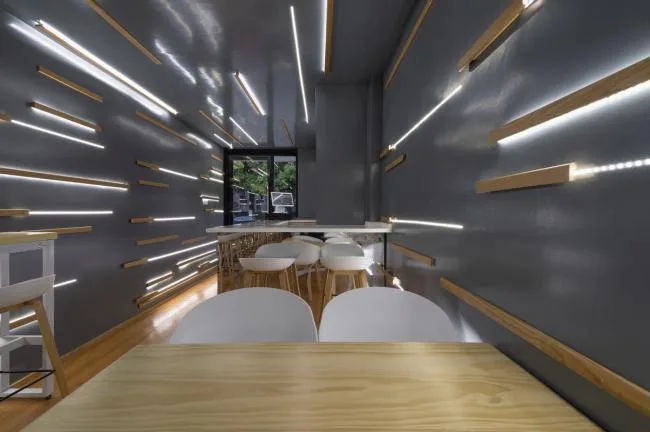
▲ Counter Design
Photographer: Yao Jieqi
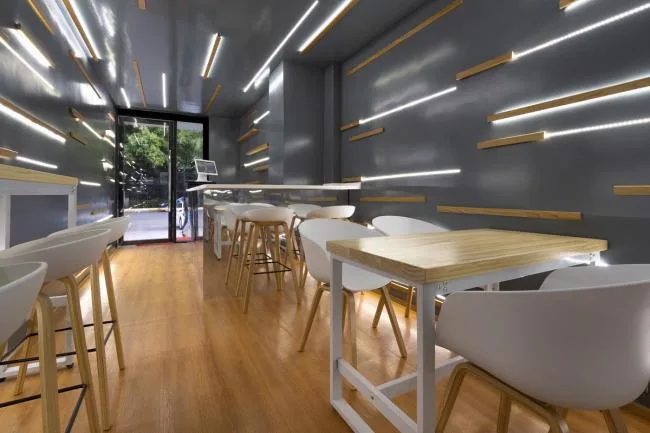
The dining area features two types of seating arrangements tailored for groups and individual diners. Gradually arranged wooden strips are embedded along the left and right walls, floors, and ceiling to accentuate the space’s narrow depth.
Lighting is thoughtfully integrated, with LED strips decreasing in number from ceiling to floor to enhance the sense of depth while adding a stylish and playful atmosphere. The combination of wooden flooring and light strips maintains spatial continuity and creates a warm, inviting environment.
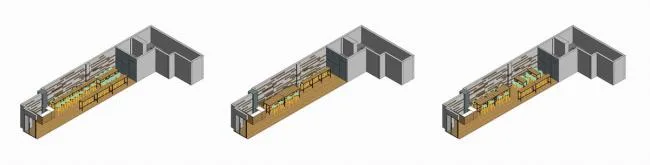
(BIM Design)
▲ Various Table and Chair Arrangements
Flat design
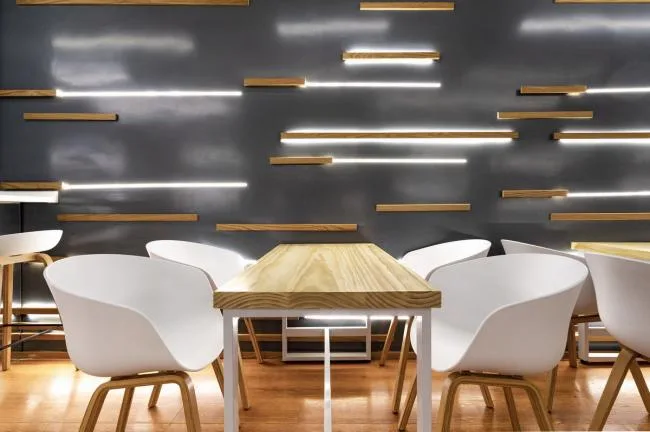
▲ Combination of Wooden Strips and Light Strips
Photographer: Yao Jieqi
The entire interior is a collage of materials that breaks from traditional concepts of walls, ceilings, and floors, creating a visually unified space. Four primary materials are used: epoxy resin paint, wooden strips, LED light strips, and mirror acrylic.
Mirror acrylic panels are placed at the far end of the narrow space to reflect and visually extend its length. Epoxy resin paint, serving as the main base material on walls and ceiling, offers a glossy texture with diffuse reflection, preventing a claustrophobic feel.
Wooden strips and light strips are applied in three different ways on the walls: purely wooden strips, purely light strips, and light strips embedded within wooden strips to create a floating effect.
The space culminates with a striking extended visual interface that sets the tone for dining and complements the culinary experience.
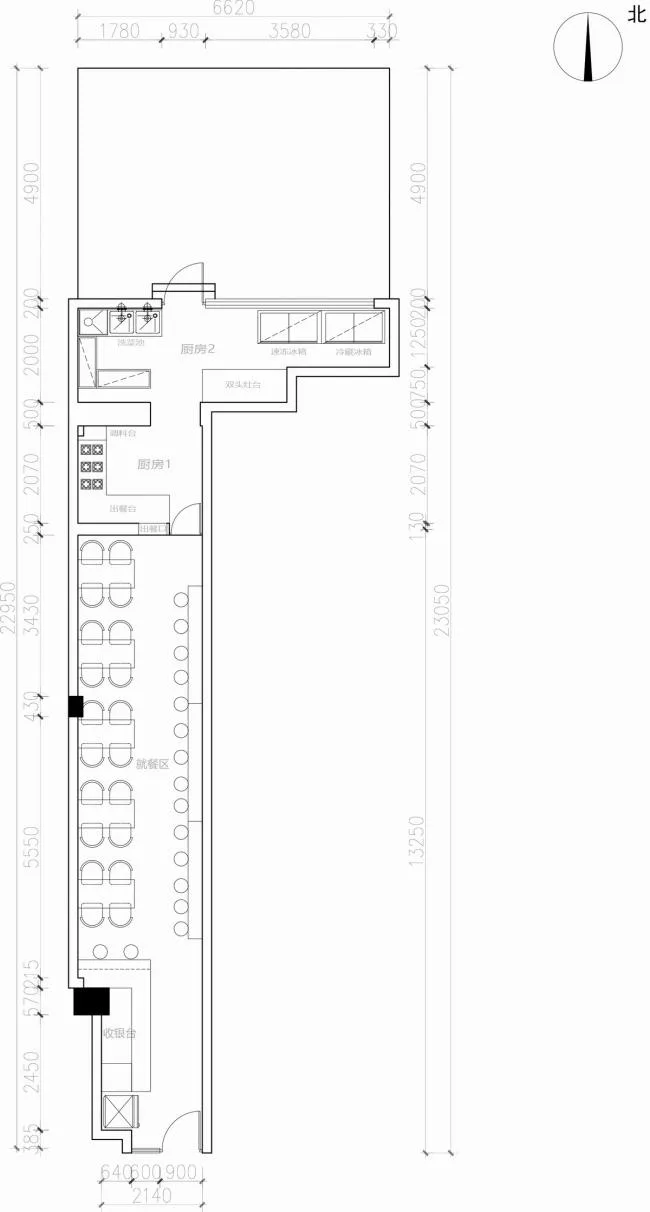
▲ Floor Plan
Flat Design
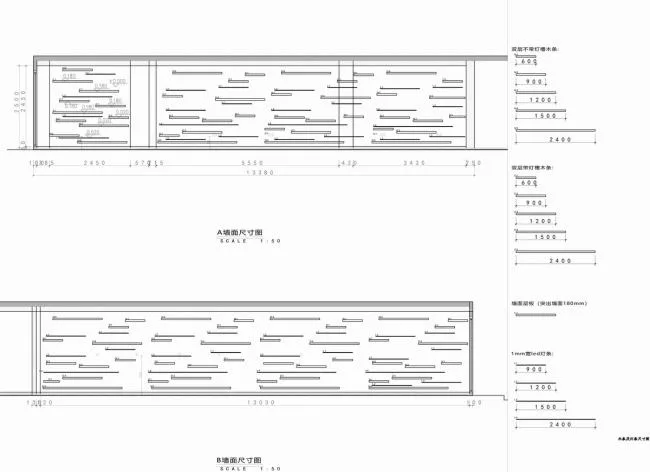
▲ Wall Design Elevation
Flat Design
The exterior facade adopts a similar design language, utilizing inexpensive metal mesh as the base for the store signage, complemented by external light strips and wooden strips. Due to the unique nature of the storefront—with the upper and lower signs originally separated and the second floor space occupied by other tenants—the facade design connects these parts visually through continuous light and wooden strip elements, solving the problem of visual disconnection.
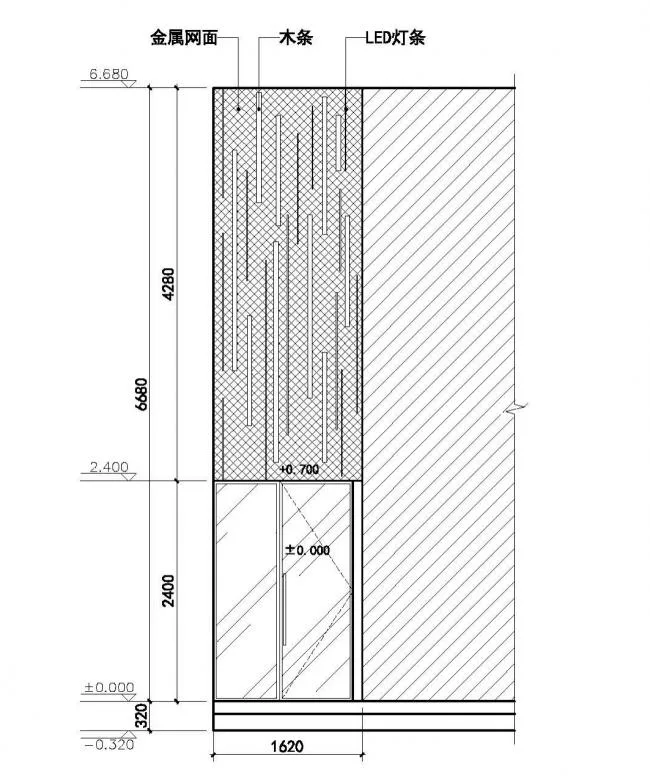
▲ Front View Construction Drawing of Exterior Facade
Flat Design
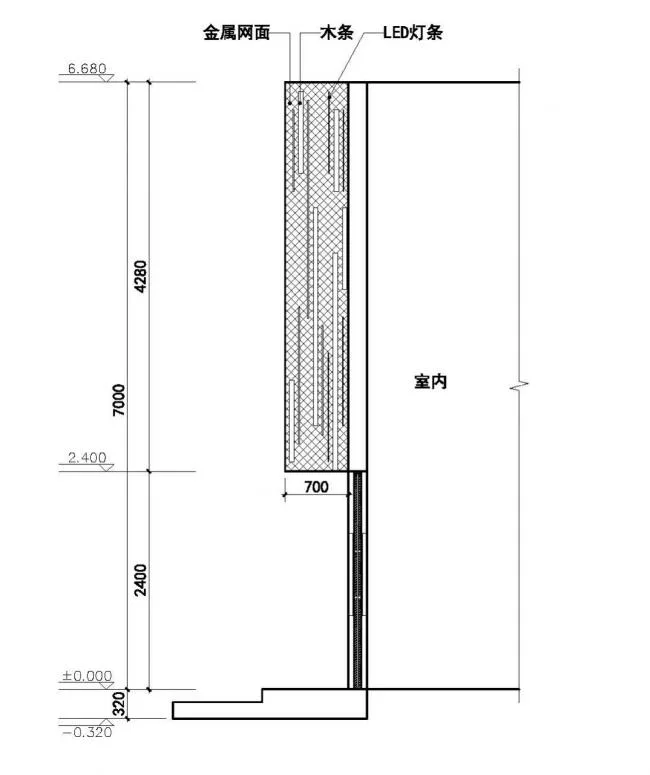
▲ Side Elevation Construction Drawing
Flat Design
Located in a residential area, this restaurant doesn’t have the commercial buzz typical of trendy eateries in business districts. However, the design embraces the unique narrow space, positioning it as a new type of “internet-famous snack shop.”
The designer envisions this project as a fresh model blending specialty shops and fast food culture. The design’s role is not merely commercial but to reinterpret and rethink the use of space creatively.
Project Information:
Project Name: Rice Fishing Restaurant in the Gap
Project Type: Interior Renovation
Location: Jiuhua Road, Industrial Park, Suzhou City, Jiangsu Province
Design Firms: Pingjie Design (Suzhou Pingjie Architectural Technology Co., Ltd.), Shanghai Hengtai Architectural Design Consulting Co., Ltd
Space Design Team: Yang Nan, Wang Yitong, Wu Yi, Zheng Yihong, Huang Di
Construction Design: Shanghai Hengtai Architectural Design Consulting Co., Ltd
Main Materials: Mirror acrylic, anti-corrosion wood, epoxy resin
Construction Cost: 50,000 yuan
Status: Completed
Design Year: 2019
Construction Year: 2019
Building Area: 30 square meters
Photography: Yao Jieqi













Must log in before commenting!
Sign Up