
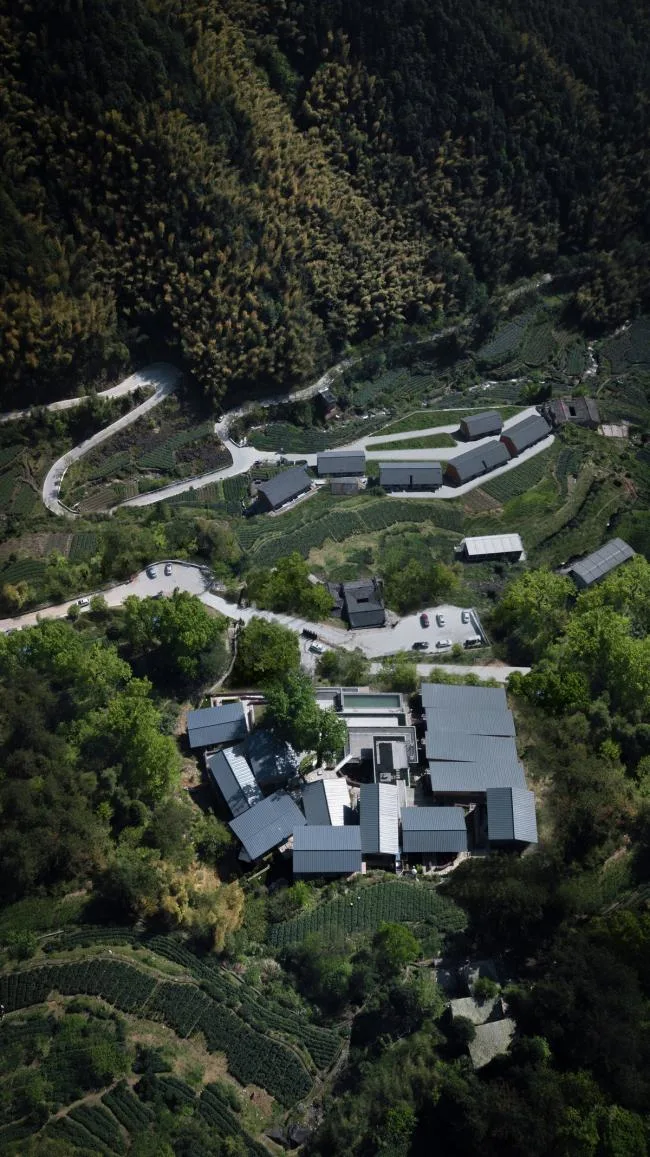
▲ Aerial view © Existence of Architecture – Architectural Photography
Songyang: The Last Secret Realm of Jiangnan
The Song Dynasty poet Shen Hui once described Songyang in his poem “The First Arrival in Songyang” as follows: “Only this Peach Blossom Spring, with no other worries in its four corners. A thousand years later, the “Peach Blossom Spring” still shrouded in clouds and mist hides more than 100 ancient villages with complete patterns, praised by National Geographic as the “last secret land of Jiangnan”.
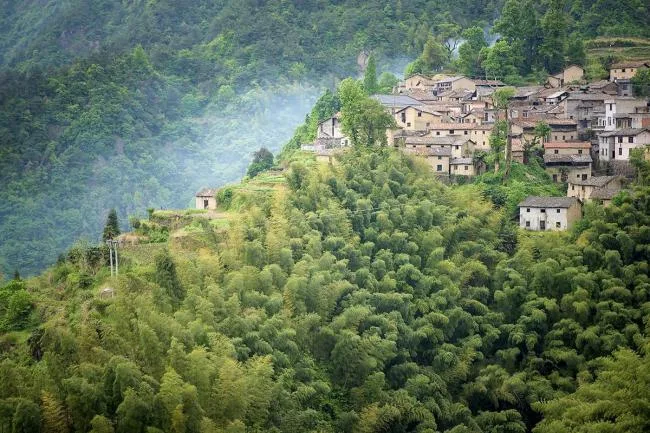
▲ Songyang © scholar
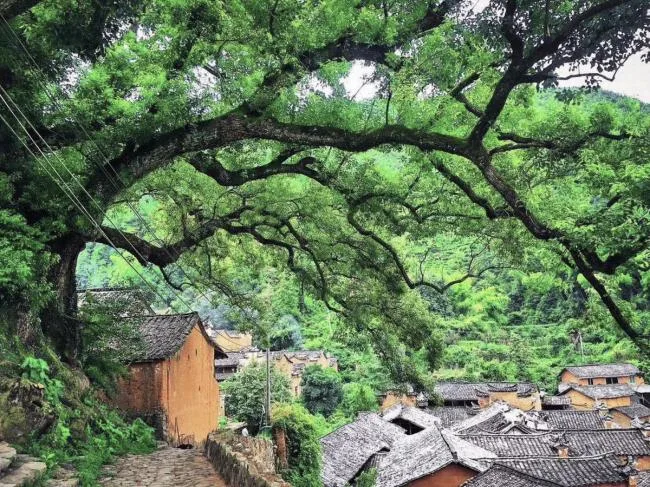
▲ Songyang, image sourced from the internet
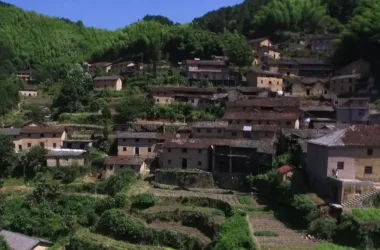
The Songyang Original House is Line+’s second in-depth design practice in Songyang after Fei Fu Ji. The project is located in Langshu Village, Sidu Township, Songyang County, Lishui City, Zhejiang Province. The overall site is high in the north and low in the south, with a height difference of nearly 40-50 meters within the red line. It is a typical “nine mountains, half water, half farmland” mountainous settlement. The original plot is in the form of steps, and the rammed earth old houses have almost collapsed or been demolished, with only a few towering ancient trees witnessing the rise and fall of the village.
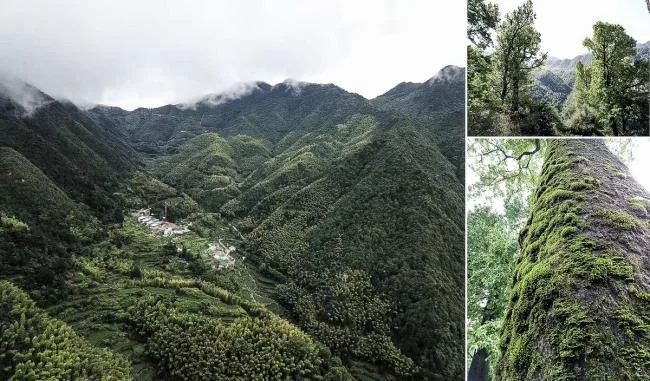
▲ Overview of the venue, pictures from the internet
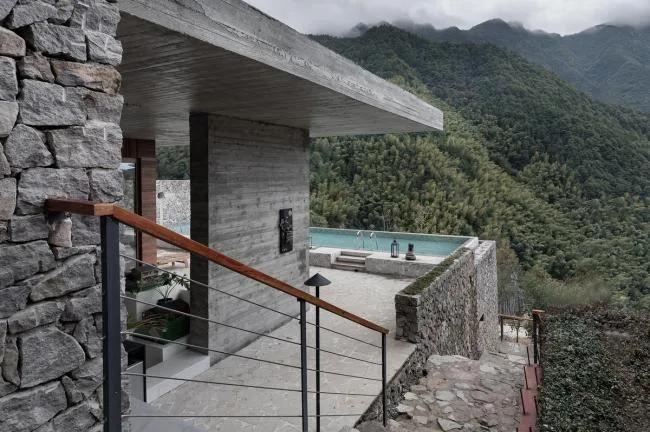
▲ Completed Songyang Original Residence © Yang Guangkun
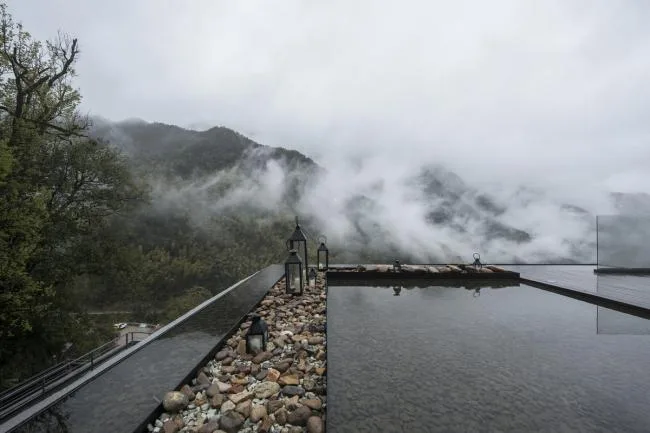
▲ Platform Perspective © Golden voters
Natural and Artificial
The Langshu Village we see: mountains and clouds, terraces and rural houses, rammed earth and blue tiles, without the need for extra decoration, showcasing the unique beauty of Chinese countryside. The century old houses in the mountains, which carry the authentic life of mountain people, have been destroyed and abandoned during construction and development due to changes in the villagers’ lifestyles and values. It is reported that from 2000 to 2010, nearly 300 natural villages were submerged in urbanization floods every day, and 900000 disappeared within 10 years. The project is located here, not only providing temporary shelter for urban tourists, but also shouldering the responsibility of revitalizing Langshu Village, embodying our expectations and reflections on the relationship between humans, nature, and artificial environment.
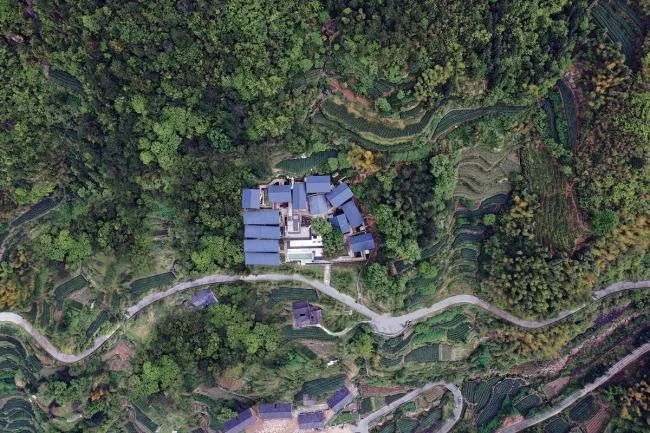
▲ Aerial view © gad · line+ studio
The reason why traditional Chinese villages could survive for thousands of years before the arrival of “modernity” must have their roots and veins of life. It may seem scattered and disordered, but it integrates a region’s ethnic culture, technology, aesthetics, education, folk customs, and beliefs, and is a composite life form with its own soul.
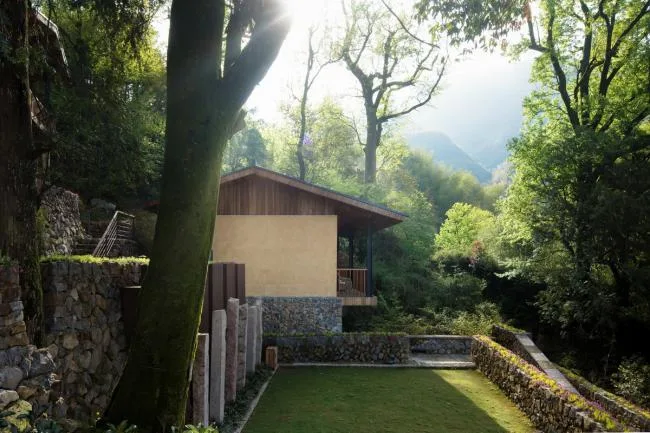
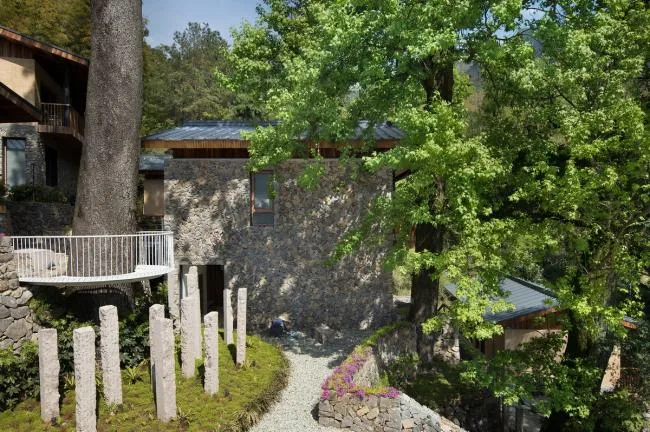
▲ Showcasing the unique beauty of Chinese rural areas © Existence of Architecture – Architectural Photography
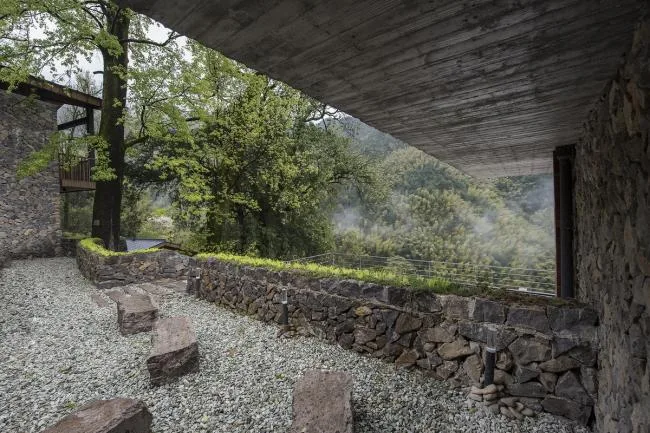
▲ Showcasing the unique beauty of Chinese rural areas © Golden voters
In the face of nature and tradition, the purpose of design is inspired by reverence and respect for the current state of the original site, as well as dependence and restoration of the original way of life. Great music has the faintest notes, the great form Is beyond shape is invisible, and is as ingenious as it is clumsy. According to the natural shape, it follows the traditional natural village pattern, and pursues the aesthetic feeling without design, so as to achieve the design strategy of adhering to tradition, restoring texture, and activating the village.
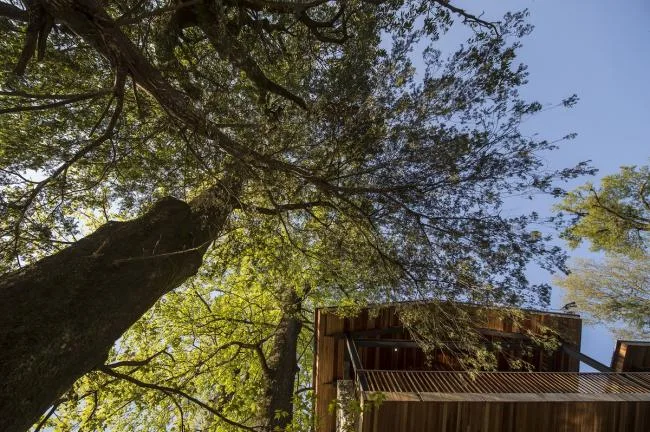
▲ Respect the current status of the original land parcel © Golden voters
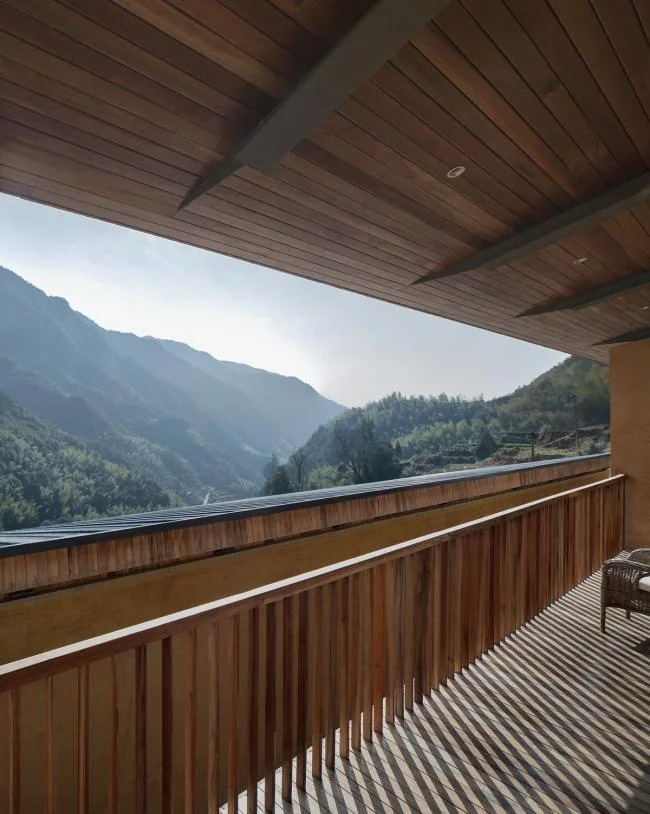
▲ Landscape balcony © Hou Bowen
Methods and Strategies
For this purpose, the team conducted multiple on-site surveys and measurements to accurately locate ancient trees and trails. The original elevations of different plateaus were repeatedly confirmed, and the final design layout was the most suitable answer for the site after trying countless possibilities, adhering to the principle of minimizing damage to nature.
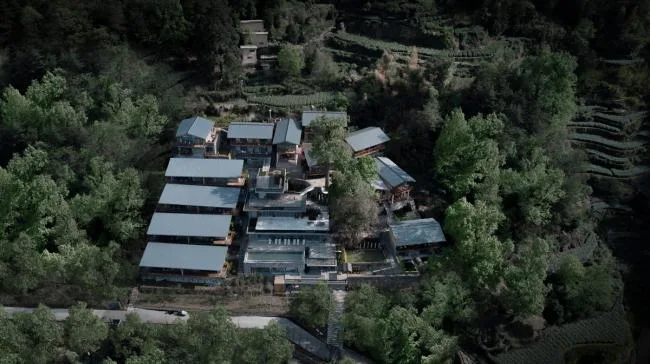
▲ Preserving the Relationship between Ancient Trees and Buildings © Existence of Architecture – Architectural Photography
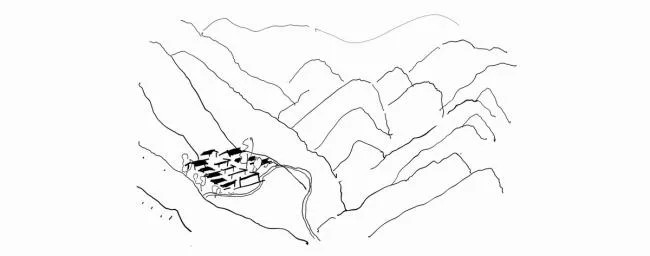
▲ Concept sketch © gad · line+ studio
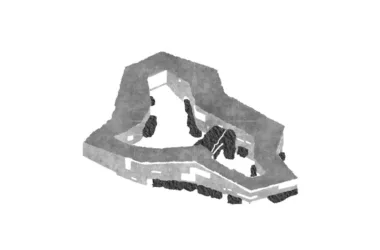
Design to modularize the three functional spaces of public areas, centralized guest rooms, and standalone villas using typology. Avoid ancient trees and install various functional modules. Based on the original terrain, the module is placed as high as possible on the original terrace elevation. The public area is stacked layer by layer, and the guest rooms are broken down into smaller parts, resolving the sense of volume in the building. Further fine tune the height and angle based on the contour line direction, landscape, and field of view, ensuring privacy while maximizing the landscape experience.
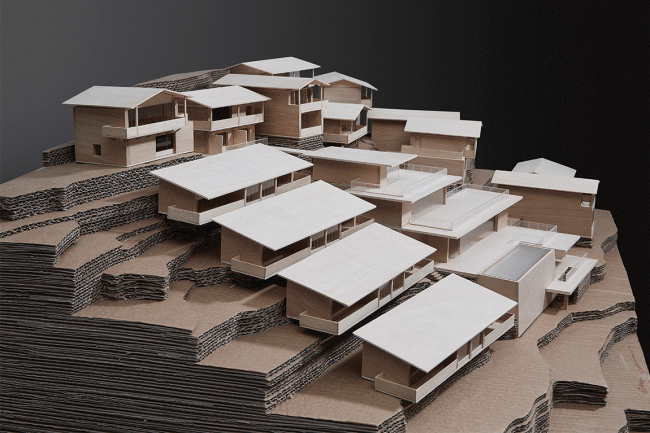
▲ Model photo © gad · line+ studio
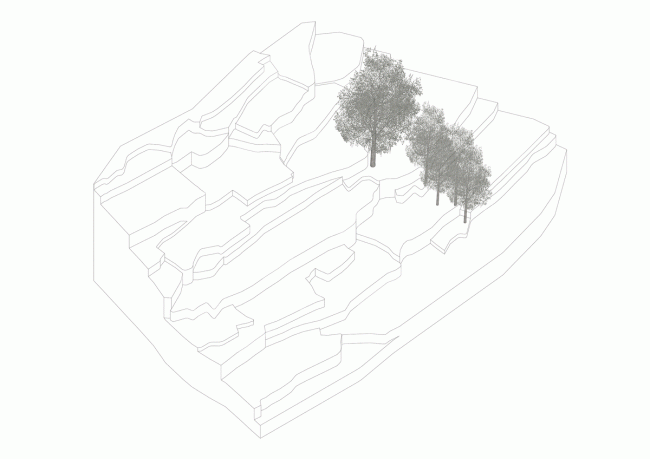
▲ Shape generation diagram © gad · line+ studio
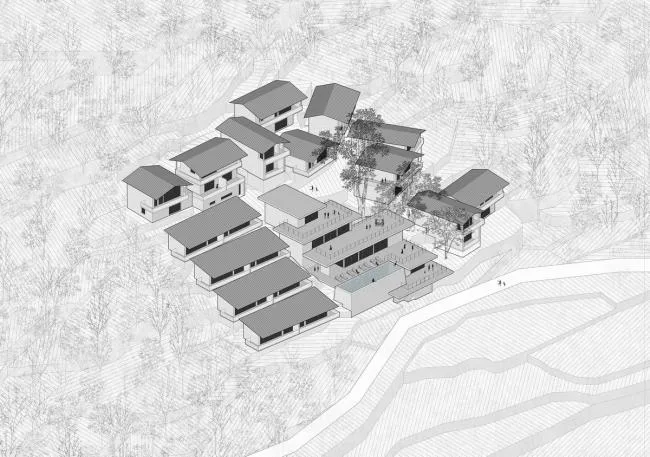
▲ Axonometric diagram © gad · line+ studio
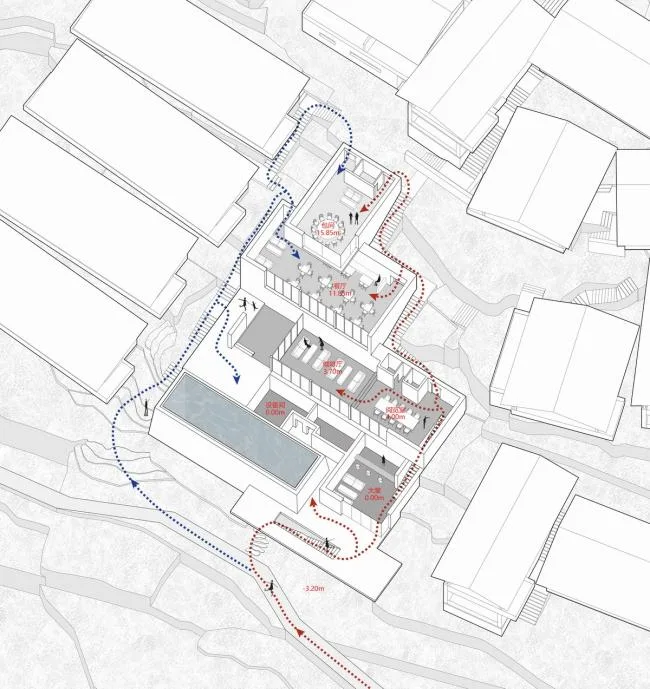
▲ Axial streamline analysis diagram © gad · line+ studio
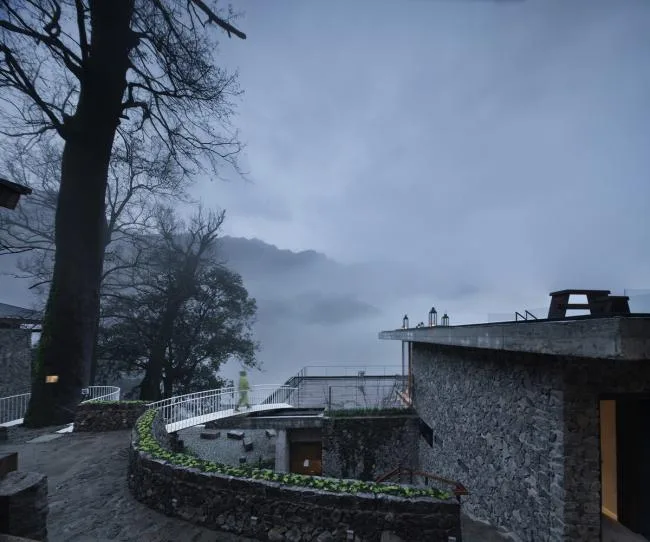
▲ Path © Hou Bowen
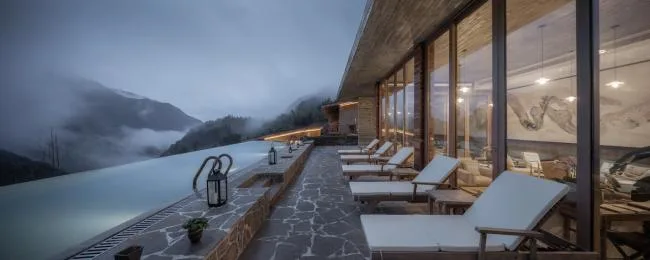
▲ Pool Platform © Tang Xuguo
With 33 guest rooms, a public area equipped with a reception hall, book reading, restaurant kitchen, and a heated swimming pool, and a building area of 2688 square meters, it is undoubtedly a huge volume for a mountain homestay. The design features one or two levels of guest rooms scattered in a staggered manner among the mountains, while the four level public area extends in a layered manner to fit the terrain, weakening the volume while creating a series of observation terraces. The top and ground of each floor of the building are connected to mountains of different heights, unfolding layer by layer. The building grows out of the mountains and conforms to the mountain in the gentlest way possible, hidden in the landscape.
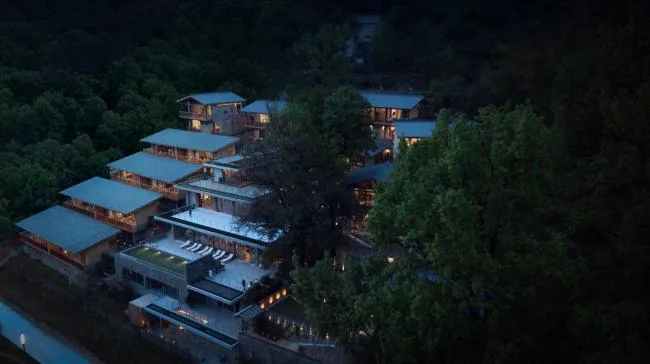
▲ The building volume unfolds layer by layer, like growing out of the mountains © Existence of Architecture – Architectural Photography
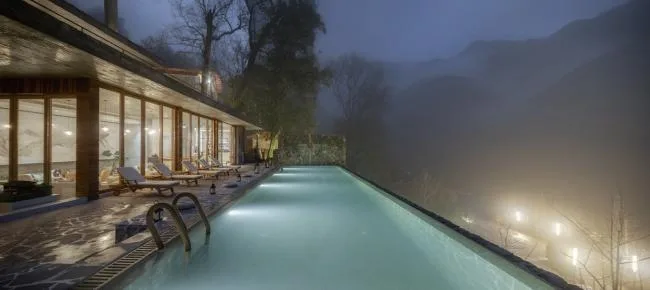
▲ Pool Platform © Tang Xuguo
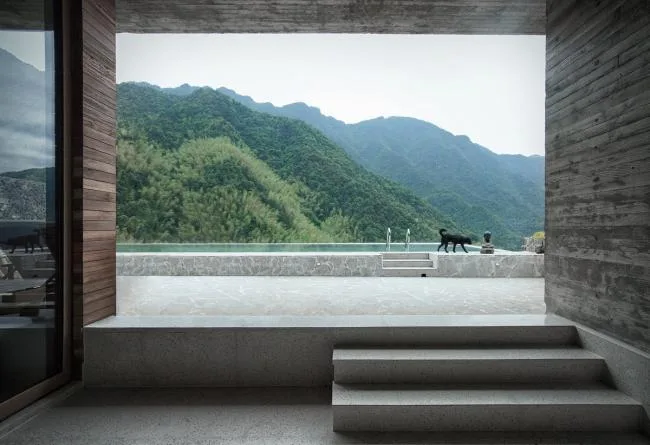
▲ Looking at the mountain view from the swimming pool © Hao Jun
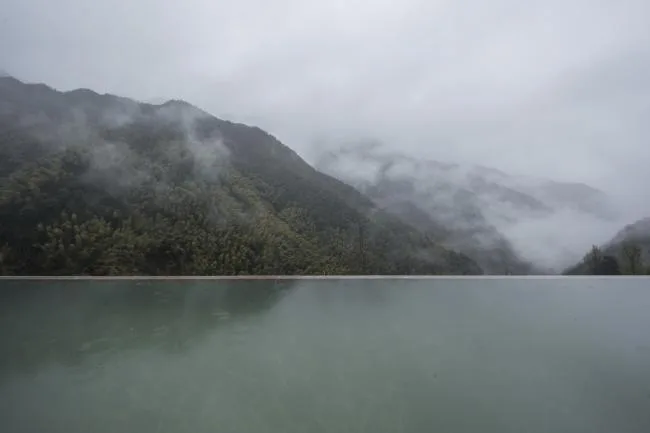
▲ Looking at the mountain view from the swimming pool © Golden voters
The steps built with rough stones climb up, and the clever flow design allows visitors to take a detour in the distant mountains and back mountains. Climbing, looking up, turning, and looking into the distance, create a unique and winding mountain scenery in the space. The building is backed by mountains and facing valleys, lying on a precious land, hidden by trees, with a beautiful view of the distant mountains and a hundred year old camphor tree nearby. Through different windows, at different times and heights of the building, there are different landscapes, and each level has a different experience. Outside each window, there is a whole frameless mountain wilderness painting.
(BIM Tutorial)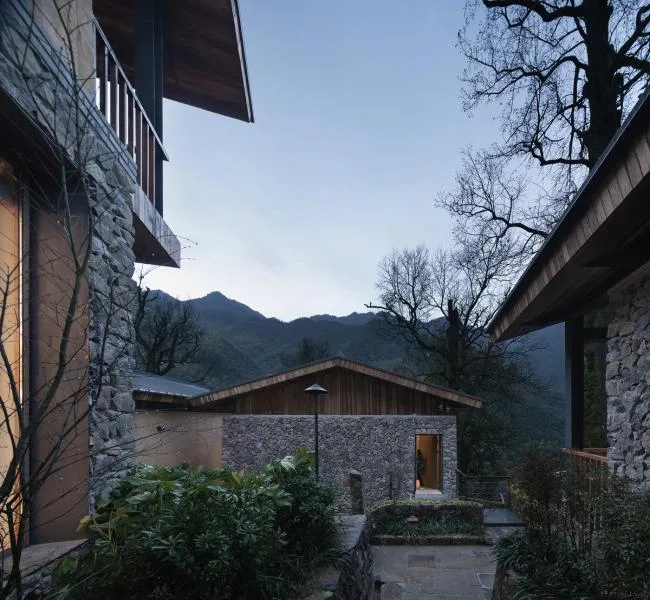
▲ Exterior of guest room architecture © Hou Bowen
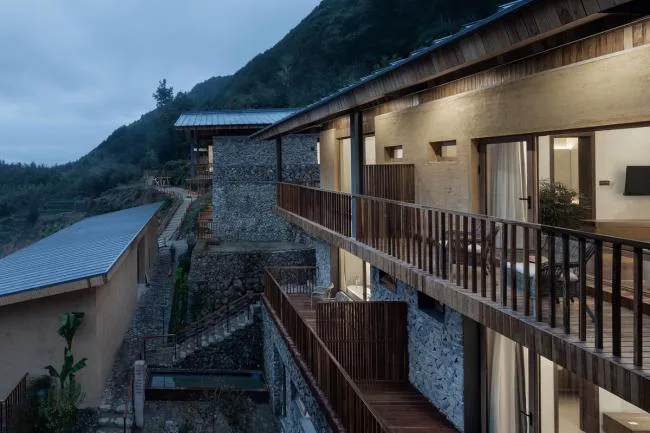
▲ Exterior of guest room architecture © Yang Guangkun
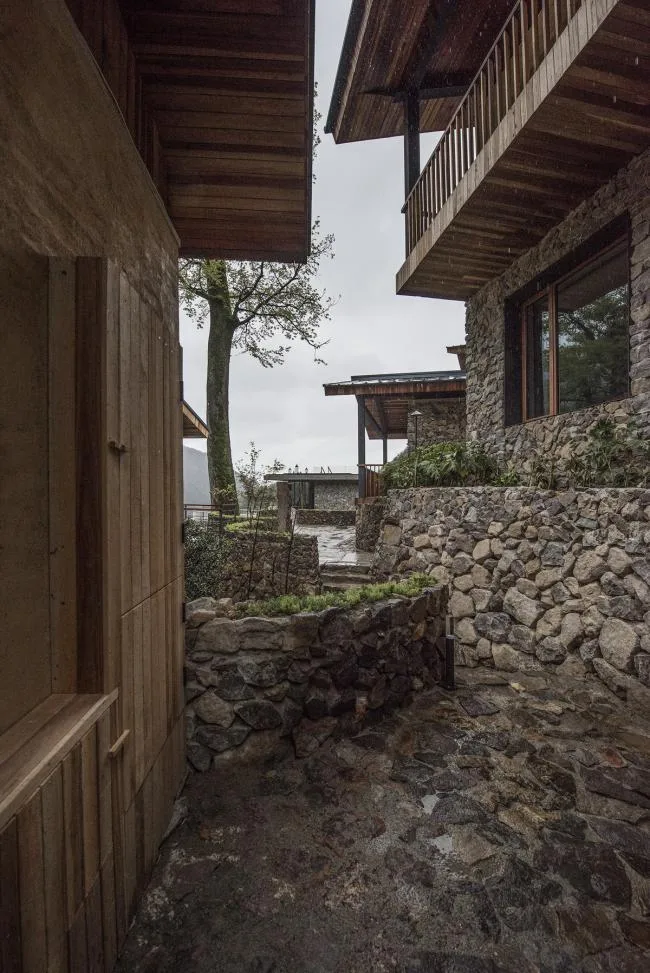
▲ The fun of wandering through mountains with unique scenery and winding paths © Golden voters
Materials and Construction
The large overhanging board in the public area is poured with wooden formwork and concrete as a whole. Architects hope to enhance the purity of space through meticulous treatment of structural equipment. To meet the insulation standards, a sandwich wall of 200 (concrete load-bearing wall)+80 (insulation rock wool)+120 (concrete decorative wall) is used. To hide pipes and air conditioning vents without a ceiling, a clear width of 600-1000 equipment cavity is designed in a position that does not affect the spatial effect, and air conditioning and other equipment are hidden inside.
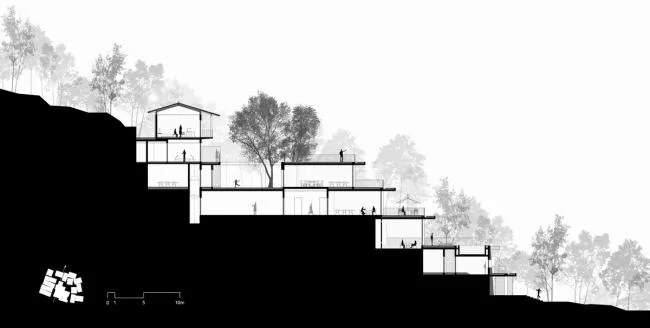
▲ Sectional view © gad · line+ studio
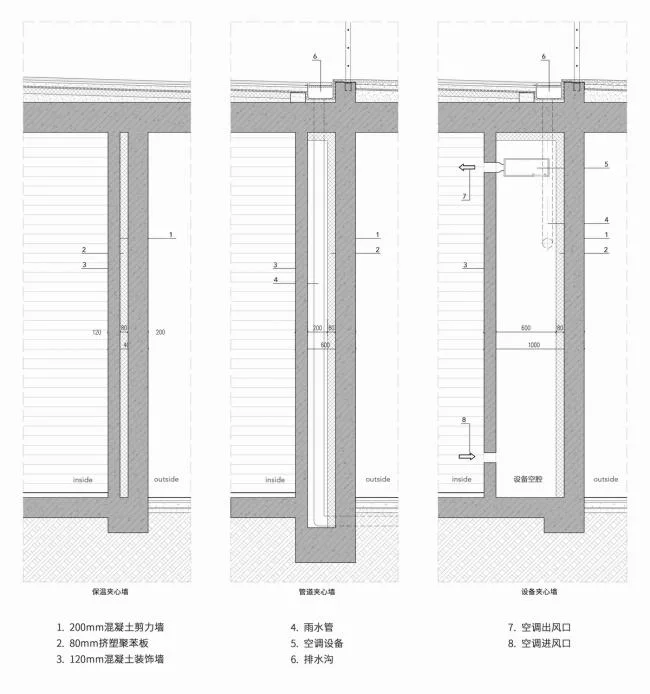
▲ Concrete sandwich wall system © gad · line+ studio
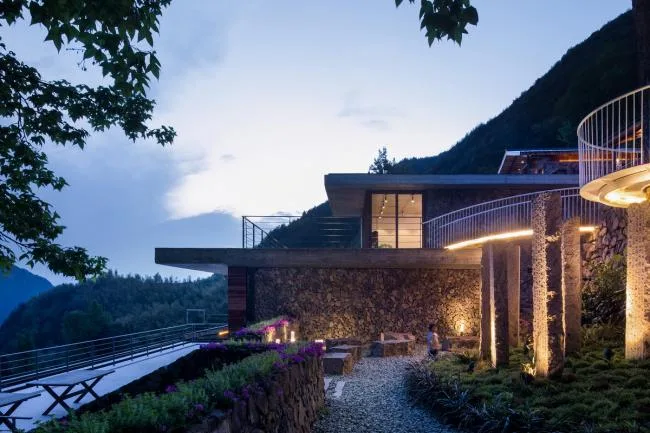
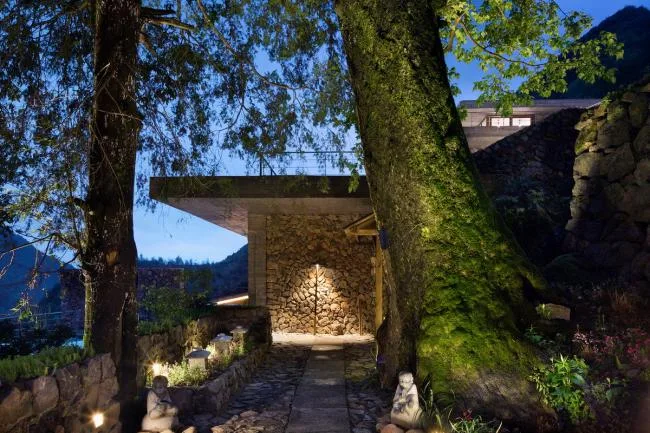
▲ Stacked public areas © Existence of Architecture – Architectural Photography
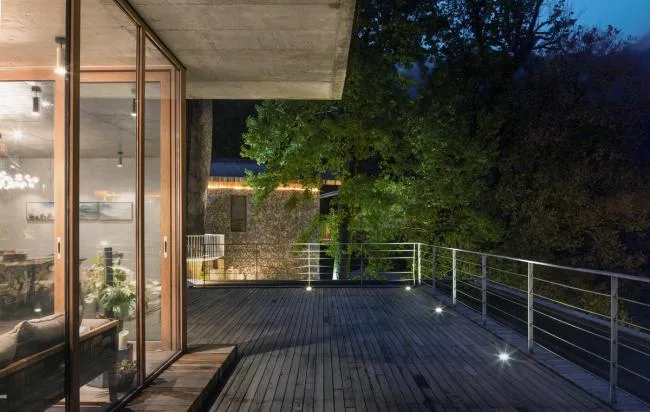
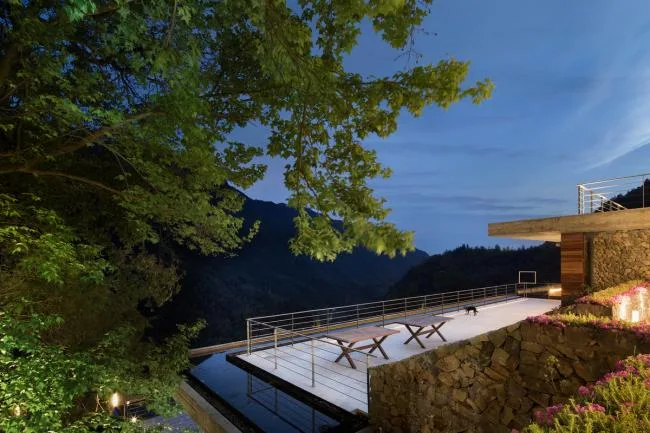
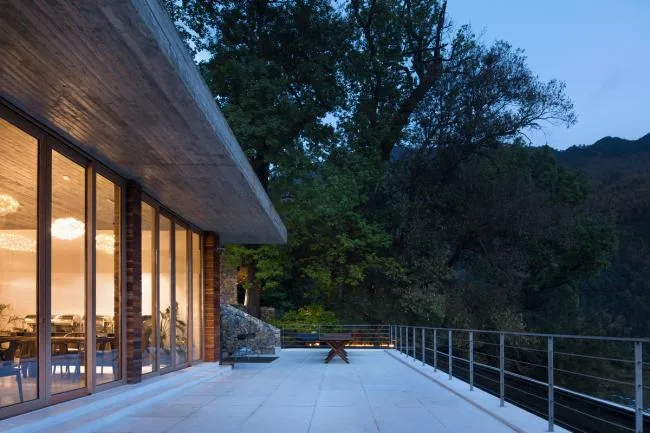
▲ Viewing Platform © Existence of Architecture – Architectural Photography
The guest room adopts a sloping roof shape, with local rubble and rammed earth as the main materials (BIM training), continuing traditional life and cultural context. Here, there is no grand narrative architectural space, nor are there expensive and complicated material methods. The organic combination of materials and forms, the rammed earth, stone masonry, and small green tiles of each mountain house, are the building materials, facade shapes, and even the life in the mountains.
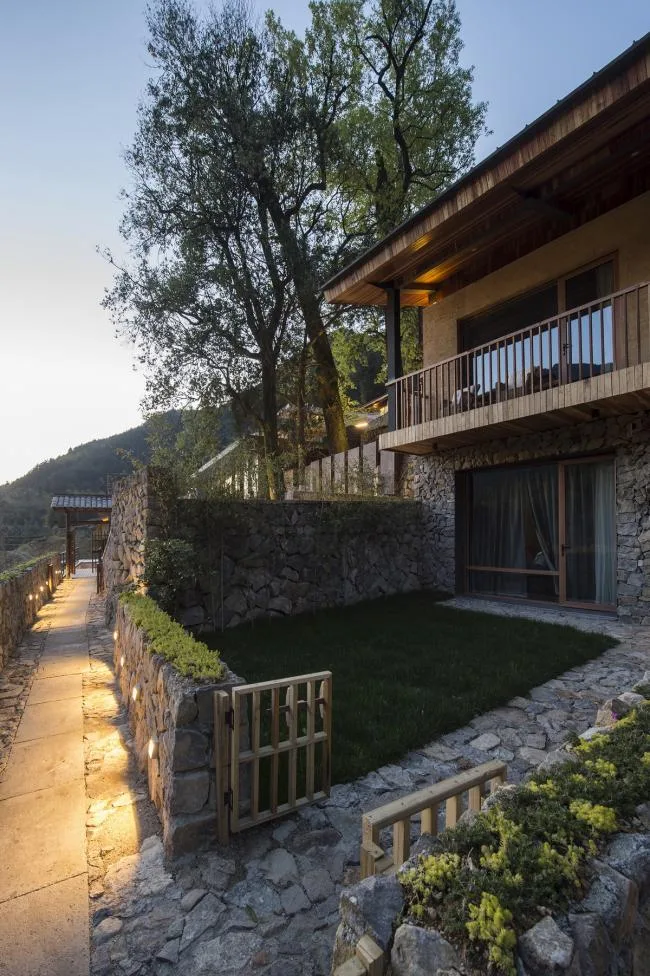
▲ Single family villa © Golden voters
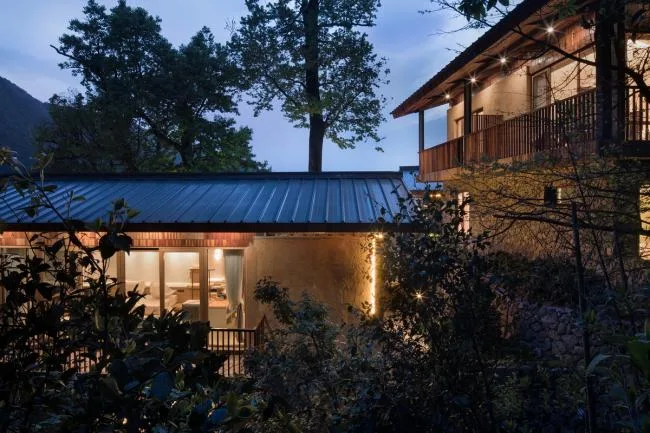
▲ Exterior of guest room architecture © Existence of Architecture – Architectural Photography
Poetry and Dwelling “
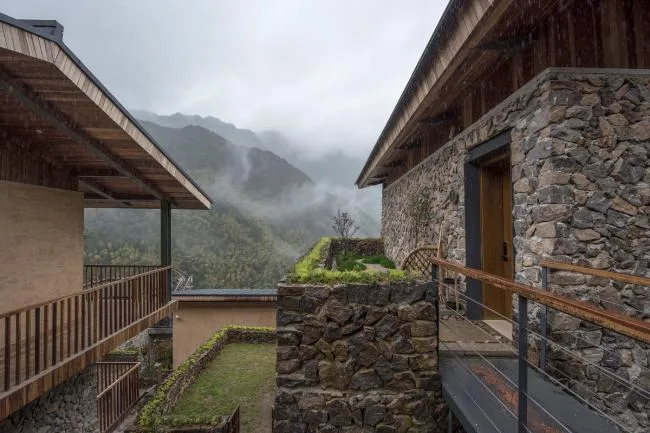
▲ Home in the mountains and wilderness © Golden voters
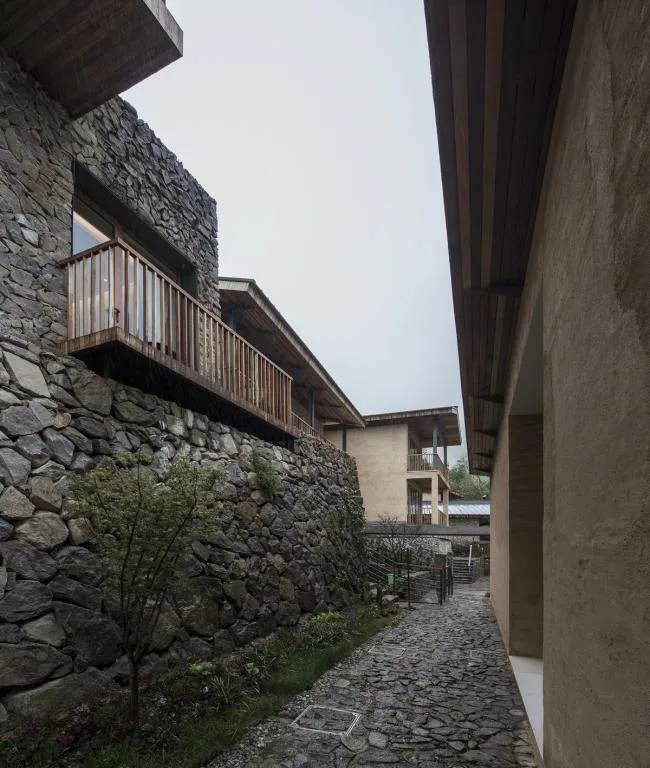
▲ The materials are mainly made of local rubble and rammed earth © Golden voters
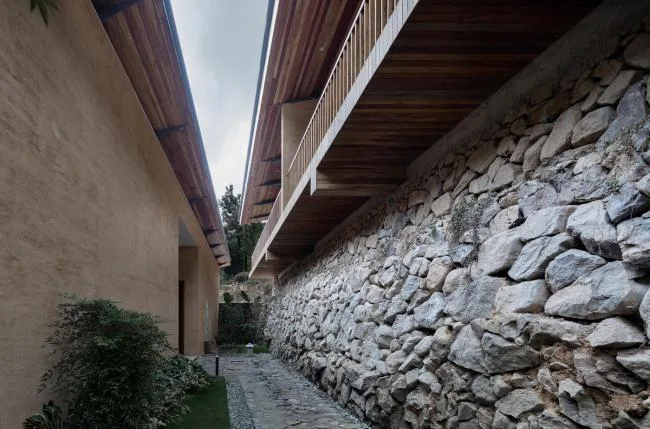
▲ Exterior of guest room architecture © Yang Guangkun
This is a homestay, and it is also a home you came from the city to the mountains. Slow down here and see a ray of dawn, surrounded by ancient trees, with green mountains and rolling clouds. On the terraced fields, there are not just scattered homestays of various sizes, but also traditional settlement textures embedded in their layout, rooting the traditional culture of Langshu Village in the living container of this land, providing a way of living that integrates local culture and modern civilization.
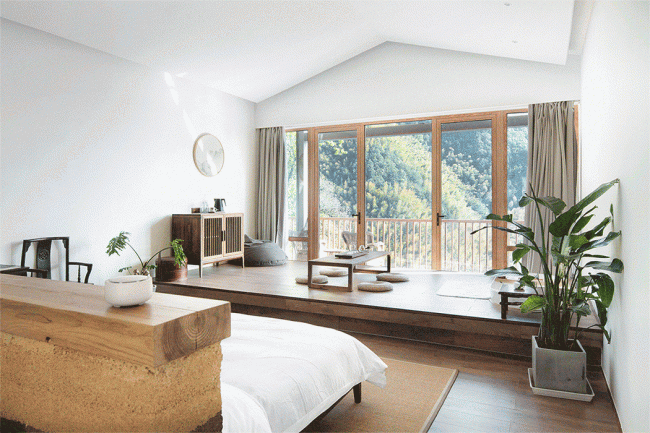
▲ Inside the guest room © Existence of Architecture – Architectural Photography © Tang Xuguo
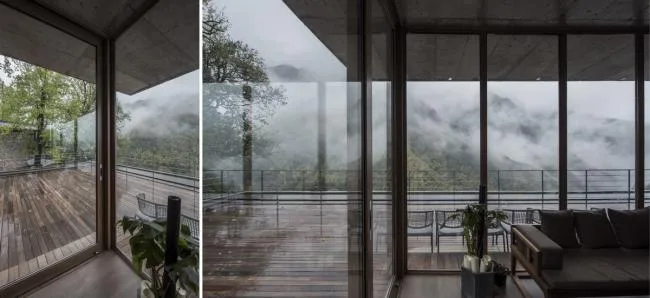
▲ Window View © Golden voters
Songyang Yuanshe takes a brand new homestay model and rural ecological community as the starting point, with a heterogeneous and homogeneous village texture, a natural village built according to the trend, old and new, natural and artificial, exquisite and simple, masculine and feminine. The architect responds to nature with a humble attitude, seeking a balanced and appropriate beauty. The exploration of “natural” architecture through works has never stopped.
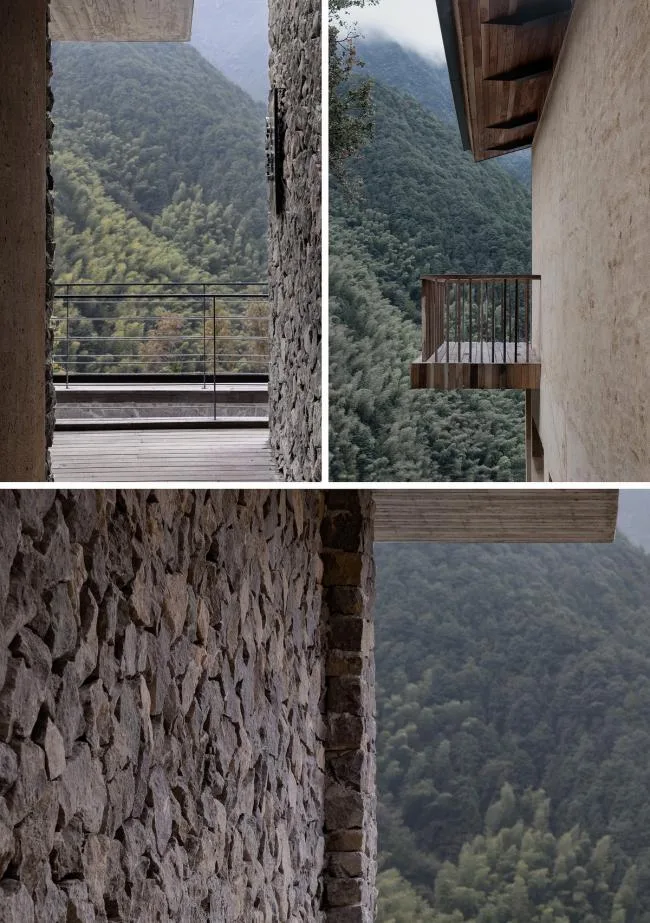
▲ Architectural details © Yang Guangkun
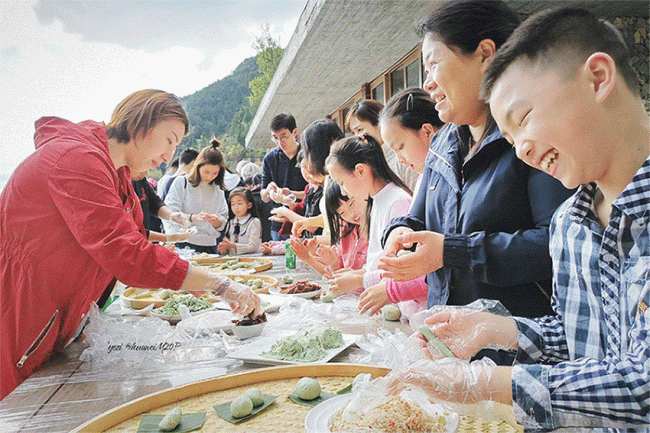
▲ Life in Lanshu Mountain House © leaf
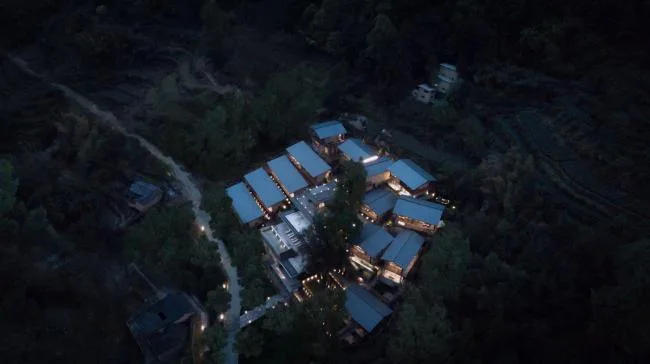
▲ The public area is stacked layer by layer, and the guest rooms are broken down into small pieces © Existence of Architecture – Architectural Photography
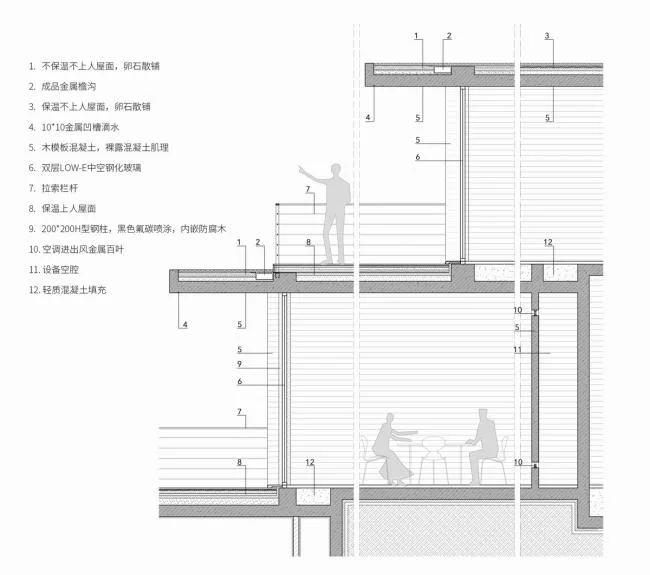
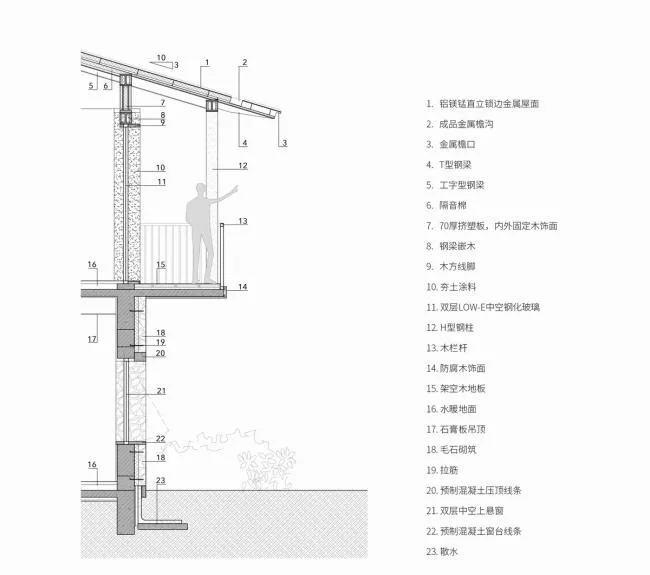
▲ Wall body sample © gad · line+ studio
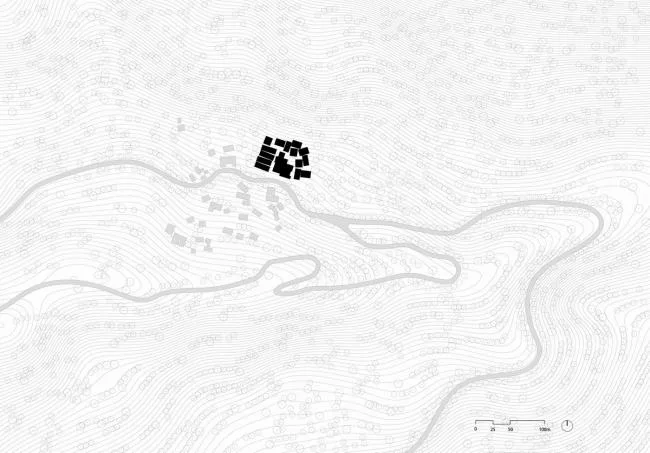
▲ General layout plan © gad · line+ studio
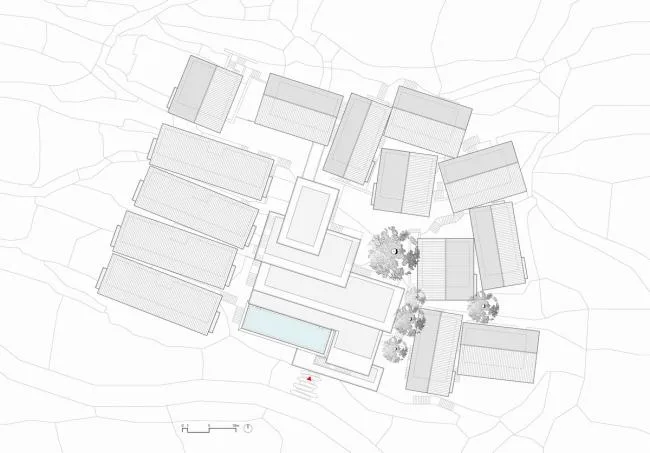
▲ Roof Plan © gad · line+ studio
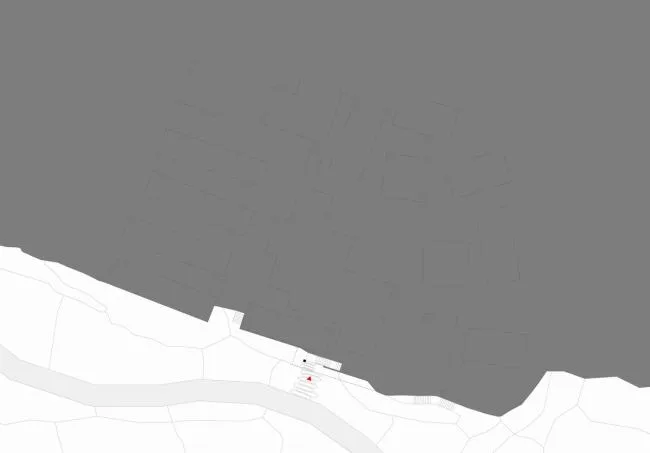
▲-3.200 elevation plane © gad · line+ studio
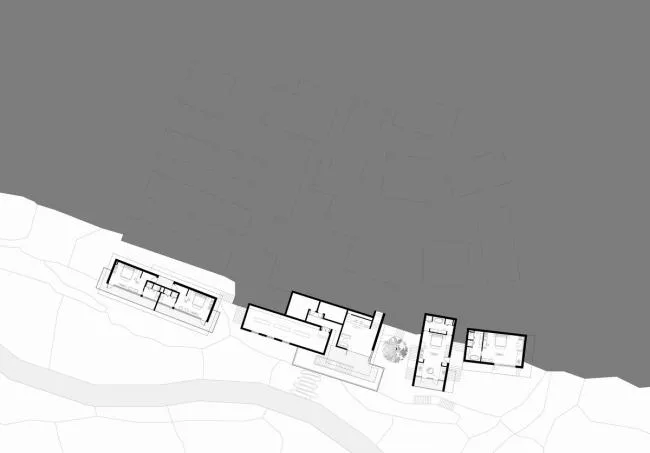
▲± 0.000 elevation plane © gad · line+ studio
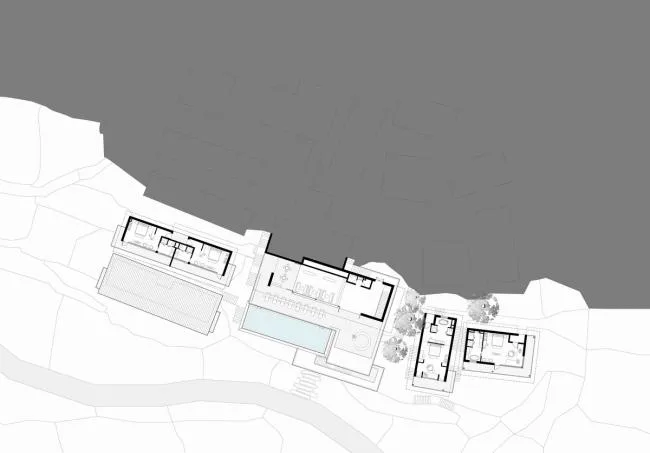
▲ 3.700 elevation plane © gad · line+ studio
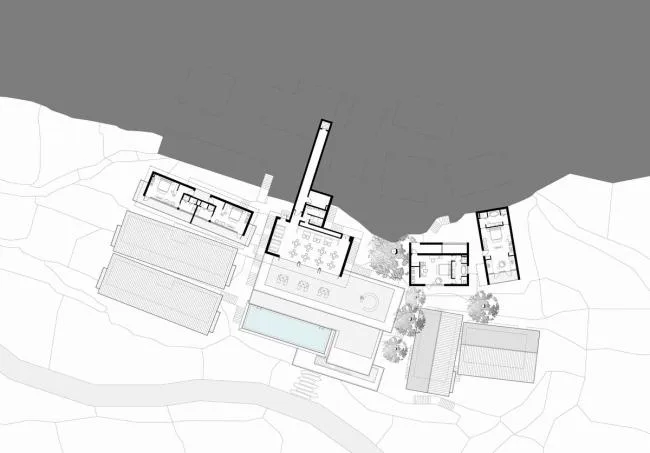
▲ 7.900 elevation plan © gad · line+ studio
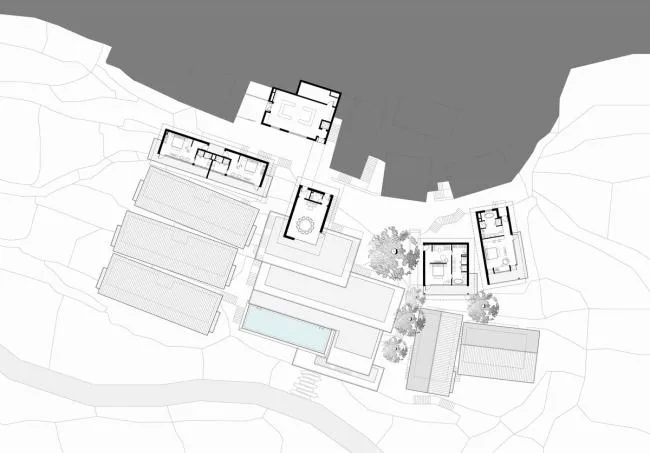
▲ 11.850 elevation plane © gad · line+ studio
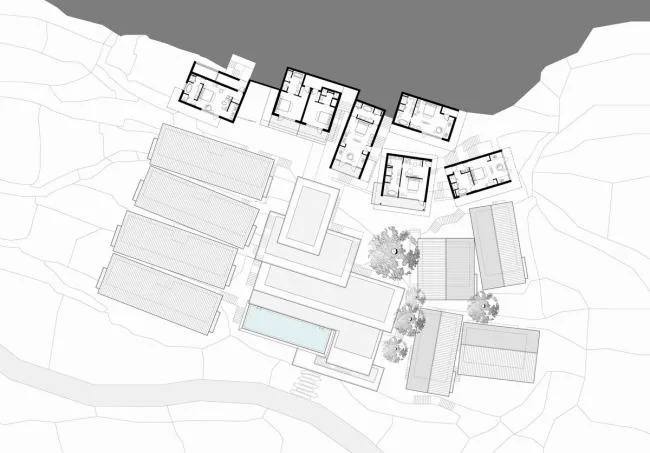
▲ 15.850 elevation plane © gad · line+ studio
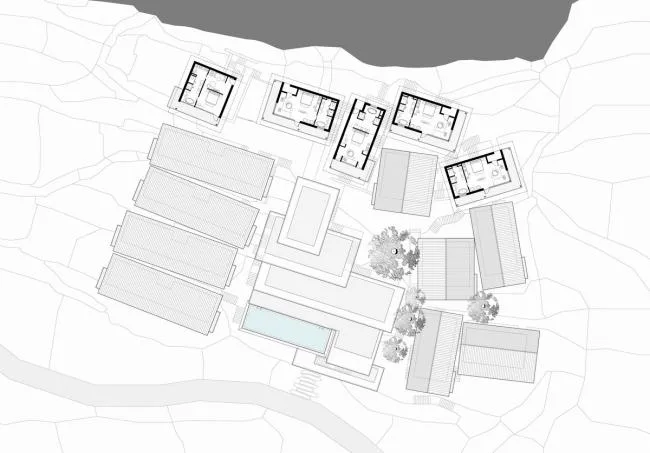
▲ 19.650 elevation plane © gad · line+ studio
Project Information:
Project Name: Songyang Yuanshe · Lanshushan House
Design Unit: Gad · Line+Studio, Zhejiang Greentown Architectural Design Co., Ltd
Lead Architect: Meng Fanhao
Location: Langshu Village, Sidu Township, Songyang County, Lishui City, Zhejiang Province
Construction time: March 2019
Owner: Songyang Xiangban Tourism Development Co., Ltd
Project Architect: Li Xinguang
Design team: Zhu Xiaocheng, Zhang Hongliang
Structure: Hu Daming, Zhang Mi, Huang Jie, Li Tao
Equipment: Wu Wenjian, Zhao Yaxuan (water supply and drainage), Cui Daliang, Fang Yuanyuan (HVAC), Yang Meiping, Wang Yue (electrical)
Interior Design: Suzhou Chao Yu Design Firm
Landscape Design: Xiangban Culture and Tourism Group
Building area: 2688.27 square meters
Materials: wood, steel, bricks, concrete, rammed earth
Photographer: Existence Architecture – Architectural Photography, Jin Yingxuan, Yang Guangkun, Hou Bowen
Contact email: __AI_S_SC0__












Must log in before commenting!
Sign Up