
Unlike a conventional pure art center, the Lishui Guyan Painting Village Art Center aims to be a vibrant, multi-functional space. By day, visitors can enjoy exhibitions and shopping; by evening, take leisurely strolls and engage in activities; and at night, the site transforms with markets, social gatherings, and square dances. The suspended, large-scale structure establishes a strong identity, while the smaller, scattered boxes on the ground level evoke a cozy, village-like atmosphere. Here, art and commerce nourish and coexist, blending seamlessly to create a truly shared everyday space.
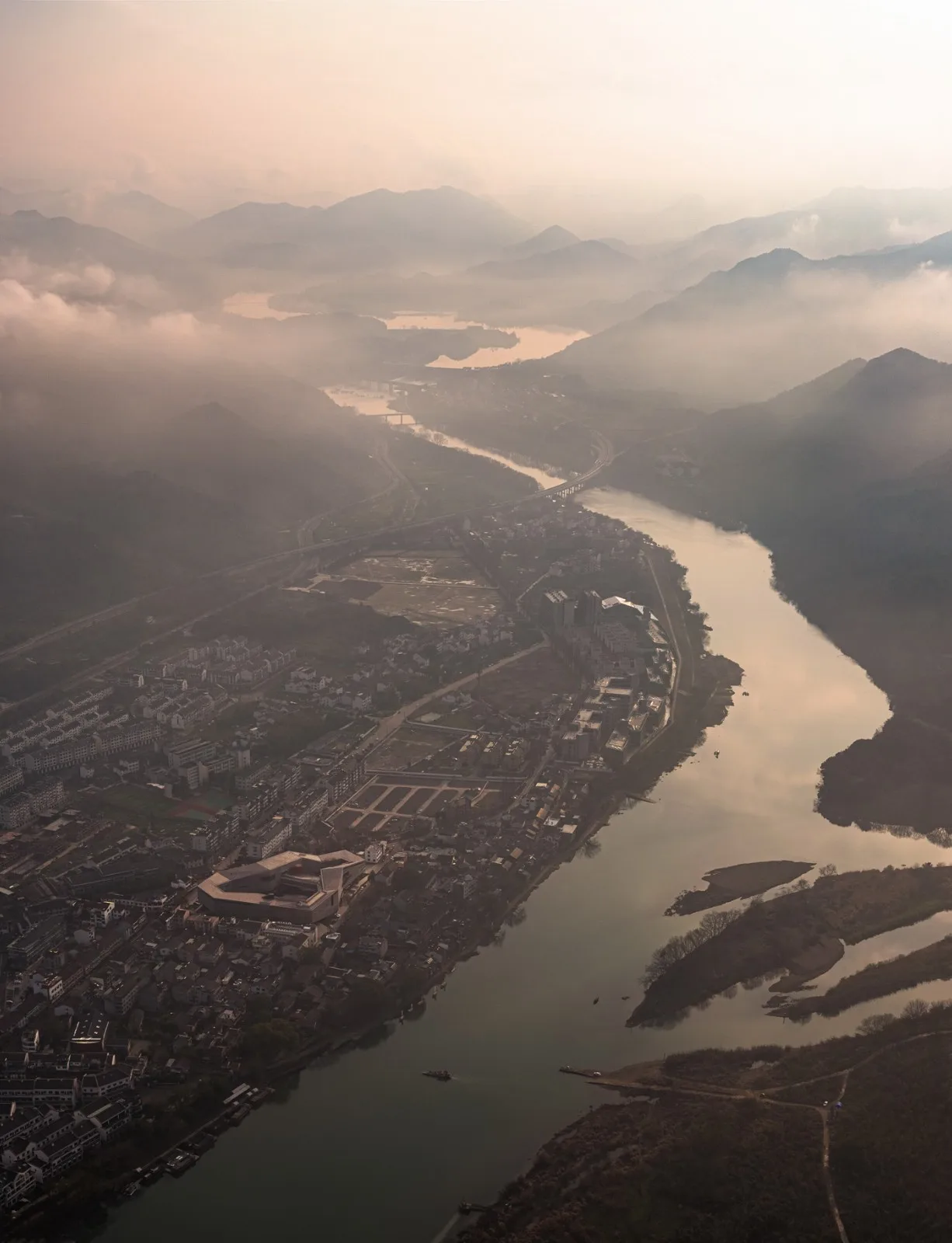
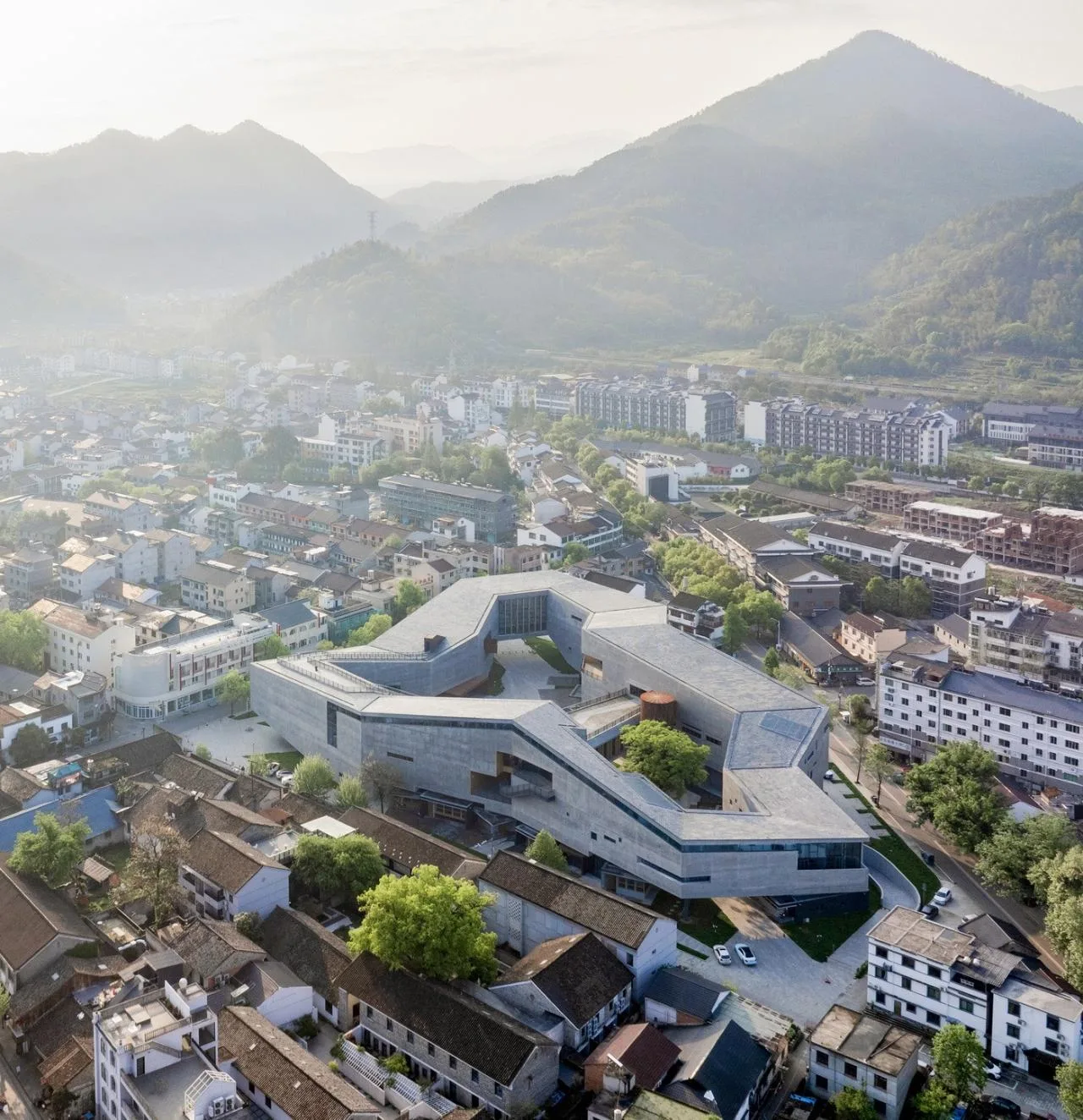
△ Art center harmoniously integrated into the natural landscape
The Lishui Guyan Painting Village Art Center, designed by the interdisciplinary team led by Meng Fanhao, co-founder and principal architect of Line+, officially opened on April 28, 2024. As the largest art complex in Lishui City, it serves as a key cultural and artistic exhibition platform, enhancing the public cultural infrastructure of the Guyan Painting Village scenic area. The project effectively integrates art, culture, and tourism to foster urban development.
The Liandu Ancient Weir Painting Village in Lishui, Zhejiang, is named after the 1,500-year-old world heritage site “Tongji Weir,” and is the birthplace of the Lishui Babison Painting School. The “Ancient Weir” and “Painting Village” face each other across the water, creating a unique town where historic charm, poetry, and contemporary art coexist. Over time, it has developed an ecosystem combining art galleries, art education, ancient town culture, tourism, and daily life. In 2019, it was recognized as one of Zhejiang Province’s “Third Batch of Provincial Characteristic Towns.”
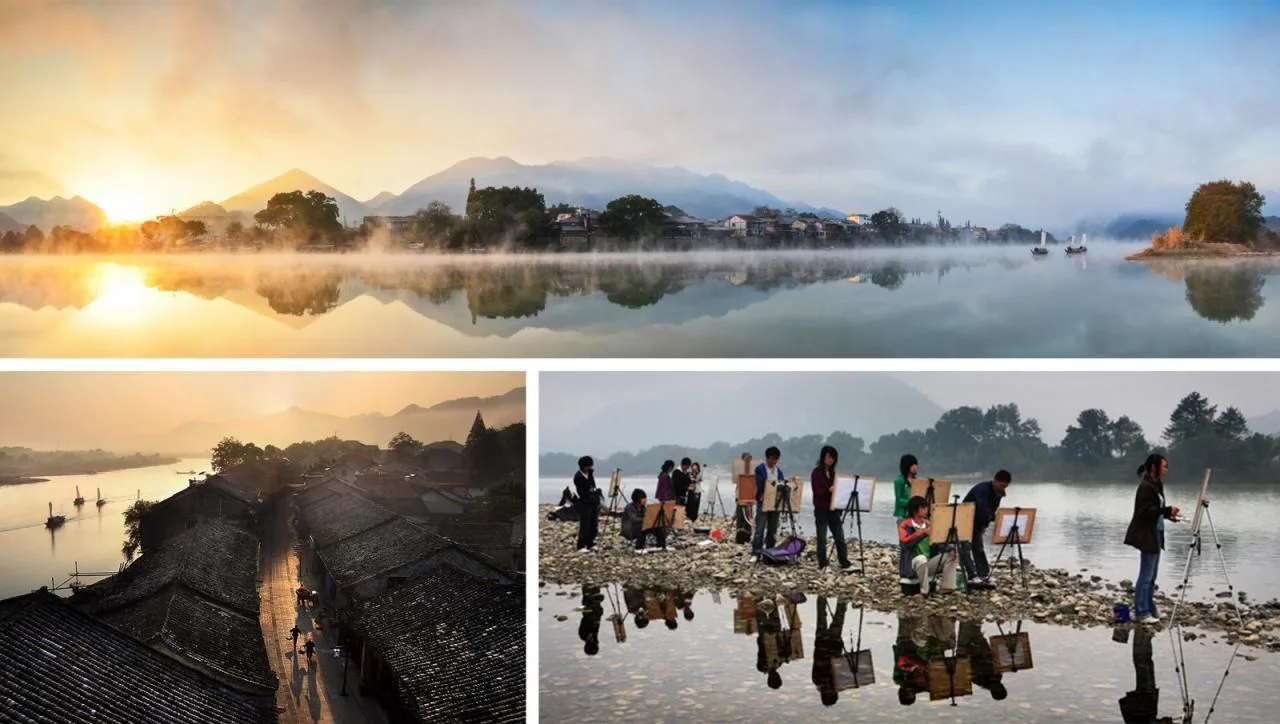
Natural and cultural scenery of Guyan Painting Village
In 2020, the local government initiated plans to build an art center in the town’s core area to meet the increasing demands of residents, tourists, artists, and students. This center is designed to be an important platform and landmark for cultural exhibitions and public education in the future.
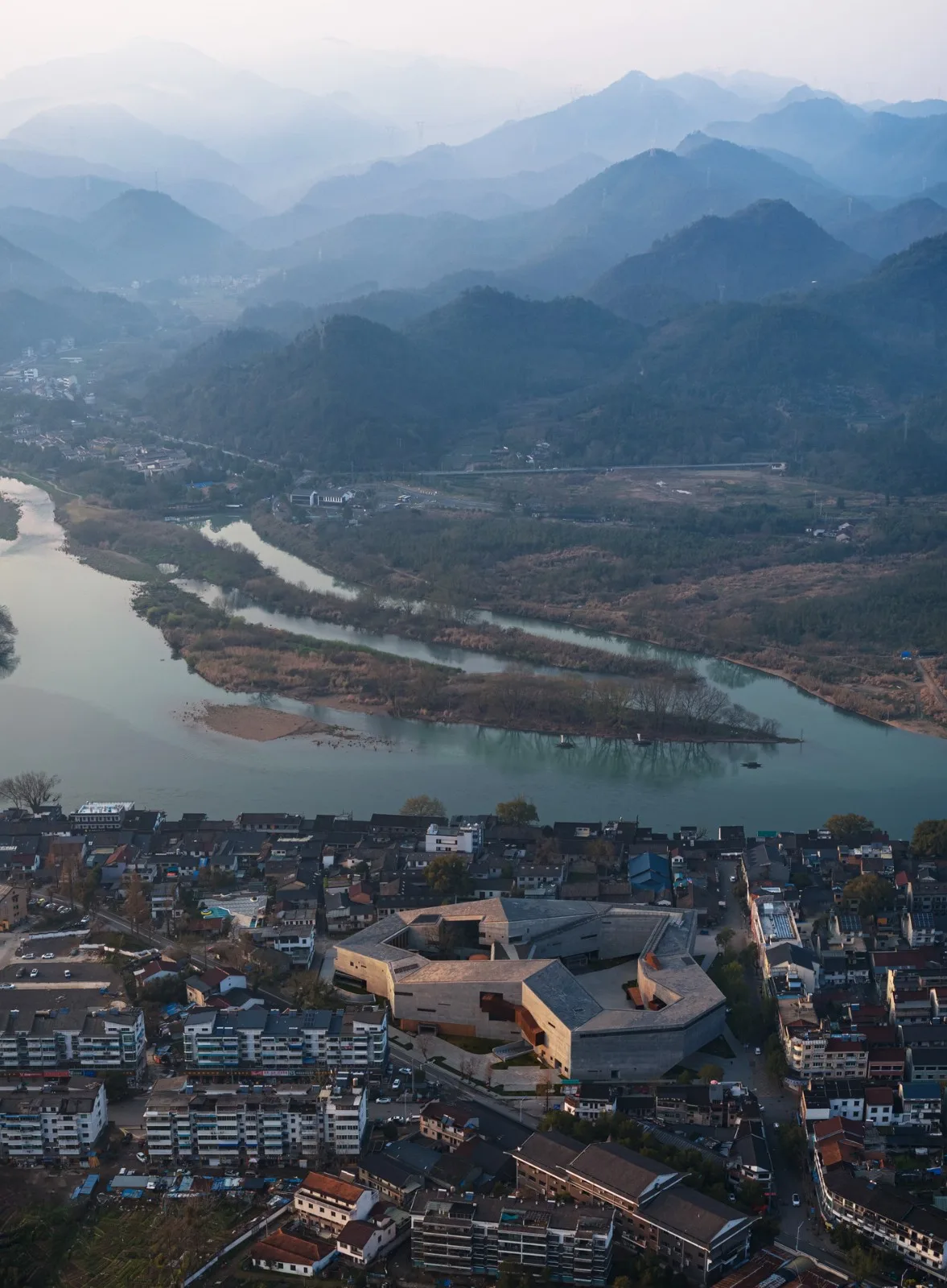
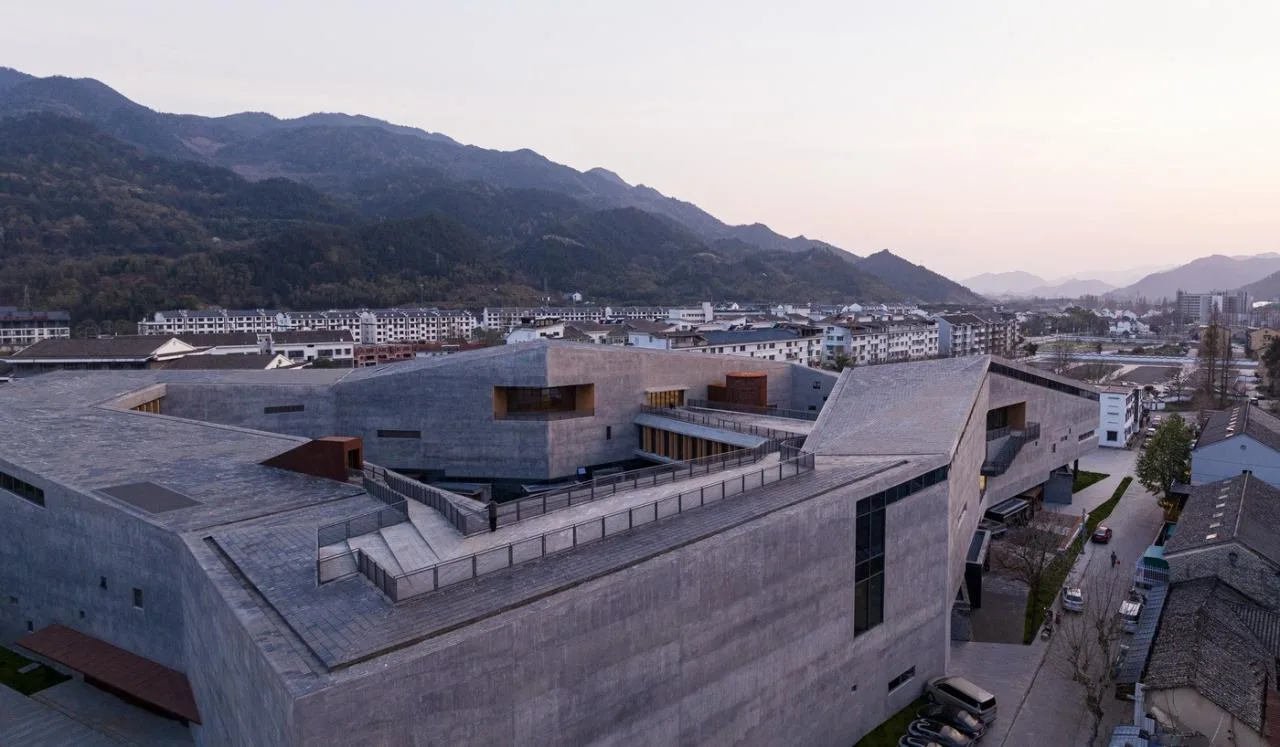
△ View overlooking the Art Center
01 Juxtaposition and Integration
Abstract Art Meets Vibrant Daily Life
Located within a dense, historic residential neighborhood near an ancient street preserving traditional settlement patterns, the art center is surrounded by mountains and bordered to the north by the Oujiang Daxi area, rich in authentic urban life.
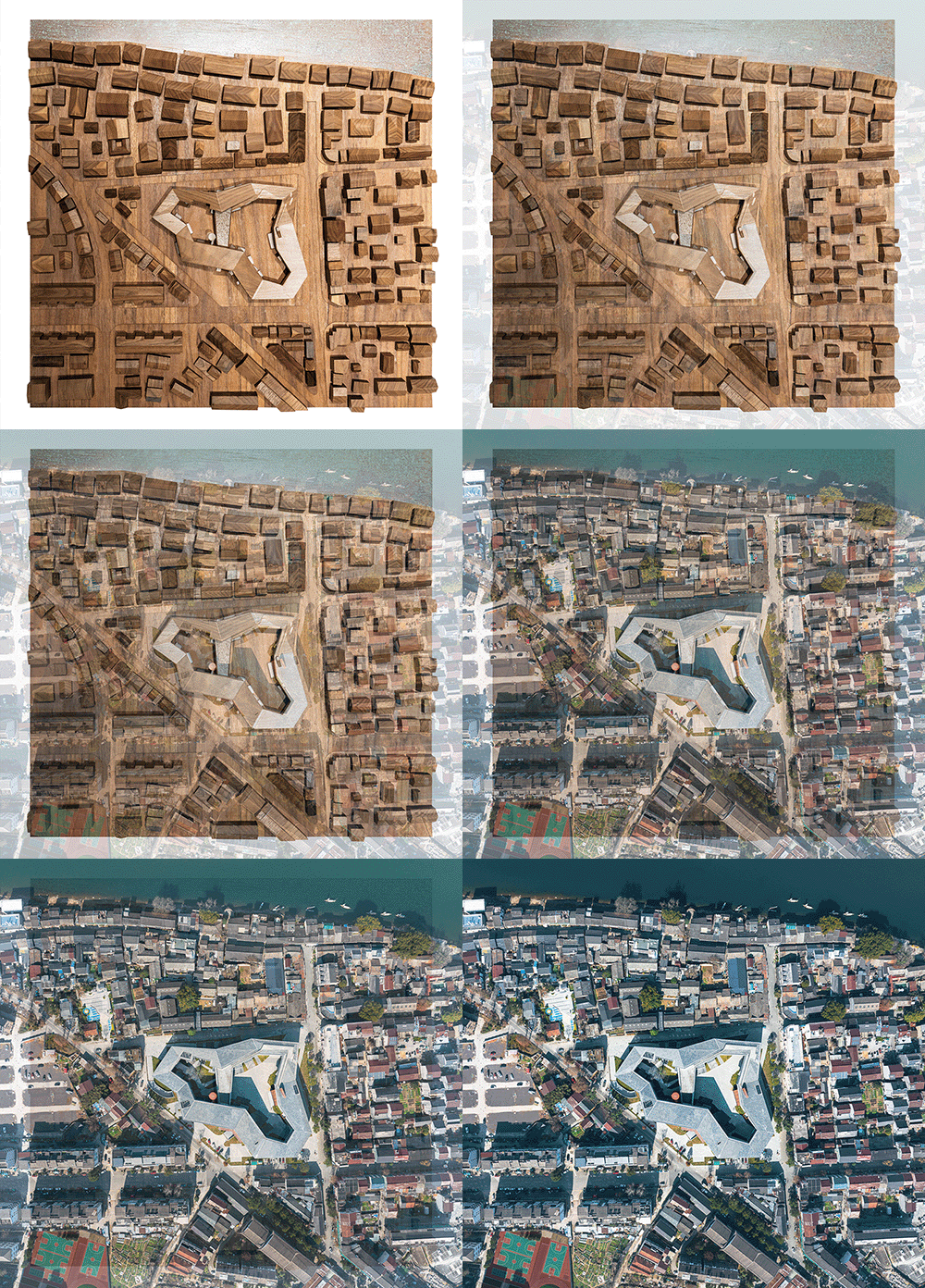
Transitioning from conceptual models to real-world construction
Early research revealed that traditional art public buildings, typically “stages” for art, should be reimagined in this small town as a blend of institutional and public functions. The art center and the town’s daily life become mutual backdrops. Relying solely on the town’s existing art industry was insufficient to sustain such a large center long-term.
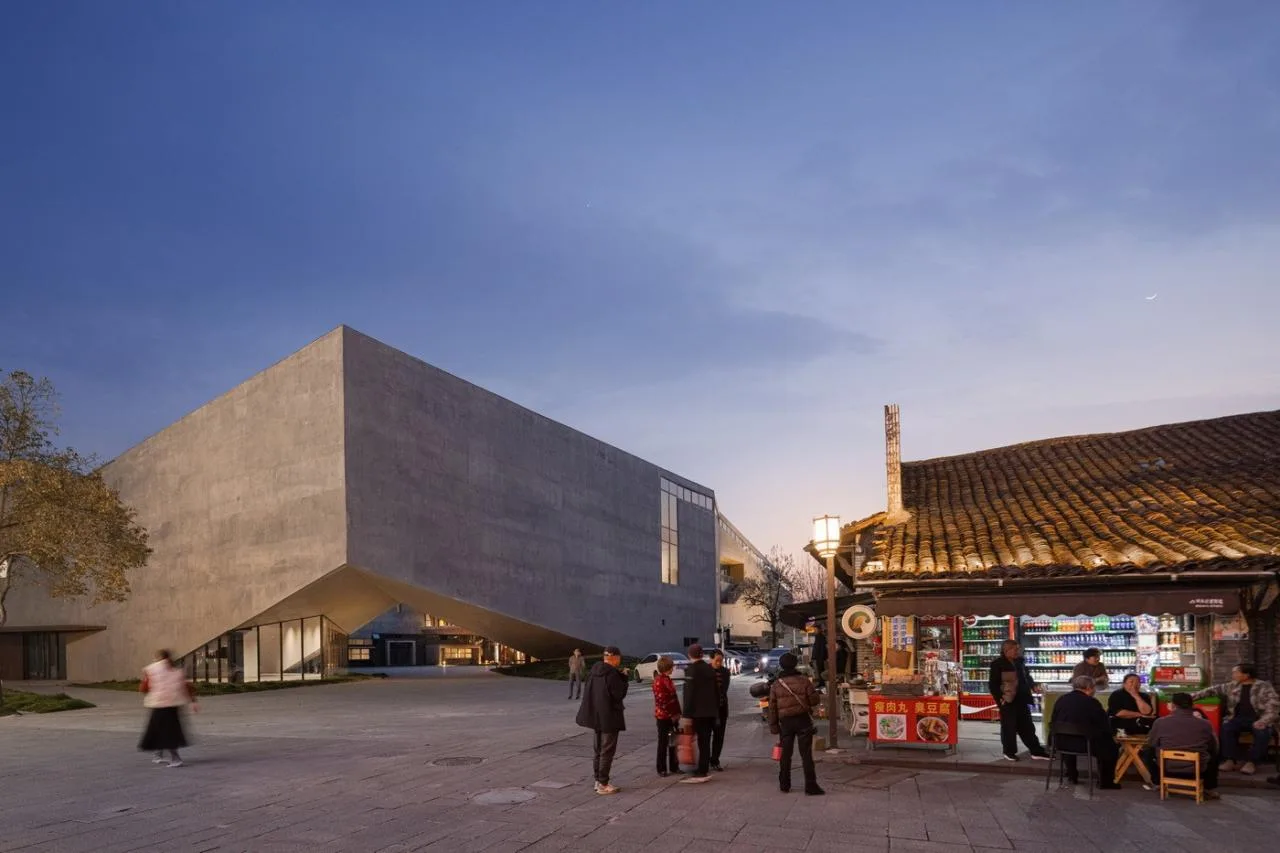
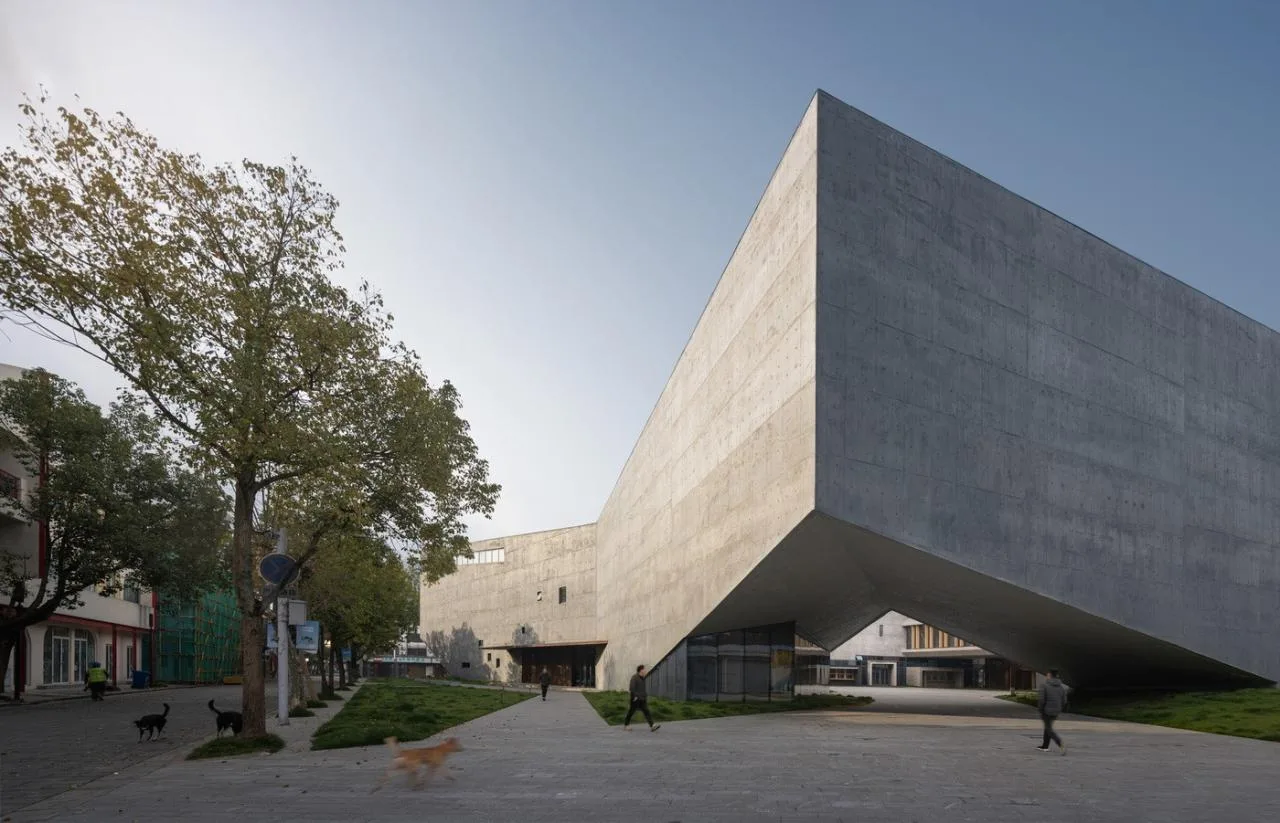
△ Real-life street corner
Thus, during project planning, we proposed a pre-operation concept and collaborated with the client to define sustainable positioning and operation models. This design task ensures the art center becomes a lively public space by incorporating the town’s daily activities and expanding its functional possibilities to include commercial, cultural, entertainment, leisure, curation, training, and education formats, thus invigorating the space.
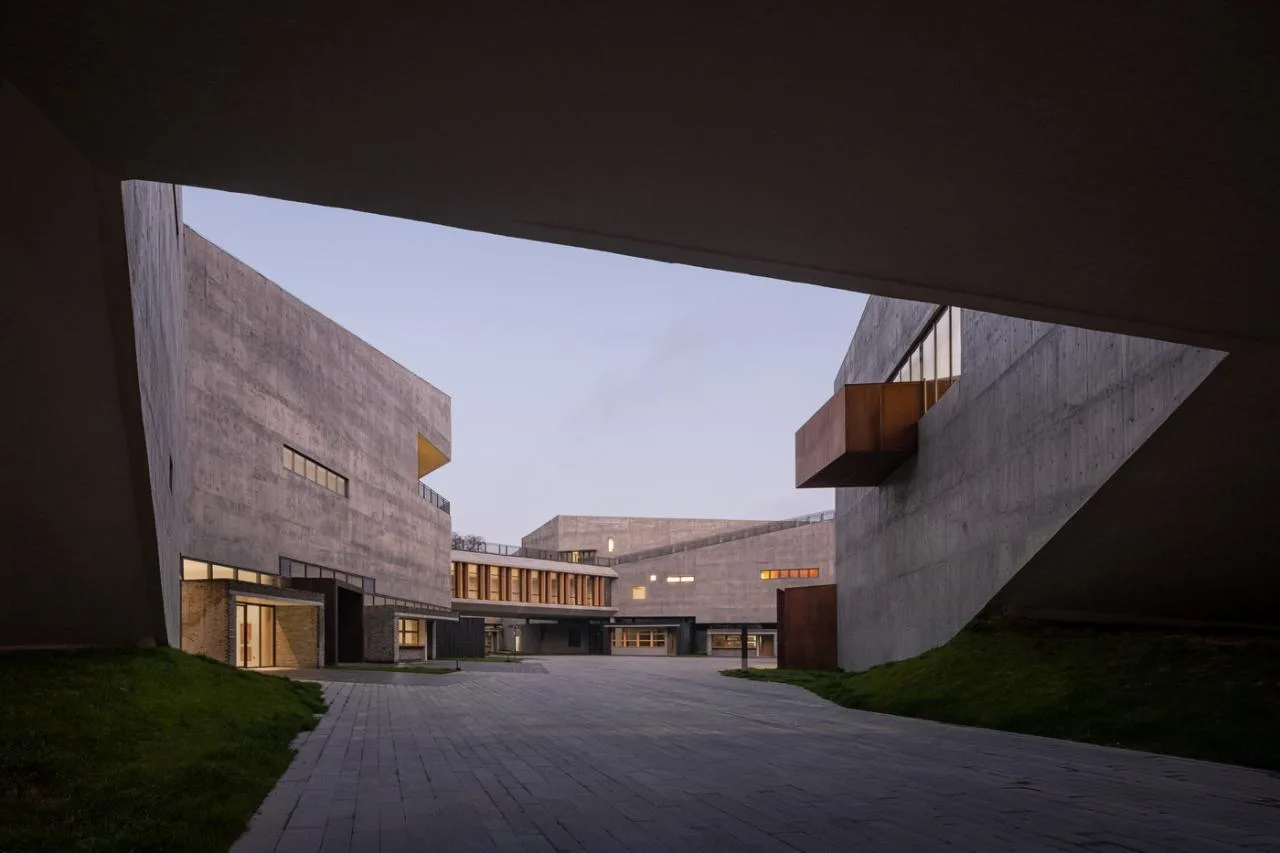
View from the elevated entrance towards the main square
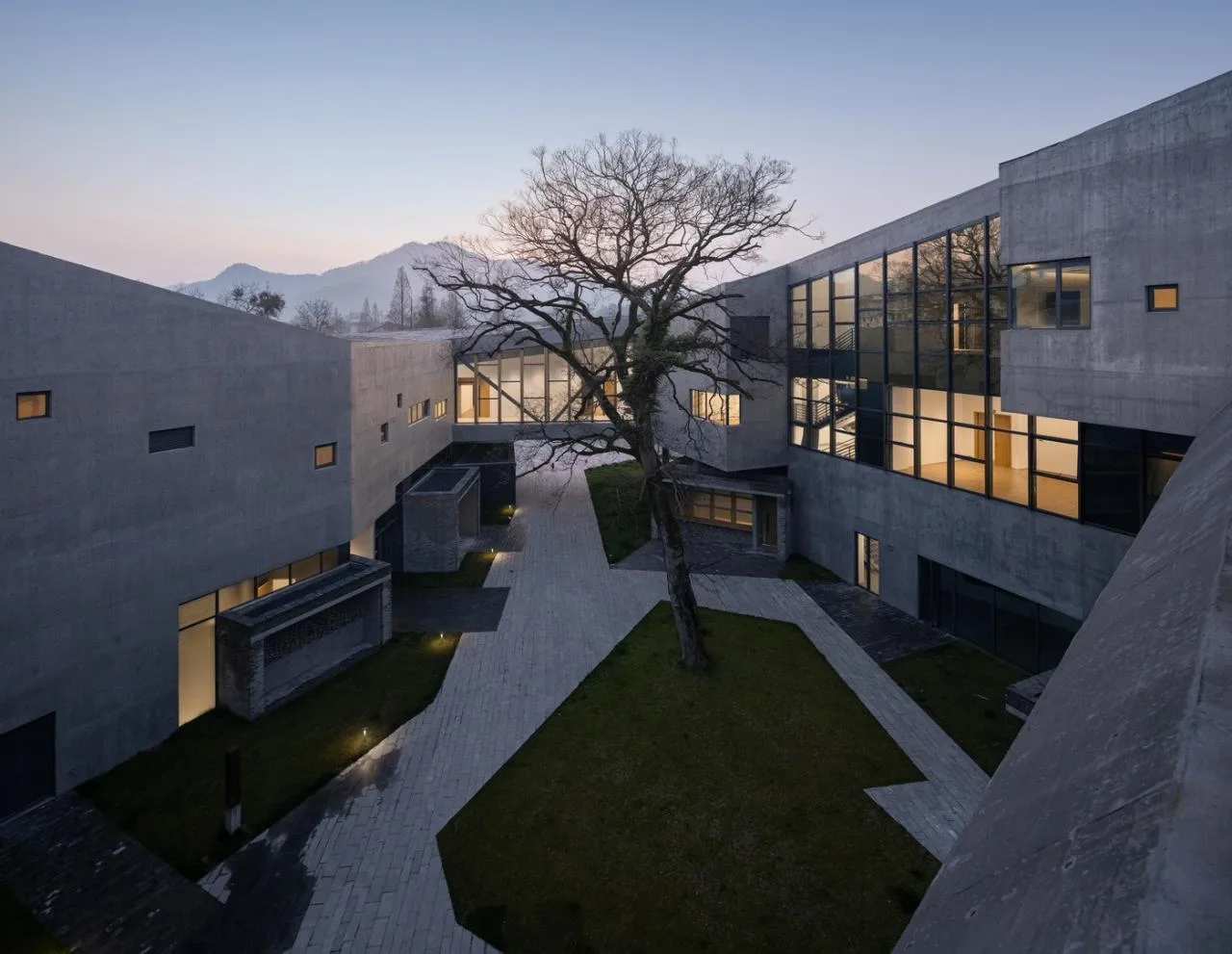
△ Small courtyards with preserved ancient trees
The art center is designed around two main functions: a modern and contemporary art exhibition space, and a daily activity hub for local residents. Its design integrates four key aspects: institutional functionality, public space extension, mixed-use functionality, and regional expression. This creates a juxtaposition and integration between abstract art and vibrant town life, expressed through contrasting volumes and materials alongside overlapping spatial and temporal experiences.
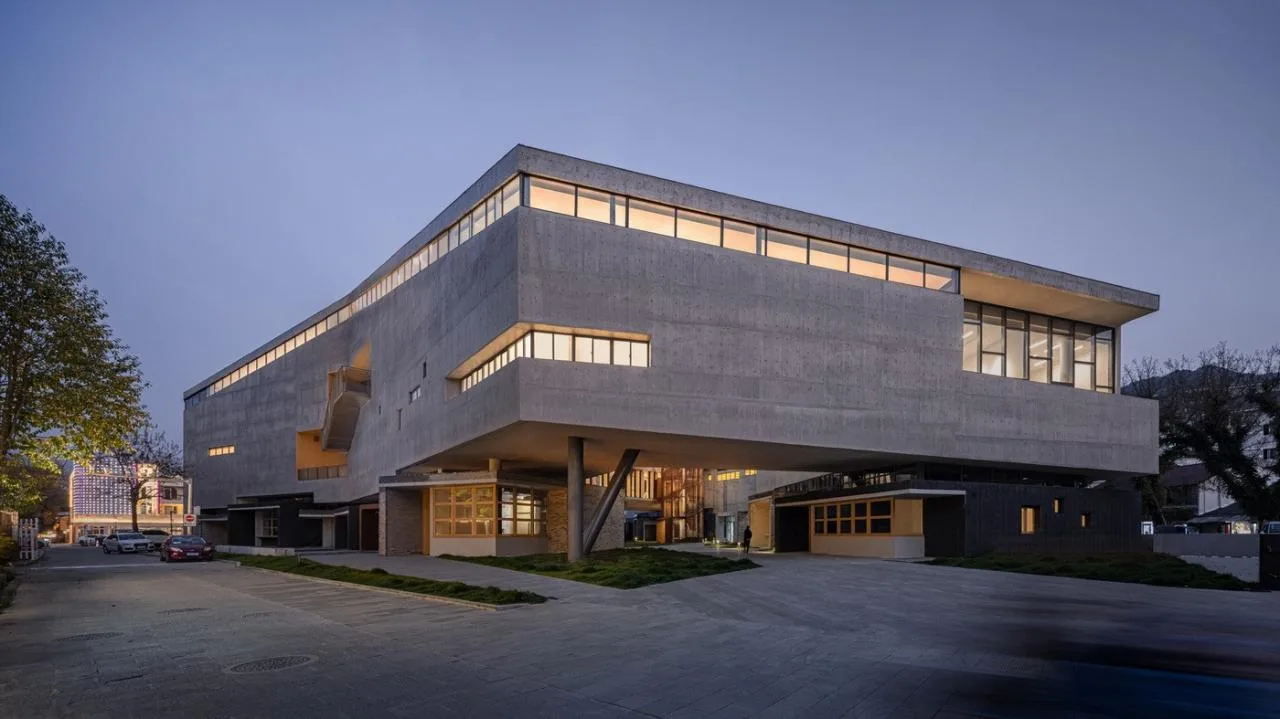
△ Northwest corner elevated entrance
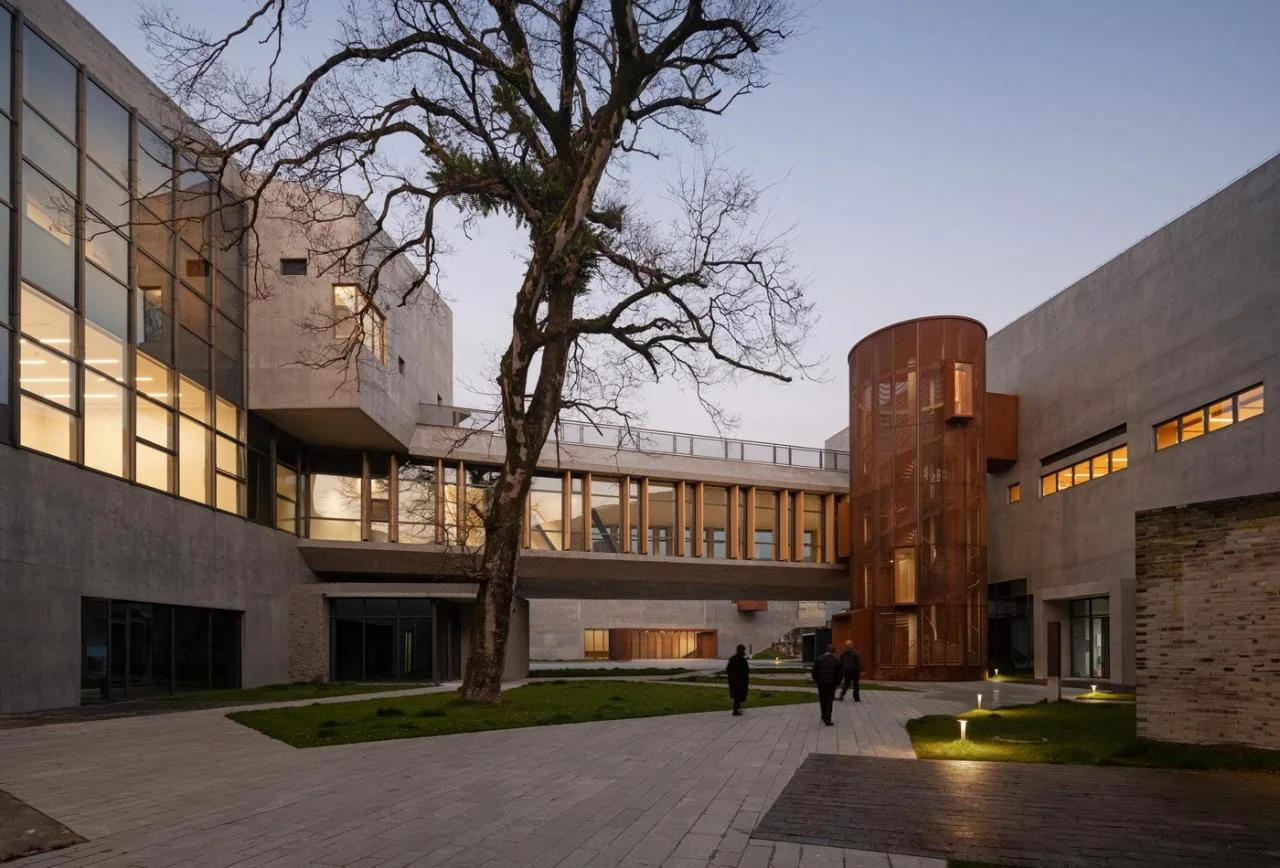
△ Small courtyards and preserved ancient trees
02 Enclosed and Open
Two Scales Resolving Site Conflicts
Balancing the art center’s institutional and public roles, and harmonizing its relationship with surrounding residential and natural landscapes, were the central goals in shaping the building’s form. Covering 13,129.92 square meters with a plot ratio of 1.05, the above-ground volume totals 13,000 square meters.
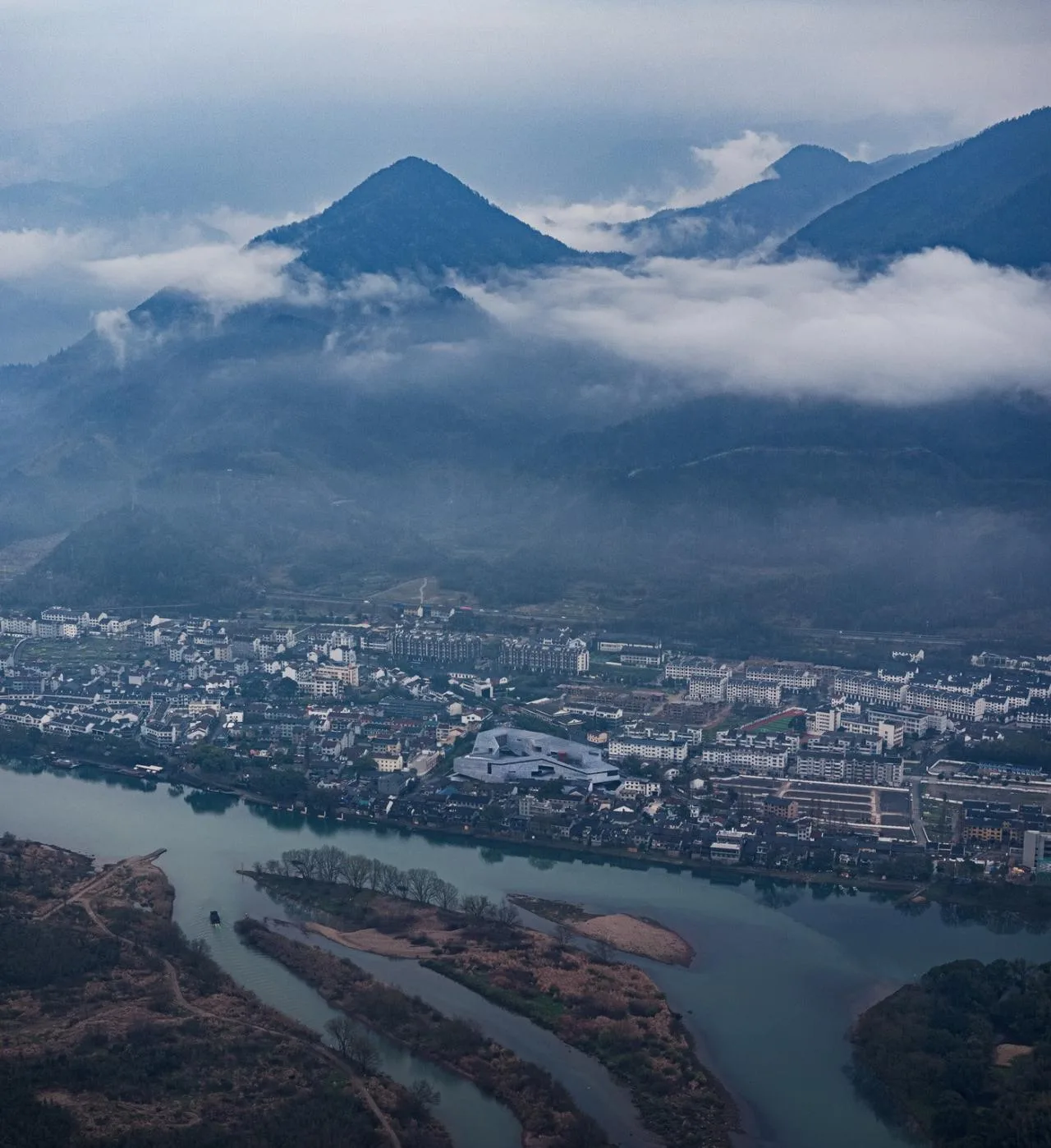
△ Overlooking the Art Center
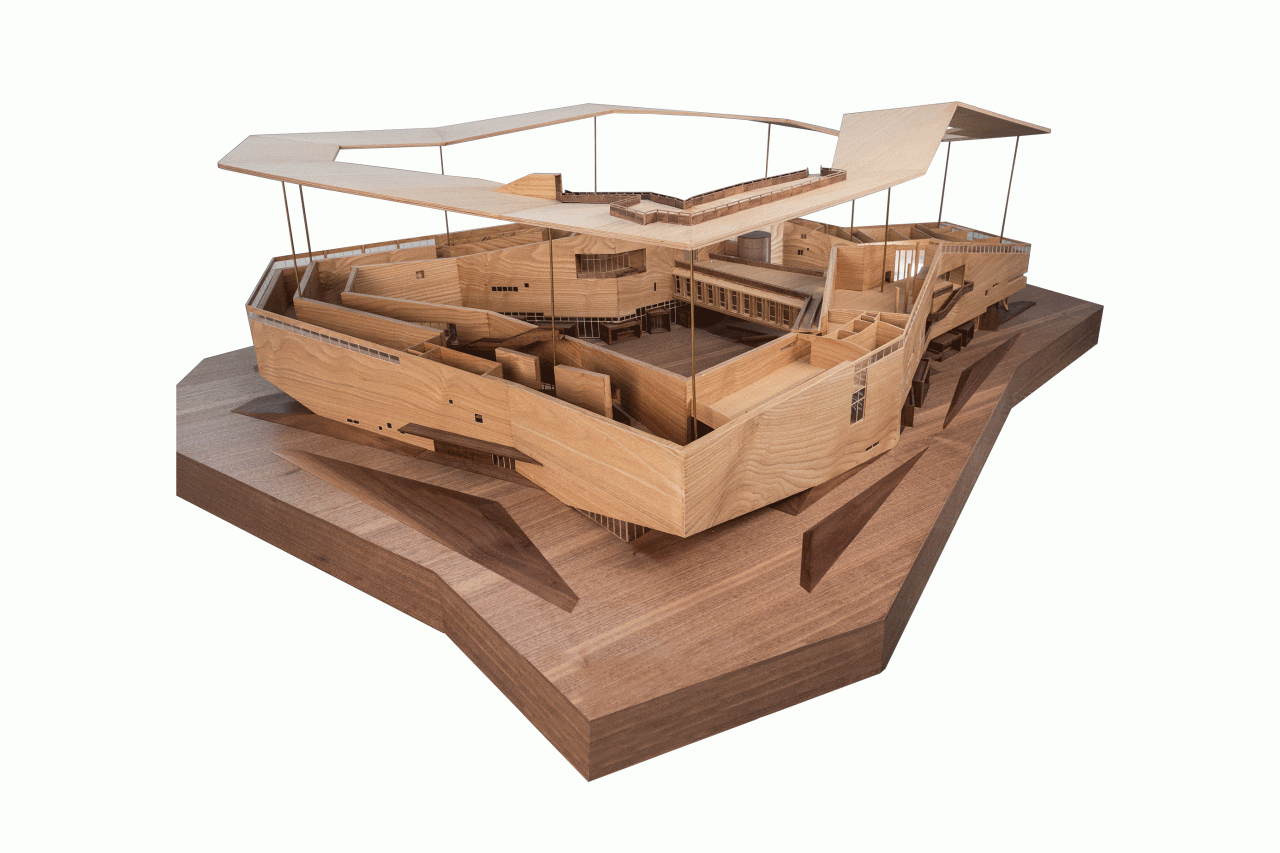
To optimize capacity and ensure smooth circulation and evacuation, the building combines a large-scale overall structure with smaller, local blocks. This design reduces the feeling of massiveness while accommodating diverse functions.
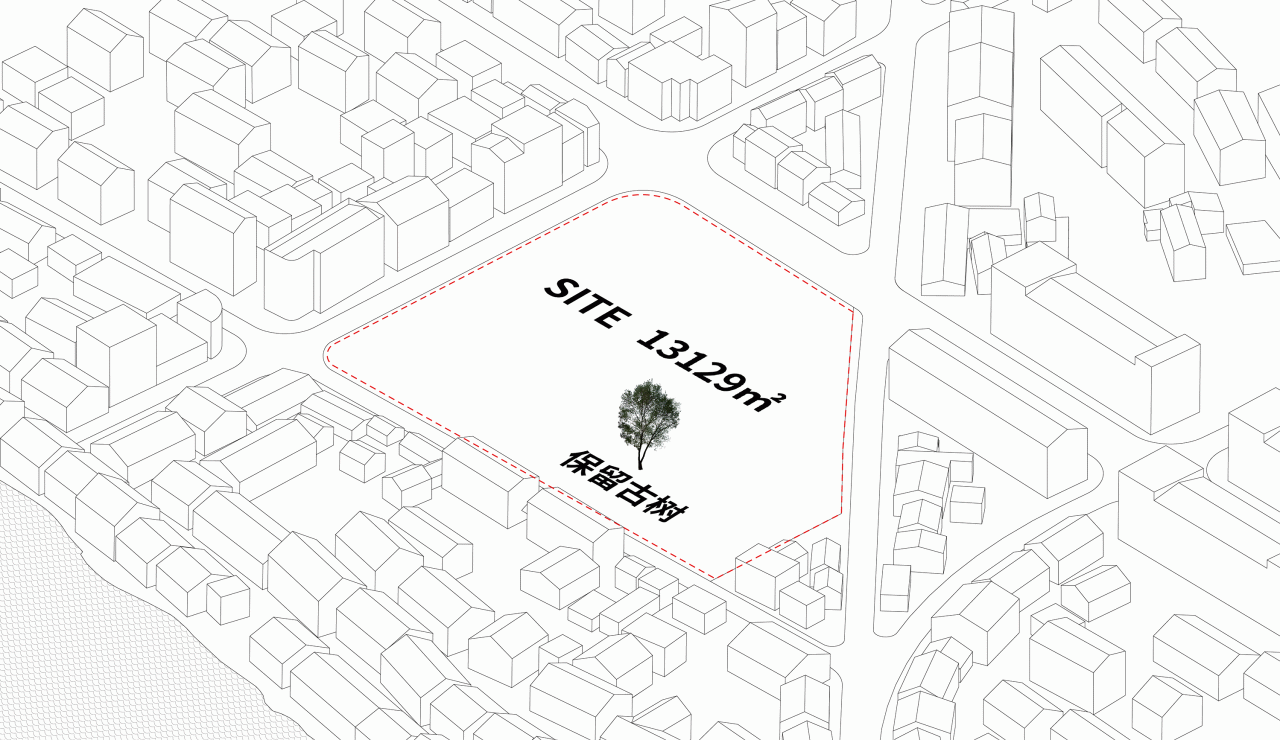
△ Shape generation analysis
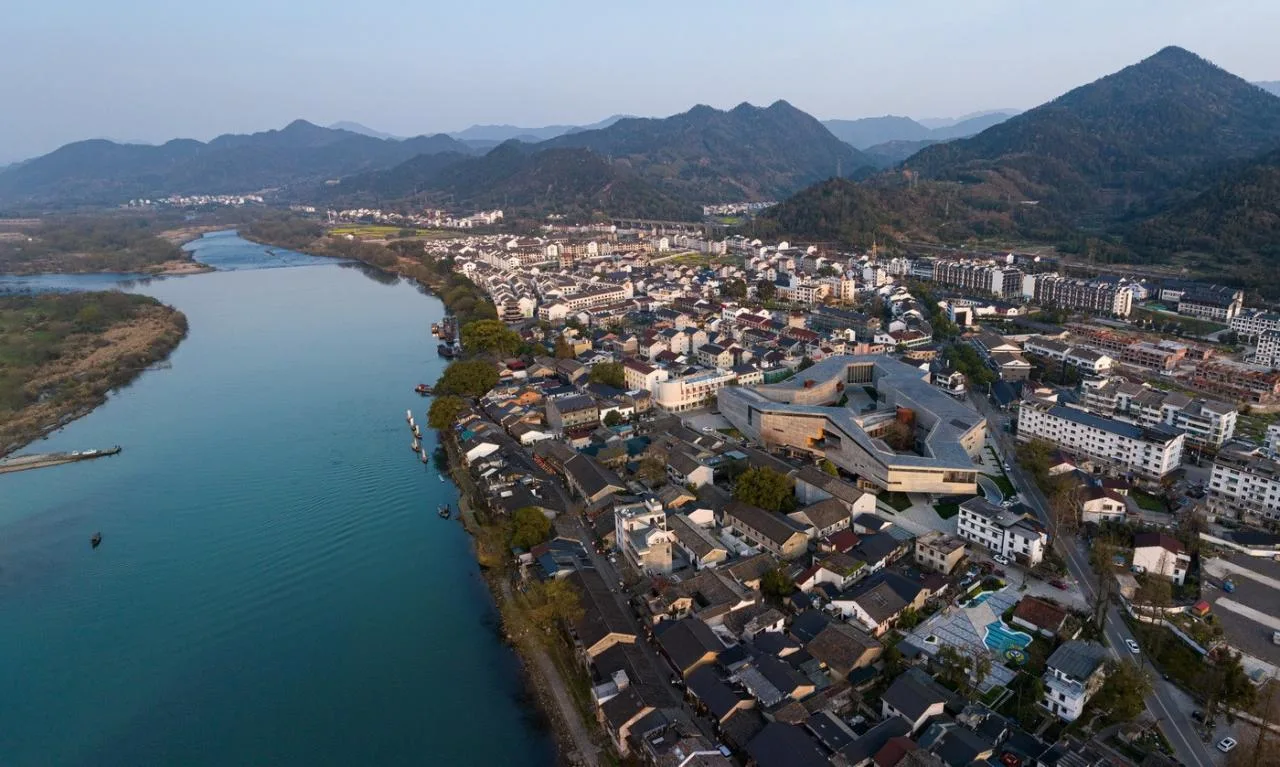
△ Overlooking the Art Center
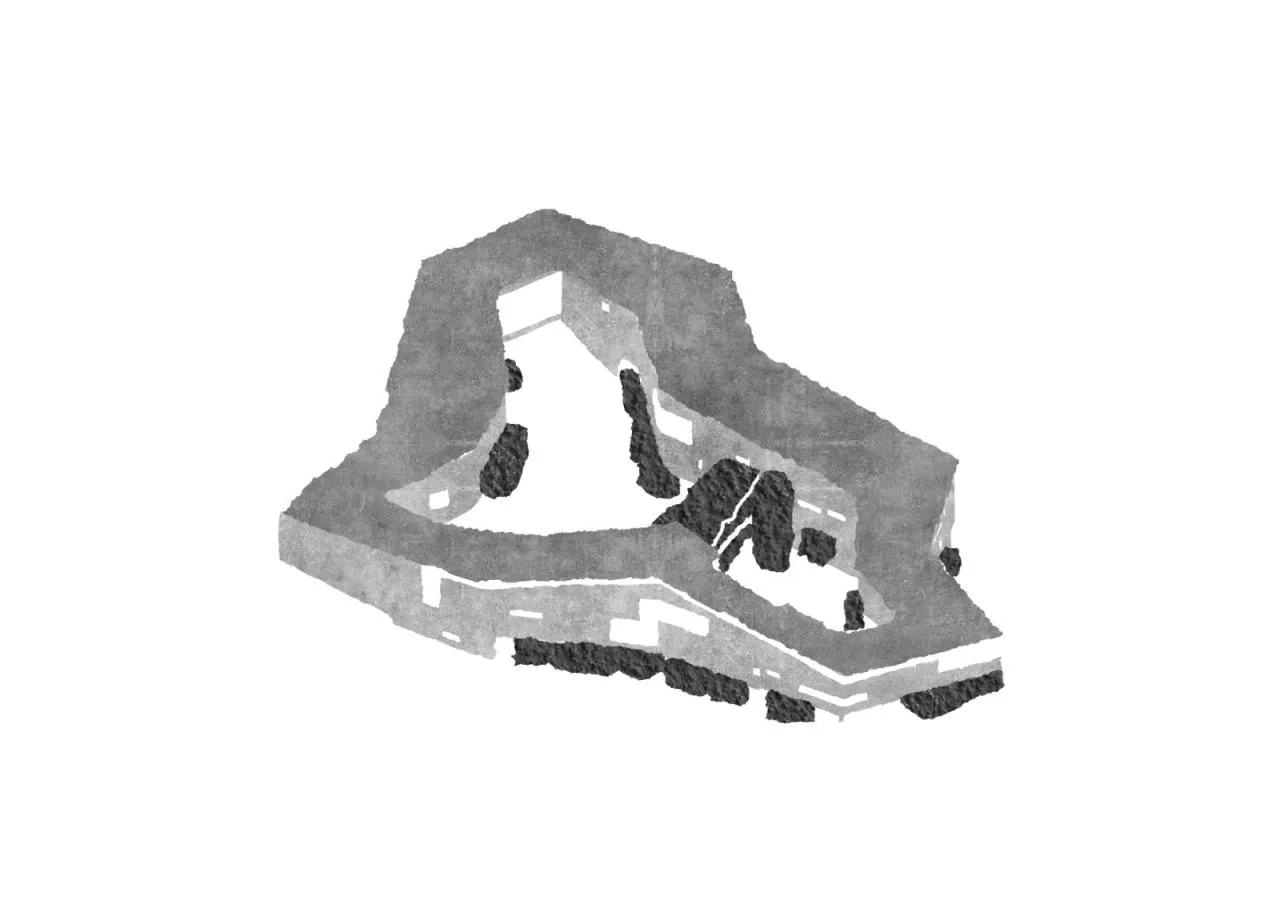
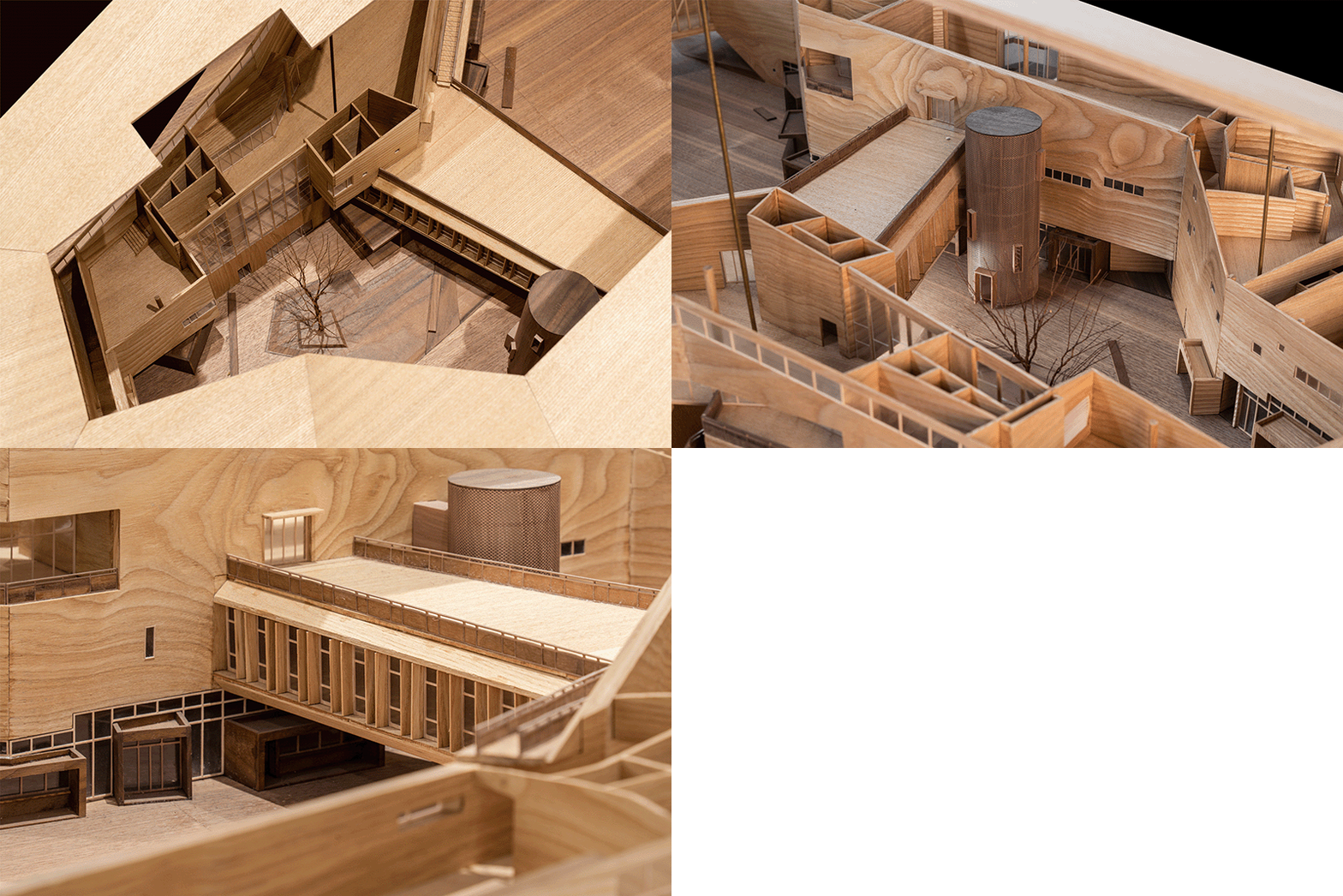
The buildings are arranged close to the site boundaries while preserving the continuity and integrity of streets and alleys and respecting the old street boundaries. Two courtyards — one large, one small — are enclosed on the interior side. Boundary setbacks and raised corners open up the form. The upper structure houses large-scale art exhibition spaces with an irregular, undulating suspended form that echoes the distant mountains and stands out from nearby residences. The ground level features smaller staggered box-like spaces for retail and leisure, creating a vertical contrast between institutional and public realms.
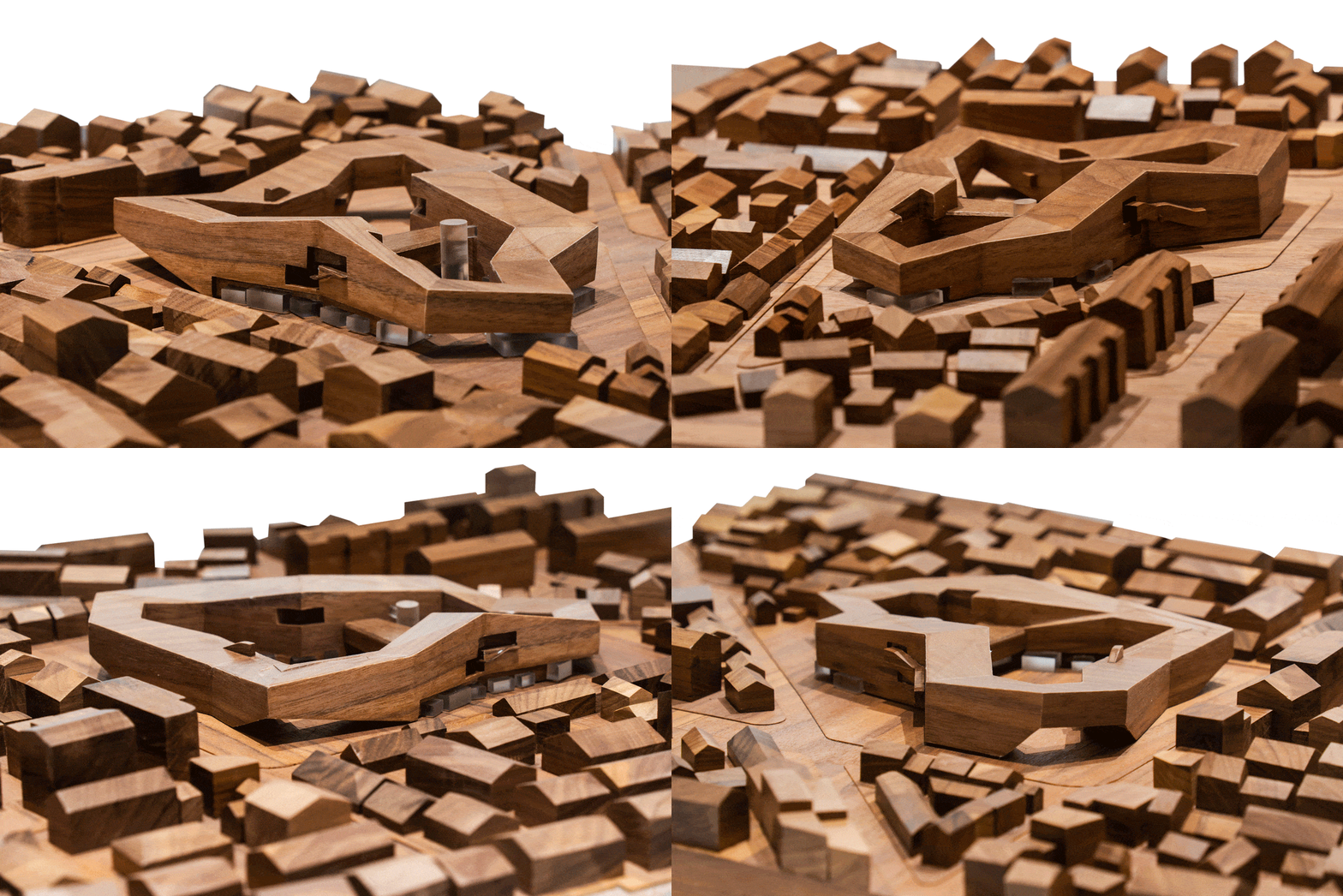
△ Conceptual block model
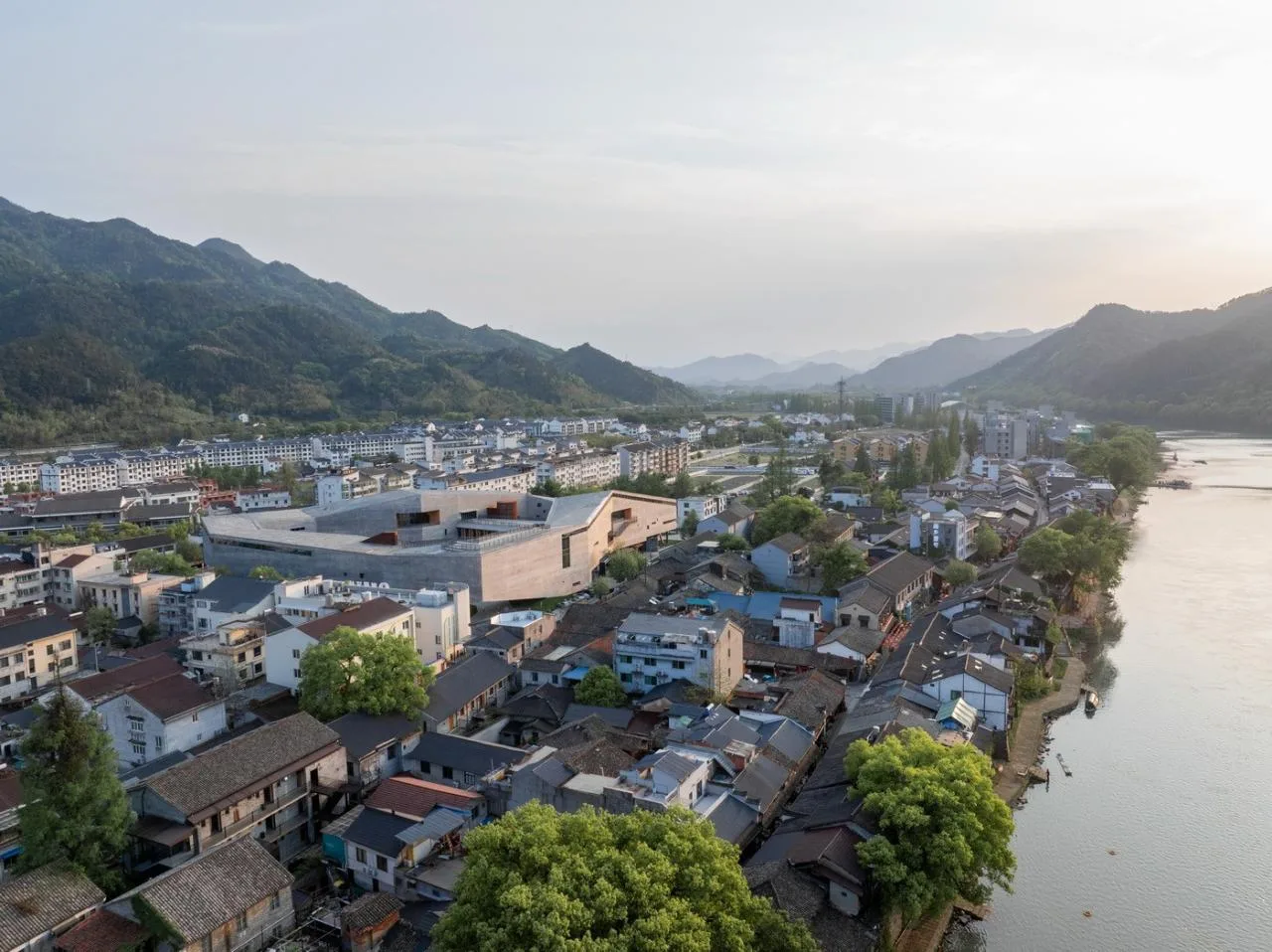
△ Overlooking the Art Center
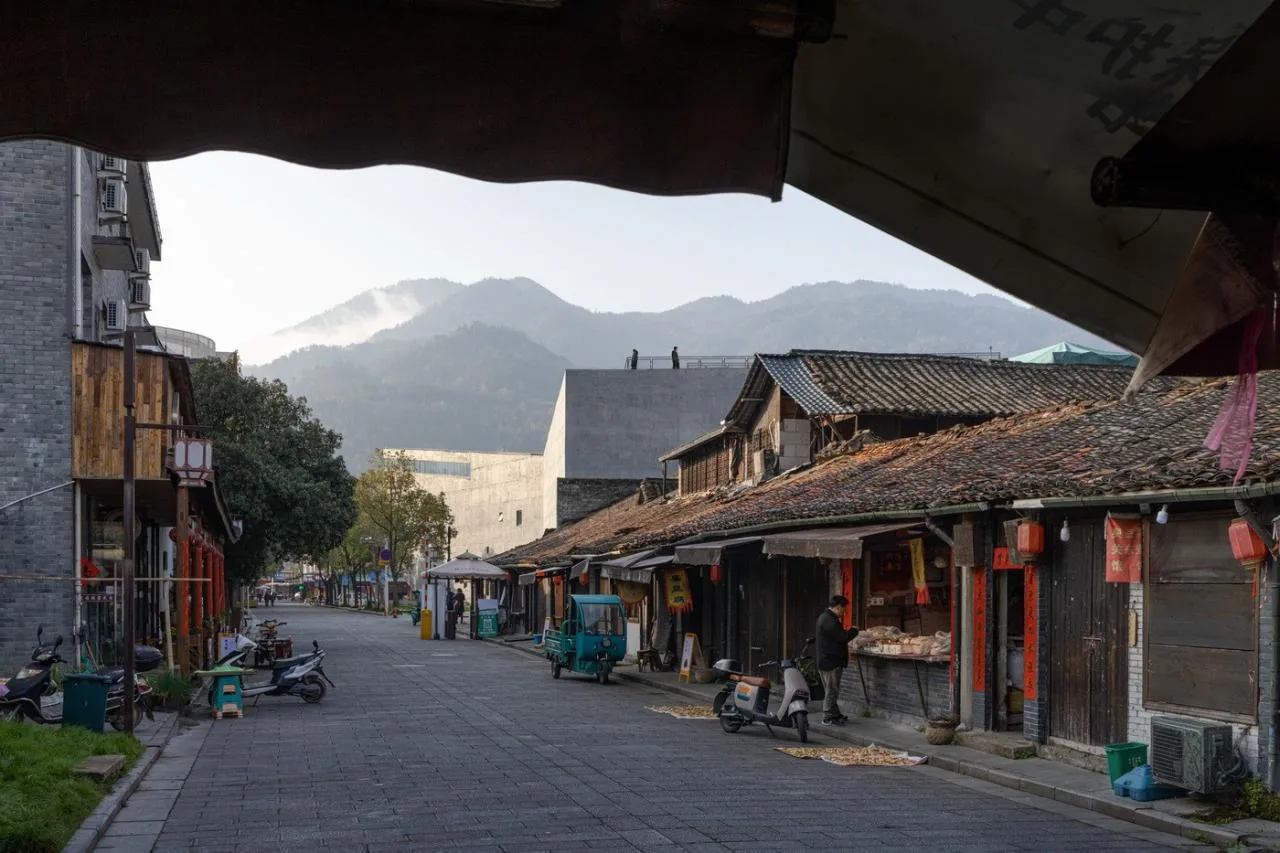
△ View of the Art Center and distant mountains from the old street
03 Squares and Blocks
Balancing Daily Life and Public Space
The art center’s public nature extends beyond its openness to direct engagement with the daily lives of local residents, inviting them to be active participants in the space. To achieve this, the design integrates town squares and block prototypes as key public activity spaces through three strategies.
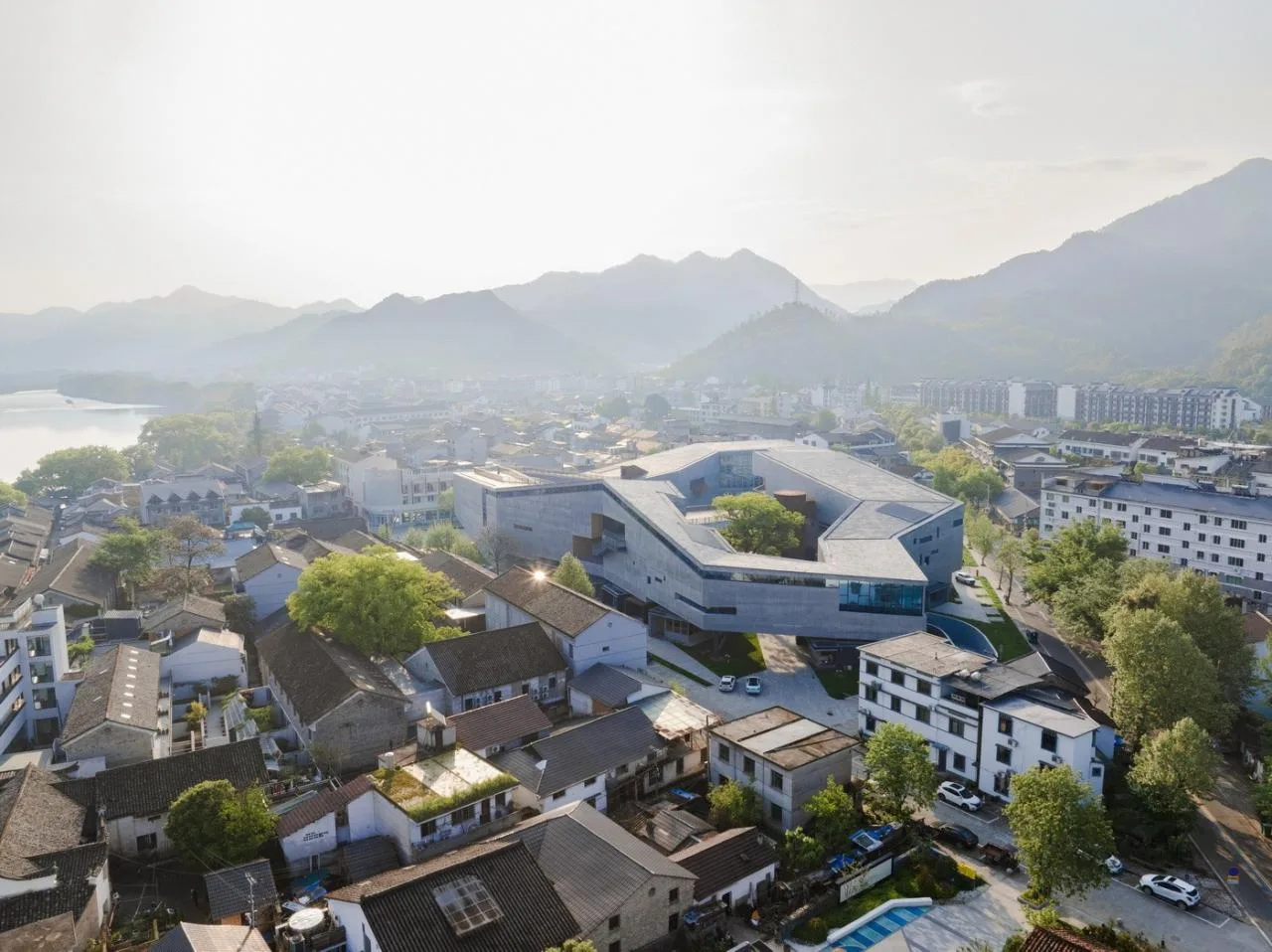
△ Aerial view of the Art Center
First, three prominent street corners facing the old street and town are created through boundary setbacks and raised corners. These form large-scale street corner squares and elevated ground floor spaces that guide foot traffic into the building.
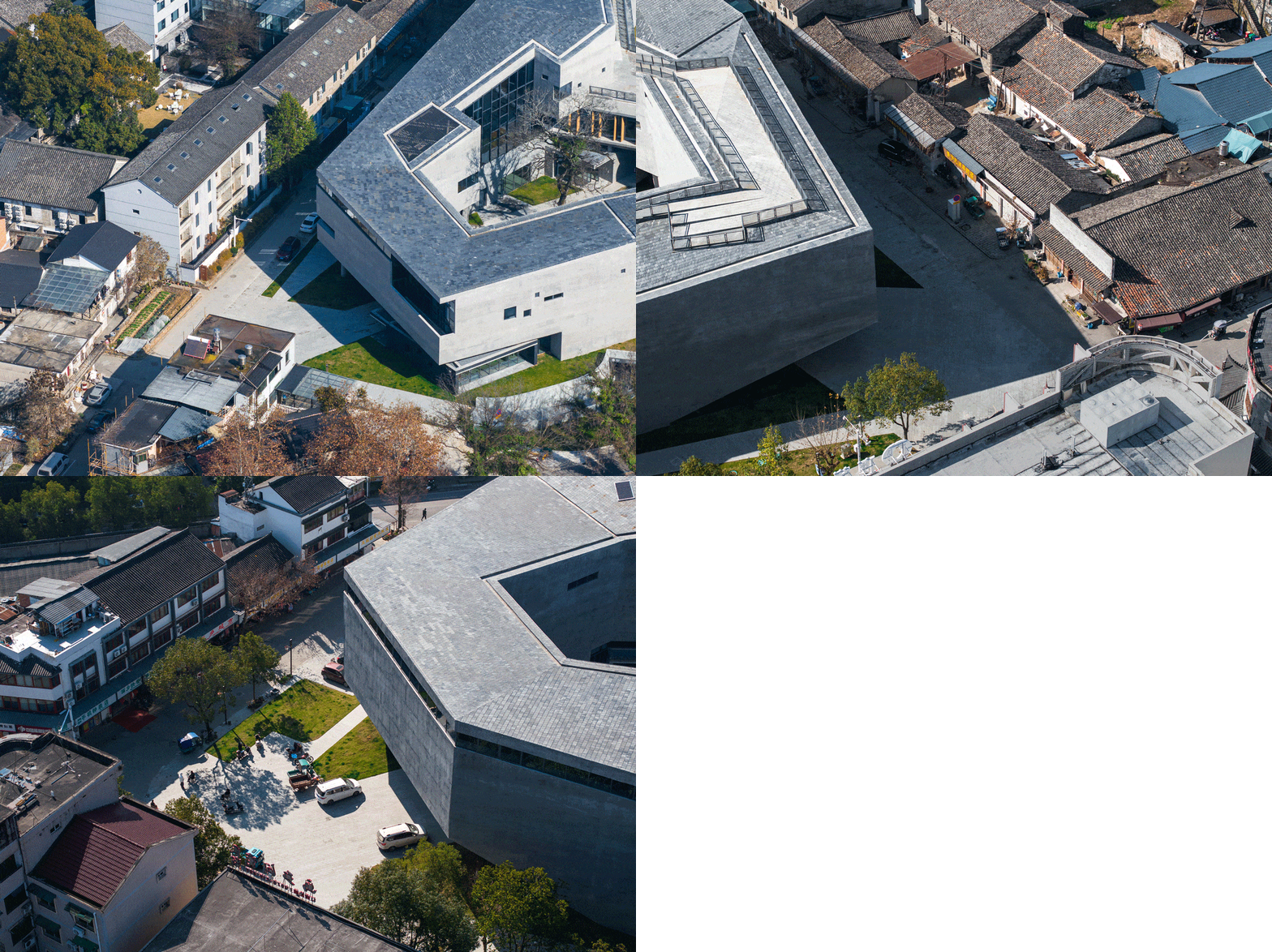
Three street corners oriented towards the old street and town
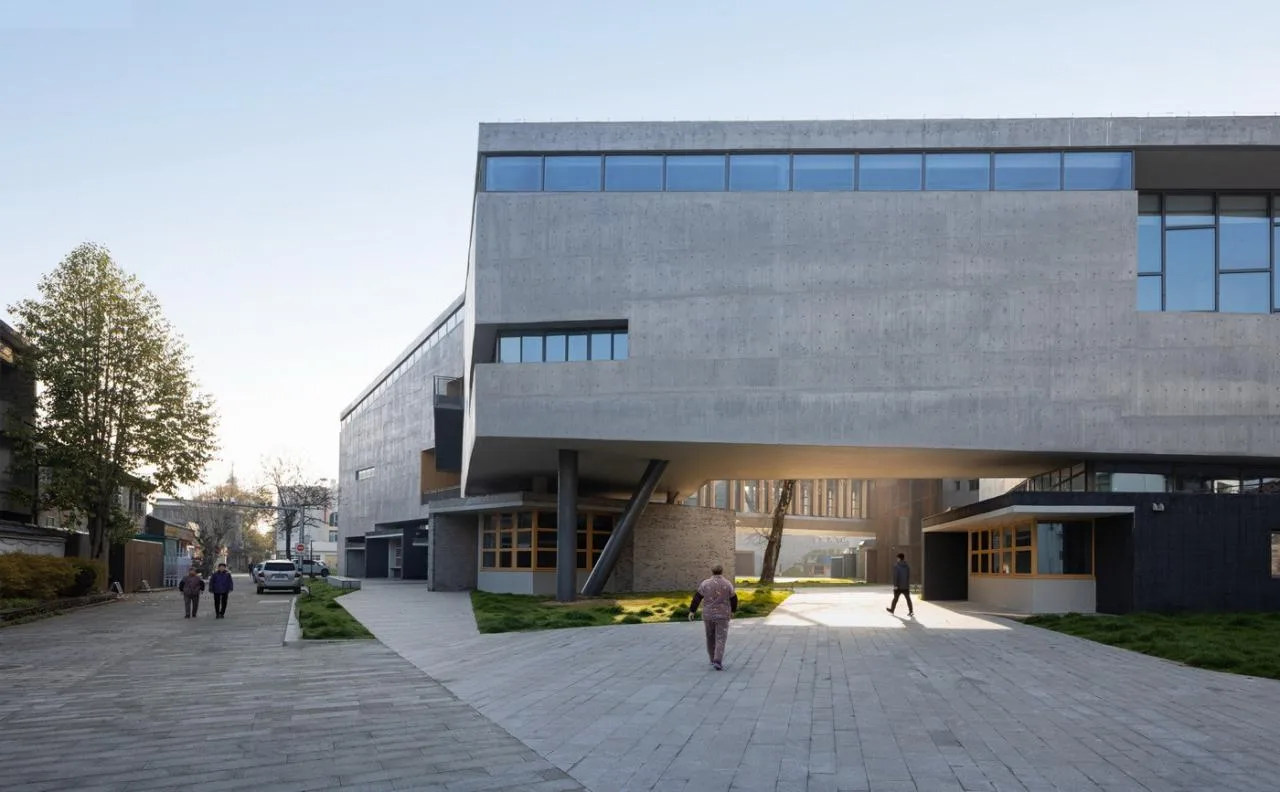
△ Northwest corner elevated entrance
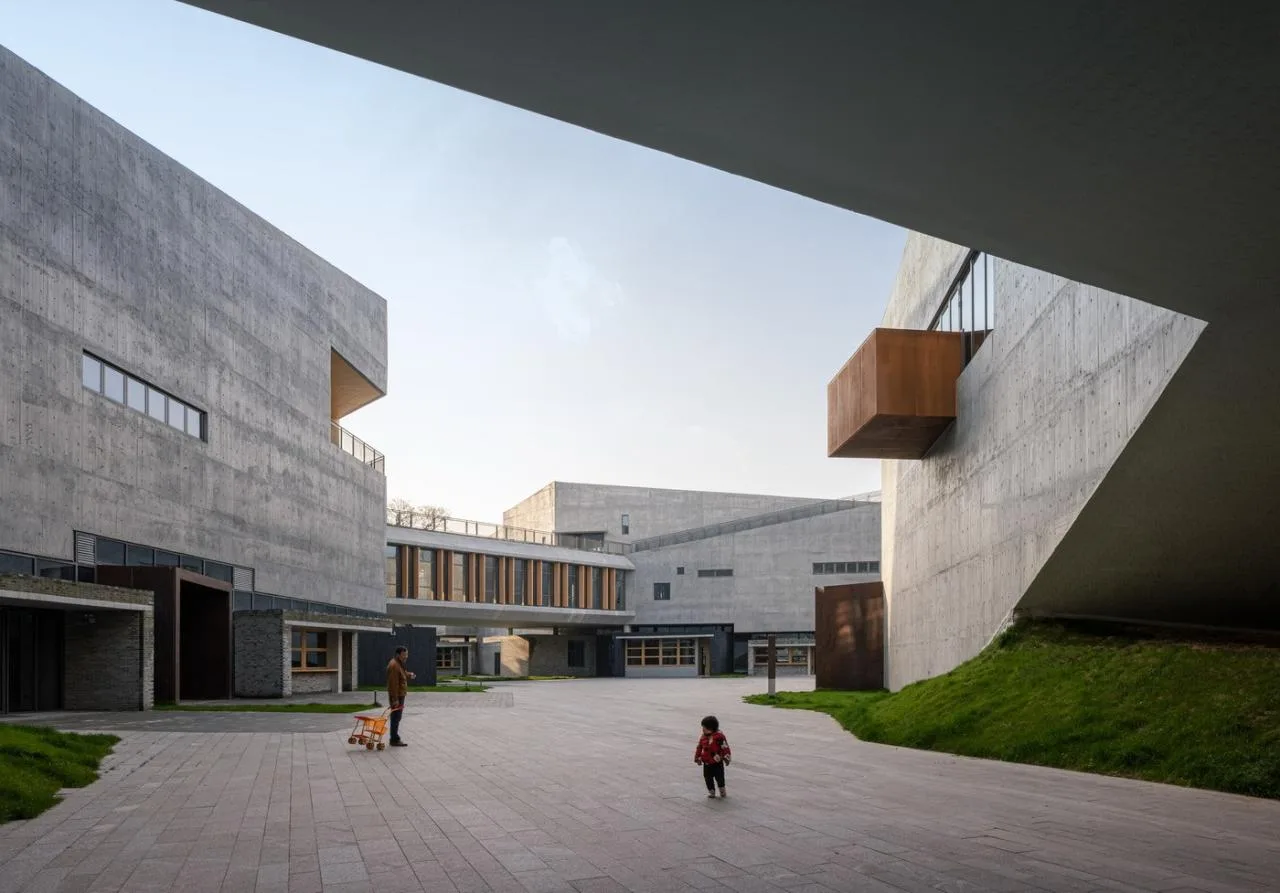
△ Inner courtyard square of the Art Center
Second, the first floor reorganizes the surrounding spatial texture to connect the venue continuously with adjacent streets and alleys. Multiple small-scale commercial volumes, through rotation and interweaving, enclose appropriately sized street and alley spaces along with low-rise residential buildings. This breaks the architectural mass into human-scale parts, preserving the site’s memory.
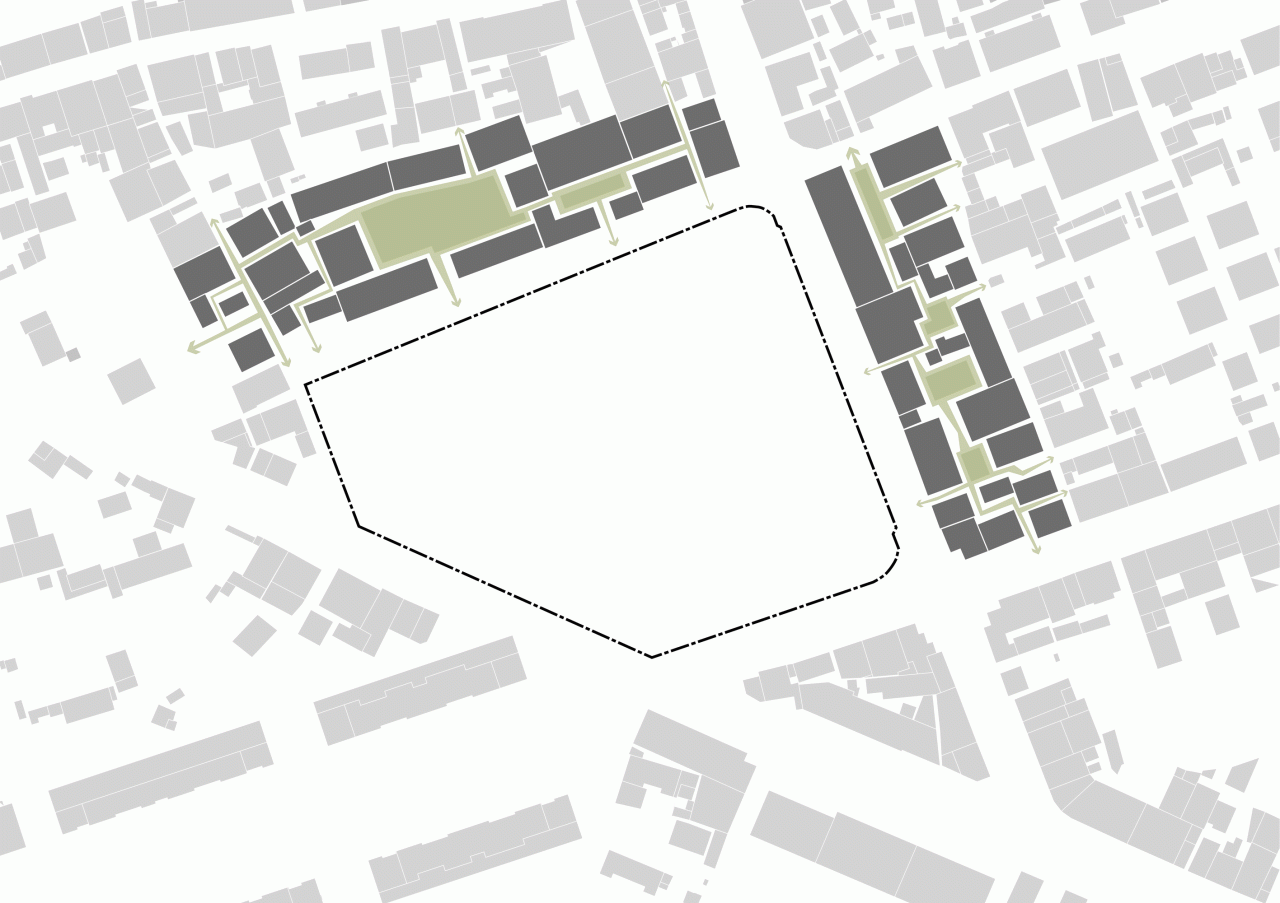
Analysis of the first floor spatial texture
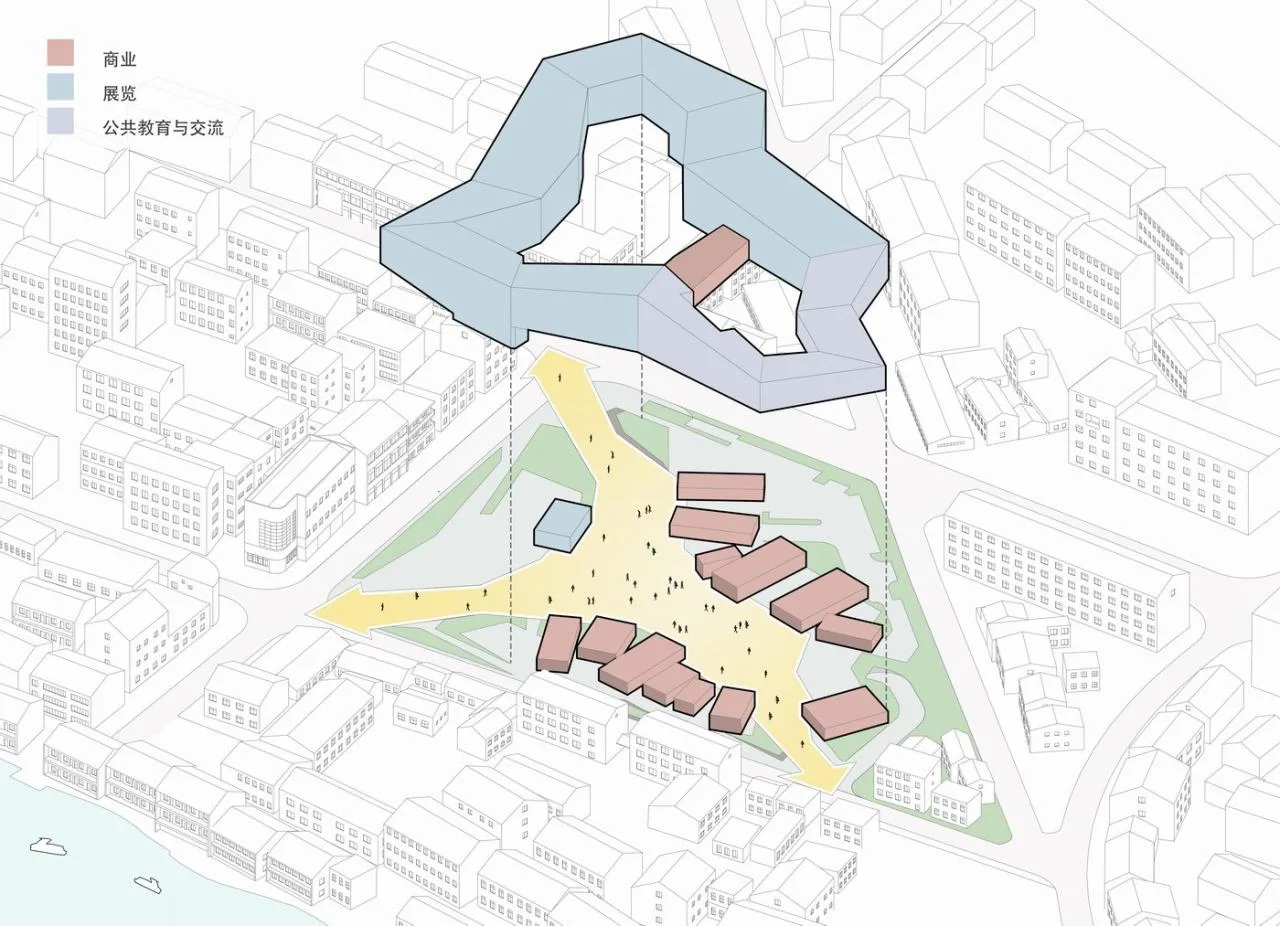
△ Functional analysis
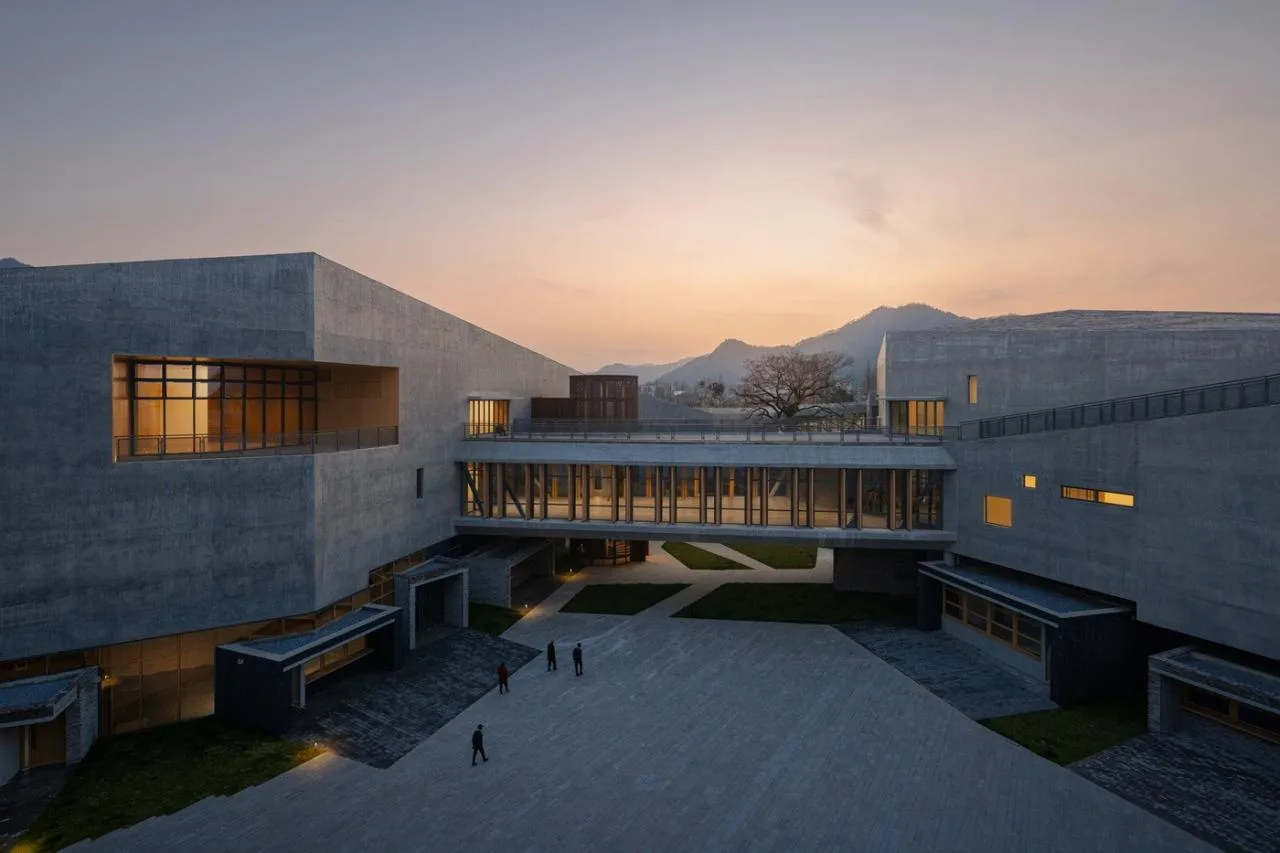
△ Inner courtyard square of the Art Center
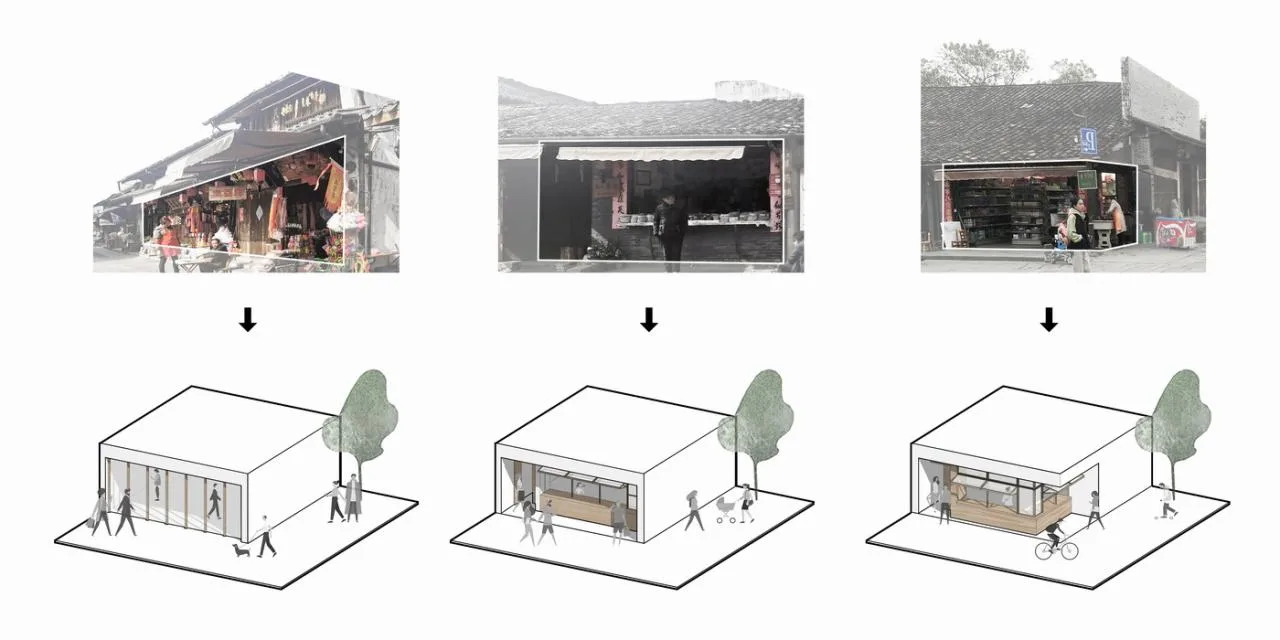
△ Deriving from first-floor commercial boxes reflecting rural and urban spaces
△ Commercial boxes at ground level
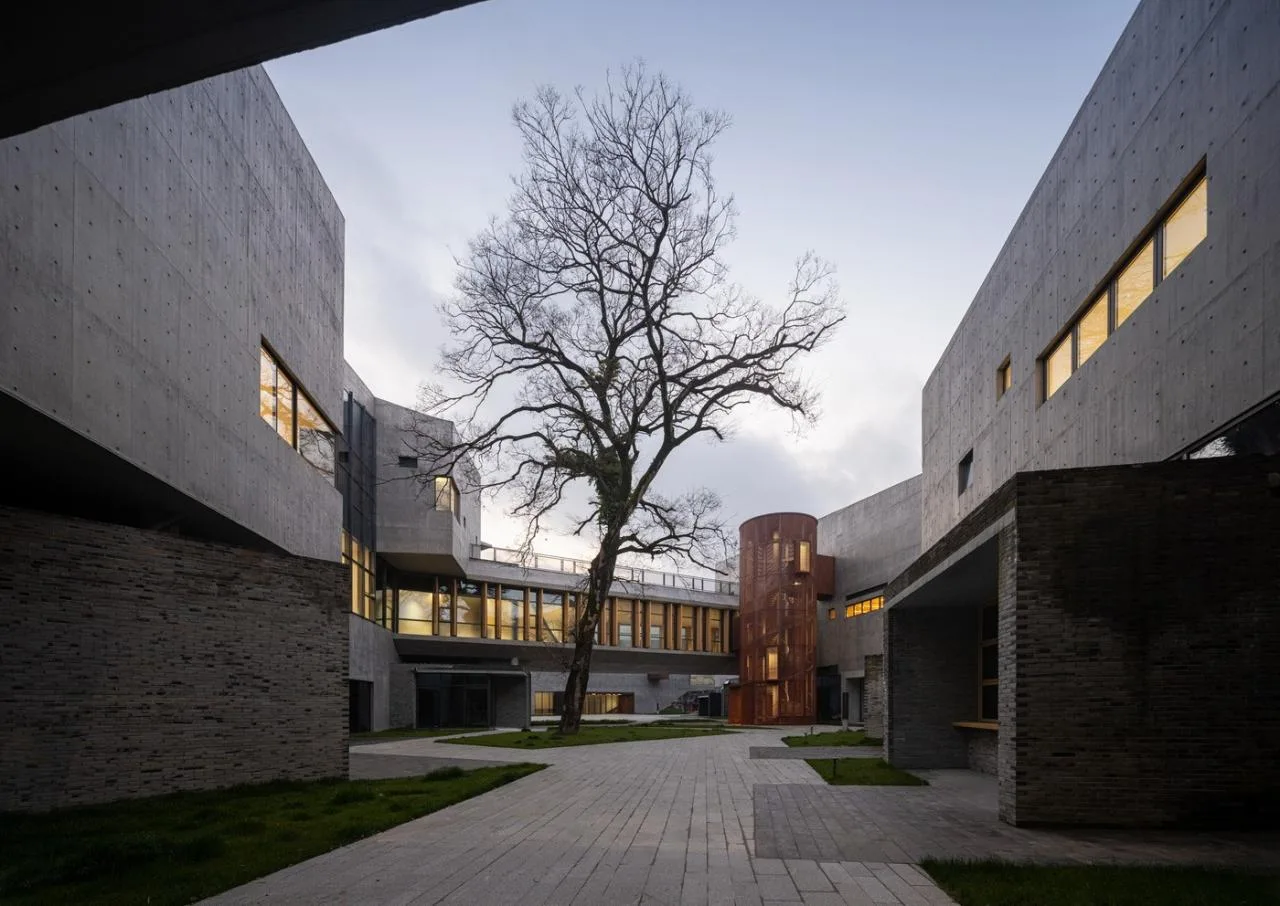
△ Small courtyard with preserved century-old trees
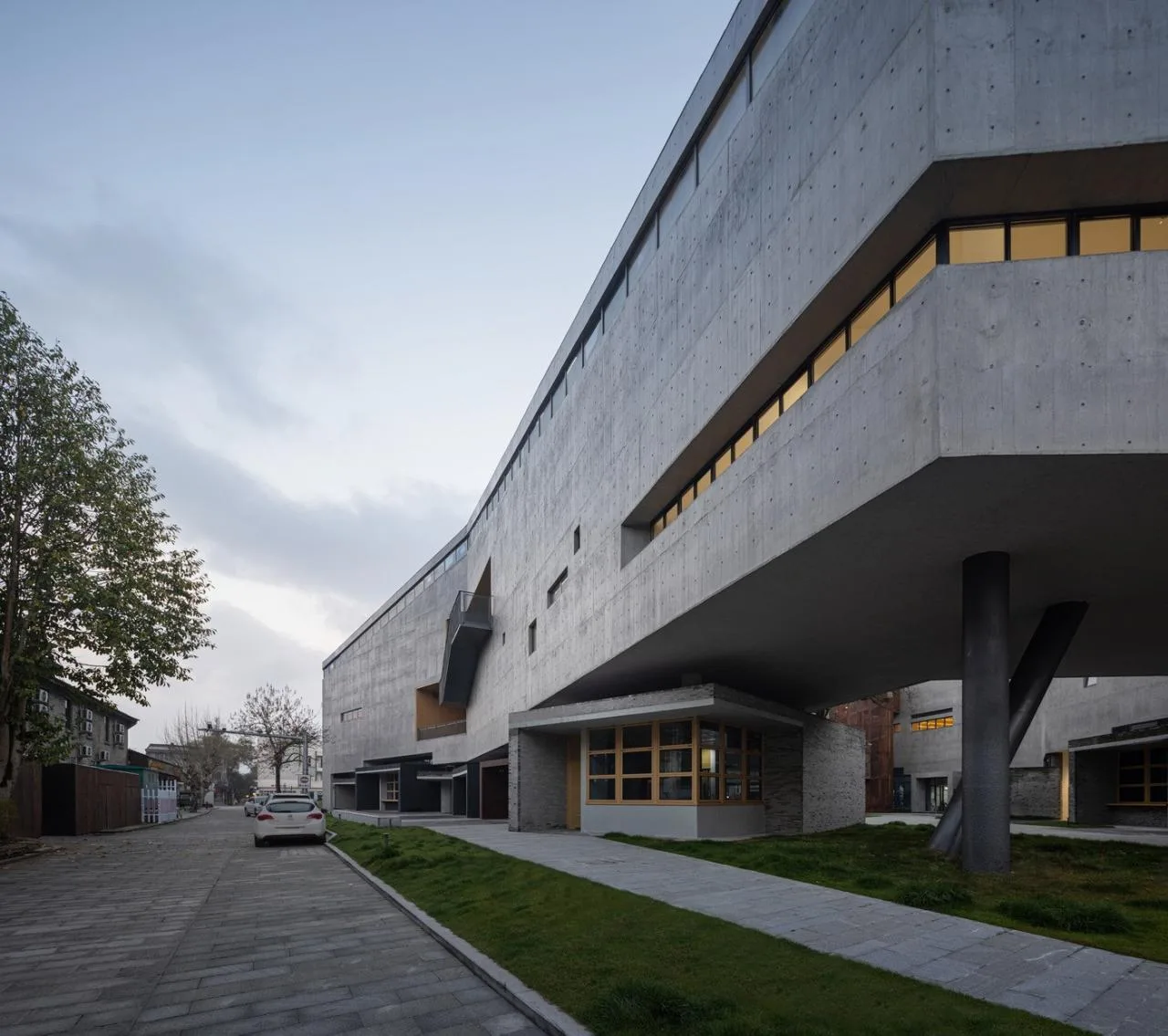
Street-level commercial activity
Third, within the enclosed spaces, an elevated corridor on the second floor introduces variety to the large spatial volume. Courtyards of different scales enrich the public character: the large square accommodates gatherings of thousands, while the smaller courtyard centers around a preserved ancient tree, continuing the town’s shared public spaces.
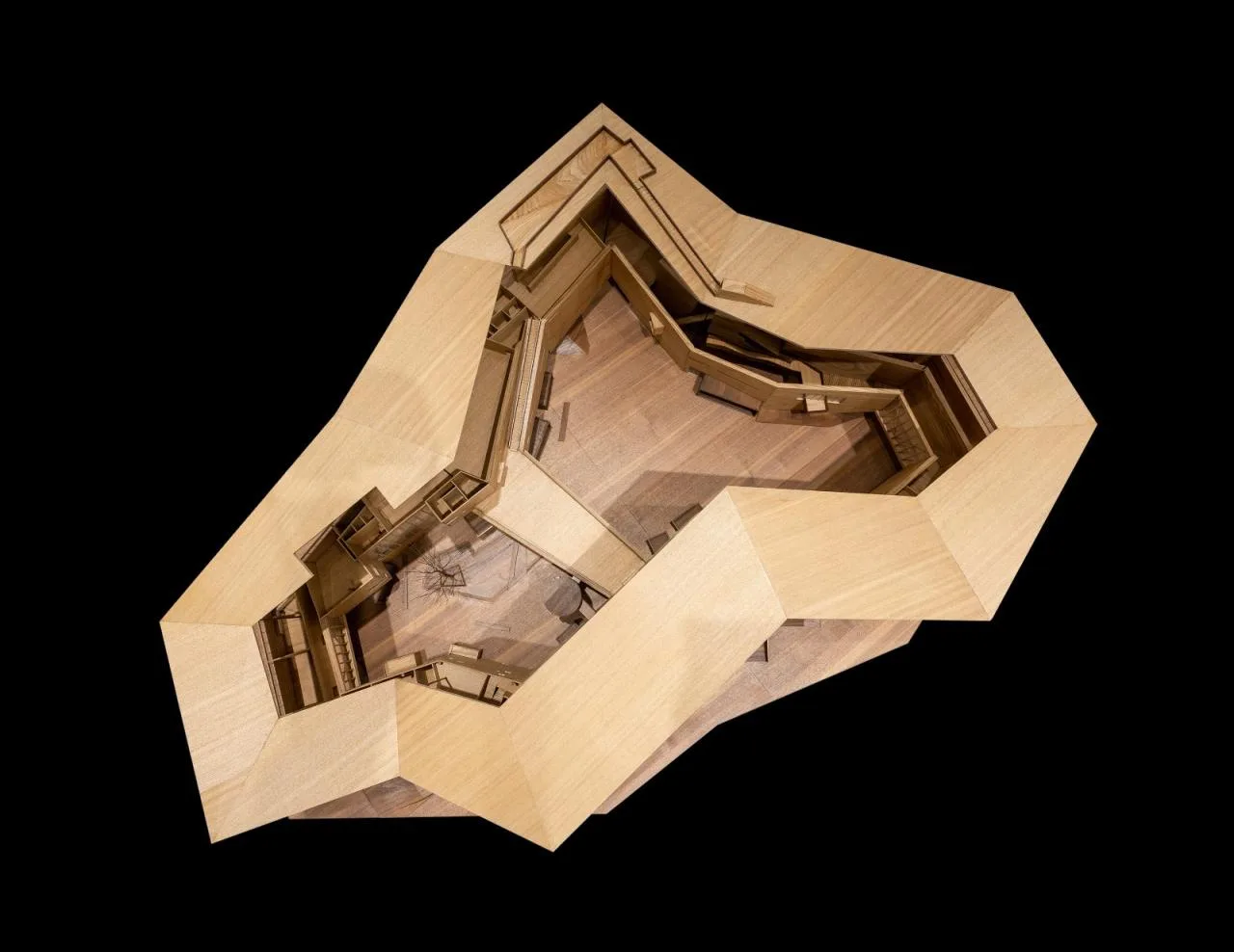
The art center’s courtyards remain open and inviting
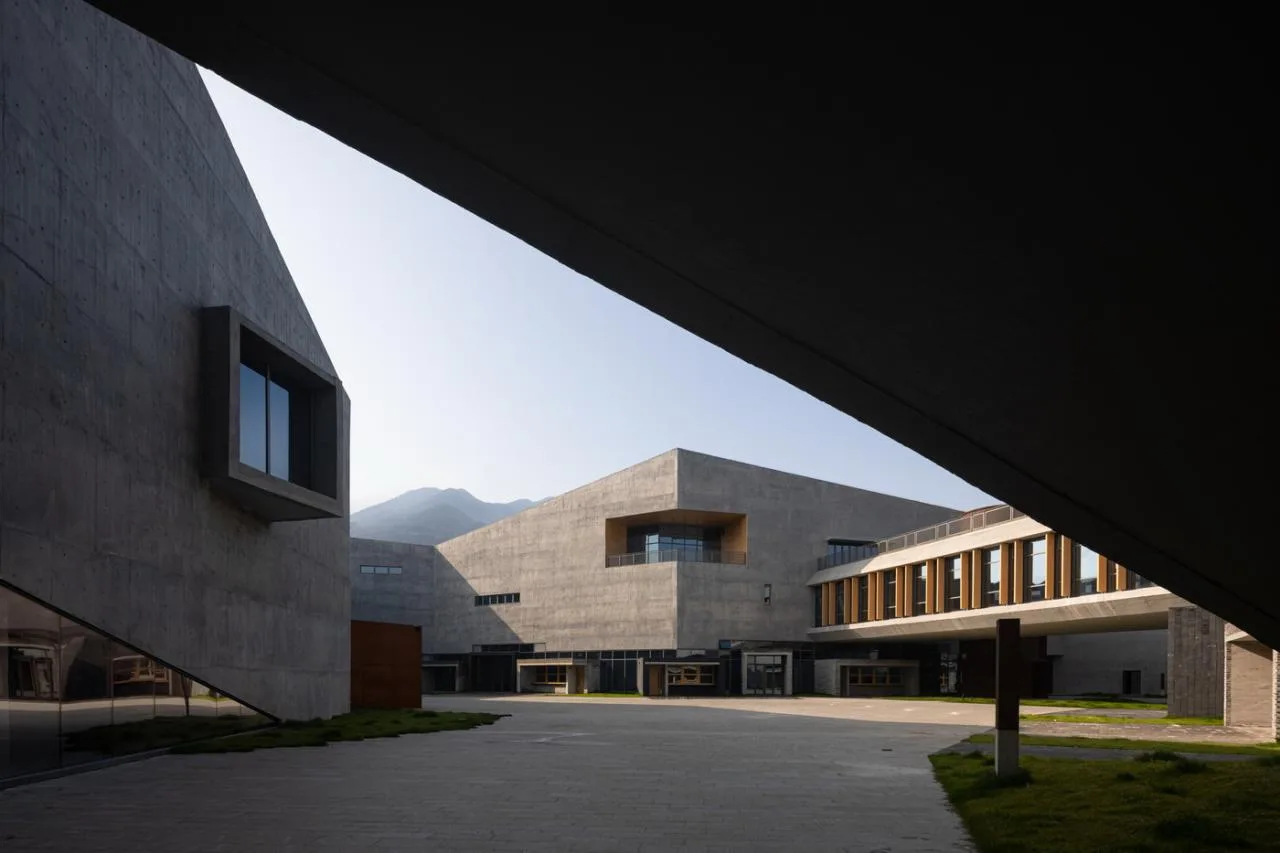
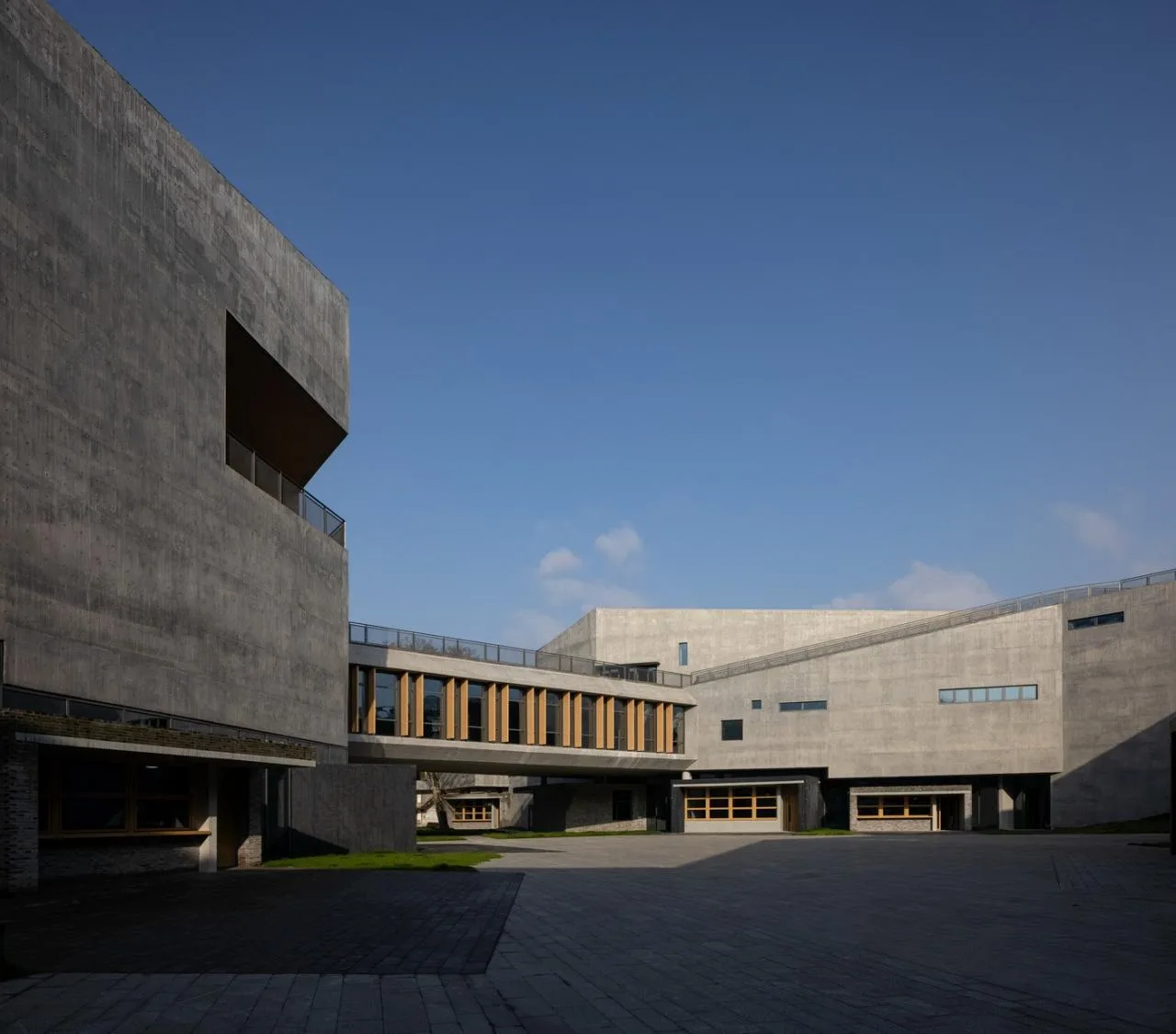
The large eastern courtyard can host gatherings of thousands
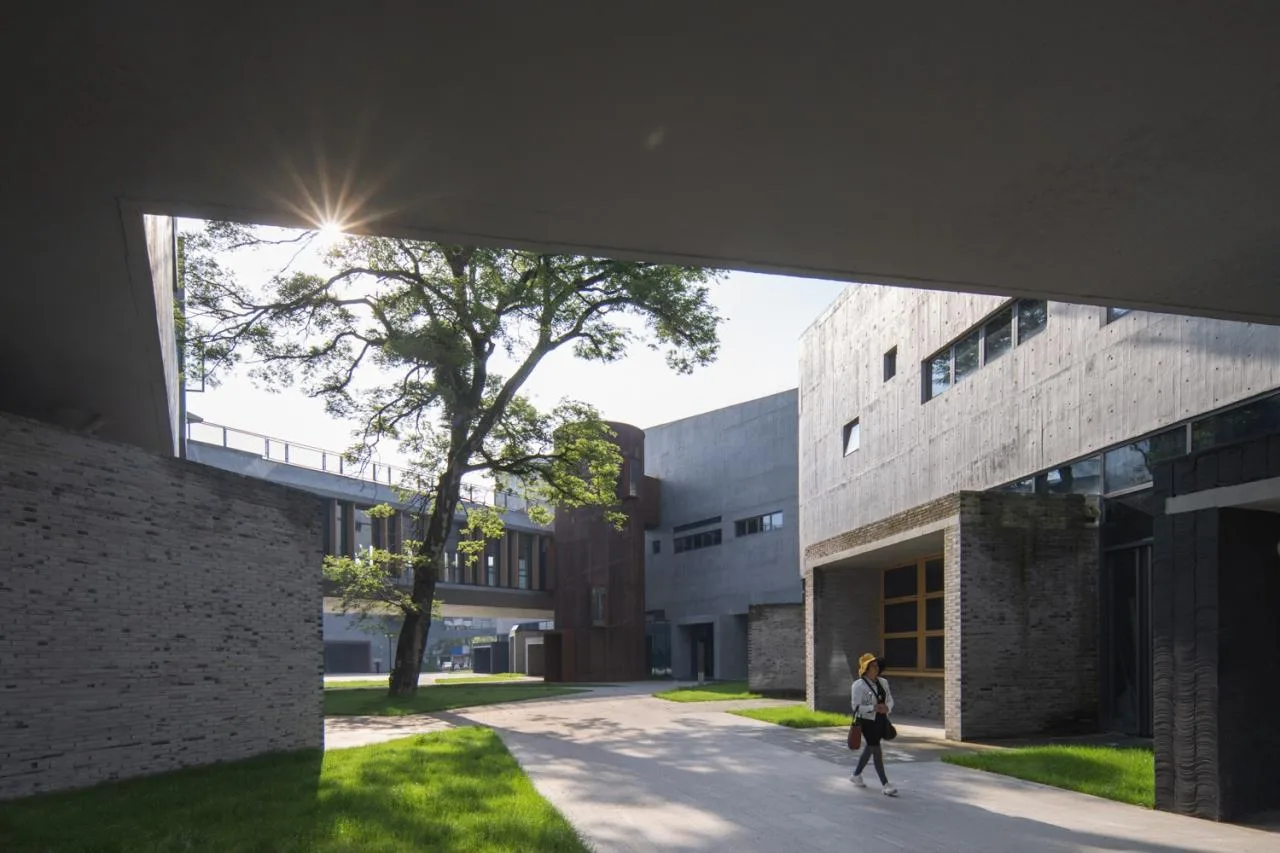
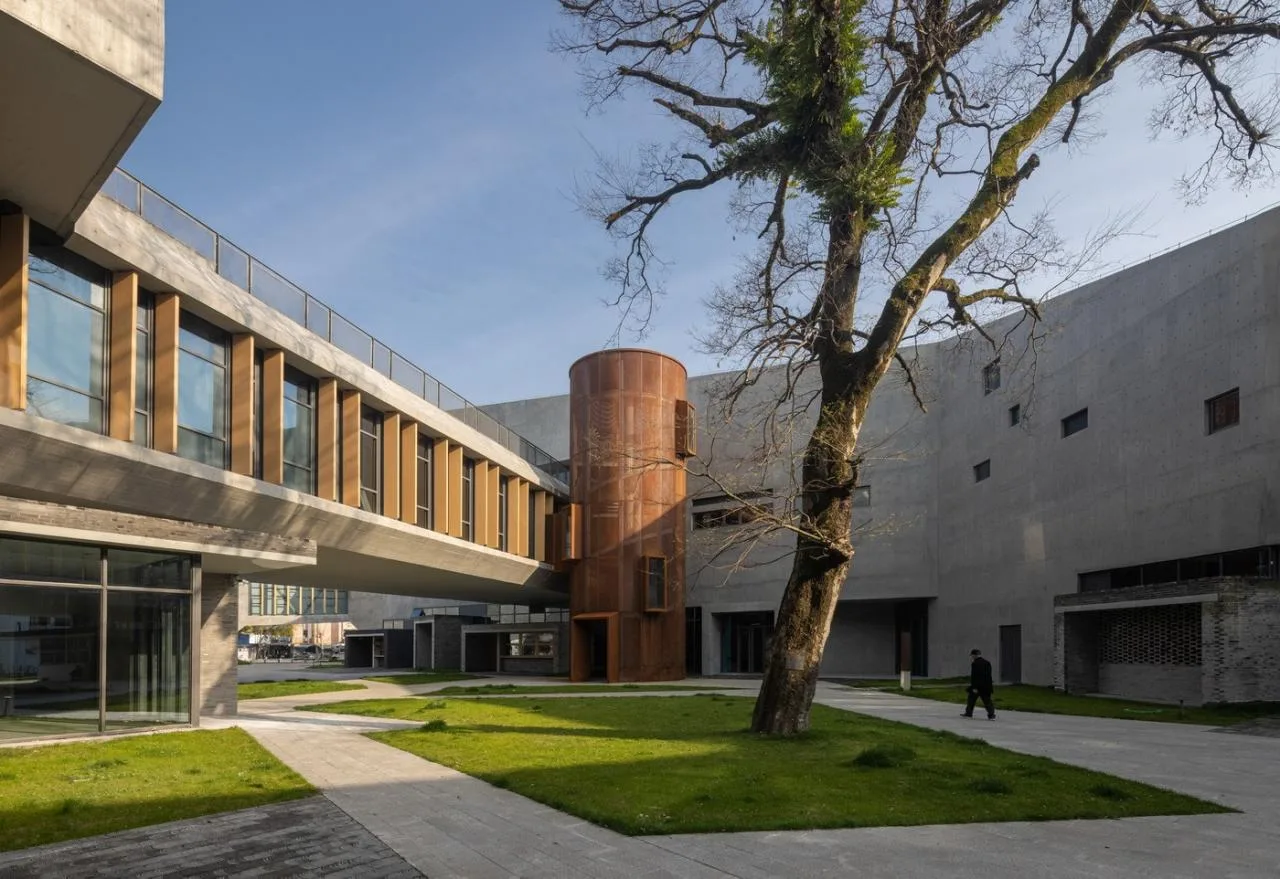
The smaller western courtyard functions as a communal public space
04 Multi-Level Exhibition and Spatial Transition
Institutional Narrative in Architecture
The exhibition spaces, suspended above the town’s everyday life, consist of variously sized galleries and corridors connected by a continuous spatial flow. The architecture’s undulating form creates a narrative journey of “beginning, passing, turning, and merging,” offering curators a unique perspective.
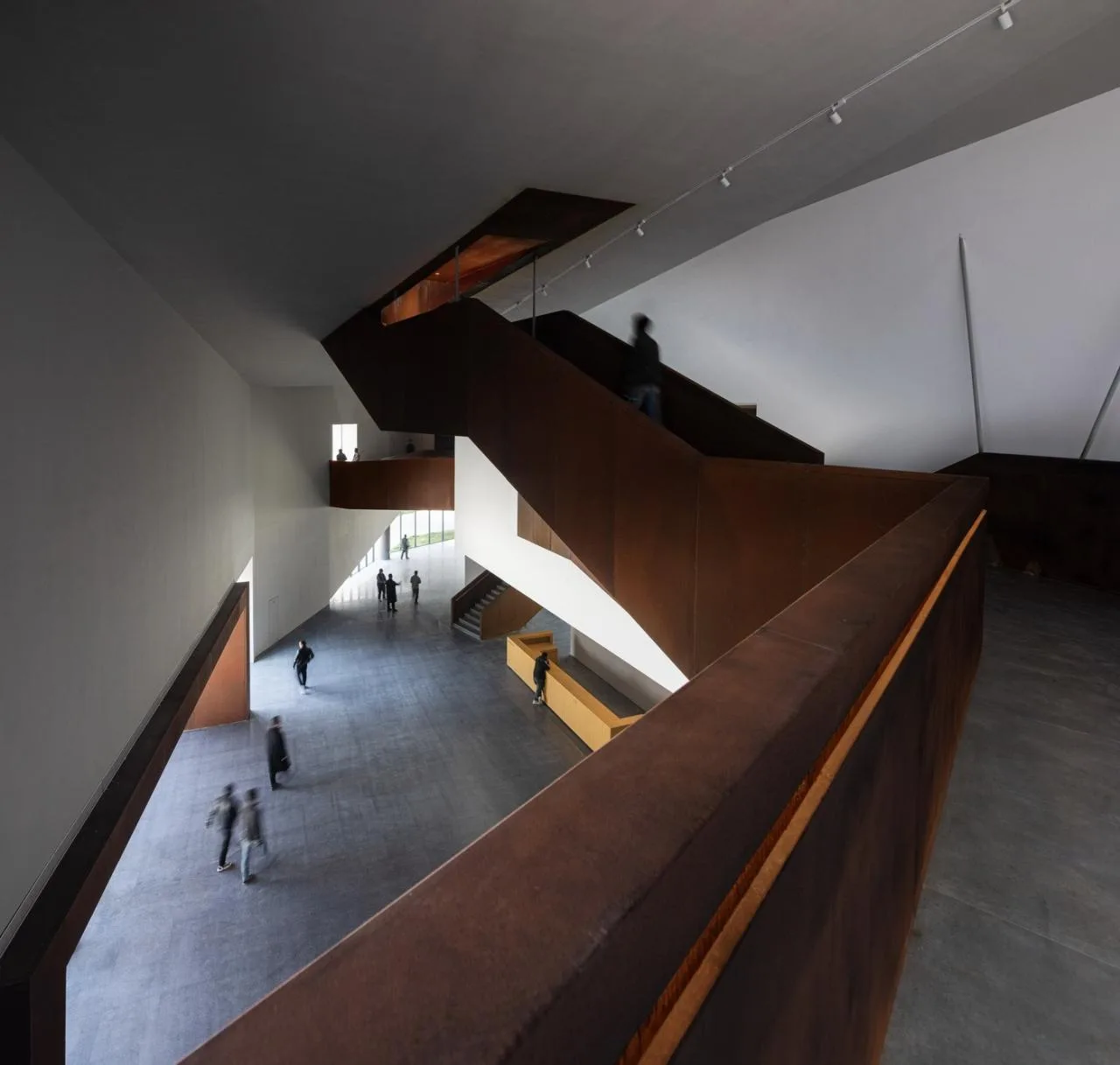
△ Three-dimensional foyer space
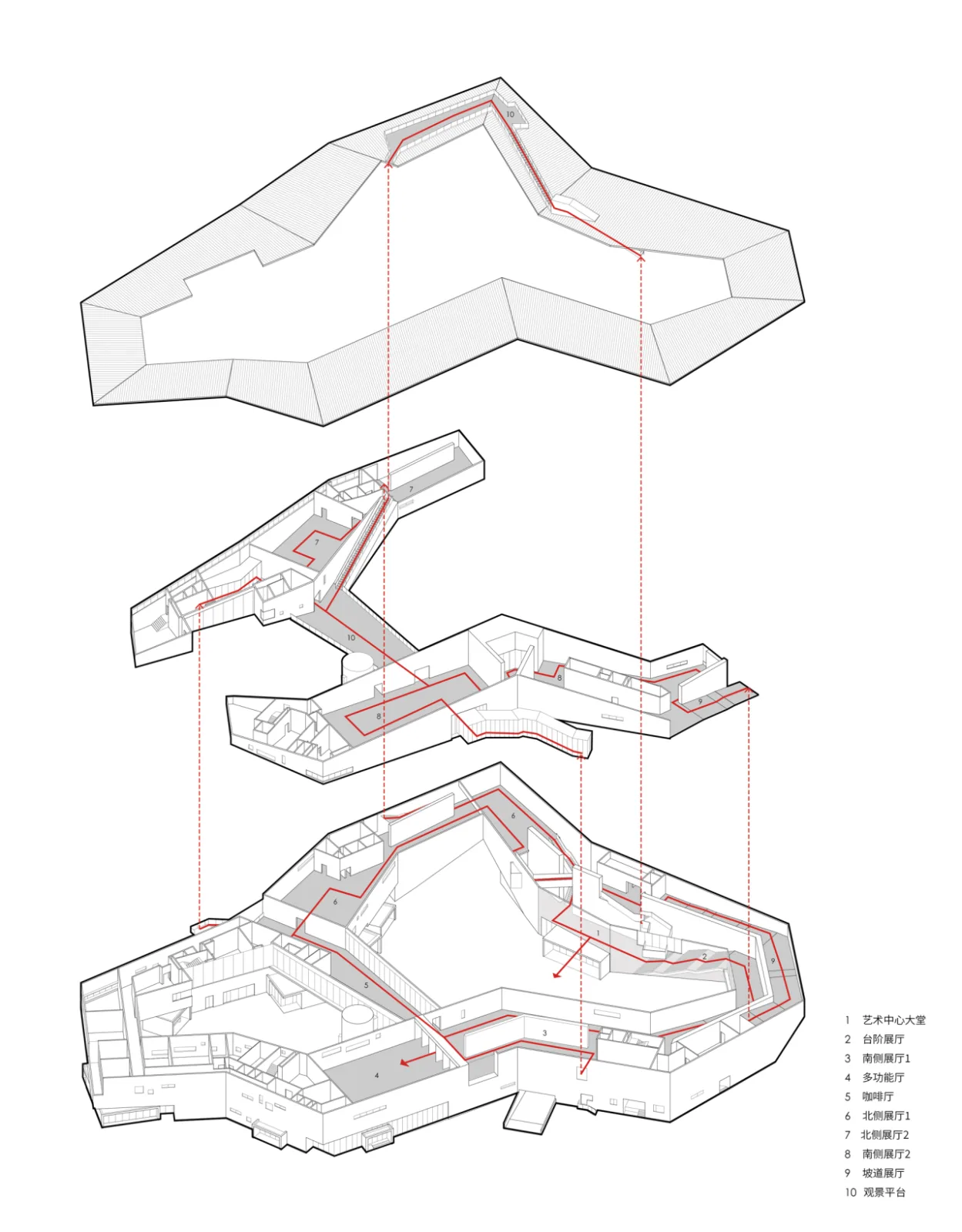
△ Viewing flow diagram
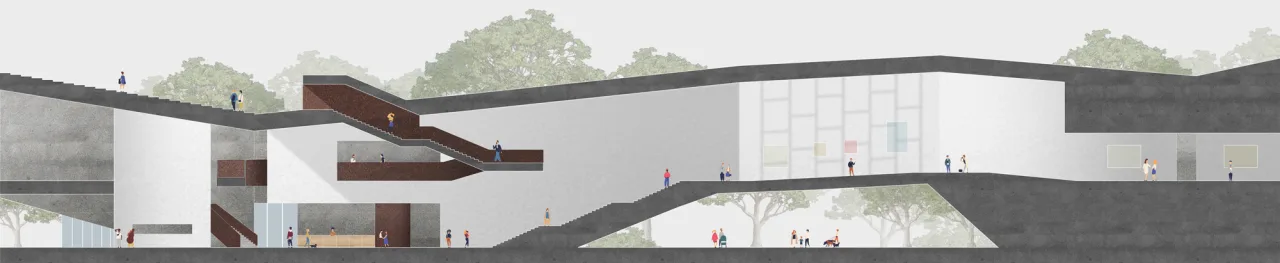
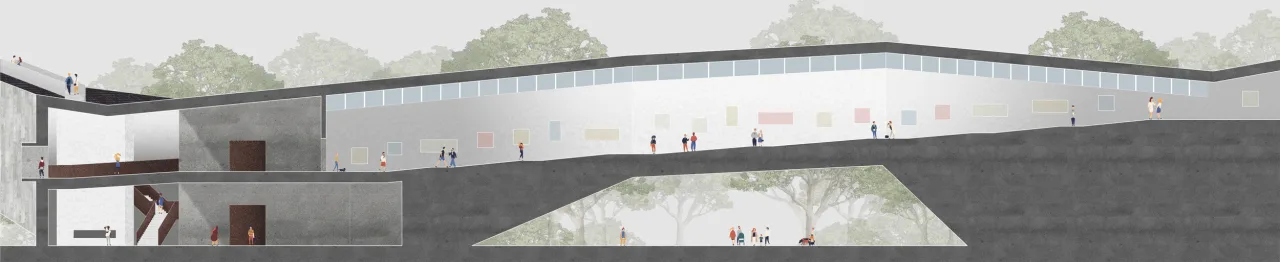
△ Continuous exhibition hall section
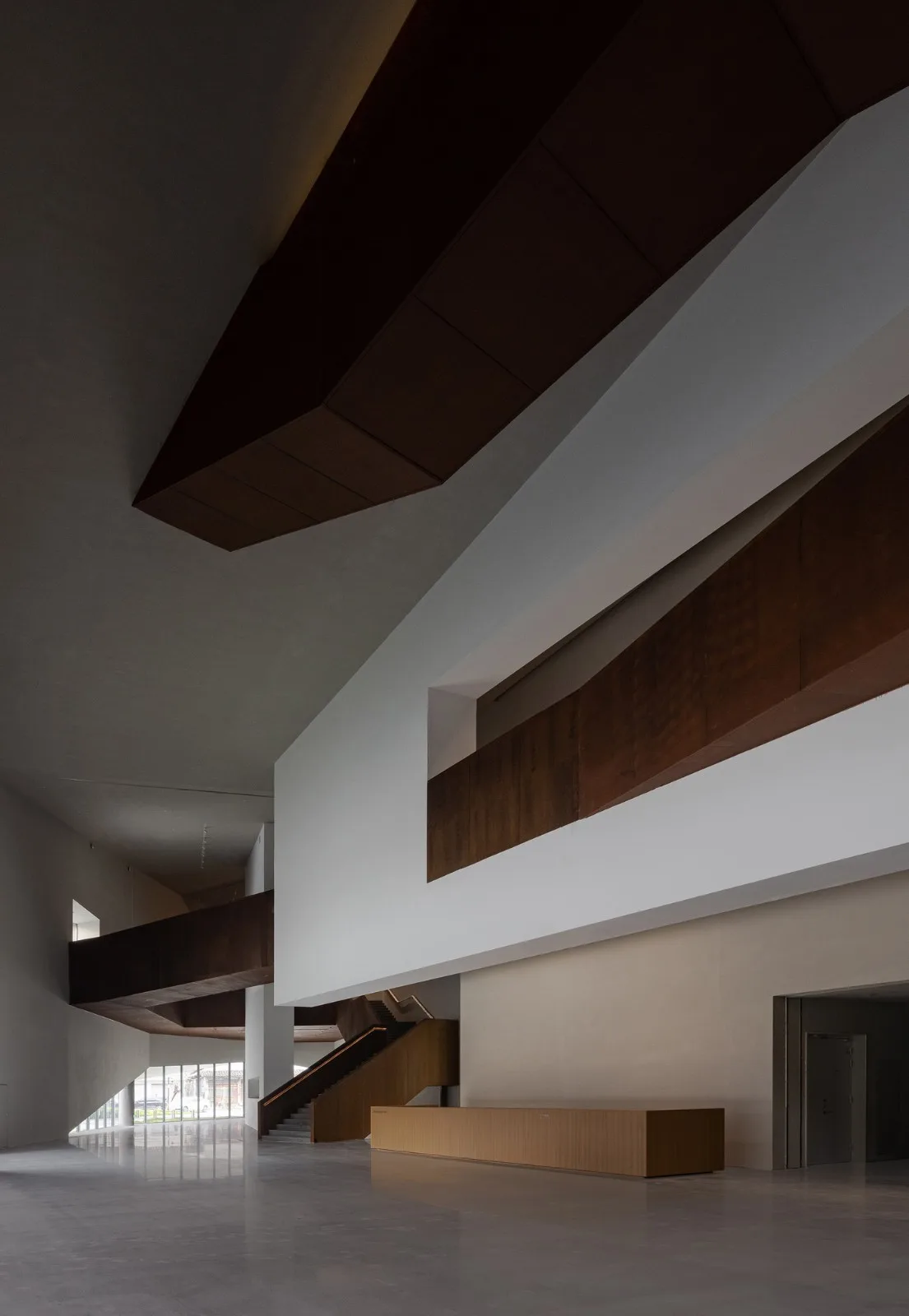
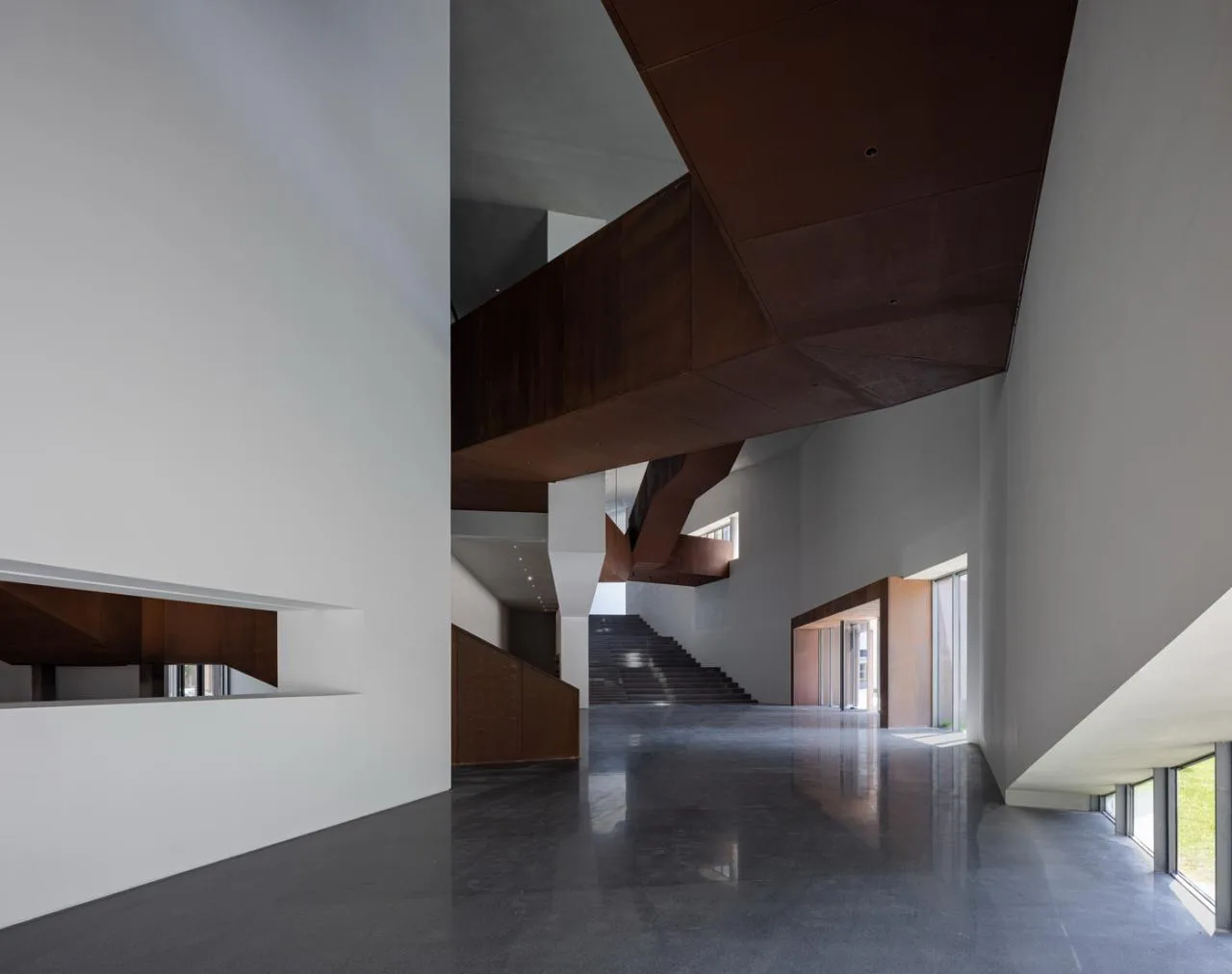
△ Art Center foyer
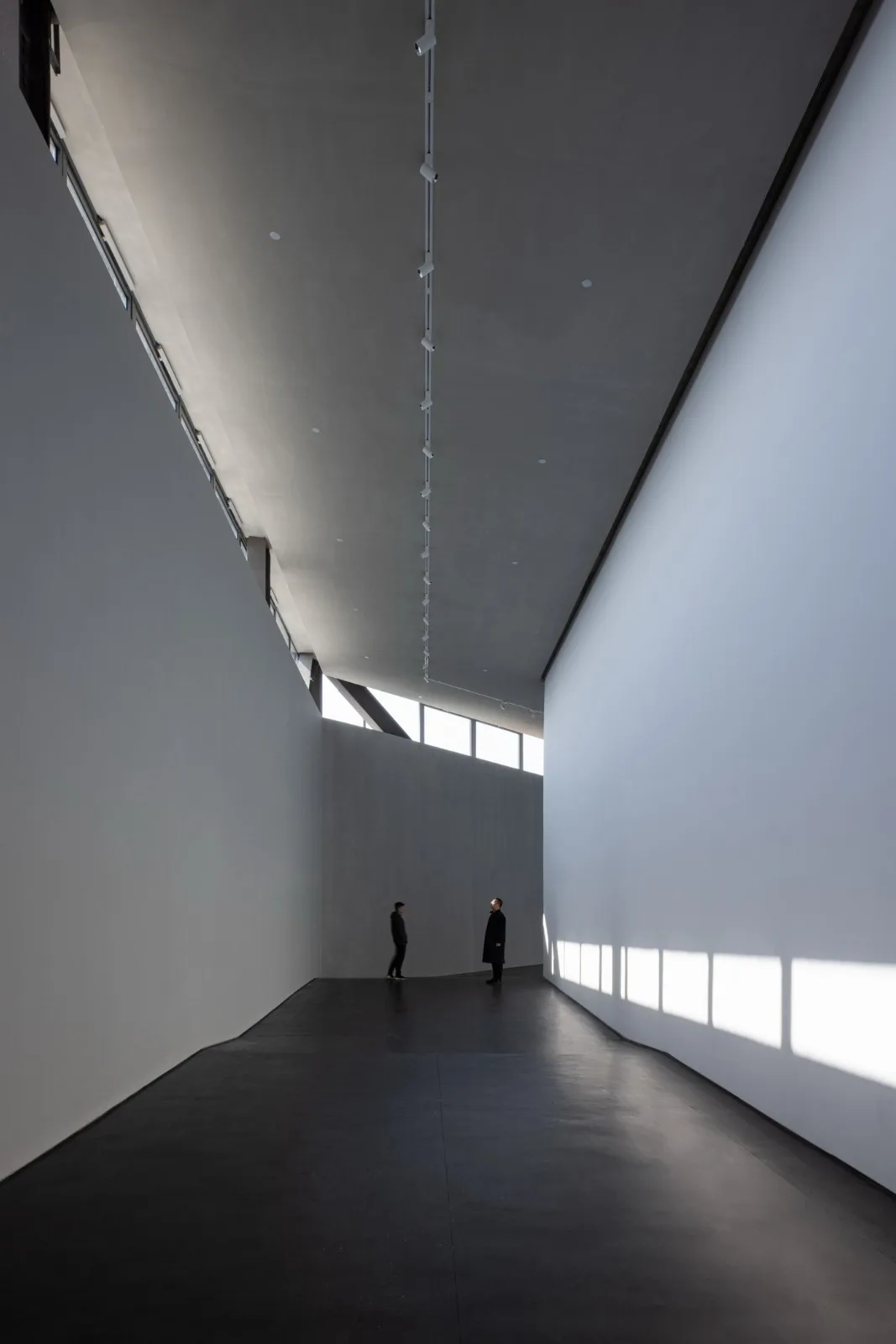
△ Sloped exhibition hall
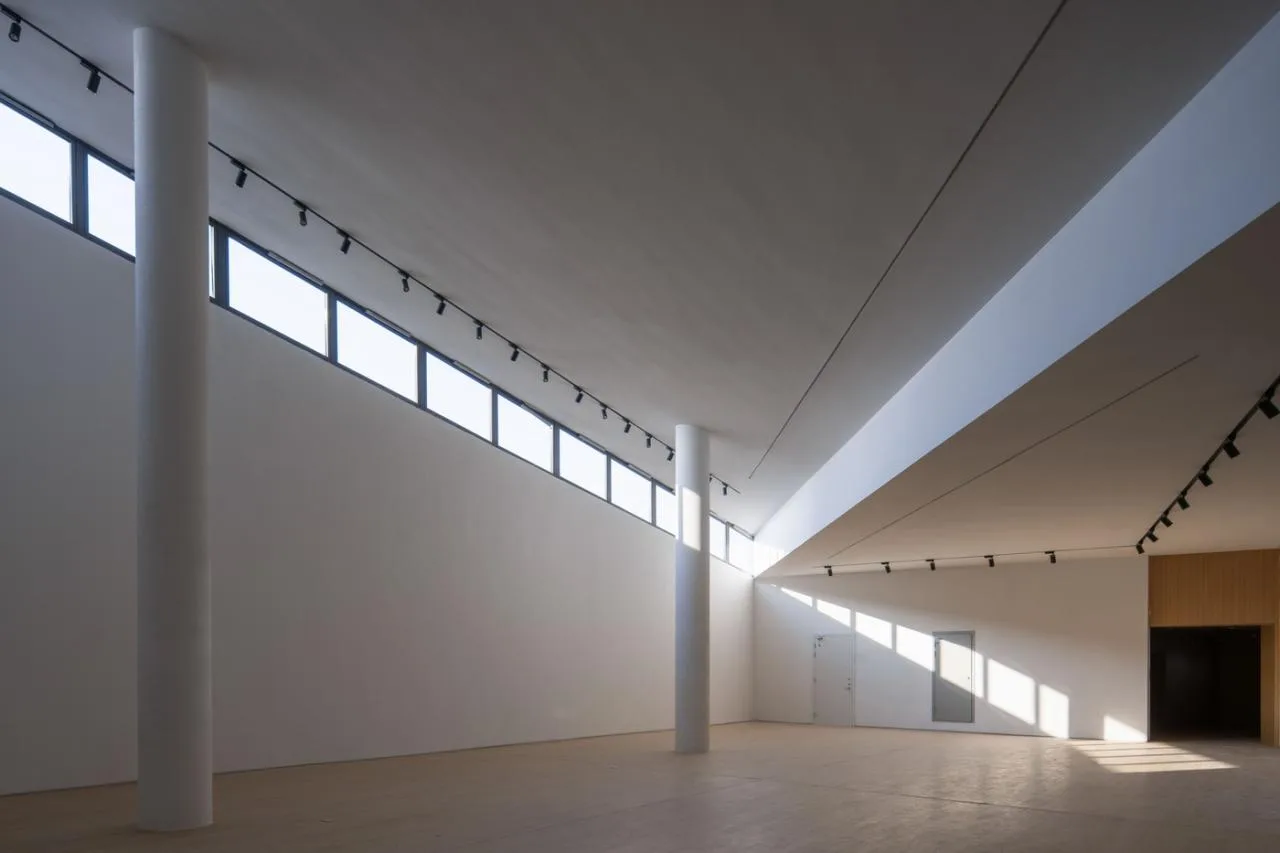
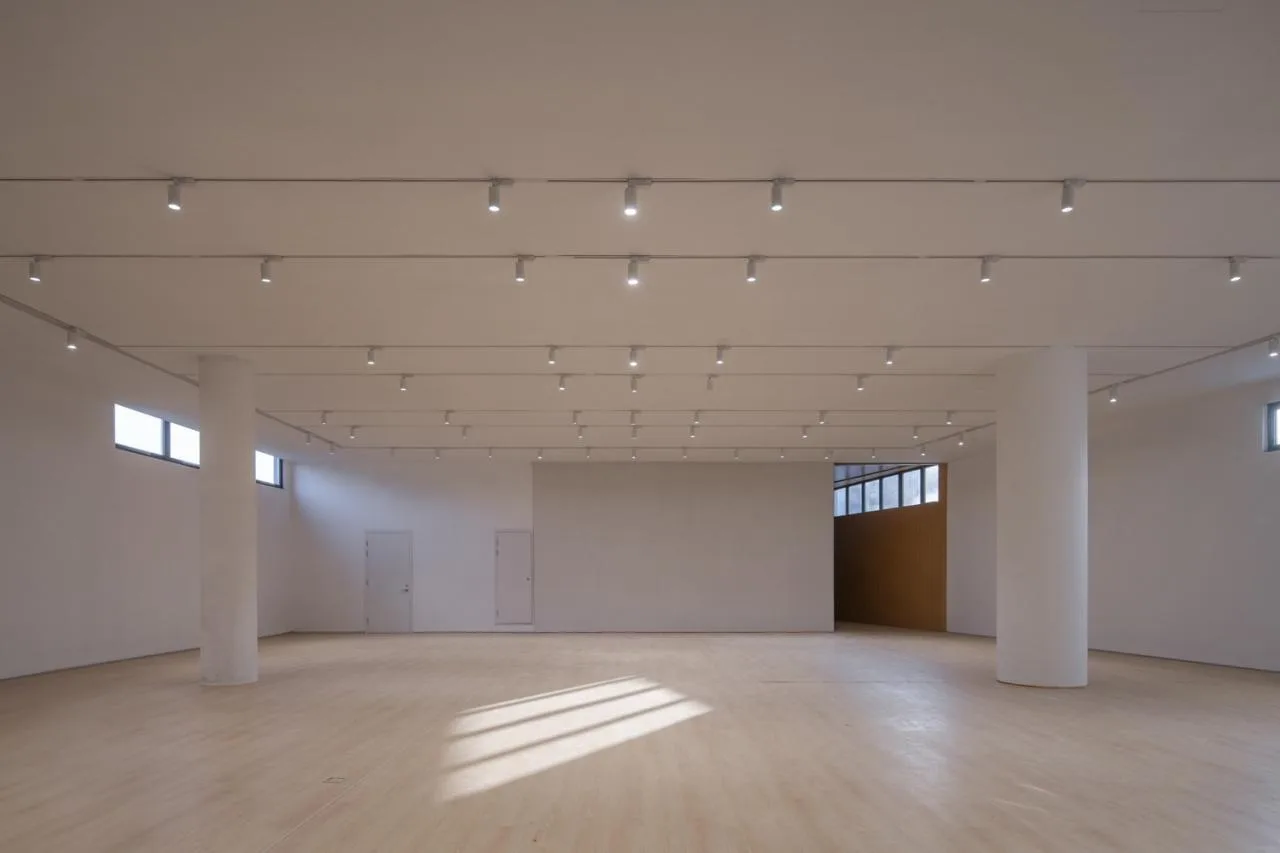
△ Exhibition space
The exhibition route begins at the street square, passes through elevated spaces and courtyards on the ground floor, then enters the art center. Visitors traverse a gently stepped hall, a long sloped corridor, and suspended bridges, ultimately reaching the rooftop. The use of transparent and semi-transparent materials intertwines art with daily life, creating contrasting yet harmonious experiences that leave lasting impressions.
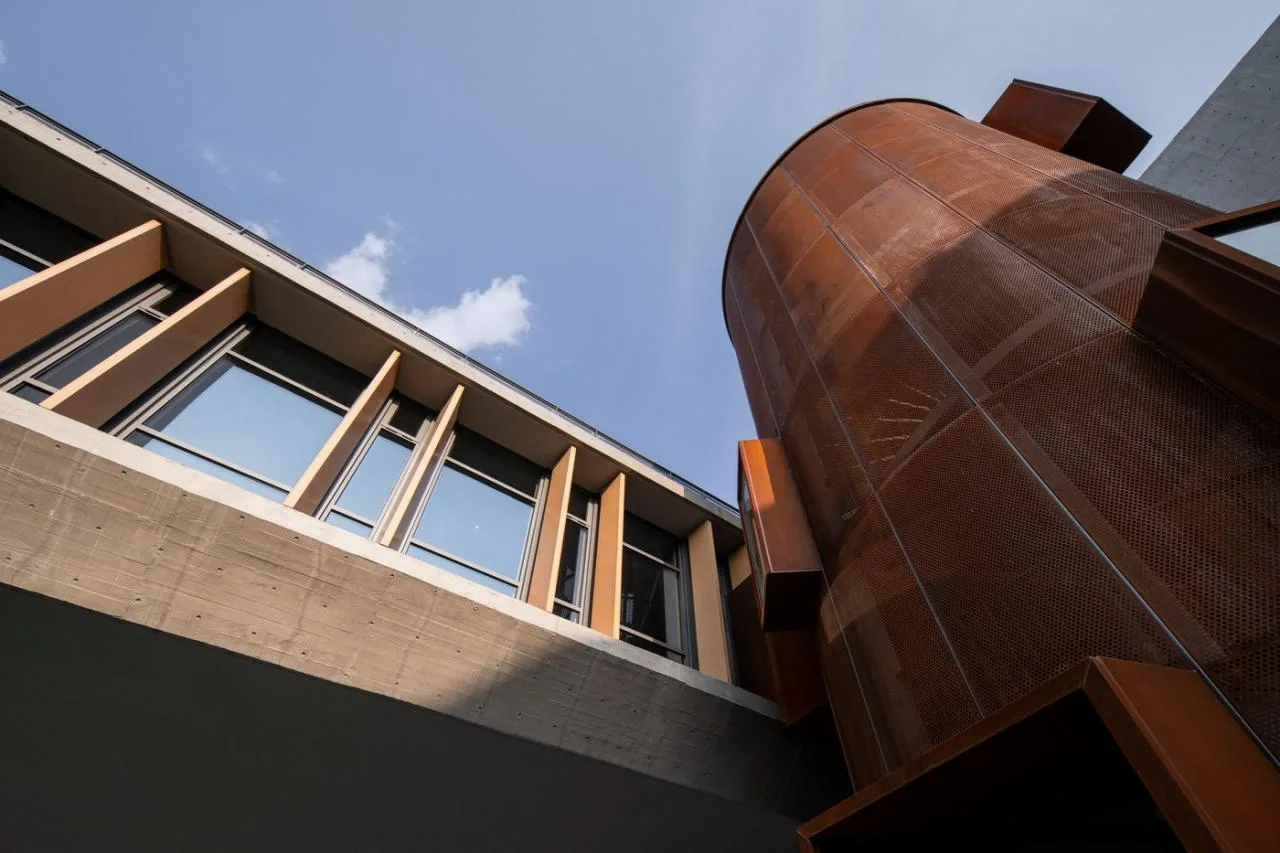
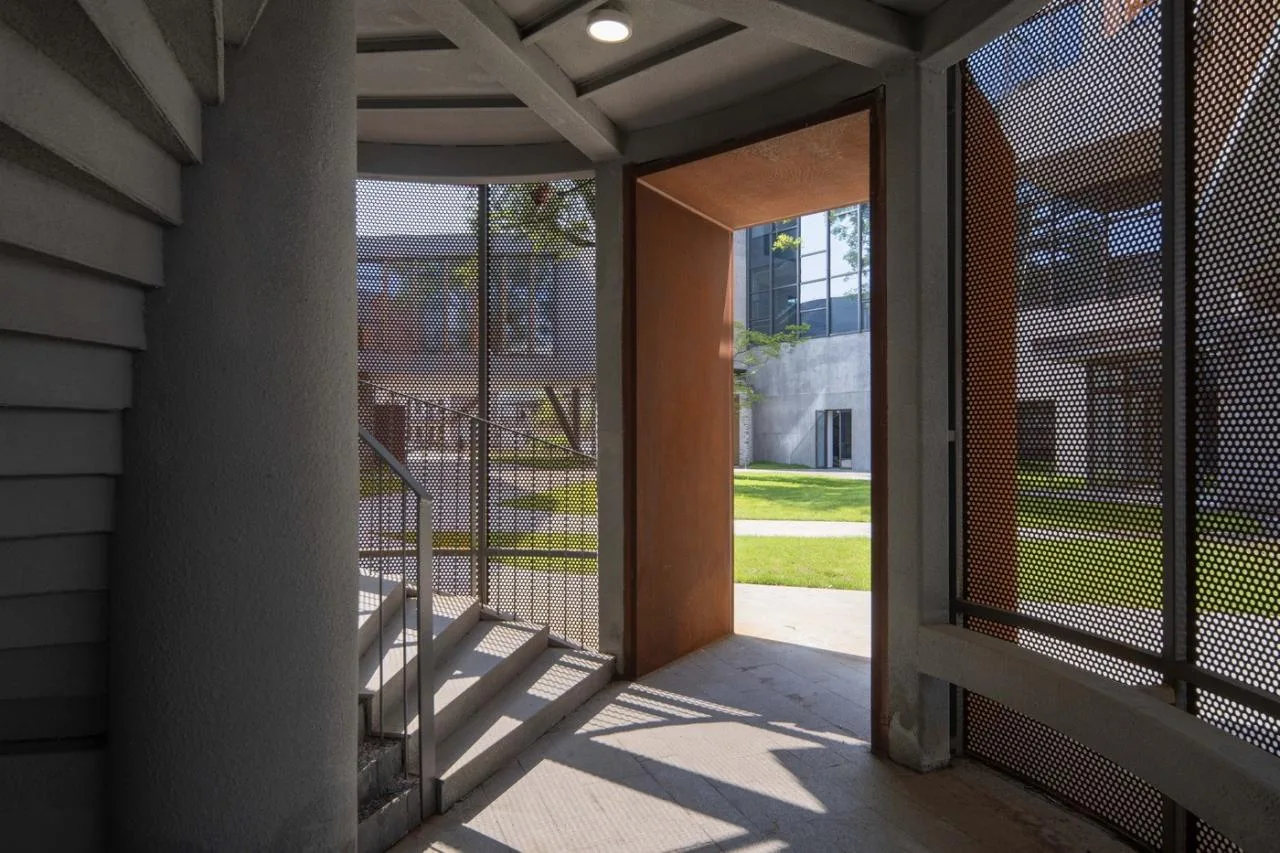
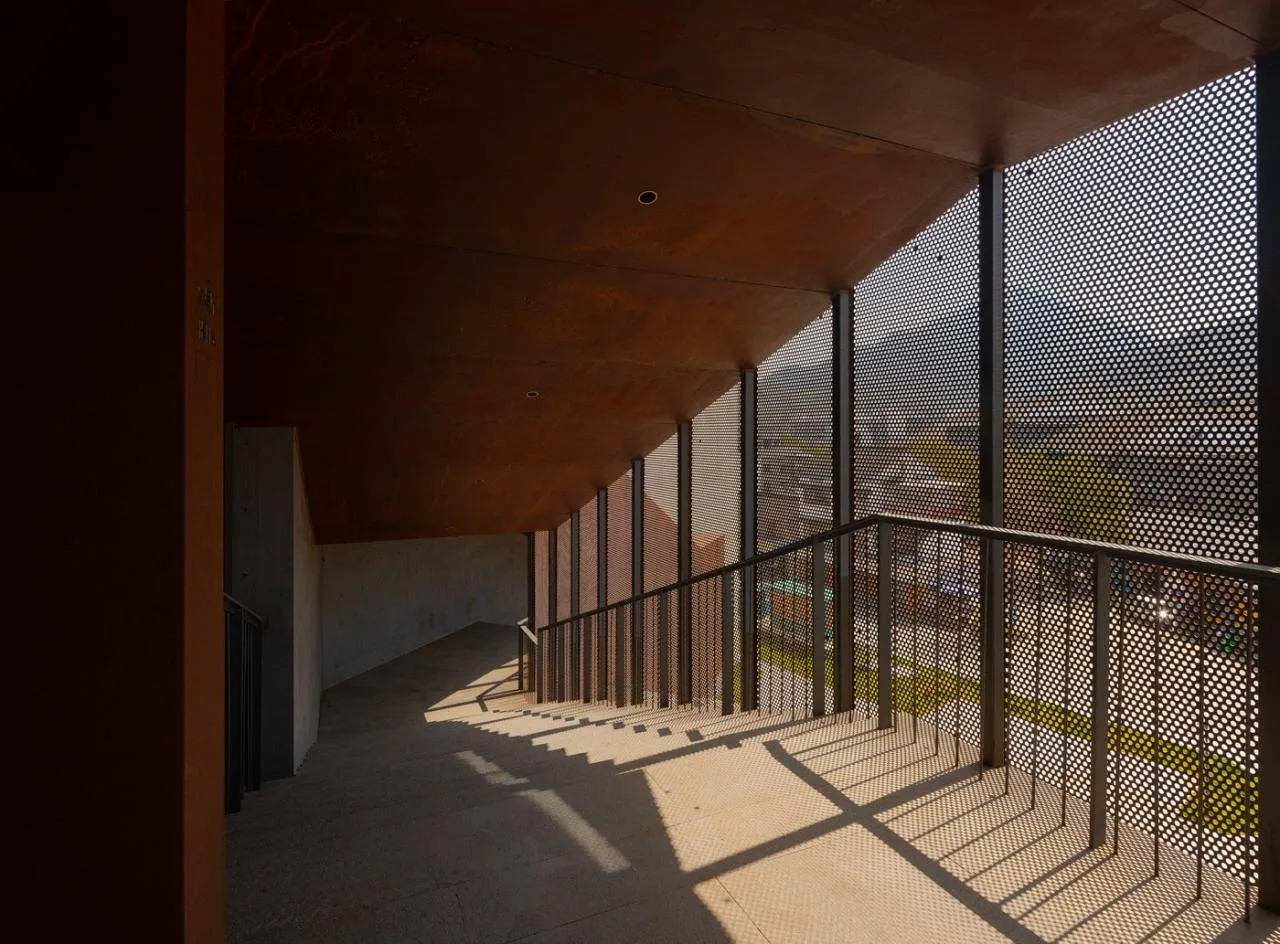
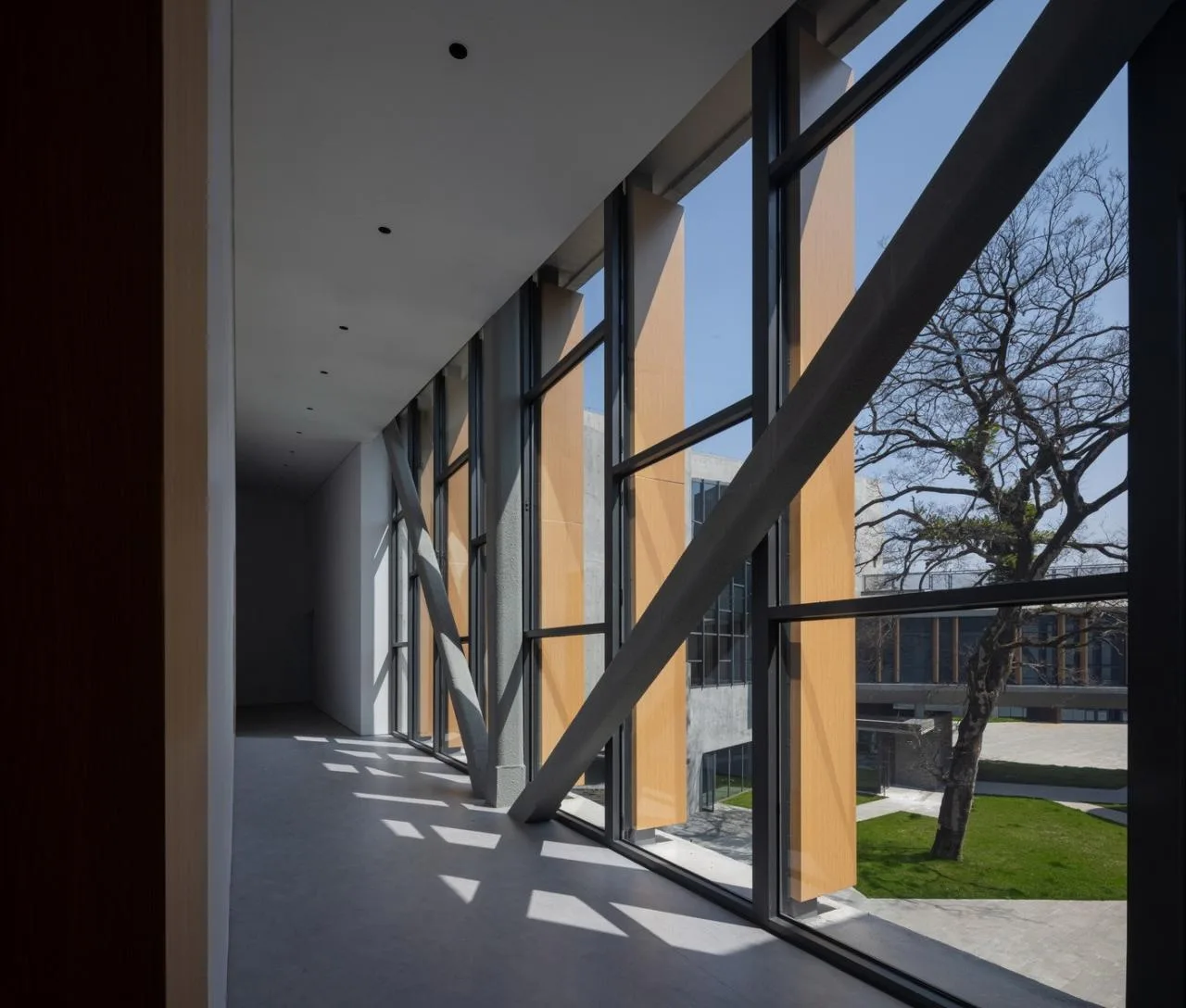
△ Exhibition flow from start to finish
The interior features solid-colored exhibition spaces highlighted by a distinctive red metal rust plate staircase. This continuous element runs throughout, breaking traditional white-box museum expectations, connecting interior and exterior spaces, and enriching the visitor experience.
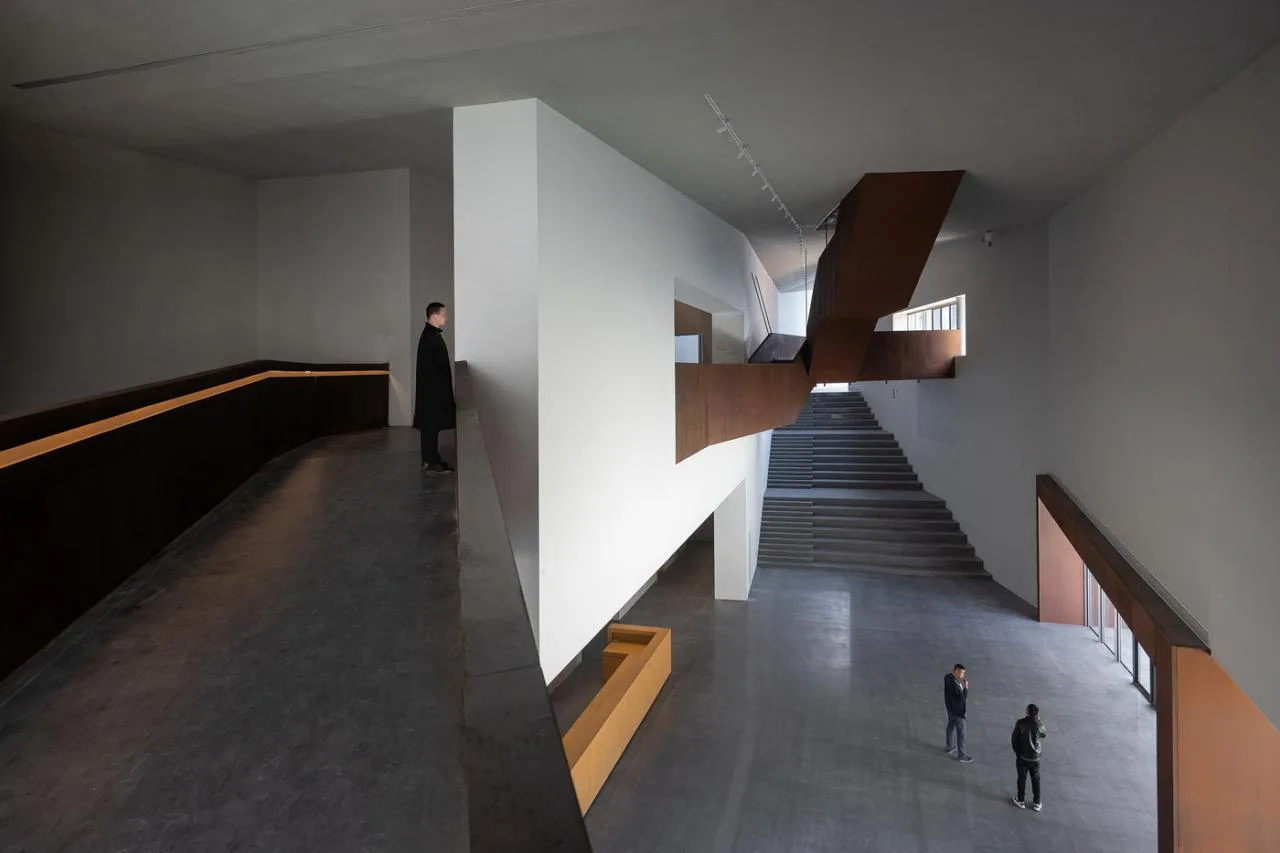
Continuous migratory path above the entrance hall
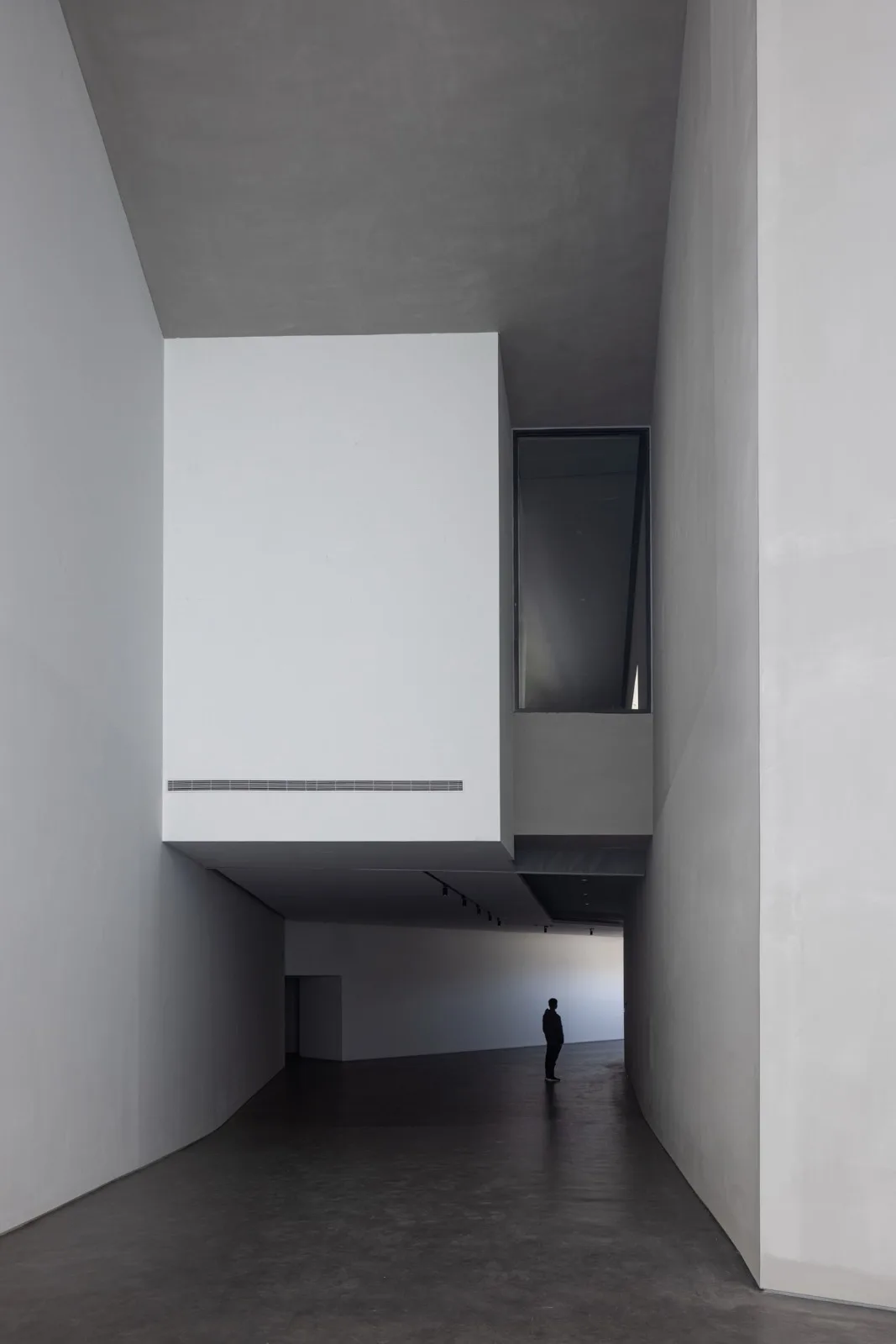
△ Exhibition space
05 Structural and Material Choices
The architectural challenge lies in realizing the irregular, large-scale overhanging form, while material selection addresses the spatial dialogue between different scales.
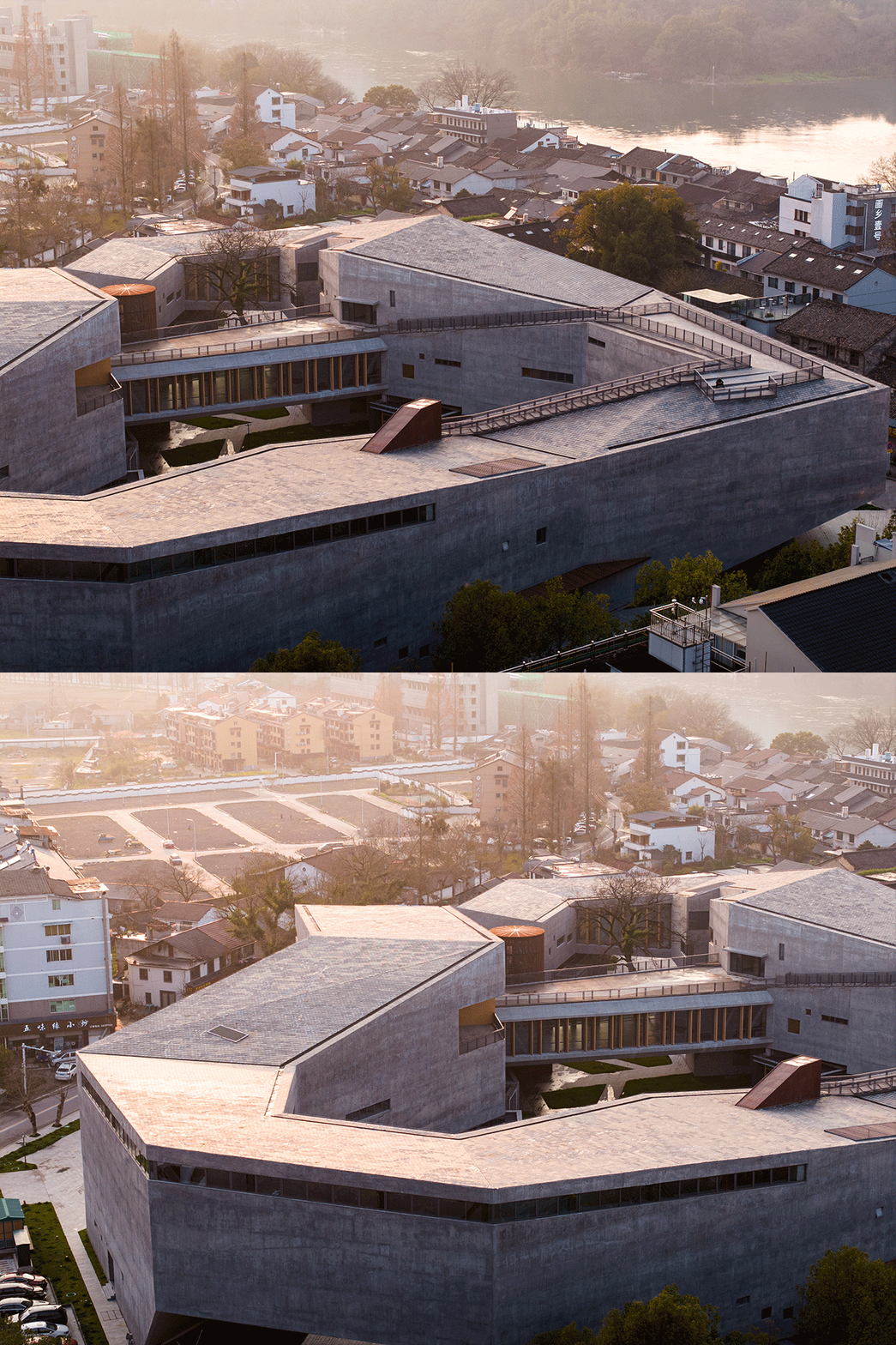
△ Concrete exterior wall
Steel structure
To invite the local community inside and accommodate daily activities, the building incorporates multiple large overhangs and lifted sections. For construction feasibility and cost control, steel structures were chosen for the above-ground parts, with trusses supporting the large-span and elevated areas.
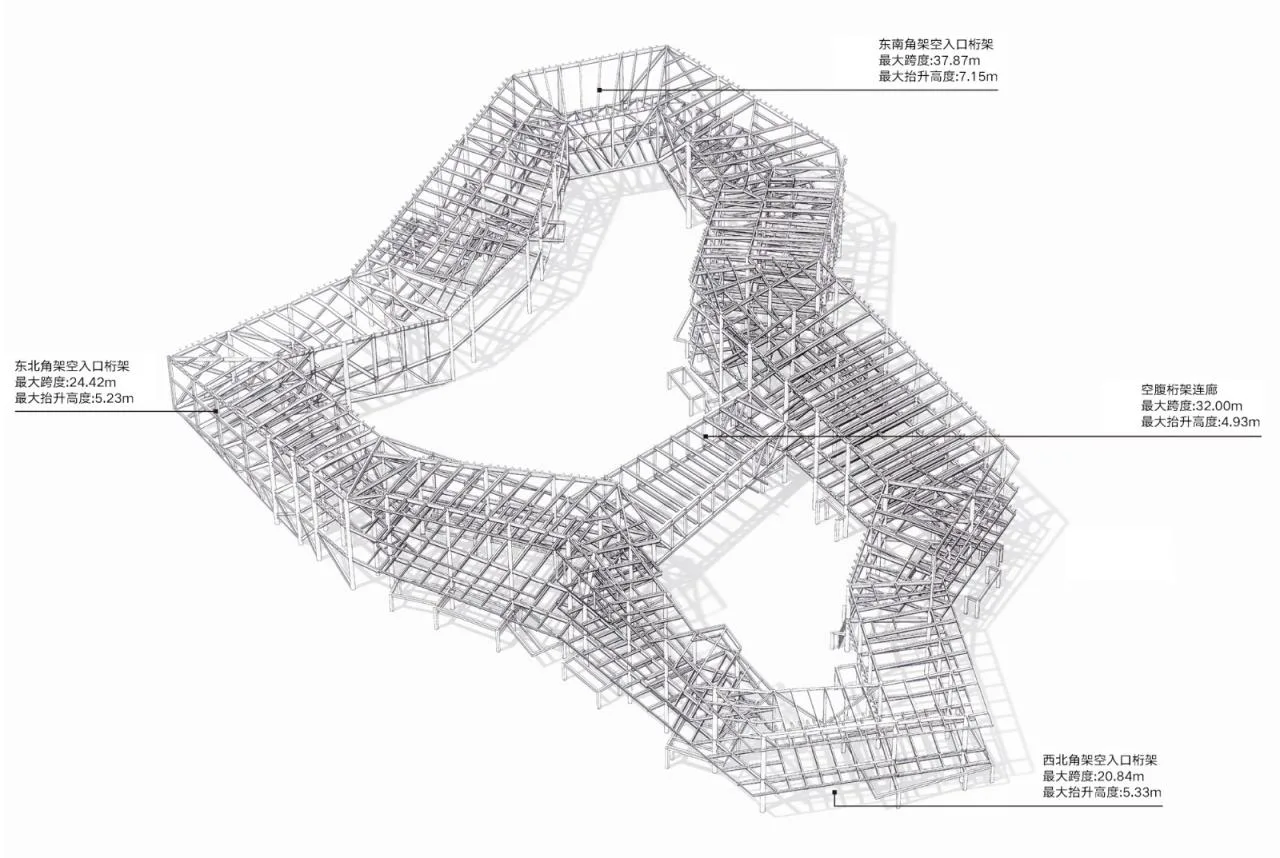
△ Steel structure
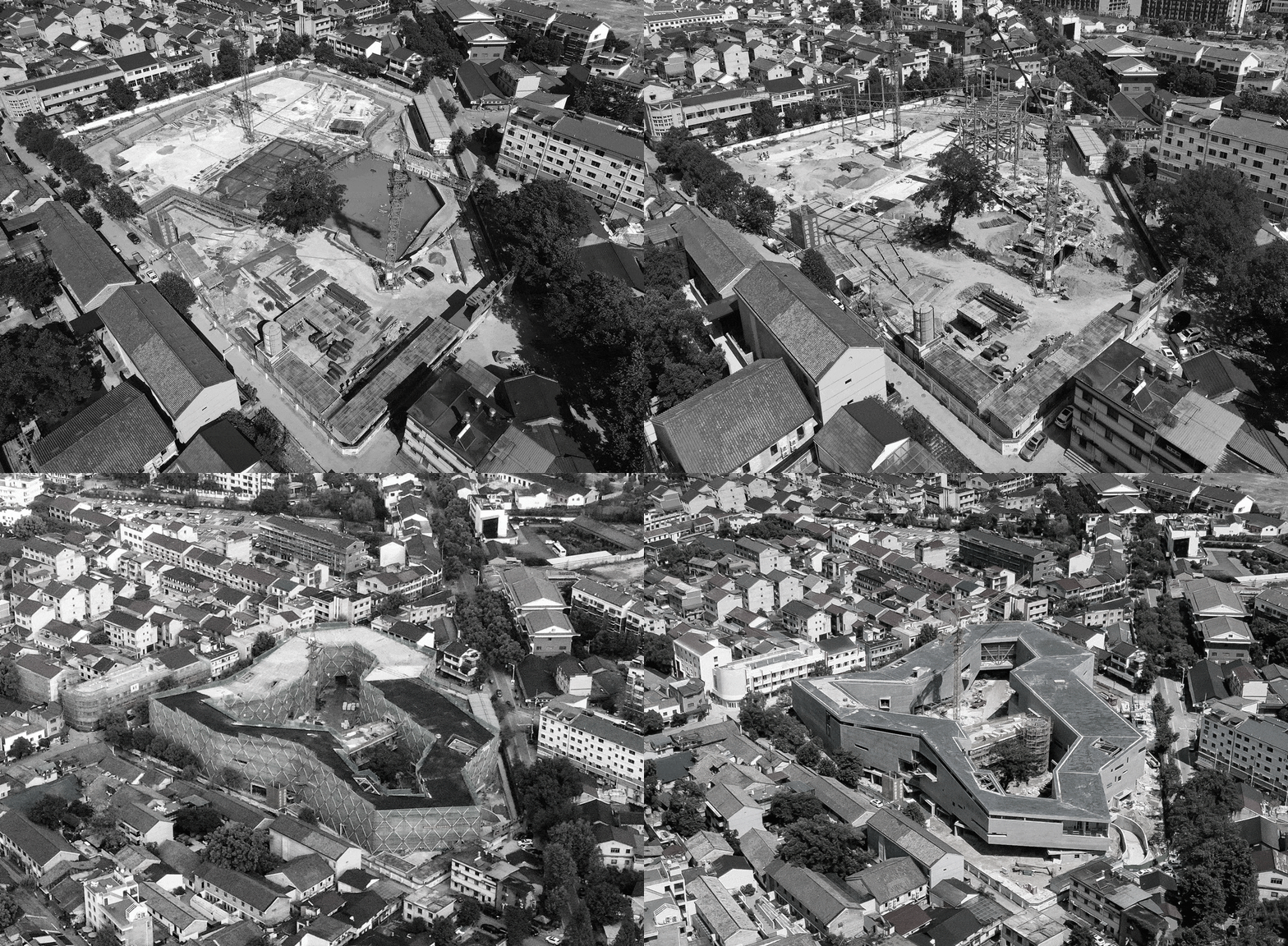
△ Construction process
△ Aerial view of the Art Center
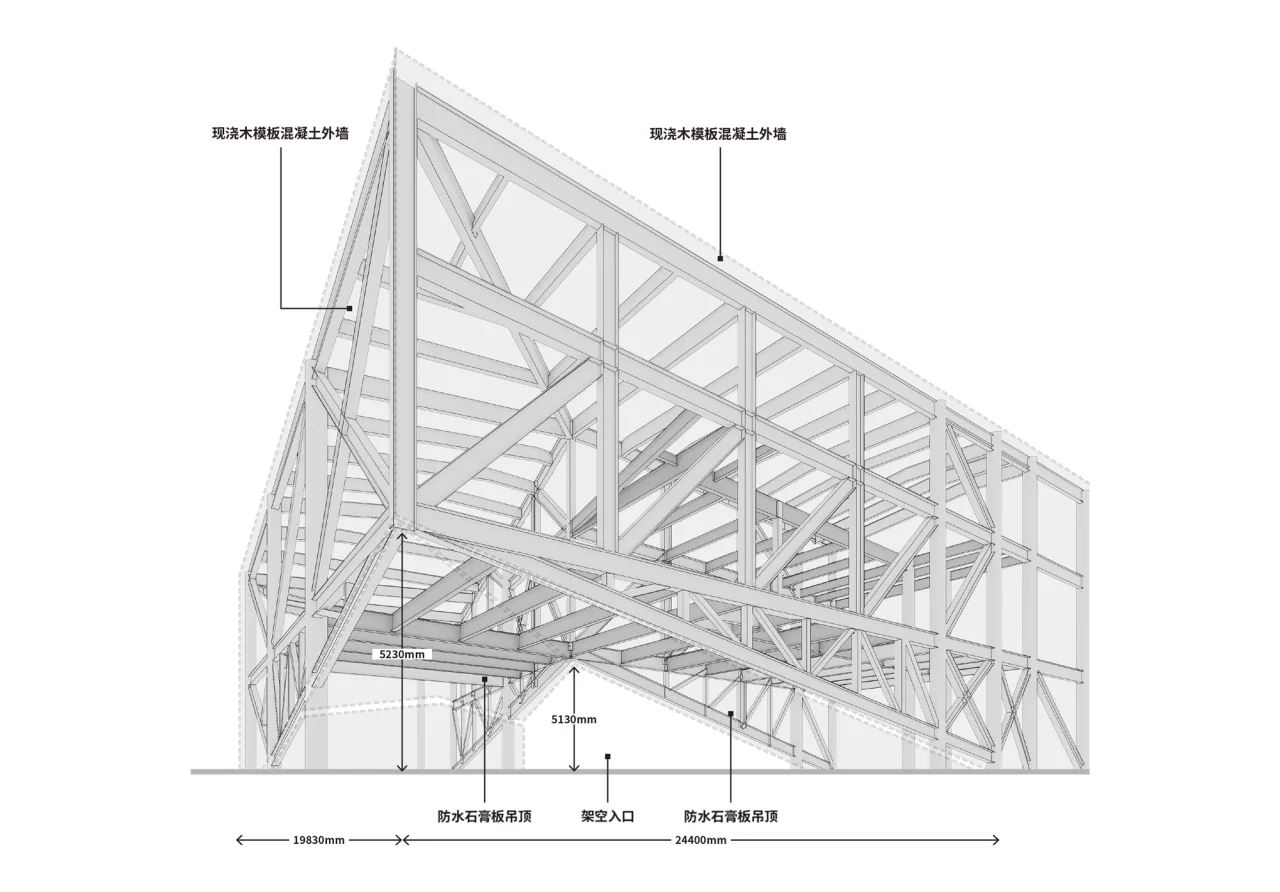
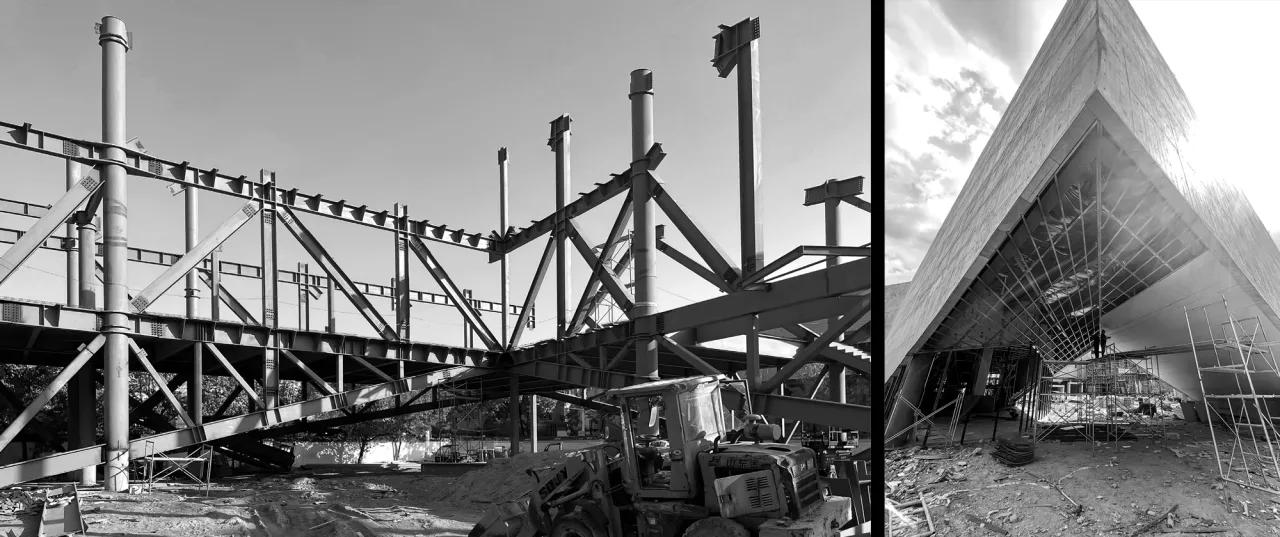
△ Northeast corner overhead entrance truss
△ Northeast corner elevated entrance
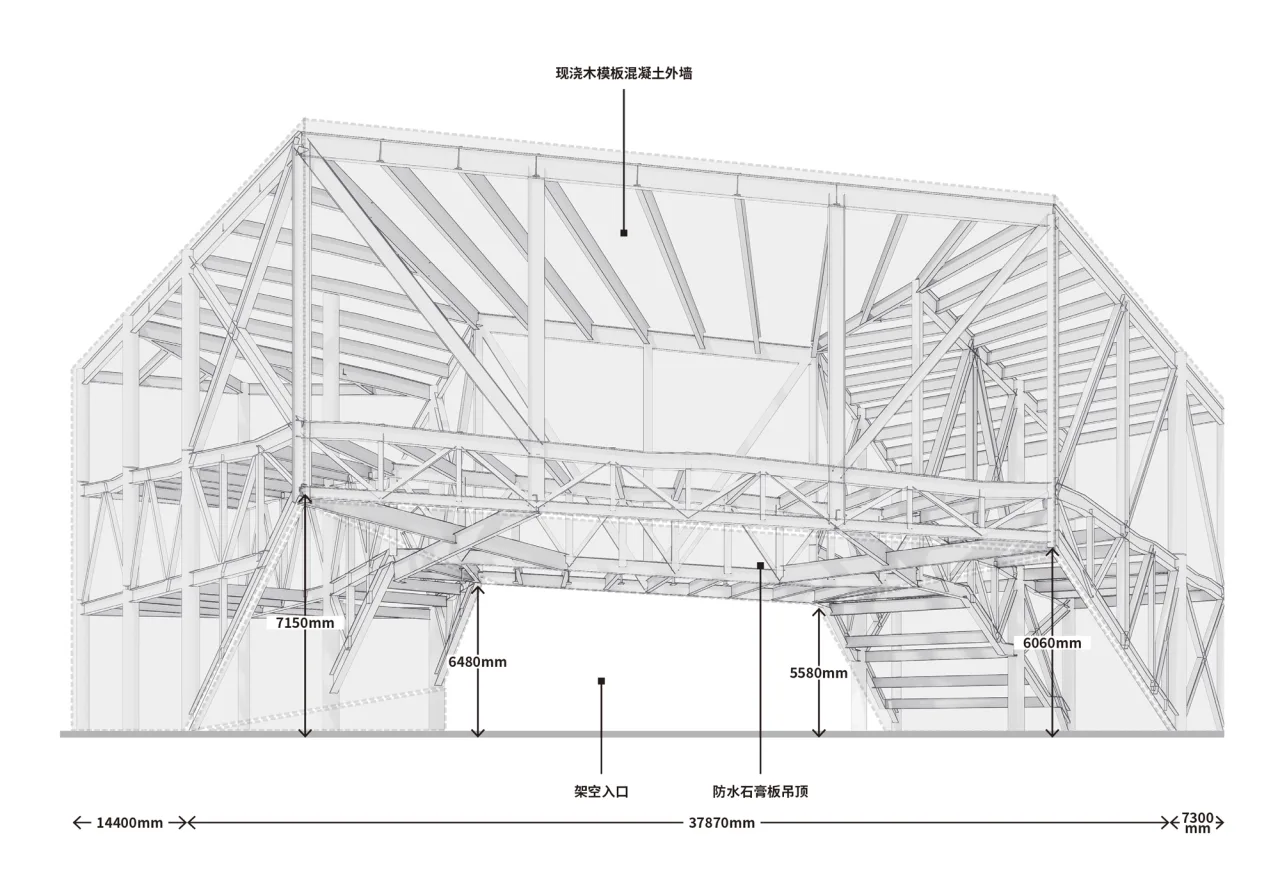
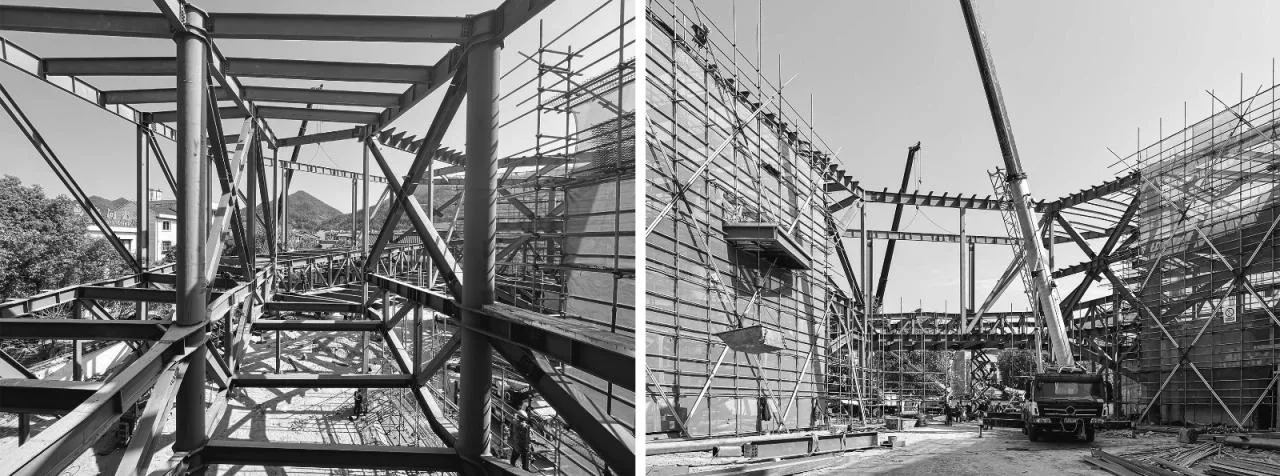
△ Southeast corner overhead entrance truss
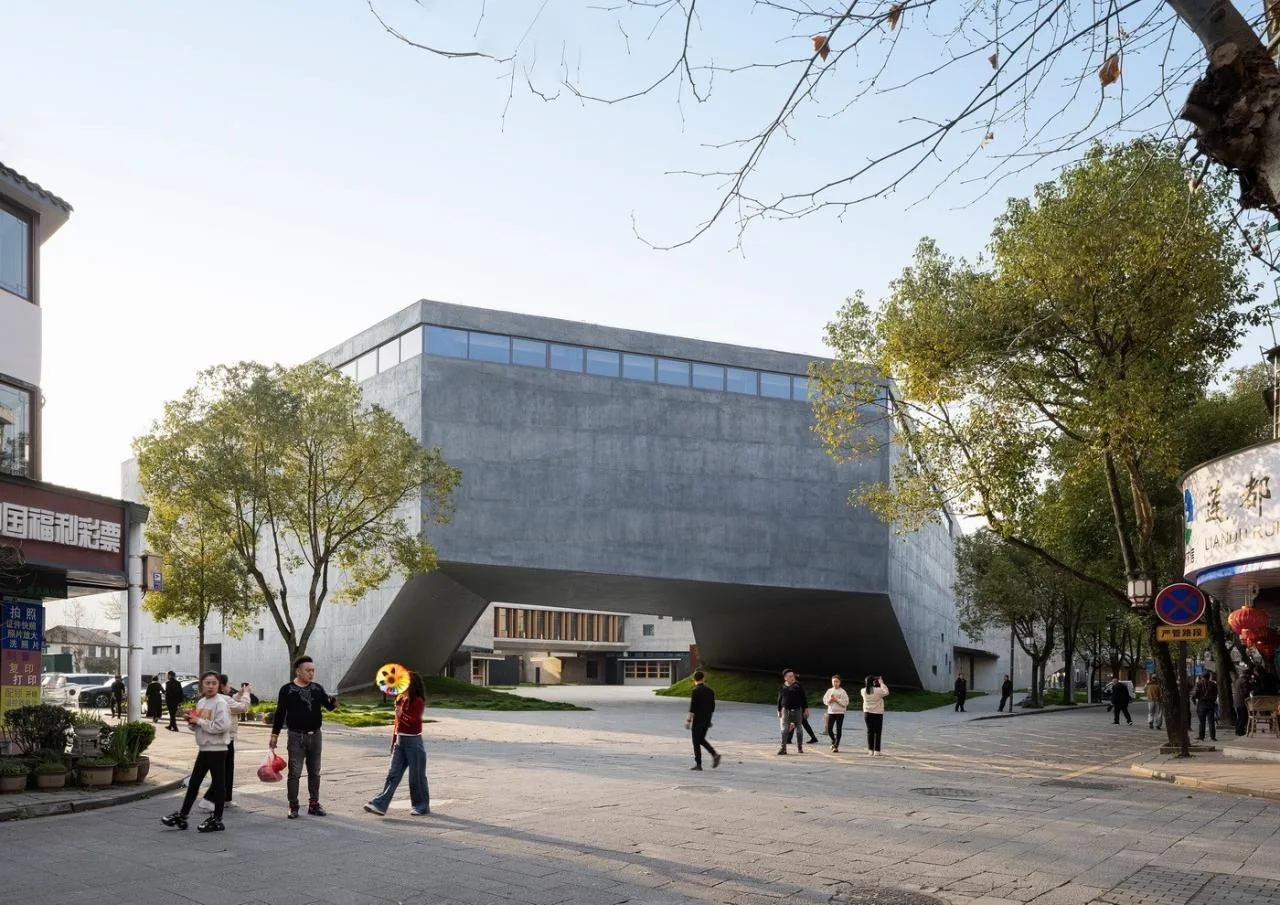
△ Southeast corner elevated entrance
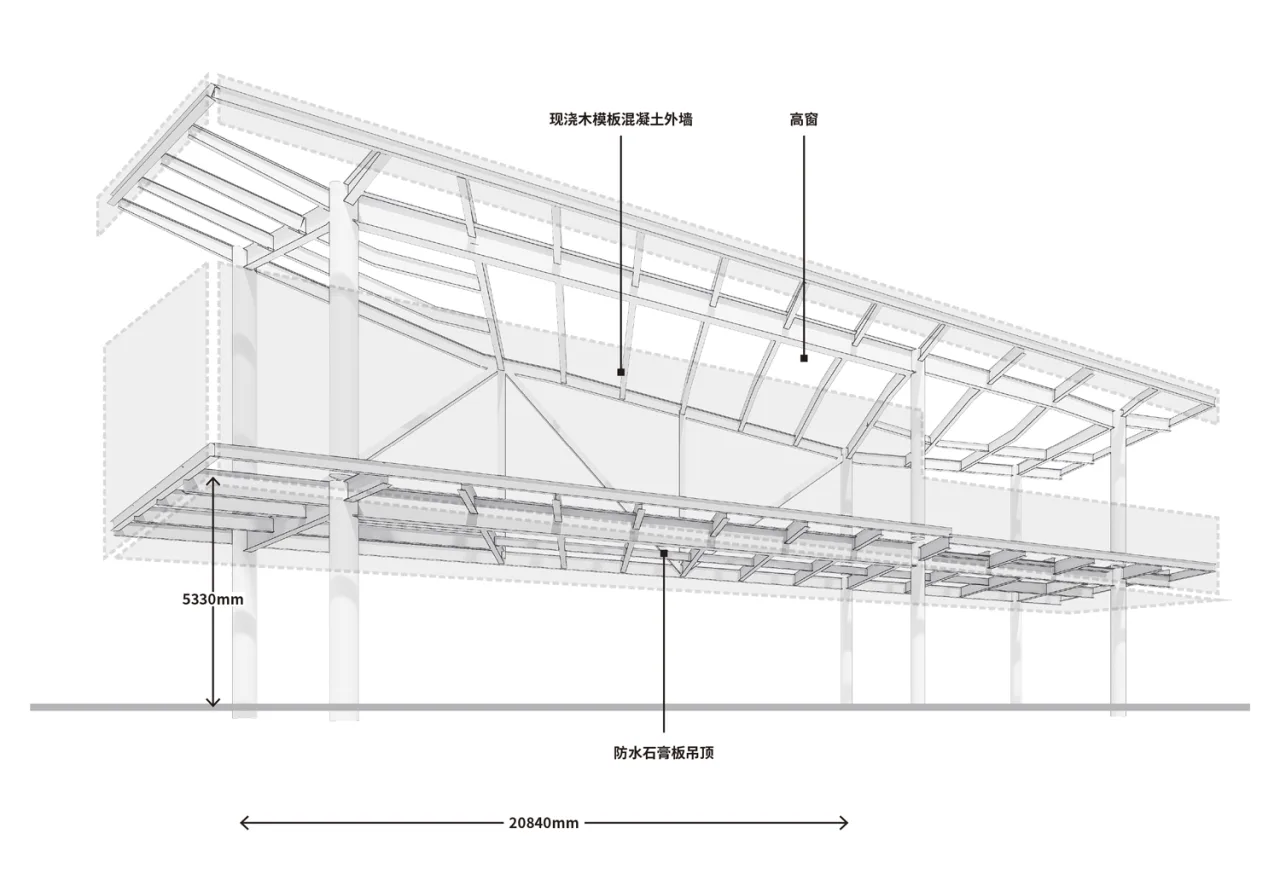
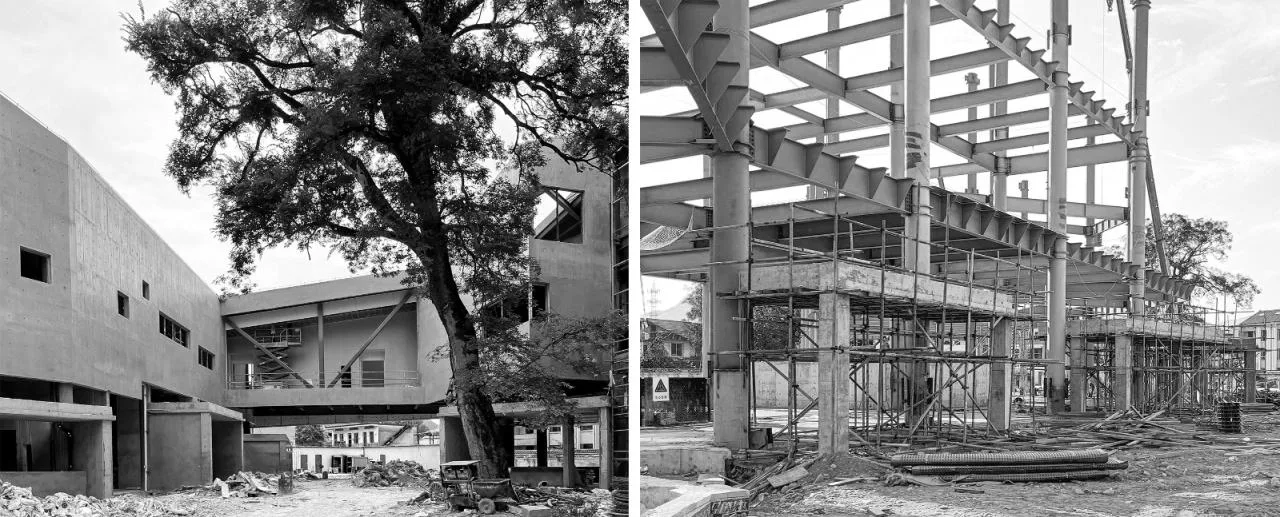
△ Northwest corner overhead entrance truss
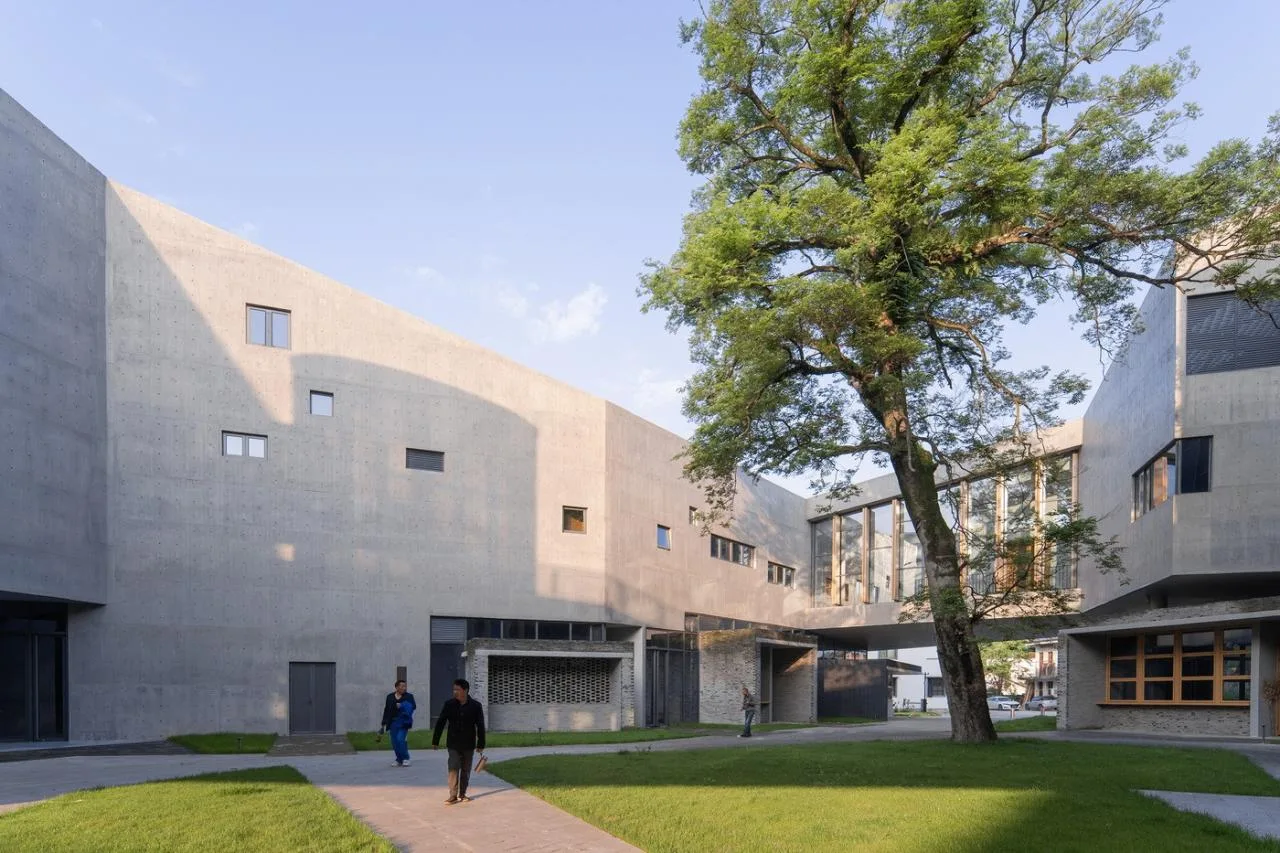
△ Northwest corner elevated entrance
Multiple directional connecting bridges above the entrance hall guide visitors to the rooftop platform. To emphasize a lightweight appearance, these aerial bridges employ hanging rod structures suspended from the roof beams.
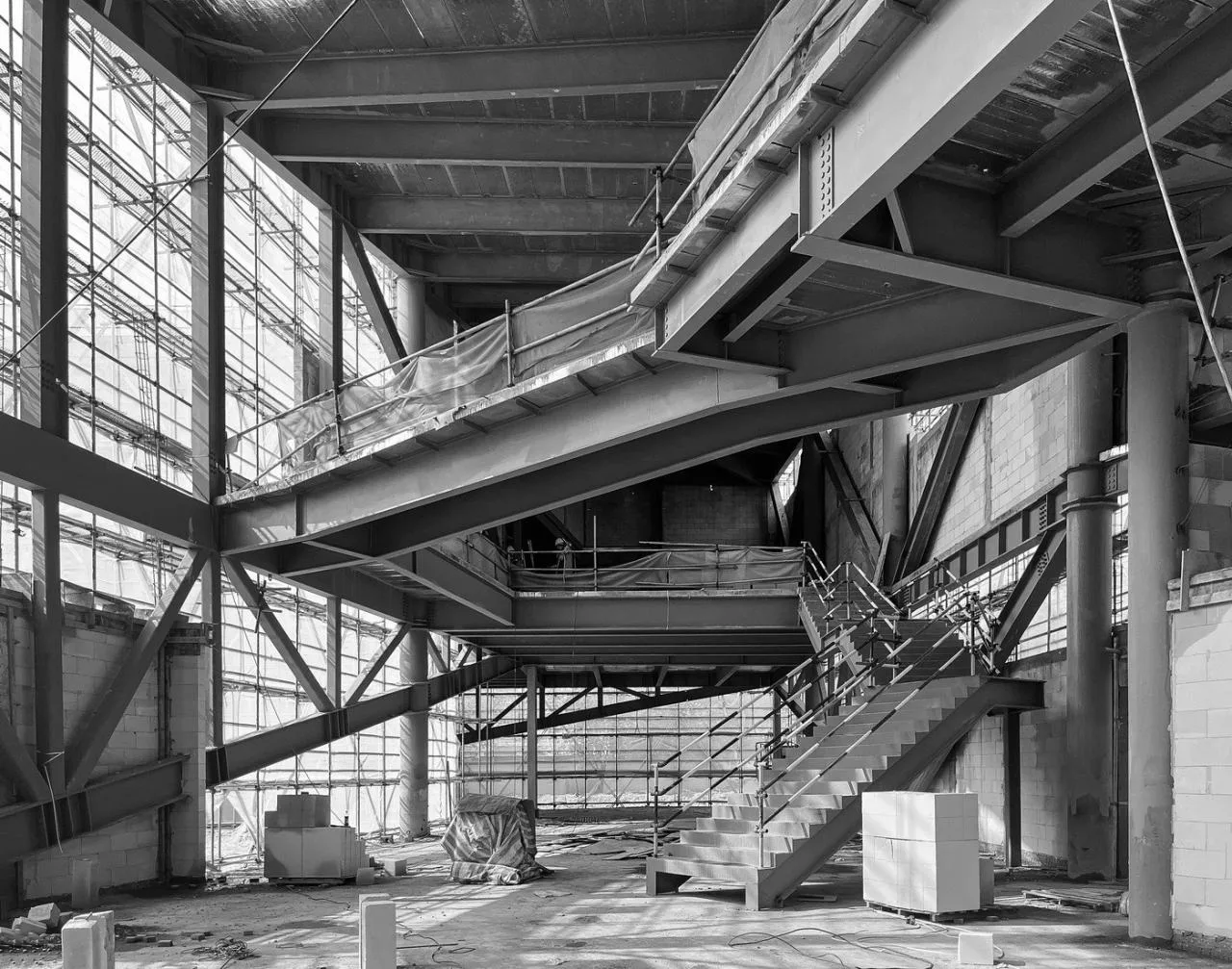
Construction process of the art center’s entrance hall
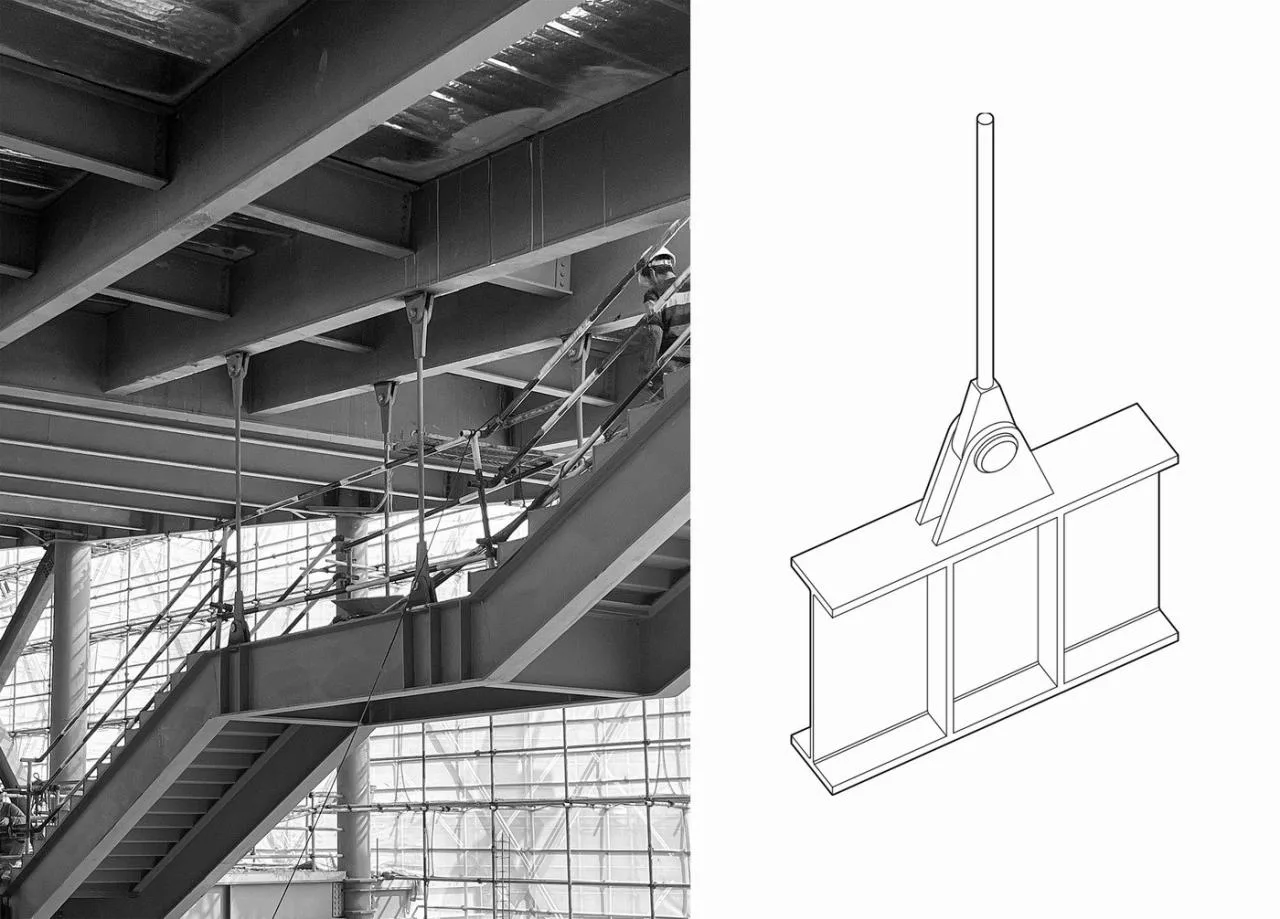
△ Suspension rod structure
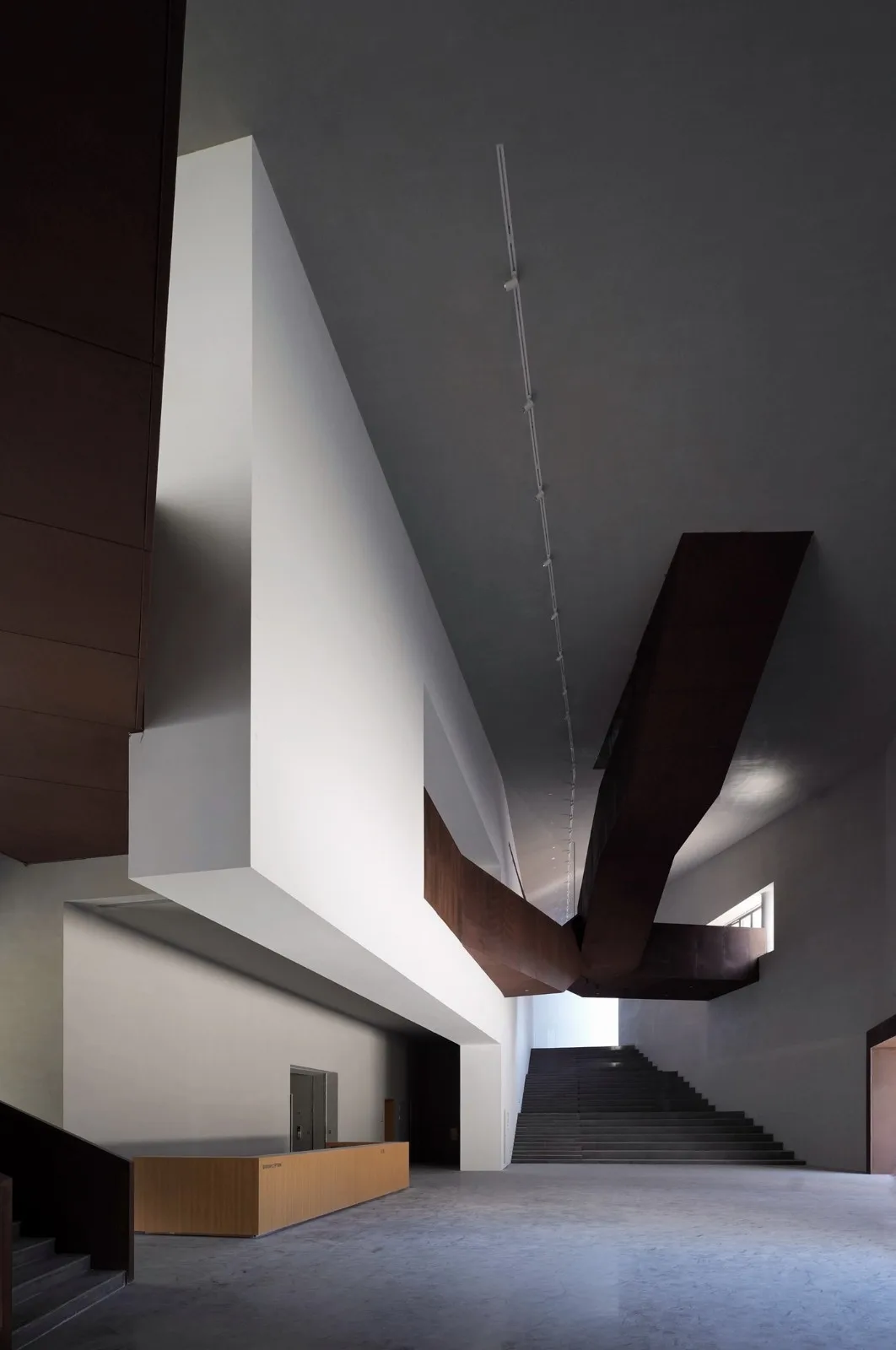
△ Art Center foyer
Concrete
The primary exterior facade material is wood-form concrete, featuring a warm color palette and simple texture. This softens the massiveness of the building, offering an elegant and understated aesthetic that creates a gentle dialogue between old and new within the small town environment.
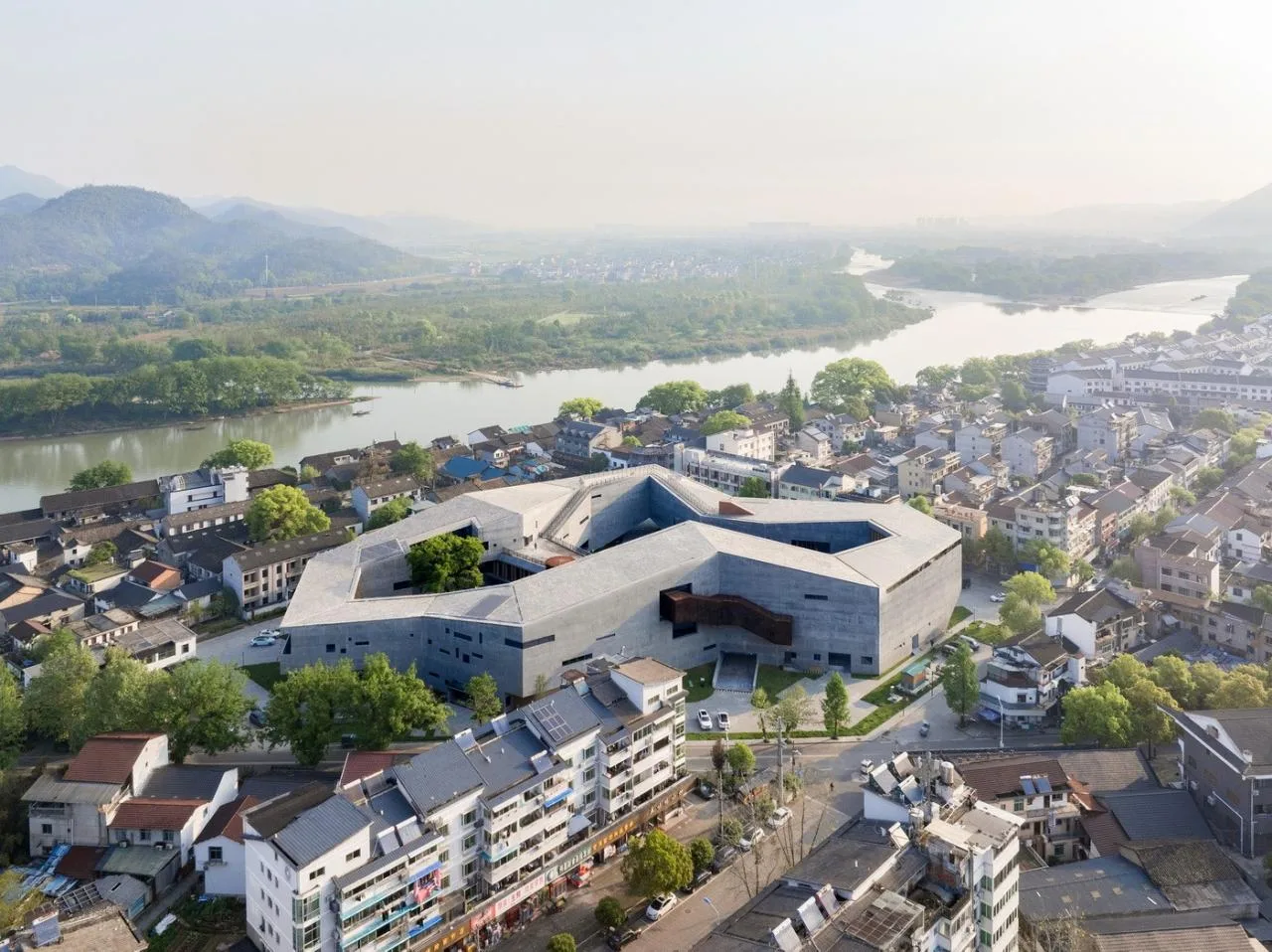
△ Aerial view of the Art Center
Due to the heavy weight of cast-in-place concrete, which would increase structural demands and costs, the design shifted to an external maintenance system using decorative concrete and aerated concrete blocks. These blocks weigh only a quarter to a fifth of traditional concrete, reducing structural risks and costs, while preserving concrete’s natural texture and rough authenticity.
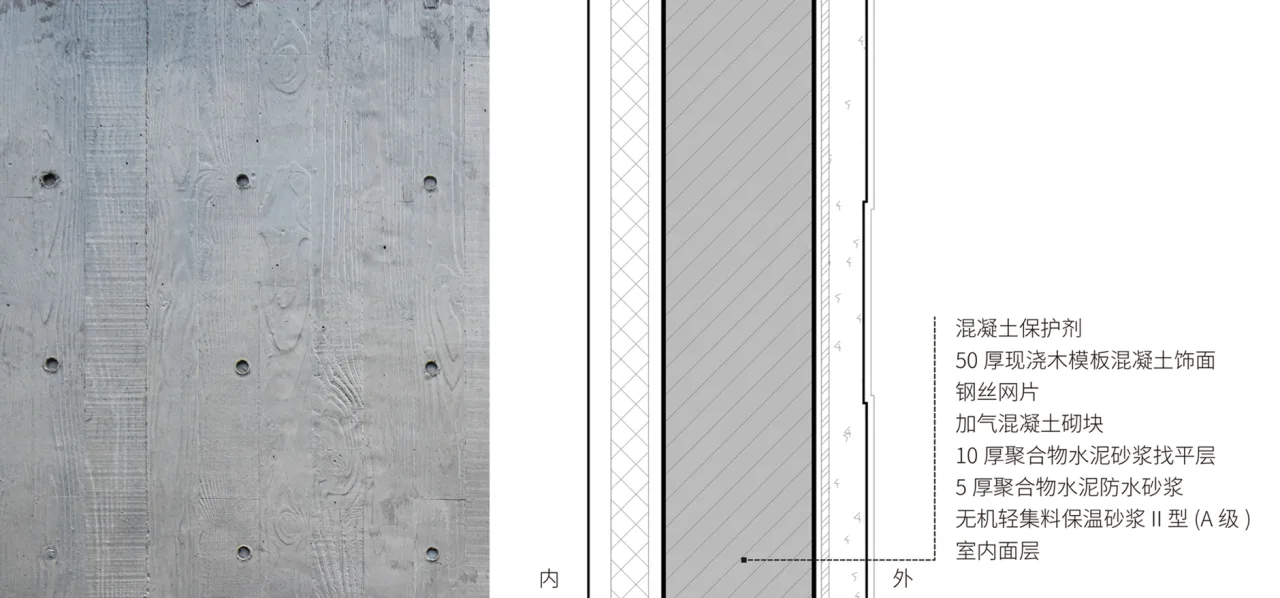
△ Concrete exterior wall construction method
The facade uses 50mm-thick thin-poured wood-form concrete, formed with reusable composite rubber and plywood formwork. Visible joints are cut every 6 meters and filled with mortar to maintain consistent vertical and horizontal joint lines, ensuring facade continuity.
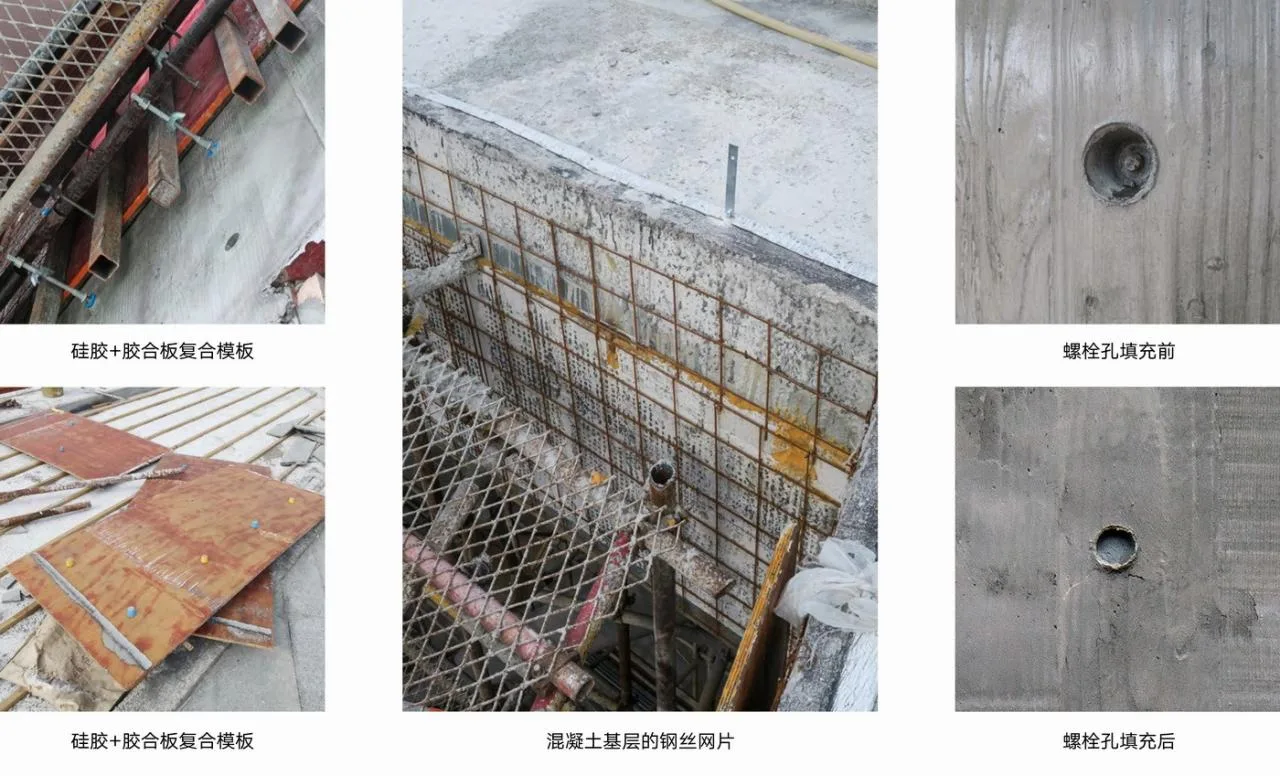
Concrete exterior wall details
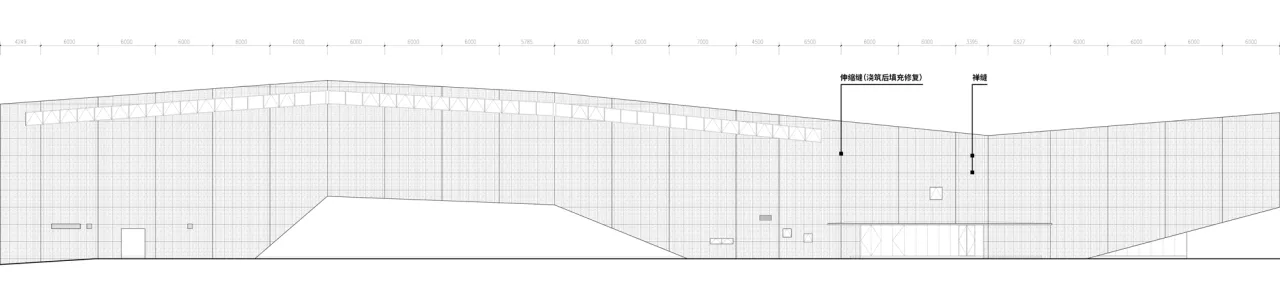
△ Concrete facade layout diagram
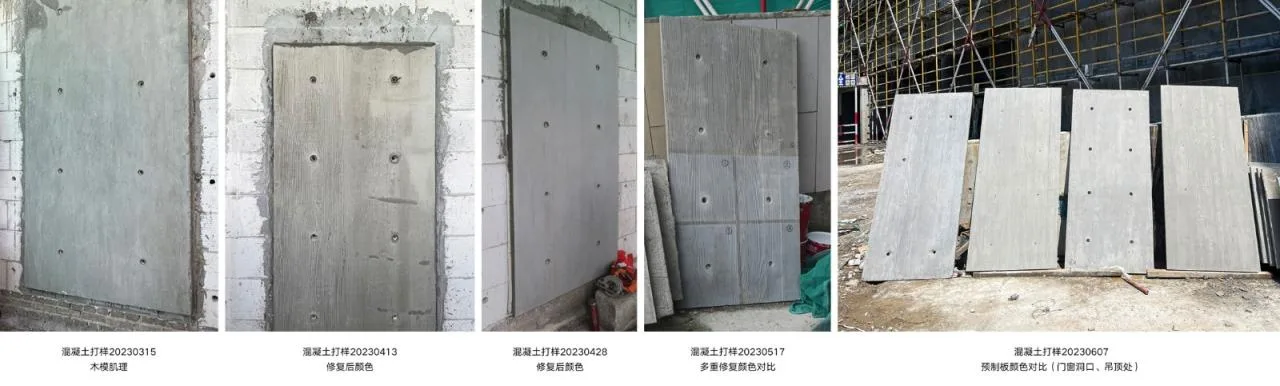
△ Multiple rounds of concrete sampling
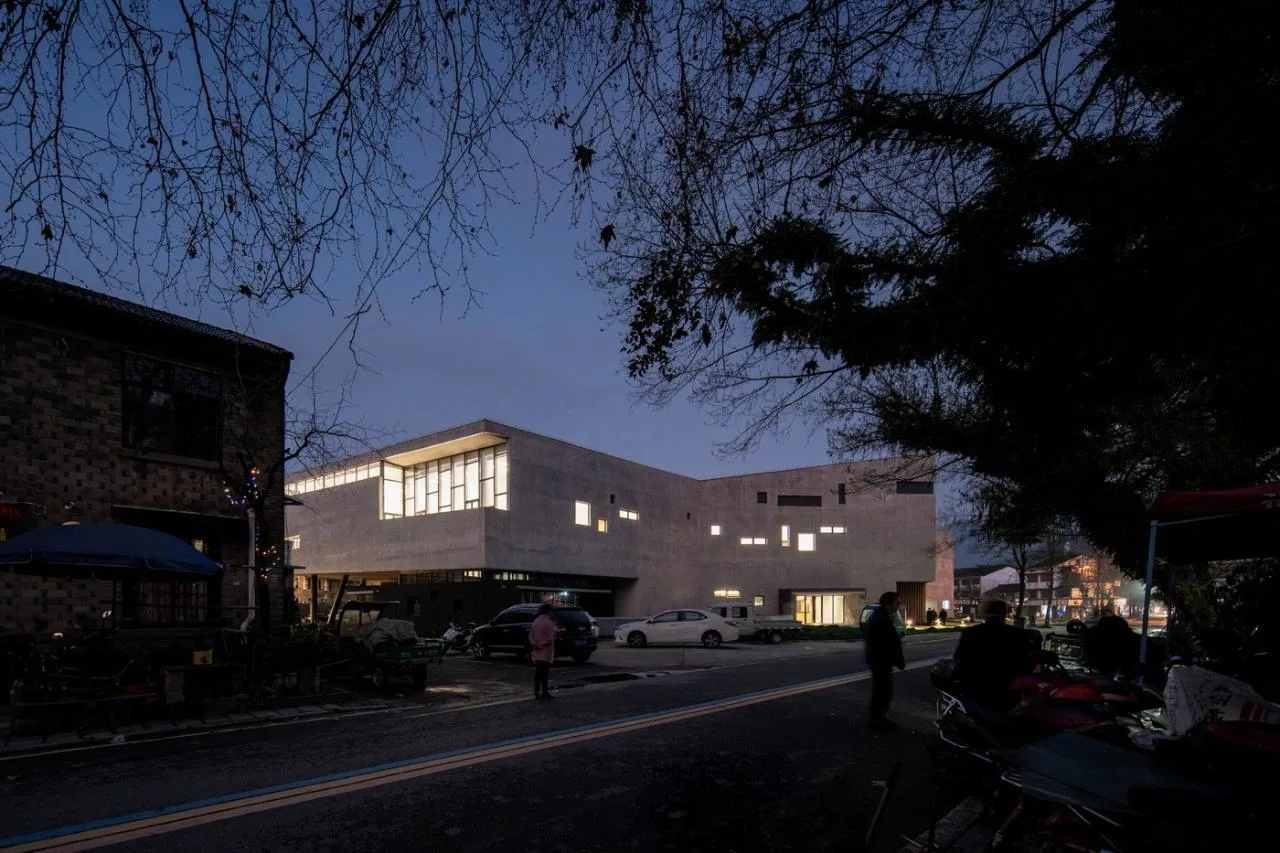
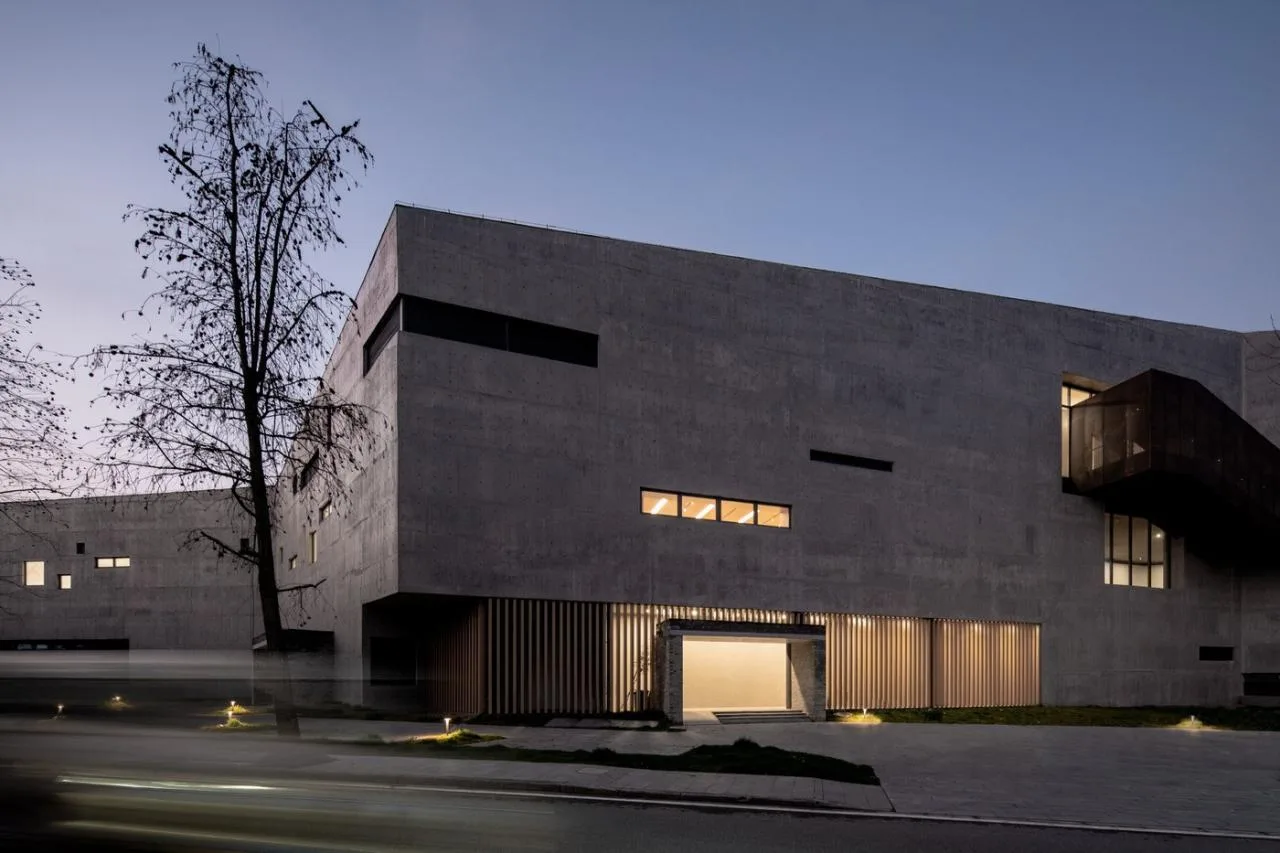
△ Night view of the Art Center
Ground-Level Commercial Boxes
The first floor primarily accommodates commercial spaces with small, staggered boxes that reflect the scale, form, and materials of the ancient town. To extend the material palette of traditional houses, blue bricks, small blue tiles, and weather-resistant steel plates are used, softening the coldness of the large concrete above and adding warmth and color at a human scale.
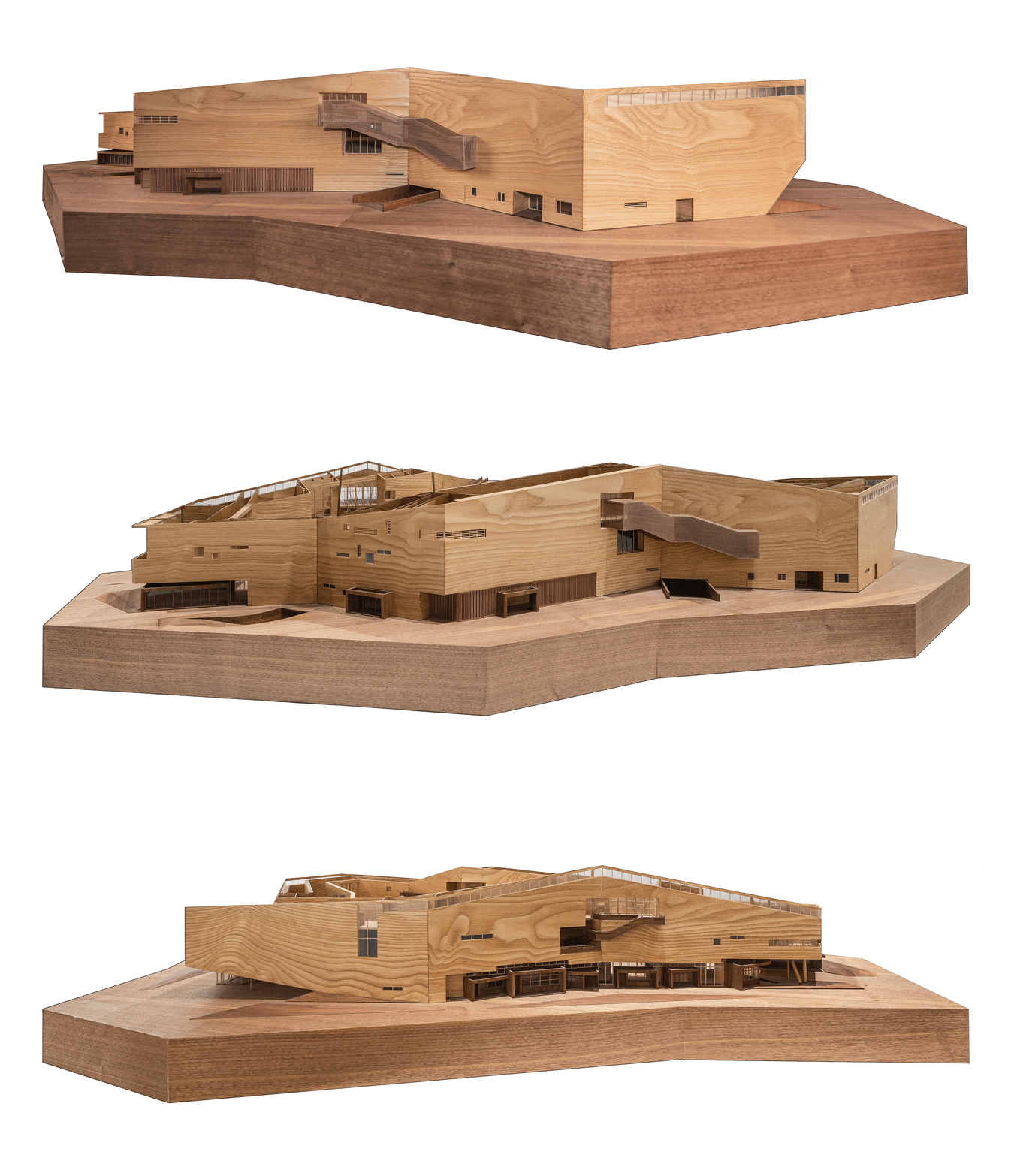
△ Facade model
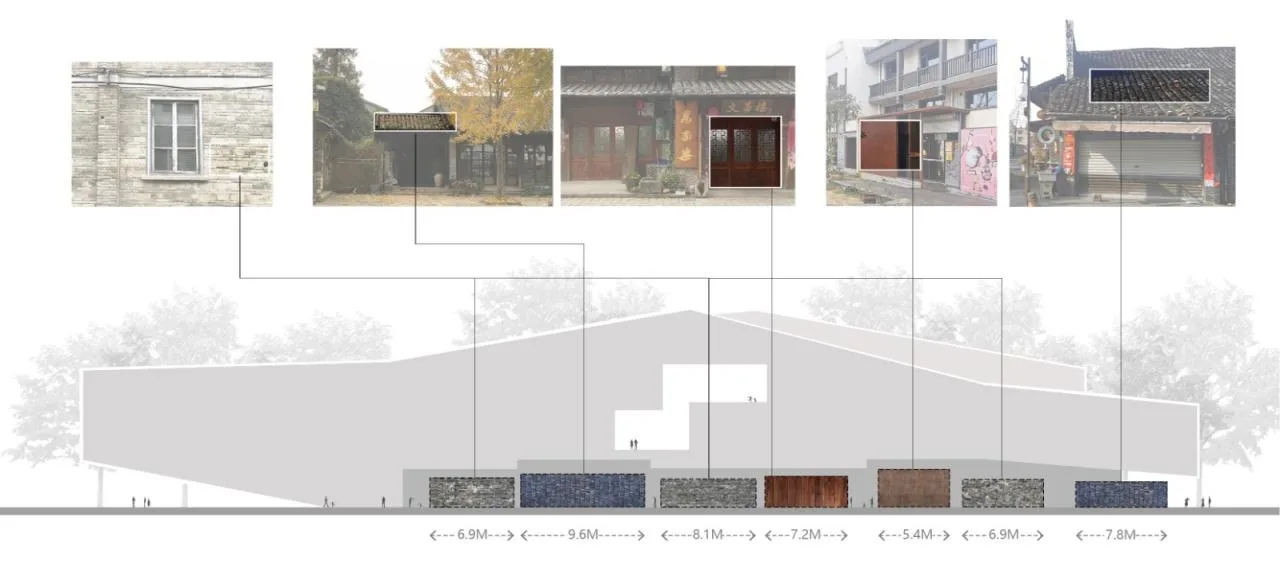
Material restructuring analysis for the first-floor commercial boxes
By extracting the original village textures from the surroundings, the small-scale commercial volumes and thoughtfully designed paving continue the site’s spatial memory. The ground paving employs bricks and tiles that echo the facade materials, enhancing the site’s sense of place.
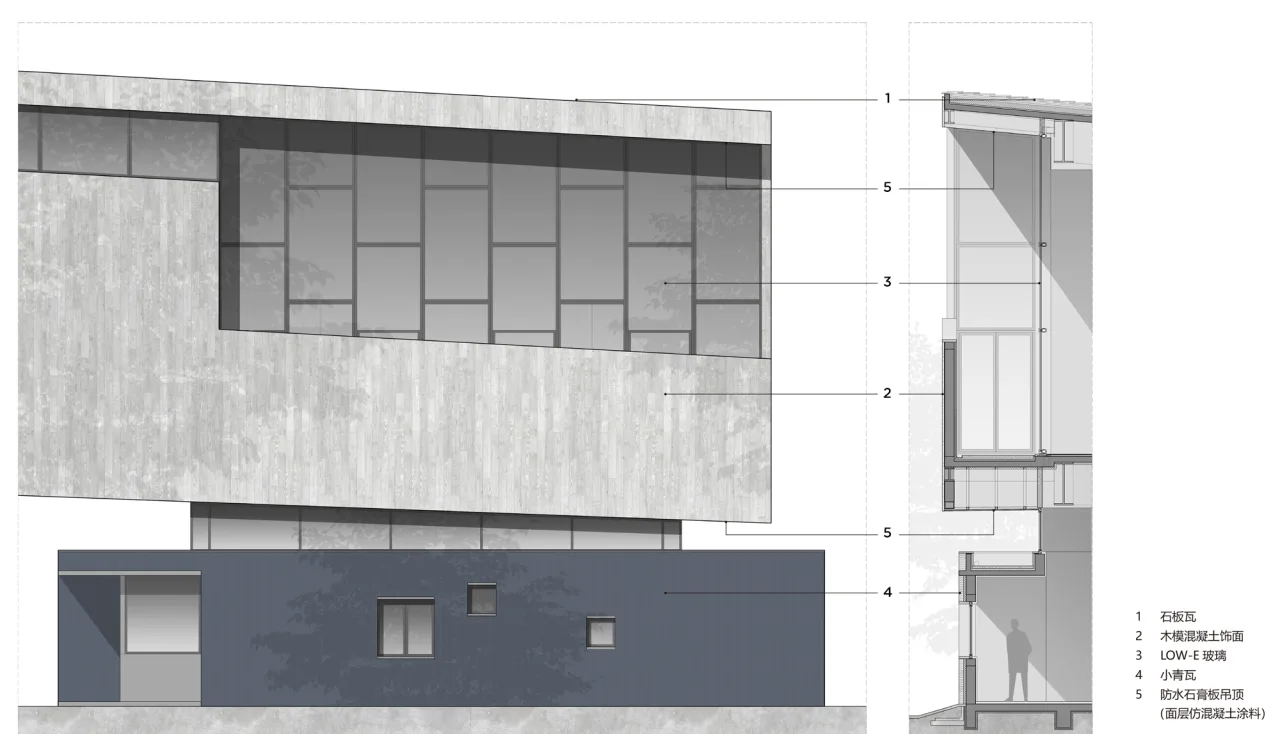
△ Sample wall of small blue tile commercial box
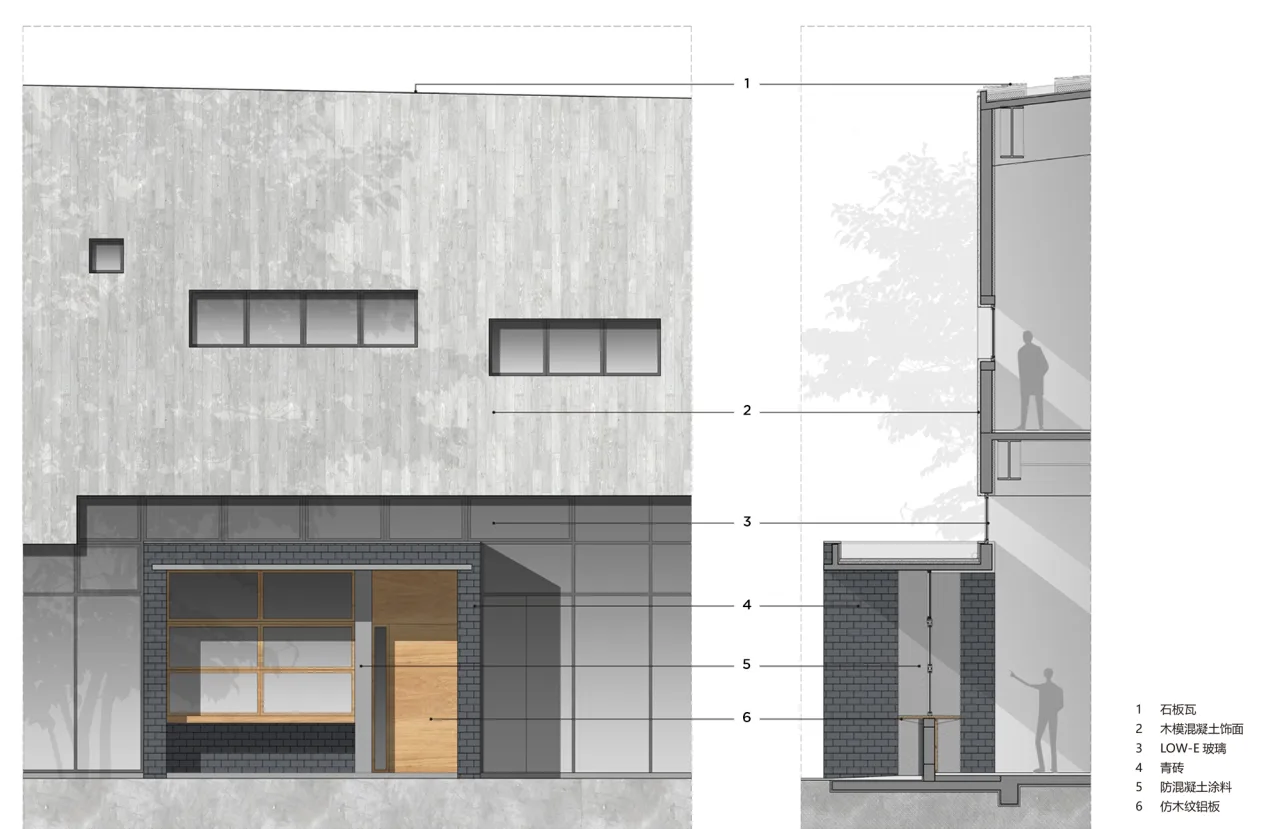
△ Large sample of green brick commercial box walls
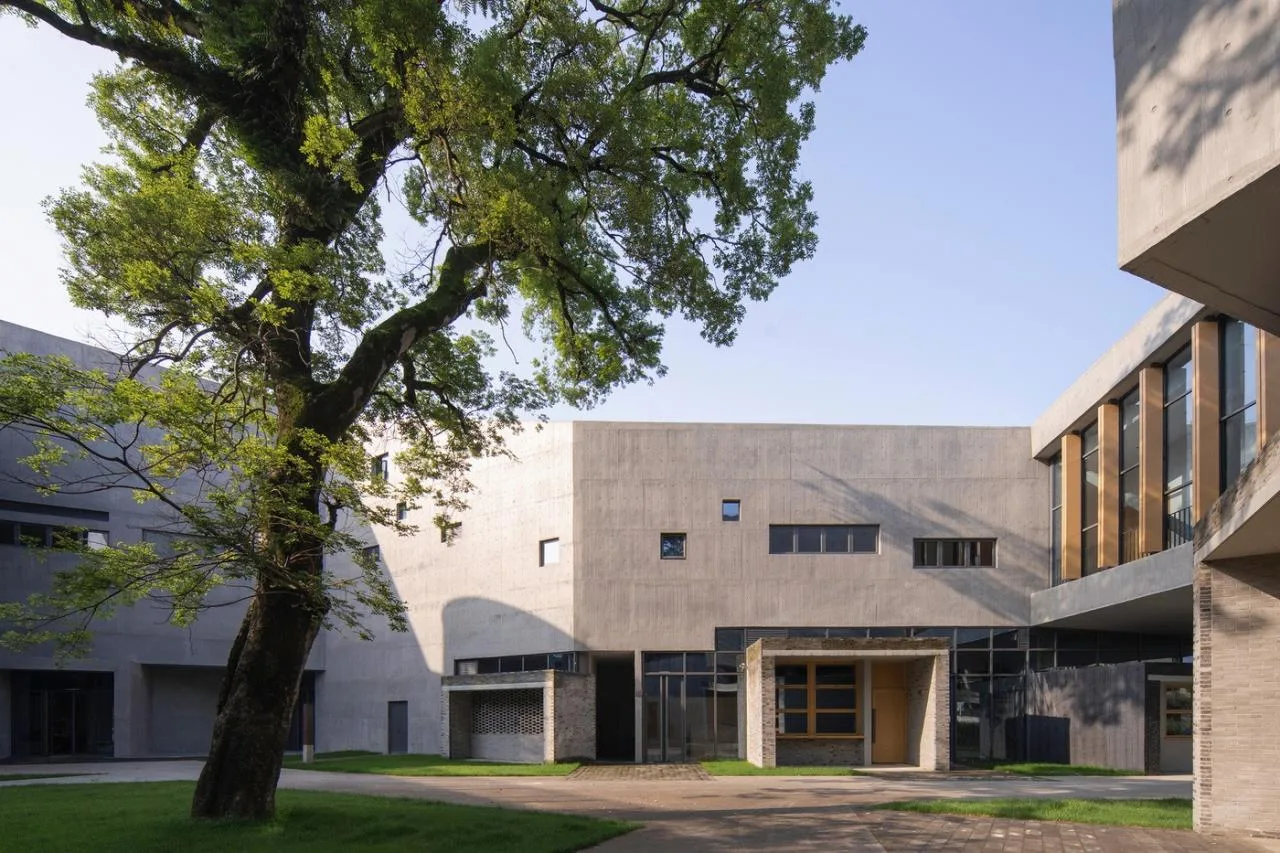
△ Commercial boxes combining multiple materials
Metal Grilles
Vertical elements, created by wood-grain aluminum panels paired with wood-form concrete, balance building strength with warmth and friendliness, generating rich light and shadow effects inside.
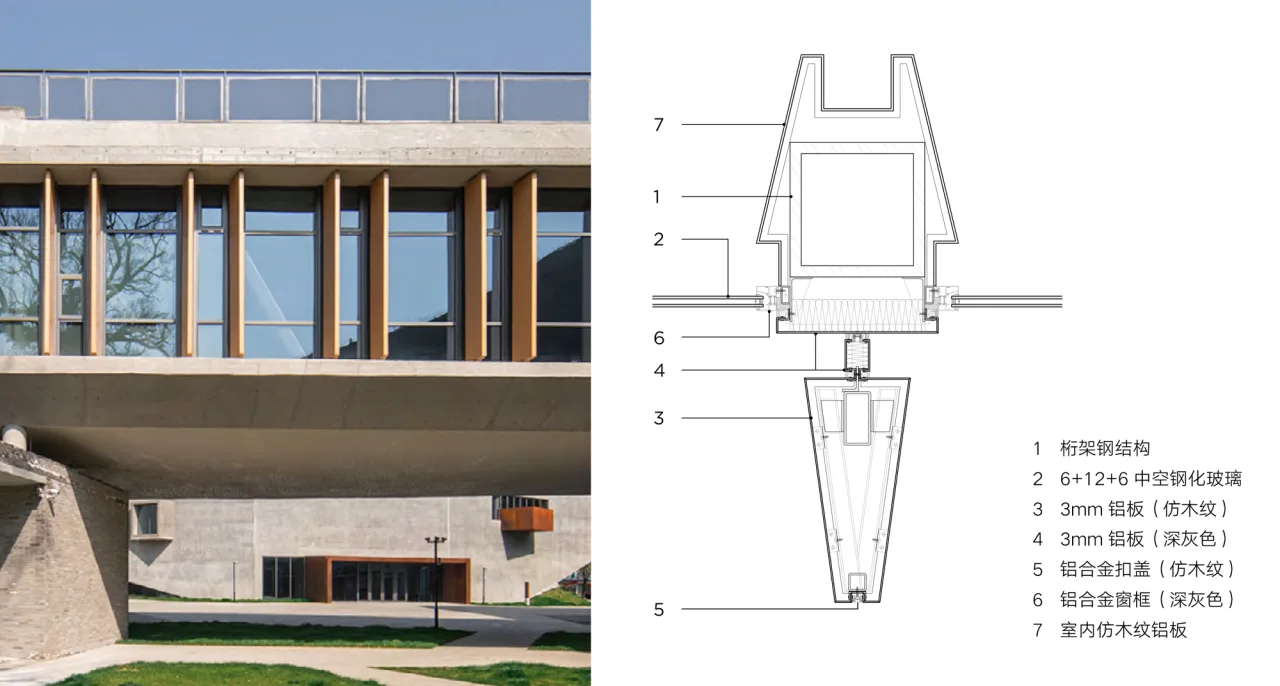
△ Detailed drawing of coffee shop corridor grille nodes
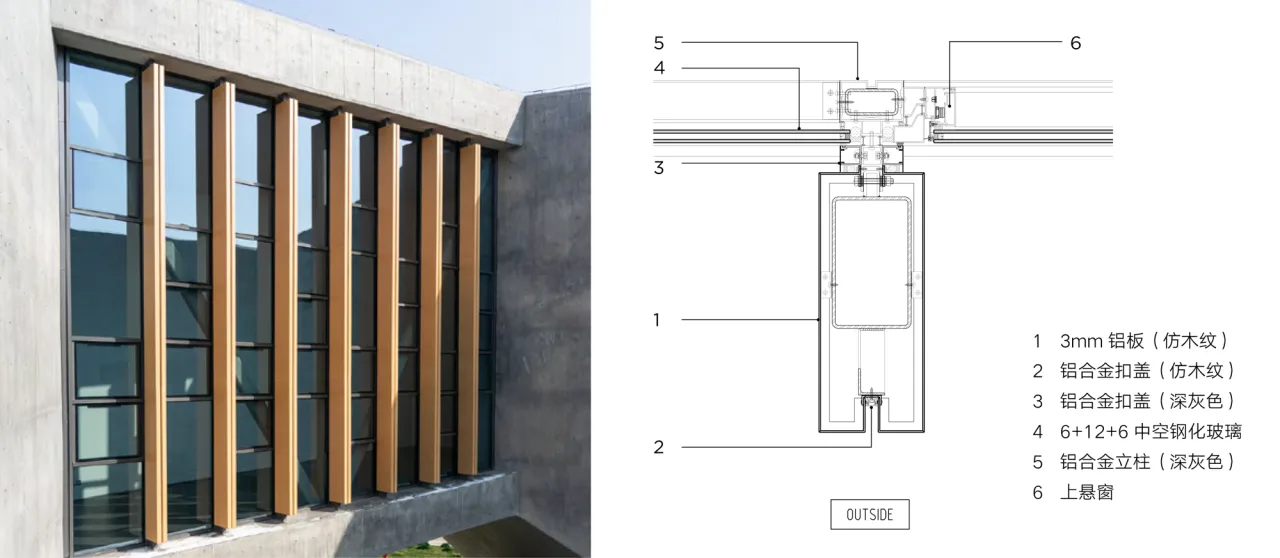
△ Detailed drawing of truss grid nodes
Slate Tile Roof
The roof, mimicking the undulating mountain terrain, acts as a fifth facade and forms a key part of the exhibition experience. Considering drainage, visual aesthetics, and cost for the sloped roof, slate tiles were selected for their color and texture, blending seamlessly with the ancient town environment. Tiles in varying shades are laid alternately, creating a continuous, detailed roof surface.
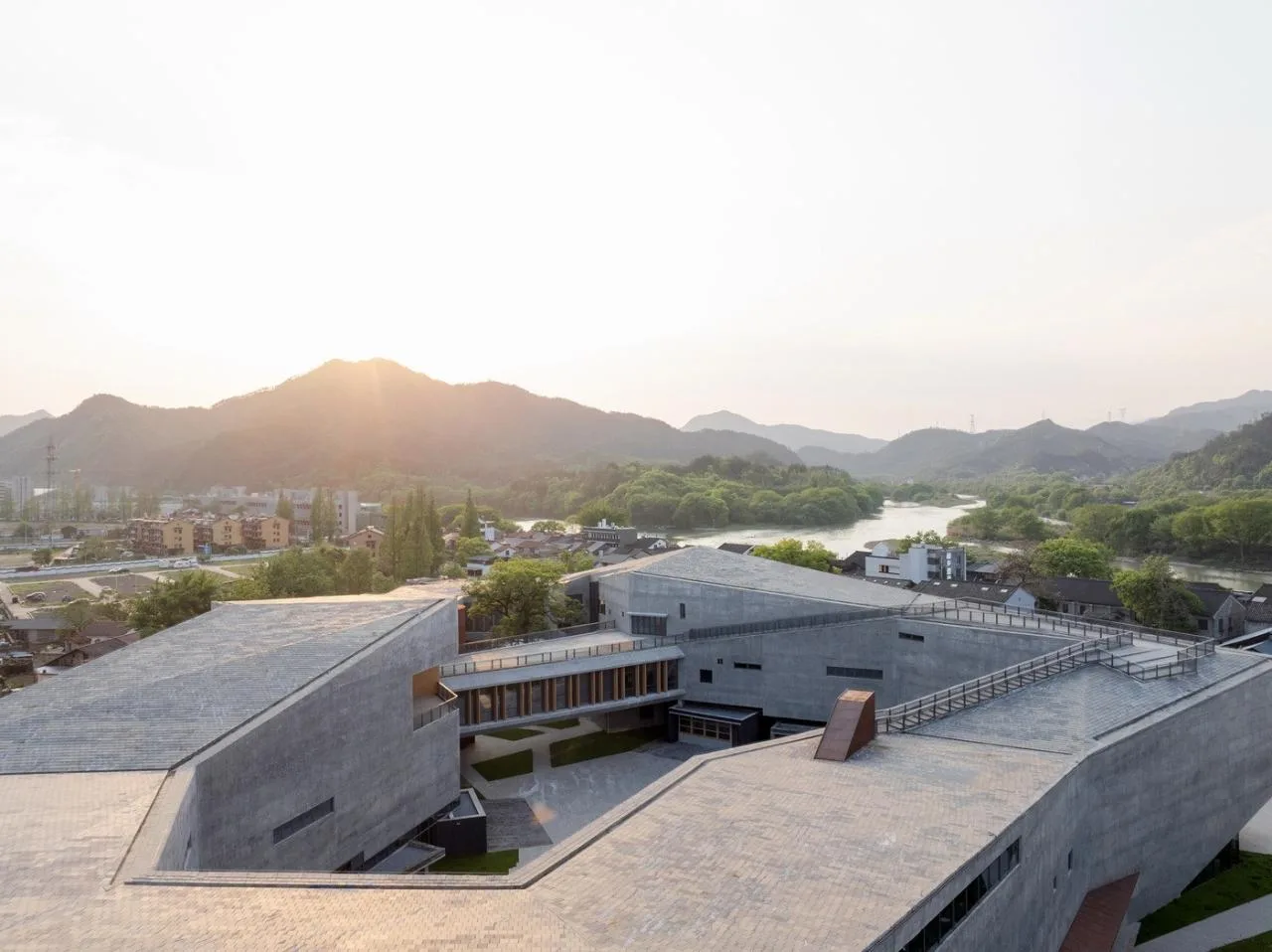
The relationship between roofs and distant mountains
06 An Art Center Designed for Small Town Life
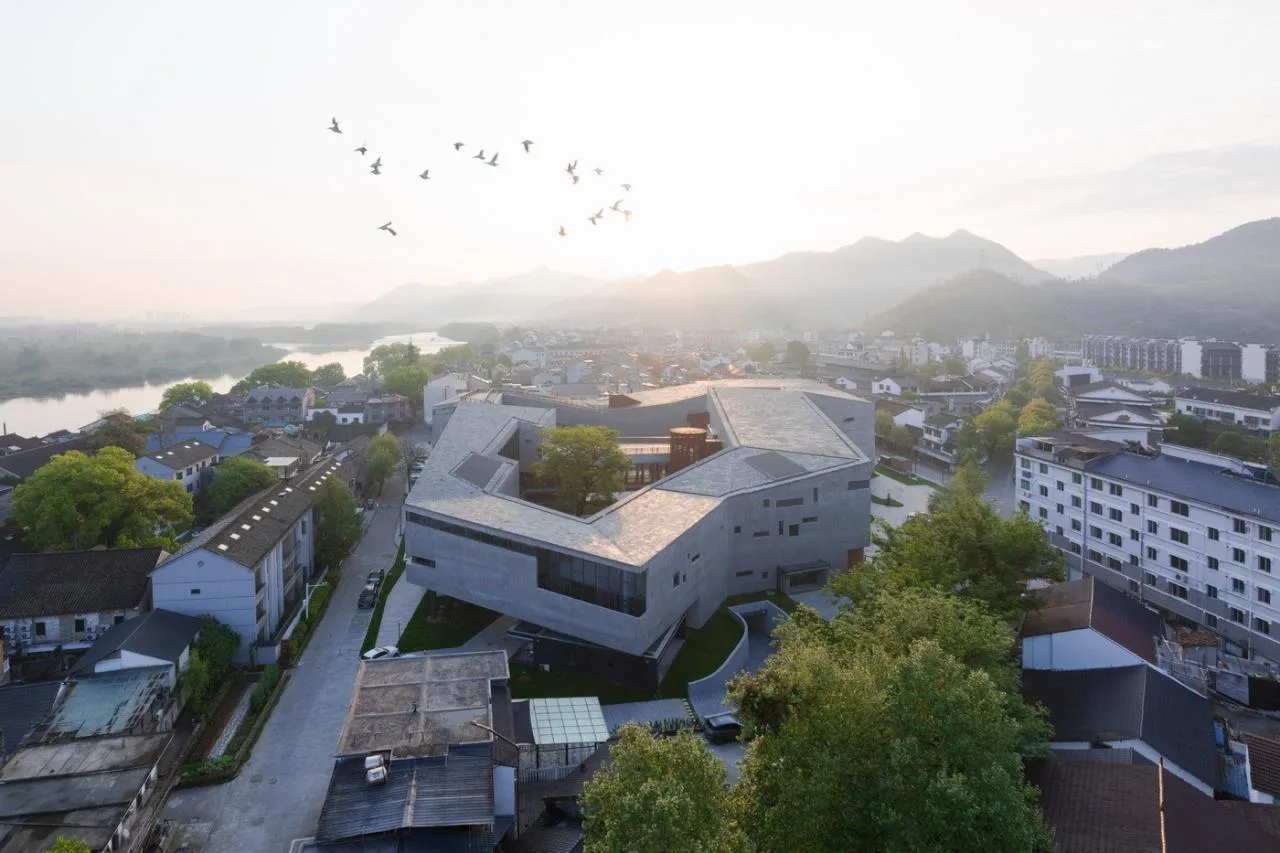
△ Aerial view of the Art Center
Small towns thrive on lively, authentic daily life. Rather than creating an isolated art center, the Guyan Painting Village Art Center integrates with town activities, transforming traditional enclosed spaces into organic city aggregates through daily life interventions.
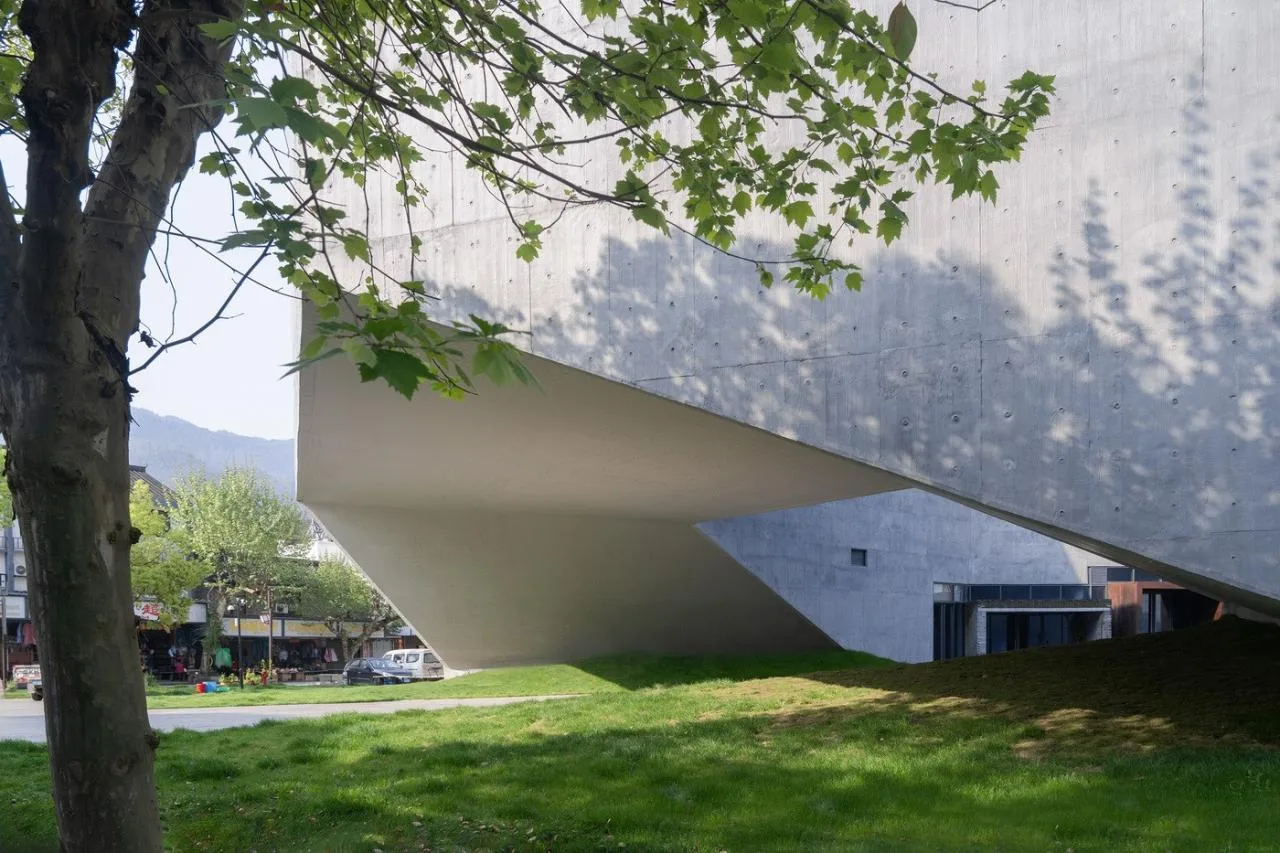
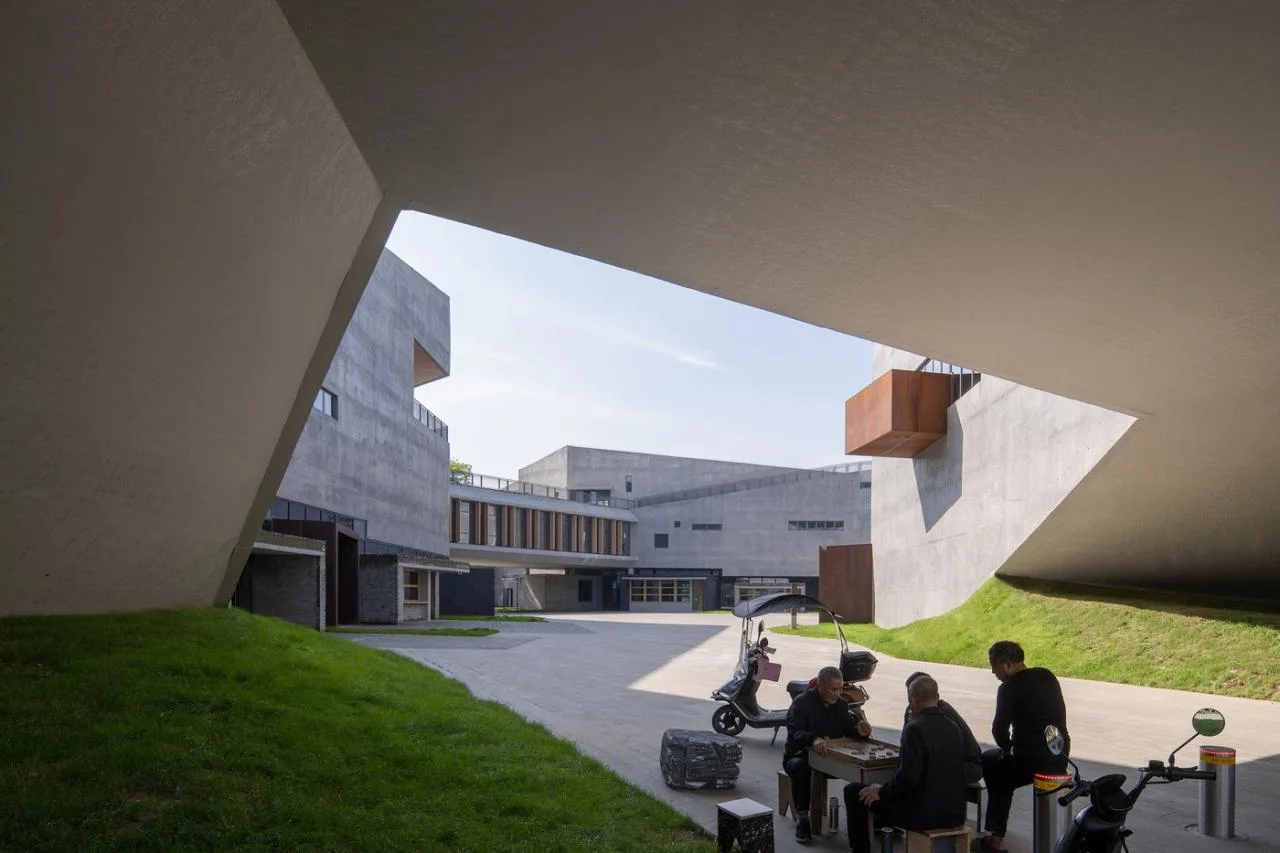
Residential activity space beneath the elevated entrance
Rather than a traditional art center, this project acts as a community hub for the small town, hosting commerce, culture, education, and training. This multi-dimensional approach unlocks new values and empowers local life.
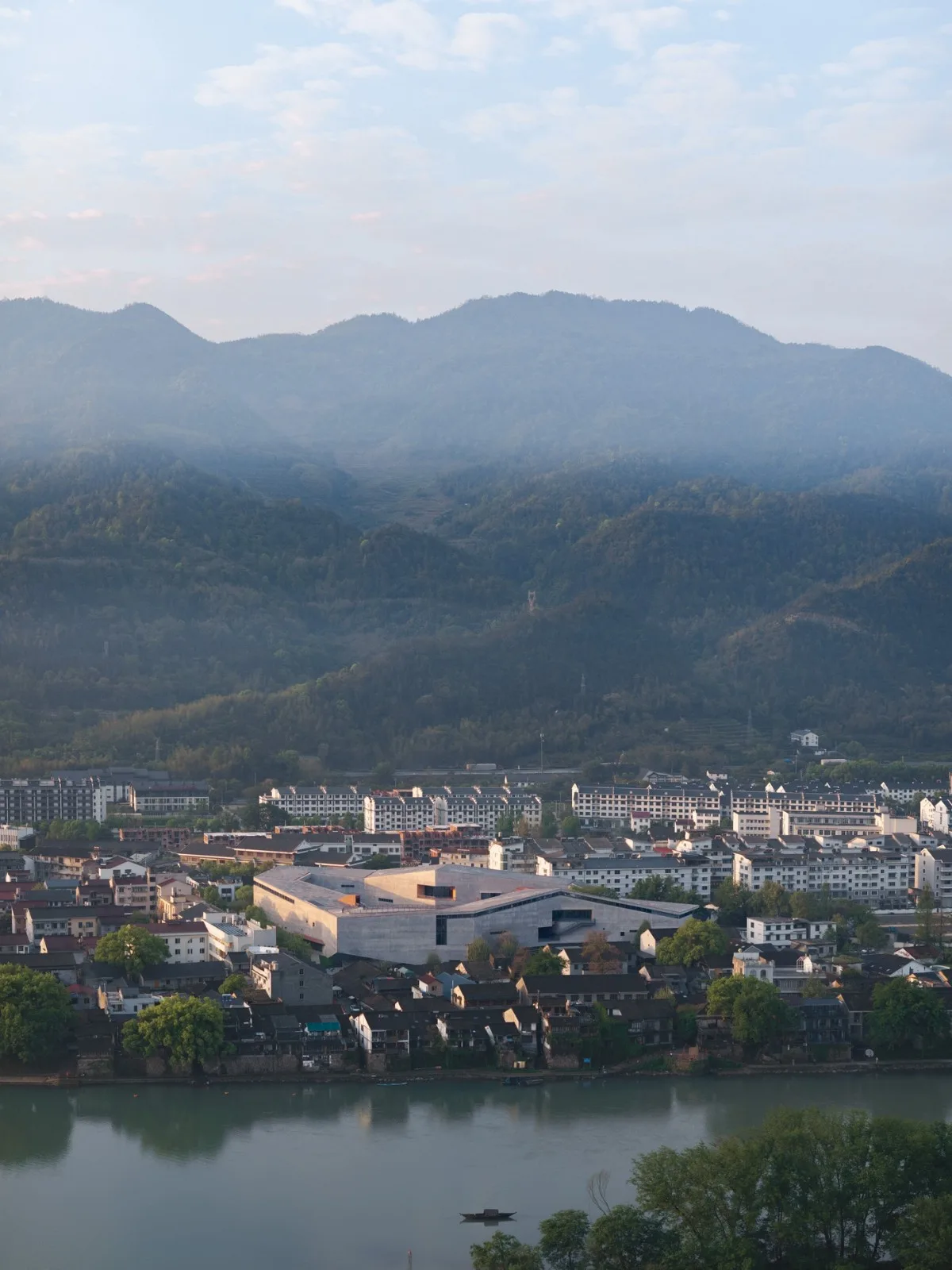
△ Overlooking the Art Center
Project Drawings
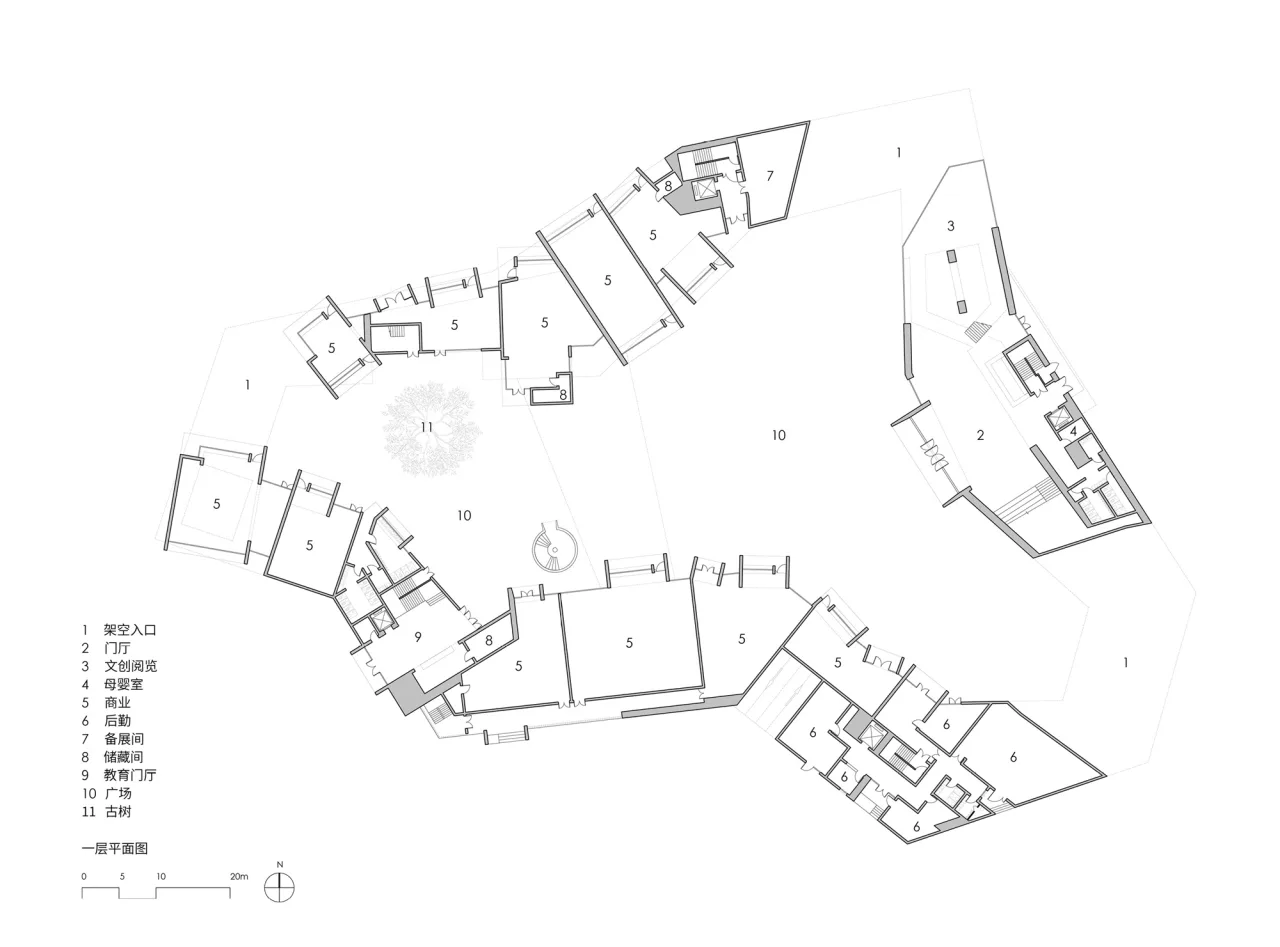
△ First floor plan
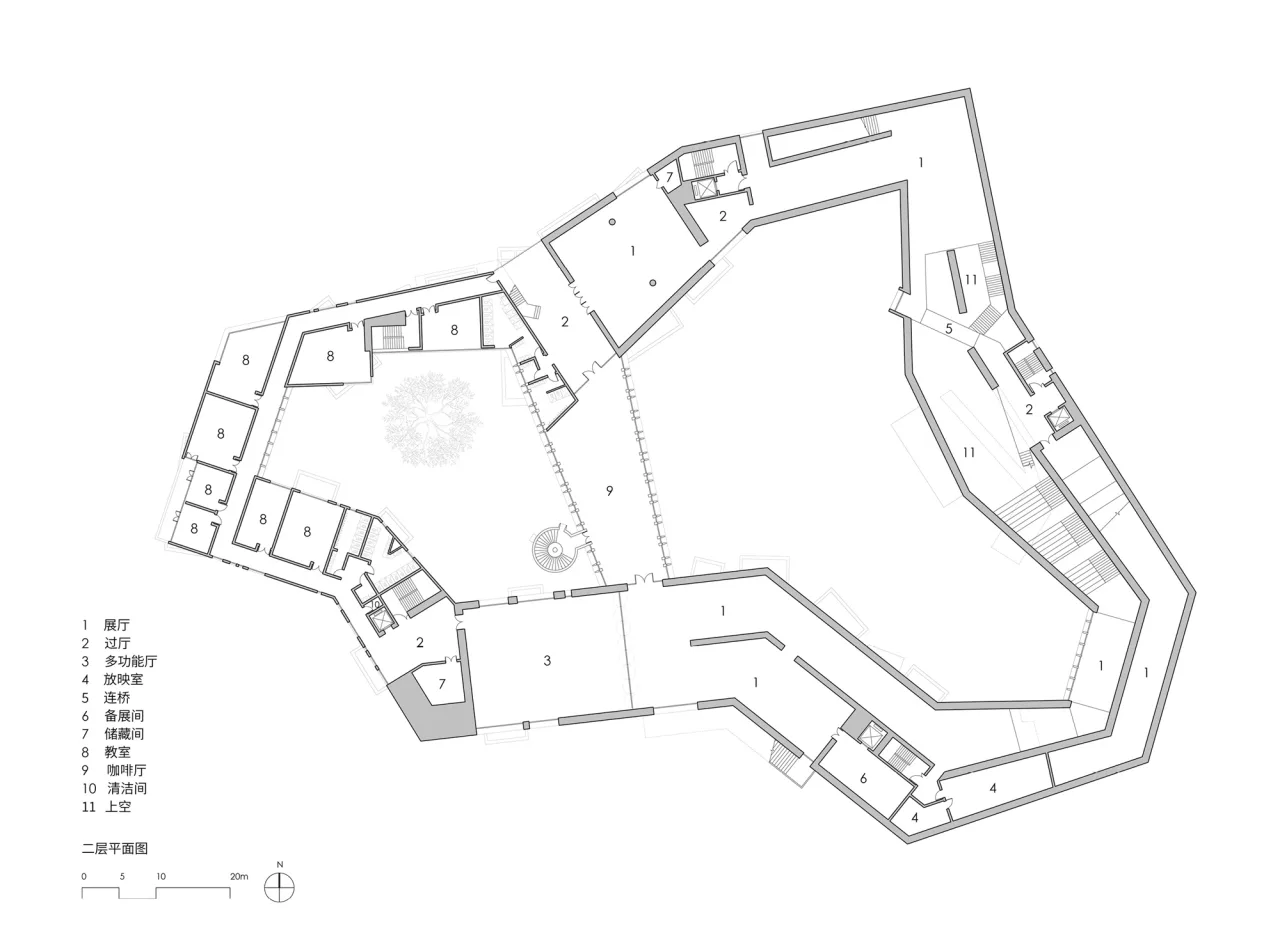
△ Second floor plan
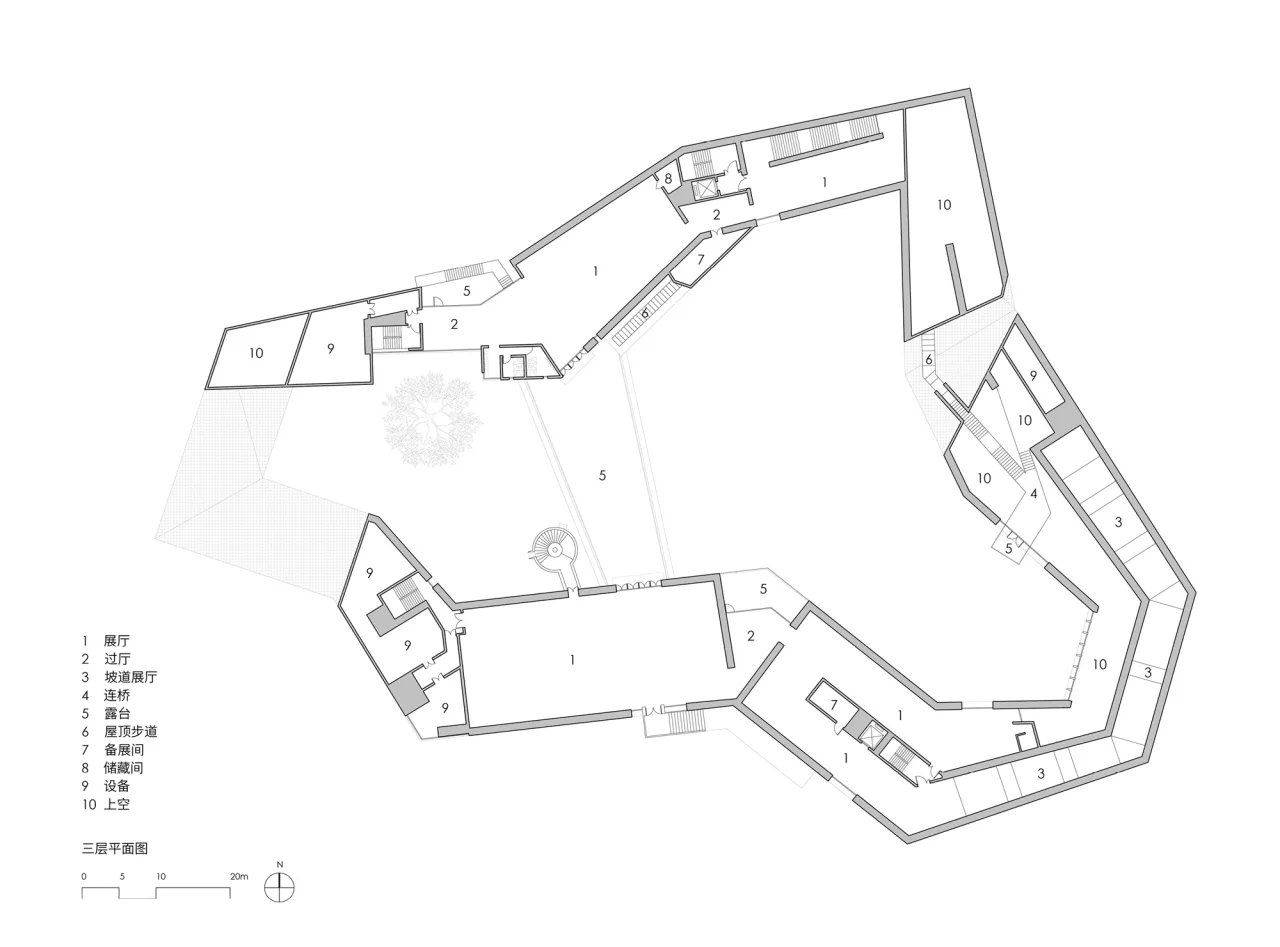
△ Third floor plan
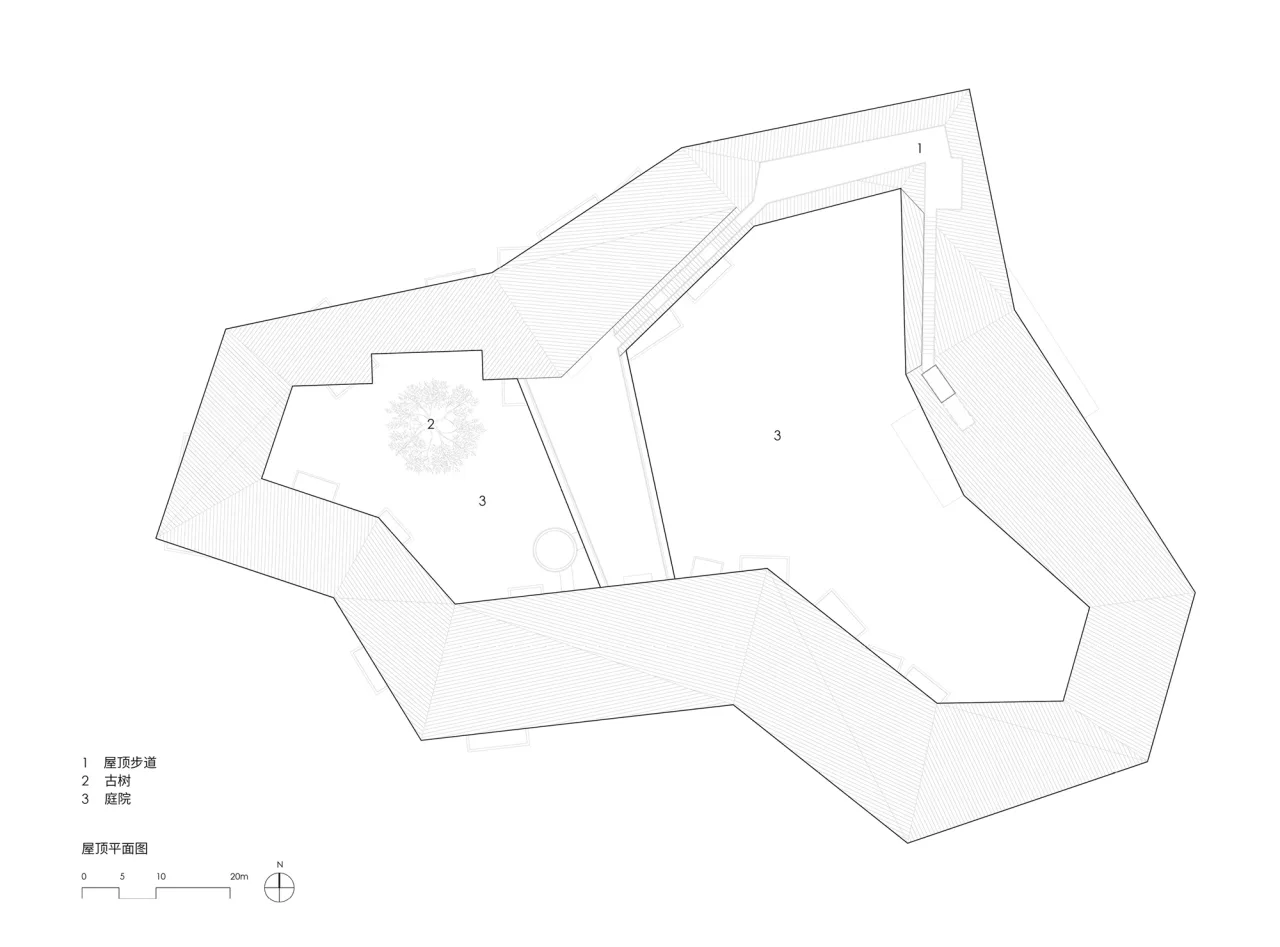
△ Roof plan
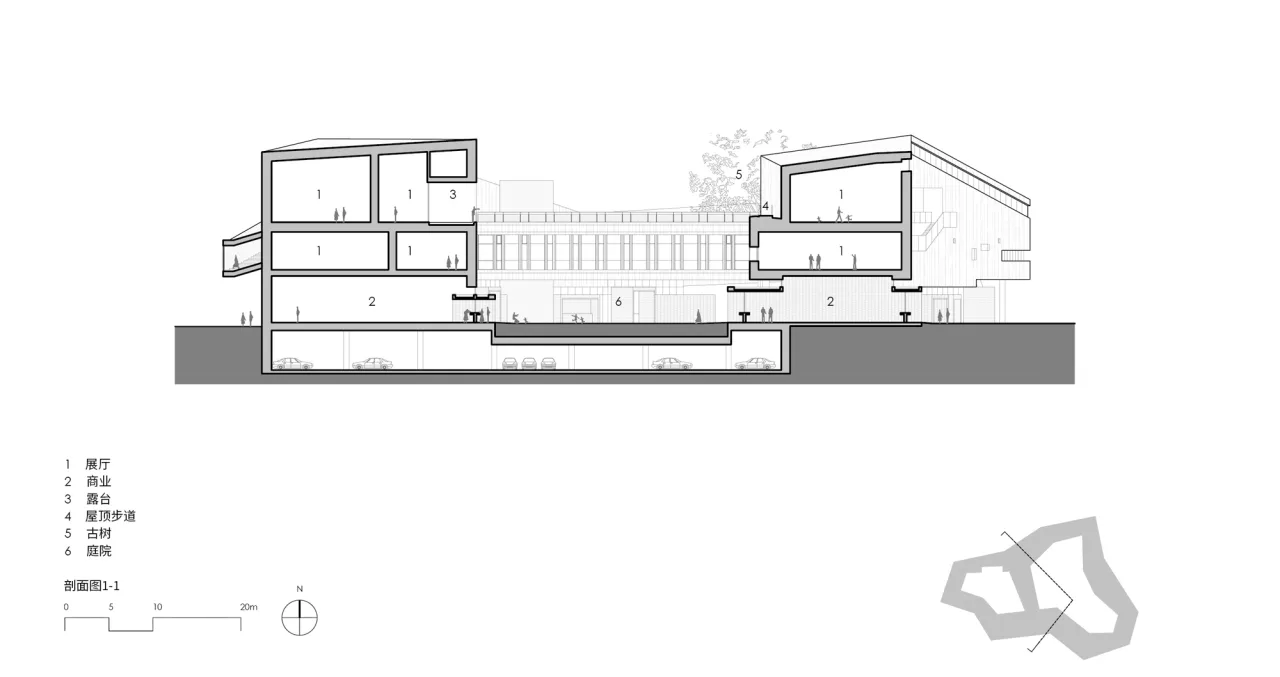
△ Section diagram
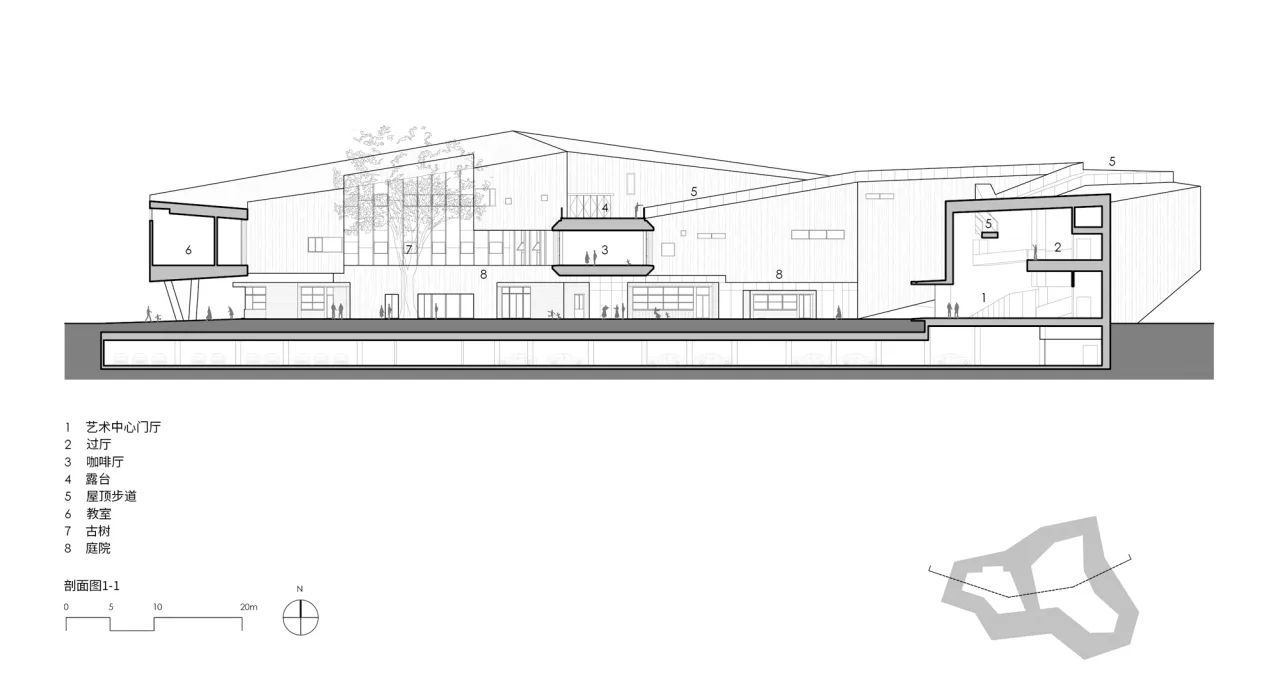
△ Section diagram
Project Information
Project Name: Lishui Guyan Painting Village Art Center
Location: Guyan Painting Village Scenic Area, Lishui City, Zhejiang Province
Architectural Design: Line+ Architectural Firm
Interior Design: Line+ Architectural Firm
Landscape Design: Line+ Architectural Firm
Lead Architect/Project Creator: Meng Fanhao
Project Architect: Li Xinguang
Design Team: Hao Jun, He Yaliang, Xu Hao, Wan Yuncheng (Architecture); Zhu Jun, Jin Yuting, Yang Li, Liang Guoqing, Zhang Sisi, Lv Siqi, Deng Hao, Ge Zhenliang, Qiu Limin, Chen Wen (Interiors); Li Shangyang, Jin Jianbo, Rao Feier, Zhang Wenjie, Li Jun (Landscape); Liu Xinhui (VI System)
EPC Manager: Ding Yibo
Owner: Lishui Liandu District Tourism Investment Development Co., Ltd.
Collaborators: Xicheng Engineering Design Group Co., Ltd.
Curtain Wall Consultant: Shanghai Yidu Curtain Wall Construction Consulting Co., Ltd.
Lighting Design: Zhang Xin Studio, School of Architecture, Tsinghua University
Building Area: 13,738.96 m² above ground, 6,463.65 m² underground
Construction Period: October 2021 – March 2024
Structure: Steel
Materials: Concrete, green bricks, small green tiles, slate tiles, weather-resistant steel plates, wood-grain aluminum panels
Photography: Su Shengliang, Dong Architectural Imaging line+














Must log in before commenting!
Sign Up