
Protection is essential for sustainable development, and development is the true path to achieving lasting protection. In rural areas, the most vital asset is the housing stock. Revitalizing existing buildings through renovation and renewal forms the cornerstone of rural revitalization. Over the course of seven years, with just fifteen guest rooms, we have witnessed the remarkable rebirth of a century-old village. – Meng Fanhao
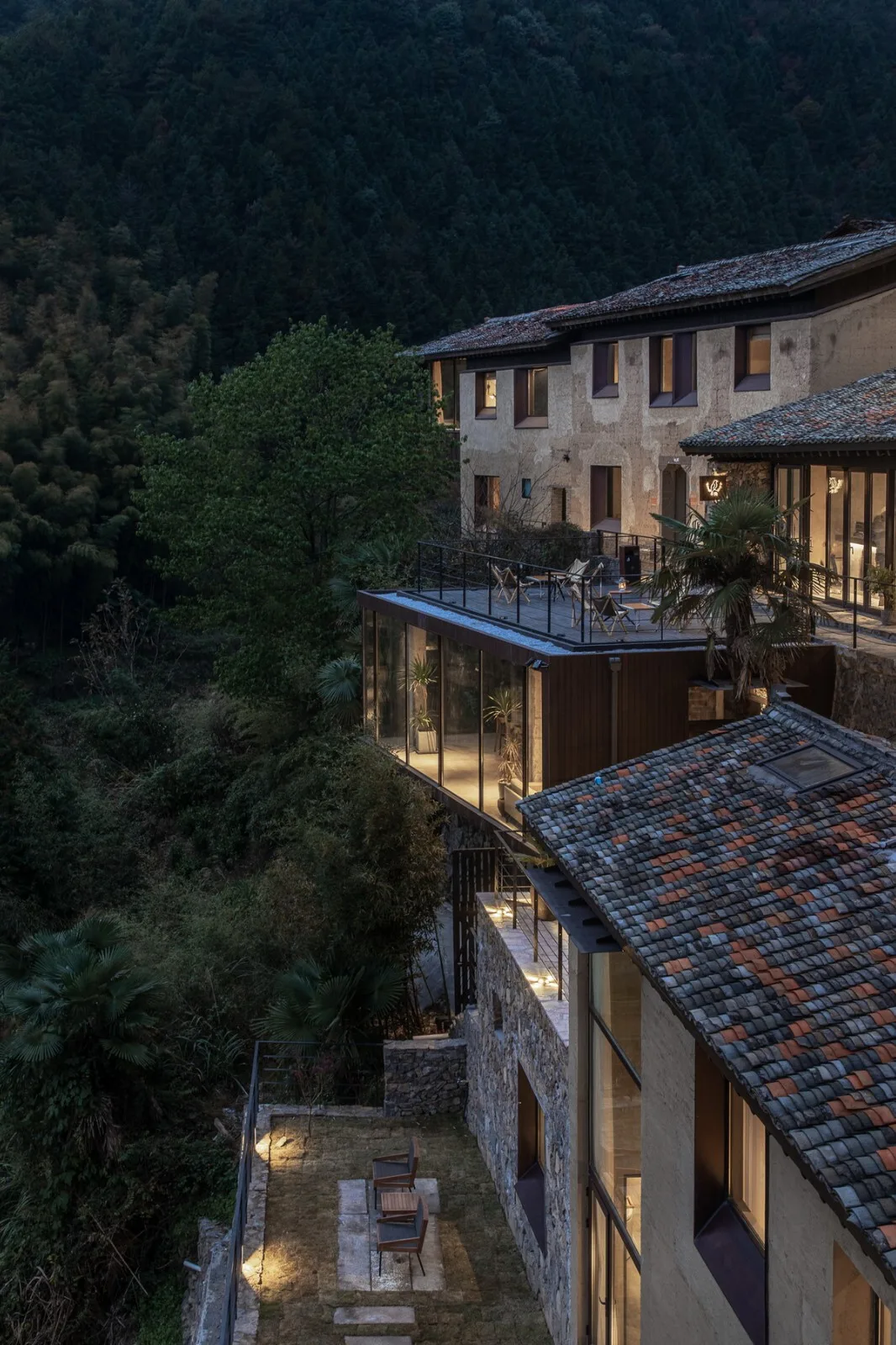
In 2016, Songyang was designated by the Ministry of Finance, the National Cultural Heritage Administration, and the China Cultural Heritage Protection Foundation as the sole pilot county tasked with implementing the “Save Old Houses Action” on a county-wide scale. That same year, the Songyang County government actively promoted rural cultural revival and the preservation and renewal of ancient villages. Chenjiapu Village was included in the third batch of China’s official traditional village list. At that time, this 640-year-old village was home to only a dozen elderly residents and nearly a hundred rammed earth houses.
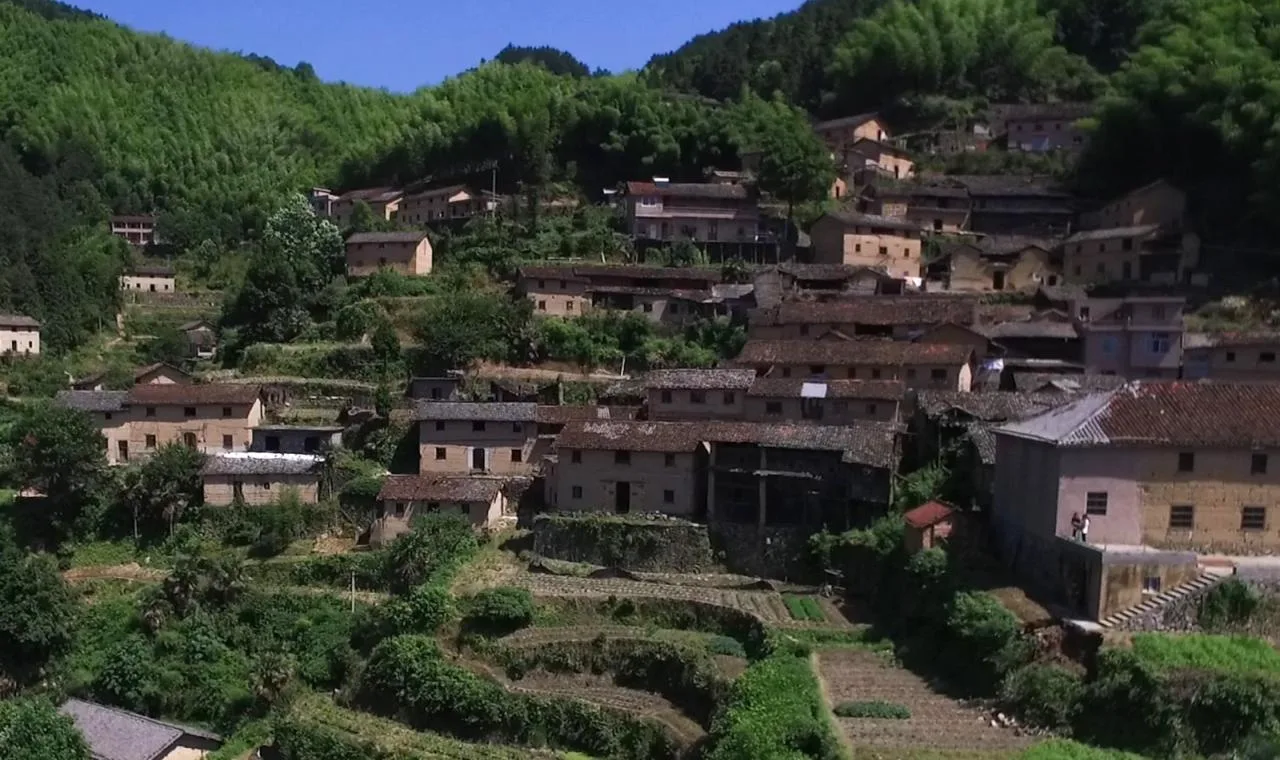
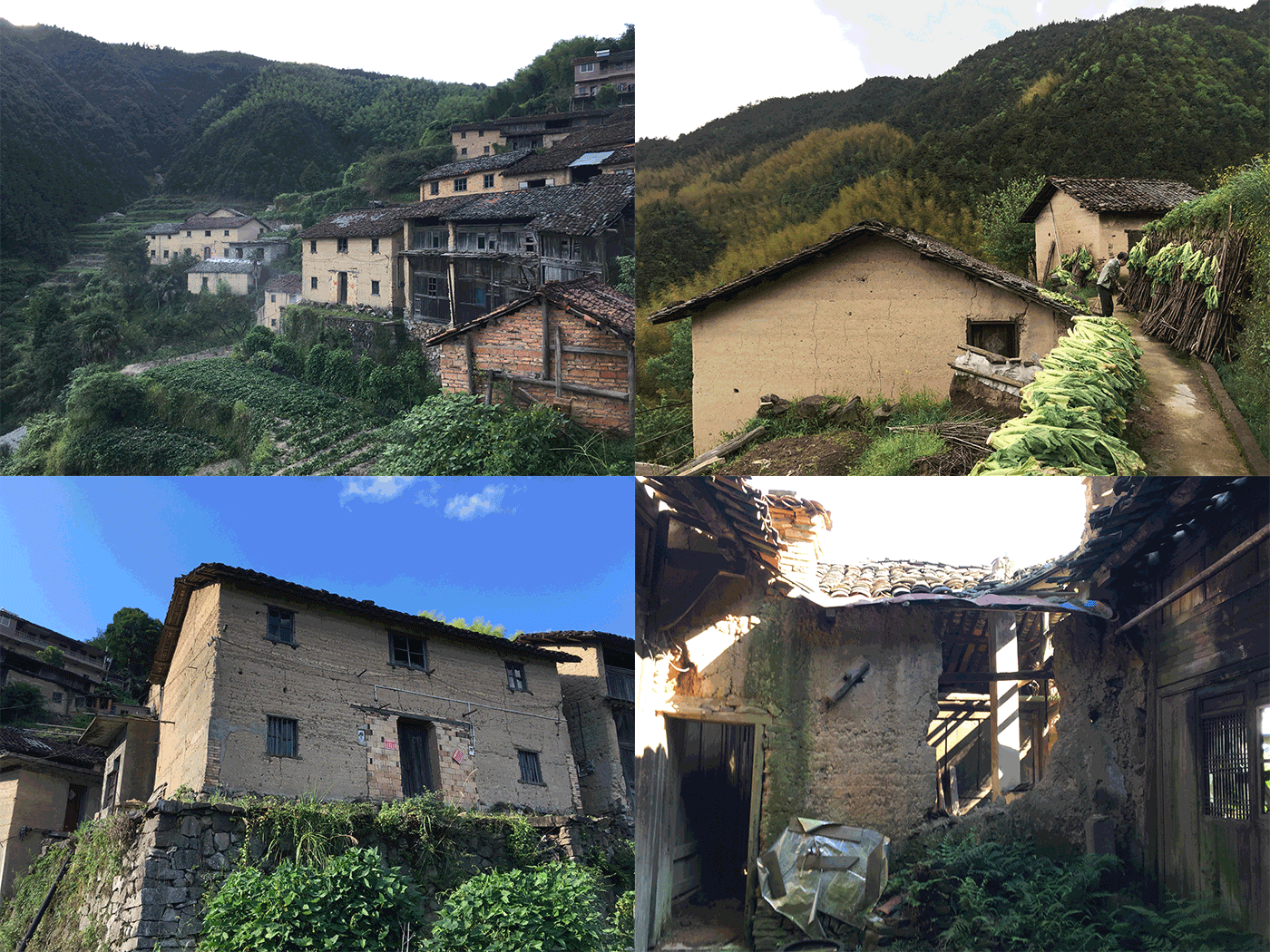
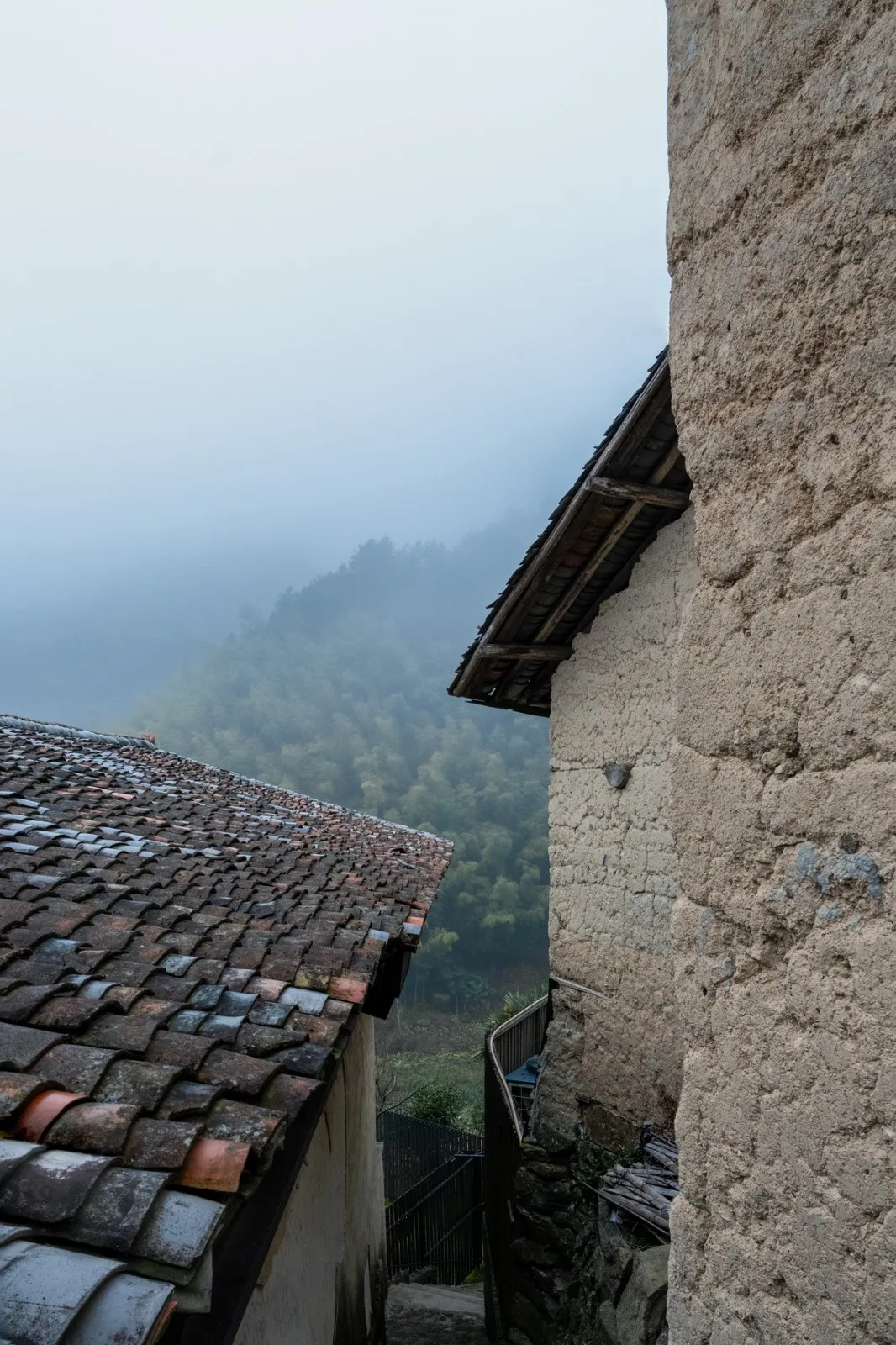
Original appearance of Chenjiapu Village
Invited by Xia Yuqing, founder of “Dormitory,” Meng Fanhao visited Chenjiapu Village. He was captivated by the village’s mysterious beauty but deeply concerned about its fragile state. United by a shared vision to save this declining mountain village, they embarked on a seven-year collaboration and dedicated effort.
Chenjiapu Village clings to a steep cliff, surrounded on three sides by mountains and facing deep valleys, often enveloped in clouds and mist. The village’s rammed earth and wooden houses cascade down the mountainside, with terraced fields arranged in steps over a 200-meter drop, exemplifying a typical cliffside settlement in southwestern Zhejiang.
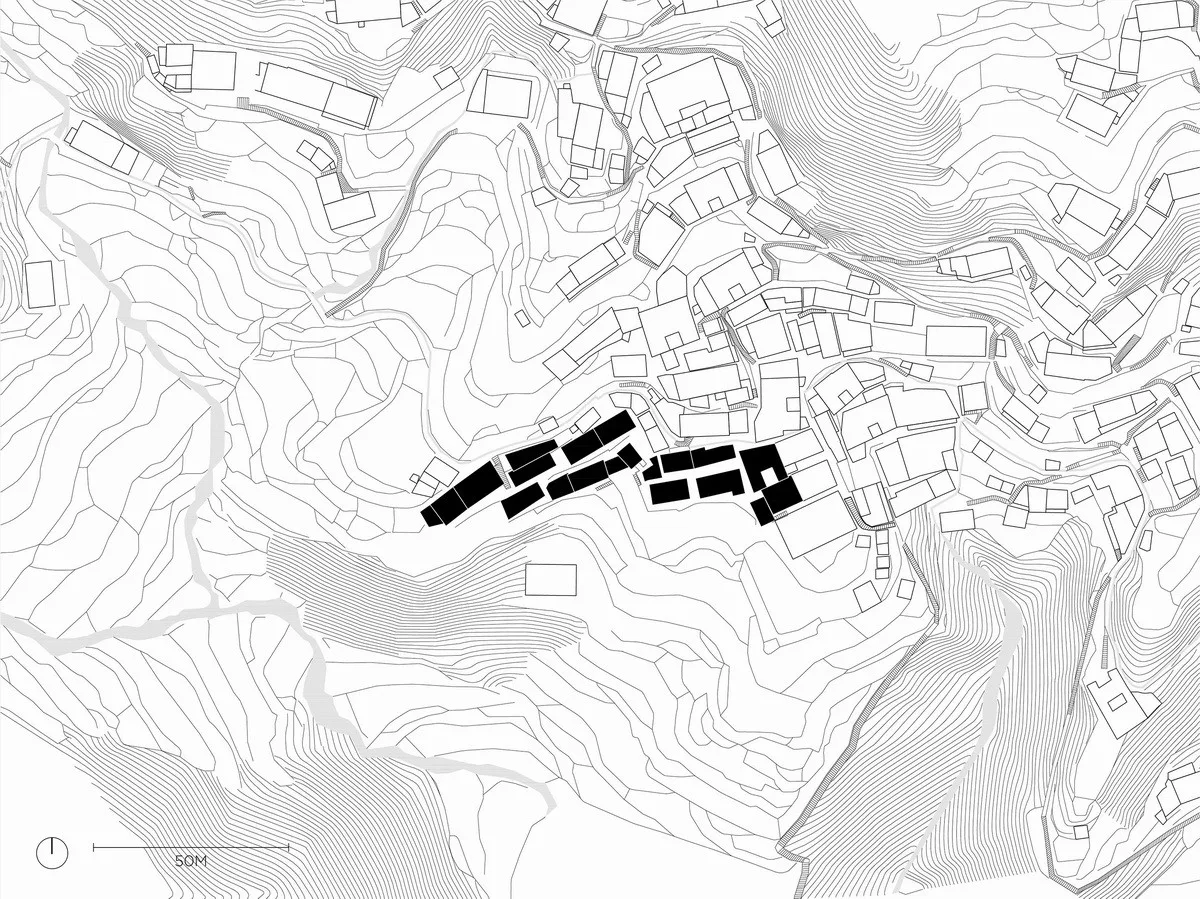
△ Location Map
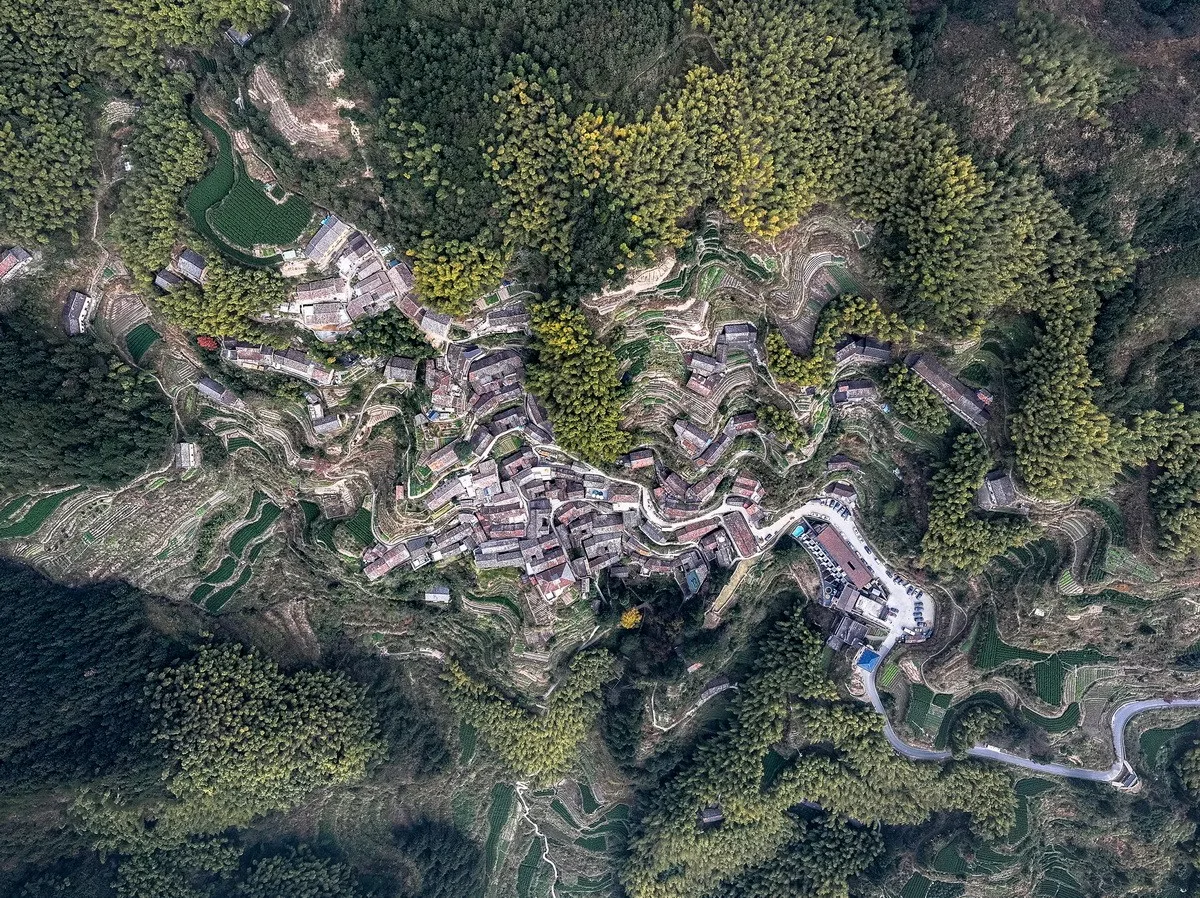
△ Texture of the renovated village
Following preliminary research and surveys, Line+ cataloged and classified local architectural elements and materials characteristic of the region—such as structures, roofs, walls, doors, windows, and detailing—creating a comprehensive local materials and construction methods reference guide. This resource now informs ongoing renovation and design efforts.
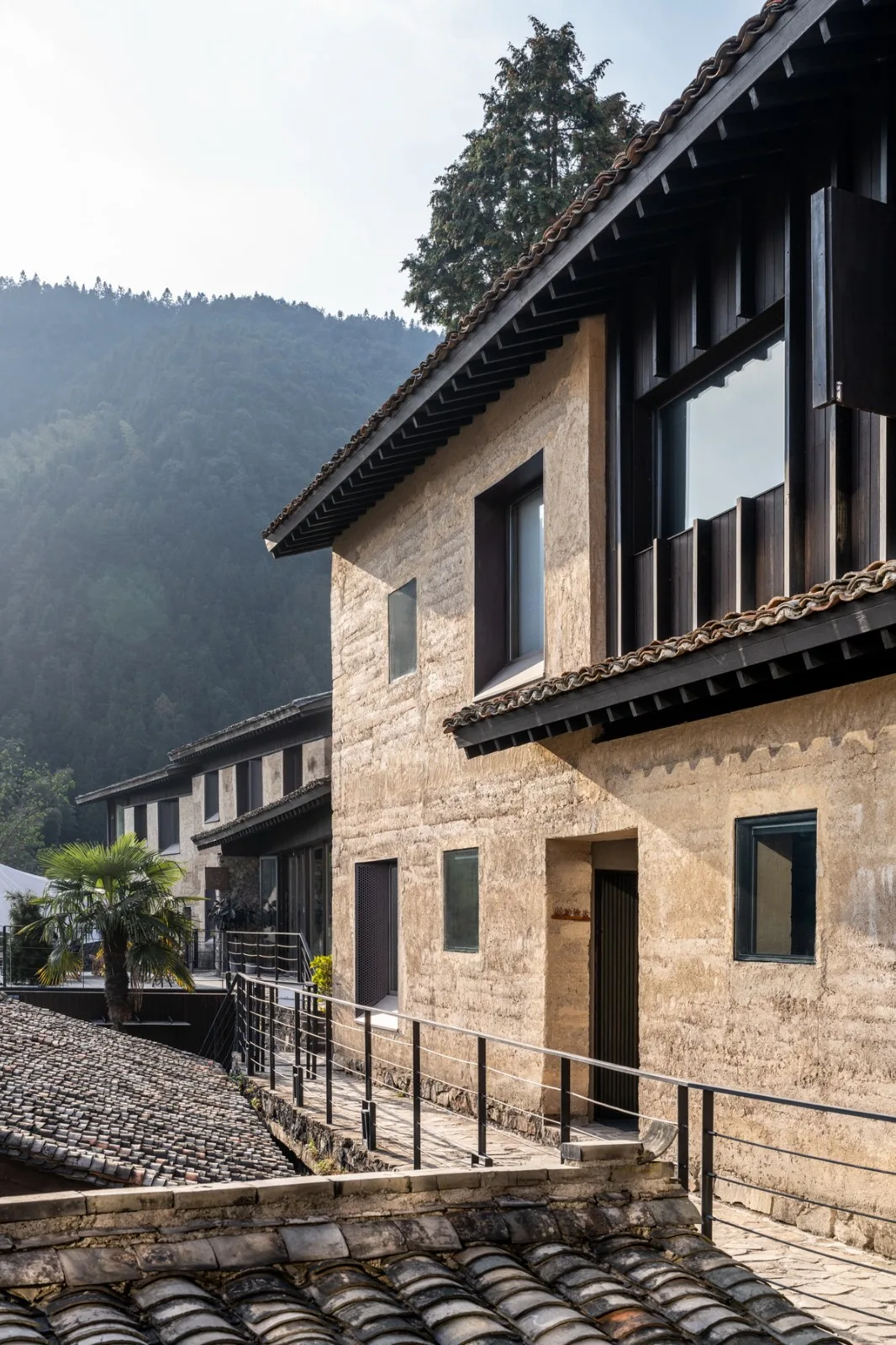
△ Appearance after renovation
In 2018, the initial renovation of two Feiyiji Phase I homestays, perched on the cliff’s southwest edge, was completed. Alongside the refurbishment of Xianfeng Bookstore and Civilian Bookstore within the village, these projects laid the foundation for Chenjiapu’s rural cultural tourism. Five years later, Feiyiji Phase II emerged with 11 guest rooms, an observation hall, cliffside café, and restaurant, signaling a full revitalization that transformed Chenjiapu Village into a new mountain tourism and vacation destination.
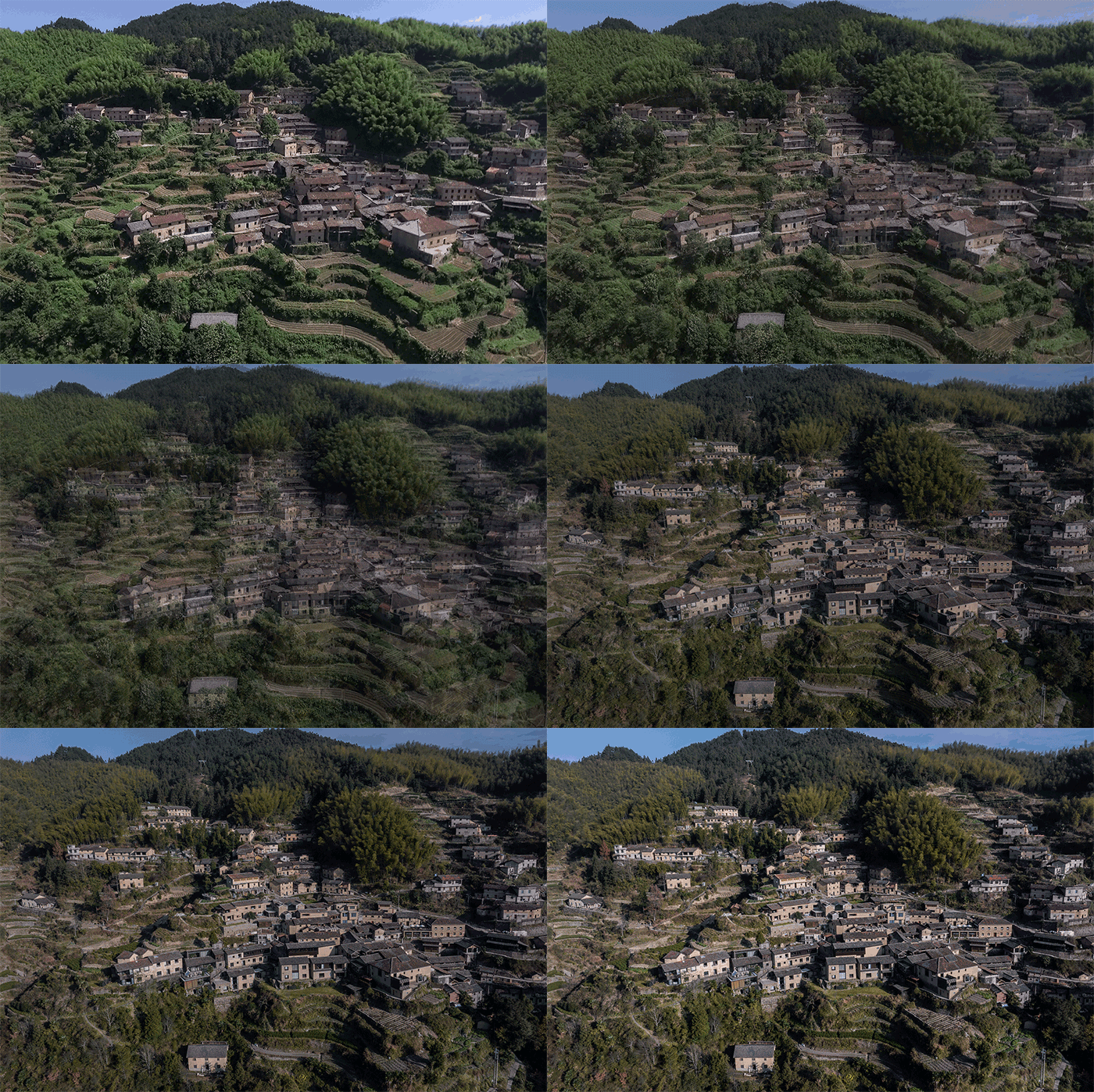
Before and after renovation comparison of Chenjiapu Village
01. Utilizing the Cliff and Shaping the Site
The master plan for Feiyiji envisioned a comprehensive homestay complex featuring accommodations, dining, and cultural experiences, spread across multiple residential buildings at the village’s southern end. The design challenge lay not only in adaptively transforming individual units but also in understanding the broader settlement and natural context.
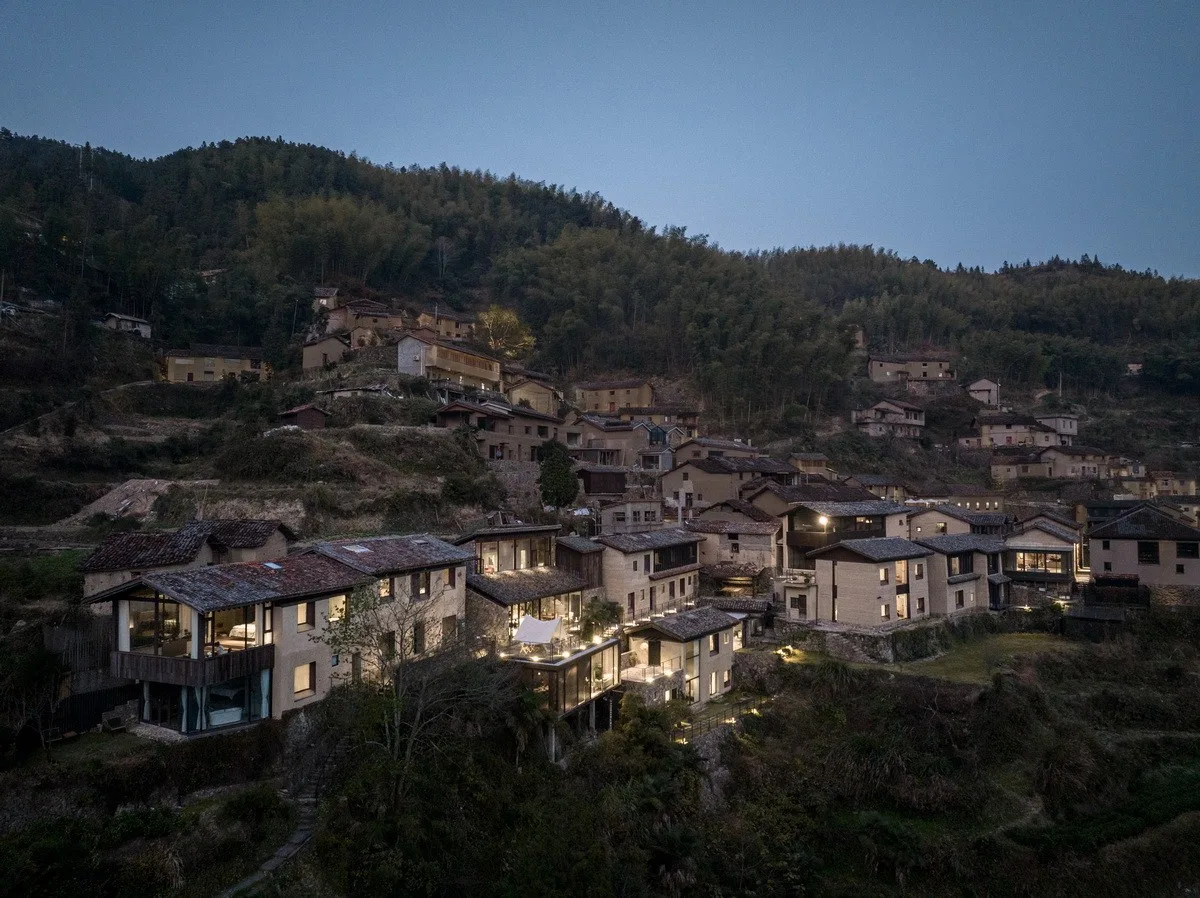
△ Upgraded Flycatcher Set
Access to the village involves navigating winding mountain roads and climbing hundreds of stone steps from the entrance. Previously, visibility into the village was limited until reaching the site’s turning point, where the space opens up dramatically, directly facing the canyon landscape, creating a “hidden journey” experience. The site stretches horizontally east to west, becoming progressively quieter until reaching a cliff edge, while the north-south axis follows the steep terrain, connected by multiple stone steps.
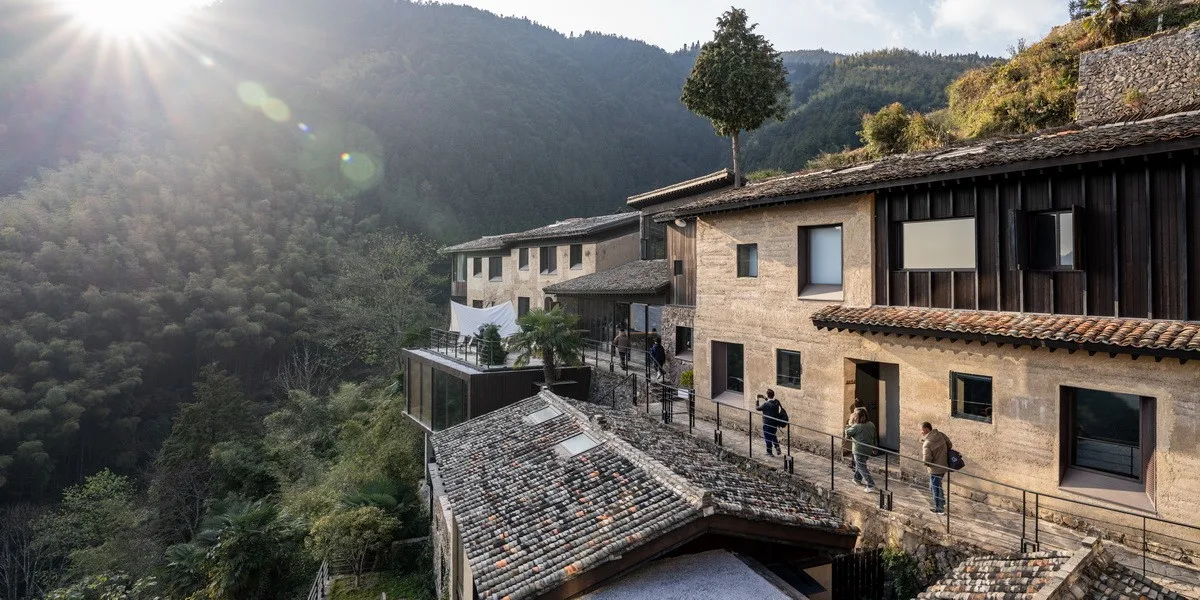
The design team surveyed the original homestead on-site, preserving elements such as rammed earth walls and stone structures where possible. Functional layouts were adjusted to maintain original spatial patterns. Based on factors like accessibility and identity, three buildings were selected for renovation into public homestay spaces: the hotel lobby and restaurant at the site’s eastern edge, and the cliffside café at the center.

△ Plan generation diagram
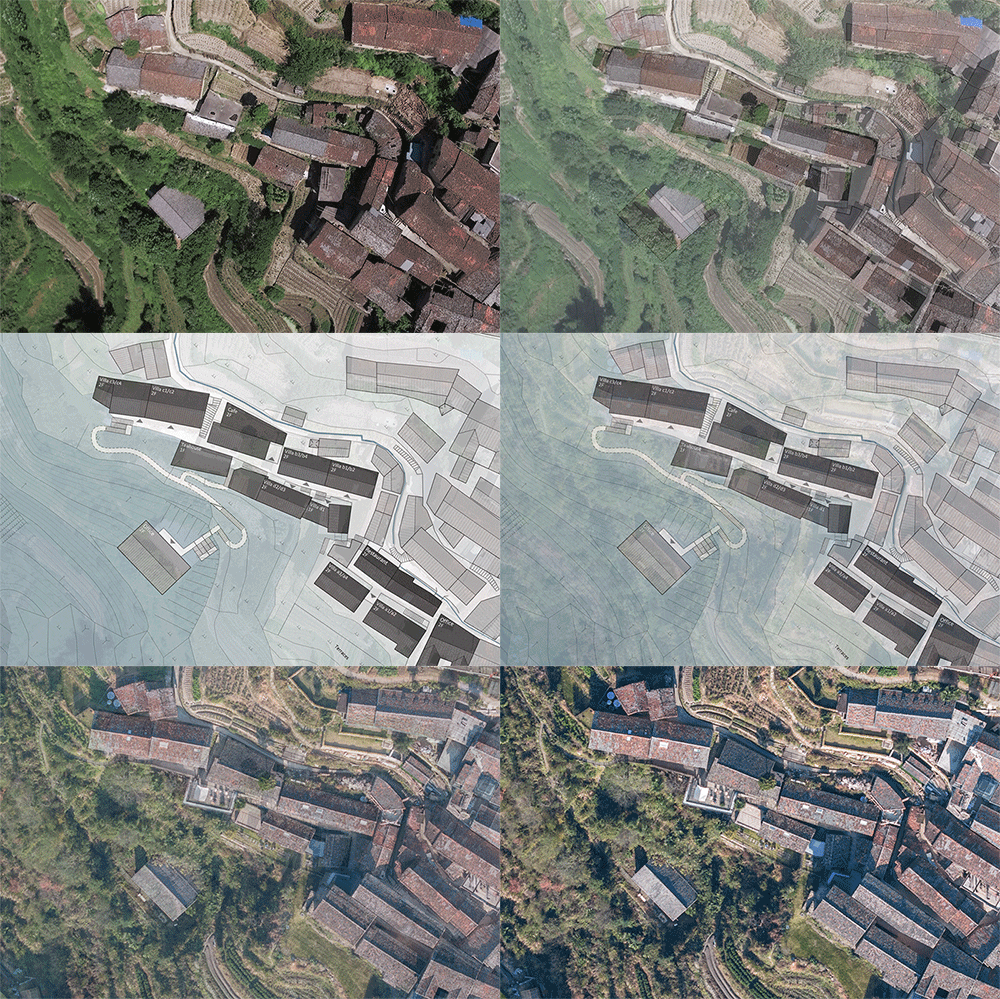
△ Before and after renovation comparison
The adjacent cliffside dwellings were converted into guest rooms. The challenge of varying elevations was ingeniously addressed by using an existing east-west alley: north-side dwellings have their ground floor aligned with the road for direct access, while south-side buildings, backed by mountain walls, connect their second floor to the road via eaves and corridors.
02. Adaptive Transformation of Rammed Earth Dwellings
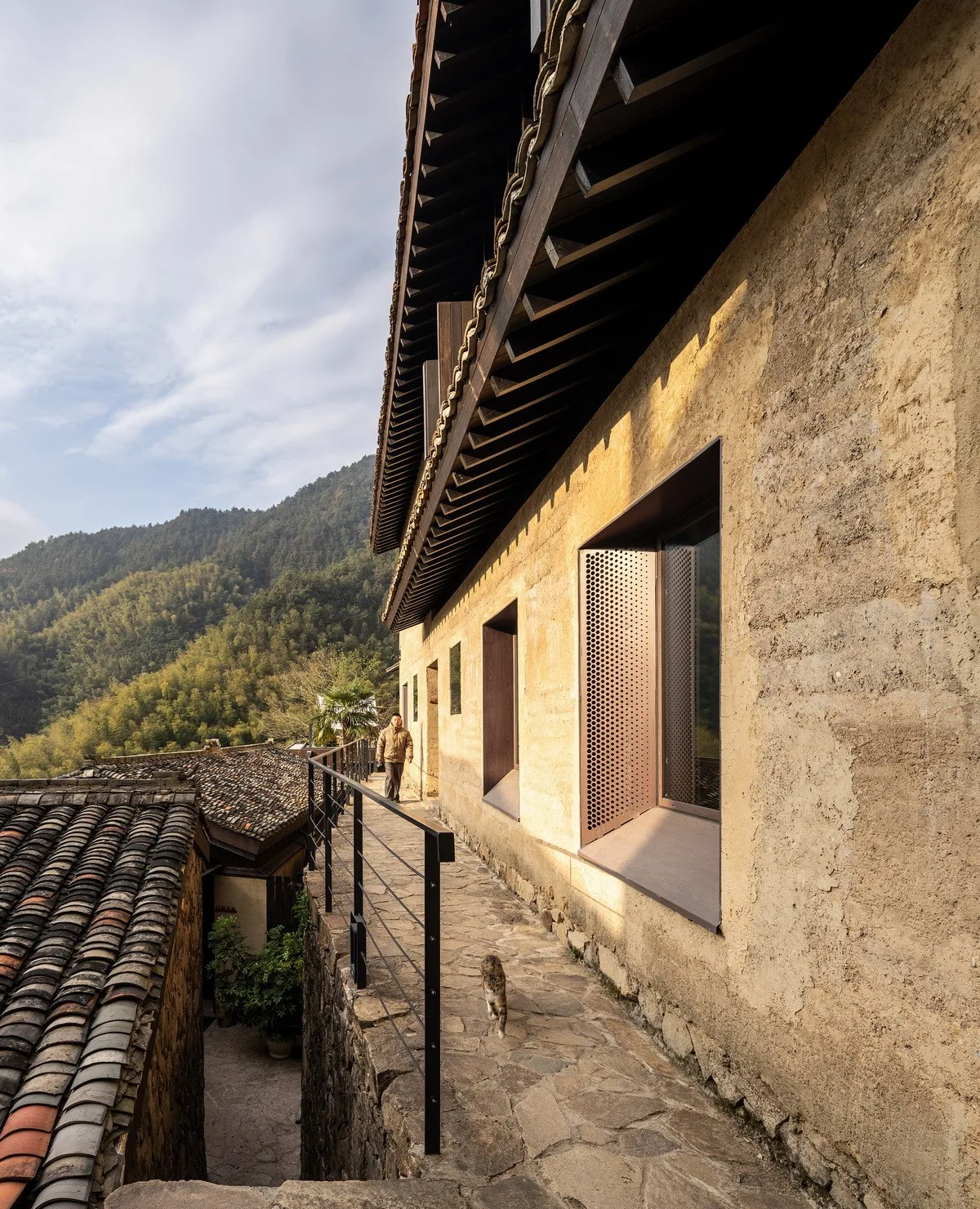
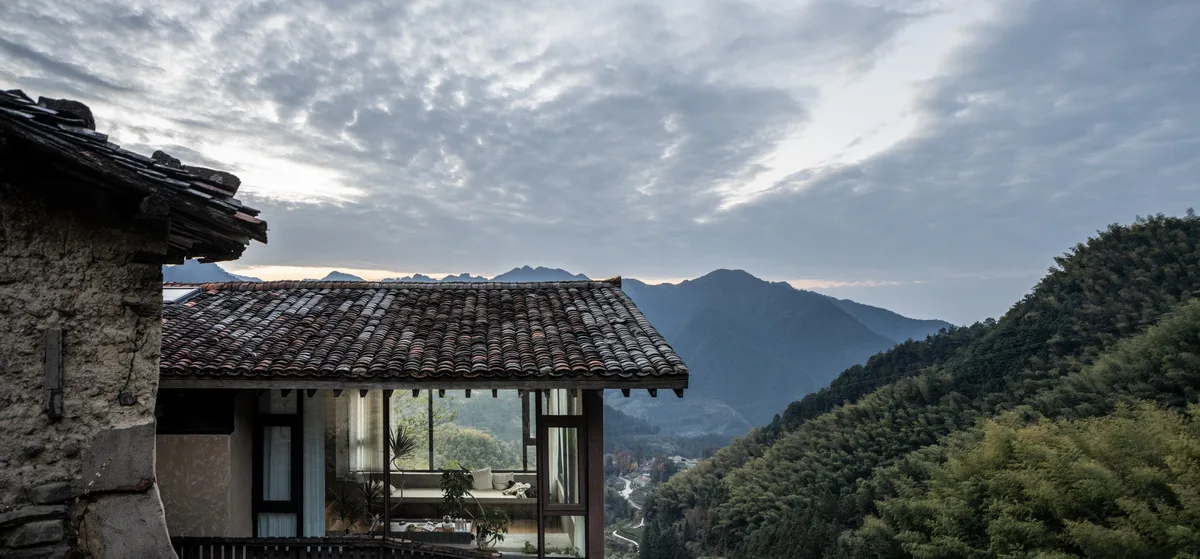
The local government enforces strict guidelines for preserving traditional historic villages. Renovations respect the village’s texture and style while accommodating modern homestay requirements. Most buildings were repaired and updated using local materials, with selective restoration of openings. Collapsed structures were rebuilt within their original footprints, integrating transparent glass boxes at key points to create a harmonious dialogue between tradition and modernity, heaviness and lightness, reality and illusion.
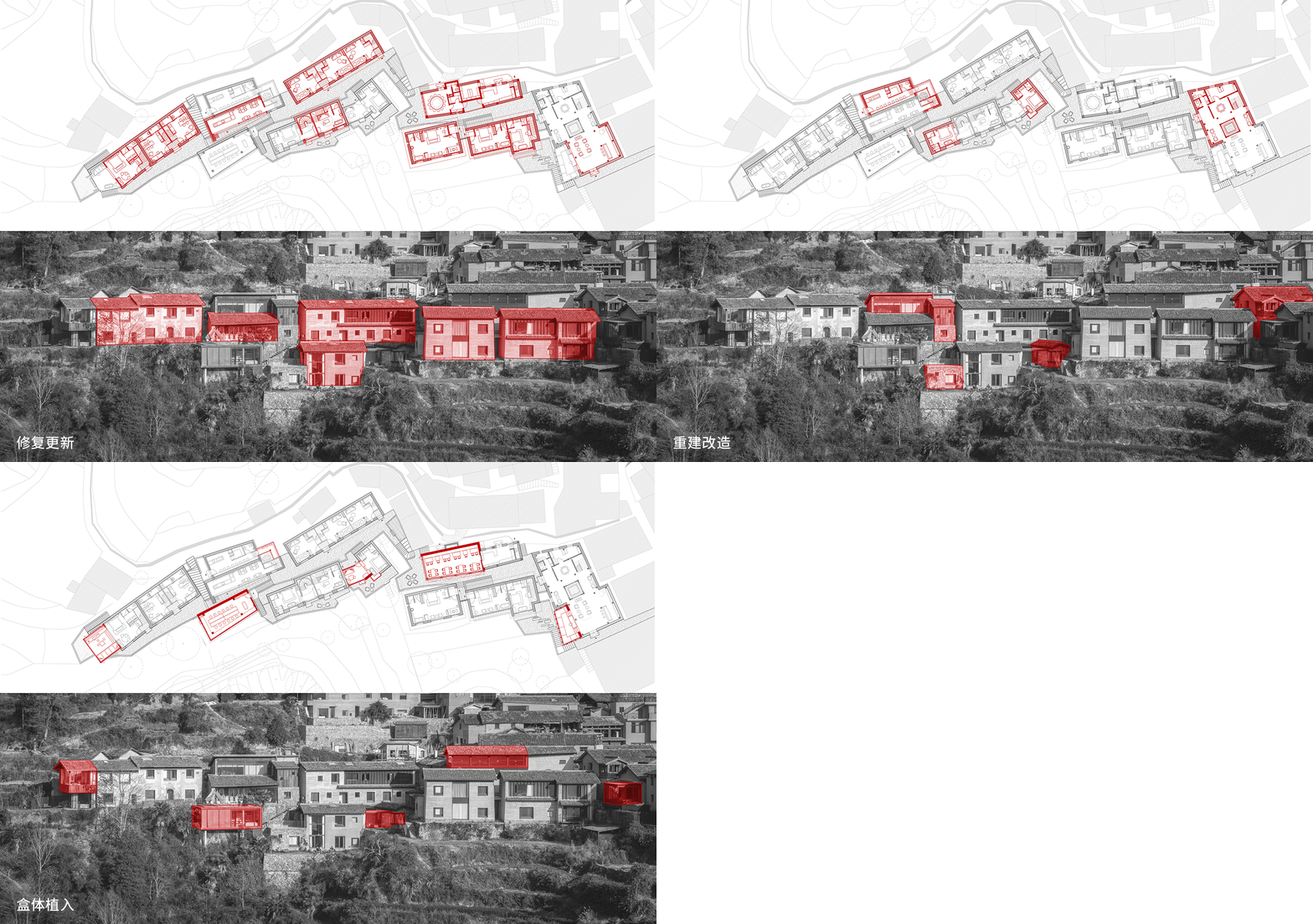
△ Transformation strategy
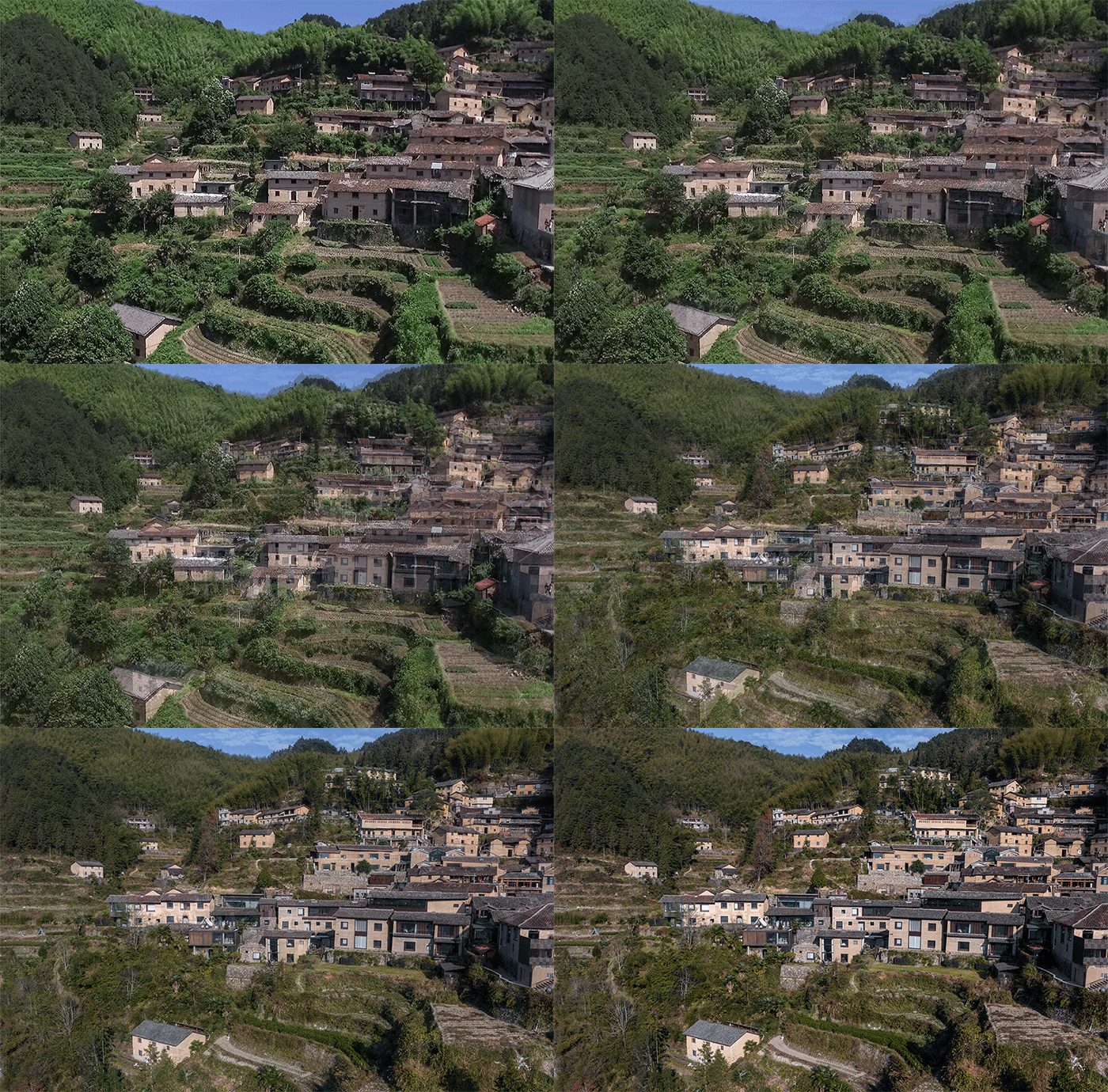
Facade renovation comparison
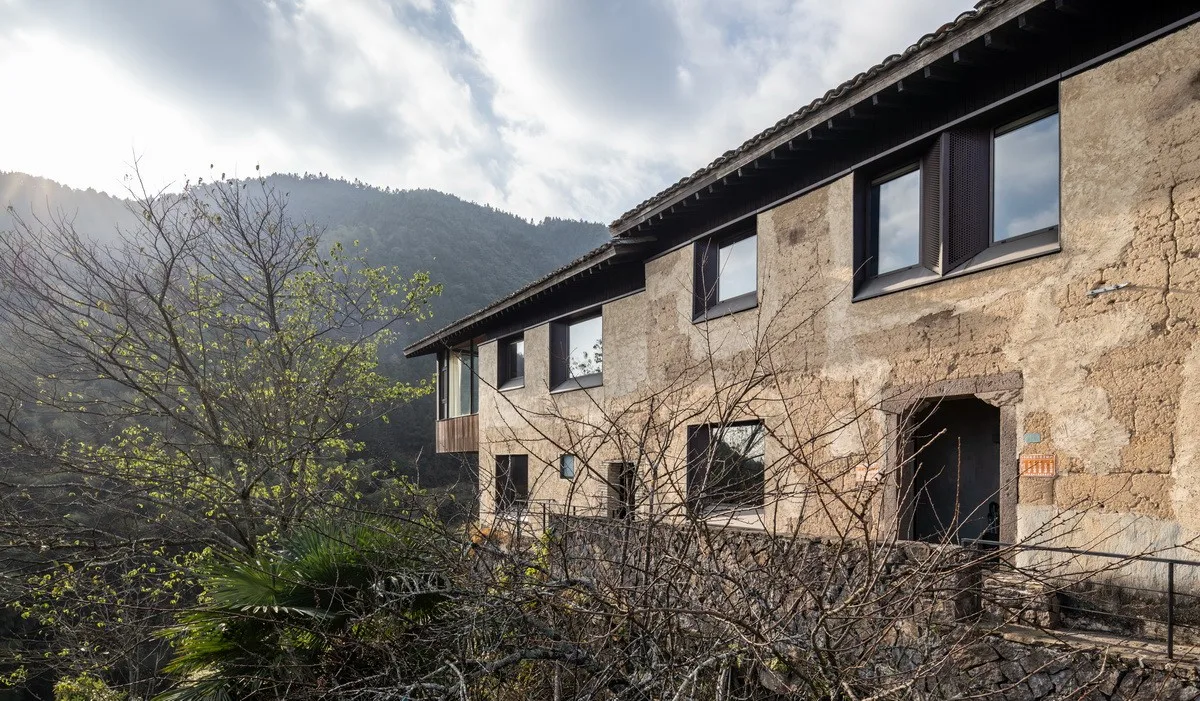
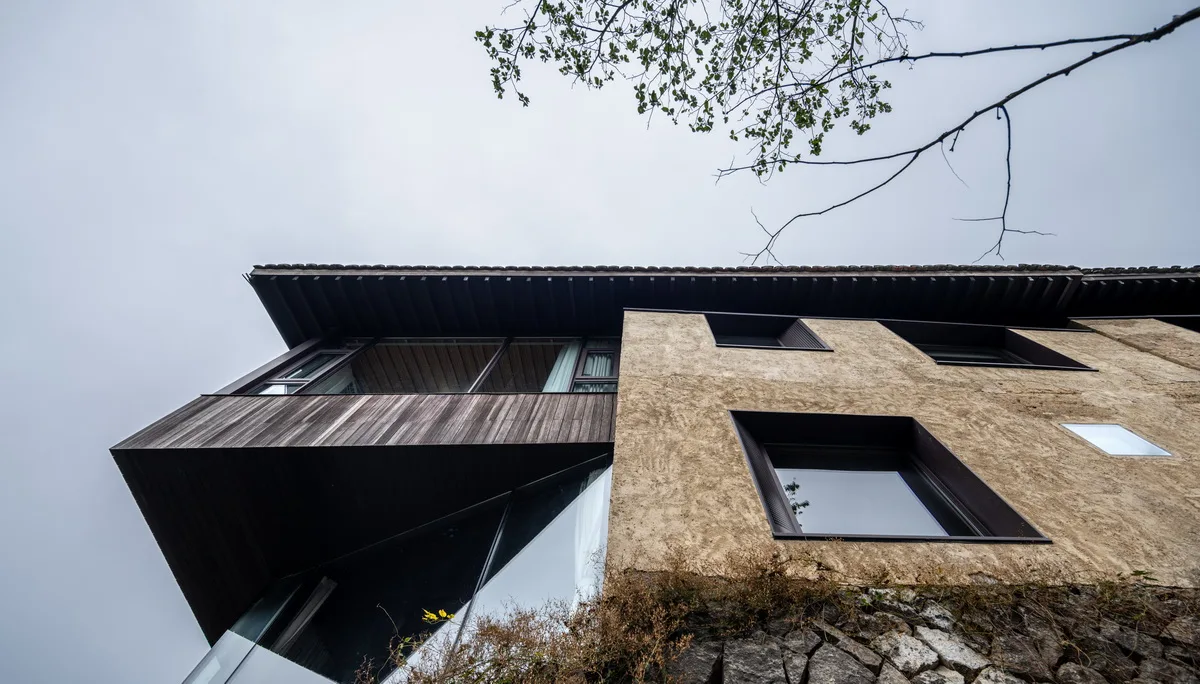
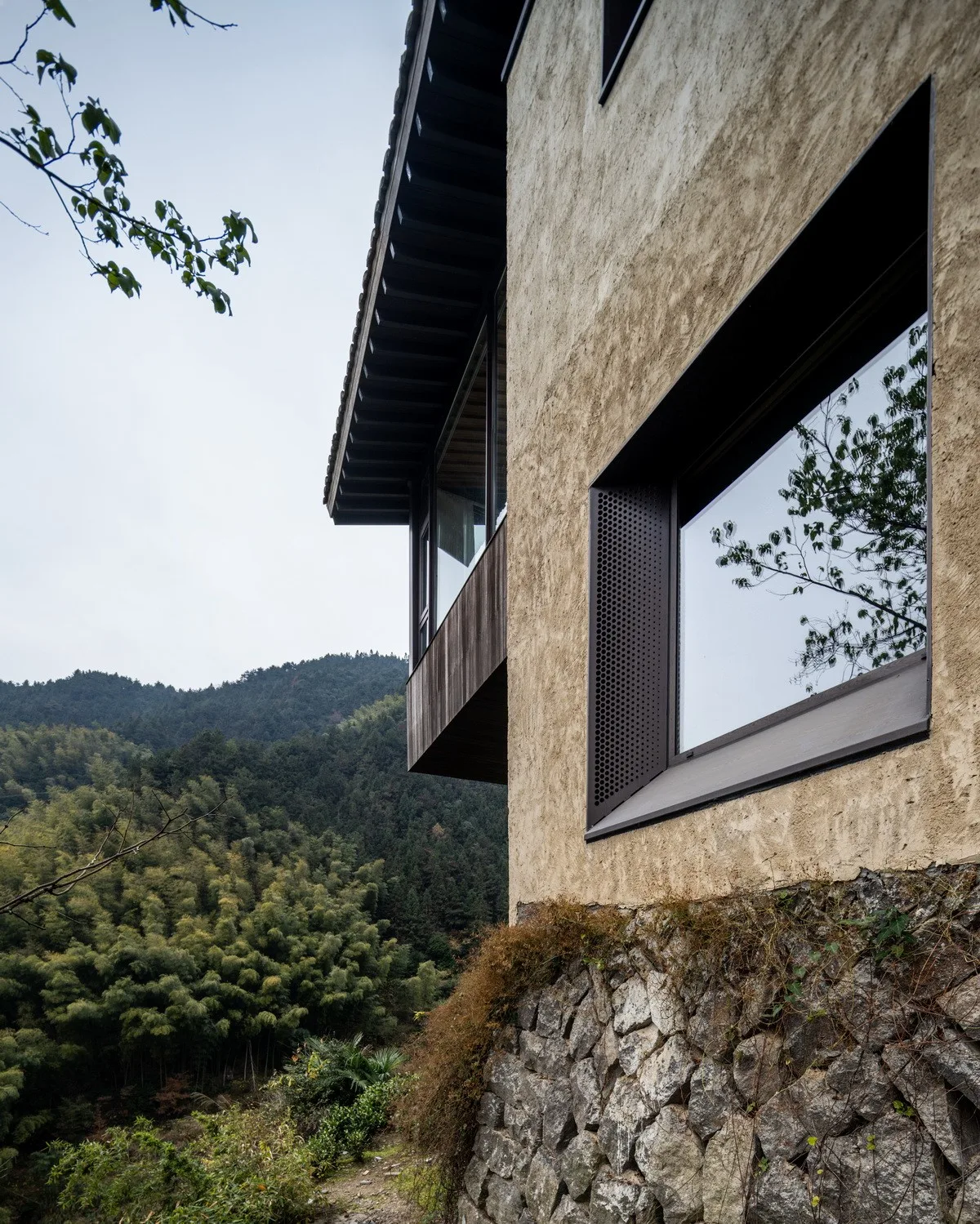
△ Preserving the original style of the building
Viewing Hall
The original courtyard-style rammed earth and wooden residence had a collapsed courtyard and a damaged western farm tools area. Renovation preserved the front hall and back room layout, creating a central landscape courtyard in the Tianji area. The front hall functions as the check-in area, while the back room’s second floor houses staff offices. The east wing serves as a tea room suitable for brief visits, and the west wing connects to the guest room area, acting as an entrance and exit. Corridors separate visitor and staff circulation paths effectively.
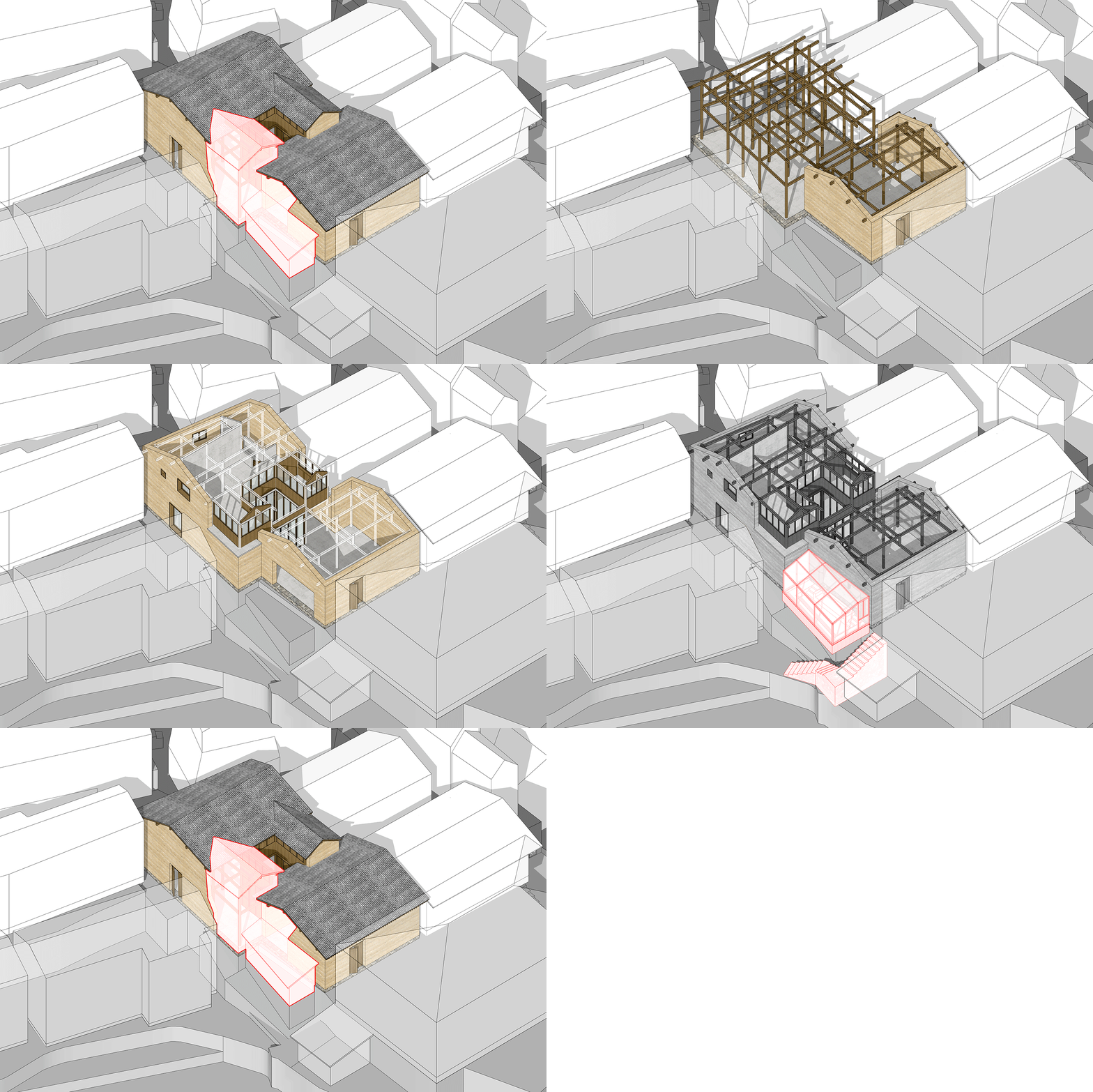
△ Lobby generated image
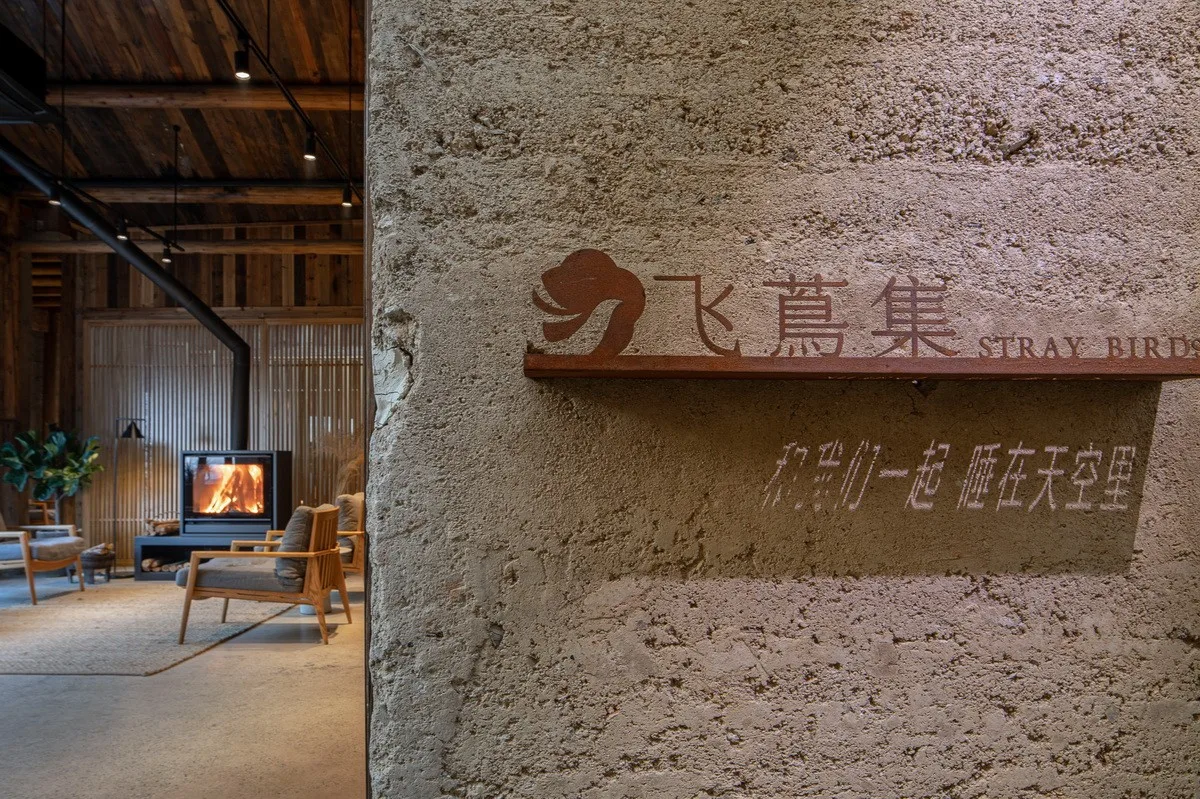
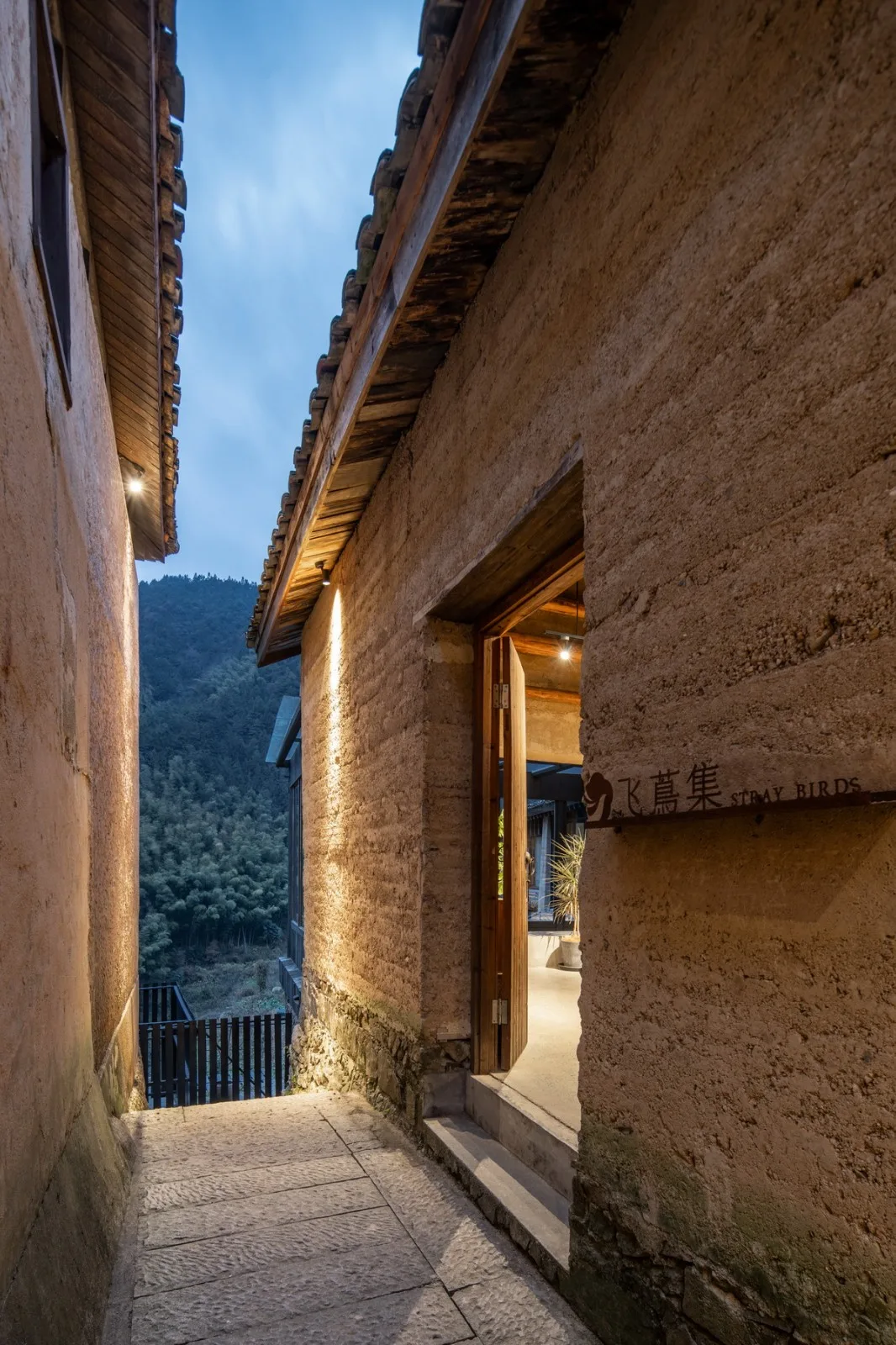
Entrance to the front hall
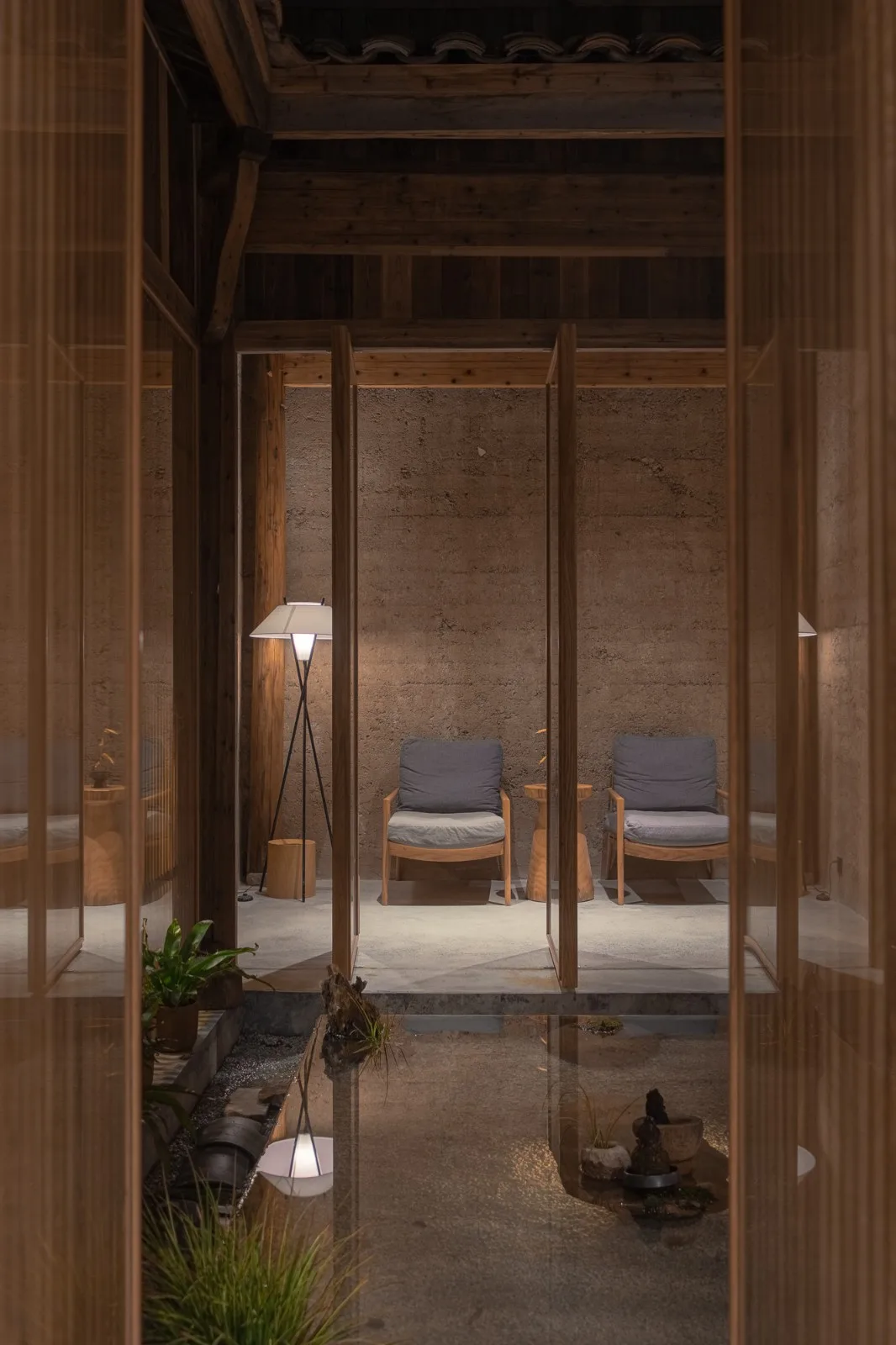
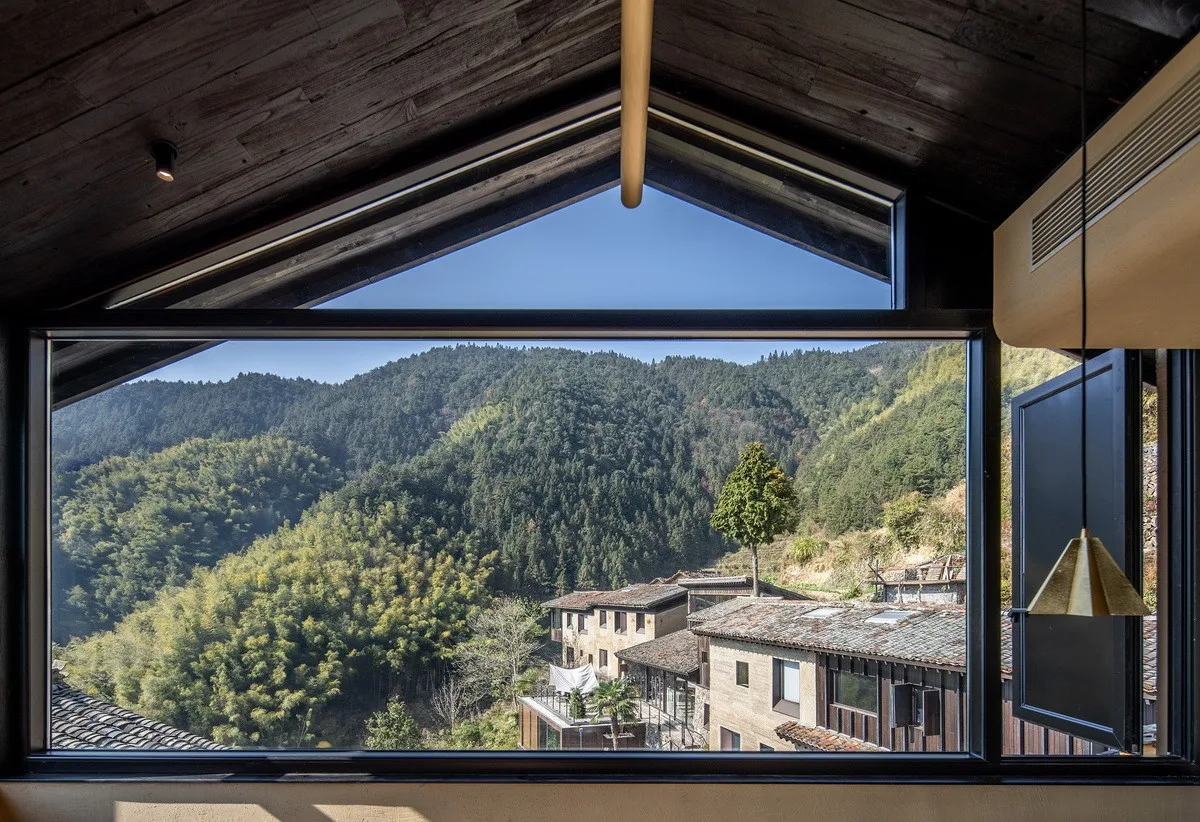
The rammed earth walls inside the reception hall were carefully preserved and restored according to traditional methods. A glass box was inserted on the western side, where the mountain wall was opened to create a sunken lounge area. This space opens on three sides to the mountains and valleys, offering stunning views of green pines, bamboo groves, and swirling mists.
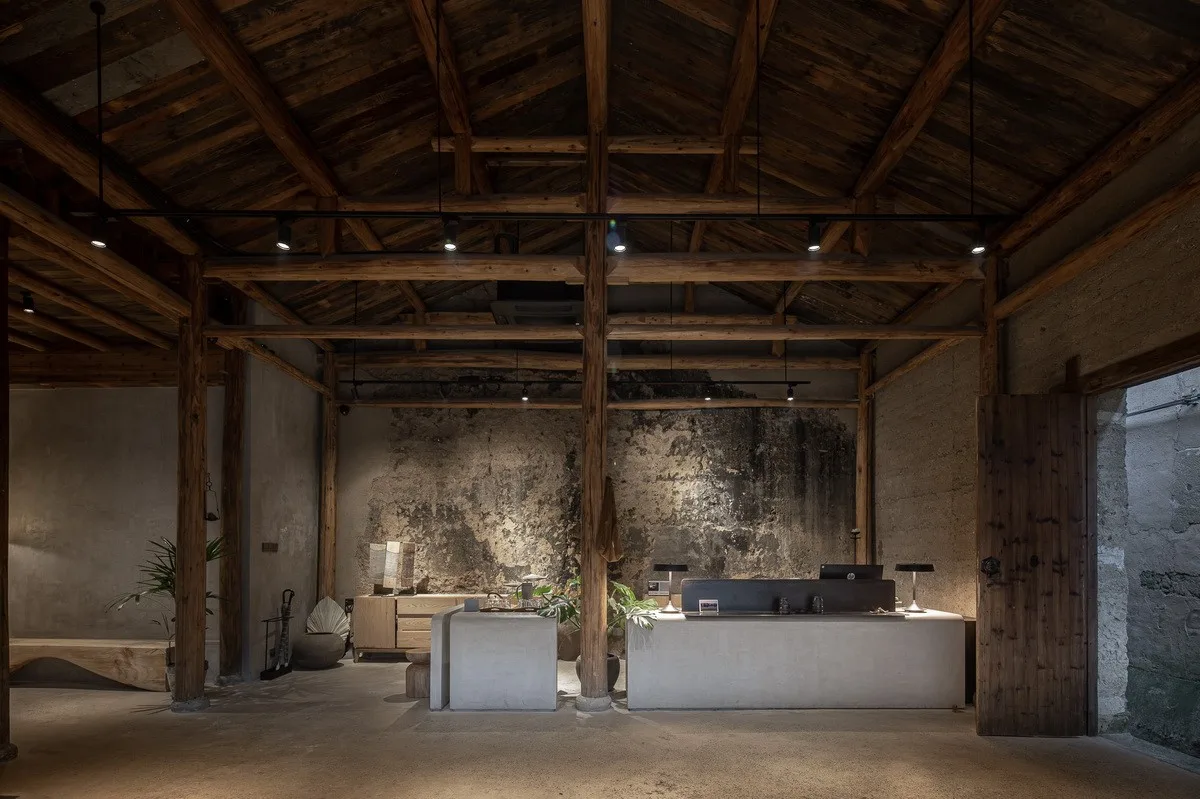
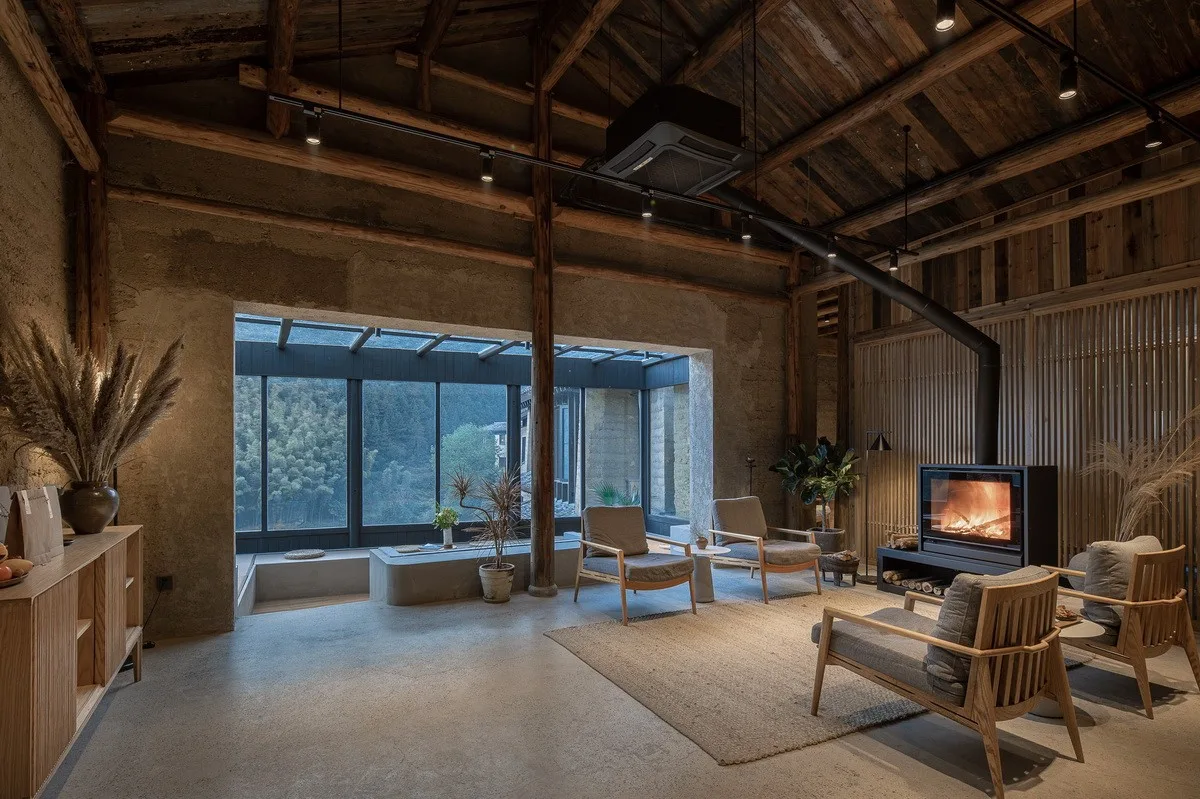
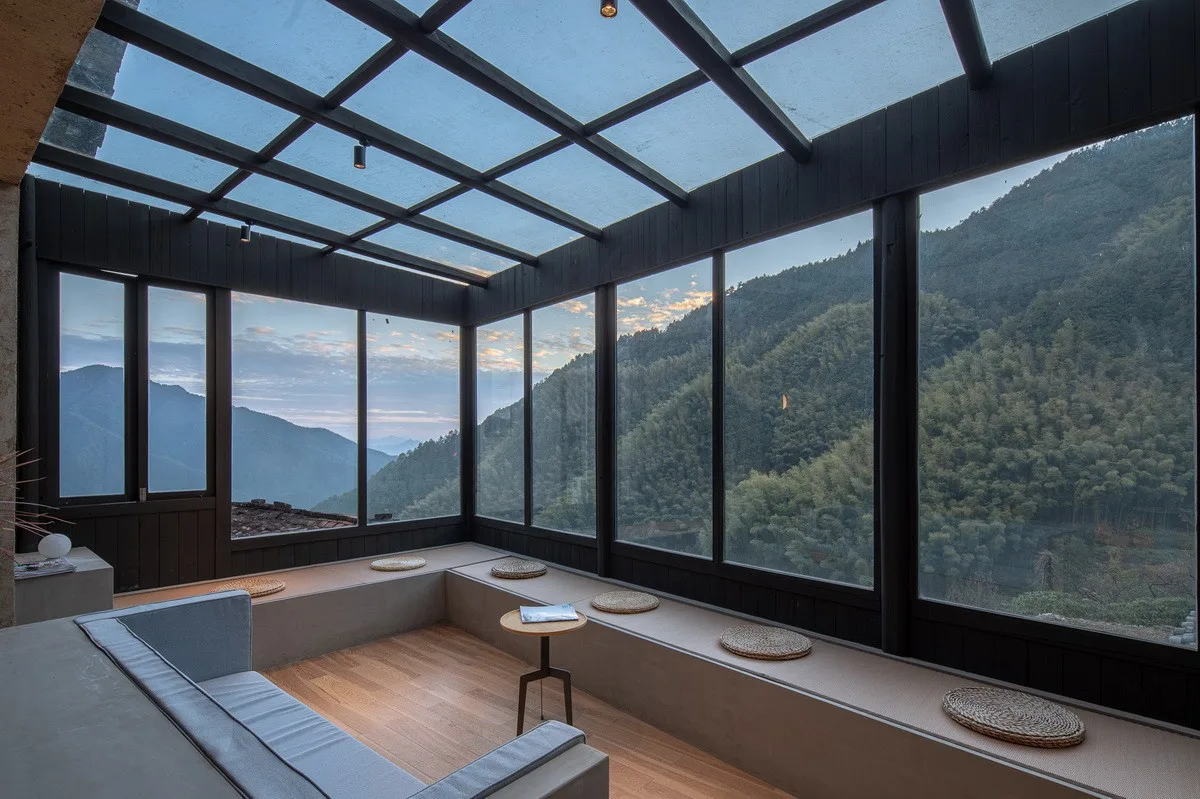
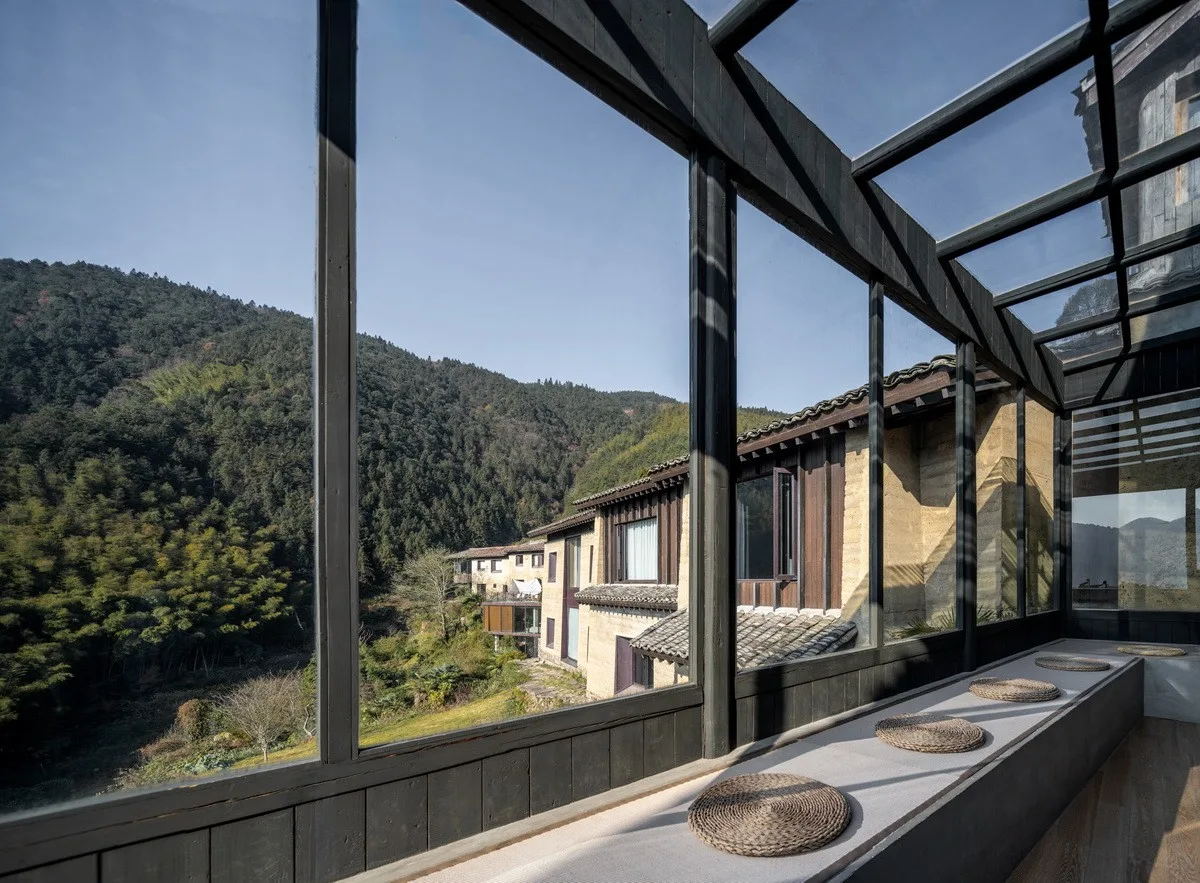
△ Reception Hall
Restaurant
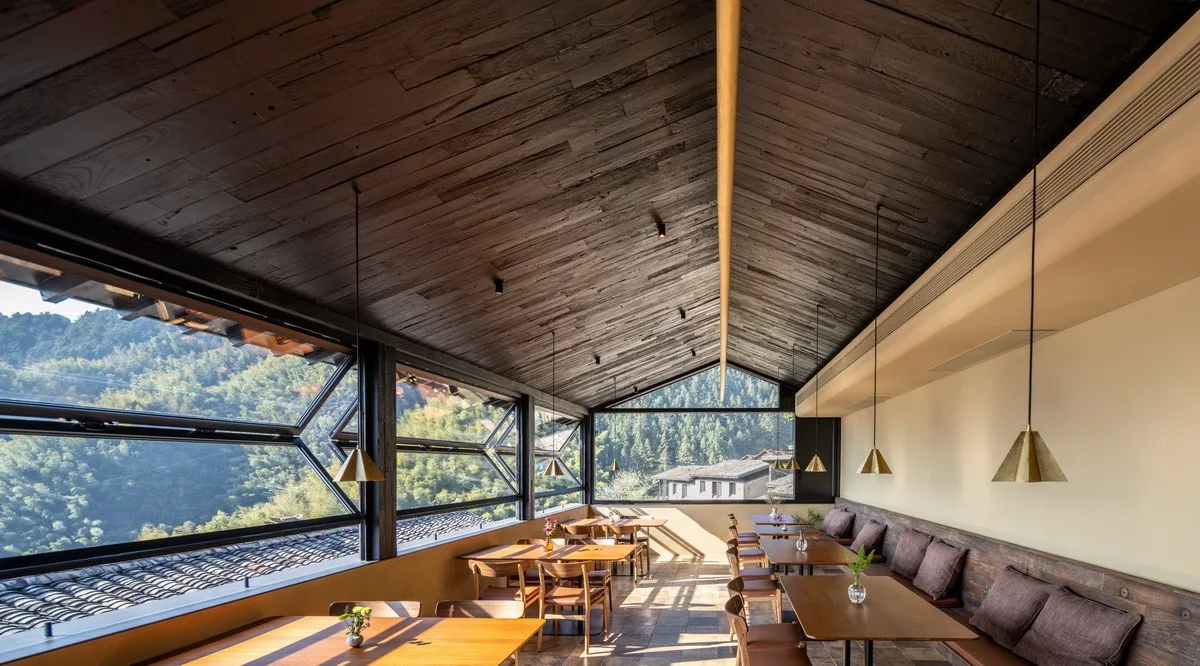
The original building was a two-story rammed earth residence with partial collapse on the second floor. Due to obstructed views on the first floor, the space was adapted to house a kitchen and auxiliary areas, retaining only the valley-facing west room as a viewing area. The second floor is accessible from the north village road, with a roof crossing on the south side, offering a panoramic 270° transparent view. A lightweight prefabricated steel structure was integrated as the dining area, featuring large glass windows and vertically folding windows to fully embrace the surrounding mountain landscape.
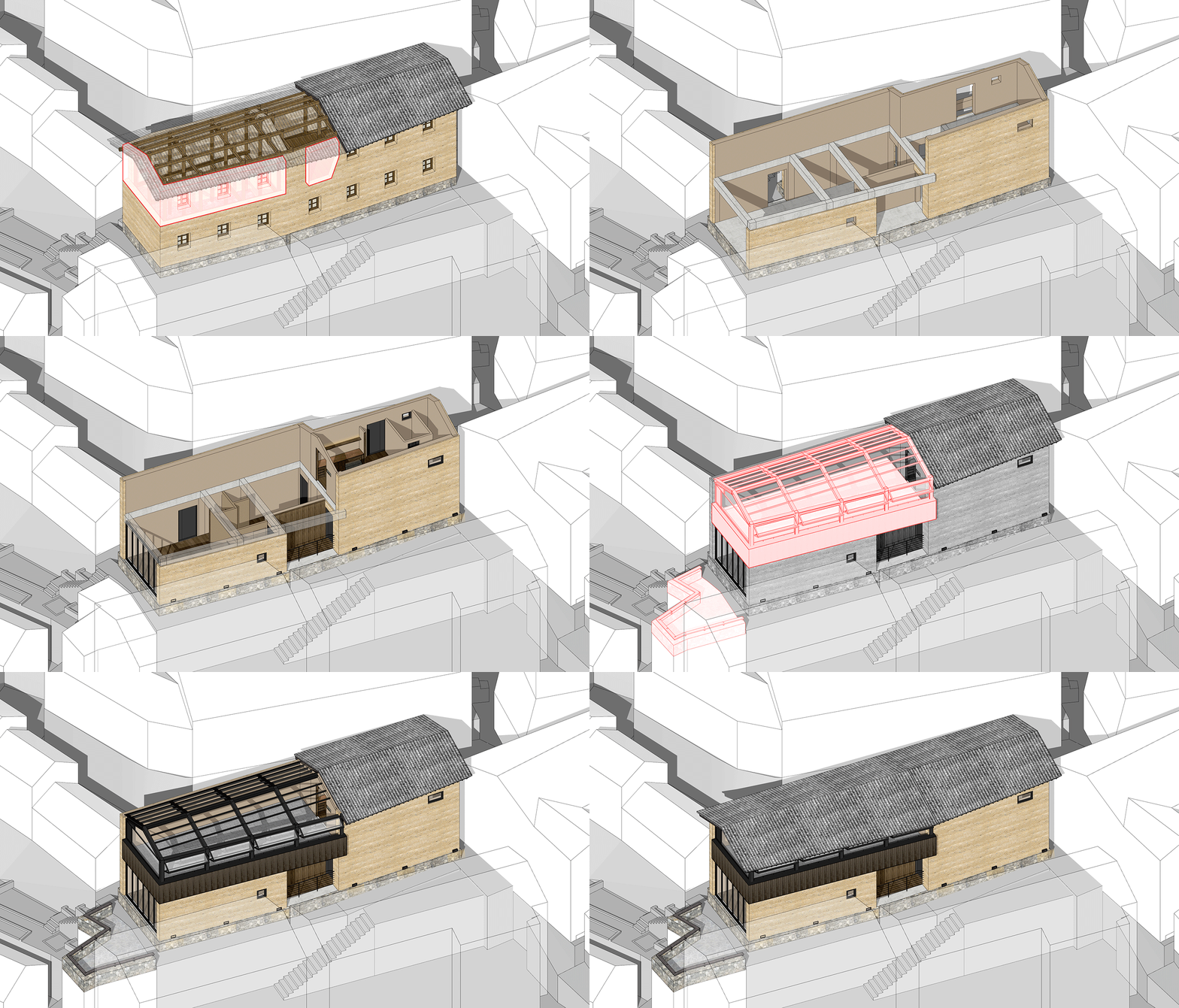
△ Restaurant generated image
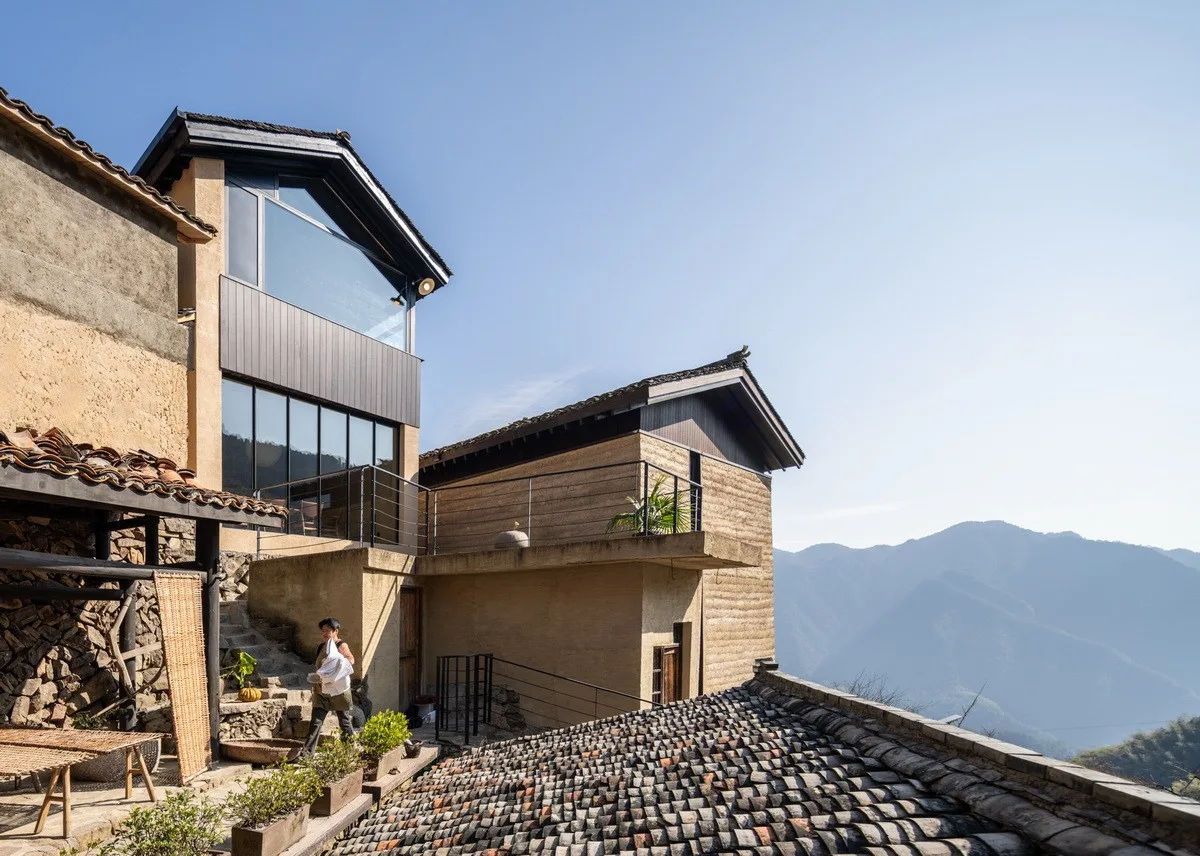
Cliff Café and Tea Room
The original site featured a three-story brick building perched on a cliff, backed by a steep stone wall, with the roof serving as a sun terrace. The design respects the site’s spatial layering: the middle level, where an alley passes through, serves as the café’s first-floor elevation; the second floor functions as a baking workshop; and the lower first floor houses the tea room. After repairing the steep slope, the collapsed brick wall was demolished and replaced with a new rubble wall. The original flat roof was replaced by a single-slope roof, with the ridge height aligned with the upper-level window sills, while the eaves remained unchanged. Interior ceiling heights were designed to accommodate equipment while preserving upper-level landscape views. The second-floor roof slopes oppositely, opening toward the valley.
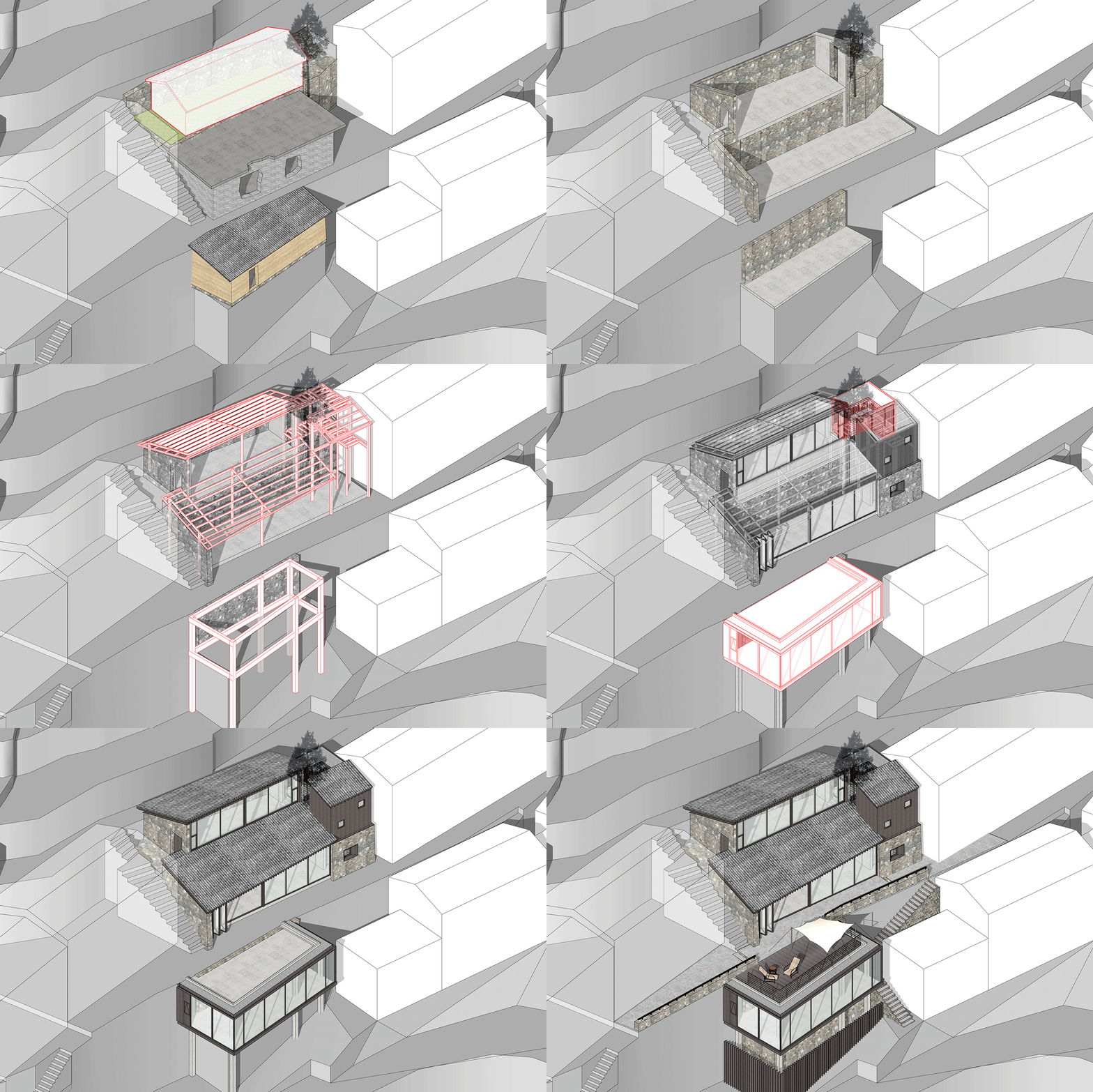
△ Coffee Shop and Tea Room Generation Diagram
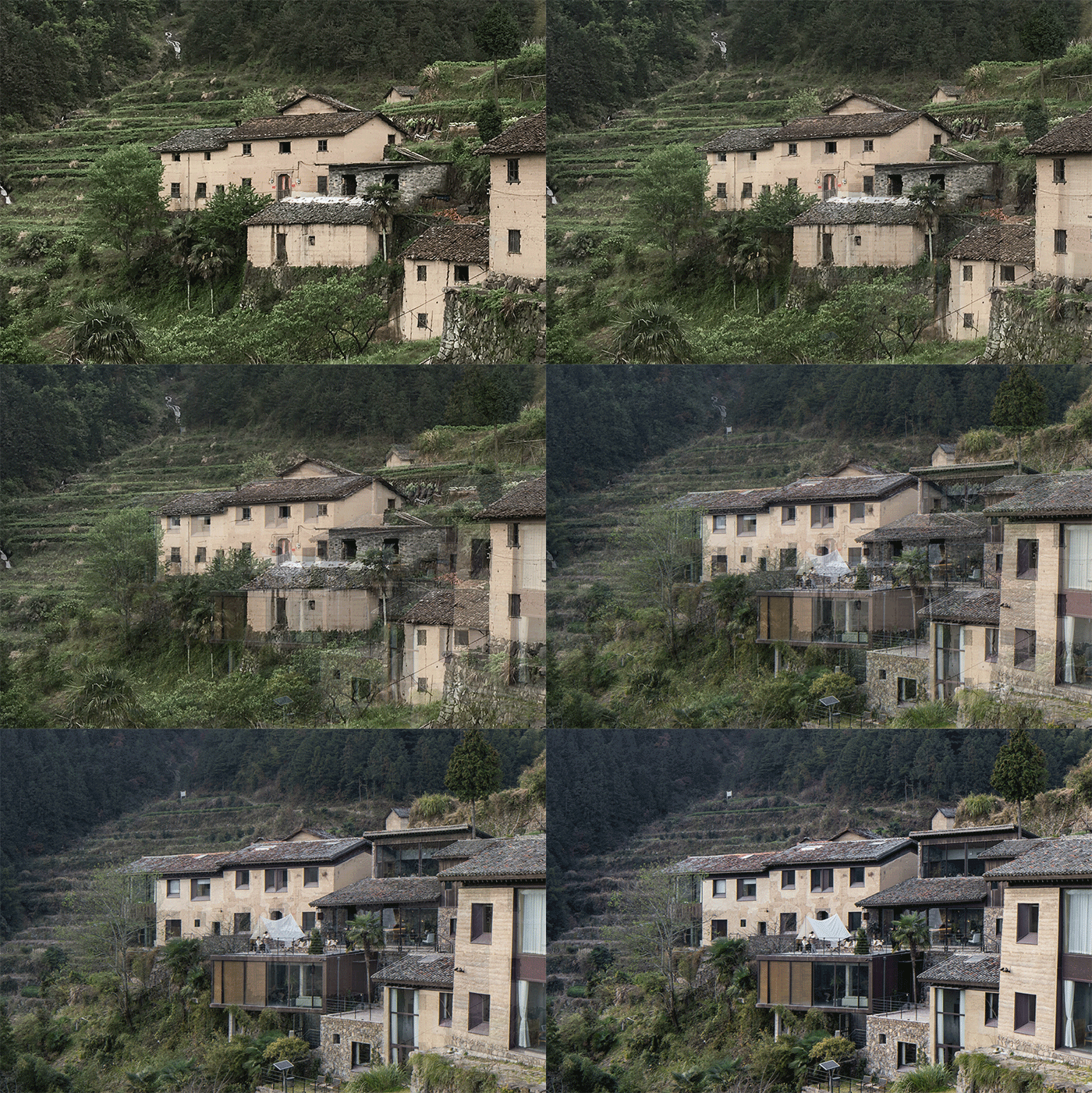
Before and after renovation of the café and tea room
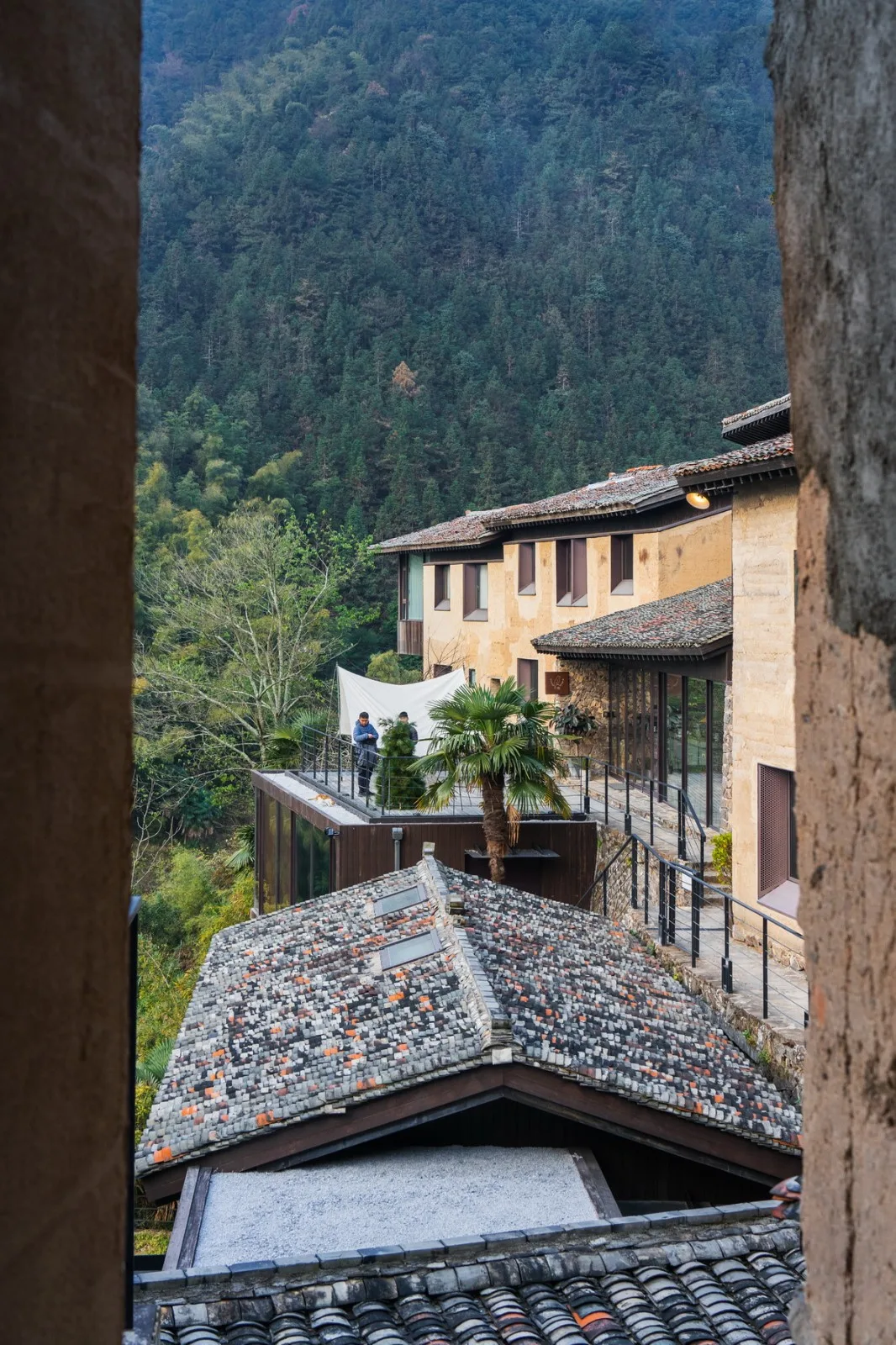
A gray space under the eaves marks the café entrance, combining panoramic French windows and folding fan doors. The lower roof serves as a viewing terrace, extending the narrow interior.
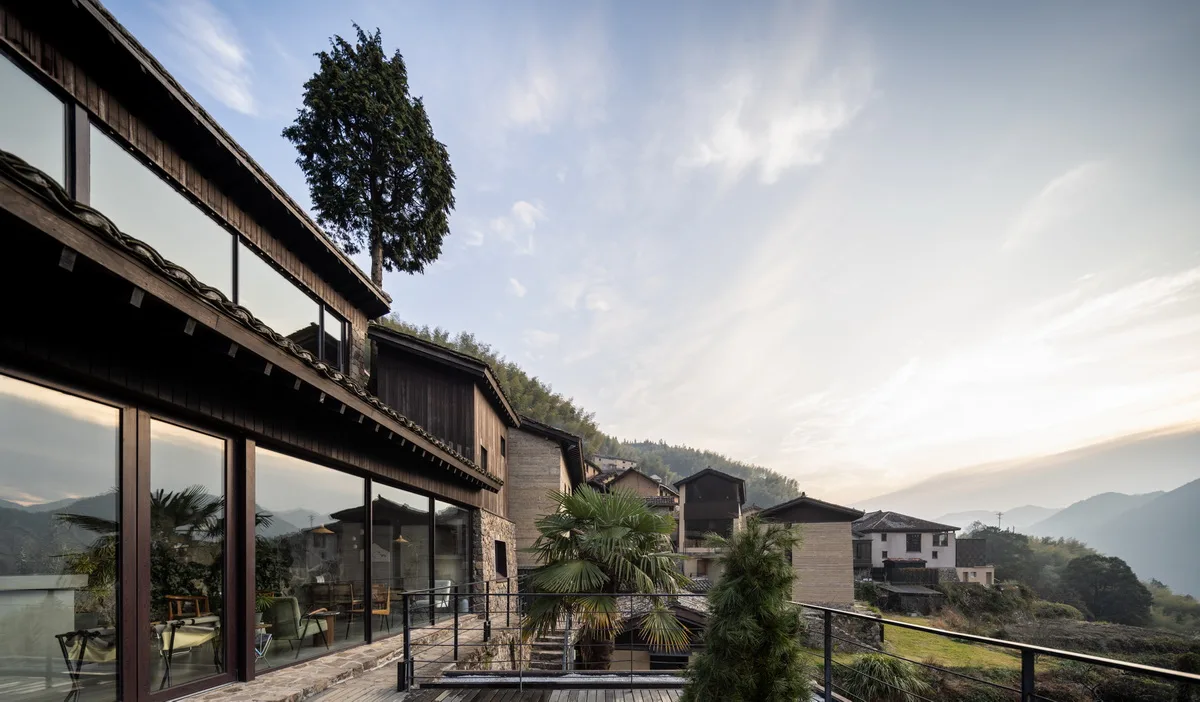
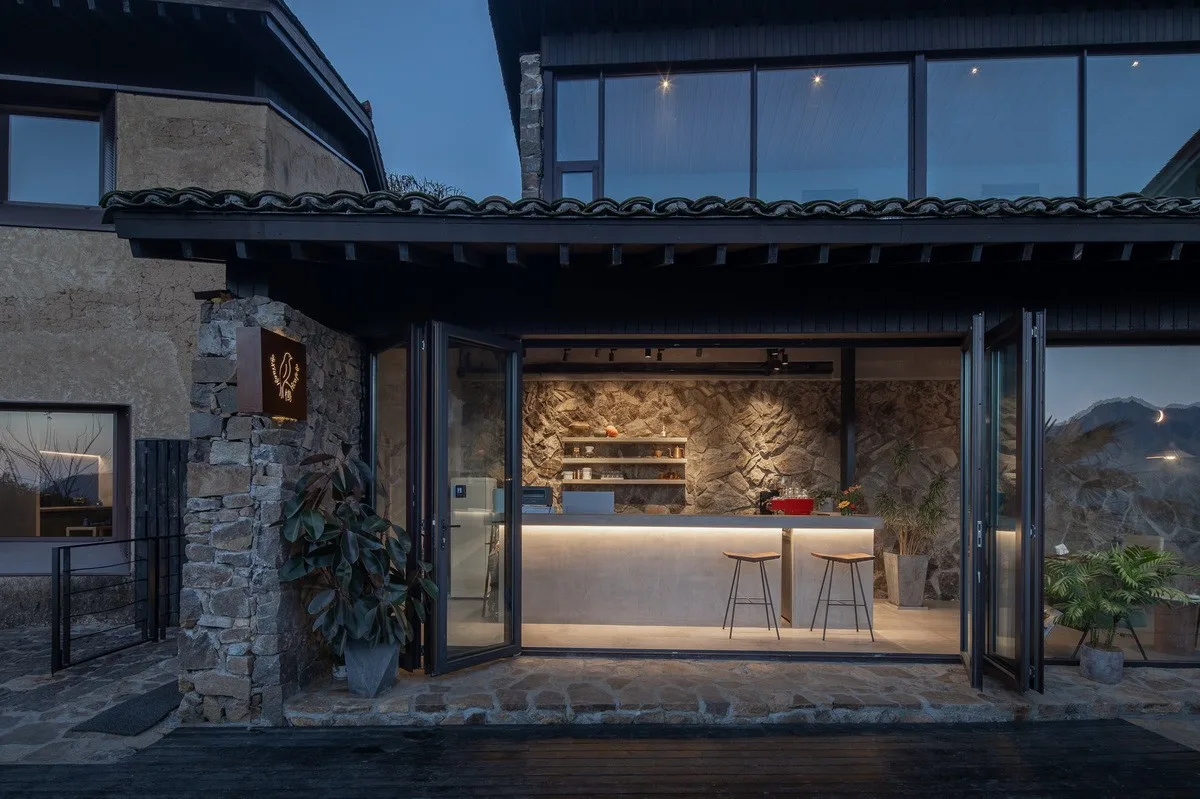
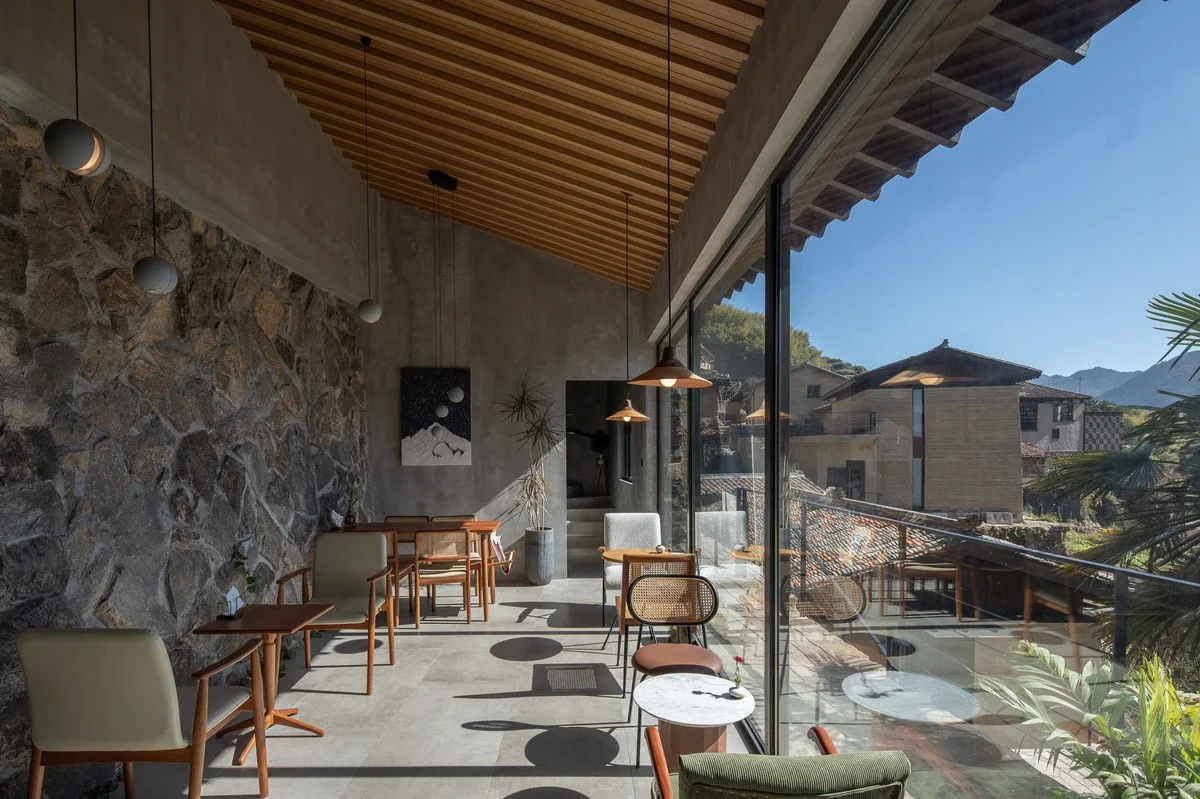
The café’s western traffic core revolves around a large tree. The first-floor staircase spirals up from the cliff base, while the second-floor corridor encircles the trunk, reconnecting the interior space. This sequence of spatial transformations fosters a dialogue with the natural environment, as the café gently nestles against the cliff, growing beneath the tree’s canopy.
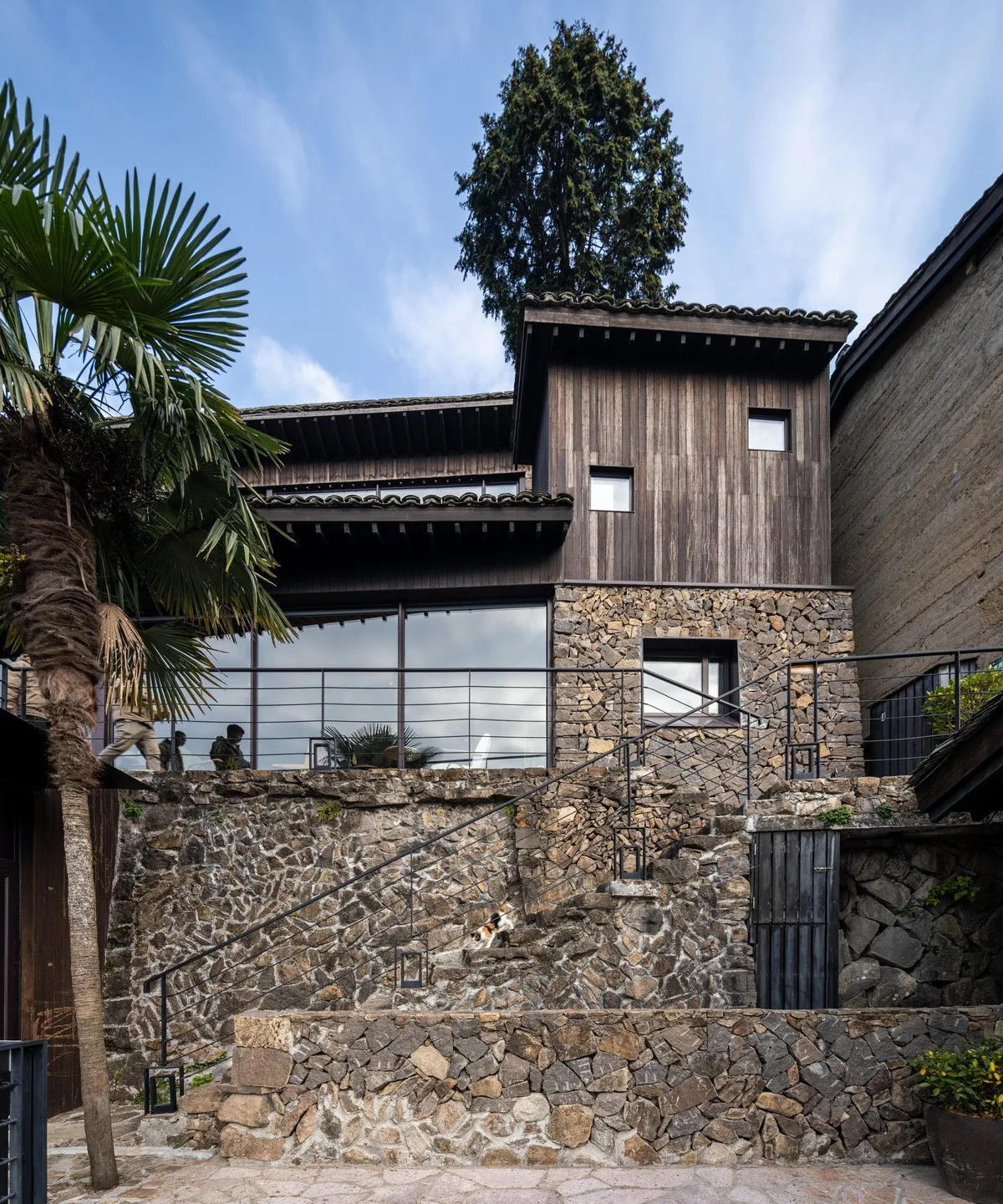
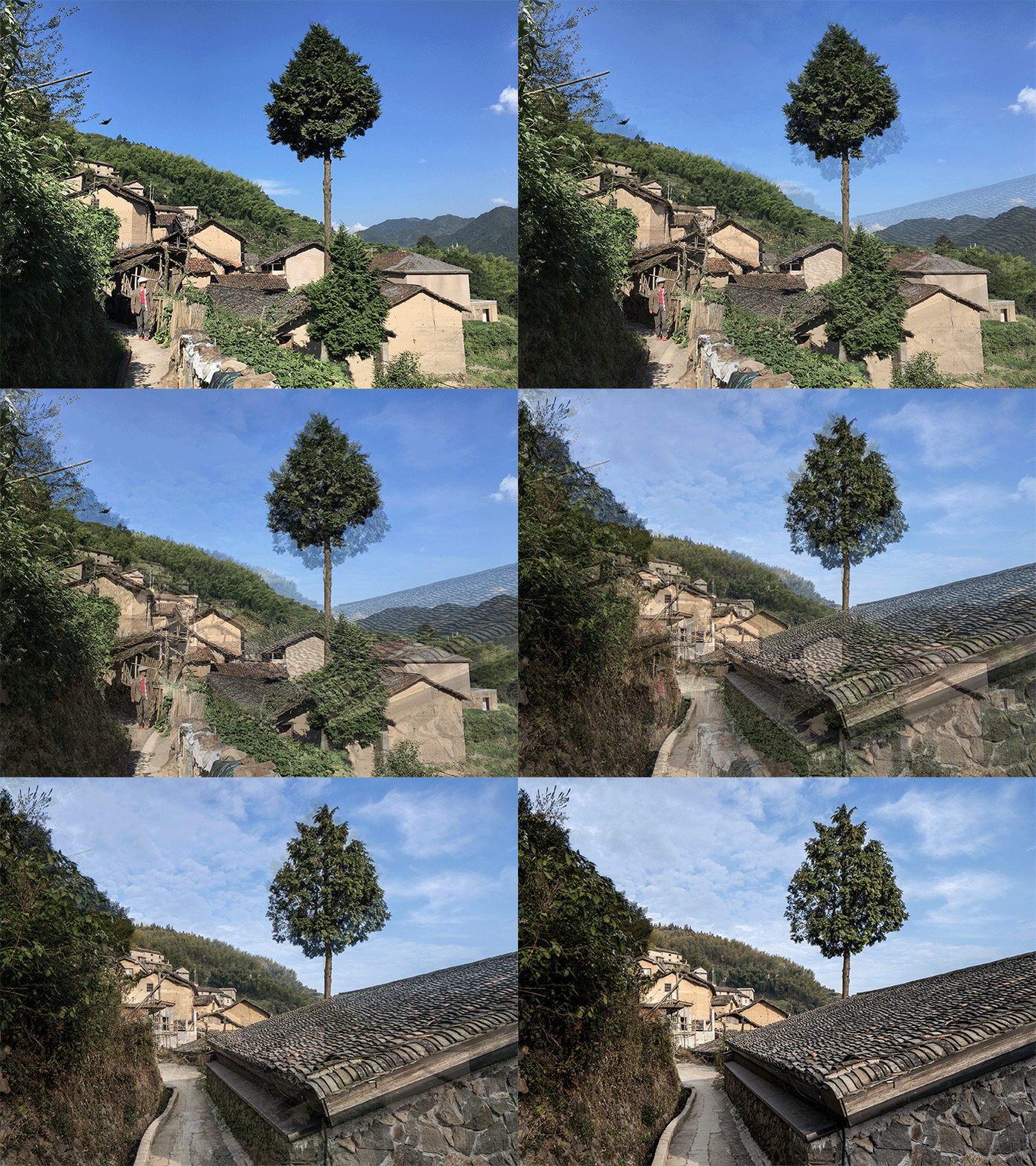
Before and after renovation of trees
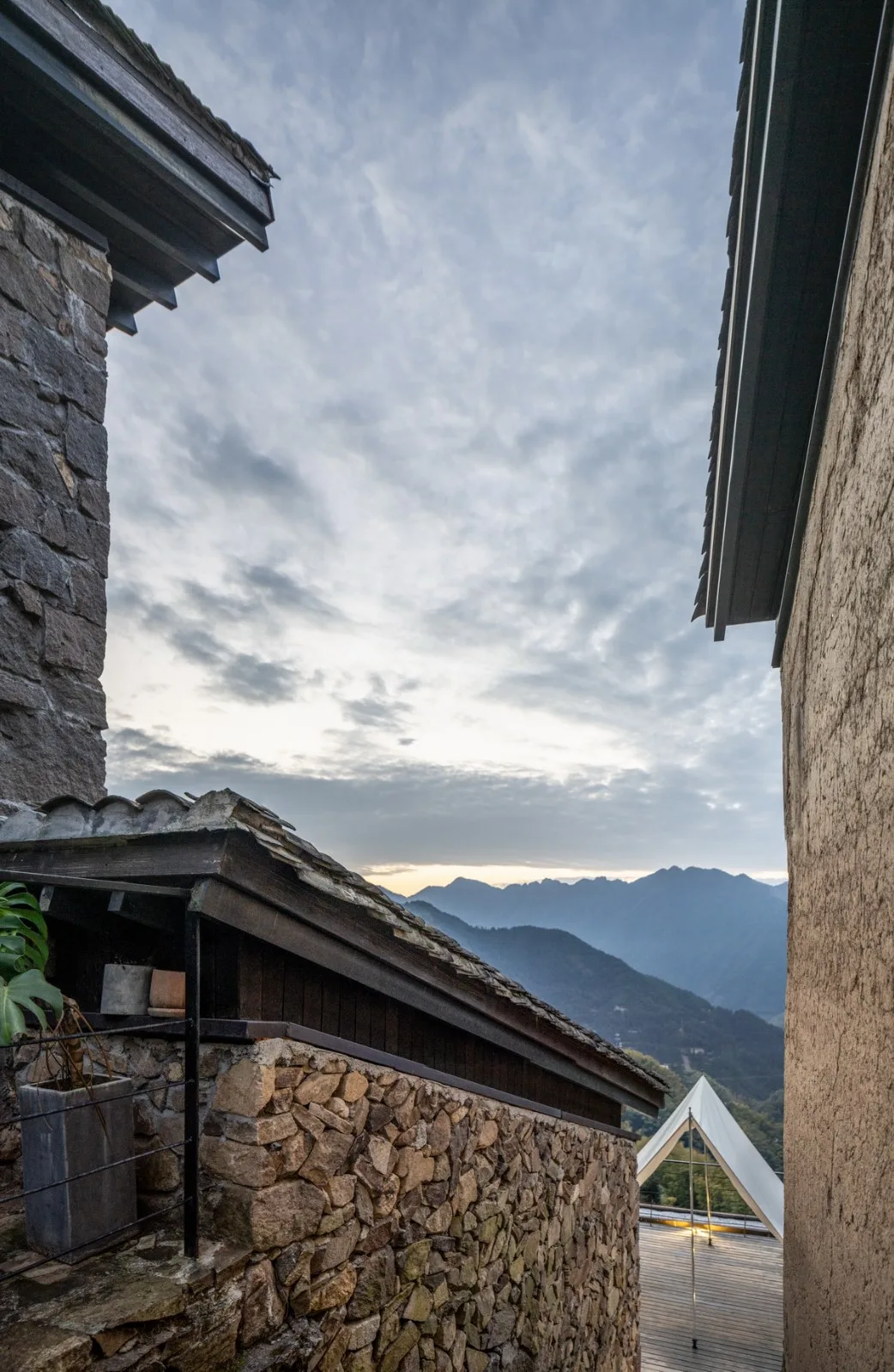
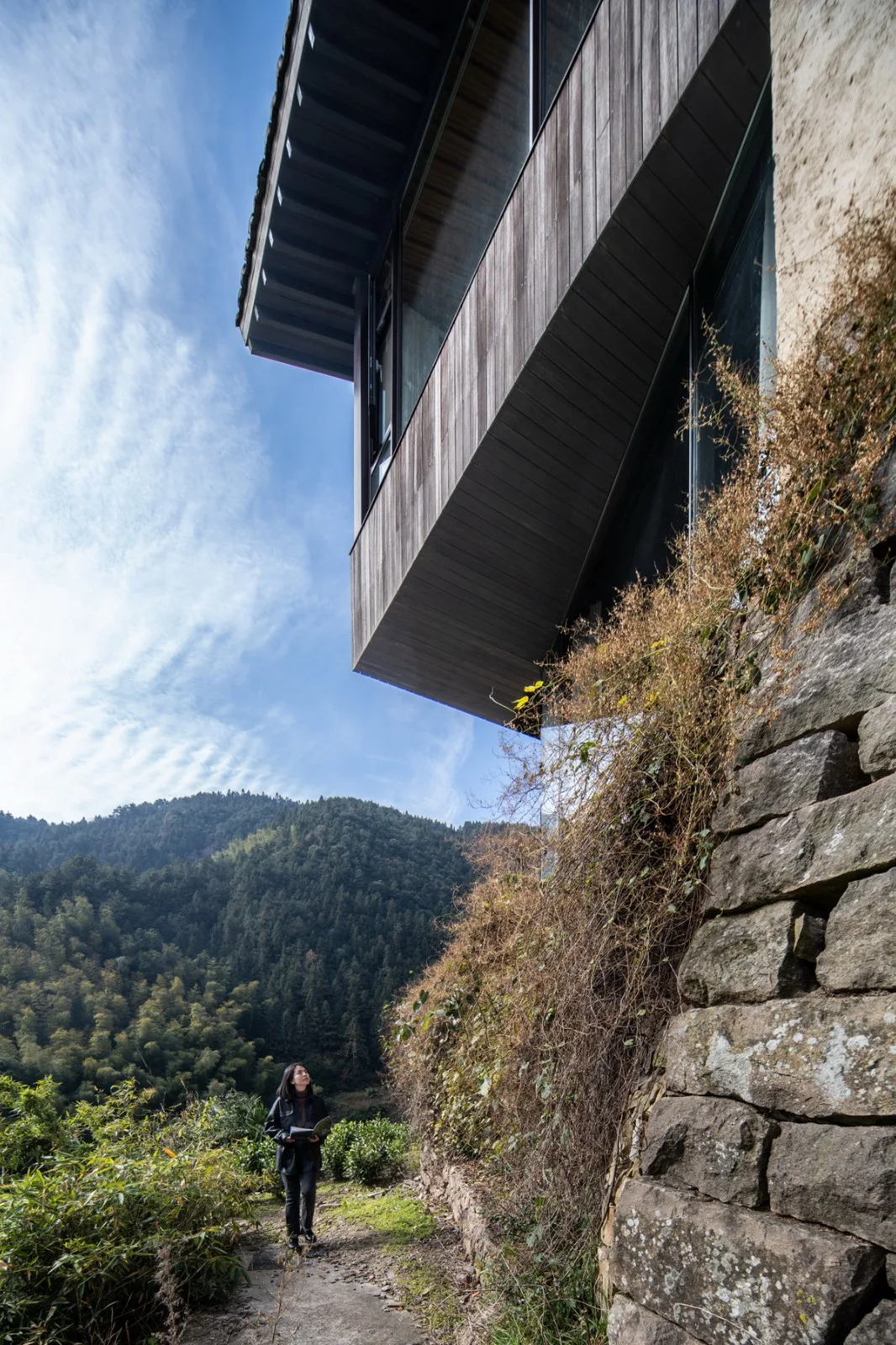
Adjacent to the café’s observation terrace stone steps, a tea room was converted from an old wooden house. The design honors the original building’s cliff-hanging form by projecting towards the valley and combining transparent floor-to-ceiling glass on the southwest side, giving the impression of a lightweight box emerging from the cliff face.
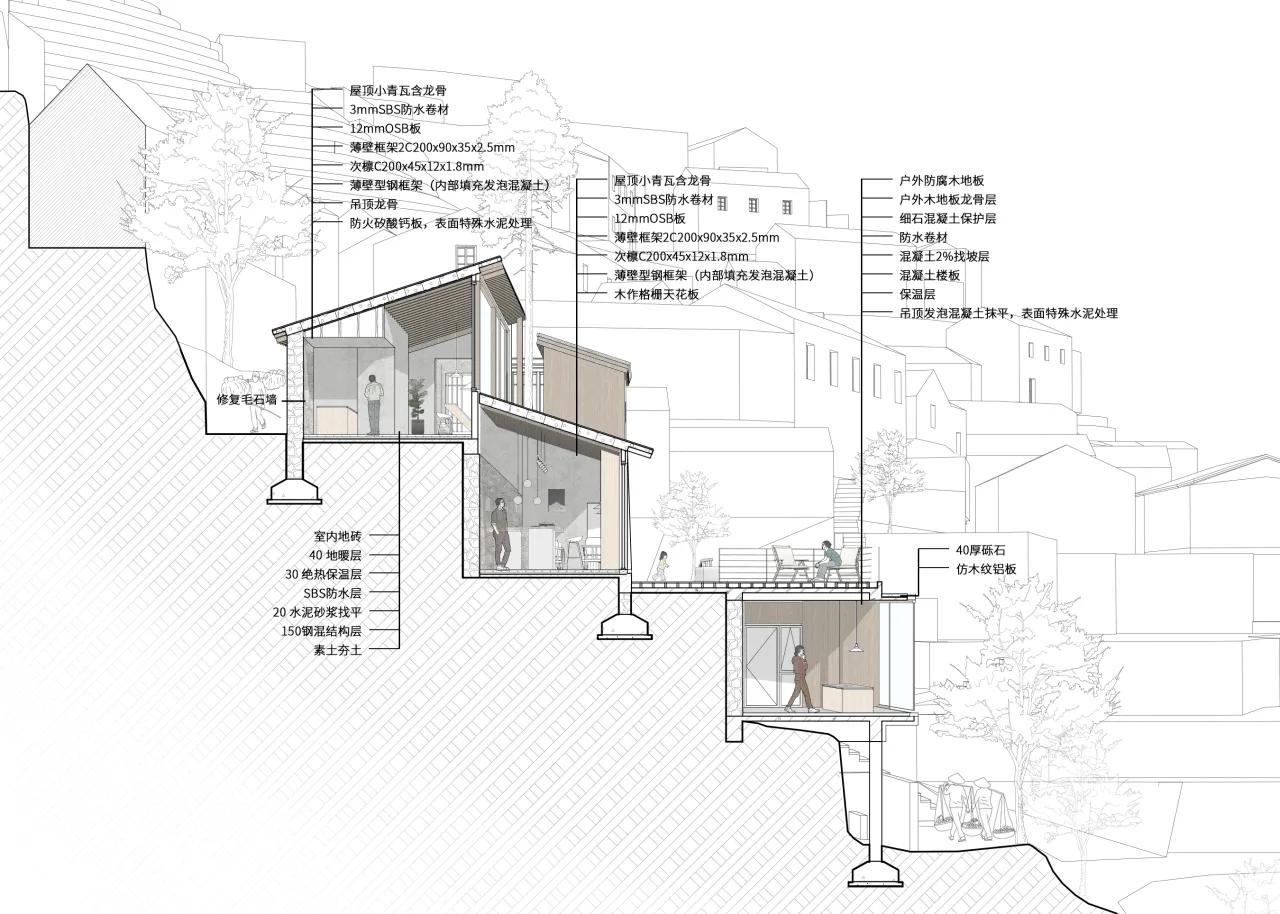
△ Perspective analysis of café and tea room
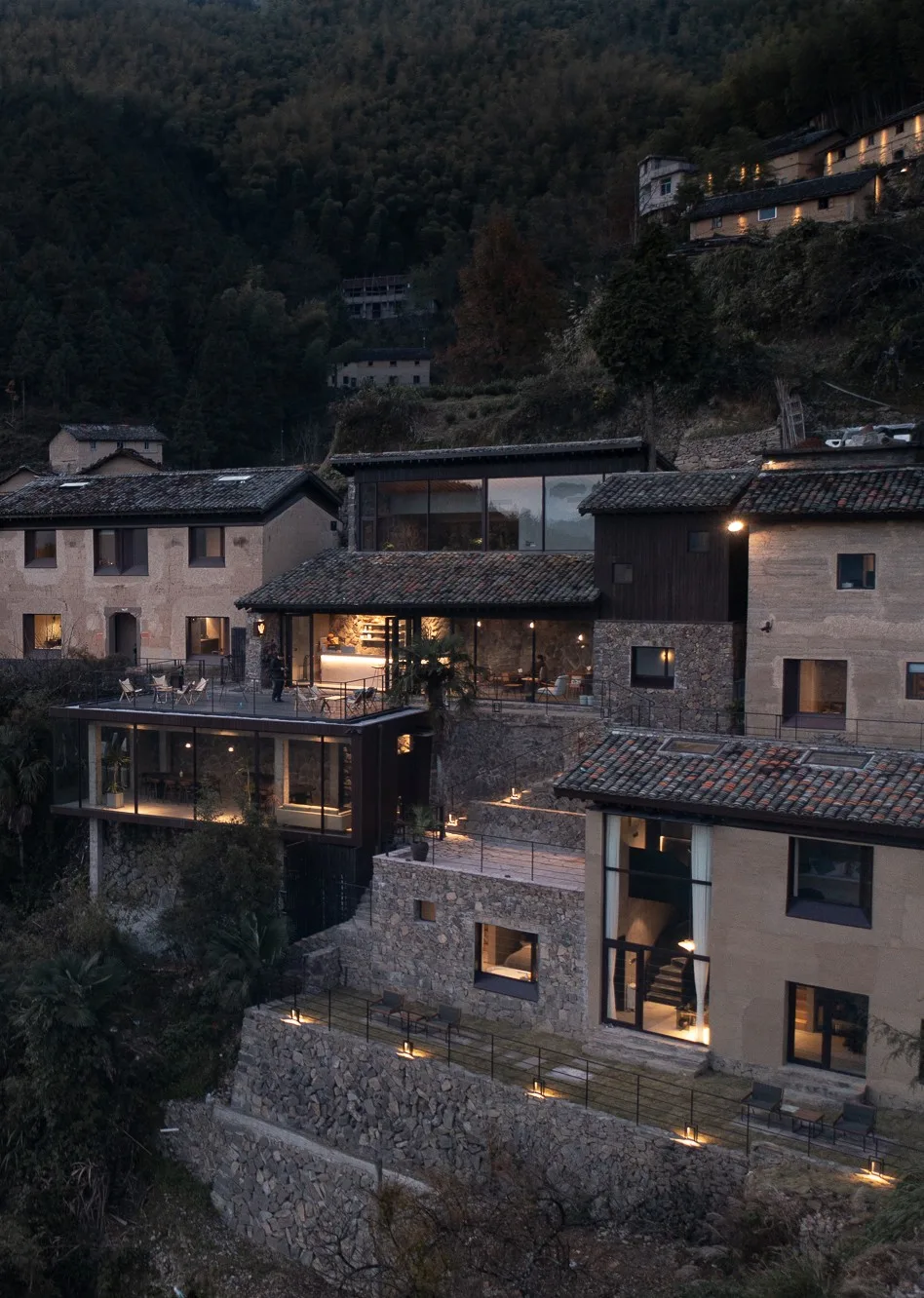
Guest Rooms
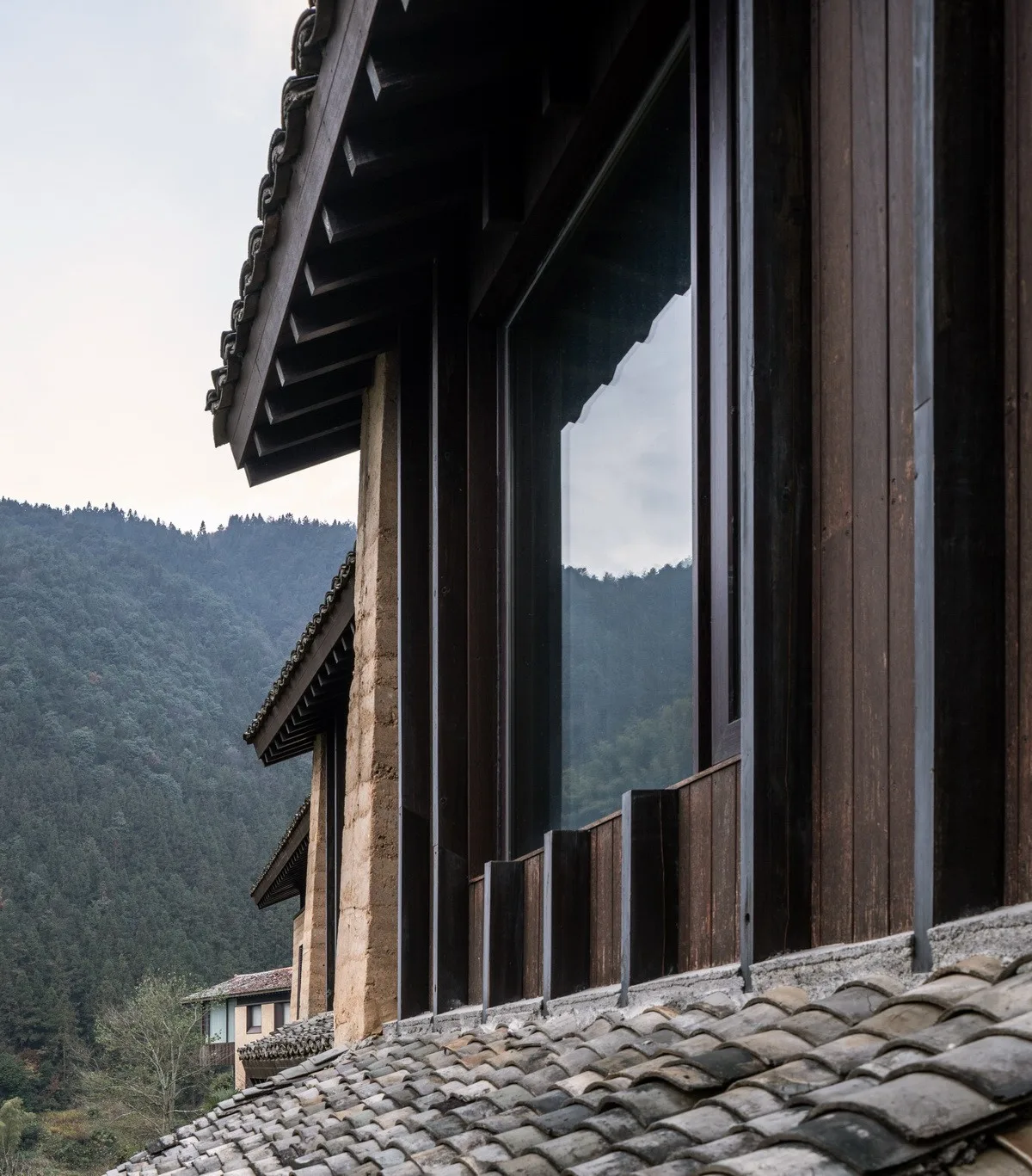
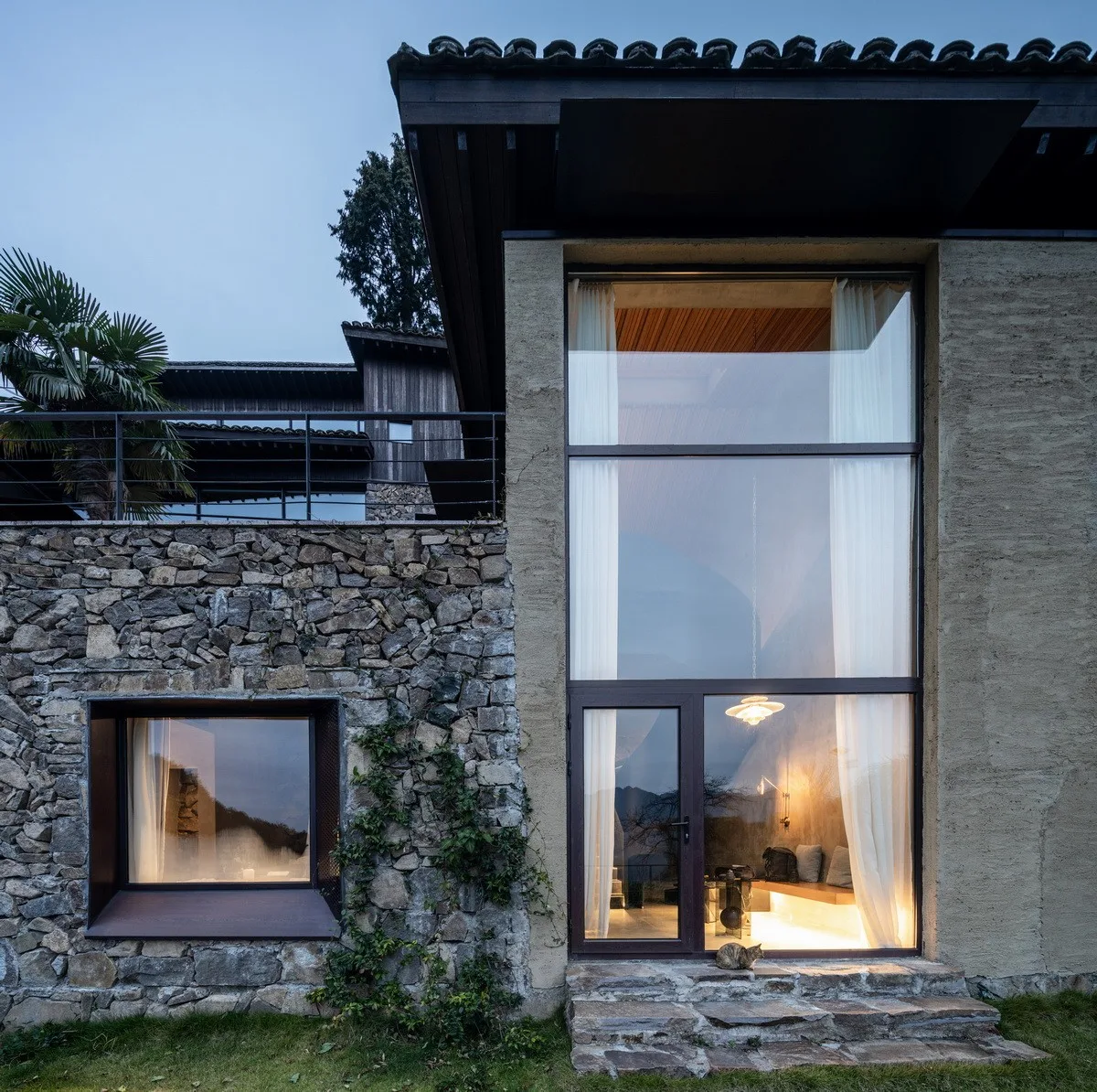
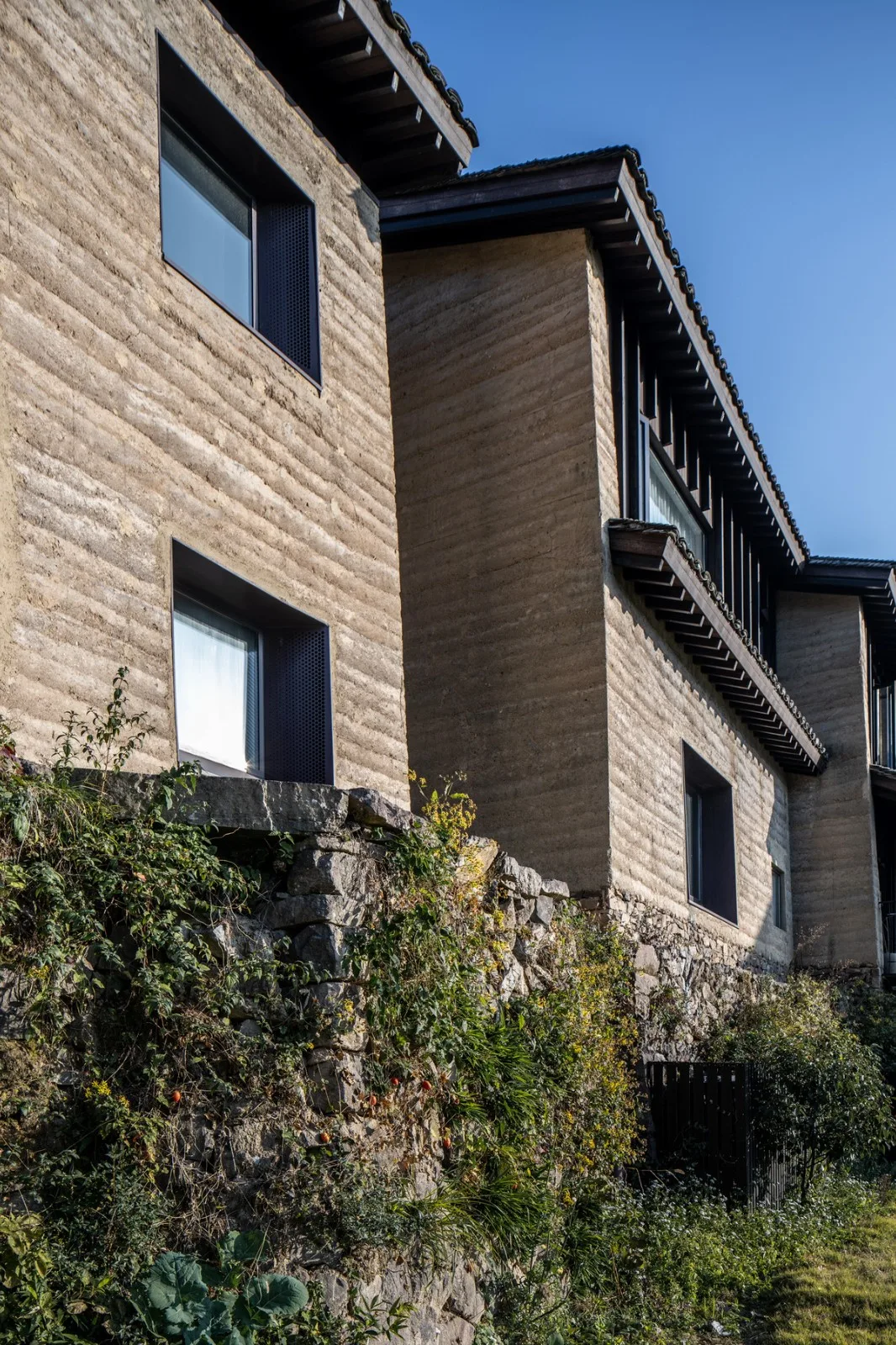
Due to severe structural deterioration, the Phase II guest rooms retained only salvageable old walls and recycled materials. Facade renovations balanced the need for expansive windows to maximize views with preserving the original architectural texture, maintaining elements such as wood veneers, rammed earth, and decorative waist eaves, all restored using modern craftsmanship.
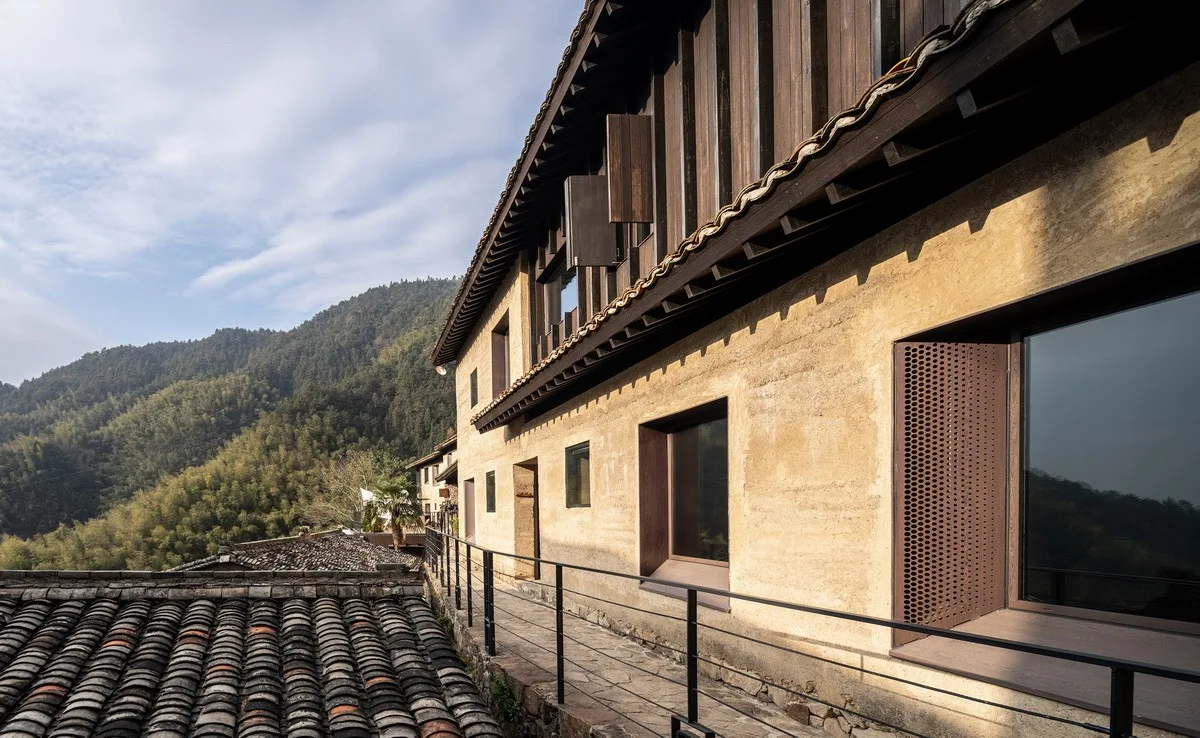
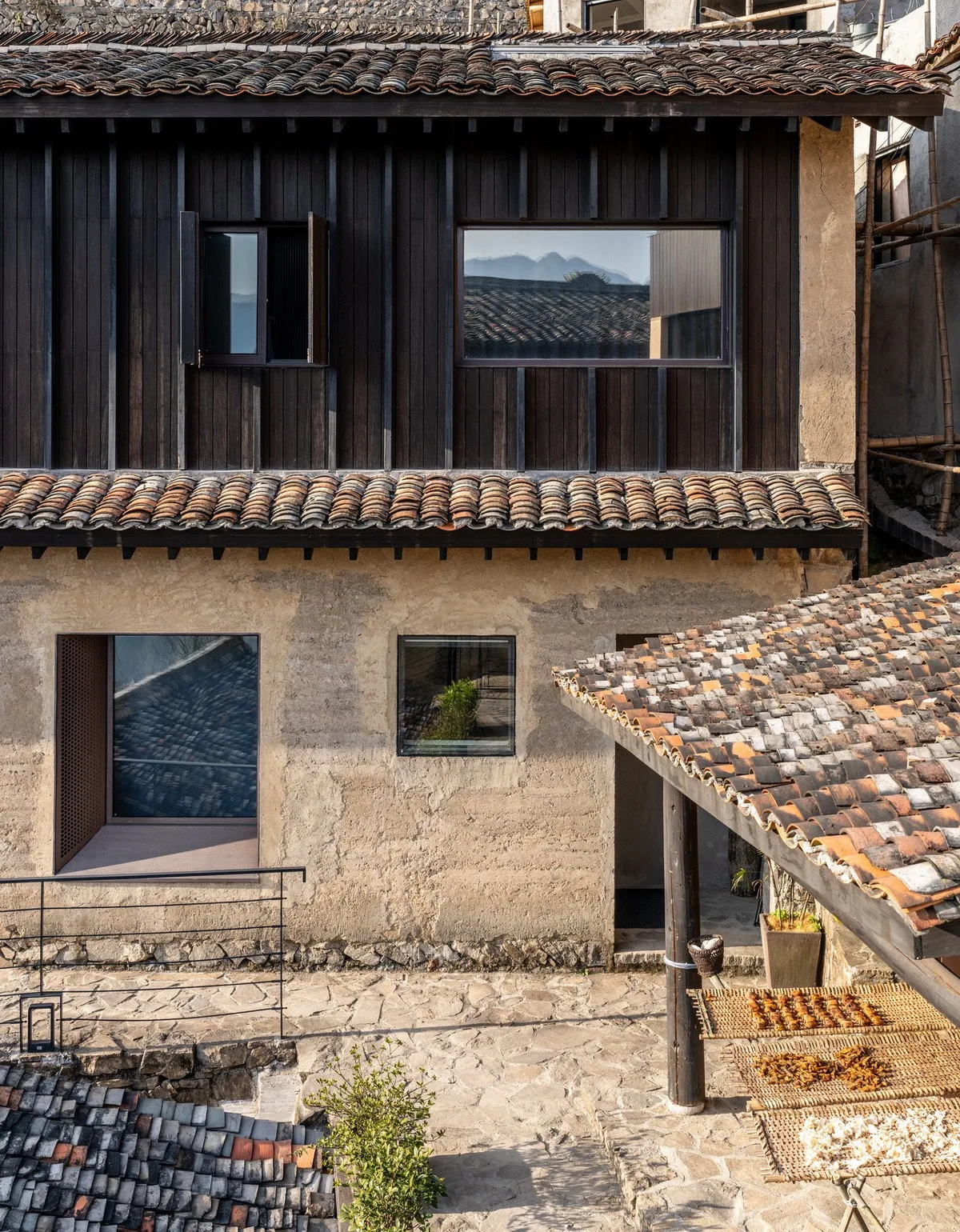
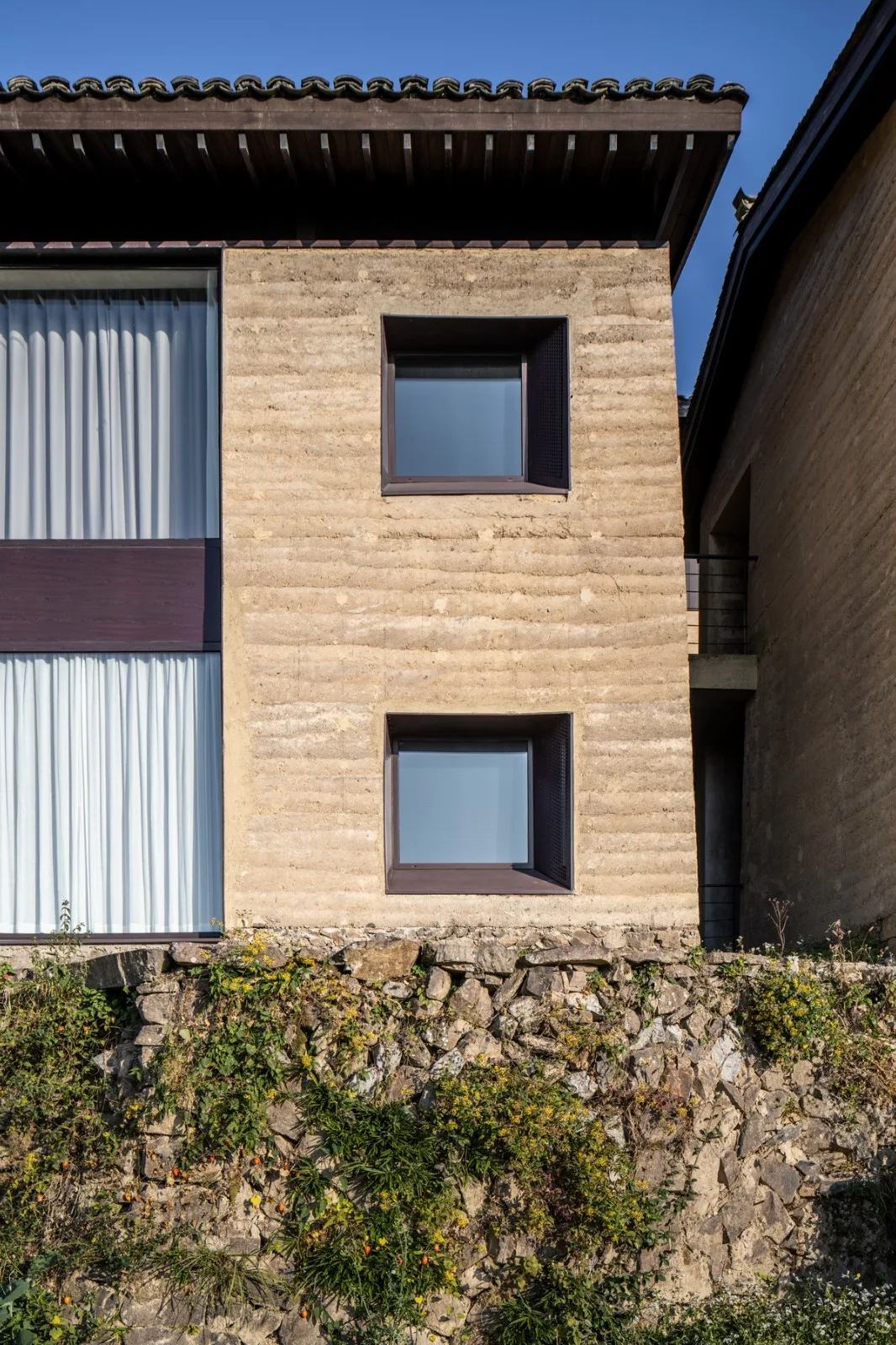
Modern techniques were used to restore and recreate the building’s original style.
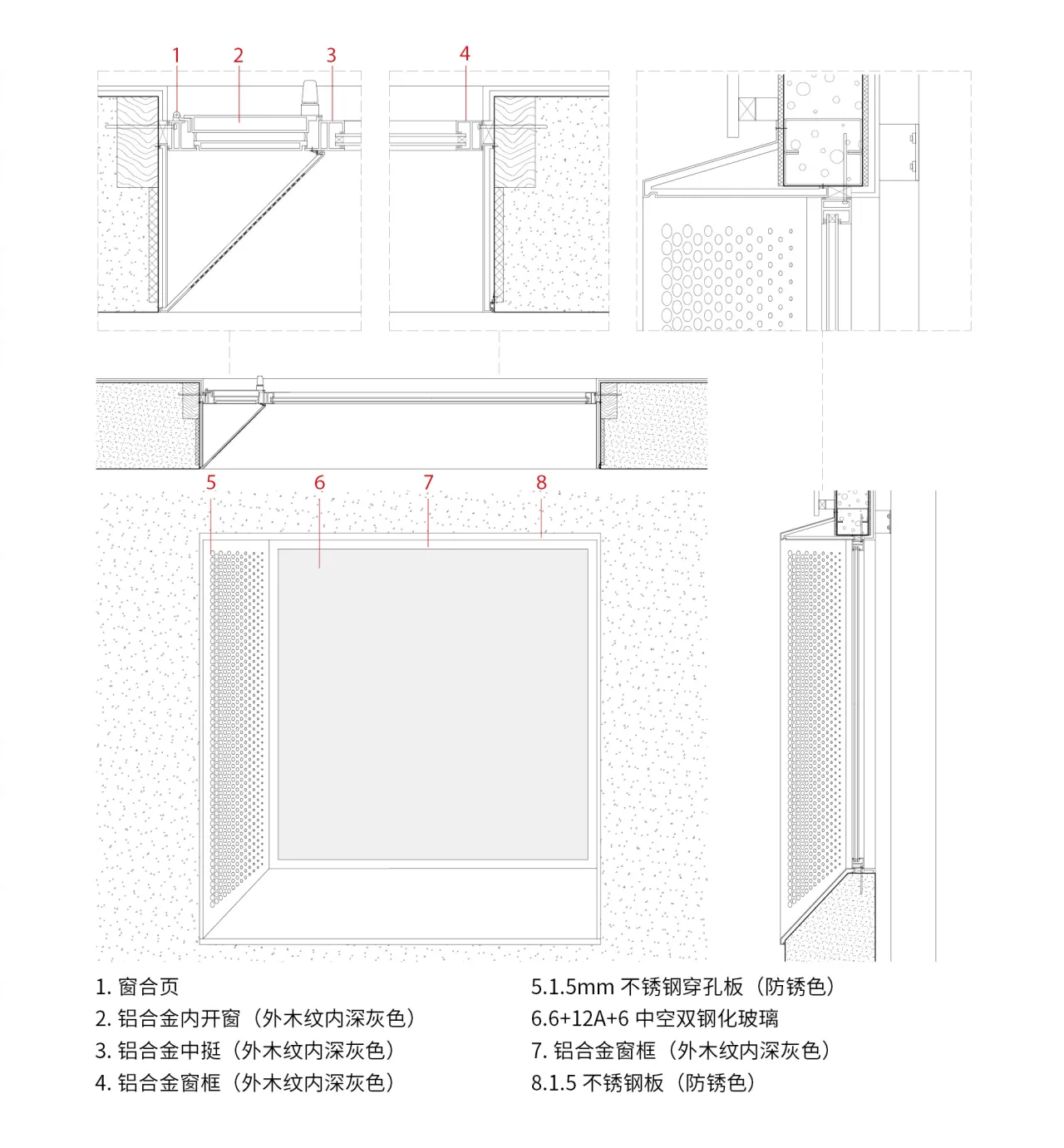
△ Window system detail
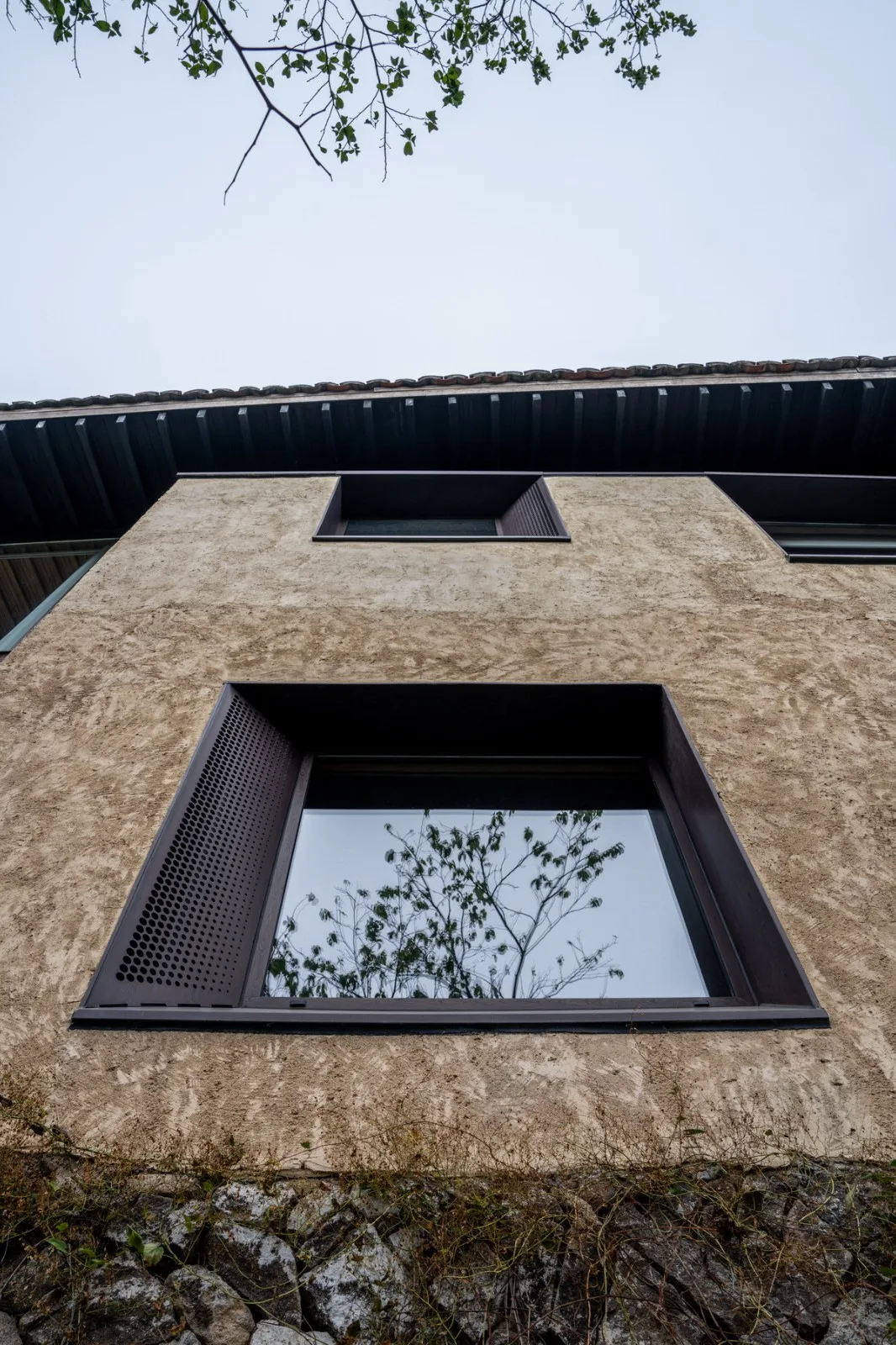
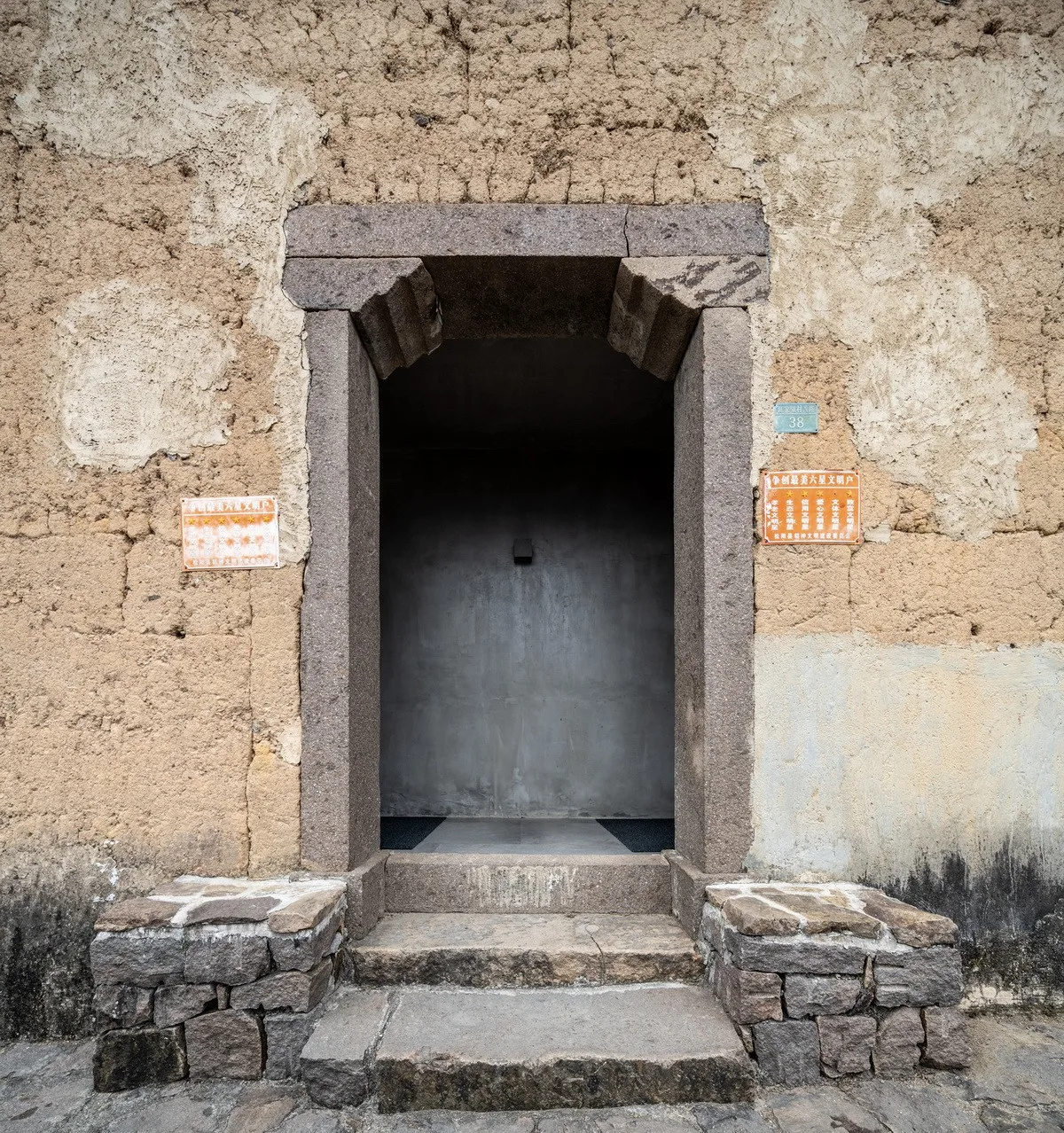
△ Updated door and window system
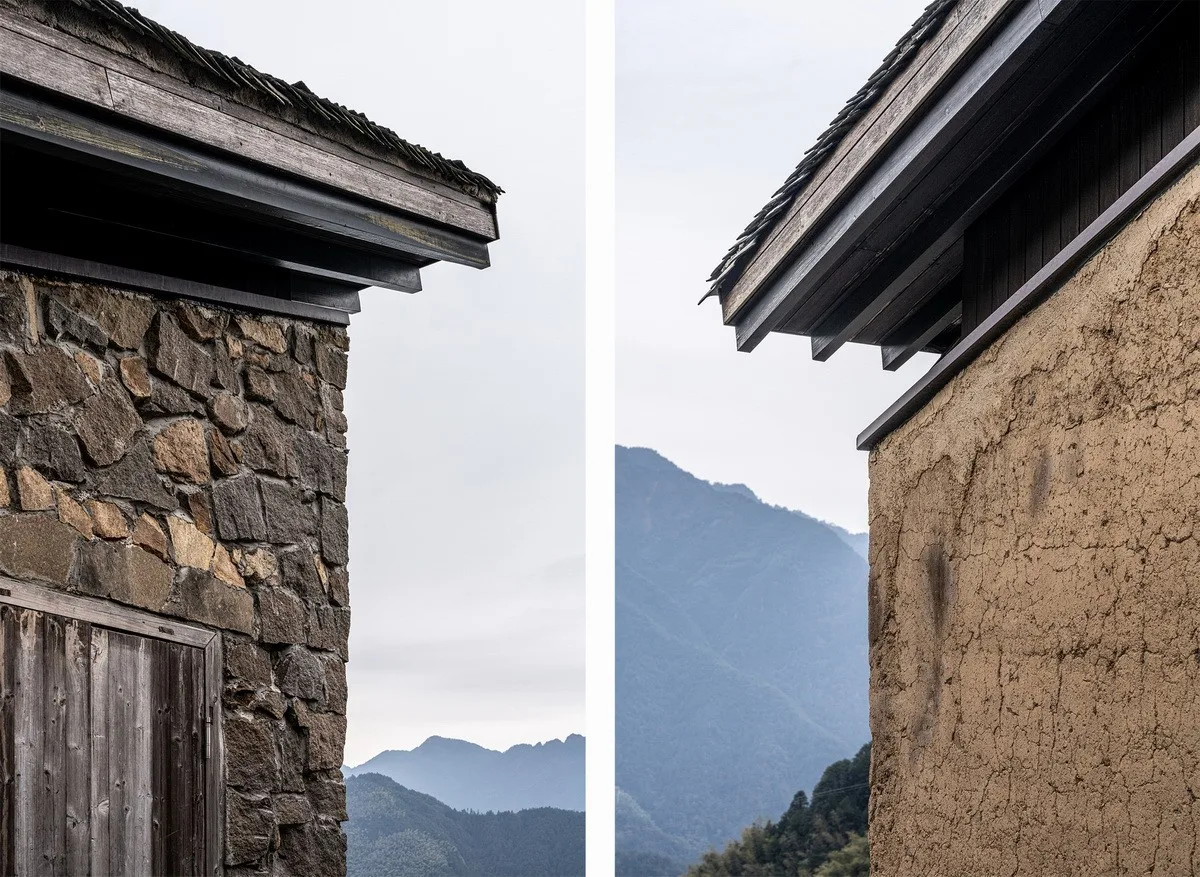
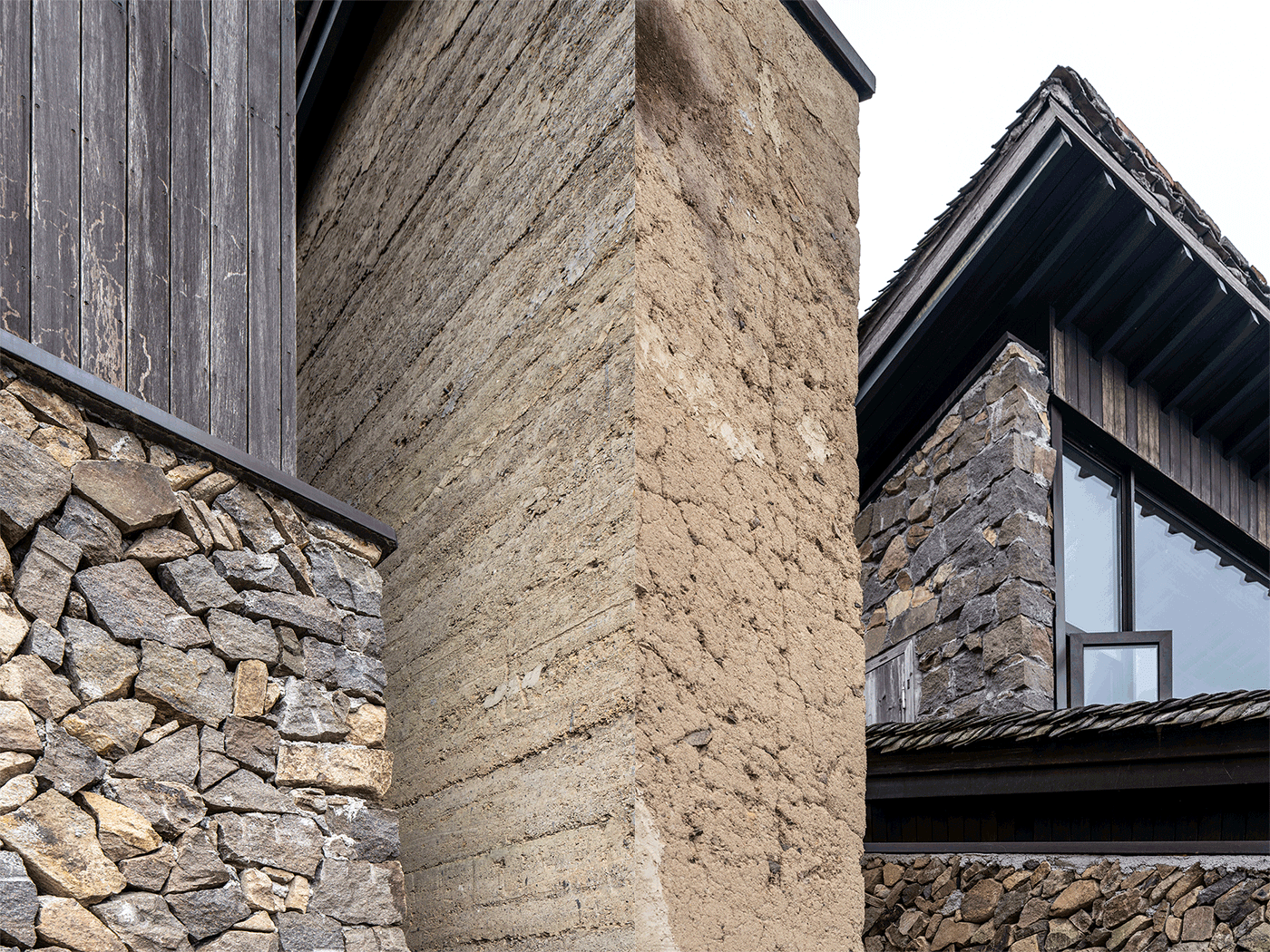
△ Facade material details
Building A guest rooms retain three rammed earth walls, rebuilding the south facade to match the original design. Metal window frames were added to openings, and the space under the eaves serves as a viewing platform. After dismantling the dilapidated wooden frame, a lightweight steel structure was built to meet homestay functional needs. Old tiles were relaid, and the restored outdoor platform now provides sunbathing and activity space for villagers.
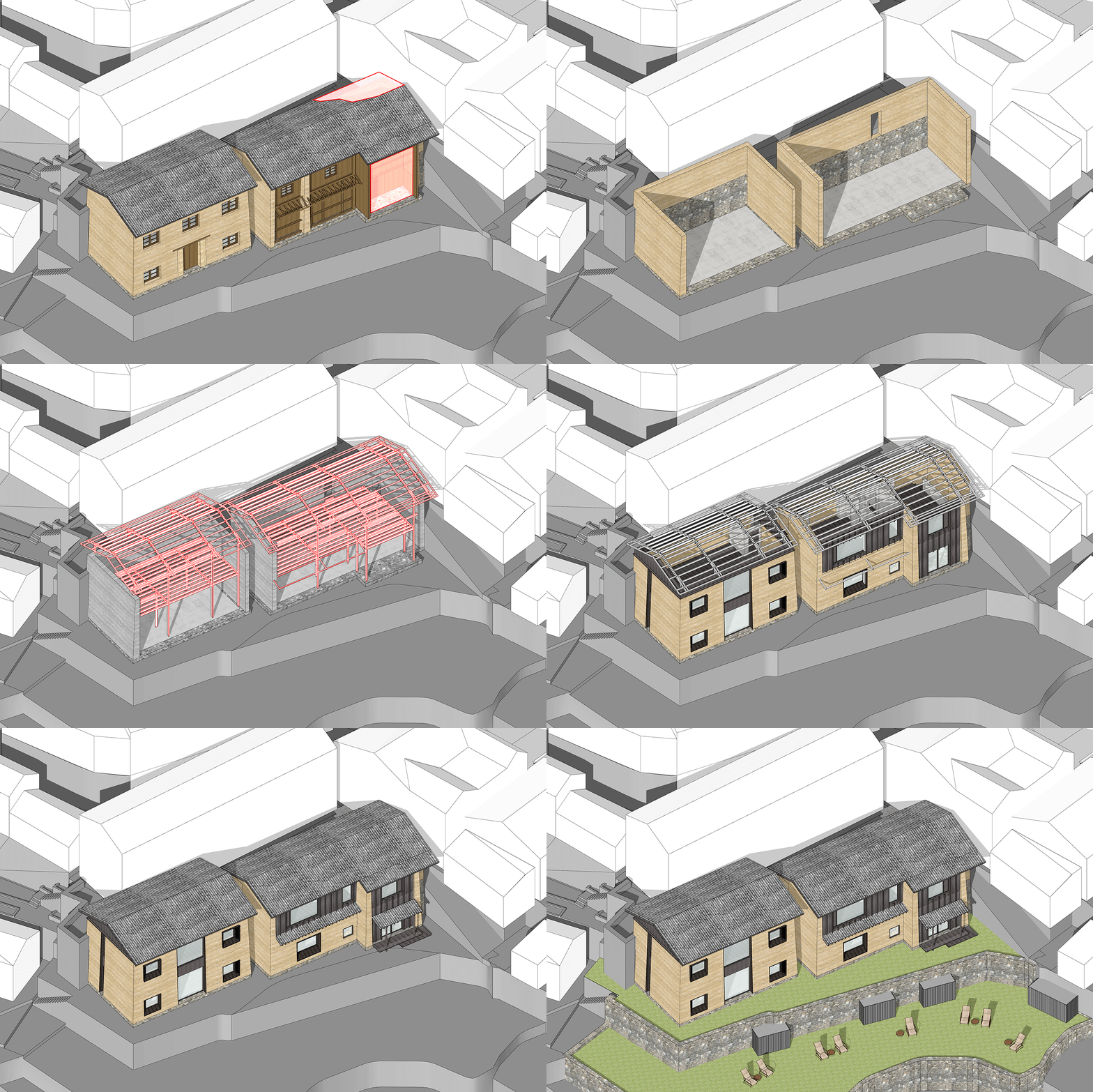
△ Building A guest room generation map
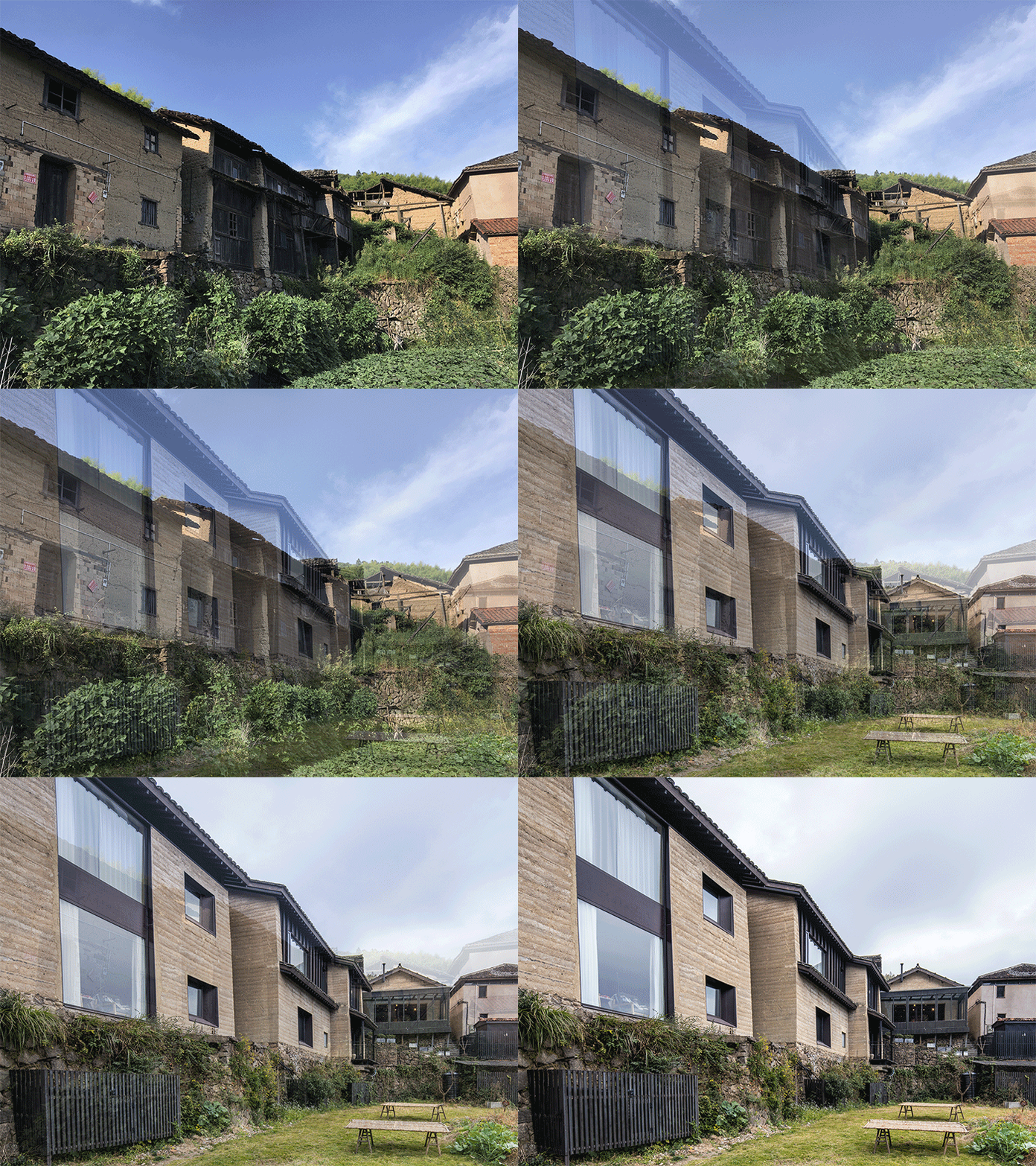
Before and after renovation comparison of guest rooms in Building A
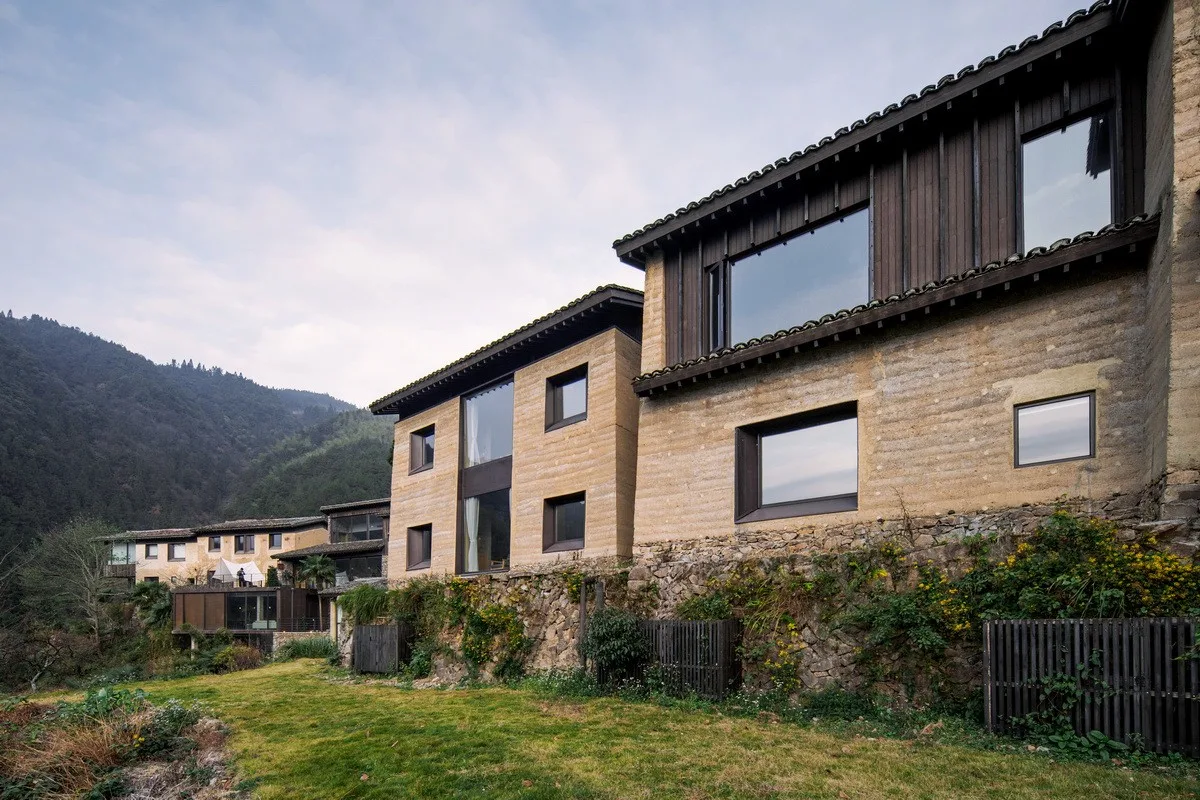
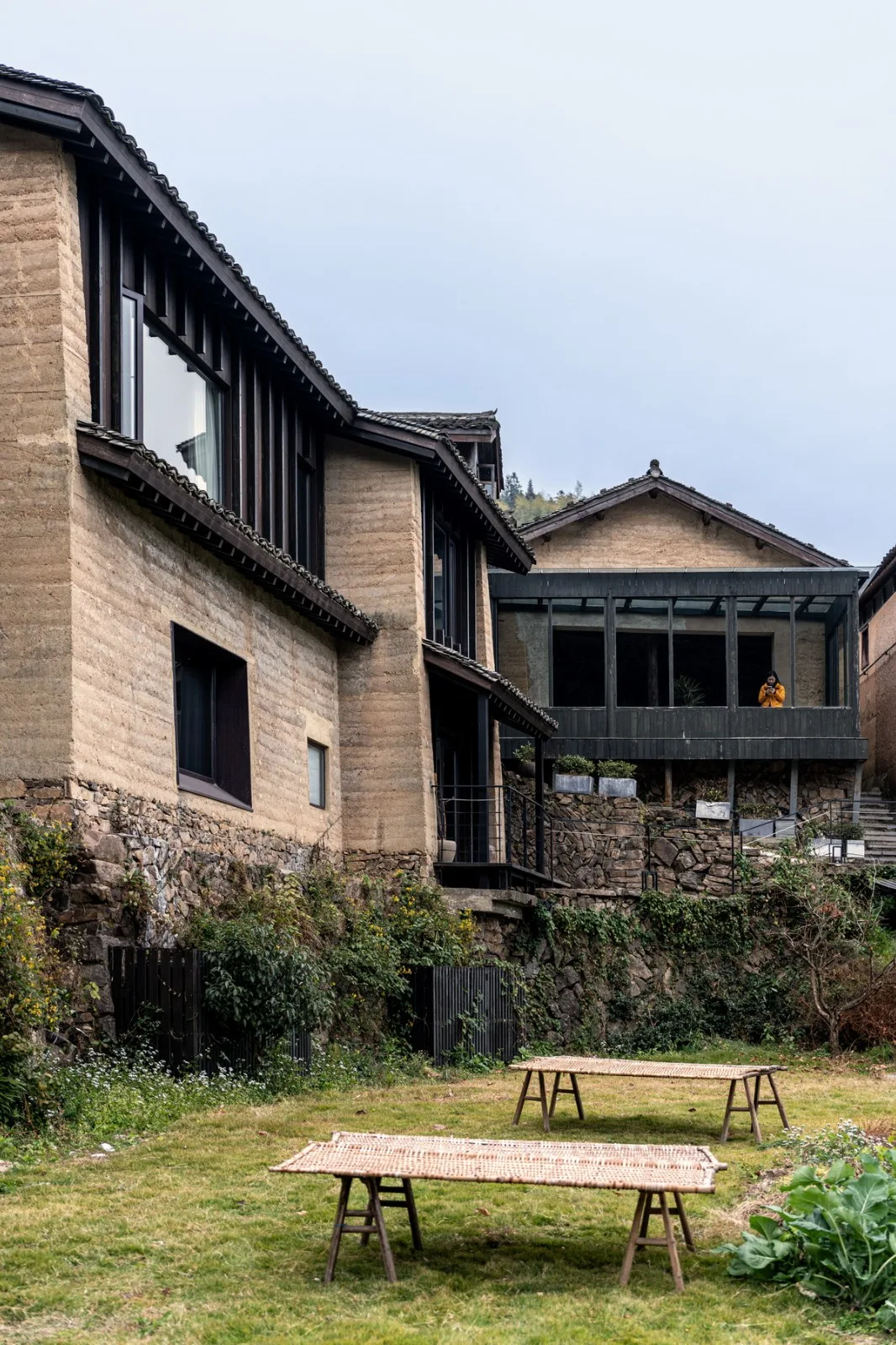
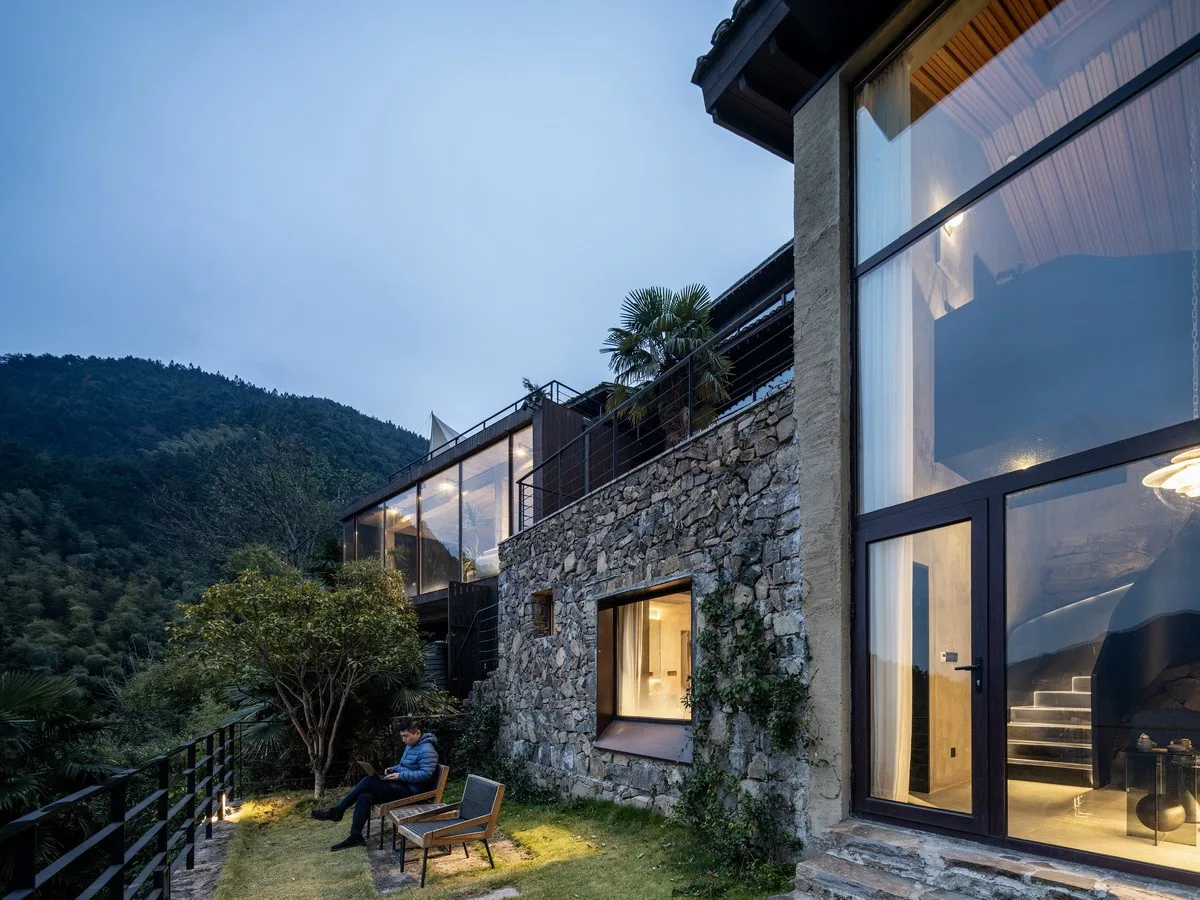
The guest rooms in Building D suffered severe collapse. While preserving and repairing original facade features, the new structure used local rubble for exterior walls to restore the village’s texture. The interior layout was adapted to the terrain, with access from the second-floor platform, descending via a spiral staircase to the first-floor living room and bedroom. The living room is elevated to the second floor, offering vertical views of the canyon landscape extending out to an outdoor courtyard.
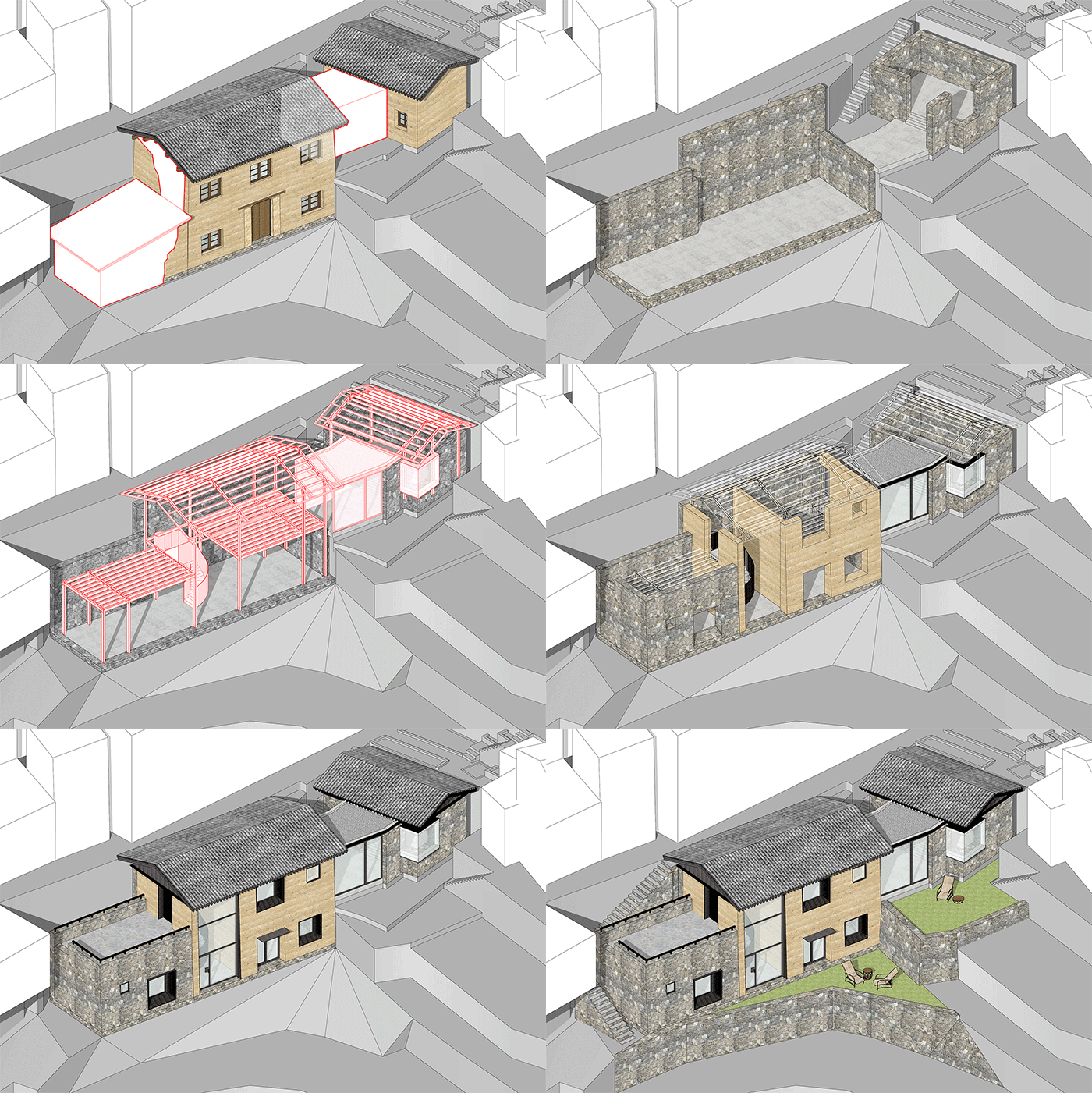
△ Building D guest room generation map
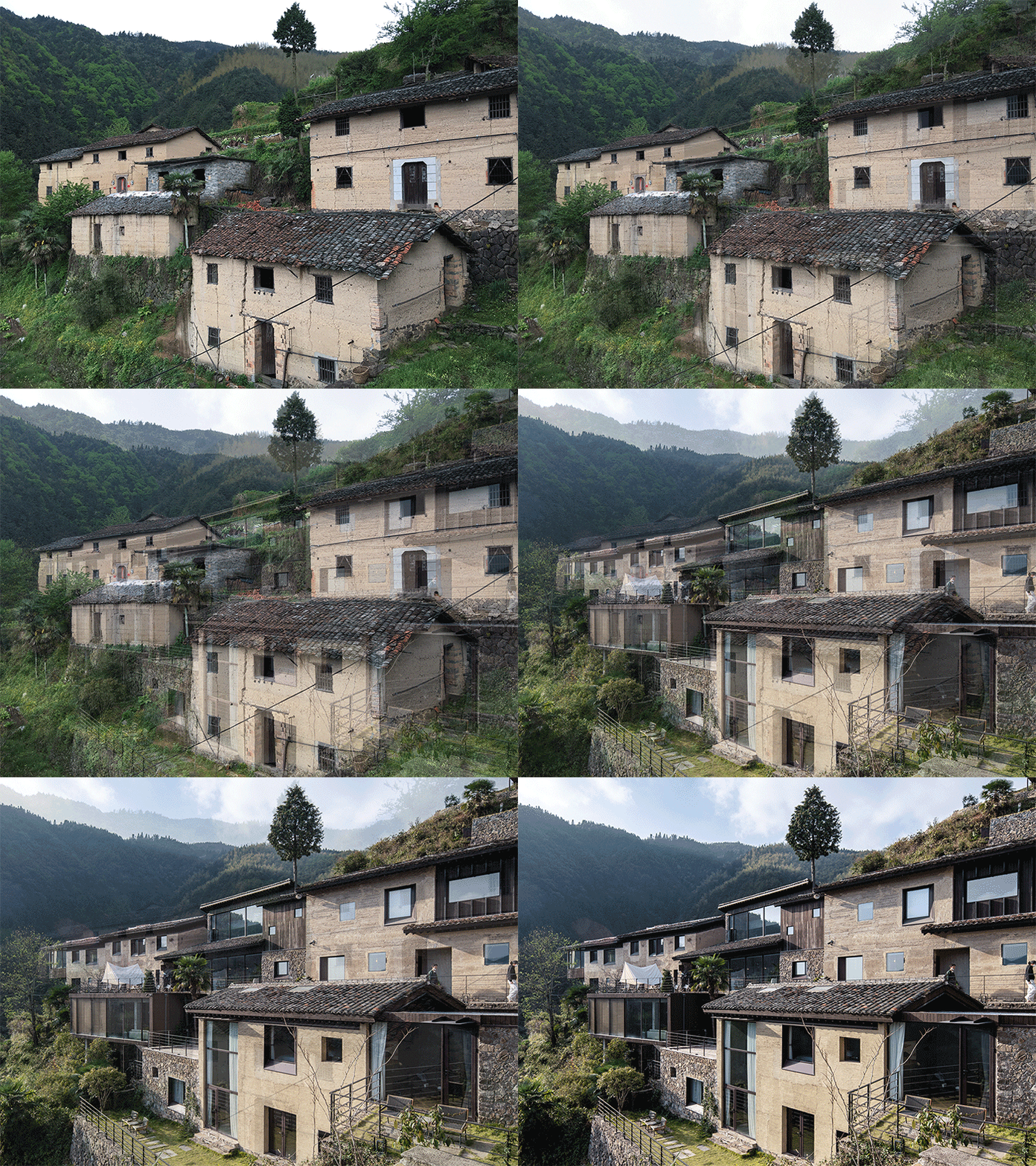
Before and after renovation comparison of guest rooms in Building D
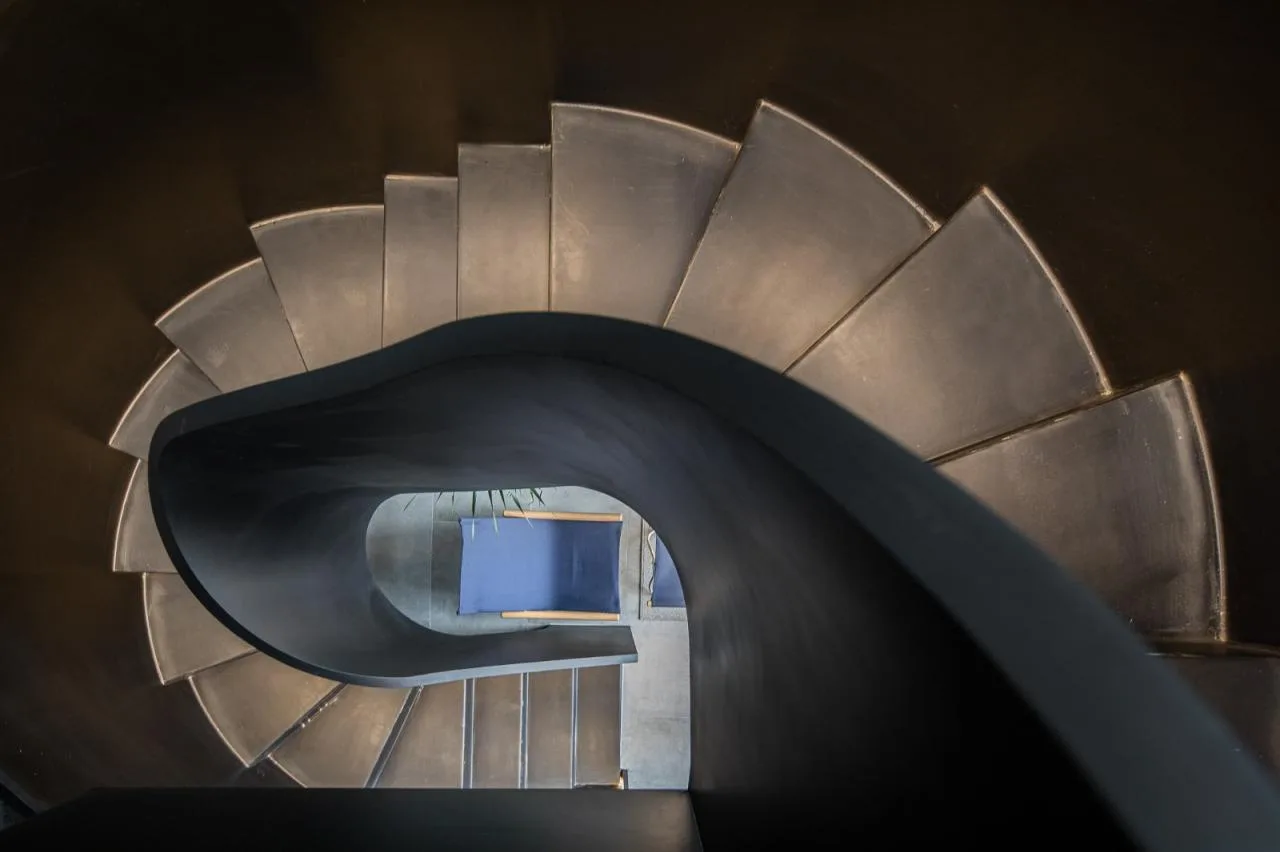
Indoor spiral staircase
Respecting local land division and homestead characteristics, seven room layouts were designed to respond to the complex mountainous environment. Living rooms are positioned adjacent to the road, while bedrooms and bathtubs face the landscape, ensuring privacy while maximizing scenic views.
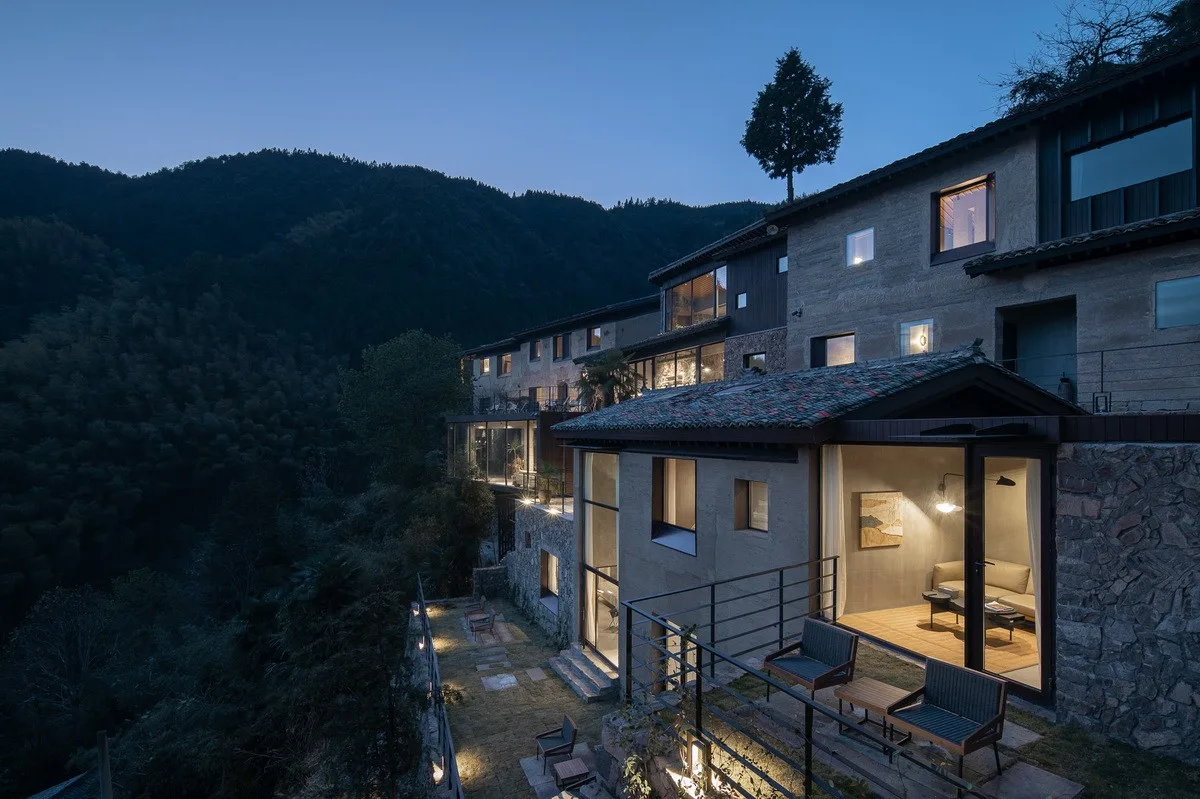
△ Enjoying the best landscape views
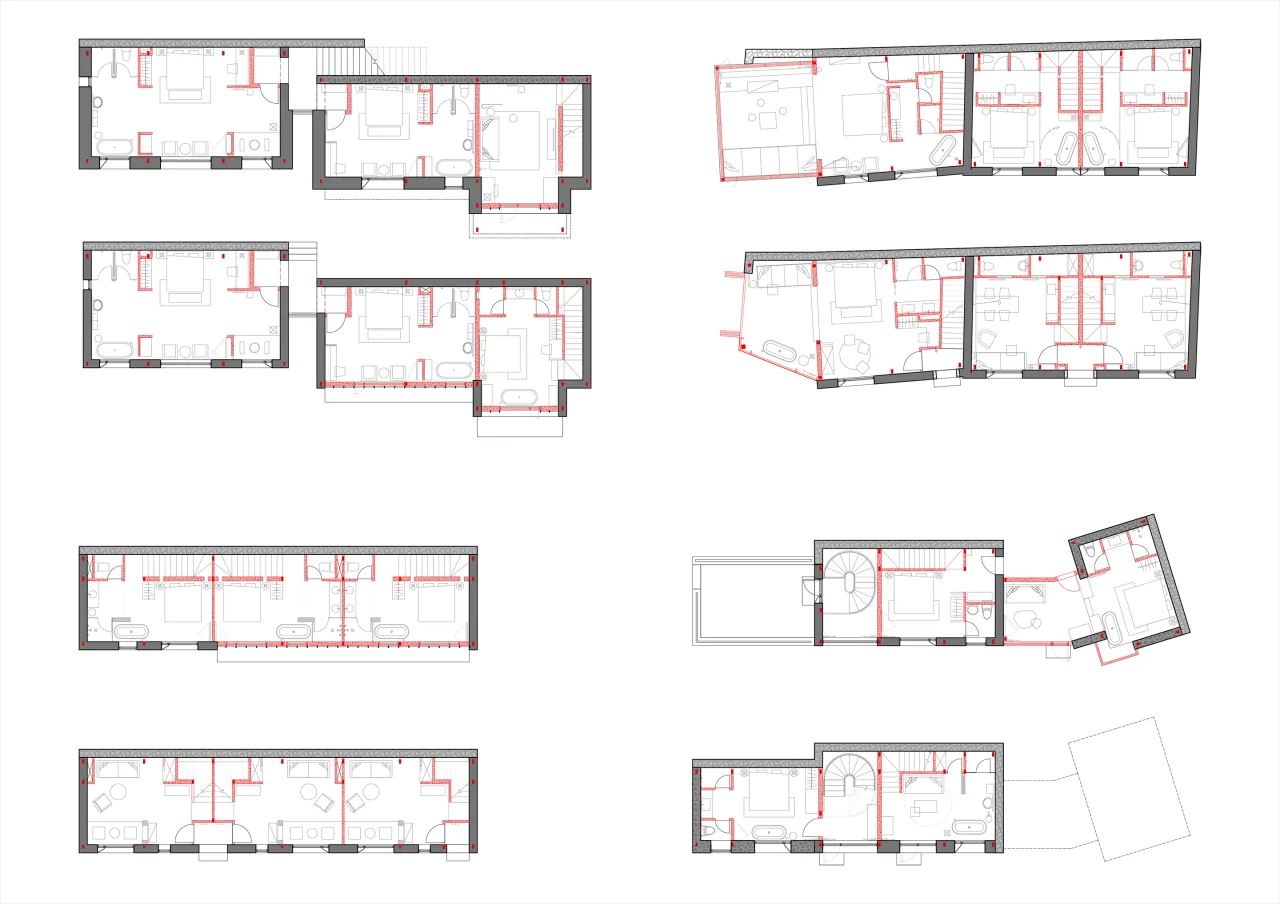
△ Room layout array
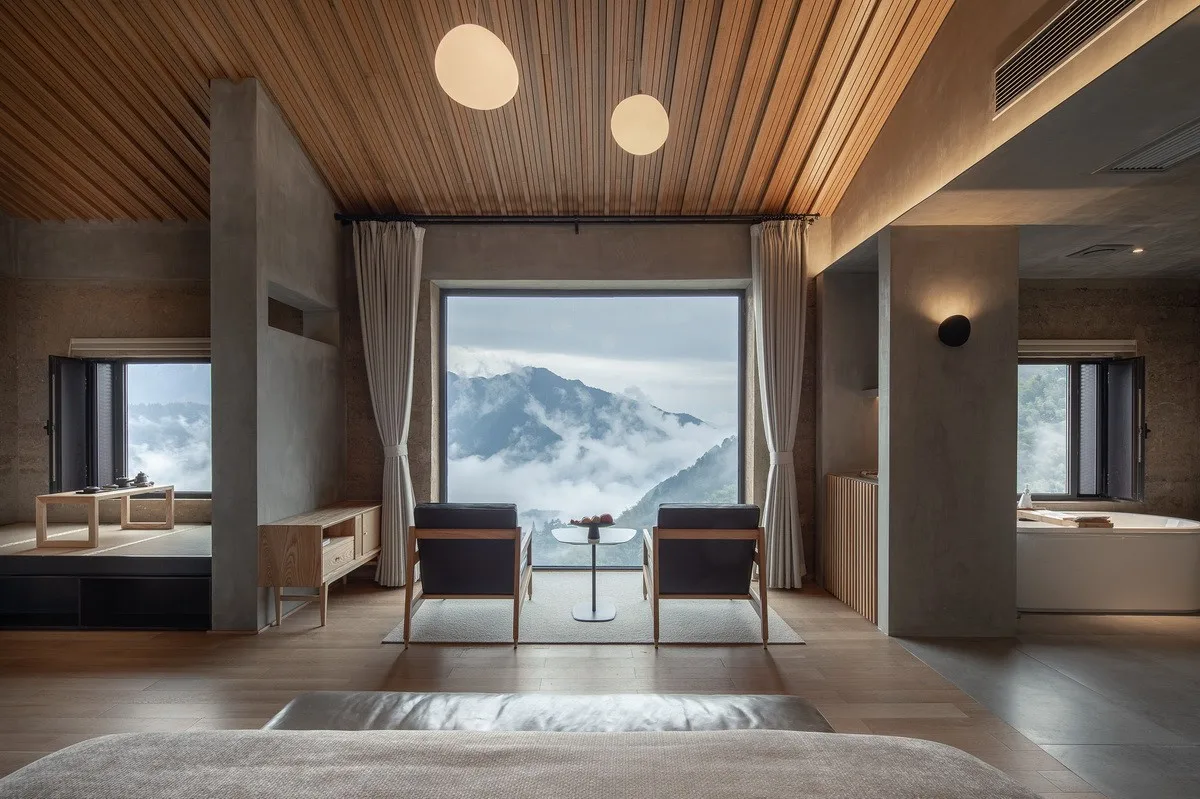
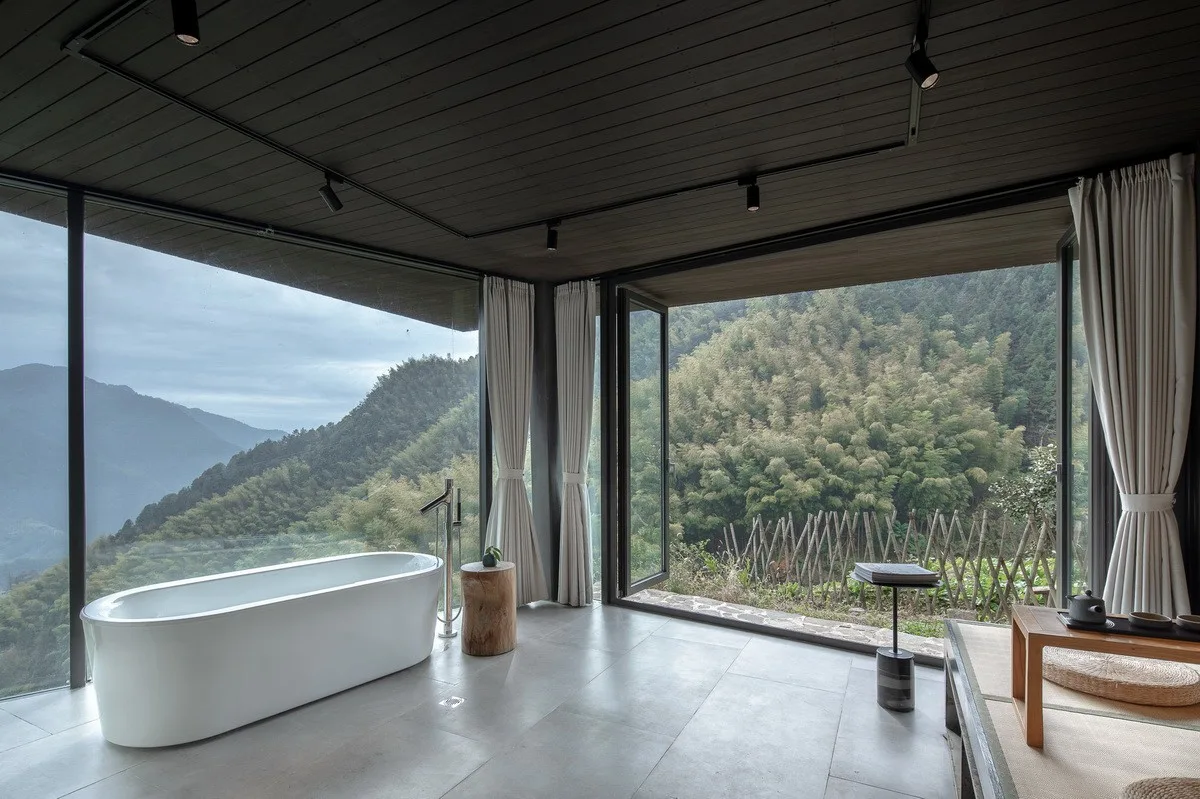
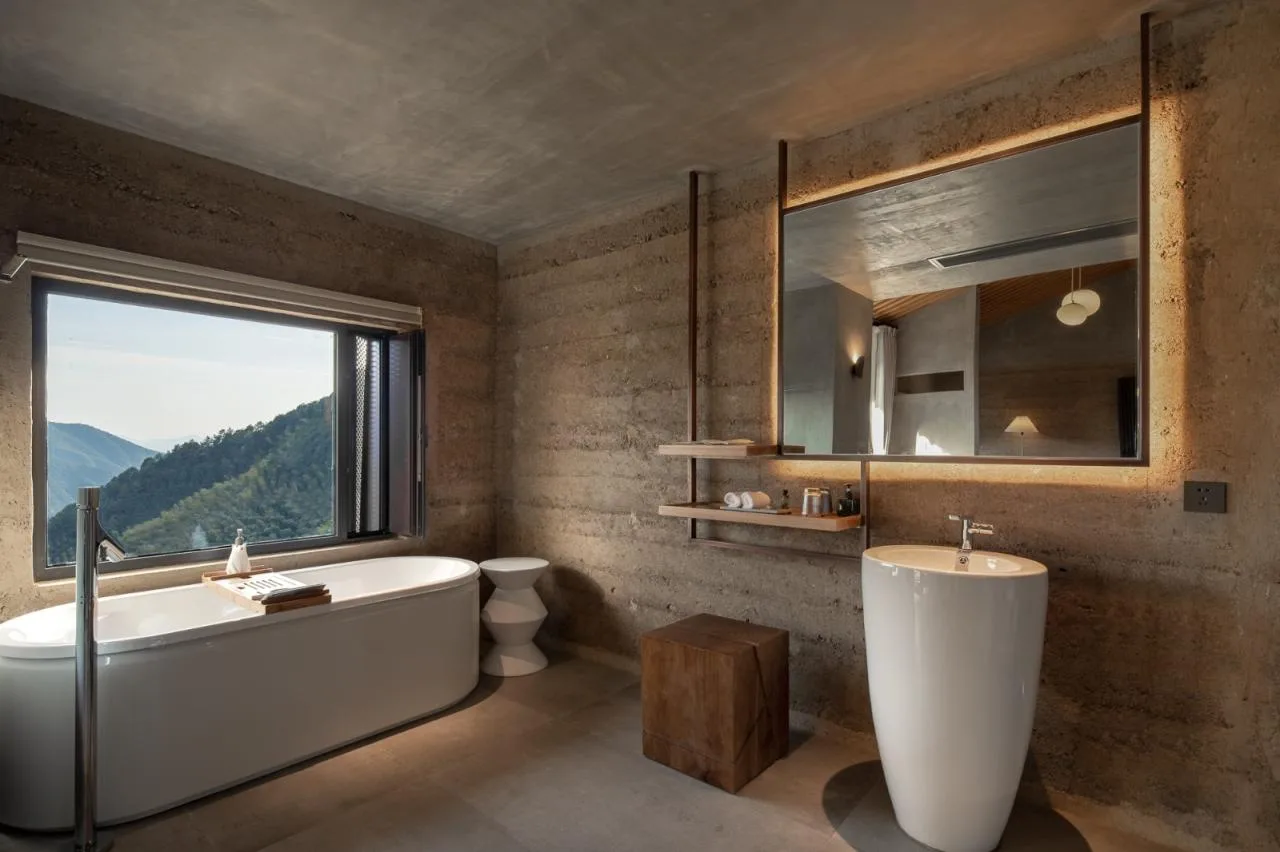
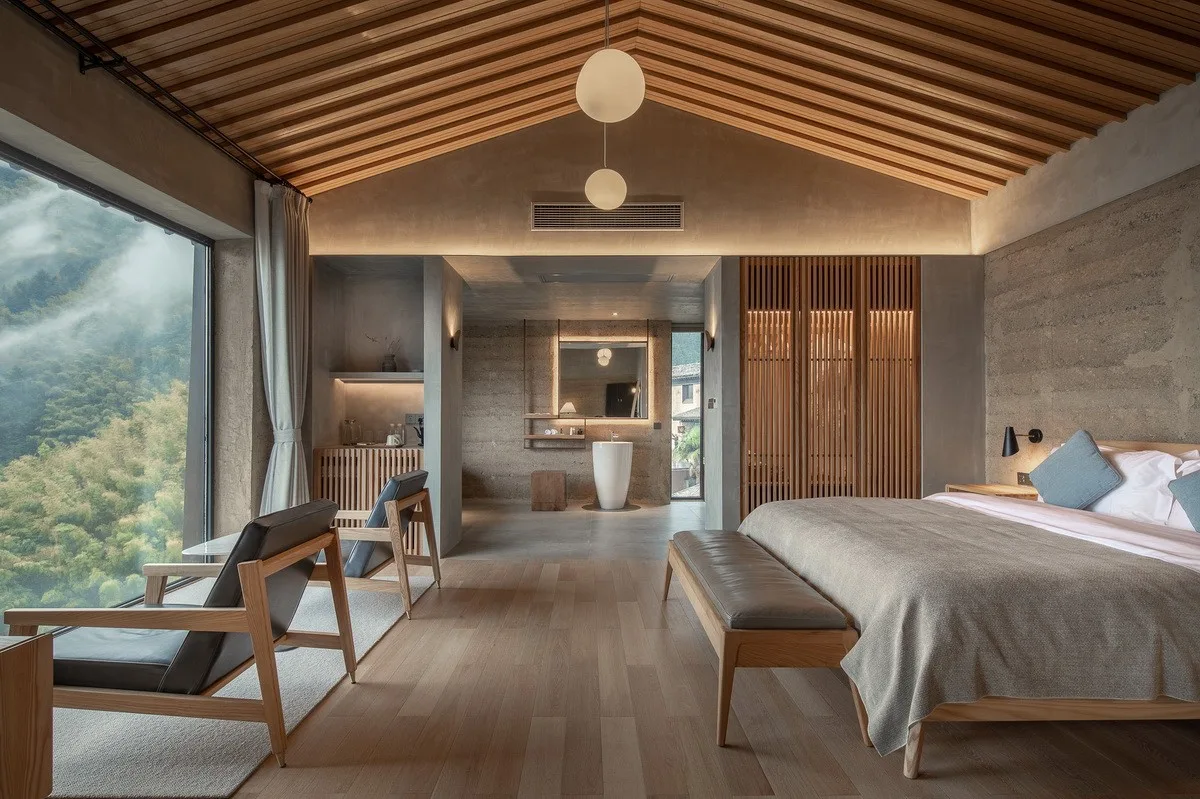
△ Interior guest room view
03. Collaborative Construction and Community Sharing
Construction was carried out by the village’s own team. Repairing rammed earth walls, rebuilding stone walls, constructing stone steps, and laying blue tiles all relied heavily on villagers’ collective expertise. Due to the village’s narrow, winding paths and hundreds of stone steps—some only wide enough for single-person access—heavy machinery was unable to enter, requiring all materials to be manually transported in multiple trips.
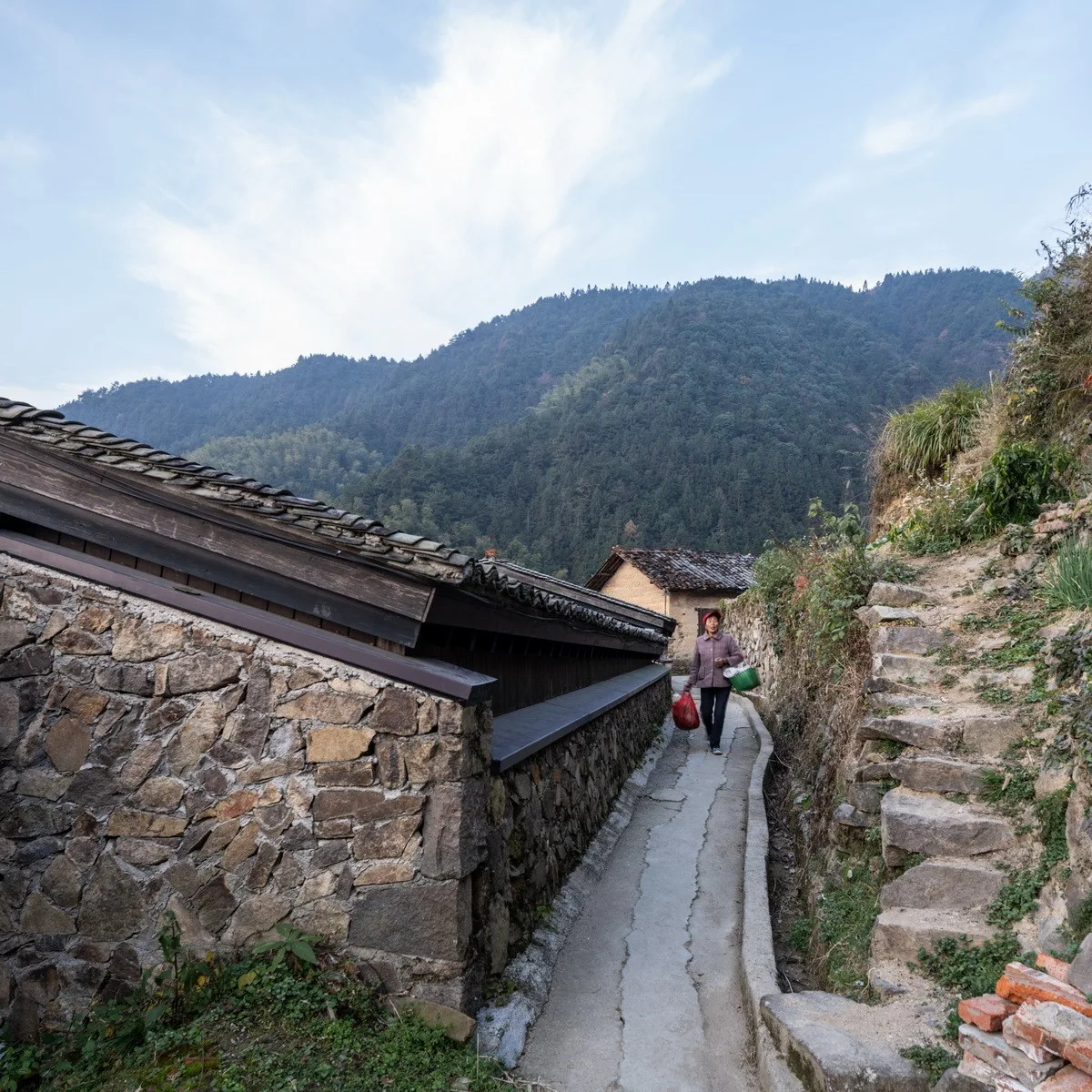
This construction approach revitalized villagers’ sense of belonging and identity while maximizing the preservation and transmission of traditional cultural heritage.
04. One Homestay Revitalizes an Ancient Village
Initially, policy plans encouraged all Chenjiapu villagers to leave the mountain to escape poverty, threatening to erase the century-old village. Fortunately, through persistent effort and policy support, Chenjiapu Village has been fully preserved and developed.
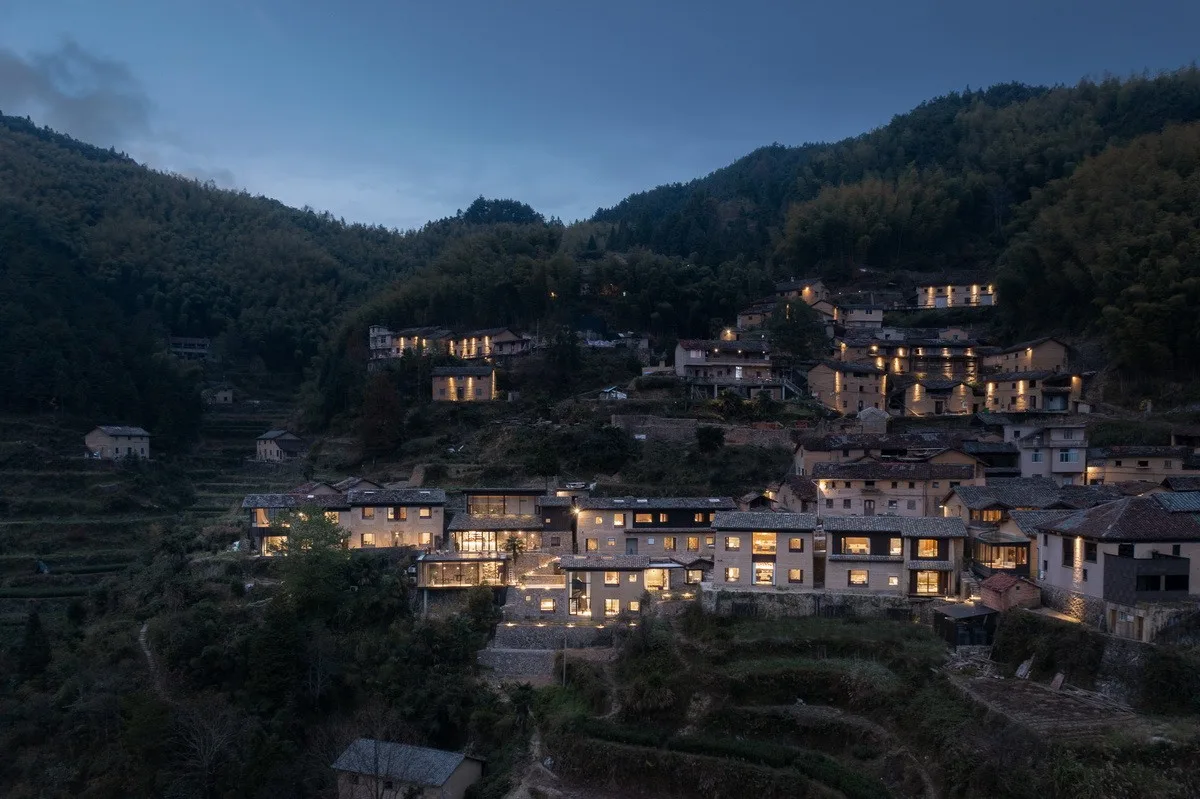
In 2022, Chenjiapu Village welcomed over 300,000 visitors, generating tourism revenue exceeding 19 million yuan and increasing the average household income for remaining residents by 20,000 yuan. Feifuji Homestay maintains an average room rate of 1500–2500 yuan per night with an annual occupancy rate above 90%.
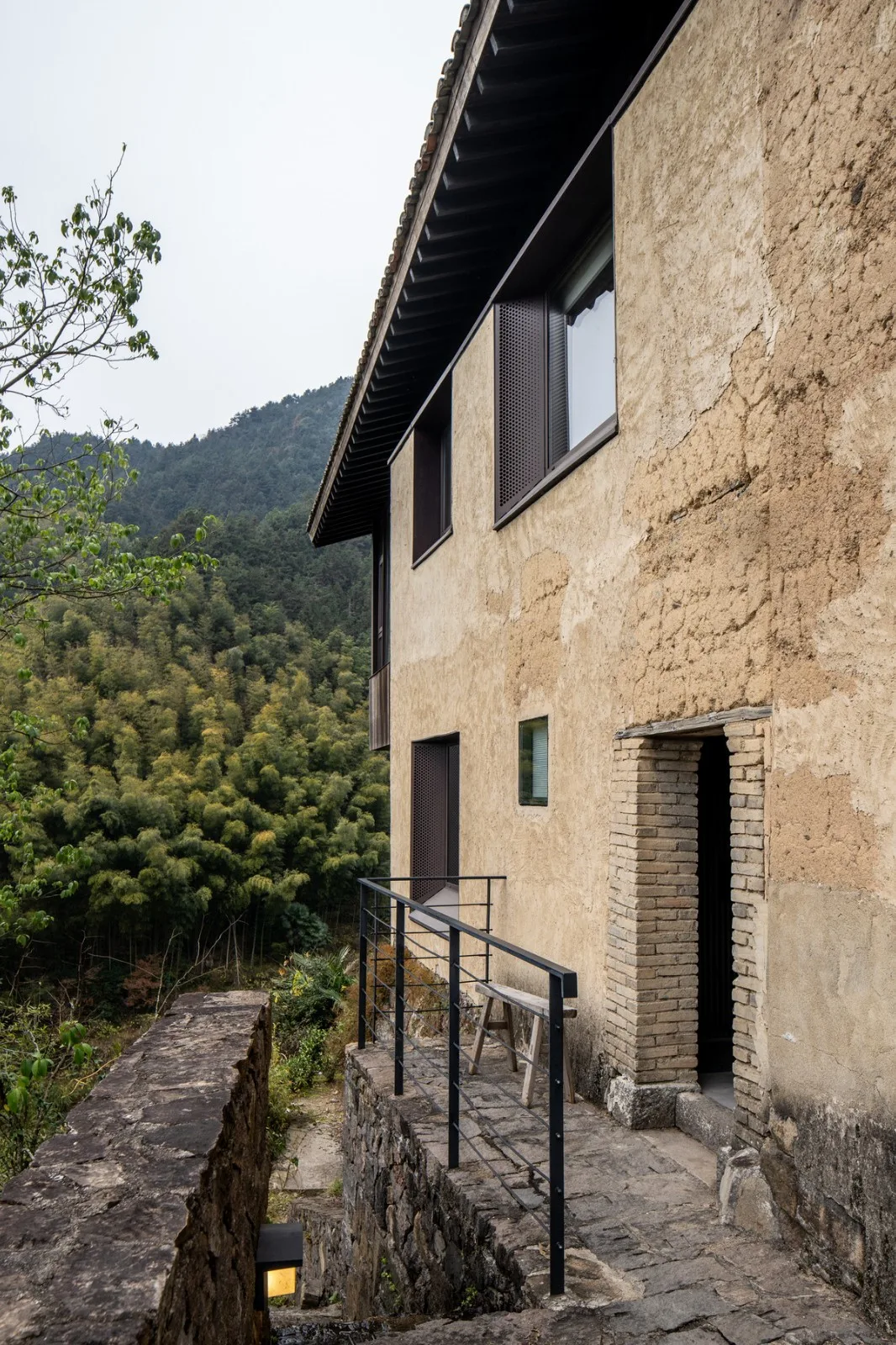
Feifuji remains committed to the mission of “revitalizing one village with one homestay.” Since establishing itself in Chenjiapu, it has actively promoted rural revitalization by creating jobs, training villagers in cultural and tourism skills, and assisting with the sale of local agricultural products such as dried sweet potatoes and high-altitude vegetables. Through rebranding, e-commerce partnerships, and new media marketing, thousands of pounds of dried sweet potatoes sell out every 3–5 days annually.
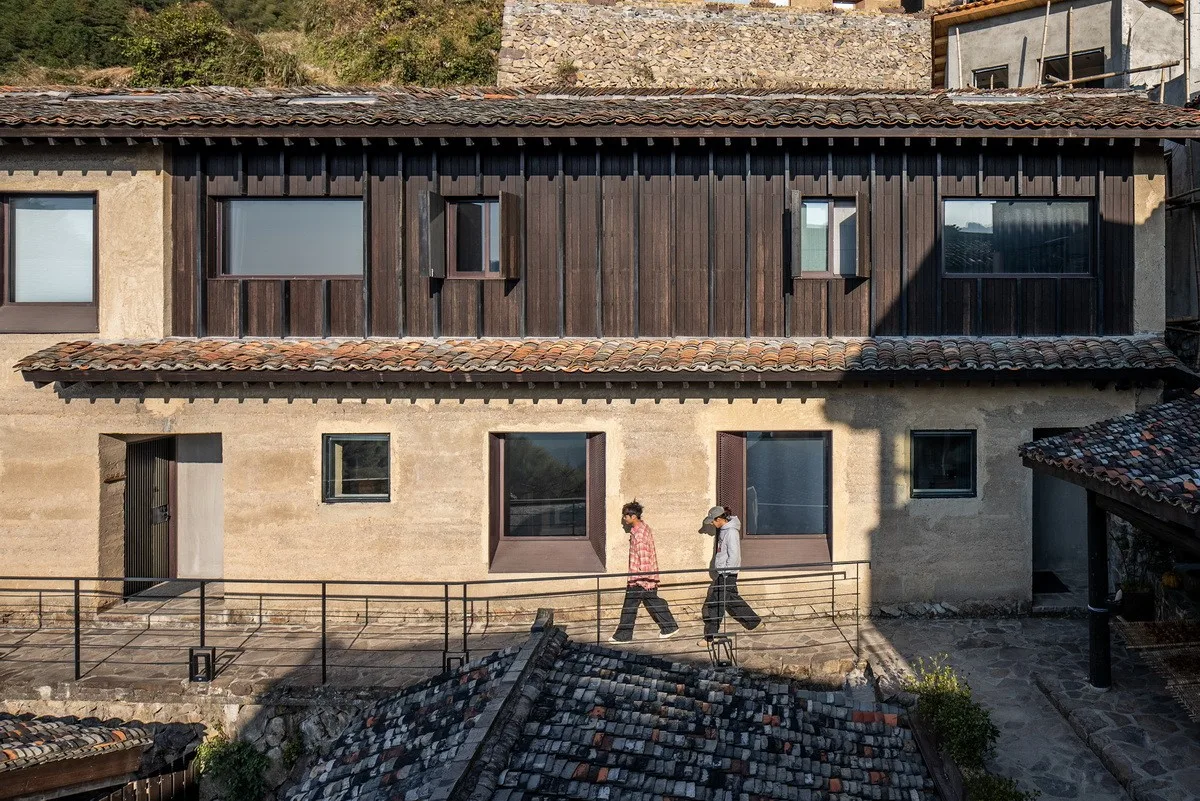
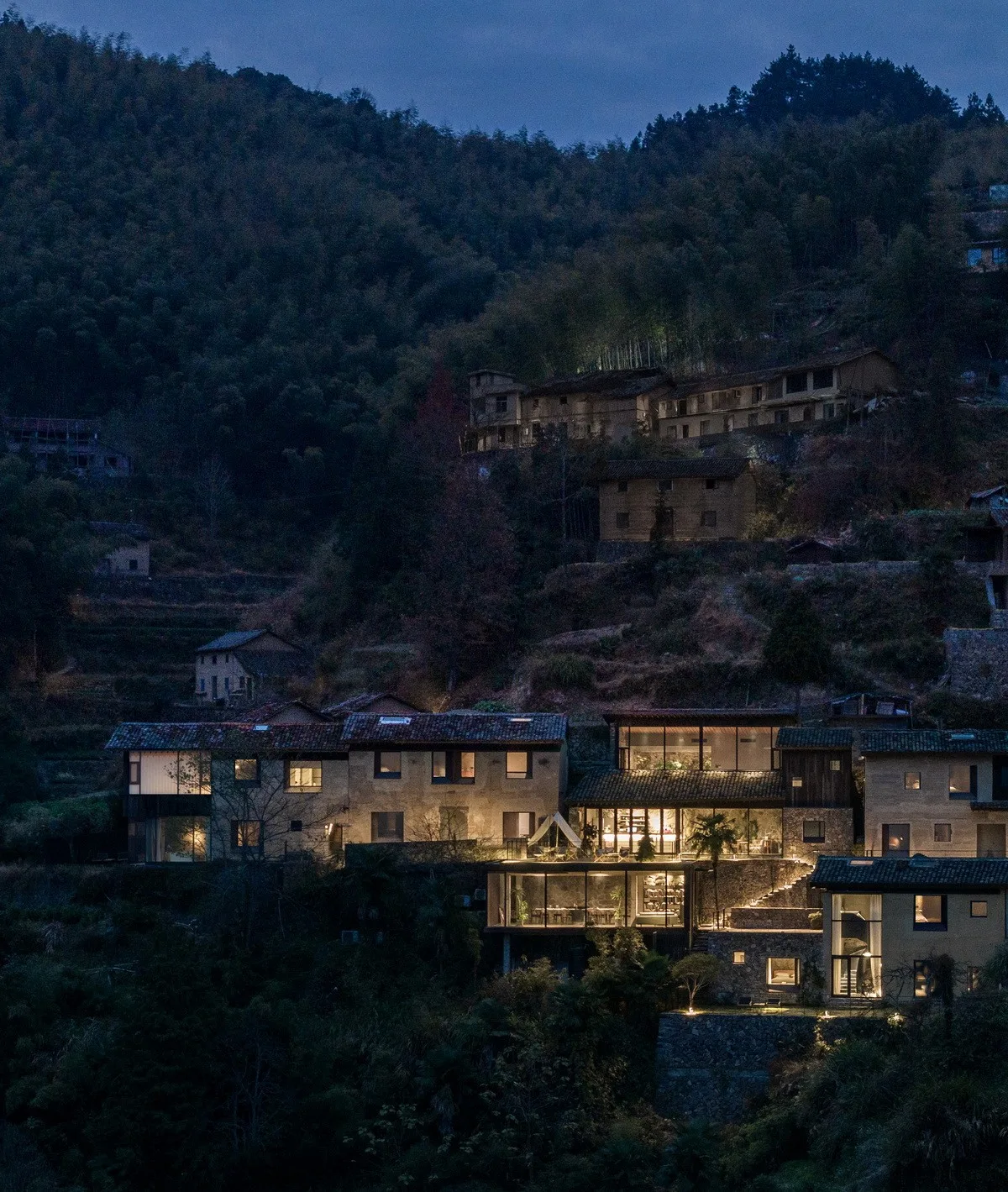
Protecting traditional historical villages aims to enable better development. Despite strict controls on their appearance, these villages must also adapt to new business models. Rural development depends not only on natural and cultural heritage but also on introducing external resources—tourists, businesses, and industrialized construction systems. This approach generates economic benefits while updating and integrating local construction techniques, guiding villagers to protect their traditional heritage alongside progress. Line+ was fortunate to witness and contribute to this transformation, realizing after seven years their dream: “Restart the beauty of the mountains and rediscover the heart of the new village.”
Project Drawings
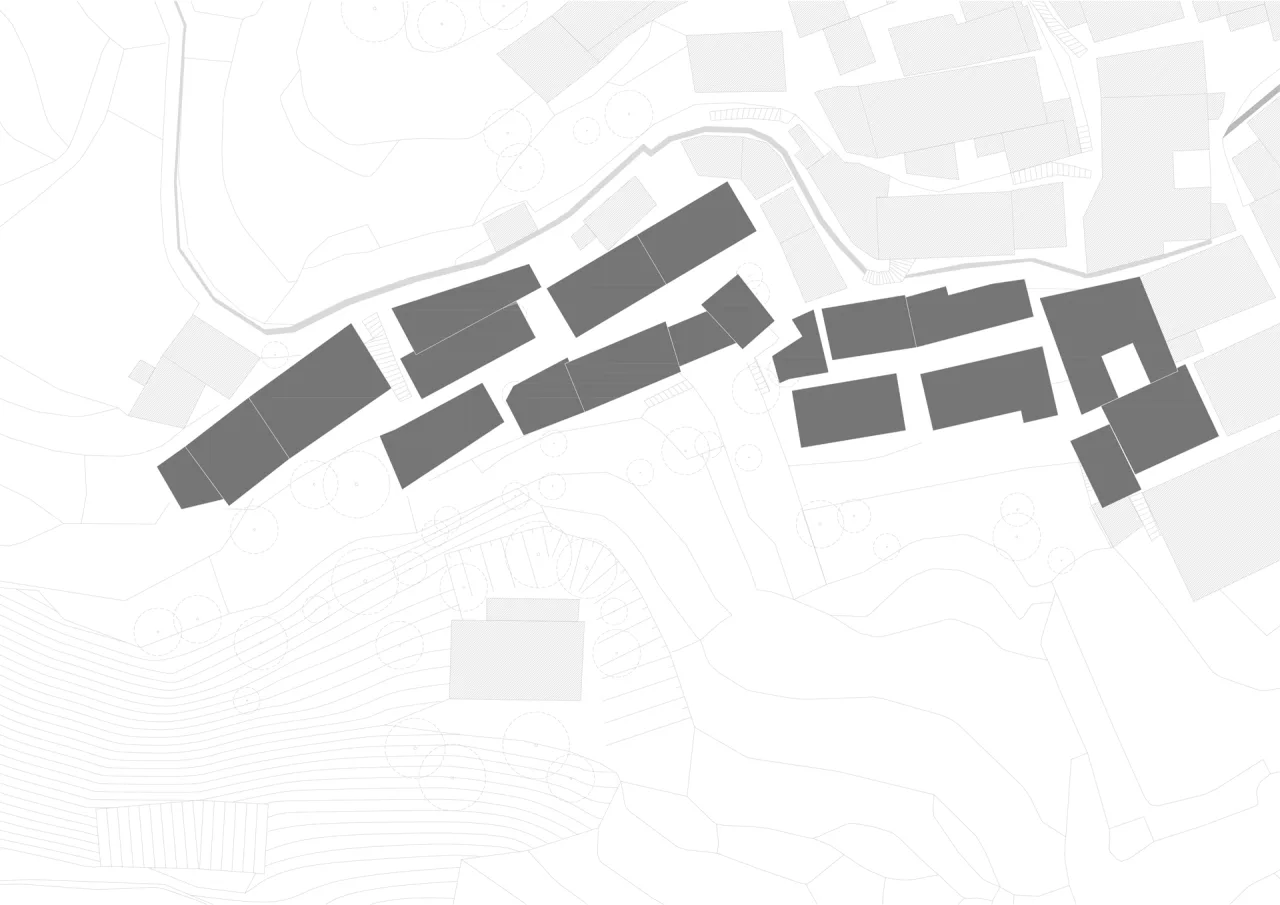
△ General layout plan
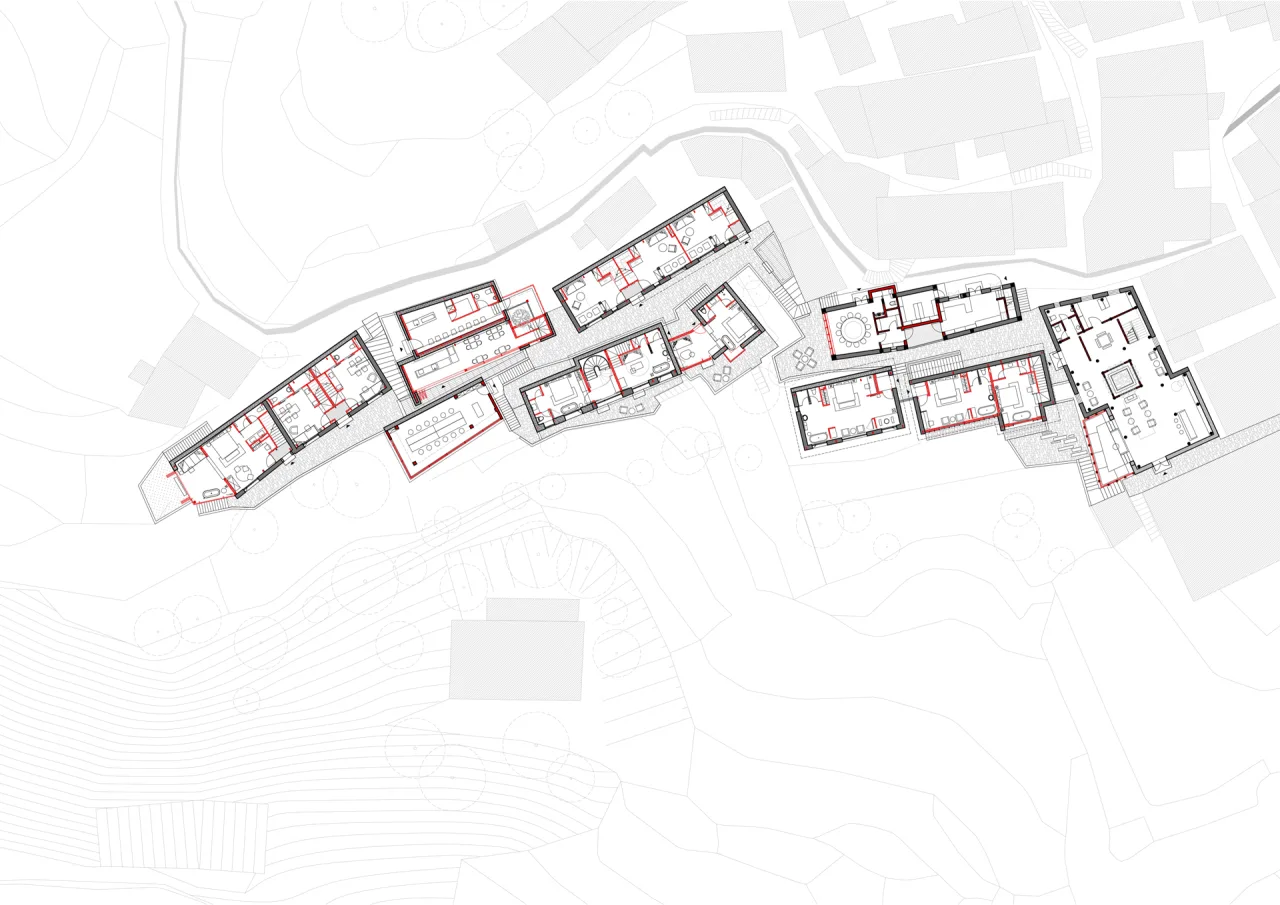
△ First floor plan
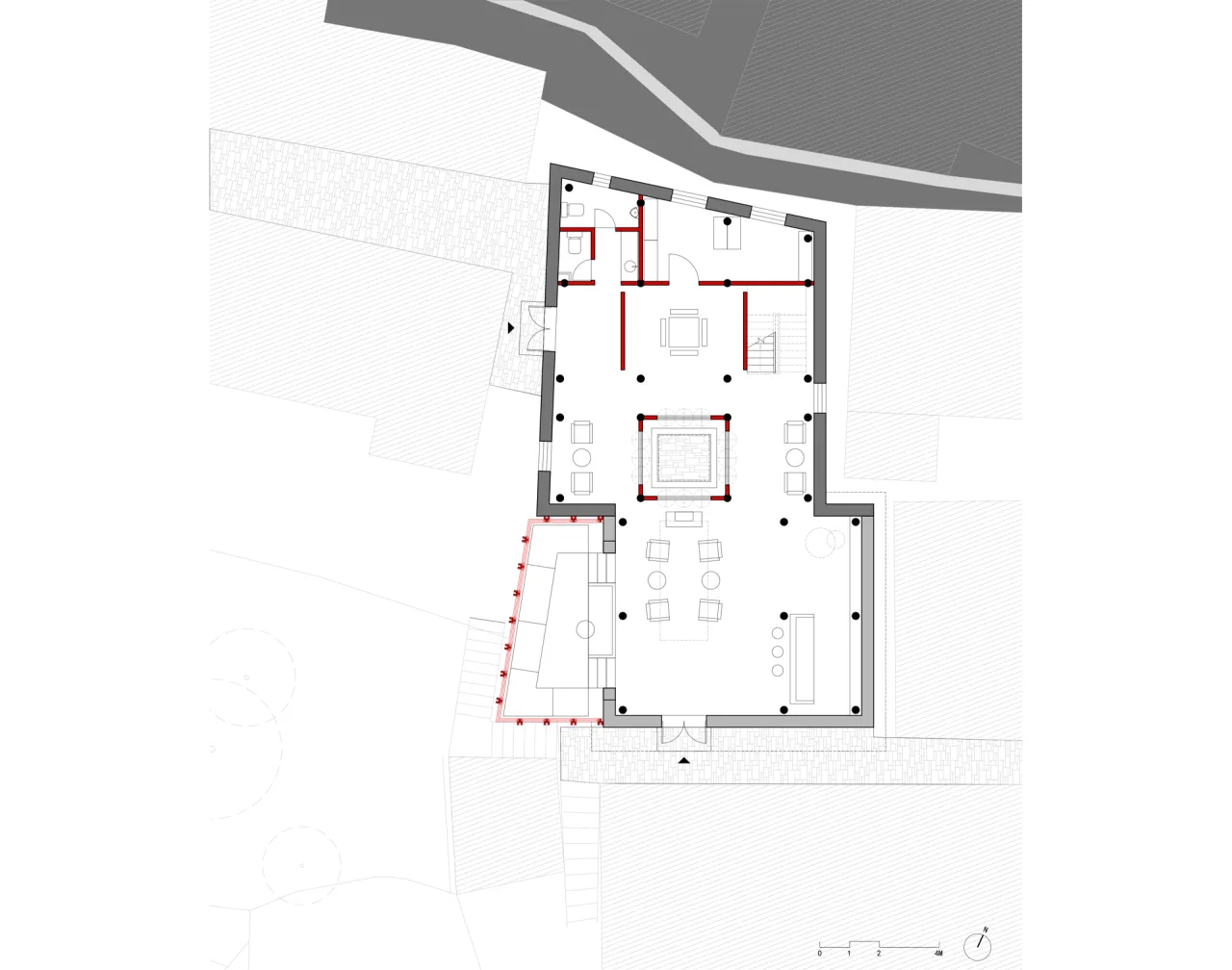
First floor plan of the lobby
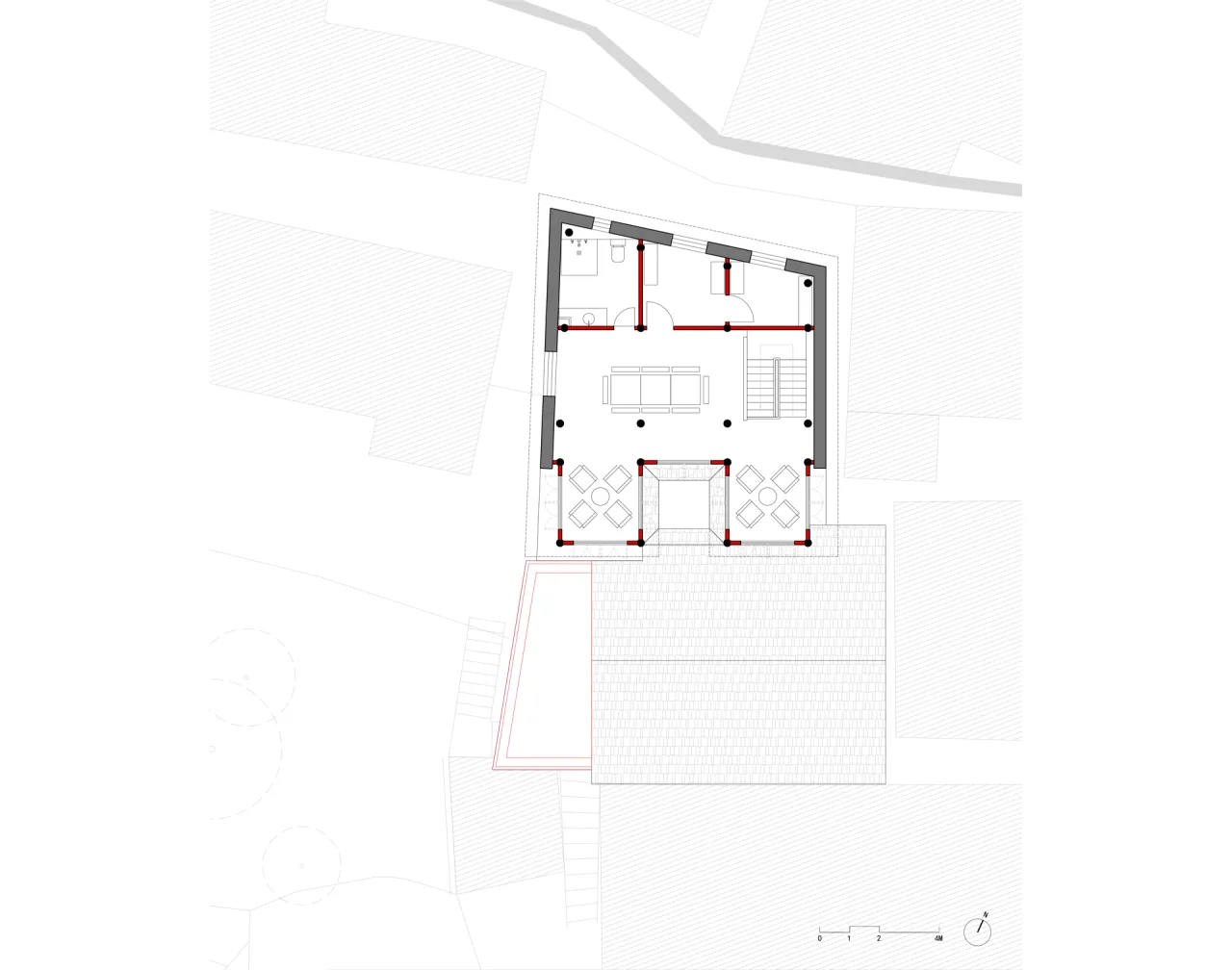
△ Second floor plan of the lobby
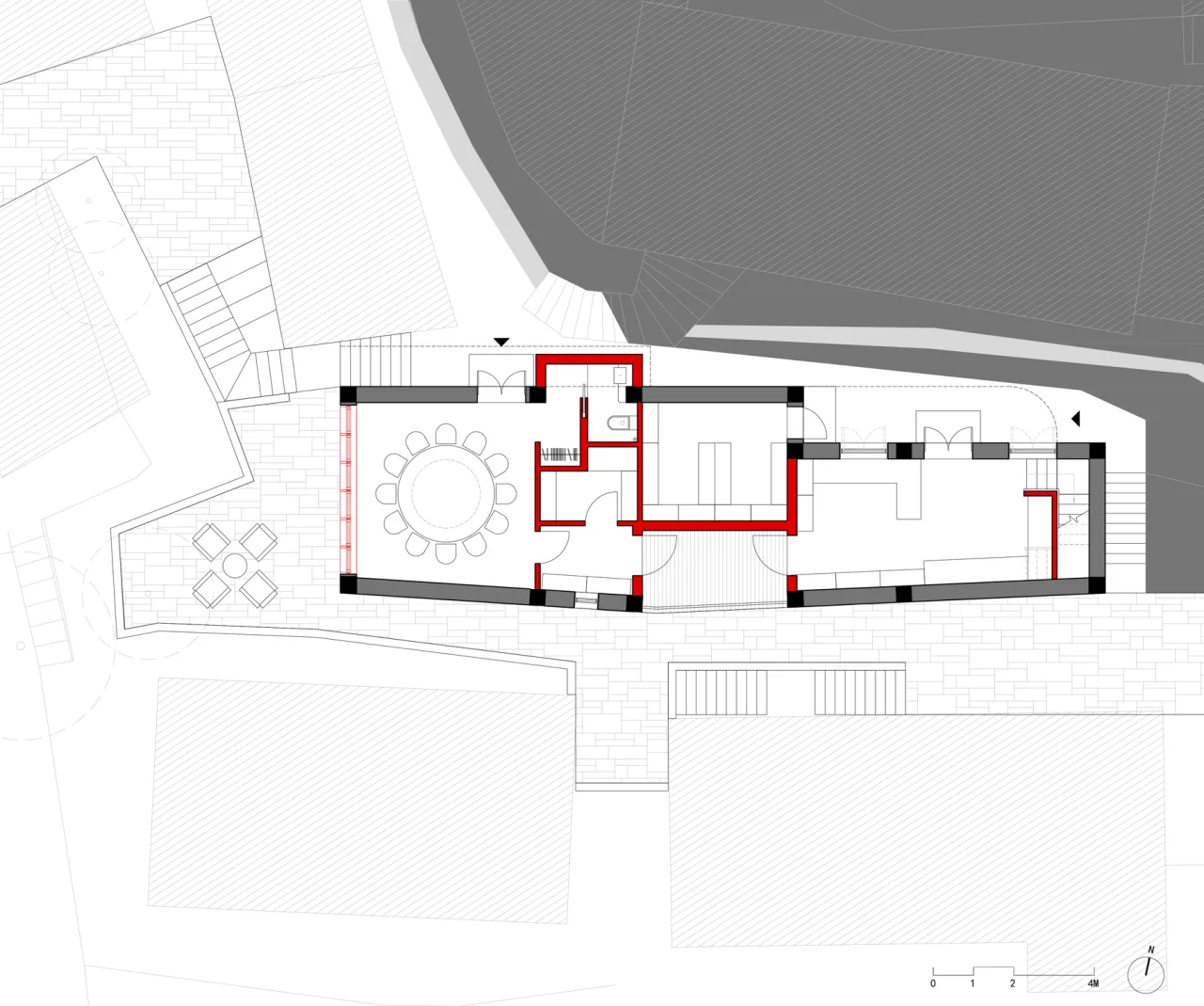
△ First floor plan of the restaurant
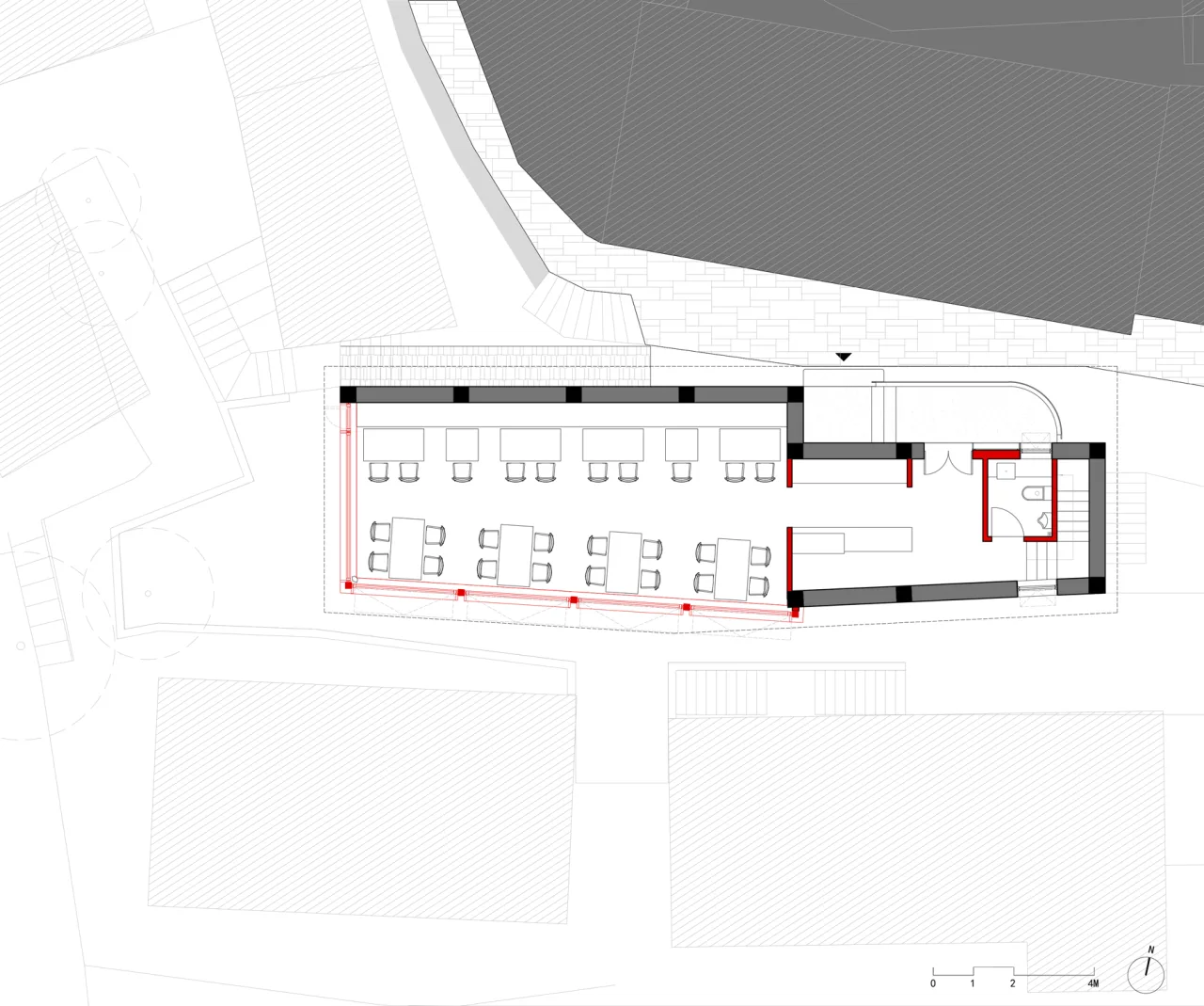
△ Second floor plan of the restaurant
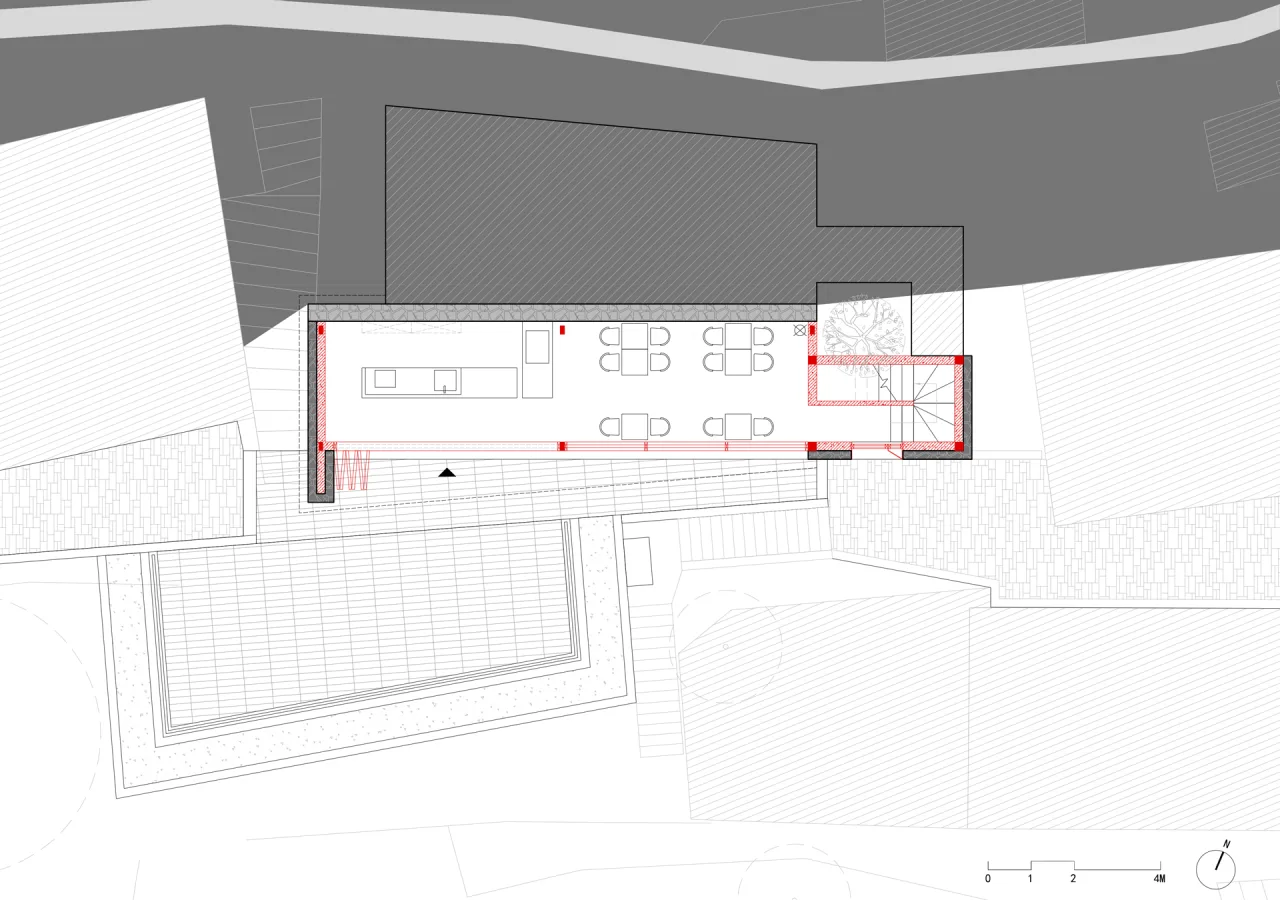
△ First floor plan of the coffee shop
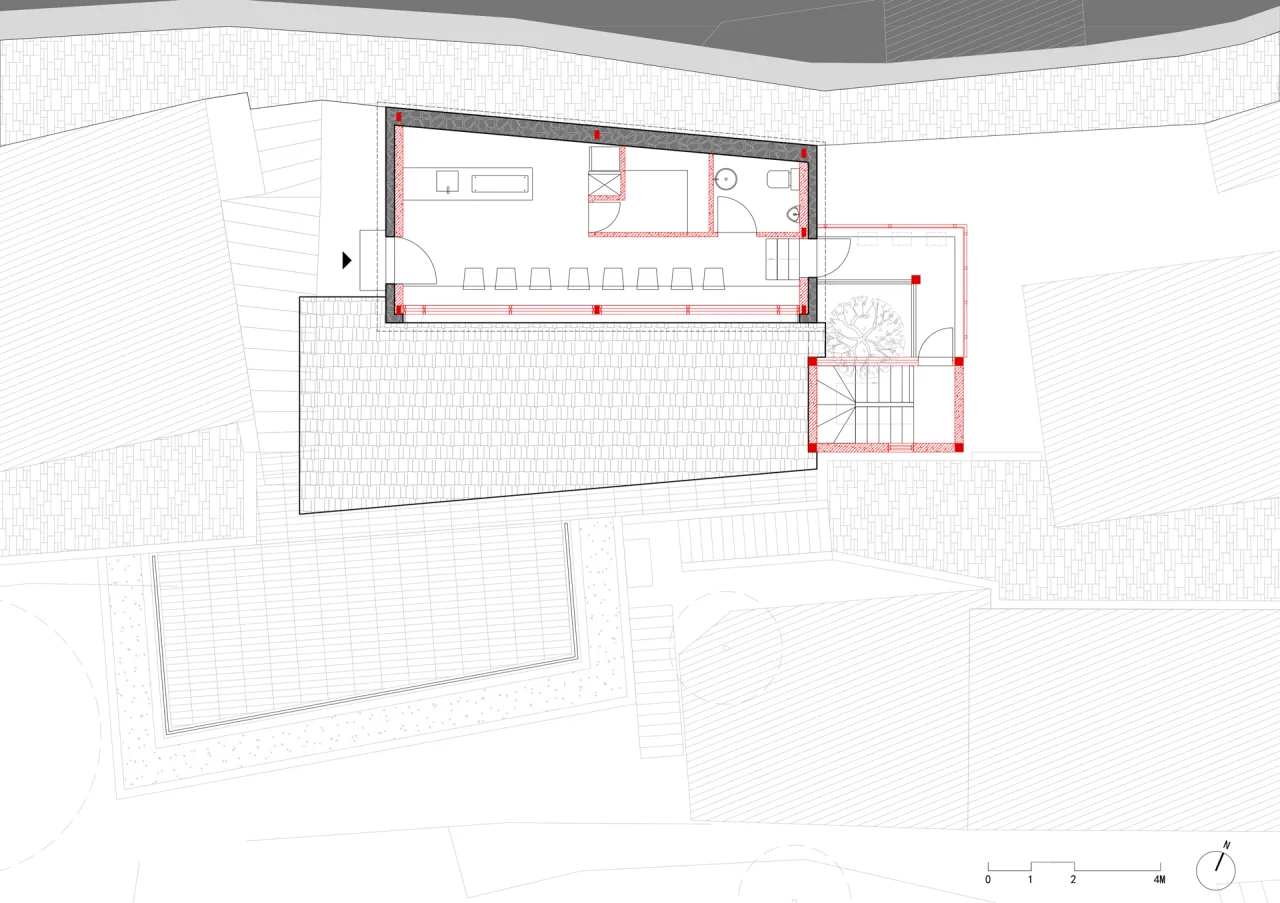
△ Second floor plan of the coffee shop
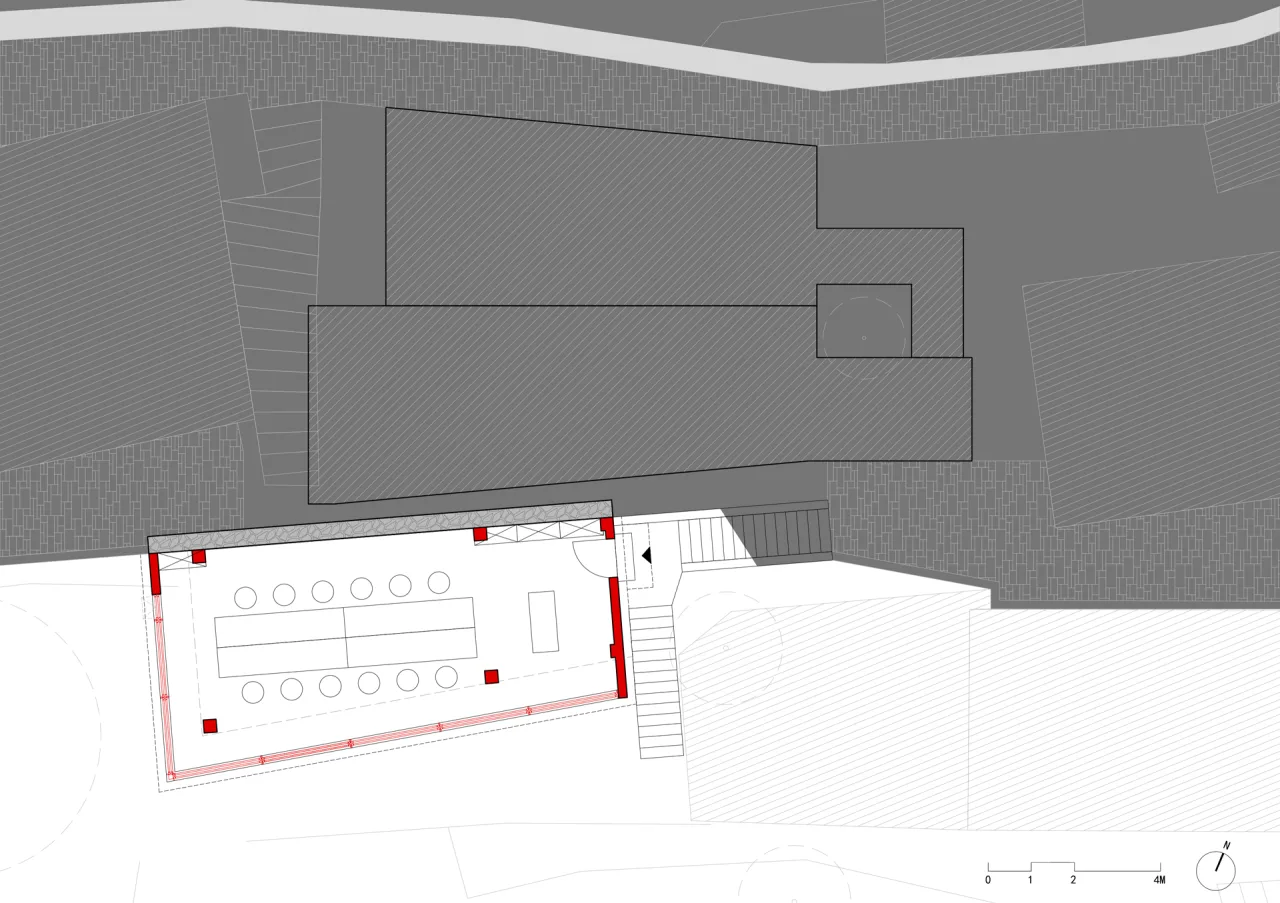
Plan of the tea room
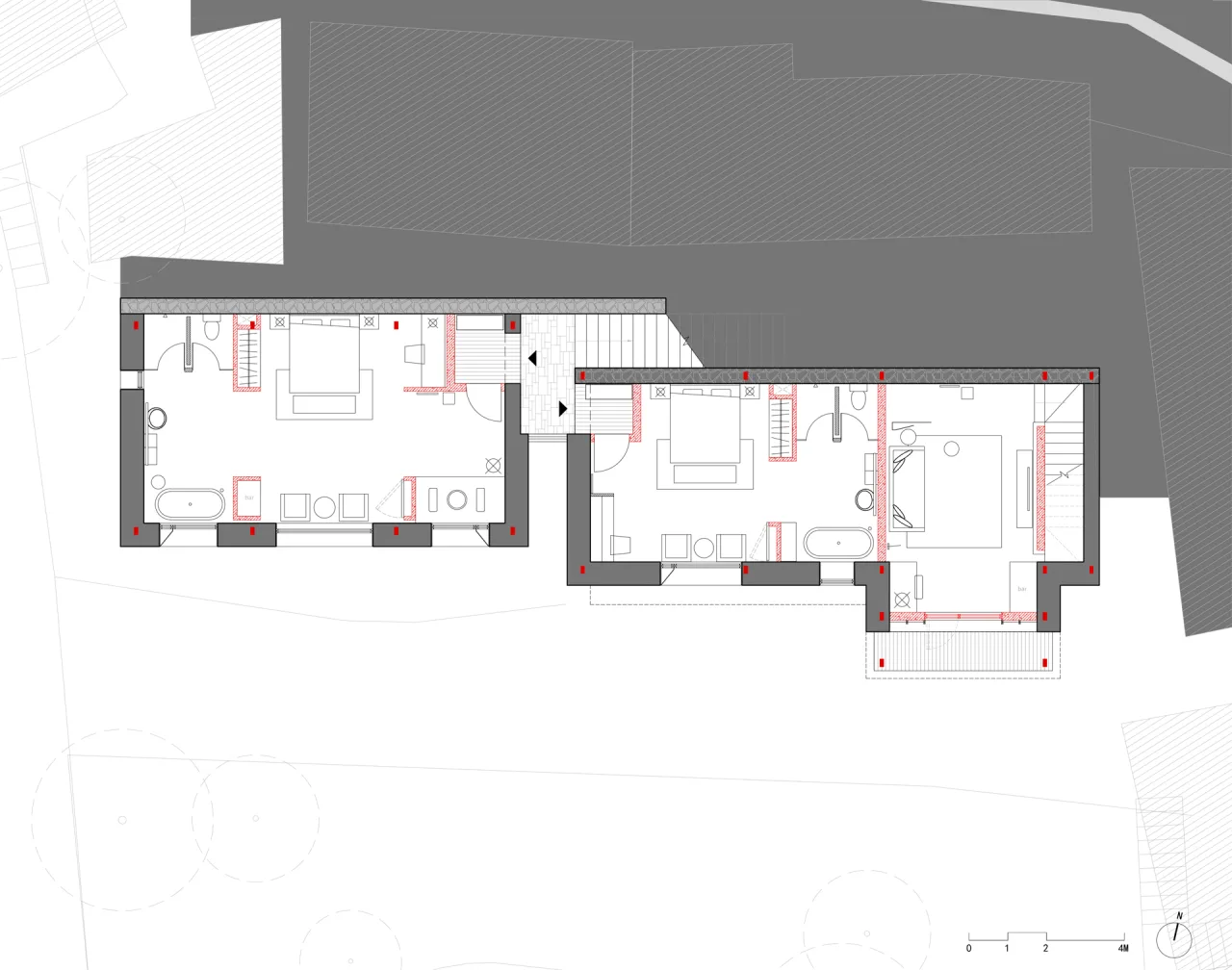
△ First floor plan of guest rooms in Building A
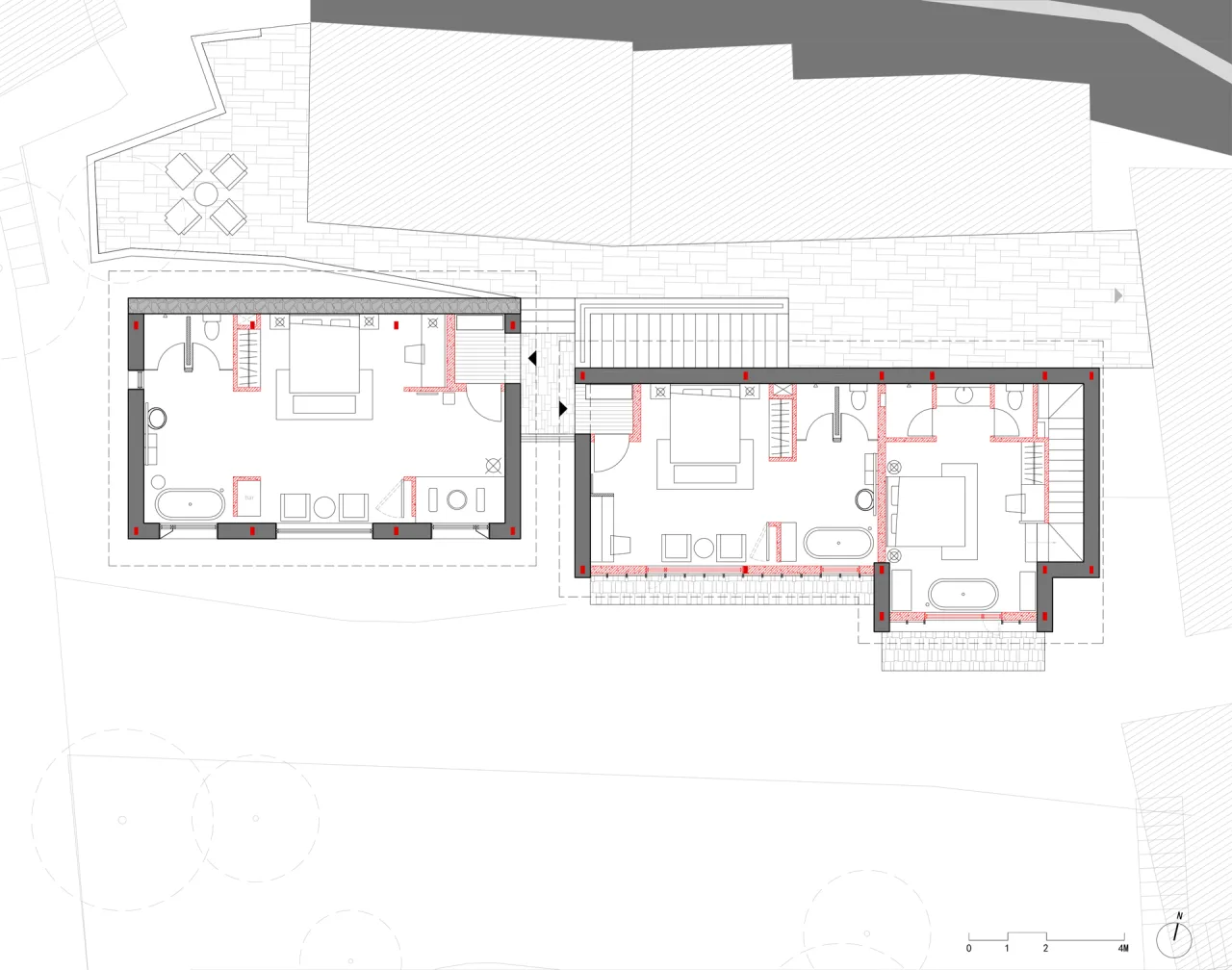
△ Second floor plan of guest rooms in Building A
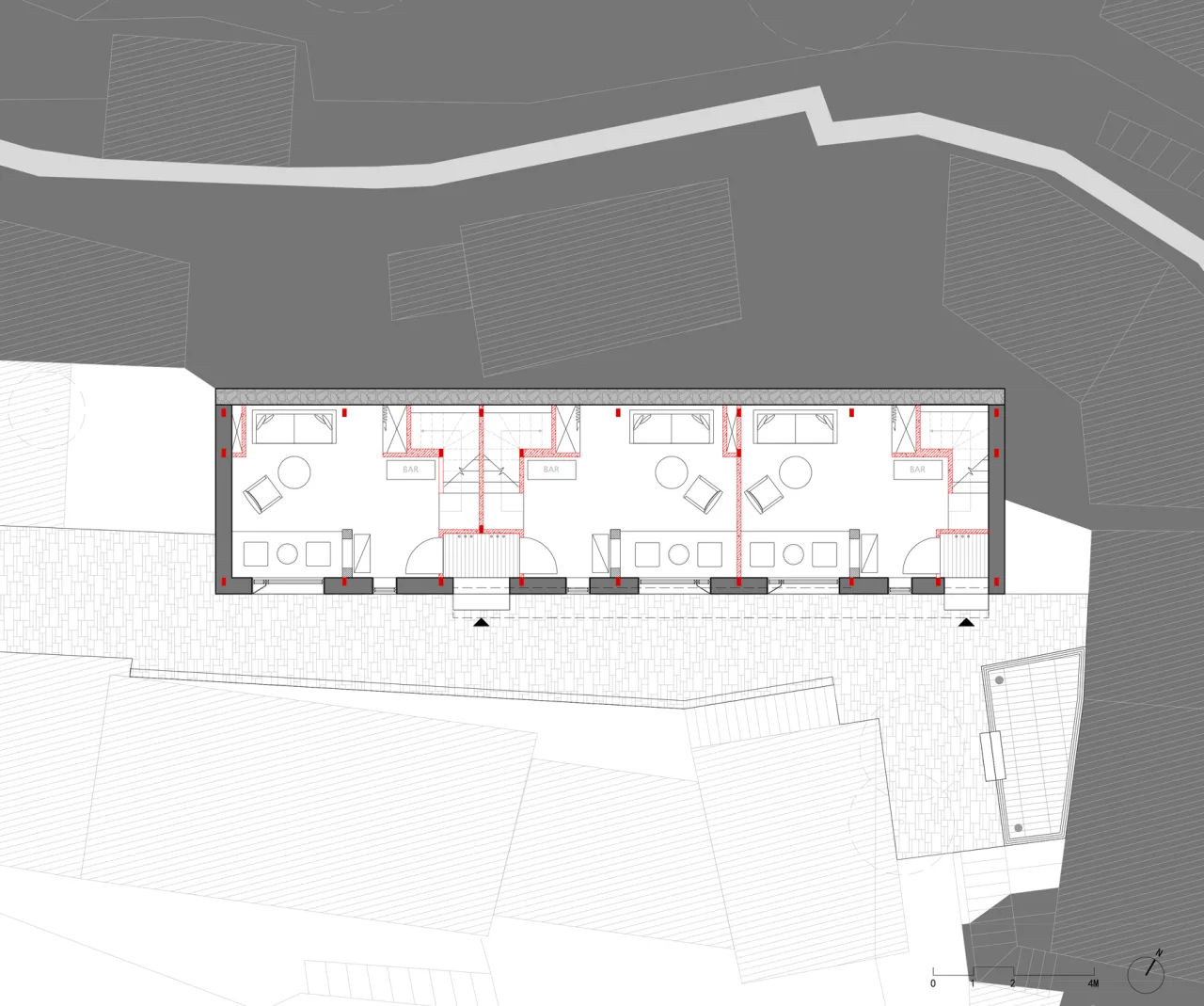
First floor plan of guest rooms in Building B
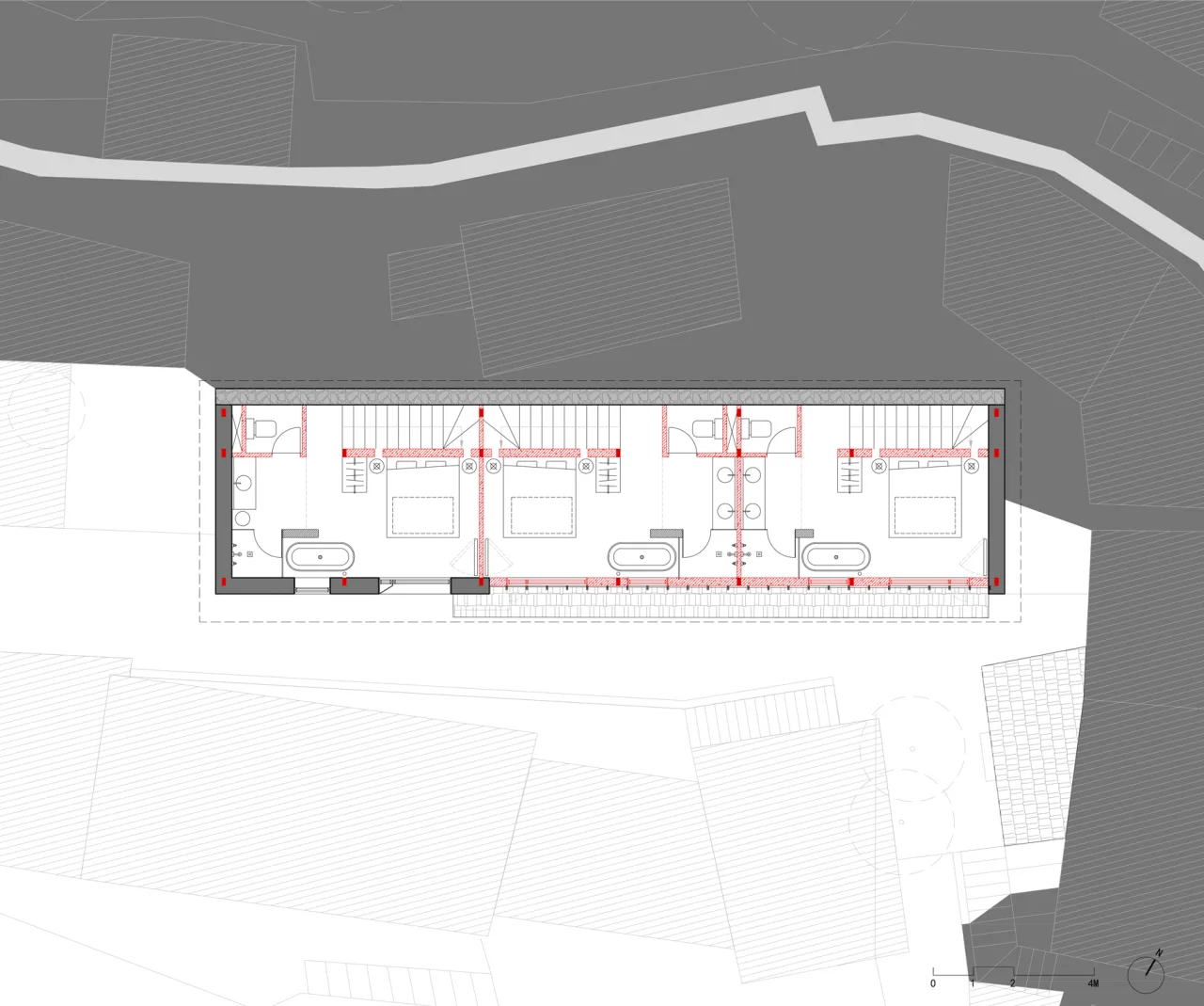
Second floor plan of guest rooms in Building B
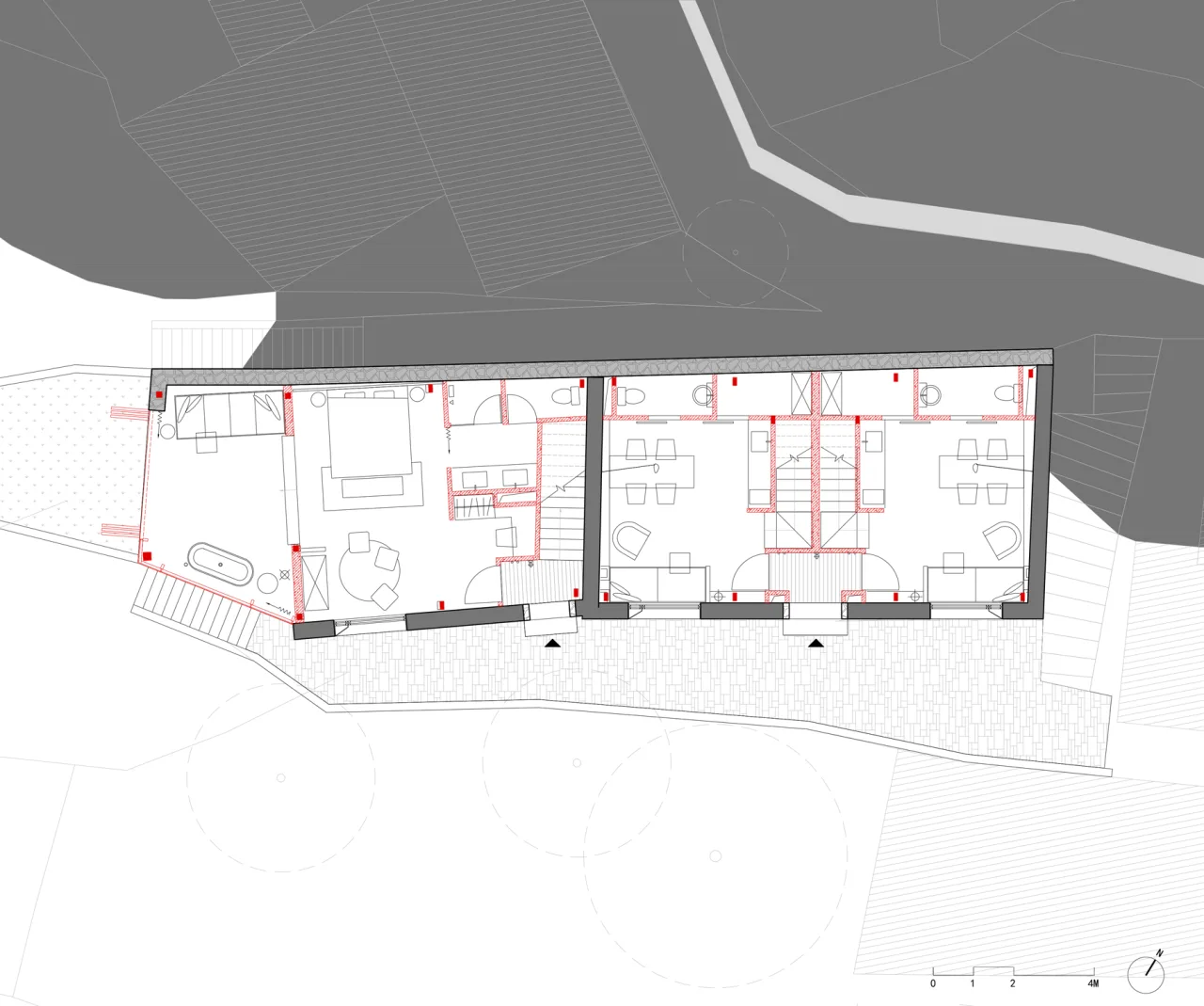
△ First floor plan of guest rooms in Building C
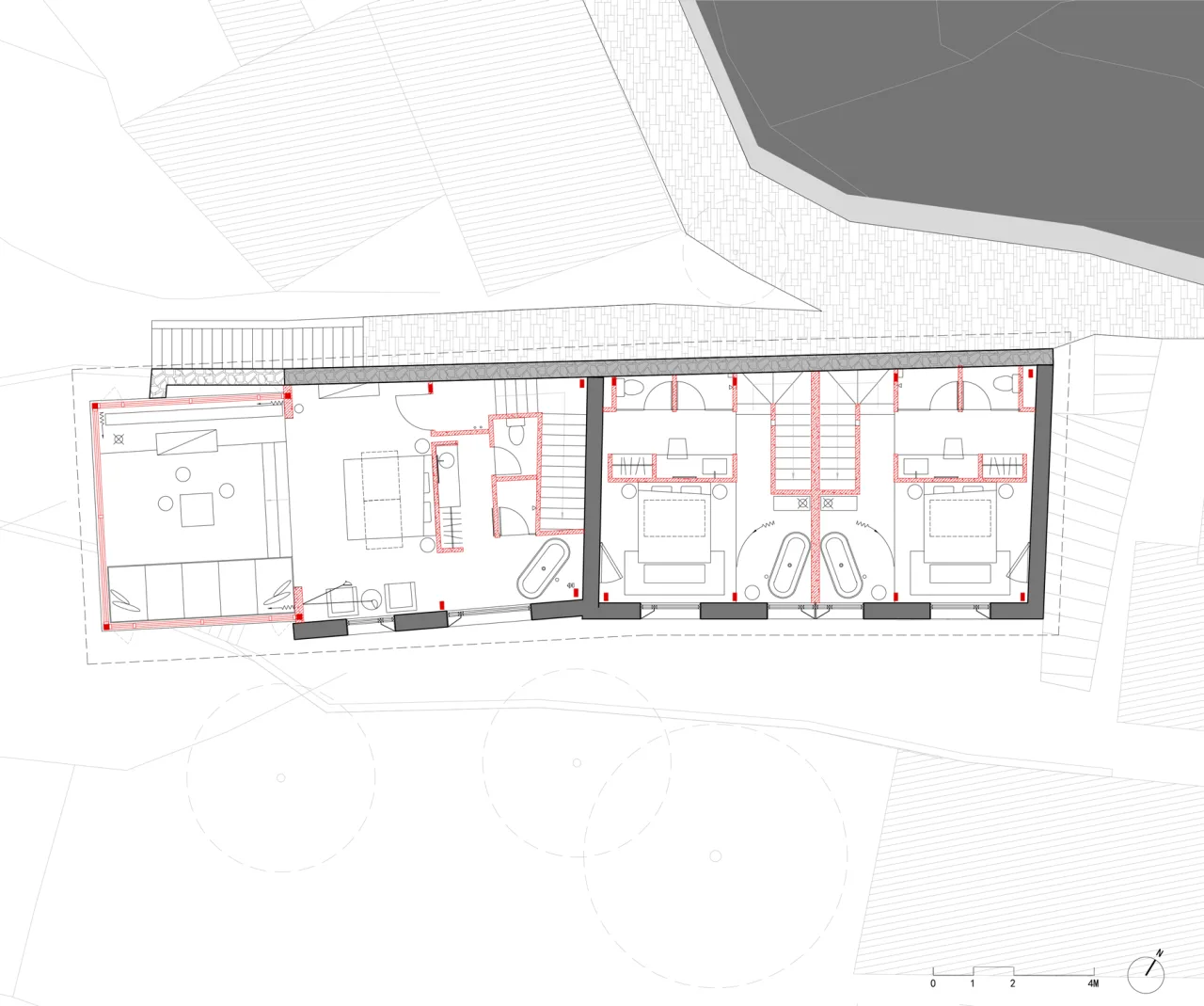
△ Second floor plan of guest rooms in Building C
Project Information
Project Name: Songyang Feiyiji Phase II
Design Firm: Line+ Architectural Firm
Lead Architect/Project Creator: Meng Fanhao
Design Team: Xu Tianjiu
Owners: Songyang Leila Private Travel Culture and Creativity Co., Ltd., Songyang Kongshanji Homestay
Operator: Songyang Feifuji Cultural and Creative Co., Ltd.
Structural Coordination and Construction: Hangzhou Zhongpu Construction Technology Co., Ltd.
Interior Design (Restaurant): Hangzhou Guantang Interior Design Co., Ltd.
Construction Contractors: Shanghai Chenggong Construction Decoration Engineering Co., Ltd., Taizhou 707 Engineering Decoration Co., Ltd.
Location: Lishui, Songyang, Zhejiang
Building Area: 1381 square meters
Design Period: July 2021 – July 2022
Construction Period: March 2023 – December 2023
Structure: Prefabricated thin-walled light steel structure
Materials: Rammed earth, rubble, lightweight concrete, bamboo and wood exterior panels, glass, aluminum panels
Photography: Chen Xi + Jin Zixiong, Tang Xuguo line+















Must log in before commenting!
Sign Up