
As the architectural development model in our country evolves, the concept of urban construction has shifted beyond mere modernization. It now emphasizes green practices, environmental protection, humanistic values, intelligence, and livability. Prefabricated buildings align well with these goals, offering green, eco-friendly, and efficient construction solutions. Consequently, advancing the comprehensive development of prefabricated buildings has become a top priority in the construction industry.
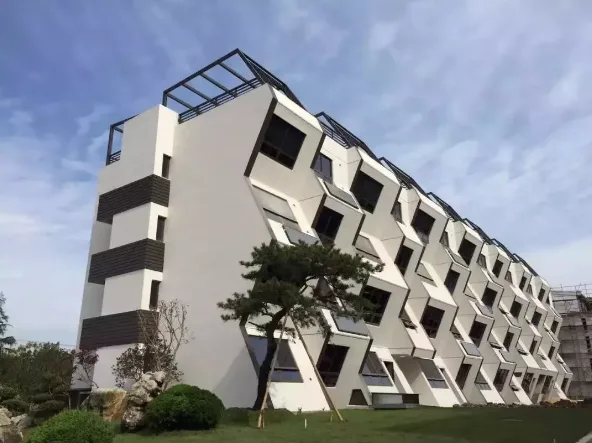
As prefabricated buildings in China enter a stage of scale and specialization, the question arises: how can construction companies continue to enhance and promote their development in the future?
1. Develop a Long-Term Talent Cultivation and Development Plan
Besides attracting international talent, enterprises should establish in-house assembly-related institutions. They need to devise long-term strategies that nurture and develop skilled professionals specialized in prefabricated construction. Building a dedicated team of experts, including BIM engineers, will help companies secure a competitive edge in this field.
2. Strengthen Intelligent Construction of Prefabricated Buildings
Integrating Building Information Modeling (BIM) with prefabricated construction enables comprehensive clash detection between pipelines and civil engineering elements, facilitating adjustments by designers across disciplines. Additionally, technologies such as RFID chips or QR codes can manage information throughout the entire lifecycle—from component production and transportation to installation and acceptance. This integration fosters data sharing and comprehensive information management across planning, surveying, design, production, construction, decoration, operation, and maintenance phases.
3. Intensify Research and Development of Prefabricated Building Technology Systems
Focus on advancing the technology systems, key innovations, and supporting components for prefabricated buildings. Promote integrated design and ensure thorough planning for production, installation, construction, and decoration. Master new technologies, products, and processes, including lifting, stacking, placement, support, and protection techniques. Establish a comprehensive quality monitoring and supervision system covering materials, components, key assembly points, testing, and acceptance to significantly enhance engineering design and construction quality.
4. Enhance the Green Attributes of Prefabricated Buildings
Compared to traditional cast-in-place constructions, prefabricated buildings save approximately 50% water and 80% wood, reduce construction waste by over 70%, and minimize dust and noise pollution. It is crucial to use environmentally friendly materials such as wood composites, metal composites, high-quality chemical building materials, and innovative ceramics. Combining these with green building concepts and ultra-low energy designs, alongside renewable energy integrations like solar thermal photovoltaics, ground source heat pumps, and air source heat pumps, can significantly elevate the sustainability of prefabricated buildings.
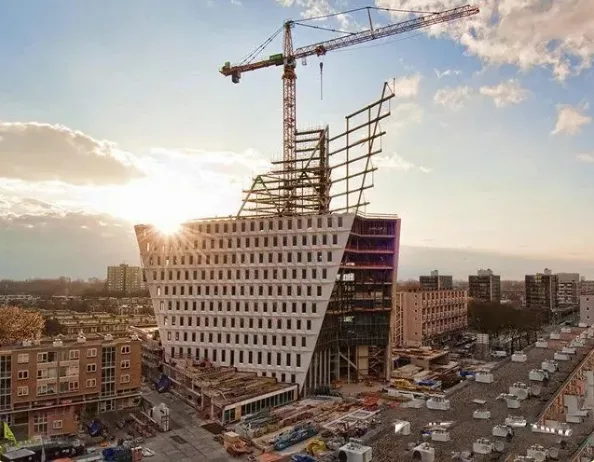
In addition, what other essential considerations should construction companies keep in mind during actual engineering projects?
01. Deepen the Design of Prefabricated Buildings
Key Considerations in Detailed Design
(1) Detailed production drawings for prefabricated components must be based on the reserved and embedded requirements of various disciplines, production, and construction. Any conflicts identified in the drawings should be promptly addressed to allow timely modifications.
(2) Verify detailed drawings to ensure they comply with regulatory and installation requirements. Construction teams should familiarize themselves with national standards and confirm that the drawings meet production, quantity estimation, and installation criteria.
Complete Detailed Design Content
(1) Construction methods for exterior wall decoration and finishing: Focus on tile layouts, decorative concrete, stone, and other materials. Ensure that quantities and types meet design specifications, and that stone procurement aligns with strength and aesthetic standards.
(2) Energy-saving and insulation design for exterior walls: Insulation must fulfill building functions, with careful selection of materials and connectors, precise layout details, and performance verification through design calculations.
Production Process Considerations for Prefabricated Components
(1) Production planning: Construction teams should engage actively in designing and adjusting production plans to ensure smooth manufacturing processes.
(2) Mold schemes: Confirm that the mold design fulfills construction needs and address any issues early with suggested modifications.
(3) Personnel organization: Assign dedicated personnel to oversee component quality, ensuring strength, size, and appearance standards. A liaison should maintain communication between the construction team and the component factory for timely feedback and requirements.
(4) Technical quality control: Component quality directly impacts assembly and installation. Timely communication with manufacturers is essential. Components must be tested for strength, and any that fail to meet standards should be remanufactured promptly. Size deviations require immediate correction.
(5) Storage and transportation: Minimizing transportation distance and ensuring components are ready for use supports efficient land conservation during installation.
02. Control Quality Across Different Prefabricated Construction Types
Prefabricated Wooden Structures
Storage
(1) Wooden components must be stored in well-ventilated, rainproof areas or warehouses. On-site stacking should follow installation order, be within crane reach, and avoid interference with other construction activities.
(2) Prevent deformation during horizontal stacking by aligning cushion blocks vertically and limiting stacking layers based on component and cushion capacity.
(3) When stacking on shelves, maintain an inclination angle greater than 80° between the shelf and the ground.
(4) Apply protective measures tailored to the shapes of curved components during stacking.
Installation
(1) For temporary supports during installation, the support point on prefabricated columns or walls should be located between one-half and two-thirds of the component’s height from the bottom.
(2) For vertical components, ensure base elevation alignment with moisture-proof measures like pads before installation. Confirm axis and elevation positions for upper layers.
(3) For horizontal components, lift pole-type components at two points and longer components at multiple points. Review deformation and stability during lifting of slender elements.
Prefabricated Steel Structures
Storage
Steel structures are sensitive to fire and temperature. Between 100–250°C, tensile strength decreases while plasticity increases. Around 250°C, tensile strength slightly rises but plasticity decreases, leading to “blue brittleness.” Above 250°C, steel experiences creep, and at 500°C, strength drops dramatically, risking damage, loss, and safety hazards. Thus, fire protection and insulation design are critical, and environmental temperature must be controlled during storage.
Installation
(1) Utilize information technology for comprehensive collaboration on safety, quality, technology, and construction progress. BIM can simulate structural components, building parts, and equipment pipelines virtually.
(2) When installing high-rise steel structures, consider the effects of vertical compression deformation and adjust installation elevations and connecting components accordingly.
(3) Prefabricated exterior wall panels must be permanently fixed after verifying axis, elevation, and vertical alignment. For double-layer wall panels, stagger joints between inner and outer panels.
(4) Key points for installing keel partition wall systems:
- Top and bottom keels must be installed vertically, with reinforcements in door frame areas and horizontal bracing ribs.
- Fix keels according to snap line positions using nails or expansion bolts spaced no more than 600mm apart.
- Vertical keels against walls or columns should be secured with nails, bolts, or screws spaced no more than 900mm apart.
- Vertical keels in the middle should be spaced based on panel width, with gaps not exceeding half the panel width (typically 5mm), and spacing no more than 600mm. All ends must be nailed, and junctions between partition walls must include vertical keels.
- Horizontal bracing keels can be fixed with connectors or brackets; rivets are allowed if necessary, but welding is prohibited. Spacing should not exceed 1200mm, and keels must be installed at cover panel joints.
Prefabricated Concrete Structures
Storage
(1) Composite floor slabs should be placed on H-shaped steel beams, with trusses perpendicular to the steel and steel positioned 500–800mm from the component edge. Layers are separated by four 100mm × 100mm × 250mm square beams placed parallel to the steel at corners. Stack height should not exceed eight layers or 1.5 meters.
(2) Wall panels are stored in dedicated cube racks. For panels under 4m wide, two square blocks support the panel, placed 30mm from each end. For panels wider than 4m or with door openings, three blocks are used—two near ends (300mm away) and one at the center of gravity.
(3) Stairs must be stored in designated, level areas. Place four 100mm × 100mm × 500mm square blocks at the second and third step positions on both ends, spaced 250mm from front and rear, ensuring that blocks overlap horizontally between layers. Storage height should not exceed six layers.
(4) Beams: The first layer rests on H-shaped steel, oriented perpendicular to it, with steel 500–800mm from the edge. For long beams, additional steel supports are placed every 4m. Maximum stacking is two layers, separated by 100mm × 100mm × 500mm square timbers aligned with the steel beams.
(5) Columns: Similar to beams, columns rest on H-shaped steel with spacing and stacking limits based on length and weight. Use 100mm × 100mm × 500mm square blocks between layers, ensuring alignment with steel beams.
Installation
(1) Before placing grouted prefabricated components with steel sleeves and anchor overlaps, verify:
- Specifications, positions, quantities, and depths of sleeves and reserved holes.
- Clean steel bars for debris in sleeves or openings, straighten inclined bars, and ensure their deviation from sleeve centerline does not exceed 5mm.
(2) For grout at the base of multi-layer shear walls, thickness should not exceed 20mm.
(3) Grouting should occur only when ambient temperatures are above 5°C. If temperature is below 10°C during curing, heating and insulation measures are required.
(4) For bent prefabricated components, ensure end lengths meet design requirements. Place grout or support pads between ends and supports, limiting thickness to 20mm.
03. Conduct Thorough Inspections of Prefabricated Buildings
Prefabricated Wooden Structures
Inspections cover general regulations, materials, components, and connections. Material tests include physical properties, static bending strength, and elastic modulus. Component inspections focus on size deviations, deformation, cracks, corrosion, and termite damage. Connection tests include bolts, tooth joints, mortise and tenon joints, reinforcements, and metal connectors.
Prefabricated Steel Structures
Inspections encompass general regulations, materials, components, and connections. Material testing involves mechanical properties of steel, welding materials, fasteners, chemical composition, defects, and metallographic content. Component inspections check dimensions, construction quality, deviations, and deformations. Connection testing covers welding, bolts, and rivets.
Prefabricated Concrete Structures
Inspection items include general rules, materials, components, and connections. Material tests cover concrete and steel bars delivered to the site, on-site poured concrete and steel, and connection materials. Component inspections assess defects, dimensional deviations, deformation, and structural performance after installation. Connection quality checks include positional deviations, sleeve grouting, grout anchor overlaps, welding and bolt connections, grout quality at shear wall joints, and cast-in-place concrete in double-sided composite shear wall cavities.
Additional System Inspections
(1) Peripheral protection systems, including general regulations, prefabricated exterior walls, doors and windows, curtain walls, roofs, and related elements.
(2) Equipment and pipeline systems, covering water supply, drainage, heating, ventilation, air conditioning, gas, electrical, and intelligent systems.
(3) Interior systems, including general regulations, interior components, indoor environment, and related aspects.















Must log in before commenting!
Sign Up