
Water leakage in basement engineering can easily cause corrosion of steel bars in concrete structures and accelerate the alkali aggregate reaction of structural concrete, thereby affecting structural safety and shortening the service life of the project. What issues should be noted during the construction of basement engineering to avoid the impact of water leakage on the structural bearing capacity?

01Strengthen the supervision of key areas
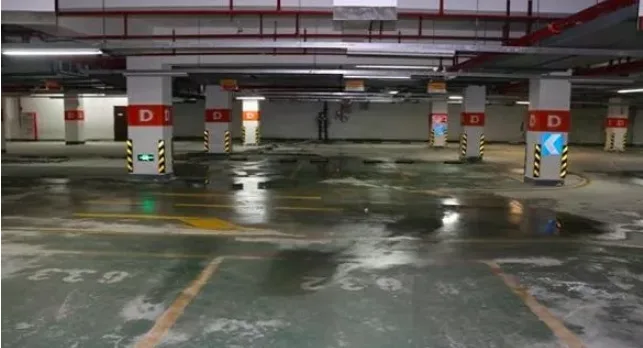
There are some common areas in the basement that are prone to water leakage. Based on construction experience, the following 8 areas are the focus of waterproofing engineering.
(1) Basement floor. Due to the large area of the bottom plate, it is prone to large areas of moisture, and there are no obvious cracks or water seepage areas.
(2) Location of construction joints (cold joints) on basement floor, exterior walls, and ceiling.
(3) Post pouring strip. The interface on both sides of the post pouring strip is prone to water seepage due to cracking, and the weak parts of the post pouring strip concrete pouring structure are also prone to cracking and water seepage.
(4) The horizontal joint between the basement floor and the exterior wall is cracked and leaking water.
(5) There is water seepage in the elevator shaft and collection well.
(6) Water seepage occurs at the junction of the basement’s water supply and drainage pipes, strong electrical pipes, and walls.
(7) There is water seepage around the skylight and ventilation shaft on the basement ceiling.
(8) There is water seepage at the position of the waterproofing screw on the basement exterior wall.
02Construction sequence of prevention and control waterproofing
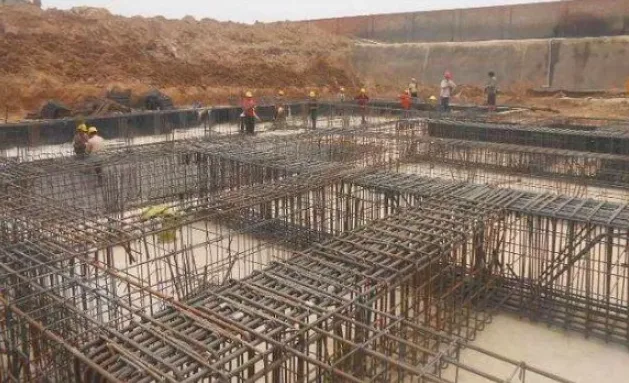
The quality of waterproof construction should be controlled from the inside out. As the wall needs to reserve holes for pipes to pass through, it is even more important to pay attention to the supervision of waterproof effect in these areas.
(1) The connected inner and outer walls in the basement building must be poured together, and the outer walls are made of self waterproof concrete, all of which are subjected to secondary vibration technology.
(2) After pouring the inner and outer walls, pay attention to the horizontal construction joint treatment of the basement wall surface. Water stop strips need to be added to the horizontal construction joints on the wall, and the joint treatment between new and old concrete should be done well. 24 hours before pouring concrete, the construction joints should be washed with high-pressure clean water and the concrete joint surface should be moistened multiple times to ensure a good joint between the new and old concrete.
(3) When constructing the basement pipeline through the wall, a sleeve should be pre embedded before pouring concrete. The distance between the through wall pipe and the inner wall corner, concave and convex parts should be greater than 250mm, and the distance between pipes should be greater than 300mm. When there are many through wall pipelines, the sealing steel plate of the through wall box can be welded tightly to the pre embedded angle steel on the wall, and modified asphalt flexible sealing material or fine aggregate concrete can be injected from the reserved pouring hole on the steel plate.
03Summary of Key Points for Waterproof Construction
1. The basement waterproofing is mainly based on structural self waterproofing. Require commercial concrete manufacturers to conduct 28 days in advance trial mixing of external additives (expansion agents, retarders, anti cracking fibers, and air entraining water reducers), and conduct BIM building and anti-seepage testing of concrete strength grades; Concrete must meet the requirements of strength design value and impermeability grade.
2. Waterproof materials
(1) Before applying waterproof coating, check whether the base strength meets the requirements, whether the surface is clean and tidy, and control the moisture content to meet the specifications.
(2) Brushing should be done in a vertical to horizontal order, paying attention to the details before the overall treatment.
(3) After the waterproof coating is cured and dried, the waterproof roll can be laid. It is important to ensure that the adhesive material is compatible with the roll and waterproof coating, and to use adhesive tape and sealing materials to seal and strengthen the joints.
3. Specific construction requirements
(1) Regarding steel bars
Before binding the steel bars, it is necessary to remove dirt and rust. The thickness of the protective layer for the steel bars on the upstream side should be greater than 50mm. Use concrete pads to cushion the steel bars to ensure the thickness of the protective layer. The steel bars should be securely tied to avoid missing bars, and should not come into contact with the formwork during binding.
(2) Template Engineering
Choose a sturdy template type, pay attention to the tight splicing, no leakage or deformation, and use waterproof bolts for the external wall template. The waterproof ring and bolts must be fully assembled and welded to the house.
(3) Concrete engineering
1) Before pouring, a special test on the preparation of impermeable concrete must be conducted, and the mix proportion can only be determined after passing the test. Adopting a two-stage preparation of coarse and fine aggregates to enhance the impermeability of concrete. Construction should be carried out continuously without interruption, and self waterproof concrete should be used for the exterior walls, with attention paid to secondary vibration. Pay attention to checking whether the slump meets the requirements.
2) Water stop strips shall be installed at the horizontal construction joints of the exterior wall. The joints must be cleaned and the concrete joint surface must be moistened before pouring concrete.
3) The concrete is poured in layers, and the thickness of each layer of pumped concrete should be 500-700mm. The immersion vibrator is used to compact the layers, and the plate surface is vibrated with a flat vibrator. Mechanical grouting and finishing must be used. Timely cure within 12 hours after pouring, and cover and water the concrete for curing when it finally sets. Pay attention to hydration in summer and insulation in winter.
4) It is necessary to set up specimens that are cured under the same conditions as the concrete components, and the bottom formwork can only be removed after the strength of the specimens meets the requirements.
5) Before pouring the concrete for the elevator shaft and collection well structure, the external waterproofing construction of the shaft outer wall and cushion layer must ensure that there is no water seepage. The precipitation water level must be lower than the bottom elevation of the cushion layer at the bottom of the pit. During concrete pouring, ensure that there is no water in the pit and compact it by vibration.
6) The concrete on the basement roof has not reached 100% strength, and vehicle traffic is strictly prohibited. Overloaded vehicles are strictly prohibited from passing through the basement ceiling; It is strictly prohibited to stack steel, turnover materials, building materials, etc. beyond the design load.
Article source: Architectural Technology Magazine














Must log in before commenting!
Sign Up