
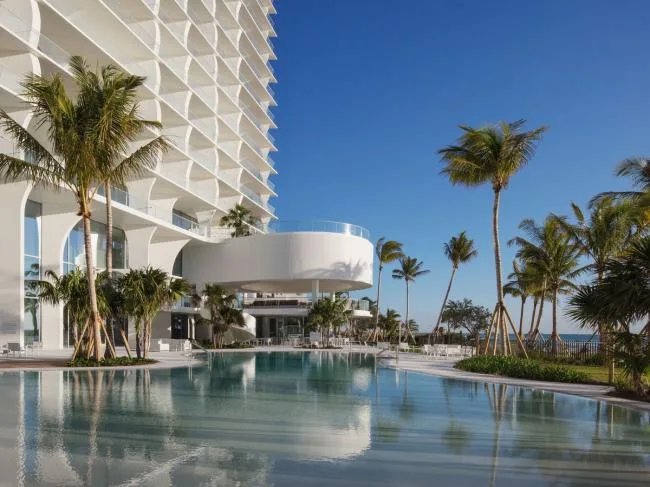
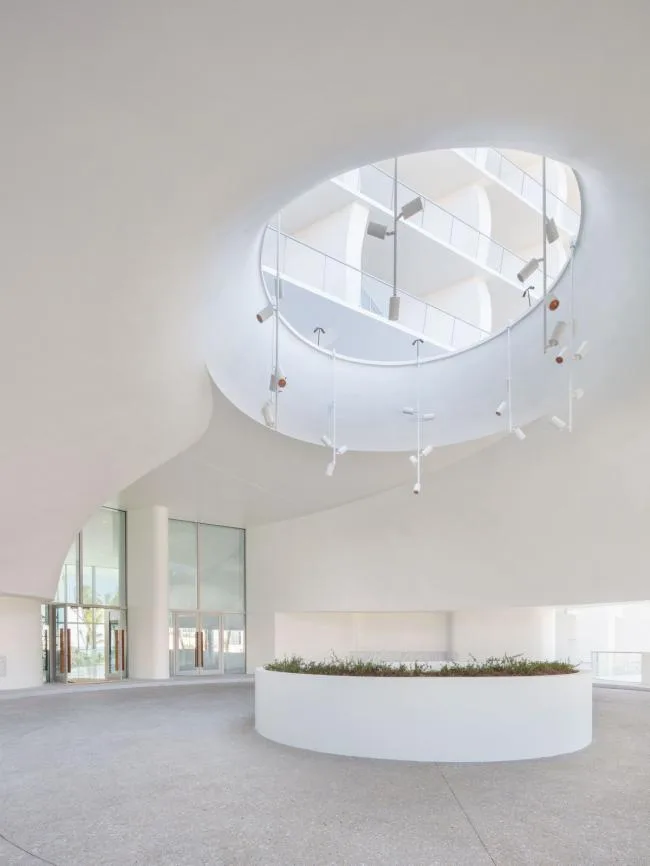
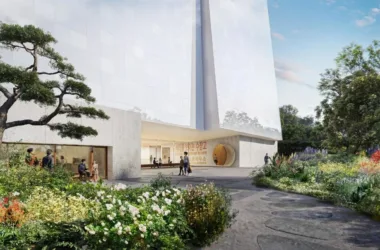
Jade Signature is an iconic building located on Sunshine Island Beach. Much like the renowned Miami Grand Hotel, it is deeply connected to the surrounding landscape and urban fabric. The design seamlessly integrates the building’s interior and exterior spaces. The street flows directly into the lobby, which overlooks a swimming pool positioned right on the beach. Unlike typical developments that use parking podium walls to separate the city from the beachfront, this building creates a clear contrast by fostering a strong relationship between nature, the environment, and its surroundings. This connection forms the project’s core concept.
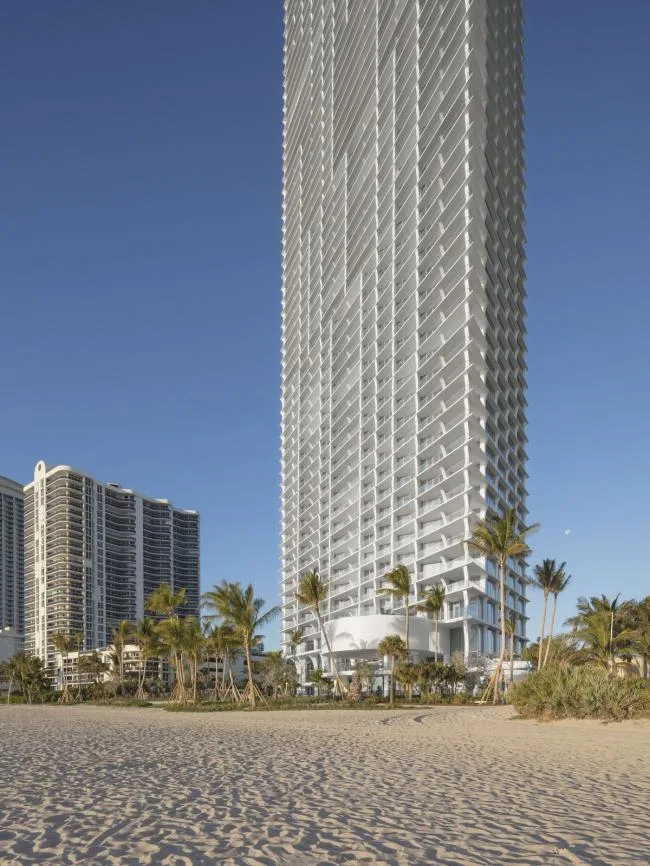
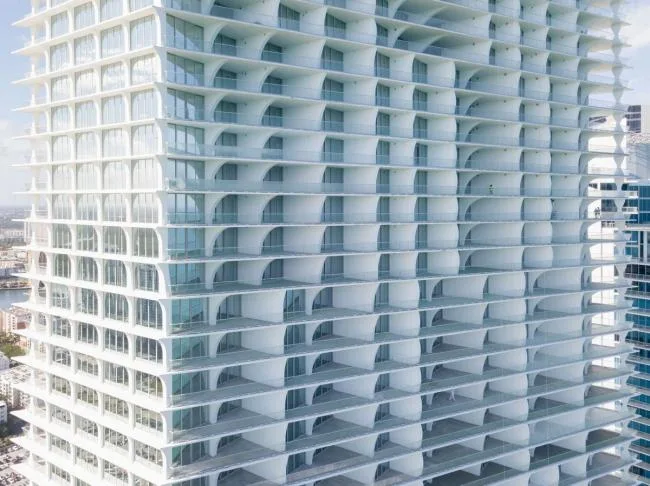
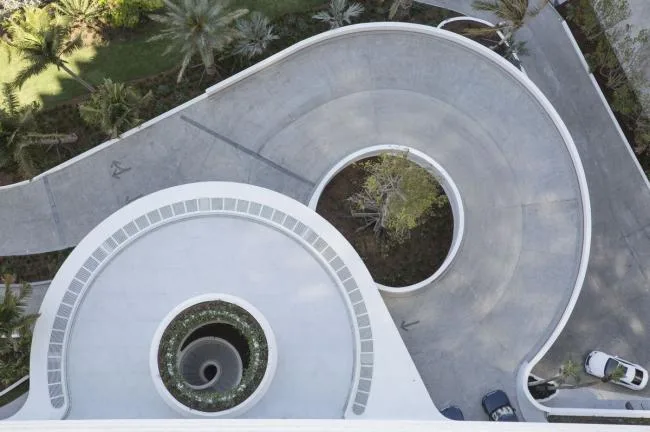
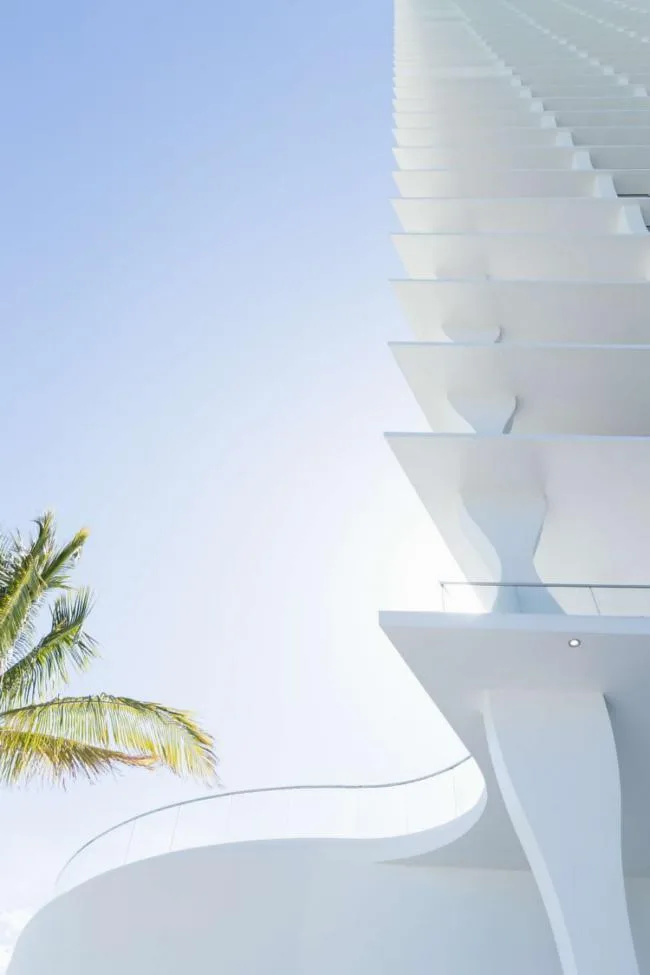
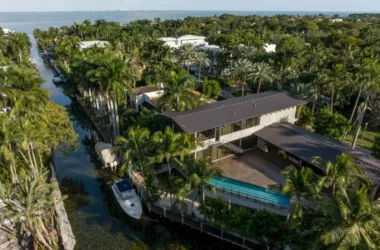
The building takes the form of a quiet and peaceful parallelogram, oriented to face the beach and capture the maximum sunlight. The western sun extends the seaside landscape, enhancing the natural connection. Positioned within a garden, the structure features a swimming pool located directly on the beach. Public spaces—including the lobby, restaurant, and spa center—are arranged along a curved, channel-like strip. This passageway extends from the interior to the exterior, with the western side serving as a car drop-off area, and the eastern side opening to a seaside pavilion. The lower three floors of the building weave together the geometric shapes of the surrounding landscape with a flowing, winding design.
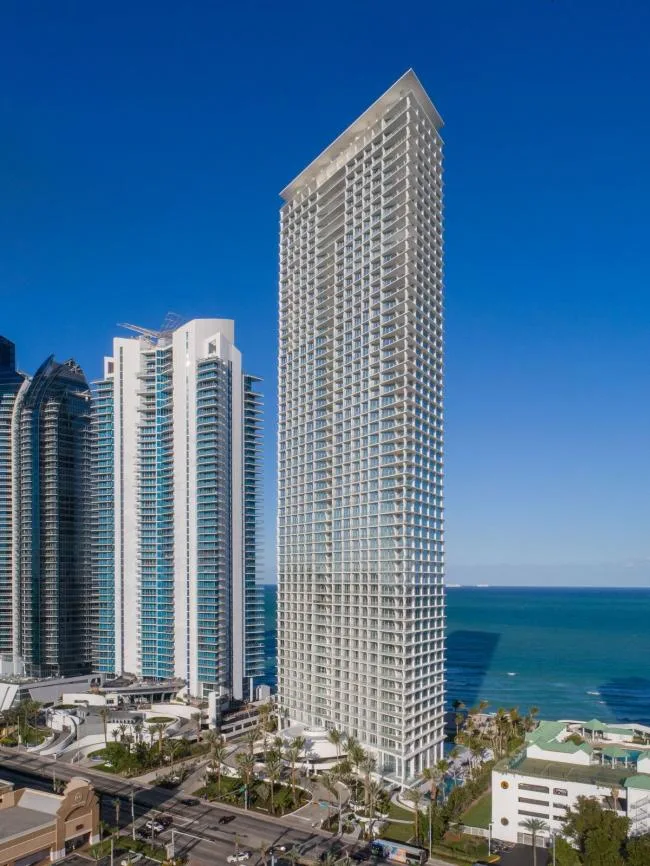
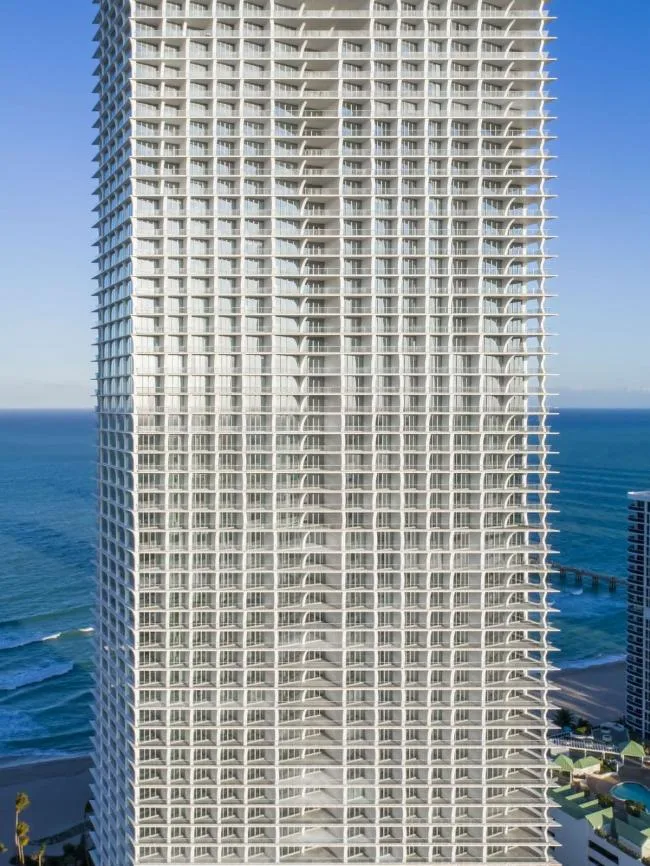
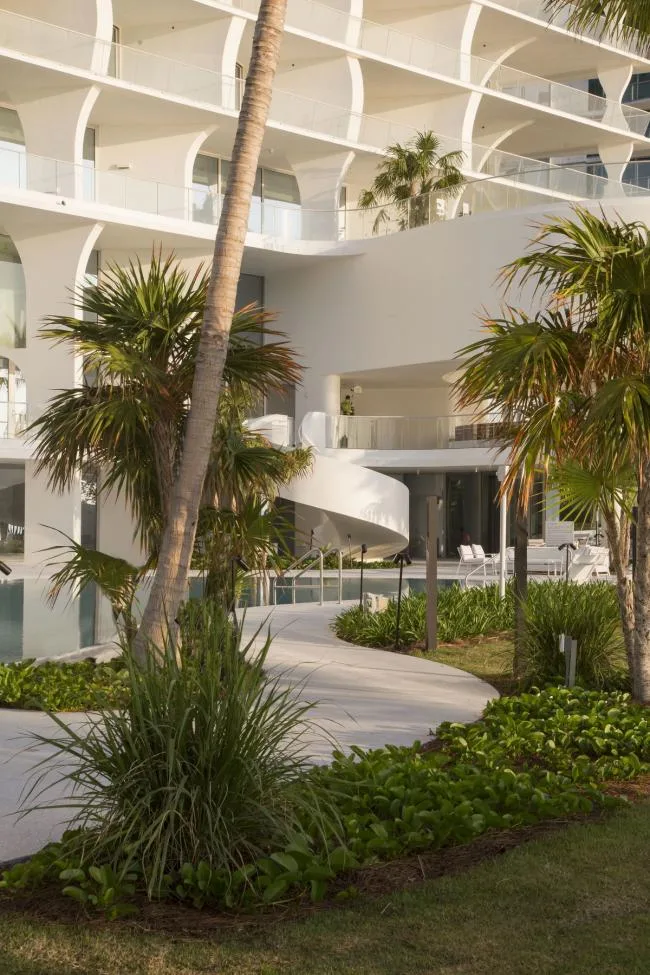
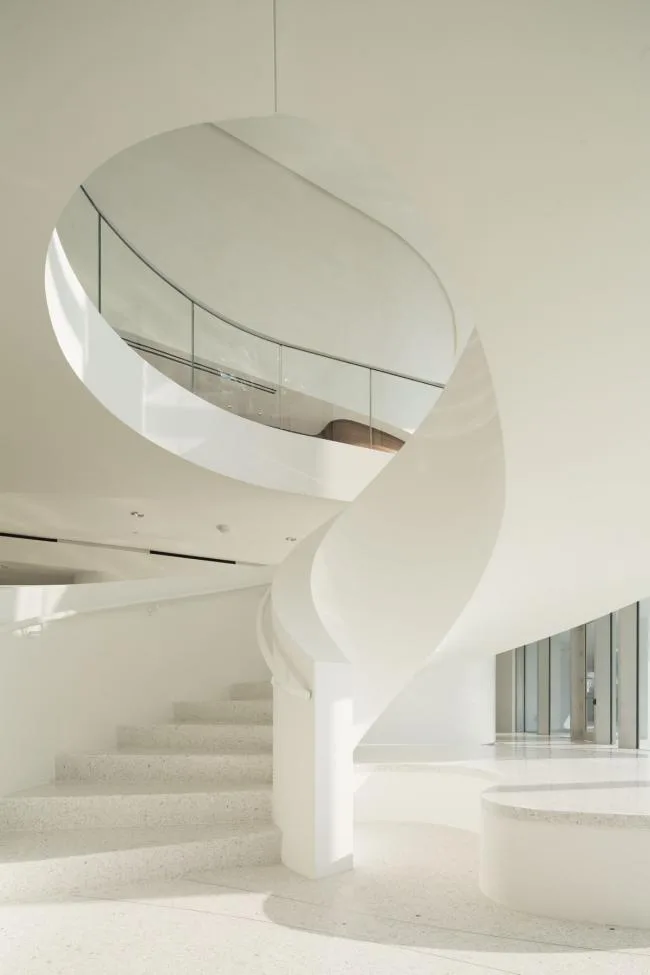
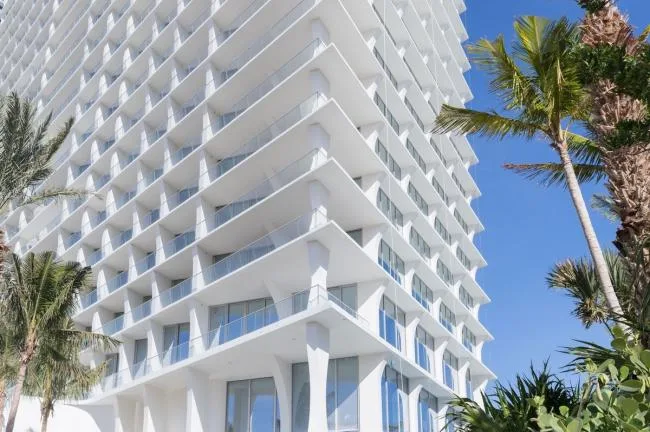
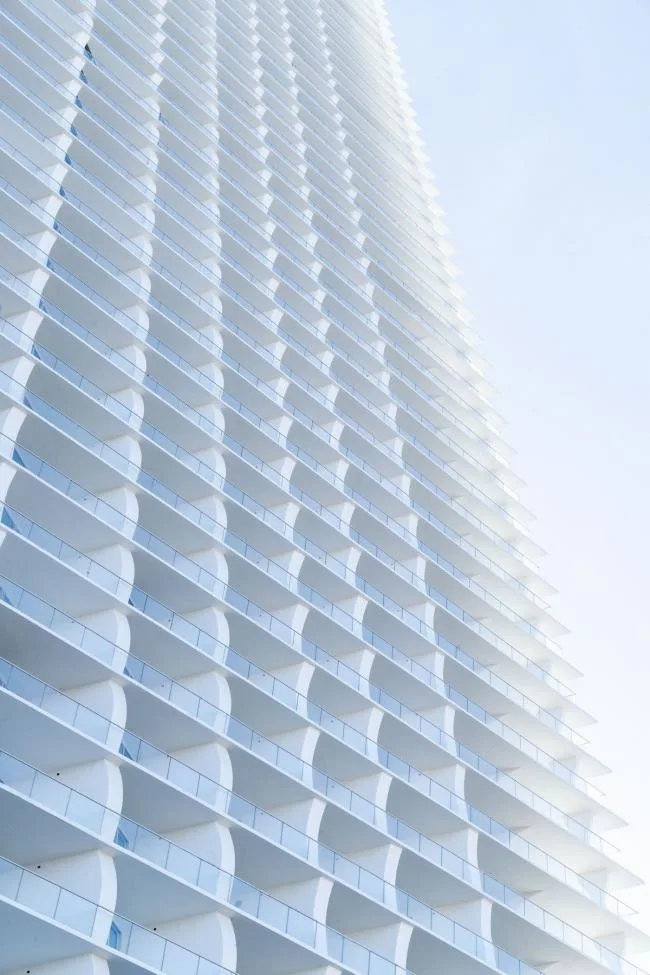
Details play a significant role in this building, becoming an architectural symbol. The exterior facade mirrors the internal organization of the residential units. Stone slabs connect the various floors, while recessed windows minimize visual impact. The walls, stretching from east to west, create living spaces that offer dual views simultaneously. Their shapes accommodate unique areas within the apartments—such as bedrooms or deep terraces. The curved forms result from the need to either connect or separate different zones within each unit. Collectively, the walls and stone elements define different unit types, adding texture and depth to the facade.
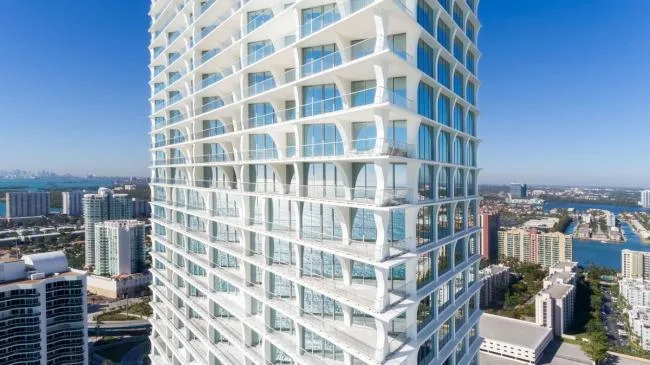
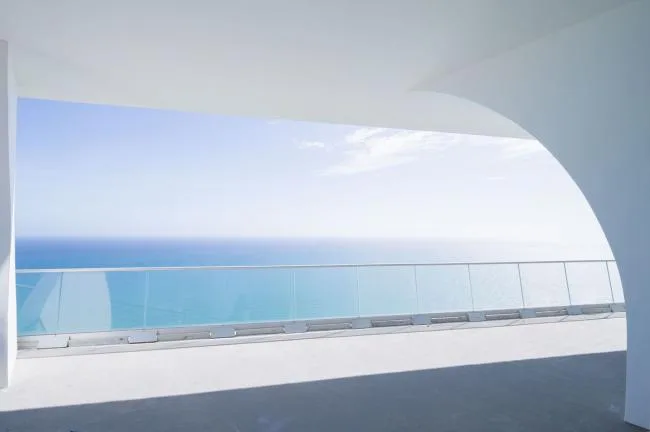
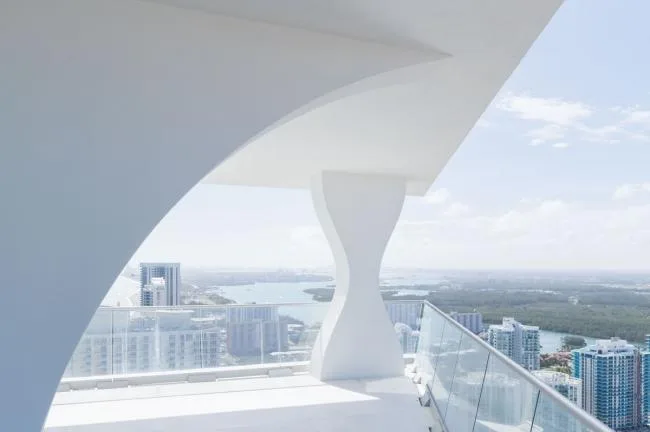
Miami’s climate influences its lifestyle, requiring architectural solutions that maximize the connection between each apartment and the outdoors. The floor slabs extend into each unit’s living space, creating spacious terraces that account for 30% of the building’s total area. The best natural ventilation occurs during winter, when humidity is low. These extended floors provide ample shading, protecting residents from the intense sun. As a result, thermal gain on the facade is minimized, reducing the need for cooling. Through these simple yet effective strategies, the project establishes a distinct architectural typology suited to Miami’s environment.
Project Information:
Architectural Firm: Herzog & de Meuron
Location: Sunshine Island Beach, Florida 33160, USA
Category: Apartment
Partner Leaders: Jacques Herzog, Pierre de Meuron, Christine Binswanger, Jason Frantzen (BIM work, Partner in Charge)
Project Team: Raymond Jr. Gaëtan (Associate), Alfonso Miguel Caballero, Ryan Cole (Project Manager), Santiago Espitia, Claire Gamet, Gray Garmon, Pauline Gaulard, Billy Guidoni, Luis Guzmán Grossberger, Shusuke Inoue, Sara Jiménez Nuñez, Clément Thomas Mathieu, Matthew Oravec, Amanda Sachs-Mangold, Tali Shoavi, Andre Vergueiro
Building Area: 10,064.0 square meters
Project Year: 2018
Photographers: DBOX, Iwan Baan, Robin Hill
Manufacturer: Capform
Executive Architect: ADD Inc. (now Stantec)
Landscape Designer: Raymond Jungles, Inc.
Interior Designer: PYR, Pierre Yves Rochon
Client: Sunny Isles Beach Associates, LLC
Mechanical and Electrical Piping: Edwards & Zuck
Structural Engineer: McNamara/Salvia, Inc.
Sound Design: Acentech
Civil Engineering: VSN Engineering
Geotechnical Consultant: KACO
Fire Protection: SLS Fire Protection Engineering
Outdoor Lighting: Revolver Design
Wind Power Engineering: CPP
General Contractor: Suffolk












Must log in before commenting!
Sign Up