
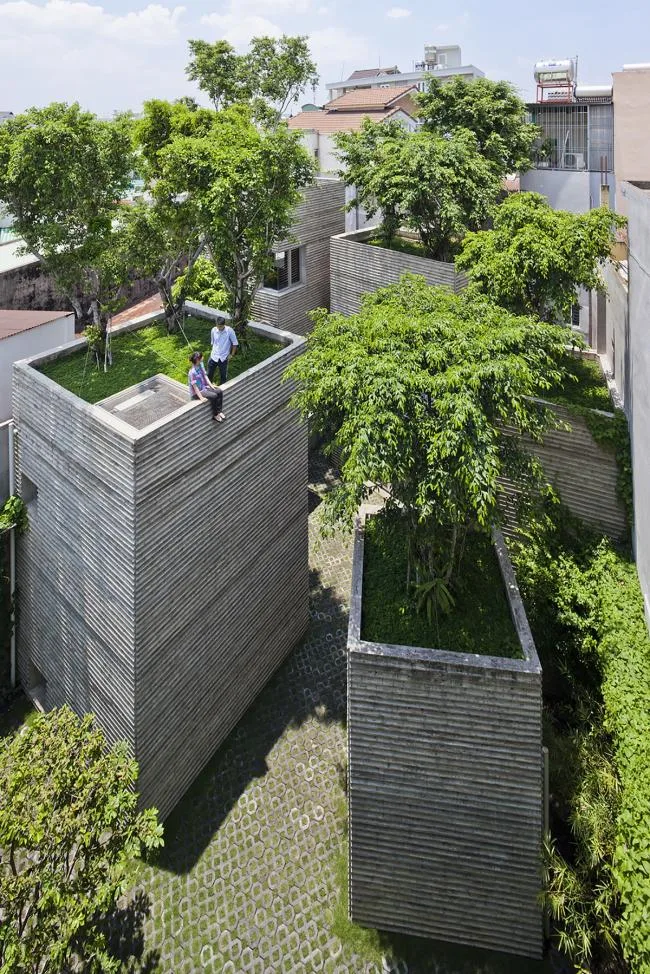
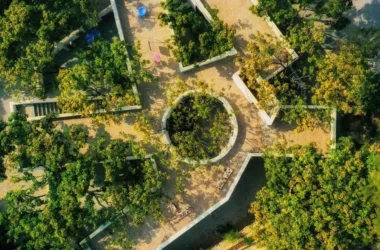
a bird’s-eye view
In the process of rapid urbanization, Vietnamese cities have deviated from their origins like spreading tropical forests. For example, in Ho Chi Minh City, the entire city has only 0.25% green coverage. Excessive motorcycles exacerbate urban traffic congestion and air pollution. The result is that the new generation growing up in the city is losing its connection with nature.
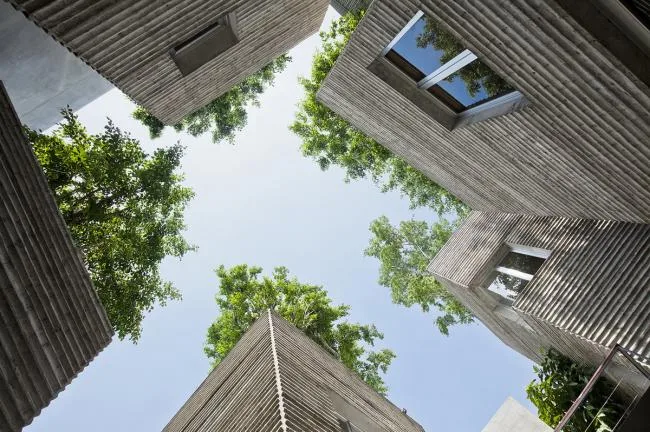
Looking up at the building in the courtyard
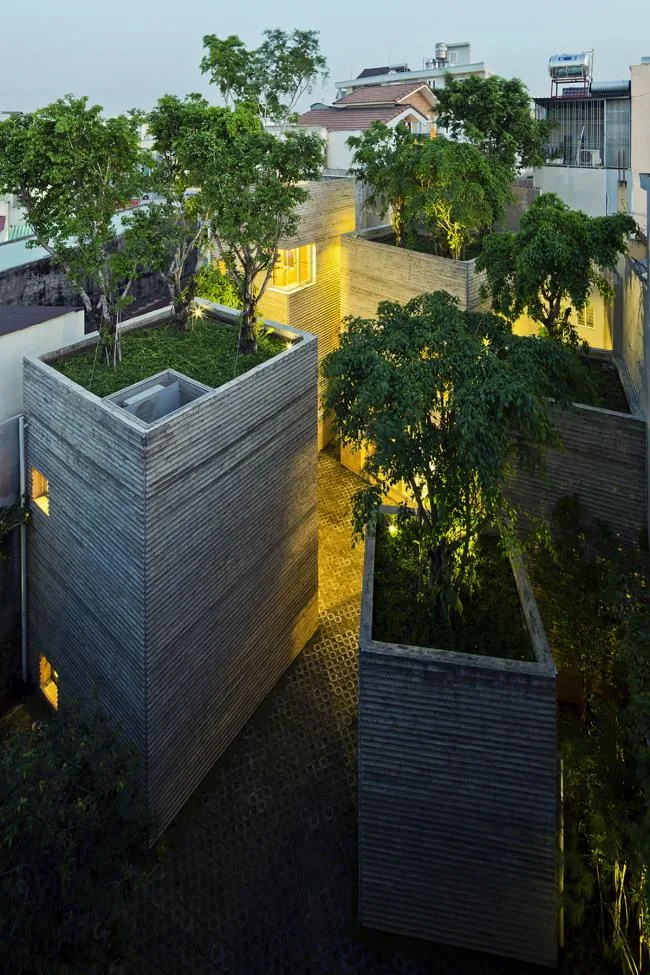
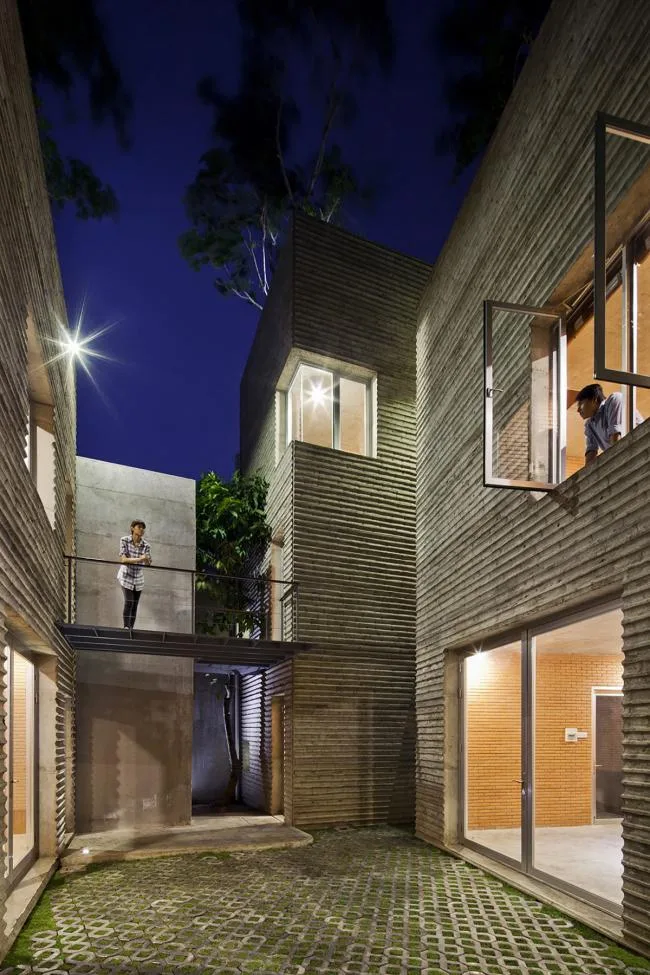
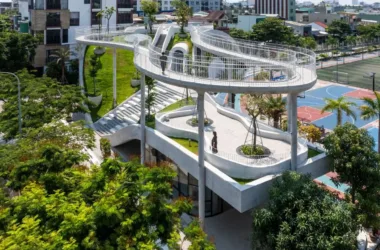
Tree House is an effort to change this situation, as it is a house that aims to keep its budget within $156000. The purpose of this project is to bring green spaces back into the city and accommodate high-density residential areas with tall tropical trees. Five concrete boxes are designed in the shape of flower pots, with trees planted on top of them. These boxes contain a thick layer of soil that can be used to resist and store rainwater, thus greatly reducing the risk of flooding in cities when this idea is implemented in large numbers for residential construction in the future.
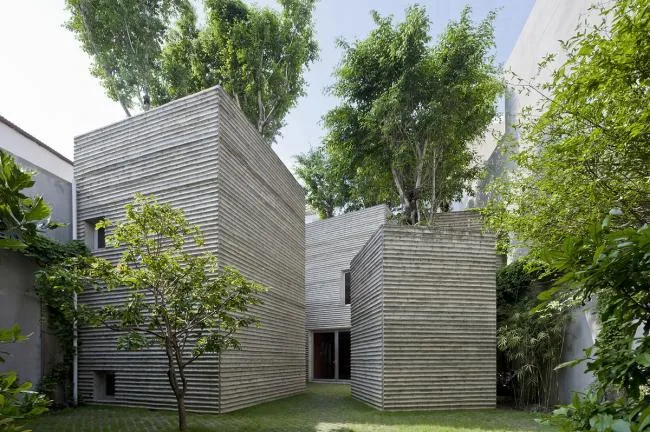
Main facade
City Concept
This house is located in Xin’an County, one of the most densely populated residential areas in Ho Chi Minh City, where many small houses are crowded together. The base is a remaining internal block in this suburb, accessible only by a small pedestrian walkway. This house is designed to be organized into small parts to respond to the surrounding urban texture. The Tree House is like an oasis, surrounded by typical Vietnamese townhouses.
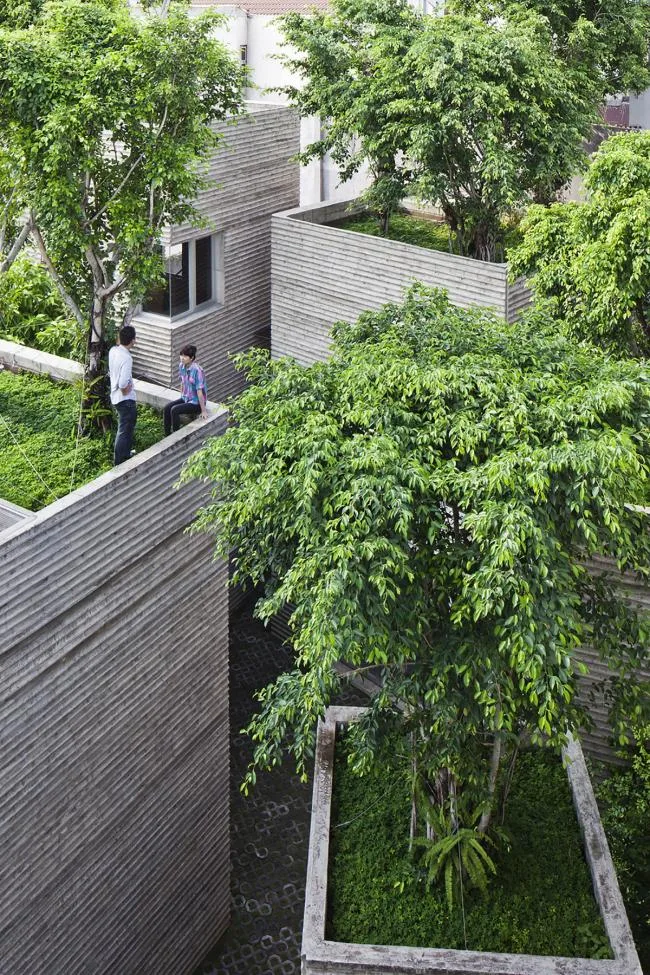
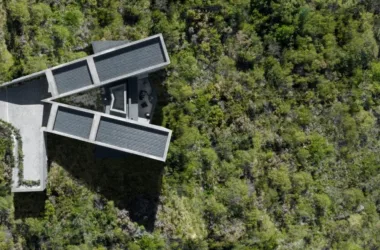
roof
planar concept
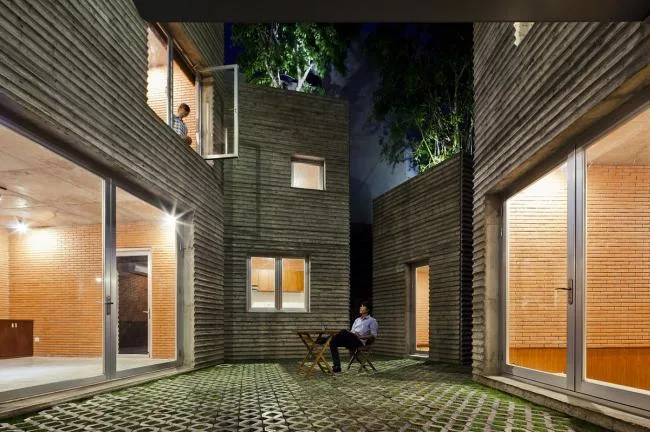
To adapt to the irregular shape of the site, a central courtyard and a small garden are formed between the five boxes. These boxes face the central courtyard with large glass doors and openable windows, which not only allow space to penetrate between the courtyard but also enhance natural lighting and ventilation inside; On the other hand, it is relatively closed to protect privacy and security. Public spaces such as restaurants and libraries are located on the first floor. The rooms upstairs can accommodate private bedrooms and bathrooms, which are connected by steel bridges and eaves. The courtyard and garden, shaded by trees above, have become a part of the lower living space. This house blurs the boundaries between the interior and exterior, providing a tropical lifestyle that coexists with nature.
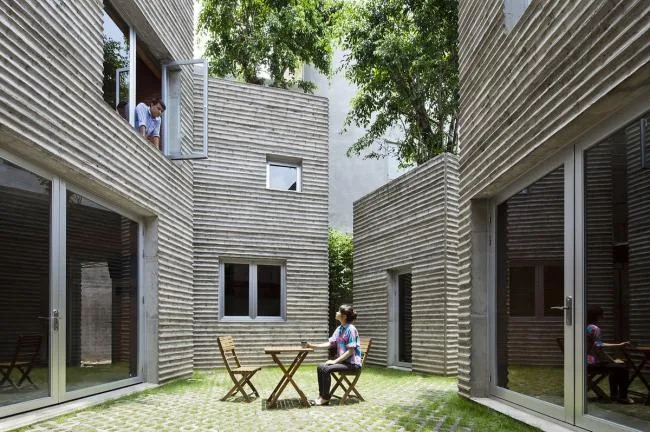
A courtyard surrounded by “boxes”
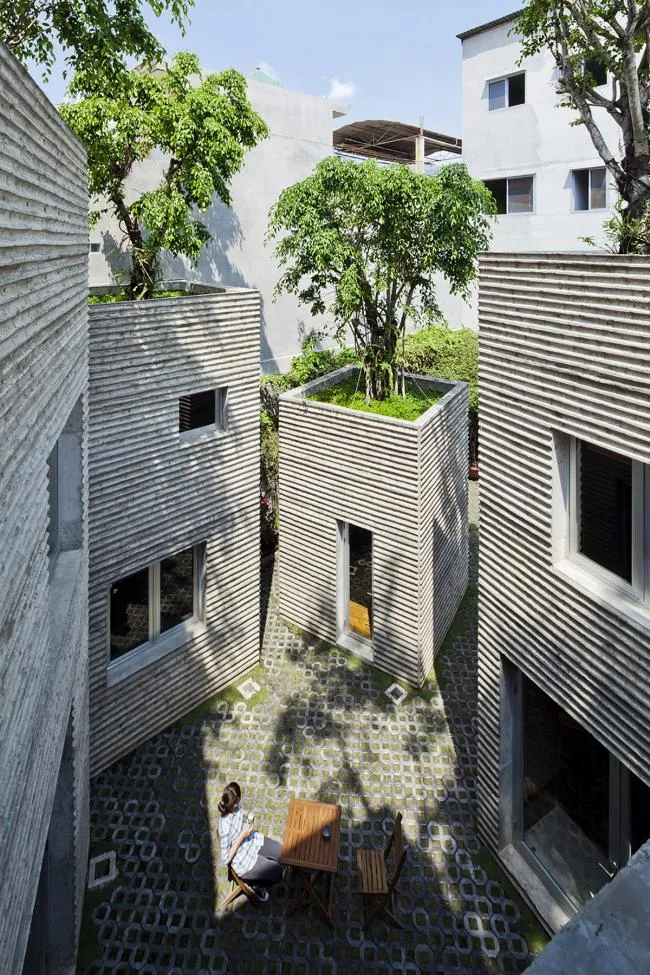
Courtyard View
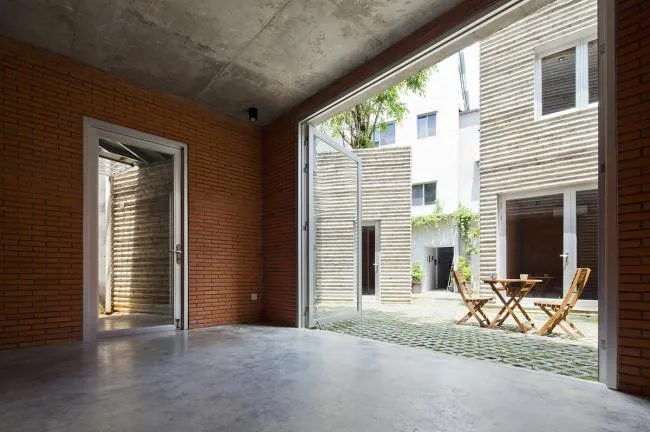
The large glass door of the first floor restaurant
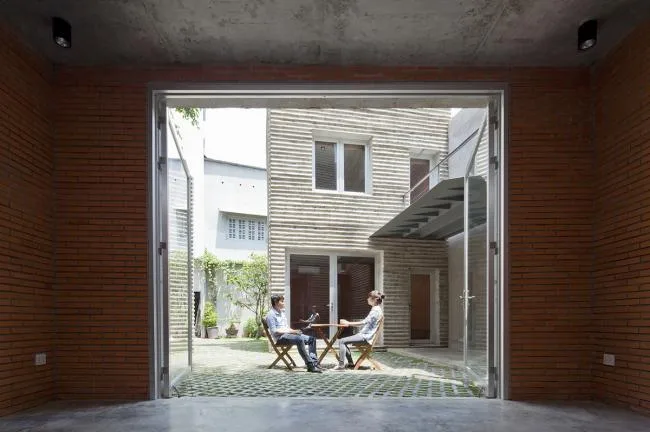
Looking towards the courtyard from the restaurant
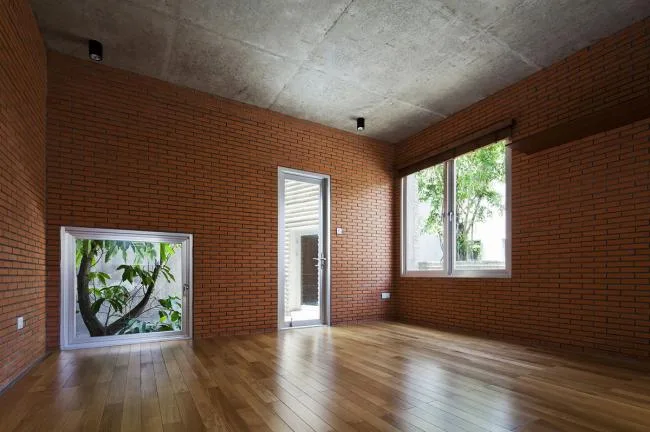
bedroom space
Material selection
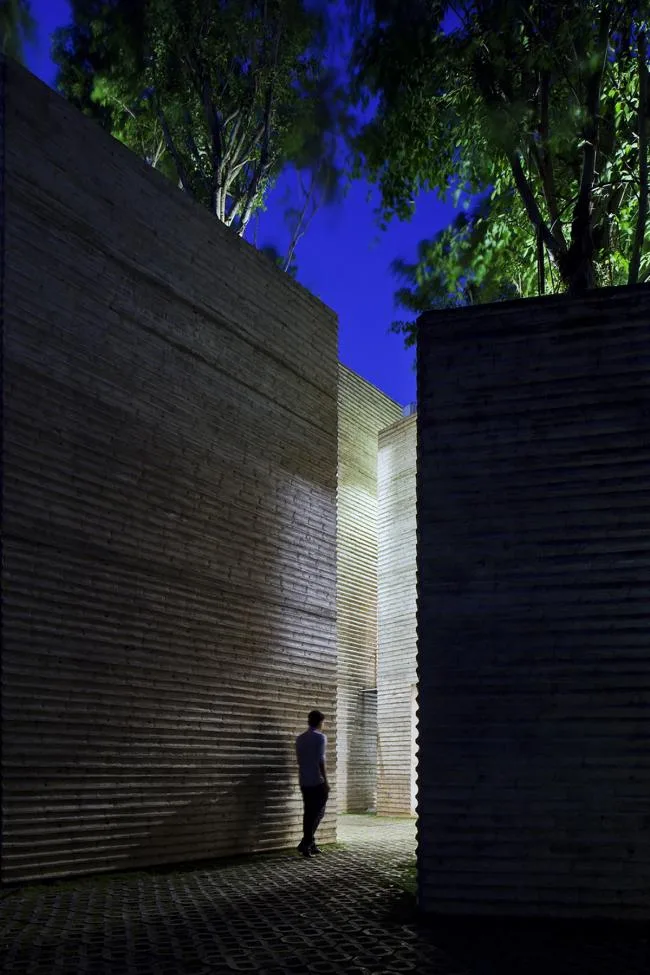
Architects choose local and natural materials, which effectively reduces construction costs while being very environmentally friendly. The exterior walls are made of cast-in-place concrete with bamboo formwork, while the interior walls are made of local brick materials. The ventilated cavity isolates the concrete from the brick wall, enhancing the indoor insulation effect (BIM tutorial).
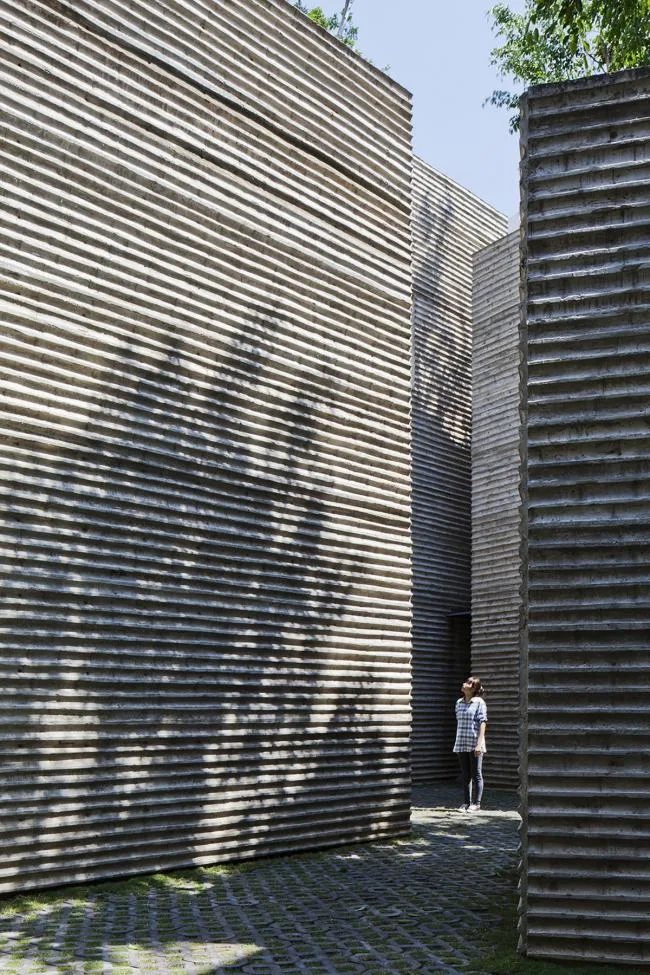
Facade Details
Architectural night view:
Design drawings:
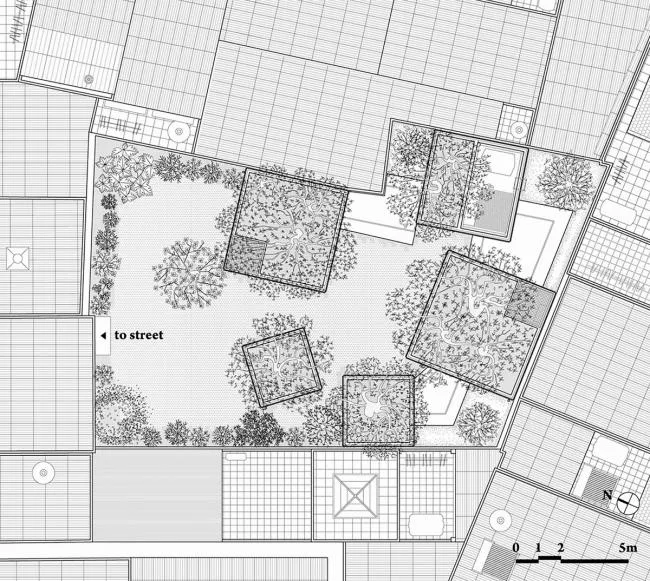
Master Plan
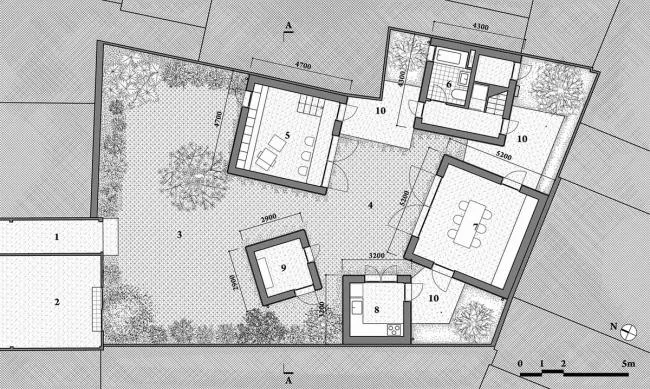
first floor plan
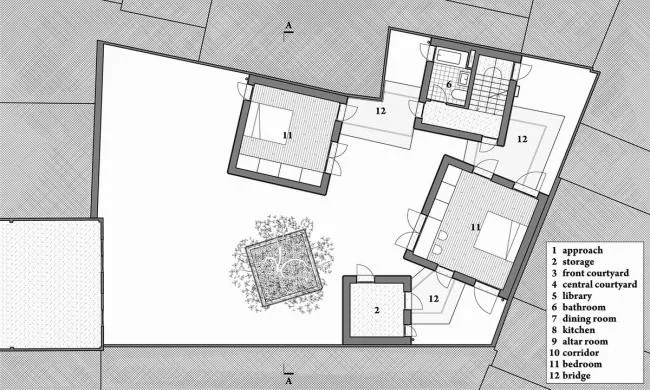
Second Floor Plan
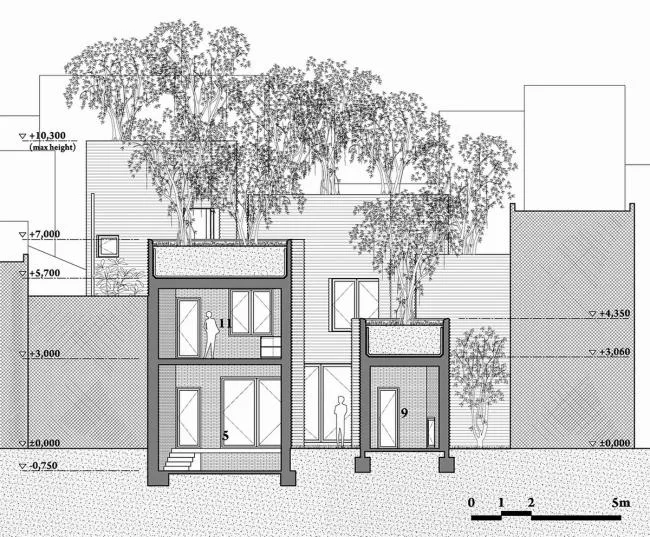
sectional view
Project Information:
Architect: Wu Zhongyi Architectural Firm
Address: Tan Binh District, Vietnam
Category: Independent Residential Buildings
Lead Architects: Vo Trong Nghia, Masaaki Iwamoto, Kosuke Nishijima
Building area: 226.0 square meters
Project Year: 2014
(BIM work) Photographer: Hiroyuki Oki
Project Architect: Nguyen Tat Dat
承包商:Wind and Water House JSC
Construction cost: 156000 USD












Must log in before commenting!
Sign Up