
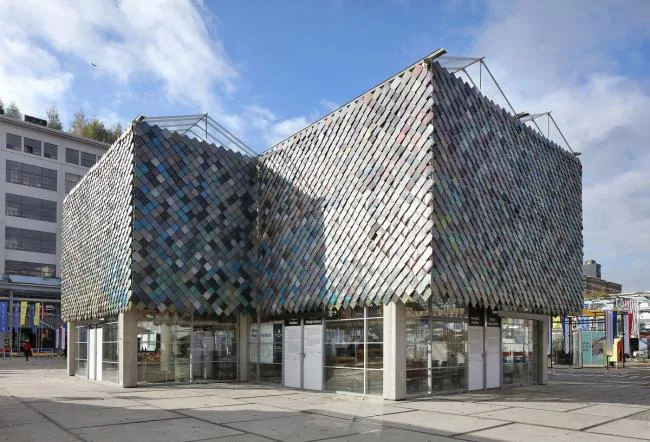
This building serves as a design manifesto for a new circular economy. It is a 100% circular structure that retains all building materials throughout the construction process.
The designers from bureau SLA and Overtrenders W adopted an innovative approach to realize this vision: every material used to construct this 250-square-meter building was borrowed. Instead of relying solely on traditional suppliers and manufacturers, the materials were also sourced from the residents of Eindhoven.
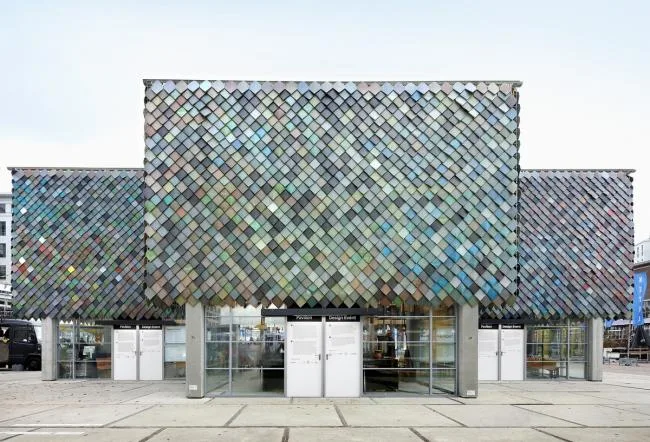
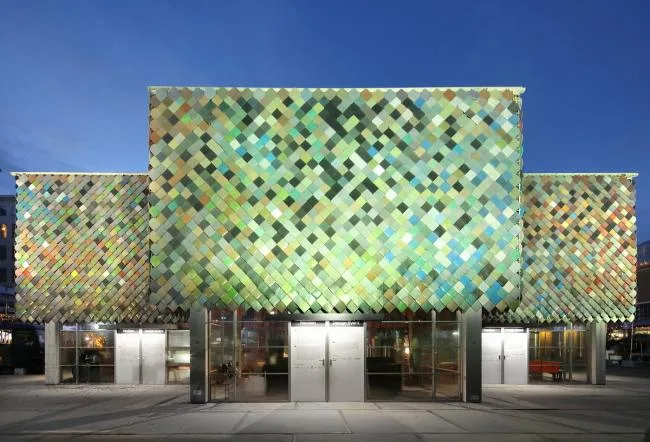
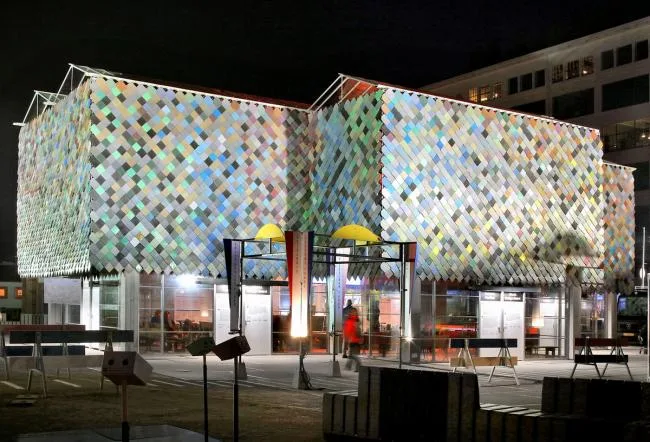
It is important to emphasize that this is not 70%, 80%, or even 95% of the materials borrowed—it is a full 100%. This includes concrete and wooden beams, lighting fixtures, facade elements, glass roofs, recycled plastic cladding, and even the glass roofs of the exhibition hall itself. After the event, all materials were returned intact to their original owners in compliance with the Dutch Design Week (DDW) guidelines, except for the striking colored tiles on the exhibition hall’s facade. These tiles were crafted from plastic household waste collected from Eindhoven residents and were redistributed to them at the conclusion of DDW.
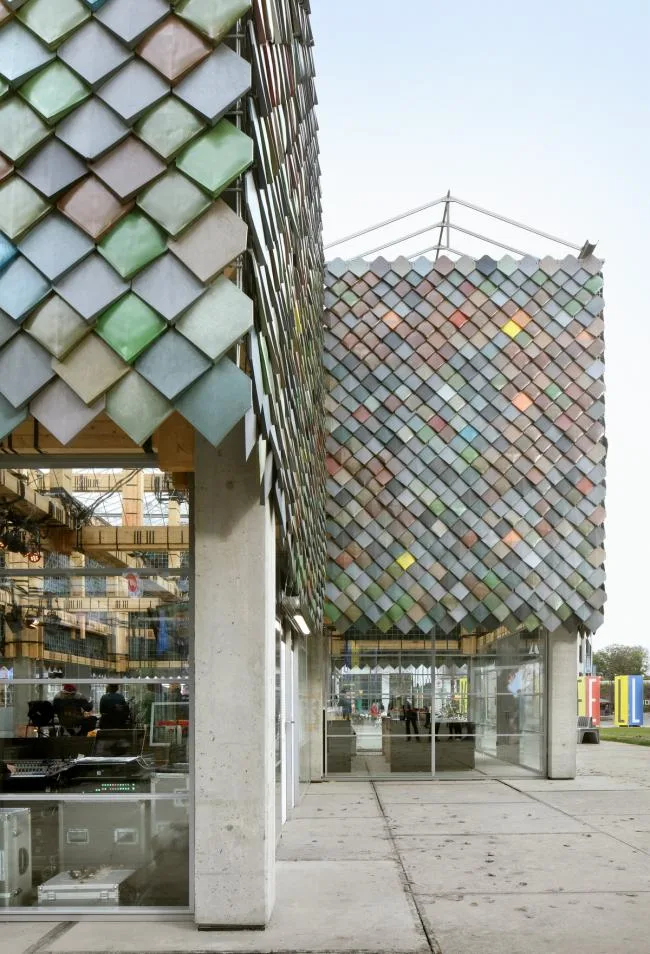
The concept of 100% borrowing (a key BIM learning) means the construction site operated without screws, glue, drills, or saws. This method inspired a new design language: the People’s Pavilion represents the future of sustainable architecture—a bold design realized through collaborative and intelligent building techniques.
The People’s Pavilion acts as the main exhibition hall for the World Design Congress. It functions as a conference venue, a gathering space for visitors, and a music and theater hall. The venue hosted a two-week program of events day and night, featuring activities such as “The Age of Wonderland,” TEDx auditions, world book production, climate action debates, and more. The hall accommodates up to 200 seated guests or 600 standing attendees and is open to the public free of charge.
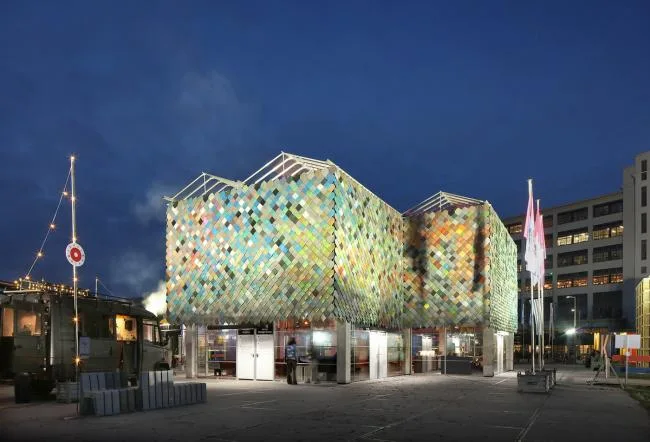
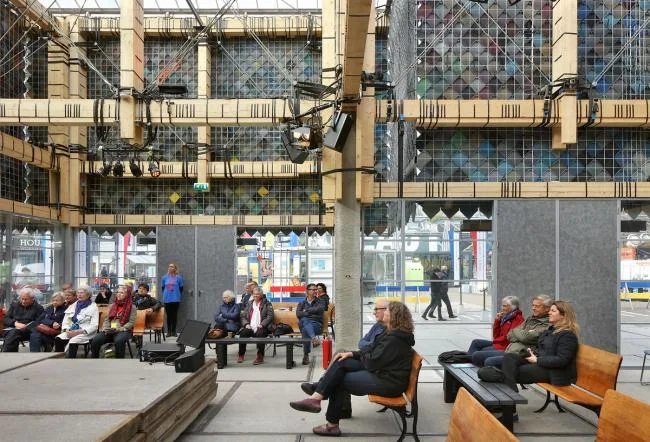
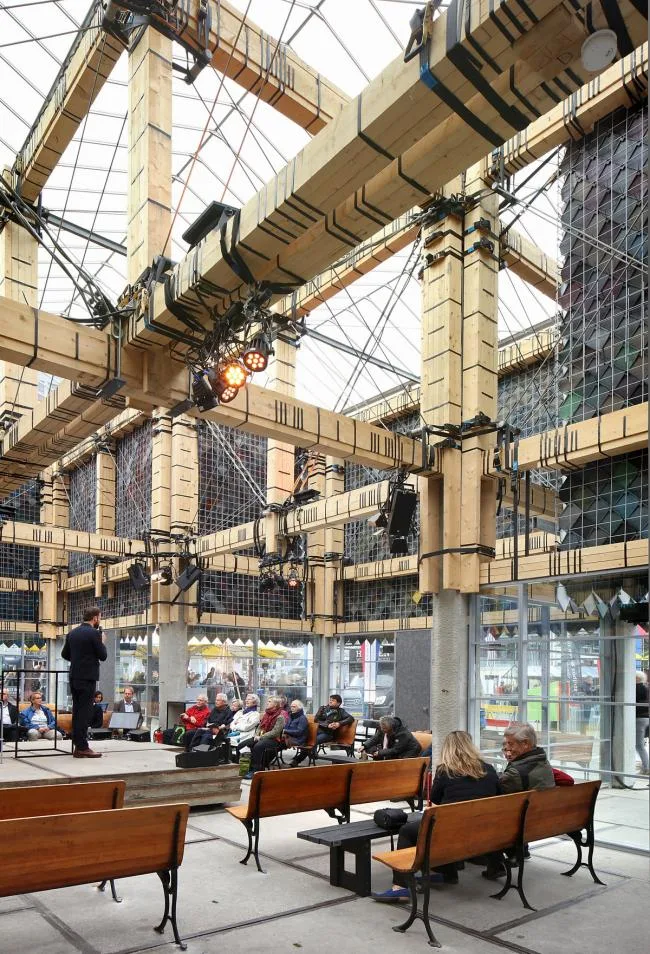
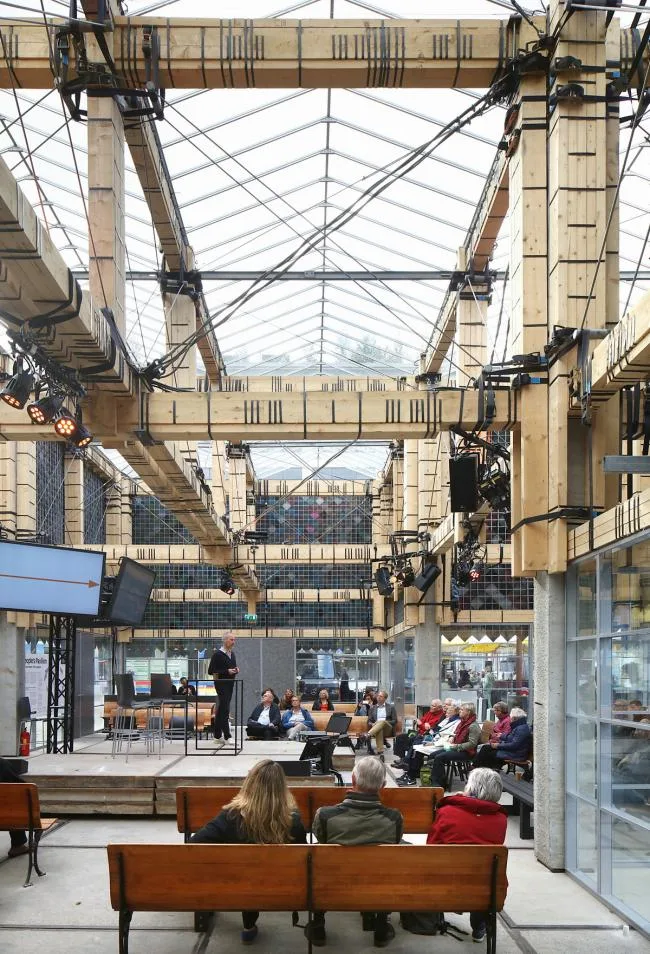
Design Overview: The foundation of the People’s Pavilion consists of 12 concrete piles and 19 wooden frames, developed in collaboration with Arup. The frame is made up of standard-sized unprocessed wooden beams connected by steel strips. The concrete piles and wooden frames are secured together with 350 tension bands, forming the 8-meter-high main structure of this 250-square-meter building. The glass roof employs a system commonly used in greenhouse construction.
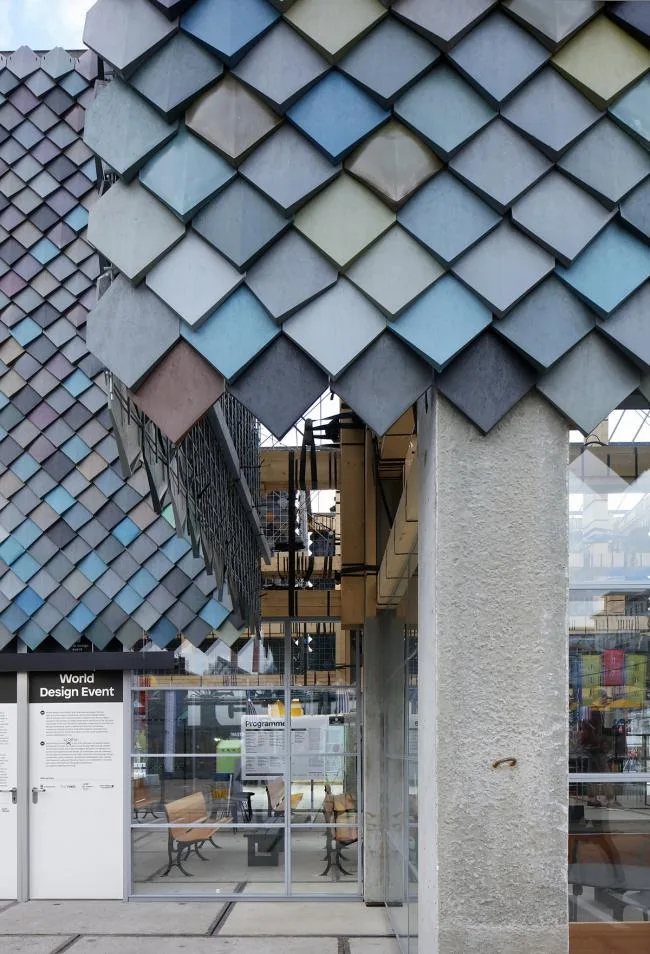
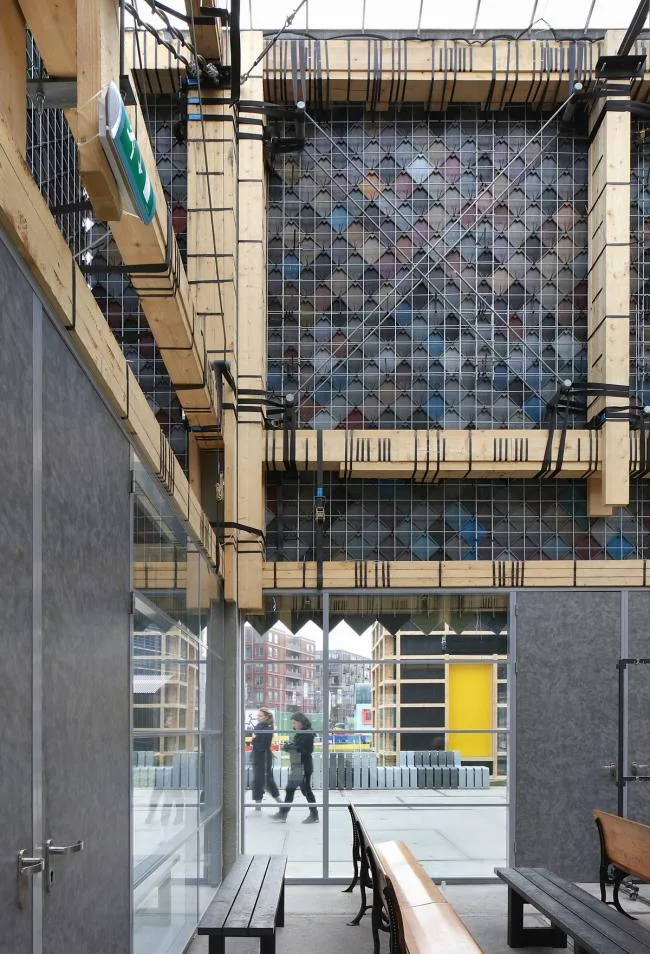
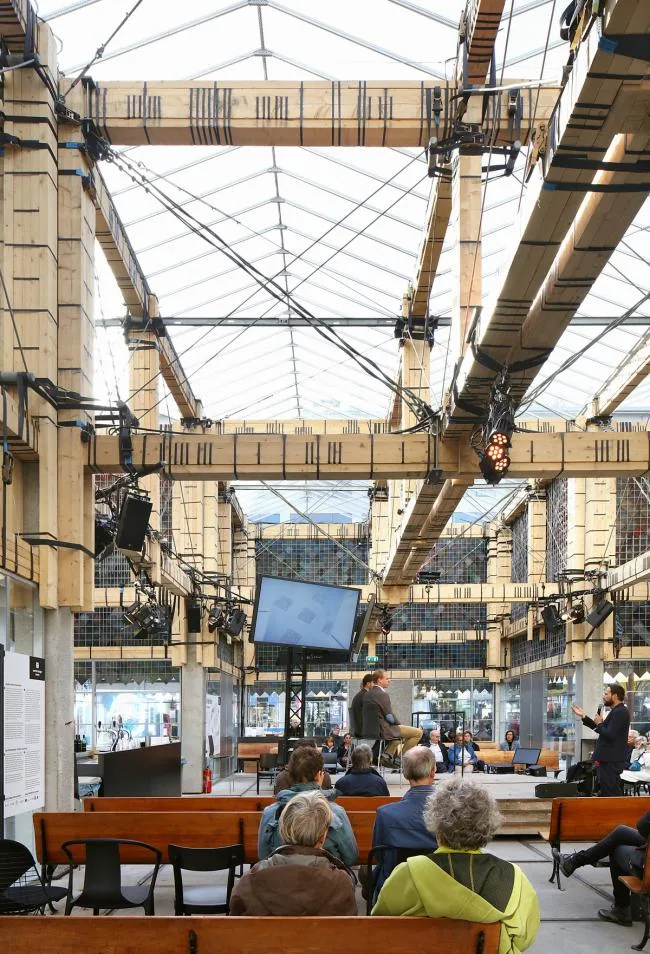
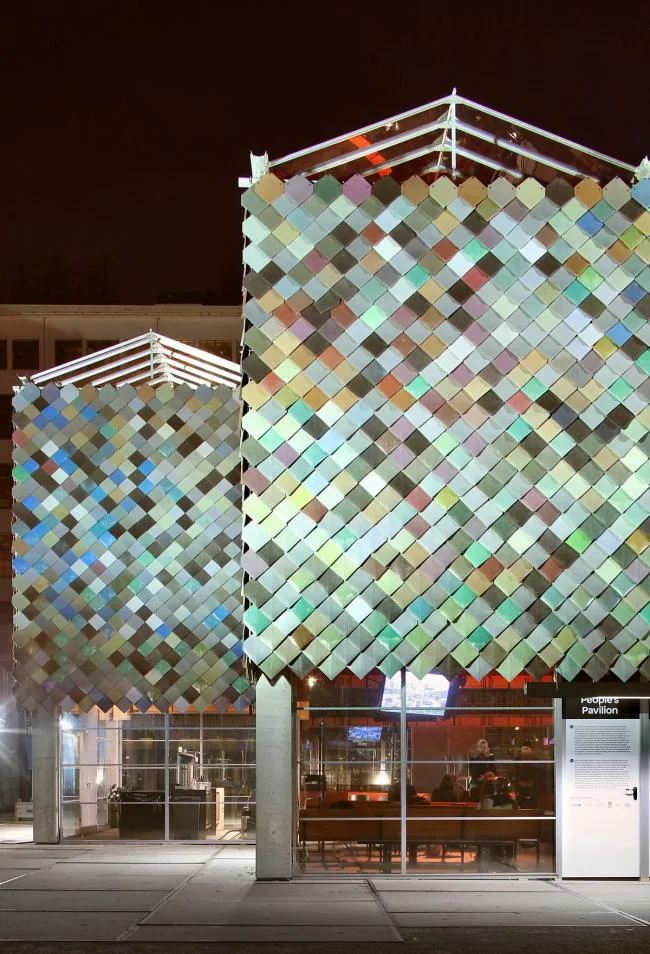
The upper facade of the exhibition hall features colorful plastic tiles made from recycled household plastic waste, mostly collected by Eindhoven residents. The glass curtain wall on the first floor was salvaged from the renovation of the BOL.com headquarters and will be repurposed for new office space after DDW. The platform is constructed from borrowed concrete slabs. Additionally, the lighting, heating, bar counter, and other interior elements of the People’s Pavilion were all borrowed.
Design Drawings:
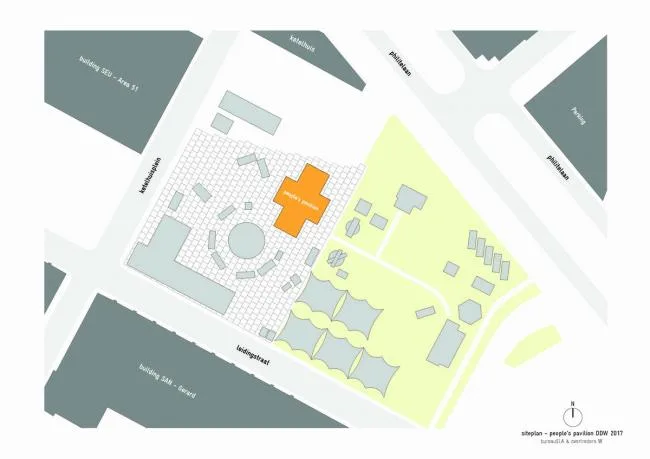
Site plan
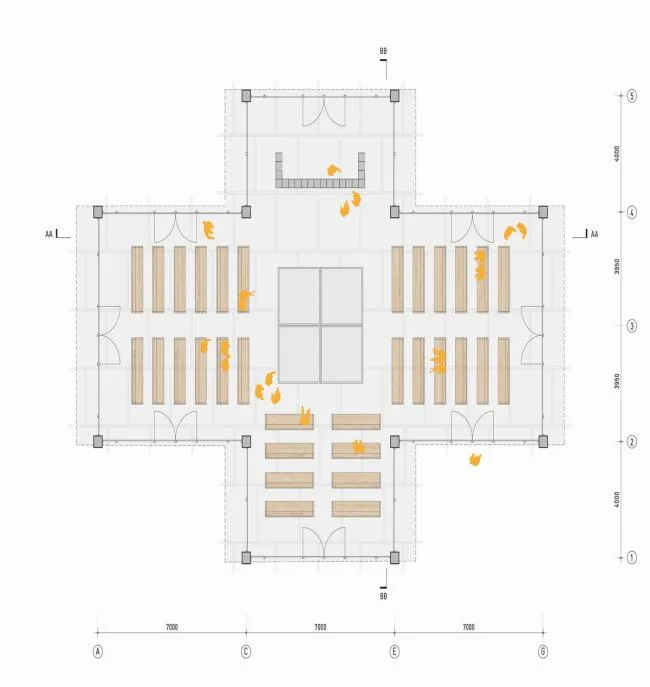
Floor plan
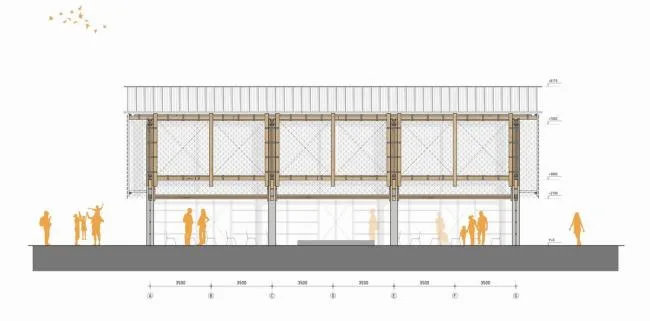
Longitudinal sectional view
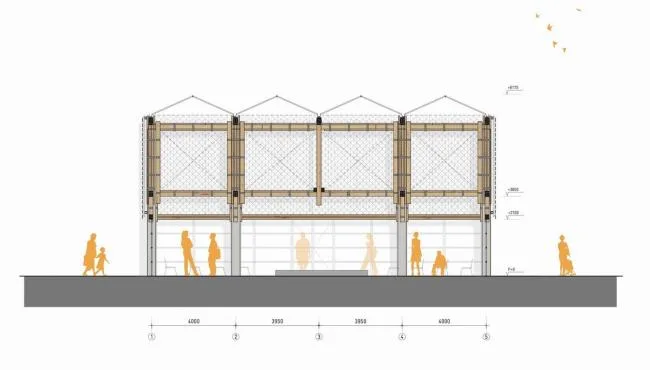
Horizontal sectional view
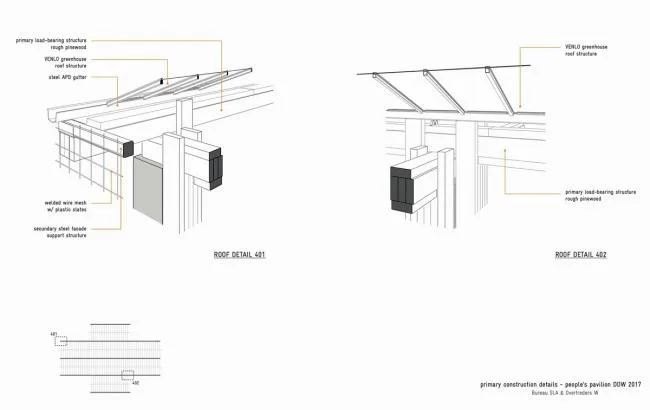
Detail drawing
Project Information:
Architects: Overtrenders W, bureau SLA
Location: Eindhoven, Netherlands
Category: Exhibition Hall
Lead Architects: Hester van Dijk, Peter van Assche, Reinder Bakker
Project Year: 2017
Photographer: Filip Dujardin
Manufacturer: TETRoS
Client: Dutch Design Foundation
Structural Engineer: Arup
Urban Mining Proposal: New Horizon
Main Builder: Ham & Sybesma
3D Rendering: Vingtsix 3D Visualization Studio












Must log in before commenting!
Sign Up