
Zhao Yang shares his design philosophy: “I aim for my presentation results to be as simple as possible—not minimalism, but true simplicity. This simplicity feels natural and pure. I have never been fond of clutter or accumulation. Instead, I appreciate a sense of power that is concise and unembellished. Therefore, I often restrain myself during the design process. Subtracting elements in space isn’t the goal; rather, it’s about expressing emotions more directly. Just like hand-drawn sketches are the most straightforward way to convey ideas, I wonder how a completed space can embody the power of a sketch. This is the feeling I strive to capture.”
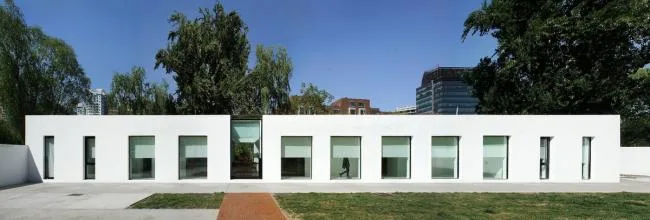
▲ Project Exterior View
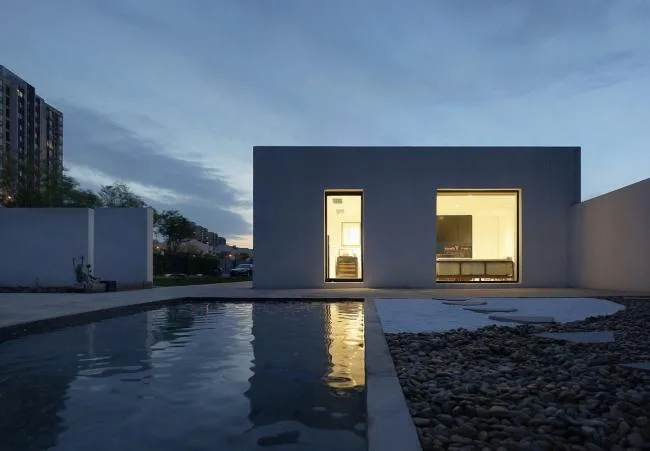
▲ Project Exterior View
This project is situated along a river in Beijing’s Chaoyang District. To the north lies a small river, flanked by trees on the east and west sides. The south is bordered by grasslands and roads, with high-rise residential buildings further beyond. The site resembles a hidden oasis—a peach blossom garden within the city—and the goal was to preserve this pure, untouched feeling. We envisioned the renovation outcome as a sheet of paper gently resting on grass: clean, light, and tranquil.
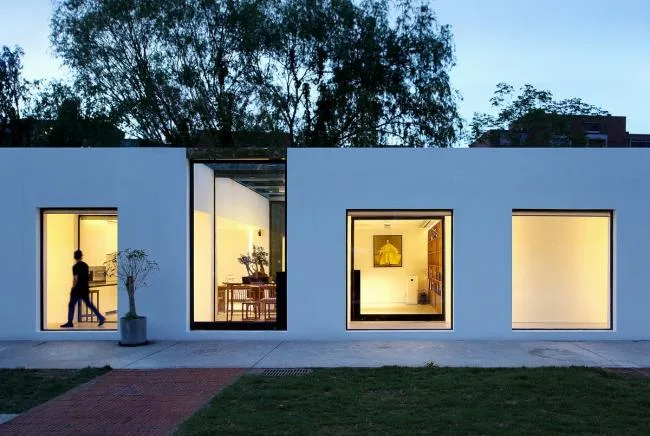
▲ Entrance Corridor and Tea Room
Functionally, this private clubhouse serves as both a workspace and leisure area for the owner, occasionally hosting friends. Our design begins with privacy in mind, structuring the indoor space to flow progressively from public to private zones. The shared spaces include the entrance, hallway, and tea room. The tea room acts like a living room with clear, bright views and is the only significant architectural modification we made — opening the building up to maximize transparency and public access. Other parts of the facade were simply organized and ordered, embodying a philosophy of “no action” where possible, while emphasizing the “necessary action” as the ultimate design gesture.
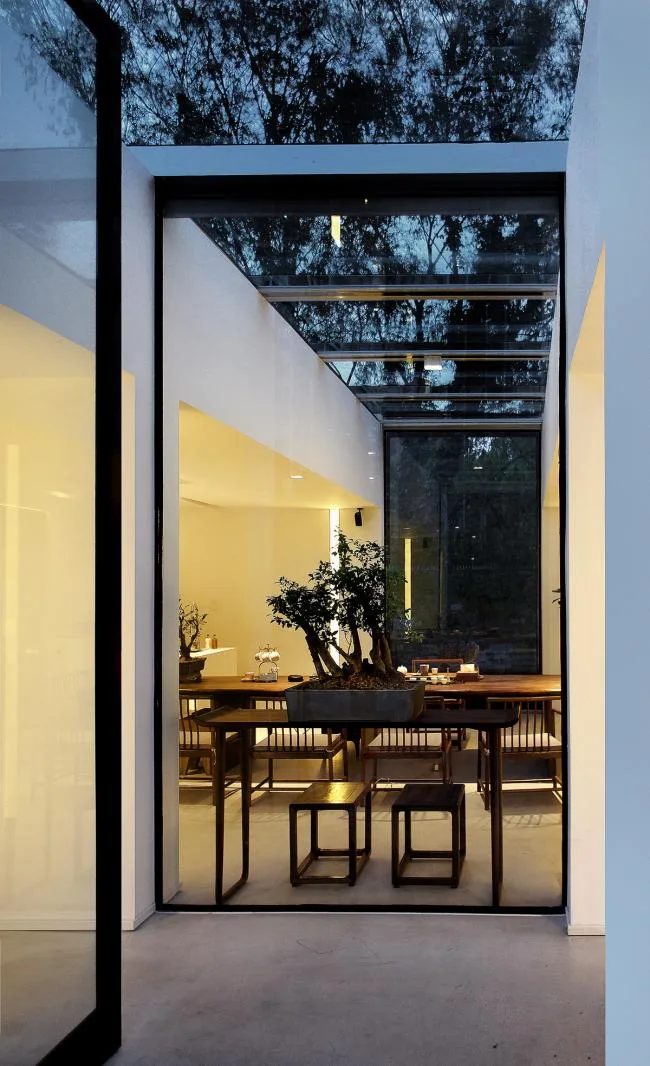
▲ Tea Room
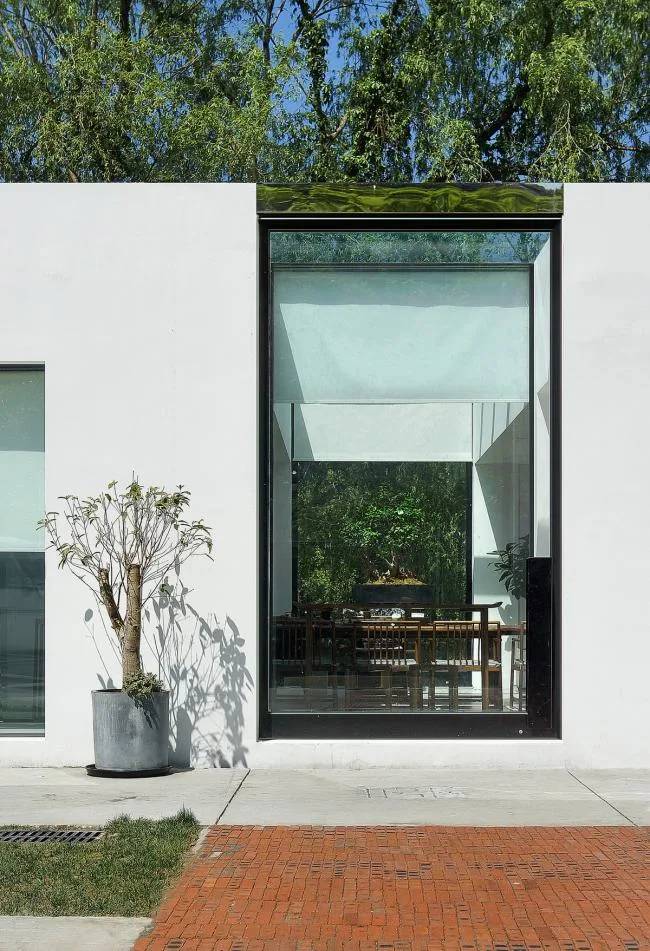
▲ Front Window of Tea Room
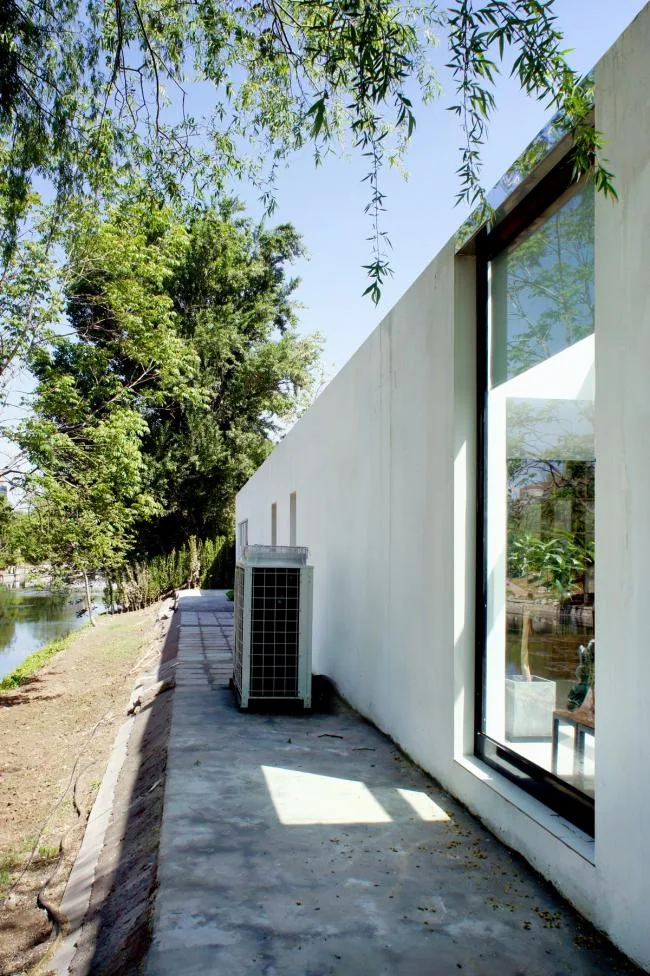
▲ Rear Window of Tea Room
From inside the tea room, you can enjoy views of both the front yard and the river behind. Looking upward reveals the sky, making the space feel open and luminous. However, to prevent excessive sunlight exposure in summer, we installed electric blackout curtains.
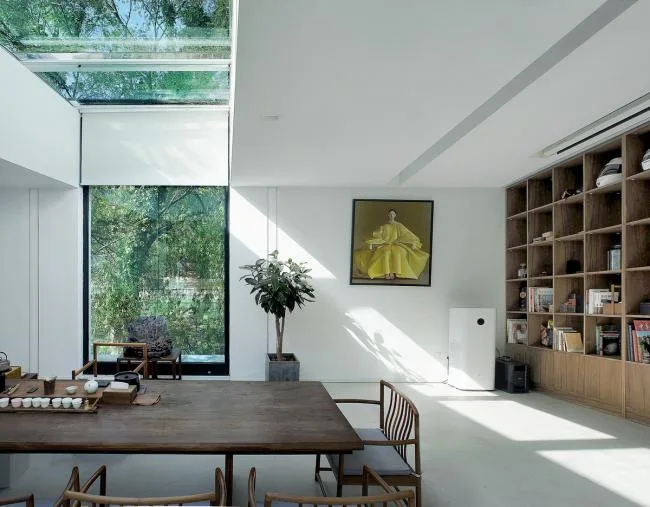
▲ Interior of Tea Room
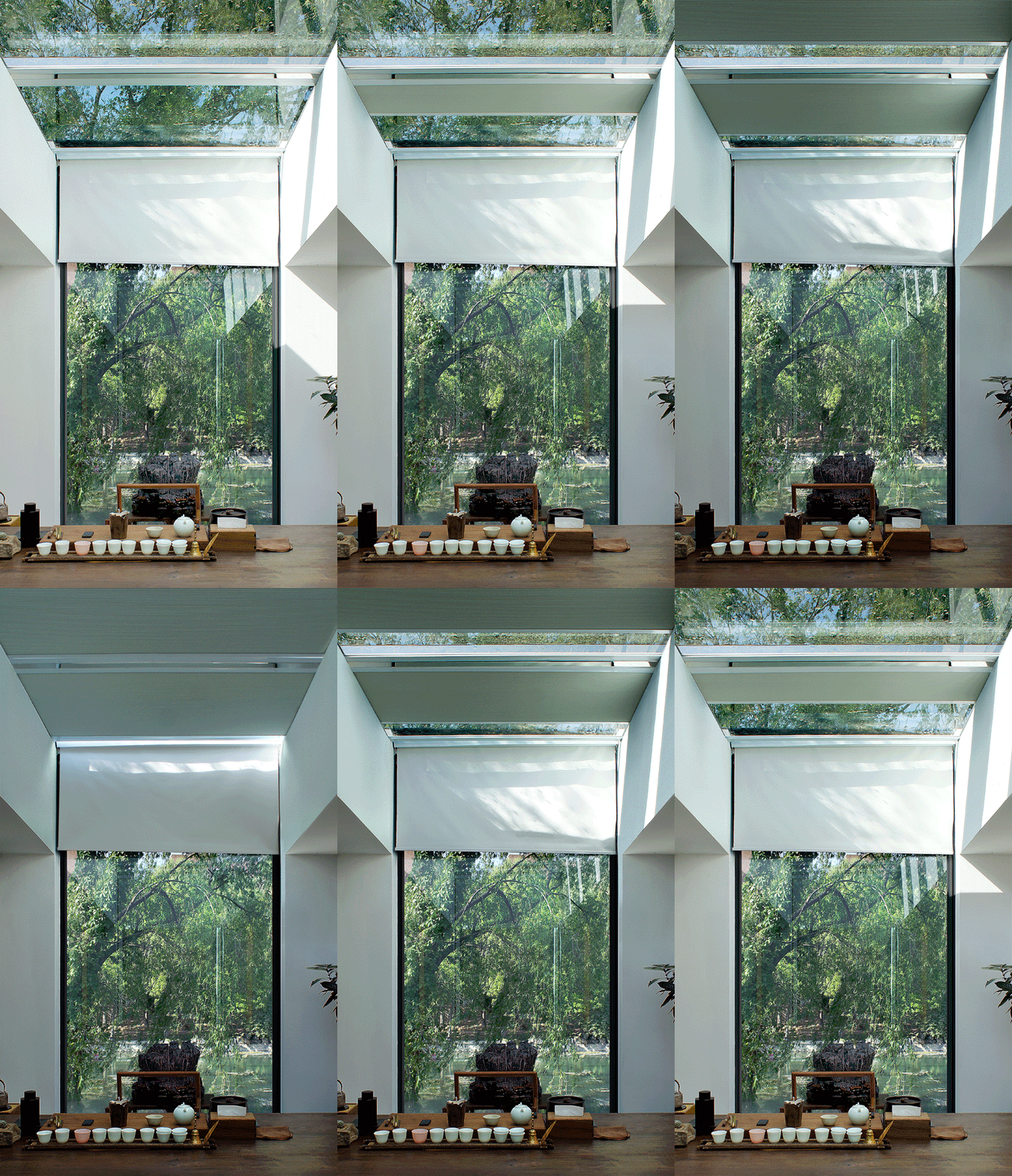
▲ Electric Blackout Curtain
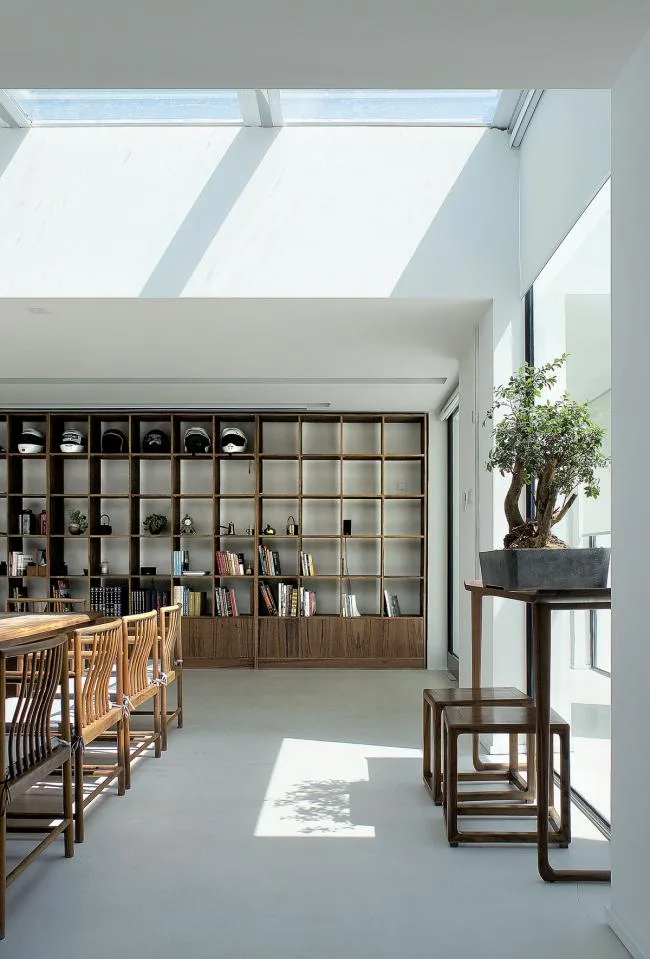
▲ Interior of Tea Room
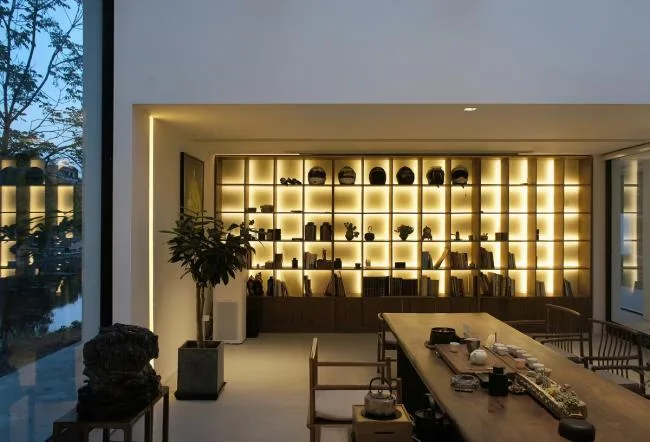
▲ Night View of Tea Room
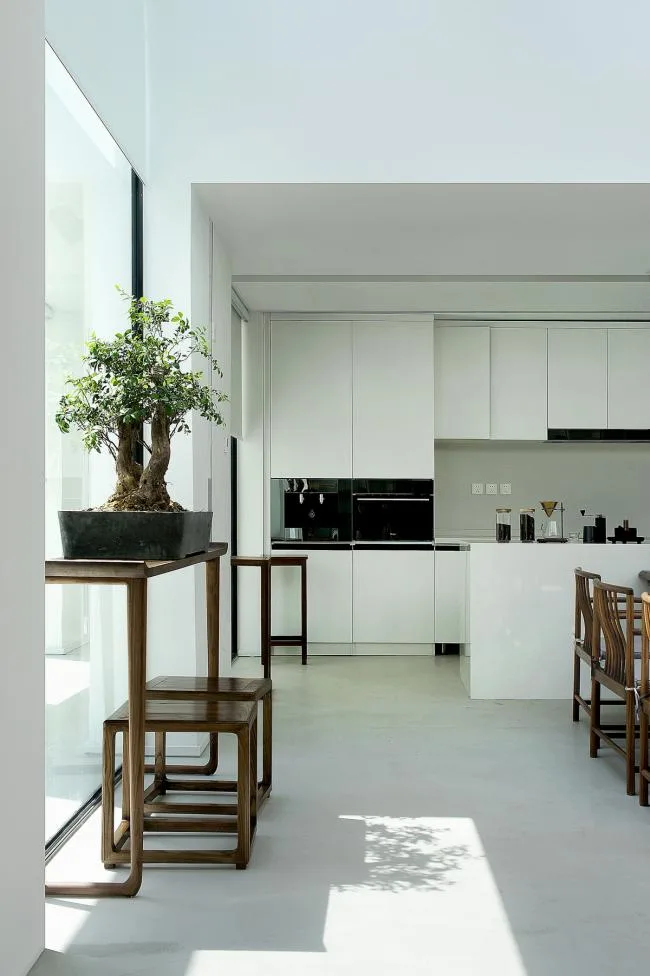
▲ Interior of Tea Room
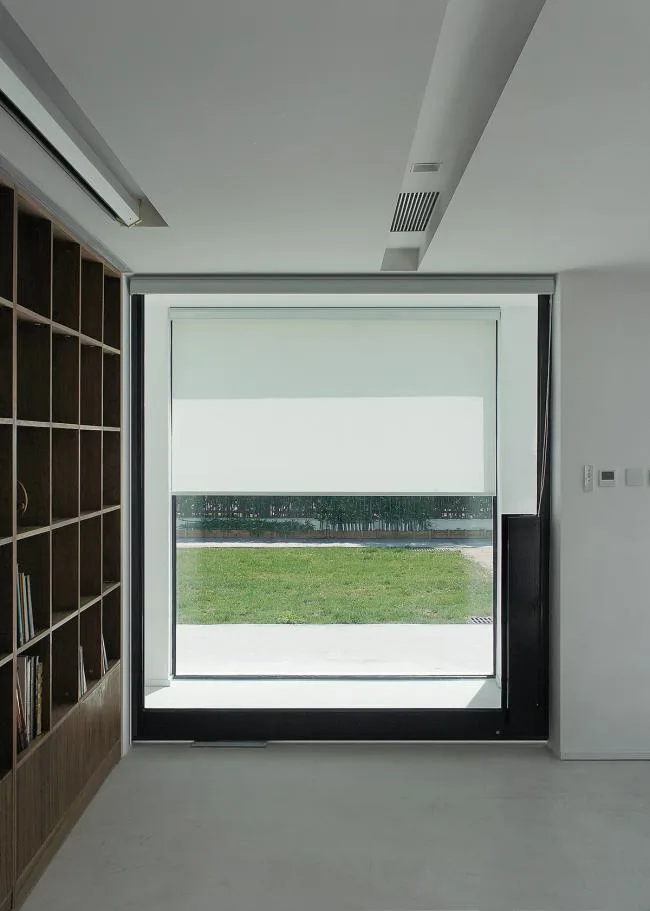
▲ Tea Room Door
The entrance corridor serves as a central connection to all rooms on the floor and is the most frequently used space. During the day, it is designed to be bright and white, creating a serene atmosphere where time seems to pause under the sunlight. At night, the lighting is intentionally subdued to avoid overpowering the view of the courtyard outside. For this reason, we installed subtle strip wall lights that visually echo the ‘cut seam’ aesthetic featured on the exterior facade.
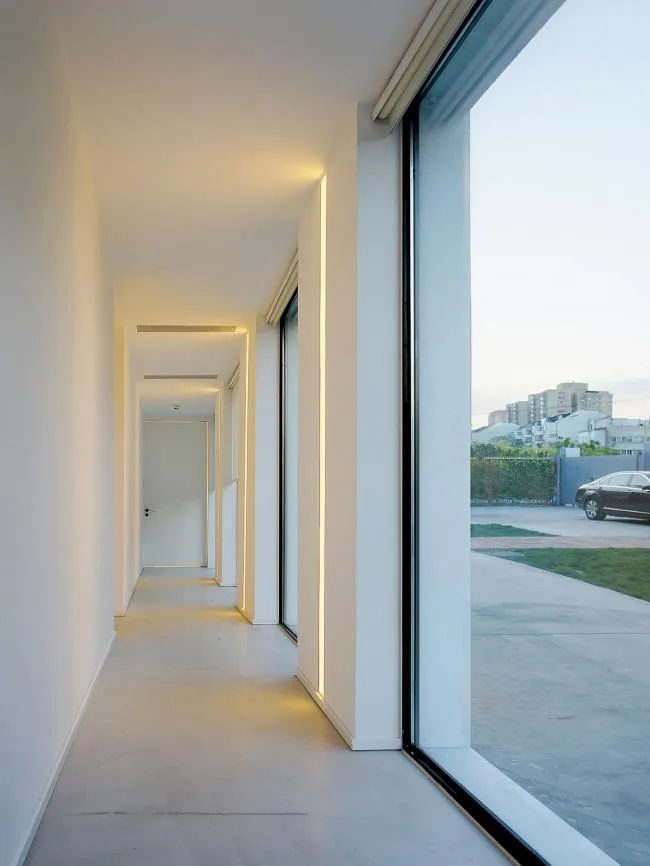
▲ Corridor
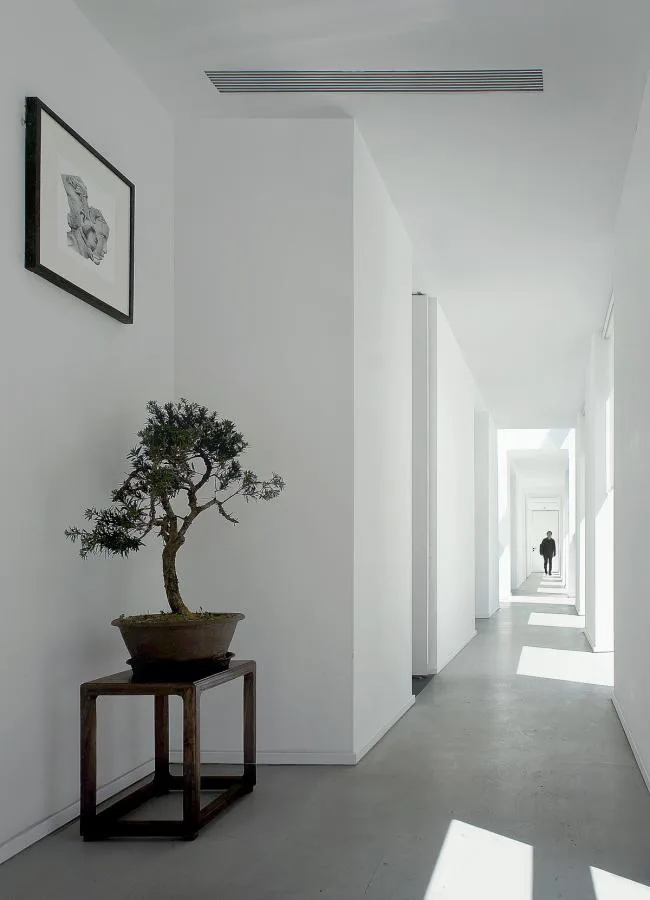
▲ Corridor
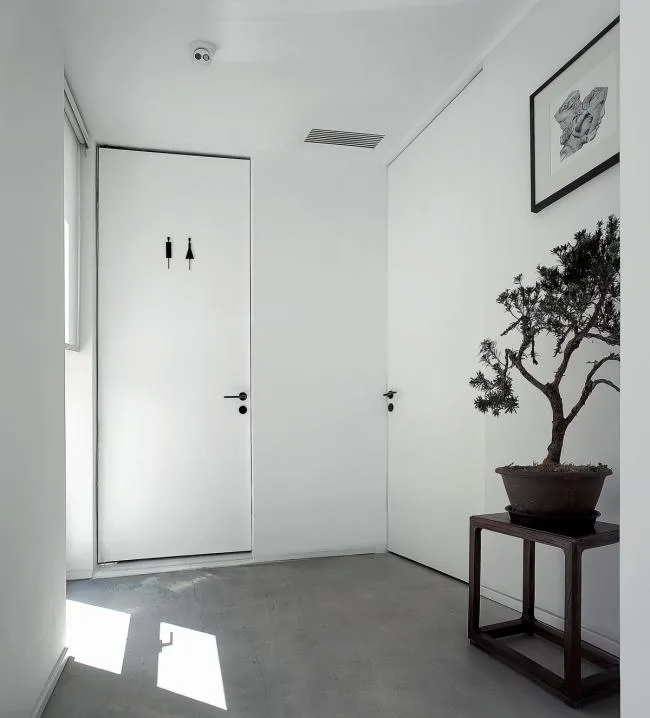
▲ Corridor
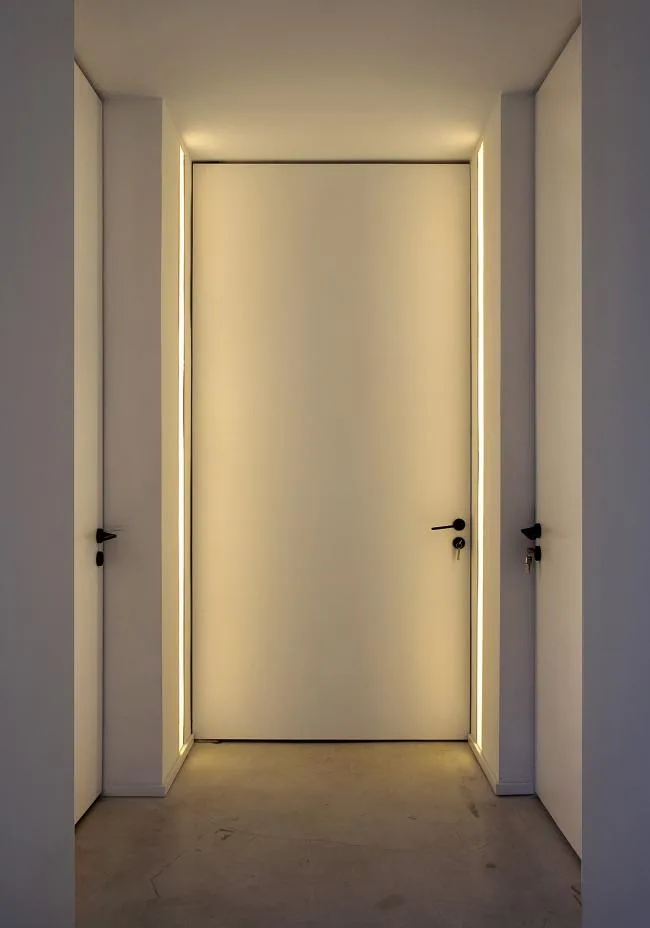
▲ Door
Upon entering from the indoor entrance, public spaces such as the restaurant are located on the left. These areas are designed to have limited natural light, so the dining table becomes the focal point, enhanced by ambient wall lighting that accentuates the traditional Chinese round dining table and its sense of direction. The overall aesthetic remains as simple as possible.
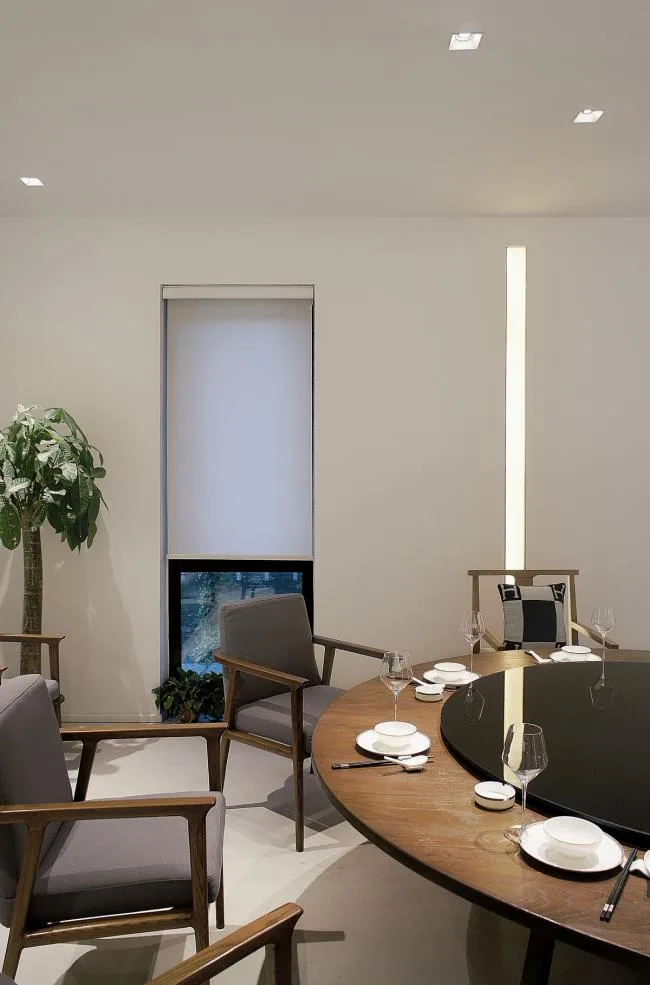
▲ Restaurant
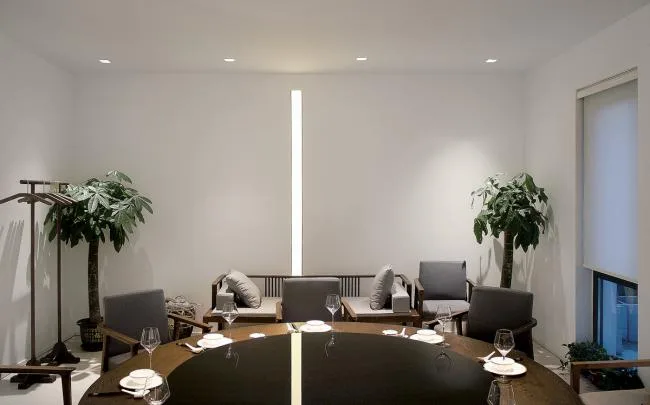
▲ Restaurant
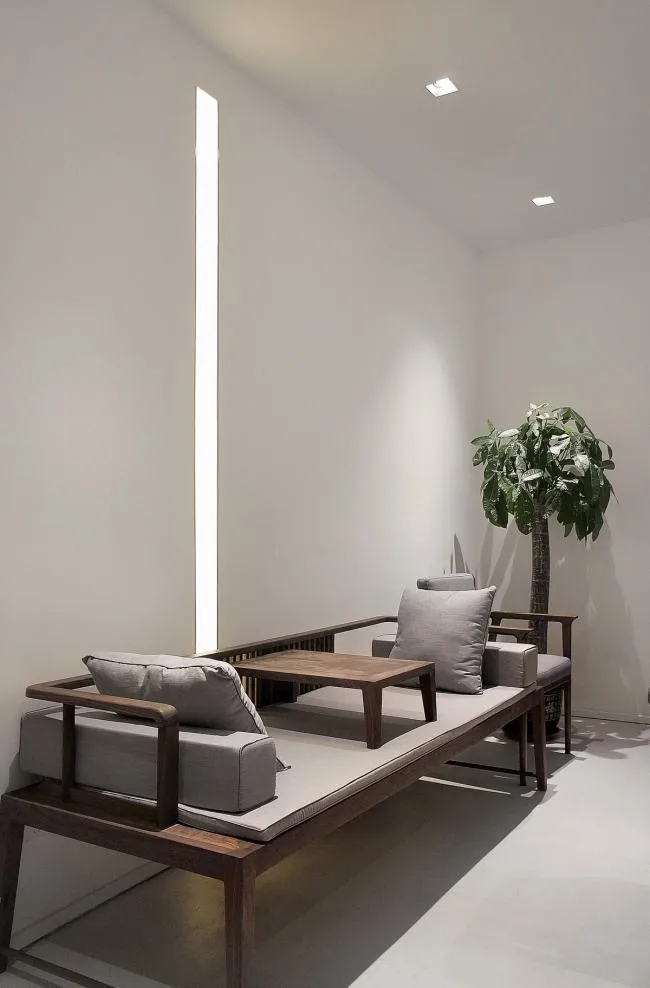
▲ Restaurant
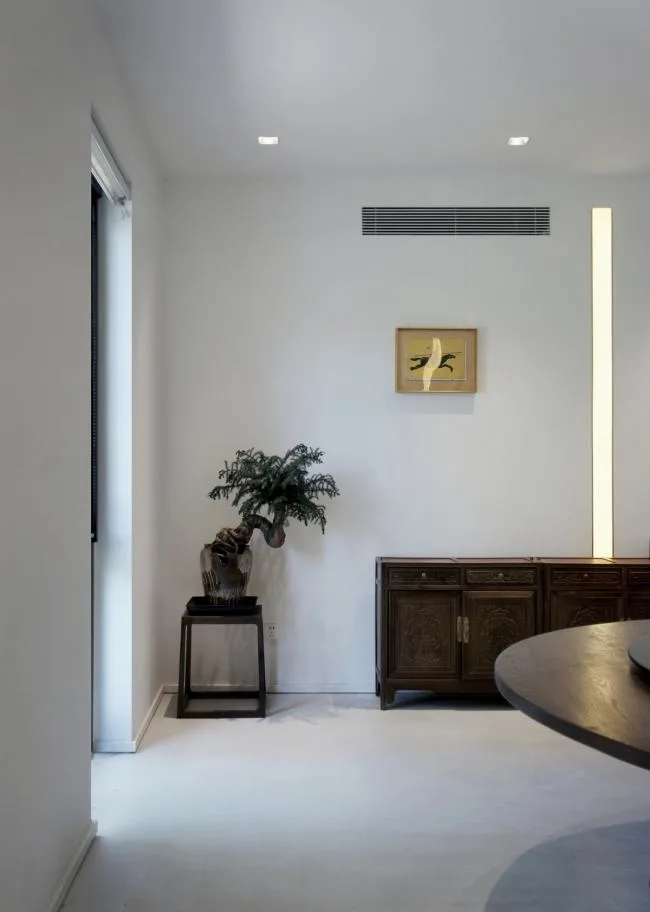
▲ Restaurant
The kitchen prioritizes practicality, but we also ensured that staff can enjoy views of the outside scenery, with a door opening directly to the river. This connection makes preparing meals a pleasant experience.
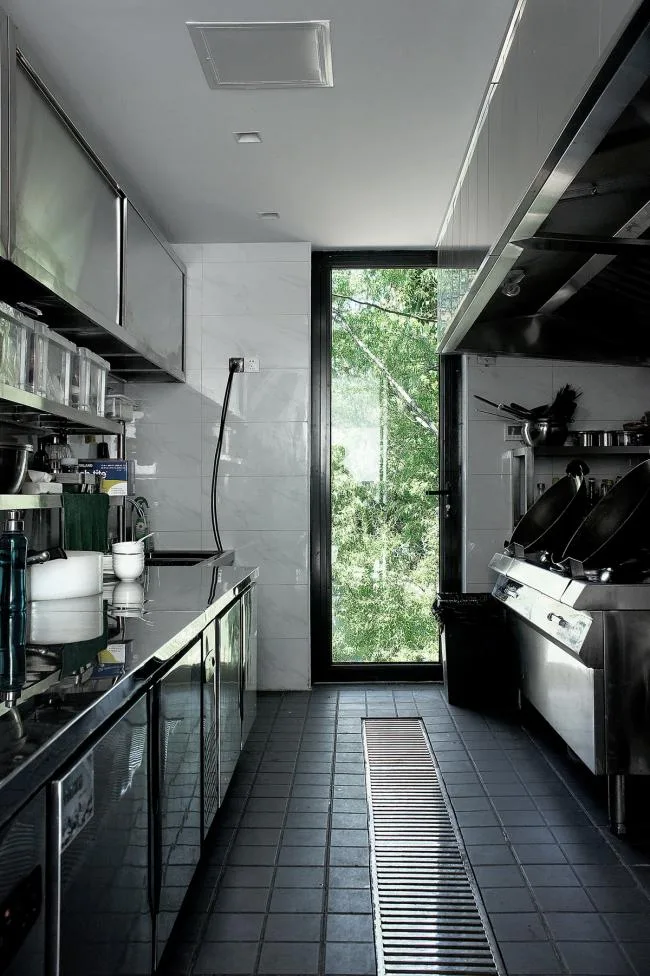
▲ Kitchen
The most private areas include the study and bedroom. Besides their primary functions, they feature a secluded backyard where flowers can be planted, fish can be raised, and barbecues can occasionally be enjoyed. It’s a space for leisure and relaxation, perfect for hanging an umbrella and savoring a cup of tea in peace.
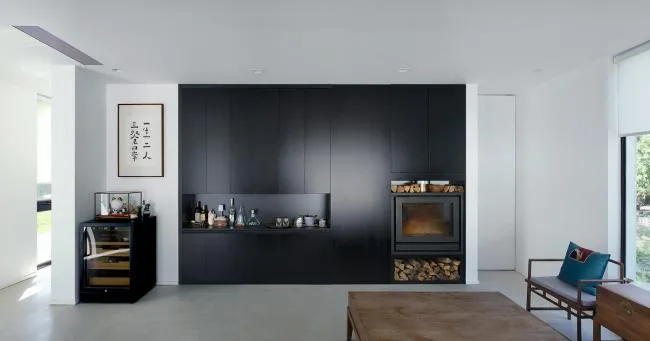
▲ Study Room
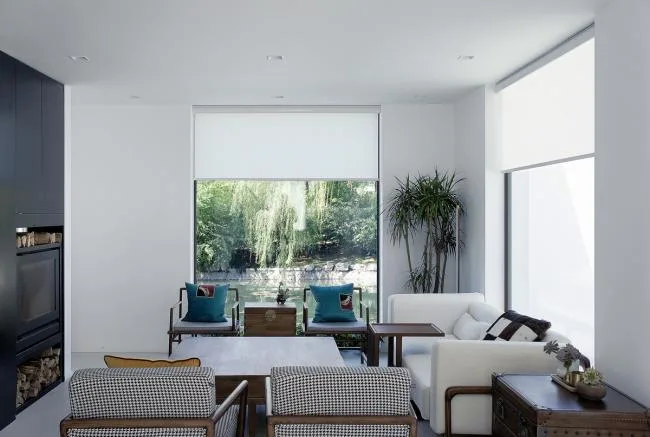
▲ Study Room
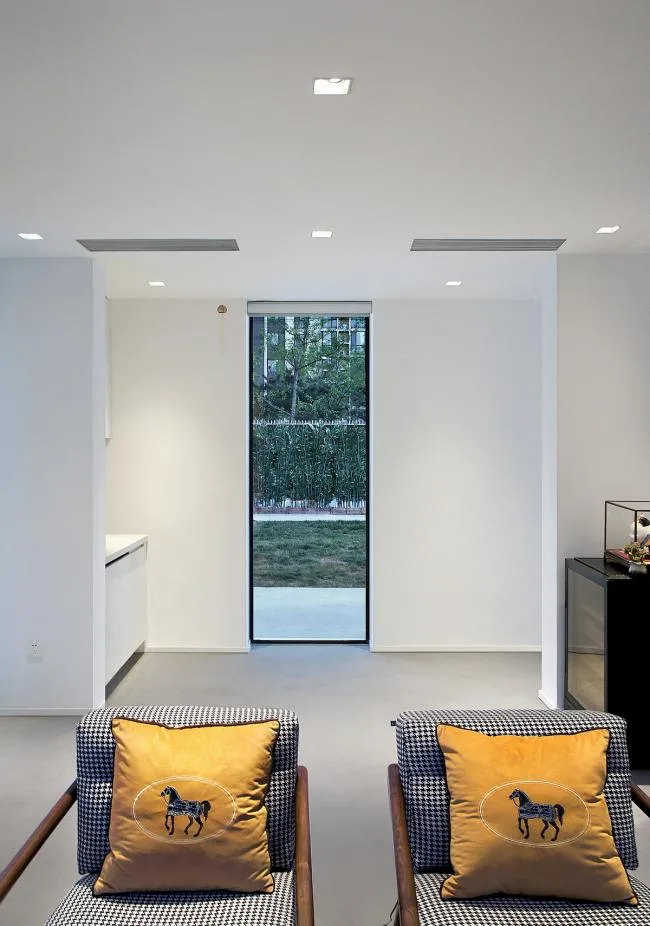
▲ Study Room
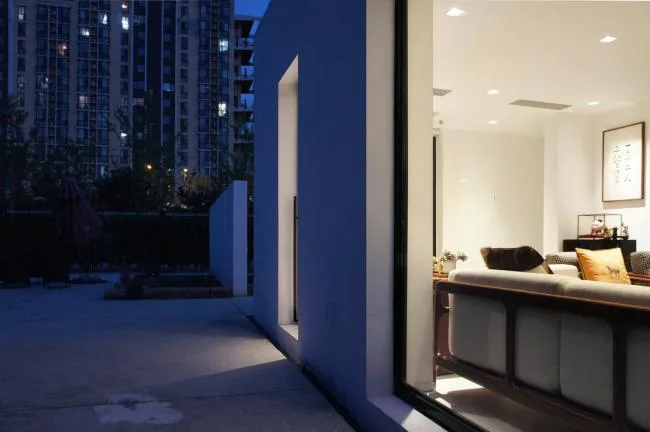
▲ Study Room
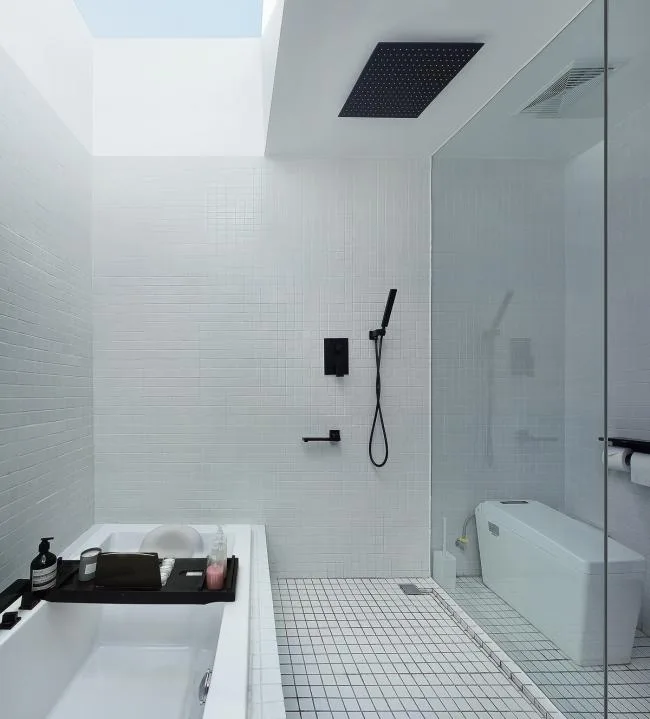
▲ Bedroom and Bathroom
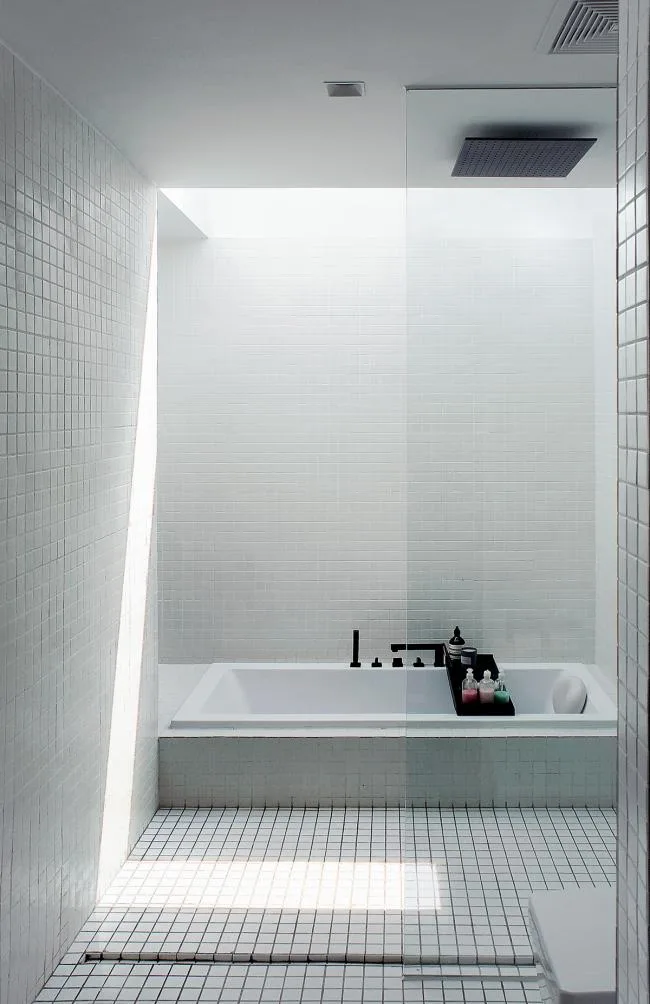
▲ Bedroom and Bathroom
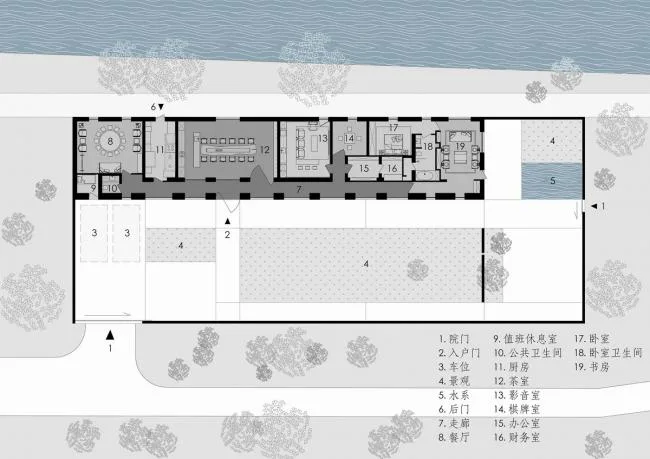
▲ Floor Plan
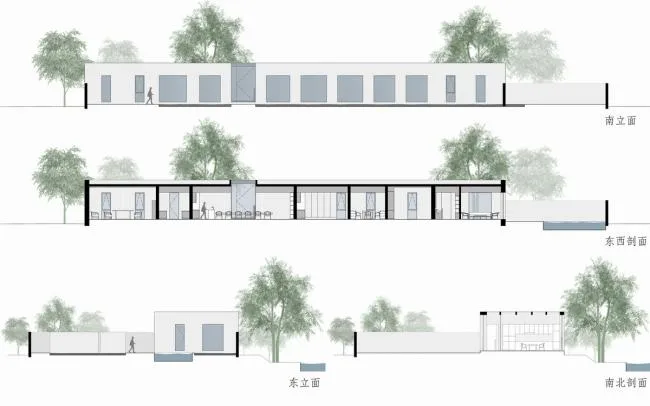
▲ Sectional and Elevation Views
Project Information:
Project Name: Private Clubhouse of Beijing No.11 Courtyard
Category: Renovation of Old Buildings
Location: Beijing, China
Design Period: August to September 2018
Construction Period: October 2018 to February 2019
Building Area: 309 square meters
Design Company: Linjian Design Studio
Lead Designer: Zhao Yang
Design Team: Ma Sitong, Guan Ji, Song Jiawen, Ren Hui
Contact Email: __AI_S_SC0__
Studio Website: www.linjiandesign.com
Photography Credit: Linjian Design Studio
















Must log in before commenting!
Sign Up