
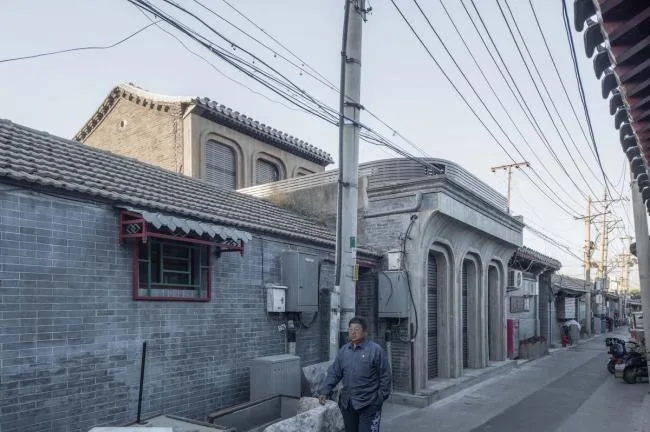
Viewing Buildings from the Hutong
The contrasts of new versus old, understated versus luxurious, and ordinary versus cozy frequently arise when discussing design and life in the ancient yet rapidly evolving city of Beijing. This building, with a history spanning nearly a century since the Republic of China era, stands in the historic Dashilan district near Beijing’s central gate.
Over time, the building has served multiple purposes: from a residential home, to a parts factory, and later a mahjong and chess room. After many changes and adaptations, it is now preserved and transformed into an underground bar club.
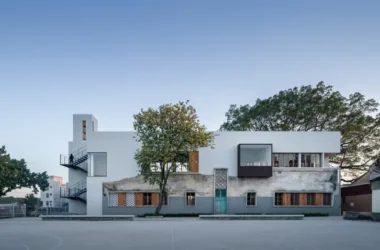
Bar club courtyard facade
The previous operator completely demolished the original entrance facade to attract more customers, replacing it with sliding glass and metal doors that starkly contrast with the ancient alleyway’s character. Upon receiving this project, I immediately noticed this inconsistency. What concerned me most was the arbitrary alteration of the building’s alley-facing facade, lacking context or motivation, making it difficult to harmonize with the surrounding environment.
To address this, I researched local archives, uncovering materials, photos, and a limited number of original drawings to understand the building’s initial appearance.
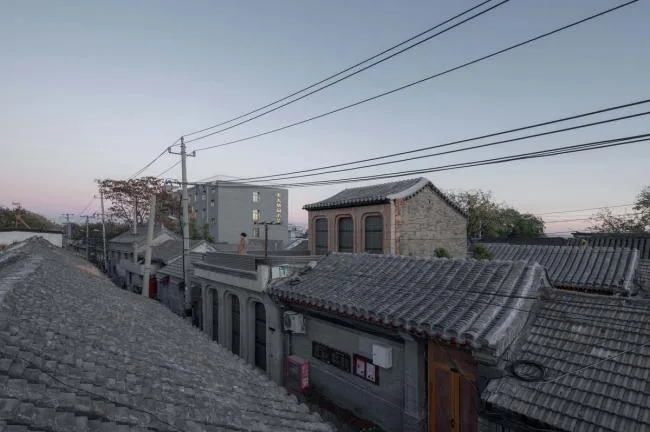
The renovated building blends seamlessly into the alley
The original facade, now lost, was a classic double-layered multi-arched design from the Republican era, constructed with stone blocks. As the original stone material is no longer available, I recreated the arched facade using cast-in-place concrete. This choice respects historical materials and forms while adapting the proportions and textures to the characteristics of concrete, balancing roughness with a contemporary feel.
Once the concrete cured, the formwork was carefully cleaned and assembled onto the first-floor terrace facade. Through modern design and construction techniques, the historic double-layered, multi-arched structure has been faithfully reproduced.
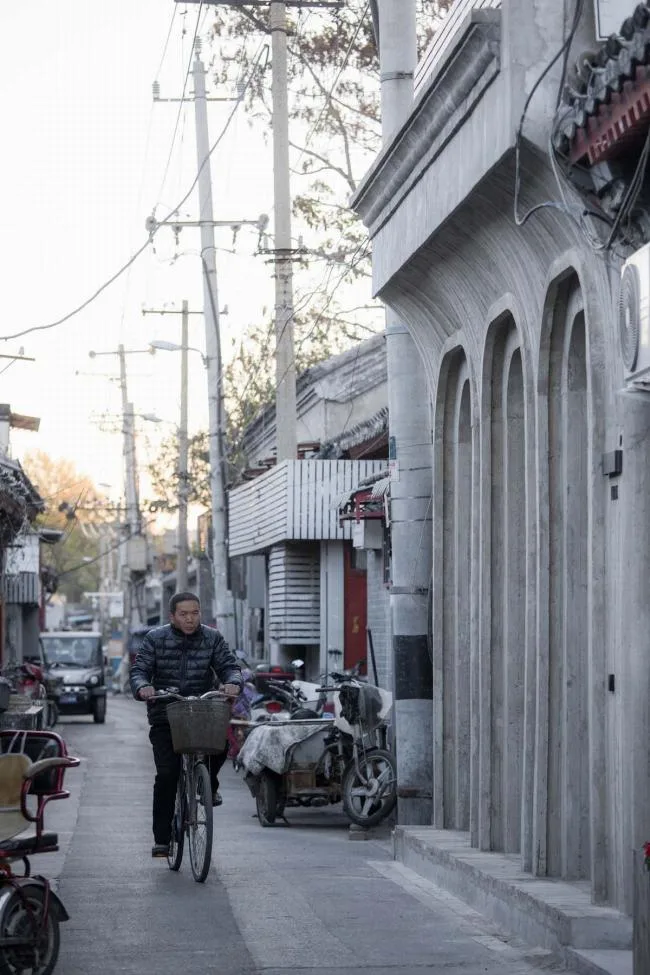
Street-facing facade
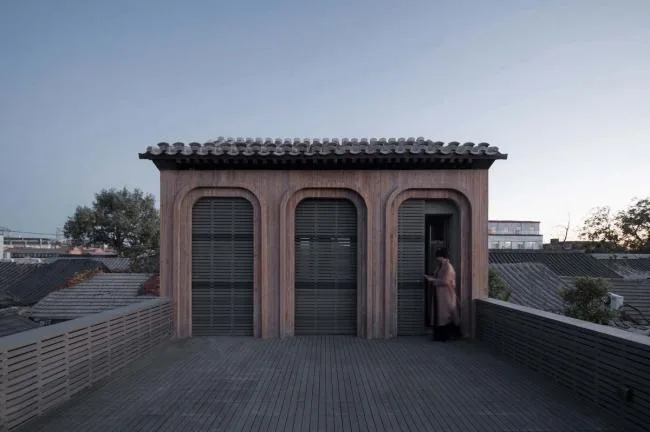
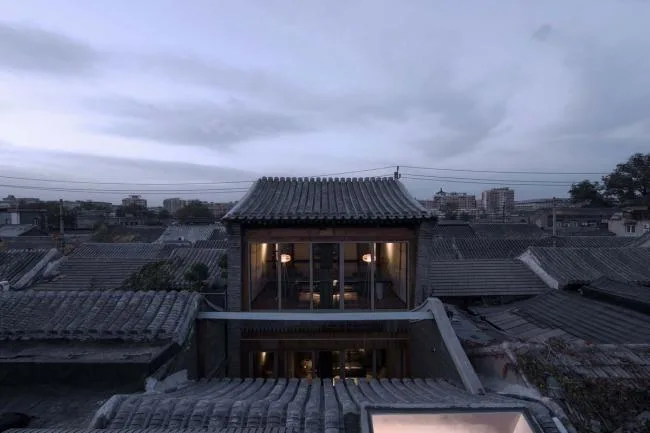
Arched facade with concrete formwork on the second floor terrace
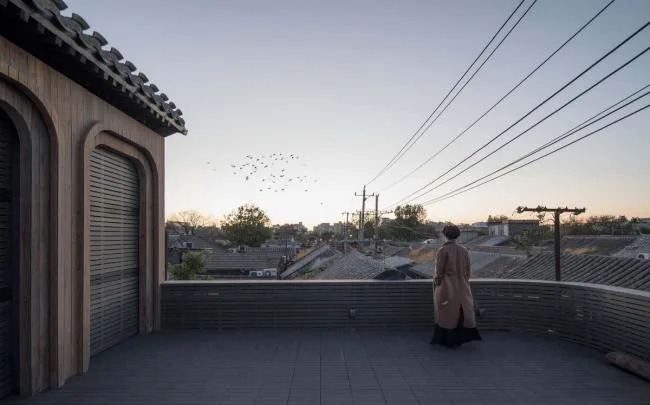
Terrace view
The use of formwork reduces the load on the second-floor terrace, a crucial measure given the building’s nearly century-old block structure, now considered unstable. The concrete and formwork textures of the first and second layers correspond closely. Skilled workers manually replicated the facades between layers through precise printing and copying, combining concrete and wooden boards to create a harmonious aesthetic.
This building is one of the rare two-story structures in the vast alleyway area. Its deep location in the central Qianmen Hutong makes vehicle access and material transport difficult. Therefore, minimizing material use and maximizing multifunctionality was both a smart and environmentally conscious approach.
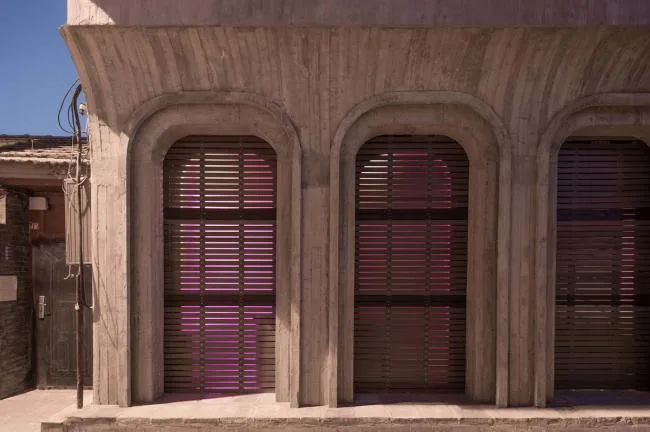
Detail of the double-layered multi-arch facade
From afar in the alley, the second-floor terrace and its occupants are visible. The building’s entrance and exit facades slightly protrude from the street. To soften the skyline and the sharp rectangular edges of the terrace, I designed a semi-circular box-shaped railing made from wood and composite materials, embedded with circular lights.
During the day, this gently transitions from the alley into the building’s protruding contours. At night, the curved halo glows against the dark sky, illuminating both the street and terrace, adding a magical and playful element to the somber alley.
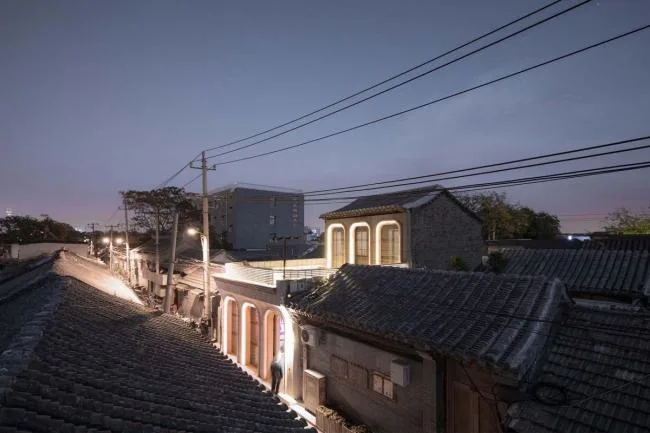
Curved halo on the nighttime facade
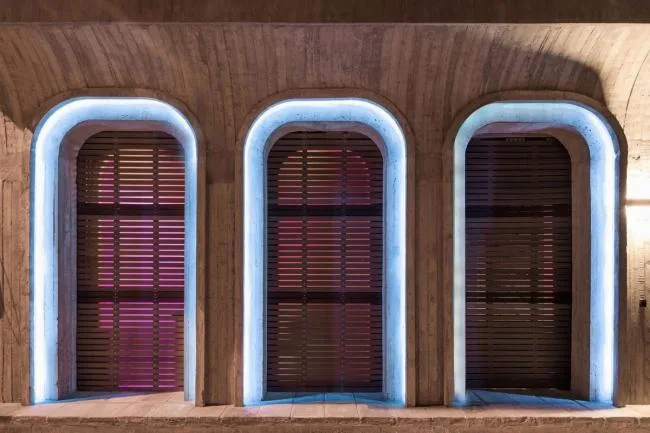
Circular light embedded inside the arch
Upon entering through the gate and passing a small glass foyer, visitors arrive at the bar’s lounge hall. The concrete arch design continues from the exterior into the interior, forming an arched corridor that visually unites the space (BIM learning reference).
All indoor materials—stone bricks, concrete, and wood—reflect the Republic of China era and were manually crafted on site. Throughout design and construction, modern industrial materials and methods that conflict with the regional and historical context were deliberately avoided.
This space transports visitors back to the building’s origins. Over the past century, various occupants have altered the walls and floors with subjective changes such as painting or new flooring. I removed these layers, restoring the space and materials to their authentic state, “removing makeup” to reveal their original character.
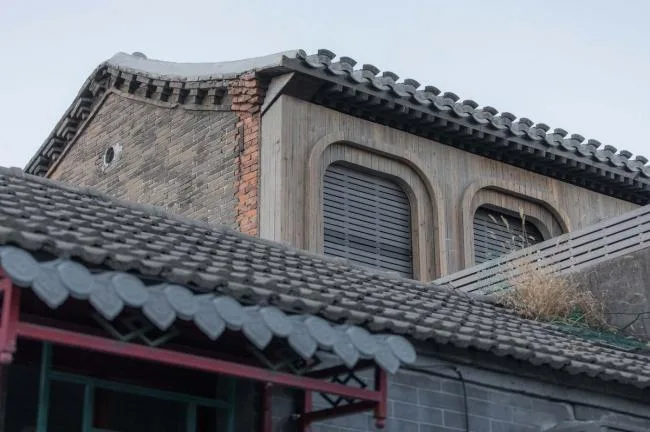
Partial upward view of the building
As the building’s renovation architect, I also took on the roles of archaeologist and restorer. I carefully excavated and organized the site, using non-invasive methods and modern materials and techniques to repair irreparable gaps.
Considerable attention was given to user experience. A bar counter running north-south through the lobby separates the cocktail and lounge areas. Seven lounge spaces each feature dedicated stage-like lighting, independently controlled, along with built-in USB ports, guide lights, and individual speakers.
Each lounge enjoys a spacious, private environment; lighting and sound are carefully spaced to prevent interference, giving every guest a premium experience. Modern equipment—air conditioning, lighting, and utilities—are discreetly concealed within walls, ceilings, and the bar counter, maintaining the historical ambiance.
I describe this approach as a “Disney-like” atmospheric design, aiming to immerse guests in a cohesive, self-contained experience that blends time and space seamlessly. The goal is to surround visitors with a “present moment” atmosphere, avoiding the feel of a staged performance.
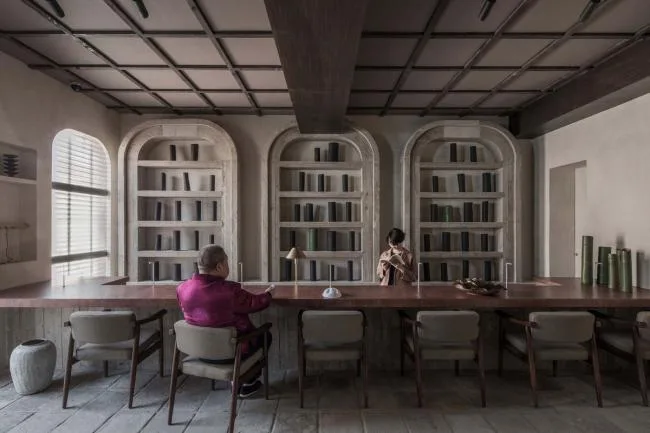
Bar counter in the lobby
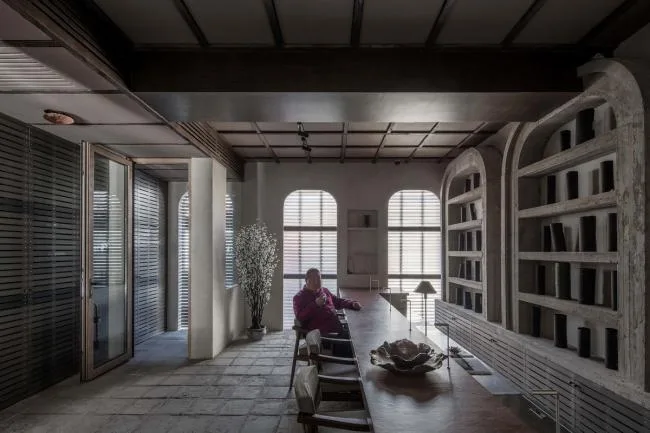
The bar separates the cocktail and lounge areas
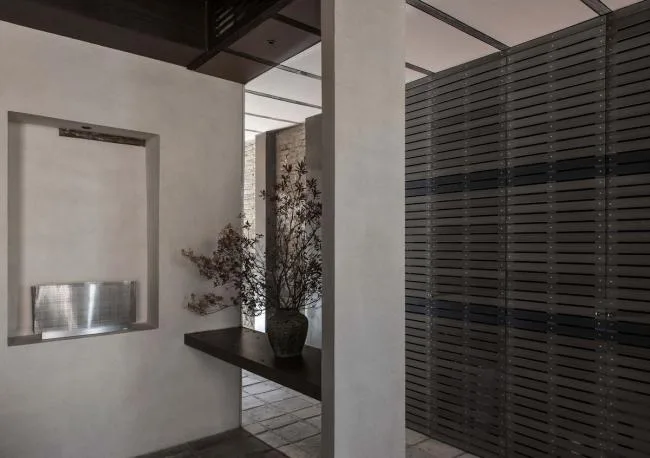
Equipment and facilities are hidden within the walls
Beyond the guest hall, a long corridor lined with salt-washed brick walls guides visitors. Following subtle guide lights, passing through a concealed glass door, guests suddenly find themselves in a tranquil and private traditional Beijing courtyard—an authentic siheyuan hidden behind the alley.
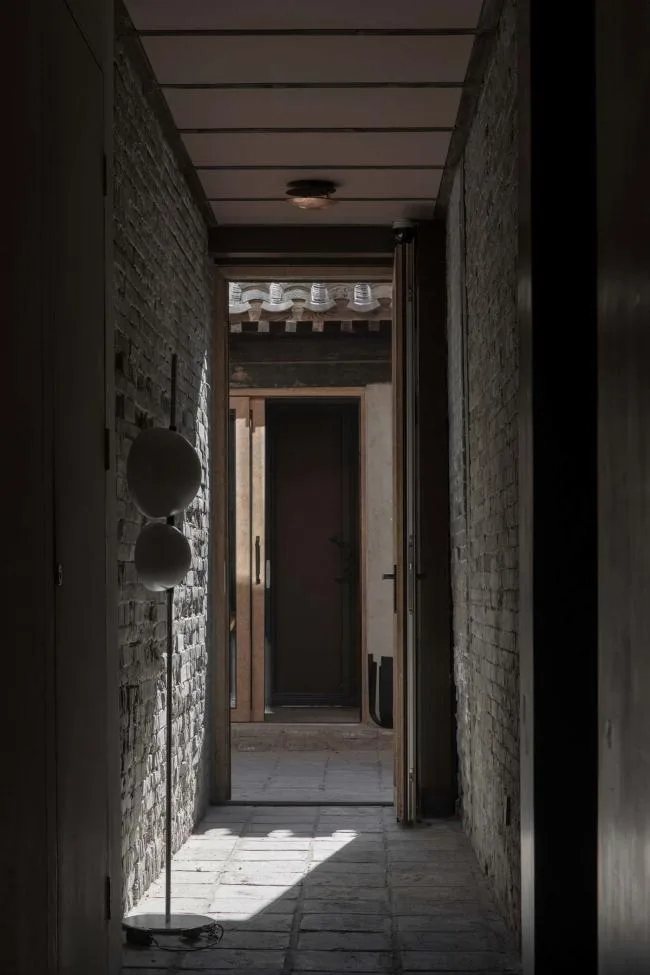
Corridor leading to the courtyard
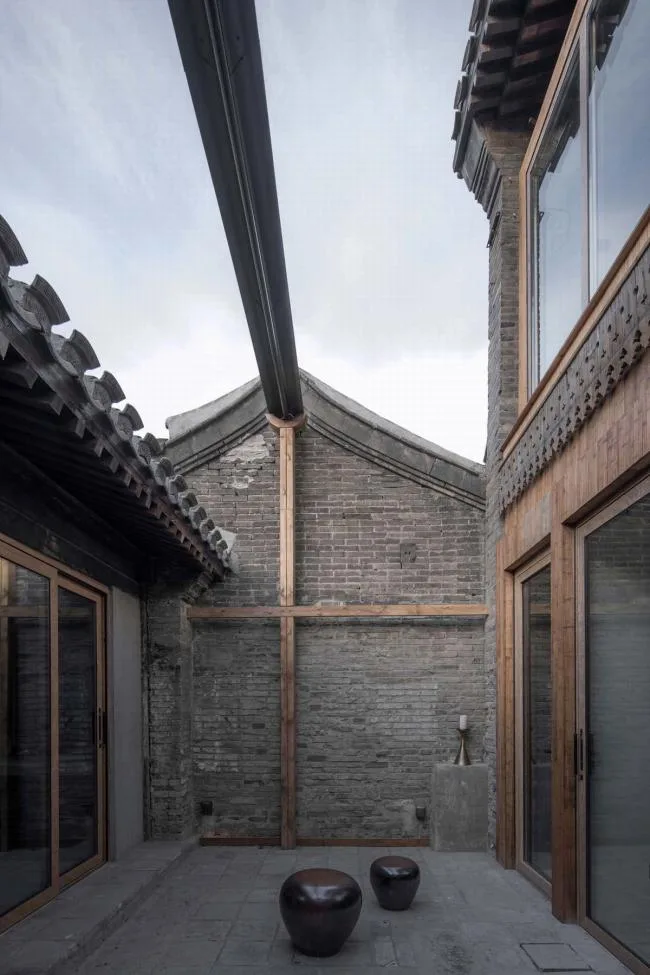
The siheyuan (traditional courtyard)
The spatial flow from the arched entrance to the courtyard unfolds in a series of segments of varying sizes and lengths, creating a smooth, subtle transition. This design metaphorically reflects the bar’s true identity: a secret tavern tucked away in Beijing’s central Qianmen Hutong, a secluded retreat set against the backdrop of a traditional quadrangle courtyard.
The term “siheyuan” describes a private space enclosed by buildings oriented inward, surrounding a square plot of land. As a BIM engineer, I also refer to this spatial layout as a “QUAD,” emphasizing its qualities of faithfulness, expressiveness, and elegance.
This independent courtyard houses two separate bar rooms and a large restroom on the north and south sides. To the west is a windowless gable wall of a neighboring bungalow, while the east features a restored and elevated gable reflecting the western wall’s form.
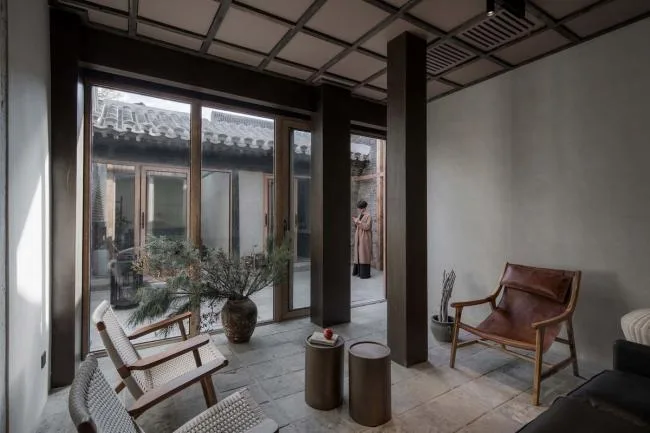
View toward the courtyard from the bar room
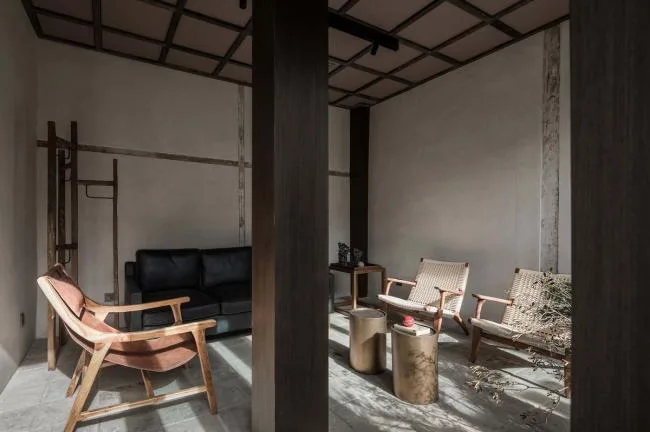
Indoor light and shadow play
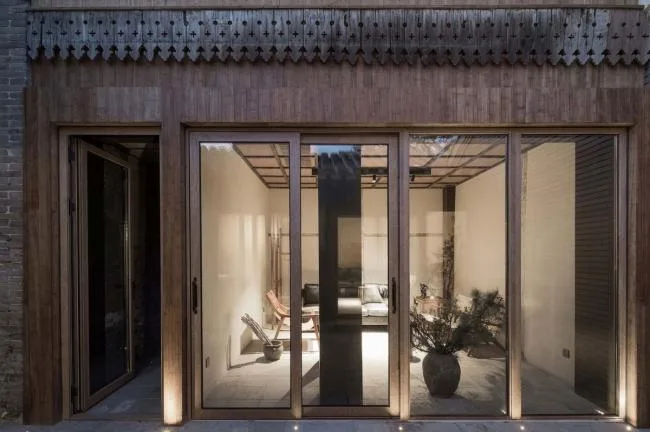
View indoors from the courtyard
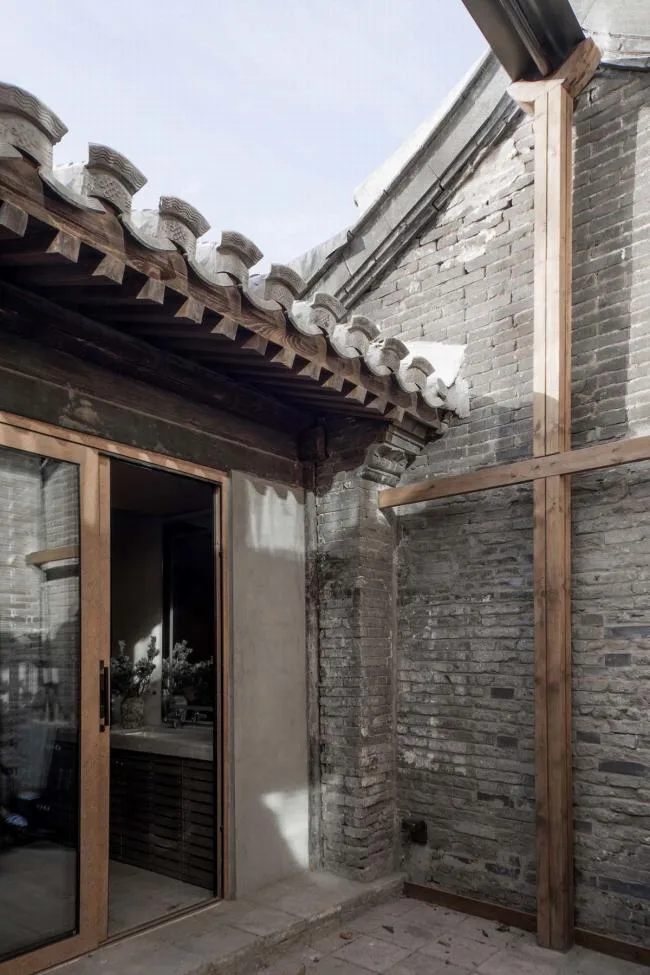
Partial view of the mountain wall
Within this courtyard, only the ground and sky are visible beyond the surrounding buildings. This design ensures complete privacy and safety, emphasizing the essential relationships between people and their environment, among each other, and within themselves.
Such purity is rare and difficult to achieve. During the design process, unnecessary elements were deliberately excluded to focus guests’ attention on the authentic colors and materials. Maintaining a peaceful retreat, harmonizing the overall environment, and avoiding excessive design or decoration have been key goals throughout.
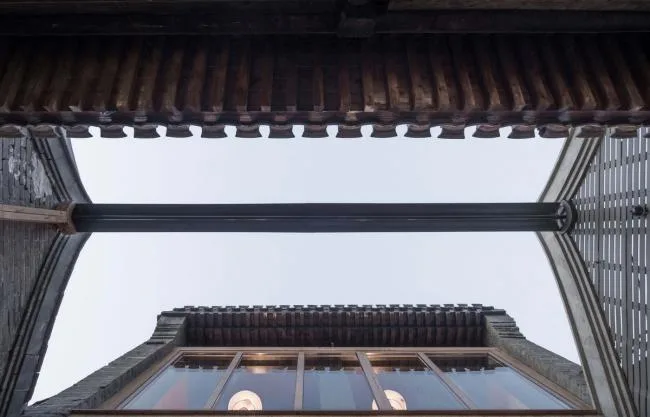
The sky viewed from the courtyard
Given Beijing’s varied climate, I installed a fireplace in a corner of the courtyard and connected the east and west mountain walls with a linear light trough overhead. At night, the flickering flames dance with the ambient light drifting across the sky. This light syncs and shifts color in harmony with the illumination at the bar entrance and the arched light trough above the bar counter, softly brightening the courtyard.
This combination of warmth and light creates an unforgettable atmosphere in this special space.
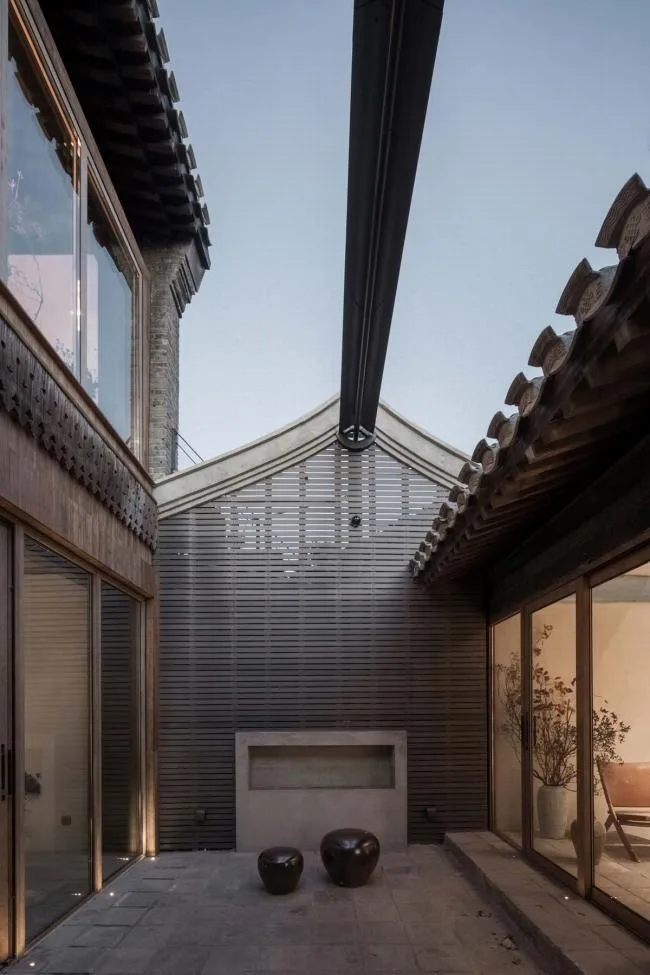
Courtyard fireplace and linear light trough above
The previously mentioned corridor has a branch leading to the second floor. Ascending the stairs and turning south, you enter a private room. Preserving the second floor was particularly challenging, as it was structurally unsafe during renovation.
The wooden flooring and roof had severely deteriorated and required complete demolition. The old masonry walls were distorted and unstable. I reinforced the floor with steel structures, carefully controlling proportions based on verified ancient architectural measurements.
Air conditioning, water, electrical systems, rainwater drainage, and lighting fixtures were all concealed. Steel structures were wrapped in wood, and the roof was rebuilt. The warped wall contours were softened and transformed through layered, multi-material treatments.
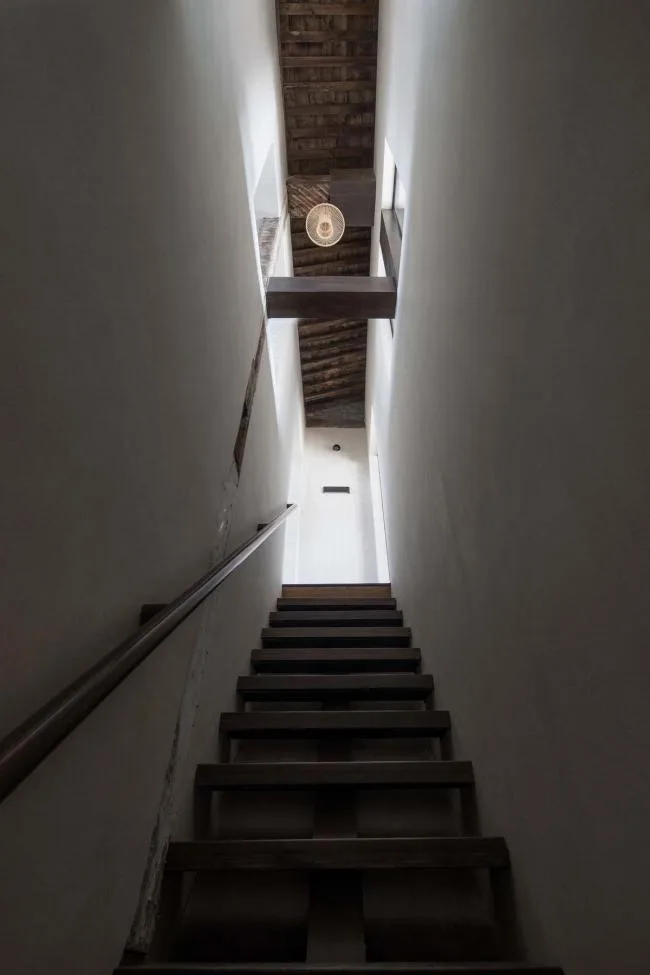
Staircase
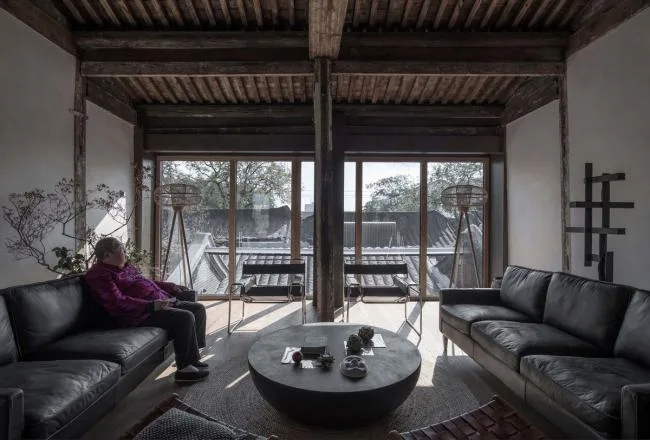
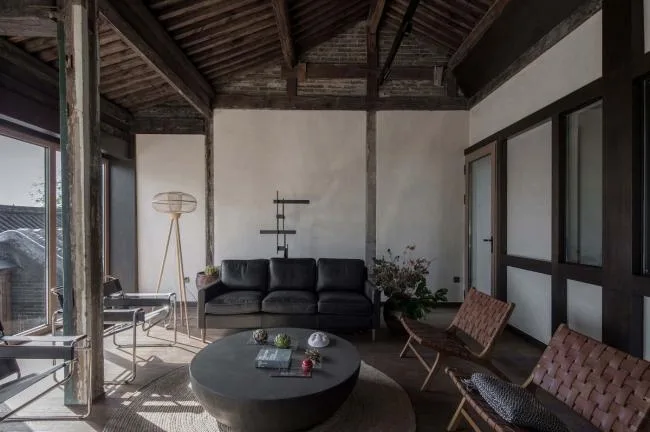
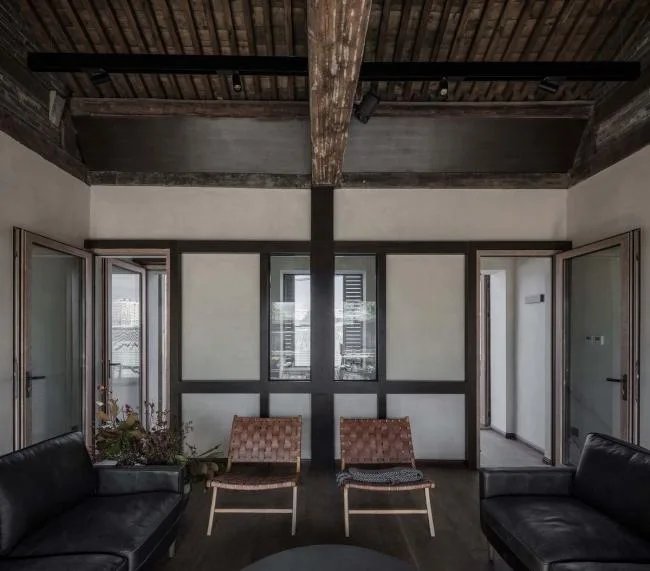
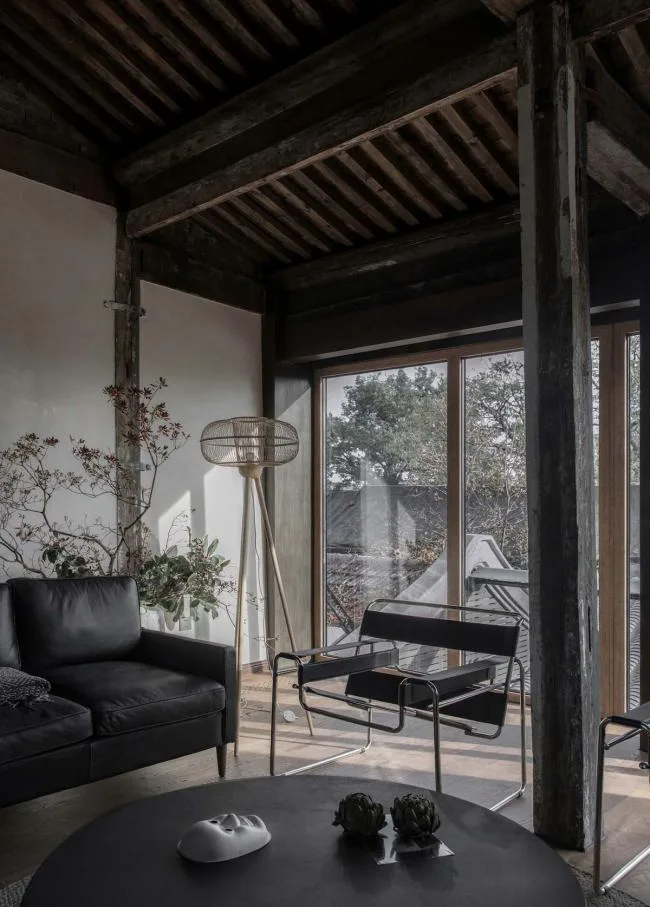
Second floor private room
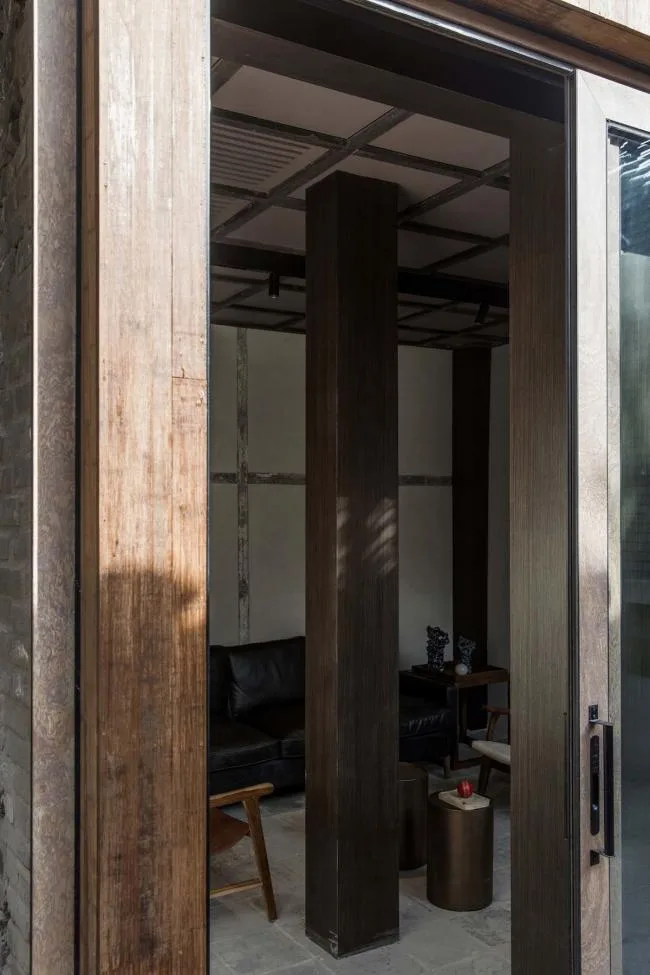
Steel structure wrapped in wood
Efforts were made to conceal design interventions, allowing guests to focus on the natural environment and the sloping roof visible through the second floor’s glass curtain wall. The intent is for visitors to feel as though they are truly experiencing the building as it was nearly a century ago, while enjoying modern comforts.
Turning north at the staircase leads to the terrace, which connects to the private rooms via two entrances, forming a continuous indoor-outdoor loop.
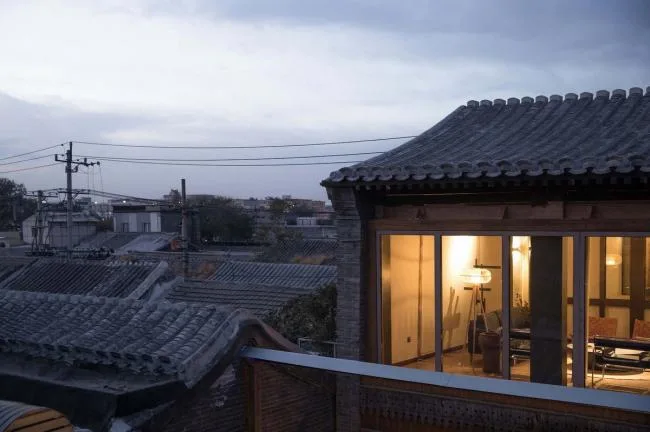
Slope roof outside the second floor private room
From this terrace, one sees rows of parallel, north-south aligned bungalows with sloping roofs, resembling layers of waves rolling towards the terrace. Young people can often be seen playing on the roofs—an unchanging scene from nearly a century ago.
Visitors on the terrace can also view the ancient Qianmen City Tower, the Great Hall of the People, and the upcoming 500-meter-high CBD building, creating a surreal and captivating juxtaposition.
Guests who linger on the terrace become part of the street’s scenery, like performers on the roof of a traditional courtyard, holding a wine glass and singing.
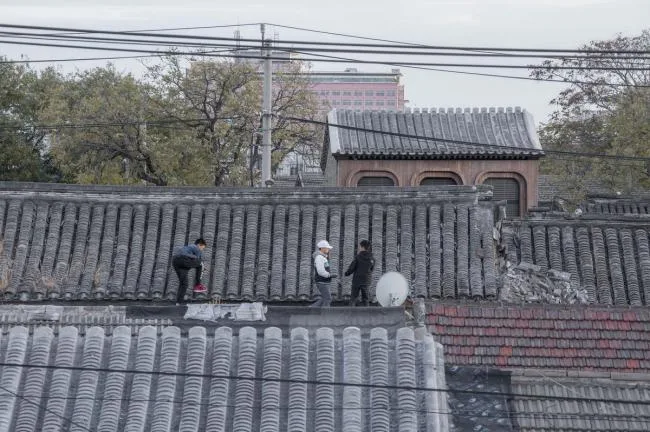
Boy climbing on the roof
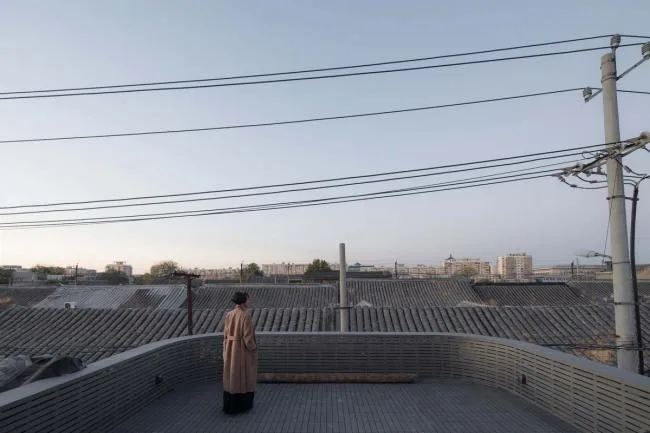
View of rows of sloping roofs from the terrace
Project Drawings:
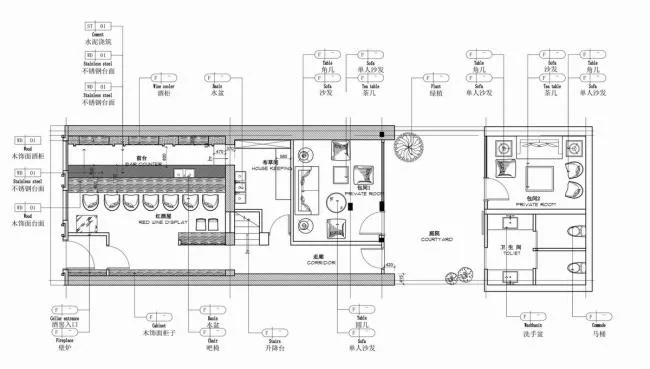
First floor furniture plan
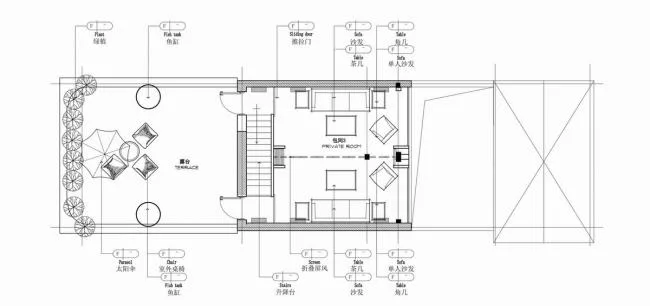
Second floor furniture plan
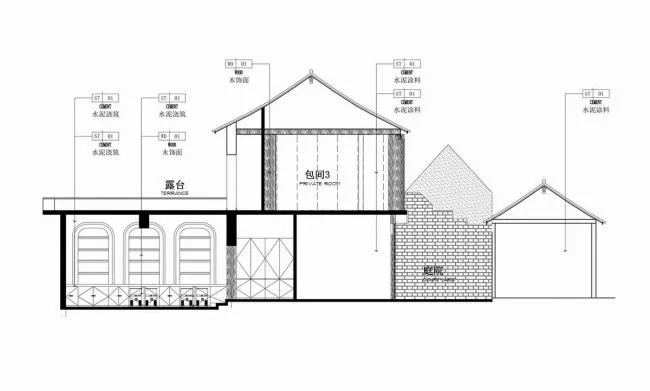
Sectional view
Project Information:
Architect: Yasirui Design Research Office
Location: Beijing, China
Category: Renovation Project
Lead Architect: Zhao Nan
Design Team: Zhao Nan, Zhang Na, Hou Zeli, Dai Shengguo
Construction: AMRITA Workshop
Building Area: 220.0 m²
Project Year: 2018












Must log in before commenting!
Sign Up