
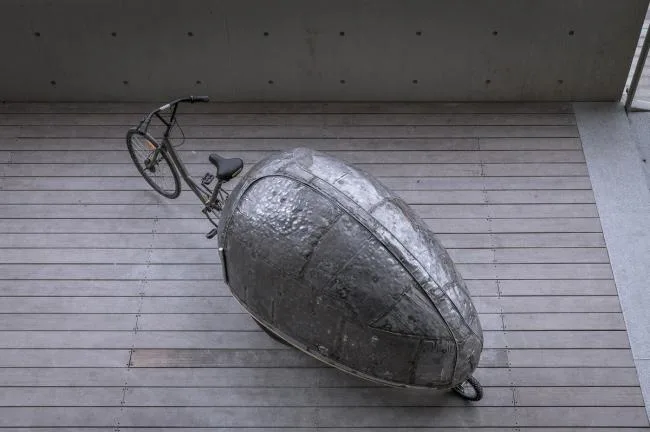
▲ Closed top-down view
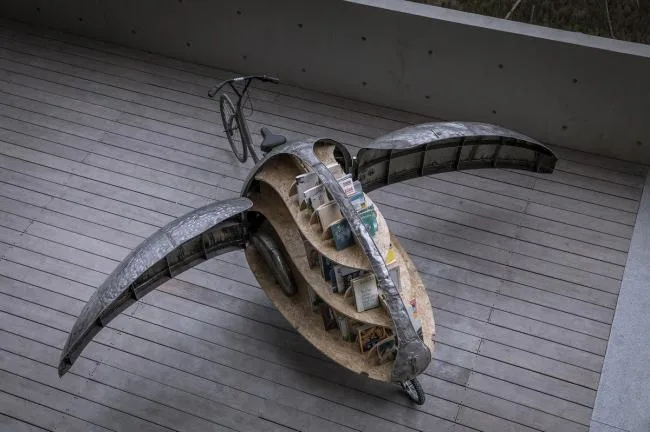
▲ Open view from above
Reflection on Sharing
Originally intended to promote resource conservation, green transportation, and convenience, shared bicycles have unfortunately evolved into a problematic phenomenon due to unchecked commercial exploitation. They consume vast amounts of industrial raw materials, occupy valuable urban public spaces, and have resulted in large accumulations of discarded bicycles forming what can be described as industrial graveyards.
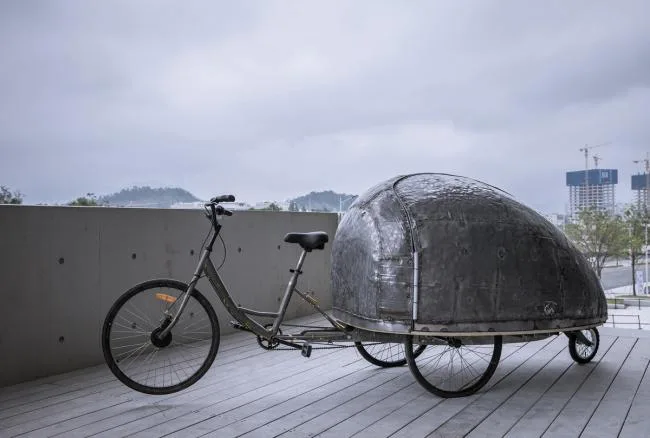
▲ Closed condition
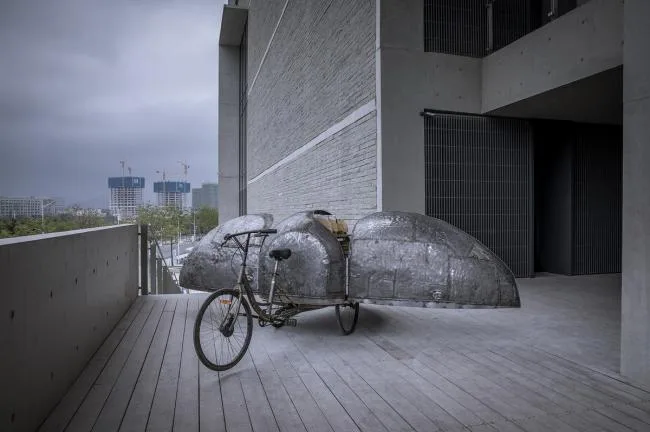
▲ Front view when opened
With many of these shared bicycles being prematurely retired for reasons unrelated to product quality, is there a more constructive solution beyond simple recycling? As urban designers, can we apply our skills to develop thoughtful, benevolent reuse strategies?
Mobile Children’s Maker Classroom
My good friend Forrest Gump specializes in creating maker education experiences for children within the BIM architecture community. He often transports teaching materials in and out of the office, using a small cart to carry supplies around schools and explain concepts to children and parents. Witnessing this, I was inspired to design a compact storage vehicle infused with the spirit of making, to support his children’s maker education efforts.
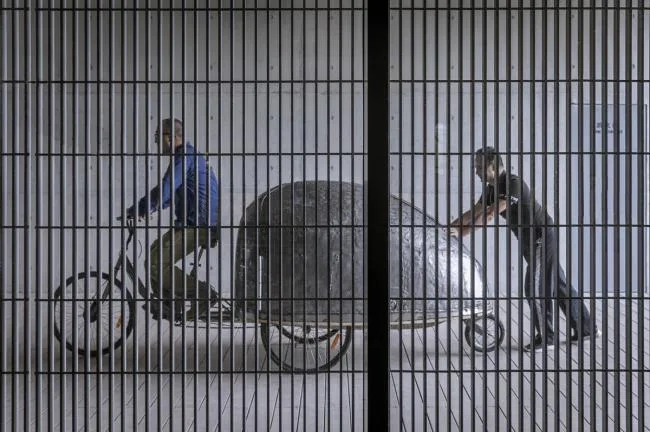
▲ Pushing the vehicle
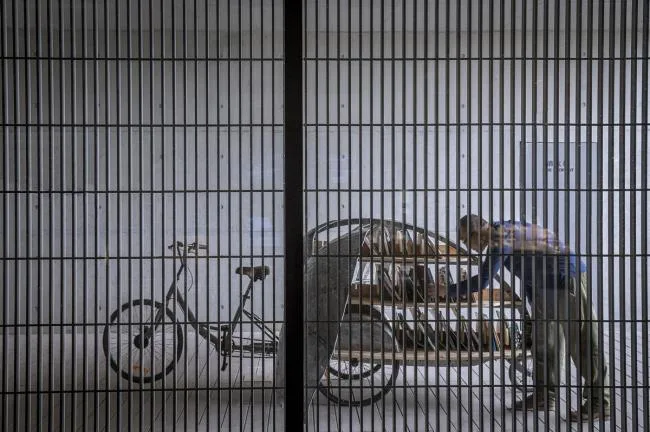
▲ Retrieving books
By repurposing discarded shared bicycles, leftover car metal panels, and BIM-designed edge materials, it is entirely feasible to create a mobile children’s maker classroom. This project is designed to be imaginative, fun, and vibrant—transforming urban industrial waste into a natural and artistic symbol of hope through reuse. This concept is the essence behind the Shared Ladybug.
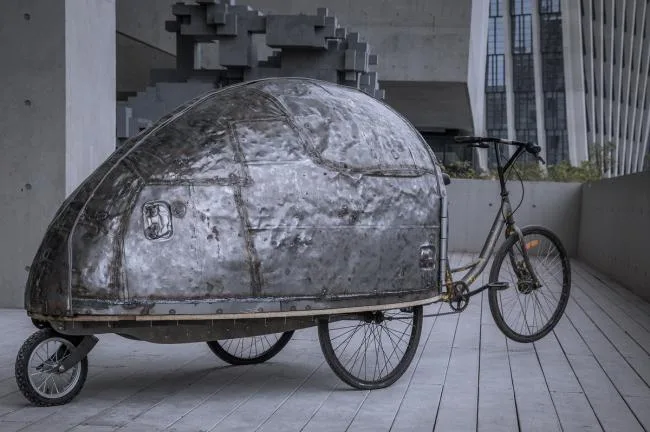
▲ Side view
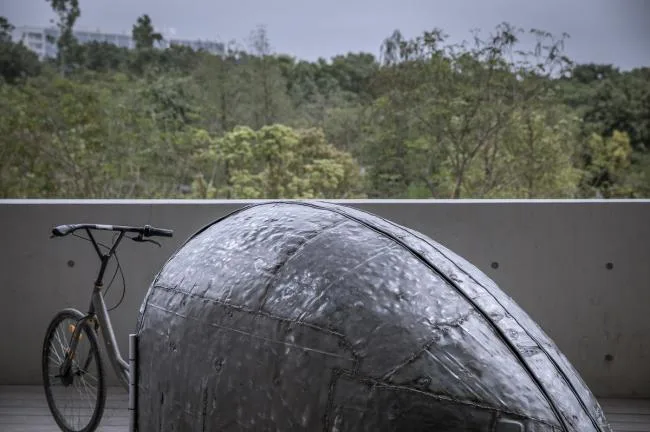
▲ Forged texture of the vehicle shell
To accommodate more materials, the shared bike was transformed into a three-wheeled frame with greater load capacity. To avoid constant loading and unloading and to ensure safety, the storage area was covered. Inspired by the seven-spotted ladybug—a familiar beneficial insect to children—the design uses the ladybug’s wing-opening mechanism as the concept for the cover of the three-wheeled storage shelf.
This opening and closing feature makes the shelf relatively long when open. To maintain overall stability, a universal auxiliary wheel was added to the rear. Inside the enclosed storage area, platforms are thoughtfully arranged to maximize space through a multi-layered design, enhancing both storage efficiency and structural integrity. The layout features a smaller upper layer and a wider lower layer, with the broad first layer serving as a seat or leaning area.
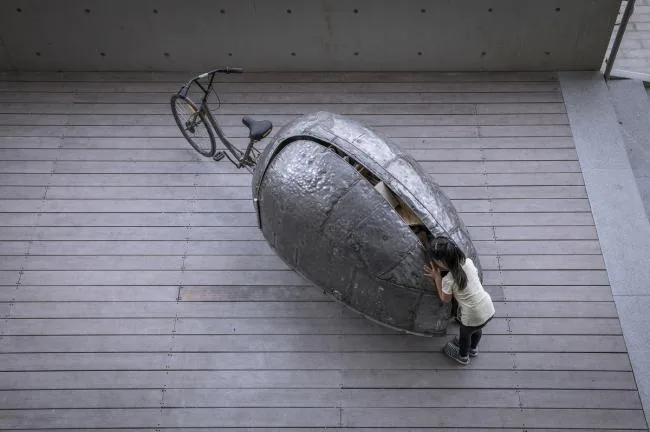
▲ Peeking through the open slit
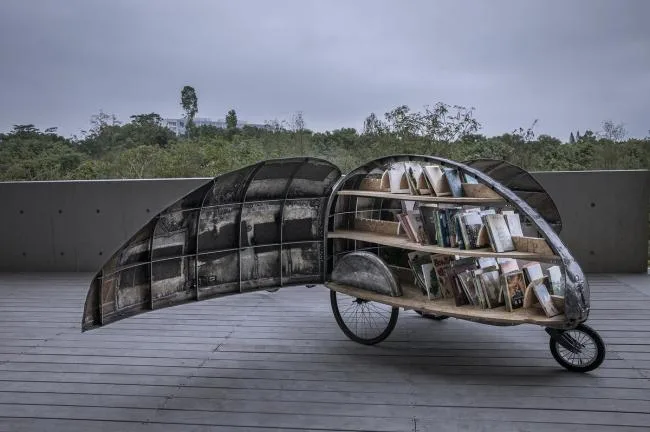
▲ Open position
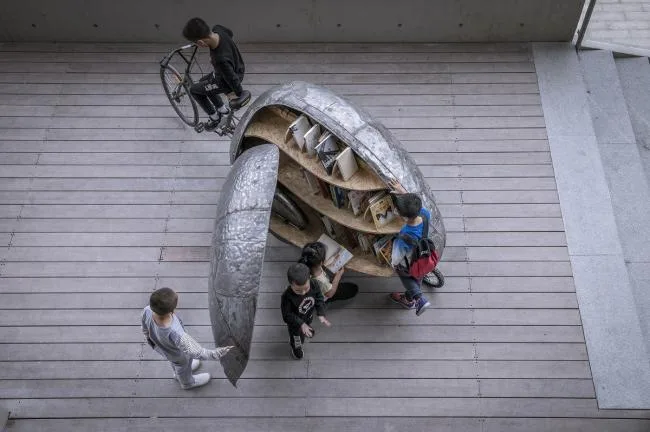
▲ Half-open position
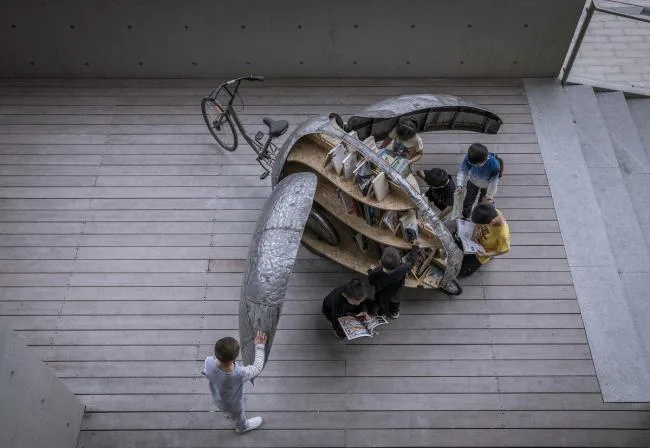
▲ Children fascinated by the vehicle shell
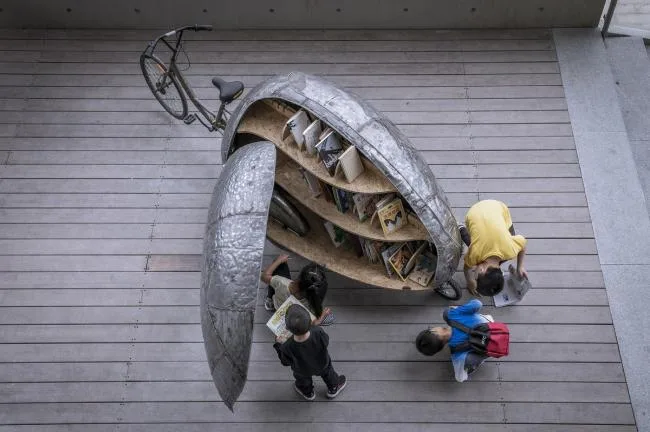
▲ Children curious about the wheels
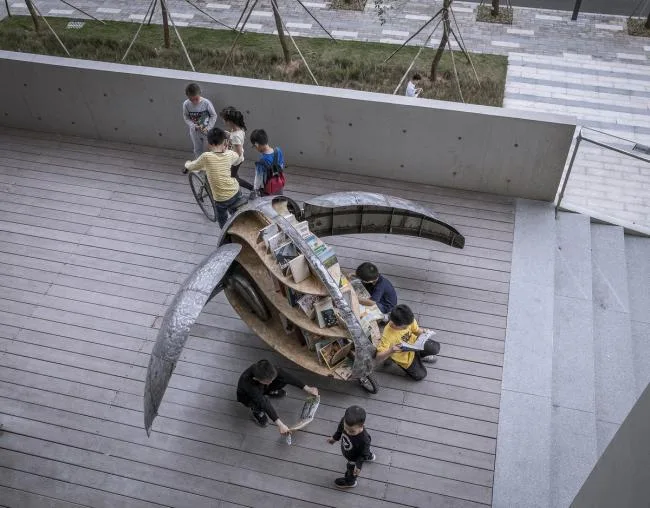
▲ Trying out the ride
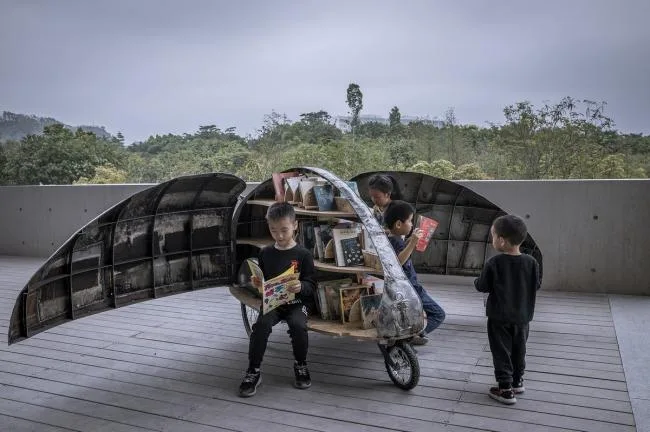
▲ Sitting and reading
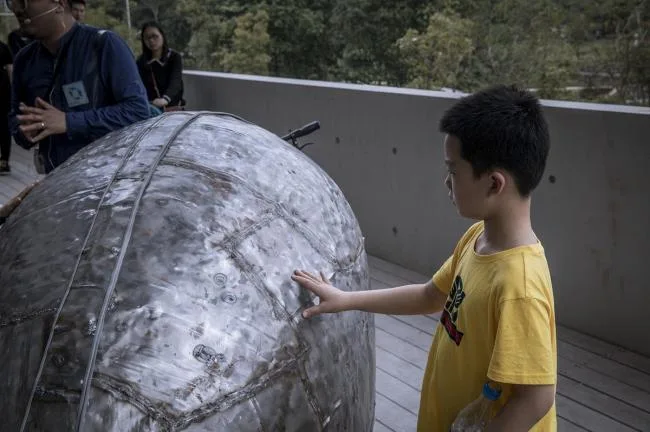
▲ Children exploring the vehicle shell
Expanding Functionality: The Micro Shared Bookstore
Although still in its early stages as a mobile children’s maker classroom, we envision expanding its capabilities to serve multiple functions. The interior of the Shared Ladybug features adjustable partitions, allowing users to customize storage space according to their needs or remove partitions entirely to create a larger open area. This flexibility enables tailored creative uses.
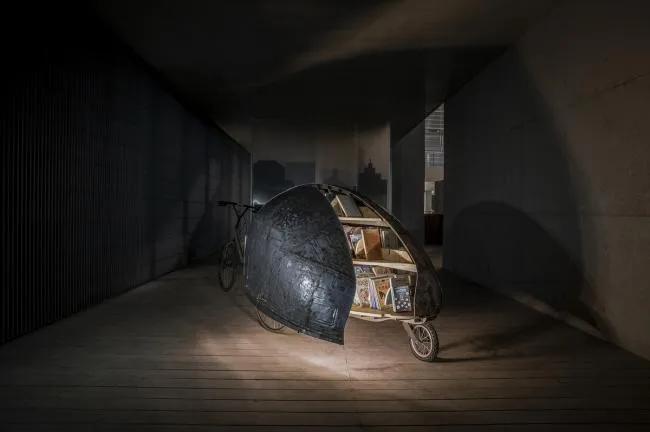
▲ Interior lighting
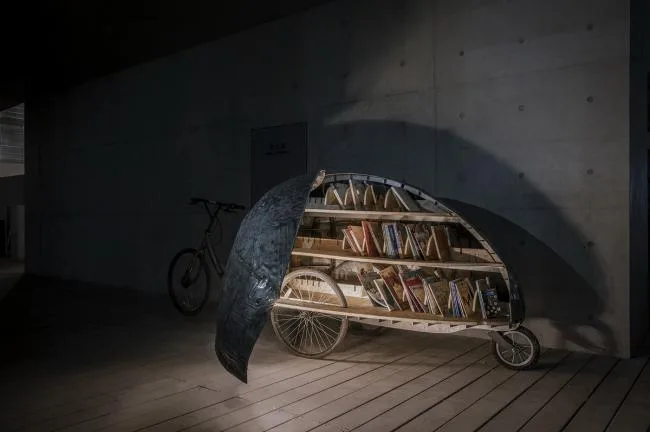
▲ Partially lit interior
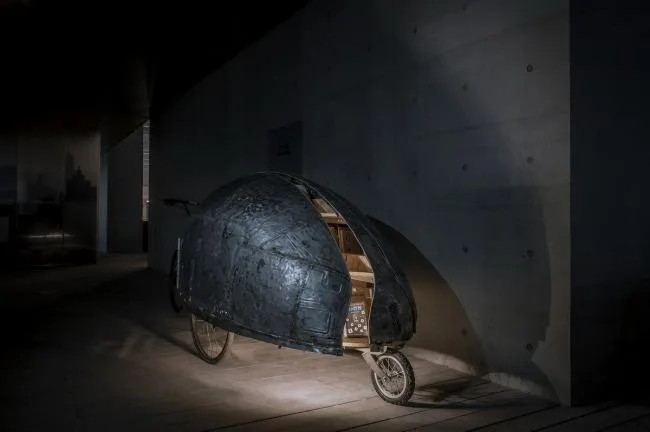
▲ Softly illuminated space
One of the universal extensions of this project is the “Micro Shared Bookstore.” The books stocked inside come from second-hand collections donated by friends, where each book can include a shared message to inspire readers. These micro bookhouses can be placed in public urban spaces, enabling free reading, book exchanges, and sharing of idle books.
While shared bicycles have been discarded, this project aims to promote the sharing of idle books within the community.
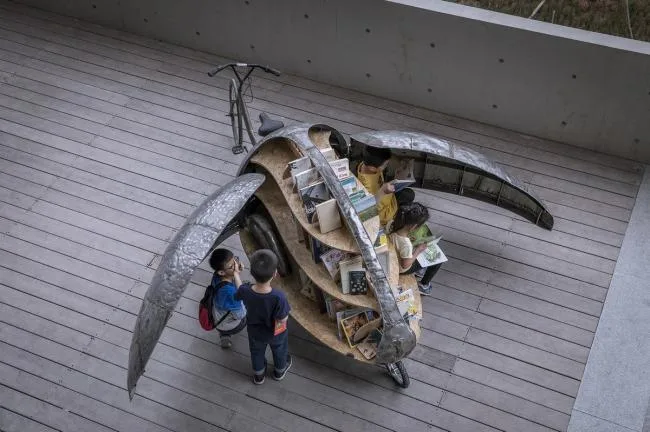
▲ Children inside the wings
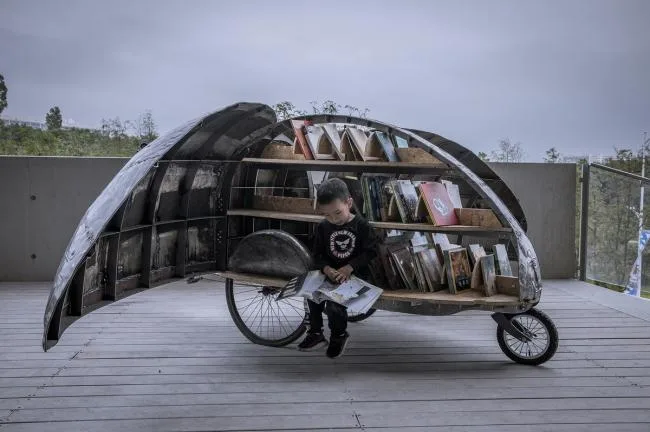
▲ Children seated and reading
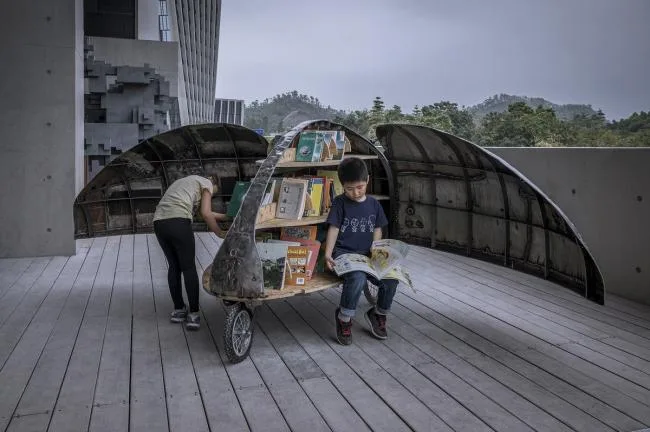
▲ Two children enjoying the space
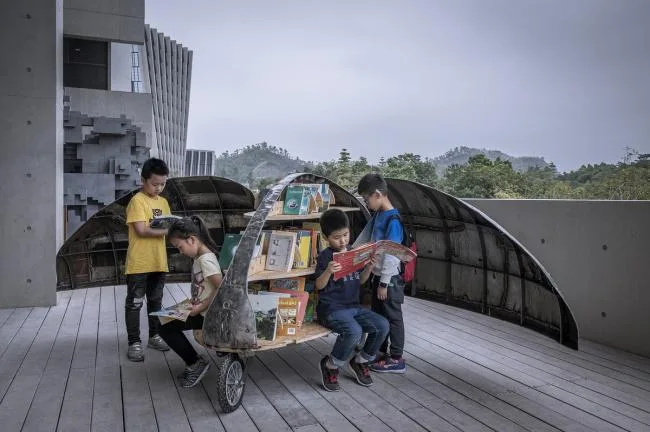
▲ Many children gathered
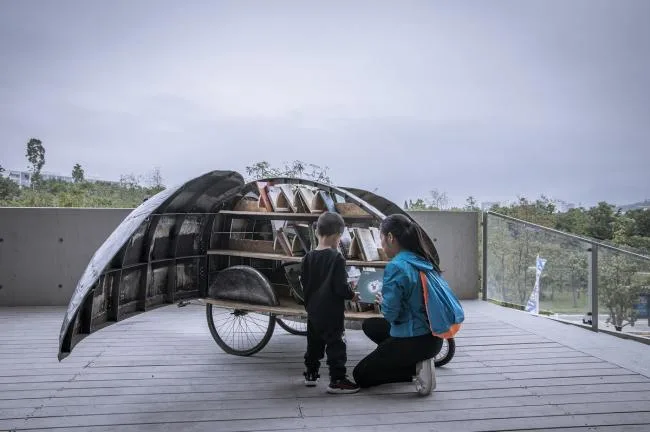
▲ A mother and her son
Shared Ladybugs in Unknown Cities
Urban development is a double-edged sword—it can bring hope, but also disappointment. In the face of uncertain change, we should hold onto optimism, transform waste into valuable resources, seize every opportunity, and care both for our cities and the planet.
The Shared Ladybug acts like a “beneficial insect” crawling on the “urban leaf.” It can serve as a mobile bookstore, a children’s maker classroom, or a convenient stall.
Or simply, it stands as a thoughtful reflection on the unpredictable evolution of our cities.
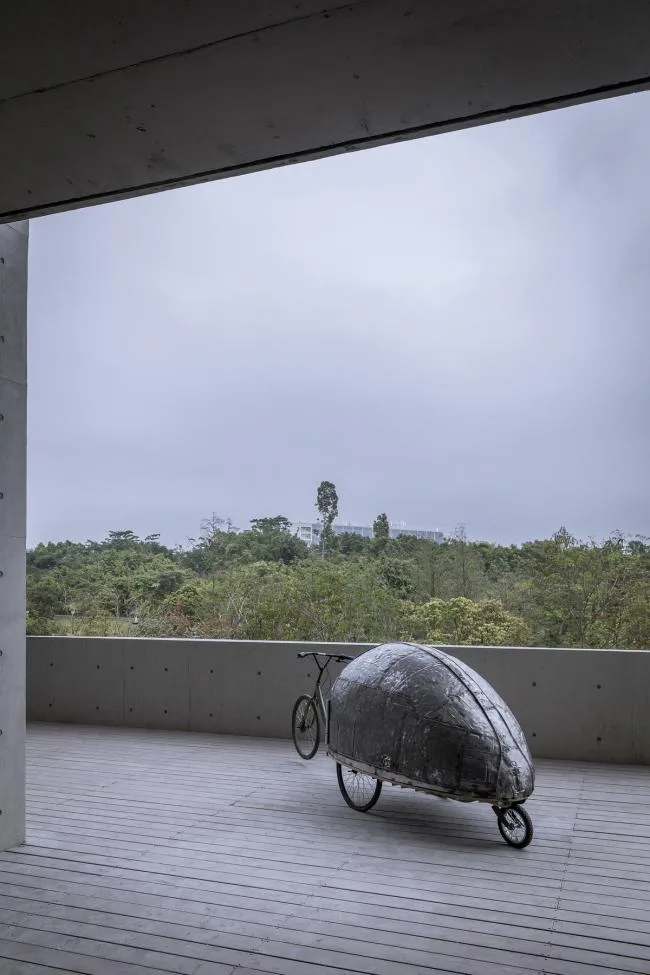
▲ Underneath view
Design Drawings:
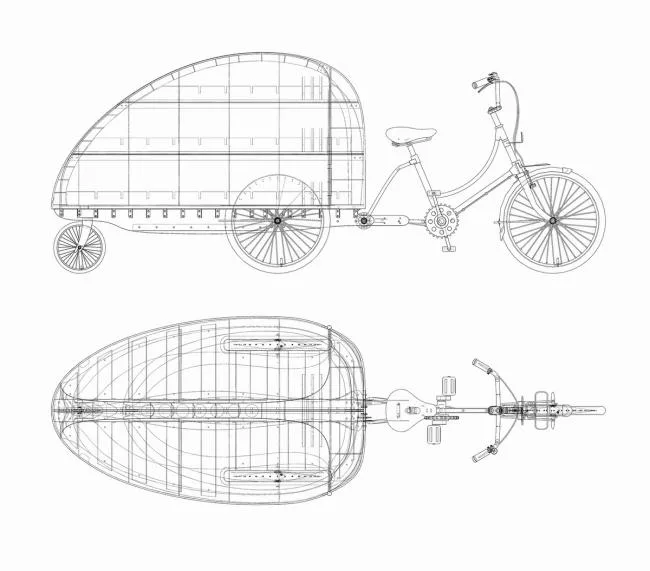
▲ Side and top views when closed
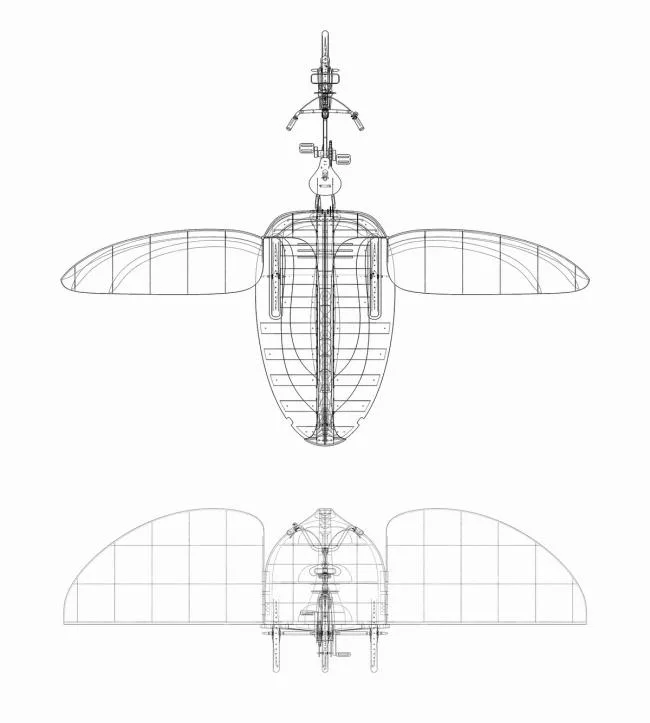
▲ Rear view and overhead opening
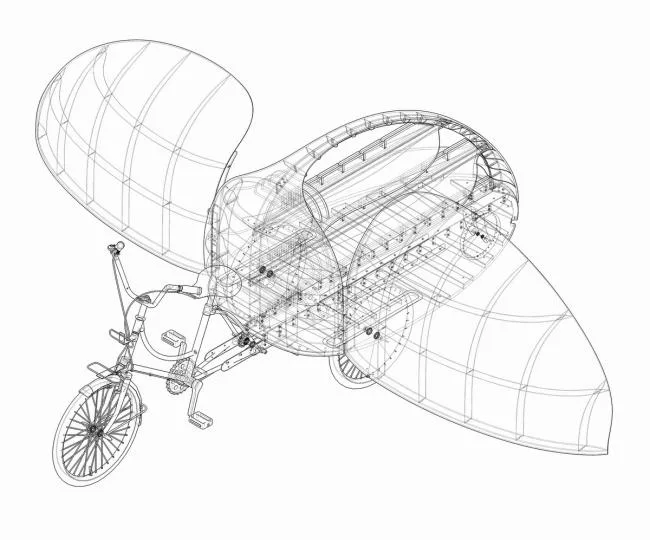
▲ Front view when opened
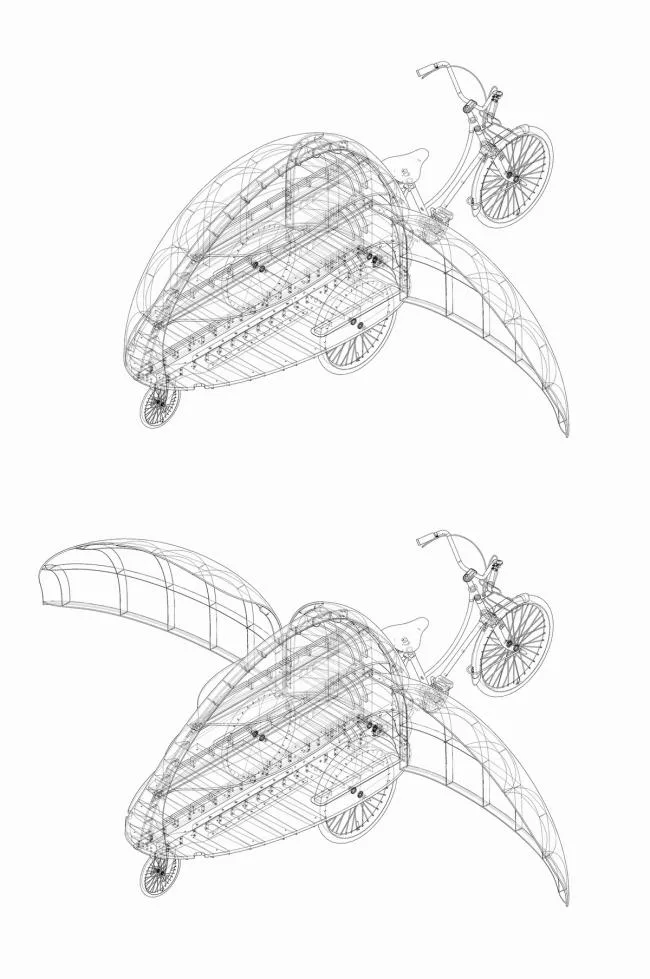
▲ View after opening
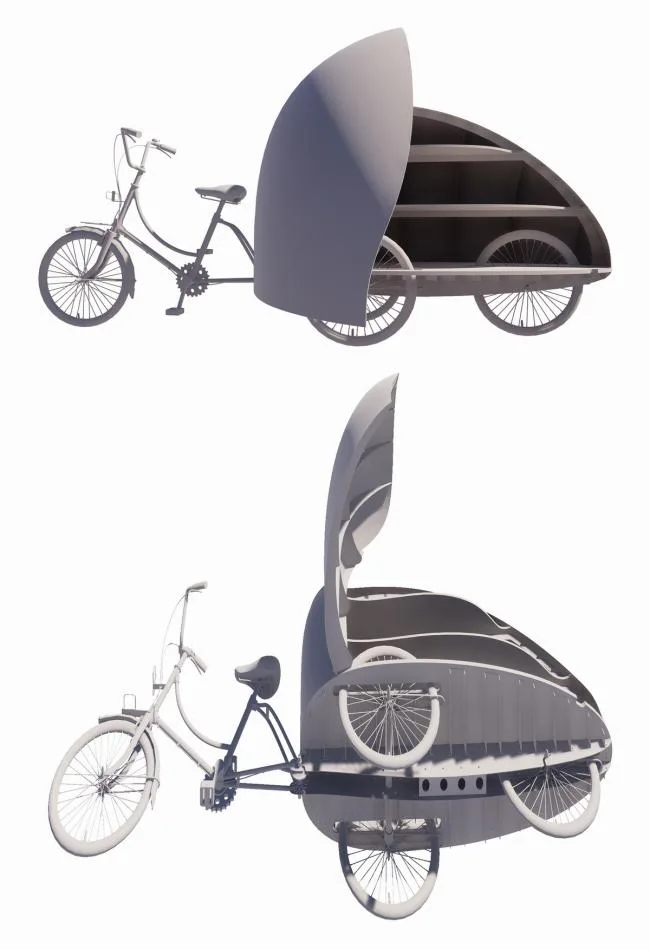
▲ Spatial schematic
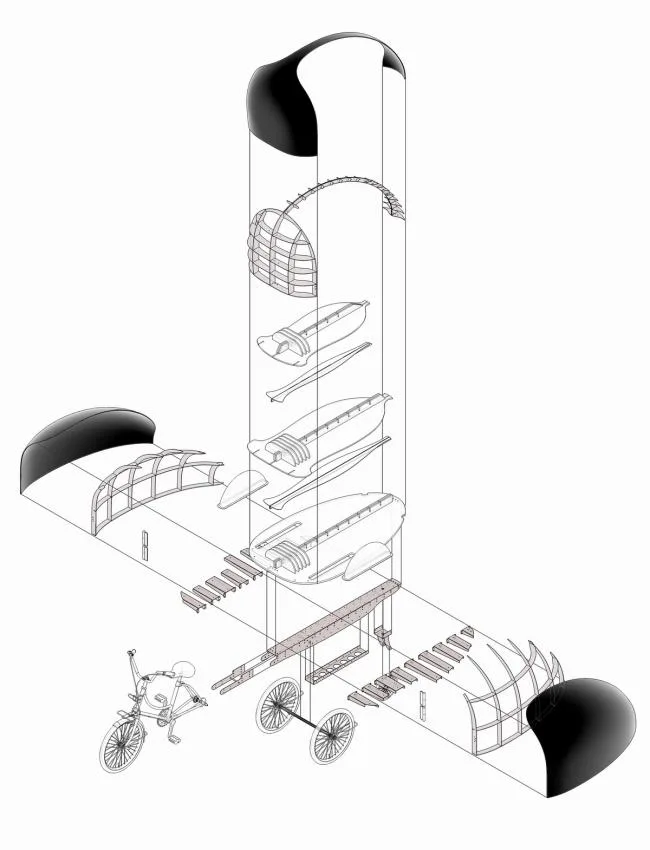
▲ Component breakdown
Project Information:
Design and Production Team: Luo Yujie Studio LUO Studio (www.luostudio.cn)
Designers: Luo Yujie, Lu Zhuojian
Dimensions: 3180 × 3100 × 1400 mm
Photographer: Jin Weiqi
Design Period: December 2018
Completion: March 2019














Must log in before commenting!
Sign Up