
Commissioned by the Baechi Foundation, architect Gus Wüstemann designed and constructed a high-quality yet affordable apartment building in Zurich on a modest budget.
Background
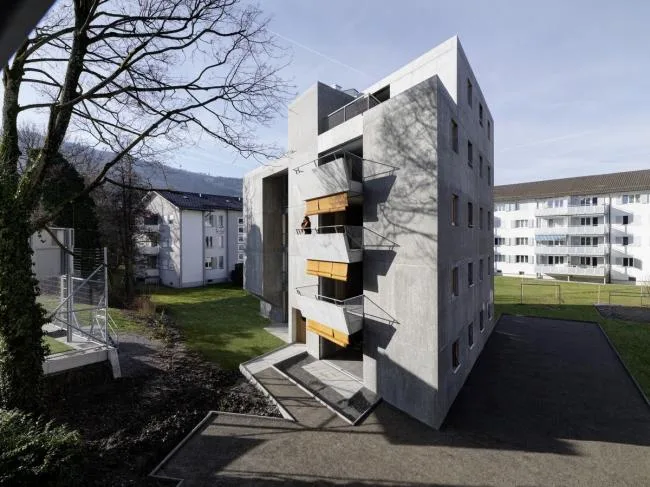
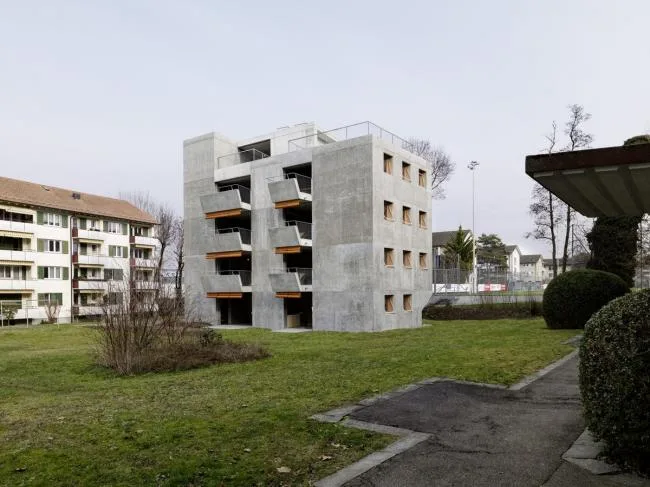
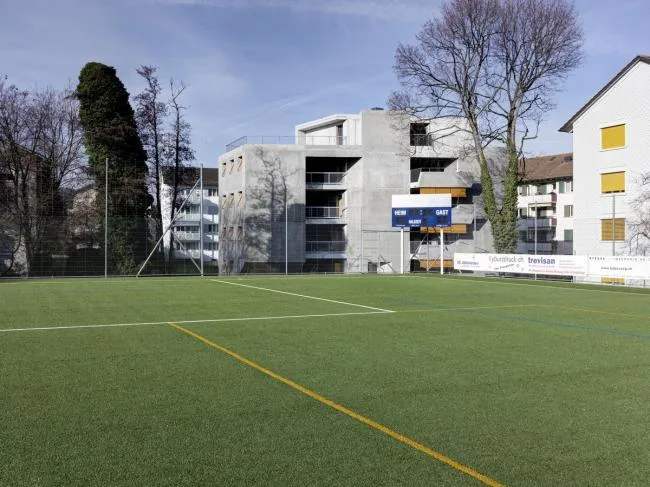
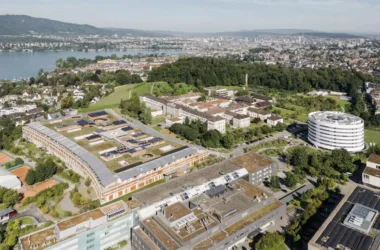
This residential project consists of nine apartment buildings located in Zurich’s Albisrieden district, situated within the city’s outer green belt. The area’s architectural character is defined by single, detached linear houses from the 1950s, each with spacious gardens arranged vertically in relation to one another. Amidst a context of rising urban density, this new building stands in a green zone, somewhat isolated compared to the surrounding linear structures.
The Baechi Foundation specifically commissioned this project to develop high-quality, affordable housing in central Zurich. Key priorities included maximizing natural light, ensuring privacy, and enriching spatial experience.
The Moral Basis of Contemporary Housing – Sustainability
The Langgrütstrasse 107 project demonstrates that by carefully designing lighting and spatial arrangements while relaxing universal standards, it is possible to create high-quality, vibrant living spaces without increasing costs. This approach invites reflection on the challenges facing society today. While sustainability may not be a personal priority for everyone, it is becoming increasingly vital for communities as a whole.
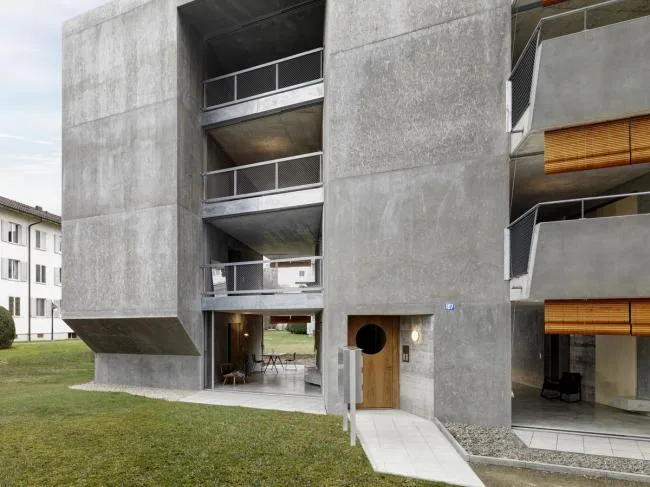
In residential architecture, this project shifts the focus from architectural symbolism and strict standards to spatial quality and the elements that define the room experience. The building comprises four two-bedroom apartments of 60 m² and five three-bedroom apartments of 95 m².
Low Budget – Buildings Designed for the Public
The apartments are offered at very reasonable rents, making them some of the most affordable options in the Zurich urban area. This project exemplifies low-budget buildings designed for public benefit.
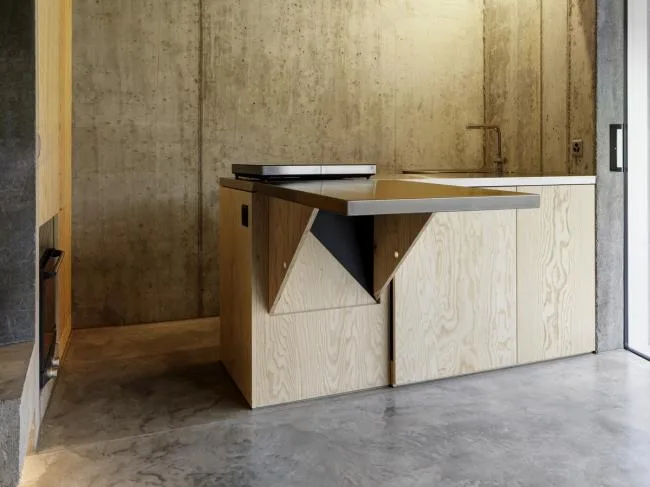
Architectural Form
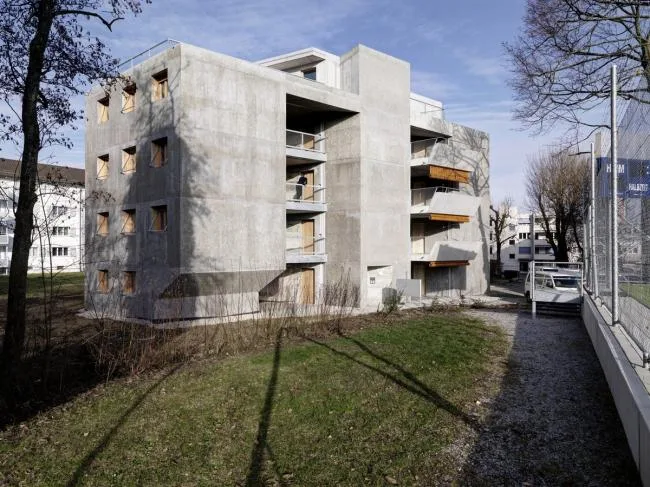
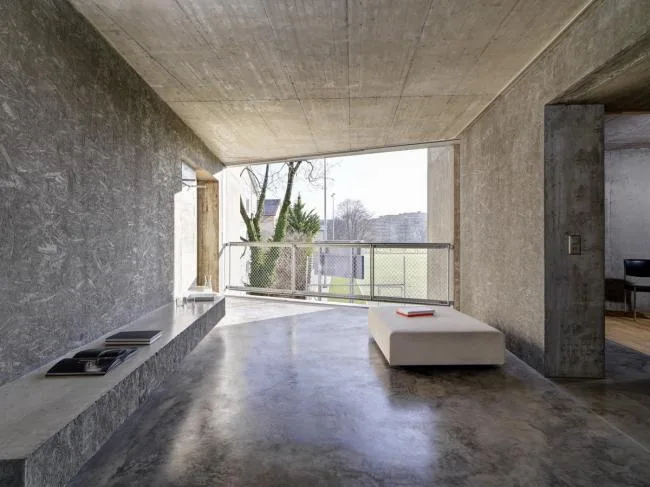
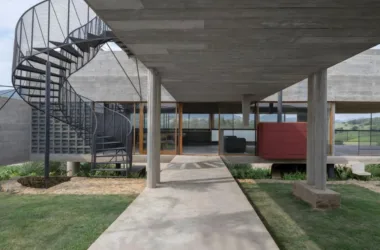
The building’s form is an organic composition of solid concrete blocks, creating two courtyard spaces within the structure. Within these courtyards, living areas appear to hover like bridges, enjoying sunlight from morning till evening. This design creates a seamless spatial flow that blends outdoor and indoor living, moving away from the traditional concept of compartmentalized housing plans.
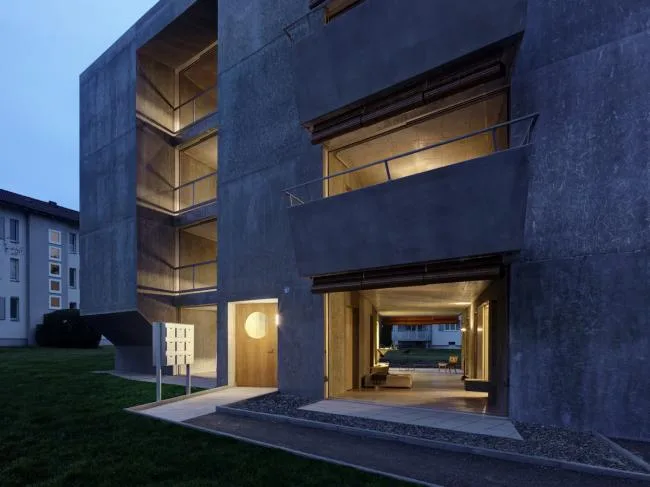
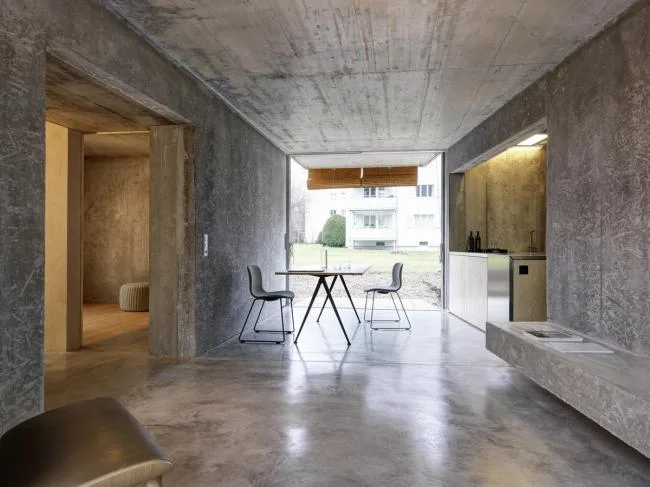
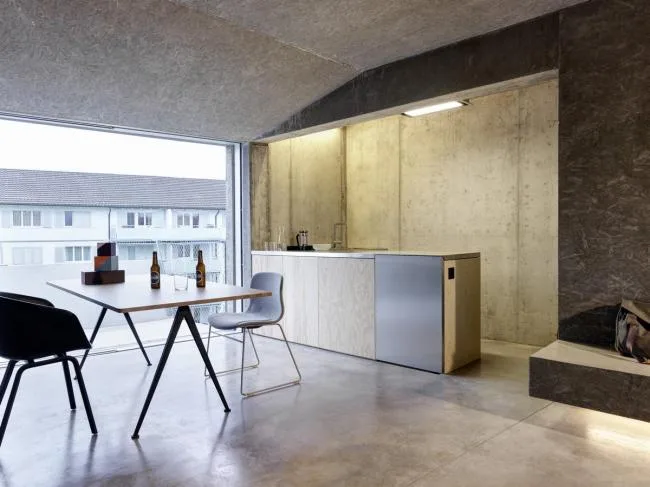
This design creates a remarkable spatial experience within a compact footprint, featuring an open living area that extends to the balcony perimeter. The balconies also provide sun protection using the renowned Barcelona wooden blinds. By minimizing the building’s BIM technical installations to the lowest acceptable Swiss standards, the project significantly reduced costs while emphasizing key aspects that enhance living quality. These include sliding windows and built-in wooden benches, which connect the concrete structure with the outdoor environment.
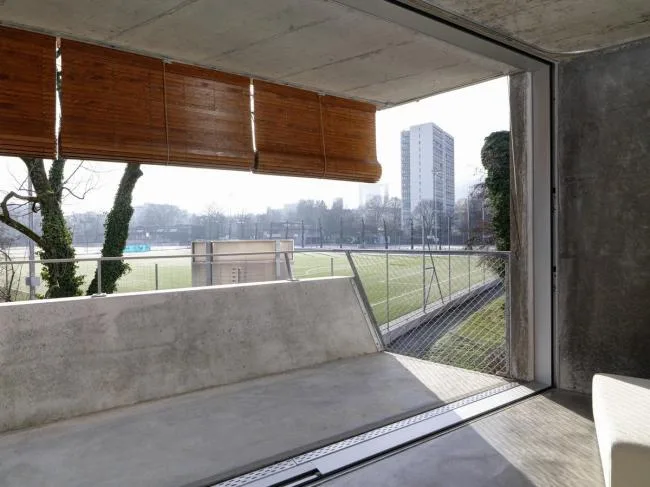
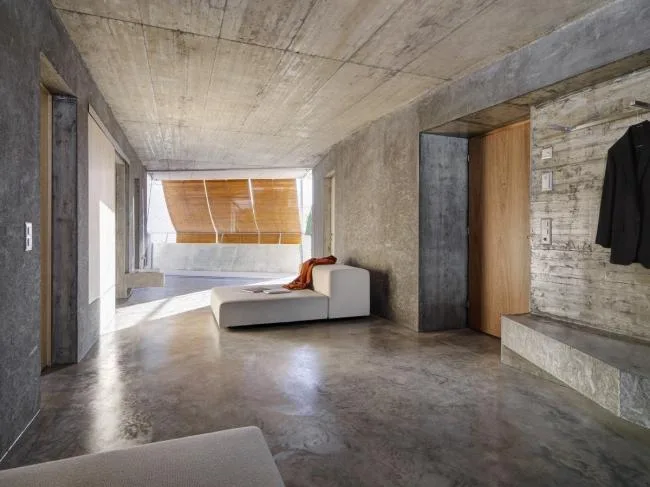
Concrete Blocks and Spatial Perception
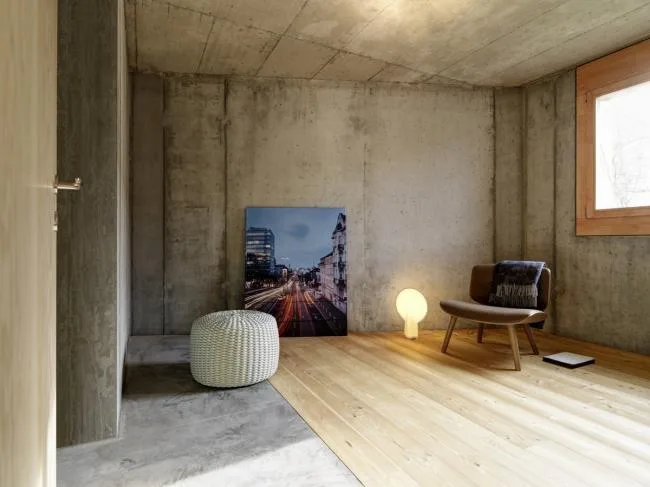
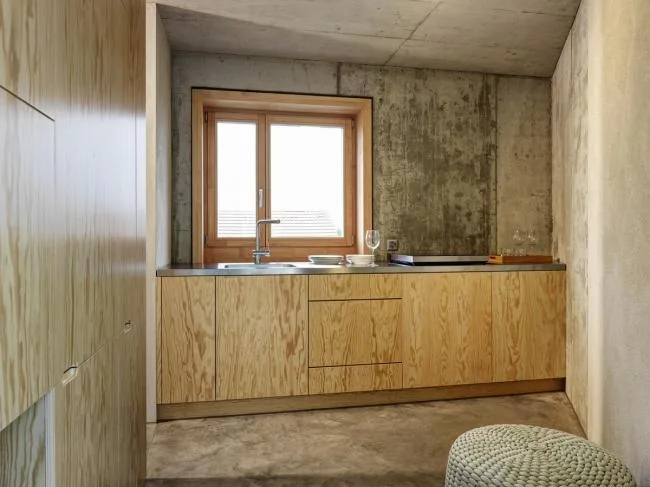
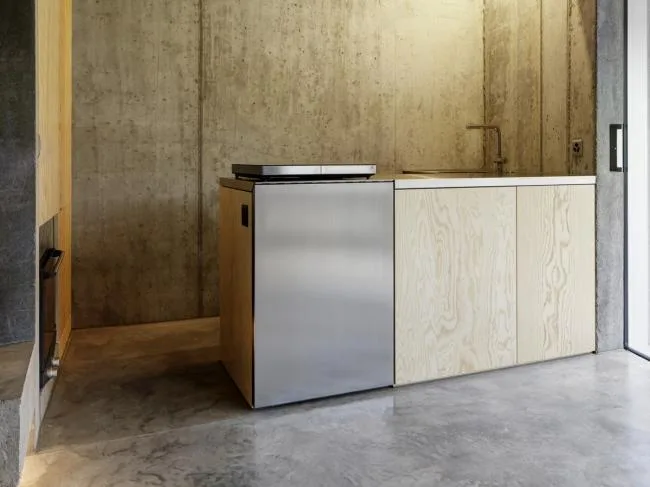
The architecture defines the outer boundary of the living space, transforming the spatial limits into interactive elements. Architectural features, especially those outlining the perimeter, do not function merely as partition walls but become key protagonists shaping the spatial experience. This spatial configuration elegantly integrates wardrobes and living room benches.
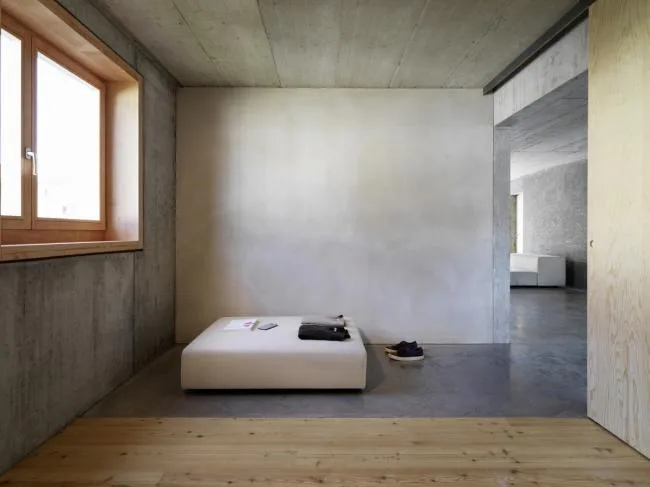
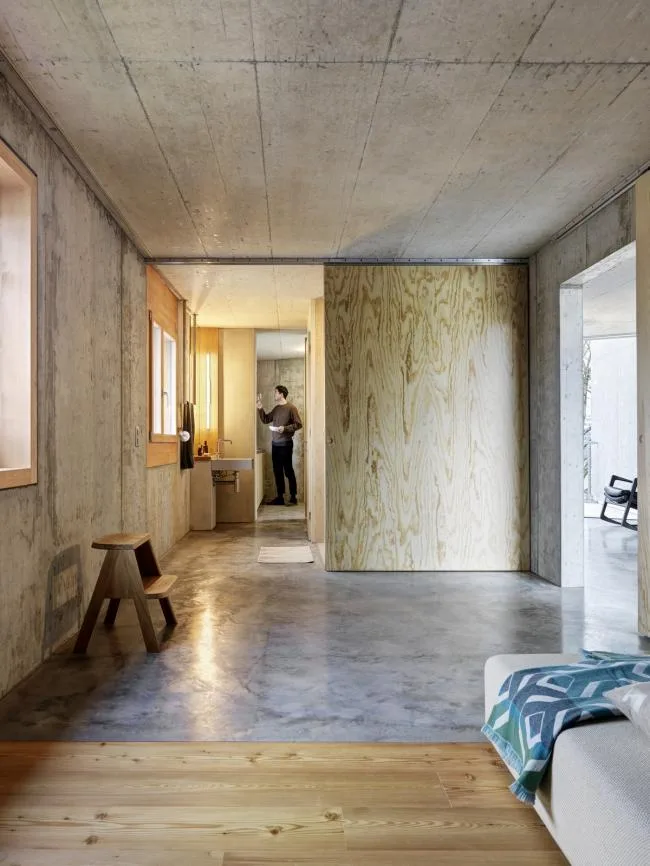
The bathroom in the three-bedroom suites is separated from the common area by sliding doors that do not reach the floor. This design allows the space to be flexible and adaptable to residents’ needs while maintaining a sense of privacy.
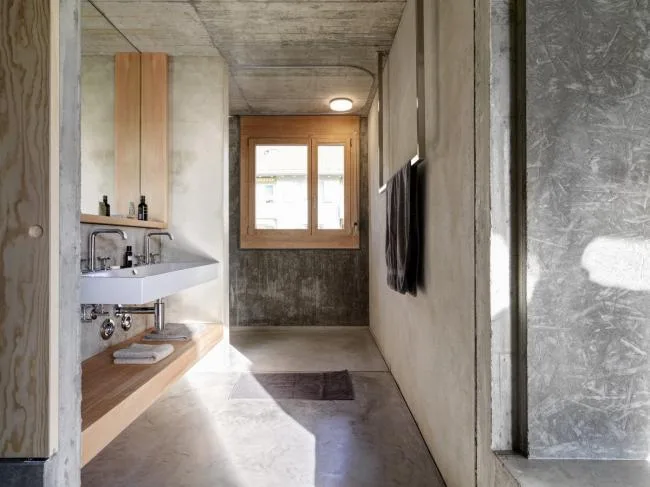
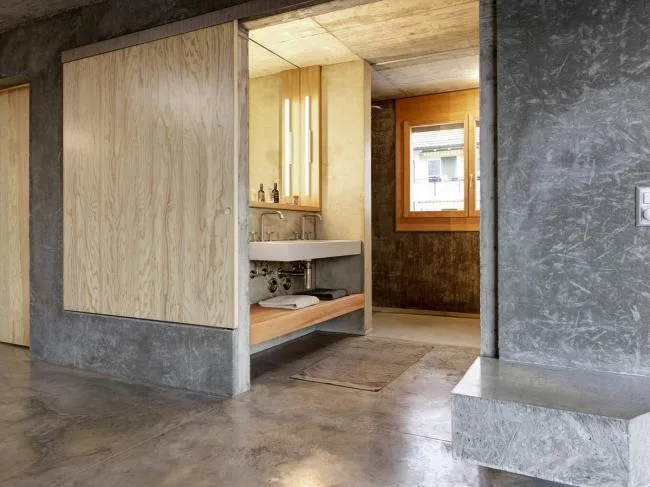
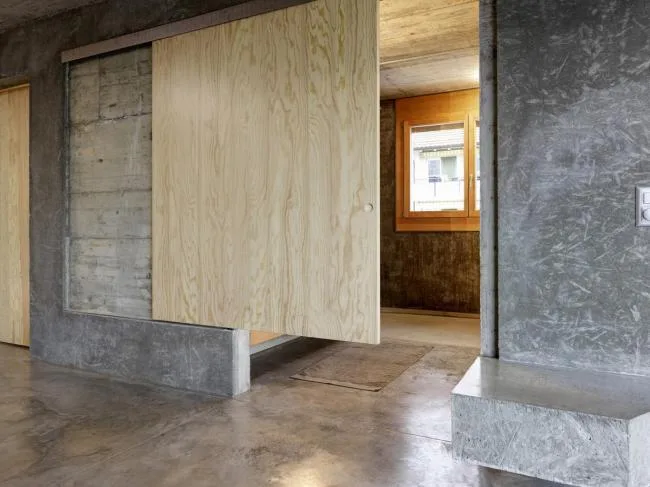
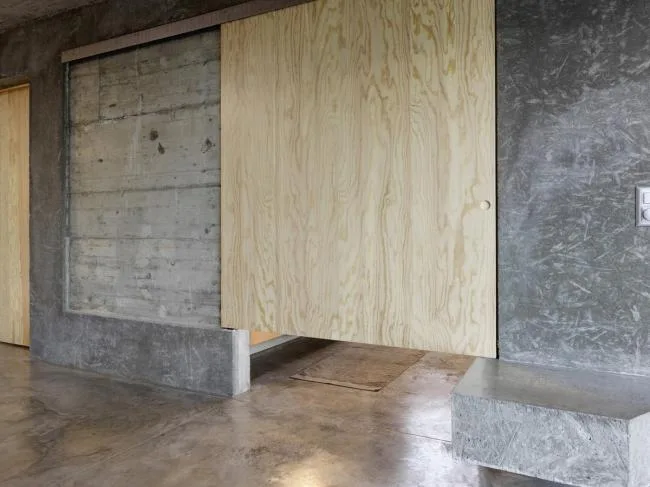
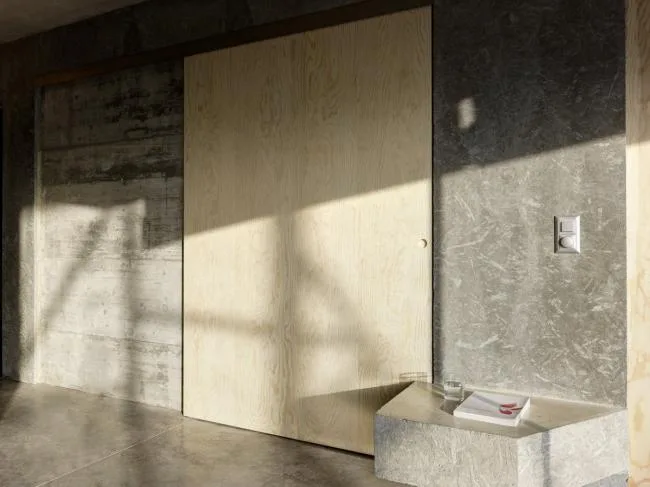
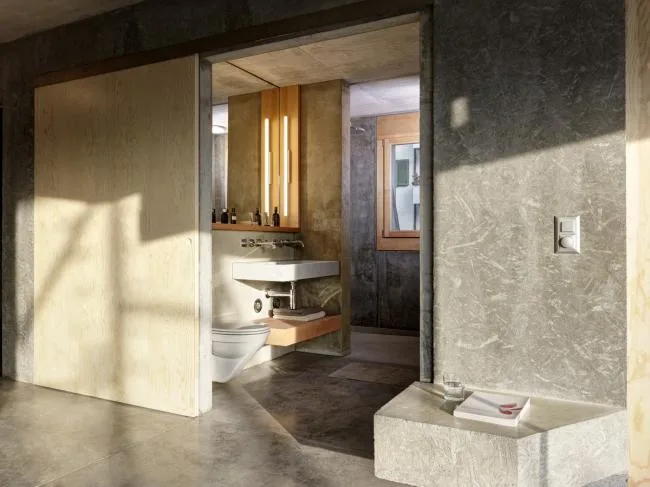
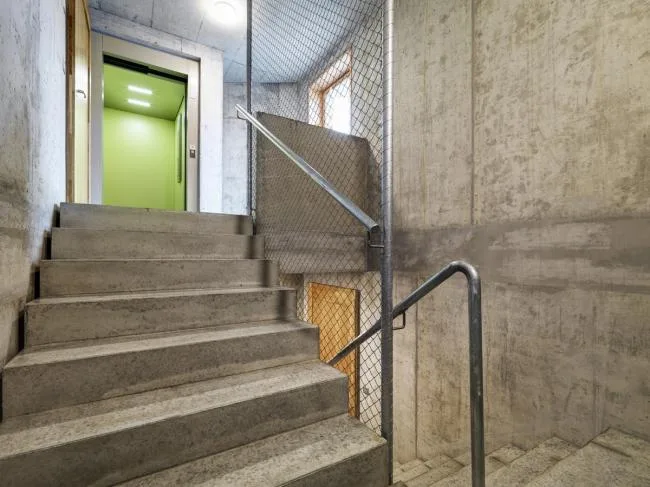
The entrance of each apartment is marked by a large, simple concrete beam, capturing the moment of arrival. A concrete bench extending from the bathroom wall creates a shared space at the bathroom sliding door entrance, serving as a pivotal point within the design. Concrete flooring extends above all bedrooms, flowing into public areas, while wooden flooring in the rooms emphasizes the privacy of these spaces.
Design Drawings
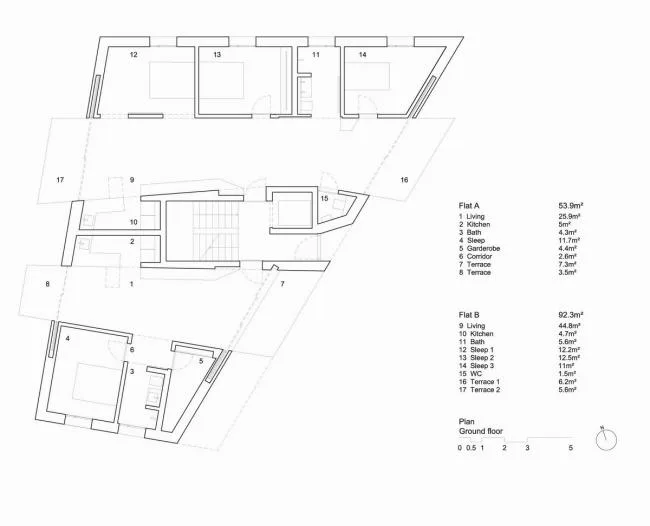
▲ First floor plan
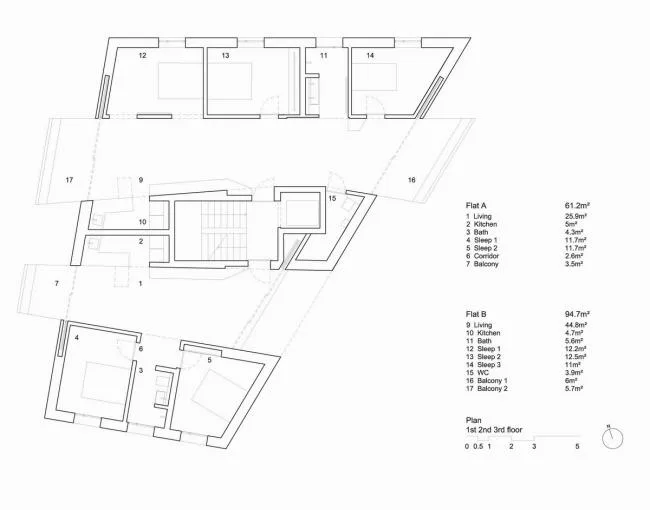
▲ Standard floor plans for the second, third, and fourth floors
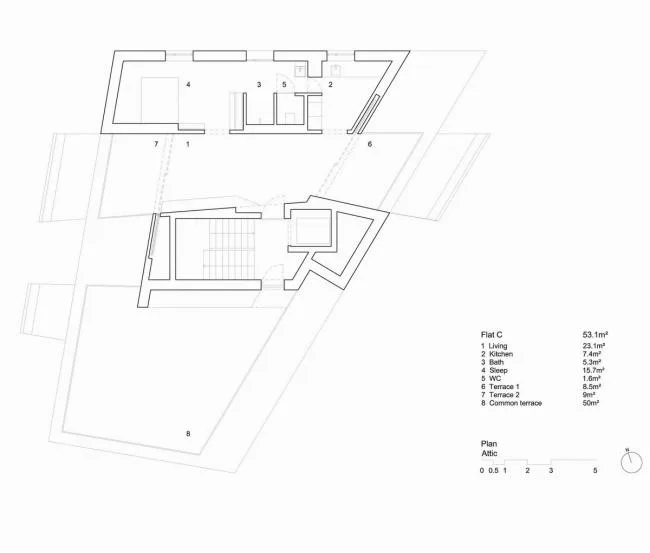
▲ Attic floor plan
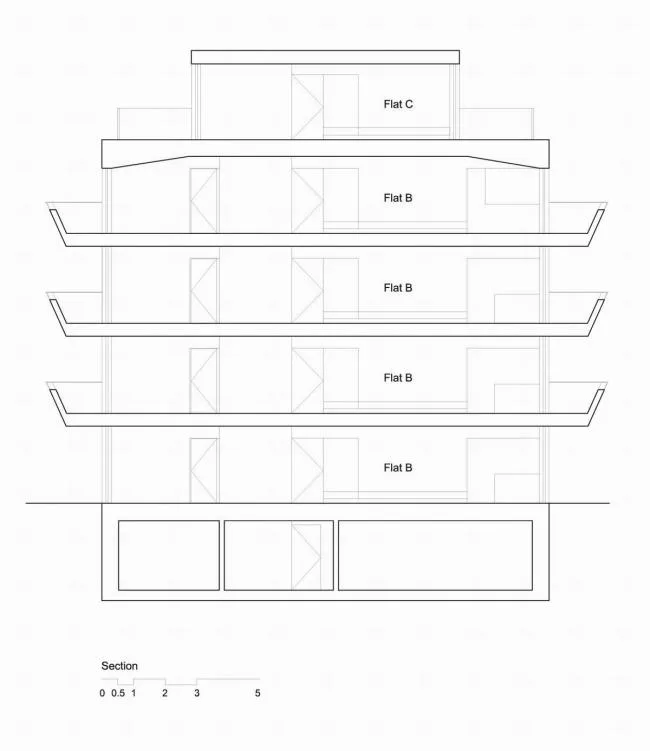
▲ Sectional view
Project Information
(BIM Architecture)
Architect: Gus Wüstemann Architects
Location: Zurich, Switzerland
Category: Sustainable Development
Lead Architect: Gus Wüstemann / Bianca Kilian – Project Leading Architect
Design Team: Bianca Kilian – Project Leading Architect; Daniel Pelach, Architect; Panagiota Sarantinoudi, Architect; Valentin Kokudev, Architect
Building Area: 1,115 m²
Project Year: 2019
Photographer: Bruno Helbling
Manufacturers: R+R Metallbau, Schenker Storen, Heierli Partner Haustechnik, Sky-Frame, Schaub, Cremer Bruhin, Fiechter + Fuchs, Gautschi Fensterbau, Züri Elektro, Louis Poulsen, Agosti, Atlas Schindler, MARTI comfort ventilation & Construction workshop, Persiana Barcelona, Kurtisi
Municipal Engineer: Born Partner AG
HLSK Planner: Frei+Partner
Physics Consultant: Gartenmann Engineering AG
Construction Contractor: Corti AG
Carpentry: Ernst Wieland AG
Owner: Baechi Foundation












Must log in before commenting!
Sign Up