
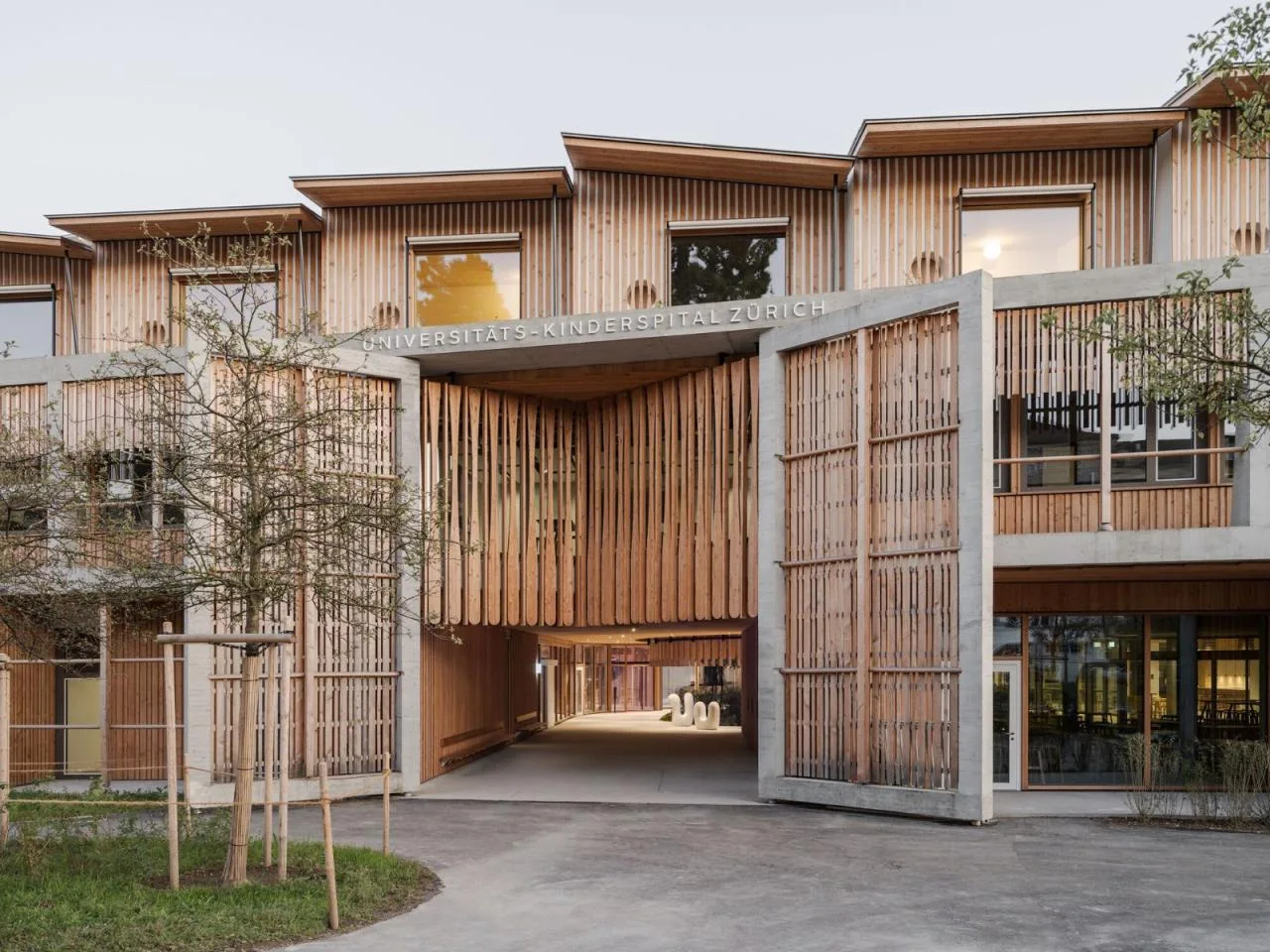
The new Children’s Hospital of the University of Zurich is situated in the Zurich Runge district, at the base of Burghölzli mountain. Located next to hospital buildings from various eras, it stands as Switzerland’s largest medical center dedicated to children and adolescents.
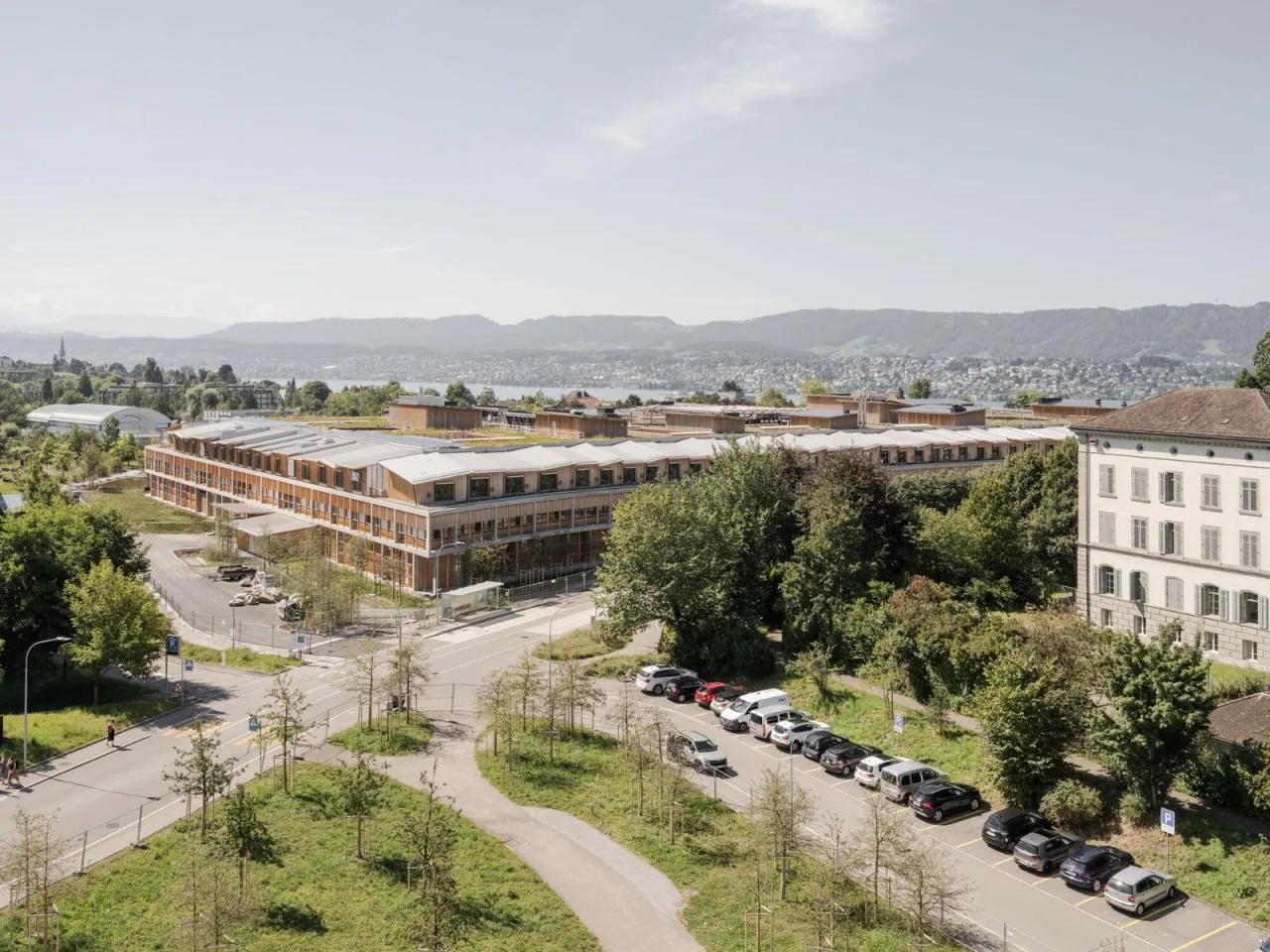
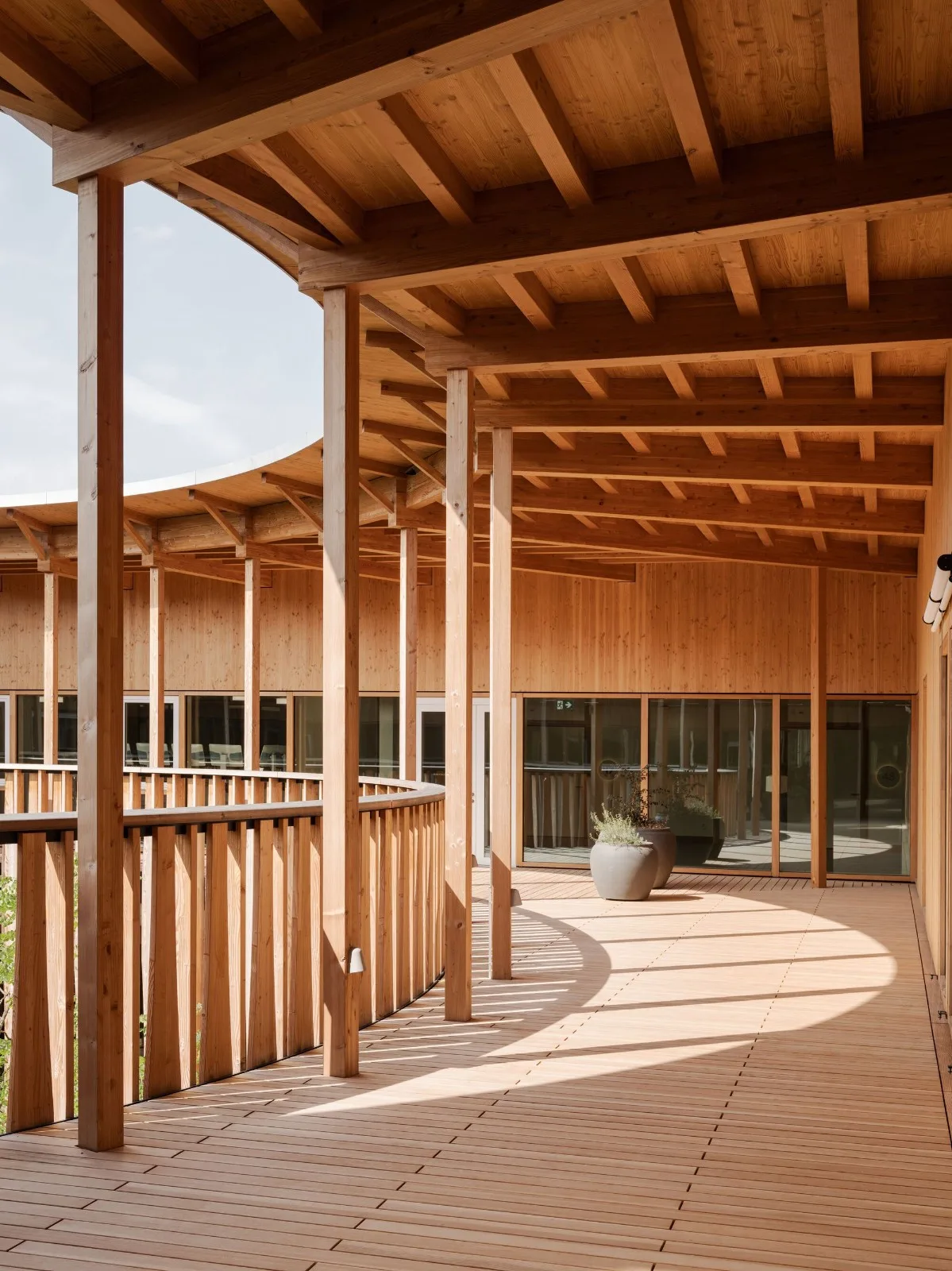
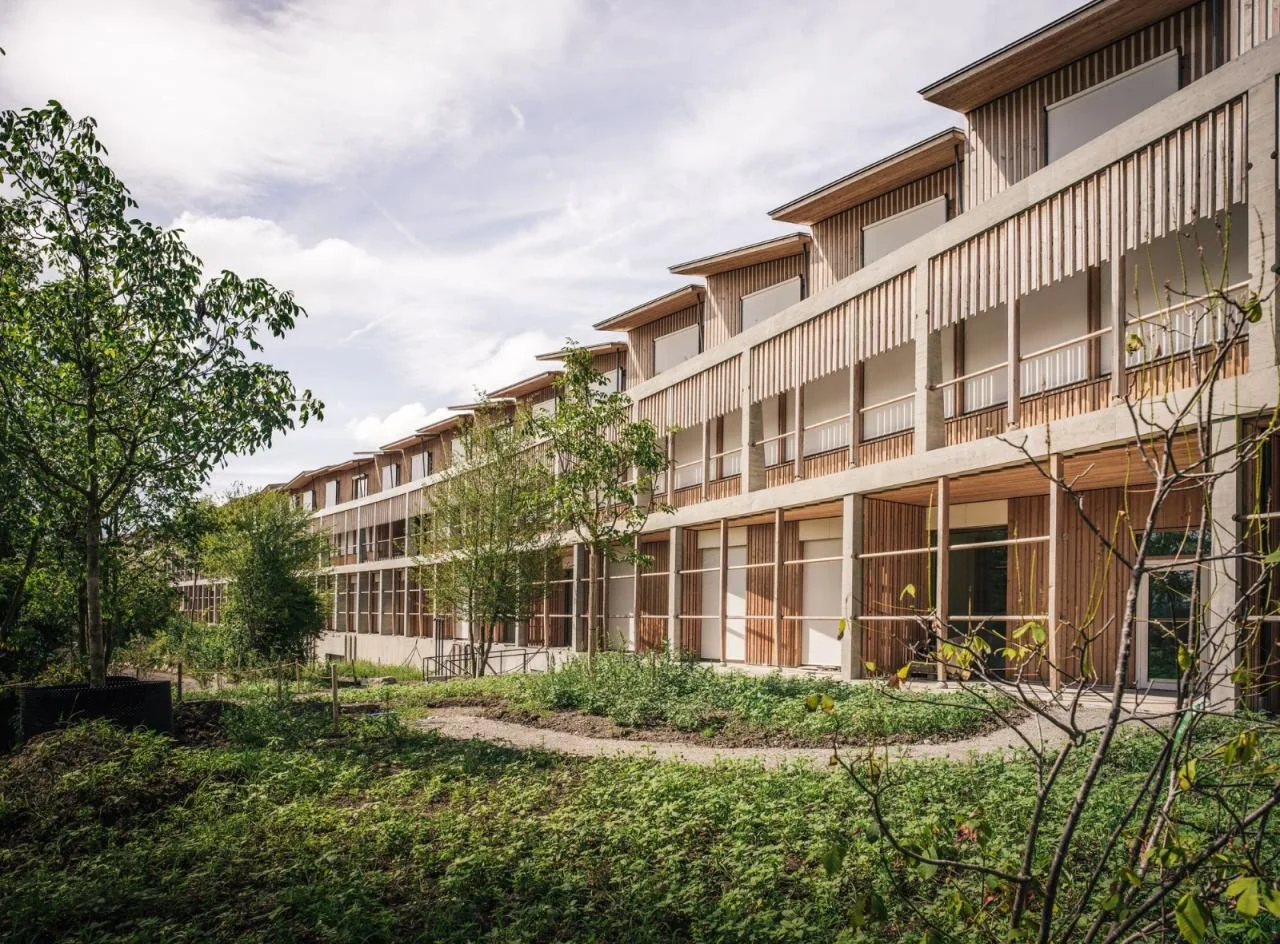
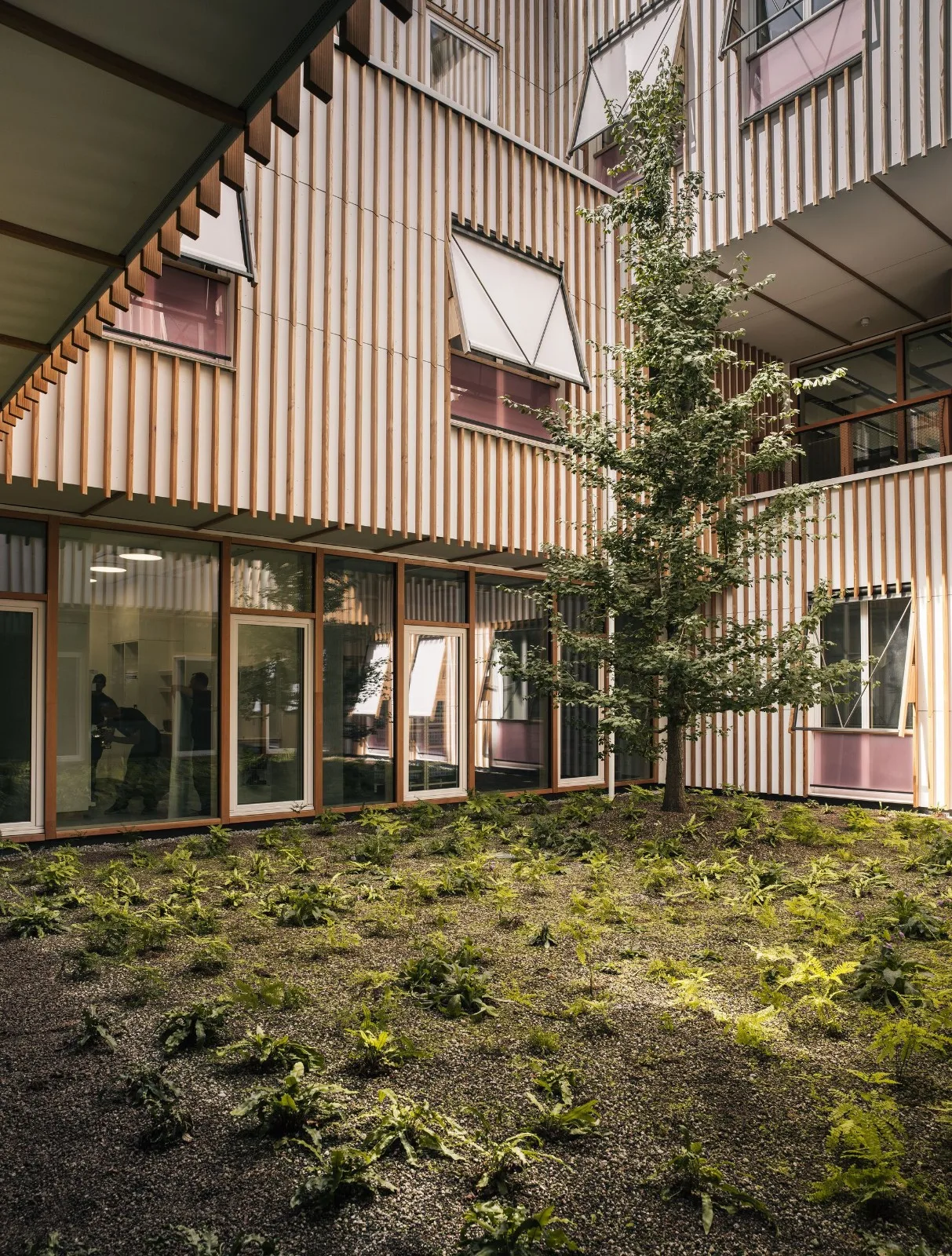
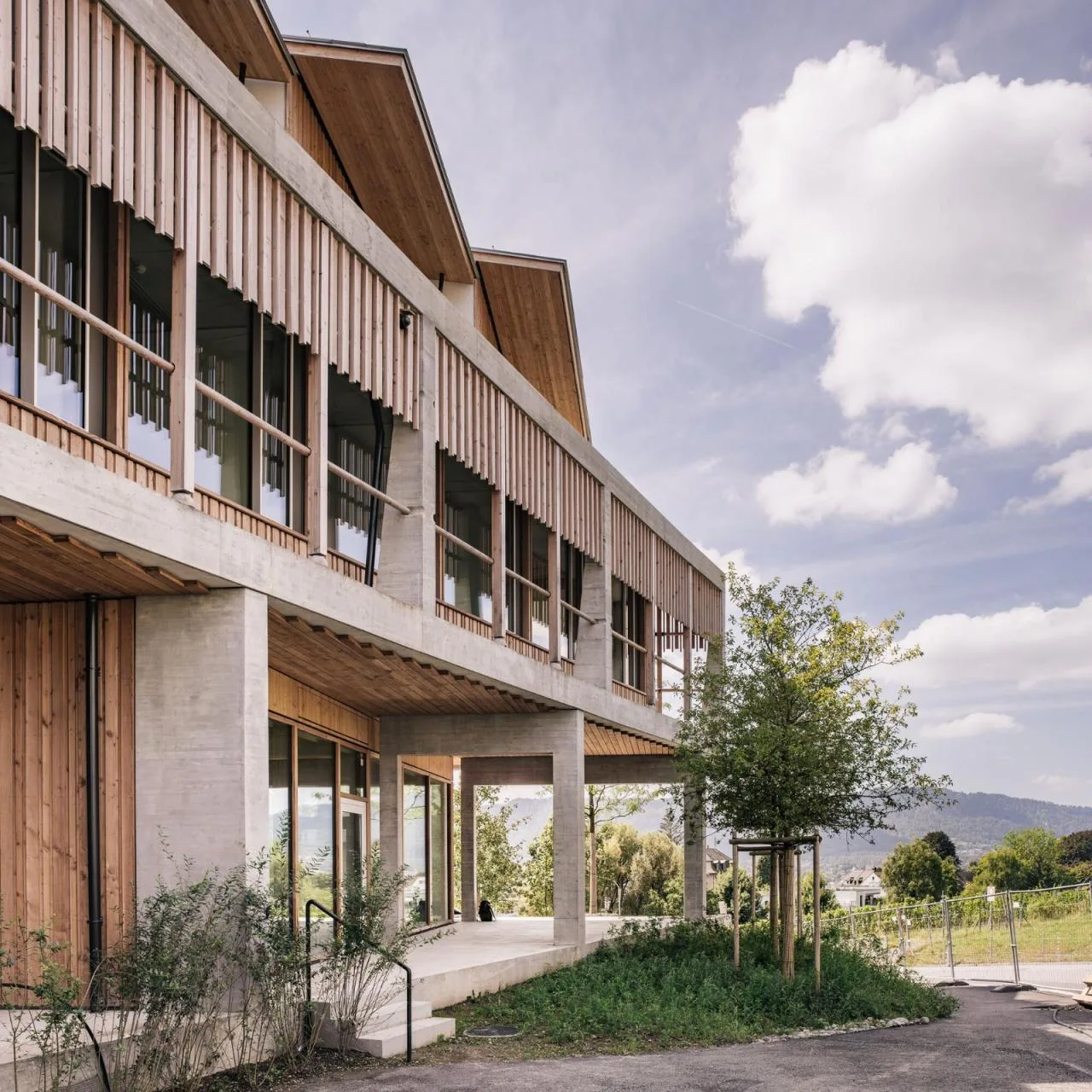
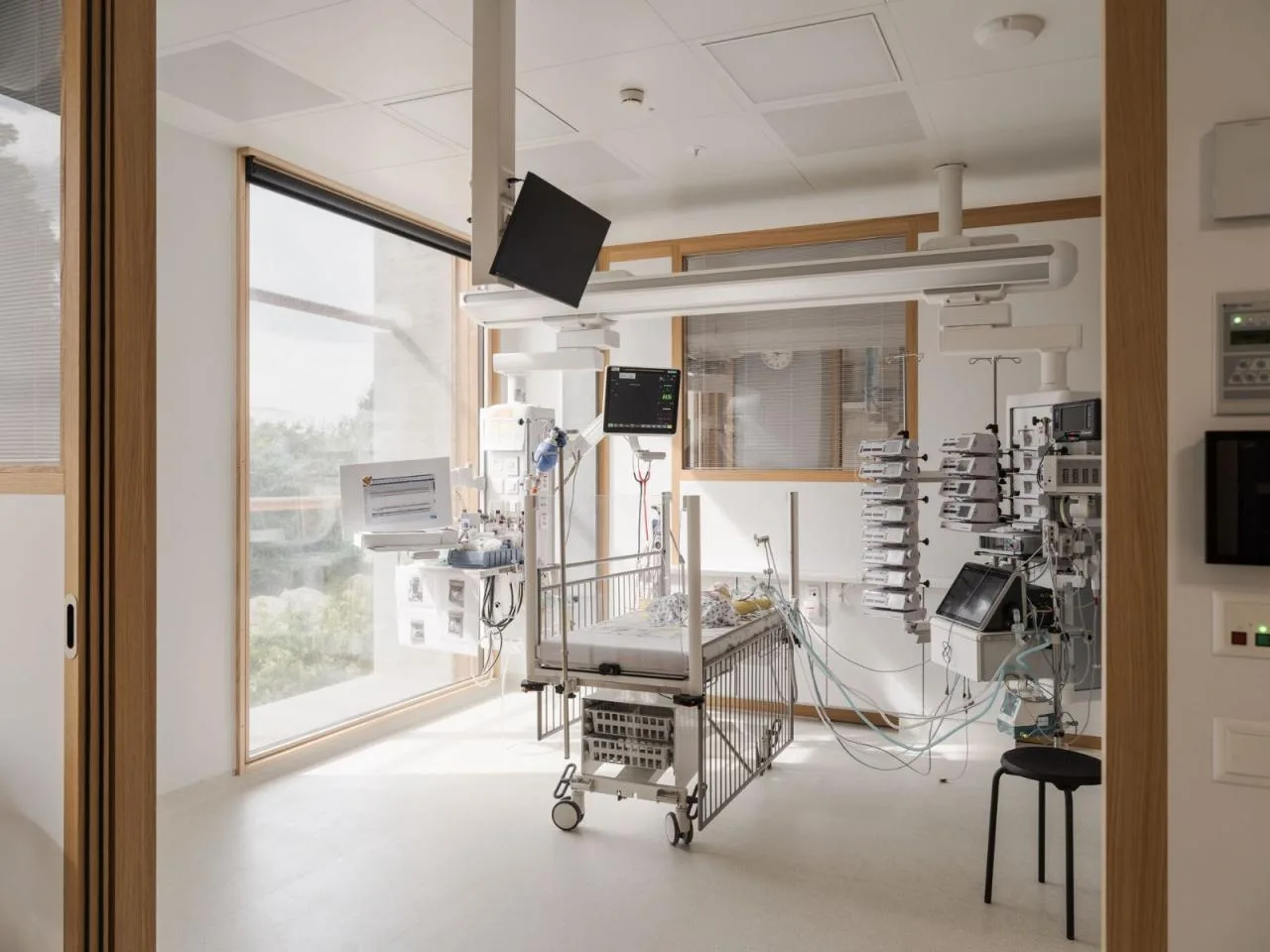
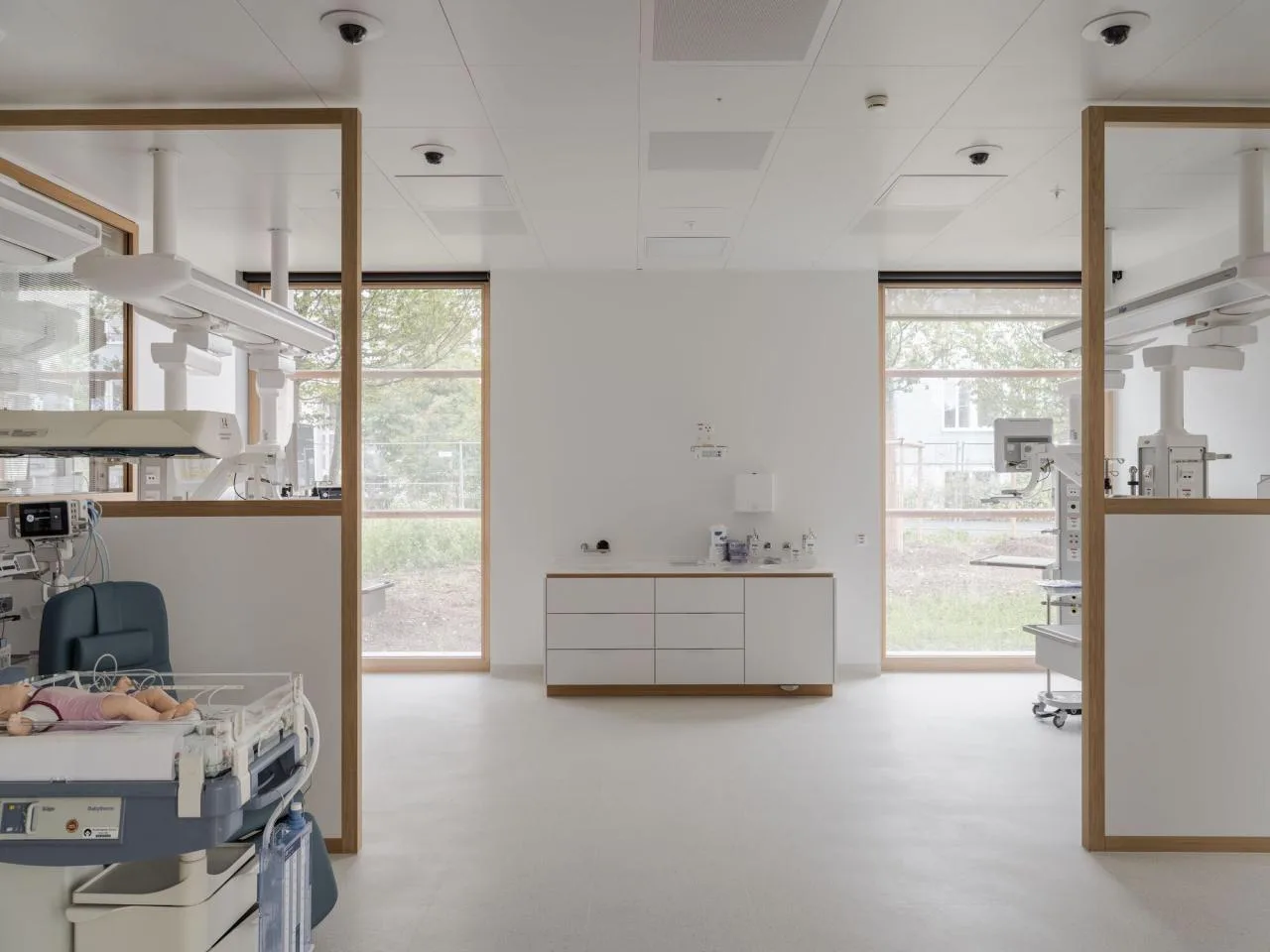
The hospital complex comprises two primary structures: an acute care hospital and a facility for research and teaching. The acute care hospital, positioned on the southern side, features a three-story concrete frame filled with intricate wooden structures that harmonize with the natural environment. Internally, the layout resembles a small town, where each medical department forms a block interconnected by squares and streets. Every floor of the three-level building has a central main street passing through green courtyards that provide wayfinding and ample natural light. The wards on the rooftop are designed as independent cabin-like units.
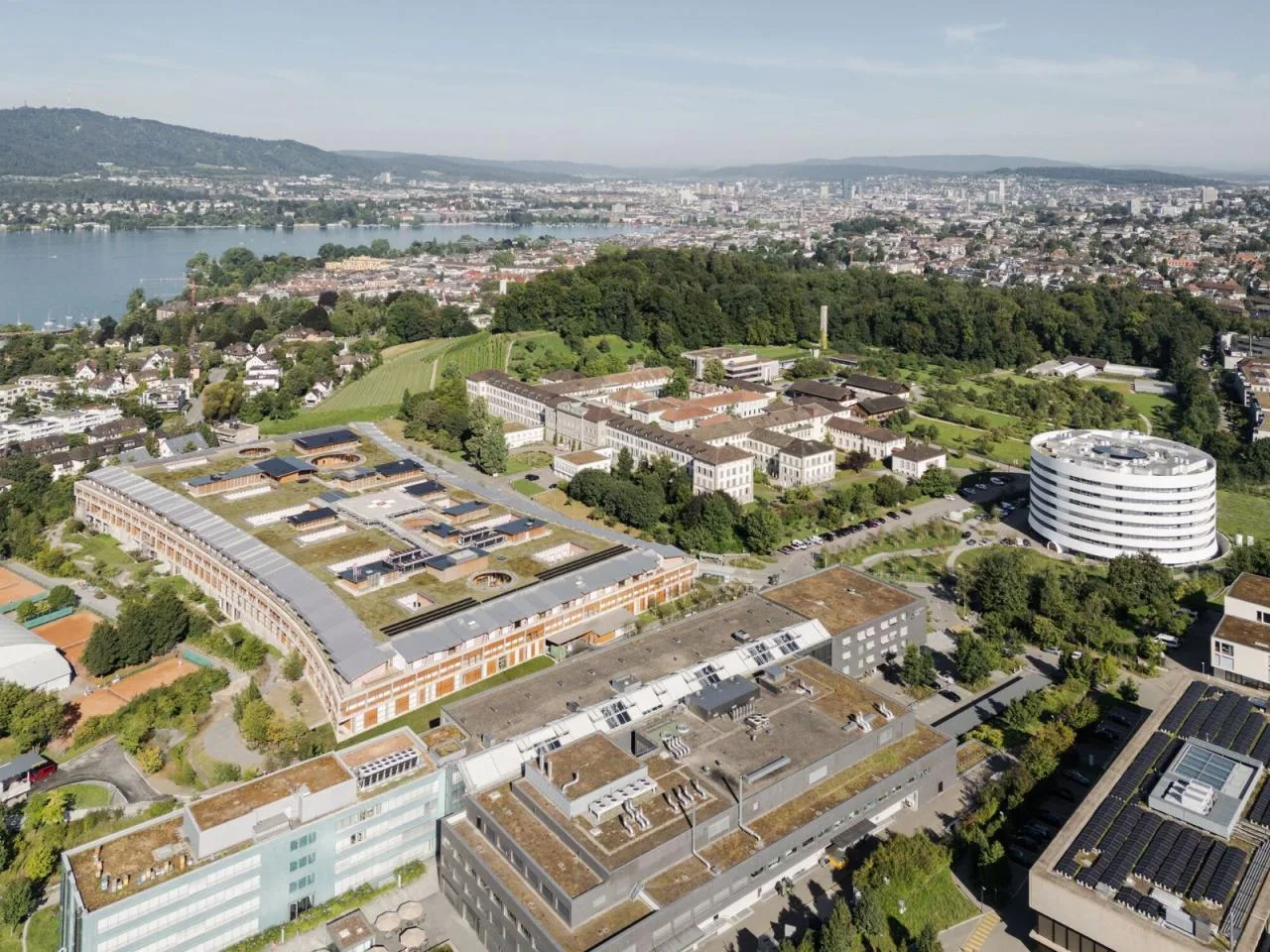
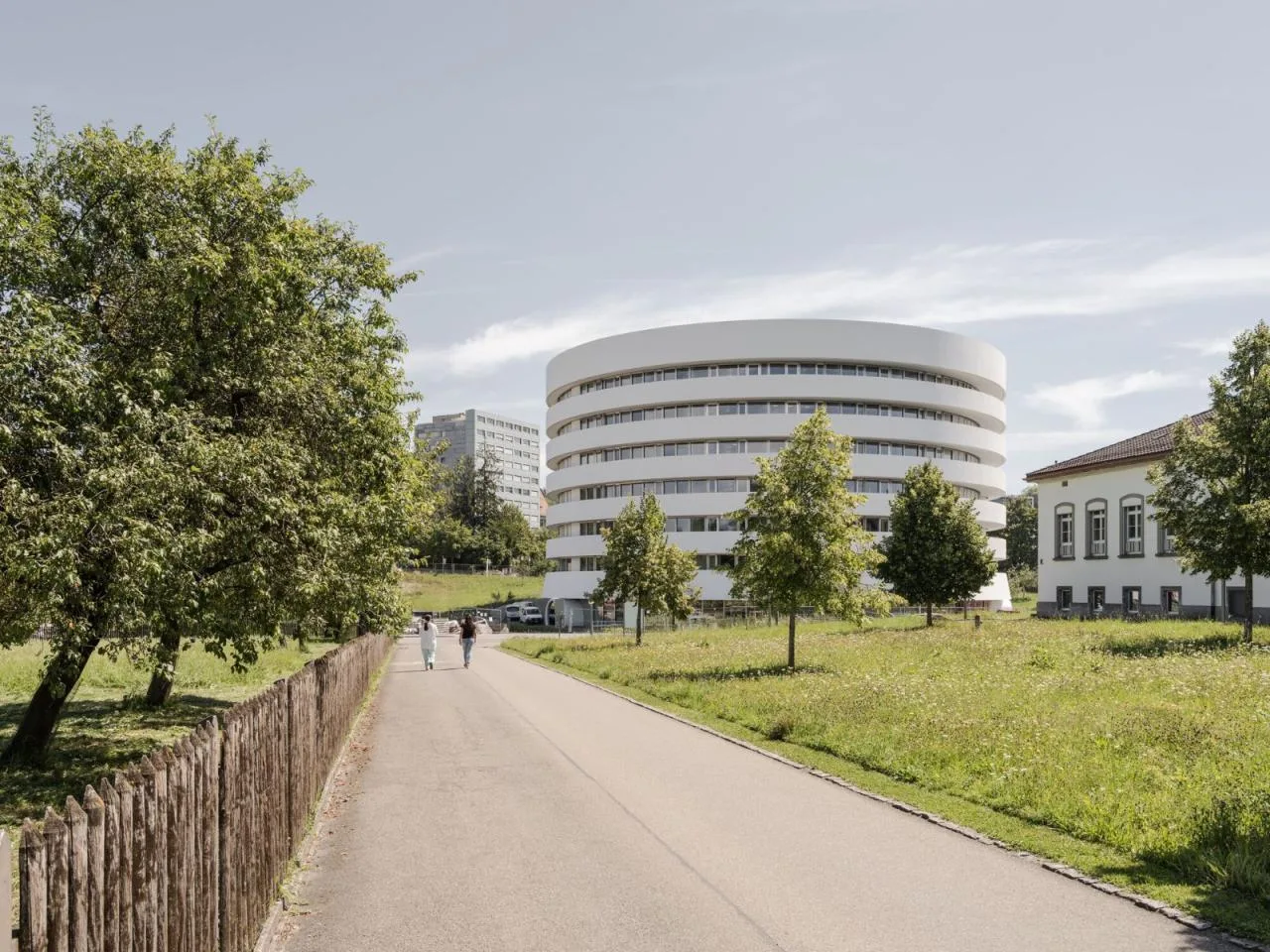
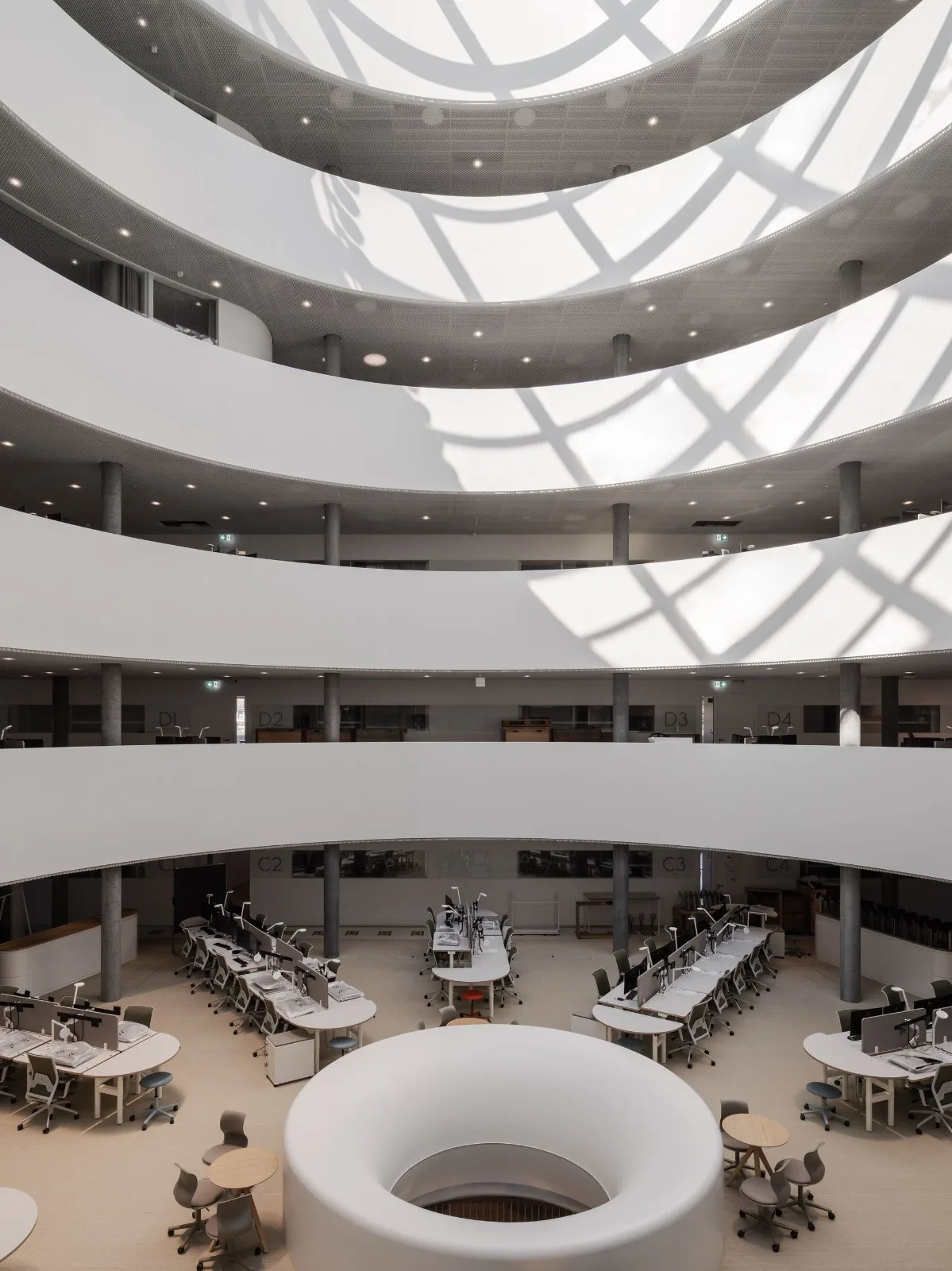
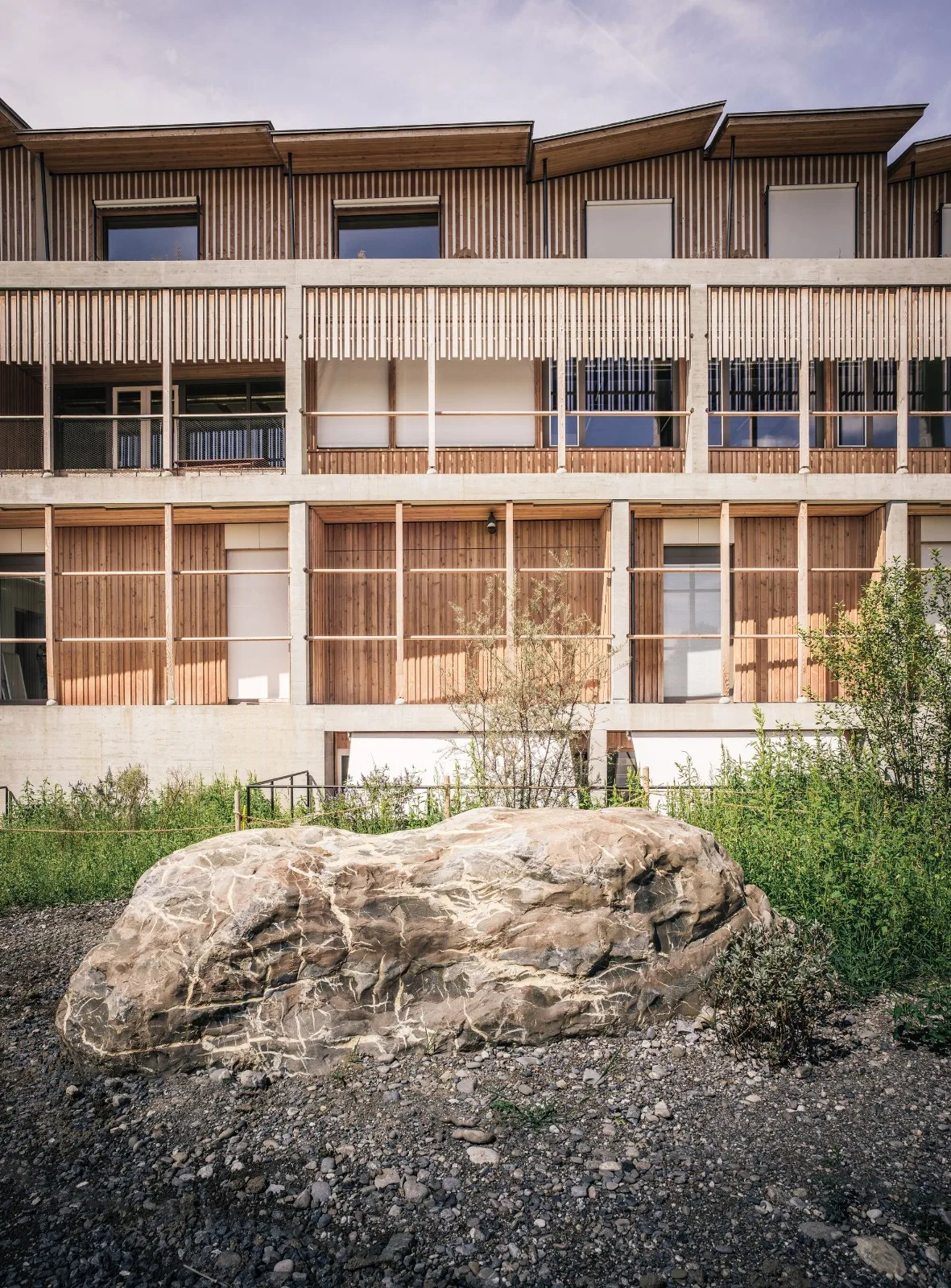
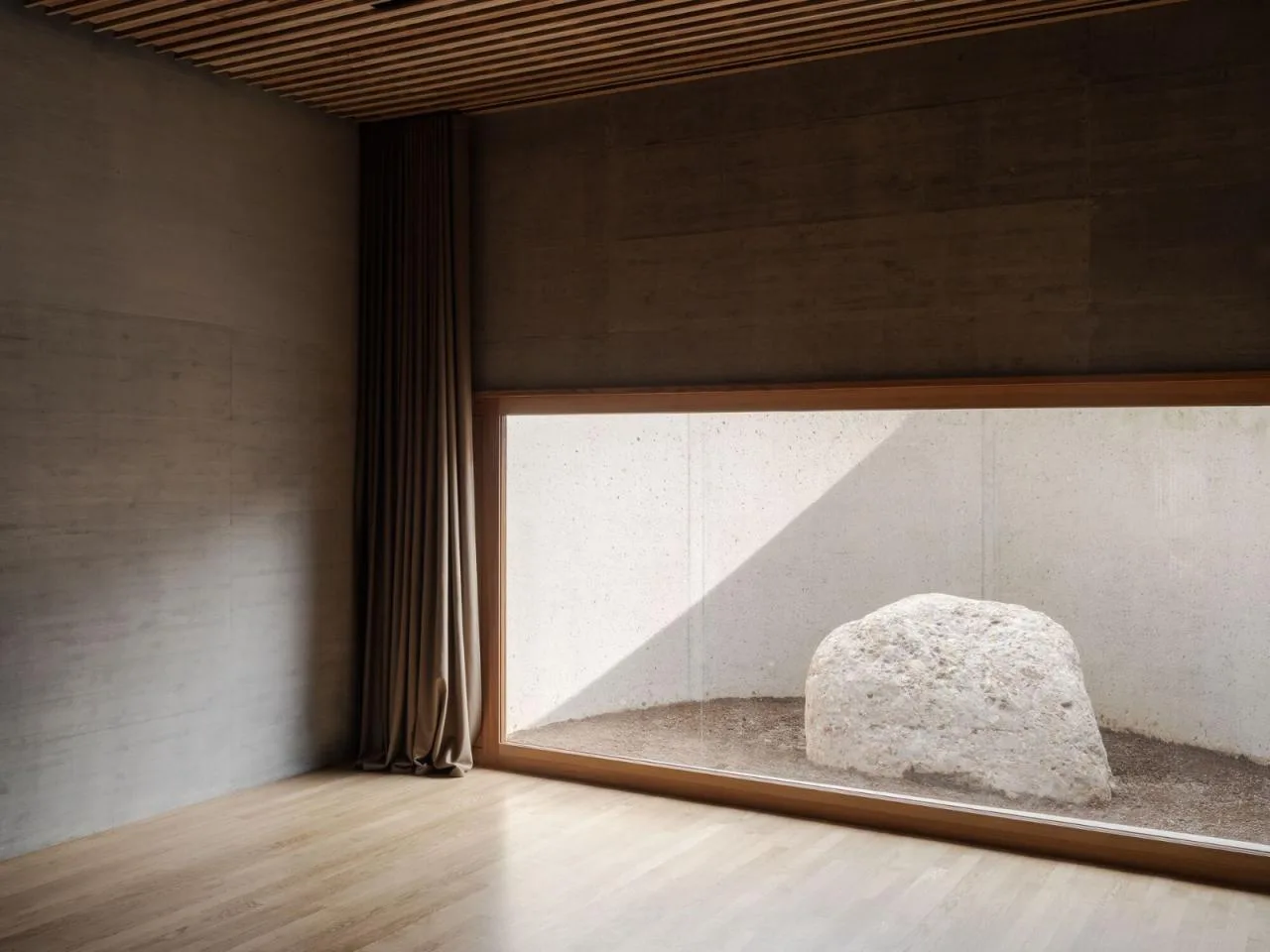
On the northern side, the research and teaching facilities are housed within a white cylindrical building featuring an open five-story atrium at its core. Surrounding this communication hub, research spaces are strategically arranged. Embedded within the sloping terrain below are three lecture halls, surrounded by seminar rooms and student study areas. The expansive landscape design includes over 250 newly planted trees and large stones excavated during construction, symbolizing the Ice Age glaciers. These natural elements play a vital role in transforming the hospital into a healing environment. Both buildings have achieved the Platinum certification for sustainable construction under the rigorous standards of the Swiss Sustainable Building Council (SGNI).
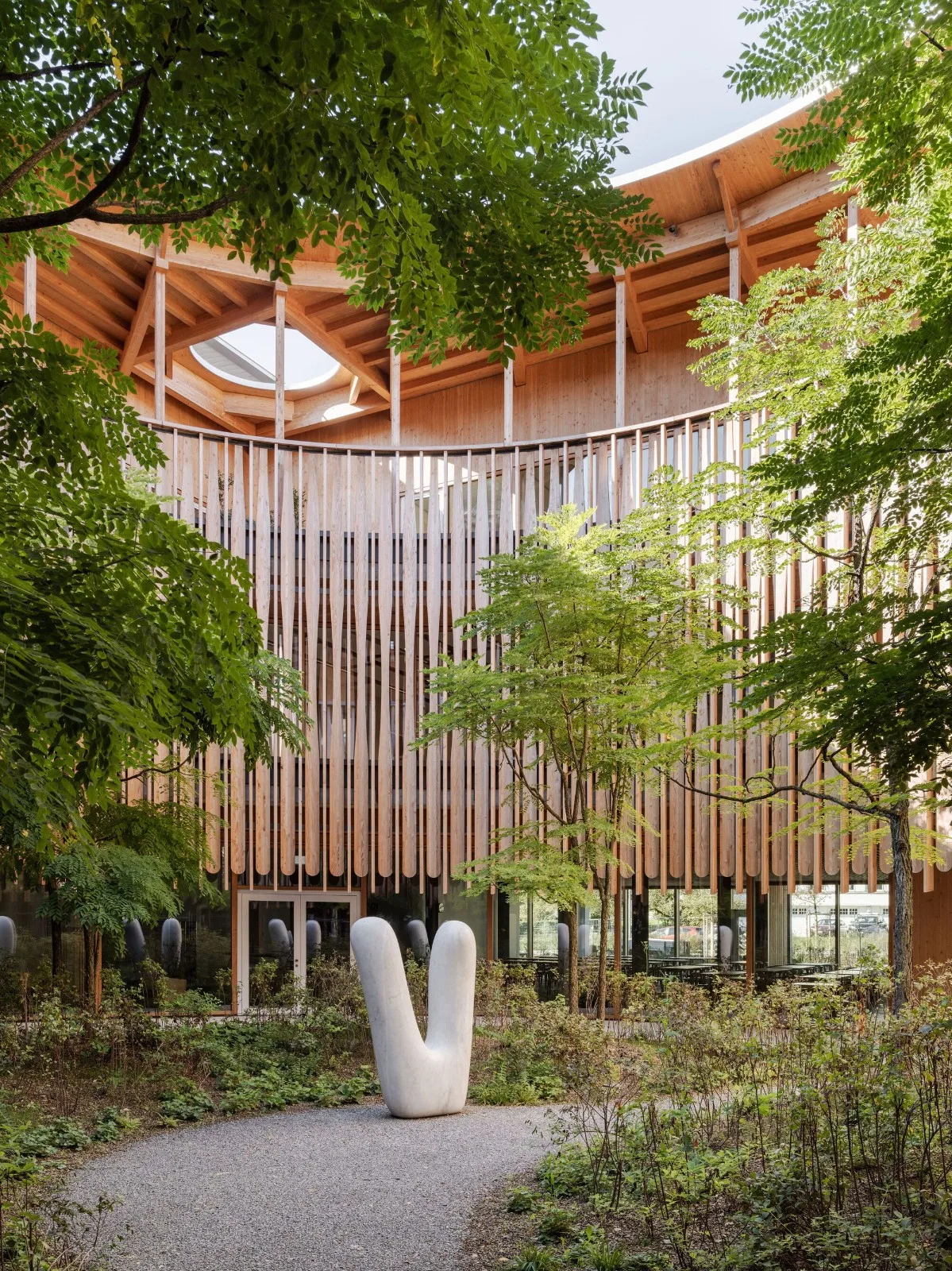
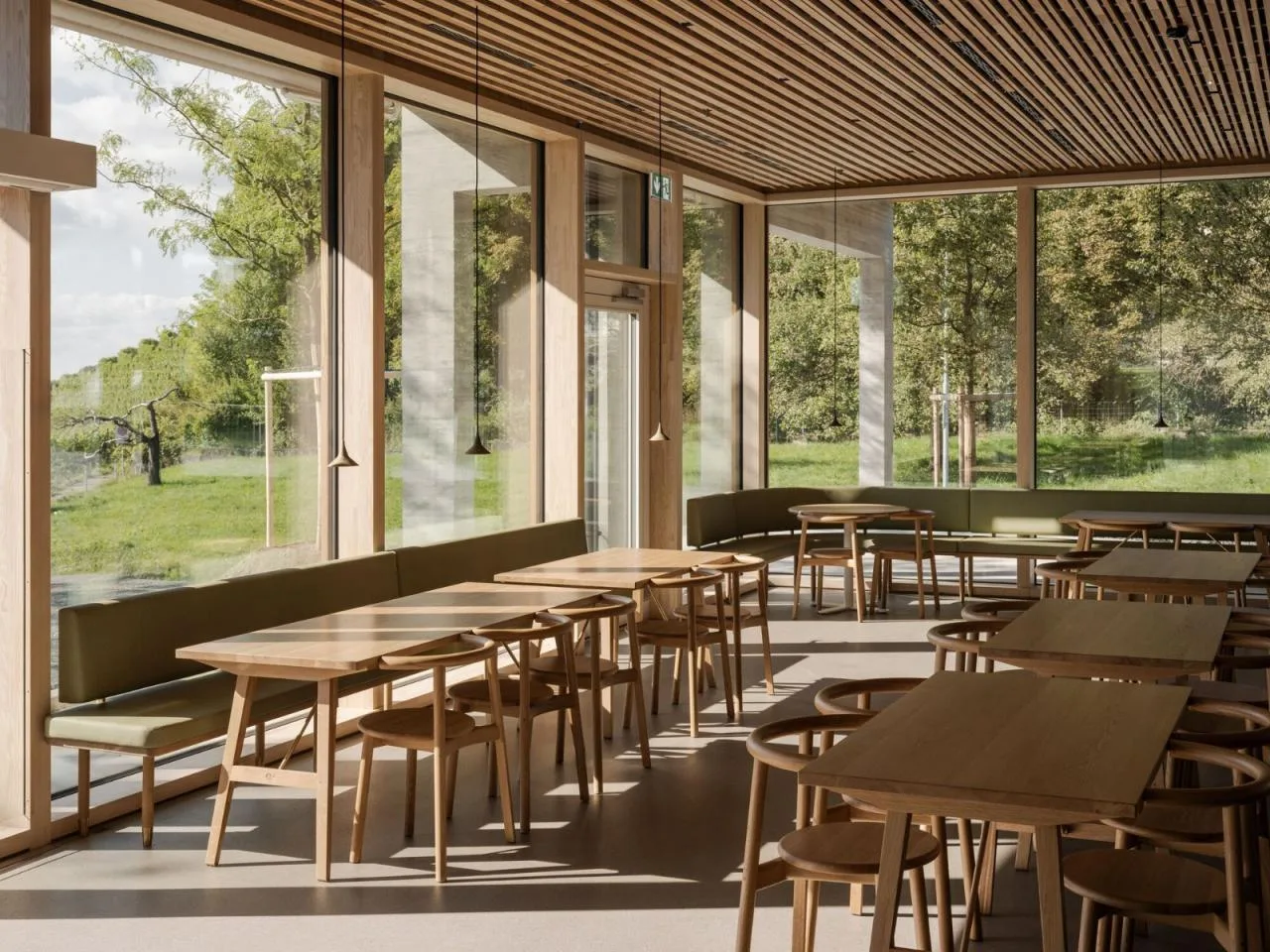
The Acute Care Hospital is located in a residential neighborhood dotted with orchards and adjacent to the University Psychiatric Clinic (PUK), a protected cultural heritage building. The hospital facade’s concave design creates a shared entrance vestibule with the psychiatric clinic, leading to a circular courtyard surrounded by lush trees. Beyond the courtyard lies the hospital entrance. Nearby, the restaurant and the pathway to treatment areas below have their own gardens. On the opposite side, the hospital’s main street provides access to key diagnostic and treatment areas such as imaging and day surgery. This central corridor varies in width as it passes through courtyards, culminating at the emergency room, which also has a direct external entrance.
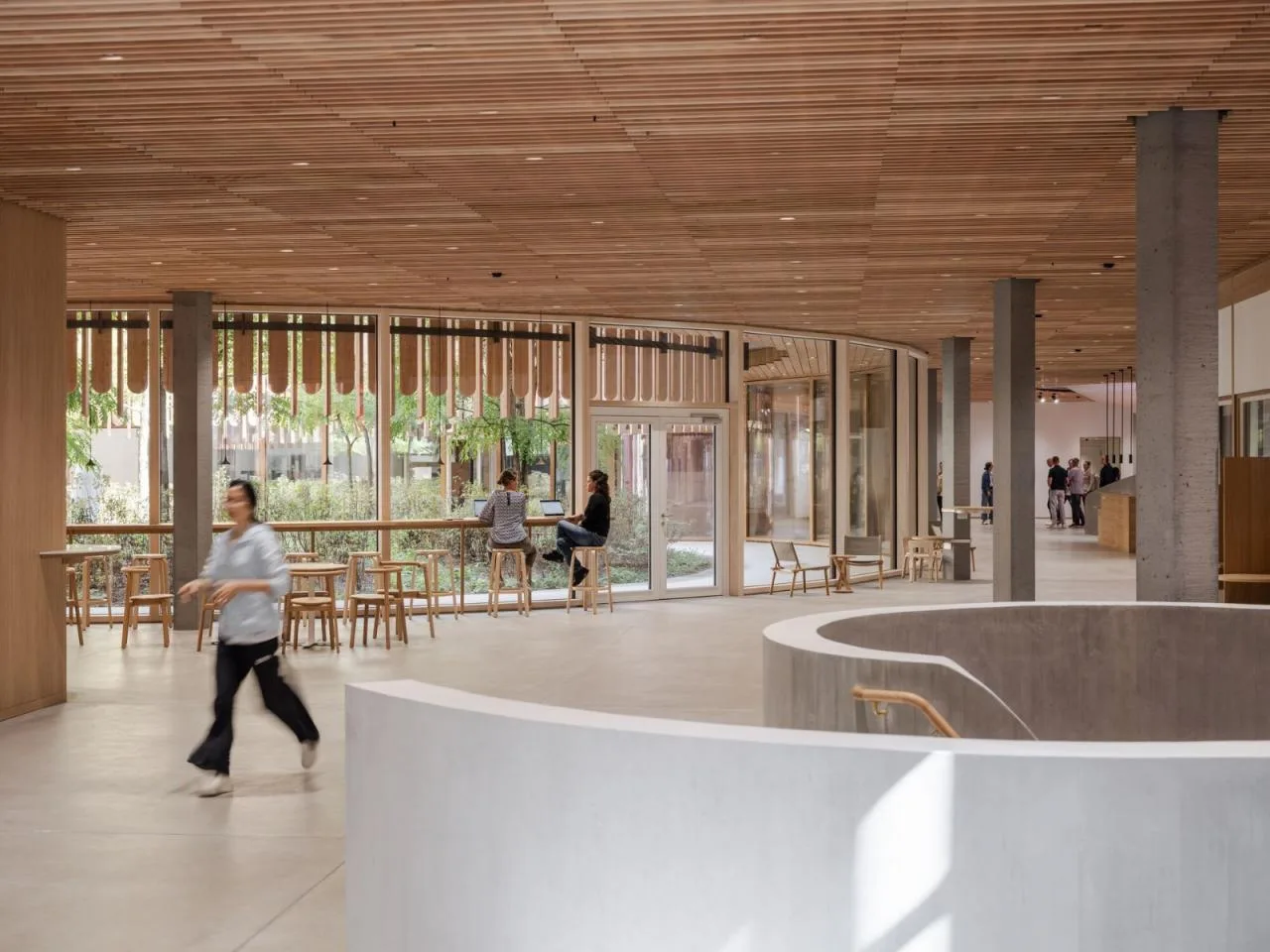
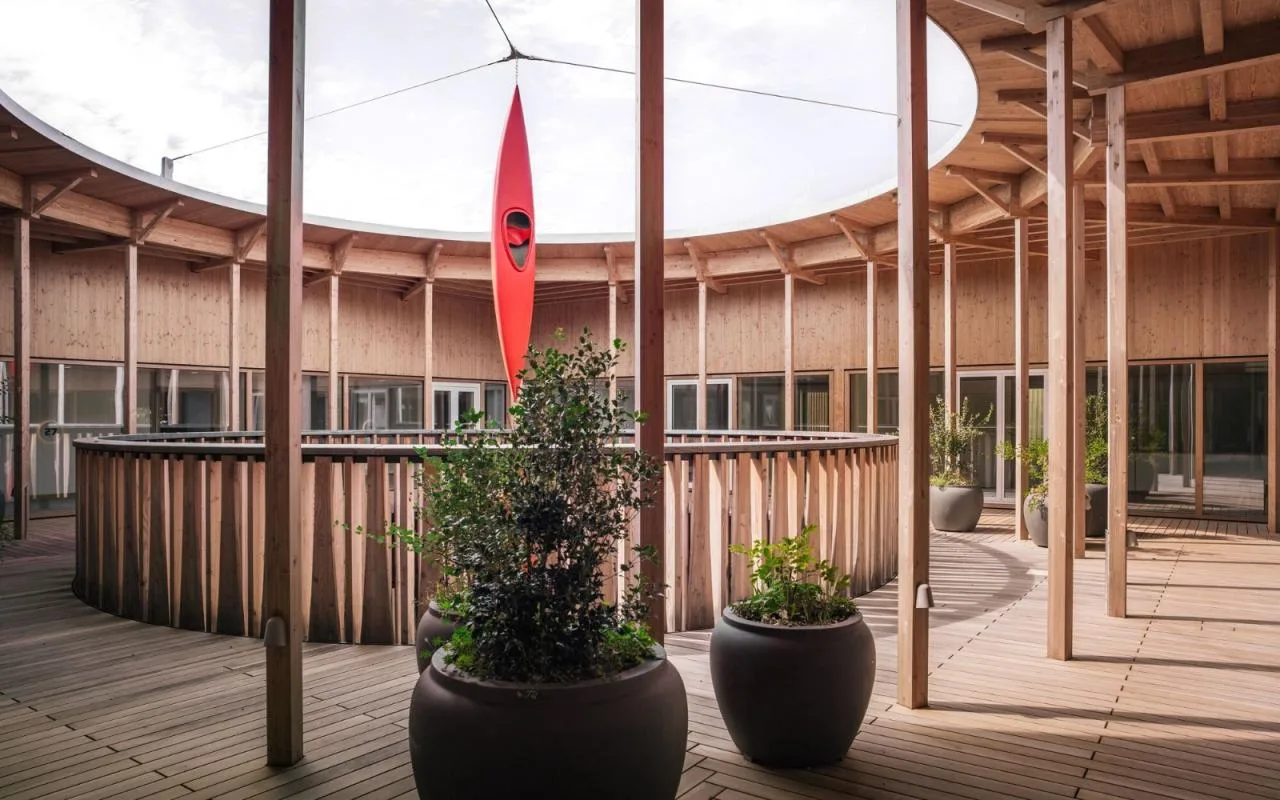
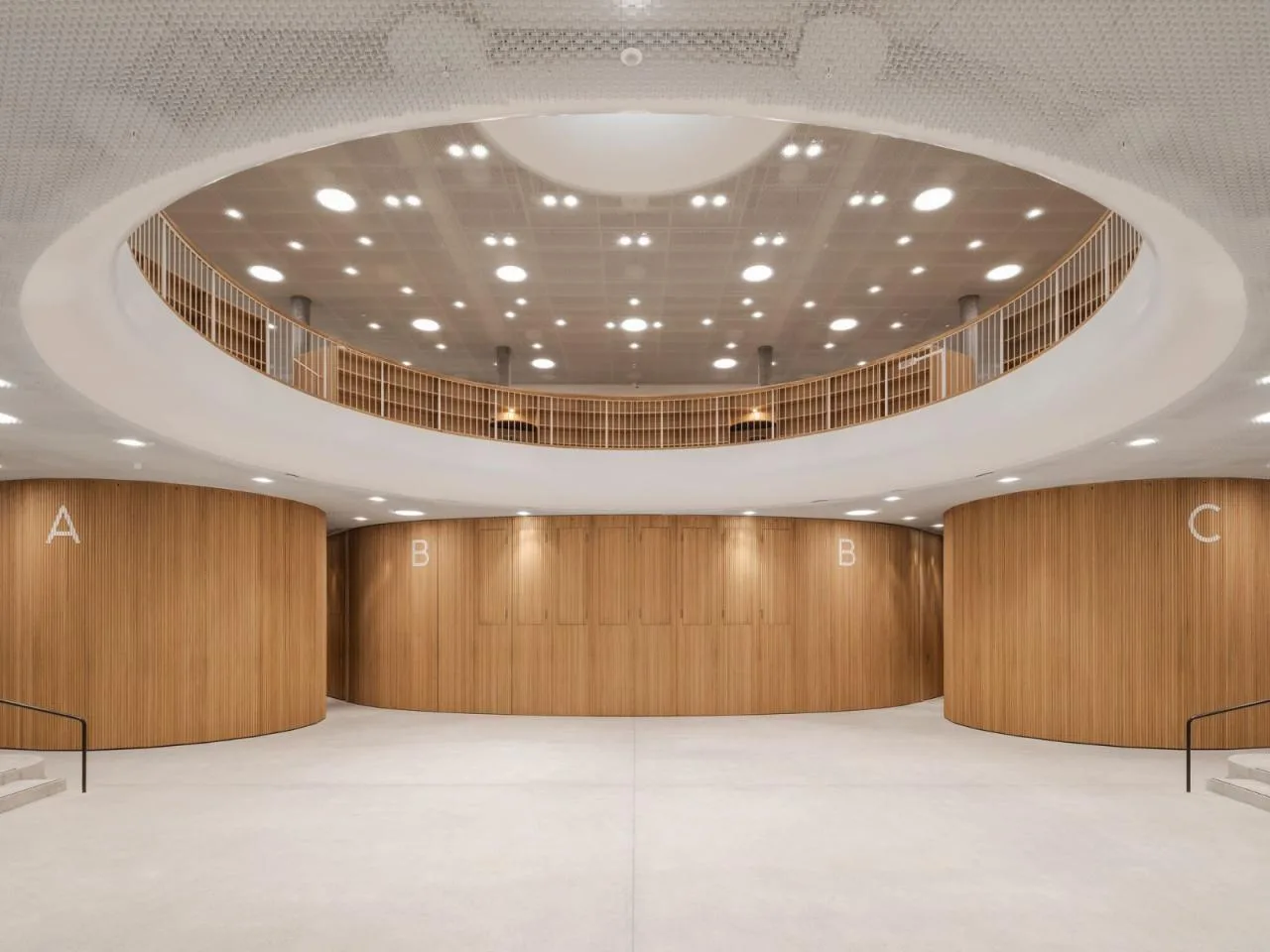
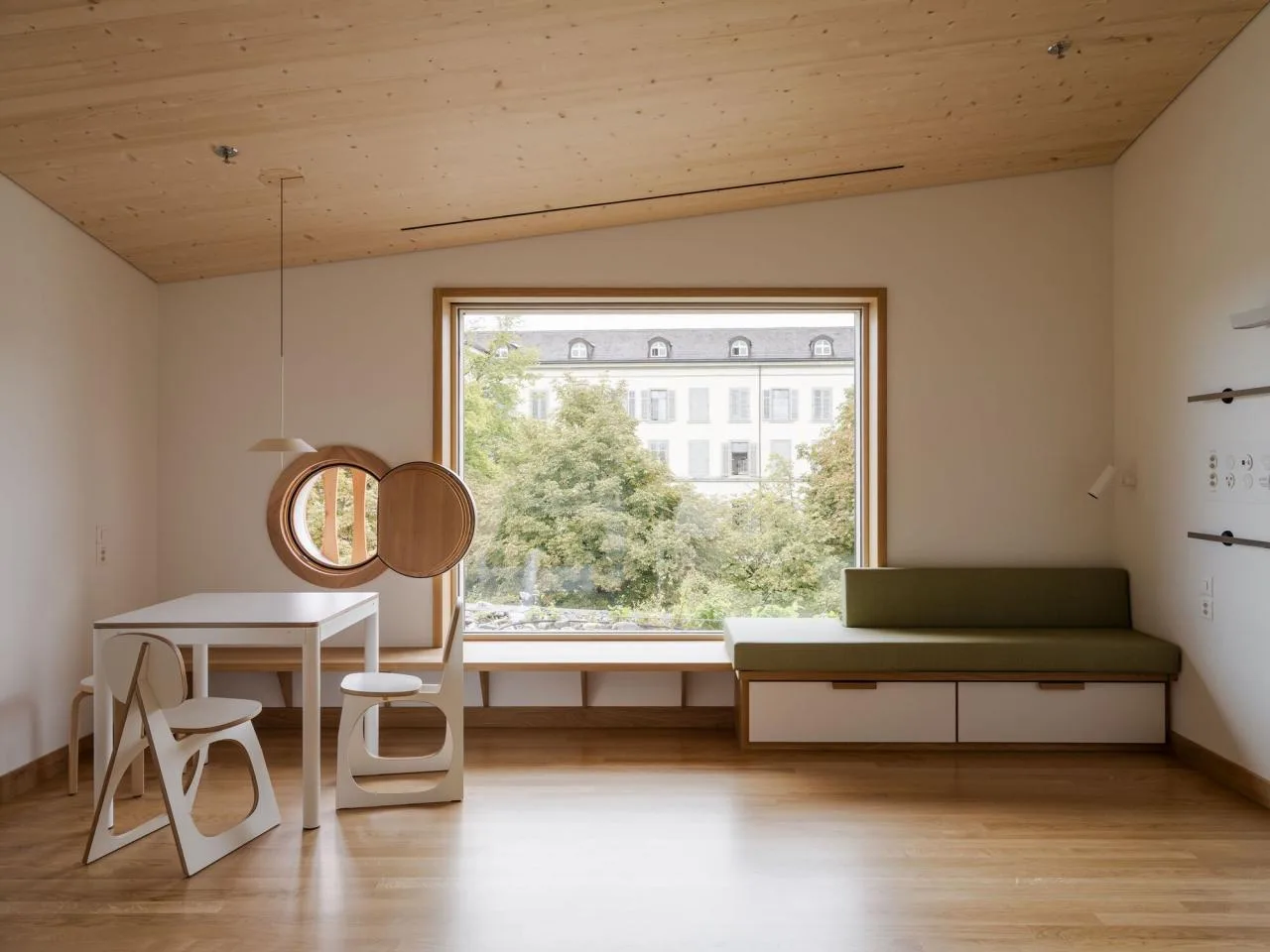
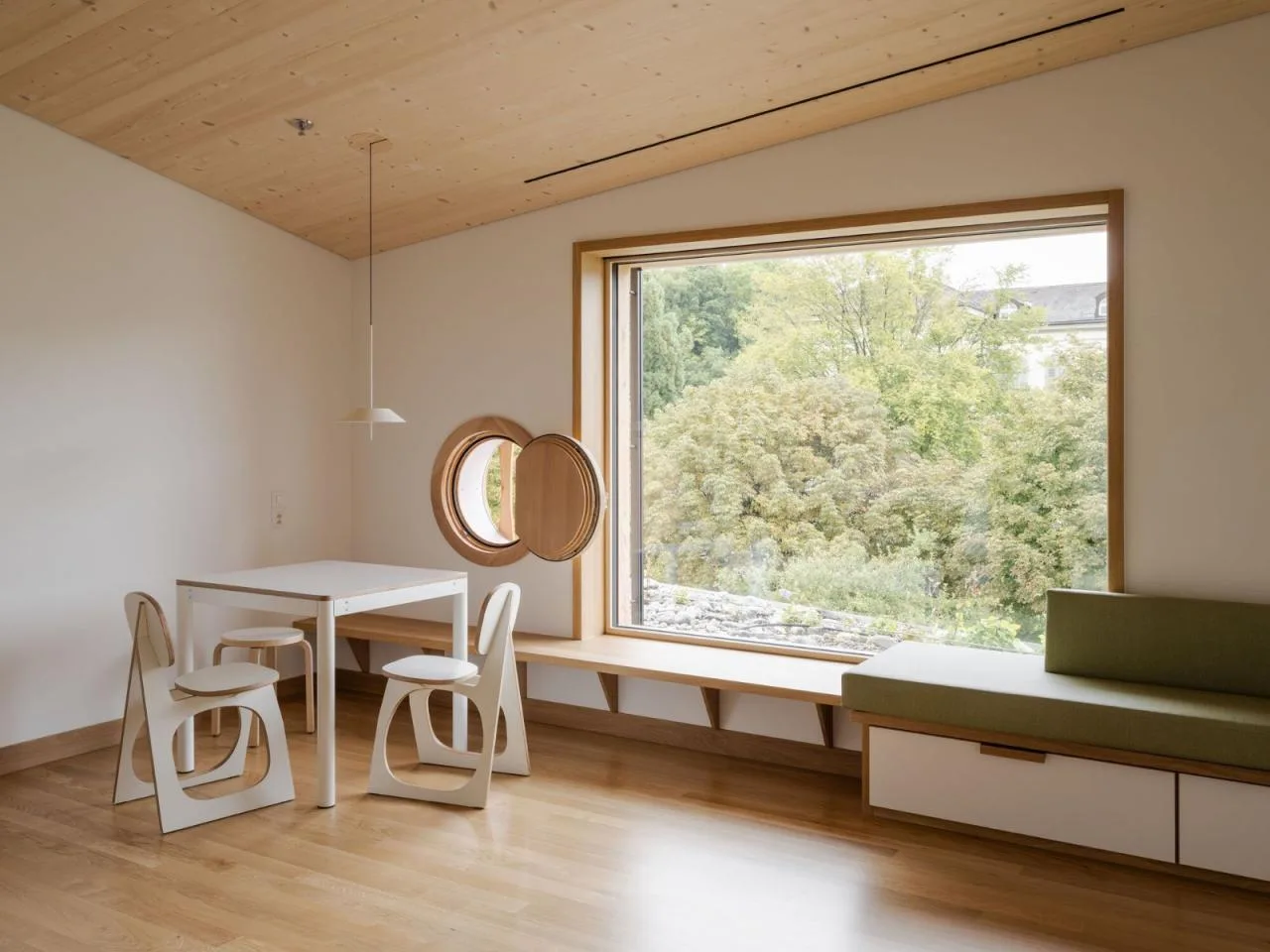
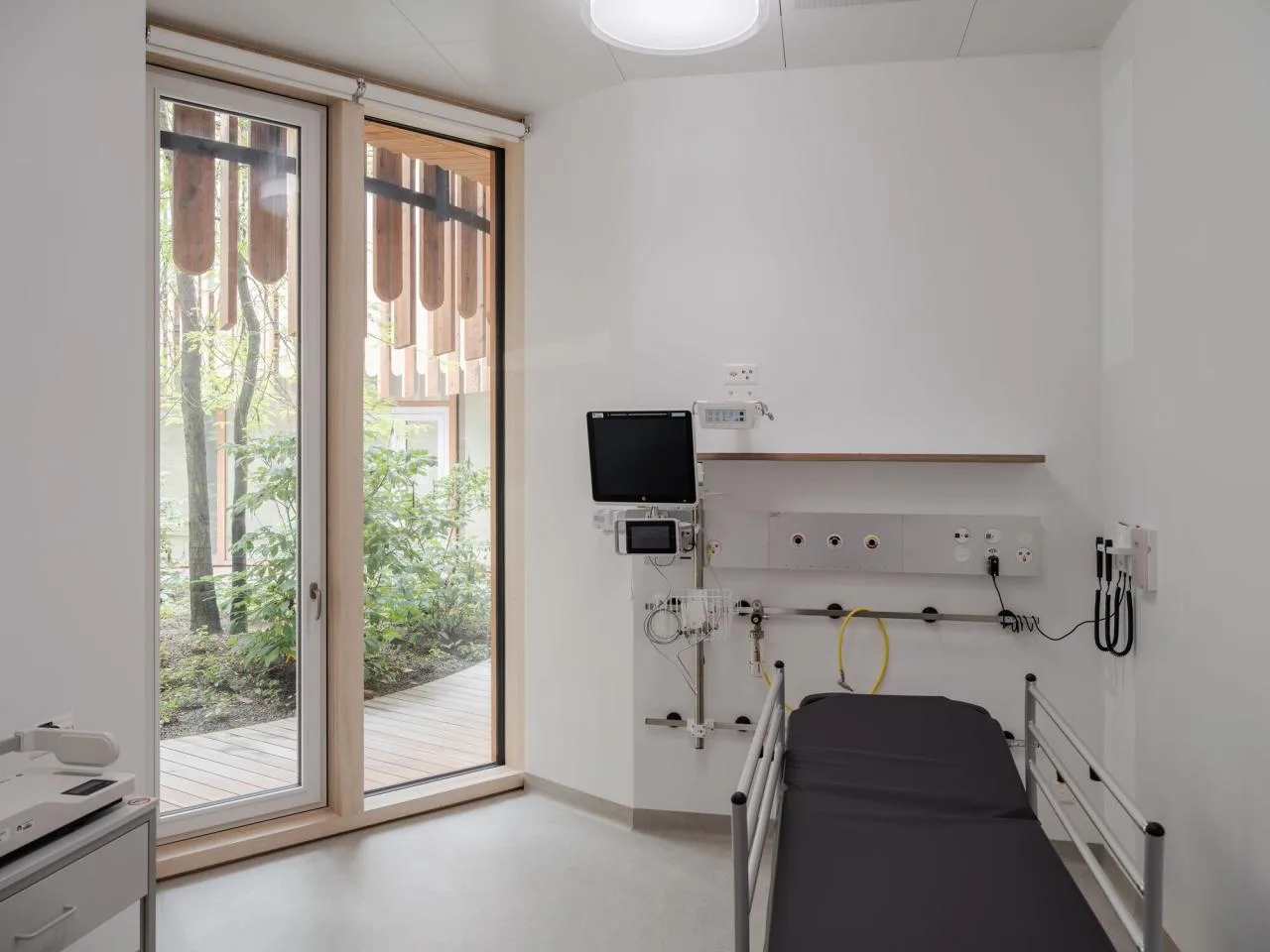
The second floor center includes additional shared services such as hospitals, schools, and pharmacies flanking the main street. Surrounding this central zone is an external office environment housing approximately 600 workspaces for medical and administrative staff. The top floor is the hospital’s quietest area, dedicated to children, adolescents, and long-term or overnight patients. Here, 114 wards are designed as wooden huts with individual roofs, offering private spaces with green outdoor views and enough room for parents to stay overnight. Along the main street near these cabins are four centers providing interdisciplinary treatment for children and teenagers.
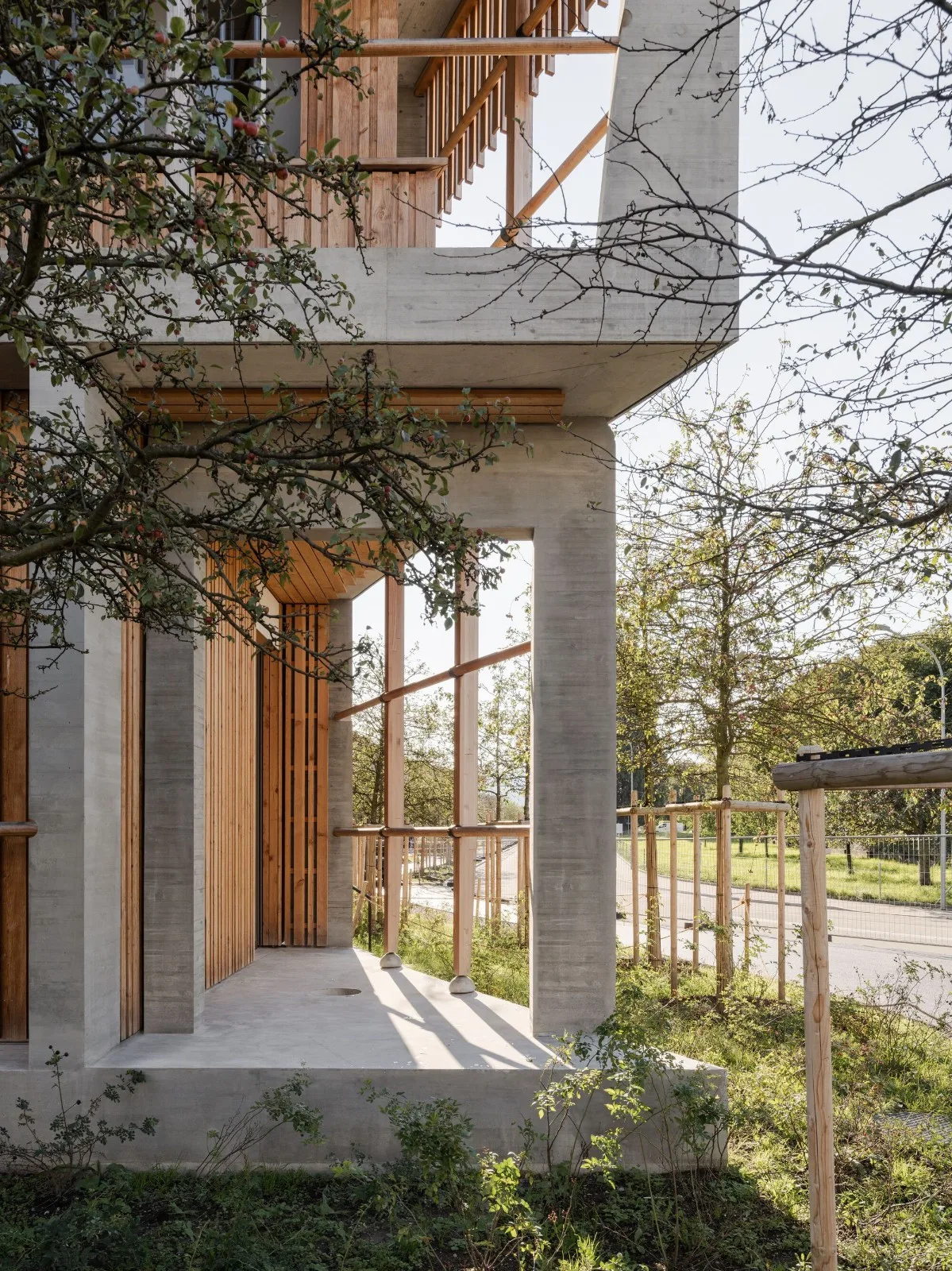
The hospital facade is a three-dimensional concrete load-bearing structure combining the first and second floors. The facade’s depth and the infill materials—wood, glass, fabric, or vegetation—vary according to orientation and internal use. Except for the concrete structure and transportation core, the building uses lightweight materials, allowing departments to adjust their size flexibly. This unique bungalow-like design ensures vital adaptability within the hospital. The rooftop wards retreat in a staggered layout with varied roof inclines, reflecting a distinct architectural language and emphasizing each patient’s individuality.
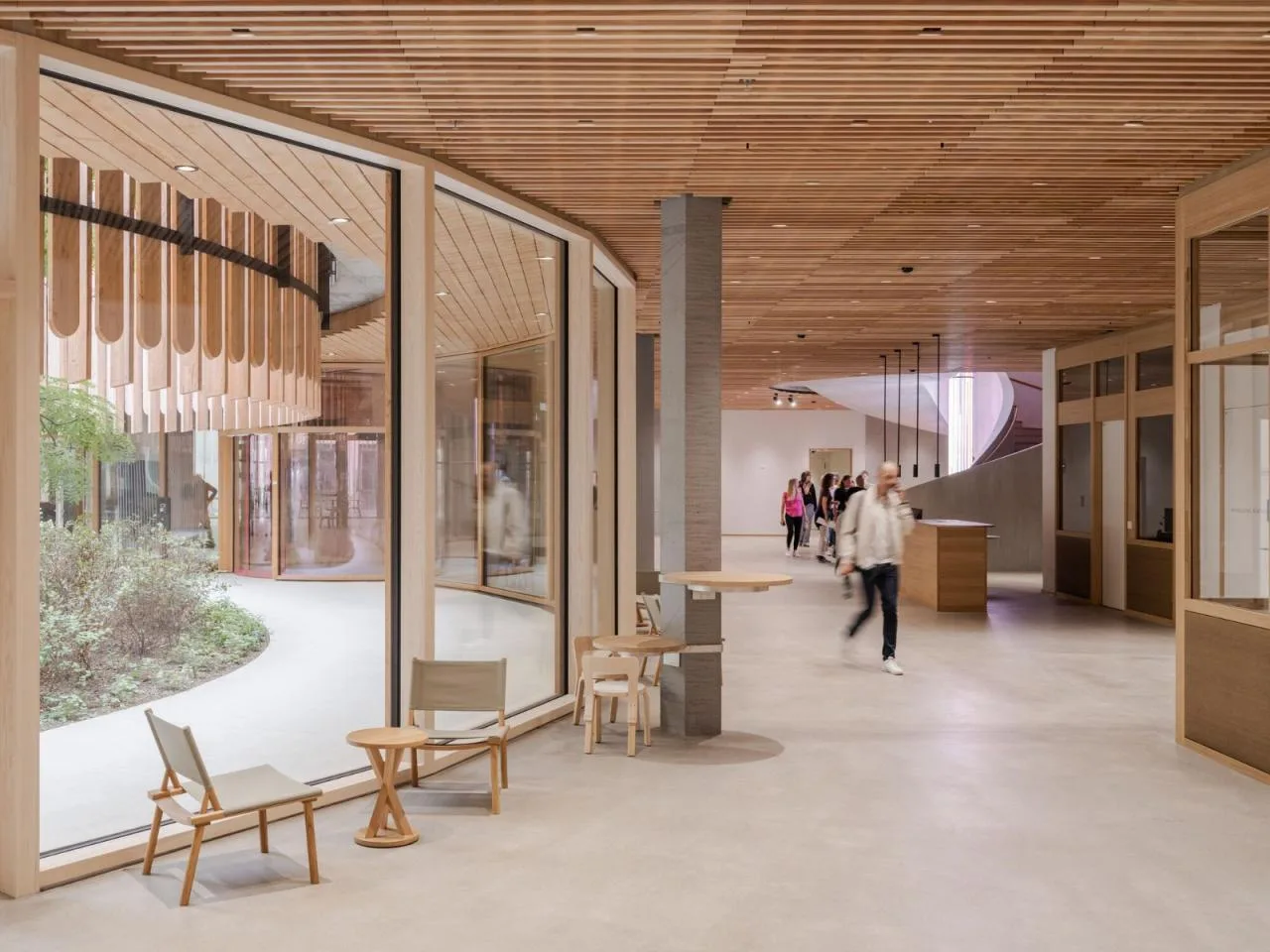
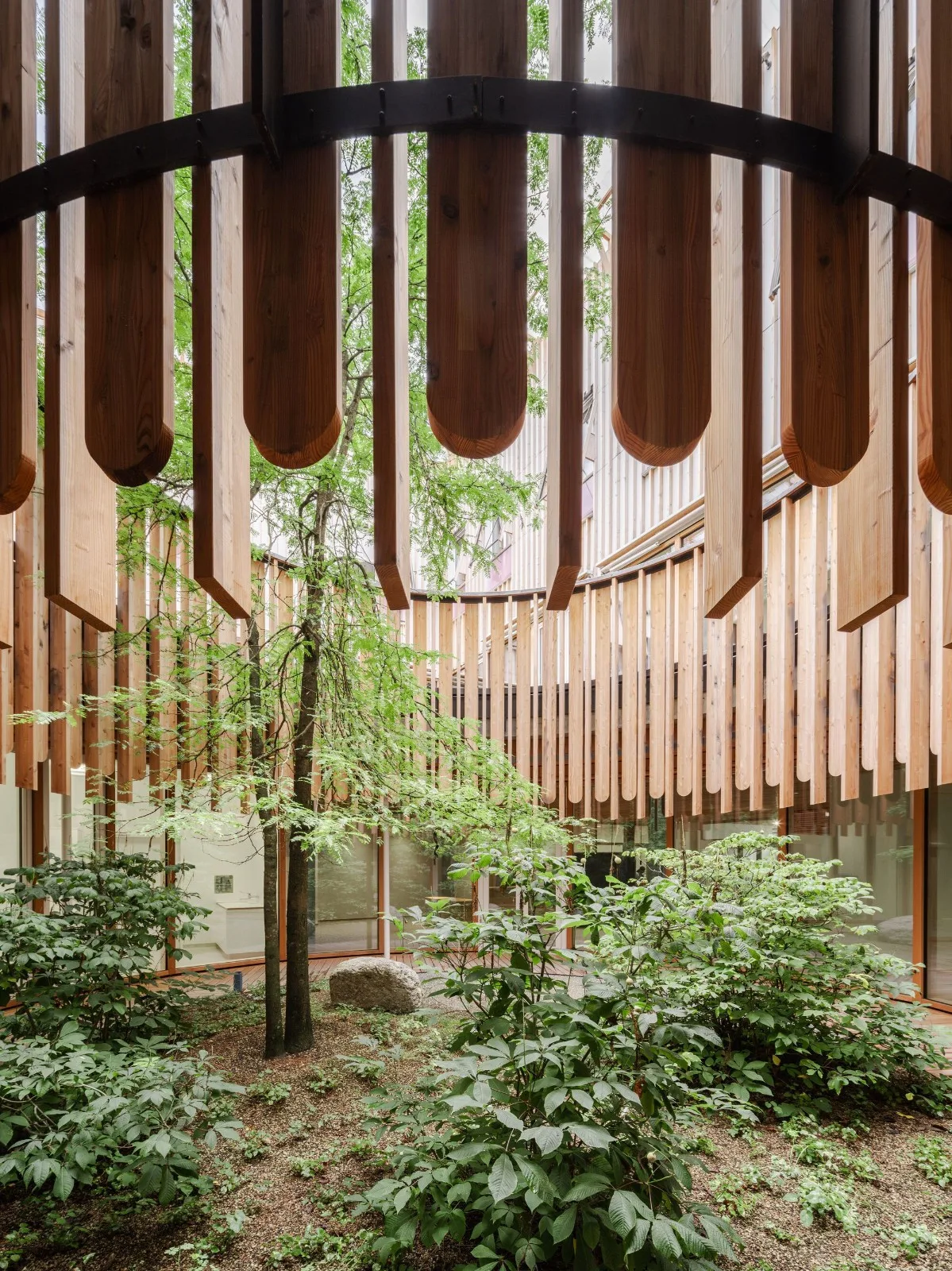
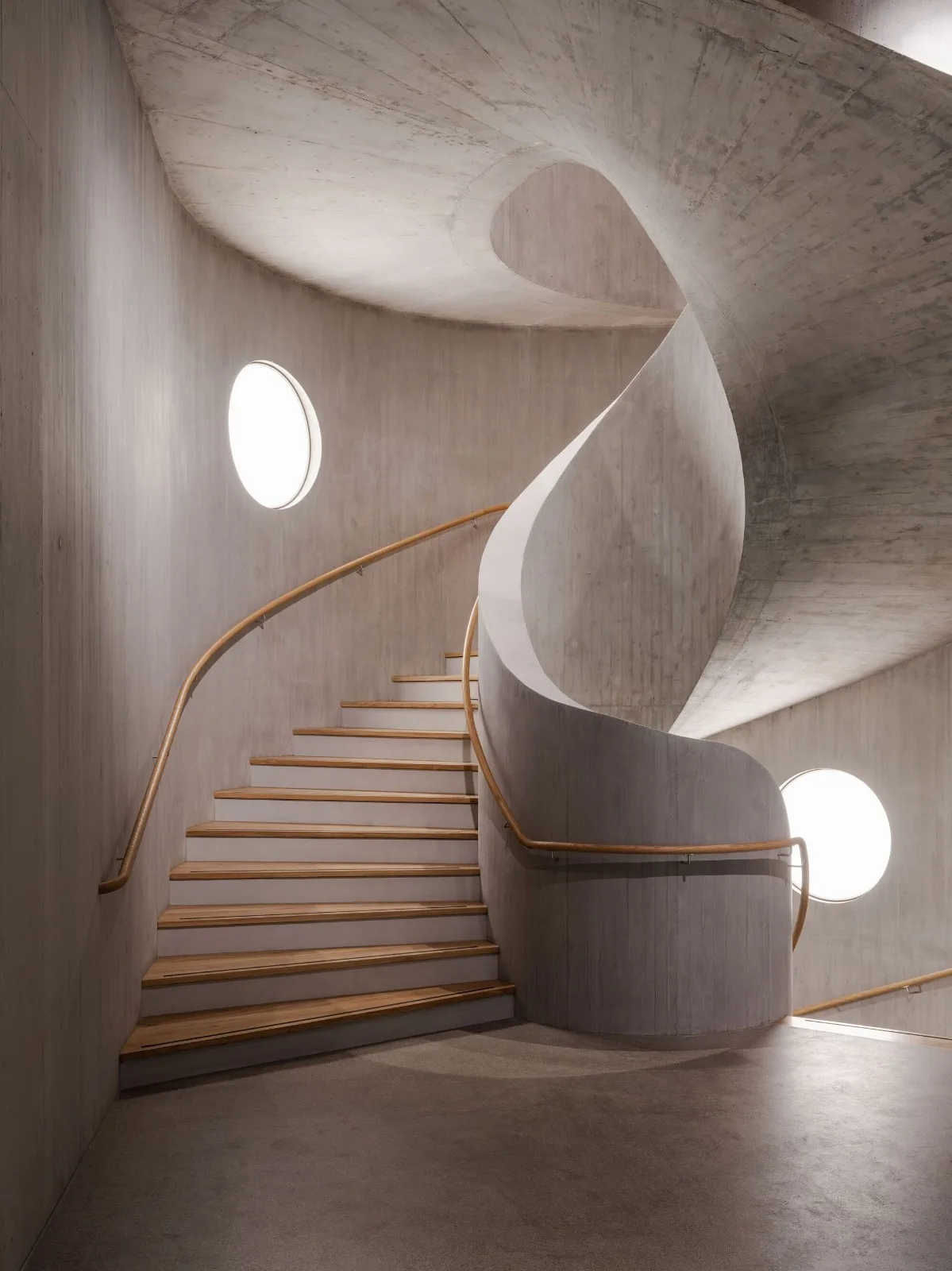
The research and teaching building features a cylindrical white exterior with rooms arranged around a central atrium to foster communication and collaboration. Beneath the atrium lies a teaching square that integrates with the surrounding landscape. The three lecture halls are constructed following the natural slope of the terrain. Abundant natural light fills these spaces, and movable partitions allow the lecture halls, lobby, and café to be combined into a large hall with a central stage, accommodating up to 670 attendees for special events. The upper gallery offers open student workstations, while adjacent seminar rooms enhance university teaching facilities.
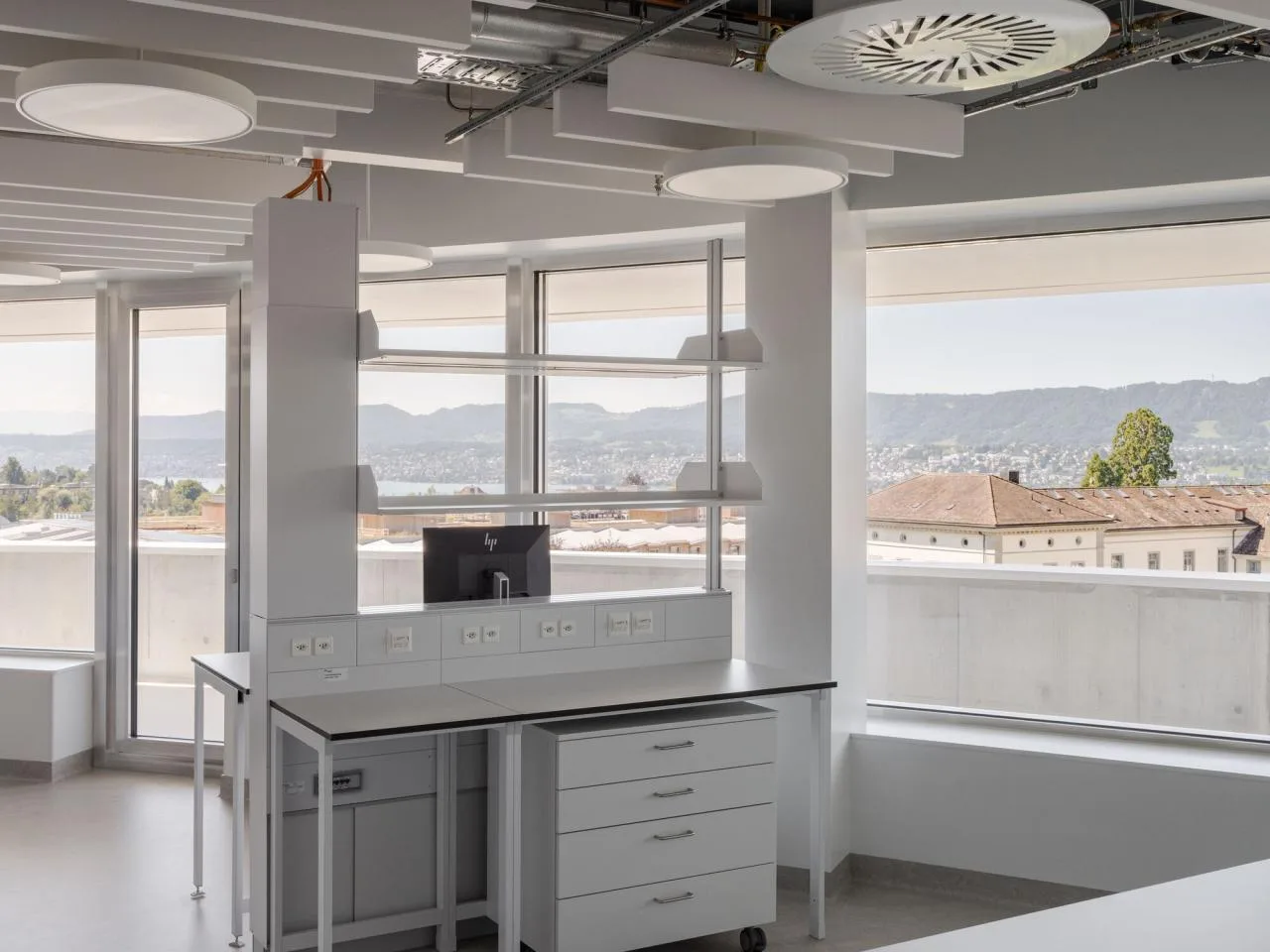
On the fifth floor, research laboratories, diagnostic rooms, and supporting offices provide panoramic views of the surroundings. Open workstations encircle the atrium, serving doctoral students and laboratory staff. From these spaces, multiple floors and the square below are visible, connected to the atrium above through circular skylights.
Situated within a carefully designed landscape independent from the orchards, the research and teaching building adopts a clear, abstract geometric style using simple materials. The balcony is fitted with towering white railings, giving the building a sense of both stability and lightness. Although the hospital’s two main buildings differ stylistically, they complement each other. The research and teaching building sits on a hillside with a circular design that directs views toward the lake, while the acute care hospital has a narrow, horizontal form that blends with the flat surroundings, offering panoramic mountain views.
The hospital prioritizes individual patient needs, focusing not only on treatment but also on the well-being of families and staff. The research and teaching building emphasizes communication and collaboration among scientists and students, which is essential for future research advancements.
Project Information
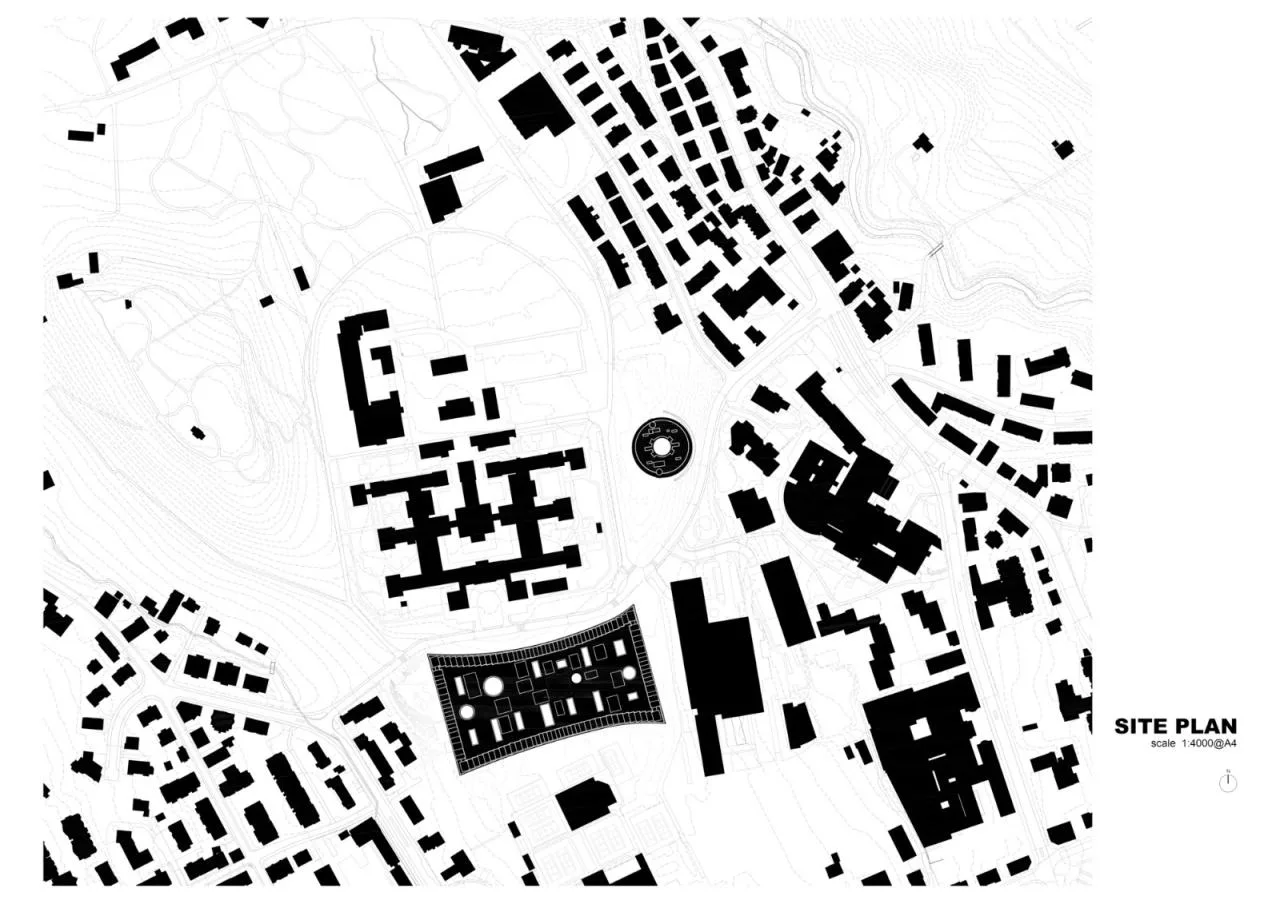
△ Base schematic diagram
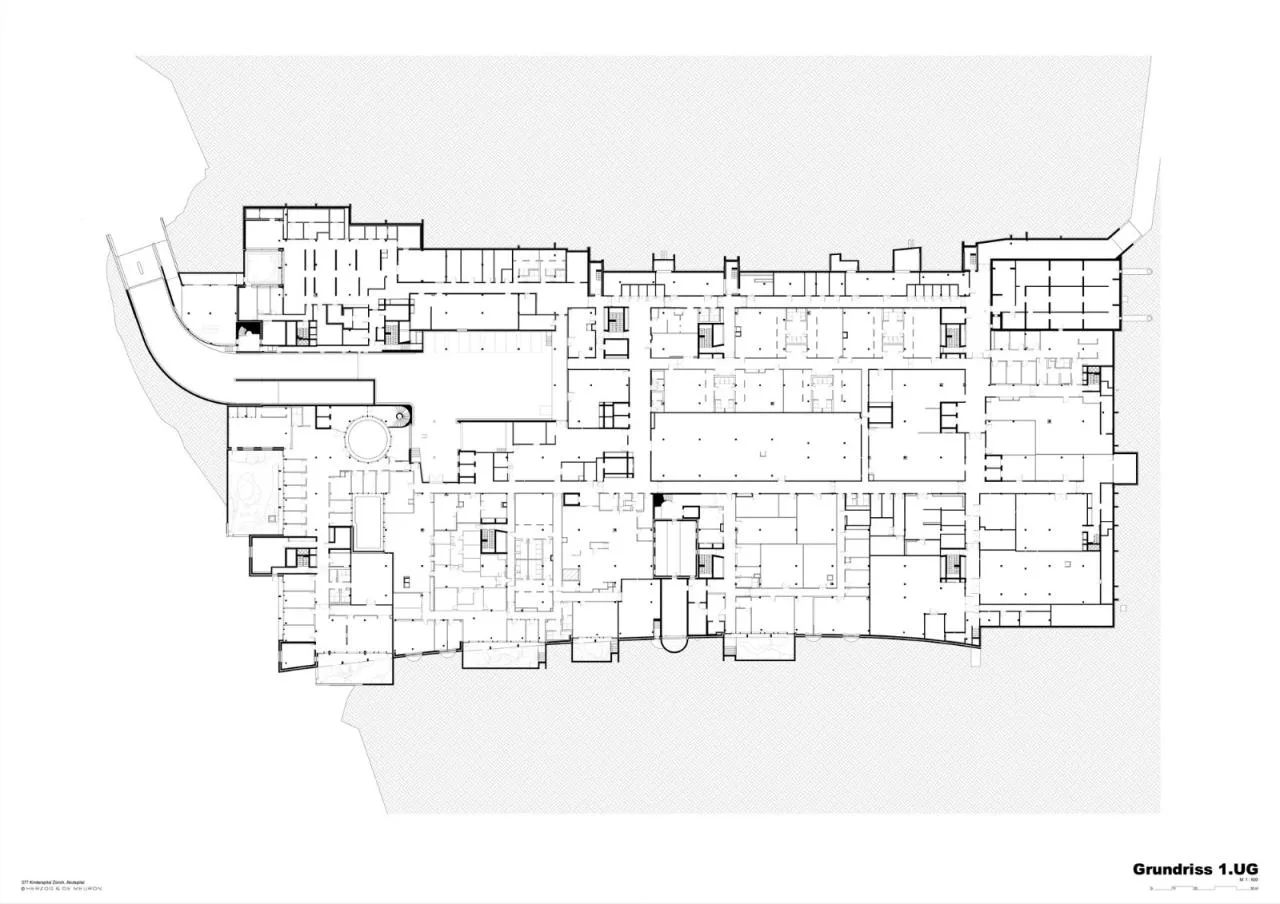
△ Underground first floor plan of the acute care hospital
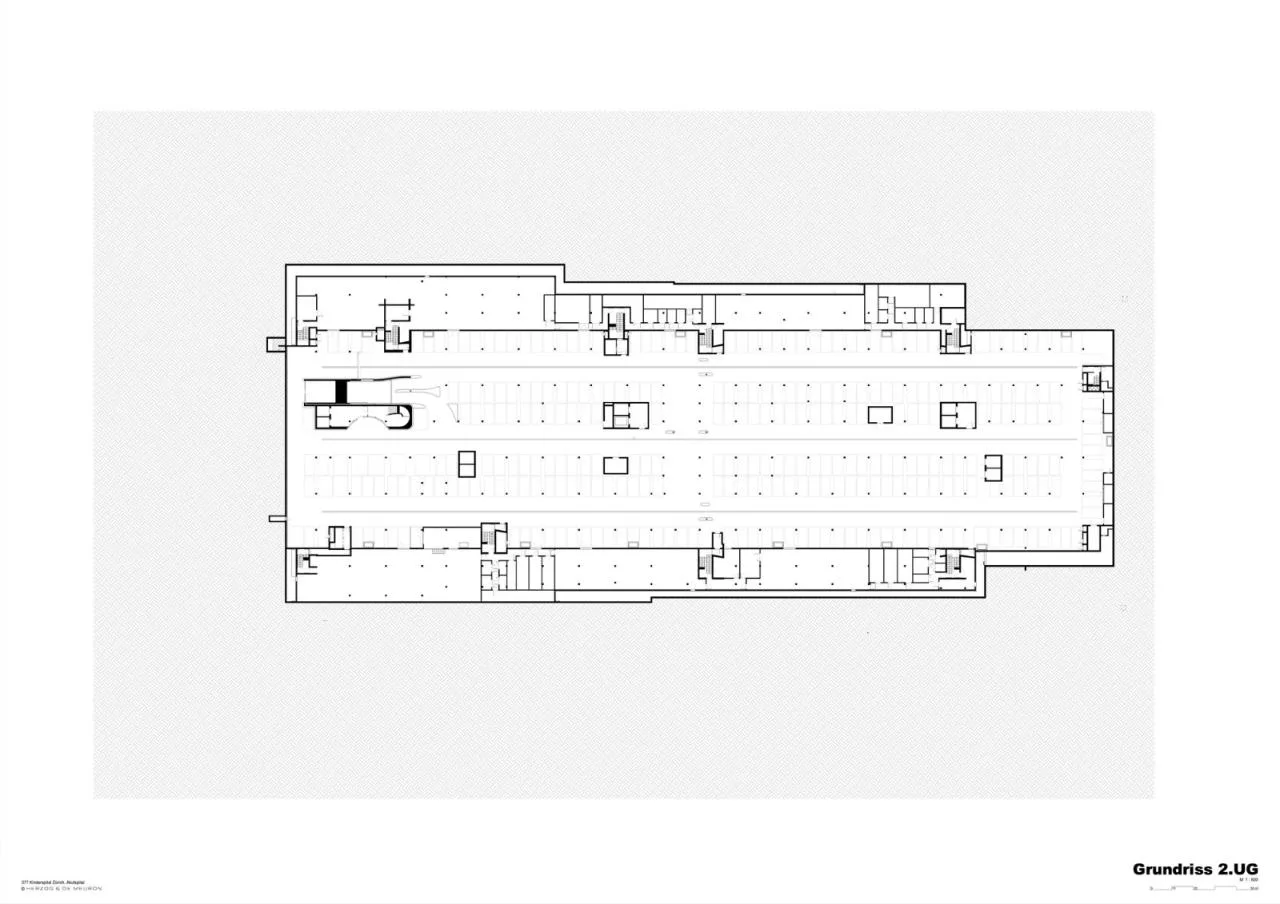
△ Underground second floor plan of the acute care hospital
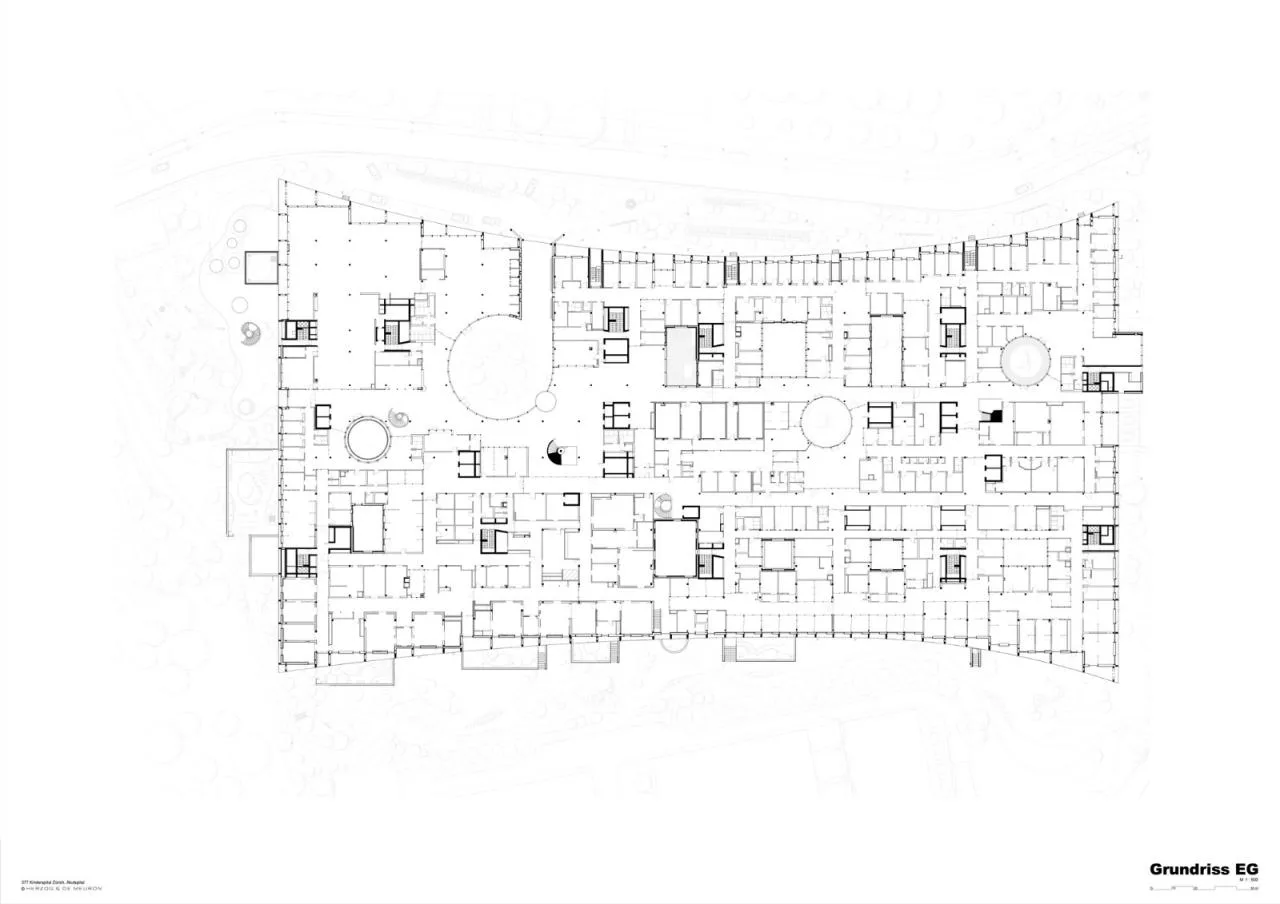
△ First floor plan of the acute care hospital
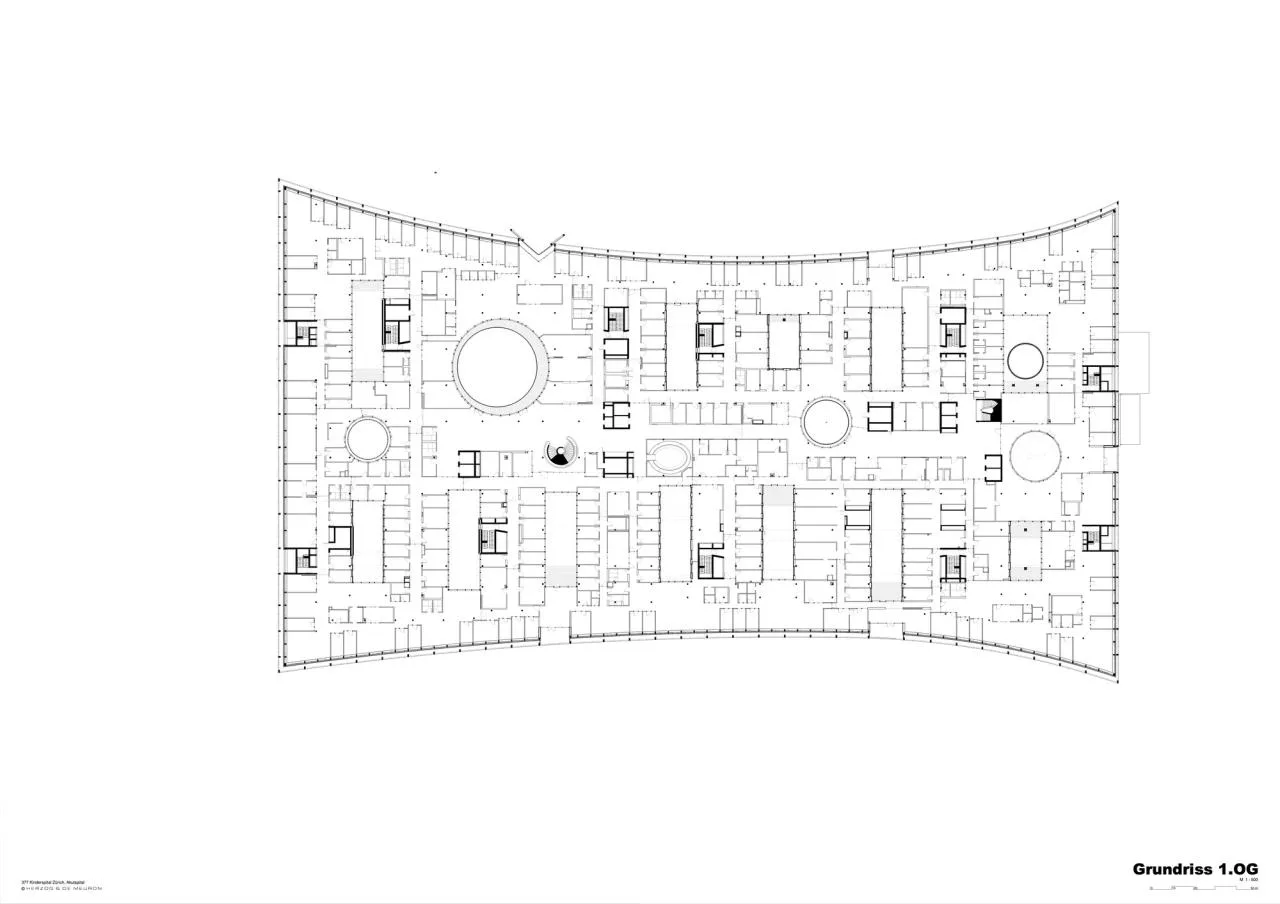
△ Second floor plan of the acute care hospital
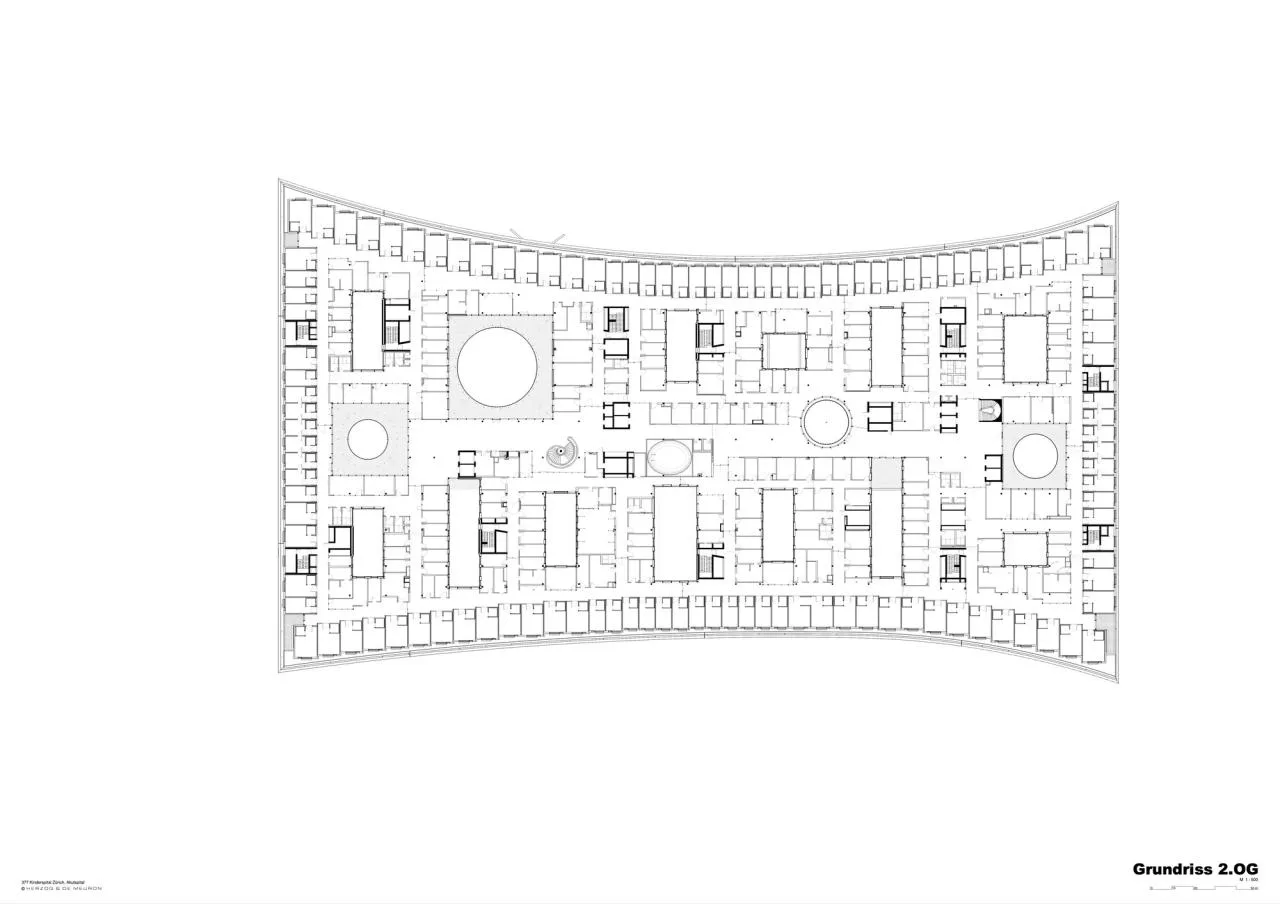
△ Third floor plan of the acute care hospital
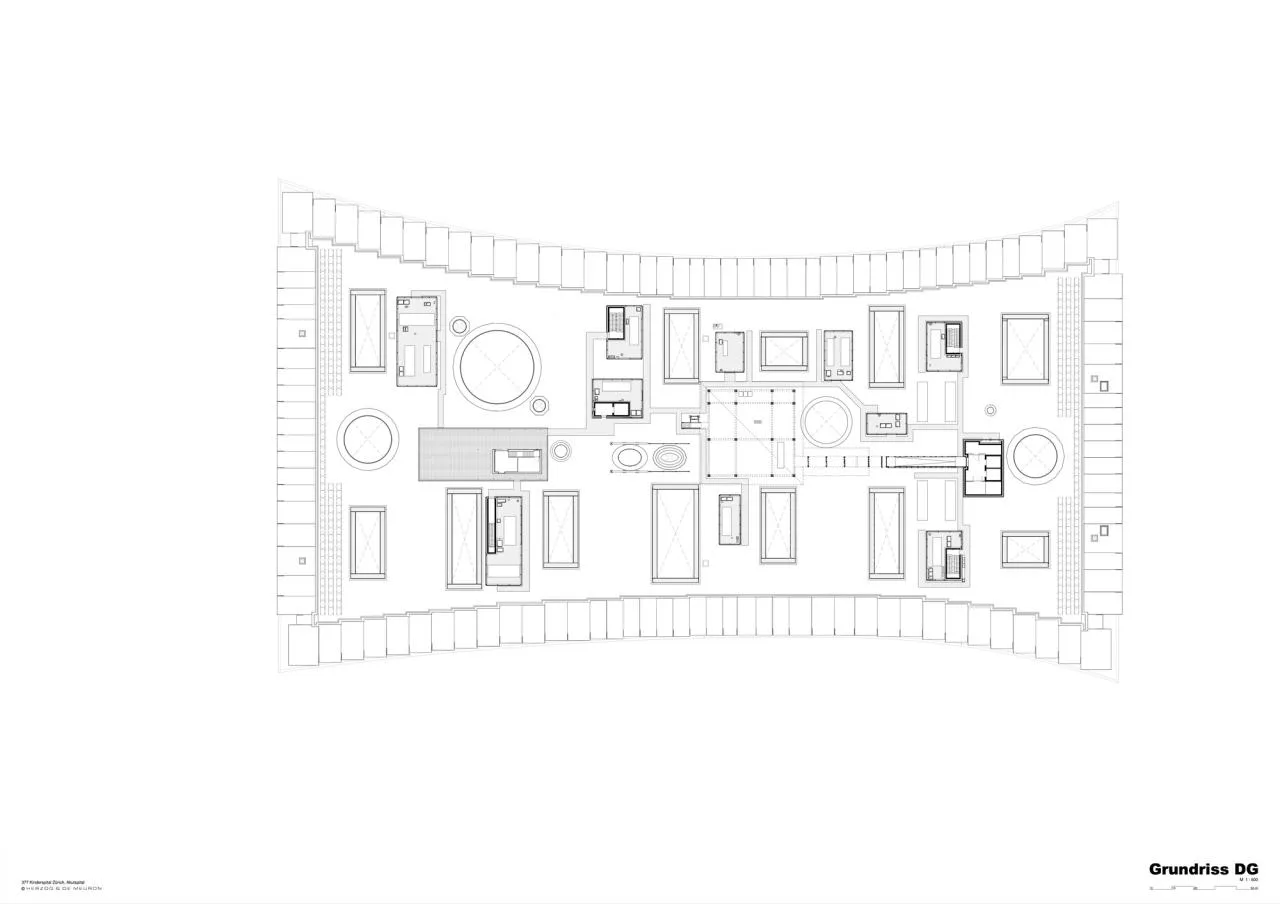
△ Roof plan of the acute care hospital
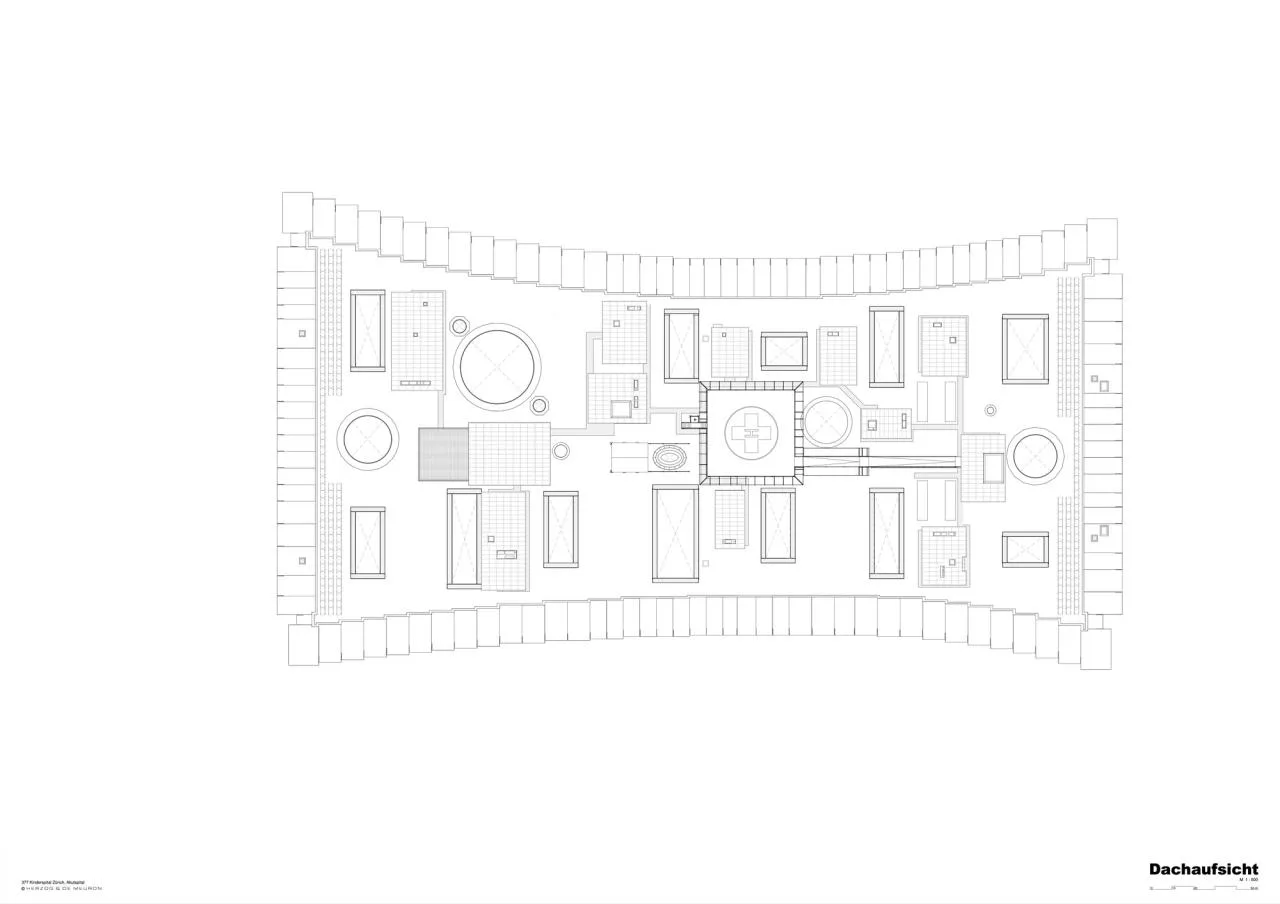
Roof plan of the acute care hospital
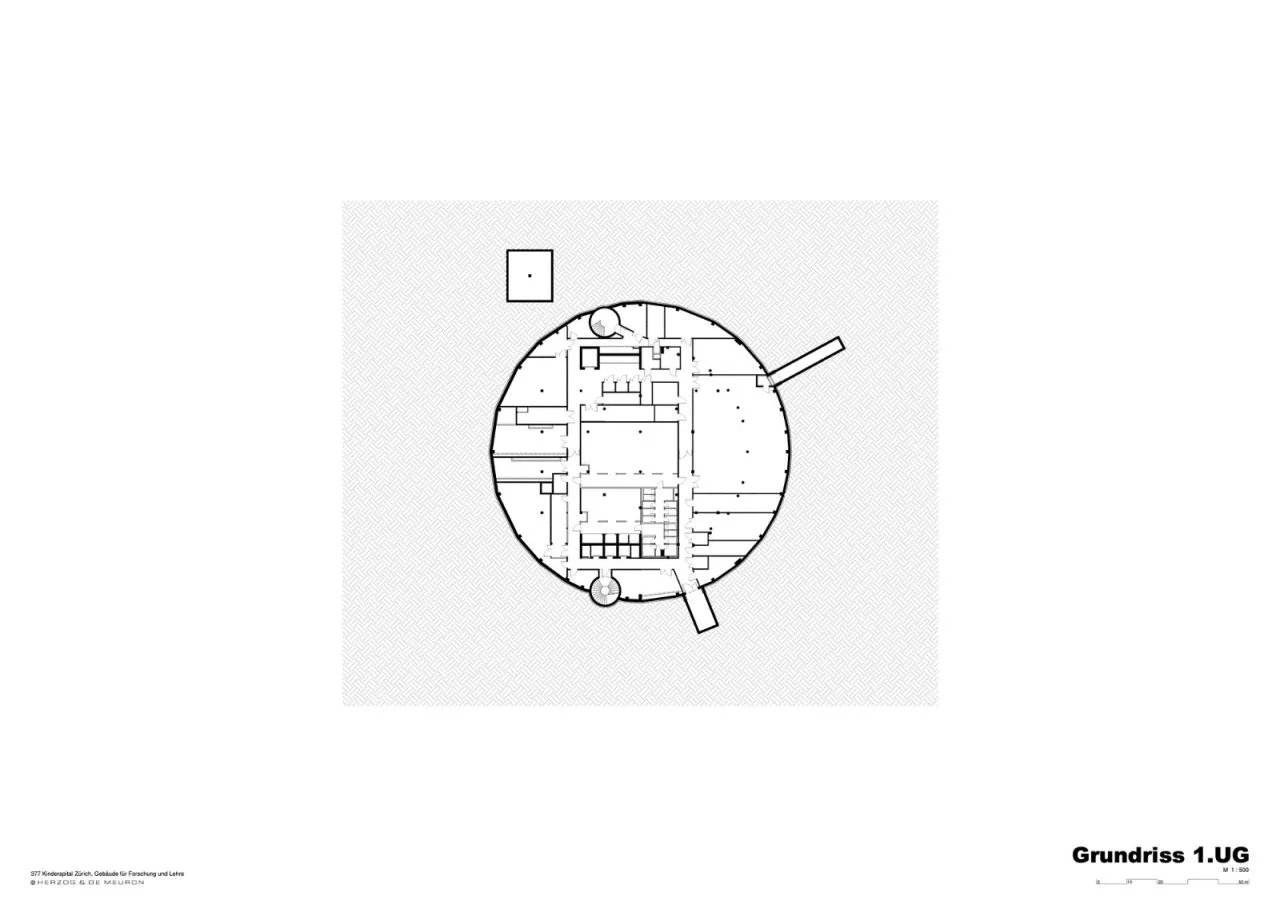
△ Underground floor plan of research and teaching facilities
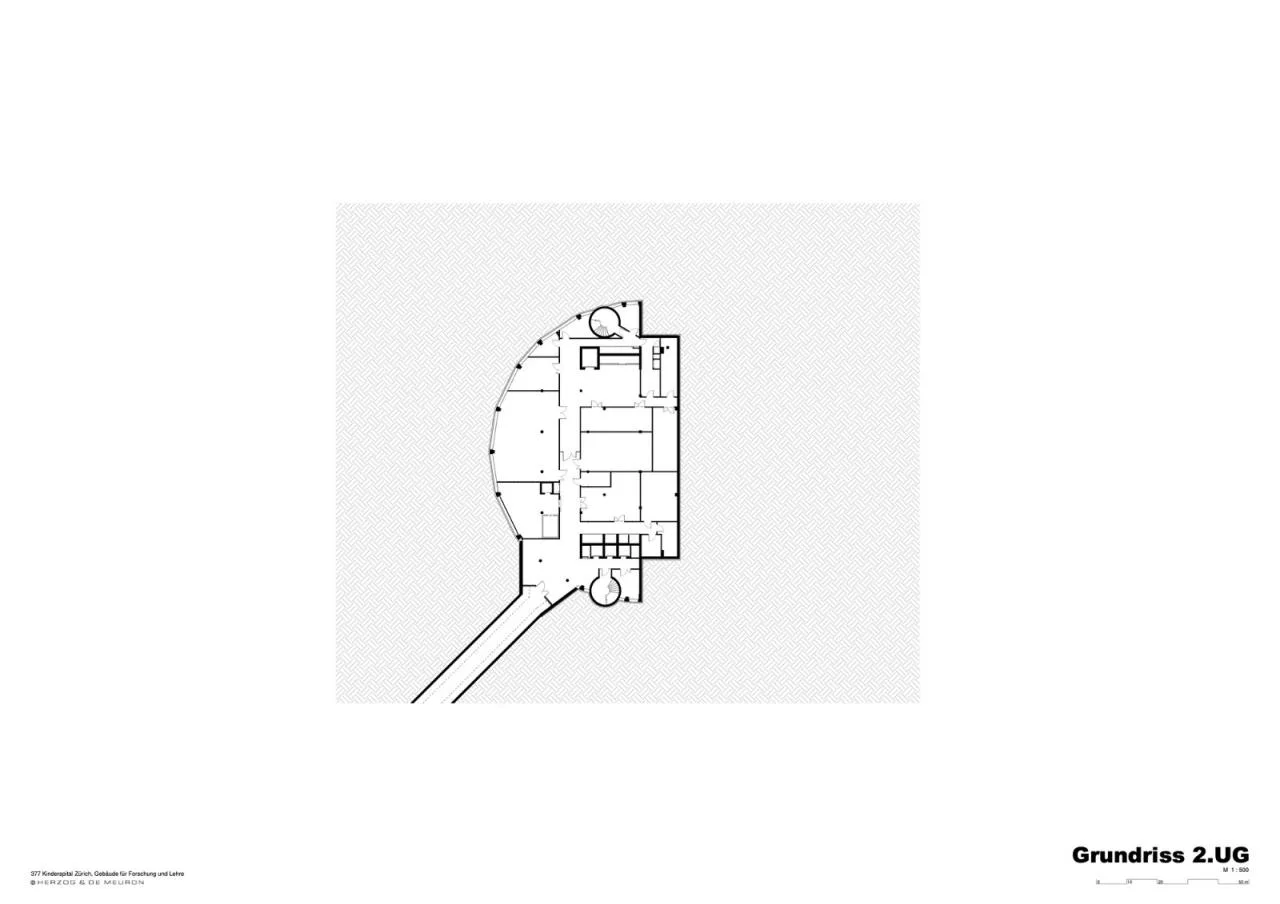
△ Underground second floor plan of research and teaching facilities
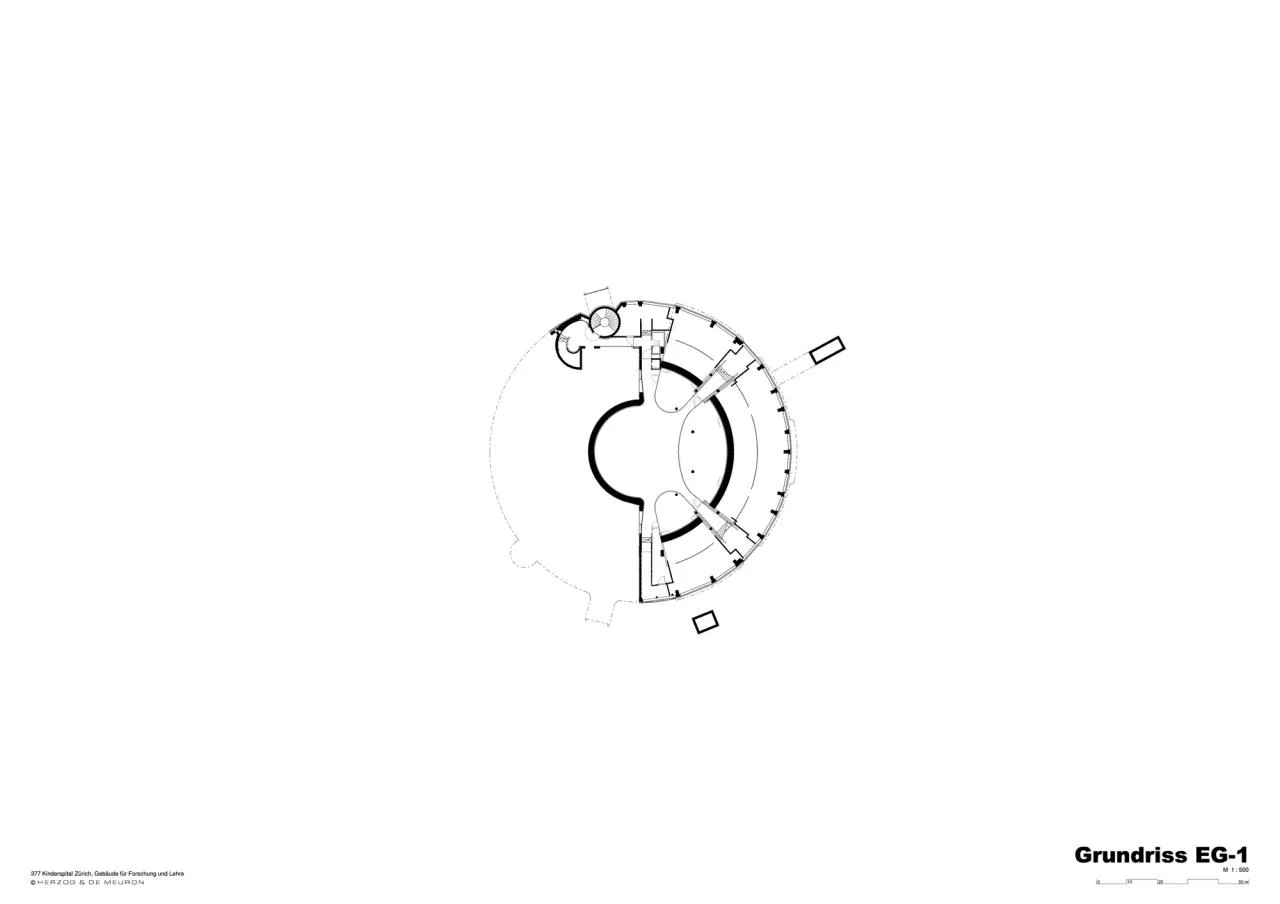
△ Semi-underground plan of research and teaching facilities
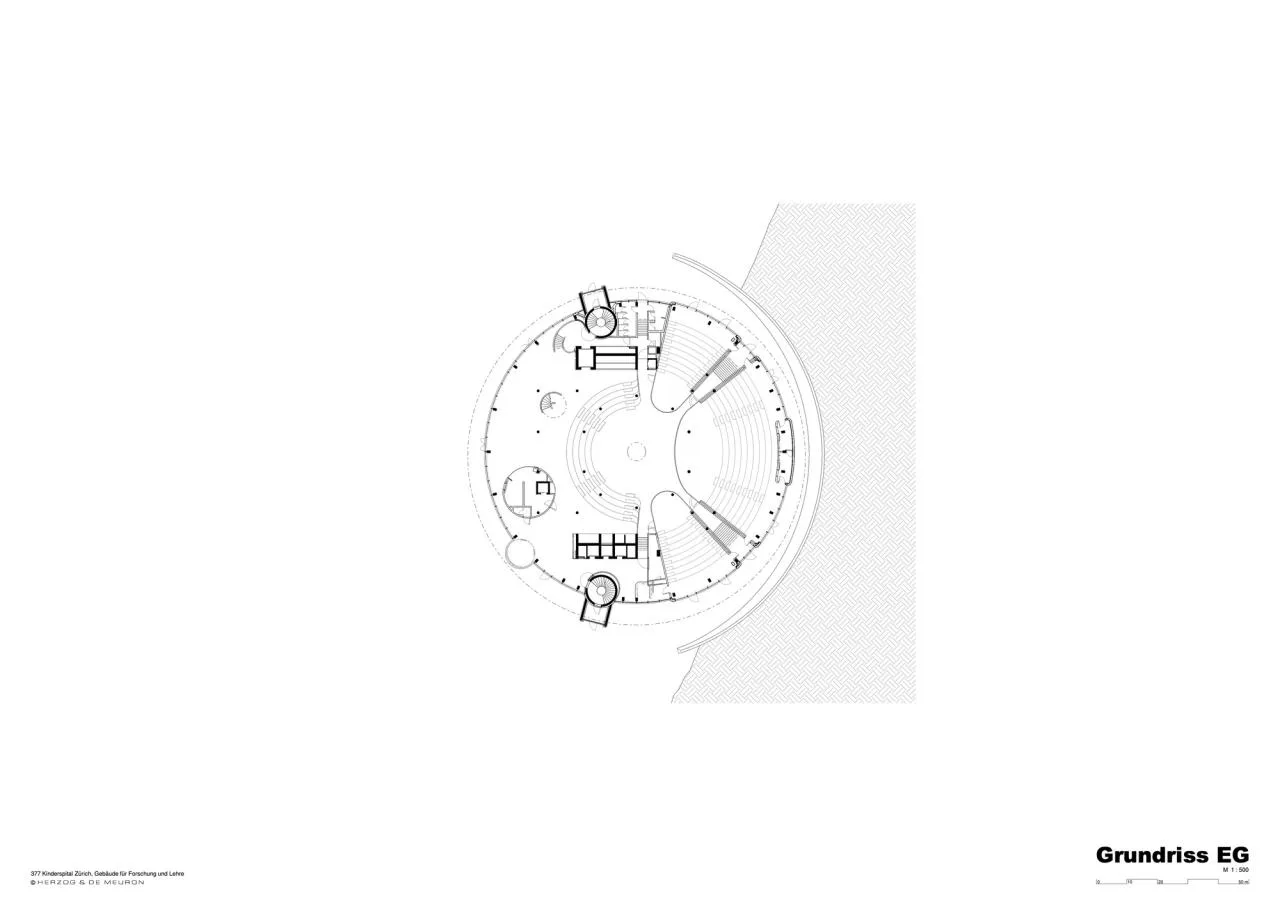
△ First floor plan of research and teaching facilities
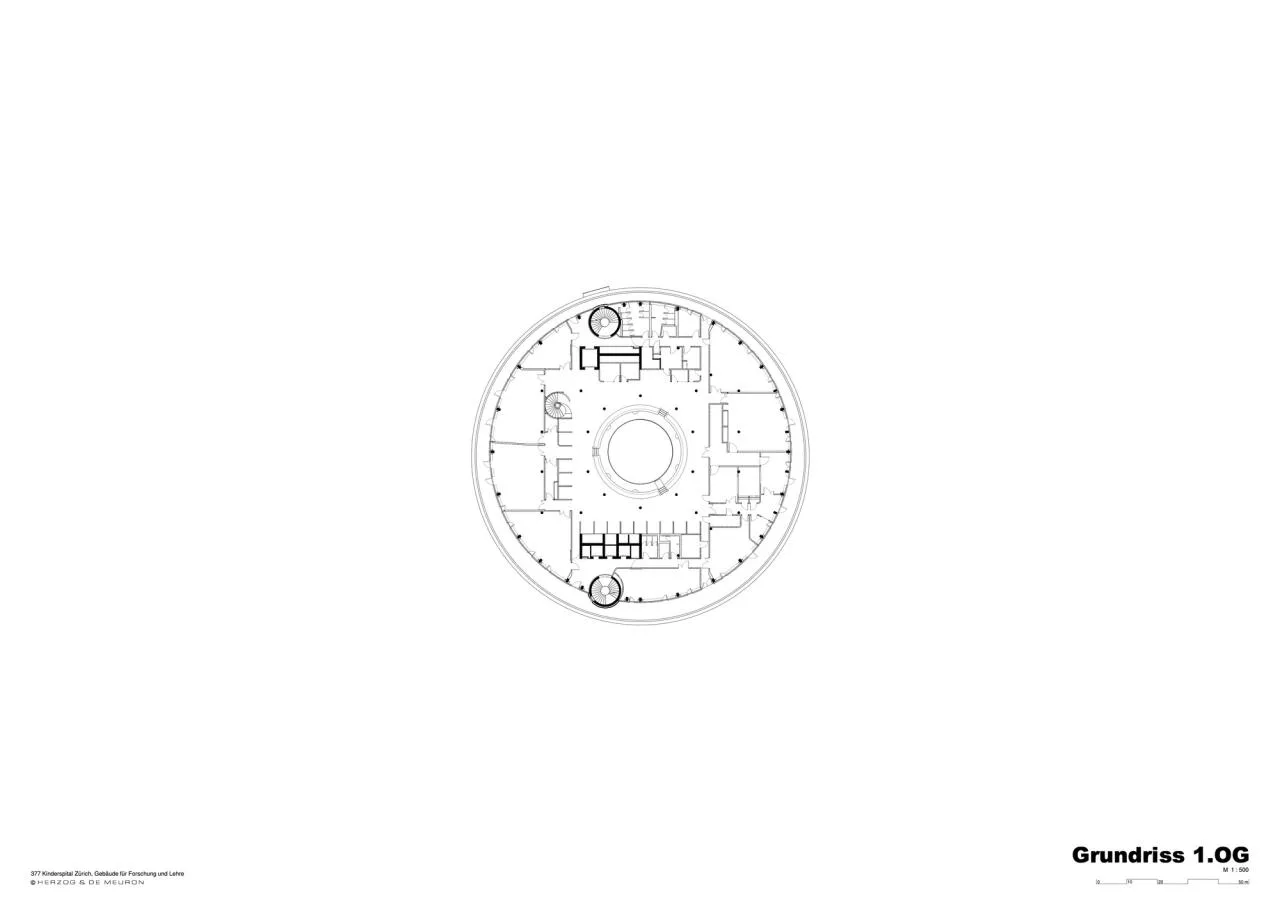
△ Second floor plan of research and teaching facilities
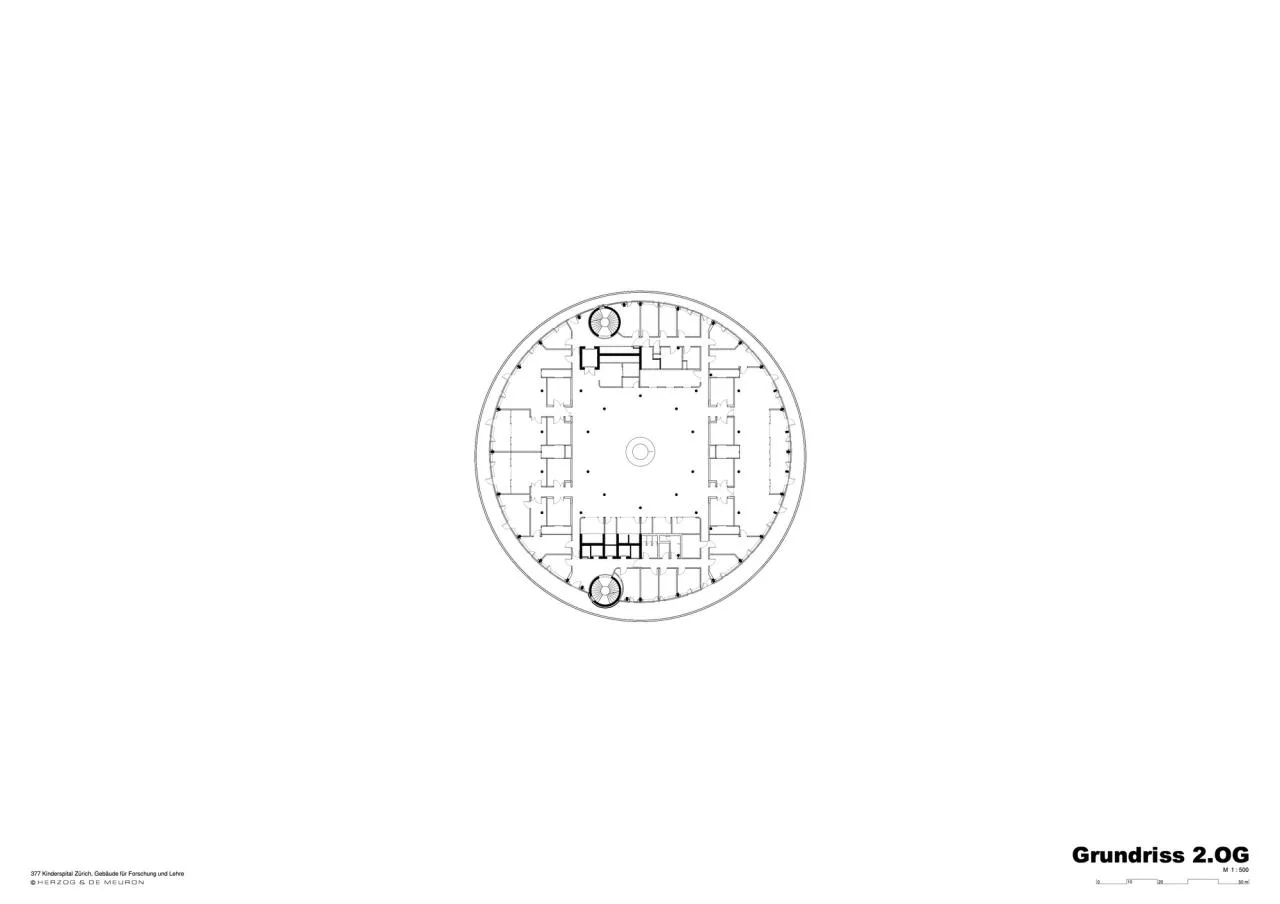
△ Third floor plan of research and teaching facilities
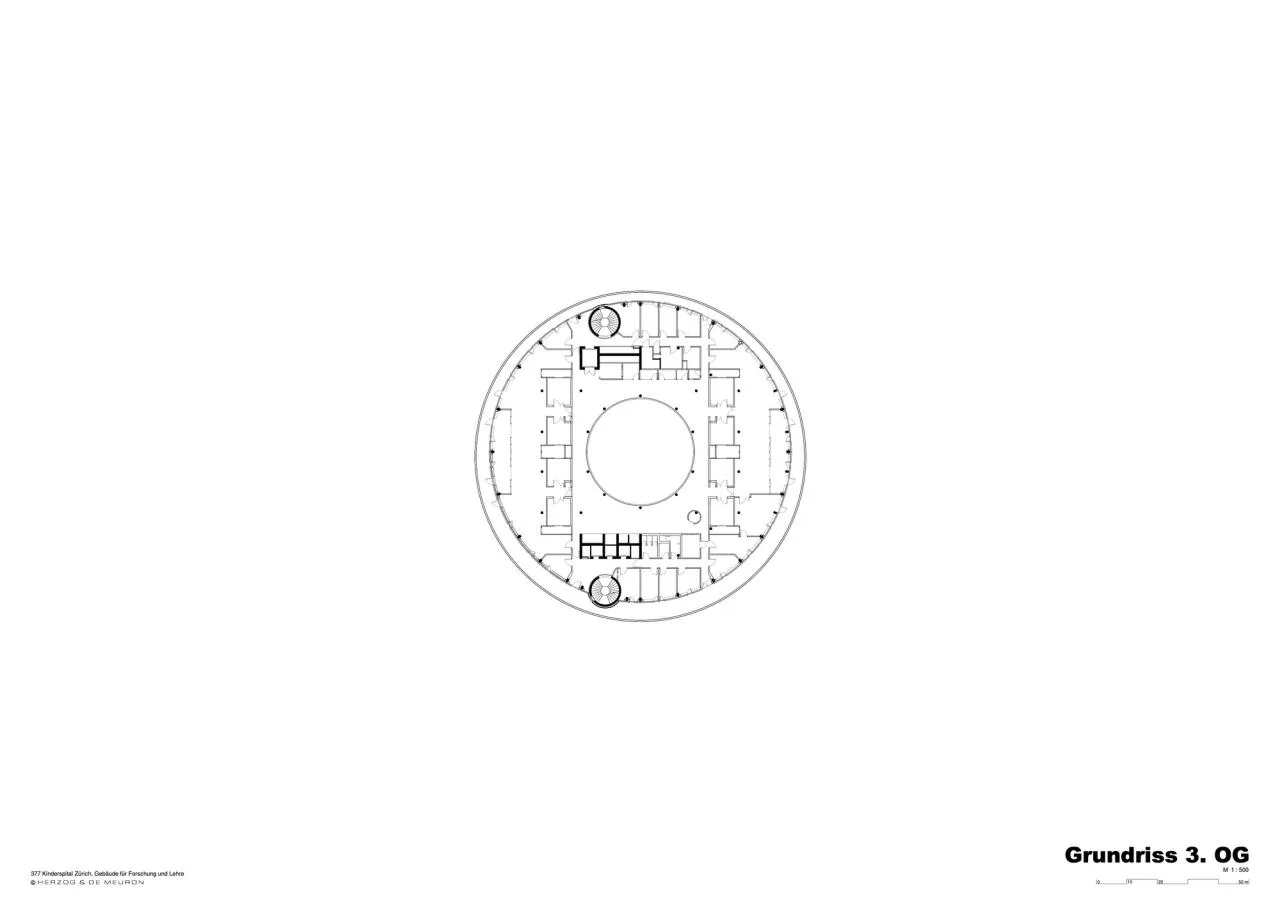
△ Fourth floor plan of research and teaching facilities
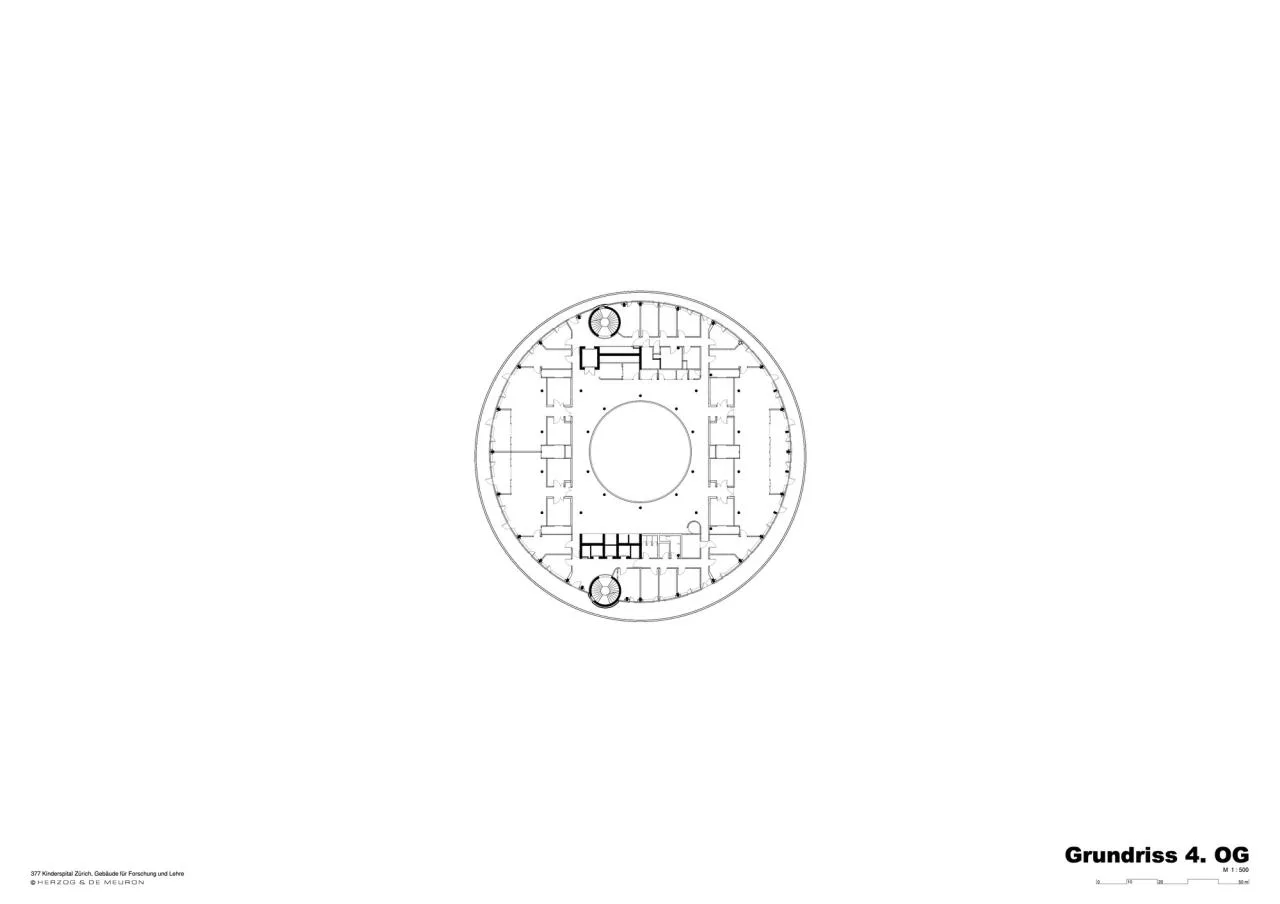
△ Fifth floor plan of research and teaching facilities
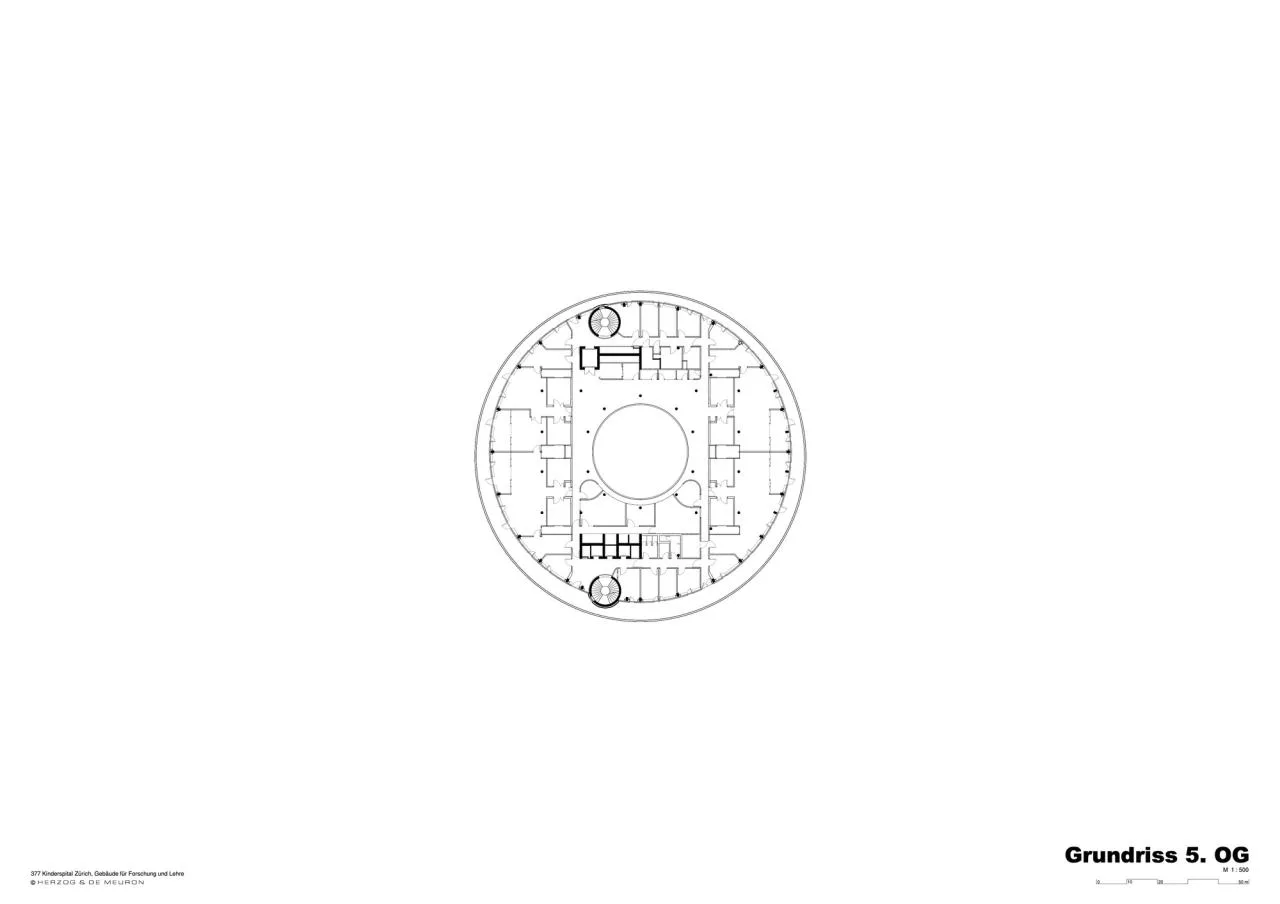
△ Sixth floor plan of research and teaching facilities
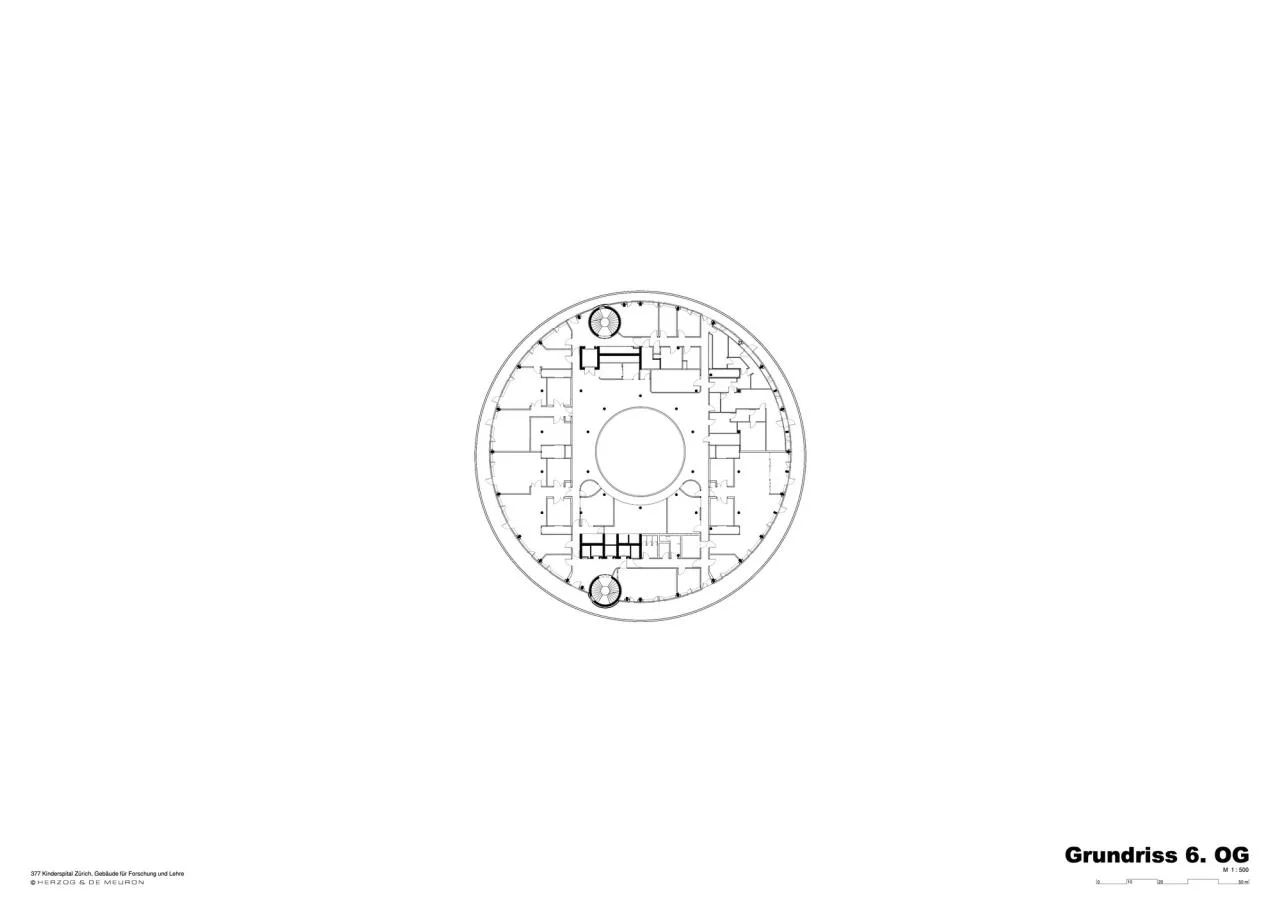
△ Seventh floor plan of research and teaching facilities
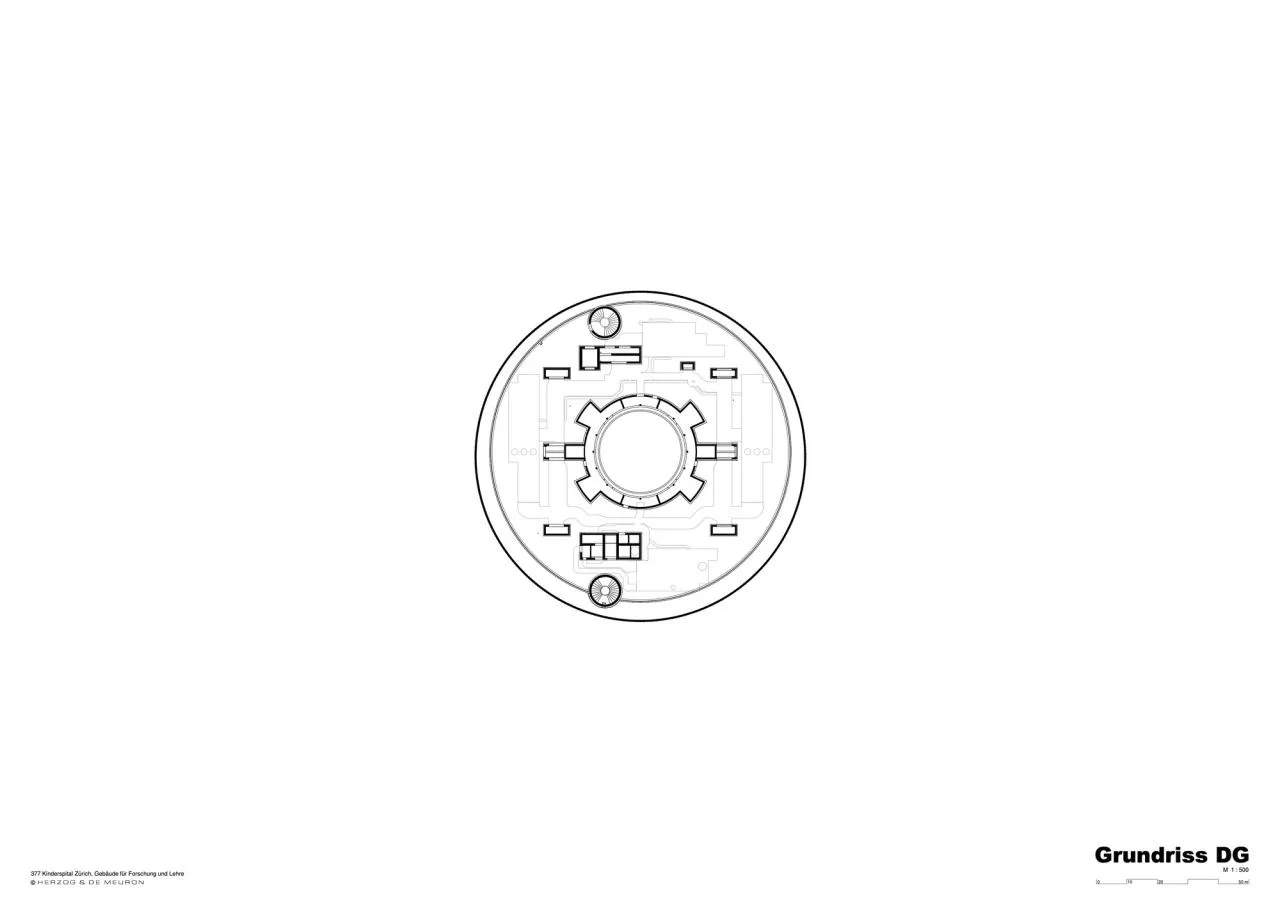
Roof plan of research and teaching facilities
Project Information
Architect: Herzog & de Meuron
Area: 46,650 m²
Year of Completion: 2022
Photographer: Herzog & de Meuron
Owner Representatives: Martin Vollenwyder (Chairman of the Foundation Board), Heini Brugger (Chair, Building Commission), Françoise de Vries (Chairman, Steering Committee), Thomas Hardegger (General Project Manager – KOMOXX GmbH Planning & Project Management), Marcel Müller (General Project Manager – Novaloxx LLC)
Project Partners: Jacques Herzog, Pierre de Meuron, Christine Binswager (Partner in Charge)
Project Team: Michael Schmidt (Associate, Project Director), Mark Bähr (Associate, Project Manager Acute Hospital), Birgit Föllmer (Associate, Project Manager Research and Teaching Building), Alexander Franz (Associate, Project Manager Research and Teaching Building), Andrea Erpenbeck (Associate, Project Architect), Martin Fröhlich (Associate, Project Director), Michael Drobnik (BIM Manager), Judith Abele, Valentin Abend, Ömer Acar, José Aguirre, Luís Alves, Jens Andresen, Gabriella Antal, Michael Bär (Associate), Laurenz Batka, Michal Baurycza, Nathalie Birkhäuser, Filip Bolt, Sandro Camichel, Guanlan Cao, Axel Chevroulet, Benedict Choquard, Otto Closs, Victoria Collar Ocampo, Hernán Concha Emmrich, Joao Da Silva Moreira, Marc Anton Dahmen, Eva Danwerth, Léane Dott, Nicholas Dunkel, Silja Ebert, Ela Elmas, Santiago Espitia Berndt (Associate), Alessandro Farina, Maik Fischer, Daniel García Moreno, Kim Gartmann, Noémie Girardet, Irene Giubbini, Borja Goñi, Arnaud Greder, Daniel Grenz, Gustava Grüntuch, Lars Hagen, Christian Hahn, Kasper Hansen, Philipp Henestrosa, Anna Hernández García, Yuko Himeno, Ryoko Ikeda, Soraya Isak, Vasileios Kalisperakis, Marina Karova, Changsup Stephan Kim, Daniel Koo, Melisa Köseli, Sahng O Lee, Stella Lembcke, Matthias Leutert, Ruizhe Liang, Gia My Long, Theo Mayer, Raúl Mera (Project Architect), Laila Miarelli, Klaus Molterer (Project Architect), Miquel Montoya Moya, Neda Mostafavi, Stefan van Nederpelt, Don Nguyen, Anja Oertel, Mònica Ors Romagosa (Project Architect), Lukas Otrzonsek, Aldis Pahl, Jakob Elias Passernig, Vesna Petrovic, Fabio Prada, Corsin Raffainer, Timon Rajmon, Francisco Ramos Ordóñez, Bálint Rigó, Giulio Rigoni, Dominic Roth, Pascal Ryser, Ladina Schmidlin, Anna Schneibel, Balázs Schrammel, Sarah Söhnel, Magdalena Stadler, Maximilian Steverding, Paula Strunden, Jan Szonert, Milou Teeling (Project Architect), Emma Thomas, Ali Uzun, Yves Wanger, Patrick Welss, Mirco Wieneke, Niklas Winkler, Yaobin Yuan, Joanna Zabinska
Competition Team: Mark Bähr (Project Manager), Jason Frantzen (Associate, Project Manager), Alexandria Algard, Maximilian Beckenbauer, Blanca Bravo Reyes, Alexander Franz, Ondrej Janku, Christoph Jantos, Johannes Rudolf Kohnle, Severin Odermatt, Raúl Torres Martín, Mika Zacharias
Landscape Design: Andreas Geser Landschaftsarchitekten
Building Automation and Smart Building: Jobst Willers Engineering AG
Municipal Engineering: EBP Schweiz AG
Client: Kinderpitch Zürich – Eleonorenstiftung
Power Engineering: Amstein+Walthert AG
Water Supply and Drainage Engineering: Ingenieurbüro Riesen AG
Resident Architect: Gruner AG
Landscape Architect: August + Margrith Künzel Landschaftsarchitekten AG
Structural Engineering: ZPF Ingenieure AG
Location: Zurich, Switzerland












Must log in before commenting!
Sign Up