
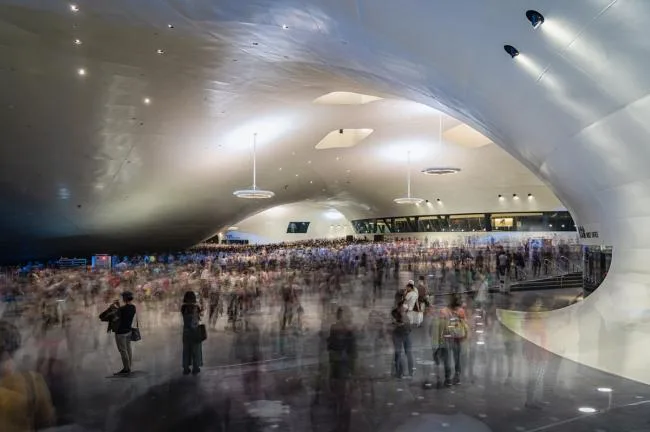
▲ Curved spaces inspired by clusters of banyan trees
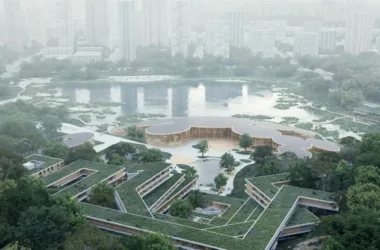
Photographer Sytze Boonstra captured a stunning series of images at the National Kaohsiung Arts Center in Taiwan, highlighting Mecanoo’s architectural work integrated into everyday life. His focus shifts between the surrounding landscape and the architecture itself. Beneath a sprawling 35-acre (141,000 square meters) artificial roof lie four performance halls, making it the world’s largest single-eave architectural performing arts center. This design blurs the lines between indoor and outdoor spaces, as well as between virtual and physical volumes.
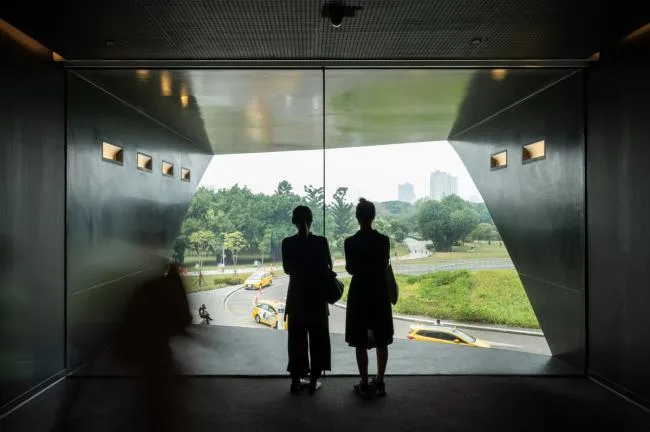
▲ The glass façade blurs the boundaries between inside and outside
Drawing inspiration from the intertwined branches and roots of local banyan trees, Mecanoo designed the building with sleek, flowing lines that gently slope into the ground, forming an elliptical theater known as Banyan Tree Square. This space offers a cool retreat from the subtropical sun and frequent rain, inviting people to practice Tai Chi in the morning, jog in the afternoon, or watch projected movies at night. This public area defines the cultural center’s heart.
The design’s fusion continues in the outdoor circular theaters, where tiered seating stretches from the roof down to the ground, seamlessly blending the roof and earth. This integration makes the green space part of the performance stage itself.
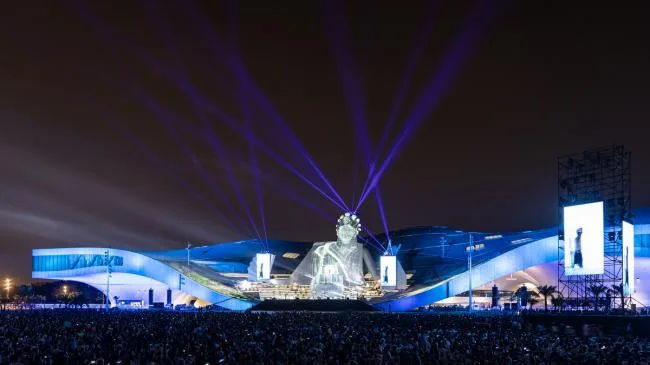
▲ Nighttime performance at Banyan Tree Square
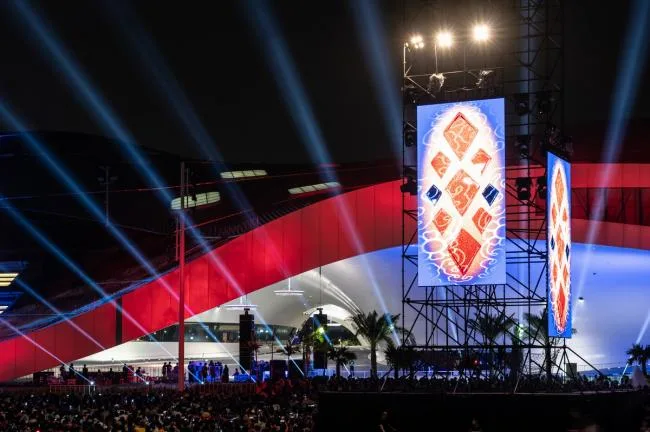
▲ Nighttime performance at Banyan Tree Square
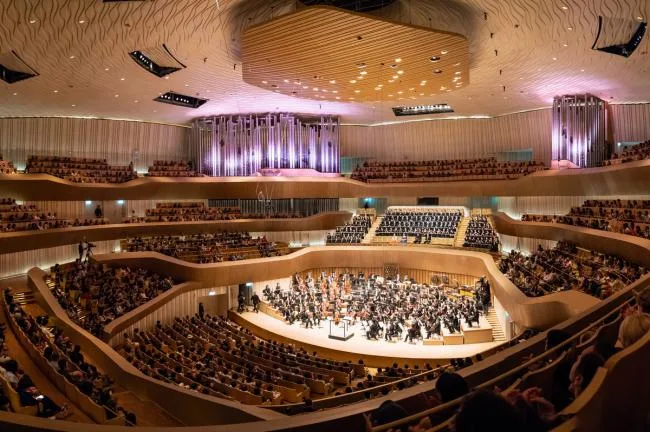
▲ Theater seating extending from ground level up to the roof
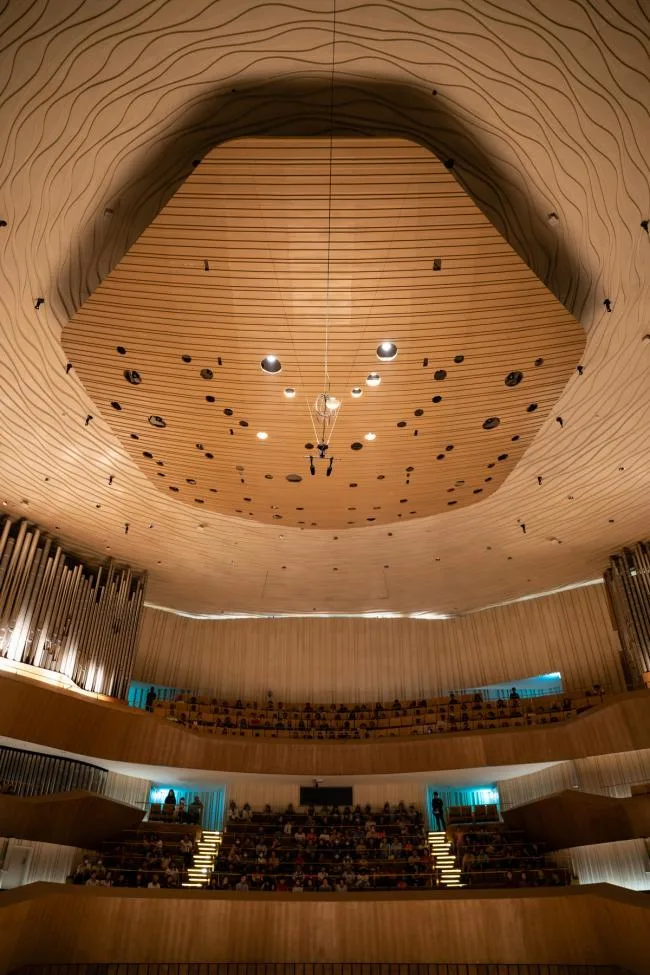
▲ Ceiling inside the theater hall
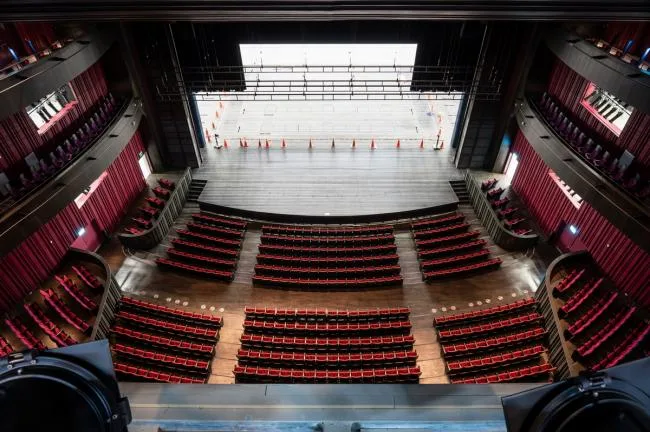
▲ Performance hall interior
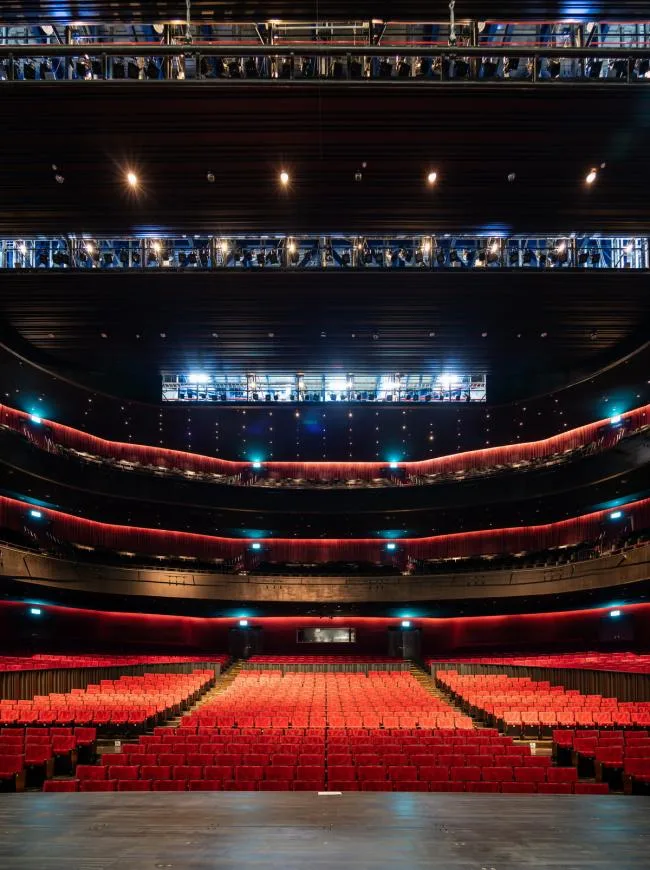
▲ Performance hall interior
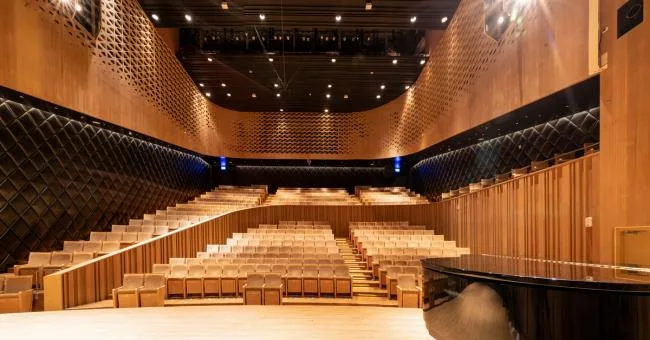
▲ Smaller performance hall
The steel keel roof acts as a buffer against rain and noise for the performance halls beneath, while also forming a distinctive new silhouette on the horizon—the building’s fifth façade. Rather than using cast-in-place concrete, Mecanoo opted for steel plates on the exterior surfaces, creating the curved, elegant spaces of Banyan Tree Square and enclosing the BIM training performance hall within. Behind the steel skin, large steel springs provide damping, allowing the building envelope to move independently of the core structure during earthquakes and storms.
This use of steel also reduces maintenance challenges in busy public spaces. All mechanical equipment is housed underground to minimize noise, and a displacement ventilation system delivers low-speed, regulated air through floor ducts, cooling the occupied spaces efficiently. A large opening in the roof allows natural sunlight to flood the interior.
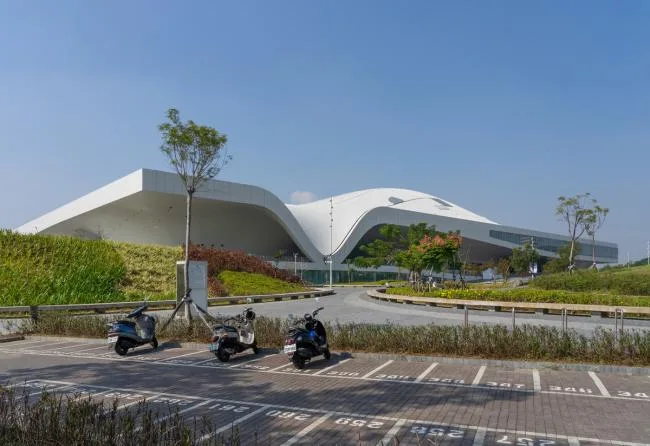
▲ The curved roofline viewed from a distance
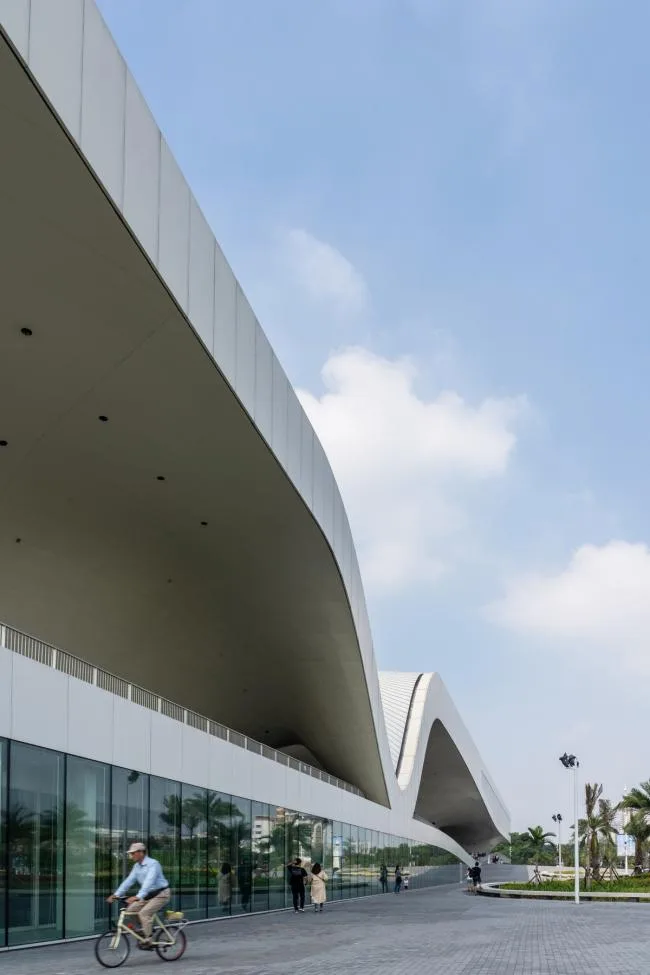
▲ Close-up view of the curved roof
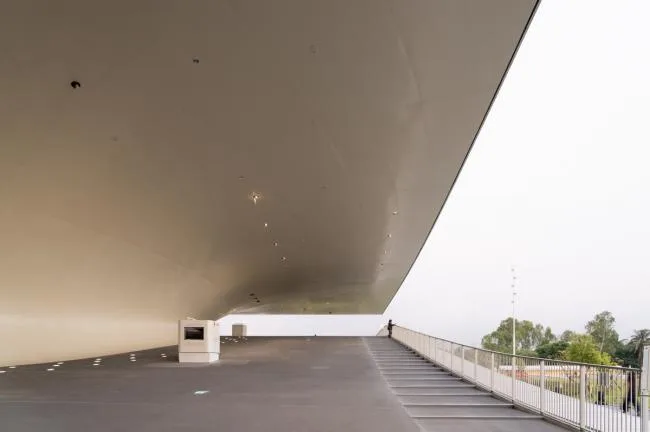
The space beneath the eaves blurs the boundary between inside and outside
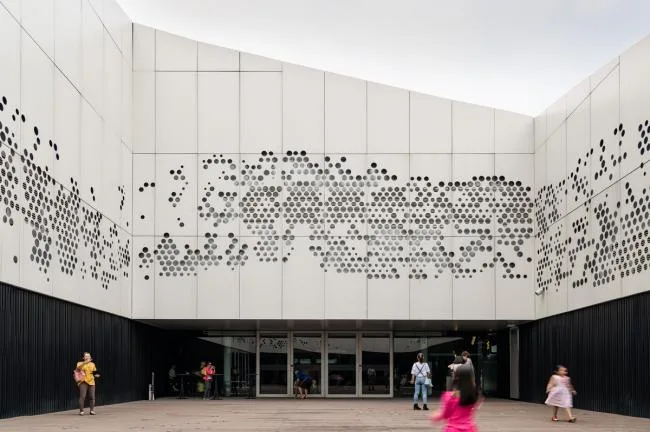
▲ The building’s exterior is clad in steel plates
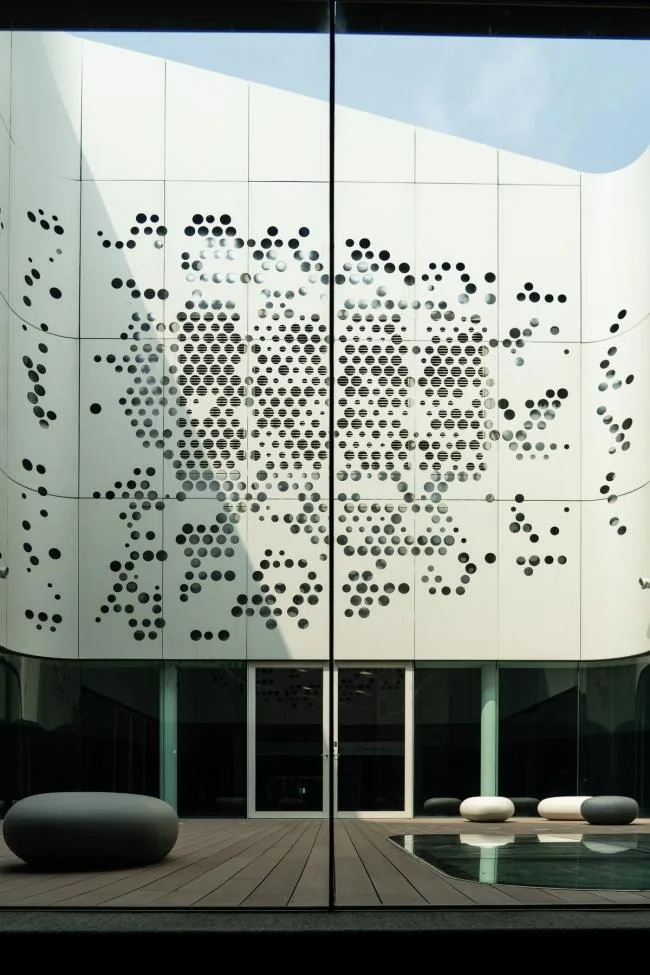
▲ Details of the building’s steel skin
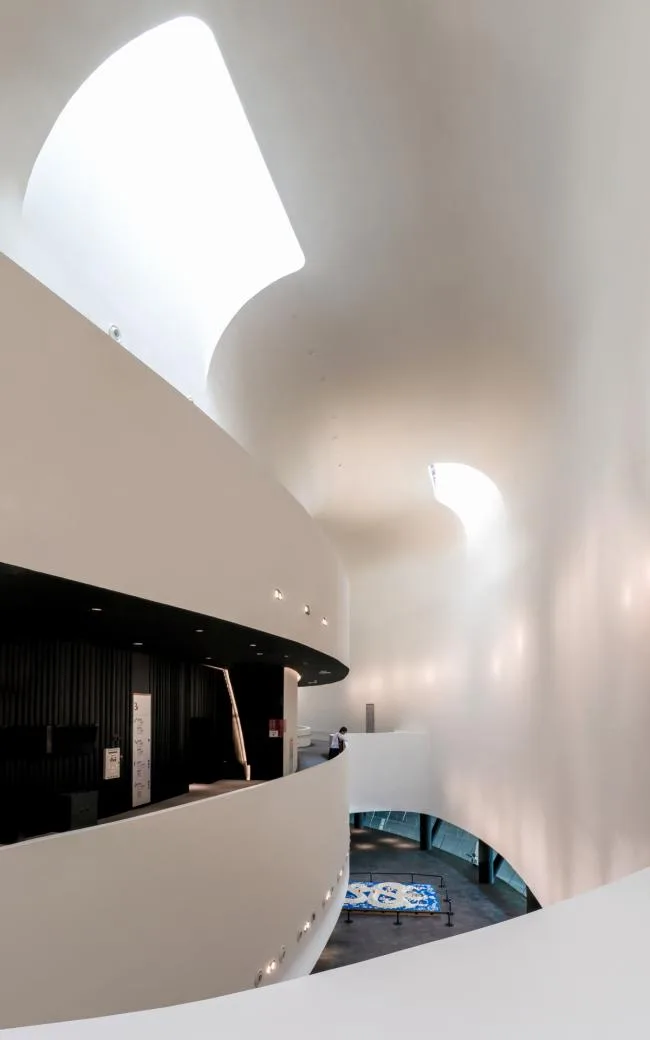
▲ Skylight integrated into the curved roof
Kaohsiung, with a population of approximately 2.7 million, is Taiwan’s largest port city and one of the largest in the world. The Weiwuying Cultural Center, situated within the 65-hectare Weiwuying Urban Park, houses an opera house, theater, music hall, and concert hall, collectively seating up to 6,000 visitors.
This complex embodies Kaohsiung’s evolution from a traditional port city into a diverse metropolis over the past 15 years. Parks and cultural facilities have attracted a well-educated population and drawn tourists alike. Over 12 years of design and construction, local and national governments connected Kaohsiung to Taipei and Taichung via high-speed rail and expanded the city’s subway system.
Mecanoo’s design emphasizes the site’s significance and inclusivity, welcoming everyone to engage with the building. The reinterpretation of futurism through the banyan tree motif lies at the project’s core, while the local shipbuilding industry also influenced the design. Street theater and local cultural elements inspired Banyan Tree Square, which opens a public realm that integrates urban residents—not just ticket holders—into the cultural center itself.
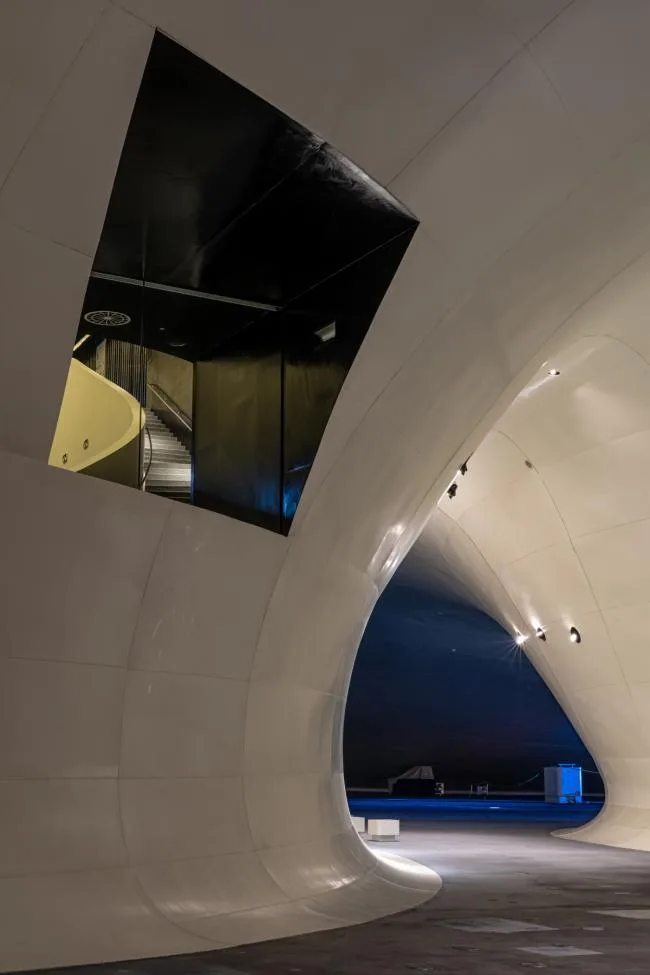
▲ Space inspired by the concept of the “banyan tree”
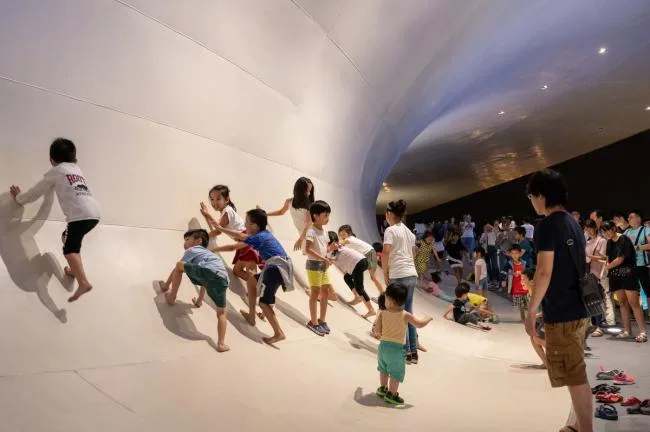
Smooth walls slope down towards the ground, creating a playful area for children’s activities.
Photo by Sytze Boonstra












Must log in before commenting!
Sign Up