
Background
China’s rapid urbanization presents both significant challenges and unprecedented opportunities. Following the nationwide surge in sports venue construction around 2008, the focus shifted back to the core of sports: creating accessible spaces where everyday people can engage in activities and social interaction. These new urban components are no longer mere decorative elements within the vast residential and commercial developments driven by rapid city growth; they are becoming catalysts that lead urban development.
Yangzhou’s urban planning emphasizes preserving the historic city core, establishing green buffer zones, and expanding development outward. The Southern New City Development Zone aims to capitalize on its latecomer advantages by using the new sports park as a starting point to form a district that connects with the old city while maintaining its unique character, thus driving the momentum of the city’s southward growth.
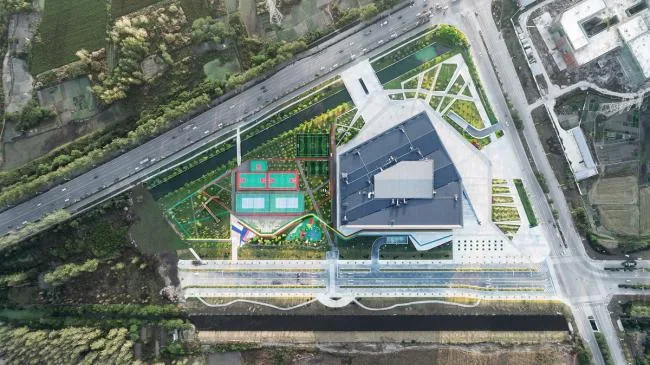
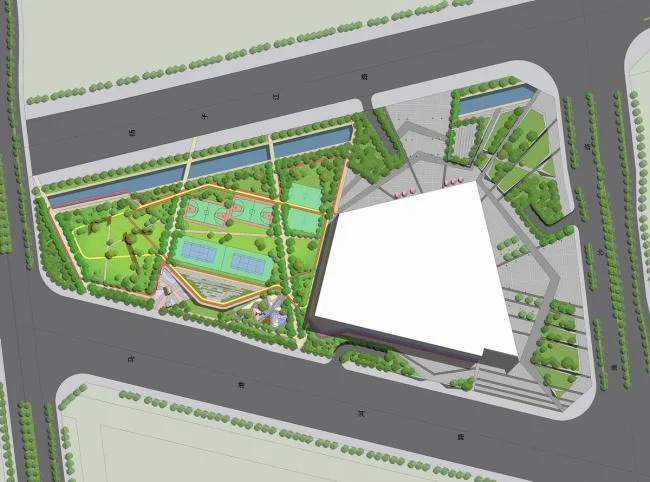
▲ Aerial Plan View
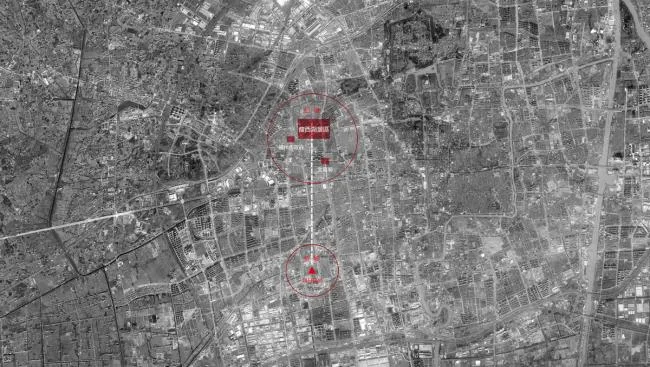
▲ Location Map
The project site is situated in the Economic and Technological Development Zone, south of Yangzhou City. It lies precisely on the central axis of Yangzhou’s traditional city center, centered around the Shouxi Lake scenic area.
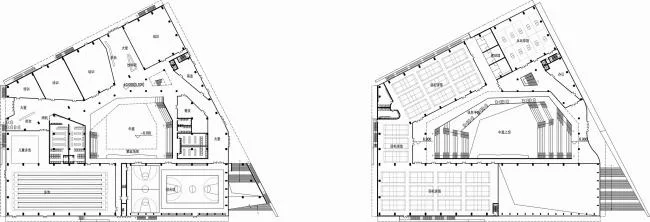
▲ Plan of Yangzhou Southern New City Sports Park
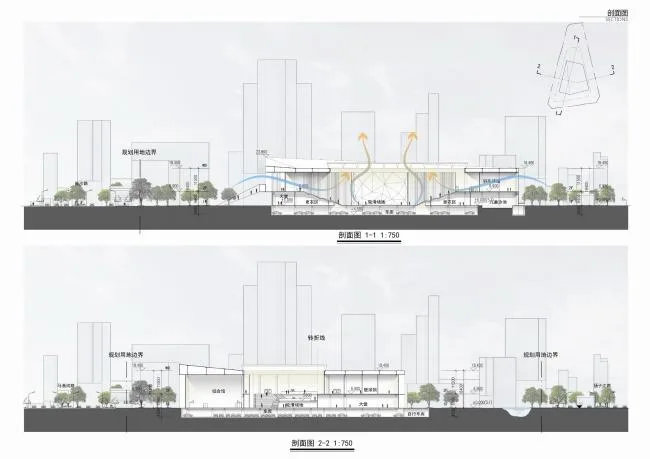
▲ Section of Yangzhou Southern New City Sports Park
Strategy
How can we create appealing public spaces that encourage social interaction despite limited land availability? How can architecture and landscape interact meaningfully to create a symbol rooted in history, representing the new city’s development? How do we define mass sports facilities that align with China’s evolving lifestyle? Our approach involves the following strategies:
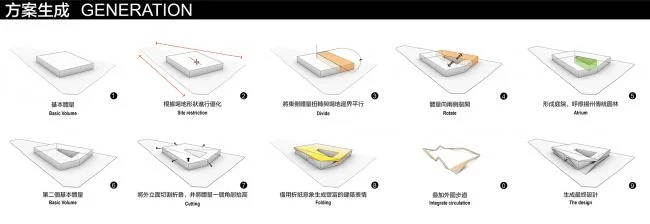
▲ Scheme Generation
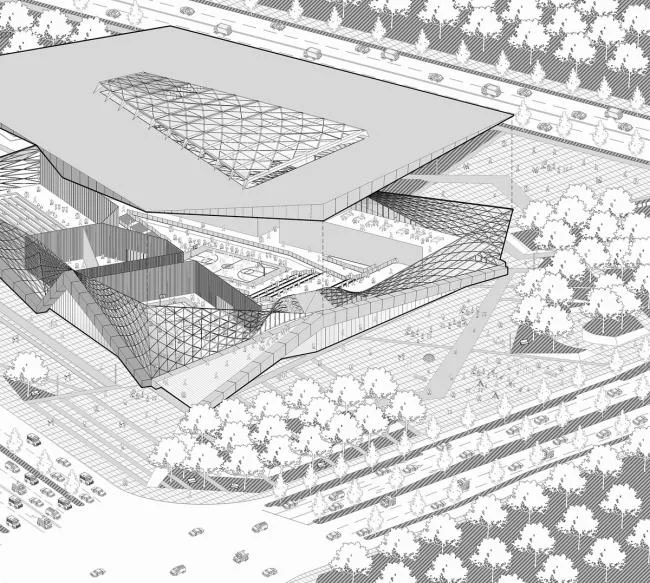
▲ Southern Sports Park (Illustration)
1. Gathering — A Planning Strategy Focused on Land Conservation
The site has a triangular shape, surrounded by roads on all sides, offering excellent transportation access and connectivity. It is adjacent to an ecological corridor to the north, providing a favorable natural environment. The overall design adopts a grand open-close layout that clusters the buildings together, conserving construction land and allowing for open green spaces that serve as urban exhibition squares and outdoor activity areas.
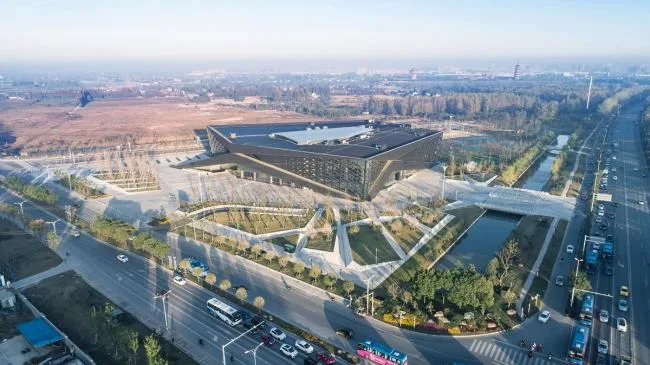
▲ Aerial View
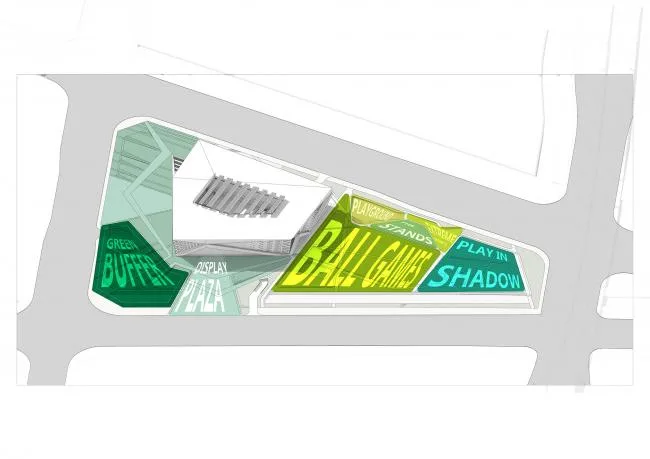
▲ Site Planning
2. Integrated Landscape — Connecting Landscape and Garden
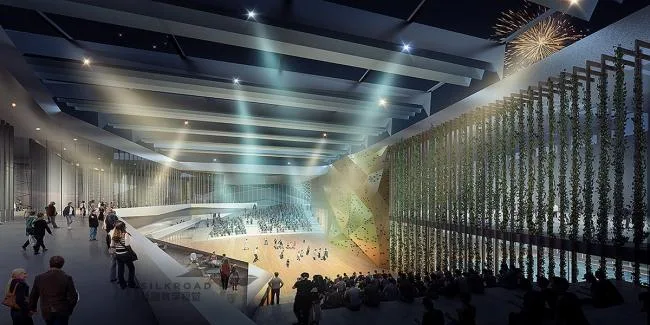
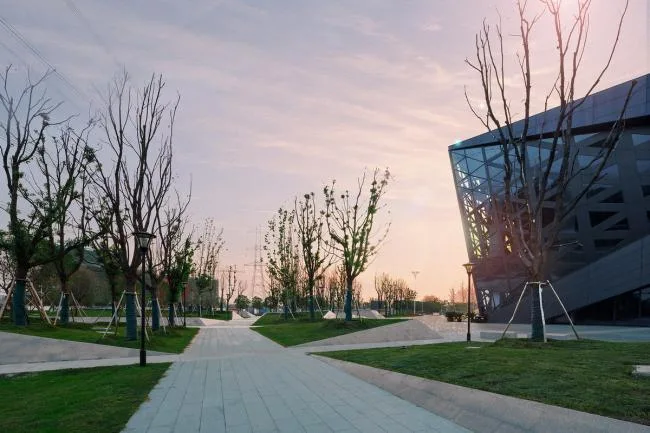
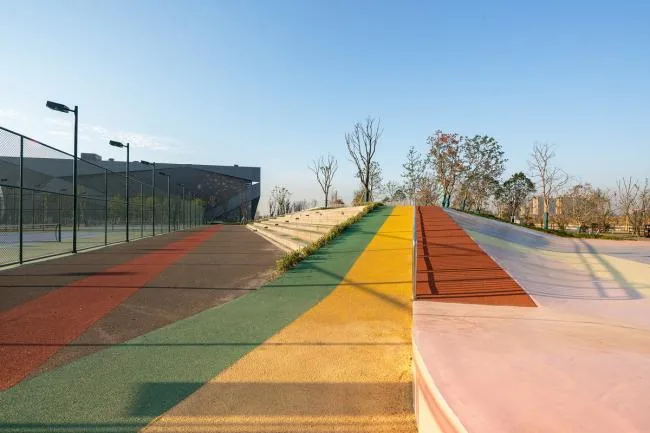
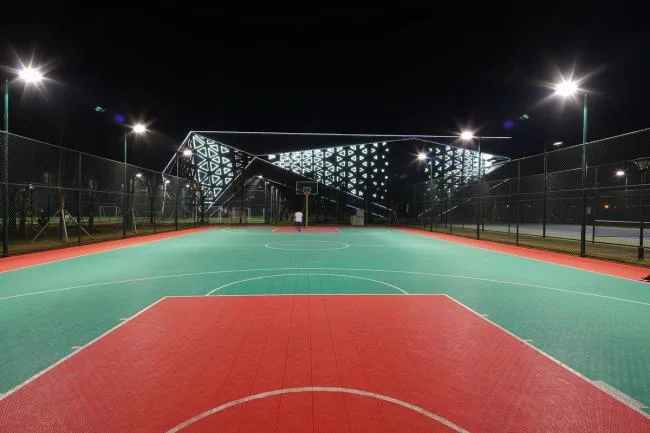
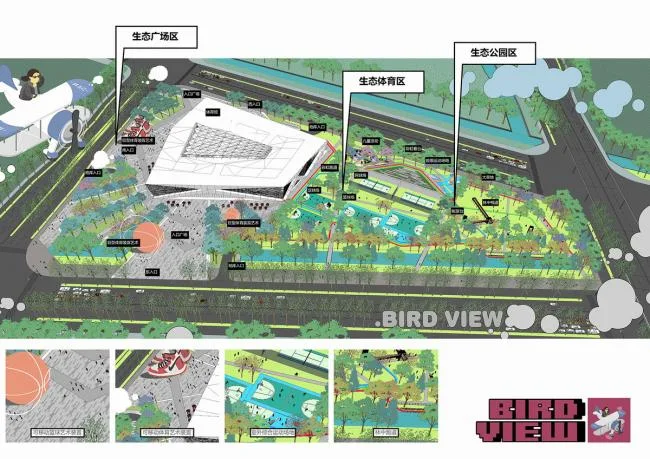
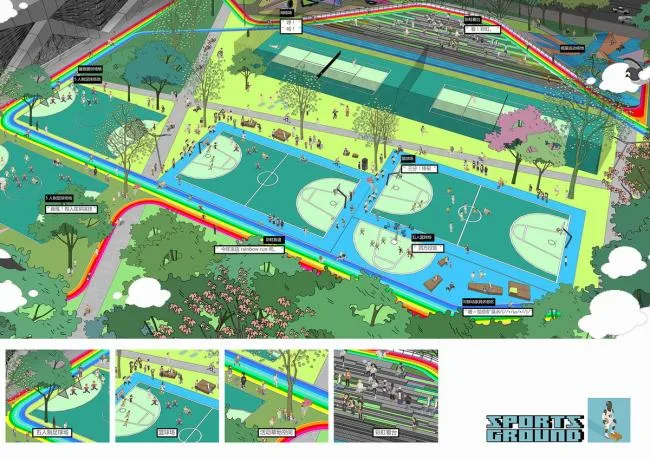
The “Sports Forest” to the north serves as the main outdoor activity area. Acting as a transitional space between the main building and the northern park, the design features a runway that links the entire space. An elevated runway surrounds the atrium on the second floor, connected to the outdoor track via external stairs. Along this indoor track, visitors can enjoy sports activities and performances, while stepping outside leads to green scenery and fresh air.
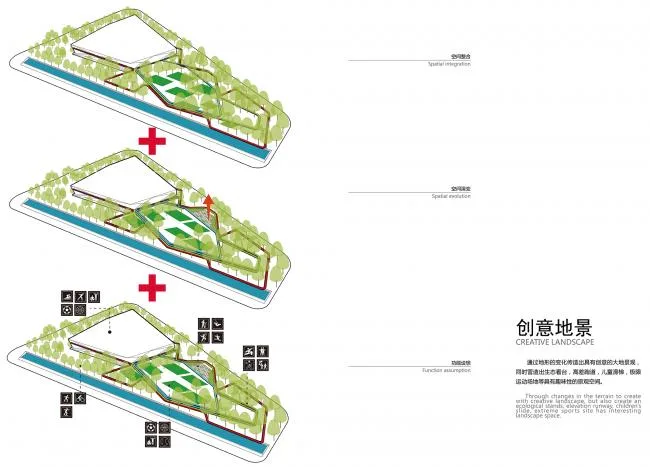
▲ Creative Landscape
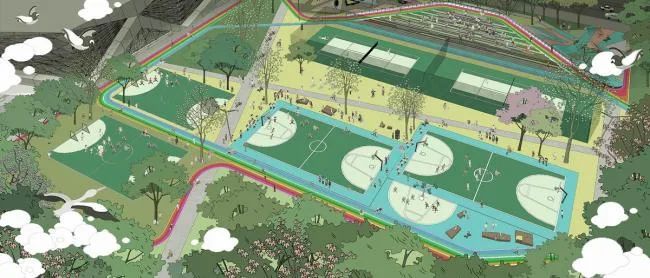
▲ Sports Field
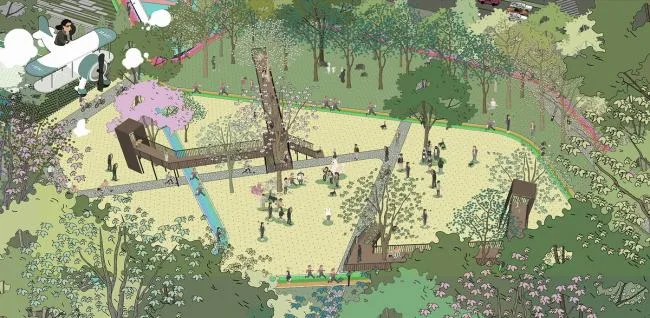
▲ Forest Stack Bridge
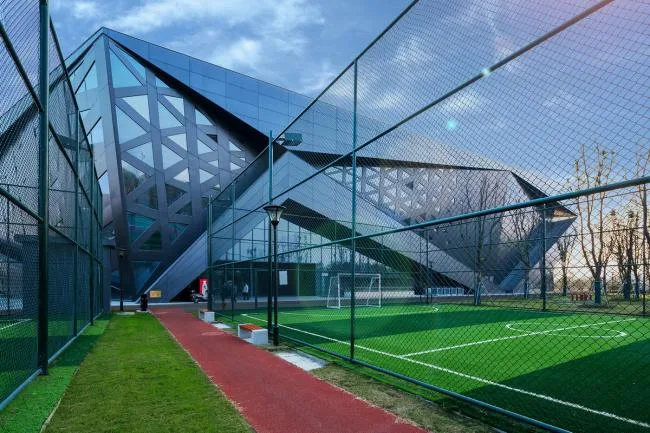
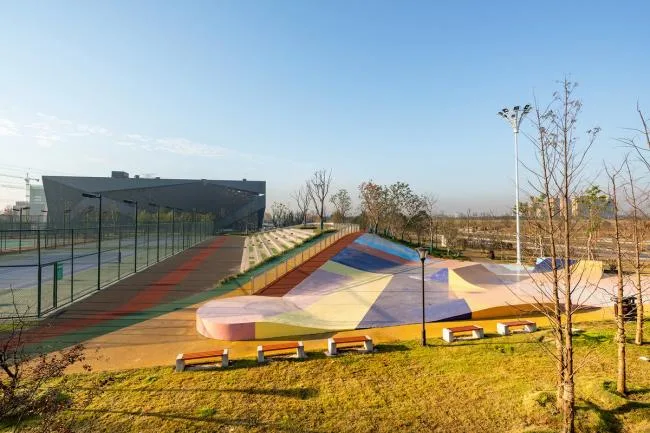
3. Building Strategy — Separation of Main and Auxiliary Functions
Auxiliary architectural functions such as equipment and evacuation routes are arranged along the outer edges, centering the main functional spaces inside. This creates flexible and open internal activity areas that can adapt to changing functional requirements over time. This approach echoes the separation of service and serviced spaces pioneered by Louis Kahn, as well as the externalized services of the Pompidou Center by Renzo Piano and Richard Rogers.
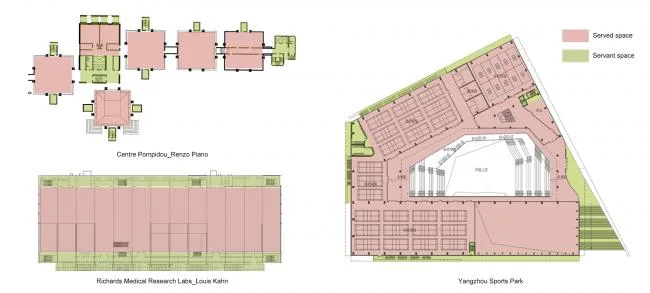
▲ Surrounding View
4. Transparency — Embracing Traditional Cultural Elements
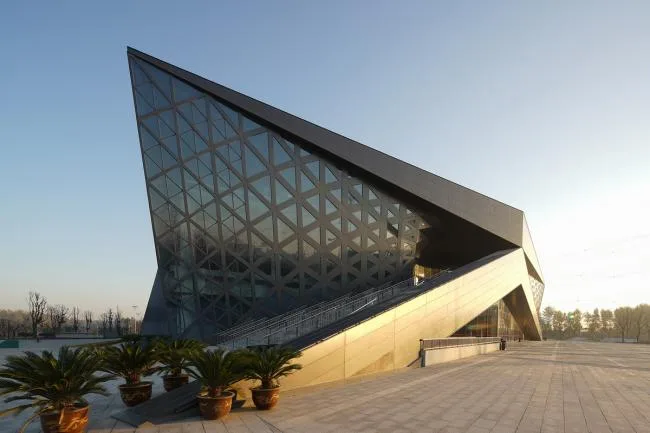
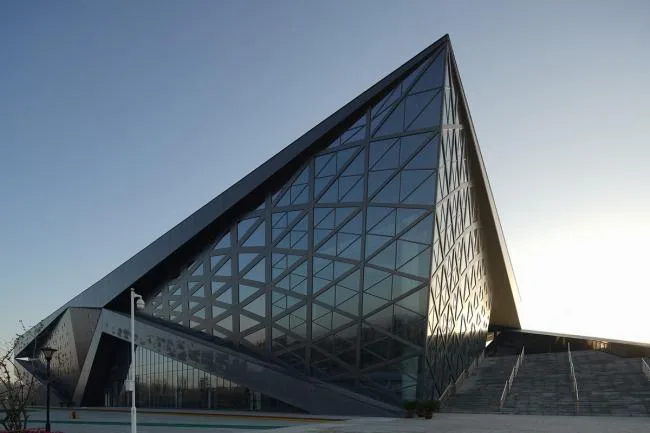
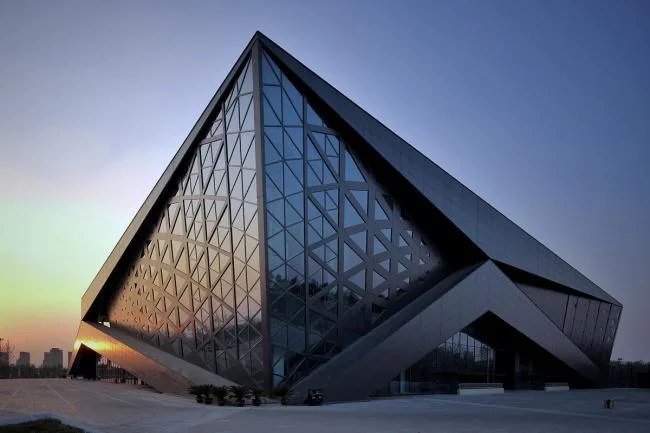
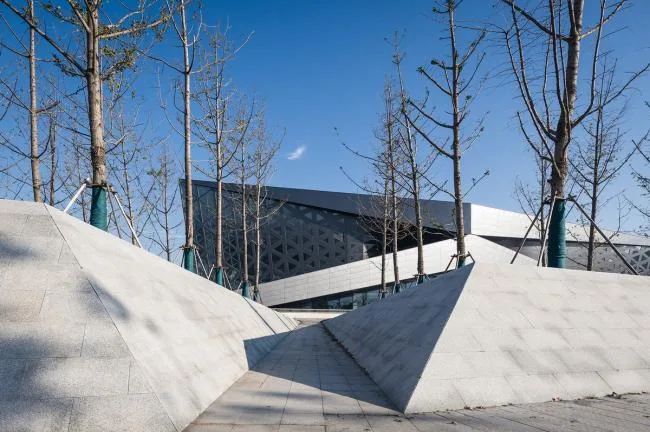
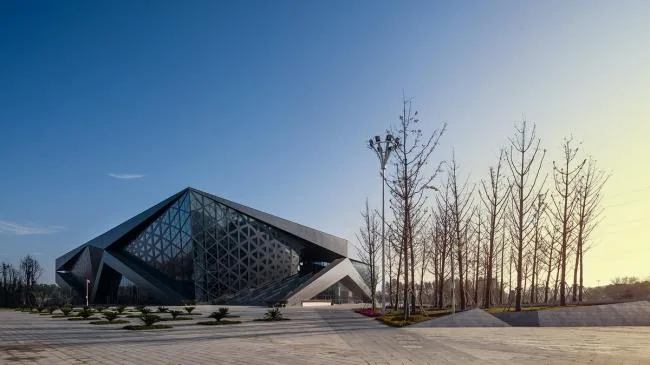
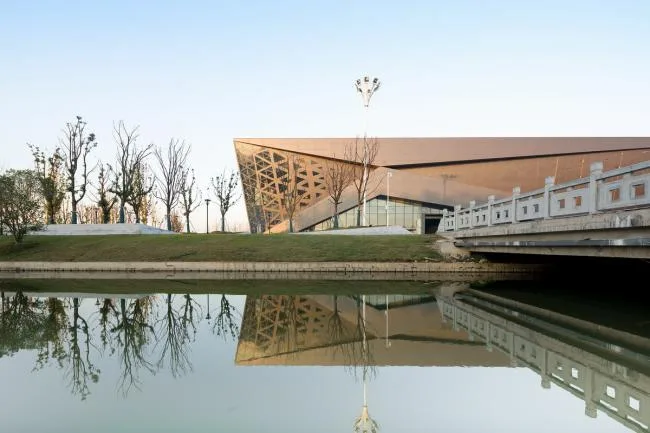
Yangzhou is famous for its traditional paper-cutting handicrafts, a distinctive decorative art form. We abstracted this motif and integrated it with modern technology through parametric design to create a façade that harmoniously blends traditional culture with contemporary architecture.
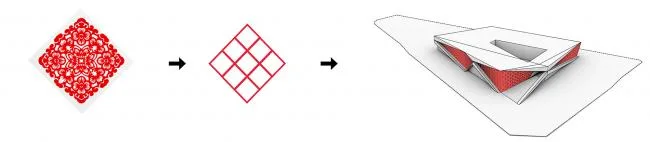
▲ Window Decorations
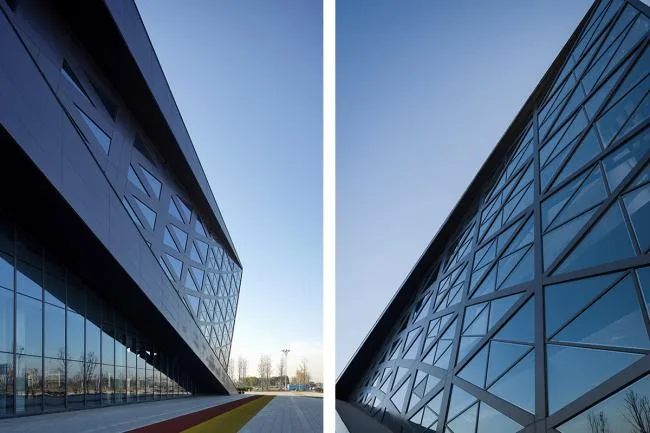
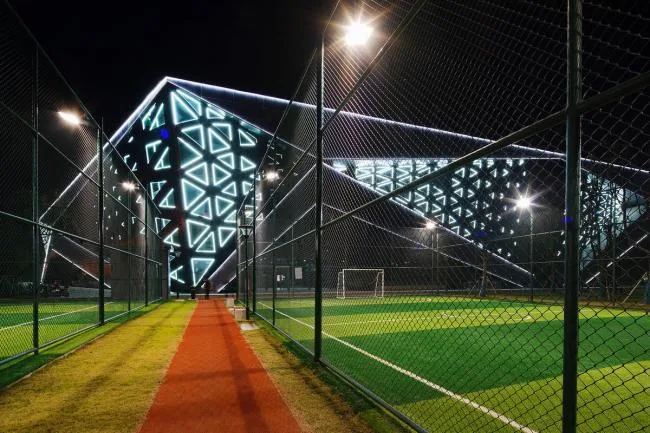
5. Folding — A Contemporary Rhetorical Strategy
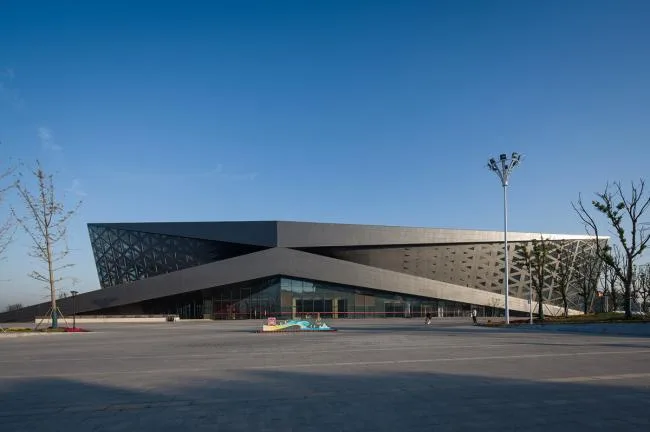
Building upon Louis Kahn’s concept of service and serviced spaces, this design elevates service spaces from secondary roles to prominent architectural expressions. Inspired by folding corridors in classical Chinese gardens, this strategy integrates main and auxiliary functions, indoor and outdoor activities, architectural form, and cultural symbolism into a cohesive whole. The dark gray aluminum panels chosen as cladding highlight the building’s modern sports architecture character—a dynamic energy box.

▲ Fold Detail
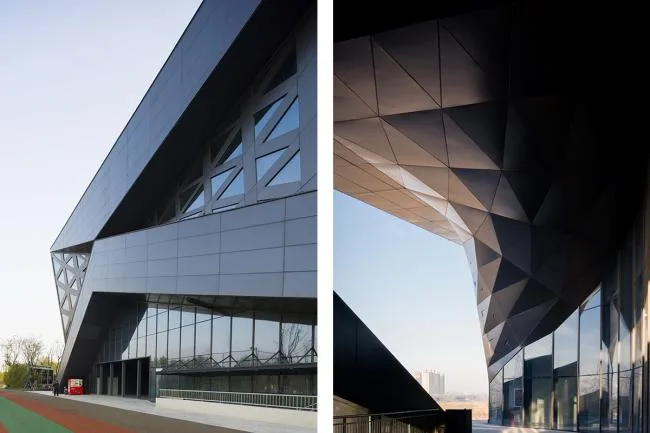
6. Hui — Flexible Interactive Functional Strategy
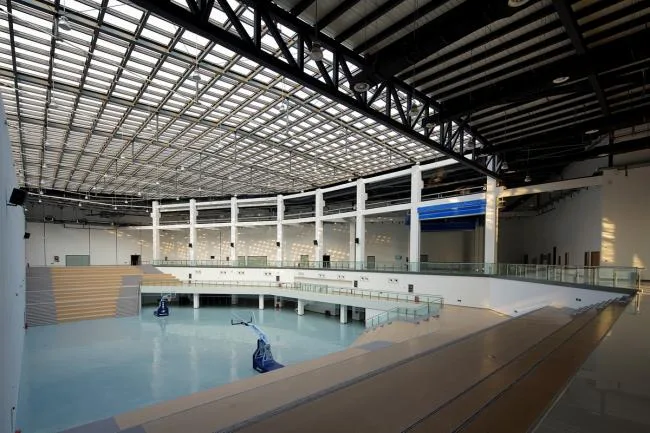
Mass sports facilities are a relatively new building type in China, distinct from competitive sports venues, and require new approaches to defining and organizing sports functions. We introduce the concept of “pan sports” functions characterized by flexible, communicative, and multifunctional spaces. Key facilities such as multipurpose halls, swimming pools, badminton and basketball courts are arranged around a shared atrium, maximizing visual and social interaction. The atrium serves as a versatile public space for community events, small performances, and can also be used regularly for activities like climbing and roller skating.
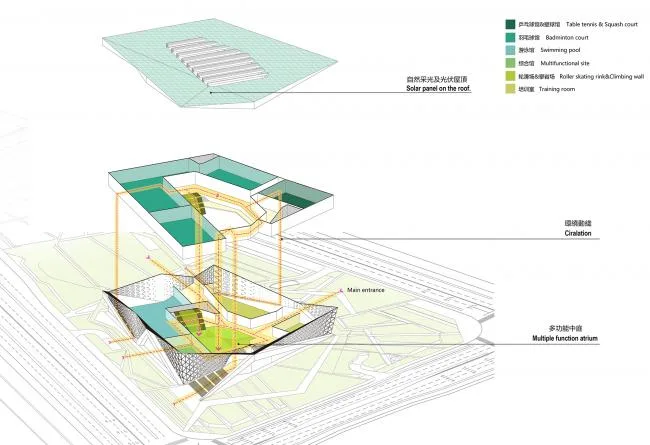
▲ Functional Strategy
Sustainable Design
Urban Development Sustainability: The design respects historical context symbols while serving as a focal point to drive new urban area development.
Social Sustainability: Emphasizes community-centered sports activities. As sports buildings in China evolve from competitive to mass participation, building types blur. This requires large-span spaces, temporary seating, and centralized circulation to accommodate diverse activities and emerging lifestyles like pan sports and leisure culture. Multifunctional, adaptable spaces create new architectural forms and typologies.
Cultural Sustainability: The project builds on architectural prototypes of service and serviced spaces, blending functionality with artistic expression where service spaces become part of the building’s surface.
Economic Sustainability: Transitioning from government subsidies to market-driven operations.
Aesthetic Sustainability in BIM Architecture: The façade uses modern design to reinterpret traditional window decoration motifs.
Environmental Energy Sustainability: Integrates photovoltaic solar roofing and passive ventilation to reduce energy use, coupled with centralized planning to optimize land use.
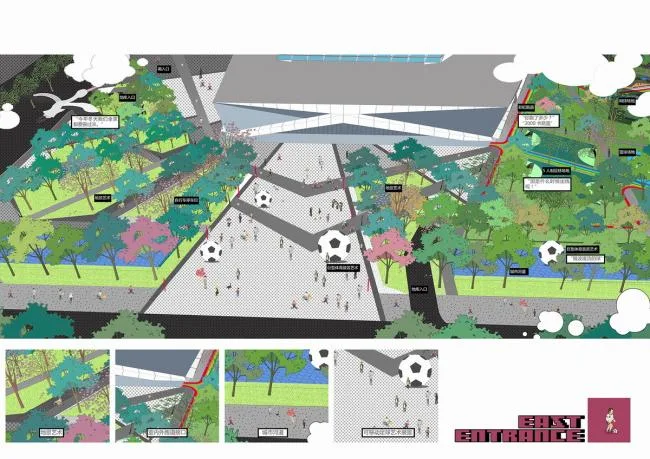
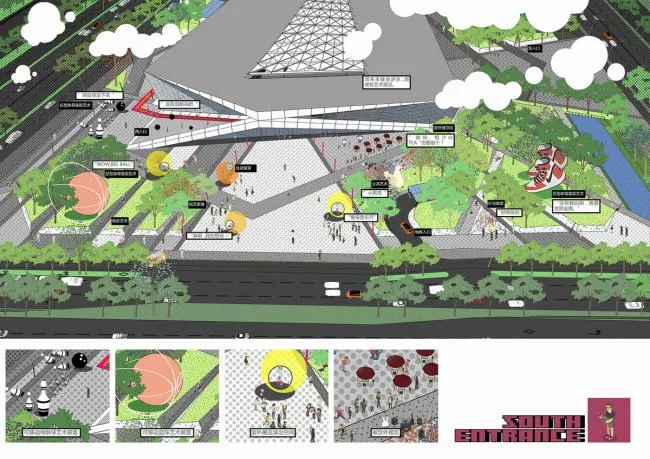
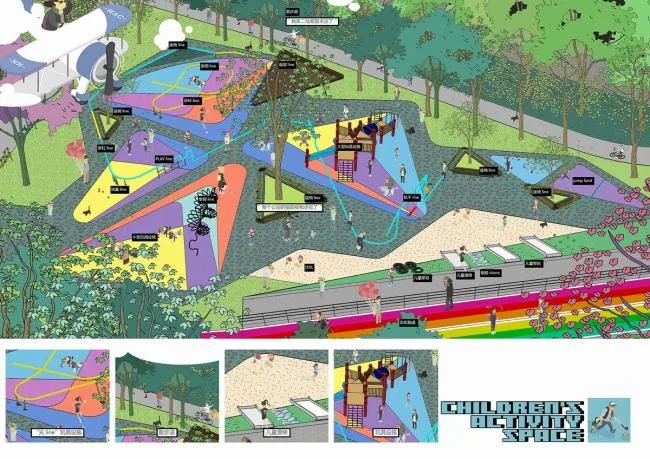
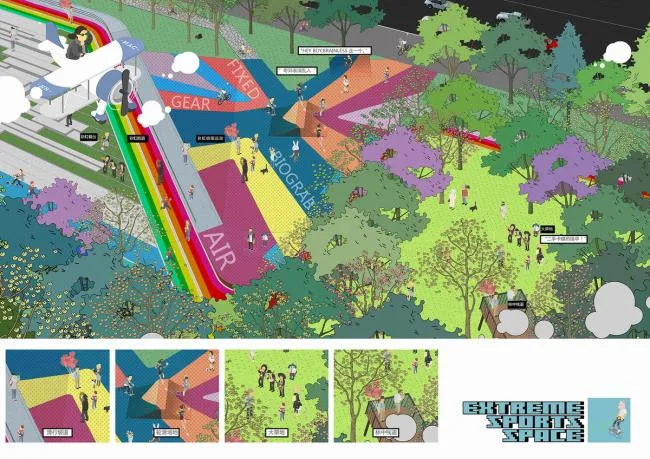
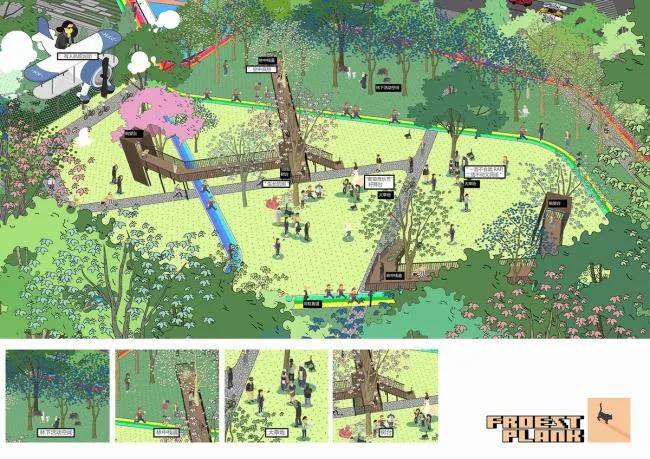
Landscape Scene Map
Additional Landscape Renderings
Project Information:
Project Name: Yangzhou Southern New City Sports Park
Design Firm: Botao Architectural Design (Shenzhen) Co., Ltd
Website: www.ptadesing.cn
Contact Email: __AI_S_SC0__
Year Completed: 2018
Land Area: 42,809 m2
Building Area: 33,270 m2
Location: Hanjiang District, Yangzhou City, Jiangsu Province, China
Photographers: Gao Yu, Liu Lihui
Creative & Design Team: Shi Xudong, Zhan Mengtao, Sun Weilin, Daping Que, Xiaofeng, Xu Gong, Xiang Linjing
Landscape Design: Shenzhen Botao Environmental (BIM Training) Landscape Art Design Co., Ltd
Client: Yangzhou Lingang Sports Development Co., Ltd
Materials: Aluminum veneer; Ultra-white high-transparency glass; LOW-E insulated glass












Must log in before commenting!
Sign Up