
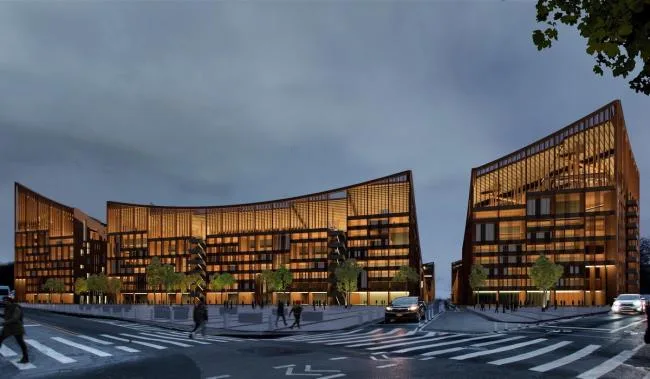
This innovative wooden residential and sports complex won third prize in the 2018 Archstorming International Competition. The competition challenged designers to create a FIFA-standard football stadium for the 2026 World Cup in the United States, specifically located in McCarran Park, Brooklyn, New York.
Because the site is in a dense urban area like New York City, the design — named Rooftop Stadium in Urban Communities — breaks new ground by combining a stadium for 60,000 spectators with 3,000 high-quality residential units within the same building structure (BIM engineers).
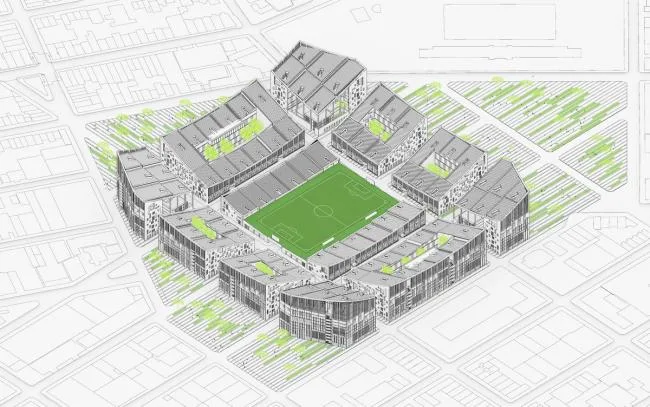
▲ Axonometric Diagram
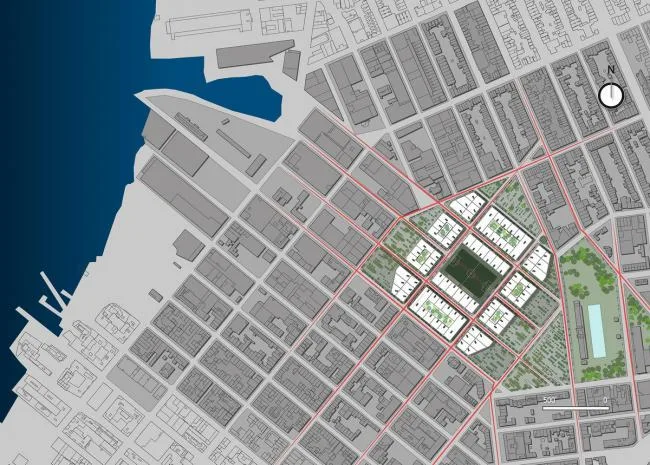
▲ Site Plan
The overall master plan restores the road network previously severed by McCarran Park in Williamsburg, New York, creating twelve new neighborhoods. This layout not only enhances transportation connectivity and accessibility for both the stadium and residences but also positions the stadium at a 45-degree southwest angle, the optimal orientation for a large football field.
Each neighborhood features a new courtyard-style residential building, with heights gradually stepping down from nine floors to two floors. The rooftops form three tiers of stadium seating, along with the necessary circulation, support, and commercial spaces for the venue.
The stadium structure itself is elevated on a one-story platform, with the space beneath dedicated to player facilities and logistics, while allowing smooth street-level traffic flow. The streets between neighborhoods create visual corridors, giving spectators and players multiple unique framed views that differ from traditional enclosed stadiums. These sightlines highlight community landmarks, the East River landscape, and the distant Manhattan skyline.
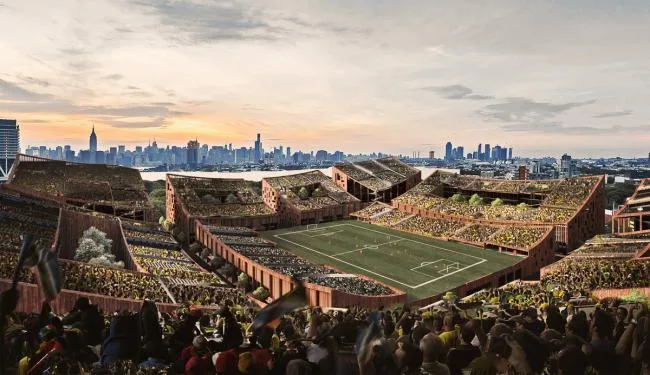
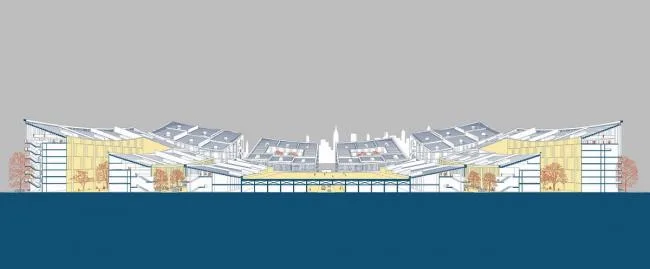
▲ Sectional View
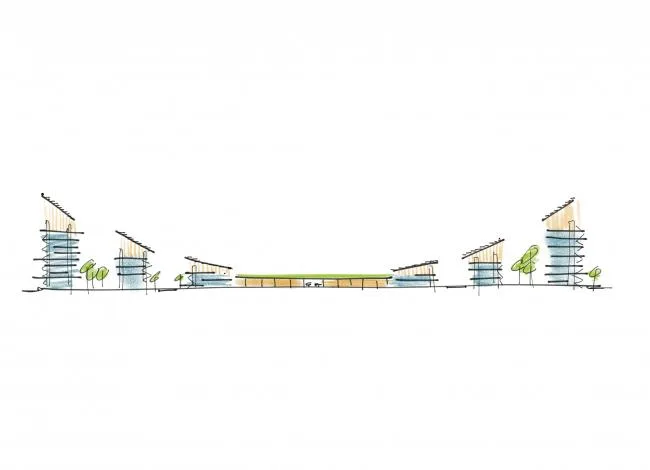
▲ Sketch
The residential buildings beneath the rooftop grandstands follow a classic New York courtyard layout, except for the four corner neighborhoods, which adopt an L-shaped design. This approach maximizes sunlight and ventilation for every unit, while creating green, tree-filled landscapes facing inward.
The varying building heights required to meet the stadium profile provide a diverse housing market, ranging from townhouses to high-rise apartments and penthouse units. Entrances to both the sports stadium and residential areas are separated, located on the outer and inner streets respectively, avoiding any interference.
Additionally, the restored road network strategically includes plazas of various sizes on the east, west, and north sides of the venue, enhancing the urban fabric.
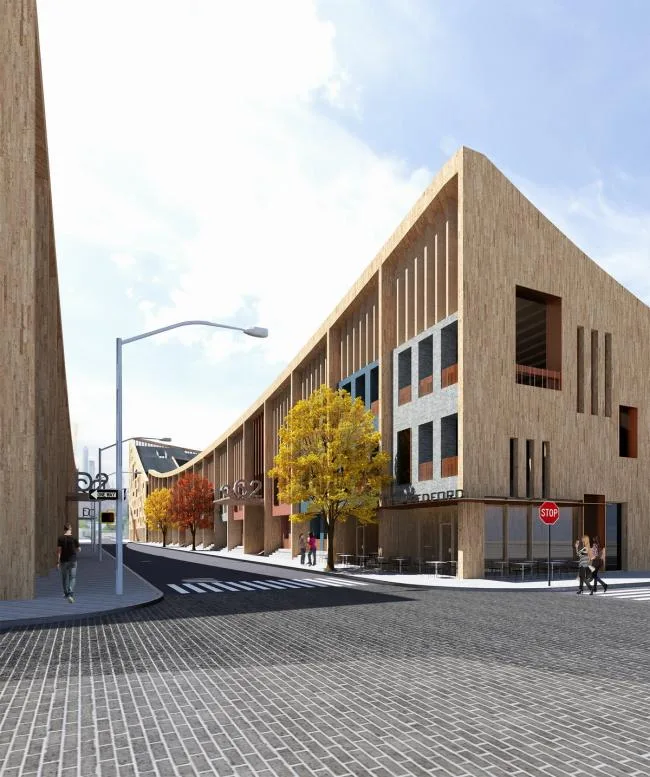
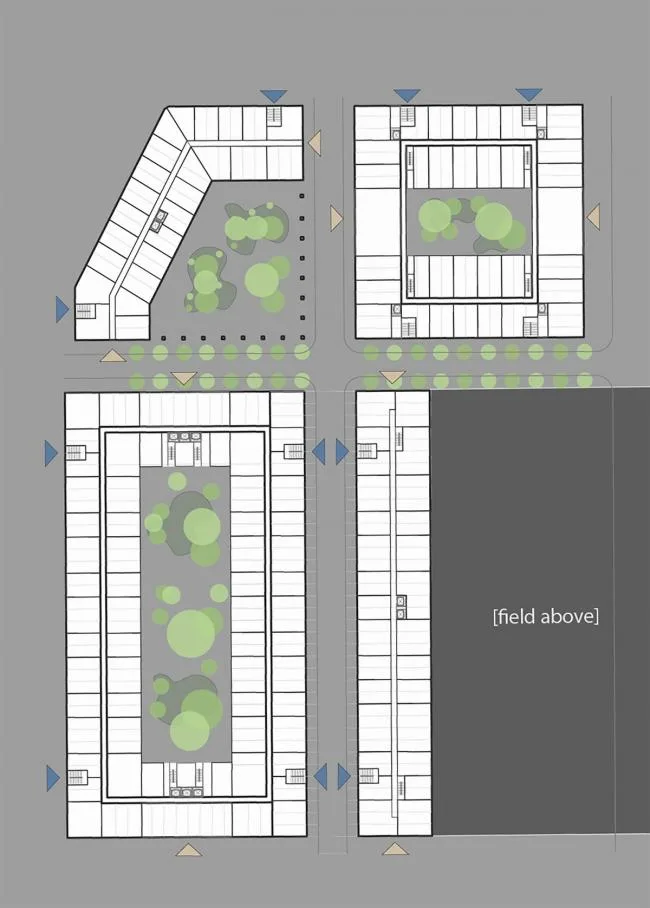
▲ Layout Plan
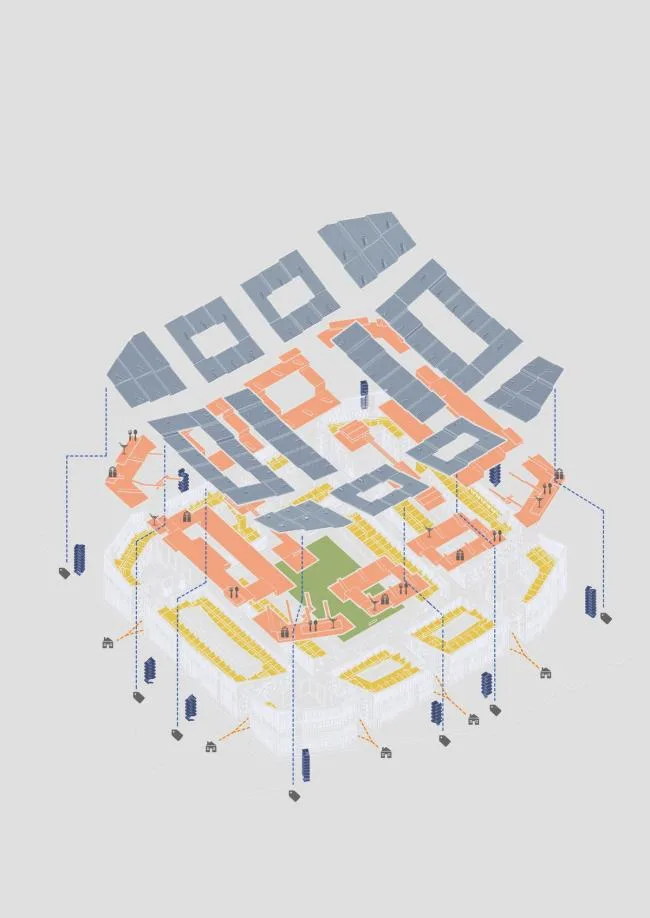
▲ Exploded Axonometric Diagram
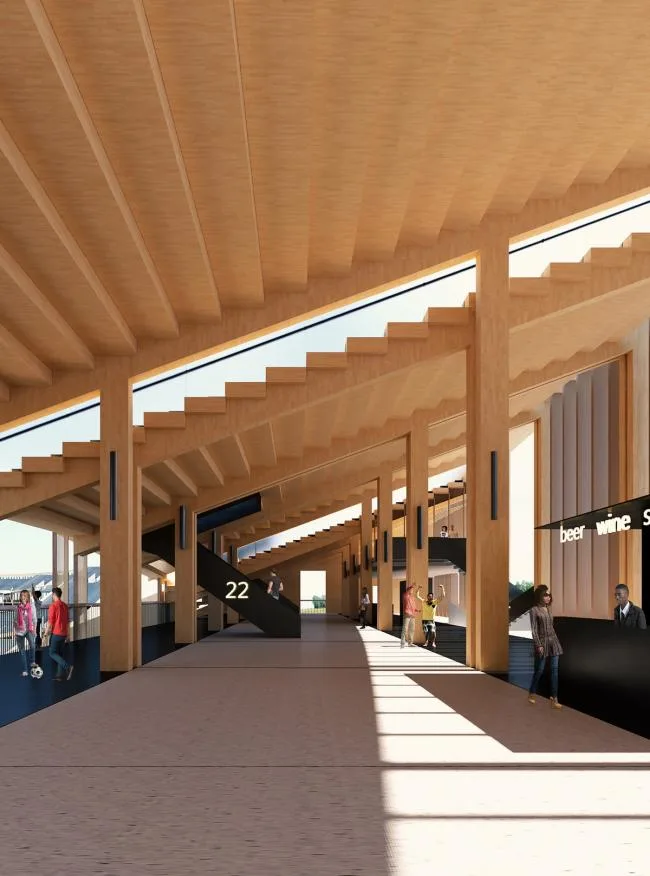
All structures are constructed using large-section engineered wood, marking the first application of heavy timber in large-span sports stadium projects. The twelve-floor maximum height aligns with the optimal scale for high-rise timber buildings.
Compared to traditional steel stadiums, heavy timber significantly reduces overall structural weight, lowers foundation costs, and accelerates construction speed and precision. The entire project is symmetrically arranged along both vertical and horizontal axes, enhancing the efficiency of prefabricated glulam wood assembly.
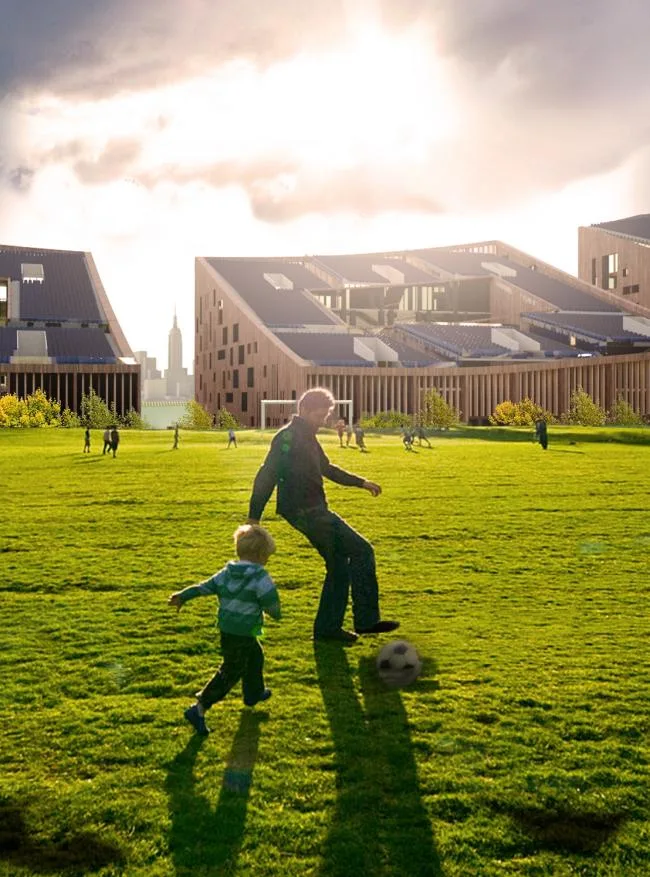
One of the greatest challenges for new World Cup venues is finding a practical use after the tournament ends. This design effectively addresses this by integrating residential units with the sports facility. Post-World Cup, the rooftop stadium will serve as a premium sports amenity for the 3,000 households within the complex and the broader Williamsburg community.
The twelve rooftop stands can also function independently as outdoor rooftops for each building, supporting resident events and performances.
Design Team Members:
Yueqi Jazzy Li;
Shuang Bao;
Nan Wei;
Braham Berg
Architect Profile:
Li Yueqi is a registered architect in the United States with a Bachelor and Master of Architecture from Durham University, USA. Currently, she serves as a project manager and senior designer at Ennaid Architecture Firm, headquartered in New York.
With extensive experience working in both New York and Shanghai, she combines professional training from the United States and the United Kingdom, maintaining a strong focus on the development of Chinese architecture. As a young architect blending Eastern and Western cultures, she believes that the exploration of “modern Chinese architecture” remains a vital and ongoing pursuit, a theme frequently reflected in her Chinese projects.
Her recent completed works include the Huawei R&D base in Wuhan, the CHeM-H laboratory at Stanford University, and the Yuanxiang Villa in Beijing. Ongoing projects under her leadership include Shanghai Taopu Smart City and Shanghai Lingang Science and Technology City, among others. Her projects have received multiple American and international awards.

Architect Li Yueqi












Must log in before commenting!
Sign Up