
The art of life begins in the garden, is inherited in the hall, and gathers in the courtyard.
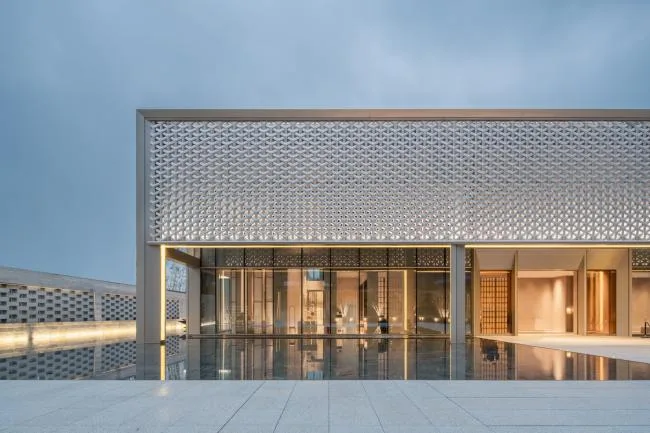
This project is situated in the Chongqing Central Park area. The architectural design employs modern language to reinterpret the essence of traditional spaces. The overall layout follows a traditional spatial pattern featuring central axis symmetry, front and back yards, and multiple courtyards. Walls, columns, and eaves are used to define courtyards and framed landscapes of varying scales and openness.
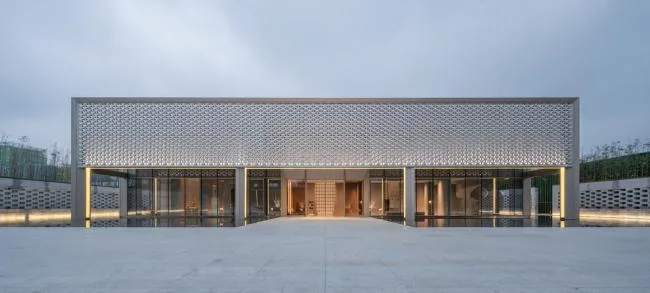
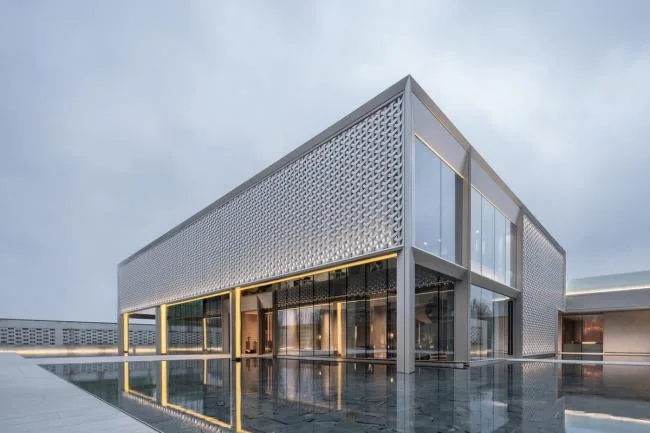
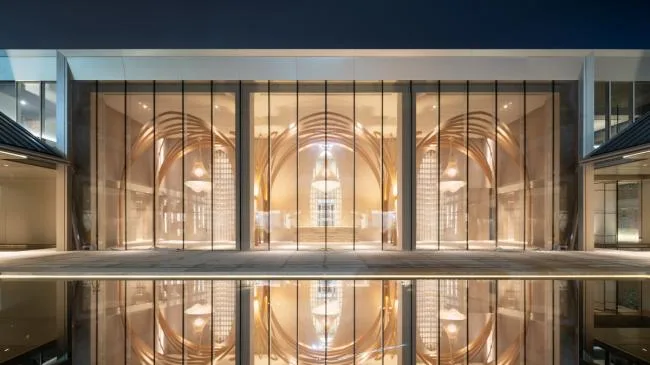
The front hall features a two-story exhibition space consisting of three connected exhibition halls and comfortable negotiation areas. The main building faces the city side with a large metal woven mesh and glass facade, creating a mysterious artistic atmosphere. The private side, overlooking the inner courtyard, boasts an 8.6-meter-high glass surface, expressing a fully open and free attitude.
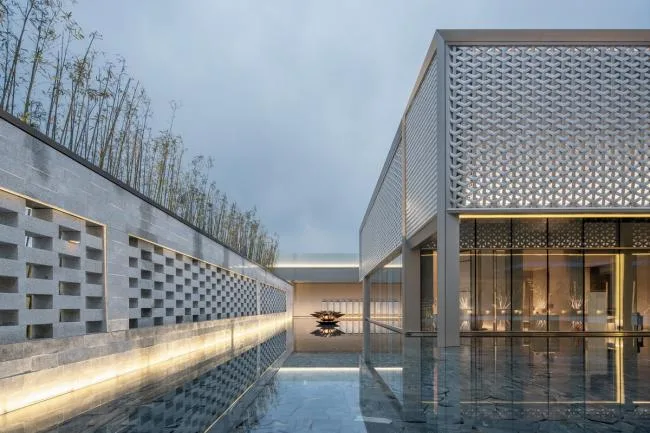
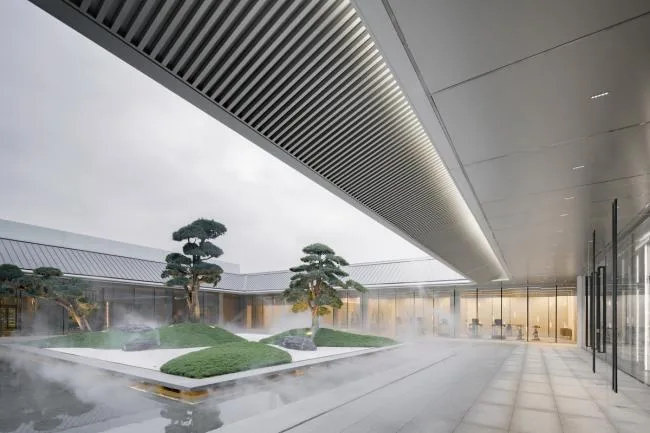
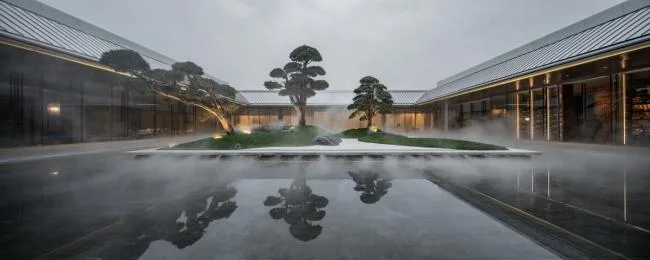
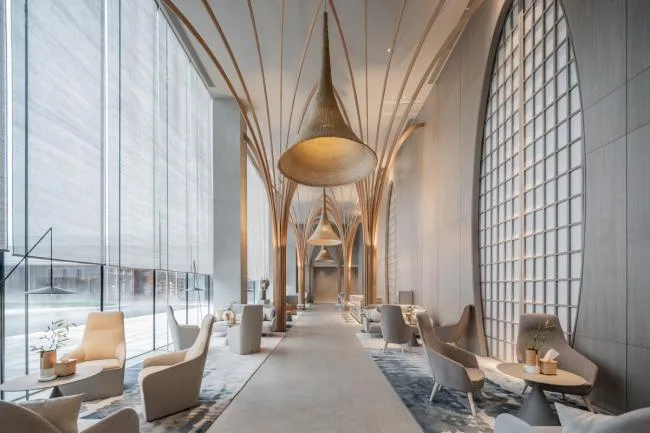
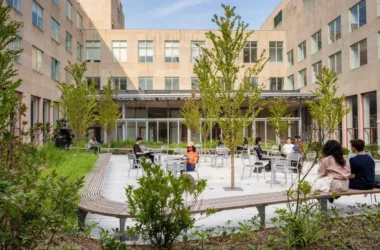
The backyard is enclosed by a large eaves porch, forming a spiritual living space known as the “Four Waters Returning to the Hall.” The semi-outdoor corridor, designed at a scale beyond daily use, supports diverse functions including transportation, communication, and rest. At the center of the inner courtyard stands a massive bonsai arrangement, primarily featuring three carefully placed pine trees. The expansive eaves frame the sky for visitors on the outer corridor and create a tranquil pine and stone painting-like scene for guests meditating indoors.
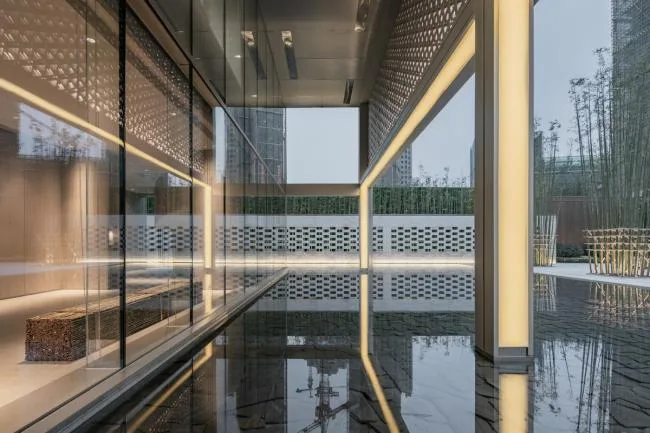
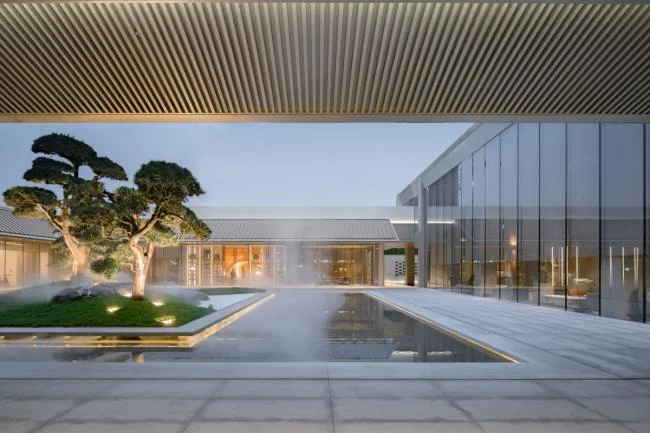
The outer corridor offers a seamless transition from indoors to outdoors and from architecture to landscape, integrating extended glass surfaces, large grey spaces, and bonsai-style inner courtyards. To enhance comfort at close range, the design divides the large eaves into two levels: a flat roof and a sloping roof. The inner flat roof’s suspended ceiling aligns flush with the interior, softening the boundary between indoor and outdoor spaces. The outer sloping roof has a slightly lower eave, acting as a frame for the inner courtyard’s landscape.
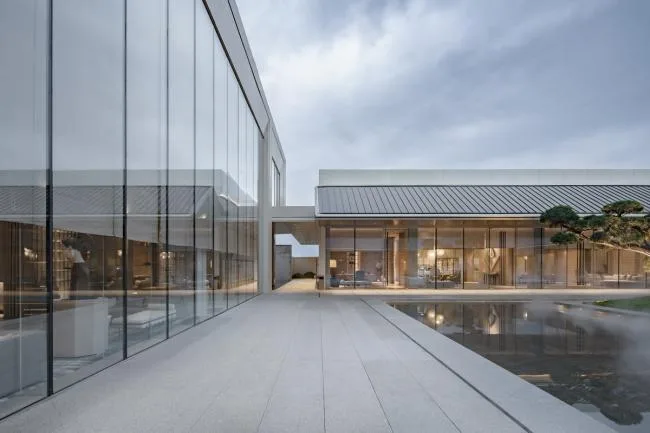
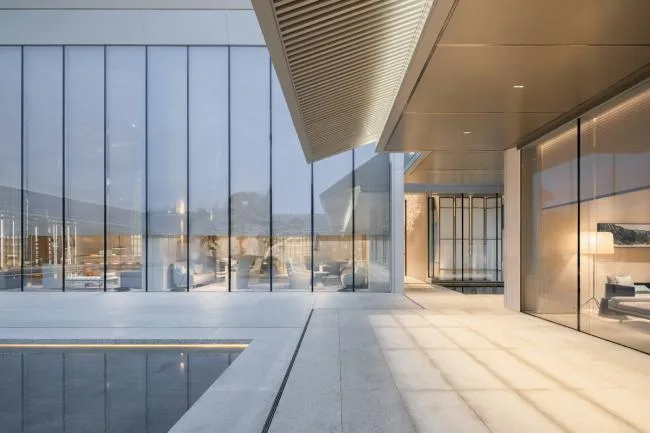
The facade design follows the purest architectural logic of “line, joint, surface, and form”: sturdy columns and eave lines outline the tall, straight building silhouette. The delicate exterior “skin” is woven from soft metal textures and transparent glass surfaces. Together, lines and surfaces create a concise yet powerful geometric form. By contrasting rigidity with softness, and reality with illusion, the architecture expresses a modern tension.
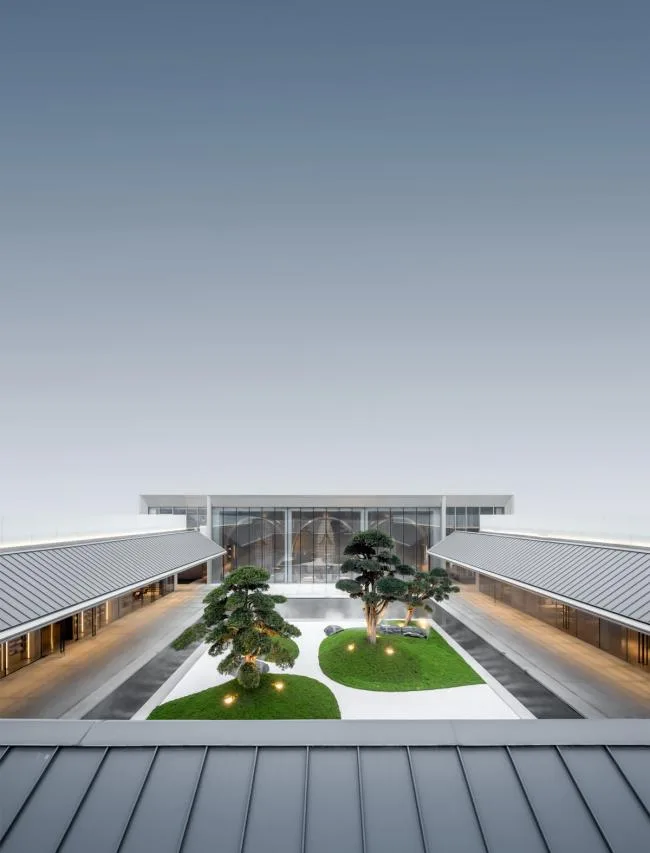
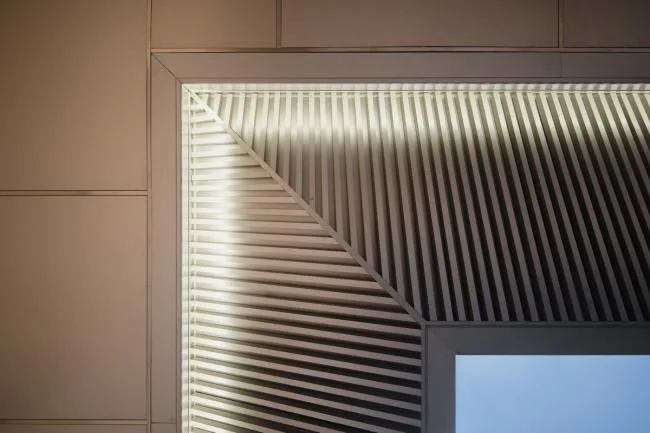
The metal lines outlining the exterior contours are all custom-made products. From large columns, eaves, and waistlines to smaller bottom trims and door frames, these components achieve a perfectly upright effect. These customized metal profiles align with the design’s pursuit of strength and simplicity. Detailed joint designs reflect the designer’s focus on user experience and the builder’s craftsmanship.
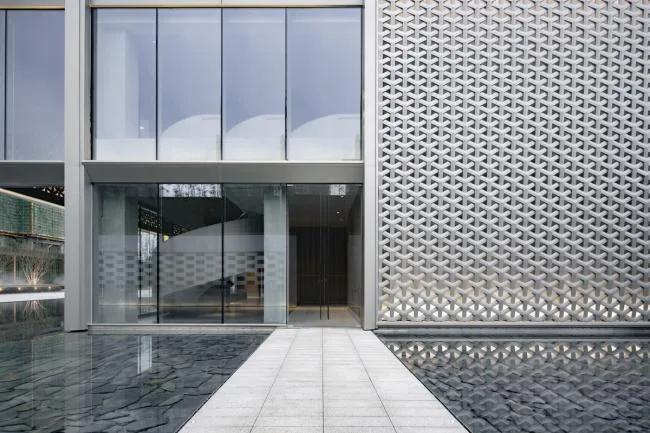
The main building is surrounded by water on three sides. The junction between the bottom of the exterior wall and the water surface features an inverted triangular edge, visually lifting the building and creating an effect of it floating on water. The outer frame columns extend into the water, with aluminum panels above the waterline and stainless steel panels below. As water ripples shift, the stainless steel reflects changing light and shadow rhythms onto the building.
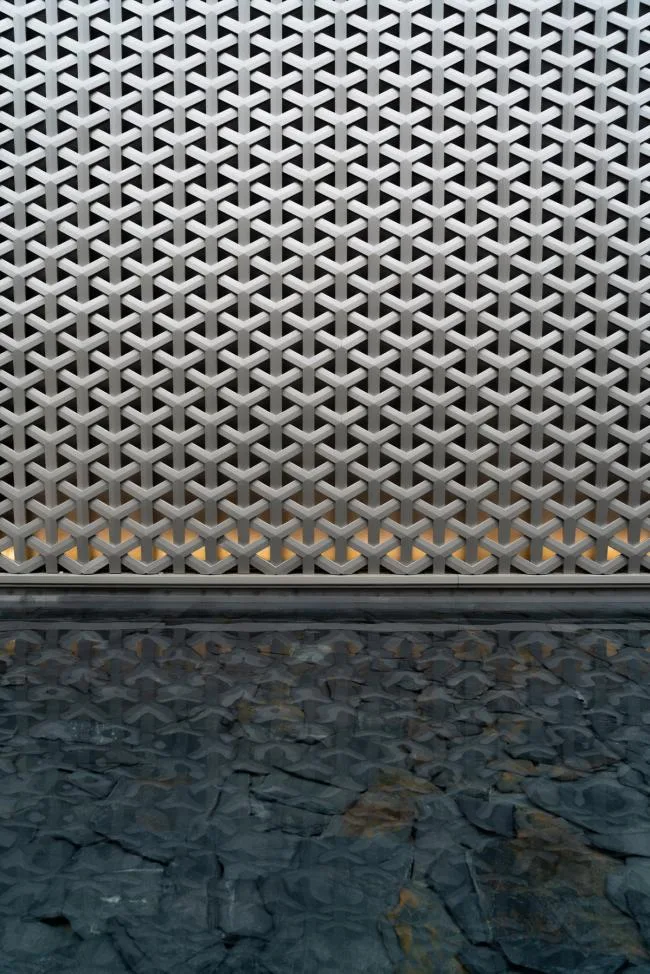
The main facade is woven into a massive metal mesh artwork using 4,500 Y-shaped three-dimensional units. These units are manually polished and factory-assembled into 1.2m by 2.4m panels, then cut and installed on site. Lighting systems installed above and below the mesh softly illuminate the triangular openings at night, creating a silhouette effect distinct from the daytime appearance.
The suspended ceiling plays a key role in spatial definition by varying the scale of its panels. The ceilings of the inner and outer corridors use numerous oversized panels, with lengths up to 3m and widths up to 2.3m, separated by 30mm stainless steel strips embedded between aluminum panels. These large panels and complex details challenge construction smoothness. By thickening panels, increasing keel density, and repeated on-site adjustments, a flawless finish was ultimately achieved.
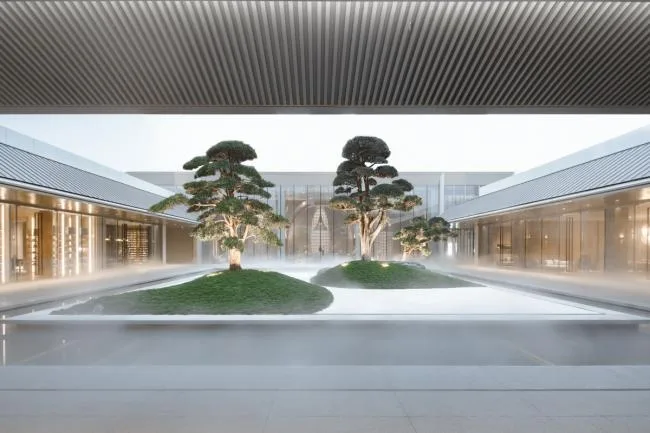
On one hand, technology enriches simple designs with intricate details. On the other, rational deconstruction and reorganization clarify complex designs. The large eaves enclosing three sides of the inner courtyard are volumetrically detached from the main building. Due to the complex structural hierarchy of the eaves, elements such as double-pitched roofs, flat ceilings, sloping ceilings, and eave lines are disassembled and integrated into the side facade designs. This transforms inorganic shapes into organic forms, embodying the design philosophy that “form follows structure.”
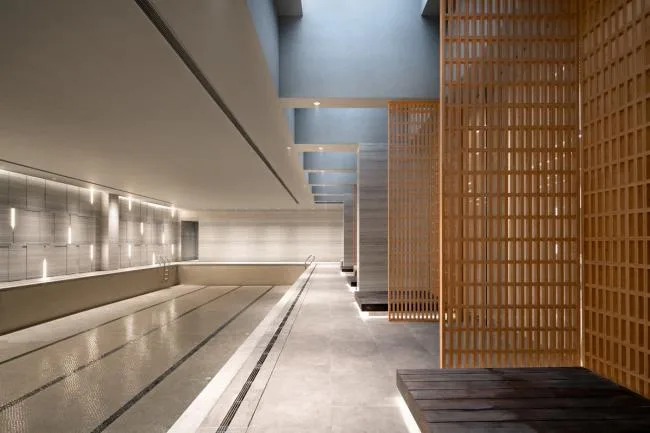
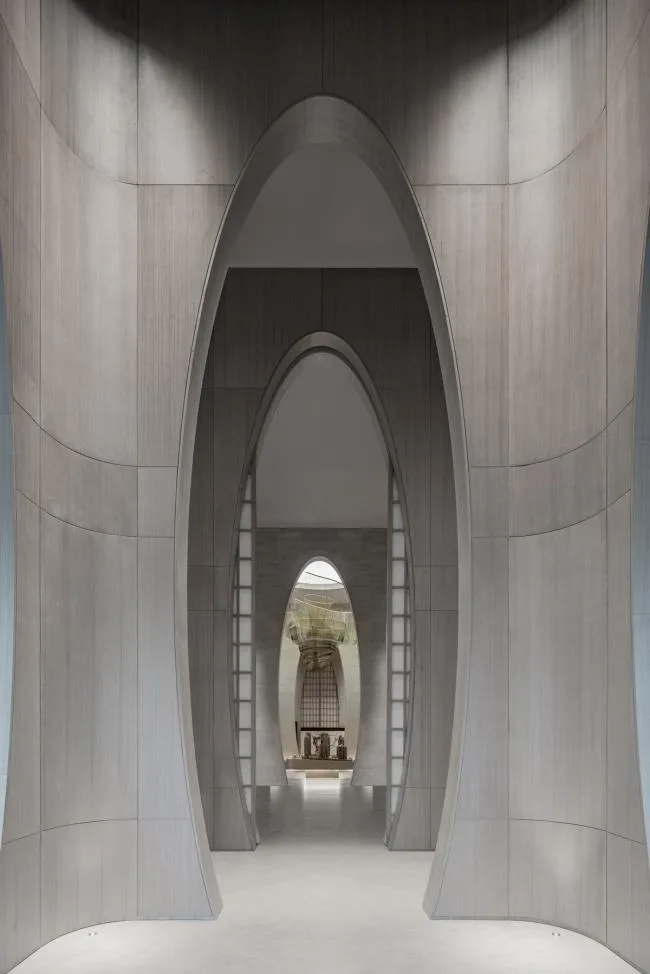
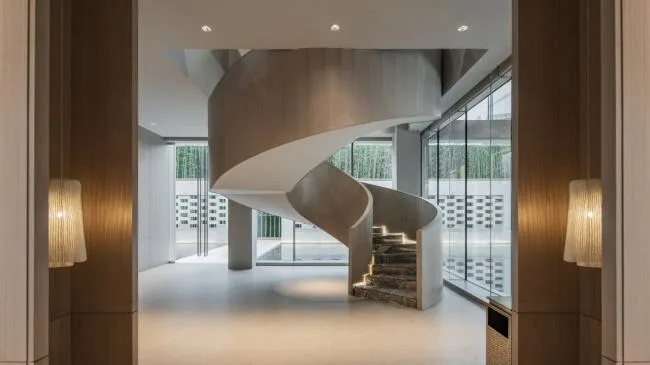
The project’s most significant exhibit is the artistic space created by the interplay of architecture, landscape, and interior design. In this exhibit, “architecture is paper, landscape is painting.” The space offers different sensory experiences depending on the viewer’s position and the changing light and shadows throughout the day, making it the most captivating artwork in Jade Park.
Design Drawings:
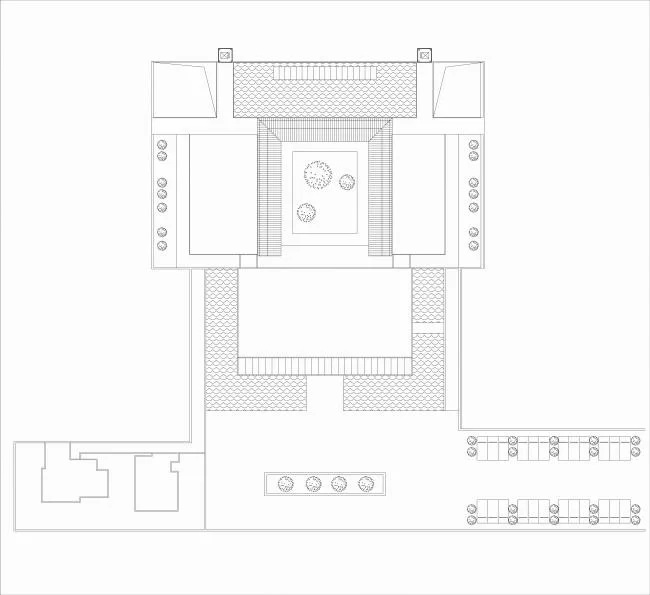
▲ General Layout Plan
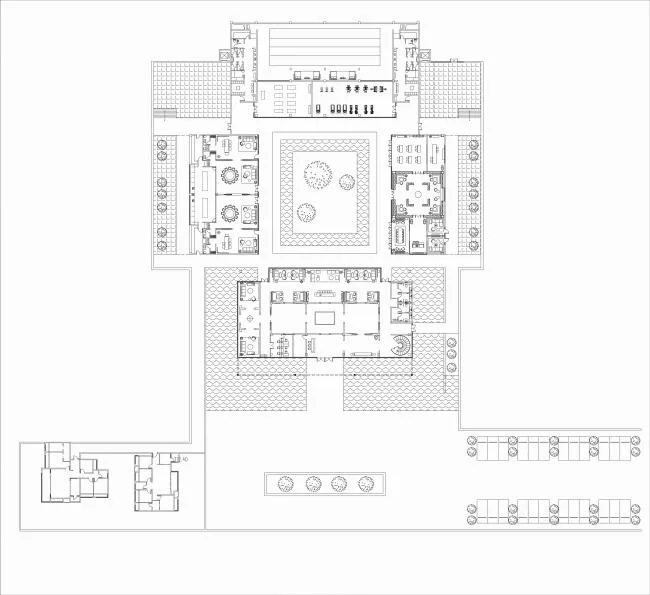
▲ First Floor Plan
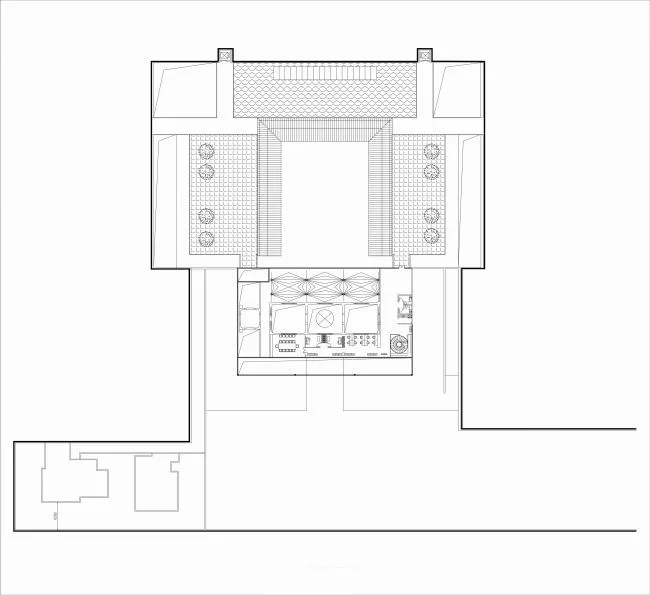
▲ Second Floor Plan
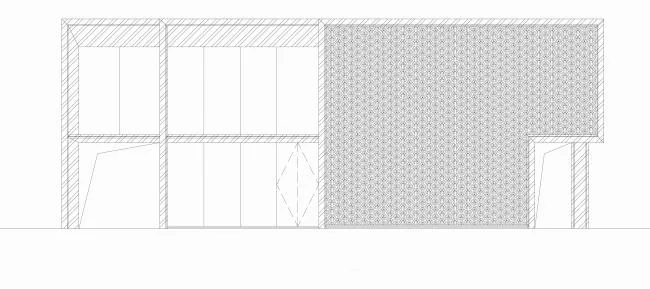
▲ South Elevation View
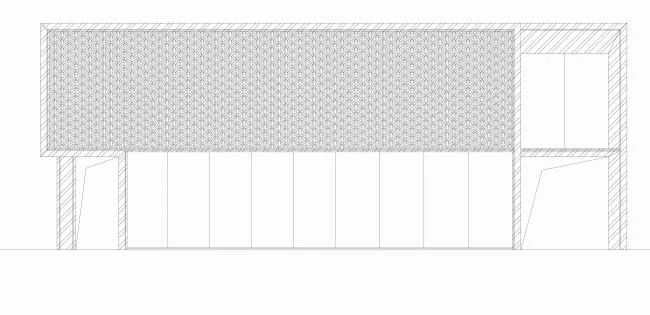
▲ North Elevation View
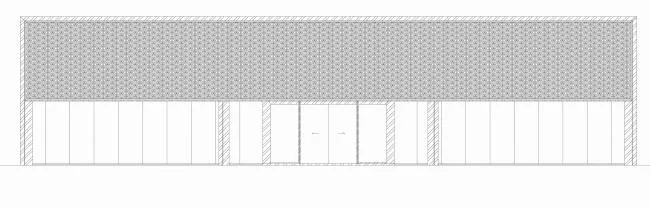
▲ West Elevation View
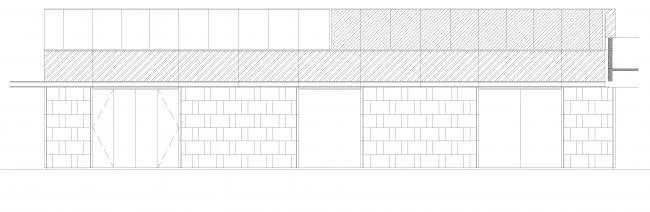
▲ Courtyard Elevation View 1

▲ Courtyard Elevation View 2
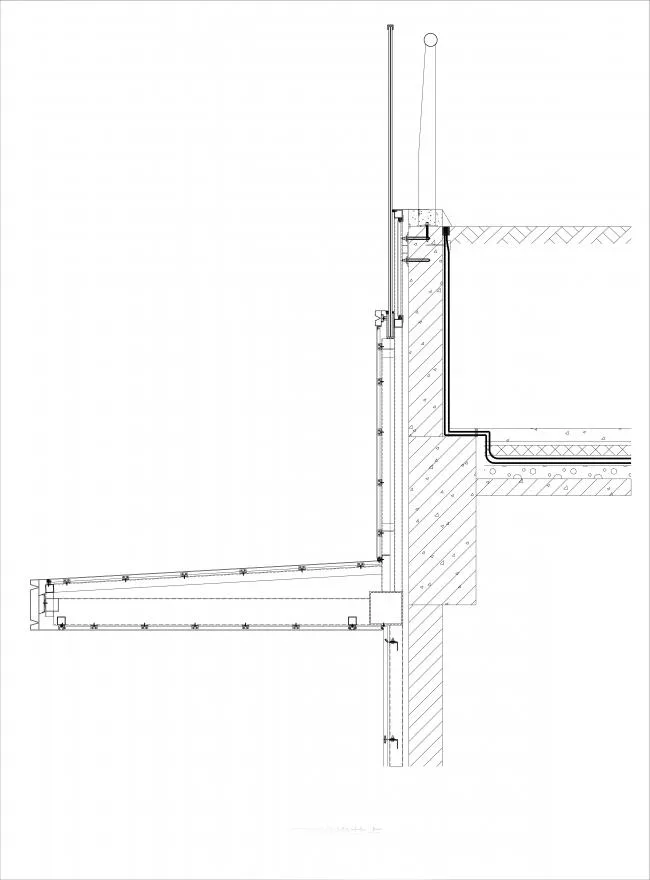
Node Detail 1
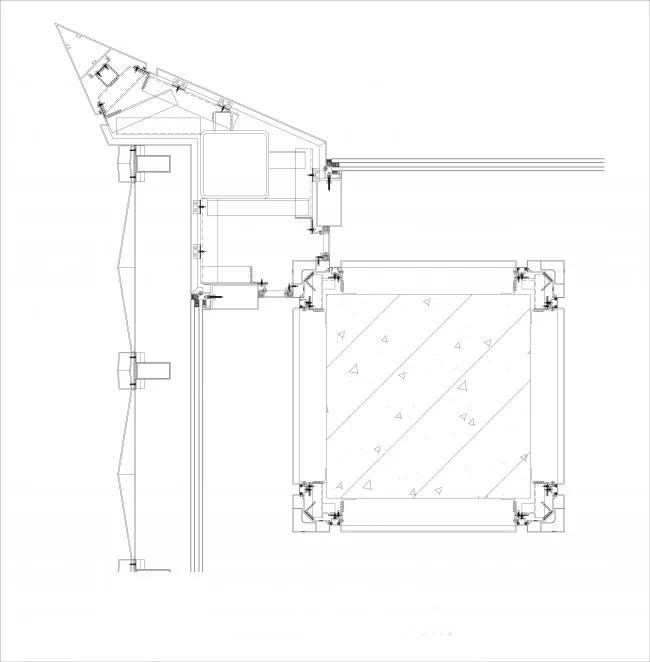
Node Detail 2
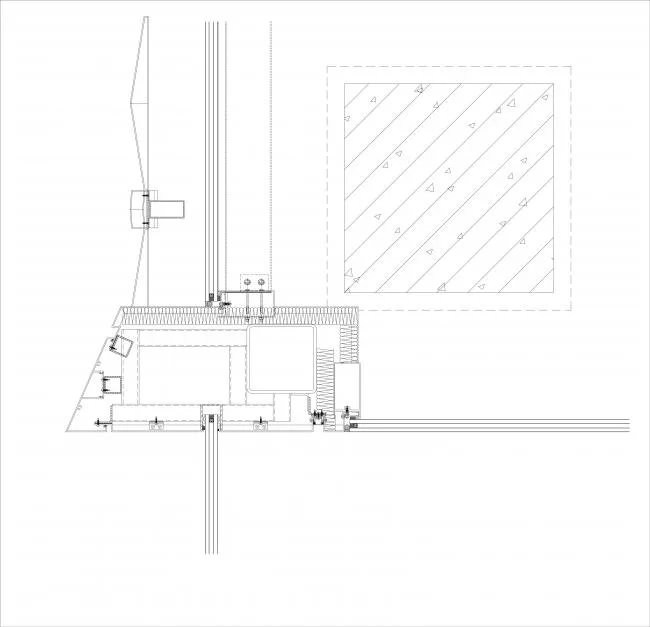
Node Detail 3
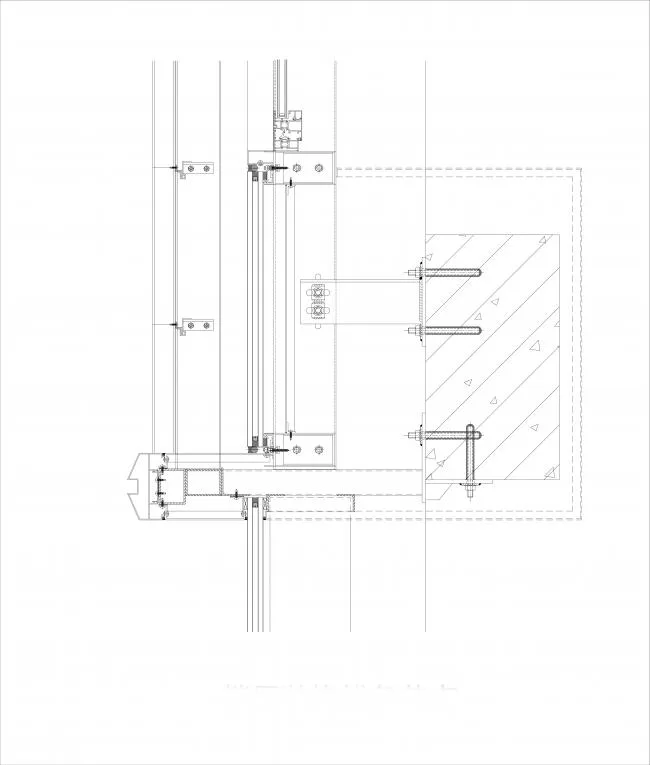
Node Detail 4
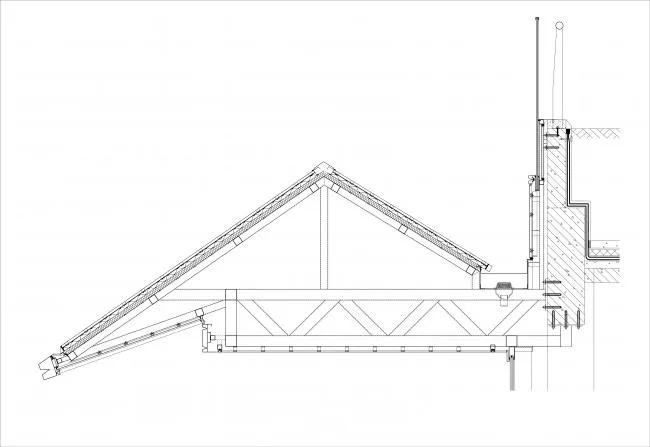
Node Detail 5
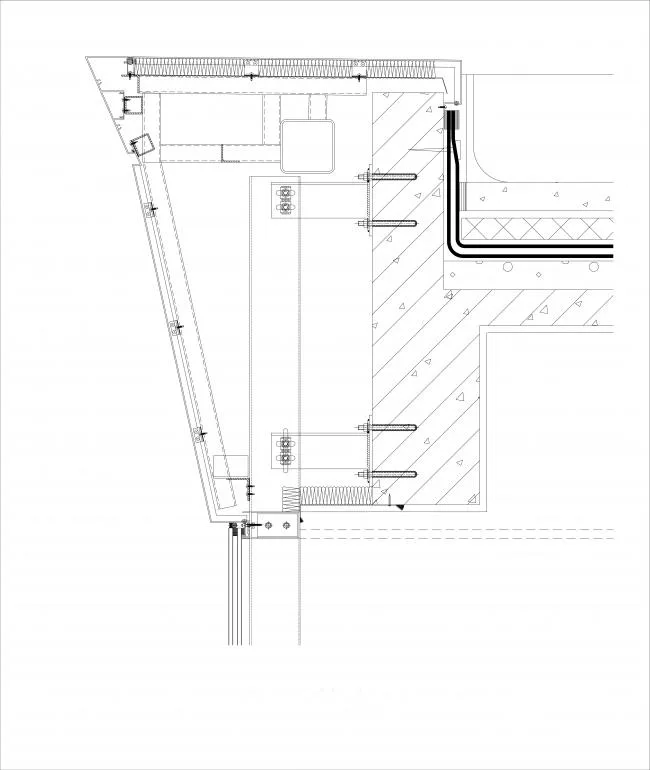
Node Detail 6
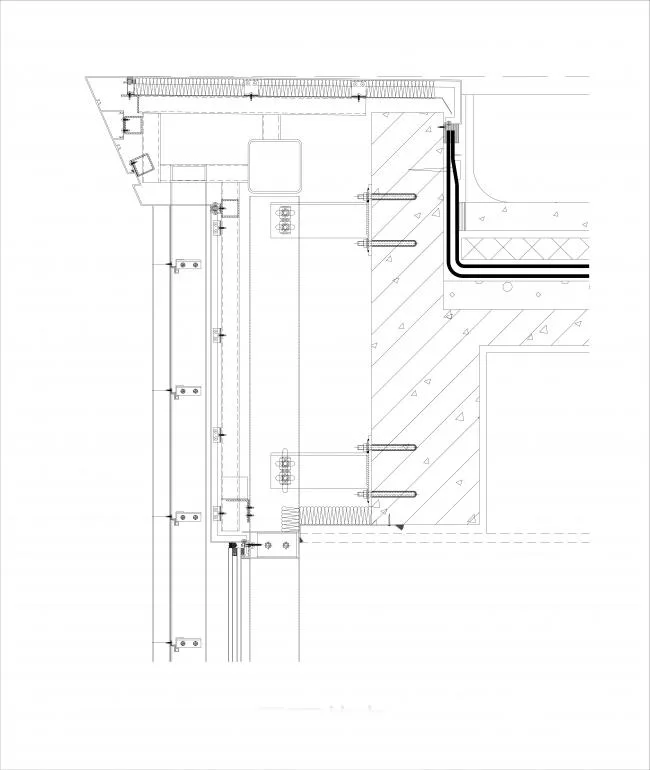
Node Detail 7
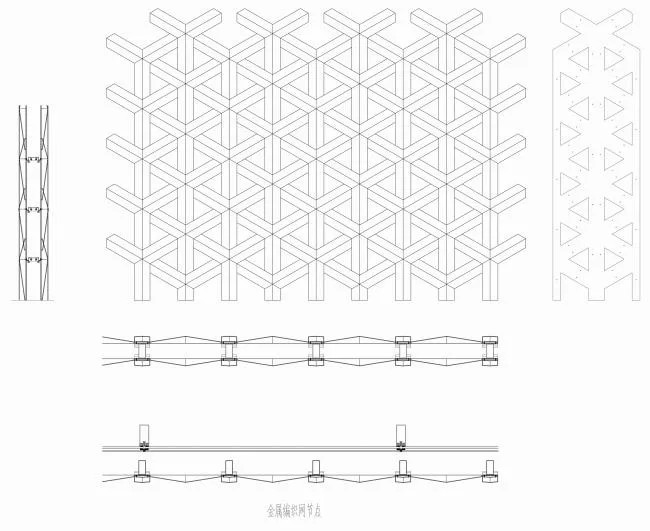
▲ Node Detail Drawing 8
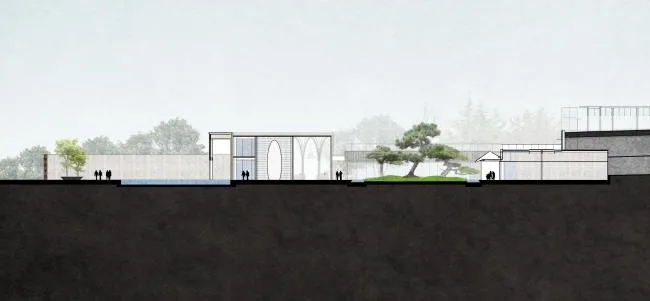
▲ Building Facade
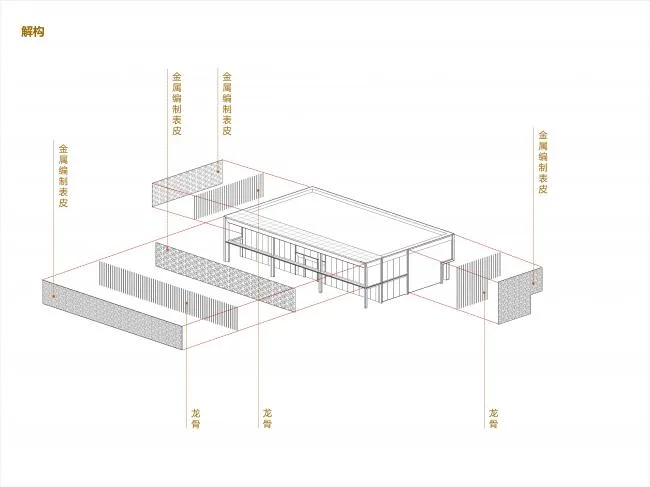
▲ Skin Analysis
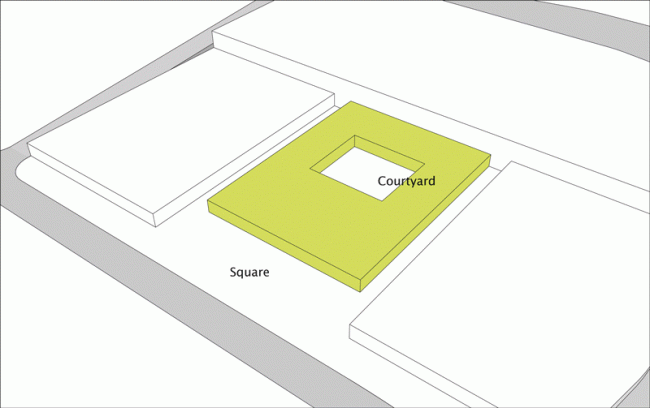
▲ Design Evolution
Project Information:
Project Name: Chongqing Vanke Jade Park
Project Type: Community Center, Living Hall
Location: Chongqing
Owner: Chongqing Vanke
Architectural Design: Shanghai Riqing Architectural Design Co., Ltd
Design Director: Ren Zhiguo
Main Creative Team: Yang Yong, Zhang Lu, Fu Xueqing
Landscape Design: Beijing Chuangyi Shance Landscape Design Co., Ltd
Interior Design: YU STUDIO
Floor Area: 8,630 square meters
Building Area: 2,728 square meters
Design Period: June 2018 – September 2018
Completion Date: December 2018
Architectural Photography: Xingzhi Imaging












Must log in before commenting!
Sign Up