
Three Methods for Drawing Striped Walls in Revit
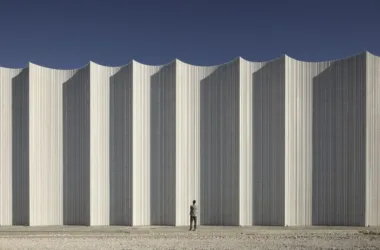
When designing exterior decorations in your model, striped wall patterns often come into play. Below, I’ve compiled three methods to help you create these striped walls. There are two common types of striped wall designs:
First, let’s discuss the initial method. Generally, there are two ways to create this type of wall:
1. Place partition strips directly onto the wall.
2. Add partition strips as an integrated part of the wall.
The main difference between this approach and the first method is that this technique combines the partition strip with the wall as a whole. Consequently, when drawing additional walls, the partition strip is included automatically without needing to add it to every wall individually.
Next, let’s explore the process for drawing the second type of striped wall shown in the first image:
1. Draw any wall, then enter the type editing mode to modify its structural material.
2. Search for suitable materials in the appearance material library.
Choosing the right material is important because some materials do not include the “Concave Convex” property.
3. Locate the “Concave Convex” setting and adjust it to achieve the desired texture.
4. Then, under the “Image” section, use the “Quantity” option to adjust the depth of the embossing.
5. Finally, modify the width of each stripe in the image to customize the pattern.
Let’s first examine the stripe pattern at its original width, then adjust the width to your preference.
These are the three main methods for creating striped walls in Revit.
【 Related Skills 】
Tips for Drawing Walls in Revit















Must log in before commenting!
Sign Up