
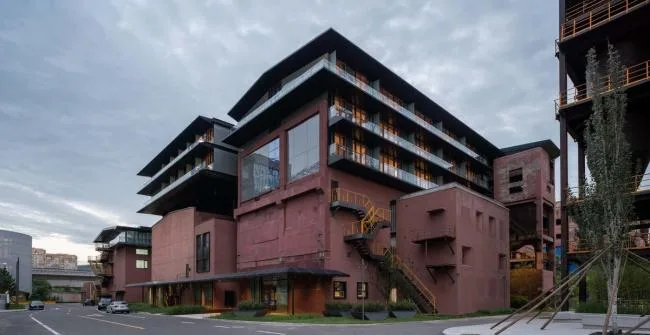
Looking southwest at Shougang Workshop (Photo by Chen Hao)
The design of “Cangge” — Shougang Gongshe Zhixuan Holiday Hotel — began in November 2015 and was completed in July 2018. Situated in the northern part of the old industrial zone of Shougang, the project repurposed four former industrial buildings: a blast furnace air compressor station, a coke and ore return warehouse, a low-voltage distribution room, and the N3-18 transfer station.
These structures have been transformed into a unique boutique hotel that provides shift accommodation for employees in the adjacent Beijing 2022 Winter Olympics Organizing Committee office area.
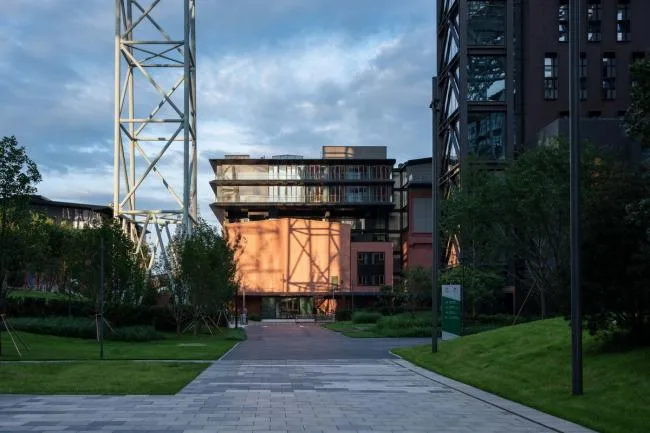
View from the Winter Olympics Organizing Committee office area towards Wangshougang Workshop (Photo by Chen Hao)
The design focuses on preserving as much of the original industrial buildings as possible, which were previously abandoned and slated for demolition. The spatial, structural, and external features remain intact while new structures are seamlessly integrated above, stacked in multiple layers to support future functions.
The large-span factory building below, referred to as the “warehouse,” serves as a public activity space. Above it floats the “pavilion,” which houses the guest rooms. This juxtaposition of the preserved “warehouse” and the overlaid “pavilion” creates a compelling contrast between old and new.
Enhancements include added metal canopies and outdoor stairs to parts of the “warehouse,” while the “pavilion” incorporates warm, natural materials like wood alongside glass and metal. This creates a delicate balance between artificial and natural elements, industrial and residential atmospheres, as well as historical and futuristic qualities.
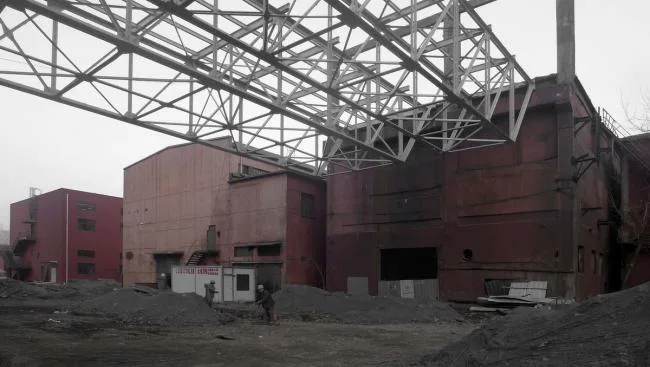
West facade before renovation (Photo by Zheng Xuhang)
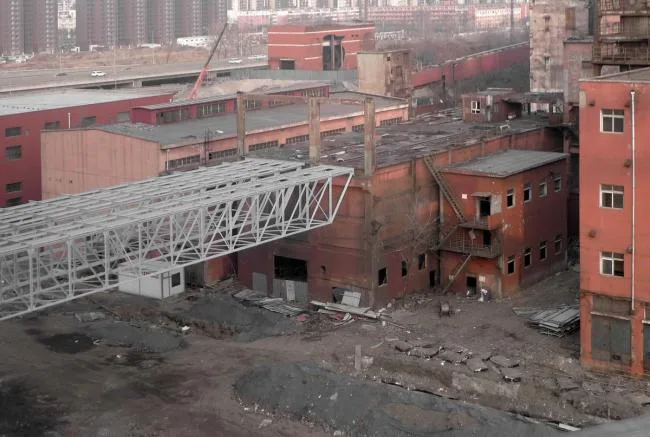
Southwest aerial view before renovation (Photo by Zheng Xuhang)
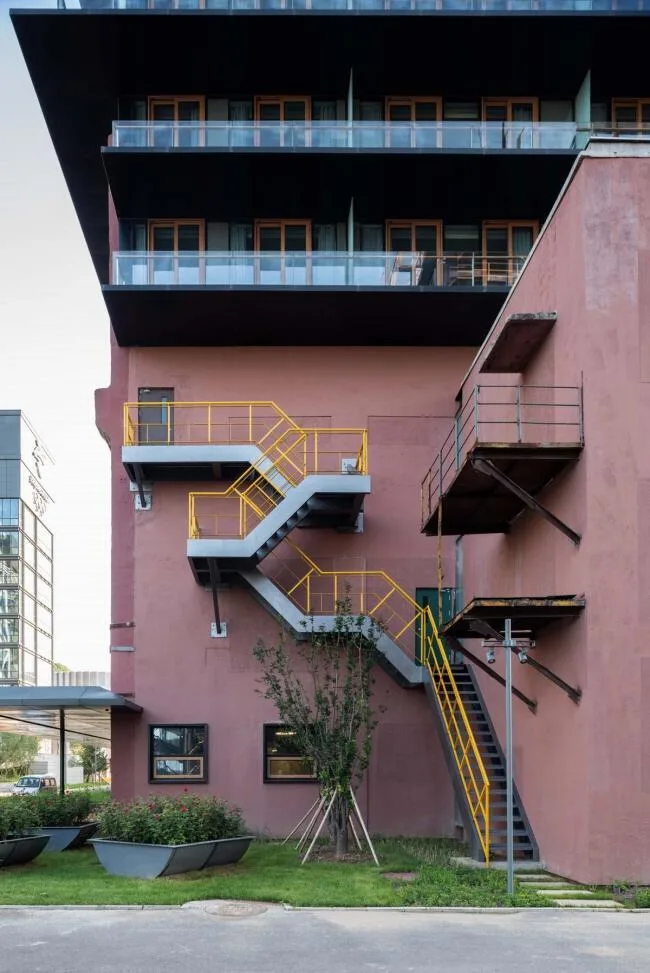
Outdoor staircase (Photo by Chen Hao)
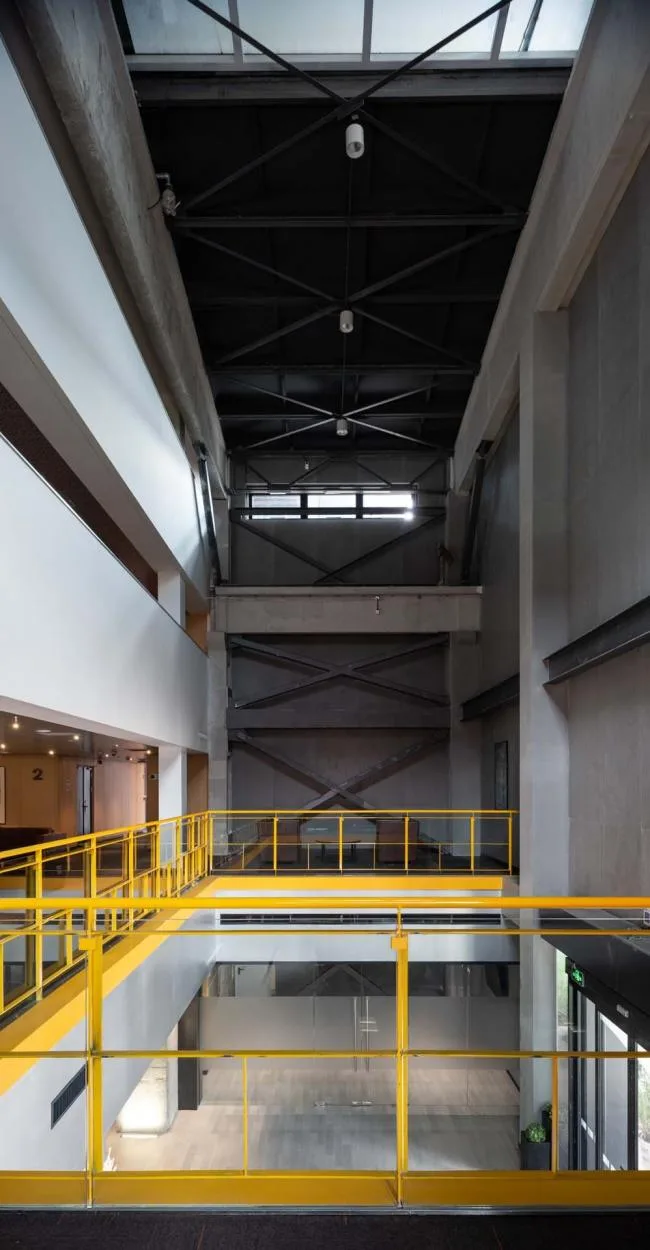
The entrance hall fully retains the original factory structure (Photo by Chen Hao)
The blending of old and new buildings creates a captivating interior environment. The northern section of “Cangge” was converted from the blast furnace air compressor station, preserving the east and west mountain walls and the end-span structures of the original building.
Industrial elements such as crane beams, wind-resistant columns, inter-column supports, and air compressor foundations are dramatically exposed within the lobby’s public space. The new structure tapers layer by layer from bottom to top, with roof skylights diffusing natural light evenly through a translucent film into the circular corridor below, creating a serene atmosphere throughout the guest room areas.
The staggered, towering skylight courtyard forms a “tower”-shaped interior space inside the “Ge” with a ceremonial feel. Artistic lamps hang from the skylight like a light, translucent metal curtain, softening the space’s tranquility and toughness. This spatial design starkly contrasts with the raw, rugged industrial remains.
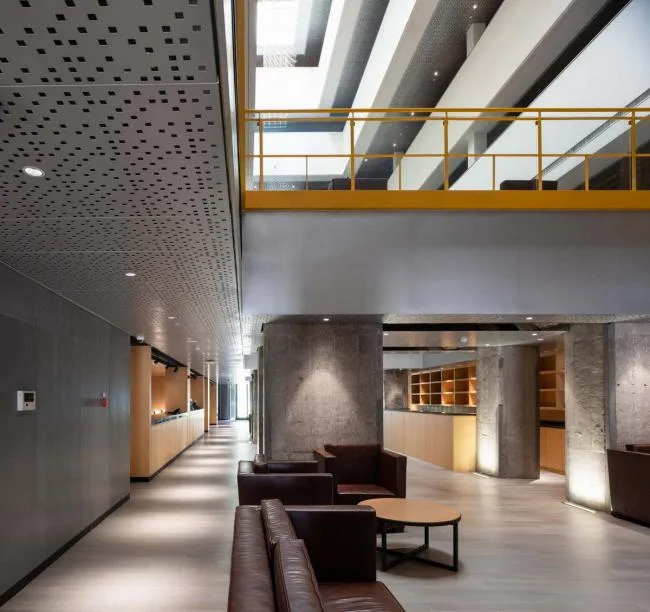
The lobby featuring exposed concrete components from the original air compressor foundation (Photo by Chen Hao)
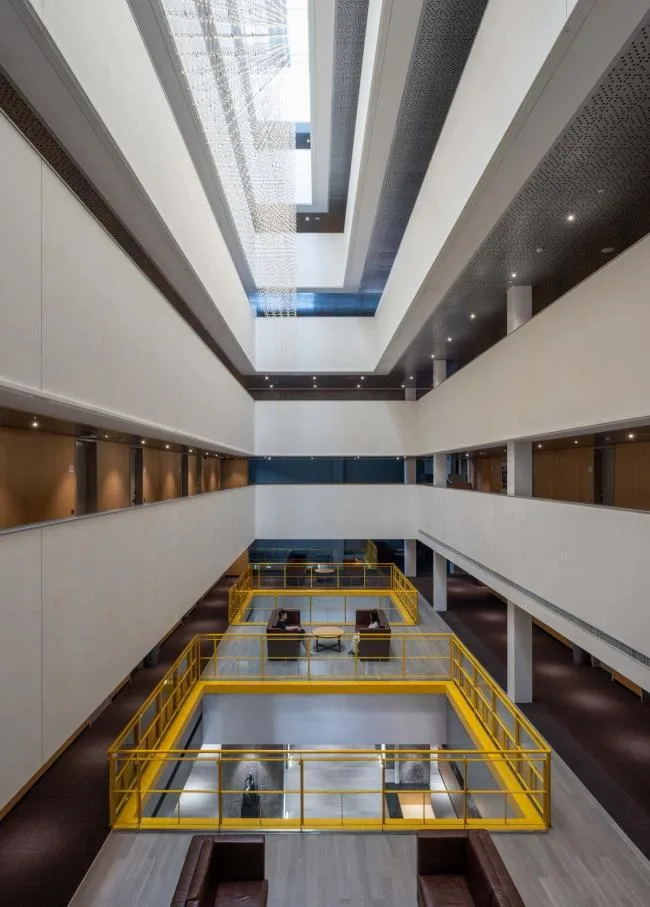
Courtyard (Photo by Chen Hao)
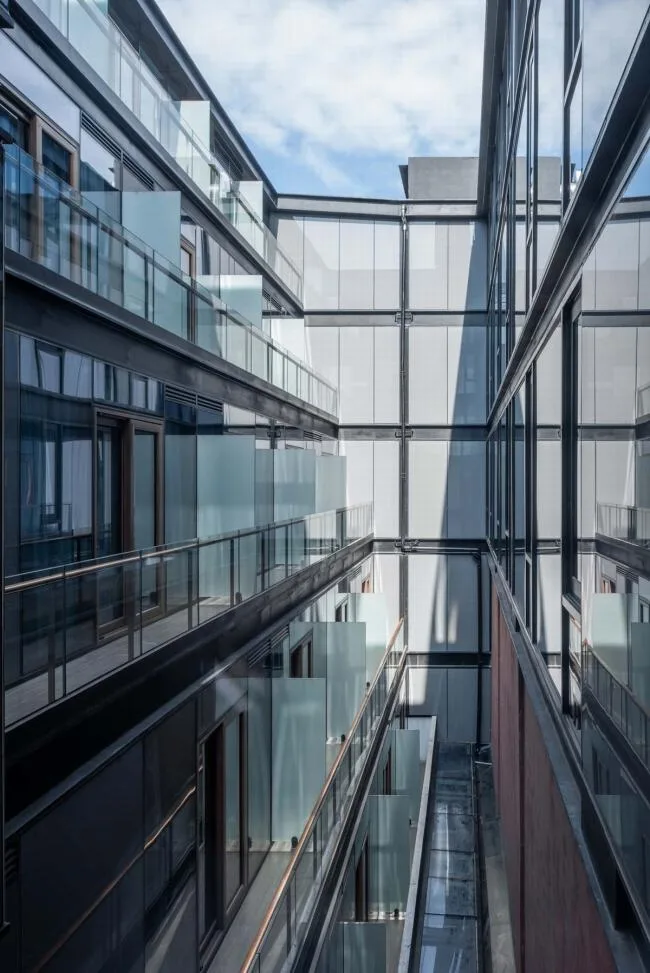
The courtyard between the north and south districts (Photo by Chen Hao)
The southern part of “Cangge” was adapted from the original coke and ore return warehouse, low-voltage distribution room, and N3-18 transfer station. Inside the all-day dining room, three massive return ore warehouse metal hoppers and their maintenance stairs have been fully preserved.
The lower discharge outlets of the hoppers have been ingeniously converted into air conditioning vents and lighting sources for the dining area. The upper sections of the hoppers have been transformed into a bar gallery, allowing guests to walk through and experience a unique spatial atmosphere.
The guest room level features deep eaves, offering a relaxed, horizontal view. From the balcony, guests can lean on the railing and enjoy sweeping views of the renovated West Tenth Winter Olympics Square and the distant natural landscape of Shijingshan.
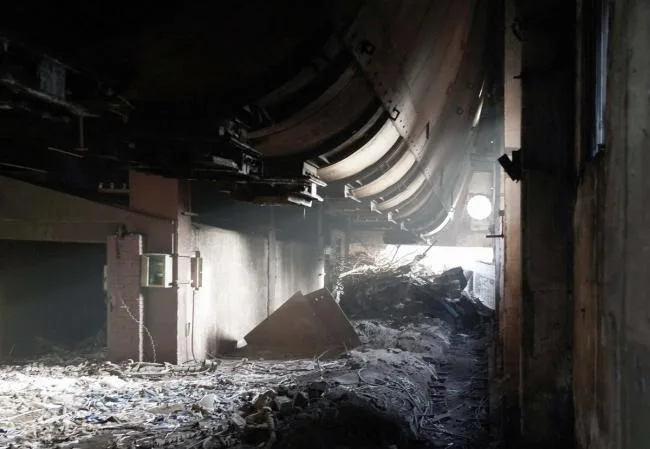
Giant metal hopper before renovation (Photo by Zheng Xuhang)
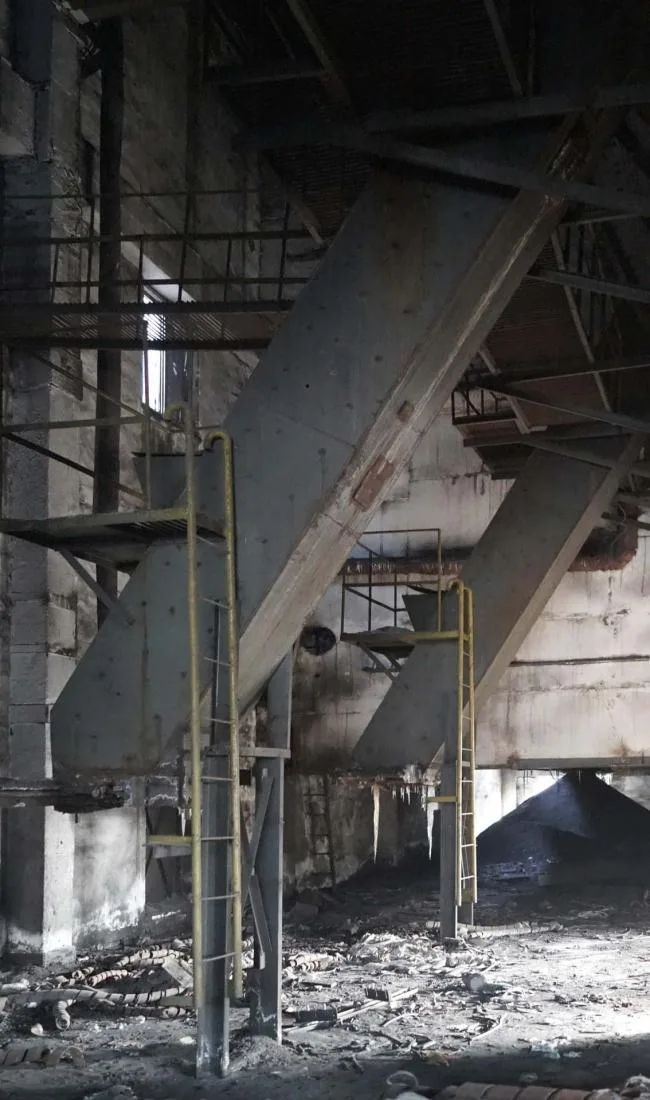
Discharge port of the return mine before renovation (Photo by Zheng Xuhang)
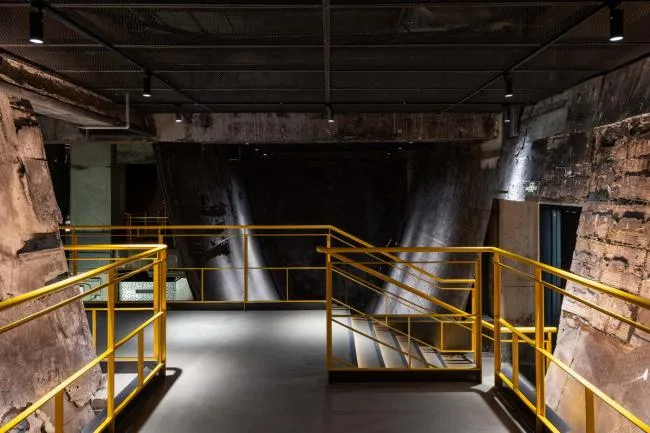
Interior of the cleaned metal hopper, now open for visitation (Photo by Chen Hao)
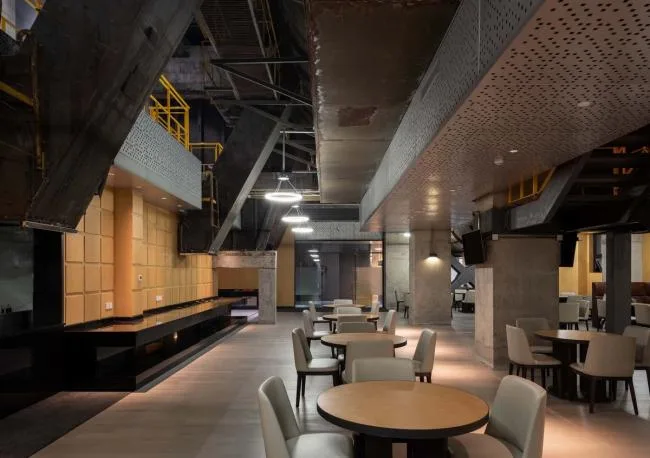
All-day restaurant (Photo by Chen Hao)
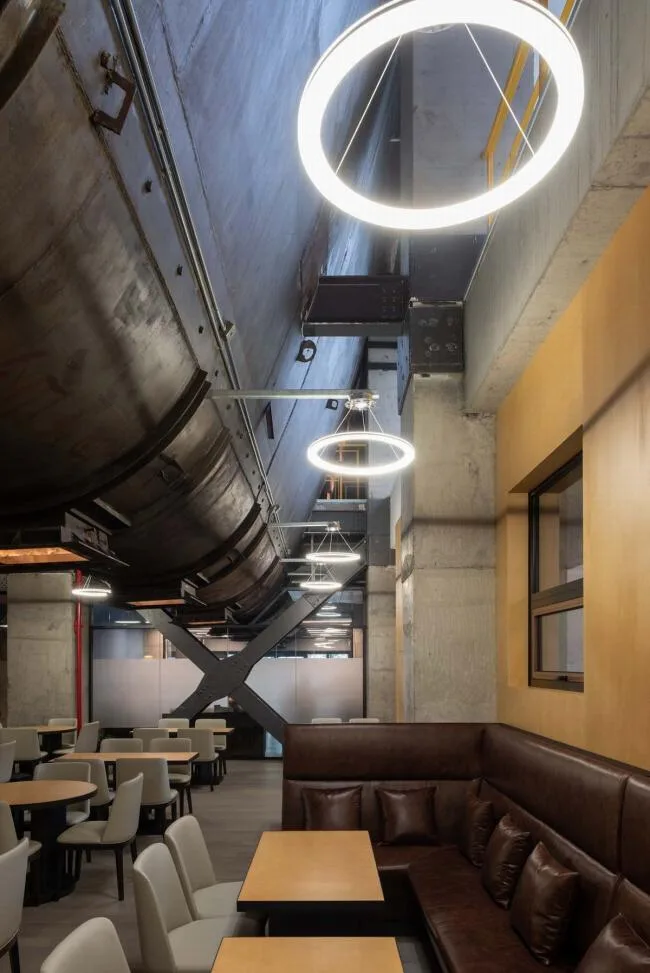
All-day restaurant (Photo by Chen Hao)
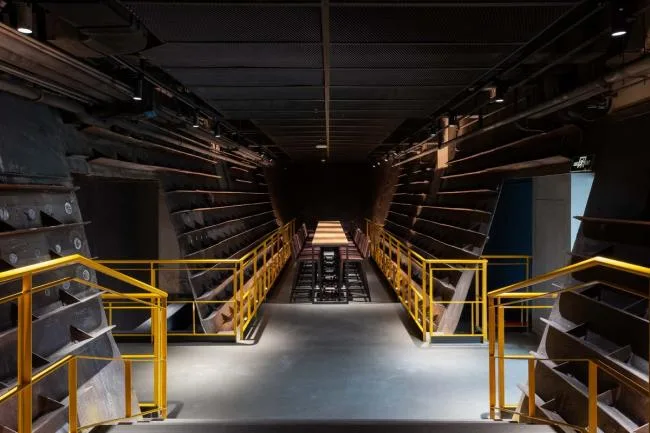
Bar transformed from a return mine warehouse (Photo by Chen Hao)
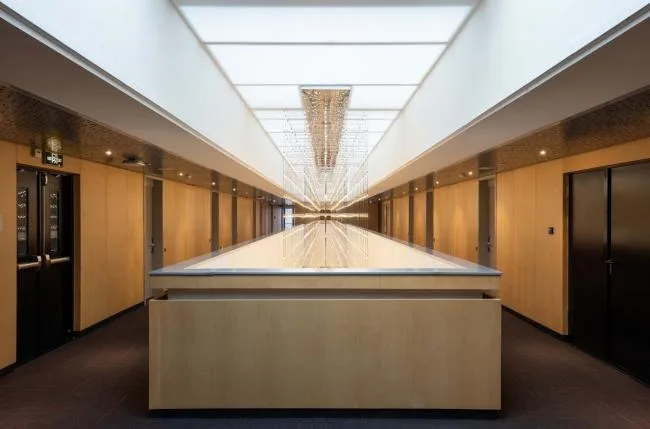
Public space at the guest room level (Photo by Chen Hao)
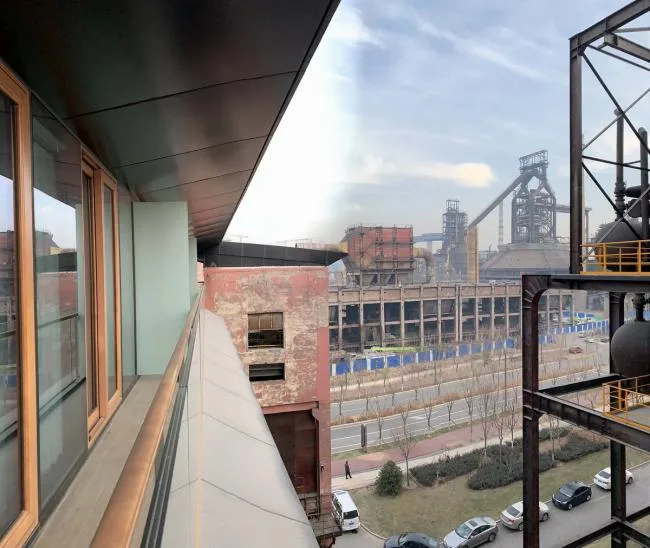
View of Shougang’s industrial landscape from the guest room balcony
During the design process, architects (BIM learners) worked closely with structural engineers to perform a comprehensive structural inspection (BIM tutorial) of the original buildings. They developed a treatment plan combining demolition, reinforcement, and preservation.
To restore the exterior walls, particle spraying technology was used to carefully remove dirt while preserving the original paint, maintaining the traces of time and historical significance accumulated over decades.
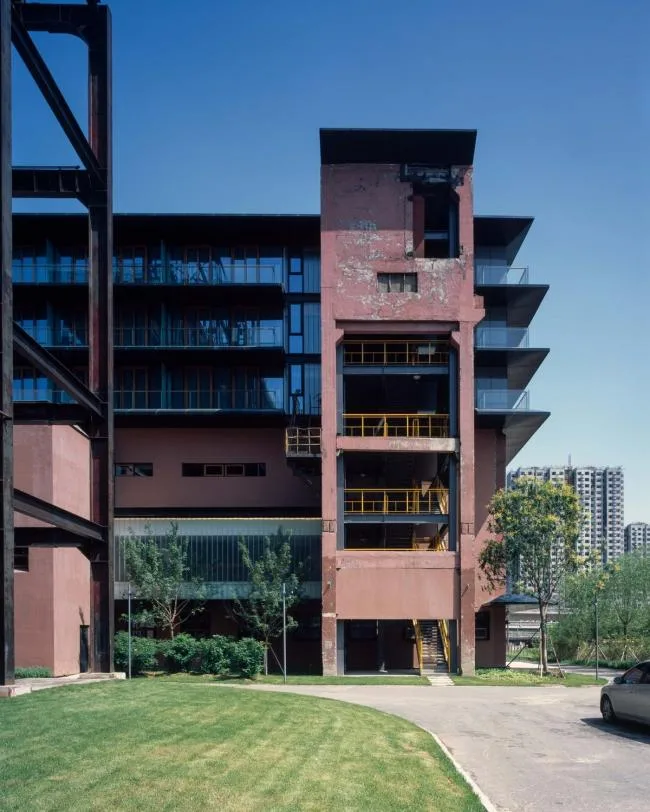
The original N3-18 transfer station repurposed as a staircase
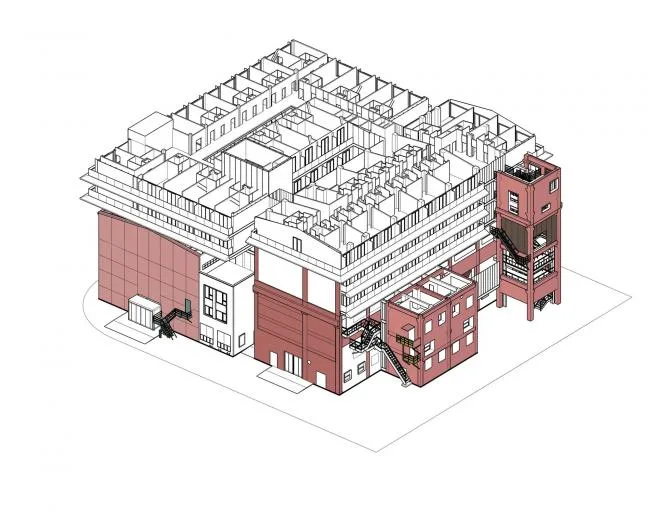
Schematic diagram illustrating the wall renovation process
“Cangge” is the best-preserved old building among the individual structures within the West Tenth Winter Olympics Square. The design honors the authenticity of industrial heritage and preserves the historical memory of Shougang’s old industrial area.
Through the blend of old and new, and the interaction of function and form, the project expresses the poetic tension inherent in the site. Once an essential node in Shougang’s production chain, it now serves as a vibrant example of urban renewal, aligning well with the sustainable vision of the Beijing 2022 Winter Olympics.
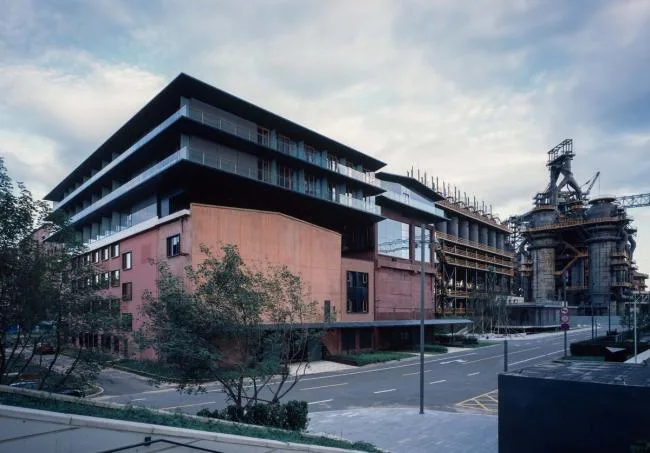
Shougang Building and distant hot blast stove
Project Information:
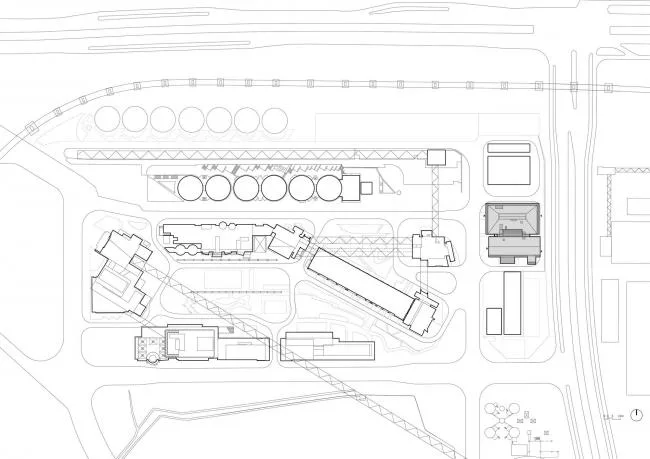
Master Plan
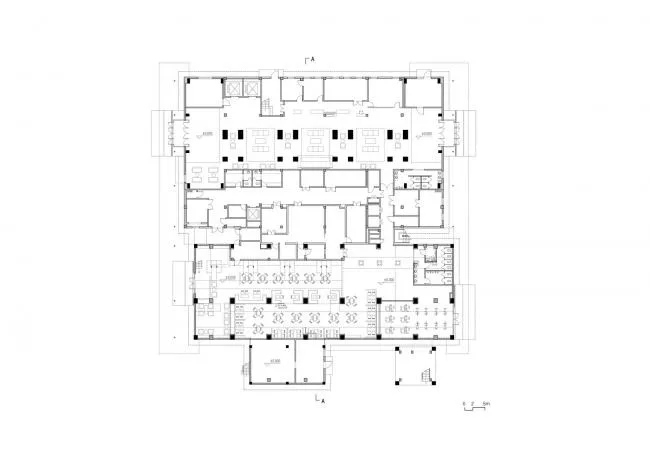
Ground Floor Plan
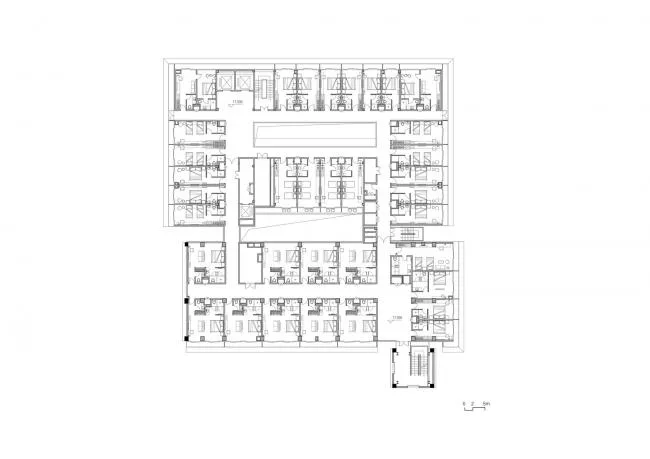
Sixth Floor Plan
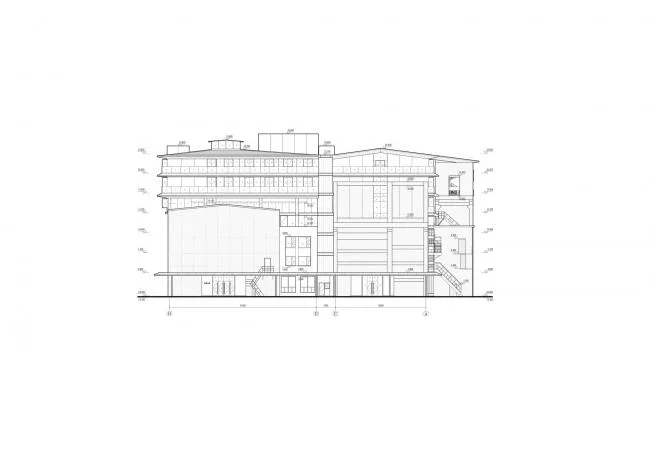
West Elevation
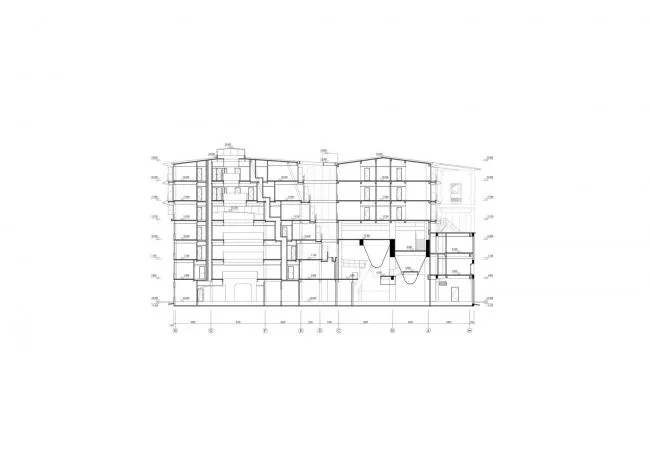
Section A-A
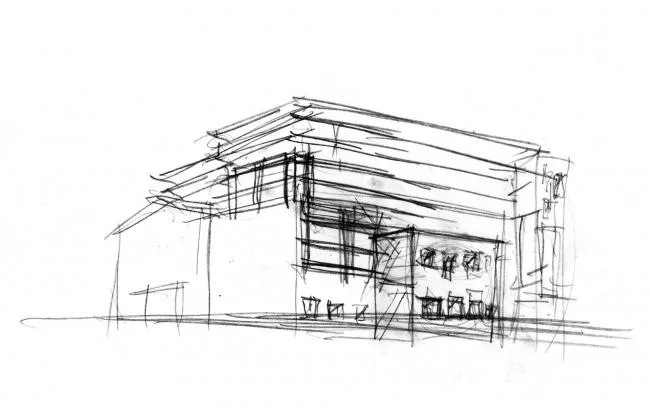
Preliminary sketch
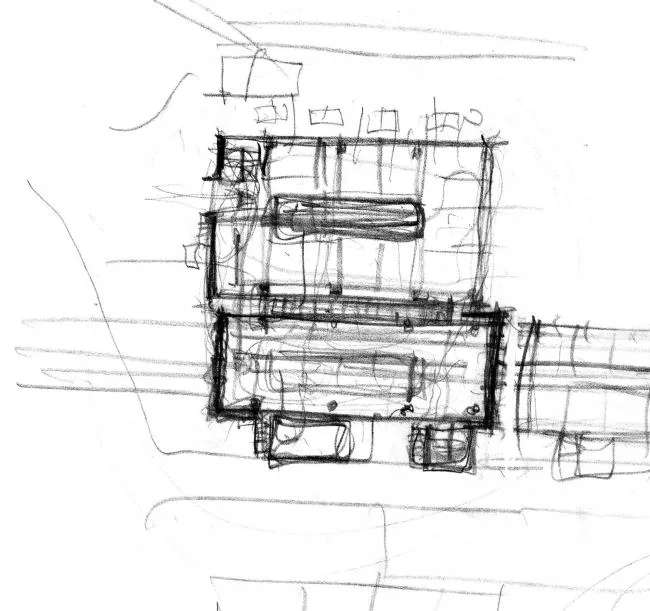
Preliminary sketch
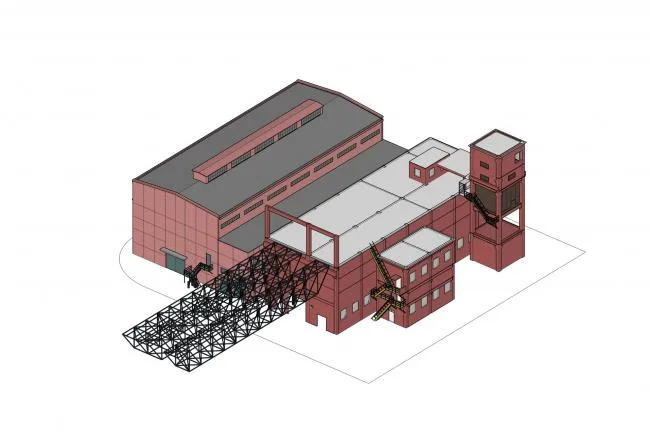
Schematic diagram of the renovation process
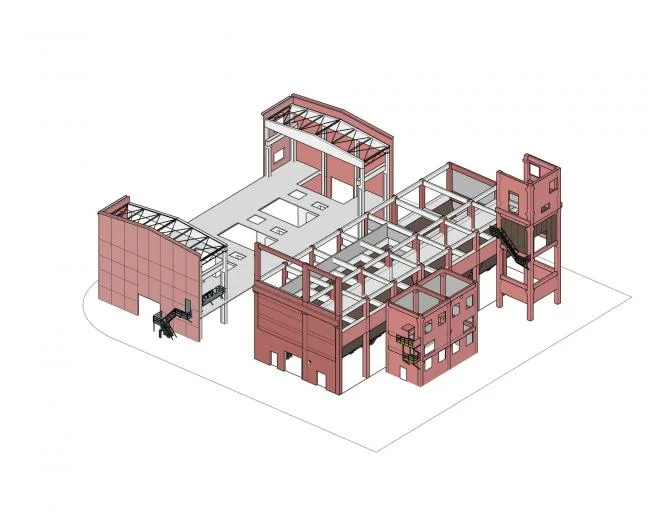
Diagram of Renovation Process – Partial Demolition
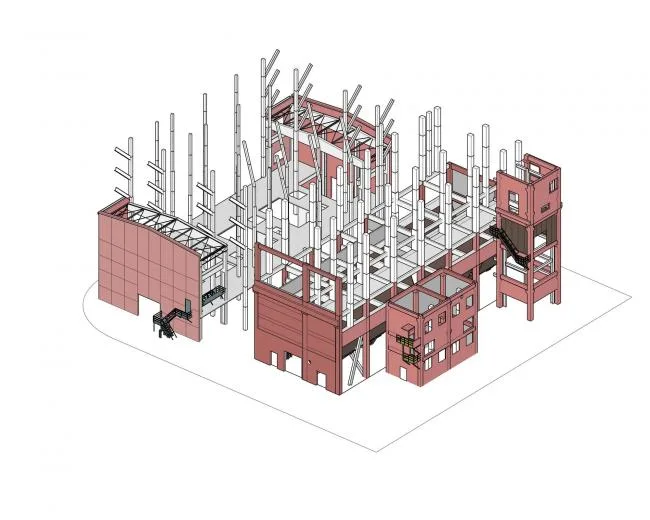
Schematic diagram of the renovation process – installation of new columns
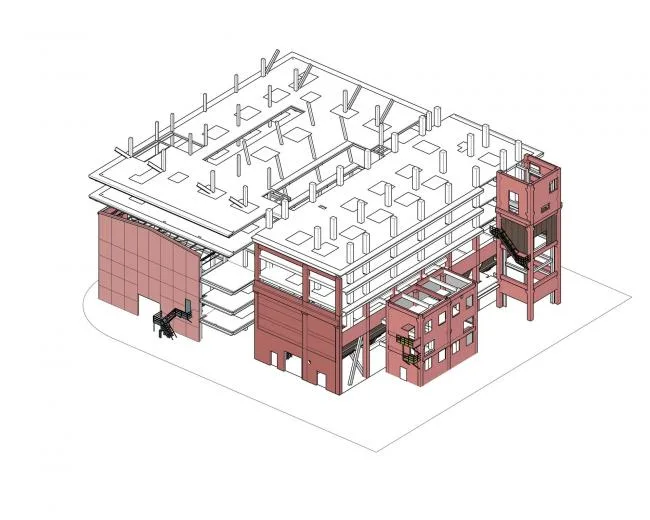
Diagram of Renovation Process – Beam and Plate installation
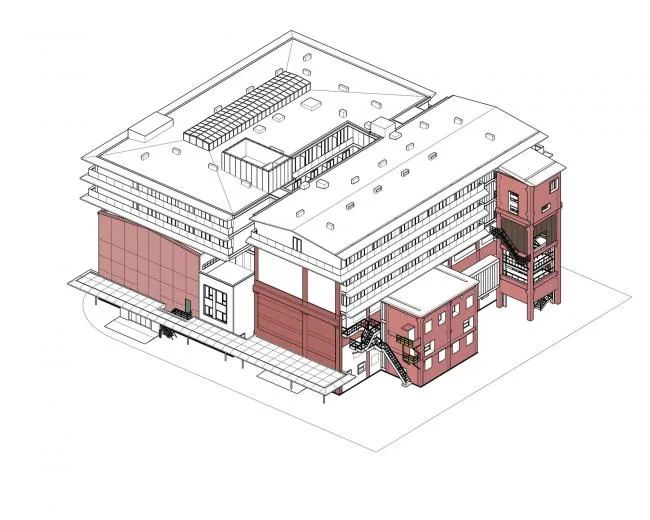
Schematic diagram of renovation process – sloping roof
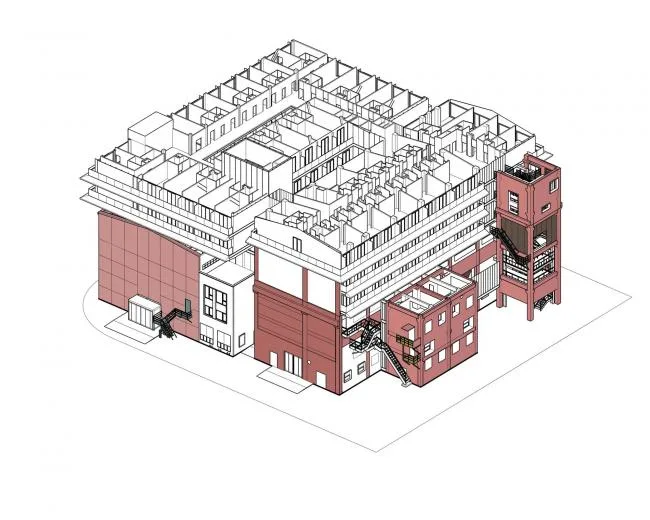
Diagram of Renovation Process – Wall installation
Project Information:
Architect: China Academy of Architectural Design and Research
Location: Beijing, China
Category: Renovation Project
Principal Architects: Li Xinggang, Jing Quan, Li Liang, Tu Jiahuan, Zheng Xuhang, Tian Cong, Gao Yang, Zhang Wenjuan, Wang Zichun, Li Xiuping, Xu Songyue, Ma Zhuoyue, Xing Rui
Building Area: 9,890 square meters
Project Year: 2018
Photographer: Chen Hao
Structural Design: Wang Shule, Guo Junjie, Ju Yi
Mechanical and Electrical Design: Shen Jing (Water), Hao Jie (Water), Zhu Xiujuan (Heating), Meng Xin (Heating), Zhang Yiqi (Heating), Gao Xuewen (Electrical), Wang Xu (Electrical), He Xueyu (Electrical), Li Baohua (Electrical), Zhang Hui (Electrical), Wang Hao (Electrical)
Interior Design: Cao Yang, Ma Mengxue, Zhang Qiuyu, Zhang Yangyang, Li Xiaofei



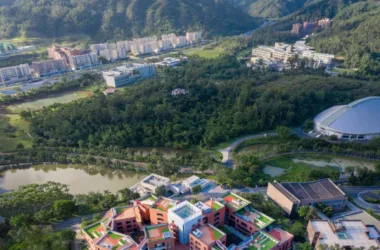
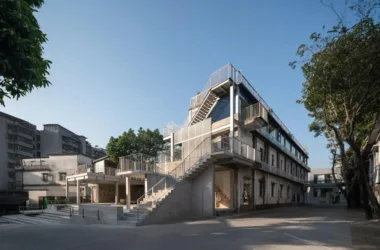
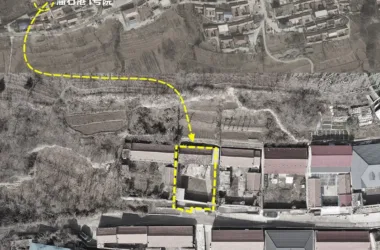










Must log in before commenting!
Sign Up