
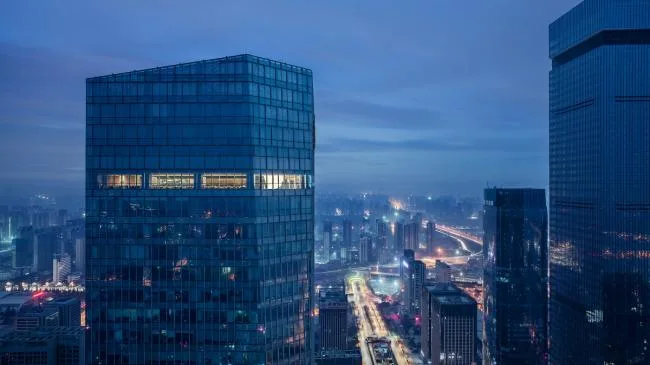
Restaurant Aerial View © As You Can See
Xi’an, the ancient capital of thirteen dynasties in China, is renowned for its historical significance. Among these, Tang Chang’an represents the pinnacle of traditional Chinese urban planning and architectural styles. Although this project focuses on interior design, it occupies the top floor of the Greenland Center, the tallest building in modern Xi’an, offering panoramic views of the entire city and the distant Lishan Mountains.
The design reflects the city’s historical evolution, spatial intentions, cultural heritage, and the spirit of contemporary space, alongside the demand for innovative business formats. This project, named “Cloud Top 57,” presents both a challenge and an opportunity to integrate tradition and modernity.
Cloud Top Fifty Seven
The entire rotating floor plan is treated as an open public space, arranged within a circular spatial sequence. It features a series of abstract functional “devices” inspired by traditional spatial concepts.
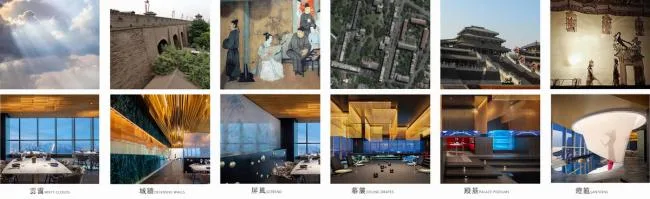
Conceptual Intent Diagram © RSAA/Zhuang Ziyu Studio
The design elements include:
- Shadow puppetry lanterns at the entrance, reflecting Shaanxi’s cultural heritage;
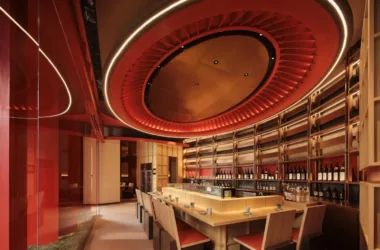
- A cloud-inspired light ceiling above the open dining area, inspired by the name Yunding;
- An ultra-long bar representing the Chang’an city wall;
- Curtain ceilings that echo the traditional Chinese urban street grid;
- A high-level bar booth area symbolizing the pedestal of the Han Tang Gaotai Palace;
- Traditional screen designs to separate open dining spaces;
- A large private round table inspired by palace lanterns.
These spatial volumes follow visitor flow and unfold in a planar sequence, aiming to create a continuous spatial narrative. Rather than relying on flat symbolism, the design translates physical spatial prototypes to express the contemporary atmosphere and style of Xi’an.
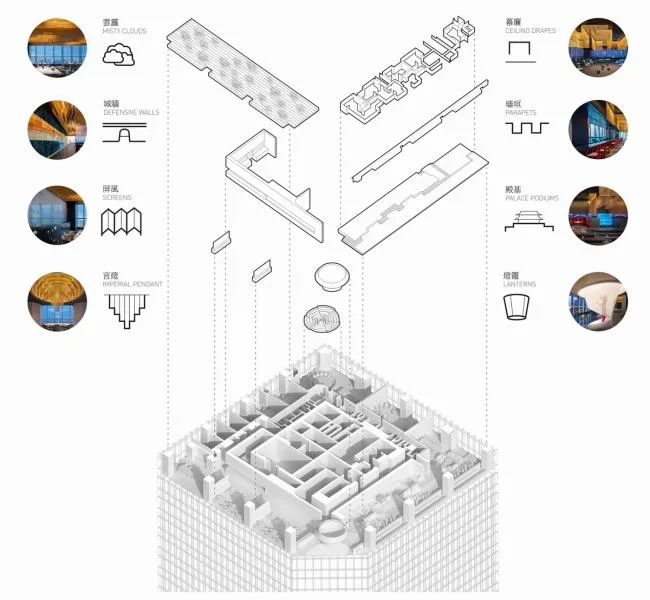
Element Analysis Chart © RSAA/Zhuang Ziyu Studio
A thousand years ago, Taibai’s poem said, “Raise your cup to invite the bright moon, and form three people with shadows.” Today, visitors ascend this skyscraper and pass through the red and green Han Tang tunnel at the entrance. As they explore the floating lamp tubes reflecting their shadows, they overlook the ancient capital of thirteen dynasties, becoming part of the shadow puppetry scene.
The entrance installation creates an immersive spatial experience by combining traditional colors and design intentions with a circular inverted cone shape. The theme evokes “Zhang Deng creating a new theatrical style, while Gu Nang wanders to achieve realism.” Visitor flow is carefully guided toward the open dining area, bar, and observation points, making this corner one of the city’s best “observation decks.”
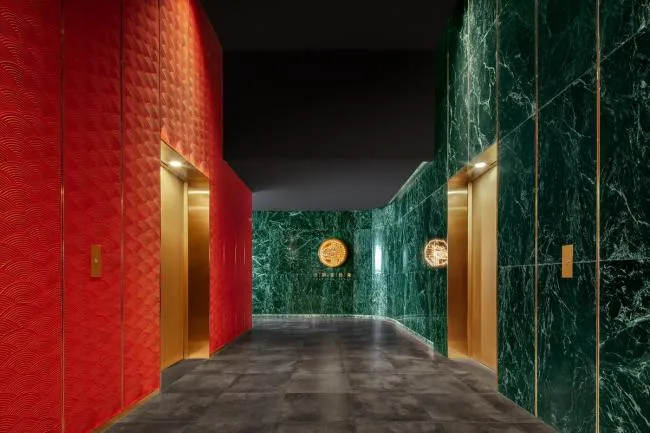
Entrance Scene © As You Can See
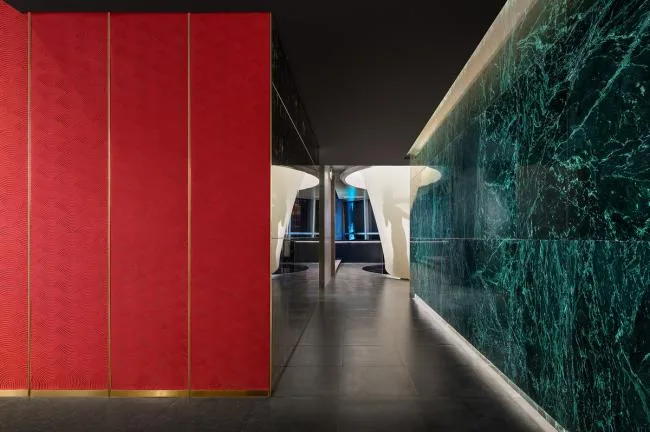
Entrance Scene © As You Can See
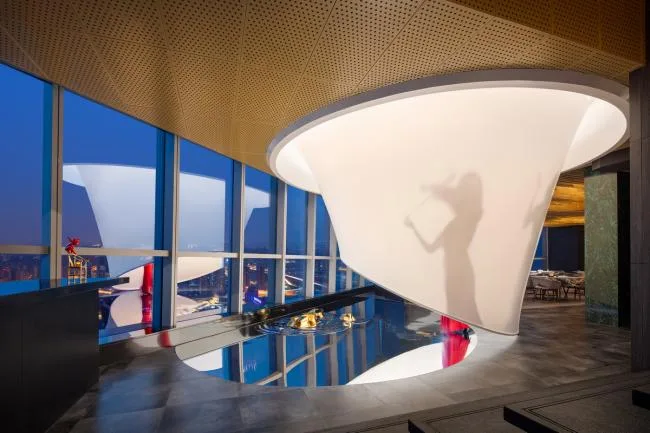
Realistic Installation © As You Can See
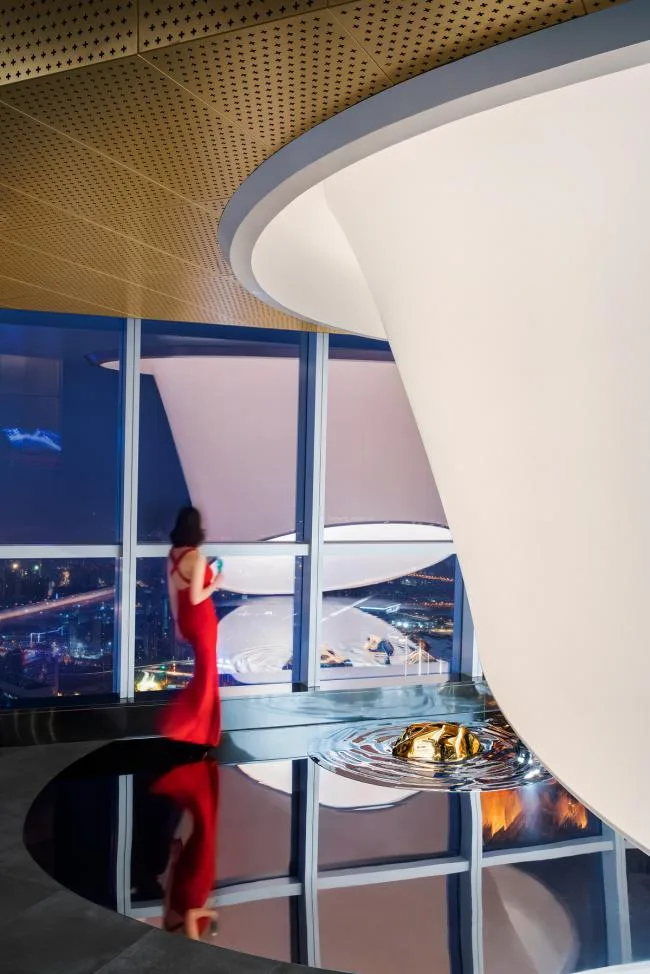
Realistic Installation © As You Can See
In Tang times, climbing towers was a way to express emotions. Han and Tang palaces were often built on high platforms resembling mountains, emphasizing verticality. In contrast, the bar booth area here is stacked and elevated horizontally, crossing a 40-meter-long bar counter—the longest in Asia—offering panoramic city views.
This more than 40-meter horizontal interface seamlessly blends with the night sky and cityscape, inviting visitors to imagine standing on the Hanyuan Hall of the Daming Palace. Their gaze can sweep across sprawling city walls, the Lishan Wei River, and countless other sights.
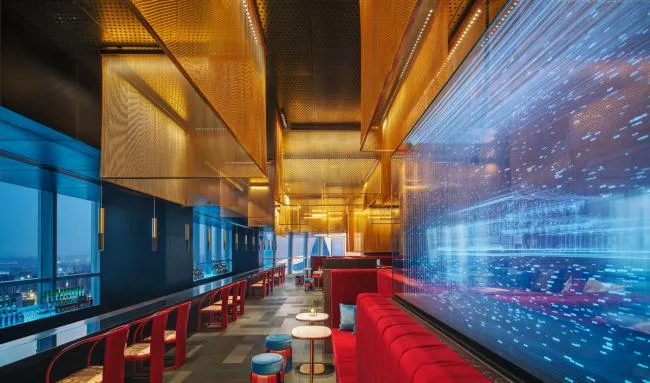
Bar Area in Reality © As You Can See
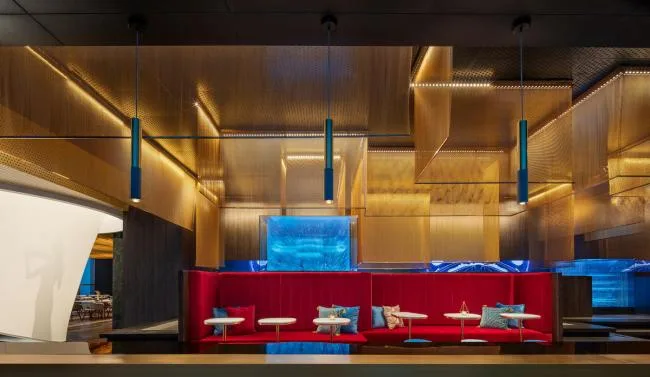
Bar Area in Reality © As You Can See
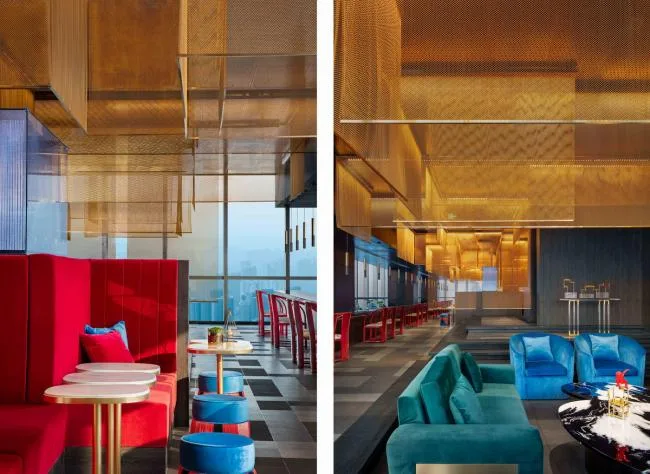
Bar Area in Reality © As You Can See
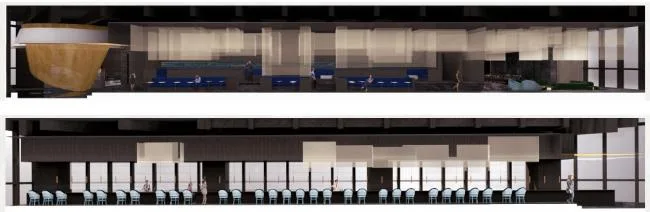
Bar Area Elevation View © RSAA/Zhuang Ziyu Studio
Several installations resembling sliced lightboxes float above the booth area, representing buildings in the Daming Palace. These layered light and shadow effects capture the grandeur and passage of time, creating a temporal journey.
The city grid, constructed by crisscrossing metal curtains above, is layered and stacked, reflecting the ancient “Zhou Li Kao Gong Ji” city layout. This design, stretching across thousands of years like “nine meridians and nine latitudes,” extends from the bar booths to an open activity area combining bar and private room functions.
The elevated space, extended bar counter, independent long table, and complete sofa rest area—all corresponding with the entrance corner—have become the most important “Party Room” in the city, designed by BIM Architecture.
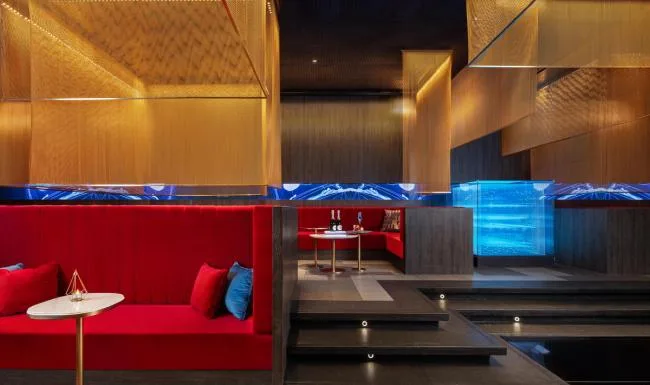
Restaurant Scene © As You Can See
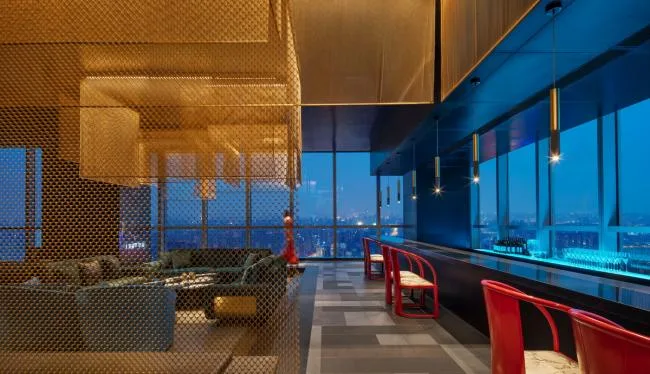
Restaurant Scene © As You Can See
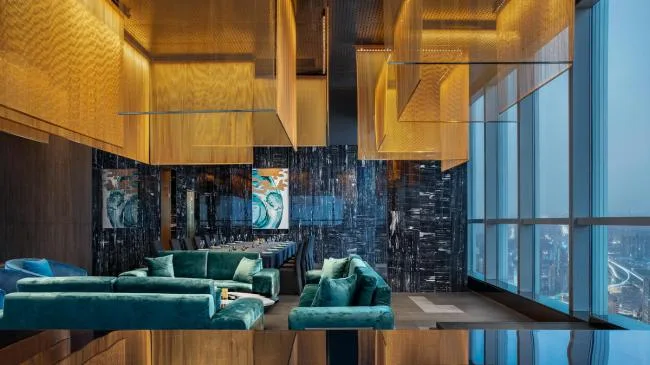
Restaurant Scene © As You Can See
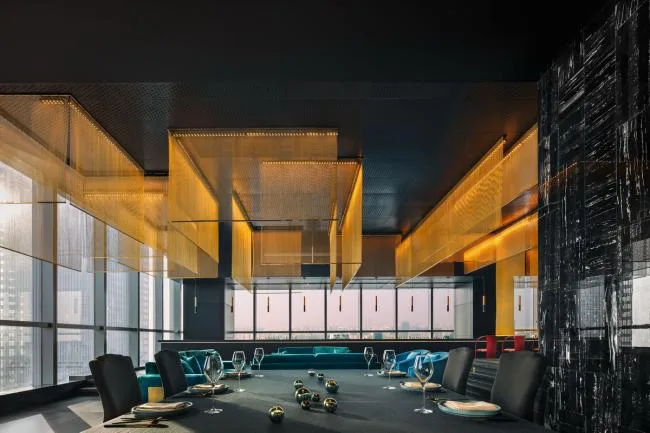
Restaurant Scene © As You Can See
At dusk, light filters through clouds like flowing beams shining from the top of the open dining area, spreading across horizontally expanded “islands.” In Tang times, people climbed towers surrounded by blooming dogwood trees; today, visitors sit and gaze at clouds, admiring the city with their lanterns.
Across time, the “cloud top” view from the horizontal curtain wall remains constant, embodying the ethereal Eastern imagery and philosophical ideas.
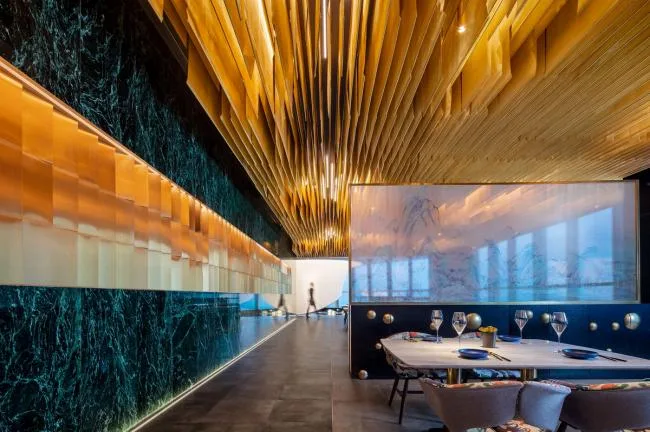
Restaurant Scene © As You Can See
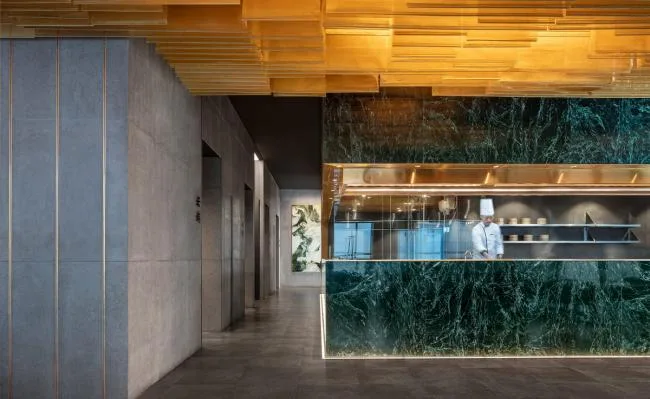
Restaurant Scene © As You Can See
The simple corridor features a turn in its extension, symbolizing the search for a winding path leading to a secluded spot where hidden flowers shine brightly. This creates a series of scenic and borrowed views, with contemporary artworks interspersed along the way.
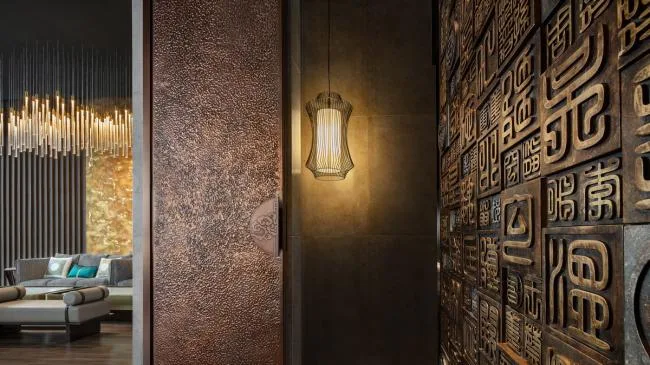
Corridor Decoration Details © As You Can See
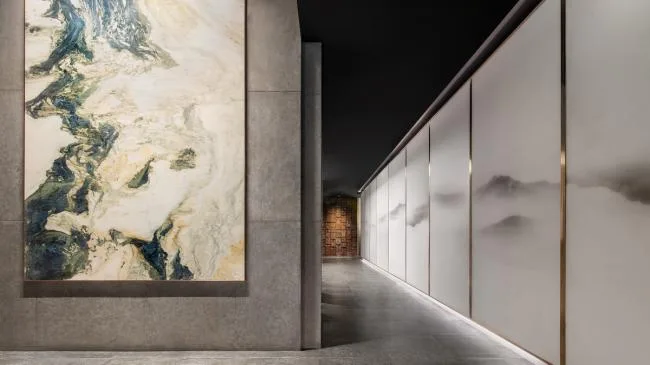
Plain-Colored Corridor © As You Can See
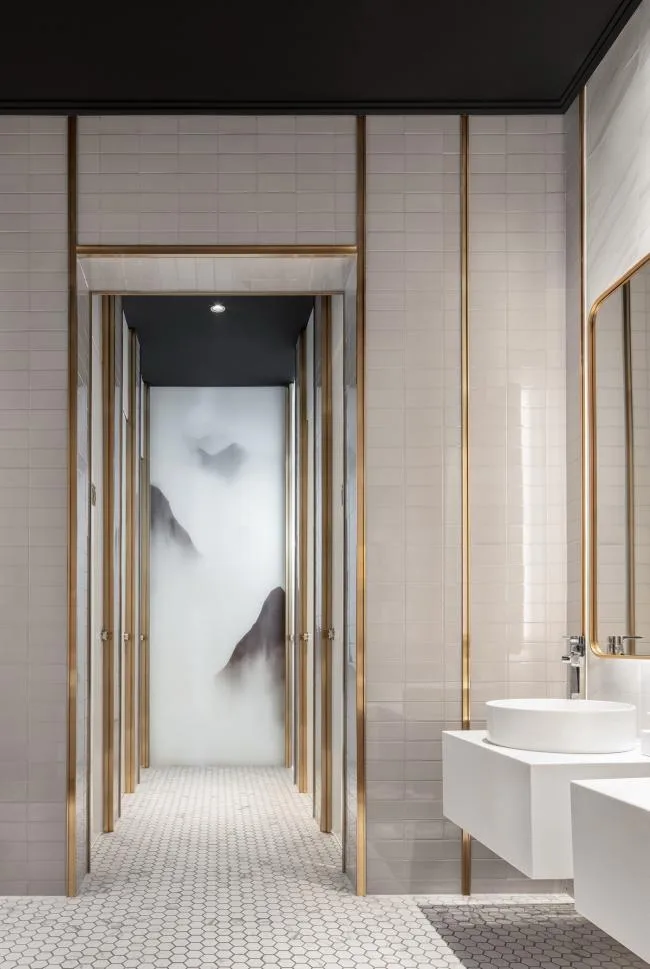
Plain-Colored Corridor © As You Can See
This long corridor connects nine independent private rooms of various sizes. The largest room accommodates 20 people and includes a sofa area with conference capabilities, as well as a dining table for private cooking.
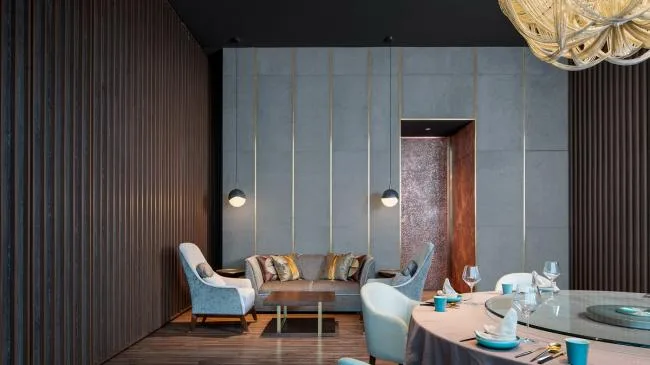
Private Room Reality © As You Can See
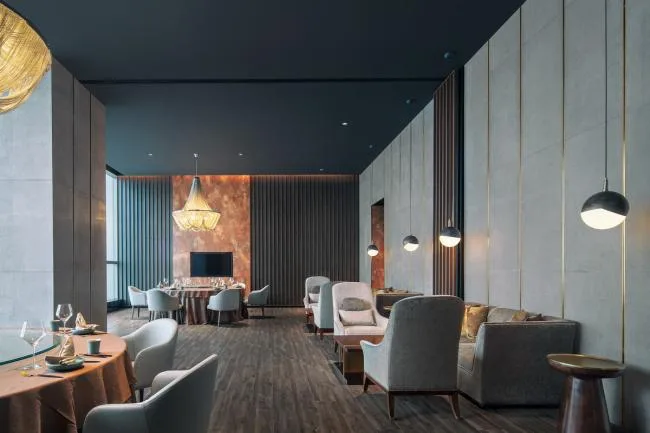
Private Room Reality © As You Can See
The main axis extends outward from the city’s summit, featuring a large chandelier constructed from layered curtains. This installation resembles a palace lantern, a mandala, or a cloud canopy outside the window. As the lights gather and disperse, the “banquet” begins.
Along with two other corners, this space has become one of the city’s most important private rooms.
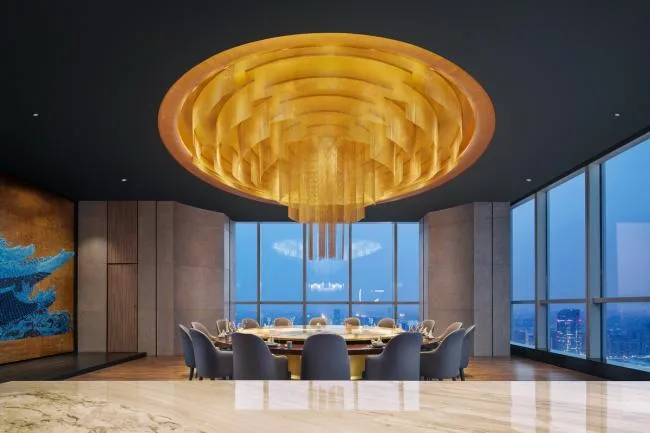
Realistic View of Private Room Chandelier © As You Can See
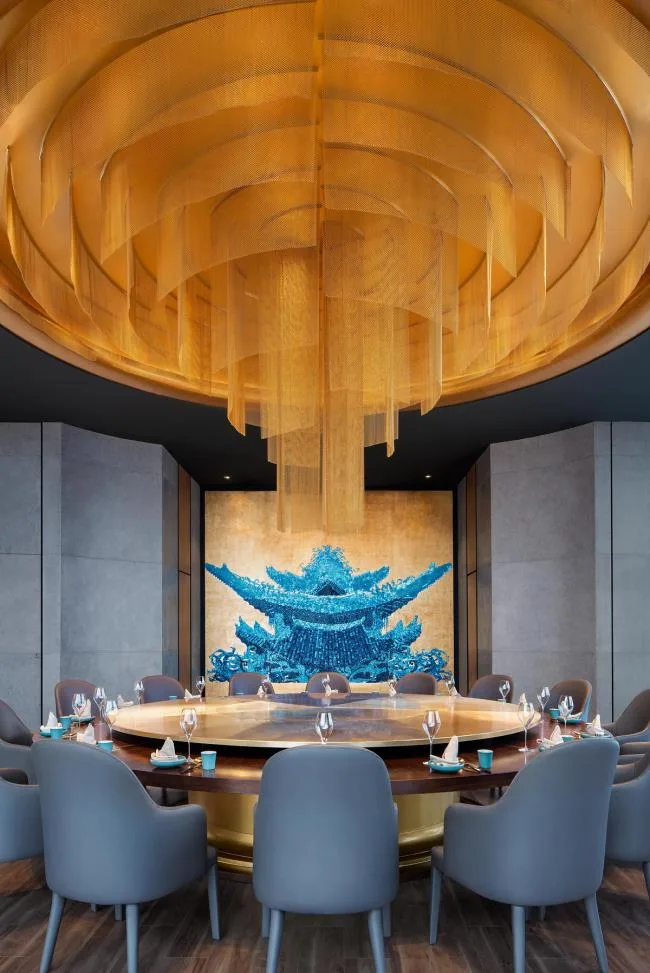
Realistic View of Private Room Chandelier © As You Can See
Contemporary Xi’an stands at a crucial historical crossroads, evolving from the first ancient capital to a modern internet-famous city where history and modernity collide and merge rapidly.
In Han and Tang dynasties, this city was a successful hub of East-West dialogue, a legacy that continues today. As the city’s highest vantage point, “Cloud Top” embraces this spirit by blending urban spatial experiences with tradition and modernity, reflecting the heart, courage, and vitality of modern Xi’an’s youth.
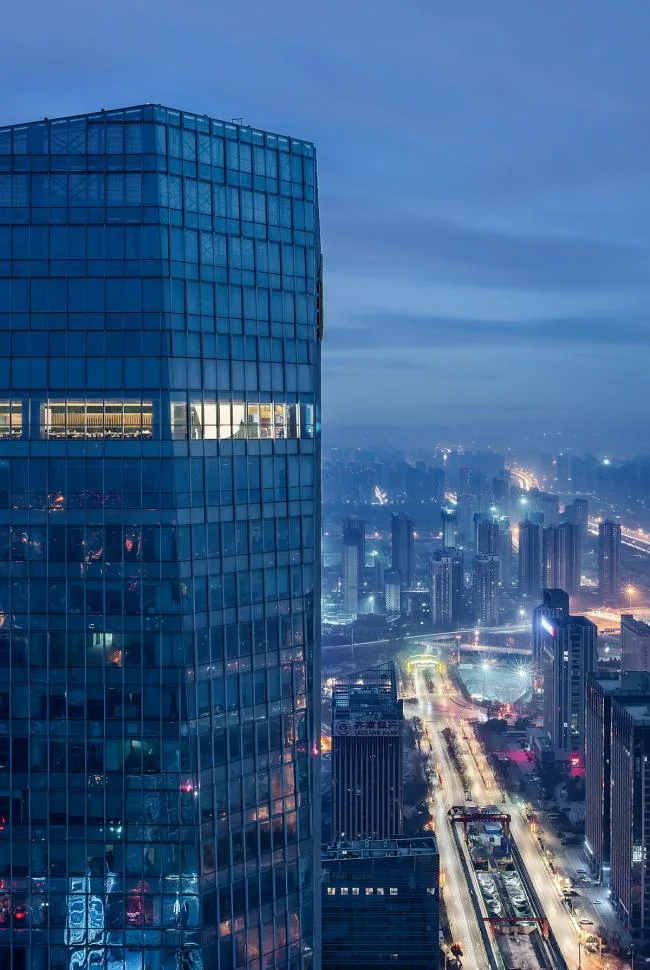
Restaurant Aerial Scene © As You Can See
Design Drawings:
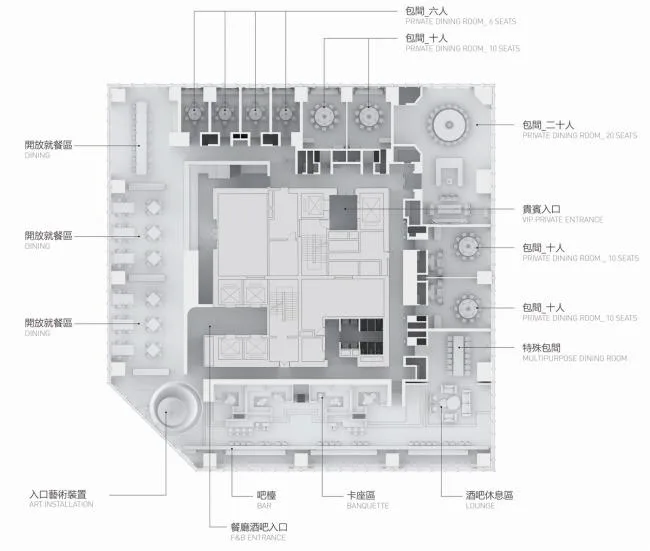
Floor Plan
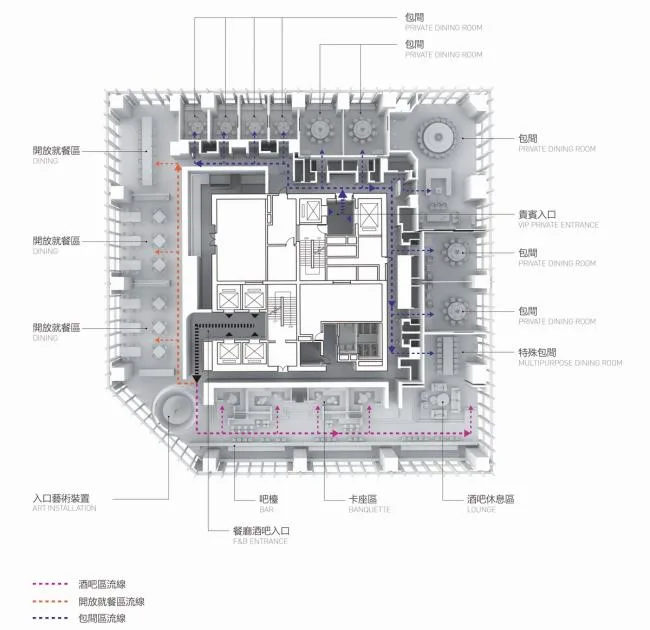
Functional Zoning Diagram
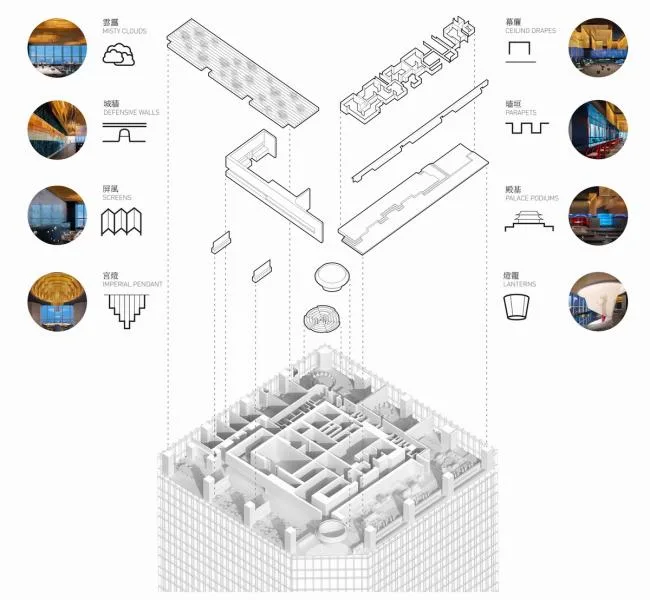
Design Element Analysis Diagram
Project Information:
Location: Xi’an City, Shaanxi Province
Project Type: Interior Design
Design Area: 1536 square meters
Design Year: 2018
Owner: Shaanxi Yunding Fifty Seven Catering Management Co., Ltd
Interior Design Team: RSAA Architecture Firm / Zhuang Ziyu Studio (Germany)
Design Creators: Zhuang Ziyu, Li Na
Design Team: Zhao (BIM Architecture) Xin, Guo Zhenrong, Milos Bojinovic, Xia Boyang, Zhu Kunyu
Indoor Construction Drawing Coordination Team: Beijing Damu Baihe Architectural Design Consulting Co., Ltd
Team Members: Lin Hai, Zhang Mengwei, Wang Lijing, Guan Weihua
Soft Decoration Consultant: Xu Jiatong
Lighting Consultant: Shanghai Gerui Lighting Design Co., Ltd
Art Consultant: Xu Jiatong
Construction and Coordination Team: Shaanxi Duowei Building Decoration Engineering Co., Ltd
Photography: As You See – Wang Hall












Must log in before commenting!
Sign Up