
For car enthusiasts, a car is more than just a means of transportation—it can be everything. Dissatisfied with the limited functionality of existing automotive spaces, bUd studio was invited by The Pit House to design an open, interactive, multifunctional, and vibrant social experimental venue.
This design aims to create a space where car lovers can find a sense of belonging through various activities—whether it’s vehicle cleaning, maintenance, racing car modifications, brand displays, event rentals, catering, or simply gathering with friends. The space offers diverse spatial experiences tailored to every car enthusiast.
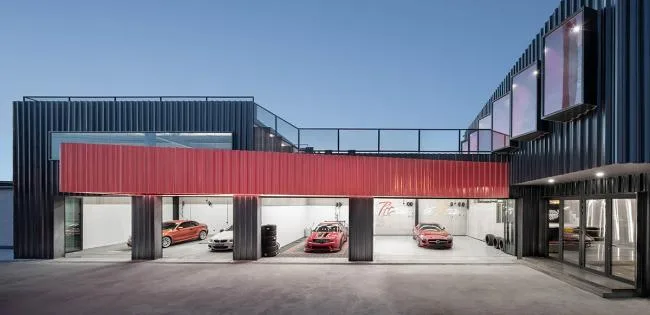
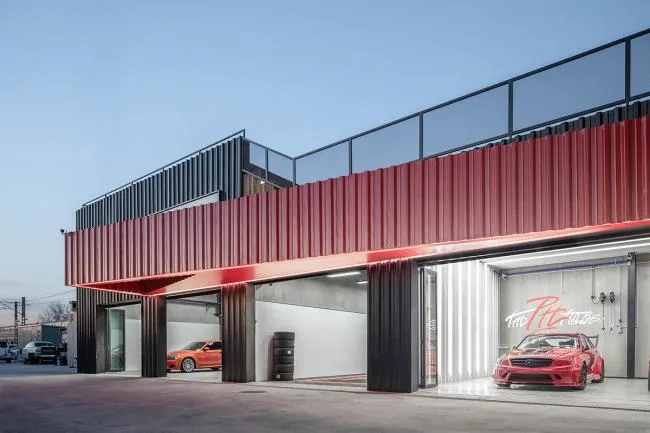
▲ Architectural Appearance
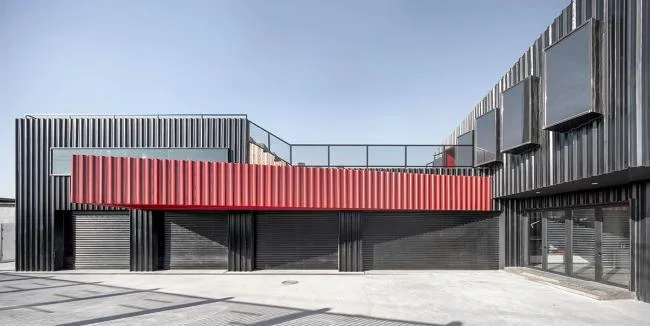
▲ Architectural Appearance
The project is located in a creative park along the Tonghui River in Beijing, positioned at the intersection of two railway tracks. Due to site constraints and railway safety regulations, the building was demolished and rebuilt within its original boundaries.
The structure is L-shaped, comprising two main blocks, with a primary focus on the public-use areas. The program is straightforward: a single-story block houses the maintenance, cleaning, and beauty workshops. The other block is a two-story building where the first floor is divided into interior and exterior functional zones by large steps. The exterior hosts spaces such as a bar counter, sales, displays, and leisure areas, while the interior contains offices, a kitchen, storage, and bathrooms. The second floor offers an indoor dining area, negotiation rooms, and an outdoor terrace, providing flexible usage possibilities.
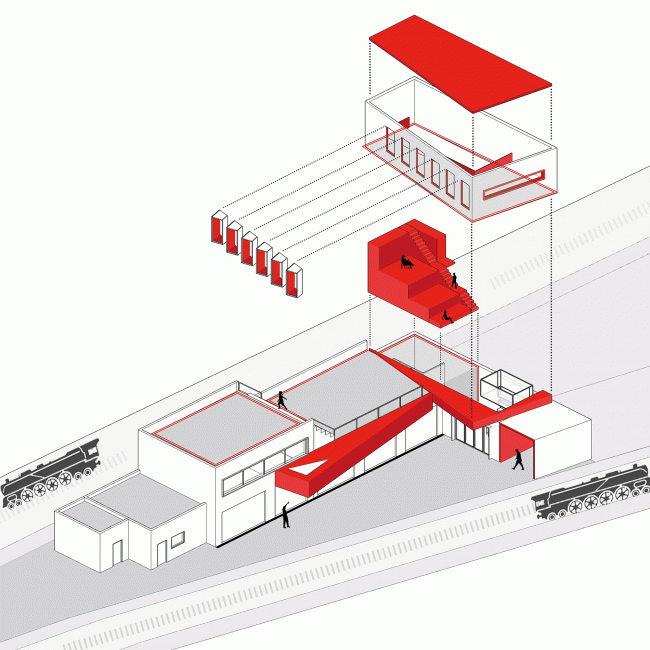
▲ Axonometric Diagram
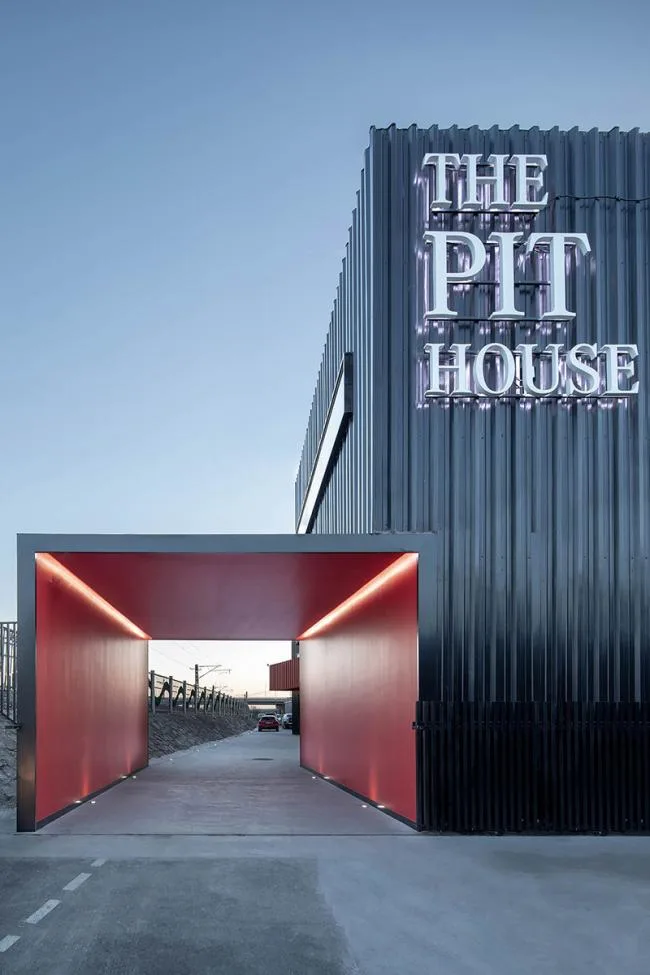
▲ Main Entrance
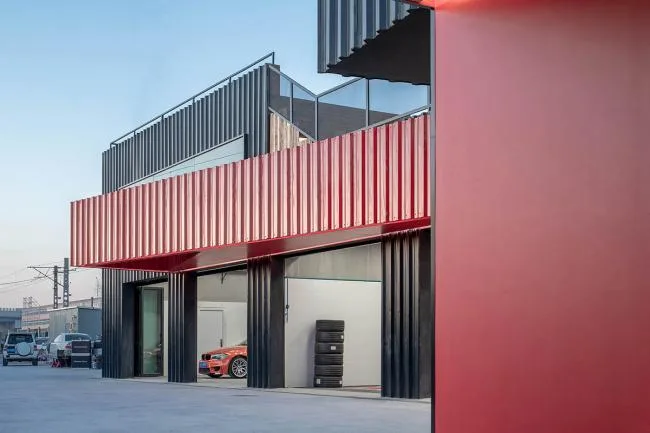
▲ Entrance Perspective Featuring a Red Rectangular Doorway as the Primary Visual Focus
Triangular Geometry and Red-Black Contrast
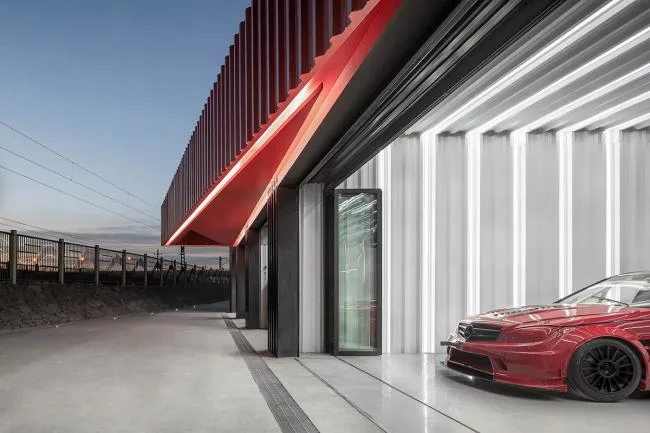
Every twenty minutes, trains rush past both sides of the venue, infusing the space with a sense of energy and speed that defines its unique atmosphere. The triangular shape of the site is echoed in the inclined facade of the second-floor building, shaped by orientation considerations. This facade intersects with the workshop eaves, creating an outdoor sheltered space underneath. The architecture balances tension and stability through these intersecting forms.
The exterior is clad entirely in profiled steel plates painted in a striking red and black color scheme. The bold red accents stand out vibrantly against the black backdrop, reflecting the brand’s tone and amplifying the building’s dynamic presence.
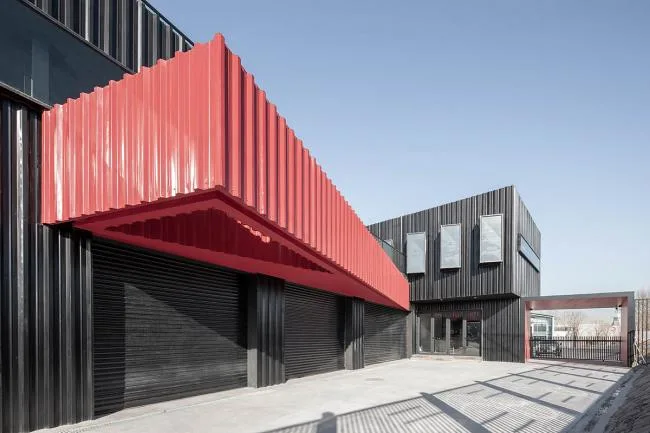
▲ Building Facade
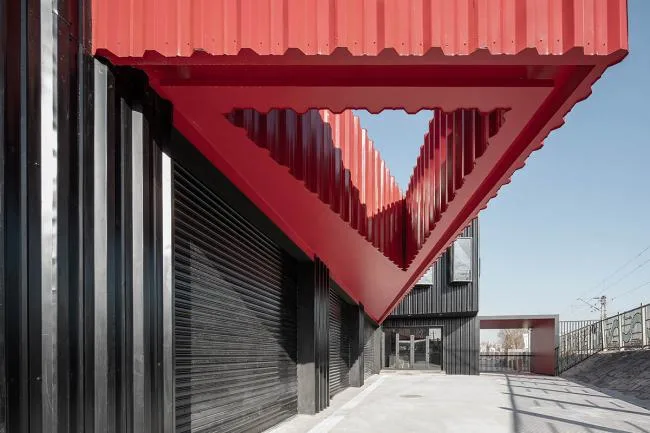
▲ Red Eaves Space
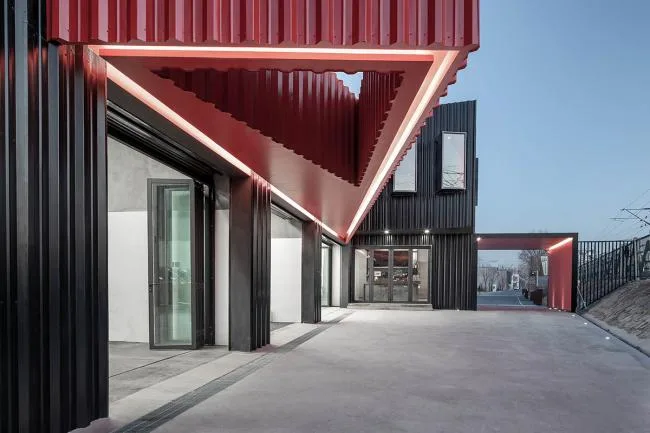
▲ Red Eaves Space
▲ Automotive BIM Learning Room
▲ Automotive Workshop
Among the three workshops, the beauty workshop is the closest to the indoor public area. It features a transparent, bright, and futuristic design, optimized for lighting, dust control, and the psychology of car owners waiting. This space not only offers car beauty services but also serves as a display area for owners’ vehicles.
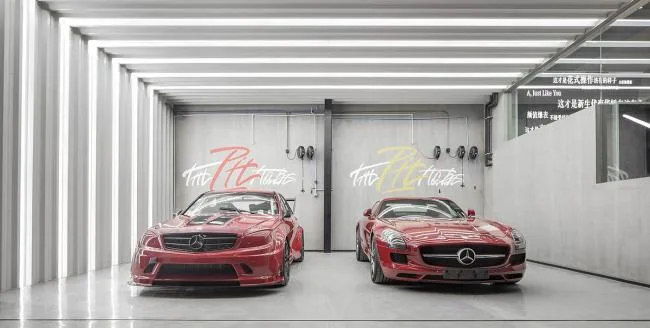
▲ Beauty Workshop
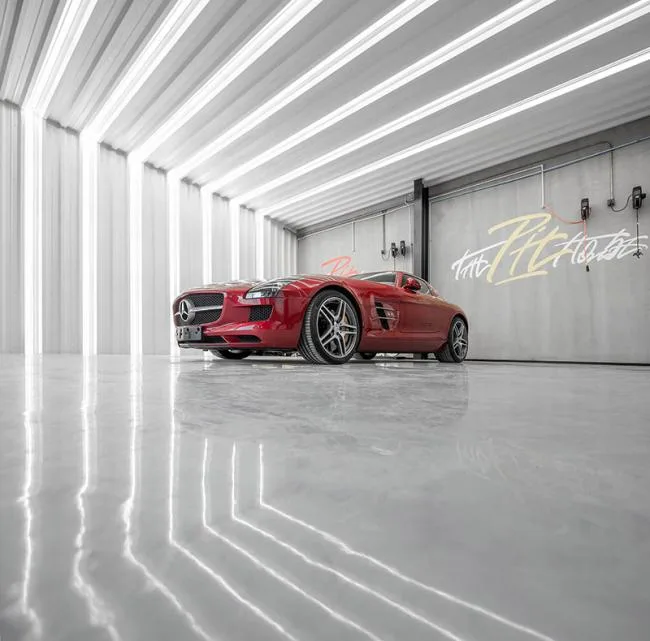
▲ Beauty Workshop
Grand Steps
The grand staircase is the visual centerpiece of the indoor public area. It breaks down the boundaries between floors, connecting the first and second floors’ functions seamlessly. The staircase also defines the internal and external zones, facilitating circulation, leisure, light dining, display, and storage.
On the three platform facades, ultra-white frosted glass with concealed light strips creates three luminous blocks. This design adapts to various brand display needs and enhances spatial interaction.
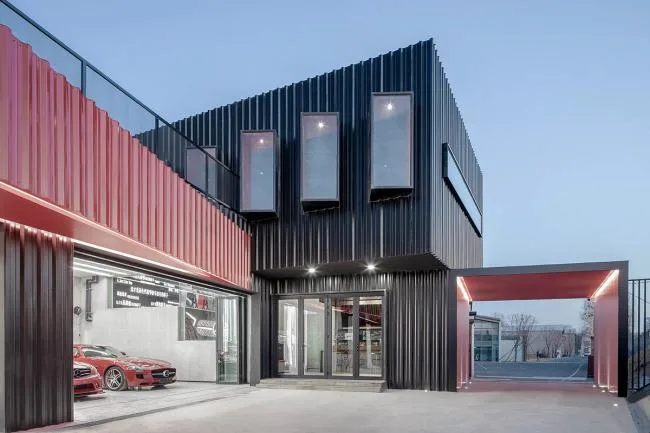
▲ Entrance to Public Area
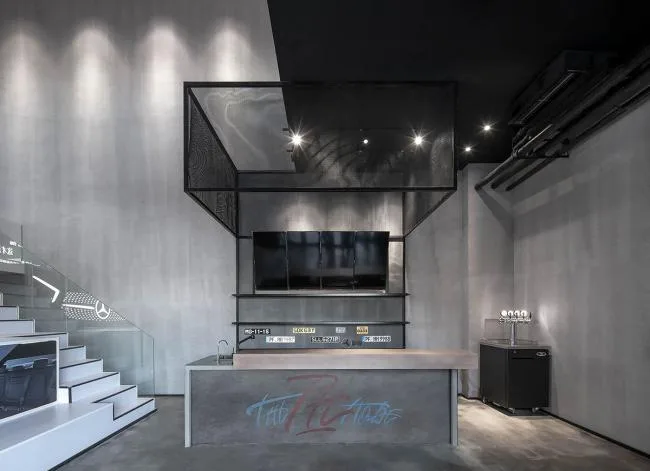
▲ Bar Counter
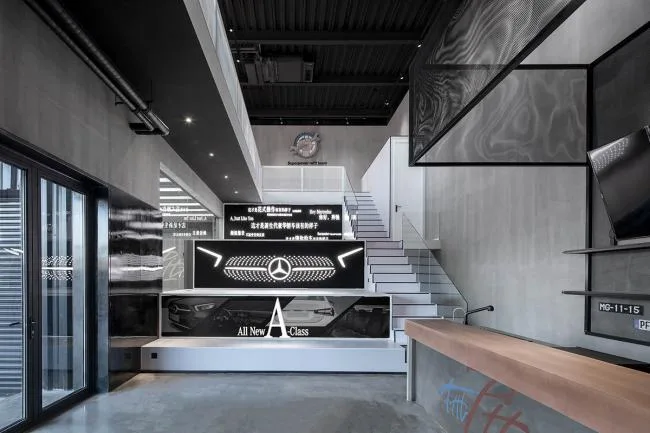
▲ Grand Steps Brand Event Display
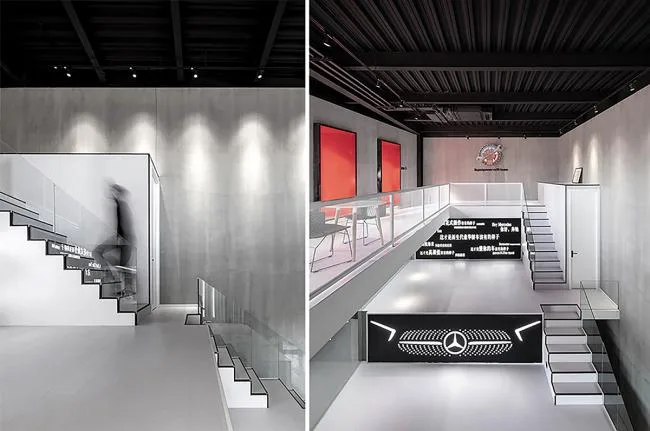
▲ Grand Steps Brand Event Display
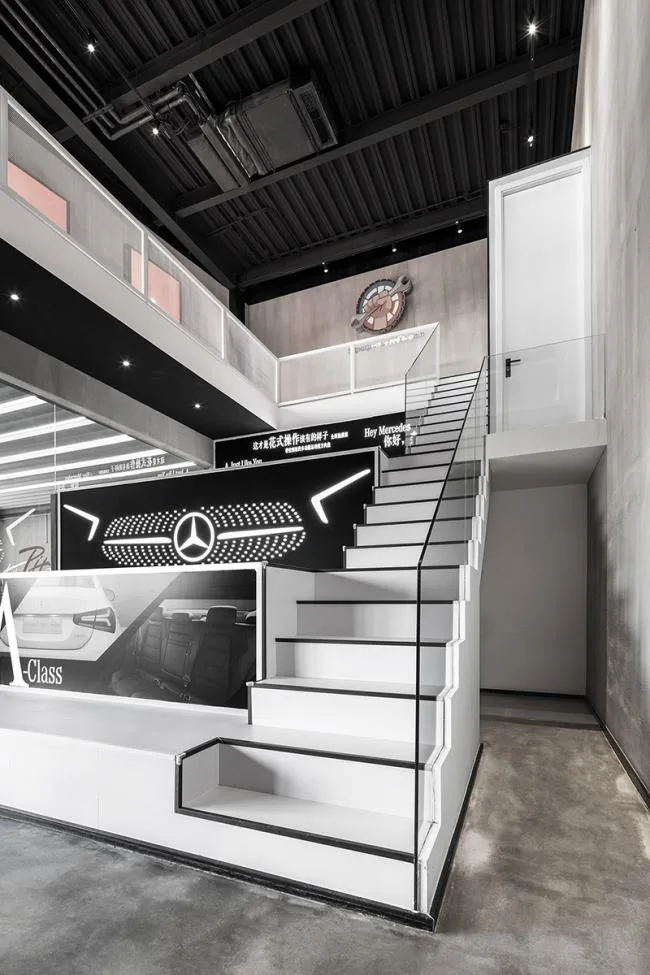
▲ Internal Entrance
Sequence of Light
The architectural design carefully considers light and spatial experience. The improved orientation, the red six-leaf doors and windows on the southwest side, and the six-meter-long window on the south side—free from second-floor functional constraints—all work together to create a spatial sequence defined by light.
Six red doors and windows collide visually, their interplay with light and shadow becoming a focal point. The long window frames the surrounding environment, transforming dynamic outdoor views into a static, framed indoor backdrop. Beyond these doors lies a spacious two-story terrace, perfect for panoramic views, hosting events, or becoming a social hub on summer nights, accompanied by delicious food and the rhythmic sound of passing trains.
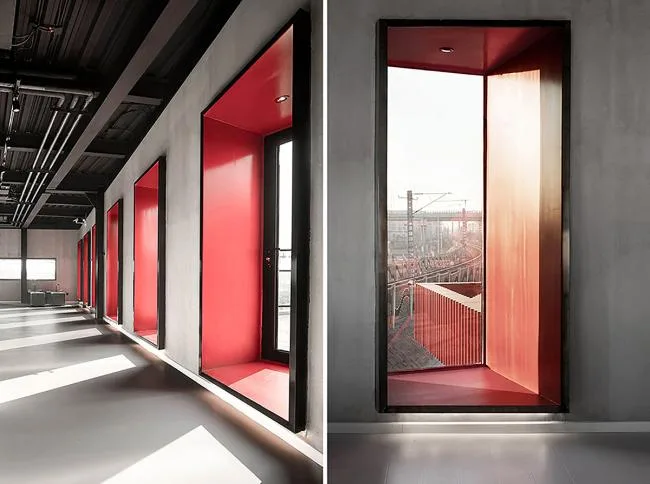
▲ Second Floor Red Door and Window Sequence
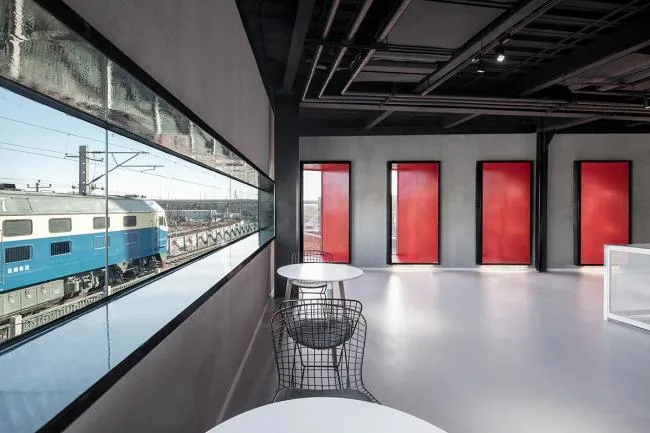
▲ A Train Traveling Within the Framed Scenery
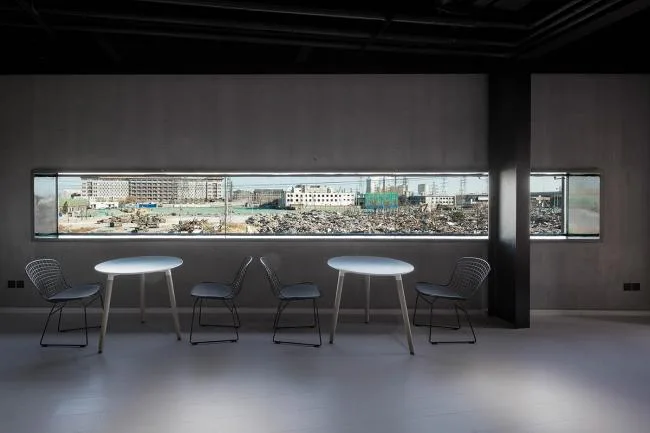
▲ Urban Changes Seen Through Long Window Frames
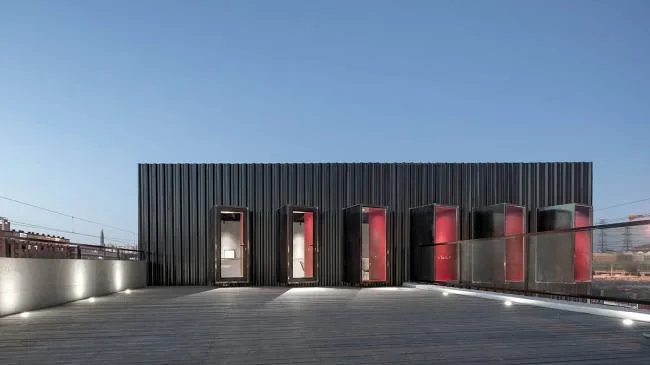
▲ Second Floor Terrace
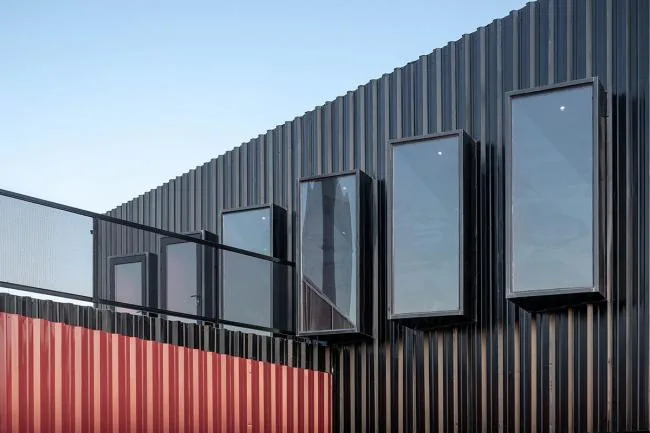
▲ Second Floor Terrace
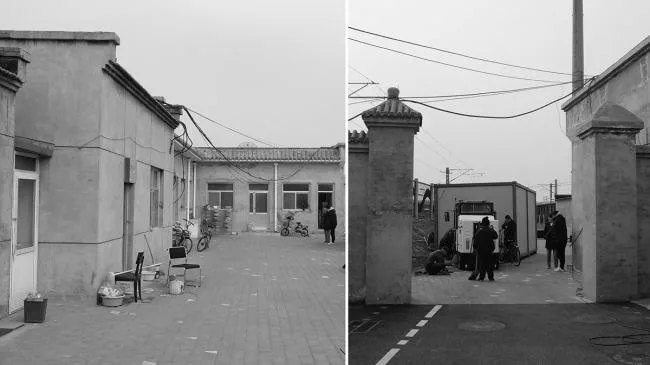
▲ Original Site
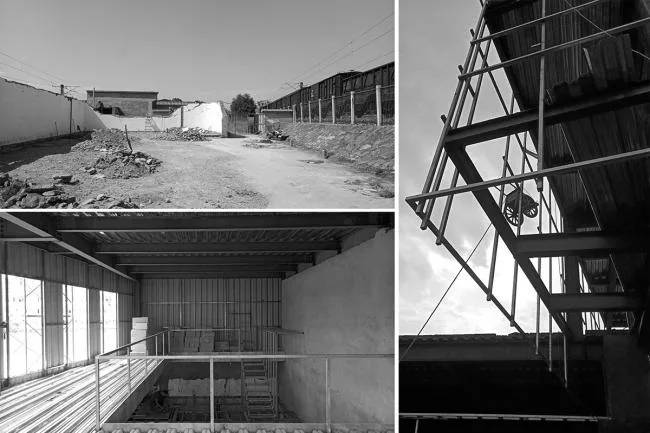
▲ Construction Site
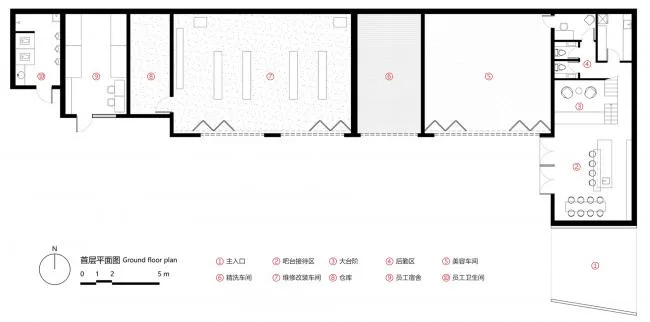
▲ First Floor Plan
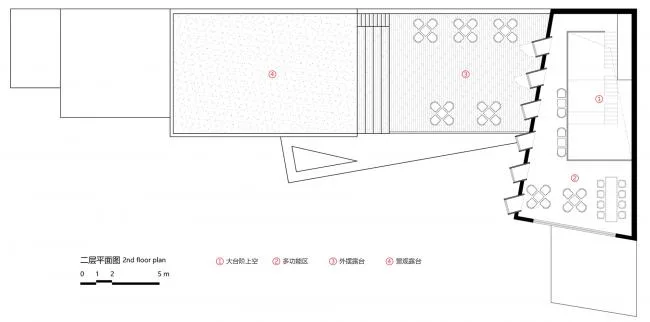
▲ Second Floor Plan
Project Information:
Project Name: The Pit House Automotive Club
Designer: bUd studio
Official Account: Shangjian Xiazhu / bud_studio
Contact Email: __AI_S_SC0__
Design Completion: May 2018
Project Completion: January 2019
Principal Designers: Guo Teng and Jiao Yan
Project Location: Xidian Memory Cultural and Creative Town, Beijing
Building Area: 410 square meters
Photography: Big Fish Photography Studio
Client: The Pit House
Materials: Pressed steel plate, ultra-white frosted glass, epoxy floor paint
About the Company
bUd studio was founded in 2018 by Guo Teng and Jiao Yan. Based in Beijing, it is a multidisciplinary design studio offering services in small building design and renovation, interior spaces, landscape planning, and graphic design.
The name Building Up and Building Down reflects their approach to exploring multiple possibilities—from individual practices to urban transformations—centered on spatial thinking. The studio combines vitality, innovation, and practical logic to address challenges and create multidimensional value, all while infusing their work with warmth and strength.

Building Up and Building Down Studio (bUd studio)















Thank you @ BIM Architecture Network for sharing our work