
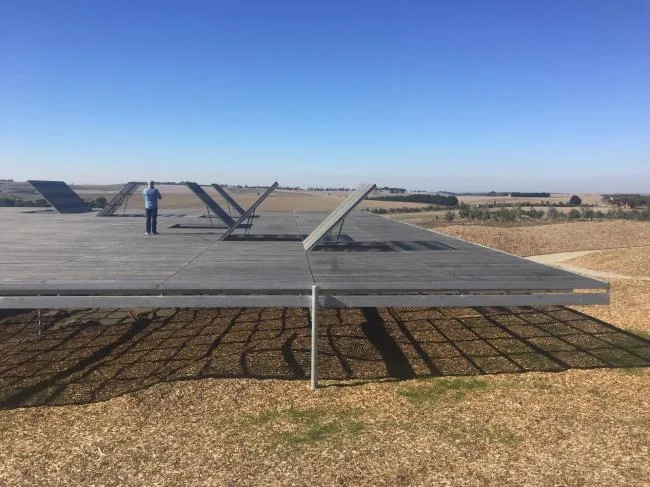
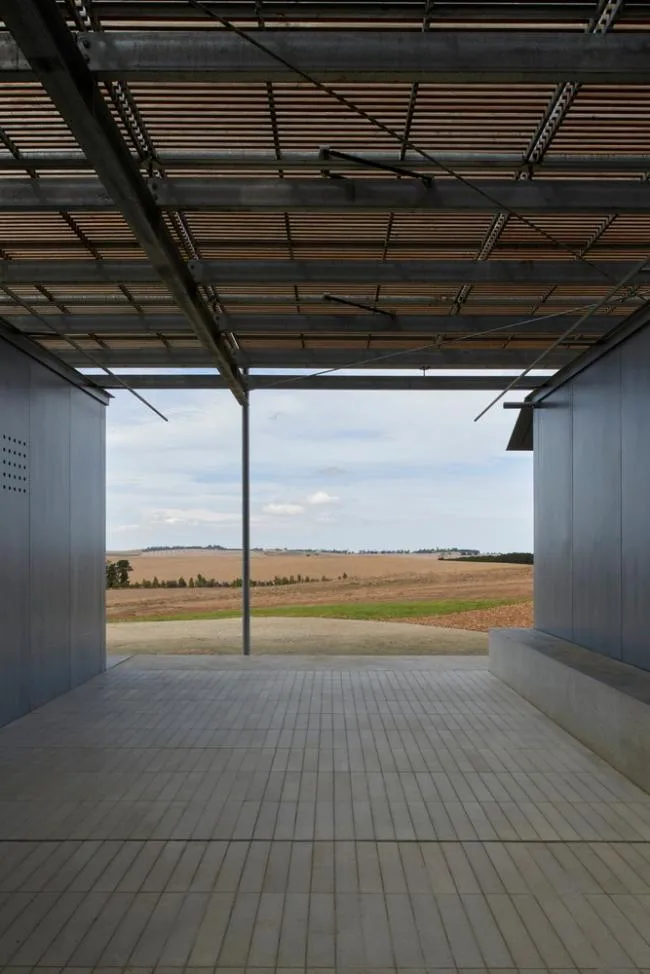
The site was carved out from an active sheep farm, encompassing 25 hectares of vacant land and underutilized enclosures. The terrain slopes north and south from a central high point, with both gradients offering breathtaking views. On the western boundary, a Cyprus pine windbreak runs along both sides, providing some protection against the prevailing southwest winds that impact the southern slope. This southern slope is not an ideal location for new construction due to these wind conditions.
In this region of Australia, the south wind is notably cold and significantly influences the building’s design.
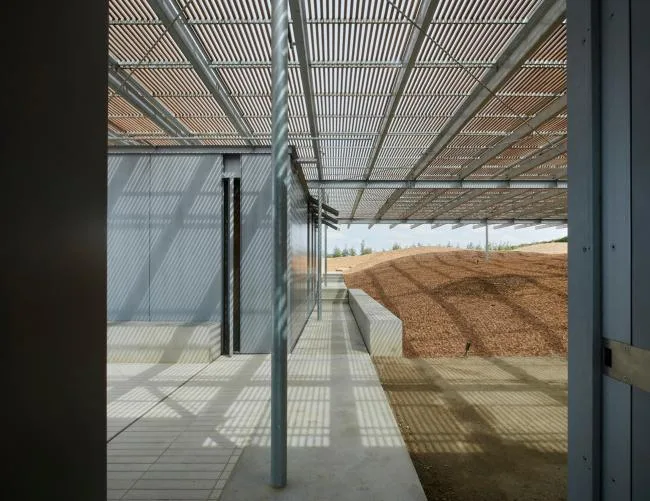
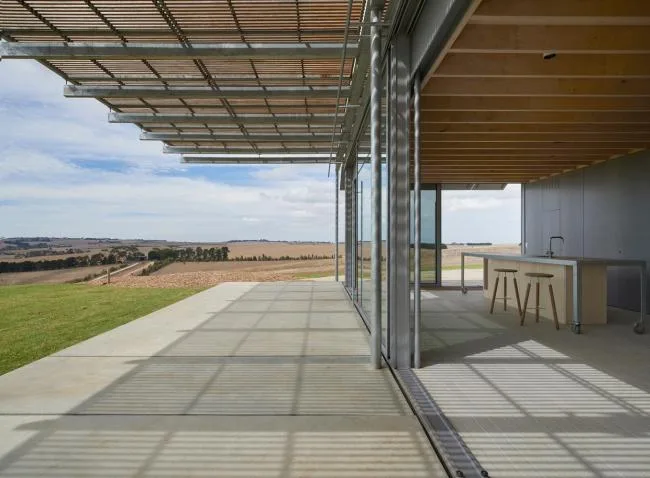
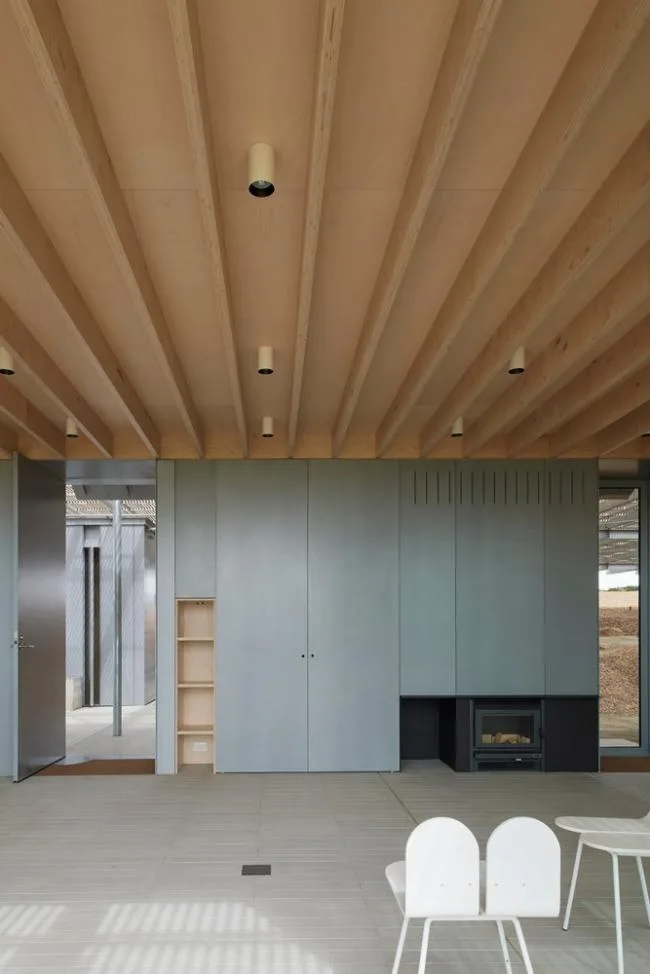
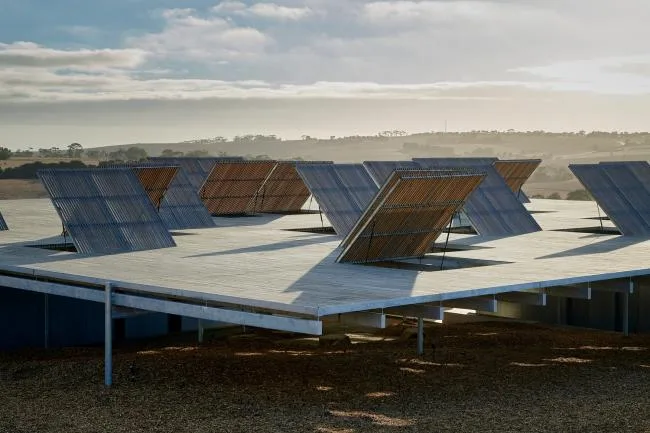
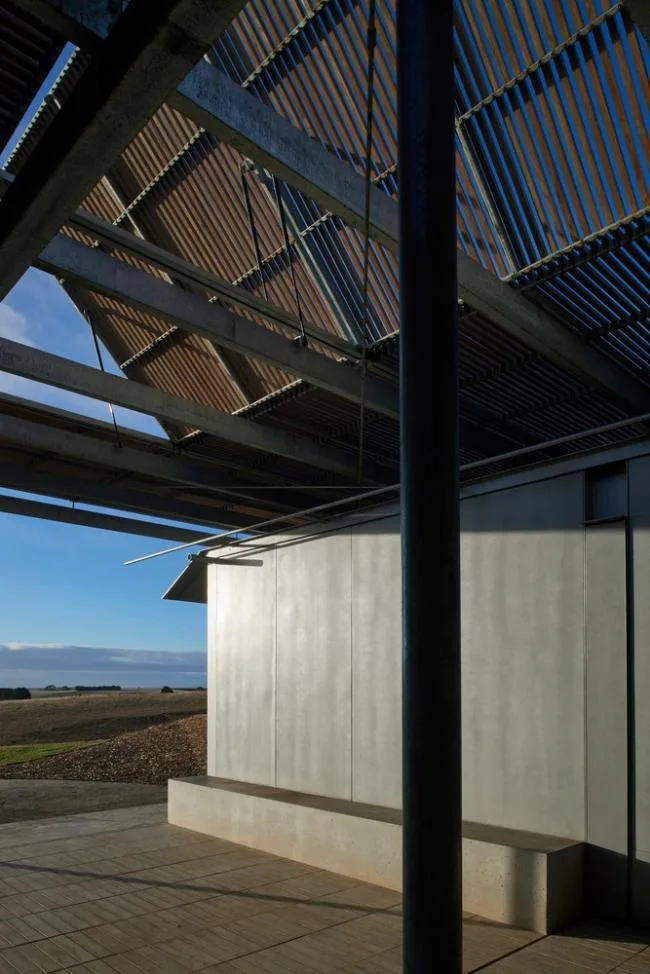
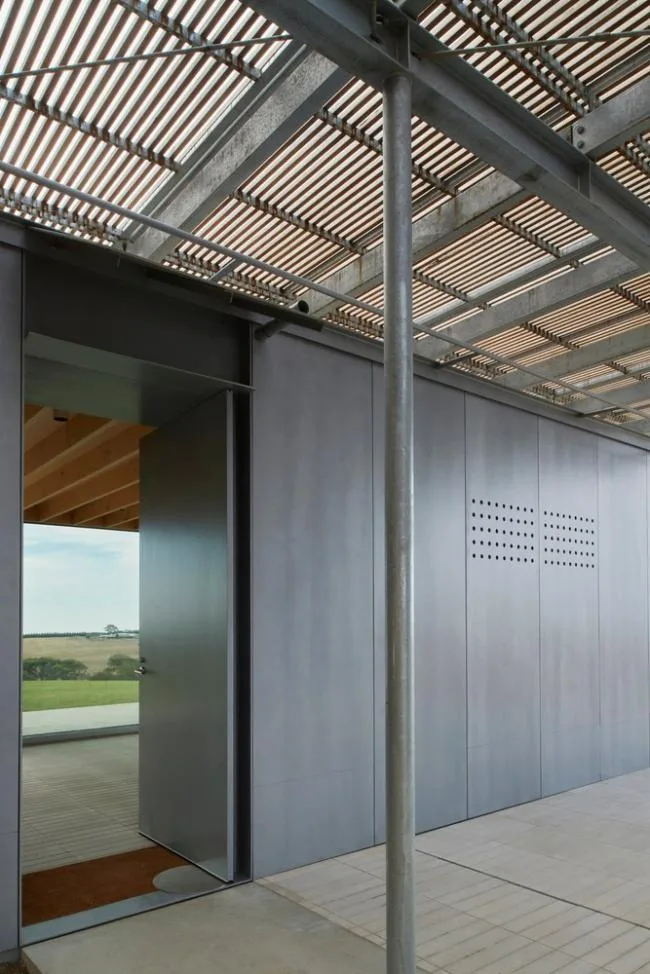
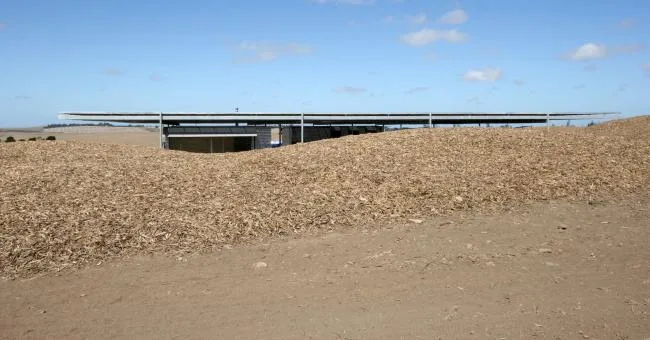
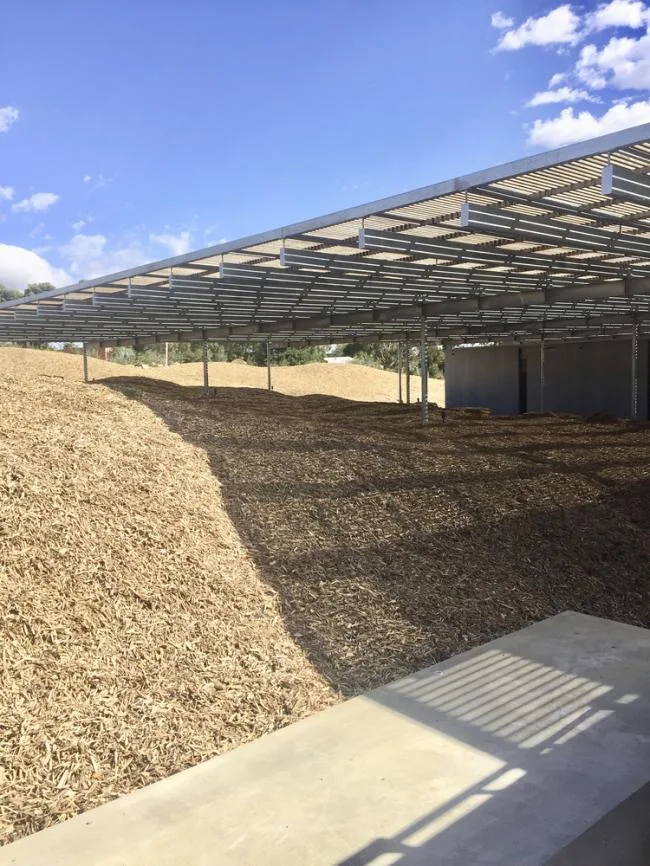
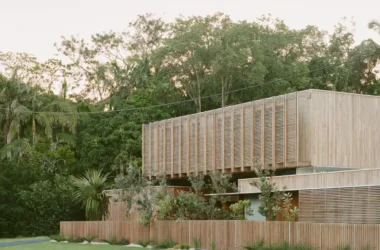
The north-facing pavilion and part of the adjacent courtyard are shielded from the south by a reshaped landscape. Another section is protected by a 30 by 30 meter operable louvered parasol suspended above the pavilion and courtyard. These sunshades serve multiple purposes: they shield the home from prevailing winds, modulate shading and sunlight depending on time and season, and, importantly, they create a defined living space on this expansive site.
As a place maker, the parasol establishes a comfortable area where essential living needs—shelter, protection, and safety—are fulfilled.
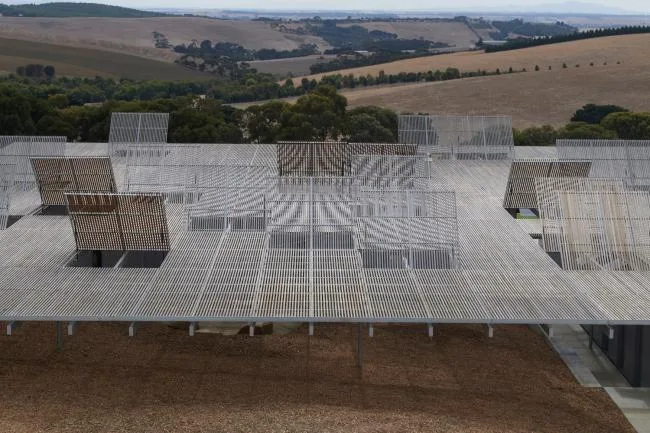
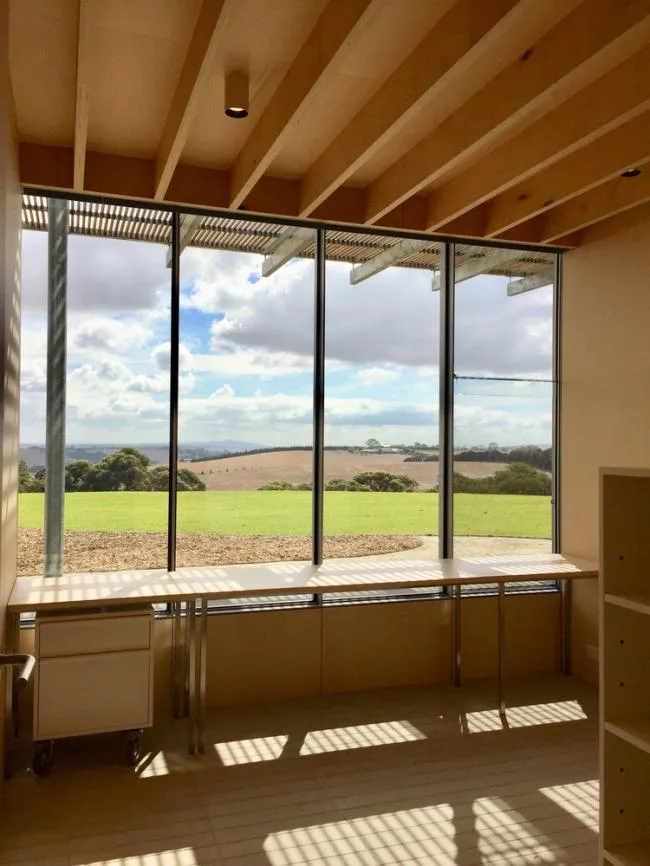
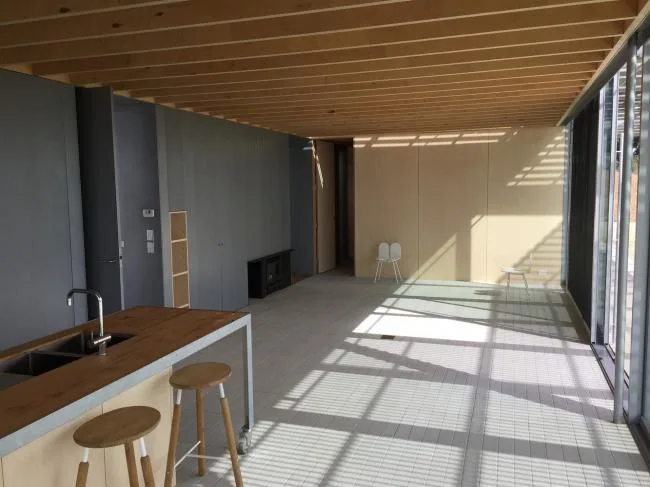
Simple steel-framed grass huts are scattered throughout rural Australia. These structures have roofs but remain open on all sides, reflecting human forms and lending a romantic, pastoral mythological quality to the dwelling. For many Australians, enduring the relentless challenges of nature is vital. In inland areas, any form of constructed shelter can mean the difference between life and death. These modest, often weathered buildings carry deep significance, especially along hot, flood-prone rivers.
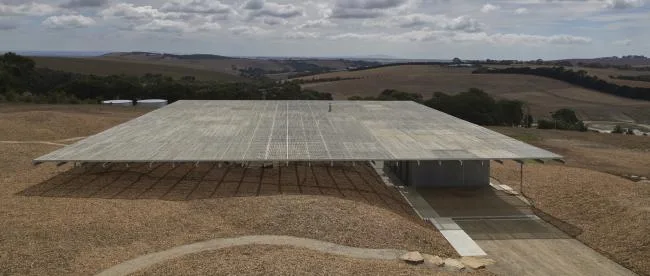
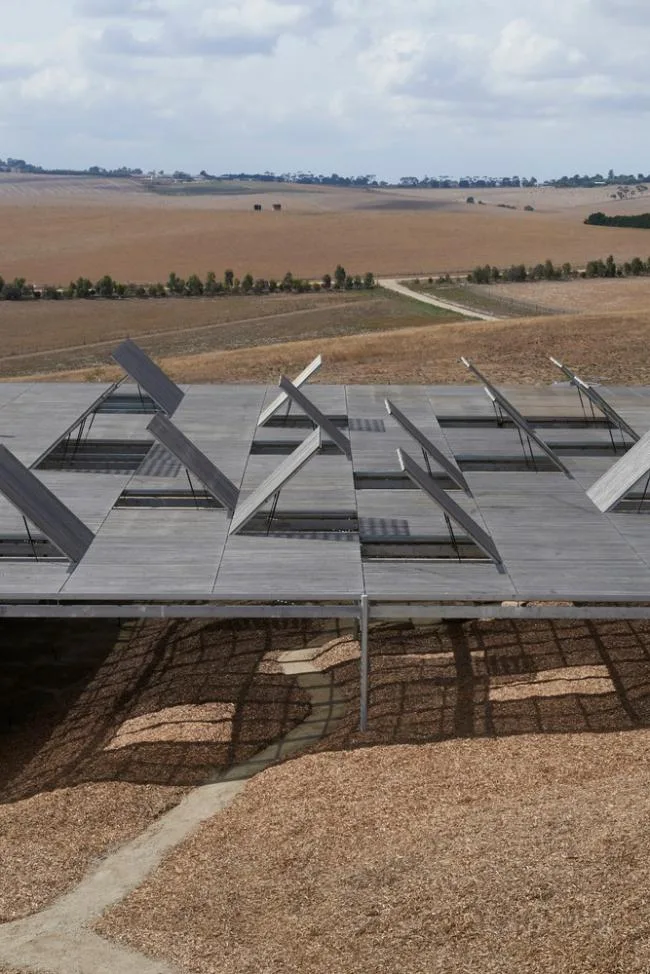
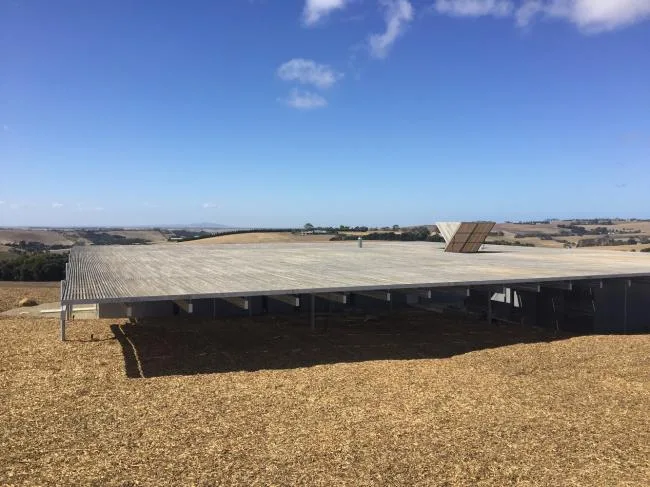
The design resembles hay bales randomly placed under a roof, with the functional area of the building separated from its protective layer. As hay bales shift or are used, their relationship with the static roof and steel frame exhibits dynamic qualities. The hay bale acts like a modular component or plug-in element. Le Corbusier explored a similar parasol roof concept, with the Zurich Pavilion (1960-65) serving as a notable example.
Drawings
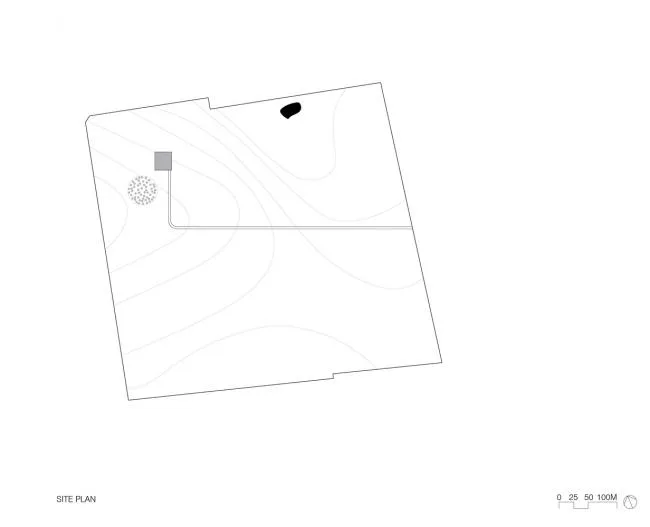
Master Plan
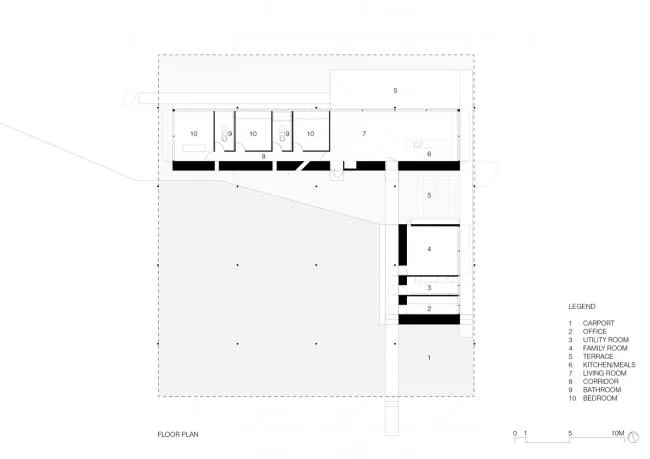
First Floor Plan
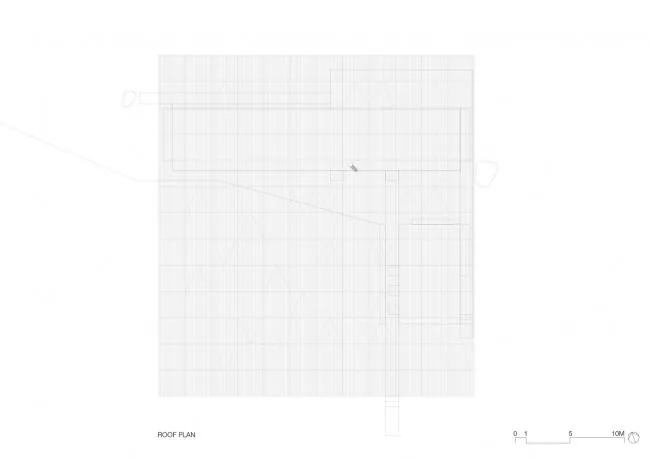
Roof Plan
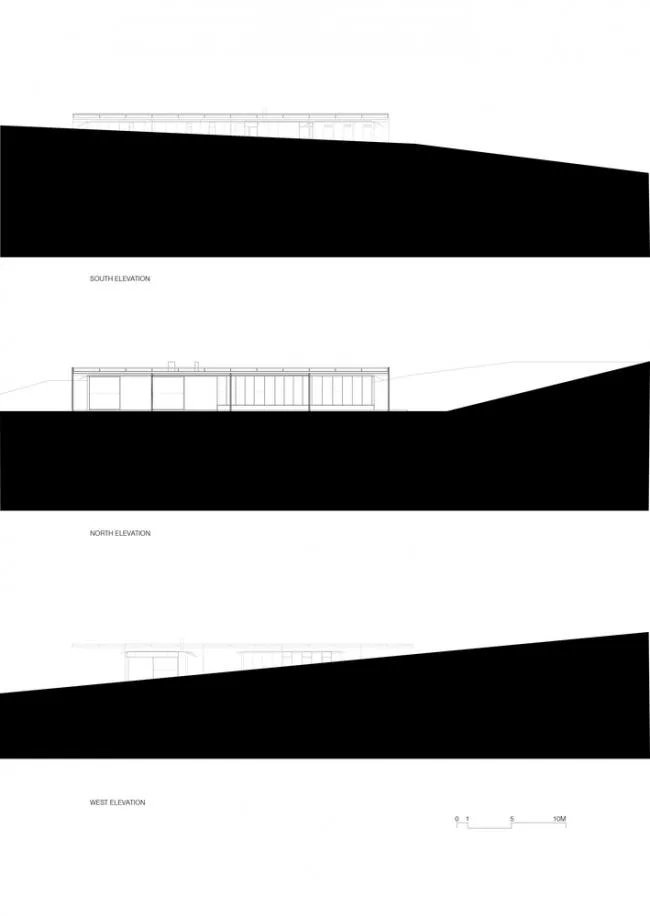
Elevation Drawing
Project Information
Architect: Sean Godsell Architects
Location: Australia
Category: Independent Residential Buildings
Design Team: Sean Godsell, Hayley Franklin
Project Year: 2018
Photographer: Earl Carter
Manufacturers: Bluescope, Lockwood, Kaldewei, Vola, Brightgreen, Anston Architectural, Black Butt, Elton Group, Caroma, Miele
General Contractor: Poulsen Builders
Engineer: Perrett Simpson
Landscape Architecture: Eckersley Garden Architecture
Building Inspector: Nelson McDermott
Construction Technician: Plan Cost Australia ESD
Consultant: Greensphere
Total Construction Area: Enclosed area 155 square meters / roof area 900 square meters (BIM design)












Must log in before commenting!
Sign Up