
“The world carries too many symbols and information representing things, which no one can fully understand because they are symbols representing other symbols in turn. The real things are hidden and no one can see them.”
—— Peter Zumthor
Design is not merely decorative or a fleeting trend. It is a powerful force that reaches directly to the heart, cutting through superficial appearances to awaken true desires. With humility, the Juechen Tianxia Tea House presents its original design to the world.
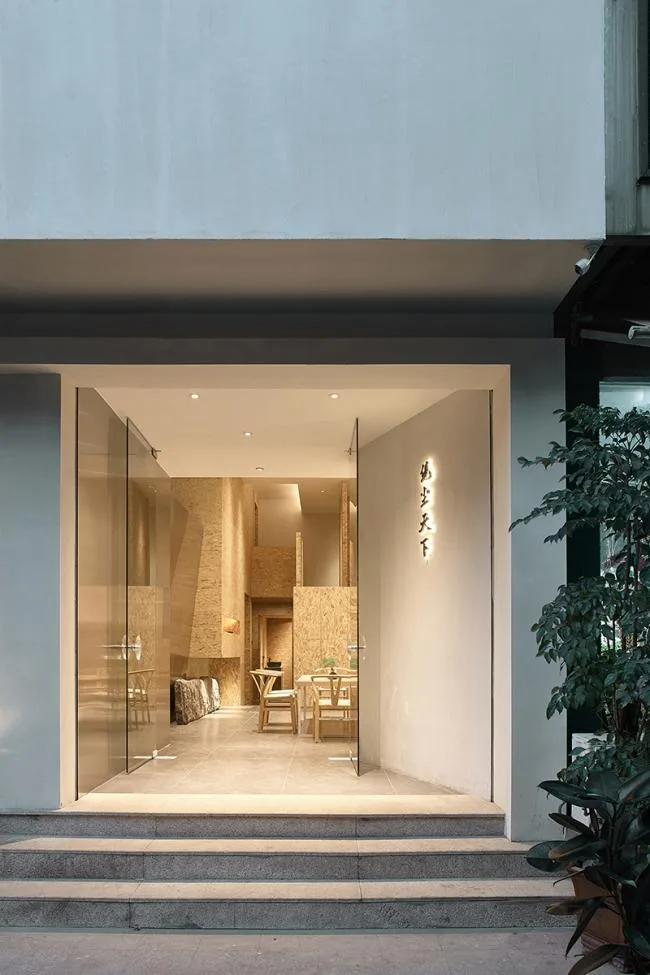
▲ Exterior of the “Dust Free World” Tea House
Faced with a narrow and constrained site, designer Huang Feng embraced the philosophy of “seeing the big in the small” and a narrative design language. The transparent glass exterior and the interlocking interior blocks create a natural and inviting form that sparks curiosity and exploration.
The tension and relaxation within the design evoke the simplicity of short wood planks and the purity of warm rock tea, emanating an original and serene elegance.
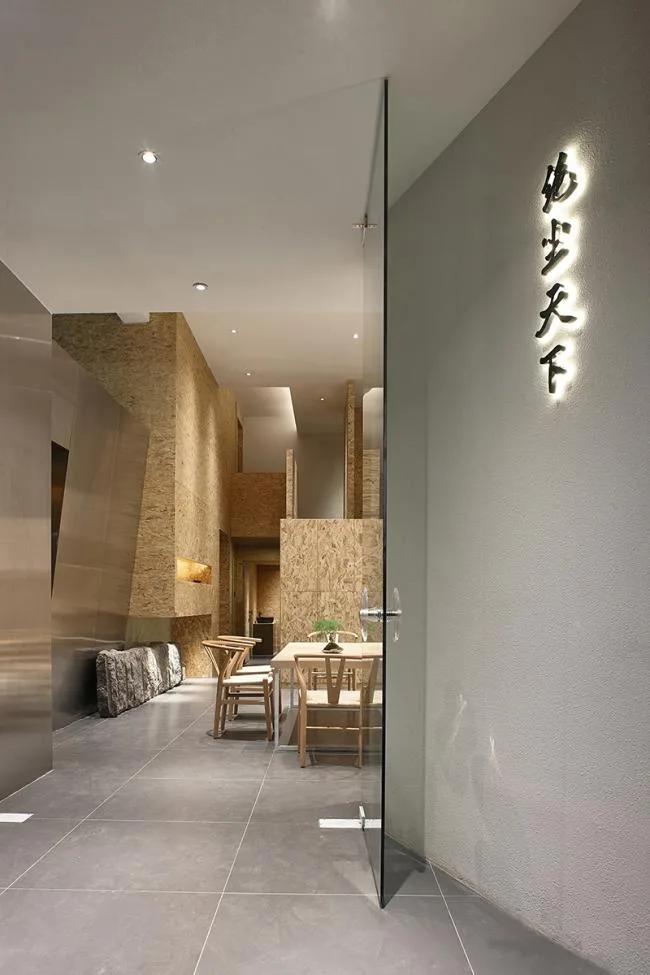
▲ Interior design featuring glass entrance doors and interlocking blocks
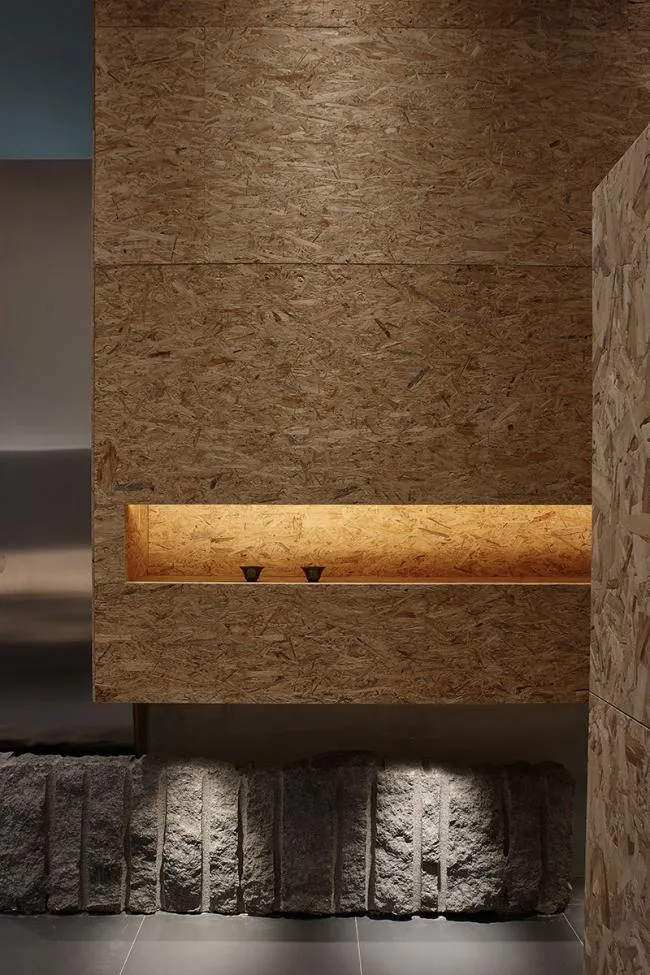
▲ European pine board decor radiates a calm and refined elegance
The tea house was cleverly transformed from two storefronts measuring 15 meters in length, 3.4 meters in width, and 4.2 meters in height. The glass entrance door and facade together create a unified, open front that reveals the inviting interior (BIM).
Incorporating a community concept enhances the interaction between indoor and outdoor spaces, fostering a welcoming sense of belonging. One side of the entrance features a sloping wall that adds a ceremonial touch to the gray transitional area. This wall acts as a subtle screen, reminiscent of holding a pipa and partially veiling the face, inviting imagination.
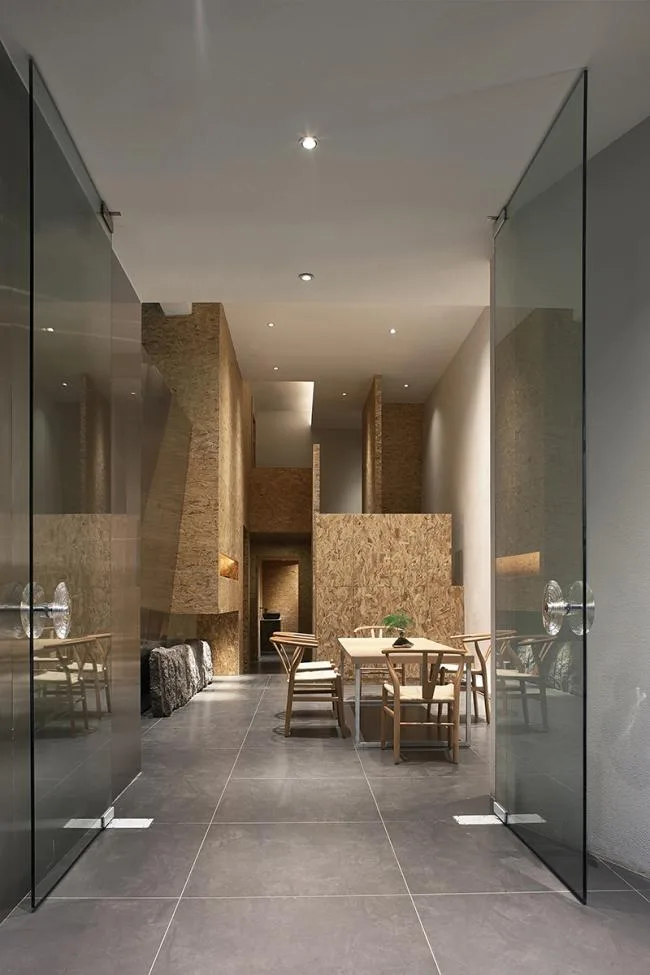
▲ Entrance glass door
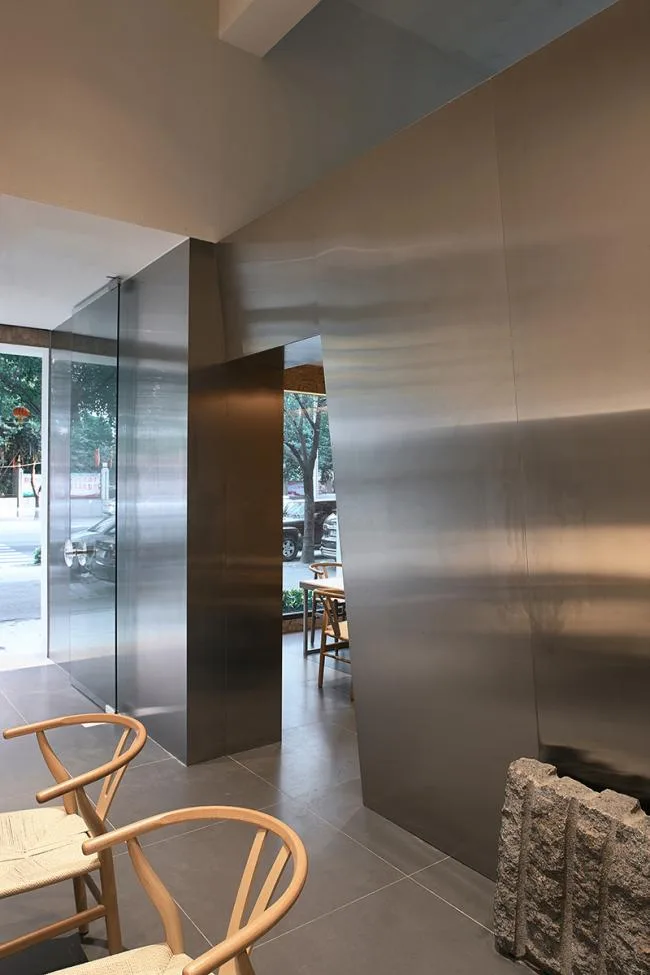
▲ The sloping wall at the entrance enhances the ceremonial atmosphere of the gray transition space
The design aims to create a sense of openness and diversity within the public interior areas. Visitors enter through relatively narrow entrances and are instantly met with a feeling of spaciousness. What was once a very limited site is ingeniously expanded through the designer’s thoughtful planning.
The first floor is divided into two reception rooms facing the street and three private rooms. Beyond the first floor, a staircase discreetly hidden within the European pine board walls leads to the second floor, where storage cabinets and partitions are integrated seamlessly.
The second floor features two private rooms, an office area, and additional storage. Varied ceiling heights ensure comfort and functionality in each space, establishing a natural rhythm throughout.
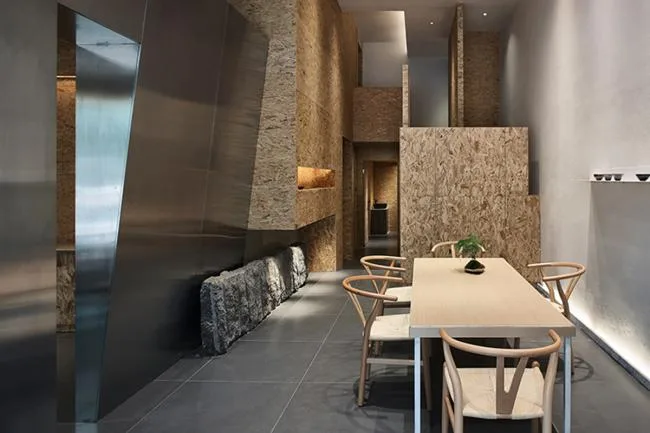
▲ Reception Room
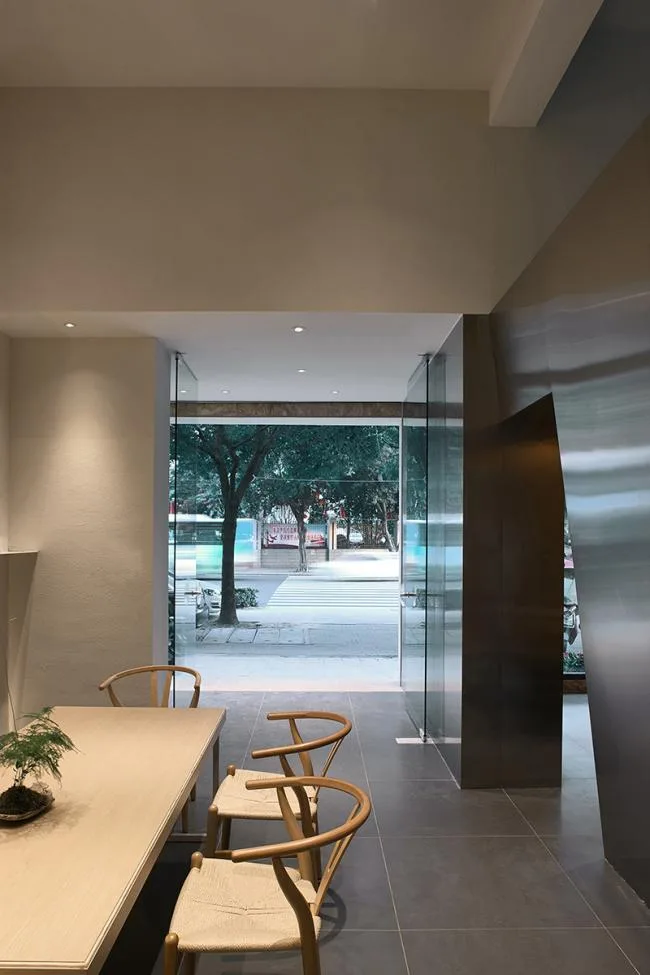
▲ Reception Room
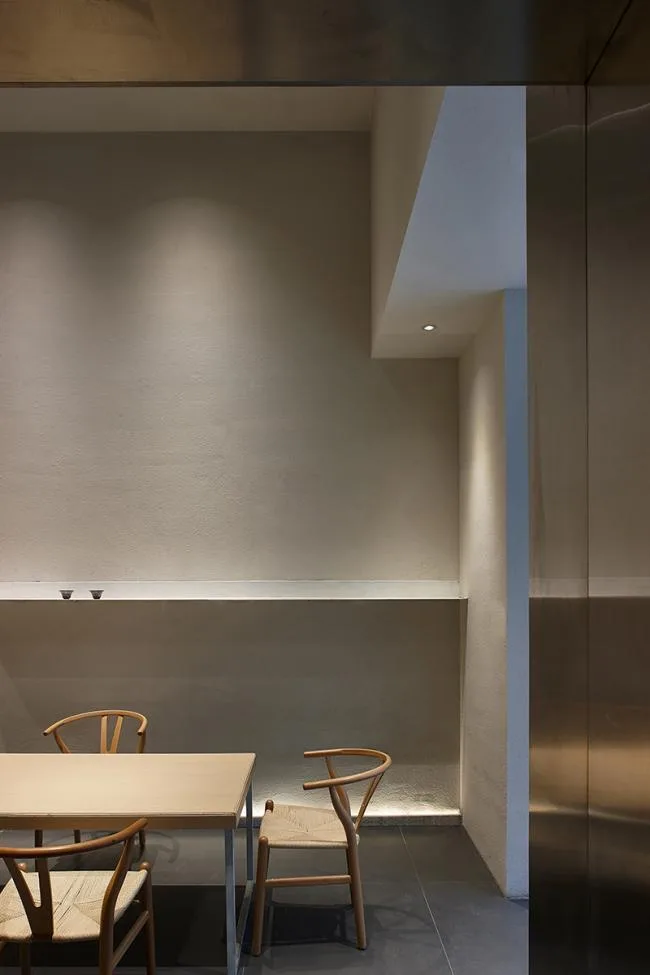
▲ Entrance to the living room
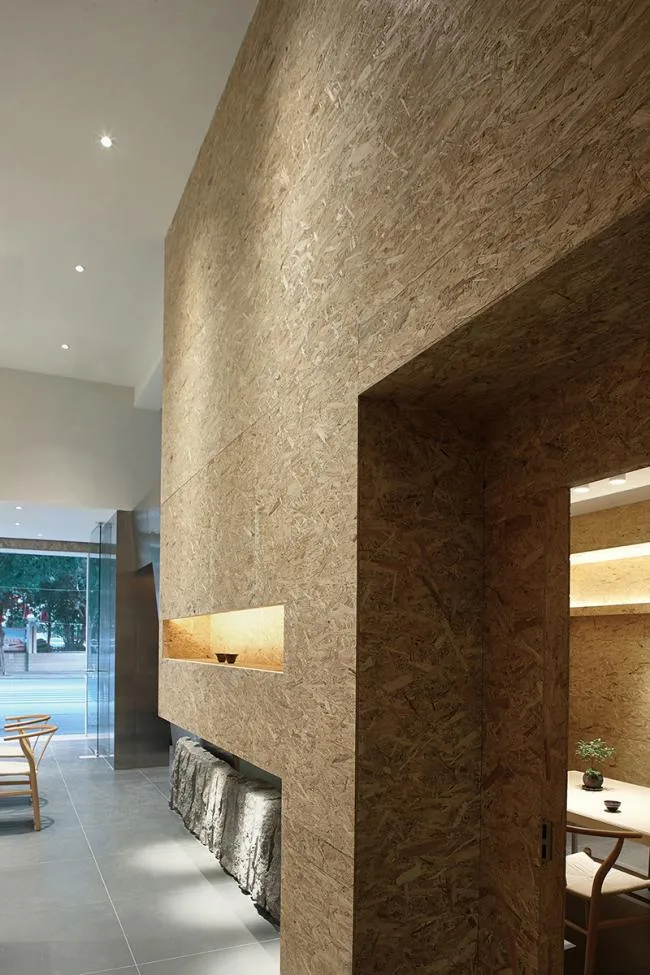
▲ European pine board wall partitions
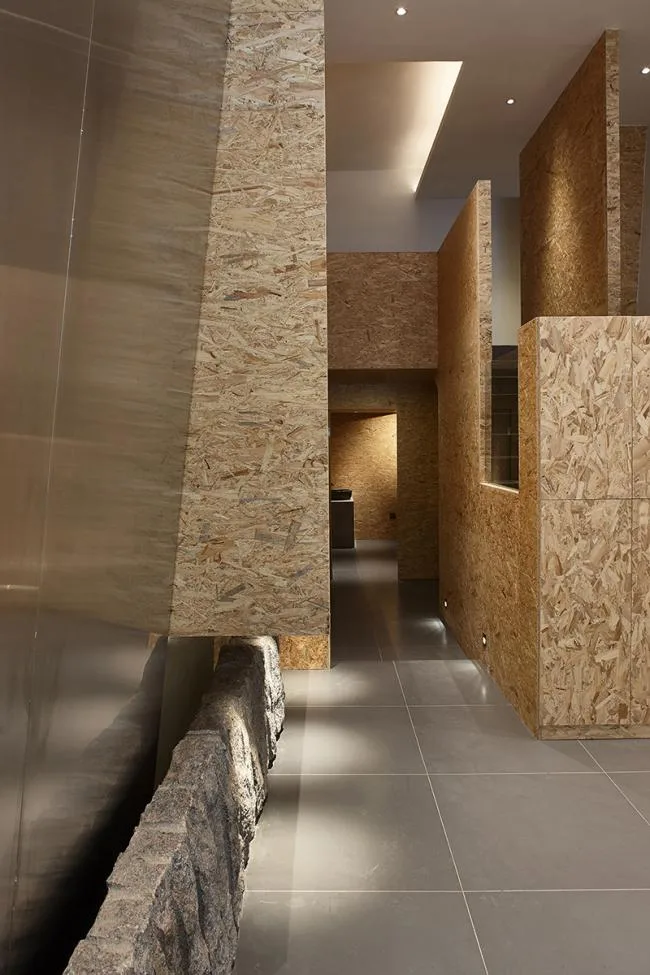
▲ Staircase concealed within European pine board walls, doubling as storage and partitions
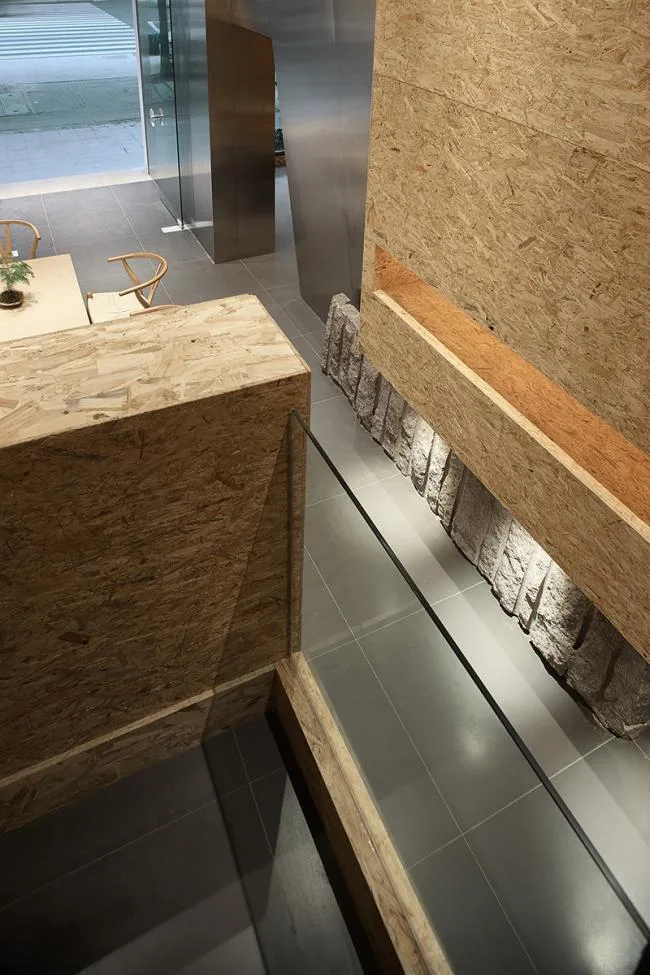
▲ View from the staircase towards the living room (BIM design)
The dynamic rhythm of the exterior transitions naturally and playfully. Stainless steel and European pine board walls break traditional rigid boundaries, while their staggered arrangement creates a calm, sculptural architectural presence.
This design reduces spatial pressure and extends sightlines, forming a layered and lively interior. Variations in material brightness and the contrast between rigidity and softness contribute to smooth transitions between different areas. When visitors sit quietly enjoying tea, they seamlessly blend into this harmonious and fitting environment.
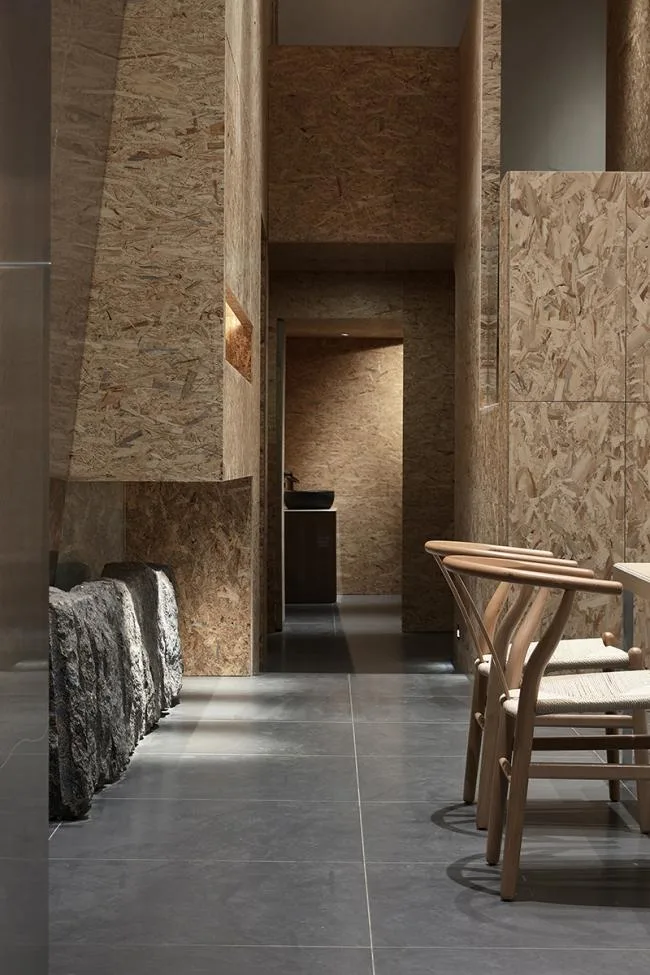
▲ Staggered interior structure creates a serene sculptural and architectural effect
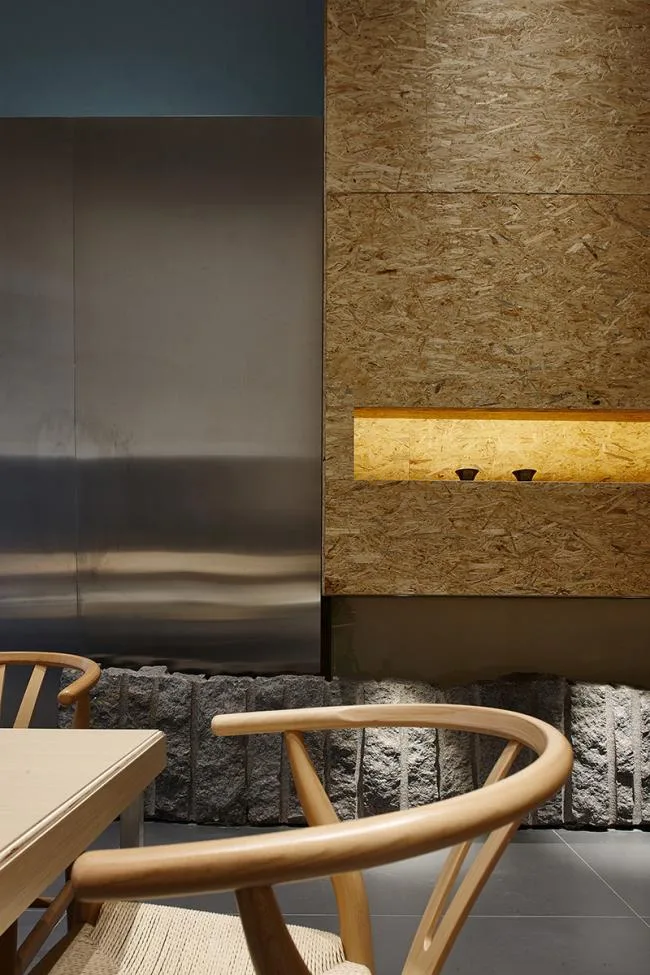
▲ Stainless steel and European pine board walls break traditional dividing lines
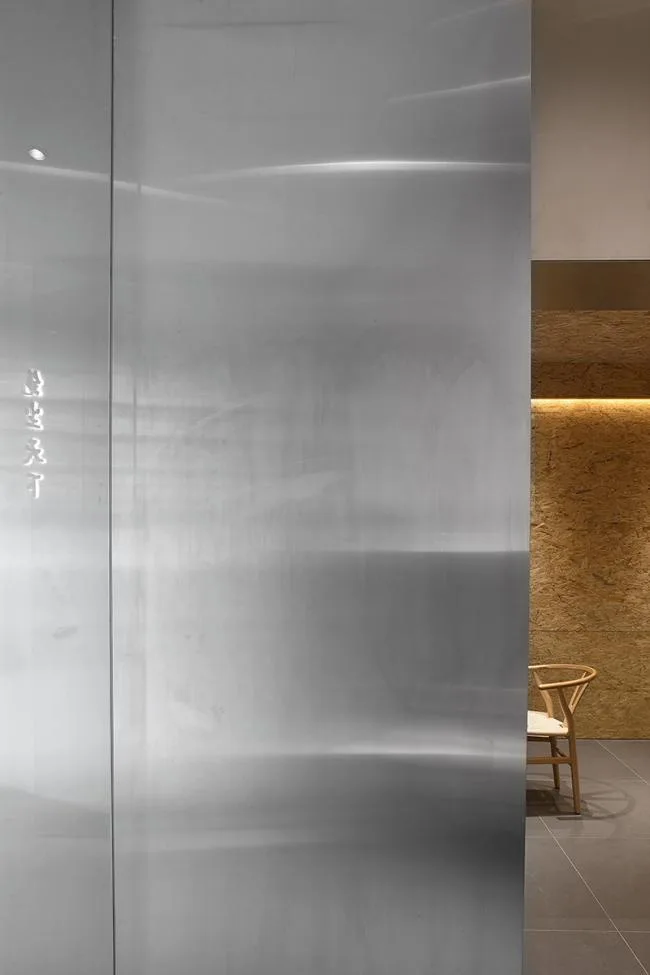
▲ Stainless steel wall surface
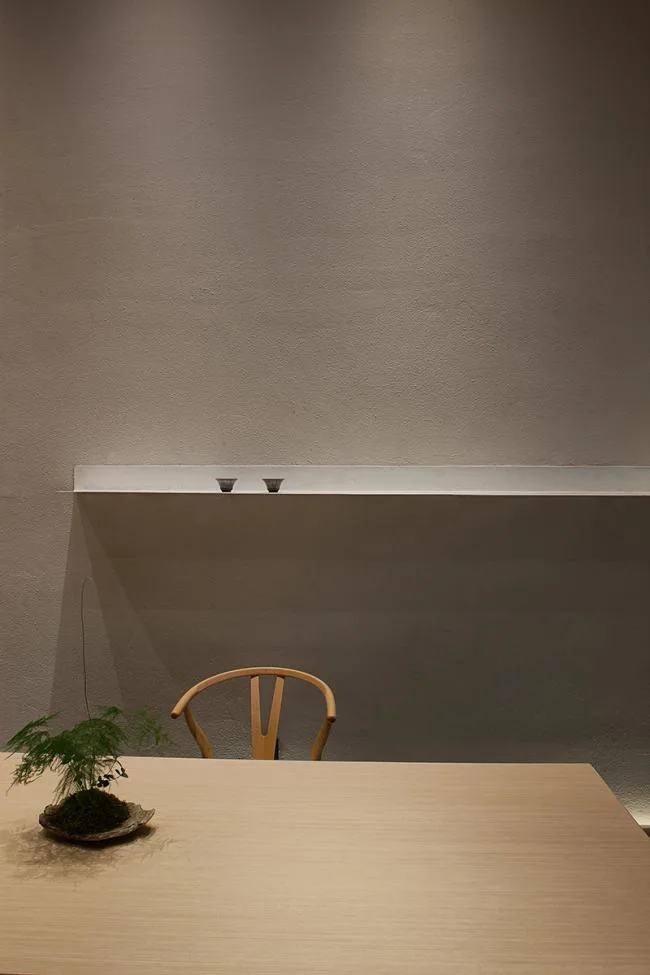
▲ Wall decoration in the living room
Within this tea house, the designer crafts a simple, rustic, and spiritually fulfilling space inspired by their understanding of humanistic values. Here, walking, sipping tea, and making friends become not only pleasurable but also a place to live, travel, and connect deeply.
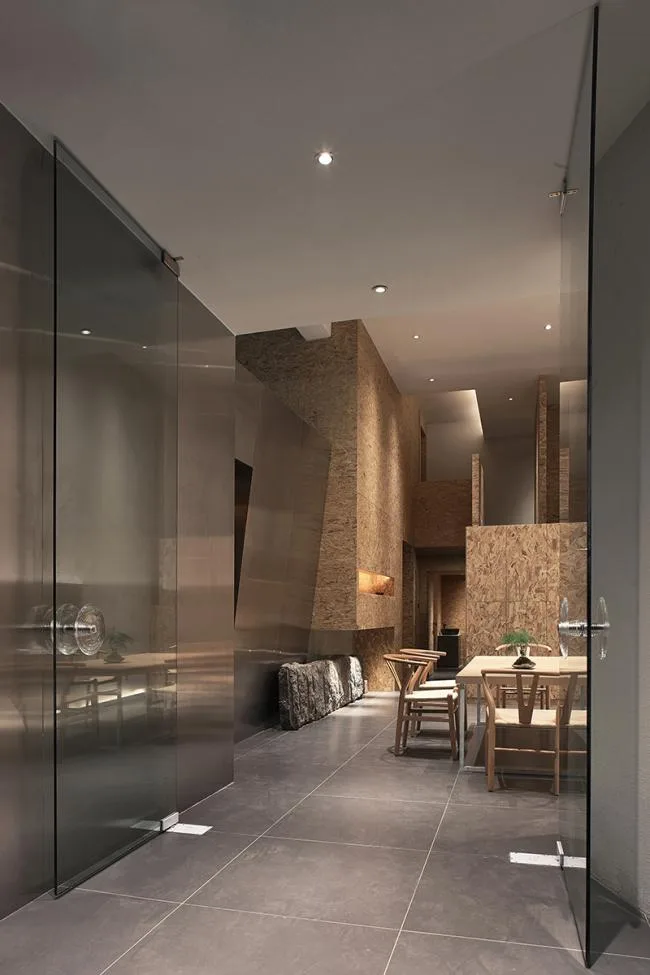
A simple, rustic tea house filled with powerful beauty
Project Drawings:
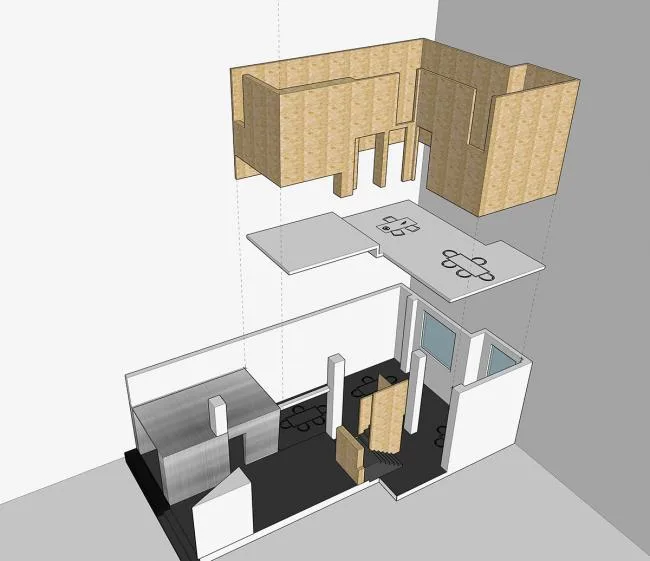
▲ 3D Anatomical Diagram
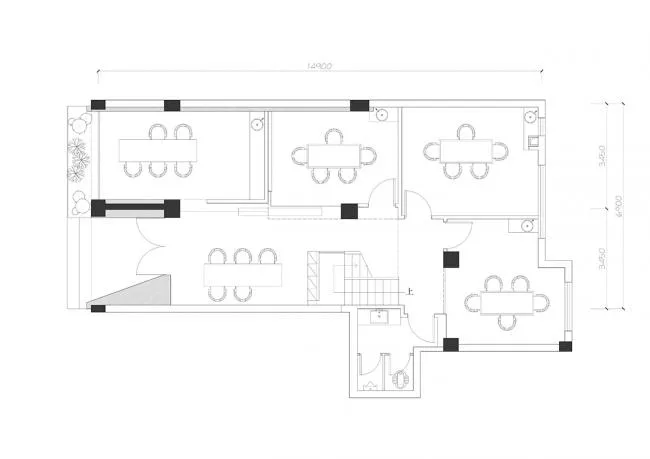
▲ First Floor Plan
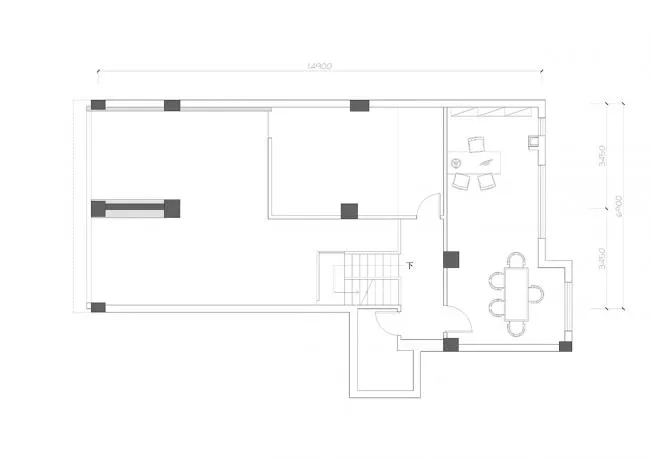
▲ Second Floor Plan
Project Information:
Project Name: Seeing the Big in the Small
Architect: Huang Feng
Company website
Contact email: __AI_S_SC0__
Completion Date: January 2019
Building Area: 150 square meters
Location: Jinshan District, Fuzhou City, Fujian Province
Photographer: Wu Yongchang
Materials: Stainless steel, European pine board, antique brick

Designer Huang Feng















Must log in before commenting!
Sign Up