
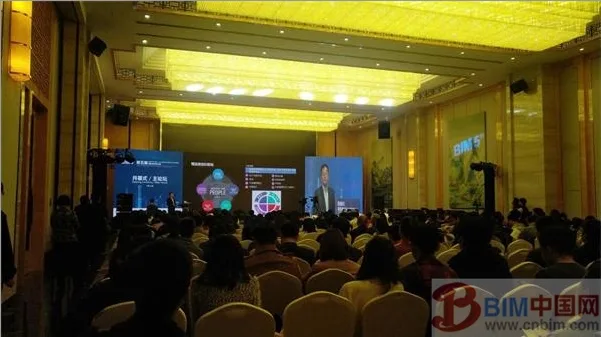
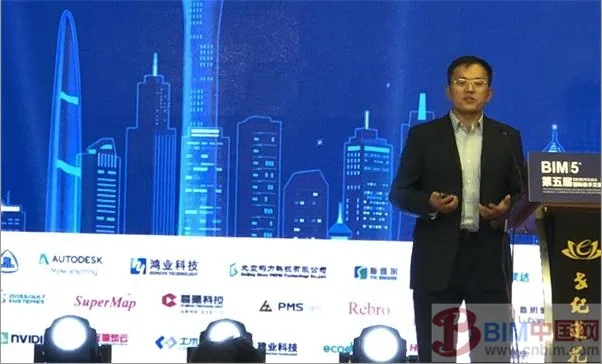
At the 5th International Technology Exchange Conference on the Application of BIM Technology in Collaborative Work involving Design, Construction, and Real Estate Enterprises, Mr. Yuan Zhenggang, President of Guanglian Da, delivered a keynote speech. Representing Guanglian Da, he officially announced that China’s BIM applications have entered the BIM 3.0 stage, where the value of BIM will become even more apparent.
In China, BIM technology has evolved through two main stages: BIM 1.0 and BIM 2.0. The BIM 1.0 phase primarily focused on design applications, with design institutes leading the way. BIM 2.0 expanded its scope from design to construction, emphasizing BIM model-based applications at the project level to address practical challenges.
With ongoing improvements in BIM application environments, the maturation of related products, and clearer demonstration of its value, BIM applications are now advancing into the BIM 3.0 phase.
What is BIM 3.0?
BIM 3.0 represents an extended stage of application that emphasizes construction phase integration and the full fusion of BIM technology with management processes. This stage marks a shift from rational use to a climb towards higher efficiency and value. Currently, BIM technology’s most profound and valuable applications remain within the construction process, where it effectively addresses management challenges and delivers significant results.
Three Key Characteristics of the BIM 3.0 Stage
In the BIM 3.0 era, BIM technology is applied more deeply and delivers greater value. Its application is characterized by three main trends:
- Expansion from construction technology management to comprehensive construction management applications;
- Extension from project site management to enterprise-wide construction management;
- Radiation from the construction phase to the entire building lifecycle.
1. Expanding from Construction Technology Management to Comprehensive Construction Management
BIM technology inherently supports collaboration. By integrating BIM with comprehensive management, traditional communication channels, workflows, and collaboration styles are transformed. In the BIM 3.0 era, BIM is no longer limited to technical management but is deeply embedded across all facets of project management.
According to the “Analysis of BIM Application in Construction Enterprises and Prospects for Digital Building Development (2018)” (hereafter referred to as the “Report”), 80% of construction enterprises believe BIM should be fully integrated into project management to achieve refined control. This integration spans beyond technical management to include production and business management, promoting the widespread adoption and comprehensive integration of BIM within projects.
2. Extending from Project Site Management to Construction Enterprise Management
The Report also reveals that 75% of enterprises have established BIM organizations at the corporate level. Increasingly, companies recognize that BIM can add significant value to their business operations.
By leveraging BIM technology, enterprises can unify the sharing and collaboration of technical, business, and production data between corporate and project teams through a centralized BIM model. This ensures consistent, timely, and accurate project data, enabling efficient coordination and enhancing the company’s ability to standardize, refine, and intensify project management. For instance, Hunan Construction Engineering Group has successfully transformed and upgraded its operations through BIM, strengthening its core competitiveness.
3. Extending from Construction Phase to the Entire Building Lifecycle
BIM acts as a comprehensive carrier, integrating engineering, management, and resource information throughout a project’s lifecycle into a unified model. This integration facilitates seamless data flow across design, construction, operation, and maintenance stages, overcoming data-sharing barriers and enabling integrated, prefabricated construction.
A notable example is Wanda Group’s BIM general contracting model for prefabricated structures. This industry-leading practice has realized full-chain data sharing from design through construction to operation and maintenance, allowing BIM’s value to be realized across the building’s entire lifecycle.
Today, BIM applications serve as the driving force behind the transformation and upgrading of the construction industry, injecting new vitality into its evolution. BIM technology forms the digital infrastructure for “digital buildings,” “digital enterprises,” “digital cities,” and even “digital China.” It drives improvements in industry technology, enhances project lifecycle management, promotes business model innovation, and fosters management innovation. Ultimately, BIM leads the construction industry’s sustainable and healthy development, helping every engineering project achieve greater success.













Must log in before commenting!
Sign Up