
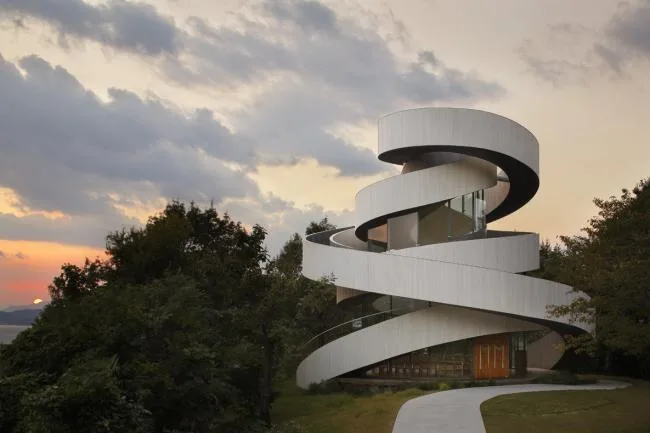
Two spirals become one
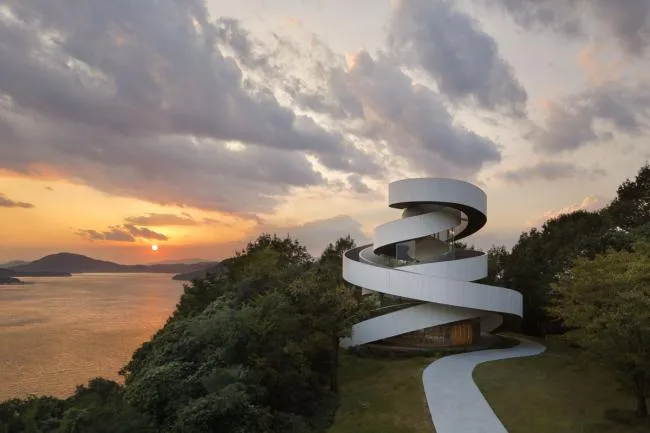
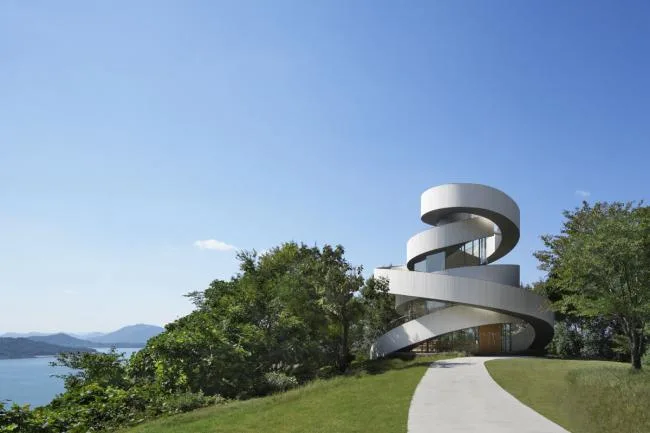
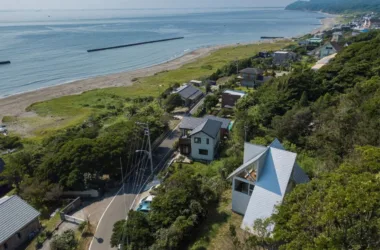
This unique double helix church is nestled in the backyard of the Bella Vista Sakaigahama Resort Hotel, located in Hiroshima’s Onomichi district. Perched atop a mountain, it offers breathtaking panoramic views of the Seto Inland Sea. Its remarkable location and stunning surroundings captivate visitors and evoke a deep sense of longing.
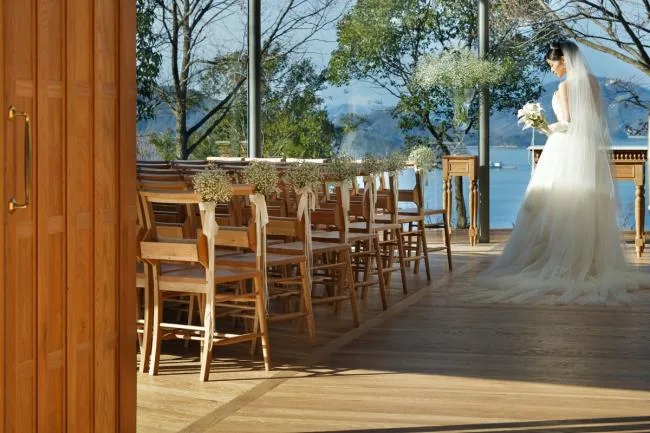
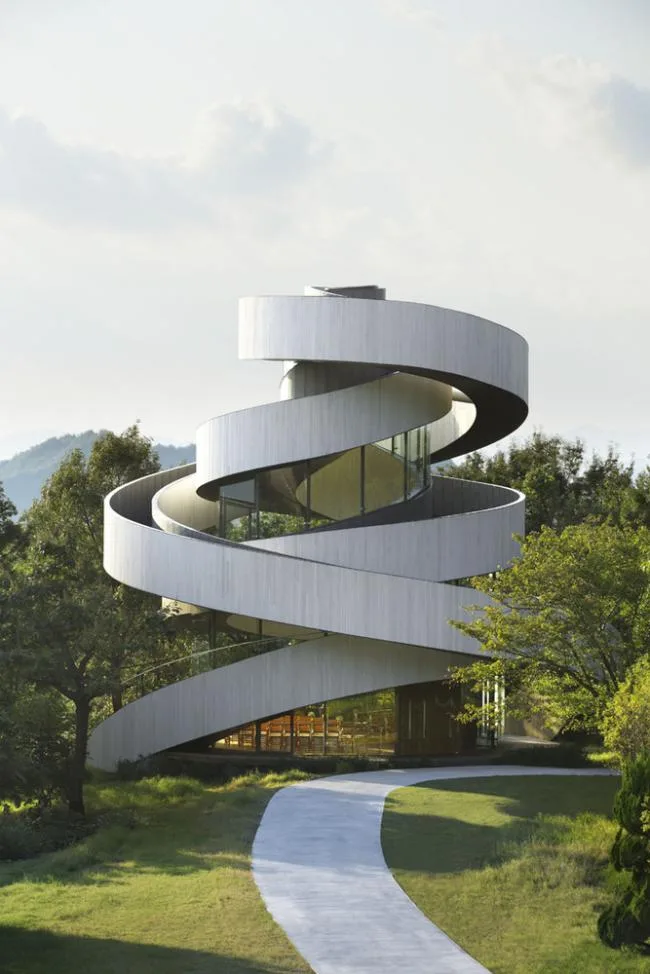
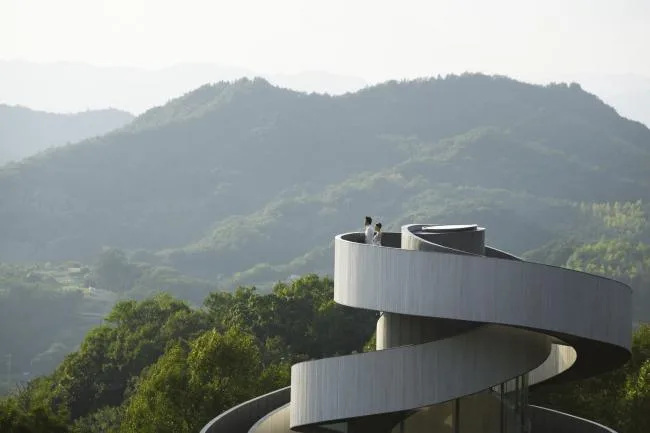
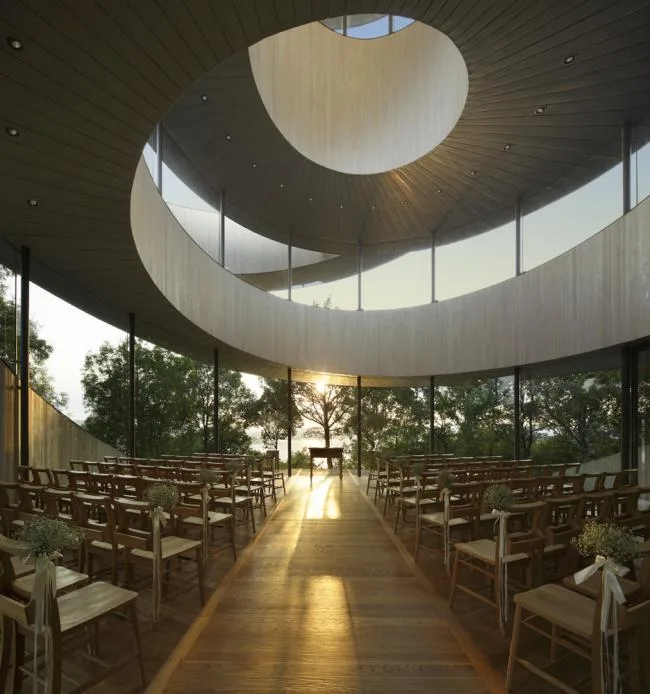
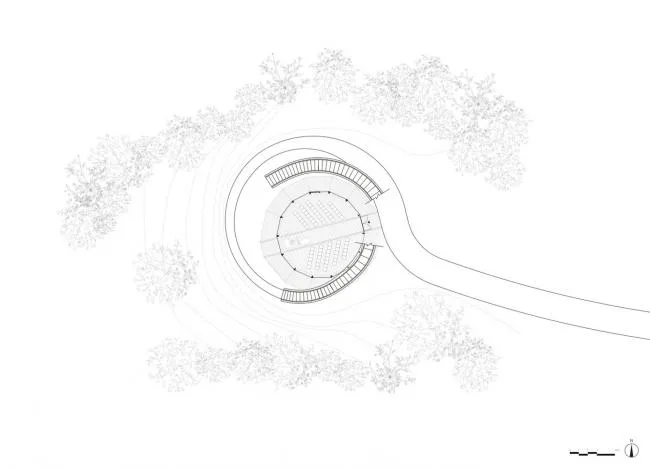
The church’s overall design is strikingly pure, composed of two intertwined spiral staircases that symbolize marriage in an unprecedented yet deeply meaningful form (BIM design). These two spirals converge at the top, 15.4 meters above ground, forming a platform that represents two individuals with unique life experiences coming together, joining hands, and moving forward as one. At the base of the church, an 80-seat wedding hall offers views that extend beyond the trees to the sea.
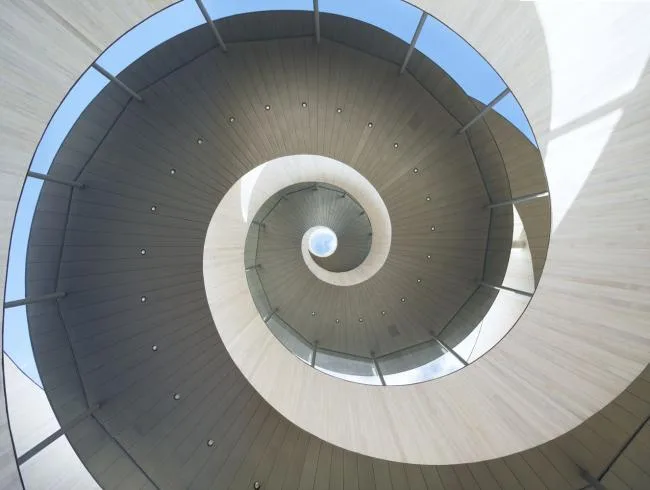
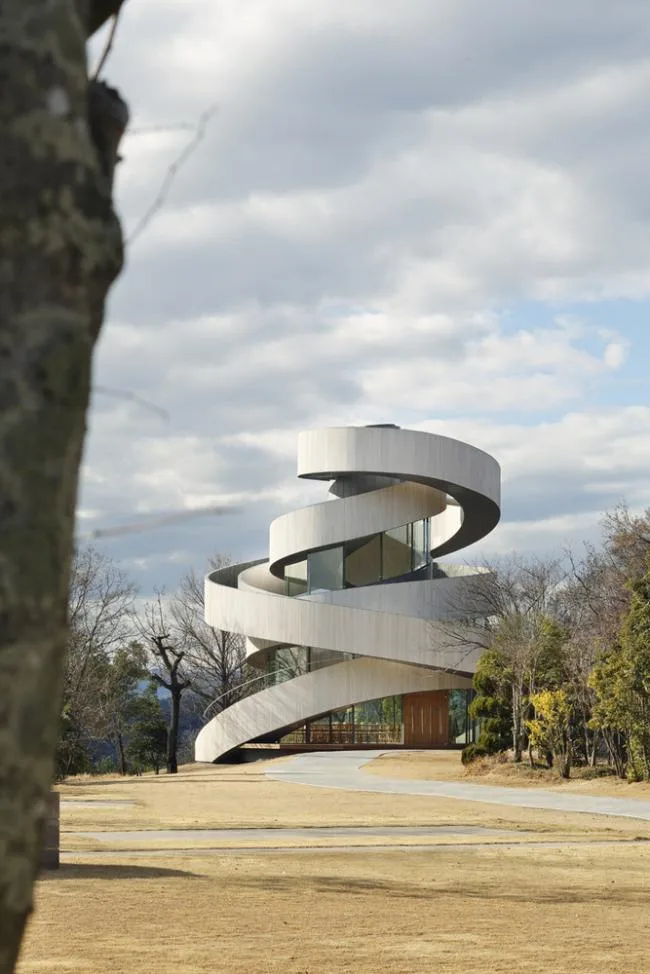
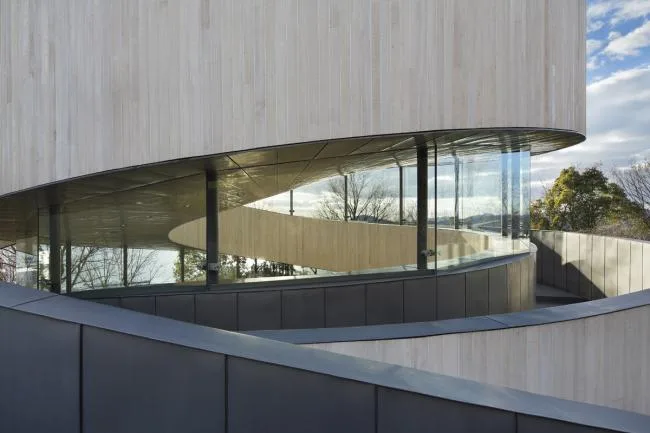
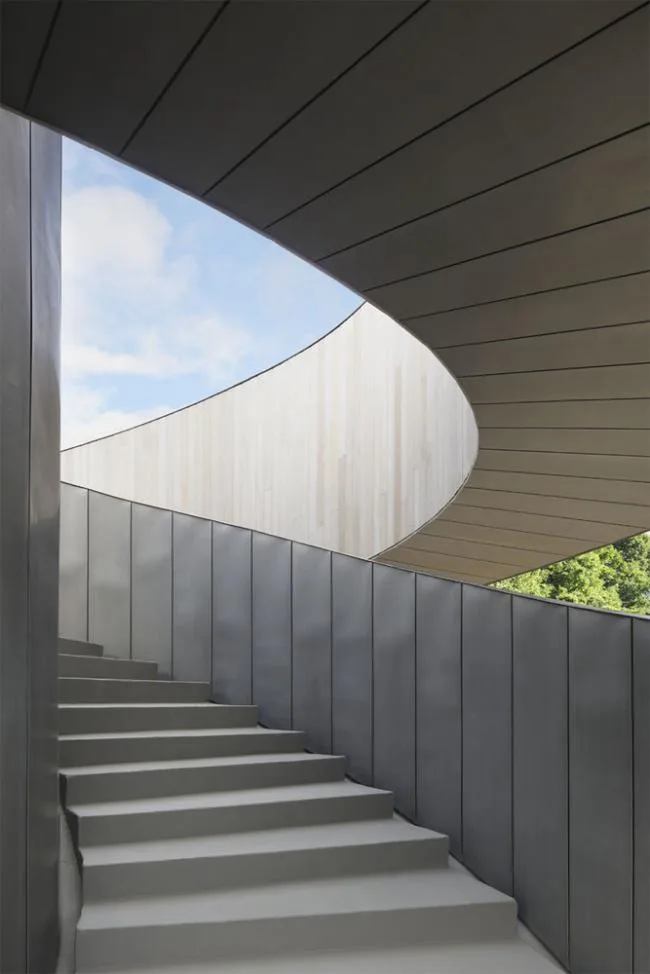
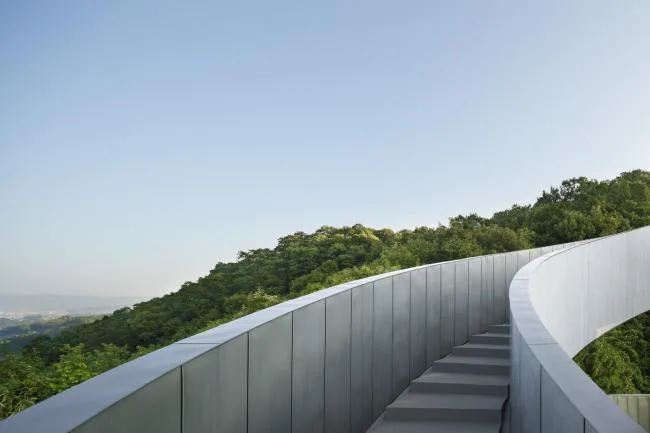
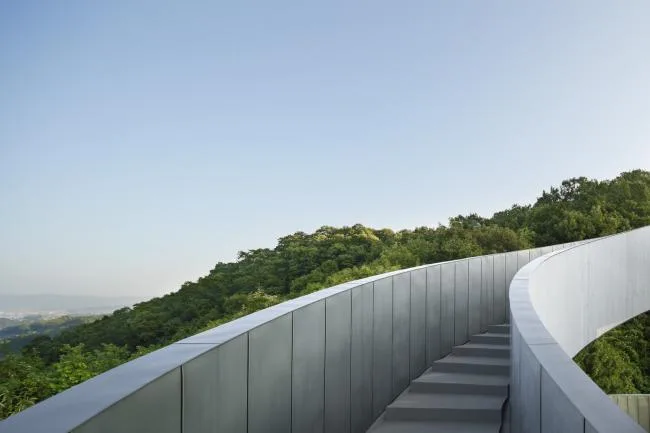
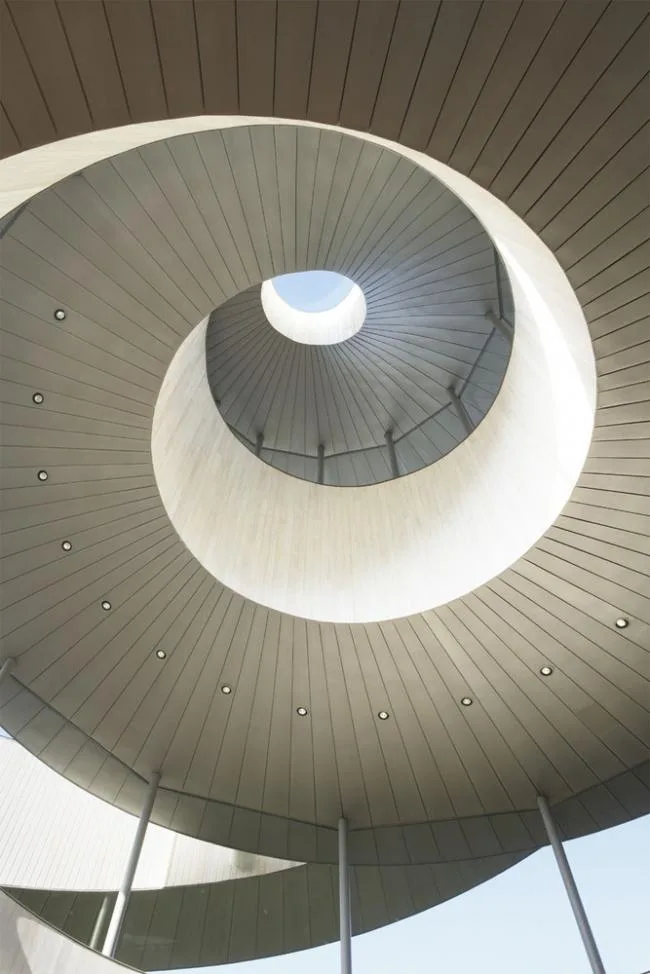
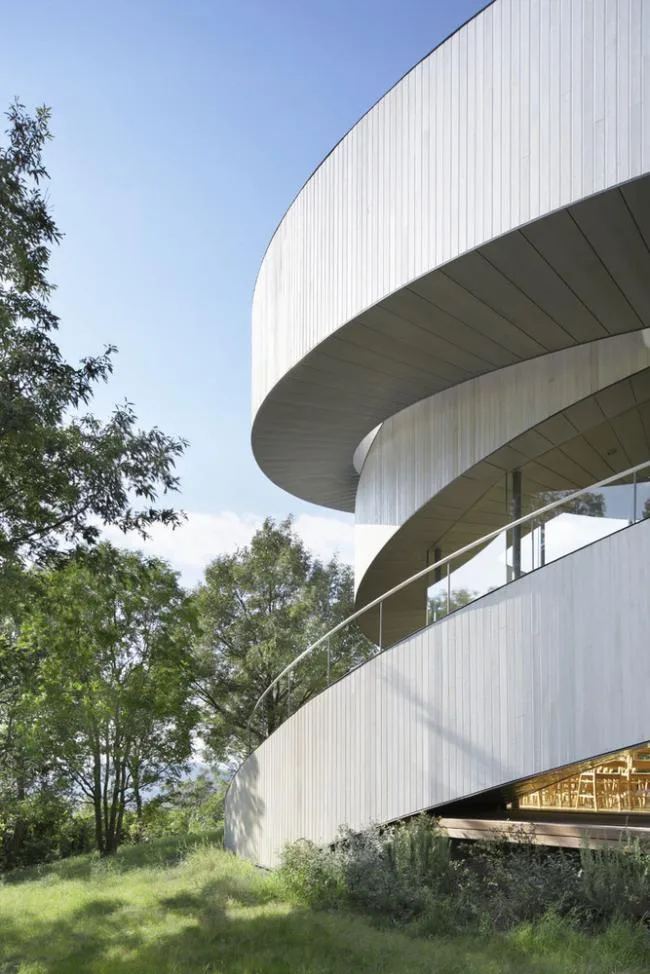
Unlike traditional buildings with defined roofs, walls, and floors, this church replaces these elements with winding staircases that create innovative spatial experiences. The stairs are wide enough to allow comfortable passage, and the point where they meet at the top is carefully designed to offer stunning views while shielding the lower levels from direct sunlight.
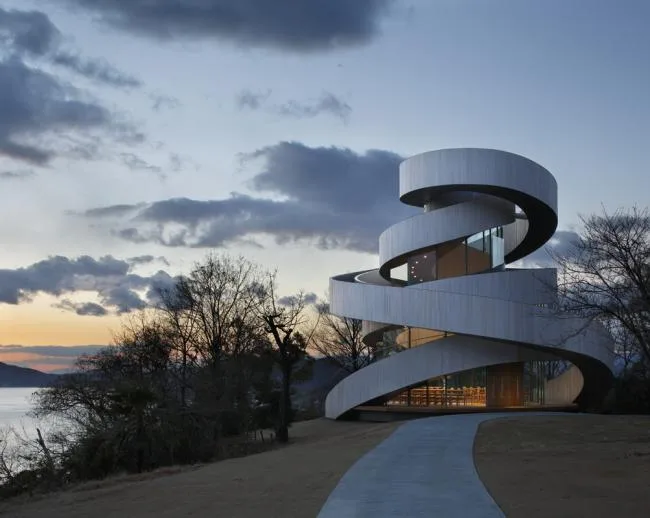
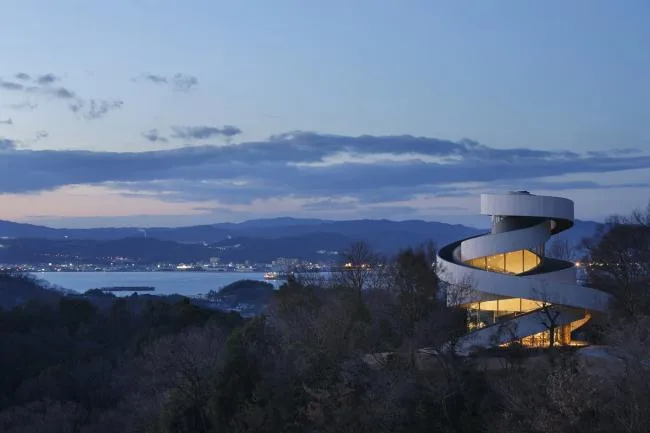
The exterior vertical surfaces are clad with long, self-supporting wooden boards painted white. The undersides and interiors of the staircases are constructed from a zinc alloy, which is flexible enough to accommodate the curves and durable enough to withstand the corrosive sea winds.
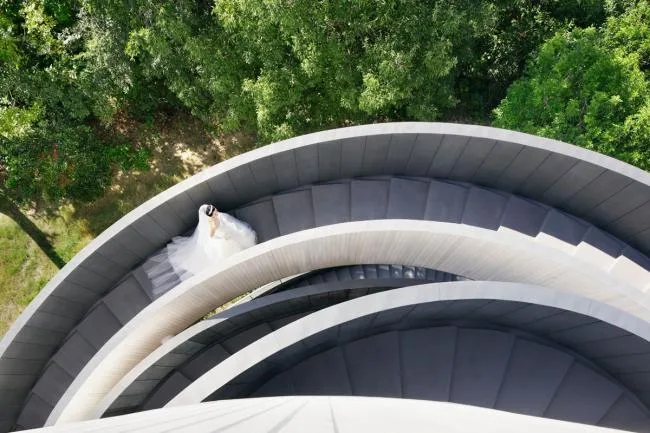
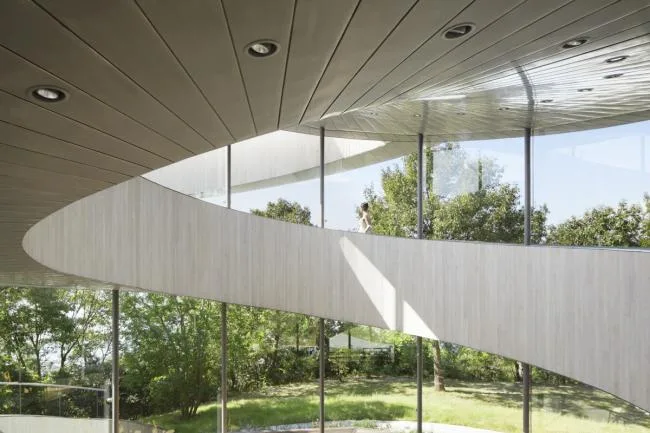
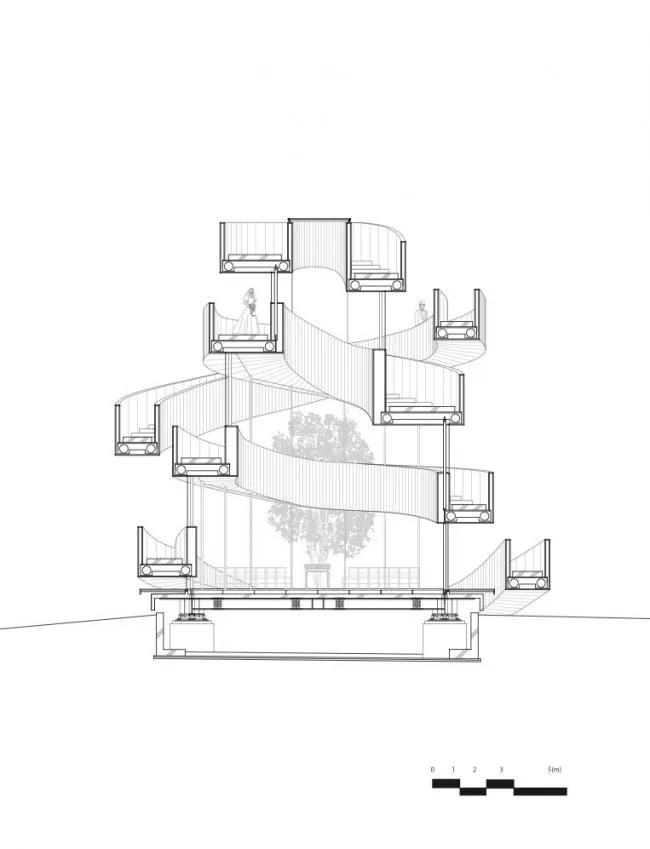
Traditionally, a bride is escorted down the aisle by her father after the wedding ceremony. In this church, the bride and groom ascend their respective spiral staircases from opposite ends, meet at the top to symbolically unite, and then descend together, embodying their journey as partners.
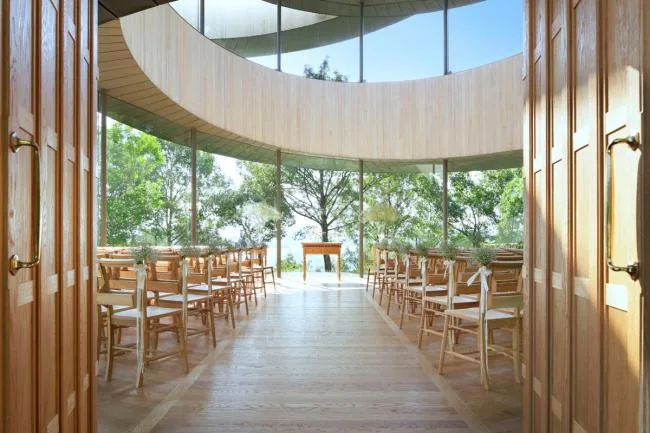
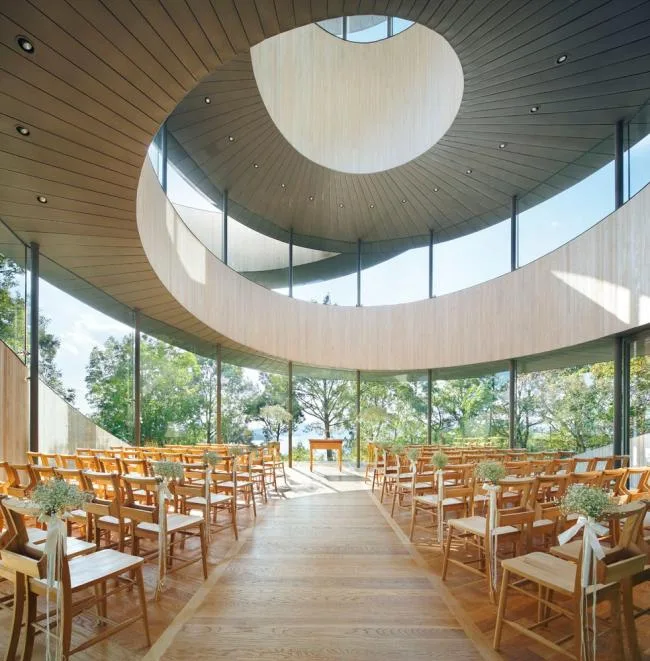
The architects envision this singular pathway as a journey through the ocean, mountains, sky, and distant islands, with views of disappearing buildings and ever-changing scenery. The bride and groom experience a meaningful procession along a path that stretches up to 160 meters in length.
A mutually supportive spiral
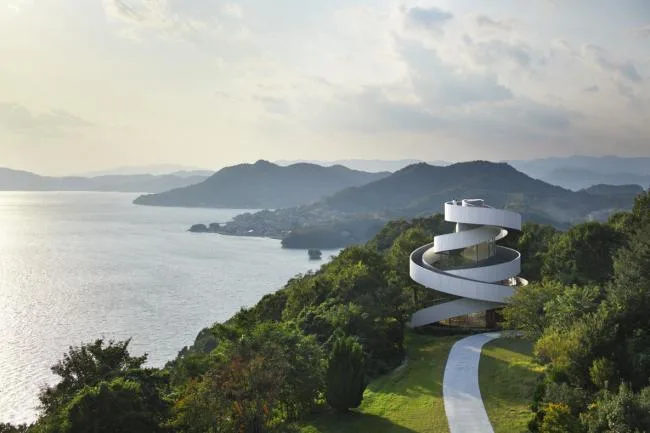
The double helix structure is firmly connected at four key points. The architect incorporated three-dimensional hoops to resist horizontal forces, enabling the two spirals to support one another while remaining structurally independent. Vertical loads are carried by solid 100-millimeter diameter steel columns.
To minimize the volume of the upper framework, cantilever dampers are installed at three points along the outer staircase to reduce the noise caused by footsteps. The designers accounted for a potential 30mm settlement after scaffold removal, which could otherwise cause the building to tilt.
Structural engineer Ikuhide Shibata from Arup developed a sophisticated reverse torque structural model to counteract natural rotational forces and settlement issues. Each glass window varies in height, thickness, and shape (BIM), and is installed inside using a point-supported system.
Drawings
First Floor Plan
Sectional View
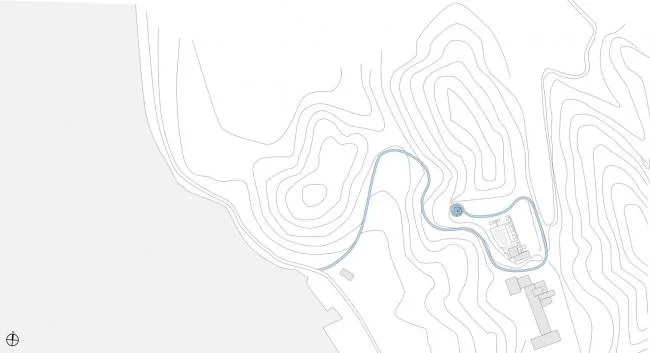
Master Plan
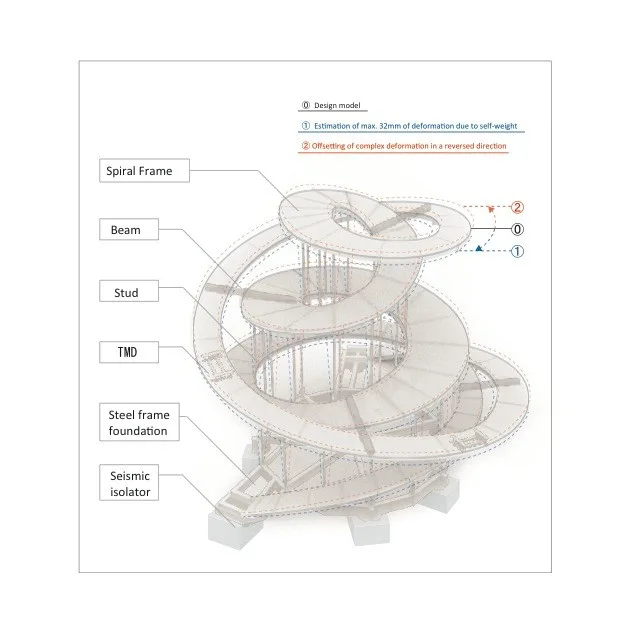
Illustration
Project Information
Architect: Hiroshi Nakamura; NAP
Location: Hiroshima, Hiroshima Prefecture, Japan
Category: Small Church
Building Area: 80.0 m²
Project Year: 2013
Photographer: Koji Fujii / Nacasa & Partners Inc
Structural Design: Ove Arup & Partners Ltd
Structure Type: Steel
Site Area: 2500 m²












Must log in before commenting!
Sign Up