
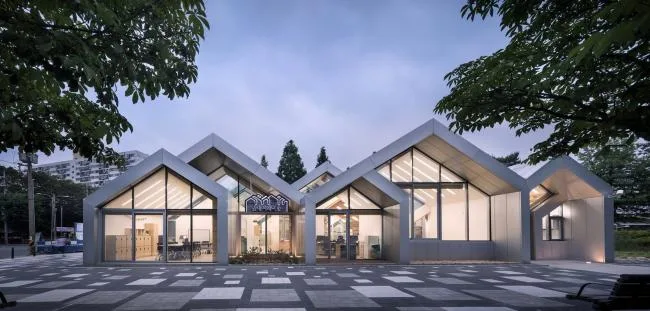
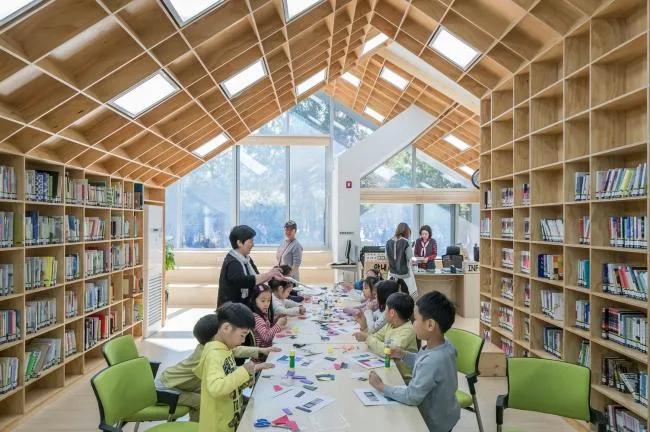
Hannae Smart Forest is not a cultural space born from a large-scale public development project. Instead, it originated from the concept of a creative space where people can enjoy living, participate in BIM training, and feel motivated to return daily. The goal was to transform an abandoned urban area into a unique and engaging creative environment.
The design process followed this sequence:
- The Nowon-gu office requested that the project be integrated into the community.
- Various site options were considered, and after thorough investigation and on-site analysis, an abandoned fountain space within the neighborhood park was selected.
- Public hearing feedback was collected.
- Design details were refined.
- Construction was carried out.
- The project was completed.
- The local committee opened a library, café, and after-school learning classes.
In Seoul, urban renewal no longer focuses on large-scale projects that alter entire blocks or city sections. Instead, it emphasizes smaller projects on abandoned sites that help locals reconnect with their community.
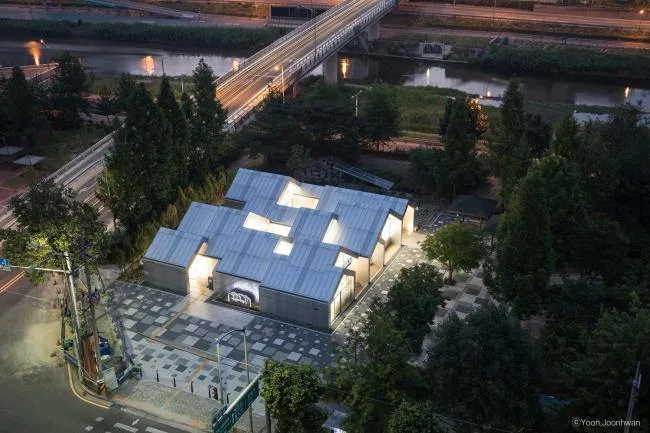
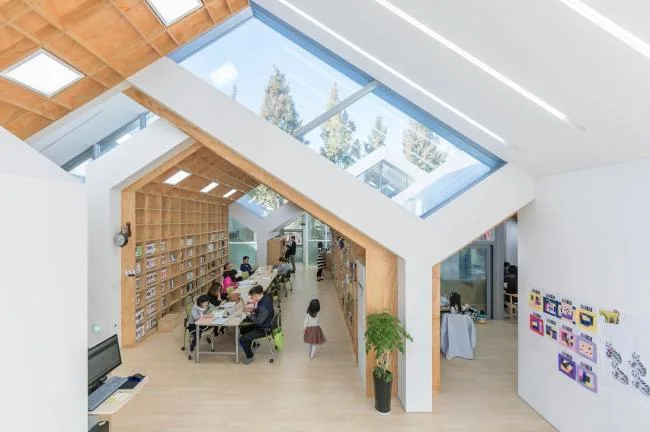
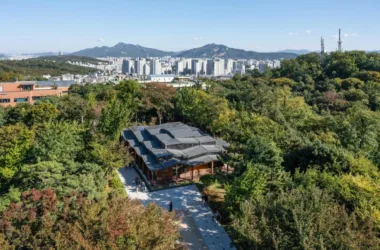
Unsangdong Architecture Firm created a small community space for the Hannae area to invigorate local culture. Hannae Community Park, located next to Jungnang Creek, serves as a sports venue for neighboring communities. The site is near the park’s entrance, where a dilapidated fountain stands, acting as a barrier between the community and the park.
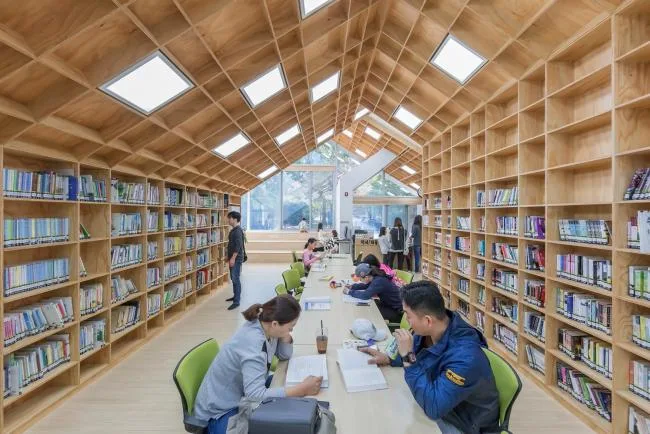
The park is situated within a densely populated residential area but lacks cultural platforms. To address this, we designed the Hannae Library to rejuvenate the community atmosphere by connecting culture and nature through shared spaces. Hannae Smart Forest offers a fresh environment for Nowon-gu, where concrete apartment complexes stand alongside Jungnang Creek.
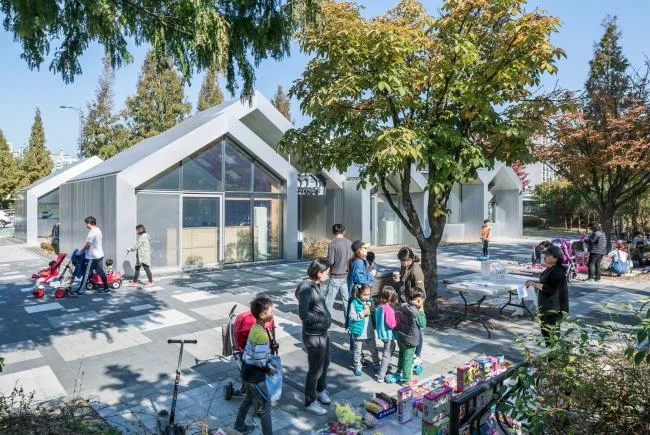
Our proposal introduces an artificial forest outside the existing natural forests and parklands. Rather than dominating the landscape, the structure expands the imagination. Its form blends elements of nature with concentric patterns, symbolizing overlapping mountains.
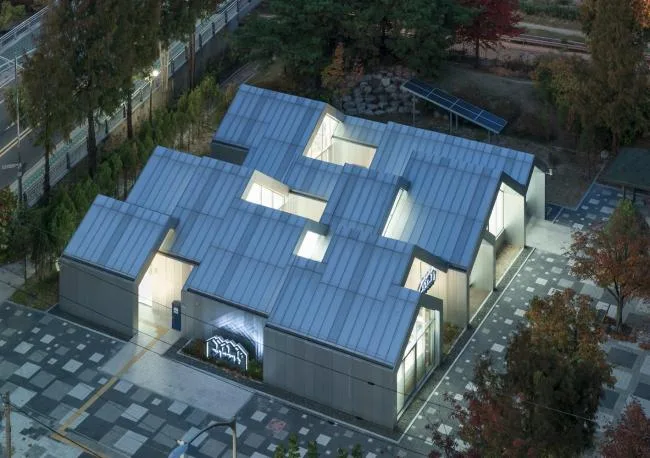
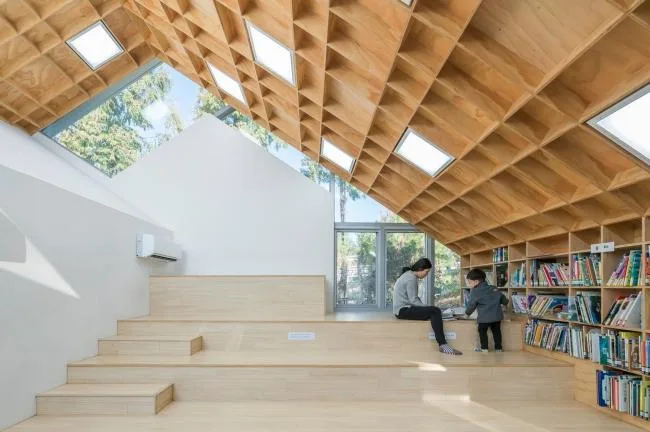
The structure is not an isolated triangle but an interconnected form that supports communication and mutual reliance. This design evokes natural and primitive architectural archetypes, symbolizing communication, nature, and the relationship between children and adults.
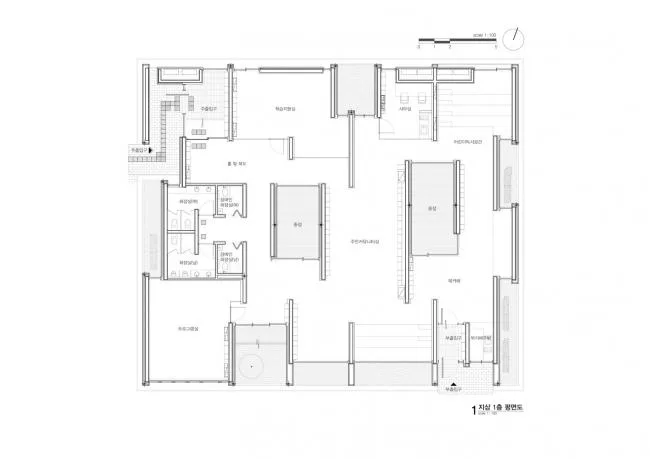
The basic spatial unit is the bookshelf, which doubles as the wall. These bookshelves define the space and act as partitions. Historically, walls have served as dividers; in Hannae Library, the walls form a maze that weaves through the space, continuously connecting and separating areas.
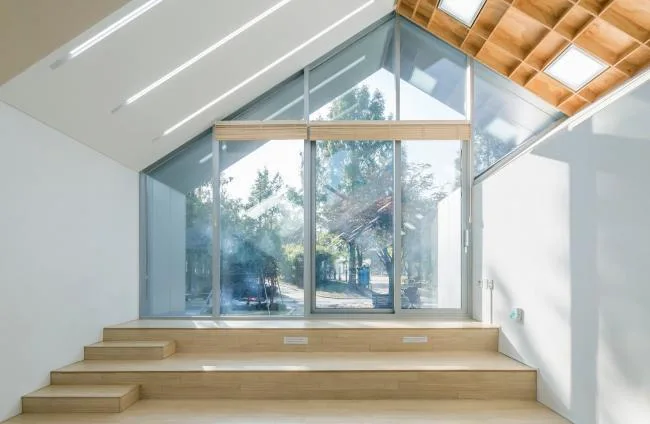
These bookshelves integrate space, furniture, and structure into a unified whole. Although the library occupies less than 330 square meters, visitors experience a variety of spatial sensations inside. The design overcomes size limitations by creating a multifunctional space adaptable to different conditions.
The gable roof continues the bookshelf walls, forming thresholds at varying heights. Natural light enters through these openings, enhancing the interior atmosphere. The maze-like layout stimulates children’s imagination and creativity as they explore the library.
Drawings
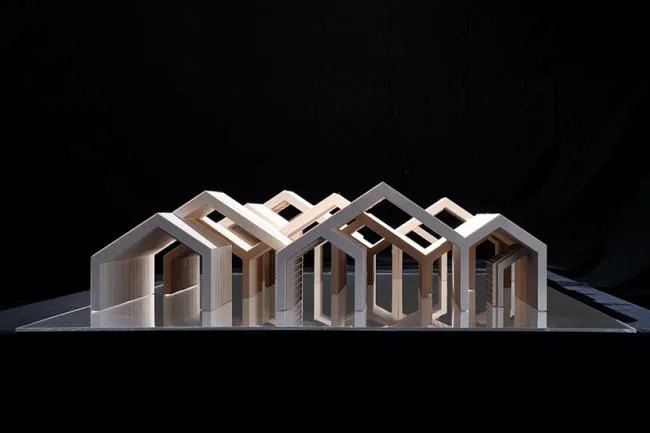
Model diagram
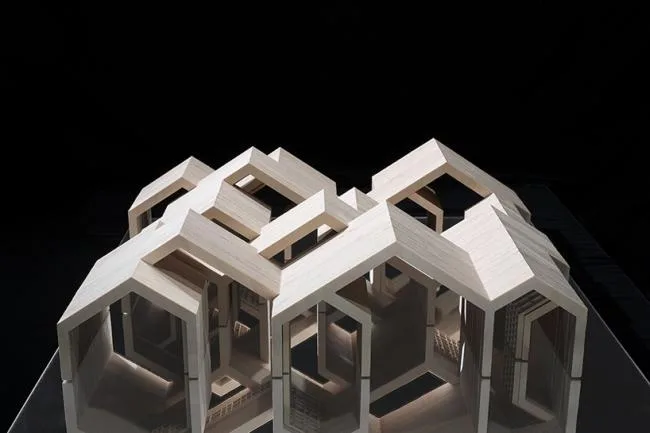
Model diagram
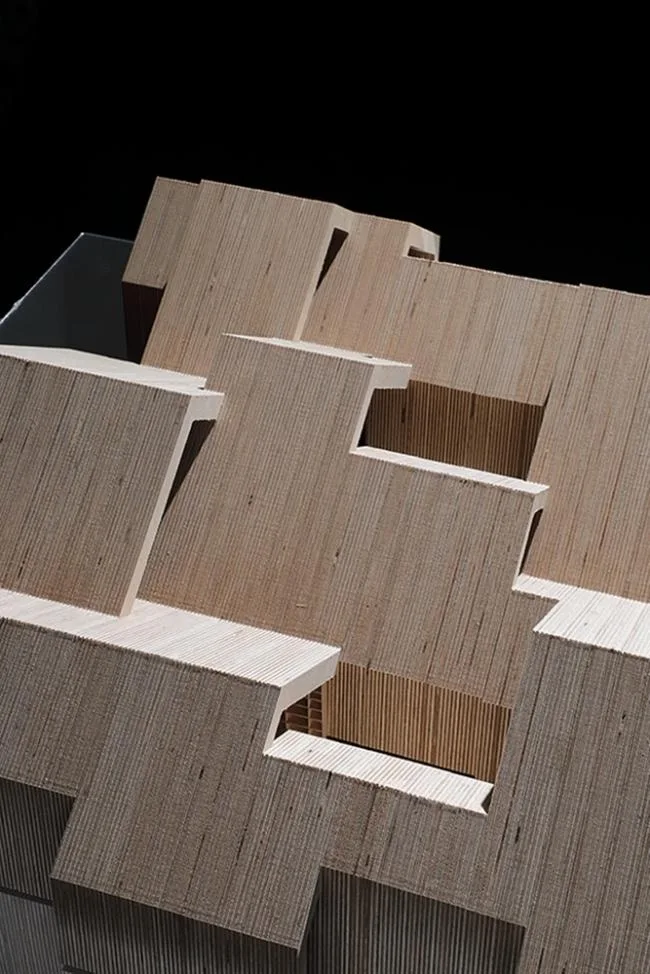
Model diagram
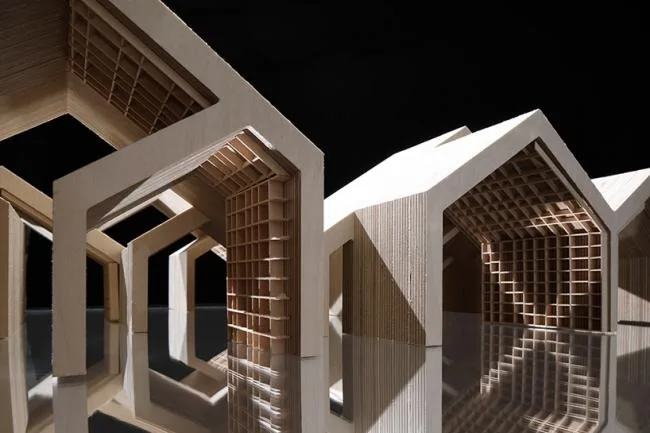
Model diagram
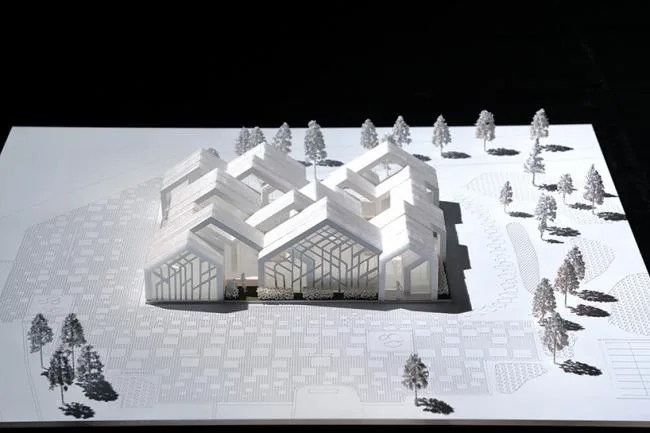
Model diagram
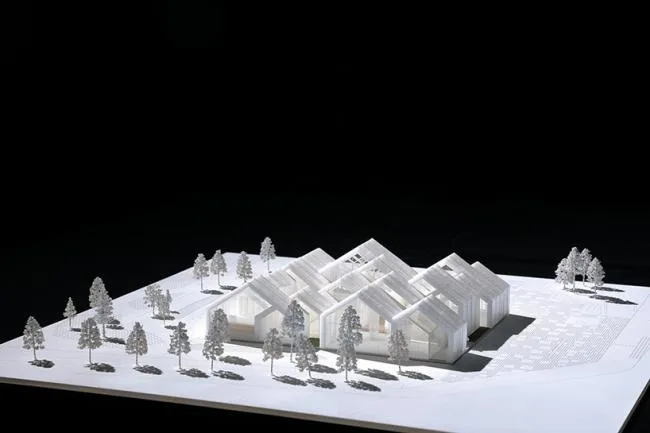
Model diagram
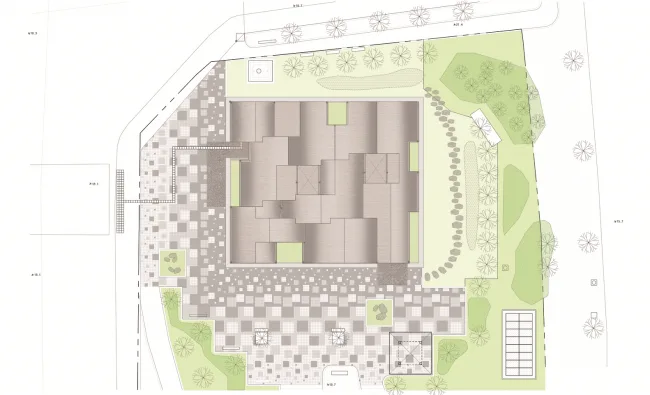
Master Plan
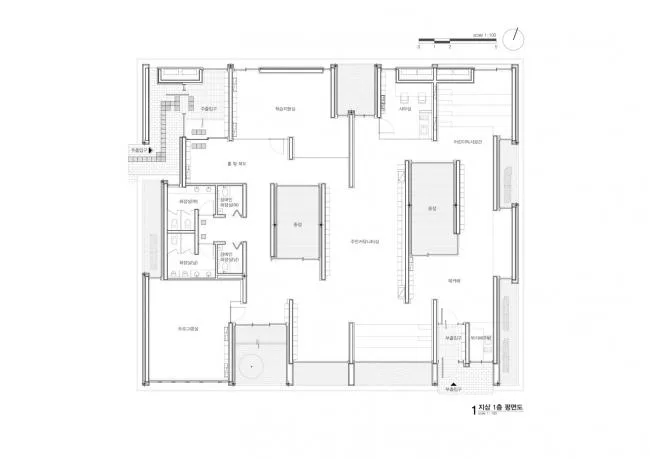
Floor plan
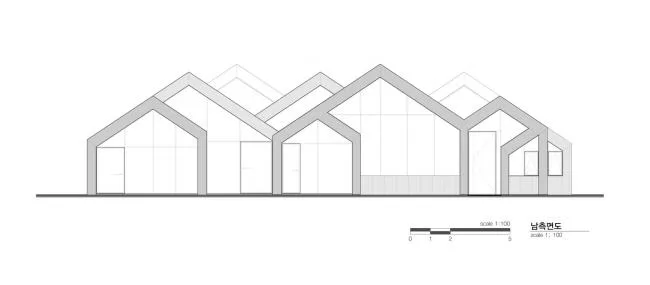
Elevation drawing
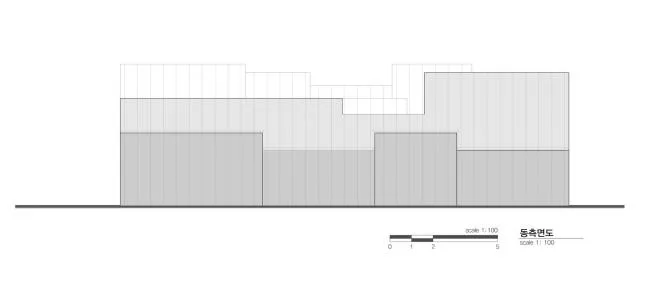
Elevation drawing
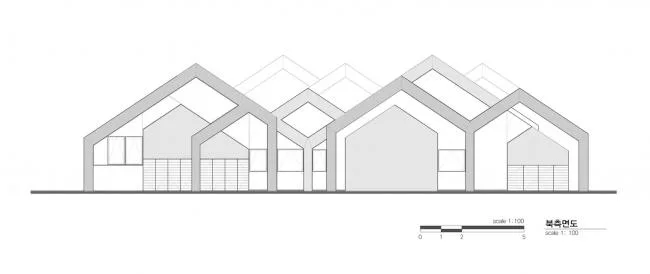
Elevation drawing
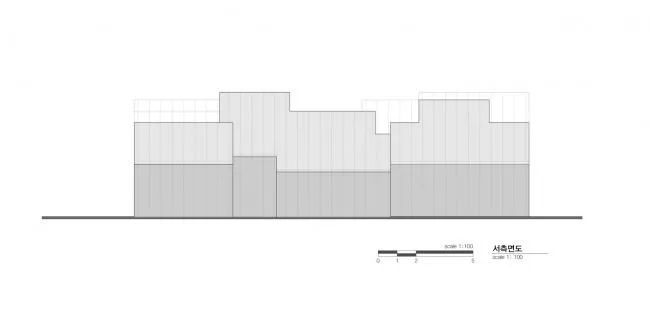
Elevation drawing
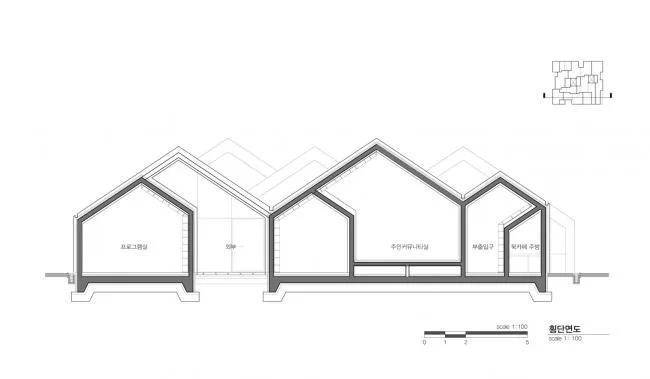
Sectional view
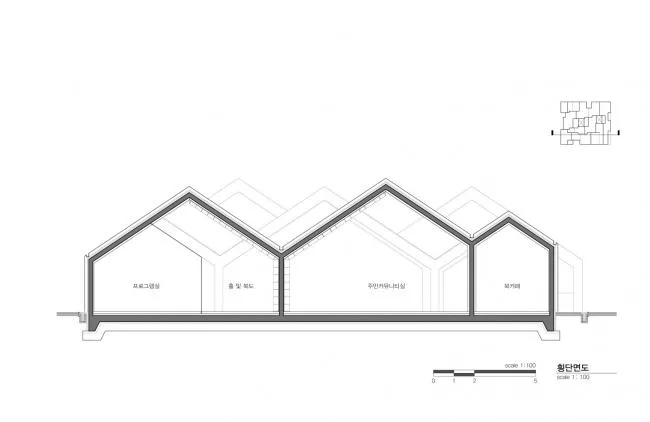
Sectional view
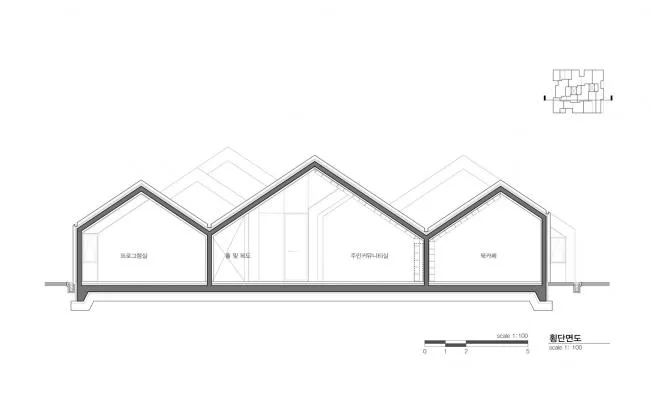
Sectional view
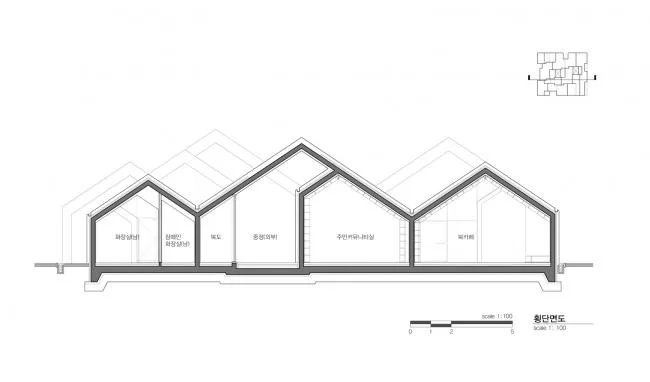
Sectional view
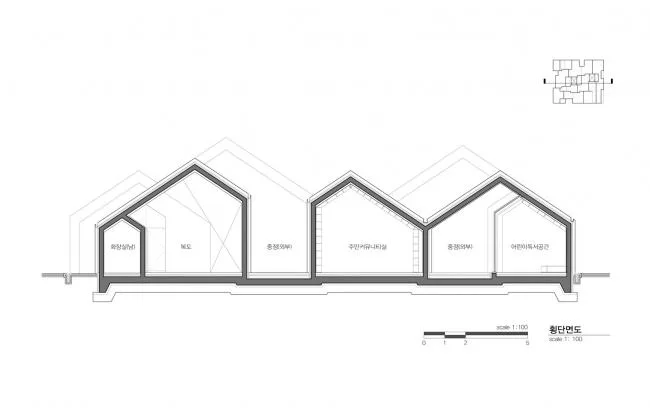
Sectional view
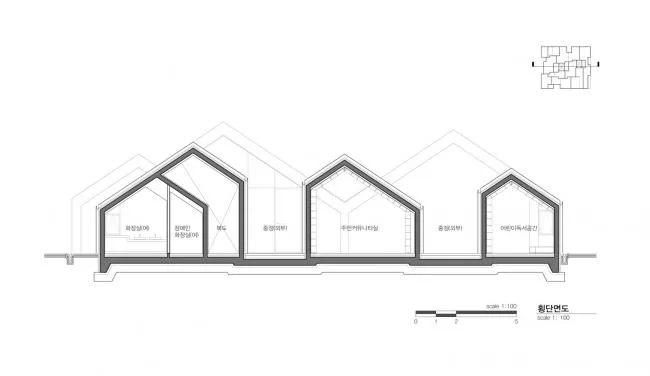
Sectional view
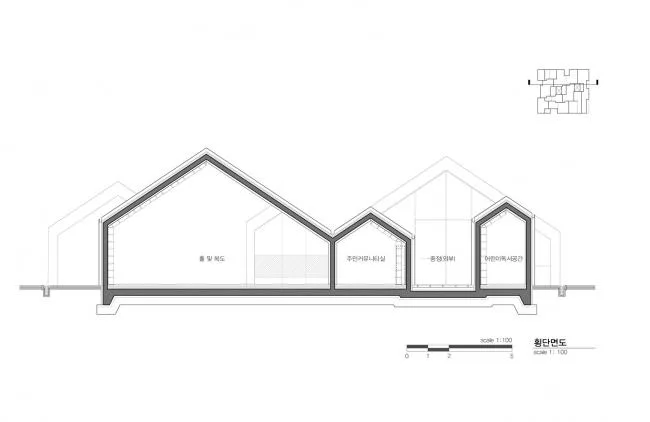
Sectional view
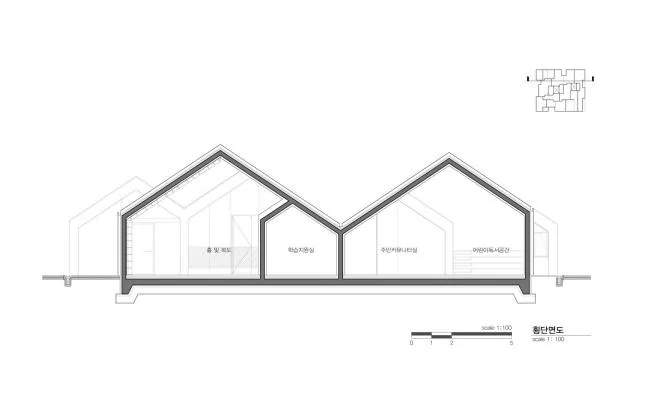
Sectional view
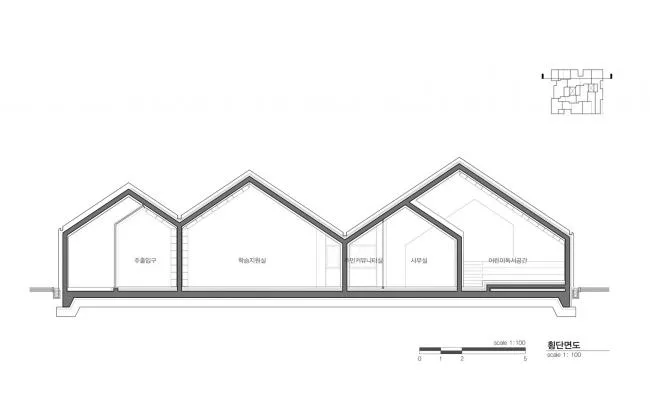
Sectional view
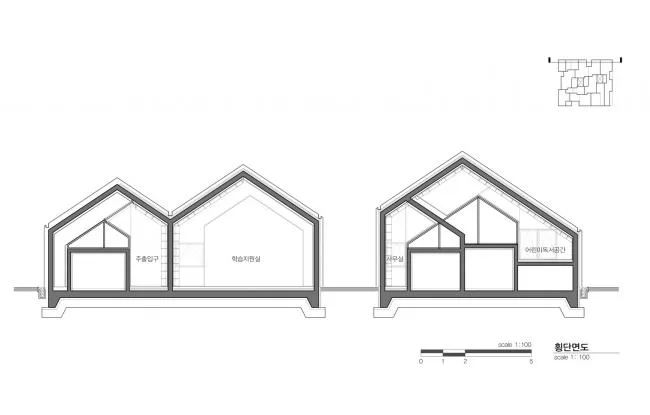
Sectional view
Project Information
Architect: UnSangDong Architects
Address: 1-1 Wolgye-dong, Nowon-gu, Seoul, South Korea
Category: Community Center
Lead Architects: Jang Yoon Gyoo, Shin Chang Hoon
Design Team: Choi Soohoon
Site Area: 14,382 m²
Building Area: 359.37 m²
Total Floor Area: 359.37 m²
Project Year: 2017
Photographer: Sergio Pirrone












Must log in before commenting!
Sign Up