
Editor’s Note: The recent National Conference on Housing and Urban-Rural Development has outlined ten key tasks, including a strong emphasis on promoting prefabricated buildings, such as steel-structured prefabricated housing. This initiative significantly boosts confidence and momentum within the prefabricated construction industry.
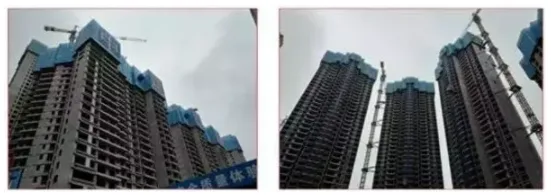
Recently, the Shenzhen Xinda Taihe · Jinzunfu prefabricated residential project has garnered widespread attention on social media. After thorough review, we invite you to explore the innovative prefabricated construction methods employed in this project.
Project Overview
The Xinda Taihe Jinzunfu project is situated at the intersection of Jinlong Avenue and Tongyu Road in Shenzhen’s Pingshan District. It utilizes advanced PC (precast concrete) component technology—the first of its kind for residential buildings in Pingshan.
The site covers 36,911.51 square meters, with a total construction area of 236,147.46 square meters. This includes 166,101 square meters of capacity building area, with 45,000 square meters allocated for affordable housing, and a plot ratio of 4.56. The development comprises nine high-rise buildings, one kindergarten, two basement levels, and commercial and supporting facilities along the street.
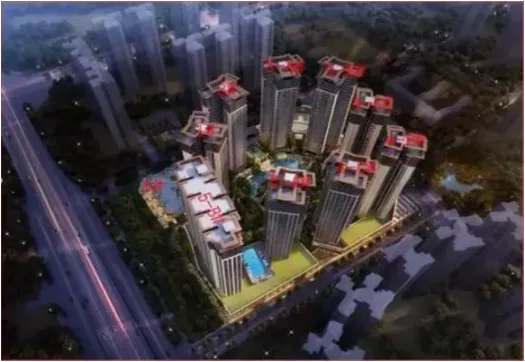
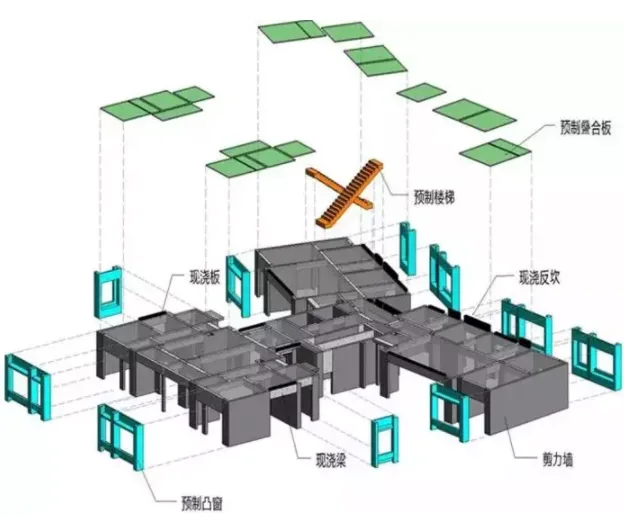
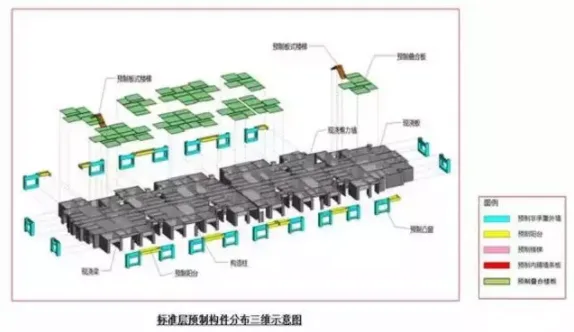
The project adopts advanced domestic PC component technology, with each standard floor consisting of 37 prefabricated components: 15 exterior wall panels, 2 stairs, and 20 composite panels. The prefabrication rate reaches 16.10%, while the assembly rate is 59.27%, marking a milestone in Shenzhen’s prefabricated building development and integrated decoration showcase.
Project Participants:
Construction Unit:
Shenzhen Xinrun Real Estate Development Co., Ltd.
Design Unit:
Shenzhen Huayang International Engineering Design Co., Ltd.
General Construction Contractors:
China Construction Third Engineering Bureau Third Construction Engineering Co., Ltd. (Section 1)
China Construction Second Engineering Bureau Co., Ltd. (Section 2)
Component Production Units:
Guangzhou Yongwan Prefabricated Components Co., Ltd. (Section 1)
Yuanda Residential Industry Group Co., Ltd. (Section 2)
Supervision Unit:
Shenzhen Hechuang Construction Engineering Consulting Co., Ltd.
Style 1: Standardization and Integration
1. Standardized Unit Layout Modules
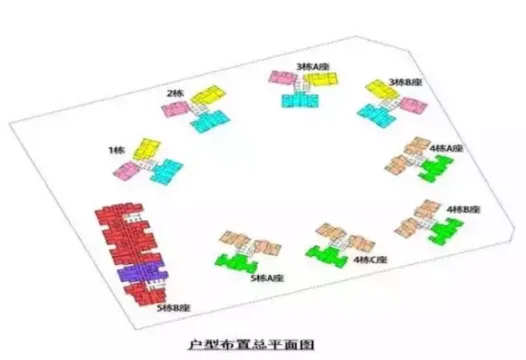
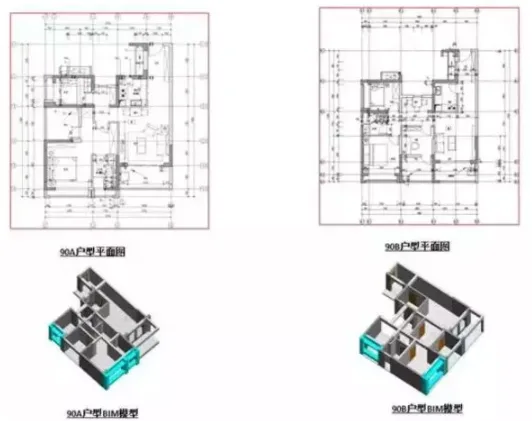
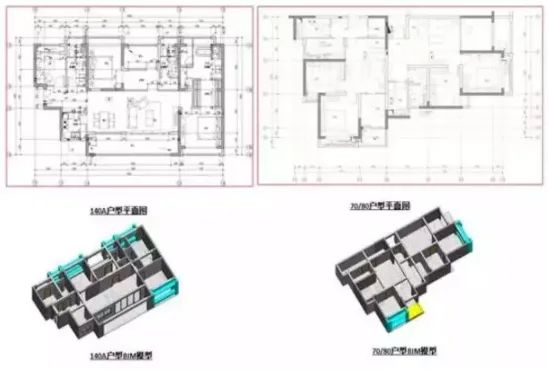
The residential layout utilizes five standardized floor plans for commercial housing: 90A, 90B, 110A, 110B, and 140A. Affordable housing incorporates two standard layouts: 70 and 80 square meters. The floor plans are organized and adopt unified modular coordination sizes conforming to the national standard for Modular Coordination of Buildings (GB/T50002-2013).
The main structural walls maintain regular alignment, enhancing structural integrity and minimizing the complexity of PC component connections.
2. Standardized Prefabricated Components
The project uses 26 types of exterior wall components (including 15 mirrored pairs), five types of balcony components (one mirrored pair), and three types of staircase components corresponding to three standard core tubes. This approach maximizes mold reuse while meeting layout and construction schedule requirements.
3. Integrated Mechanical and Electrical Design
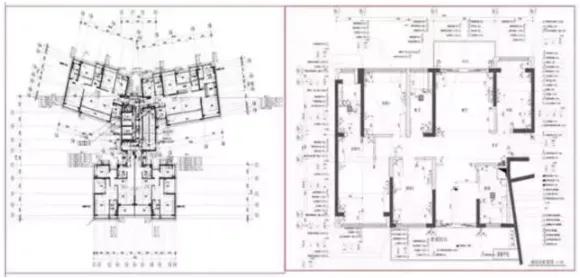
The electromechanical pipeline system employs a centralized layout, with pre-reserved embedded pipelines and connection points:
- Wire boxes, equipment pipelines, and air conditioning openings are pre-embedded in prefabricated exterior walls.
- Prefabricated floor slabs feature reserved electrical wiring boxes.
- Stacked balconies are pre-embedded with wiring boxes, riser holes, floor drains, and related components.
Pipelines are consolidated in areas with dense intersections—such as electrical wells, meter boxes, and water collectors—to minimize horizontal crossings. Vertical pipelines are centrally arranged to facilitate maintenance and replacement.
4. Integrated Decoration and Finishing
The exterior wall cladding integrates peripheral wall protection, finishing, waterproofing, and insulation, featuring aluminum panel decoration or surface coating.
Doors and windows utilize high-performance finished systems, produced in factories and installed on-site using dry installation methods.
Prefabricated stairs include embedded railings, handrails, and anti-slip strips; balconies come with embedded railings, handrails, bottom boxes, waterproof sleeves, risers, and floor drains.
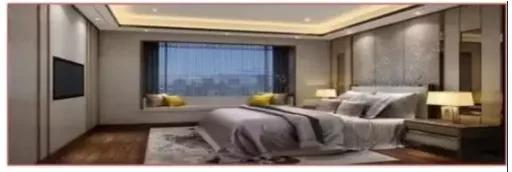
Each unit adopts uniform decoration methods, materials, and components, coordinating architecture, structure, electrical, plumbing, gas, and interior design. This alignment minimizes rework, saving costs, time, and promoting environmental sustainability.
Comprehensive interior design maximizes usable area and space efficiency, achieving harmony between design and layout for enhanced comfort. The kitchen features refined designs with hanging cabinets and washbasins to optimize space utilization.
Style 2: Application of Prefabricated Building Technology
This project is designed with a seismic fortification level of 7 degrees, classified in the first seismic group, with a basic seismic acceleration of 0.10g and a characteristic period of 0.35 seconds.
High-rise residential and affordable housing buildings employ shear wall structural systems. Prefabricated components for standard floors include non-load-bearing exterior wall panels (with bay windows), prefabricated stairs, and composite floor slabs. Affordable housing additionally uses prefabricated balconies.
1. Prefabricated Floor Slabs
Prefabricated composite floor slabs are installed from the 3rd to 30th floors in Building 1; from the 4th to 31st floors in Building 2, Building 3, and Building A; from the 4th to 32nd floors in Building 4 and Building C; and from the 4th to 34th floors in Building 5 and Building B.
The composite panel thickness is 60mm, topped with an 80mm cast-in-place layer.
Pre-embedded wire boxes accommodate electrical conduits, ensuring proper routing and construction quality.
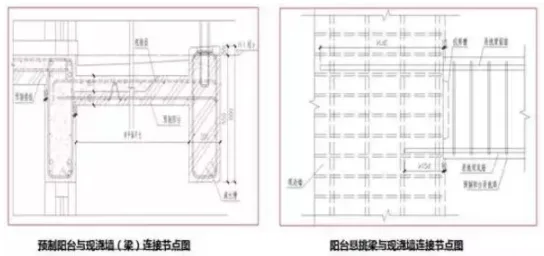
2. Prefabricated Balconies
From the 3rd to 34th floors of Building B’s affordable housing, prefabricated beam-type composite balconies are used. The cantilever and edge beams are fully prefabricated, with a 60mm prefabricated slab thickness and 70mm cast-in-place topping.
3. Prefabricated Exterior Wall Panels (with Bay Windows)
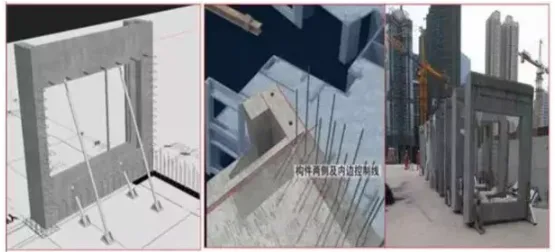
Protruding windows on each standard floor use prefabricated exterior wall panels to address complex wall construction challenges and reduce window leakage risks.
The top of the bay window is cast in place, overlapping with beams; sides connect to shear walls; bottoms connect to anti-beam or anti-ridge structures. Joints are sealed with MS sealant for waterproofing. Steel sub-frames are embedded inside panel openings for dry installation of aluminum alloy doors and windows.
4. Prefabricated Staircases
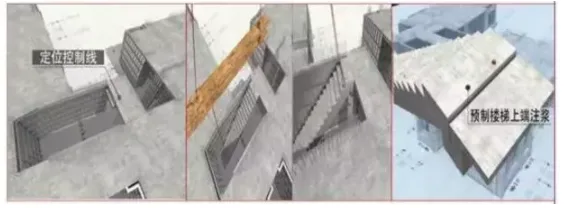
The project innovatively employs beam-slab prefabricated stair slabs, reducing self-weight by 20% compared to traditional staircase components. This design simplifies on-site assembly and hoisting.
The staircase’s upper end is fixed with two steel bars, while the lower end features a hinged connection.
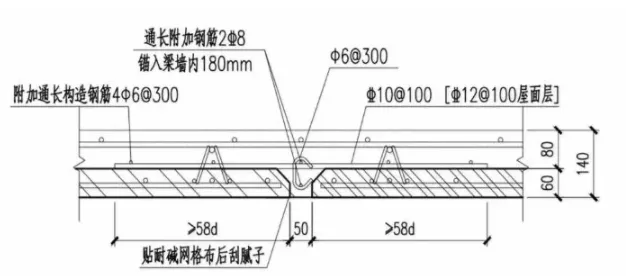
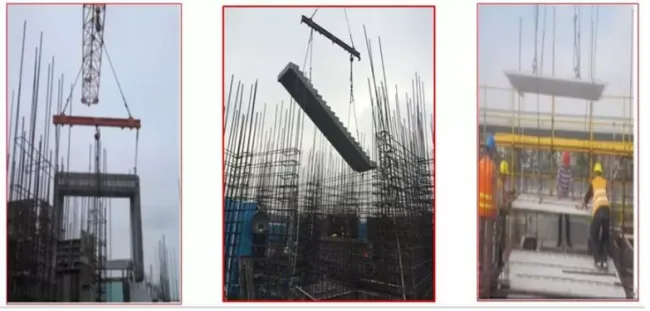
PC components are factory-produced, ensuring speed and environmental benefits, and are installed with minimal crane lifting. To protect laminated floor slabs and prevent leakage, laminated panels are combined with cast-in-place structures. Rubber strips are embedded on aluminum formwork surfaces, with double-sided adhesive tape at overlaps, allowing flexible connections.
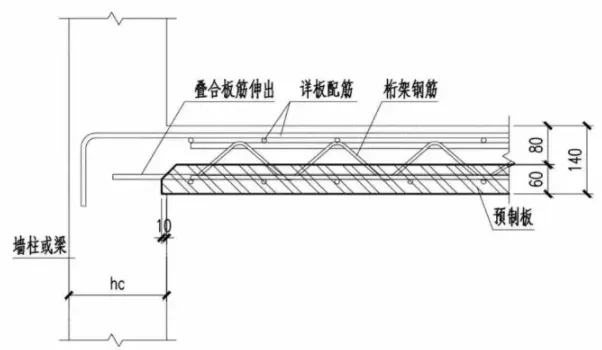
Joint between laminated board and cast-in-place exterior wall
Connection points between laminated panels
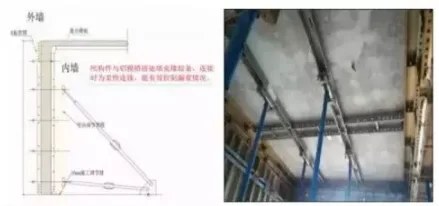
Reinforcement diagram of laminated panel and aluminum mold system
5. Aluminum Alloy Formwork Construction
The exterior walls are concrete structures, combining PC prefabricated wall components with cast-in-place load-bearing structures to form the building skeleton. To ensure seamless integration between PC components and aluminum formwork, joint nodes are carefully designed prior to construction.
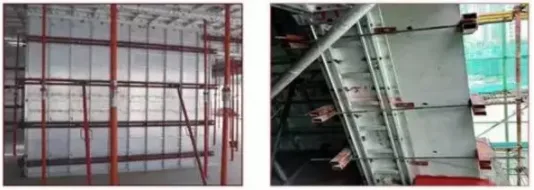
This approach not only strengthens the structure but also eliminates the need for wall plastering. Doors and windows are installed using dry construction methods, effectively resolving common issues such as external wall leakage, hollowing, and cracking caused by traditional masonry plastering. The elimination of masonry and plastering reduces construction waste and replaces wooden molds with recyclable aluminum forms, conserving wood resources.
The formed concrete achieves a precision of up to 3mm, allowing direct application of surface finishing.
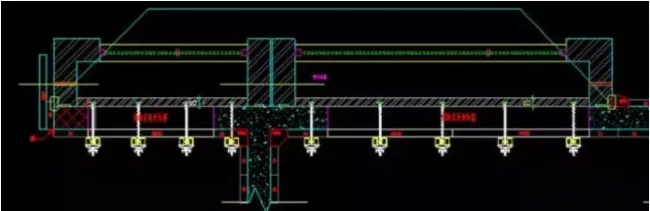
Plan of the combination of PC exterior wall and cast-in-place exterior wall
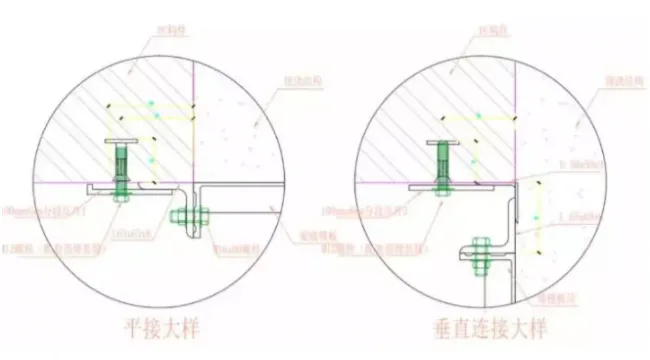
Node diagram of aluminum formwork reinforcement for PC structure and cast-in-place structure
6. Mechatronics Industrialization System and BIM Application
This project establishes a comprehensive electromechanical industrialization system through pipeline prefabrication, finished supports, integrated pipeline layouts, and standardized equipment rooms.
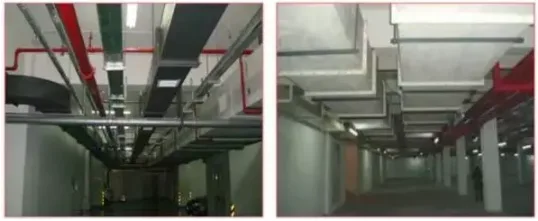
By integrating BIM for detailed design and construction simulation, the project coordinates all disciplines, reducing errors, conflicts, and omissions, anticipating construction challenges, and formulating comprehensive solutions to improve quality and efficiency.
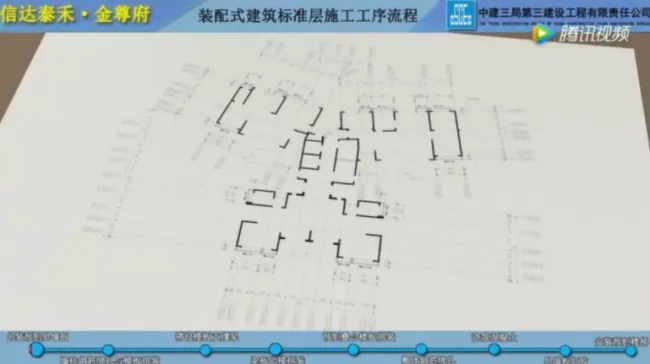
7. Non-Wall Climbing Frame System
The project employs a self-elevating external climbing frame technology, eliminating masonry and plastering on exterior walls. The fully assembled external climbing frame mechanically lifts along with the main structure progress and features a fully enclosed metal mesh for enhanced safety.
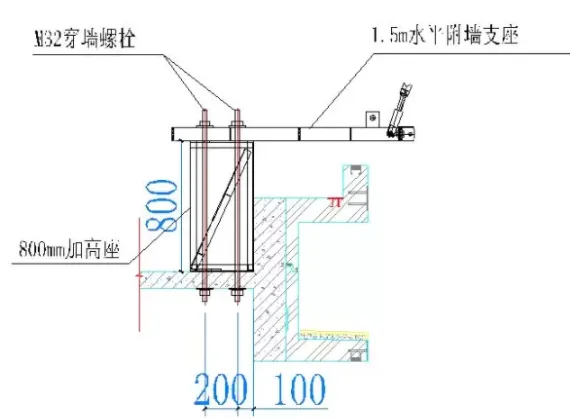
Once the main structure is capped, the climbing frame is removed from the top via a tower crane. During the main construction phase, interior and exterior decoration, pipeline installation, and landscaping proceed concurrently, shortening the construction schedule by 3 to 6 months.
Style 3: Construction Process Flow of Prefabricated Building Standard Floor
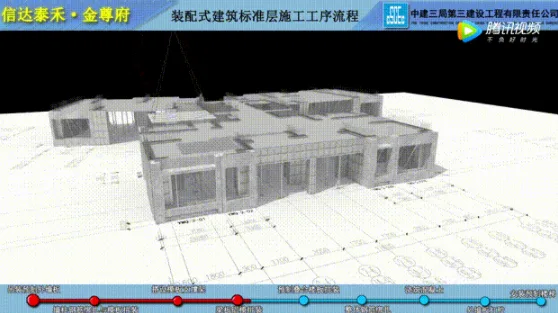
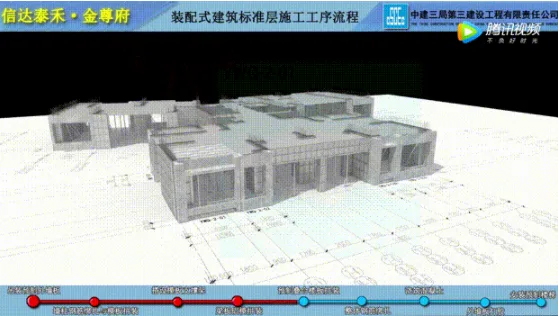
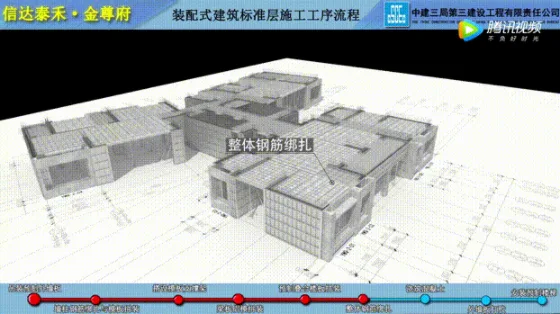
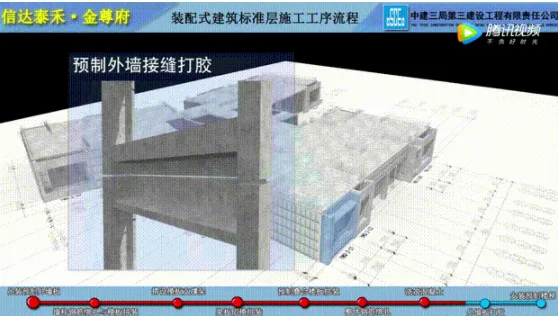
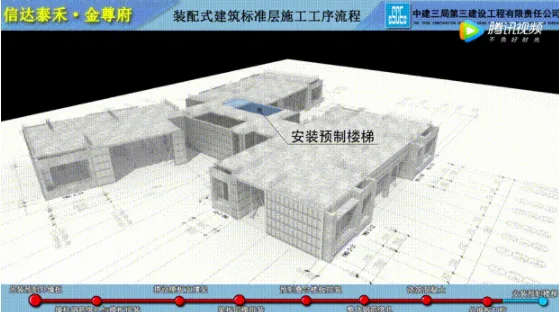
Using BIM software, 3D models of structures, buildings, and scaffolding are created. Construction simulation covers ten processes, including hoisting prefabricated exterior walls, binding steel bars, assembling aluminum wall and column formworks, setting up floor slab support frames, assembling floor slab templates, installing prefabricated composite slabs, binding beam and slab reinforcement, pouring concrete, installing prefabricated stairs, and grouting and sealing exterior wall panels. This provides comprehensive guidance throughout construction.
1. Hoisting Prefabricated Exterior Wall Panels
Step 1: Mark the prefabricated exterior wall positioning lines on the floor according to the layout axis.
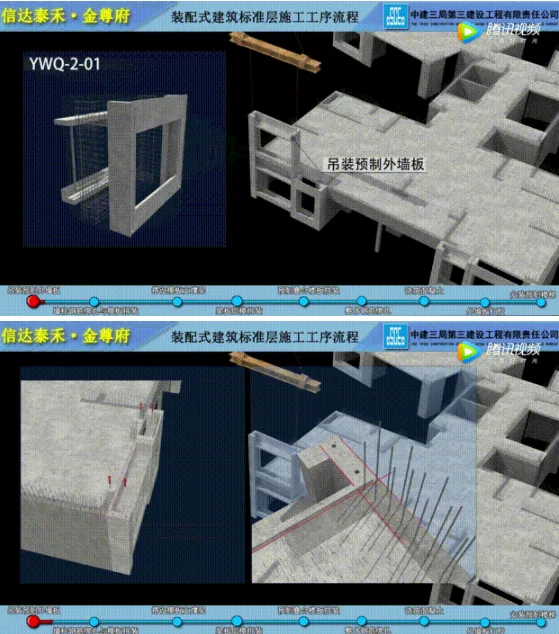
Step 2: Level the panels, screw bolts into embedded sleeves of lower components, and adjust elevation accordingly.
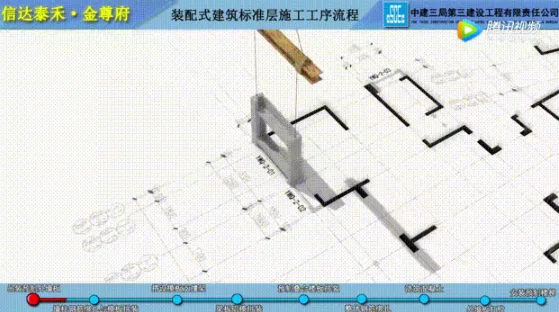
Step 3: Install diagonal braces and adjust wall verticality to meet design standards.
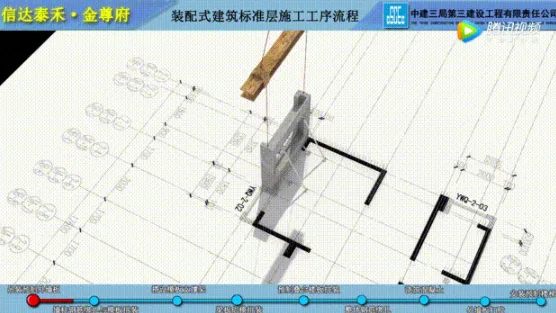
Step 4: Correct the wall’s position and verticality, then detach the lifting hook.
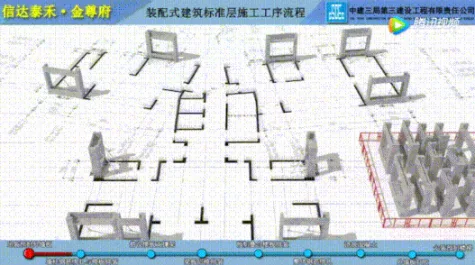
Step 5: Continue installing subsequent wall panels in sequence.
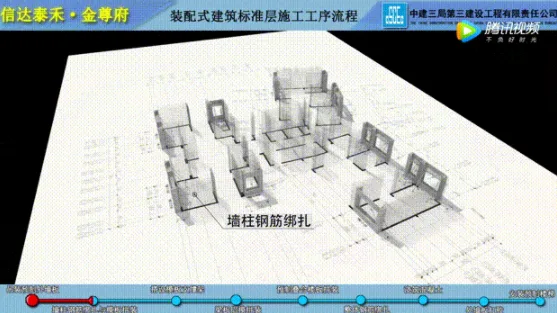
2. Binding Wall and Column Steel Bars
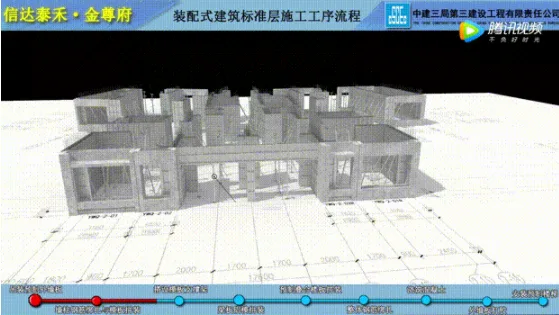
3. Aluminum Alloy Wall and Column Formwork Assembly
4. Setting Up Template Support Frame
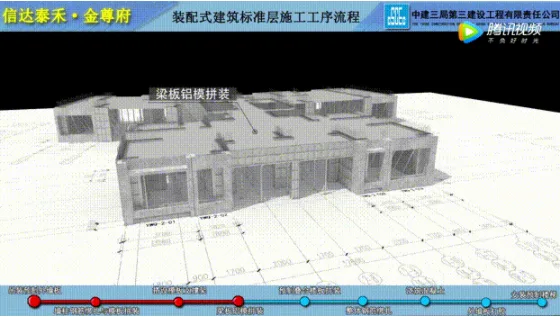
5. Assembly of Aluminum Formwork for Beams and Slabs
6. Prefabricated Composite Floor Assembly
7. Integral Reinforcement Binding
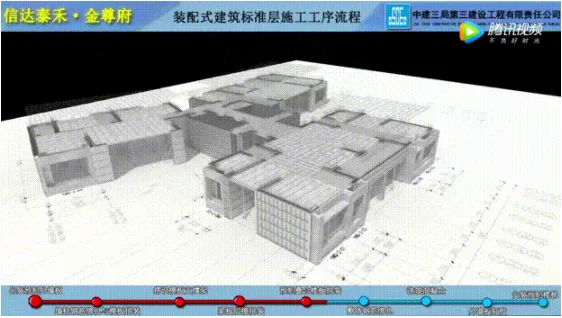
8. Pouring Concrete
9. Exterior Wall Panel Gluing
10. Installing Prefabricated Stairs
Staircase sections are positioned according to the layout axis, and grout is injected at the upper ends.
Style 4: Advantages of New Technologies
Construction of PC Components
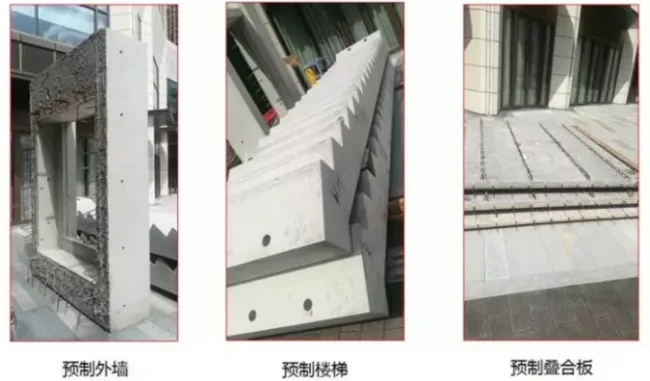
The PC components are both aesthetically pleasing and functional.
Processed in a controlled factory environment, they allow for rapid, eco-friendly construction with minimal crane lifts.
Combination of PC Exterior Wall Components and Aluminum Formwork
The integration of PC exterior wall components with cast-in-place load-bearing structures forms a robust prefabricated building skeleton. To ensure a seamless and attractive connection, joint nodes are meticulously designed before construction.
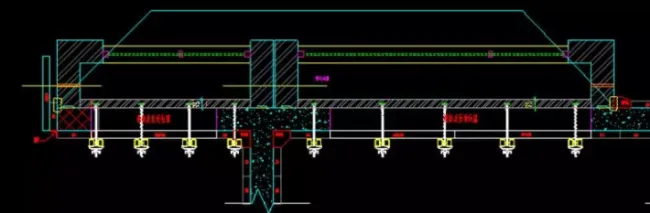
Plan combining PC exterior wall and cast-in-place exterior wall
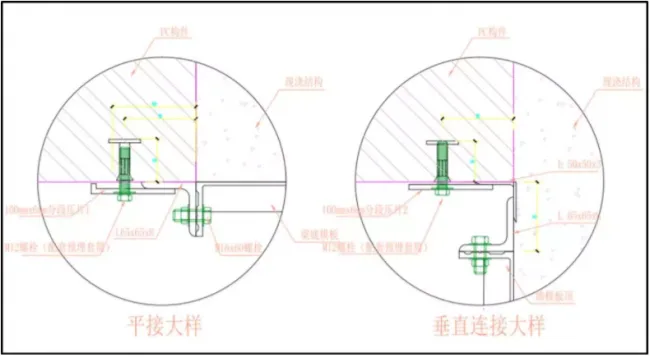
Node diagram of aluminum formwork reinforcement for PC and cast-in-place structures
Combination of Laminated Panels and Cast-in-Place Structures
Rubber strips embedded on aluminum formwork surfaces and double-sided tape at overlaps provide flexible connections, protecting laminated floors and controlling grout leakage.
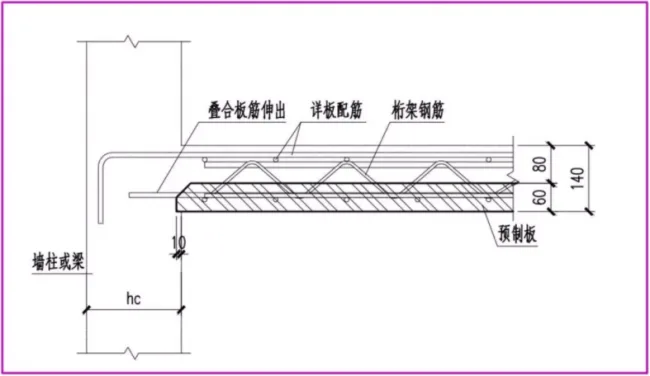
Junction between laminated board and cast-in-place exterior wall
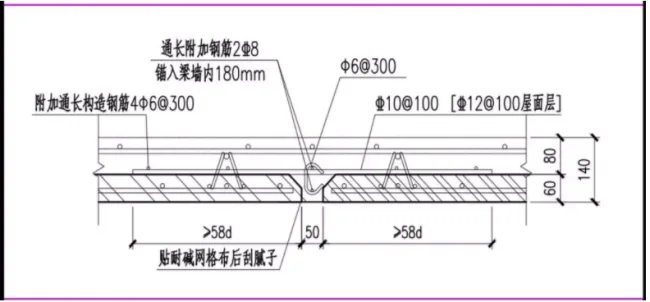
Connection points between laminated panels
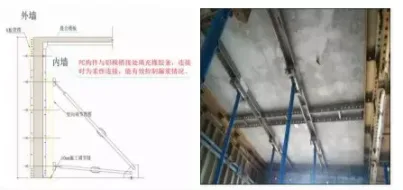
Reinforcement diagram of laminated panel and aluminum mold system
Non-Attached Wall Climbing Frame System Construction Technology
Attaching climbing frames to prefabricated exterior walls is challenging because these walls are non-load-bearing. The project developed a solution to anchor the climbing frame to the floor structure instead.
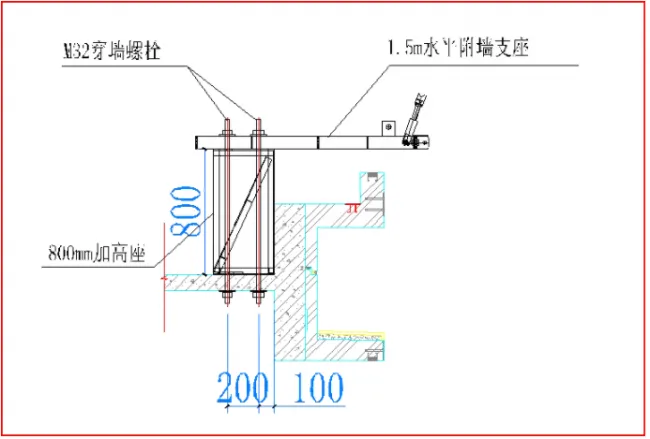
Design drawing of climbing frame attachment points at PC exterior wall
BIM Simulation for On-Site Construction Guidance
BIM software generates 3D models of the structures, buildings, and climbing frames. Construction simulation covers the entire process, including hoisting prefabricated exterior panels, binding steel bars, assembling aluminum formworks, setting up floor supports, assembling floor slab templates, binding reinforcement, pouring concrete, installing stairs, grouting, and sealing exterior panels. This comprehensive simulation guides the construction workflow.
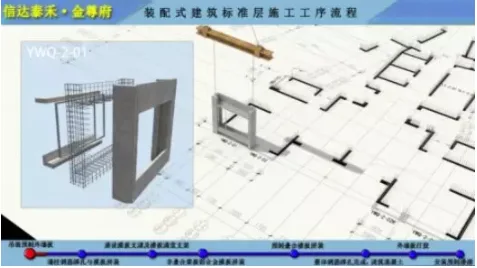
Construction simulation
These new technologies embody lean construction principles. During planning, aluminum alloy formwork designs optimize features such as door/window grooves, pipeline grooves on shear walls, openings, drip lines, lintels, ridges, structural columns, and elevator shaft partitions, minimizing secondary plastering.
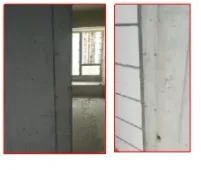
Cast-in-place shear wall without plastering
During main structure construction, aluminum alloy exterior windows, railings, and pipes are installed concurrently, with prefabricated partitions and masonry walls pre-inserted. This multitasking approach maximizes construction time and accelerates progress.
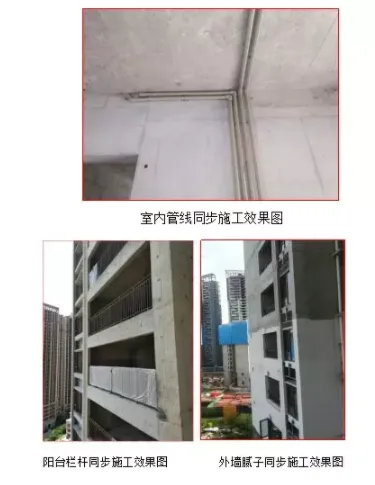
– Engineering Quality –
Prefabricated exterior walls, stairs, and bay window floor slabs streamline complex structures through computerization, boosting efficiency and ensuring quality. BIM simulations standardize workflows, enabling workers to effectively apply new processes and technologies.
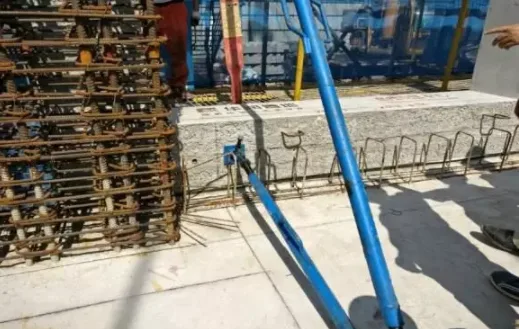
Temporary support for prefabricated external walls
The integrated use of aluminum formwork, climbing frames, and PC components significantly accelerates main structure construction. Deepening aluminum formwork design reduces plastering on cast-in-place shear walls, saving time and costs.
– Energy Conservation and Environmental Protection –
Through PC component application and industrialized manufacturing, the project reduces energy consumption and environmental impact.
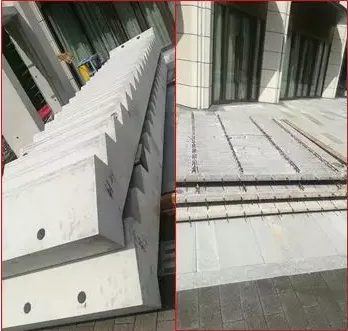
Prefabricated stairs and composite panels
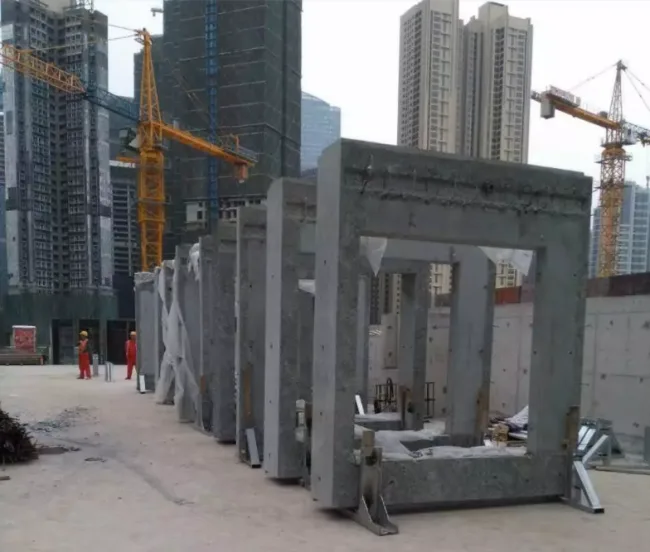
Stacked prefabricated components
Conclusion
The Xinda Taihe Jinzunfu project integrates prefabricated exterior walls, stairs, balconies, composite floor slabs, aluminum formwork with climbing frames, mechanical and electrical industrialization, and full decoration into a cutting-edge prefabricated building system. This approach revolutionizes traditional construction methods by reducing on-site wet work, enhancing building quality, improving the construction environment, and significantly lowering construction waste.
It is anticipated that the success of this project will play a vital role in promoting the sustainable and healthy development of prefabricated buildings, while also enriching residents’ sense of happiness and accomplishment as China moves toward the vision of a “Beautiful China.”
















Must log in before commenting!
Sign Up