
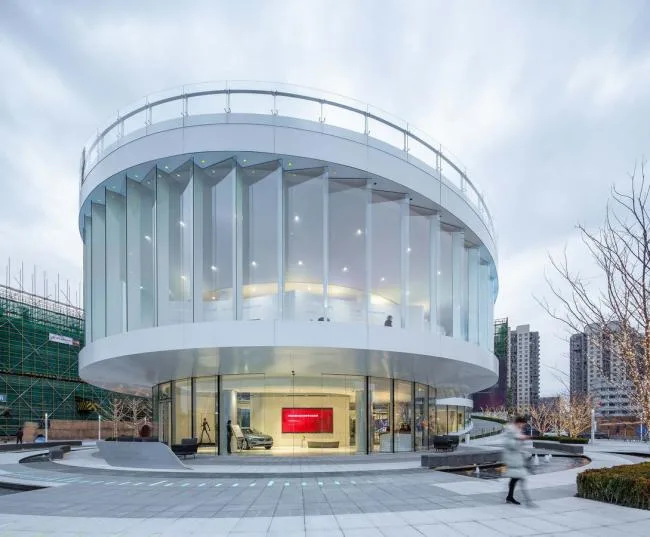
Canal Vanke Center Innovation Experience Center. Photography by Zhang Yong.
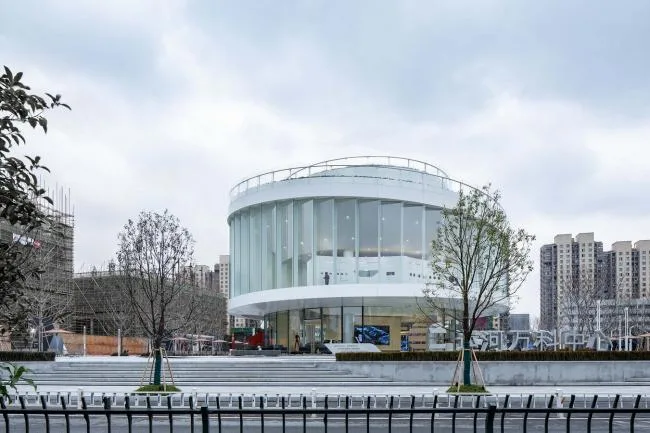
Street View. Photography by Zhang Yong.
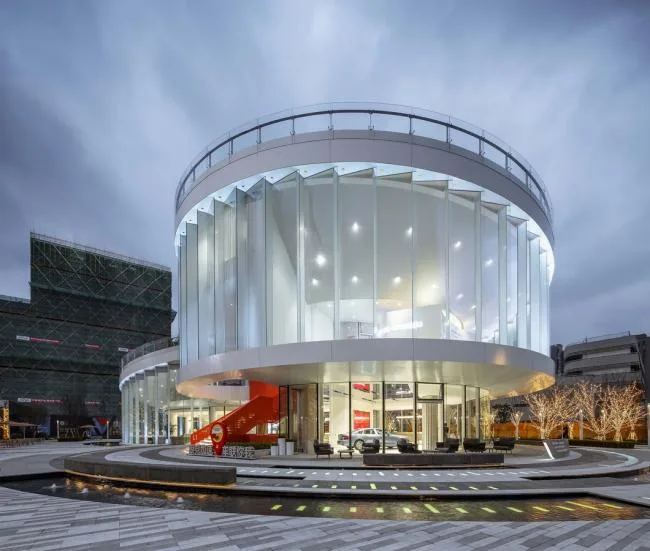
The Canal Vanke Center and the Hangzhou Automotive Interconnection Industry Ecological Innovation Zone cover a total area of approximately 360,000 square meters, marking the third Vanke center in Hangzhou. Nestled at the base of five high-rise buildings in Phase I, this compact building—less than 2,000 square meters—serves as a key dynamic element along the 600-meter-long public space axis of the entire master plan.
As an Innovation Experience Center focusing on the automobile internet industry, this building combines unique spatial design and diverse content to create a new experiential environment that drives the future of the industry. It’s a small building with tremendous energy.
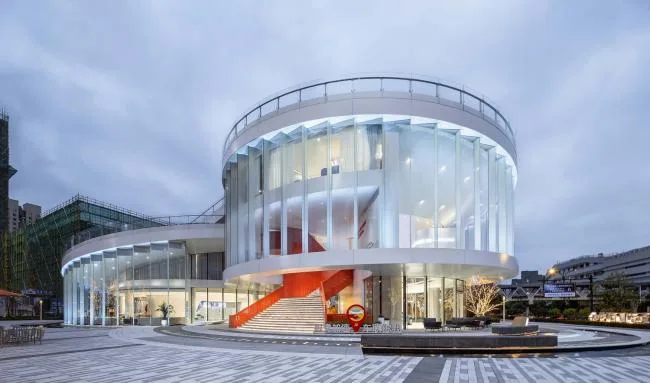
West Side Overall View. Photography by Zhang Yong.
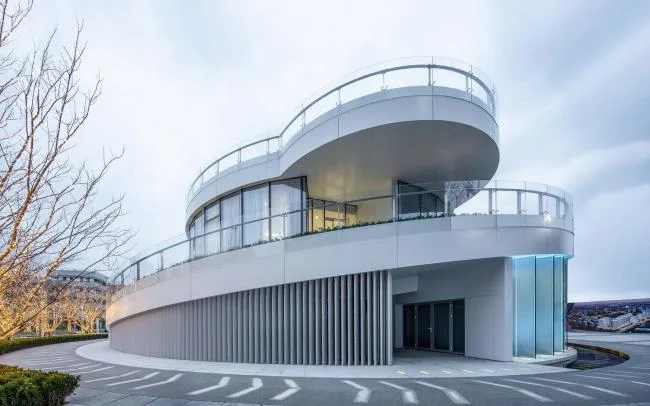
North Exit. Photography by Zhang Yong.
This building features continuous slopes that allow cars to drive all the way up to the rooftop, turning it into a fashionable car showcase in Hangzhou. It unlocks endless imagination by solving a key design challenge.
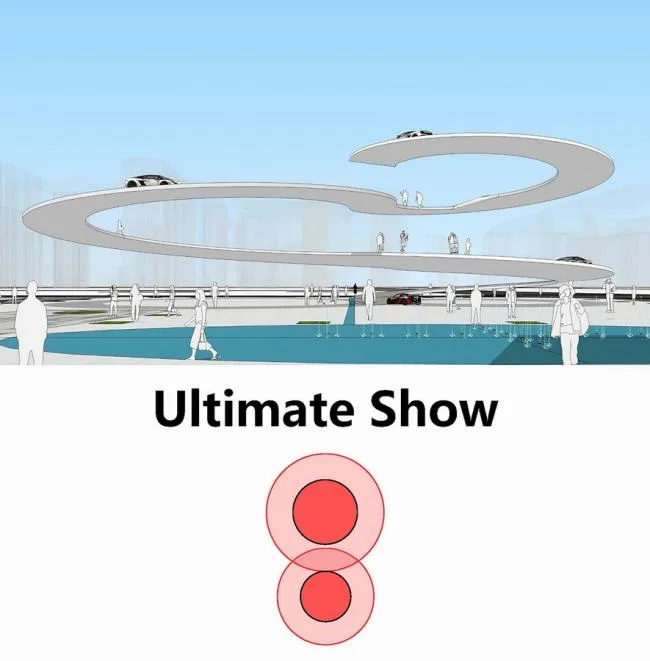
Spatial Concept
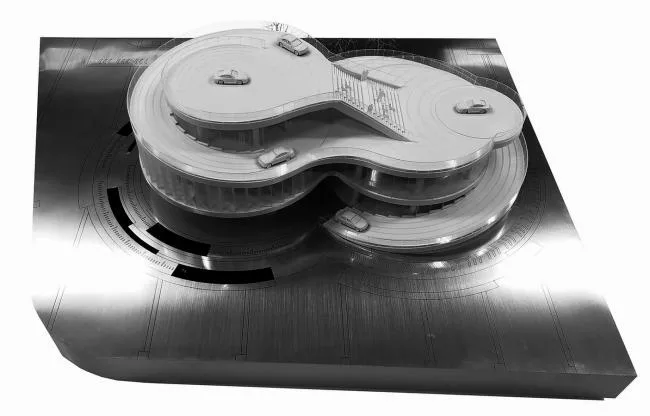
Architectural Model
Architectural Promenade
The design includes a spiral car ramp, a rooftop circular exhibition space, an outdoor performance staircase, and a continuous staircase system. By integrating two walking systems—one inside and one outside the building—the project achieves the classic modernist concept of architectural promenade, blending time and space.
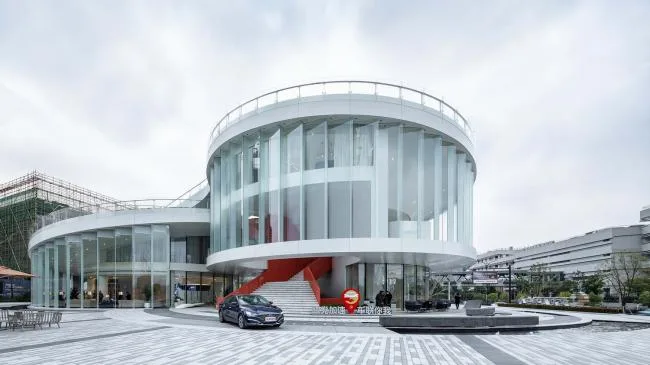
Main Square Overall View. Photography by Zhang Yong.
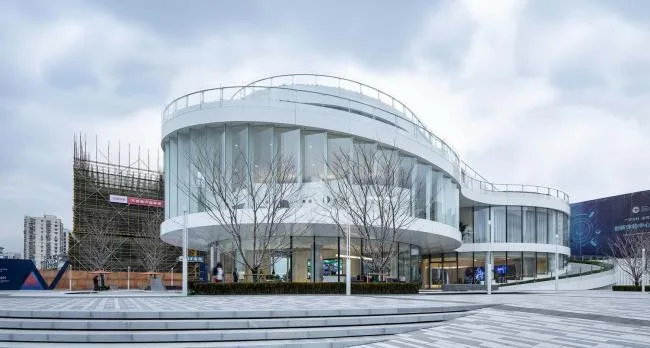
South Square (BIM Training). Photography by Zhang Yong.
Ramp
Positioned at the southeast corner of the site along the street, the building’s east and north sides border planned roads (serving as the main motorized traffic routes for Phase I) and underground garage entrances/exits, respectively. The west and south sides face the central square and axis.
The ramp spirals counterclockwise along the eastern edge of the northern circular section, completing one full circle to reach the second-floor rooftop of the northern area—the first circular exhibition space. It then spirals clockwise along the eastern edge of the southern circular section, again completing one full circle to reach the third-floor rooftop of the southern area—the second circular exhibition space. A wide staircase connects the two circular rooftops, transforming the entire rooftop into an open-air runway and theater.
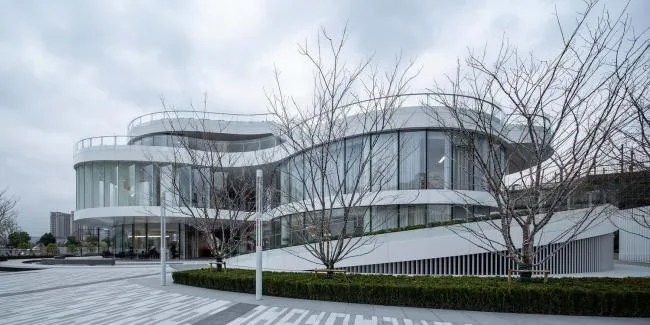
East Side Panoramic View. Photography by Zhang Yong.
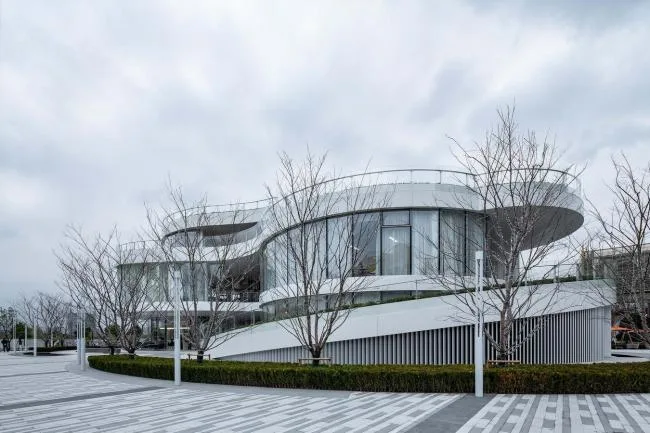
East Square. Photography by Zhang Yong.
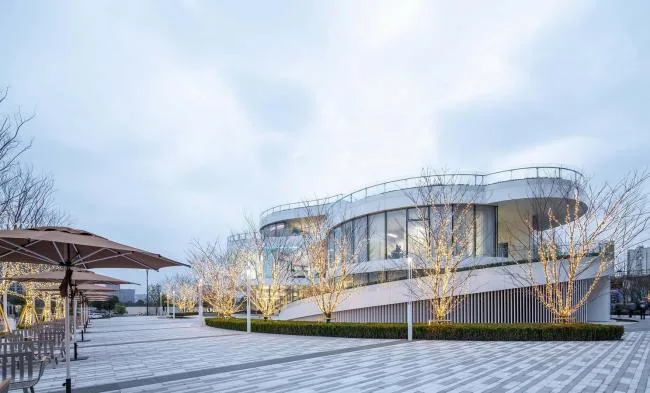
East Square. Photography by Zhang Yong.
The first walking system, located around the building’s perimeter, consists of a ramp and rooftop. While the ramp serves cars during festivals, it is designed to accommodate pedestrians on a daily basis.
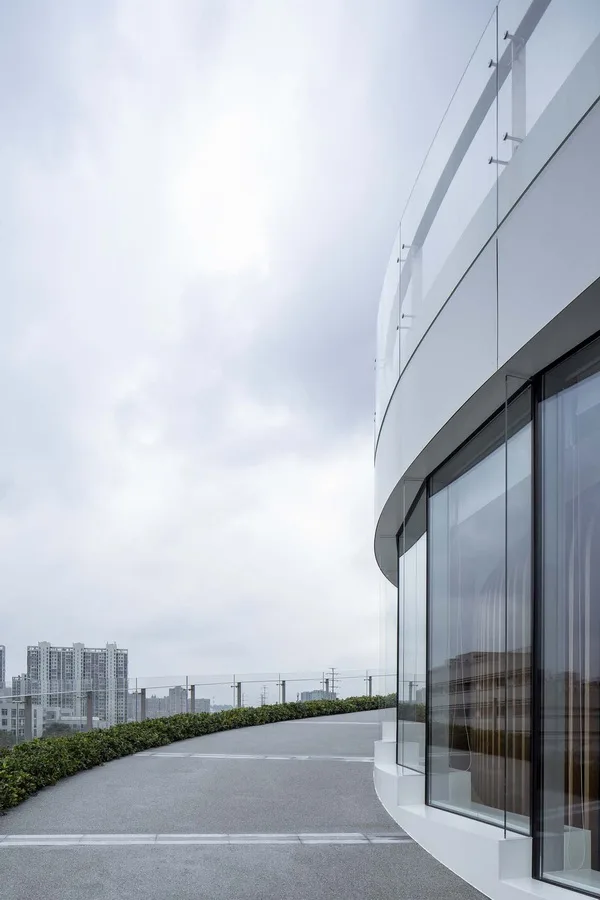
Ramp. Photography by Zhang Yong.
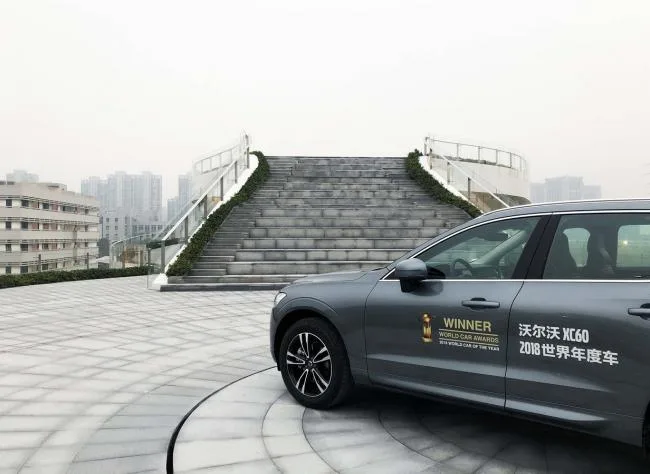
Rooftop Exhibition. Photography by Lu Yong.
Steps and Stairs
The southern side of the western circle faces the square, where a wedge-shaped void has been opened. A grand staircase extends from the square to the building’s second floor, creating a dramatic spatial experience that guides visitors from the square into the interior and upwards.
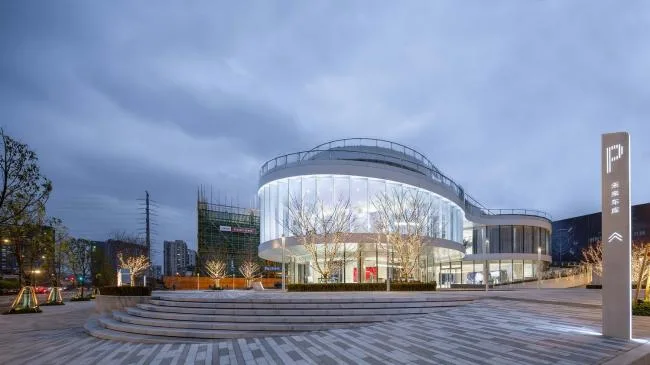
The building sits atop a platform. Photography by Zhang Yong.
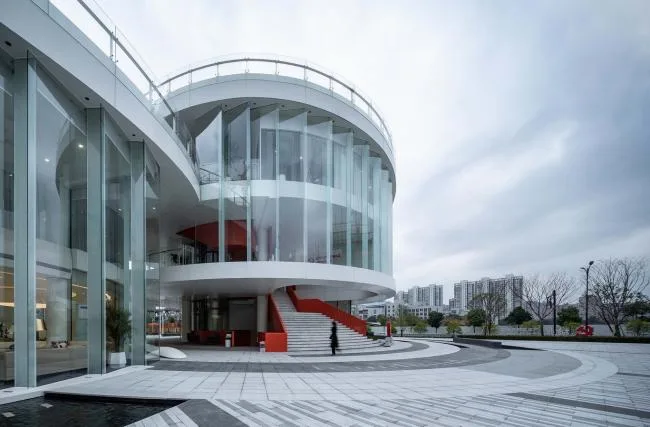
Grand staircase connecting building to square. Photography by Zhang Yong.
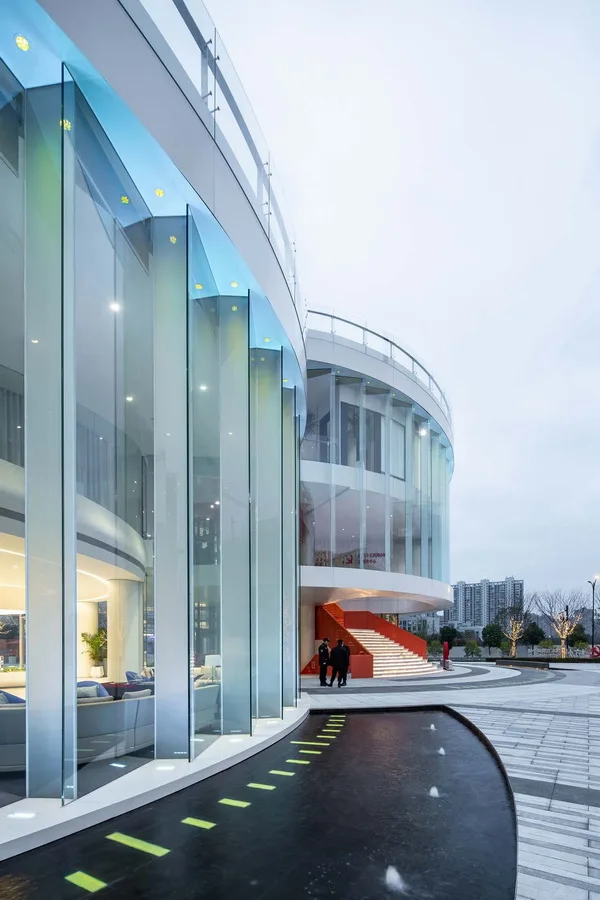
Invitation to Enter. Photography by Zhang Yong.
This grand staircase, combined with the zigzag staircases descending to the basement and those connecting the second and third floors, constitutes the building’s second internal walking system. It links the underground levels with the upper floors through an atrium.
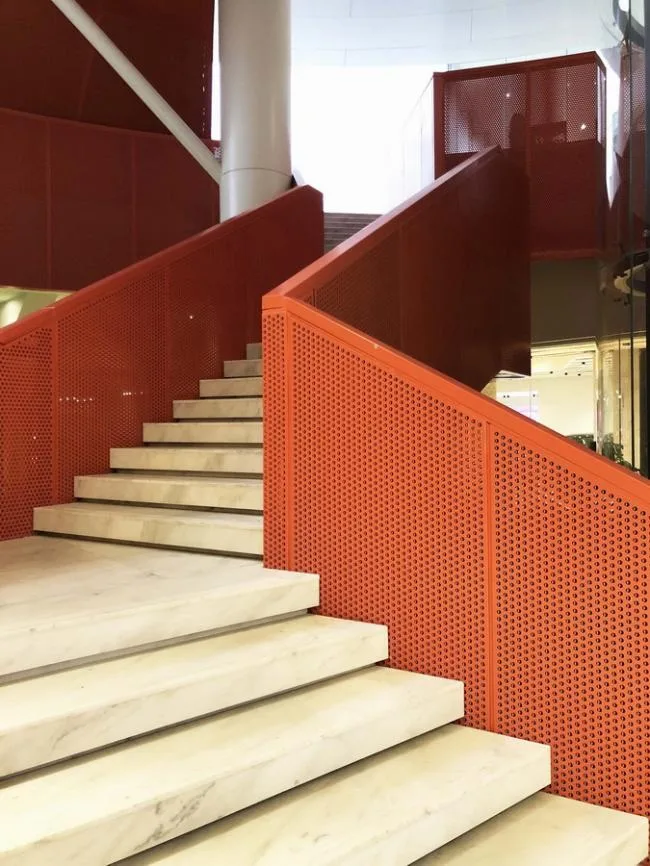
Courtyard Staircase. Photography by Lu Yong.
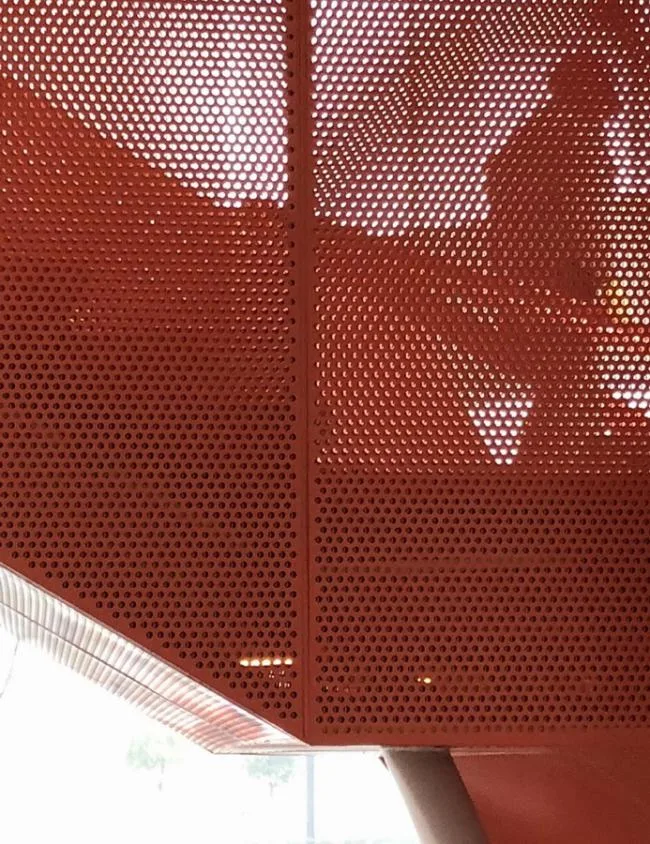
Staircase Detail. Photography by Lu Yong.
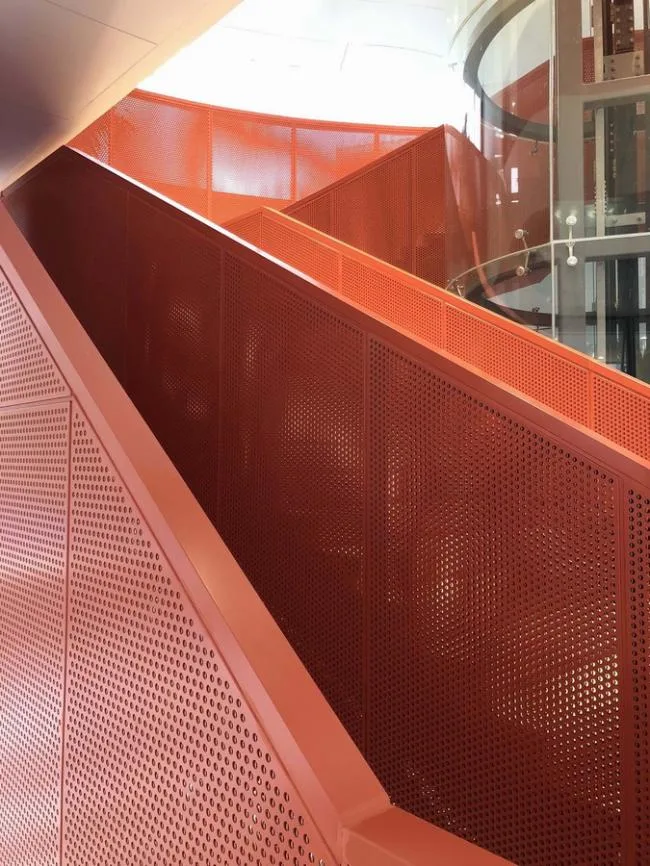
Second Floor Staircase. Photography by Lu Yong.
Both people and cars move through these spaces, inside and out, intersecting or diverging, rushing or pausing, blending present and future. This project is not only about showcasing cars but also about experiencing architecture and urban life.
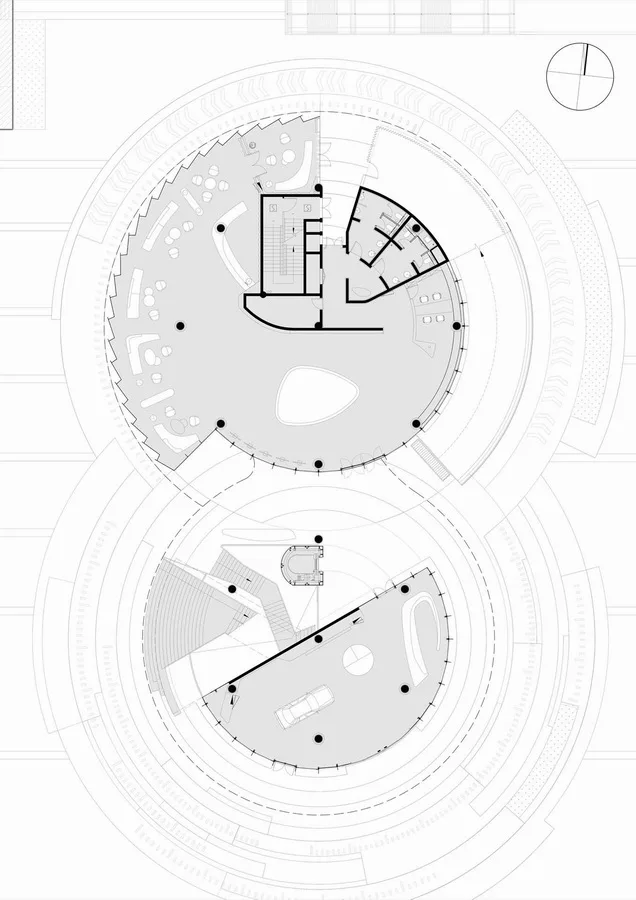
Model.
Facade System: Curtain Wall Unitization
The facade areas between the ramp and the ground, and between the ramp and each floor, utilize a serrated pattern made up of two laminated glass types: long panels of ultra-clear tempered glass and shorter panels of white glazed tempered glass.
The glass panels are suspended beneath beams and arranged in a gear-like pattern along the building’s circumference. Notably, the serrated edges on the north and south circles rotate in opposite directions—the southern serrations rotate counterclockwise, while the northern ones rotate clockwise—evoking the image of two interlocking gears.
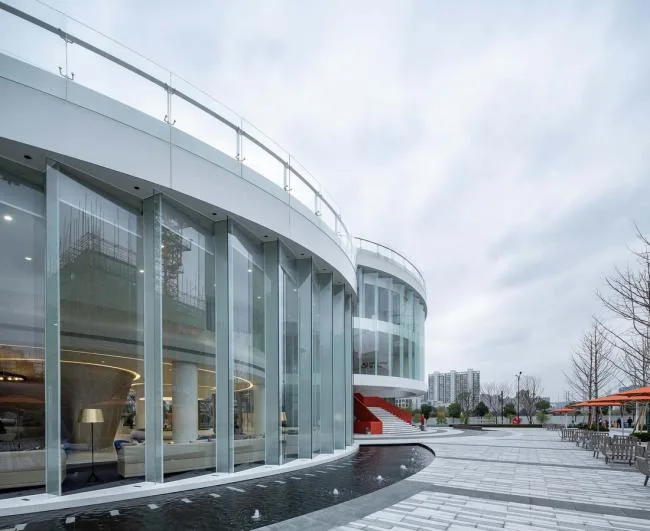
Gear-shaped glass curtain wall. Photography by Zhang Yong.
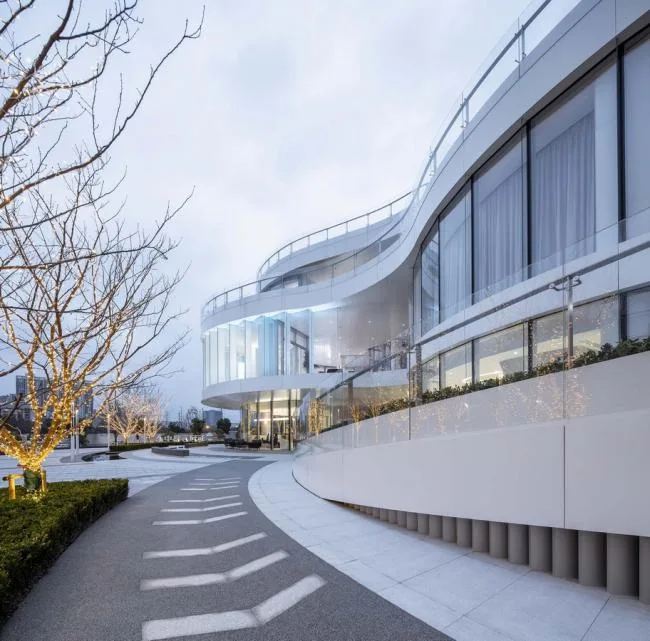
Gear-shaped glass curtain wall. Photography by Zhang Yong.
The facade between floors features hidden-frame Low-e ultra-clear tempered insulating glass, with ultra-clear steel laminated glass sandwiched between two layers, creating the gear-shaped design.
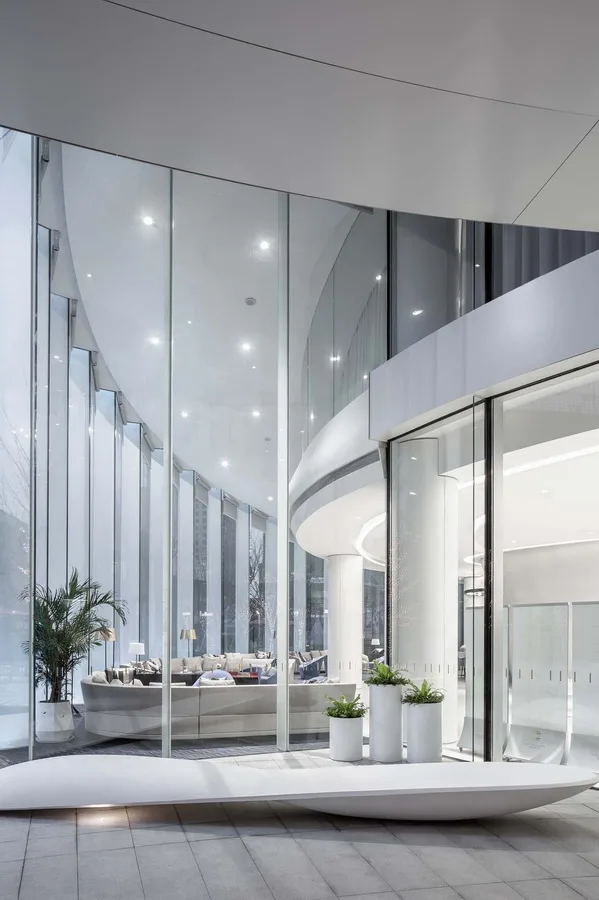
Gear-shaped indoor glass curtain wall. Photography by Zhang Yong.
The ramp and rooftop glass railings consist of curved ultra-clear steel laminated glass, supported by stainless steel columns and point-supported glass fittings. The backing surface is formed by 4mm curved aluminum plates, wrapped and flanged.
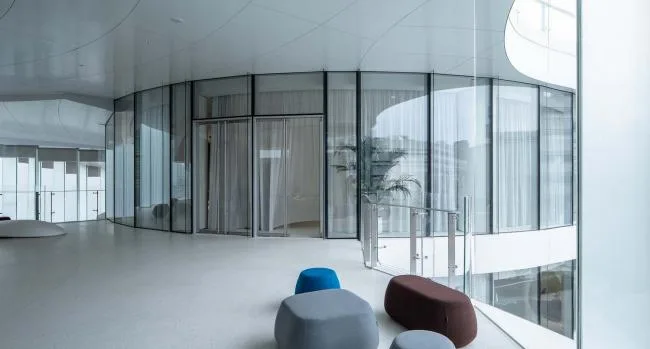
Gear-shaped indoor glass curtain wall. Photography by Zhang Yong.
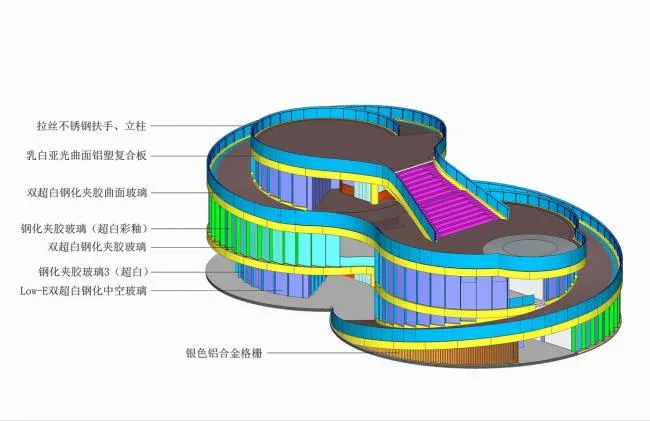
Curtain Wall Color Separation Diagram
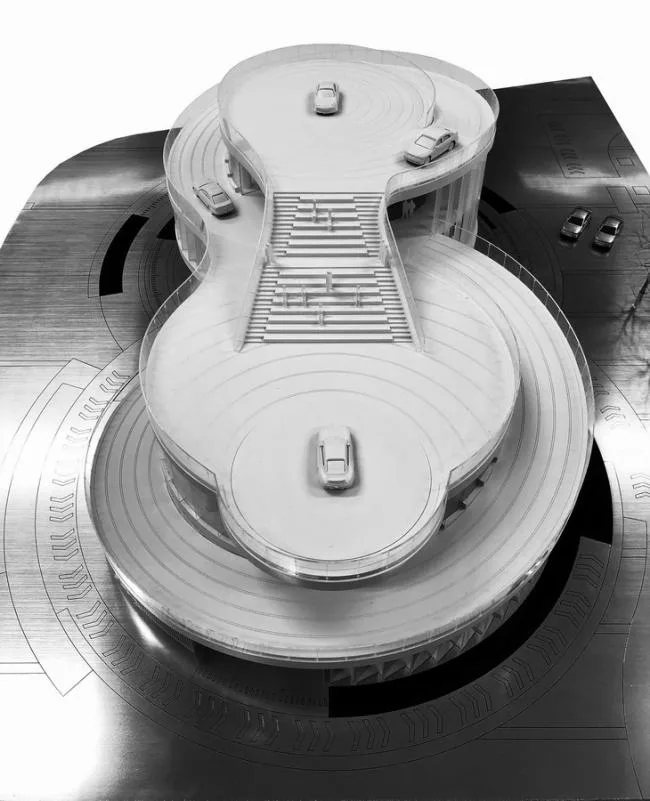
Architectural Model
The beam structure features double-layer aluminum panels. Internally, a 3mm aluminum-plastic composite panel seals the exterior waterproofing. The exterior layer uses a single 3m by 0.9m by 5mm curved aluminum-plastic composite panel, installed with carefully controlled 5mm seams between panels to form a continuous spiral ribbon.
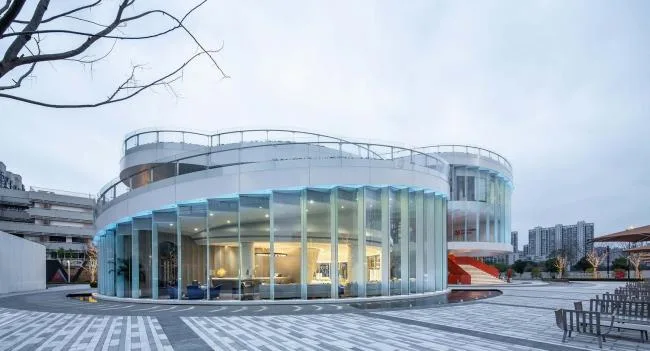
Spiral and Twist Detail. Photography by Zhang Yong.
The staircase railing is crafted from bold orange perforated aluminum panels, creating a sculptural effect. This design visually supports the floating circular building interior and serves as a focal point, guiding visitors as they move through the space.
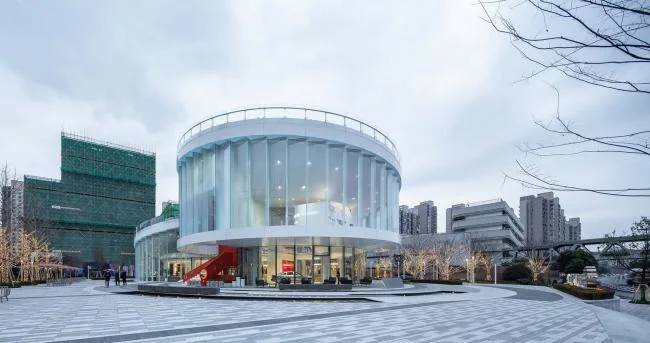
Lantern Festival Opening. Photography by Zhang Yong.
Lantern Festival Opening. Photography by Zhang Yong.
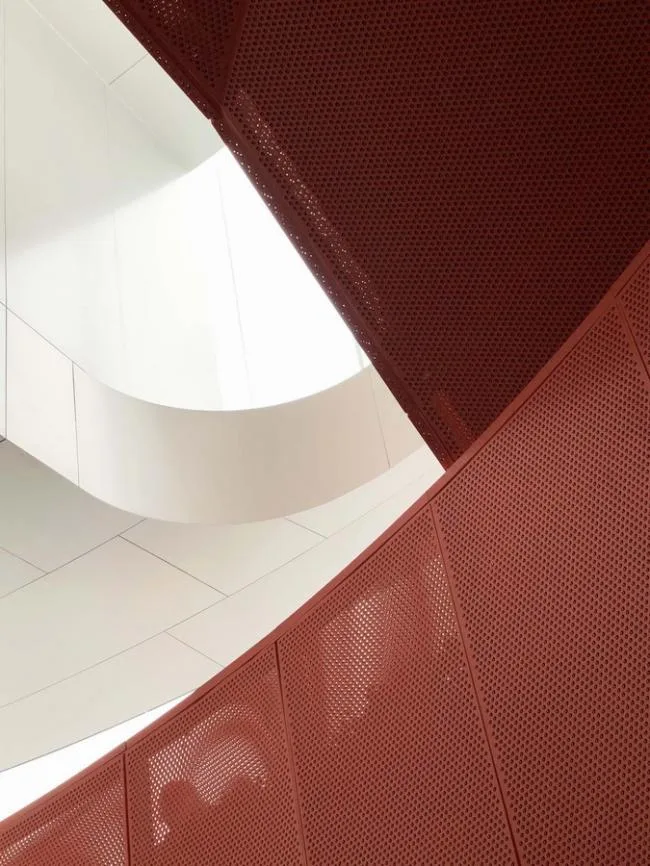
Staircase Detail. Photography by Lu Yong.
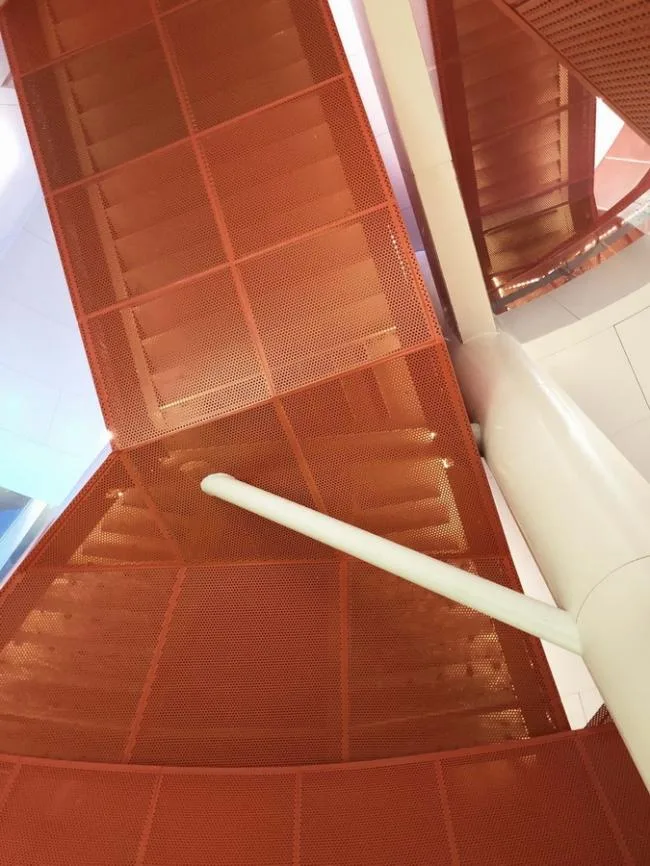
Staircase Detail. Photography by Lu Yong.
Both a Visible Object and a Gaze to Be Seen
Whether driving or walking, day or night, this building captivates the eye when it suddenly appears in your field of vision. Its perfect form, flowing transparent spaces, and dynamic posture make it a striking subject to behold.
As you spiral up or down its slopes and stairs, your gaze shifts continuously, no longer fixed on the building itself but guided outward to the surrounding cityscape. The building leads your eyes toward the distant urban environment.
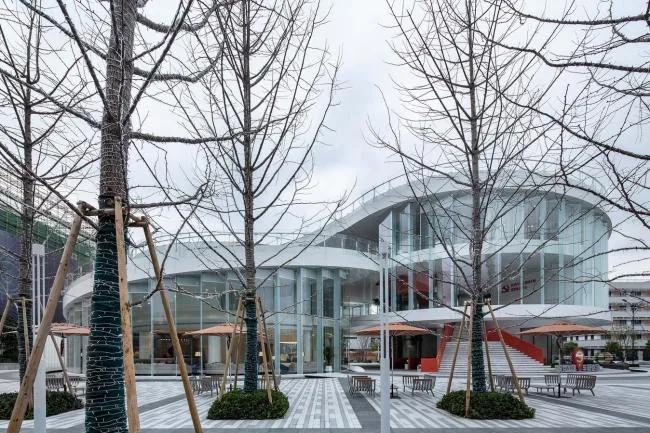
Ginkgo Grove. Photography by Zhang Yong.
As Roland Barthes remarked about the Eiffel Tower in his book The Eiffel Tower, this building combines the experience of the architecture itself with the urban space. It is simultaneously a visible object and a visible sight.
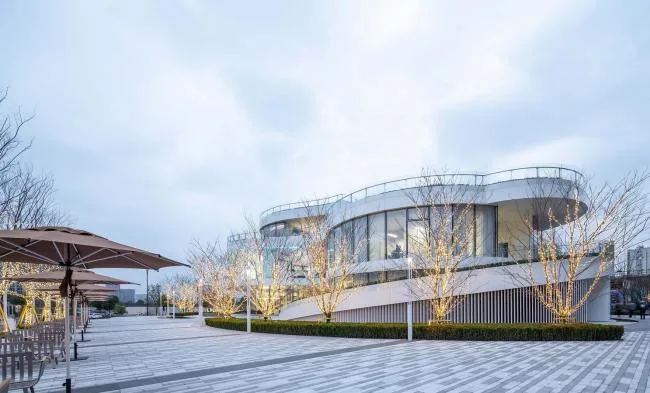
East Side Panoramic View. Photography by Zhang Yong.
Project Drawings
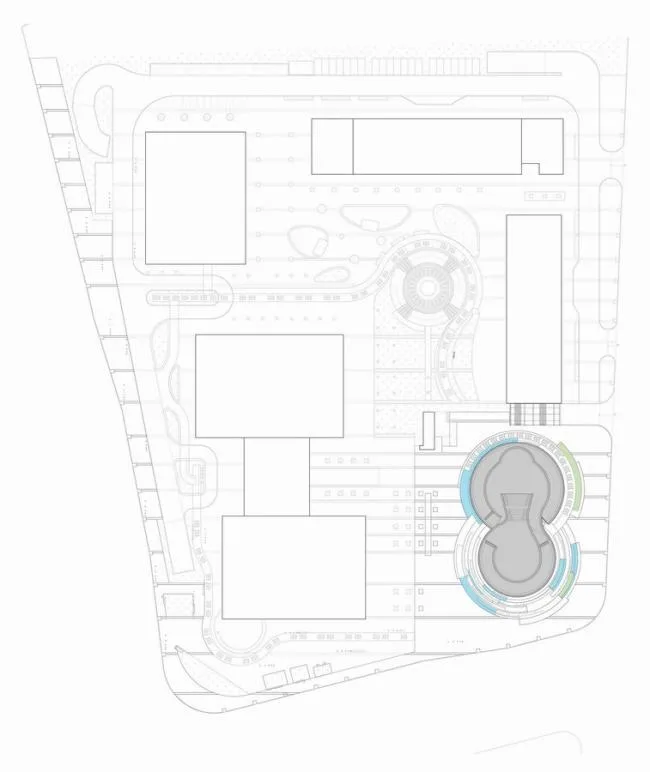
Master Plan
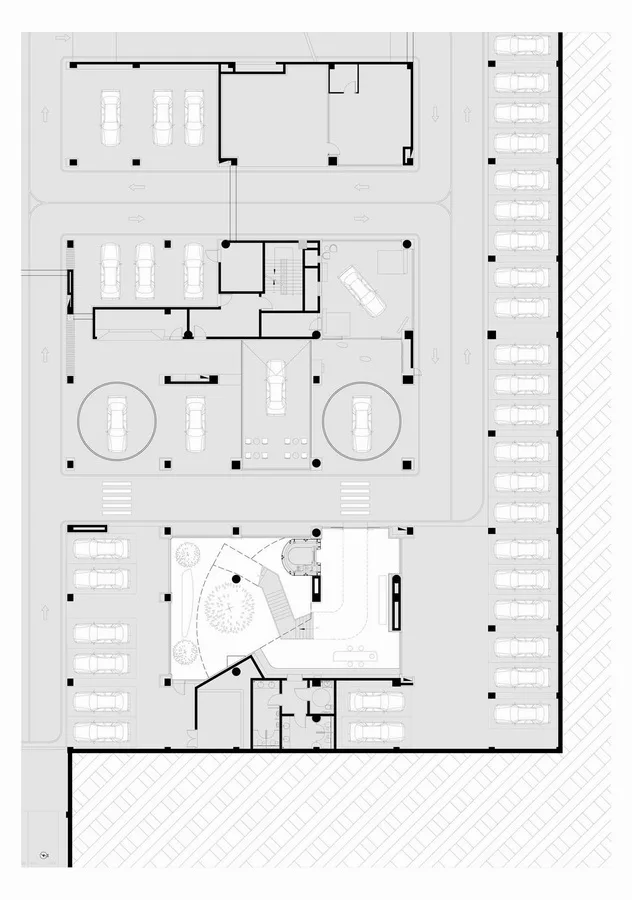
Underground Floor Plan
First Floor Plan
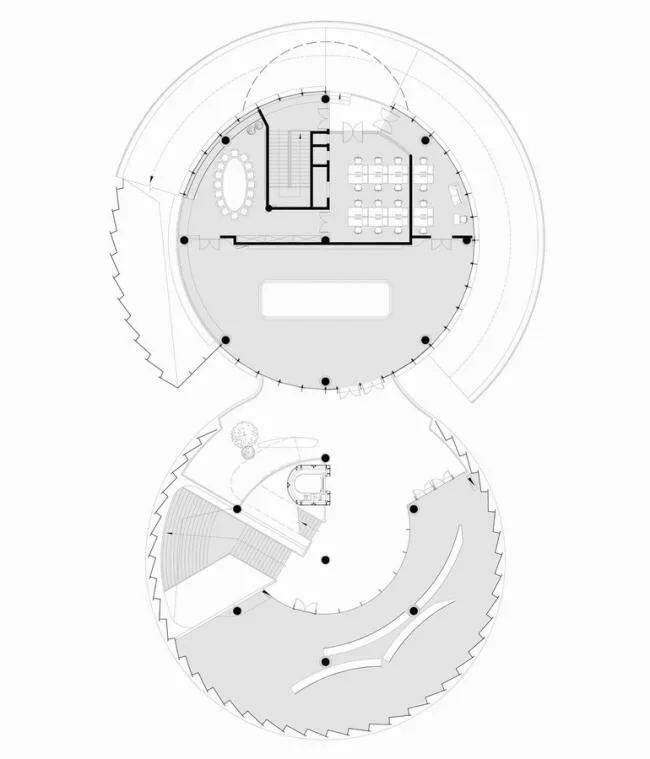
Second Floor Plan
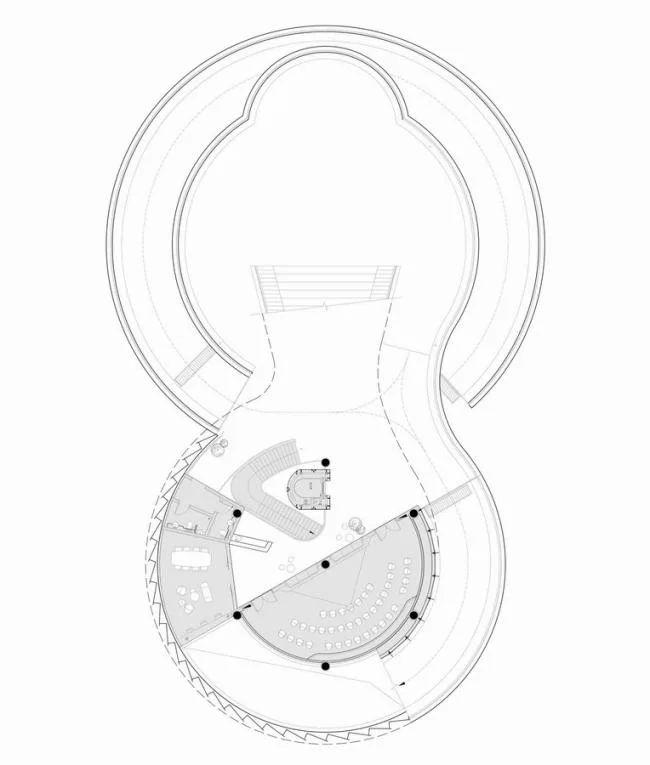
Third Floor Plan
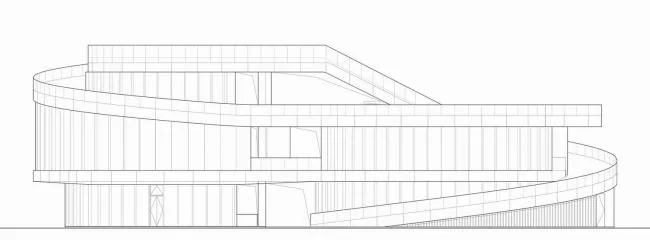
East Elevation
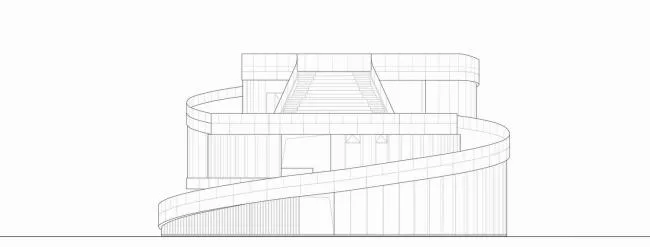
North Elevation
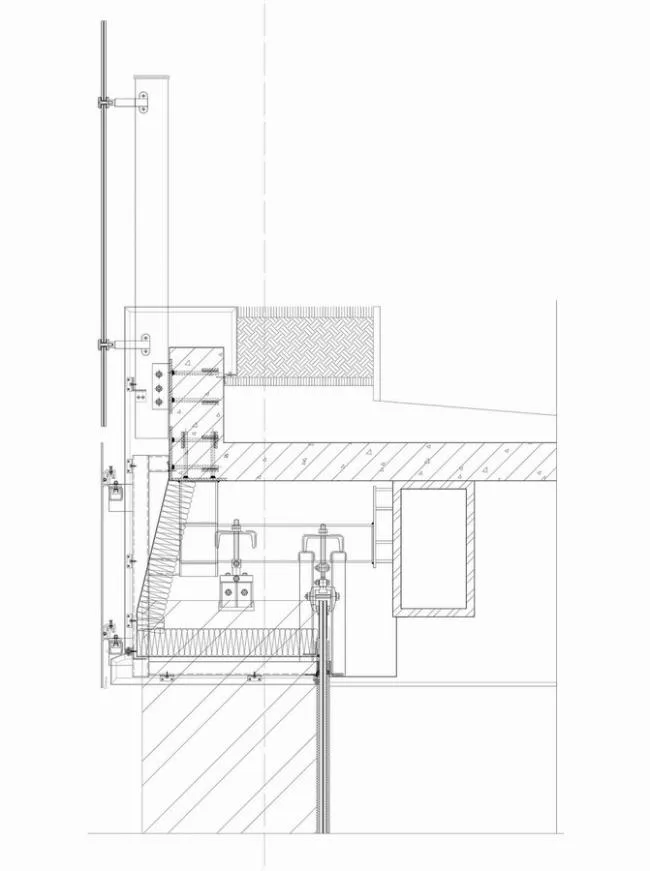
Serrated Glass Roof Detail
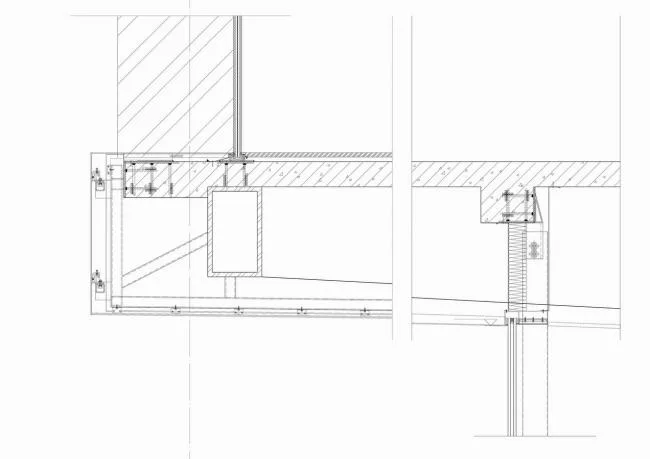
First Floor Ceiling Location
Project Information
Architect: Huicheng Architecture
Address: Huayuangang Street, Pingshui East Street, Gongshu District, Hangzhou, Zhejiang Province, China
Category: Commercial Buildings
Lead Architect: Lu Yong
Design Team: Xu Biao, Bai Jie, Liu Xinyi, Wei Song, Xue Peiling, Shen Xiaobin, Ye Jianfei, Zhang Guangyu, Zhang Bin, Sun Fuyun
Building Area: 2,000 m²
Year: 2018
Photographer: Zhang Yong
Manufacturers: G-Crystal, Alucobond
Collaborators: China United Engineering Co., Ltd.
Interior Design: Shenzhen Yuqiang Environmental Art Design Co., Ltd.
Landscape Design: Yuanxiang Design Co., Ltd.
Lighting Design: Shanghai Dongliang Lighting Design Co., Ltd.
Owner: Hangzhou Vanke















Must log in before commenting!
Sign Up