
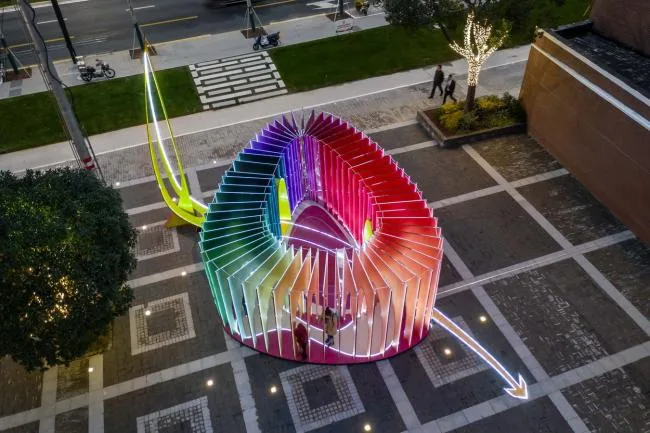
Close-up bird’s-eye view
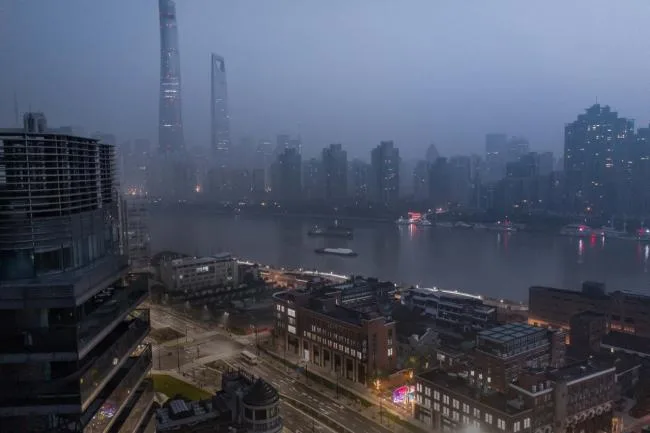
Small Love in Greater Shanghai
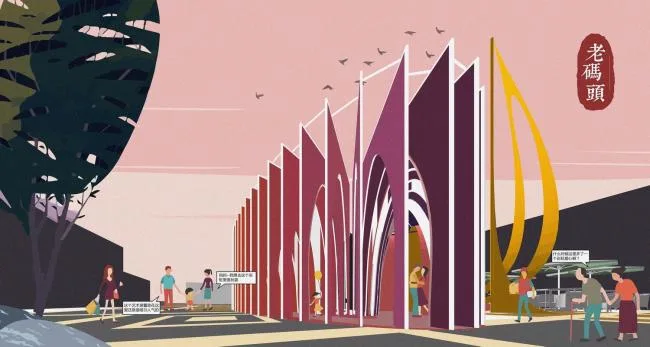
Small Love in Greater Shanghai
Big Era, Small Love
This installation is dedicated to celebrating the small, genuine love shared by ordinary people. In the context of the world’s largest city — with its highest density, towering skyscrapers, soaring land prices, and relentless focus on money and efficiency — this project reminds us that authentic and simple love still exists.
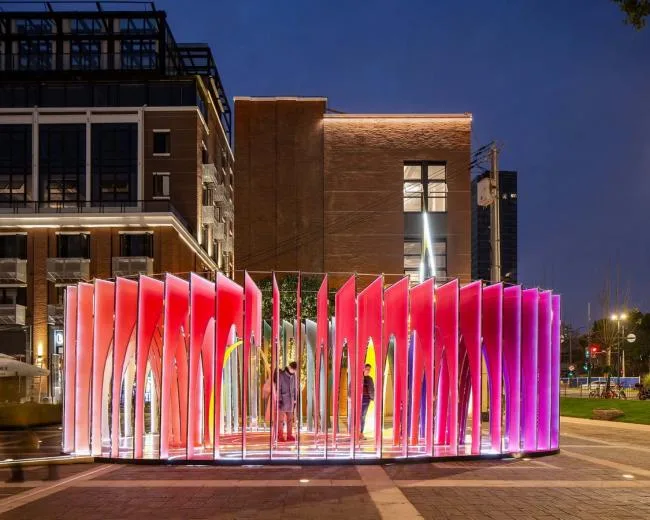
Exterior view
The greatest distance in the world is the space between people’s hearts. Despite Shanghai’s extreme population density, everyday life often conceals the emotional distance between individuals. Love faces challenges from money, family, future, reality, and temptation. The journey of two hearts moving from estrangement to the creation of new life is filled with human emotion and setbacks, set against the grand narrative backdrop of this “Demon City.”
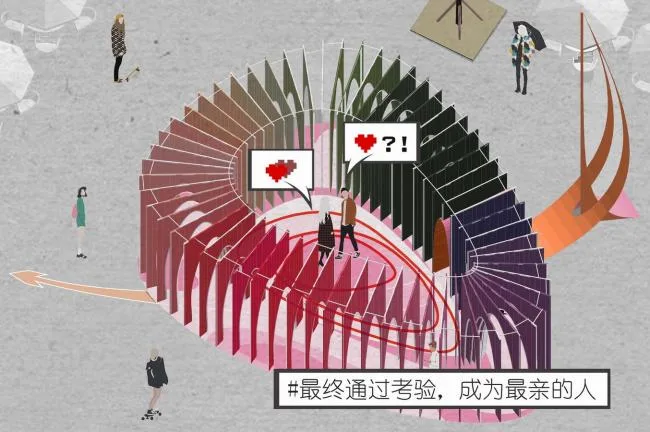
Comic illustration
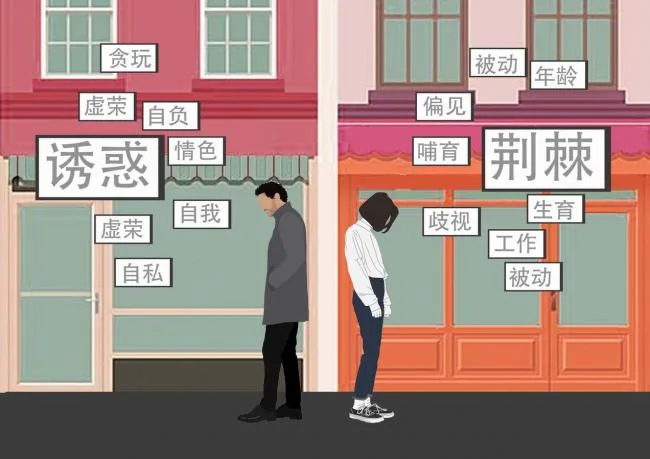
Comic illustration
Venue: Sixteen Shops in Shanghai Beach
The venue is situated on the historic pier of the Bund, known as the old “Sixteen Pavilions.” The rooftop European-style terrace overlooks the flowing waters of the Huangpu River. Below, former warehouses once owned by notable figures Huang Jinrong and Du Yuesheng echo tales of Shanghai Beach’s past highs and lows.
Across the river, Lujiazui’s skyline features the Shanghai World Financial Center and Jinmao Tower, towering as symbols of capital power. This contrast between realism and magic reflects Shanghai’s ever-changing character through the ages.
Today, the old dock has been transformed into a creative cultural park that embraces Shanghai’s artistic spirit. Within these historic buildings, the owners sought to add an interactive installation infused with youthful elements.
Amid vast scales of time and space, they found the most relatable entry point to the human heart: love.
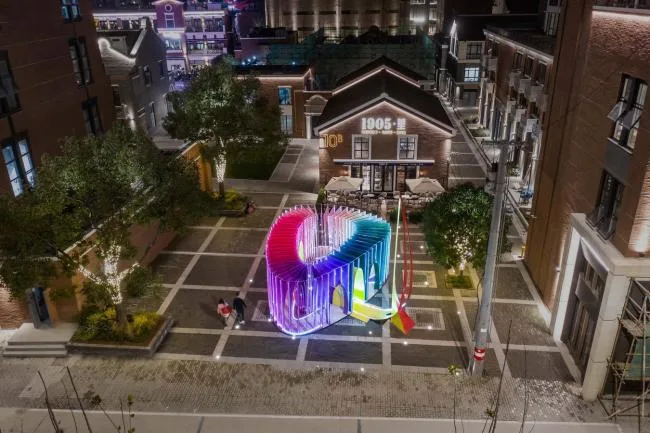
Bird’s-eye view
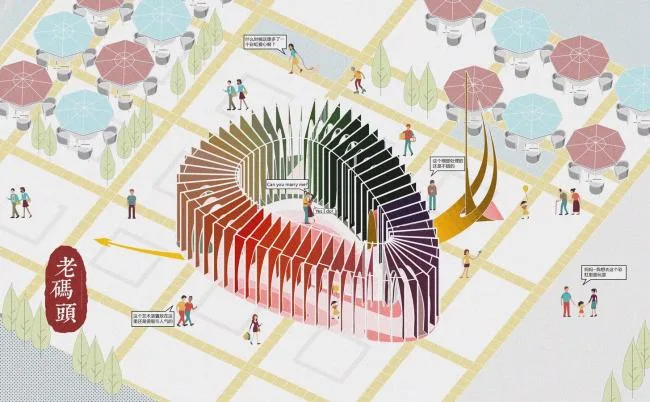
Interactive installations surrounding historic buildings
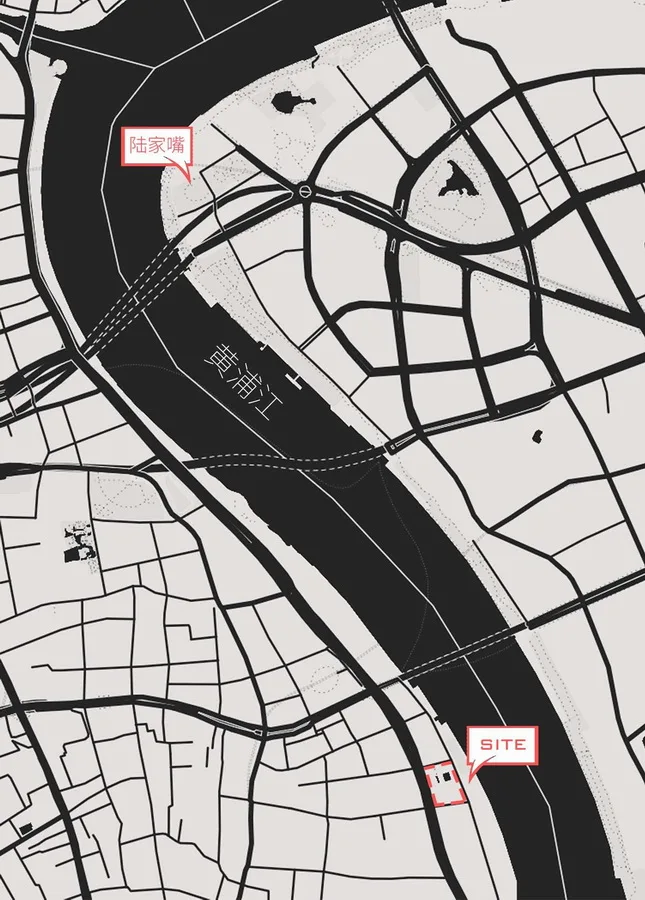
Location overview
Love is Life’s Encounter
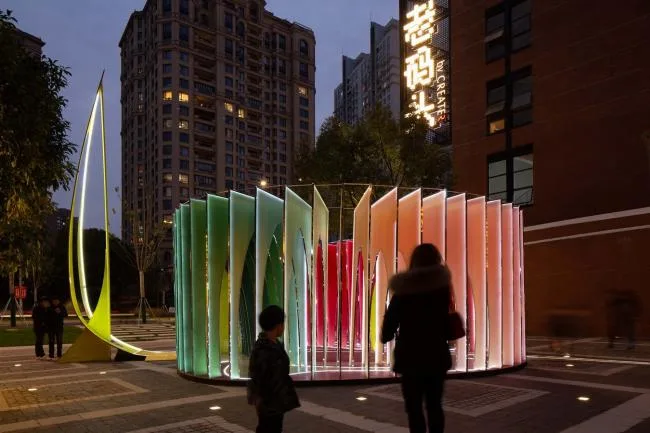
The installation forms a heart shape made from colored sunlight panels, with a towering arrow piercing through its center. This separation of male and female channels symbolizes the emotional journey of love.
Men and women enter through opposite sides — men pass through the red channel representing temptation, while women pass through the green channel representing frustration. Both meet at the central exit, standing together in the heart’s center.
Here, pressure sensors activate the glowing red heart and the illuminated arrow, creating the effect of an arrow piercing through the heart. This beautiful moment is captured by a camera mounted atop the arrow.
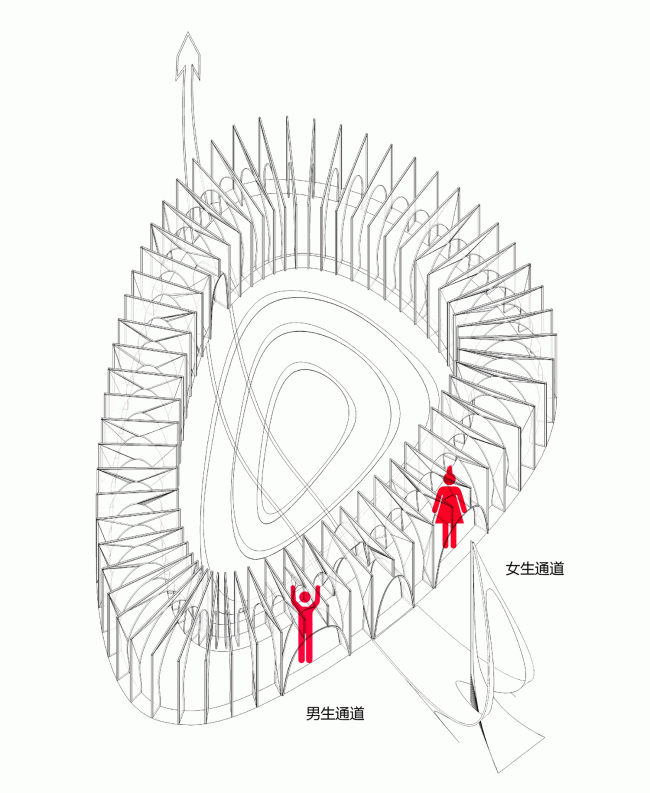
Interaction sequence
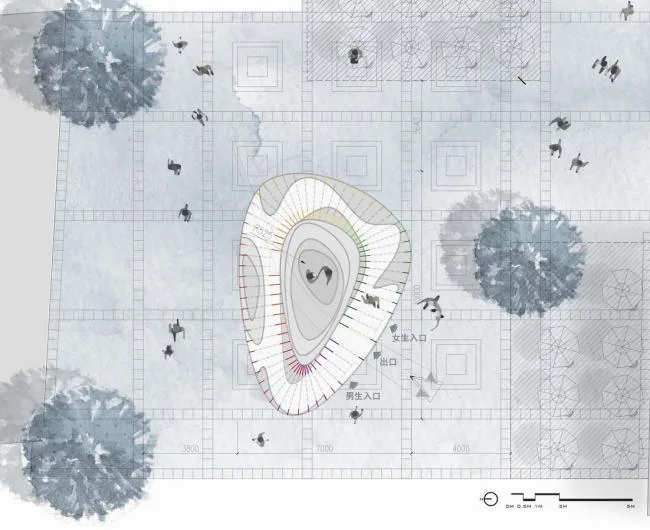
Floor plan
Interactive Space Experience
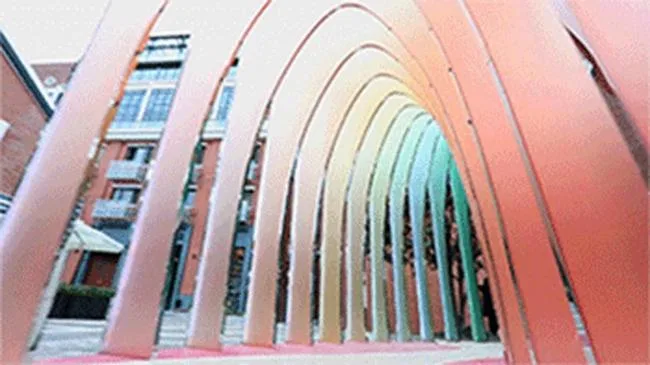
The installation consists of colored sunlight panels that continuously shift in color, arranged within a dome whose height and width vary. This dome extends forward in a continuous loop, with rhythmic panels that recede like a tide — evoking the prelude to love.
By varying the space’s height, the installation creates a unique experience that reflects gender-specific paths and the unfolding of love.
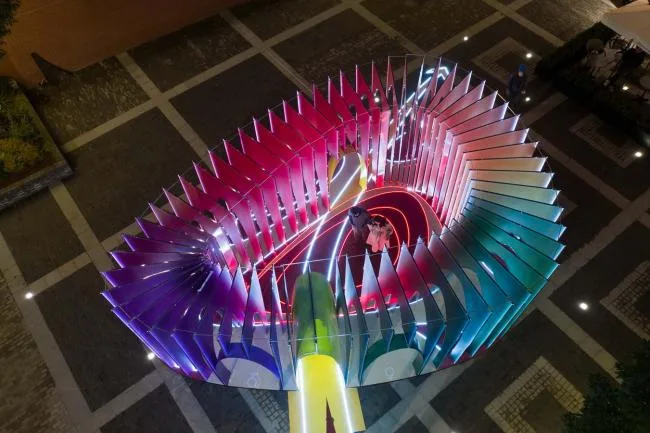
Close-up bird’s-eye view
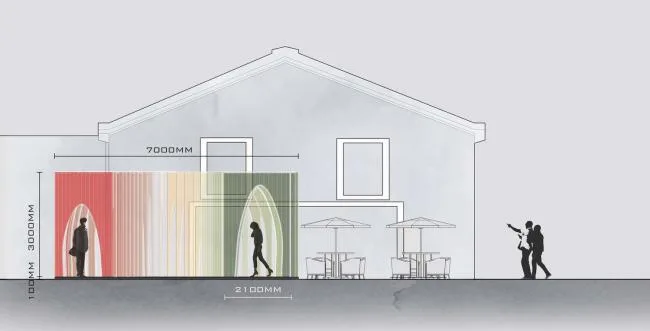
Sectional view
Canadian sociologist John Alan Lee categorizes love between men and women into six types: love of desire (eros), love of play (ludus), love of friendship (storge), love of attachment (mania), love of practicality (pragma), and love of altruism (agape). This is known as Lee’s “love rainbow.”
The installation’s colors draw inspiration from this spectrum, representing different stages of love. The red channel symbolizes boys, representing desire: eros, ludus, and pragma. The green channel symbolizes girls, representing frustration: storge, mania, and agape.
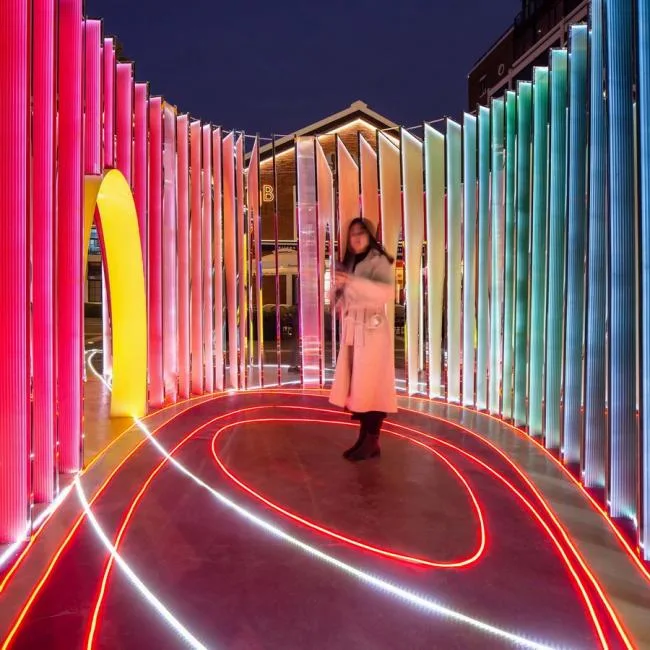
Love within
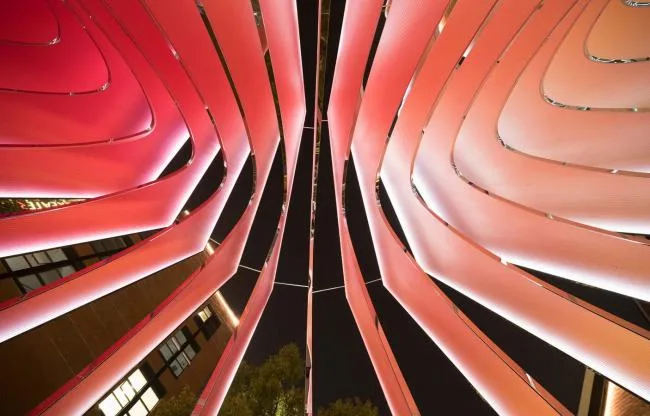
The floor features layered, receding heart shapes created through subtle color gradations, highlighted by LED light strips that produce a striking effect at night.
Standing in the center of the red heart, pressure plates beneath your feet activate the illumination, while mirrored stainless steel reflects your red silhouette amid mottled light and shadow — creating a magical atmosphere.
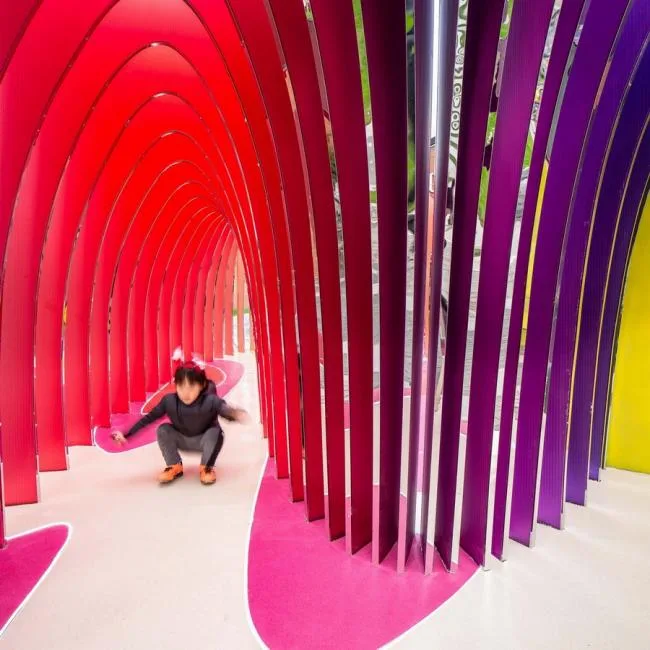
Children interacting inside
Construction Technology: Process Shapes the Effect
The main material used is polycarbonate, chosen for its affordability and ease of processing — ideal for projects with limited budgets and tight schedules.
Colors are applied via digital printing technology, which is time-efficient and produces durable, scratch-resistant finishes that resist oxidation and fading even under sun and wind exposure, with a lifespan of up to ten years.
First, 60 different panel shapes were computed, with corresponding CMYK values assigned. Due to the maximum size constraints of the digital UV printer (3000 × 3000 mm), panels were designed at 2100 × 3000 mm to optimize material usage.
Solar panels measuring 3000 × 6000 mm were cut into two 3000 × 3000 mm sheets, printed, then cut individually according to calculated curvature before being transported to the site for assembly.
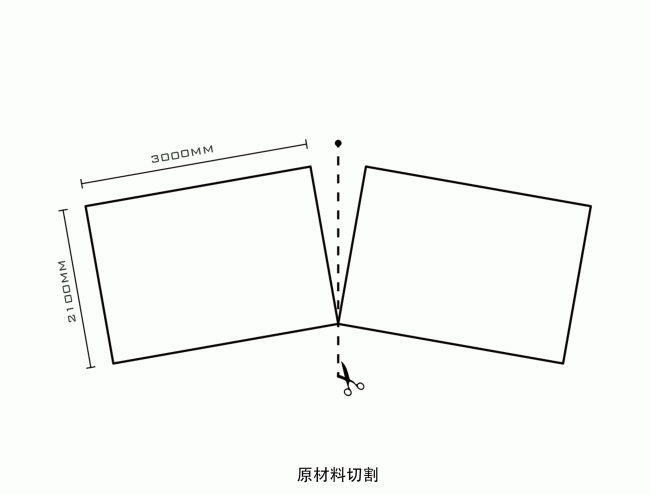
Construction technology in action
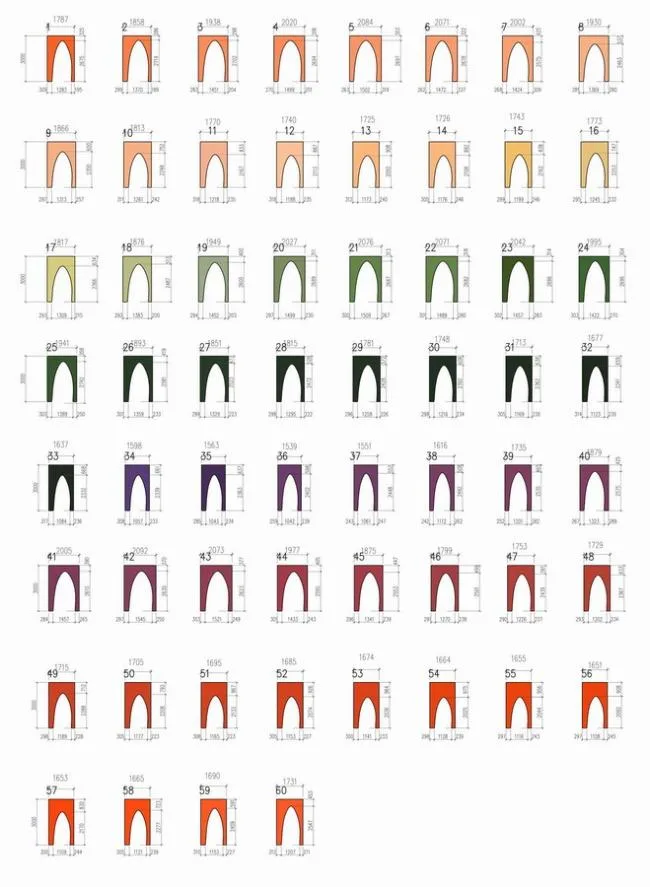
Polycarbonate color palette
While panels were printed in the factory, foundation work began on-site. Since the existing site could not be altered, workers built an arc-shaped platform to serve as the installation’s base.
Once the platform was completed, the sun panel modules were delivered and assembled. Angle steel embedded in the platform was connected with stainless steel pipe frames, and all panels were linked in series to ensure structural stability.
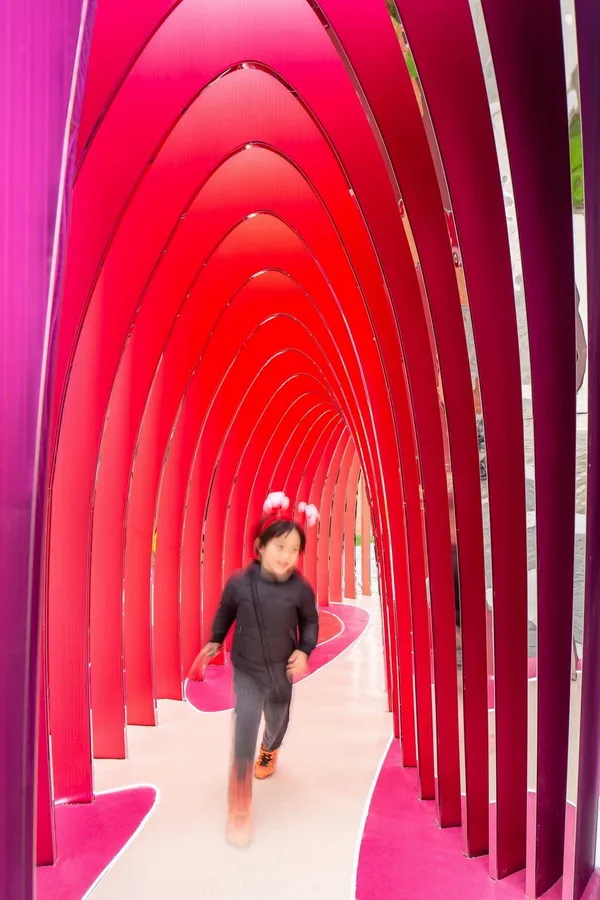
Interior space
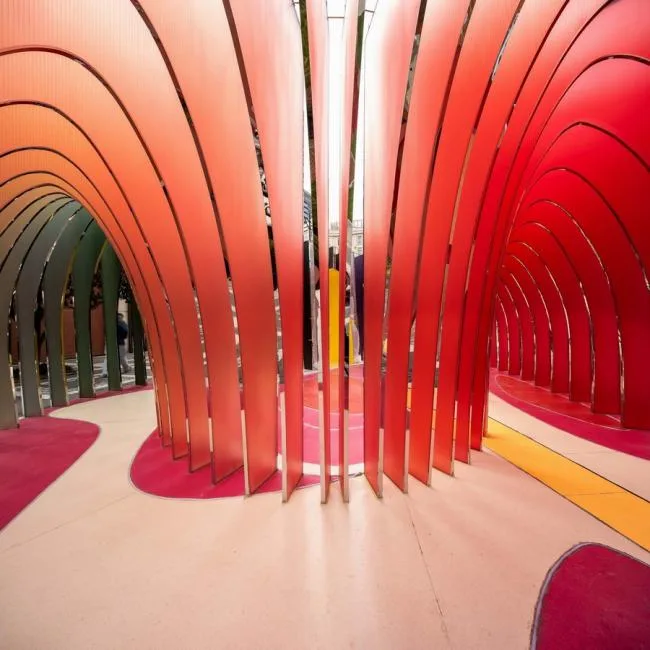
Passageway
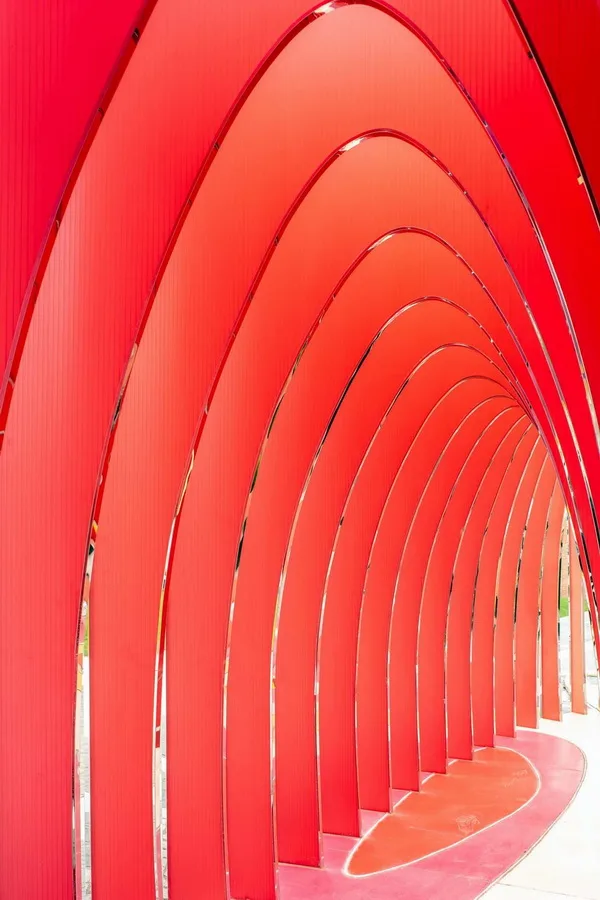
Red channel
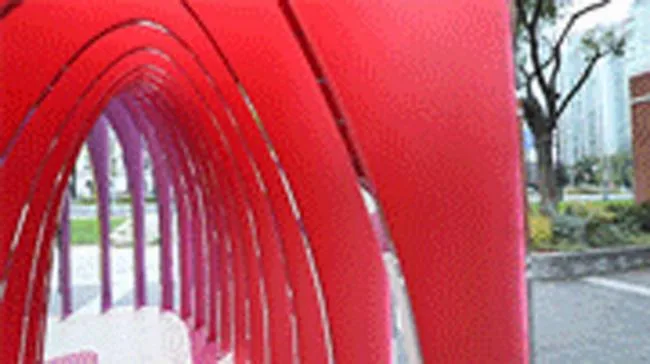
Path of the red channel
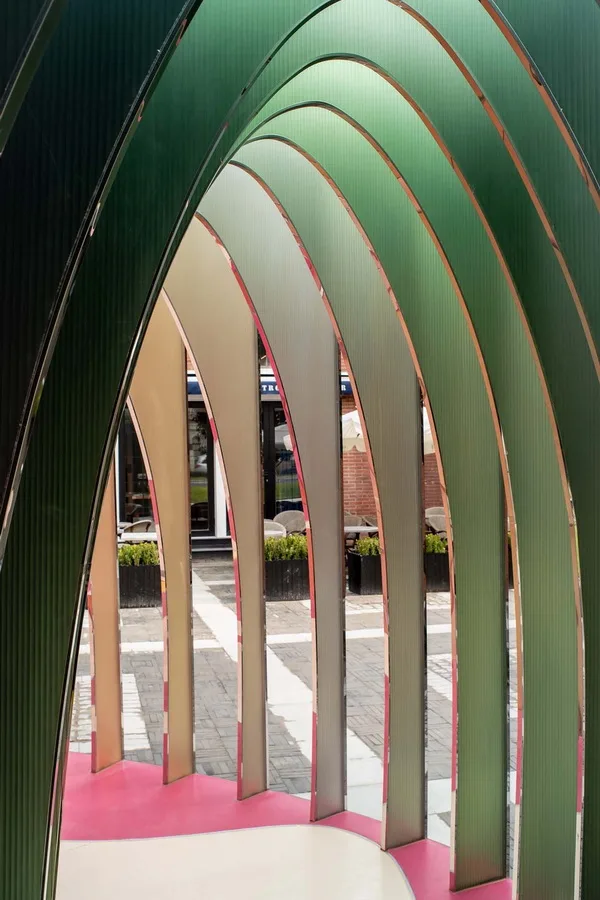
Green channel
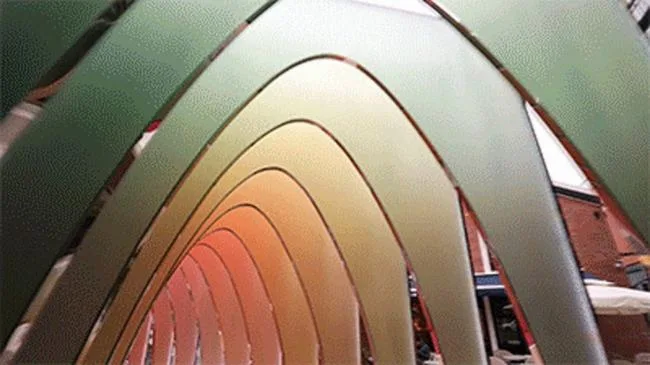
Path of the green channel
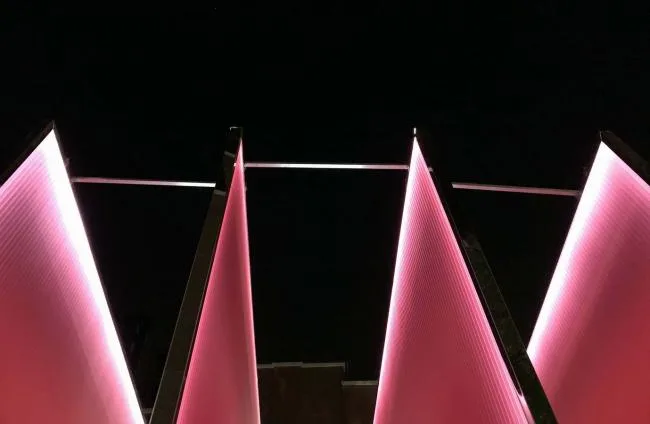
At the top of adjacent solar panels, 10mm stainless steel angle steel is secured with stainless steel edge grooves. This small component ensures the spacing between each span meets design requirements, while also forming a circular structure to enhance wind resistance.
The pressure sensor at the center of the red heart is concealed beneath a ground adhesive layer and covered with transparent acrylic. When a user steps on it, the sensor detects the weight and activates the lighting system of the entire installation.
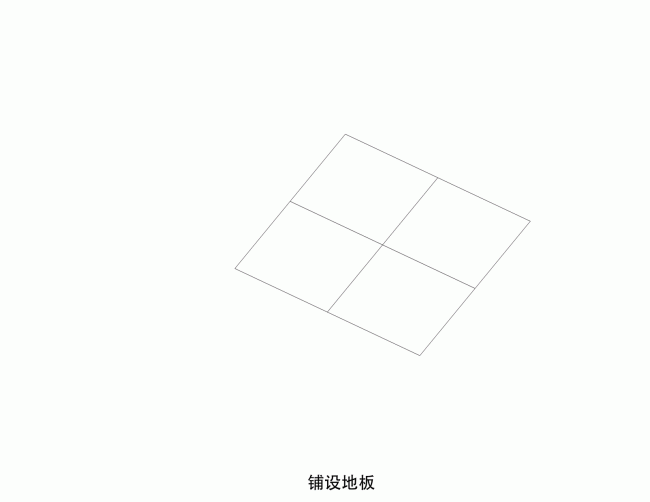
Construction process
Interior space
(BIM Tutorial)
Detail nodes
Construction node details
Valentine’s Day — Don’t Forget to Bring Them!
Shanghai is a city filled with anxiety, calculations, and efficiency, where genuine and ordinary love serves as our last refuge.
Within this vast scale of time and space, a small love may seem as insignificant as a speck of dust in the universe — but for you and me, it represents the entire world.
Exterior view
Project Information
Architect: HDD
Location: Shanghai Beach, Shanghai, China
Category: Temporary Installation
Lead Architects: Zhang Haiao, Xu Hang, Lv Tianqi
Building Area: 40.0 m²
Project Year: 2018
Photographer: Zhang Yong
Structural Design: Wang Guoxun (Director, Huadu Design HDD Structure Institute)
Construction Team: Yang Chunhua, Ruan Hejing, Miao Chengli (Shanghai Qihan Decoration Design Engineering Co., Ltd.)
Special Thanks: Fang Wen, Xu Yinlan, Chen Fangjun
Owner: CREATER Chuangyi
Contributed by: HDD Shanghai Huadu Architectural Planning and Design Co., Ltd
















Must log in before commenting!
Sign Up