
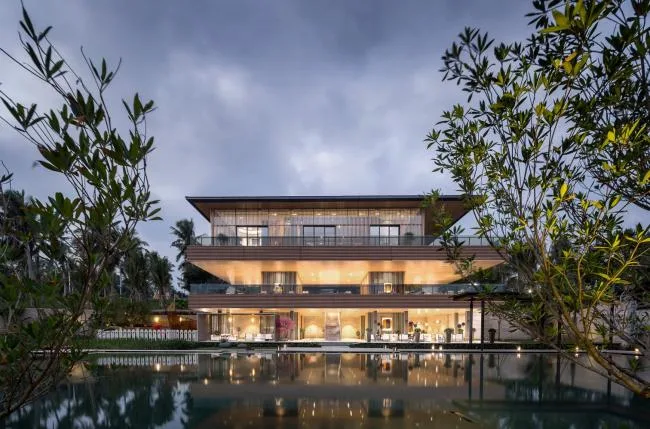
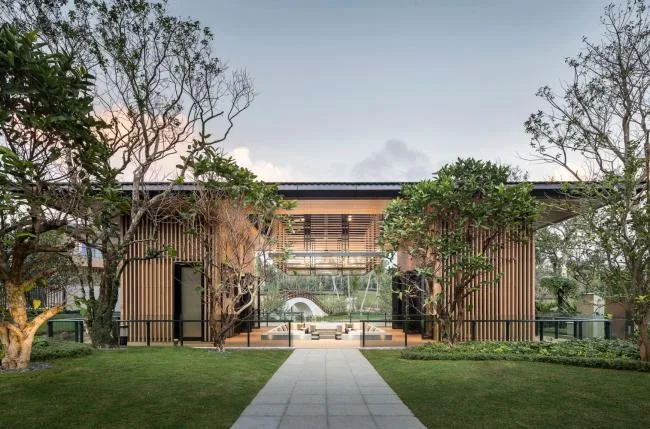
Wenchang, located in Hainan, was part of the Baiyue region before the Qin Dynasty. Known as Zibei County during the Western Han Dynasty, it was later renamed Wenchang County in the Tang Dynasty—a name that has endured since. According to the Geographical Records in the Book of Han: “From Zizizhi to Kuaiji, spanning seven to eight thousand miles, there are a hundred Yue tribes and diverse castes.” The rich history and cultural heritage of the Baiyue ethnic minorities cast a mystical veil over Wenchang, while its natural mysteries continue to captivate and inspire.
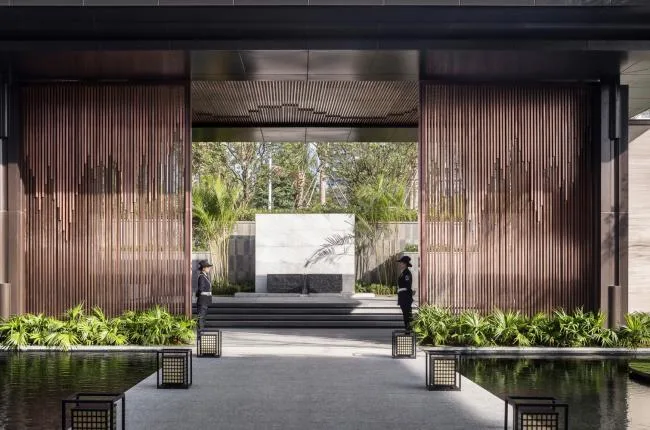
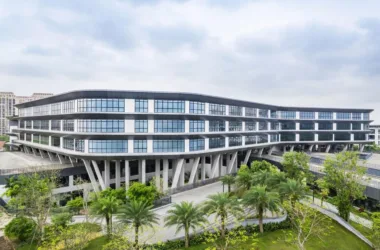
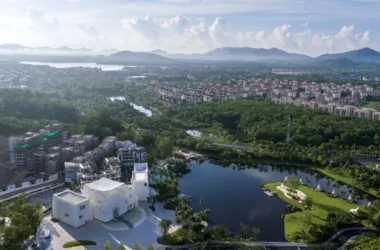
Situated by a bay in Wenchang, Luneng Real Estate has made a significant investment in the Qishui Bay project. The collaborative design team of Murata and Erben has developed a modern private villa community that harmonizes with Hainan’s natural environment. Blessed with rare geographical resources and surrounded by the clear waters of Hainan, this project invites life to reconnect with nature.
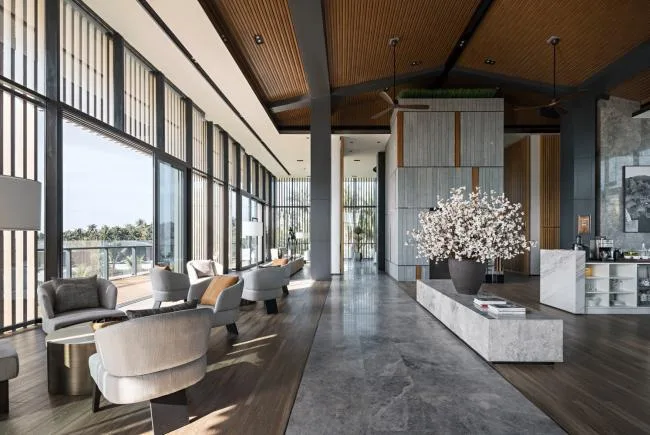
Hainan’s natural beauty is undeniable, but its ethnic minority cultures add an equally impressive layer of depth. The unique cultural traits of Hainan emerge from the blending and clashing of various traditions. Historically, the island’s magnificent landscapes not only comforted exiled scholars but also shaped their regional identity—they remained deeply concerned with their country’s fate and embraced a sense of global responsibility.
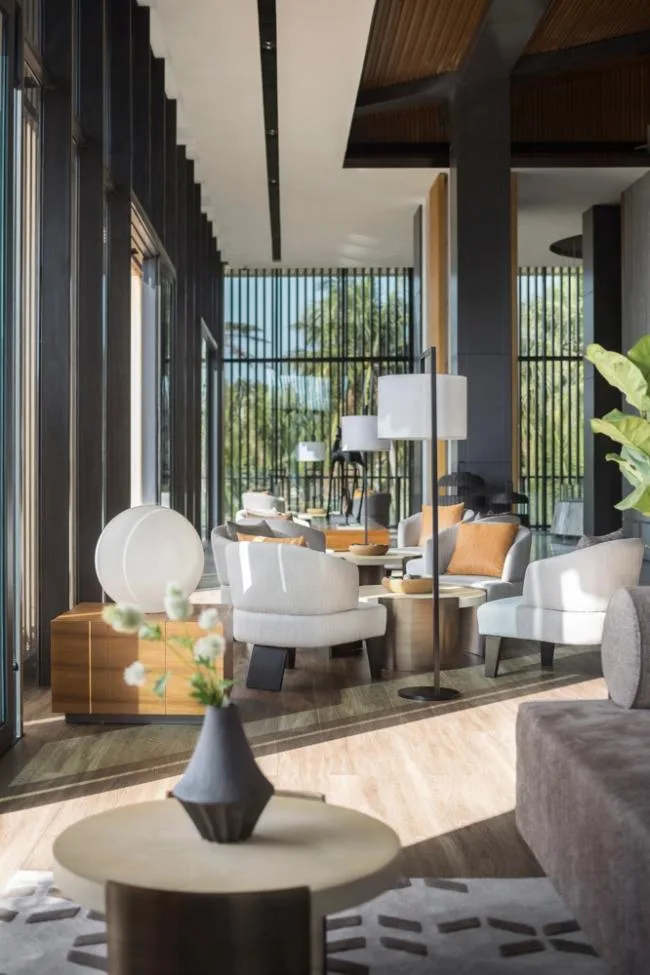
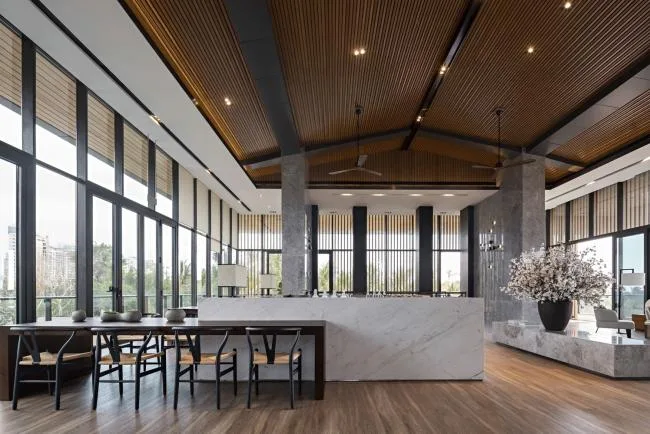
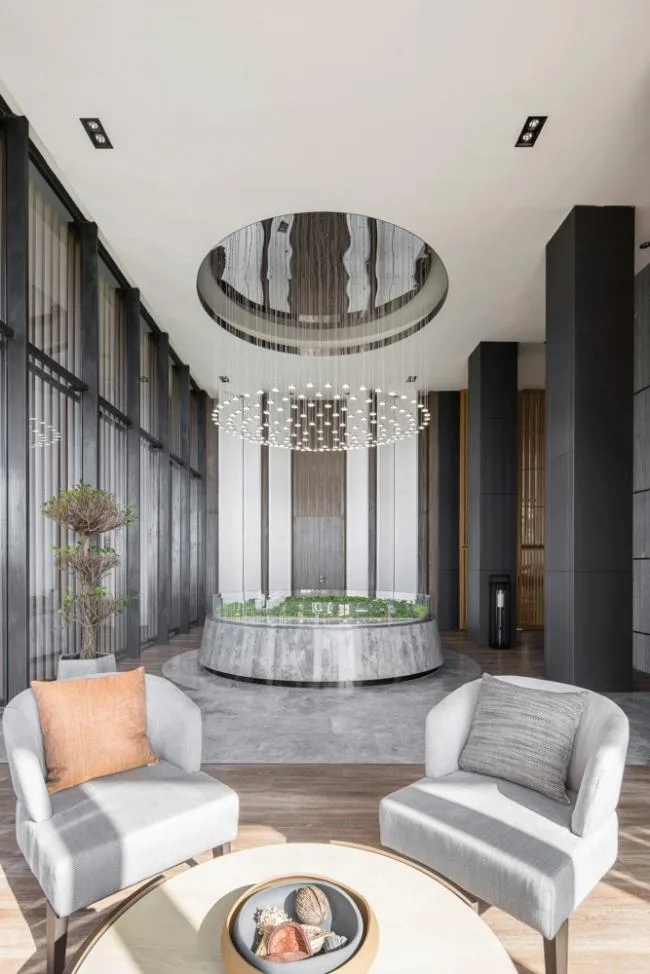
The enduring Confucian spirit continues to resonate in the region’s historical landscapes, with culture and character passed down through generations. This project connects the integrity of gentlemanly ideals with history, infusing a sense of literati elegance into the southern Chinese coastal scenery. Cultural boundaries have become blurred, revealing a collective consciousness and shared family values as people observe the world around them. Inspired by the spirit of their predecessors, the designers have deeply internalized and eloquently expressed this heritage.
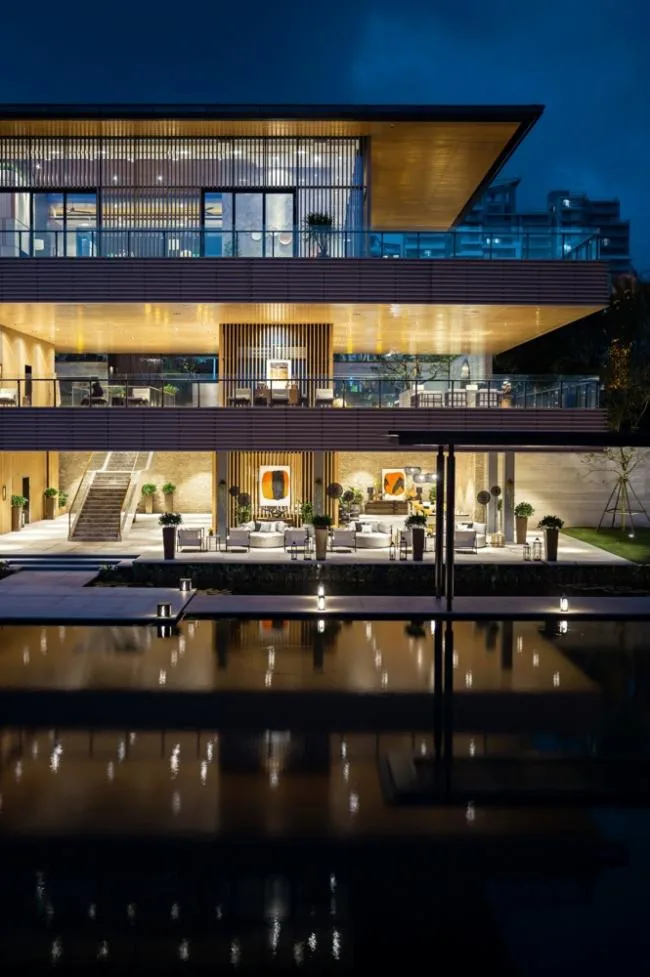
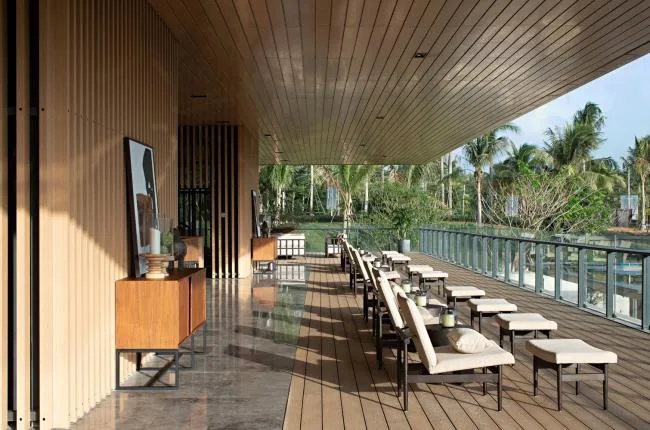
The living hall embraces transparency, maximizing open space with minimal design intervention to allow natural airflow. Simple materials are used to embody faith in nature. The contrast between cool stones and warm wood elevates the material experience for BIM engineers.
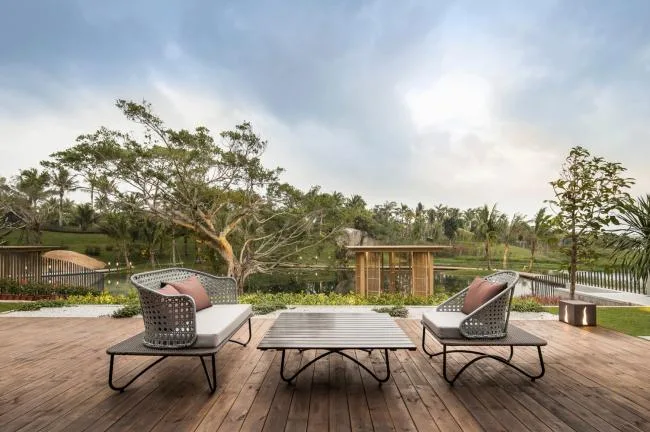
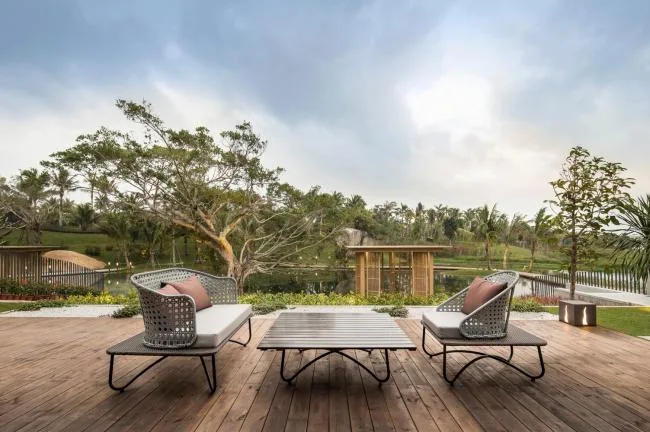
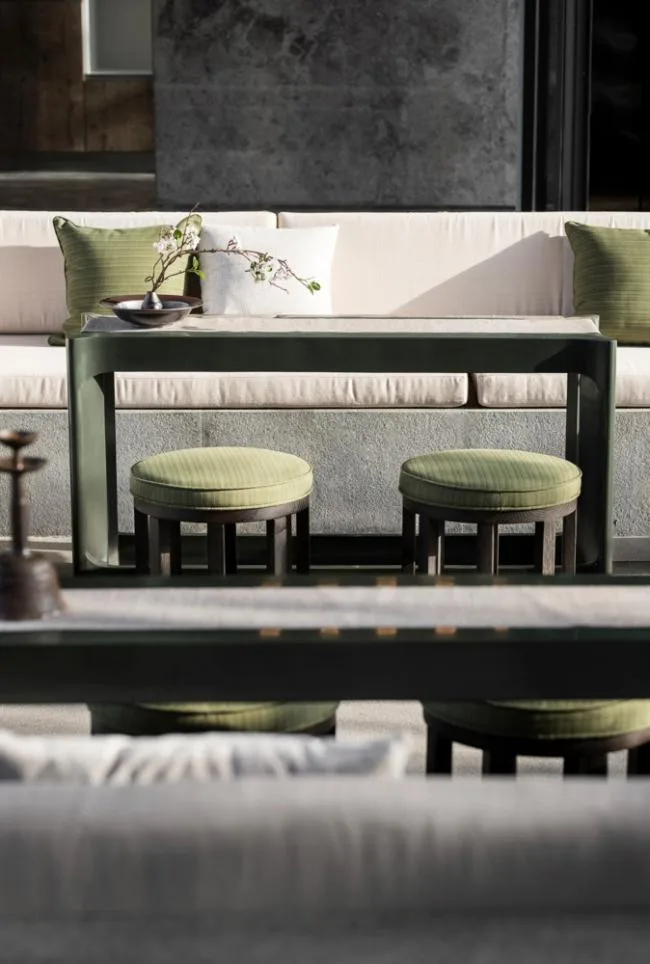
In the elevated clubhouse, the structure serves as a simple yet dynamic backdrop. The spacious environment allows for cozy furniture groupings, creating intimate zones. A seating area for four is softly illuminated by floor lamps, while a row of bar-connected chairs acts as a dividing table, adorned with blooming flowers welcoming guests.
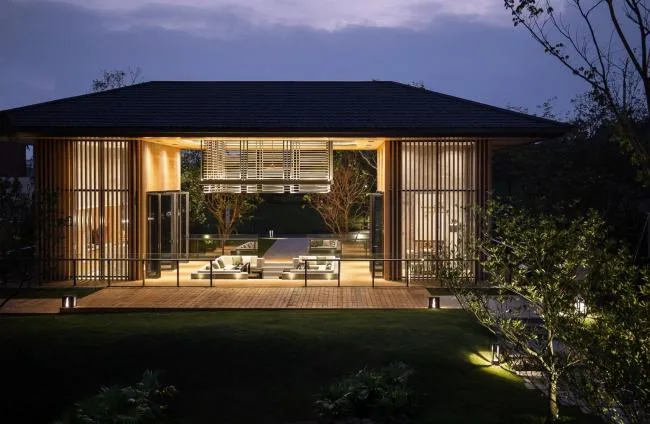
The space beneath the eaves forms a “grey area” where indoor and outdoor spaces intersect, preserving design ambiguity. This modern spatial expression draws inspiration from traditional Eastern architecture. It offers flexibility—whether chatting with friends or standing alone gazing into the distance, one can move freely between gathering and solitude while maintaining comfort and independence.
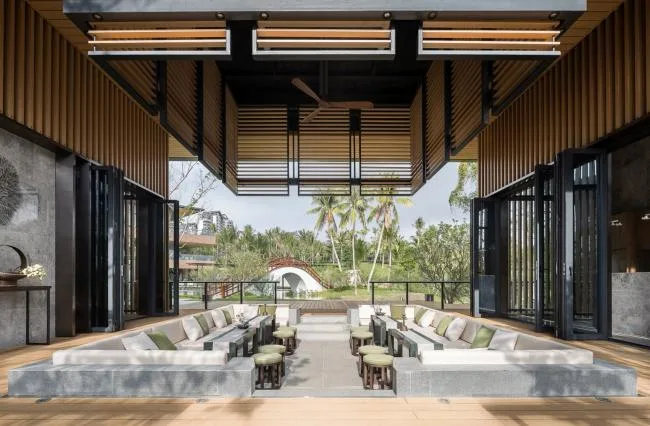
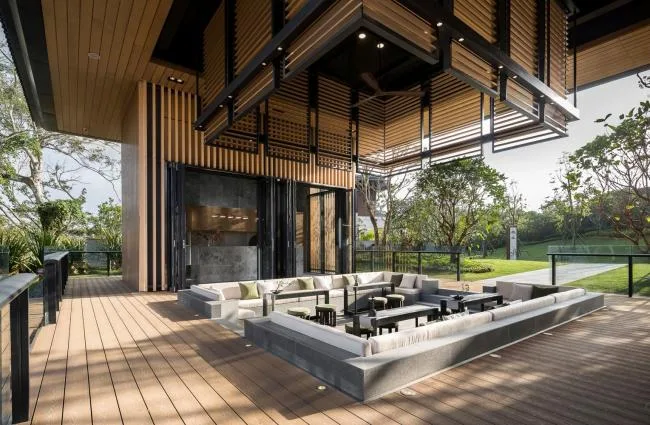
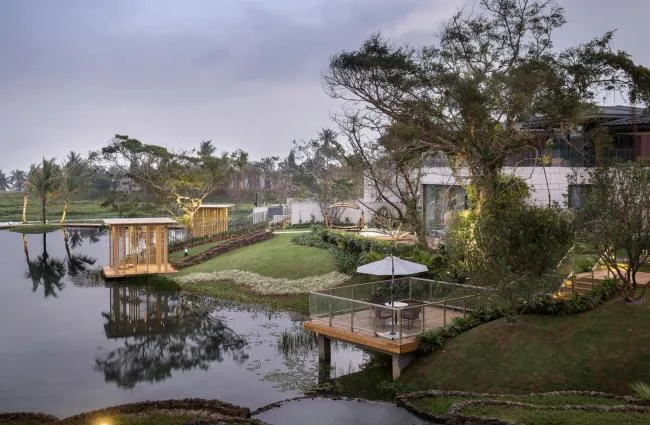
Surrounding the project are scattered landscape pavilions, leisure tents, and small bridges, creating a harmonious relationship within the scenery. People come and go, intersecting in spontaneous moments. Embraced by nature, visitors can shed their urban stresses and enjoy peaceful moments that nurture inner potential and reveal a captivating charm.
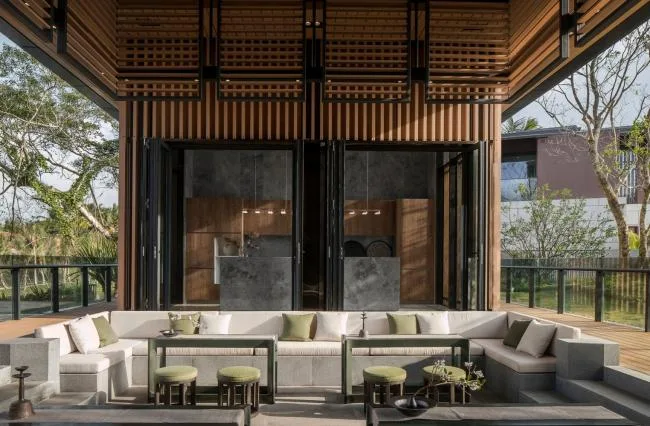
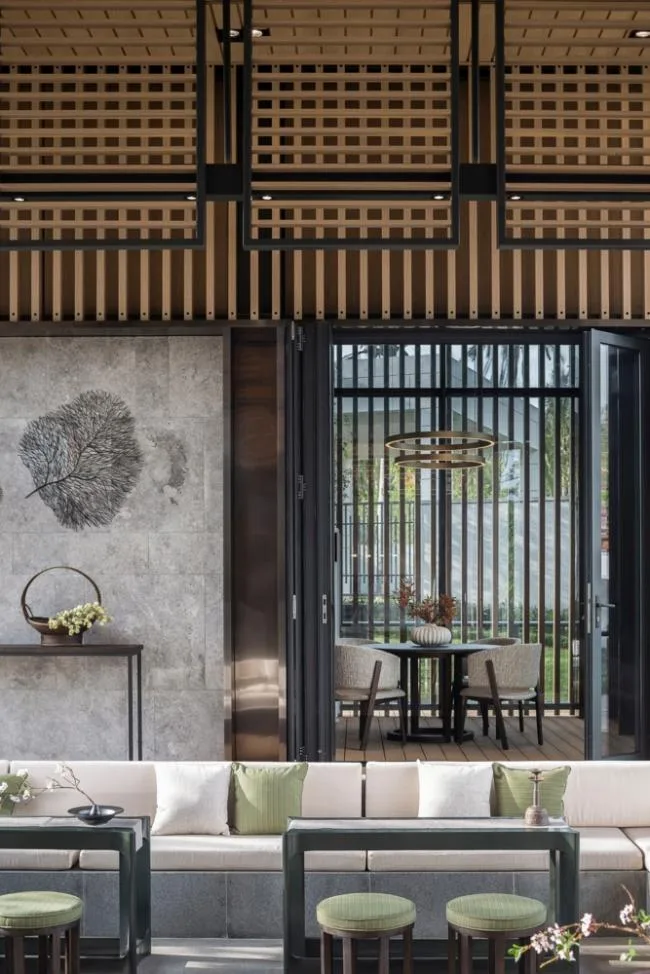
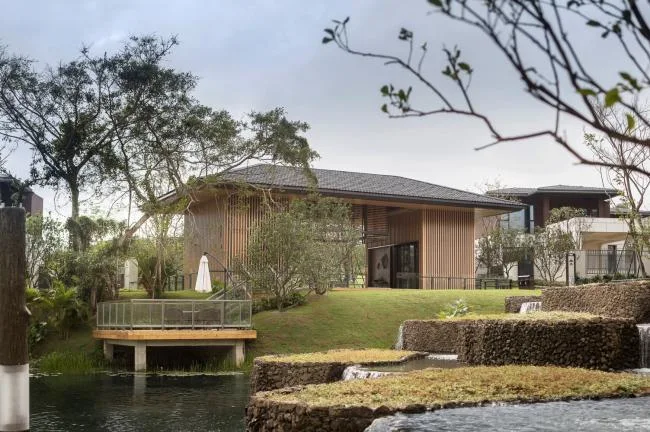
A tea room is thoughtfully placed within the scenic area of the living hall, addressing guests’ needs and reflecting the design’s goodwill throughout the planning process. Positioned under a four-slope roof and surrounded by trees and flowers, it creates a serene setting for tea drinking.
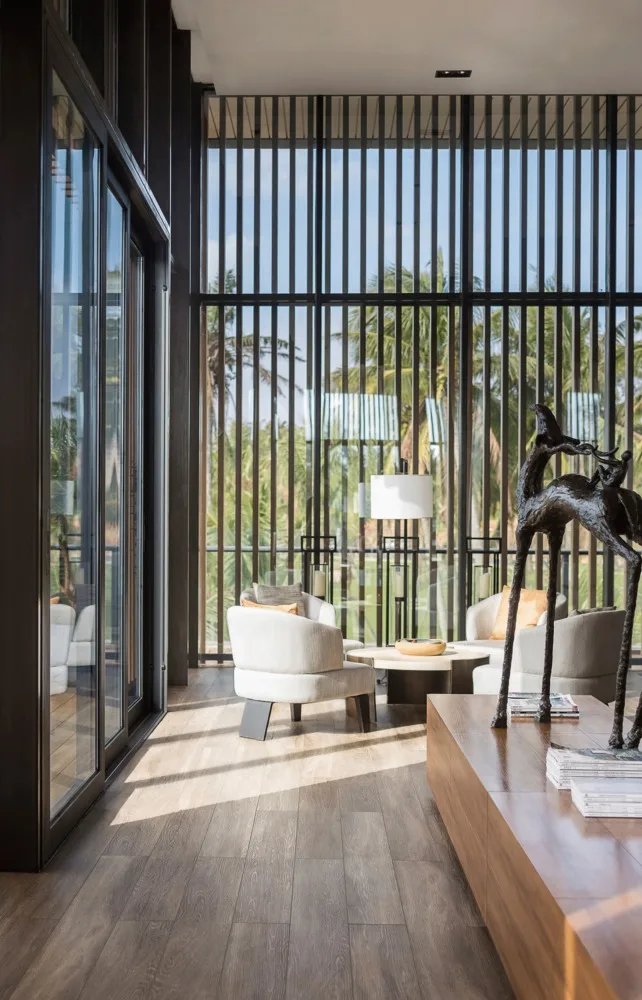
Since its inception, tea has been deeply intertwined with the lives of tea lovers in China and around the world—from medicinal uses to daily rituals. The story of this Eastern leaf is profoundly moving. Within the lifestyle club’s tea room, designers engage in a timeless conversation with ancient scholars. The majestic landscape inspires joy, while the humble and reserved temperament endures, becoming a cultural landmark.
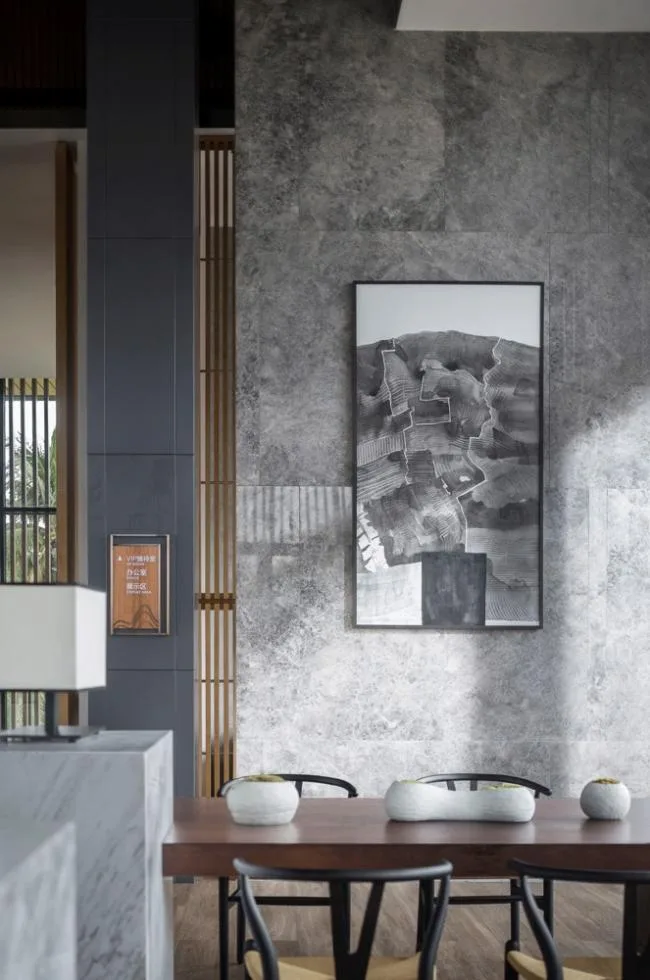
The design features vertical wooden slats that create a semi-transparent facade, maintaining the project’s unique design language while softening the building’s solidity. This approach stabilizes the symmetrical structure with an agile presence. The suspended ceiling establishes a subtle division echoing the floor space below, while the lowered ceiling height enhances scale and comfort.
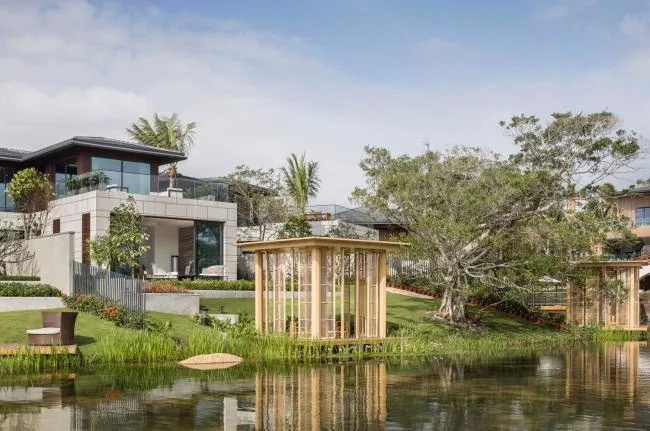
The sunken courtyard tea area offers an inexplicable sense of security, derived from the surrounding open space and the warmth of a hot cup of tea. Historically, people dug underground pits for cooking and adopted a lifestyle of sitting low to the ground. The use of furniture elevated from the floor did not emerge until the Zhao and Song dynasties.
The modern space draws inspiration from Japanese architecture while pursuing the low-rise living style of the Han and Tang dynasties. Nestled in a low sofa, abandoning upright chairs, the relaxed posture invites the body to unwind and fully immerse in the natural beauty surrounding the area.
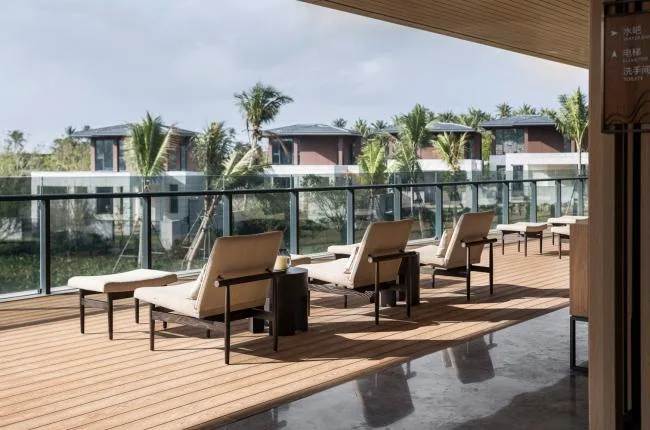
In today’s era of upgraded consumption, purchasing is no longer just about fashionable products. It’s about spending quality time on vacation, reconnecting with nature in a secluded environment, and escaping the pressures and anxieties of urban life. This rekindles the spirit to face life’s challenges with renewed strength. Design serves as a gateway to rediscover our original intentions, helping us find inner peace amidst the natural chorus of birdsong.
Drawings
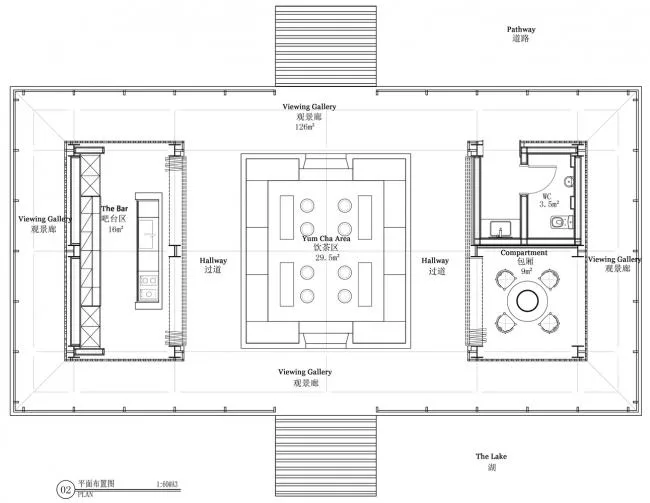
Room Layout
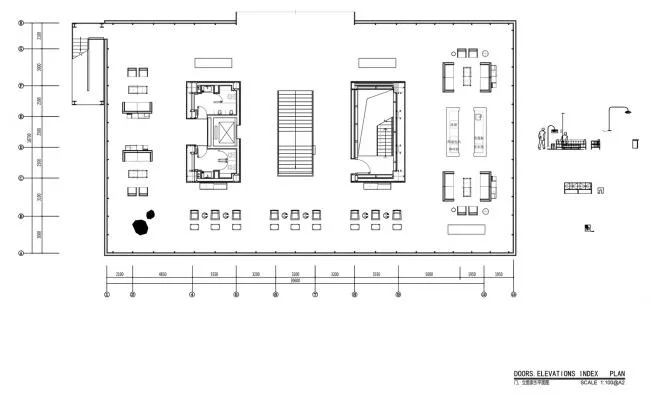
First Floor Plan of the Living Hall
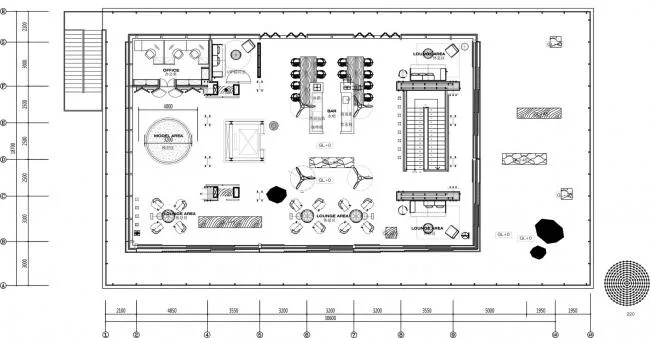
Second Floor Plan of the Living Hall
Project Information
Architects: Murata Design, Erben Design (Taiwan)
Location: Wenchang, Hainan, China
Category: Store
Space Designer: Chen Jianyou
Soft Decoration Designer (BIM Design): Wei Chuanwu
Design Participants: Huang Lingling
Year of Project: 2018
Photographer: Yan Ming












Must log in before commenting!
Sign Up