
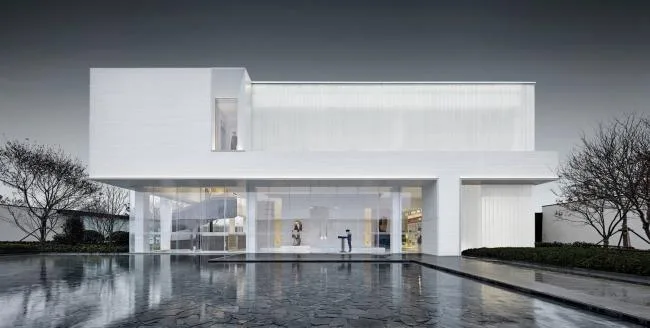
The Entire Building
All matter in nature—including mountains, streams, air, and even ourselves—is composed of light. Light is the creator of matter, while the purpose of matter is to cast shadows, which belong to light. As Louis Koon once said, we use light as the director and shadows as the protagonist to craft a spatial narrative that guides people through personalized and unique experiences of light and shadow.
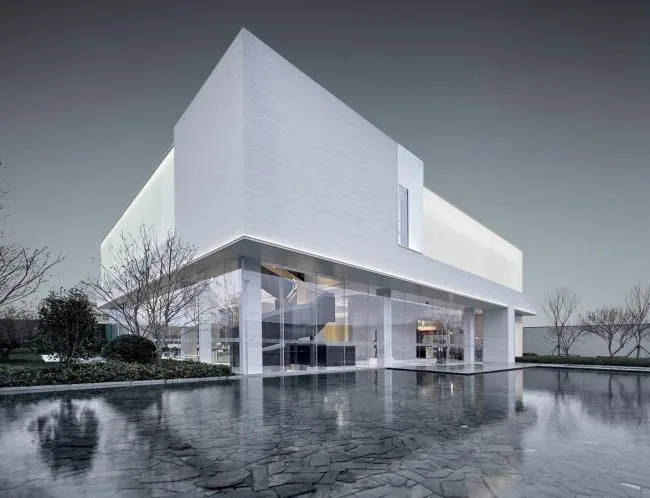
Light and shadow shape concise and powerful architectural sculptures. Photography by Zeng Jianghe.
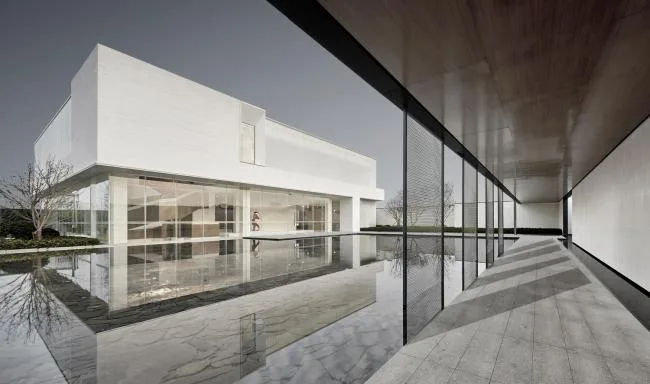
The reflection of buildings in mirrored water features complements the dappled shadows cast by light filtering through metal mesh curtains in the corridors. Photography by Zeng Jianghe.
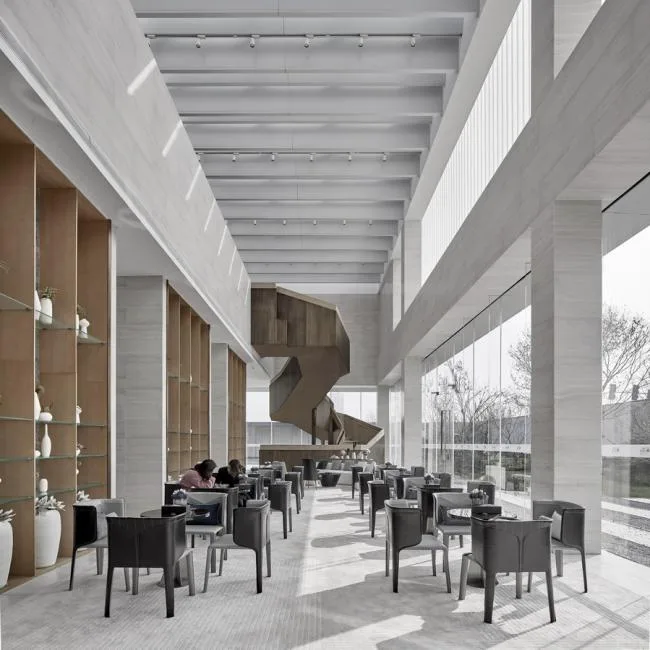
A quiet and elegant leisure space. Photography by Zeng Jianghe.
This project is situated within a planned urban park in the Jiangning district of Nanjing. Despite limited land and a noisy, chaotic environment, a simple yet effective solution was employed: a square box, a mirrored water feature, and an L-shaped corridor. The corridor divides irregular plots into parking spaces, while the building’s reflection in the water merges harmoniously with the shadows cast through metal mesh curtains. Light and shadow continuously sculpt and extend the space, imbuing it with a dynamic sequence and a serene character.
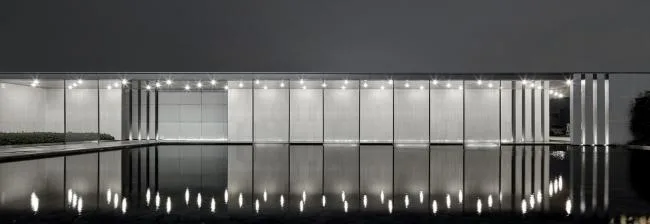
Reflection of the corridor and mirrored water landscape. Photography by Zengjiang River.
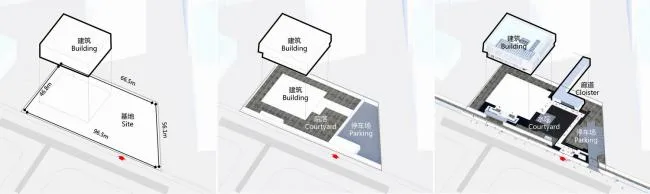
Form generation: a square box, a mirrored water feature, and an L-shaped corridor.
Shaping Light and Shadow
People are immersed in light and shadow, and the building’s image appears the moment they turn around. The design aims to unify the building’s interior, exterior, and landscape materials, creating a clear and logical architectural experience. The exterior features high-transparency glass, ultra-white U-shaped glass, stone, and aluminum panels. The proportions between transparency, translucency, and solidity are carefully studied to explore the relationship between virtual and real, light and weight, under varying light and shadow.
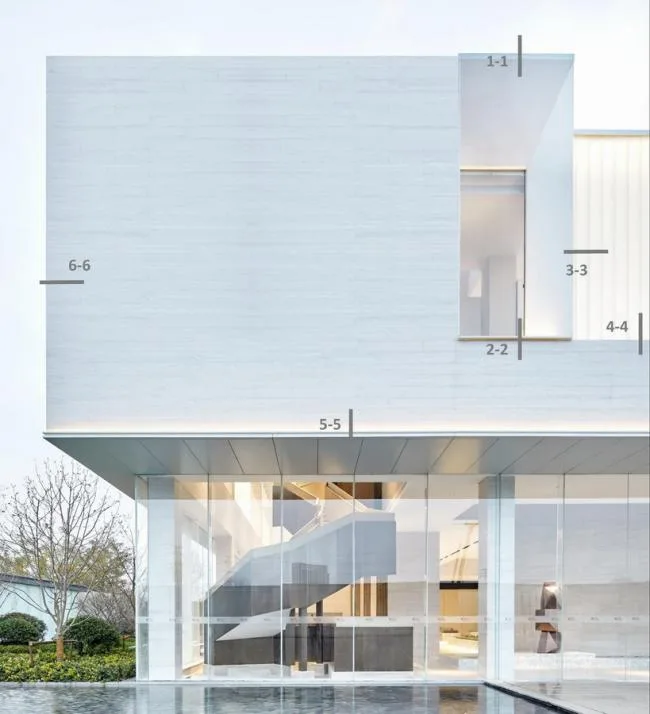
Detailed real-life presentation. Photography by Zengjiang River.
The first glass layer offers high transparency and low reflectivity, subtly highlighting the building’s sculptural form. The ultra-white U-shaped glass glows warmly and translucently under light, exuding elegance. The continuous horizontal texture of light gray stone interacts with light and shadow, recording the passage of time. The “Window of Time,” carved from white aluminum and located on the second floor, frames the path of light and shadow, connecting time and space seamlessly.
The soft glow behind the U-shaped glass, the Zen-inspired courtyard landscape, and the dynamic play of light and shadow. Photography by Zeng Jianghe.
Light and Shadow Spaces
Stephen Hall once said, “Light can shape the atmosphere of a space and create an uncertain character, crafting a fleeting and immediate experience.” As the soul of architectural space, light is designed in three distinct forms here: the Light Reception Hall, the Light Exhibition Area, and the Light Leisure Area. These spaces introduce light and shadow to build a vector order, exploring the interplay of transparency, material poetry, and the shifting qualities of light and shadow.
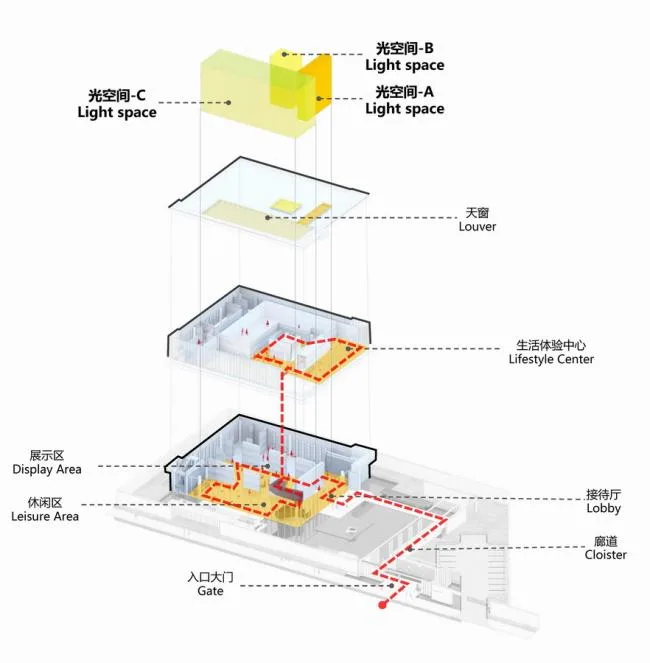
Photography of the three light and shadow spaces. Photo by Zeng Jianghe.
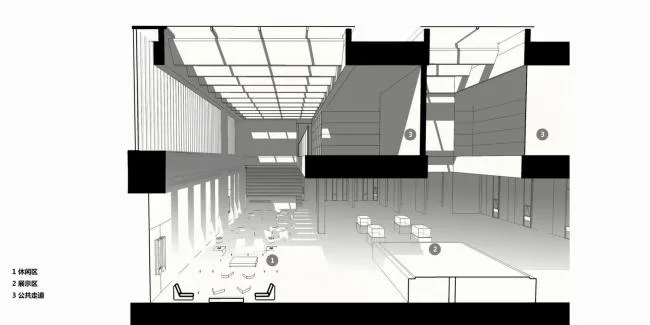
Light and Shadow Space 1
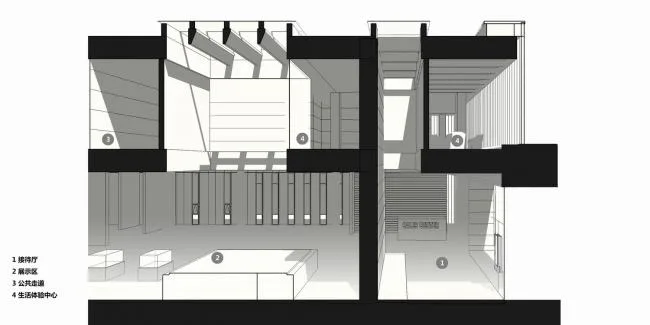
Light and Shadow Space 2
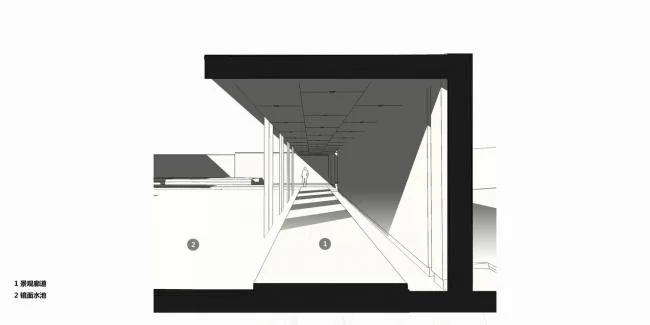
Light and Shadow Space 3
The upper and lower levels of the Light Reception Hall are connected by a linear, intricate two-story elevated space, creating a dialogue between levels. When light filters through the linear skylight above, the poetic interaction of space and materials is naturally revealed.
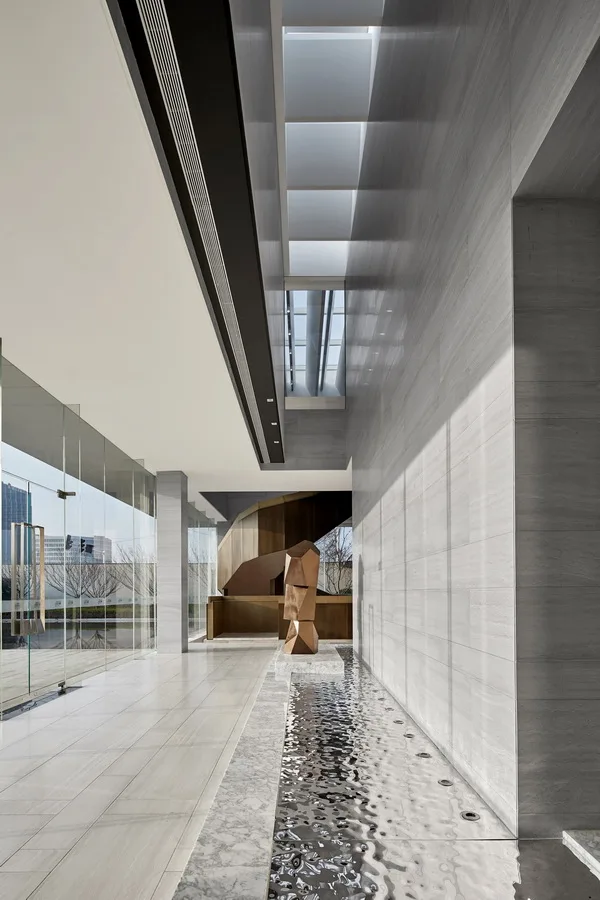
The first floor of the Light Reception Hall, looking up to the linear skylight on the roof. Photography by Zeng Jianghe.
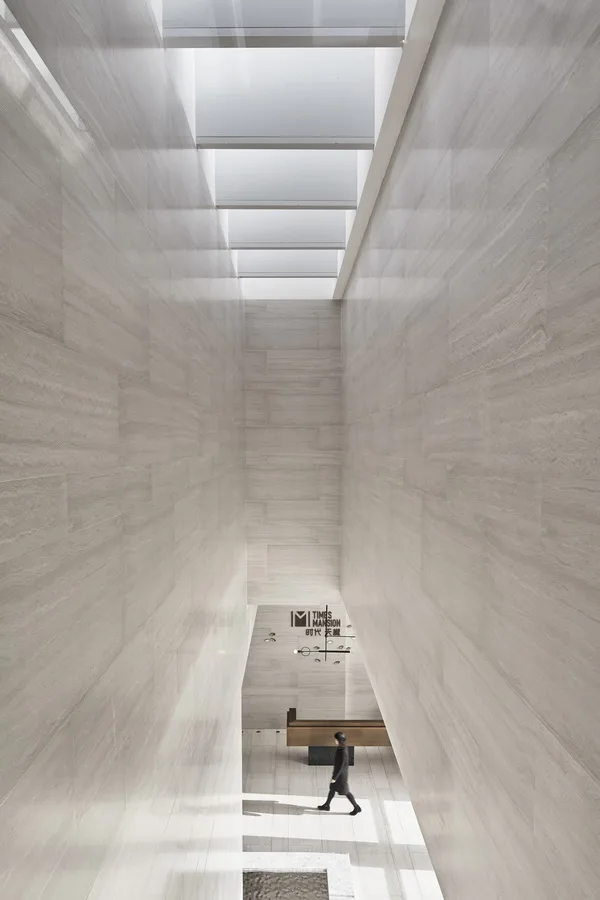
The Light Reception Hall’s second floor, looking back towards the first floor, showcasing the poetic expression of light, shadow, space, and materials. Photography by Zeng Jianghe.
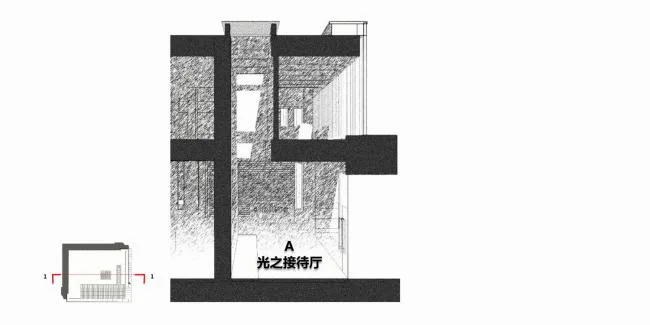
Light Reception Hall — a linear and refined two-story high space.
The roof skylight in the Light Exhibition Area is square, allowing light to pass through folded aluminum panels to create multiple rays of light and shadow that cascade downward. The light interacts with the rhythmic short walls, refracting and diffusely reflecting off light gray horizontal stone, imbuing the museum space with a distinct atmosphere.
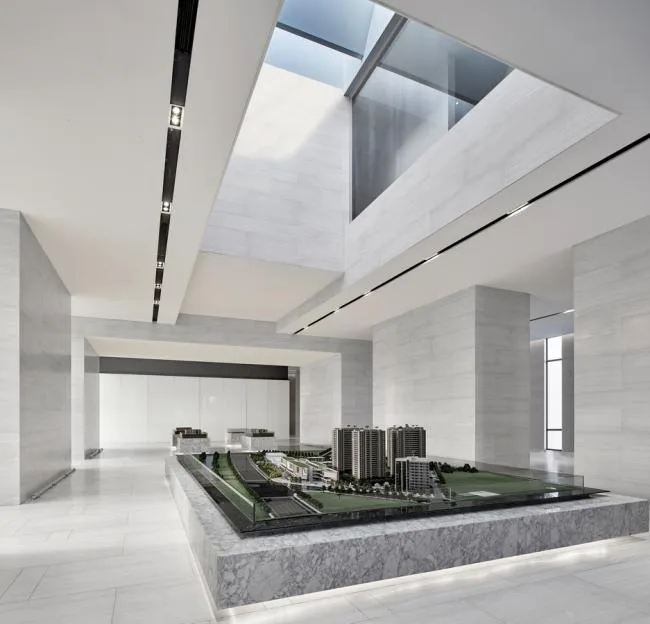
The exhibition area radiates artistic temperament. Photography by Zeng Jianghe.
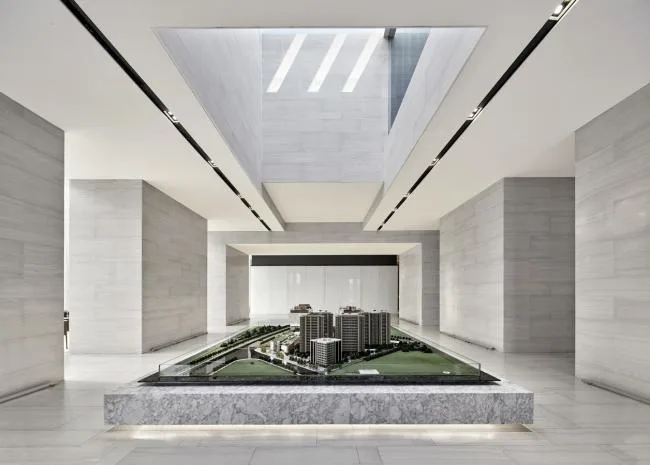
The first floor of the Light Exhibition Area (BIM Engineer) offers a unique museum atmosphere. Photography by Zeng Jianghe.
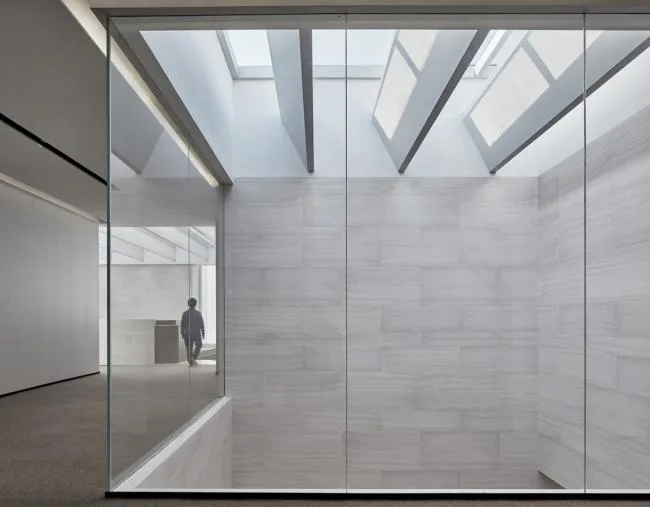
Photography of the Light and Shadow Space on the second floor of the Light Exhibition Area. Photo by Zeng Jianghe.
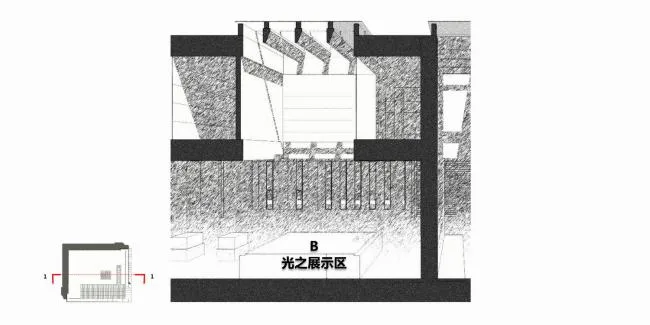
Light Display Area — a spacious two-level square volume.
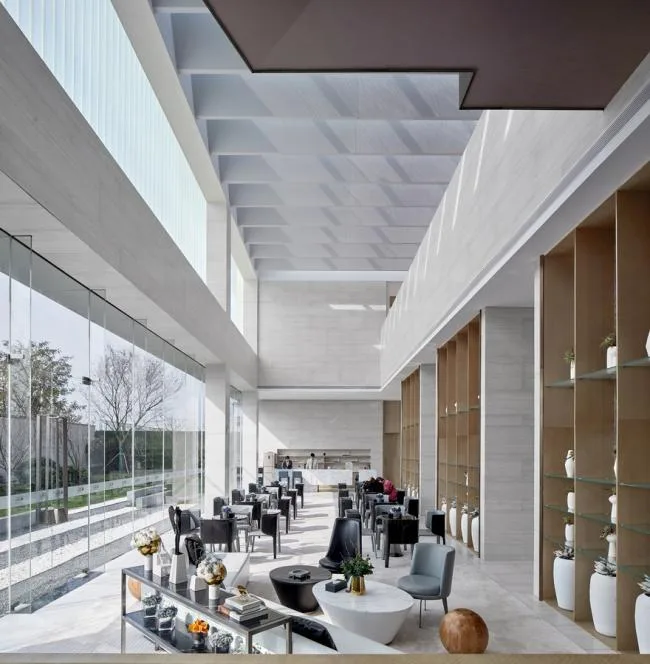
The Light Leisure Area connects the second-floor corridor with the first-floor leisure space via a large rectangular side hall. Folded aluminum louvers under the skylight cleverly conceal the longitudinal steel beams while filtering light. The resulting dynamic interplay of light and shadow dances through the space with the passage of time, capturing the interaction between time and space. This tranquil area feels removed from the hustle and bustle of the nearby city.
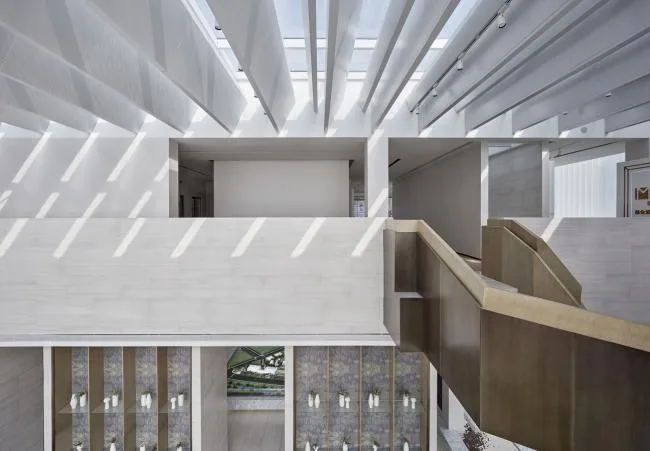
Afternoon photography of the second-floor corridor space. Photo by Zeng Jianghe.
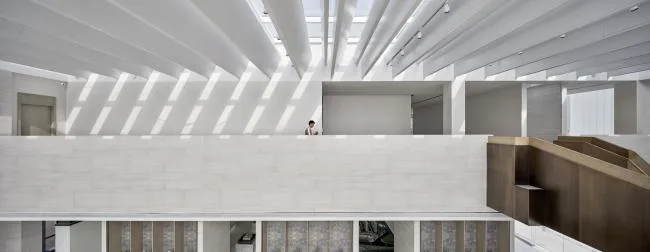
Skylight light filtered through folded aluminum louvers creates dynamic light and shadow effects. Photography by Zeng Jianghe.
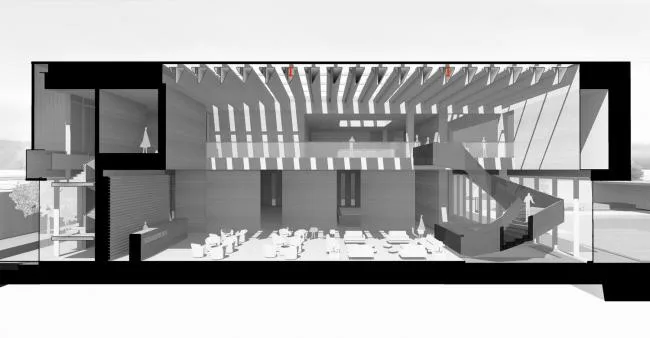
Folded aluminum louvers cleverly conceal the building’s longitudinal structural beams.
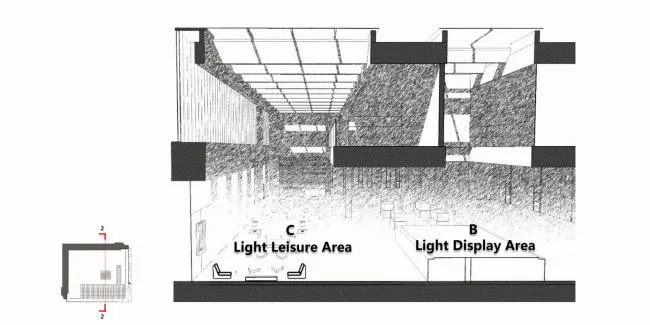
Light Leisure Area — a seamless and harmonious dialogue between the second-floor corridor and first-floor leisure space.
Light and Shadow Sequence
Along the urban frontage of Yongsheng Road, the architecture borrows and frames views, extending across the scenic wall in a calm and horizontal posture, engaging in a quiet dialogue with the bustling city.
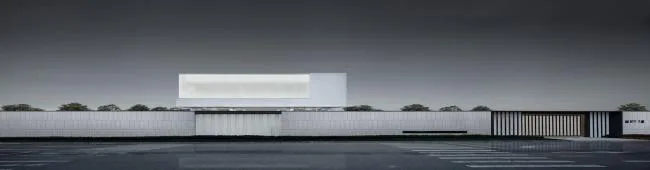
The architecture converses peacefully with the noisy urban environment. Photography by Zeng Jianghe.
Within the courtyard, architecture and landscape merge through borrowed and transformed views, allowing the small space to reveal a broader perspective and enrich spatial experiences.
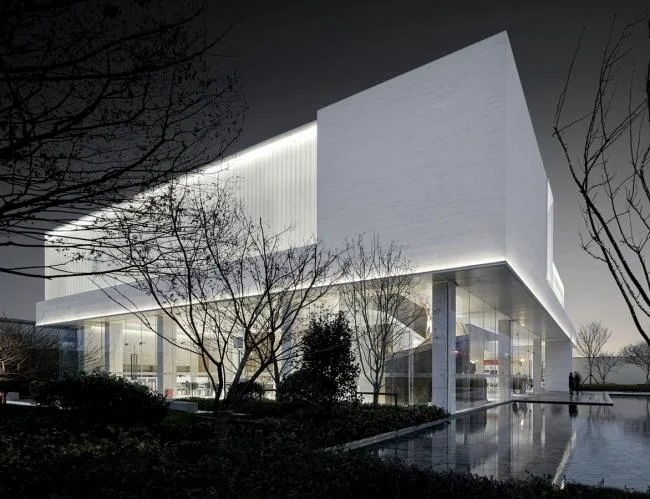
Architecture and courtyard landscapes complement each other. Photography by Zengjiang River.
The polygonal corridor’s multiple turns and carefully designed fragmented scenes, combined with shifting light and shadow, invite visitors to anticipate the spaces ahead.
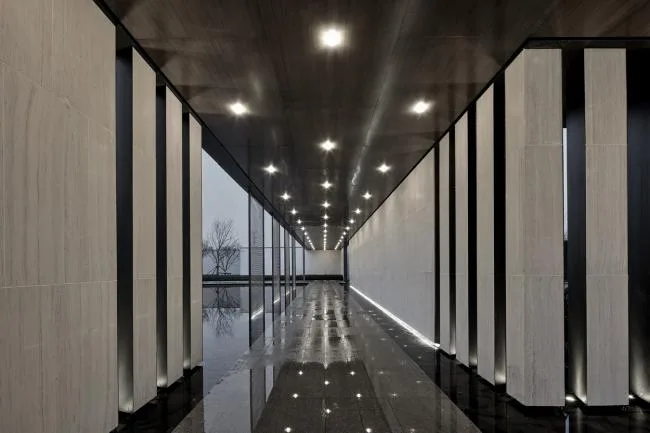
Linear corridors extend visitors’ paths. Photography by Zengjiang River.
As the flow of visitors progresses, the reception hall emerges. Light and shadow continuously shift across the two layers of stone walls, guiding people to the long-awaited exhibition area behind them. Upon leaving the exhibition space, light filtering through short walls leads to the leisure area. This suddenly illuminated space, bathed in gentle light, exudes a serene ambiance—like savoring clear tea after a feast—allowing visitors to reflect on the earlier interplay of light and shadow. At the end of the leisure area, a sculptural curved spiral staircase signals an important circulation path to the second floor.
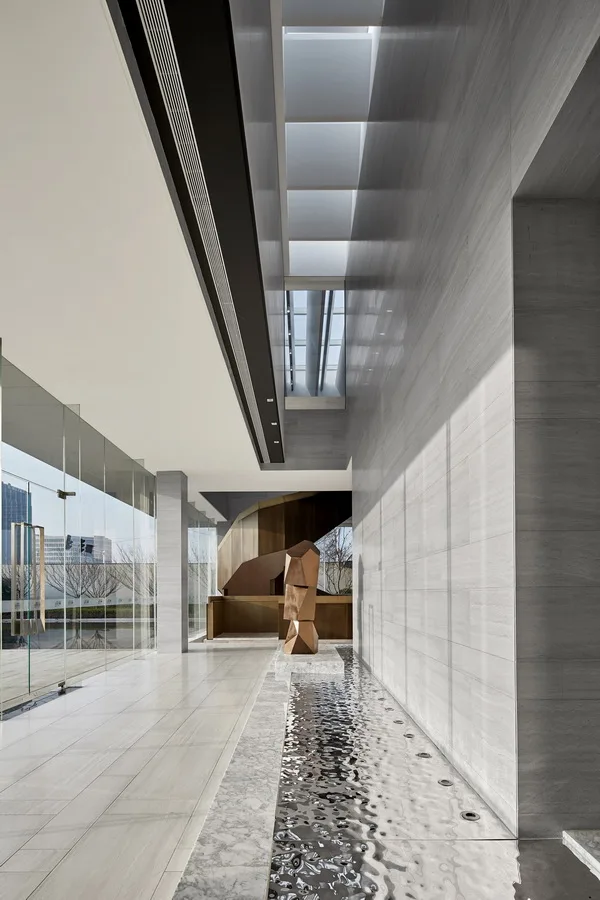
Photography of the reception area’s stone walls with ever-changing light and shadow. Photo by Zeng Jianghe.
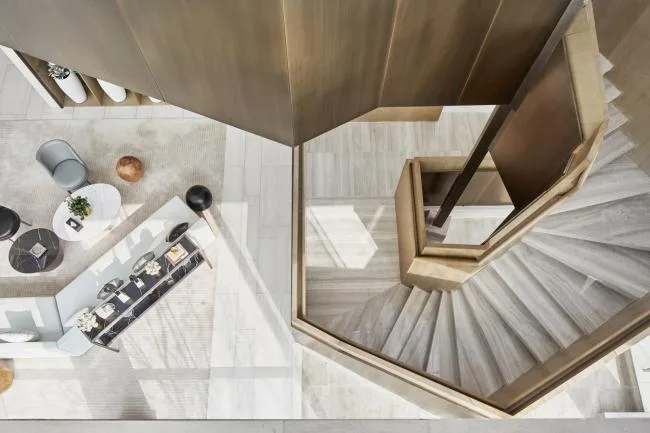
View overlooking the zigzag spiral staircase and leisure area. Photography by Zengjiang River.
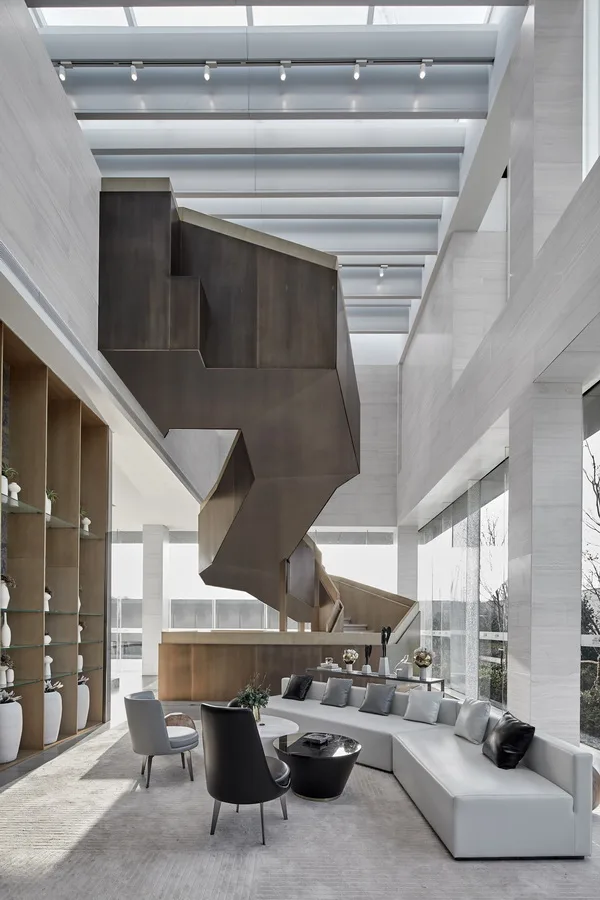
The deep coffee-toned zigzag spiral staircase contrasts sharply with the surrounding gray hues. Photography by Zeng Jianghe.
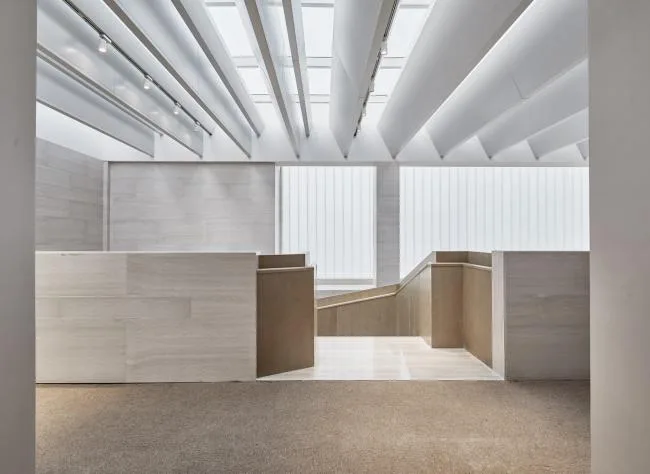
Photography of the second-floor entrance to the zigzag spiral staircase. Photo by Zeng Jianghe.
Conclusion
This building, nestled within the bustling city, aims to awaken people’s exploration of the essence of life. Through architectural simplicity and the narrative power of light, it guides visitors to move between light and shadow, experience the dialogue of time and space, and savor the beauty of life.
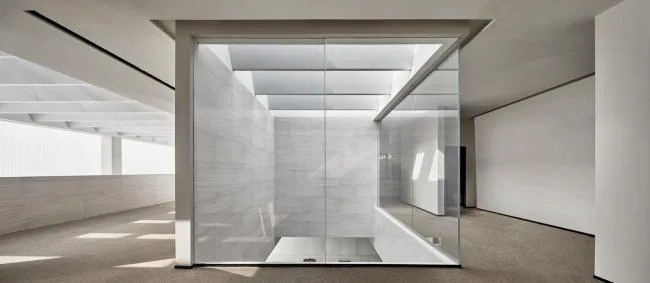
Photography of the corridor space in the second-floor Life Experience Center. Photo by Zeng Jianghe.
Project Drawings
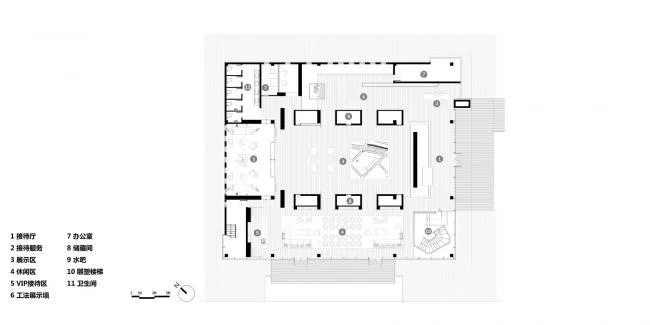
First Floor Plan
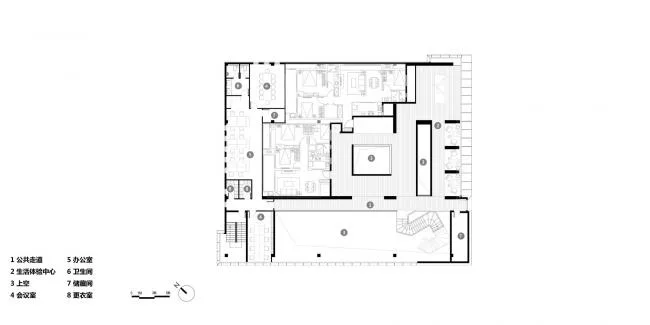
Second Floor Plan
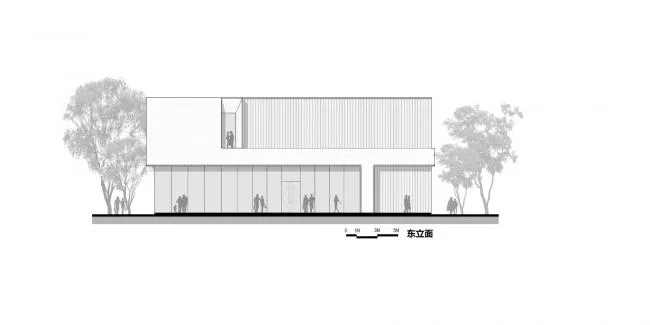
East Elevation
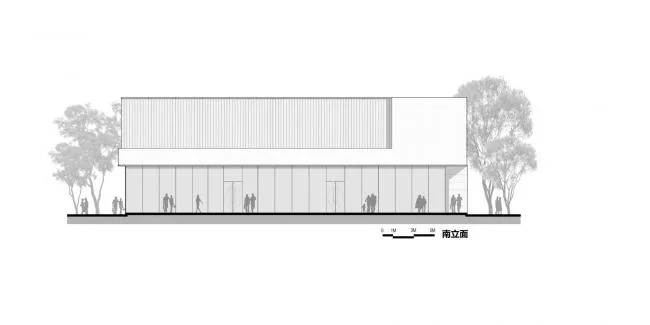
South Elevation
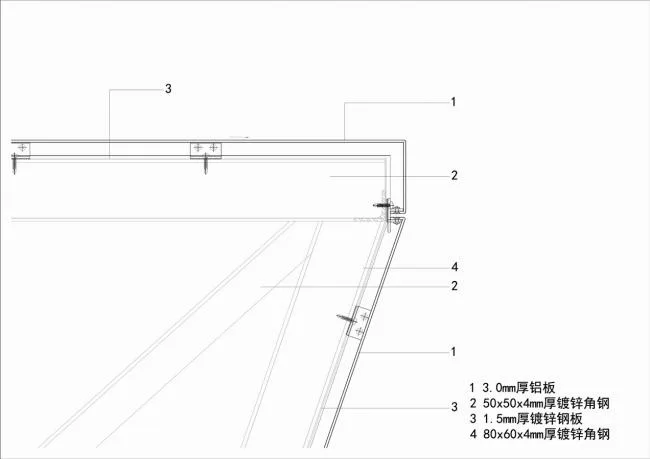
Section 1-1 Node Diagram
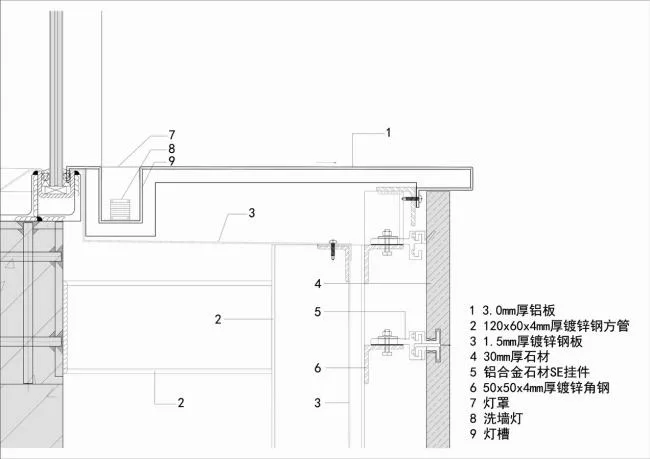
Section 2-2 Node Diagram
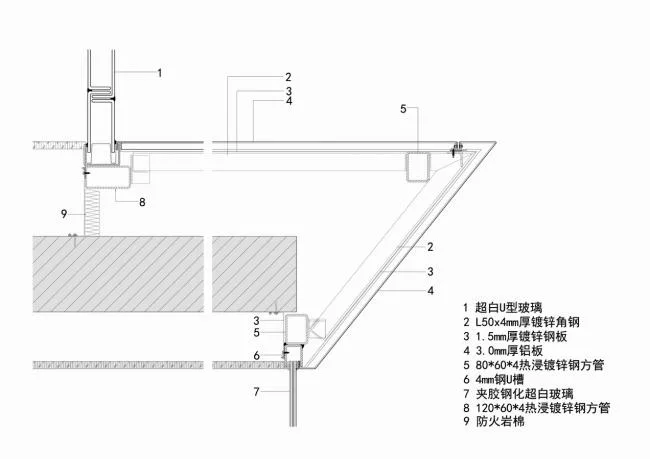
Section 3-3 Node Diagram
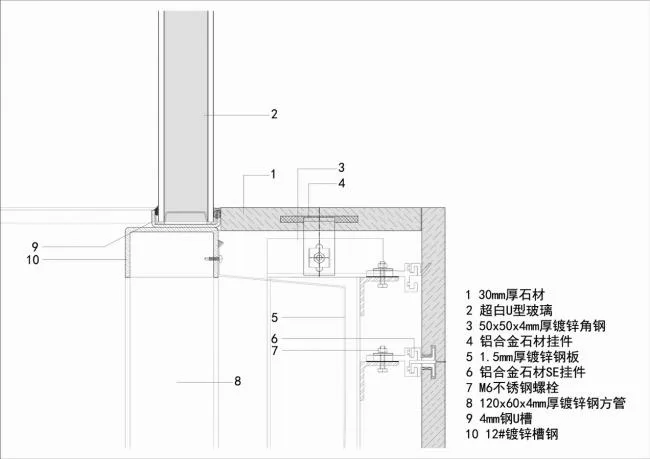
Section 4-4 Node Diagram
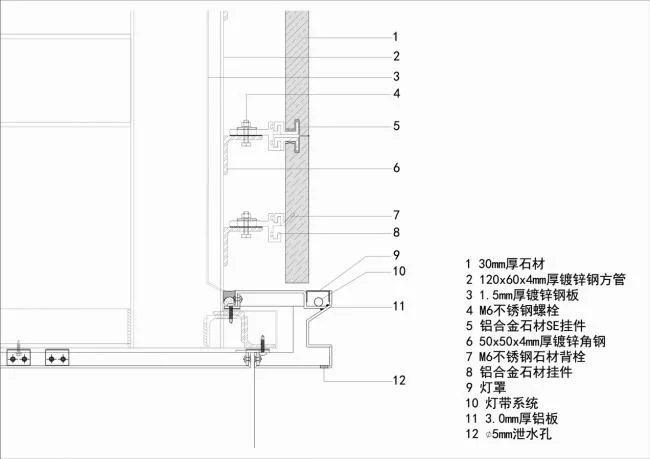
Section 5-5 Node Diagram
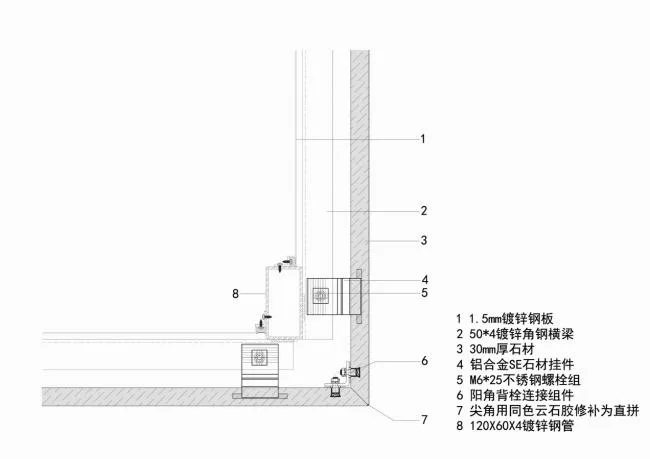
Section 6-6 Node Diagram
Project Information
Architect: Nanjing Tianhua
Address: Intersection of Yongsheng Road and Tianxing Road, Nanjing, Jiangsu, China
Lead Architects: Zhang Jing, Zhou Angang, Wang Ming
Design Team: Lu Xiaotong, Pan Shiliang
Building Area: 1,445.0 square meters
Project Year: 2018
Photographer: Zeng Jianghe
Project Type: Commercial Building















Must log in before commenting!
Sign Up