
BIM Software Tip: Drawing Bridges with REVIT
Drawing bridges in REVIT is straightforward once you understand how to combine the bridge’s horizontal (plan) and vertical (longitudinal) curves. The key to creating an accurate 3D model lies in defining the bridge’s centerline. This approach solves the challenge of modeling bridges in REVIT.
Solution: Use CIVIL software to draw the centerline, then import it into REVIT as a reference. The process involves working with the road centerline as a 3D polyline and converting it into a spline curve.
Follow these steps:
1. Draw both the plan view and vertical profile of the centerline in CIVIL.
2. Switch to the Civil 3D 3D view and locate the centerline you just created. You will see two lines here: one representing the existing ground route and the other the design route. Focus on the design route, which can be identified by its layout properties. Explode this line twice to convert it into a 3D polyline—small control points should appear.
3. Open a blank CAD document and copy the exploded 3D polyline into it. Use the Regenerate command within the control point editing tools to convert the 3D polyline into a spline curve. When regenerating, keep the number of control points minimal while meeting accuracy requirements; too many points will result in an overly large model.
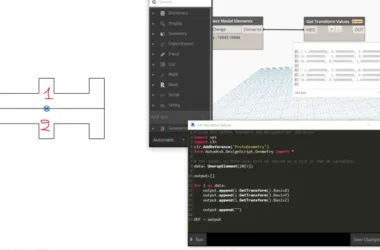
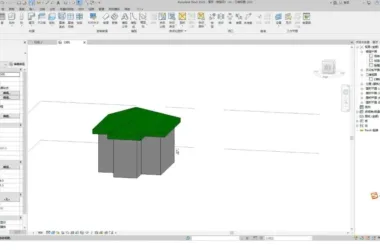
4. In REVIT, create a new mass (volume). Note that only 3D polylines imported from CAD can be selected within the mass environment. Import the CAD file containing the spline curve. When generating the bridge model, use the 3D polyline as the path for modeling. It is important to apply freeform blending—using the first two cross sections and one path—to prevent the bridge deck from tilting.













Must log in before commenting!
Sign Up