
Scaffolding plays a crucial role in construction engineering. However, scaffold collapses and falls have become common accidents in the construction industry in recent years. These incidents stem from multiple causes, including improper scaffolding installation, excessive loading during construction, and unauthorized removal of ties or load-bearing components. Such factors significantly increase the risk of safety accidents. Therefore, enhancing safety management in scaffolding construction is essential.
1. Types of Scaffolding
(1) Based on the number of upright columns, scaffolding can be classified as single-row frame, double-row frame, or full-hall frame.
(2) According to construction purpose, it can be divided into masonry frames and decoration frames.
(3) Depending on the installation location, scaffolding is categorized as either external or internal.
The clip-type steel pipe scaffold is the most widely used in China today due to its flexible assembly and disassembly, ease of handling, strong versatility, and low cost, accounting for over 60% of usage.

2. Erection Procedure Requirements for Scaffolding
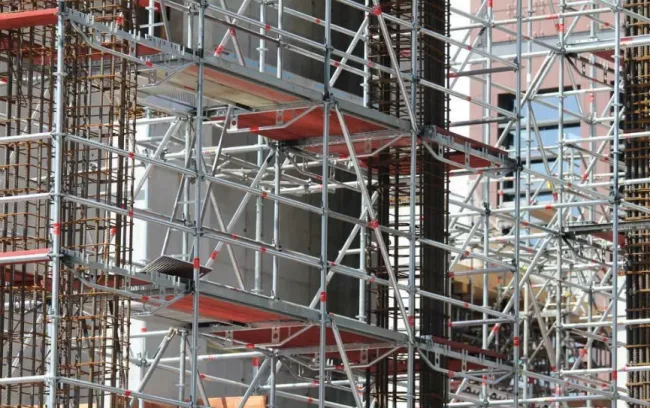
The erection process should follow these steps: place the vertical sweeping pole, erect the bottom upright pole, install the first step of vertical horizontal poles or small horizontal bars, then calibrate the verticality of the uprights and the levelness of the horizontals. Fasten bolts should be tightened with a torque between 40-65 N·m to form the starting frame section. Extend and erect subsequent sections sequentially, completing the first step, followed by the second and third steps, and so on. Install the working layer and scaffold boards timely, along with fences and other protective facilities.
3. Scaffolding Operation Requirements
(1) Before setting up scaffolding, a detailed construction plan must be prepared, calculated according to prescribed standards, and approved before implementation.
(2) The foundation of the upright poles should be compacted and leveled, with base and cushion plates installed. Vertical and horizontal sweeping rods must be positioned properly, and effective drainage measures provided. The spacing between uprights, large horizontal bars, small horizontal bars, and other components must comply with specifications and the construction plan. The frame should be securely connected to the building per regulations. Diagonal braces should be installed as required to enhance overall scaffold strength and stability.
The working platform must be fully covered with scaffold boards, without any gaps. Protective railings and toe boards should be installed on the working layer. The scaffold’s outer side should be equipped with a fully enclosed safety net as per regulations.
(3) Unloading platforms should be designed with standardized tool bases and must not connect to scaffolding. Protective railings and toe boards should surround the platform and be tightly sealed with safety nets.

Additional construction guidelines include:
(1) It is strictly forbidden to mix steel pipes with diameters of 48mm and 51mm along with their respective fasteners.
(2) Before setting up the first row of wall connectors, a throwing brace should be installed approximately every six spans to ensure frame stability. The starting section should be extended forward first. When two operations proceed simultaneously, scaffolds can be erected from relative angles, with rods and diagonal braces installed promptly, avoiding delays beyond two steps from the working face.
(3) The pole end extending beyond the fastener must be at least 100mm. Longitudinal horizontal poles at scaffold edges must intersect at corners and be securely fixed to uprights. Railings and toe boards on the working layer should generally be placed inside the upright poles. Extensions of railings must comply with connection or overlapping regulations.
During dismantling, the project department must conduct technical briefings and sign-off procedures in accordance with regulations. Acceptance procedures are required after installation or modification. Warning lines must be established in the demolition area, with dedicated supervision.
(1) Wall connectors can only be loosened and removed after upper members have been taken down (except protruding uprights).
(2) Horizontal rods with removed fasteners must be immediately taken down and not left hanging loosely.
(3) Long poles should be dismantled by two people to avoid accidents caused by solo handling.
(4) Dismantled pole components should be lowered safely to the ground rather than thrown.
4. Technical Requirements for Cantilever Scaffolding
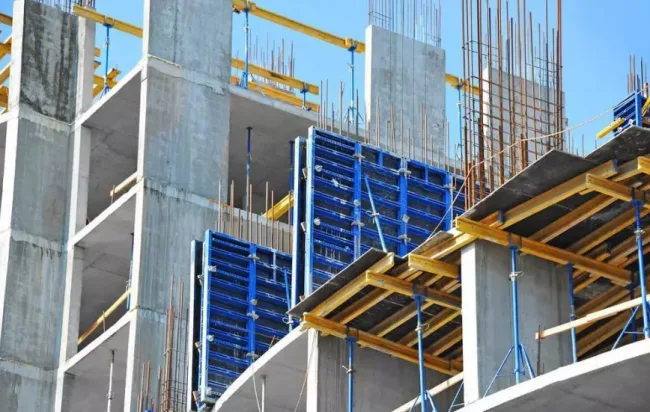
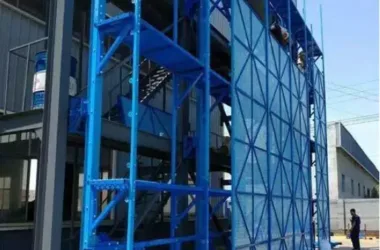
With rapid urban development, high-rise buildings with complex external structures have increased, posing challenges for construction safety protection. Suspended scaffolding is increasingly used in high-rise construction due to its low initial cost, broad applicability, no restrictions on floor height or site, and reusability.
(1) The height of cantilever scaffolding should not exceed 20 meters. Cantilever beams must be made from double-axis symmetrical section steel. The beam model and anchors must be determined through design calculations, with beam section height not less than 160mm. The diameter of U-shaped steel pull rings or anchor bolts must be at least 16mm, made from cold-formed round steel. Steel or hardwood wedges should tighten gaps between pull rings, anchor bolts, and steel sections.
(2) The base of the pole must rest on a secure surface and be firmly fixed to prevent displacement. The distance between the positioning point and the cantilever beam end must be at least 200mm. When connecting the steel cantilever beam to the building using bolt steel pressure plates, the plates must be at least 100mm wide and 10mm thick. If bolted angle steel pressure plates are used, their specifications must be no less than 63mm × 63mm × 6mm. Bolts should have a minimum of three exposed nut threads.
(3) If anchoring to a floor slab, the slab thickness must be at least 120mm. If thinner, reinforcement is required. The slab should be pre-equipped with load-bearing steel bars to withstand the negative bending moment caused by the cantilever beam’s anchored end. Otherwise, top support unloading measures must be applied. Anchoring positions at the corners should be staggered. Vertical and horizontal sweeping rods should be installed at the base, positioned close to the cantilever beam/frame. The gap between vertical sweeping rods and the cantilever should not exceed 20cm, and the step distance between the first frame and vertical horizontal rods should not exceed 1.5 meters.
5. Construction Safety Requirements for Scaffolding
(1) According to regulations, special plans for large-scale scaffolding projects must undergo expert review meetings organized by the integrated decoration department of construction order. For projects under general contracting, the general contractor should convene such expert reviews.
(2) Before scaffolding construction begins, safety technical training and disclosure must be conducted according to the special plan and expert review feedback. All safety measures and personal protective equipment must be enforced. Construction should not proceed without proper implementation. A designated supervisor should oversee plan enforcement and monitor on-site conditions. Any deviations must be corrected immediately. If personal safety hazards arise, workers should evacuate promptly. The construction unit’s technical leader must regularly inspect plan compliance. Temporary dismantling or changes to safety facilities require project manager approval and reliable protective measures, with immediate restoration after work.
Hot work on scaffolding must strictly follow the approval system, with complete hot work permits and certified welders holding special operation certificates.
(3) When expanding or renovating existing buildings, external scaffolding installation must not obstruct safe evacuation routes, fire truck access, or firefighting and rescue operations. The length of external scaffolding should not exceed half the building facade’s perimeter. Scaffold installation and dismantling must be performed by certified professional scaffolders who have passed assessments.
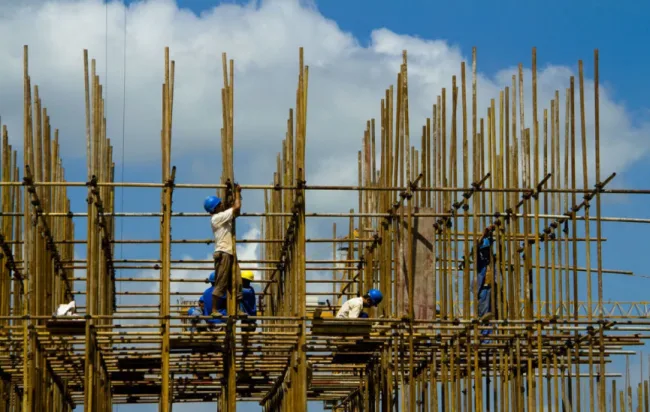
In conclusion, scaffolding is a vital yet high-risk component of construction projects. The safety design, installation, and use of scaffolding directly impact the safety of workers’ lives and property. Therefore, comprehensive management in design, supervision, inspection, and acceptance is necessary to ensure safe scaffolding construction.
Article source: Architectural Technology Magazine














Must log in before commenting!
Sign Up