
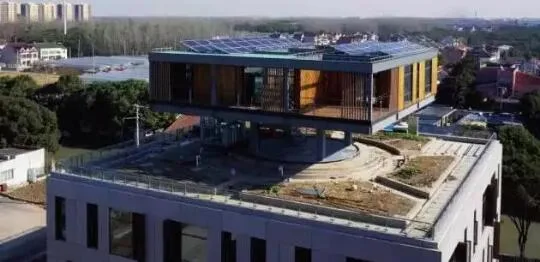
Zero carbon buildings that live in harmony with nature are becoming an emerging trend. From small prefabricated homes of just tens of square meters, to sprawling prefabricated hotels covering hundreds of thousands of square meters, all the way to zero-emission urban communities, the future of construction is clear. The industry of zero carbon prefabricated buildings—blending environmental protection, ecology, nature, and technology—is poised for rapid growth.
The “Zero Carbon Pavilion” featured here is a practical project by the design team of Huajian Group’s engineering construction consulting company. As the vice chairman unit of the Construction Industrialization Industry Technology Innovation Strategic Alliance, they have been researching zero carbon prefabricated buildings for many years.
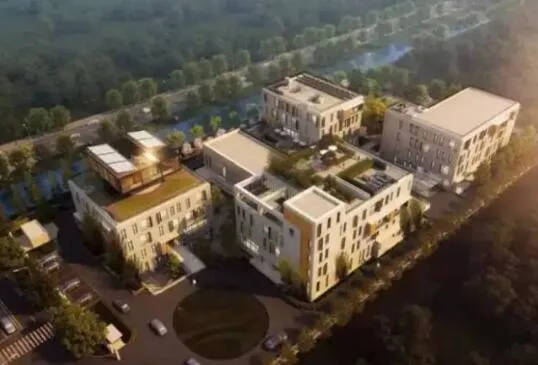
Aerial view of the project implementation plan.
1. Moving Toward Natural, Prefabricated Zero Carbon Buildings
Looking back at the history of human architecture, early buildings primarily served as shelters—protecting humans from wind, rain, cold, and wild animals. At that time, buildings consumed very little energy, limited mostly to heating, lighting, and cooking.
However, with the Industrial Revolution came new materials and technologies, ushering in an era of “comfortable buildings.” This era saw heavy use of natural resources to power lighting, air conditioning, elevators, and other modern amenities, breaking the harmony between humans and nature.
By the 1990s, worsening environmental conditions revealed the failure of humanity’s battle against nature. More scholars began advocating for a rational path forward, shifting architectural philosophy from “conquering nature” to “living in harmony with nature.” It was during this time that the concept of “green building” emerged.
Today, the challenge is how buildings can operate without consuming energy, becoming truly harmonious with nature. How can architecture respond to the growing environmental crisis? Zero carbon prefabricated buildings will increasingly appear in diverse settings—floating on water, nestled deep in forests, along beaches, and within city centers—as a critical form of sustainable construction.

Prefabricated buildings above the water surface.
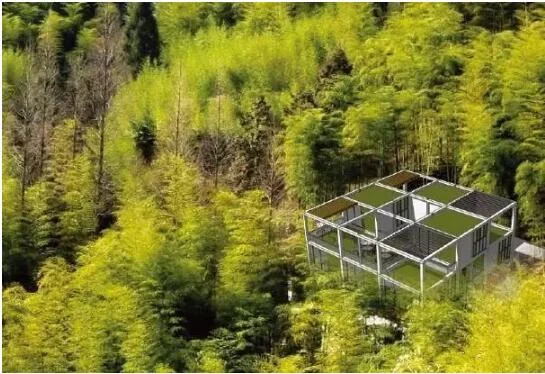
Deep in the forest.
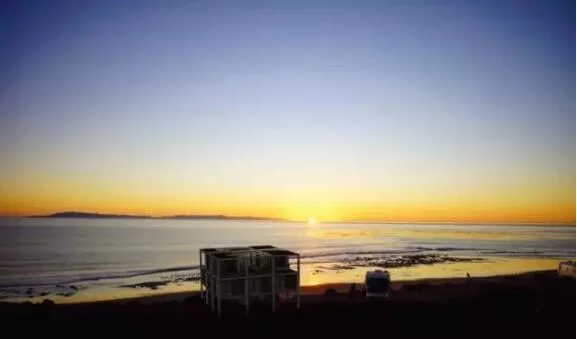
On the beach.
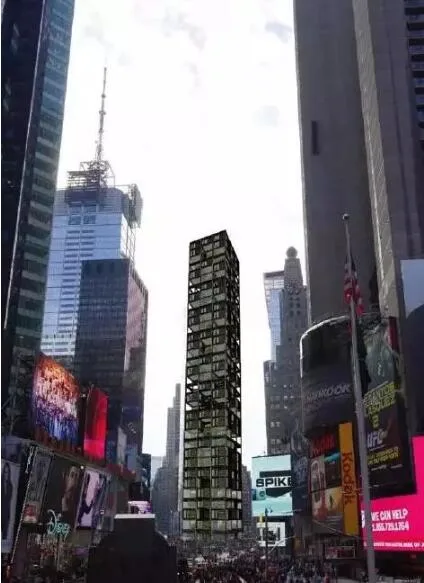
In the city center.
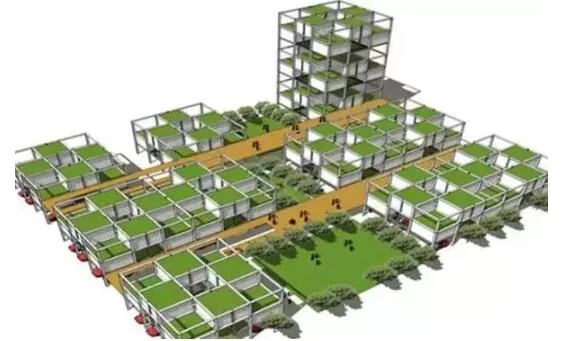
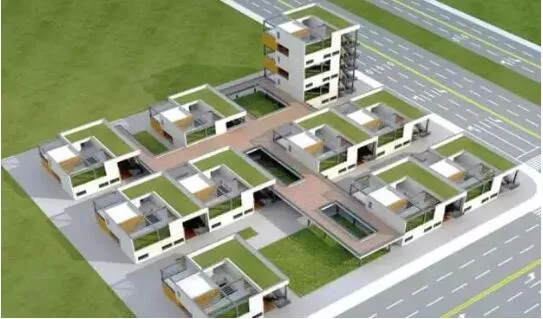
One of the initial exploration plans.
2. The Zero Carbon Pavilion on the Roof
Prefabricated buildings built on zero carbon technology must meet strict criteria: full disassembly, complete prefabrication, and zero emissions throughout their entire lifecycle. These principles support integrated assembly, industrialized construction, and low-carbon building practices.
During the early stages of the “Zero Carbon Pavilion” project for the new Shanghai Pugong Testing factory building, the design team conducted extensive research. They developed multiple models to compare and evaluate the performance of different materials in various environments. These findings were fully incorporated into the project.
The owner, a third-party testing company specializing in construction engineering, municipal roads, bridges, and tunnels, shares a commitment to zero carbon emissions throughout the lifecycle of the building. This aligns with their focus on new building materials, technologies, and environmental protection.
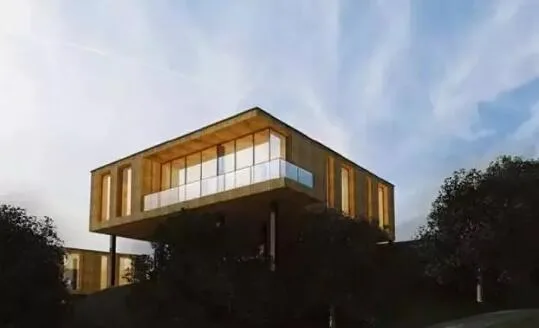
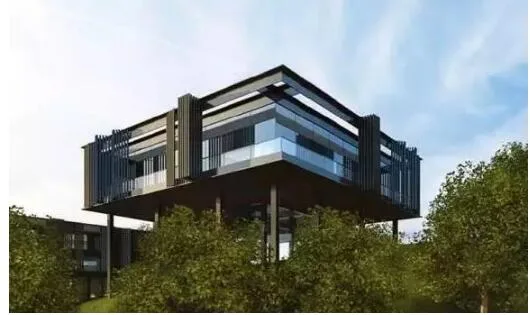
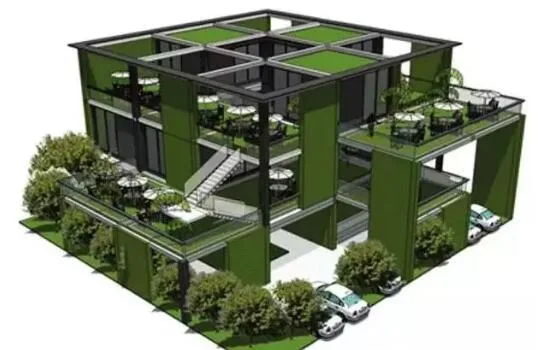
Preliminary Exploration Plan 2.
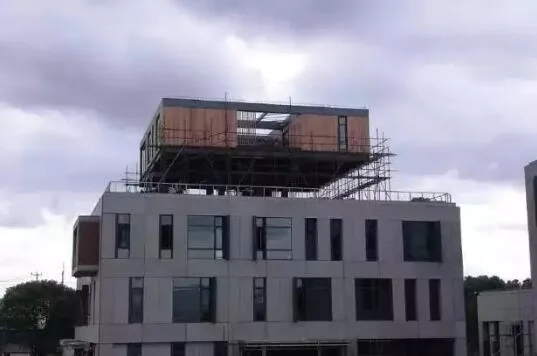
The “Zero Carbon Pavilion” project is not only a pioneering endeavor in zero carbon prefabricated buildings but also serves as a key attraction in the zero carbon exhibition area located on the roof of Building 1 within the park.
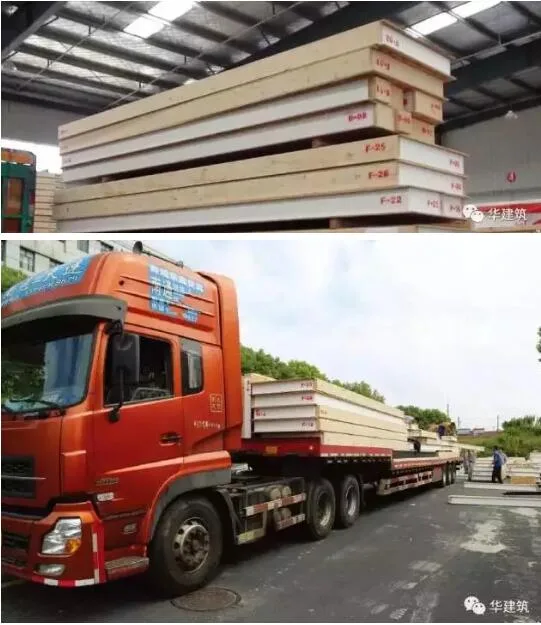
Zero Carbon Pavilion construction site.
3. Achieving Three Core “Zero Carbon” Goals
The zero carbon museum achieves three primary objectives:
- Fully prefabricated and easily assembled;
- The building rotates once every 24 hours to optimize natural lighting for various functions;
- Self-sufficiency in water and electricity through rainwater harvesting and photovoltaic panels, effectively meeting zero carbon emission targets.
To accomplish these goals, the design team divided the process into three phases.
Phase 1: Prefabricated Building Design
Future buildings must adapt to diverse regional and site conditions. Overcoming external challenges while enabling rapid, efficient construction is a significant hurdle. Prefabricated buildings address this need.
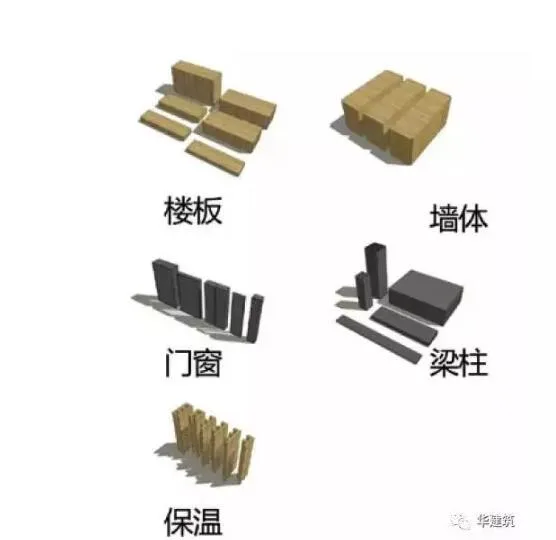
The “Zero Carbon Pavilion” employs a detachable construction approach. The structural system is modular and disassemblable, with adjustments made to suit site conditions and mesh sizes. Prefabrication occurs entirely in the factory, shortening construction time and minimizing on-site demands.
The maintenance system is also modular and removable. Wall thickness and insulation adjust based on regional climate needs, with components prefabricated alongside integrated pipeline layouts.
Finally, building components such as stairs, photovoltaic panels, and sunshades are factory-prefabricated as complete units. After the structural system and maintenance components are in place, these modules are installed and can be disassembled as needed.
Additionally, the “Zero Carbon Pavilion” uses environmentally traceable materials with minimal ecological impact. Maintenance structures and panels utilize wood certified by the Forest Stewardship Council (FSC), which releases negative oxygen ions and contributes to carbon neutrality.
Phase 2: Passive Energy Saving Design
Natural lighting and ventilation are achieved through strategic placement of column grids, prefabricated structural elements, and component design. Fixed shading systems, rooftop greenery, and heat-reflective exterior coatings reduce the impact of up to 90% of solar radiation, significantly lowering energy use and emissions.
Phase 3: Active Energy Efficiency Design
Future architecture should conform to, adapt to, utilize, and give back to nature.
Sunlight, rain, dew, and wind are natural gifts to architecture. Effectively harnessing these resources is a key challenge for creating comfortable, energy-efficient buildings.
The design team developed several innovative solutions for the “Zero Carbon Pavilion”:
- An electrical “sunflower” light tracking system rotates the building’s base to follow the sun, optimizing orientation;
- A rooftop photovoltaic system generates electricity and connects to the grid for energy self-sufficiency;
- A nano reverse osmosis household sewage treatment system achieves zero liquid discharge;
- Water-saving products and micro-irrigation systems combined with water recycling efficiently irrigate rooftop greenery;
- Graded water meters and infrared sensors prevent water waste;
- HVAC employs a multifunctional variable cooling multi-split system, using solar energy as auxiliary heat;
- Energy-saving technologies include double curtain walls, fresh air heat recovery, and solution dehumidification.
4. Conclusion
This project represents a pioneering step toward future prefabricated zero carbon buildings. Utilizing a “nine grid” design concept, the team constructed the pavilion atop an existing roof using modern technology. The result is a heavy steel lightweight wall system with integrated factory prefabrication of interior, exterior, and insulation components.
The building is fully prefabricated, assembled, and disassembled, with components designed for economical transport. Large rooftop solar photovoltaic panels meet zero energy consumption standards, while a nano reverse osmosis sewage treatment system ensures zero emissions.
The pavilion is rotatable to track direct sunlight, fulfilling lighting needs for various functional spaces while maximizing photovoltaic efficiency. The aim is to achieve a comprehensive lifecycle carbon footprint below zero.
5. Outlook
Globally, there is growing awareness of the environmental impact of human activity. As technology advances and standards improve, zero carbon buildings that harmonize with nature will become mainstream.
From compact prefabricated homes to massive hotels and zero emission urban communities, the industry of zero carbon prefabricated buildings—integrating environmental protection, ecology, nature, and technology—is destined to thrive.
The project’s design team remains committed to exploring and advancing zero carbon prefabricated buildings. Through development of prefabrication models and data collection, they aim to industrialize zero carbon construction, support future projects with data, establish standards, and guide the emerging zero carbon building industry in China.














Must log in before commenting!
Sign Up