
1. Review of the History of Residential Industrialization
For more than a century, numerous dedicated individuals have committed themselves to researching, exploring, and advancing steel-structure housing and residential industrialization (see Figure 1).
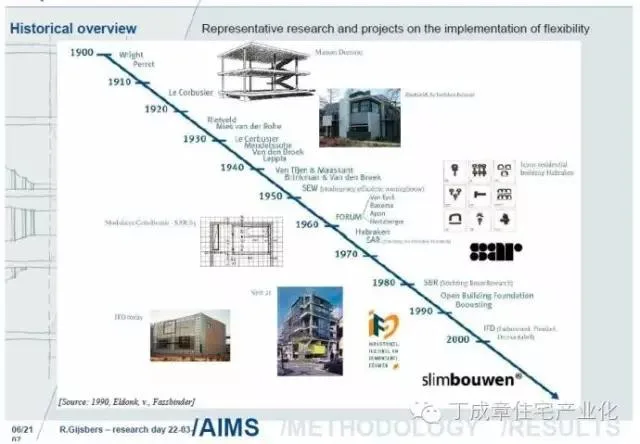
Figure 1-1
Steel structures inherently lend themselves to prefabricated modular construction; thus, early prefabricated modular buildings were predominantly steel-based.
Over the past 200 years, humanity has developed various types of prefabricated steel-structure residences (see Figure 1-2).
Chronology of Prefabricated Steel Structure Buildings

Figure 1-2
2. Early Steel Structure Residences
In the 19th century, steel and cast iron were widely utilized in industrialized regions such as Europe, America, Asia (particularly Japan), and Australia. The incorporation of steel in factories, train platforms, market halls, and office buildings significantly propelled industrial and commercial development throughout the 19th and 20th centuries.
Although Le Corbusier famously described modern homes as “machines for living,” the 20th century still lacked clear standards for steel’s use in residential design. Technically, while steel enabled mass production in automobiles, trains, and airplanes, attempts to create mass-produced, prefabricated, standardized, and adaptable steel components for housing were largely unsuccessful. Early experiments combined steel with traditional building materials.
Victor Horta, the renowned Belgian Art Nouveau architect of the 19th century, designed numerous such hybrid structures. His classic example is his private residence in Brussels, completed in 1898 (now the Horta Museum) (Figures 1-3a to 1-3c).
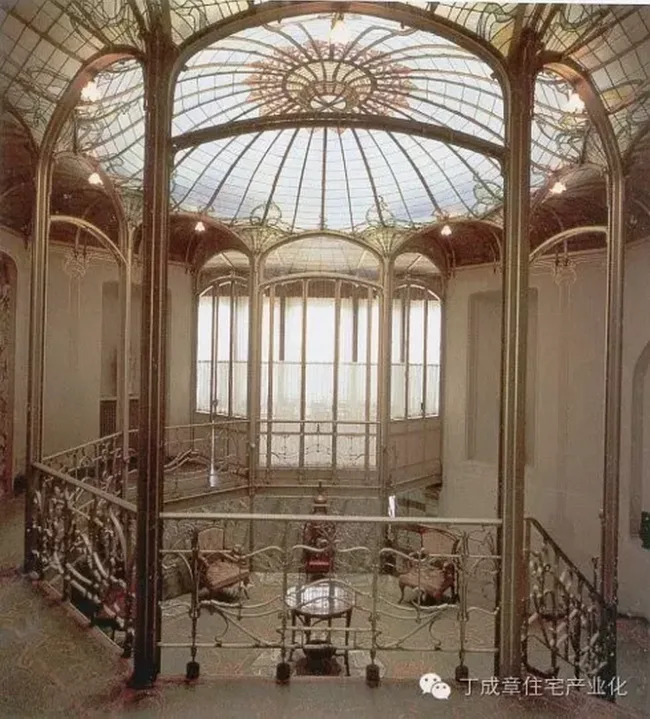
Figure 1-3a
Figure 1-3b
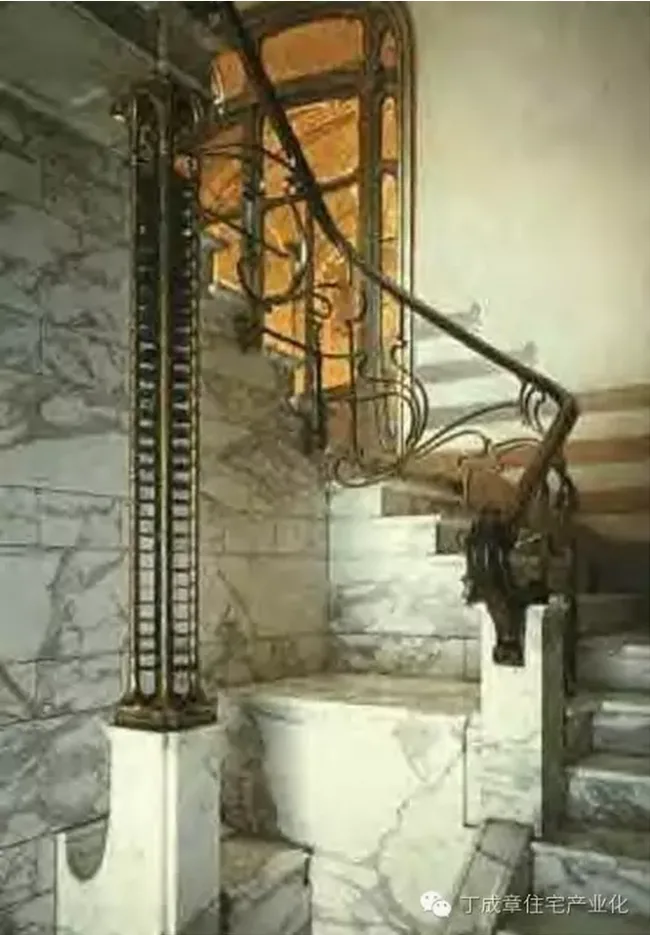
Figure 1-3c
Victor Horta employed a significant amount of steel in this three-story, traditional row house designed for urban research and development. From the octagonal entrance hall to stair railings and lighting fixtures, iron structures feature prominently, marking a milestone in steel-structure residential architecture.
Before the 20th century, at least one fire-resistant steel residence had been constructed in the United States — the Reed House in Chicago, built by Bills and Dalton in 1894. Yet, skepticism remained about exposing steel within homes. Additionally, compared to conventional construction methods, steel framing was costly, limiting its adoption in residential buildings.
In 1923, painters Georg Muche and Adolf Meyer designed an experimental steel-framed residence for the Bauhaus exhibition in Germany (Figure 1-4). This residence was conceived as a functional, well-decorated physical object, built using the latest labor-saving techniques to function as a “living machine.” Its layout centers on an “atrium” — not an open courtyard but rather a living room with high windows for natural light, surrounded by bedrooms and auxiliary spaces.
Each room featured simple, industrial-style elements: exposed metal radiators, steel windows and door frames, minimalist furniture, and uncovered lighting fixtures. Although much of the residence was handcrafted at the Bauhaus workshop, Adolf Meyer emphasized the use of standardized bathroom and kitchen equipment, along with innovative materials and construction methods.
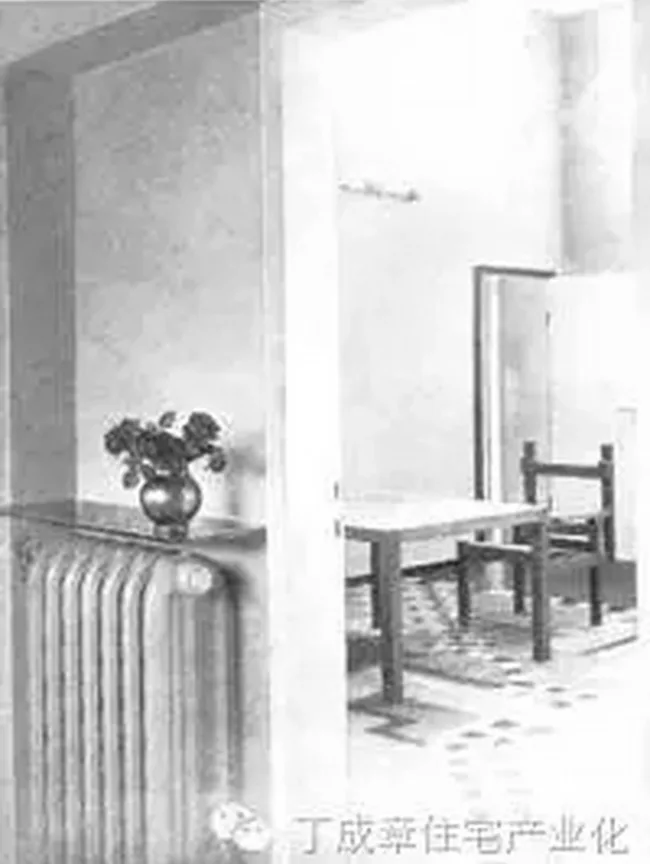
Figure 1-4
3. Influential Steel Structure Residences in History
The first truly impactful steel-framed residential buildings emerged on both sides of the Atlantic in the late 1920s. These structures featured expansive glass areas framed by steel, arranged side by side to project strength and modernity.
Notable examples include Richard Neutra’s “Healthy Housing” for Dr. Philip Lovell in Los Angeles, specifically the “Lovell Sports and Health Center” (1929) (Figure 1-5), Pierre Chareau’s small house in Paris (1932) (Figure 1-6), Mies van der Rohe’s Tugendhat House in Brno, Czechoslovakia (1930) (Figure 1-7), and Leendert Cornelis van der Vlugt’s van der Leeuw House in Rotterdam (1929).
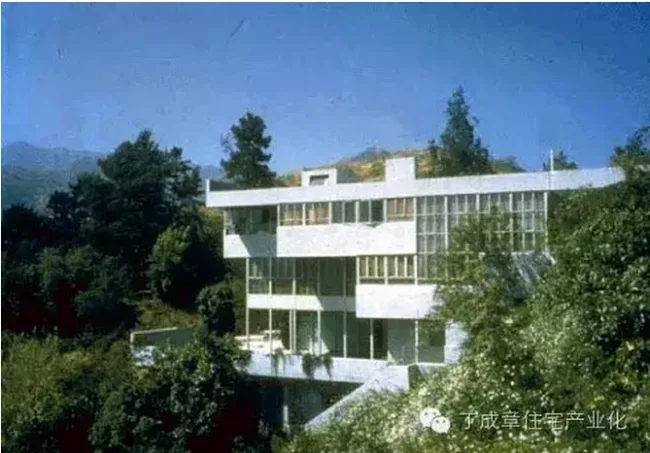
Figure 1-5
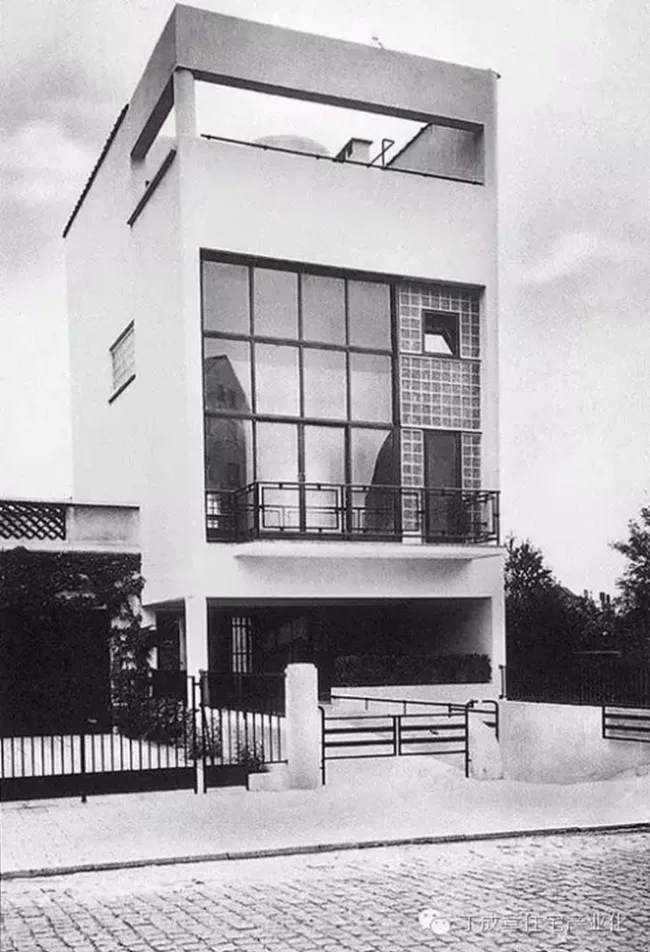
Figure 1-6
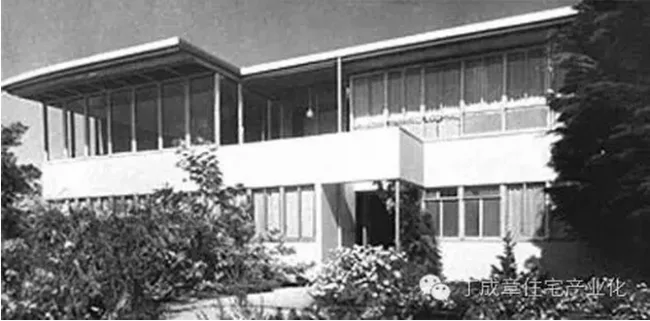
Figure 1-7
Before 1930, Richard Neutra’s designs commonly featured small windows with thick borders, and his “healthy homes” were no exception. Later, he adopted larger glass panes. The architectural style of these healthy homes explicitly reveals a steel structural framework enveloped by a lightweight composite shell. This reflects Neutra’s preference for lightweight technology, modern synthetic materials, and standardized modular components, embodying the International Style’s emphasis on framing rather than solid block structures.
Dr. Philip Lovell, a man of bold character and an advocate for sports, education, and architectural progress, commissioned these homes to reflect his forward-thinking ideals. Lovell’s vision and its direct embodiment in the healthy housing design profoundly influenced Neutra’s career. Subsequently, whenever Neutra undertook projects aimed at enhancing residents’ physical and mental well-being, he fully demonstrated his talents. The central theme of Neutra’s work consistently revolved around the positive impact of thoughtfully designed environments on human mental health.
The unique properties of rolled steel (such as rolled column shapes and bolt/rivet connections) were developed by Pierre Chareau, whose architecture showcased complete components. Neutra’s steel frames incorporated many abstract elements of glass and concrete grids, with only the vertical steel components prominently visible on the exterior. Window mullions and projecting supports for rooms and balconies were selectively exposed.
Mies van der Rohe’s Tugendhat House shares design details reminiscent of the famous German Pavilion (1929) at the Barcelona World’s Fair. However, the actual bolted steel frame remains concealed, with chrome-plated steel plates covering the grille columns, and symbolic visual elements placed between abstract positions on floors and roofs.
Leendert Cornelis van der Vlugt’s van der Leeuw House is arguably the most “machine-like” residence, featuring four parallel steel skeletons running front to back, filled with numerous electronic gadgets and control systems integrated within the structure.















Must log in before commenting!
Sign Up