
Integrated decoration source: Chongqing Design Institute
Prefabricated construction and Building Information Modeling (BIM) technology have recently gained significant attention in the industry. Prefabricated construction involves using industrialized production methods to assemble buildings, where parts or entire components are manufactured off-site in factories and then assembled on-site. Compared to traditional construction methods, prefabricated buildings offer distinct advantages and are considered a forward-looking trend that challenges conventional architectural design and construction paradigms.
BIM technology complements this trend by enabling refined architectural design and represents a key direction for advancing the design industry. Combining prefabricated buildings with BIM fosters more precise and innovative design approaches in the traditional construction sector. As these technologies evolve, electrical and other equipment design disciplines will continue to advance, ushering in new ways of thinking about design.

There are three primary technological pathways for modernizing the construction industry: prefabricated concrete assembly, steel structure assembly, and wooden structure assembly. In Europe, the United States, and Japan, over 60% of buildings use prefabricated methods. In contrast, China’s usage rate remains in the single digits, indicating substantial growth potential.
Prefabricated buildings allow for flexible spatial partitioning, and the widespread use of new materials contributes to lower energy consumption and greater environmental sustainability. Moreover, since manufacturing occurs in controlled factory settings, on-site construction benefits from reduced noise levels, significantly less wastewater and waste, decreased labor demands, and lower overall costs.
Recognizing these advantages, China’s Ministry of Housing and Urban-Rural Development has solicited feedback and is expected to release the “Outline for the Modernization of the Construction Industry” soon. This guideline aims for prefabricated buildings to account for over 20% of new construction by 2020 and more than 50% by 2025.
Local governments are also strongly supporting this shift. For example, Shanghai mandates that by 2016, all newly constructed civil buildings within the Outer Ring Road that meet certain criteria should be prefabricated. Similarly, Chongqing requires that by 2018, steel structures should comprise over 30% of new public and welfare buildings funded by the government, and at least 10% of public buildings financed by private investment.
One question arises: Does the use of prefabricated components complicate the installation of electrical equipment? The author argues that integrating refined design principles throughout the design and production processes of prefabricated components is essential to overcoming these challenges. The deep integration of prefabricated construction and BIM technologies provides effective solutions.
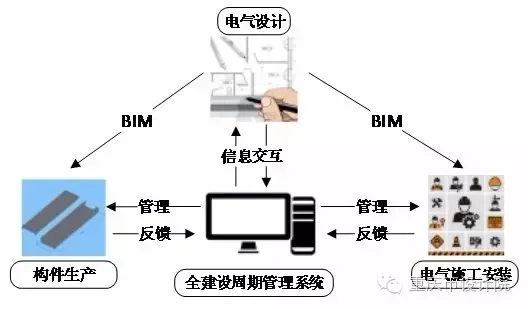
By utilizing a comprehensive construction cycle management system based on BIM and the Internet of Things, production and assembly of components can be coordinated seamlessly. This approach leverages the strengths of prefabricated buildings while avoiding installation issues such as mismatched components during equipment design.
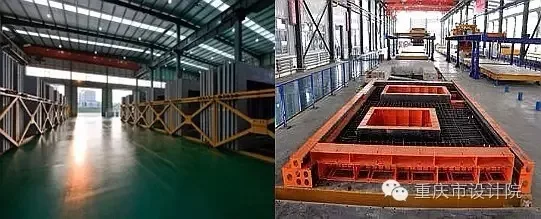
Traditionally, electrical equipment installation occurs after civil engineering work is completed. However, in prefabricated buildings, electrical installations and civil construction can proceed simultaneously. This shift introduces new requirements for construction management and electrical design, including:
- Pipeline Installation Flexibility: Large-scale component assembly makes it difficult to guarantee seamless electrical pipeline connections. Designing reasonable fault-tolerant spaces is necessary. For instance, using flexible hose connections between horizontal pipelines beneath beams and vertical pipelines in shafts helps accommodate misalignment corrections.
- Flexibility in Prefabricated Components: Although electrical design demands precise calculations of equipment capacity and dimensions, practical adjustments often arise during installation. Prefabricated electrical components, such as electrical wells, should allow flexible openings and slotting while maintaining fireproof sealing to accommodate design changes.
- Standardized Installation and Pipeline Optimization: Because electrical equipment and civil construction occur simultaneously, altering pre-embedded provisions becomes difficult. Without standardized labeling, reserved spaces may become unusable. Moreover, complex wiring intersections in indoor boxes, weak current boxes, and floor boxes require flexible local wiring solutions supported by the prefabricated component approach.
- Lightning Protection and Grounding: Lightning protection prioritizes reliable connections of steel reinforcement bars inside concrete structures, using them as down conductors. Prefabricated buildings require independent lightning protection grounding devices to meet these standards.
With strong national support for prefabricated buildings, the market potential is enormous. Their advantages—including energy efficiency, environmental friendliness, labor intensiveness, and shorter construction periods—offer significant competitive benefits over traditional construction methods. As the industry embraces this trend, it’s crucial to adopt a holistic perspective, carefully addressing challenges faced by electrical and other equipment specialists. Attention to detail will help elevate prefabricated buildings to new heights.















Must log in before commenting!
Sign Up